
| REPORT ATTRIBUTE | DETAILS |
|---|---|
| Historical Period | 2019-2022 |
| Base Year | 2023 |
| Forecast Period | 2024-2032 |
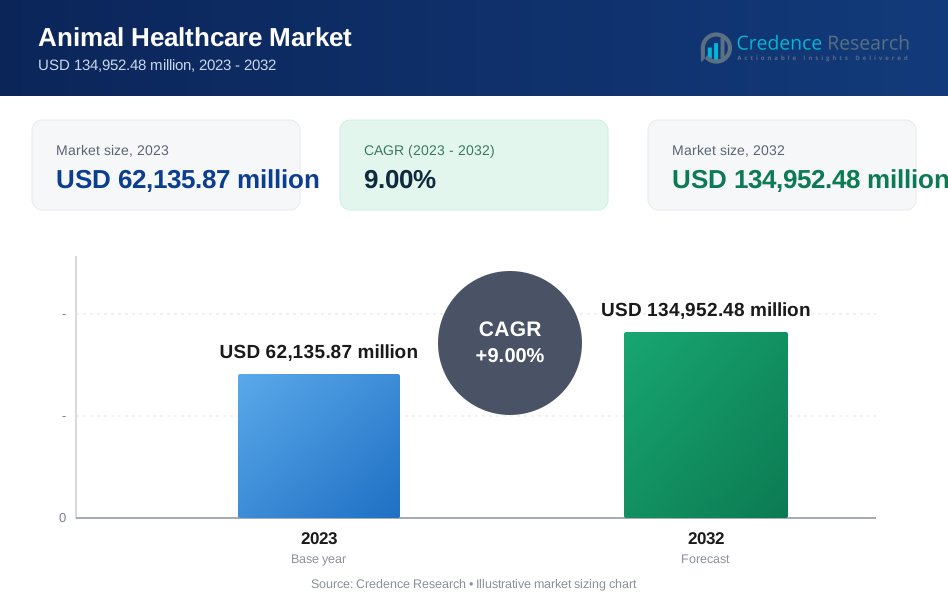
| Animal Healthcare Market Size 2023 | USD 62,135.87 Million |
| Animal Healthcare Market, CAGR | 9.00% |
| Animal Healthcare Market Size 2032 | USD 1,34,952.48 Million |
Market Overview
The Animal Healthcare Market is projected to grow from USD 62,135.87 million in 2023 to an estimated USD 1,34,952.48 million by 2032, with a compound annual growth rate (CAGR) of 9.00% from 2024 to 2032. This significant growth is driven by increasing pet ownership, rising awareness of animal health, and advancements in veterinary services and pharmaceuticals.
Key drivers in this market include increasing investments in research and development for innovative animal health products, and the rising incidence of zoonotic diseases. Additionally, the expansion of veterinary services and the development of vaccines, nutritional supplements, and diagnostic tools are major trends boosting market growth. Furthermore, increased awareness about animal welfare and stricter regulations regarding animal treatment are positively impacting the market landscape.
Geographically, North America dominates the Animal Healthcare market, followed by Europe, due to well-established veterinary infrastructure and high expenditure on animal health. However, Asia-Pacific is expected to witness the fastest growth during the forecast period, driven by increasing livestock production, rising pet adoption rates, and growing awareness of animal health in countries such as China and India. Key players in this market include Zoetis Inc., Merck Animal Health, Elanco, and Bayer AG, who are continuously investing in new product developments and strategic collaborations.
Market Drivers
Rising Pet Ownership and Humanization of Animals
The increasing rate of pet ownership globally is a significant driver of the animal healthcare market. More households are adopting pets, particularly in developed regions such as North America and Europe, where the concept of pet ownership is evolving into the humanization of animals. Pets are increasingly regarded as family members, and this shift has led to greater attention to their health, well-being, and medical needs. Owners are willing to invest in premium veterinary services, including advanced diagnostics, preventive care, and therapeutic treatments. This trend is also growing in emerging economies, where improving disposable incomes and urbanization are facilitating higher pet ownership rates. Consequently, the demand for veterinary services, pharmaceuticals, and nutritional supplements for companion animals is expected to rise, driving substantial growth in the animal healthcare market. This shift in consumer attitude has also encouraged veterinary healthcare companies to innovate and develop tailored products, leading to greater product variety and higher market penetration.
Increasing Prevalence of Zoonotic Diseases
Zoonotic diseases, which are diseases transmitted from animals to humans, have been rising in prevalence due to various factors such as increasing human-animal interaction, climate change, and deforestation. The global health community is becoming increasingly aware of the importance of monitoring and controlling these diseases, as outbreaks of zoonotic infections like avian flu, rabies, and COVID-19 have highlighted the need for robust animal healthcare systems. This growing awareness has led to increased government funding and international collaborations aimed at strengthening veterinary services and disease surveillance systems, particularly in areas with large populations of livestock or wildlife. Furthermore, the spread of zoonotic diseases has amplified the need for vaccines, diagnostics, and disease prevention solutions within the animal healthcare sector. Companies are investing heavily in R&D to create innovative products that can mitigate the risks of zoonotic diseases. For instance, the animal healthcare industry has seen a surge in demand for vaccinations, early detection tools, and biosecurity solutions, all of which play critical roles in controlling the transmission of these diseases.
Advancements in Veterinary Diagnostics and Treatment Technologies
Technological advancements in veterinary care, particularly in diagnostics and treatment, are driving significant growth in the animal healthcare market. Innovations such as molecular diagnostics, imaging technologies, and genetic testing are enabling veterinarians to detect and diagnose diseases earlier, allowing for more effective and targeted treatment options. For instance, advanced imaging technologies like MRI and ultrasound are being used more frequently to diagnose complex conditions in animals, providing more accurate results. Similarly, molecular diagnostics, including PCR testing and DNA sequencing, are allowing for early detection of genetic diseases and infectious agents, leading to better preventive care. In addition to diagnostics, treatment options for animals have also seen substantial improvements. Veterinary pharmaceuticals and biologics are rapidly evolving, with companies developing more effective and safer drugs for treating a wide range of animal health issues, from chronic diseases to acute infections. Moreover, the integration of telemedicine in veterinary practices, especially after the COVID-19 pandemic, has made healthcare services more accessible and convenient for pet owners, further driving market growth. These technological advancements are not only improving the quality of veterinary care but also expanding the scope of services that veterinary professionals can offer.
Growing Livestock Population and Rising Demand for Animal Protein
The rising global population and increasing demand for animal-based products, such as meat, milk, and eggs, are key drivers in the animal healthcare market. Livestock farming is a critical industry, particularly in developing regions where the growing middle class is driving up consumption of animal protein. To meet this demand, livestock farmers are focused on improving the health and productivity of their animals, which is directly linked to the growth of the animal healthcare sector. Livestock health is vital for ensuring the quality and safety of food products, and as a result, there is an increased need for veterinary services, disease prevention solutions, and nutritional supplements in this sector. Moreover, outbreaks of diseases within livestock populations, such as African swine fever and foot-and-mouth disease, have demonstrated the critical importance of maintaining high standards of animal health. Governments and international organizations are investing in better livestock management practices, disease control programs, and vaccination campaigns to ensure the sustainability of the livestock industry. This focus on improving livestock health has also led to advancements in veterinary pharmaceuticals, vaccines, and feed additives, all of which contribute to higher productivity and better animal welfare, driving demand within the animal healthcare market.
Market Trends
Increased Adoption of Telemedicine and Digital Health Solutions
A significant trend reshaping the animal healthcare market is the growing adoption of telemedicine and digital health solutions. The integration of technology into veterinary practices has accelerated, particularly after the COVID-19 pandemic, which highlighted the need for remote healthcare options. Telemedicine platforms are now being widely used by veterinarians to consult with pet owners and livestock farmers, providing them with instant access to medical advice, diagnosis, and treatment plans. For instance, telemedicine has emerged as a transformative force in veterinary care, bridging the gap between patients and healthcare providers, especially in remote regions. This trend is making veterinary services more accessible, especially in rural or underserved areas where access to animal healthcare is limited. Additionally, digital health tools like mobile apps, wearable devices, and cloud-based systems are gaining traction. These innovations allow for real-time monitoring of animal health, early detection of diseases, and improved management of chronic conditions. Pet owners and farmers can now track their animals’ health data remotely, and veterinarians can use this information to make more informed decisions, enhancing the overall quality of care. This trend is expected to drive significant growth in the animal healthcare market as digital health solutions become increasingly mainstream.
Rise in Preventive Healthcare and Wellness Products
Preventive care is becoming a focal point in the animal healthcare industry, with a growing emphasis on wellness products such as vaccines, nutritional supplements, and parasite control solutions. The increased awareness of the importance of preventive healthcare among pet owners and livestock farmers is driving demand for products that can help avoid the onset of diseases rather than just treating them. For instance, the American Veterinary Medical Association emphasizes that preventive healthcare involves a multi-faceted approach that includes veterinary evaluation of overall health and risks of disease or other health problems. Vaccination programs, regular health check-ups, and nutritional optimization are now integral parts of animal healthcare regimes. Furthermore, the trend toward preventive care extends to the livestock industry, where maintaining herd health is critical for food safety and productivity. Farmers are increasingly investing in preventive solutions to minimize the risk of disease outbreaks, which can be costly and disruptive. This shift toward preventive healthcare is not only enhancing animal welfare but also contributing to the sustained growth of the animal healthcare market by reducing long-term healthcare costs and improving the quality of life for animals.
Market Restraints and Challenges
High Costs of Veterinary Care and Animal Healthcare Products
One of the primary restraints facing the animal healthcare market is the high cost associated with veterinary services and healthcare products. Advanced veterinary treatments, specialized medications, and innovative diagnostic tools often come with substantial price tags, making them less accessible to a significant portion of pet owners and livestock farmers, particularly in developing regions. For instance, the rising prices for drug and pharmaceutical products, along with new technologies and the latest medical equipment, have significantly increased the cost of veterinary care. The cost barrier can deter individuals from seeking timely medical attention for their animals, potentially leading to untreated illnesses and decreased animal welfare. Additionally, the high expenses associated with research and development (R&D) for new animal healthcare products contribute to elevated prices. Companies investing in innovative solutions must recoup their R&D investments, which often translates to higher costs for end-users. Furthermore, the economic variability across different regions exacerbates this challenge. In emerging markets, where disposable incomes are lower, the affordability of high-quality veterinary care becomes a significant concern. Farmers in these regions may prioritize basic needs over preventive and advanced healthcare measures for their livestock, hindering the adoption of comprehensive animal healthcare solutions. Insurance coverage for animals is also limited compared to human healthcare, placing the financial burden directly on animal owners. This economic constraint not only limits market growth but also impacts the overall health and productivity of animals, which can have downstream effects on industries reliant on animal products. To mitigate this restraint, industry stakeholders must explore strategies such as developing cost-effective solutions, expanding insurance coverage, and implementing scalable healthcare models that can cater to diverse economic landscapes.
Stringent Regulatory Frameworks and Compliance Challenges
The animal healthcare market is heavily influenced by stringent regulatory frameworks and compliance requirements imposed by governmental and international bodies. These regulations are designed to ensure the safety, efficacy, and quality of animal healthcare products and services. However, navigating the complex and often varying regulatory landscapes across different regions poses significant challenges for market players. Compliance with diverse standards related to drug approvals, manufacturing practices, labeling, and environmental impact necessitates substantial investment in regulatory affairs and quality assurance processes. For instance, the FDA’s stringent regulations in the United States often pose challenges for companies, while in Europe, the decentralized regulatory system can be a hurdle to navigate. Failure to adhere to these regulations can result in severe penalties, product recalls, and damage to a company’s reputation, thereby hindering market entry and expansion efforts. Moreover, the regulatory environment is continually evolving in response to emerging health concerns, technological advancements, and societal expectations regarding animal welfare. Keeping pace with these changes requires ongoing investment in regulatory expertise and adaptive strategies. For instance, the introduction of new guidelines for antimicrobial usage in livestock to combat antibiotic resistance has compelled companies to reformulate products and adjust their marketing strategies. Additionally, international trade regulations can complicate the export and import of animal healthcare products, limiting market accessibility and increasing operational complexities for multinational companies. Small and medium-sized enterprises (SMEs) may find it particularly challenging to comply with extensive regulatory requirements due to limited resources and expertise. To address these compliance challenges, companies must invest in robust regulatory intelligence systems, foster strong relationships with regulatory authorities, and adopt flexible business models that can swiftly respond to regulatory changes. Collaborating with local partners and leveraging regional expertise can also facilitate smoother navigation of regulatory landscapes, enabling companies to maintain compliance while pursuing growth opportunities in diverse markets.
Market Segmentation Analysis
By Product
The Animal Healthcare Market’s product segment encompasses feed additives, pharmaceuticals, and vaccines. Feed additives such as vitamins, minerals, probiotics, and enzymes are essential for enhancing the nutritional value and growth performance of production animals. The growing demand for high-quality animal protein and the need to optimize livestock productivity are driving the expansion of this segment, with innovations focused on sustainability and reducing environmental impact further propelling growth. The pharmaceuticals segment includes a wide range of products like antibiotics, analgesics, anti-inflammatories, and other therapeutic agents used to treat various animal diseases. This segment is fueled by the rising incidences of zoonotic diseases and the necessity for effective treatment options, alongside continuous advancements in veterinary pharmaceuticals, including novel drug delivery systems and biologics, which enhance market expansion. Vaccines are crucial for preventing infectious diseases in both companion and production animals, ensuring their health and productivity. The increasing emphasis on disease prevention, supported by government initiatives for widespread vaccination programs, drives the demand for animal vaccines. Additionally, enhanced research and development efforts aimed at creating vaccines for emerging and re-emerging diseases significantly contribute to the growth of this segment. Collectively, these product categories demonstrate the market’s commitment to improving animal health through innovative and sustainable solutions.
By Animal
The Animal Healthcare market is segmented into Production Animals and Companion Animals, each playing a pivotal role in driving market growth. The Production Animals segment encompasses livestock such as cattle, poultry, swine, and aquaculture species, whose health is essential for maintaining the quality and quantity of animal-derived products. This segment is primarily driven by the increasing global demand for meat, dairy, and other animal products, prompting substantial investments in veterinary services and preventive healthcare measures to enhance productivity and mitigate disease outbreaks. Meanwhile, the Companion Animals segment, which includes dogs, cats, and other pets, represents a significant and growing portion of the market. The rising trend of pet humanization, where pets are treated as family members, leads to increased spending on veterinary care, preventive treatments, and wellness products. Additionally, innovations in pet healthcare services, such as telemedicine and personalized treatment plans, are further boosting the growth of this segment. Together, these two animal types underscore the diverse and dynamic nature of the Animal Healthcare market, highlighting the importance of both livestock health for food production and companion animal well-being for pet owners.
Segments
Based on Product
- Feed Additives
- Pharmaceuticals
- Vaccines
Based on Animal Type
- Production Animals
- Companion Animals
Based on Distribution Channel
- Veterinary Hospital Pharmacy
- E-commerce
- Retail Pharmacy
Based on Region
- North America
- U.S.
- Canada
- Mexico
- Europe
- Germany
- France
- U.K.
- Italy
- Spain
- Rest of Europe
- Asia Pacific
- China
- Japan
- India
- South Korea
- South-east Asia
- Rest of Asia Pacific
- Latin America
- Brazil
- Argentina
- Rest of Latin America
- Middle East & Africa
- GCC Countries
- South Africa
- Rest of the Middle East and Africa
Regional Analysis
North America (35%):
The Animal Healthcare market exhibits significant regional diversity, each contributing uniquely to the global landscape. North America leads the market with the largest share, accounting for approximately 35% of the global market. This dominance is driven by high pet ownership rates, advanced veterinary infrastructure, and substantial investments in research and development (R&D). The United States and Canada are key contributors, with a strong emphasis on innovative veterinary pharmaceuticals, advanced diagnostic tools, and comprehensive animal welfare regulations. Additionally, the presence of major market players and a well-established distribution network further bolster North America's leading position in the animal healthcare sector.
Europe (25%):
Europe holds the second-largest market share, estimated at around 25% of the global market. The region benefits from stringent regulatory standards, high awareness of animal welfare, and a robust veterinary services framework. Countries such as Germany, the United Kingdom, France, and Italy are pivotal in driving market growth through their focus on sustainable farming practices and preventive healthcare measures. Europe’s commitment to reducing antibiotic usage in livestock and promoting organic farming practices also contributes to the increasing demand for vaccines, nutritional supplements, and advanced veterinary diagnostics, thereby enhancing the region's market share.
Key players
- Neogen
- Zoetis
- Merck
- Boehringer Ingelheim
- Elanco
- Dechra Pharmaceuticals
- IDEXX Laboratories
- Braun Vet Care
- Medtronic
Competitive Analysis
The Animal Healthcare market is highly competitive, dominated by established multinational corporations and innovative emerging players. Zoetis leads the market with its extensive portfolio of vaccines and pharmaceuticals, leveraging strong R&D capabilities to maintain its market dominance. Merck and Boehringer Ingelheim follow closely, offering a wide range of veterinary products and investing heavily in research to address emerging animal health challenges. Elanco distinguishes itself through strategic acquisitions and a focus on sustainable animal health solutions, enhancing its global footprint. IDEXX Laboratories excels in diagnostic technologies, providing advanced diagnostic tools that give it a competitive edge. Neogen and Dechra Pharmaceuticals focus on specialized segments, such as feed additives and niche pharmaceuticals, catering to specific market needs. Braun Vet Care and Medtronic complement the competitive landscape by offering innovative medical devices and comprehensive veterinary care solutions. Overall, the market is characterized by continuous innovation, strategic collaborations, and a focus on expanding product portfolios to meet the diverse needs of the animal healthcare sector.
Recent Developments
- On June 7, 2023, Neogen launched Igenity BeefXDairy, a new genomic test for beef-on-dairy calves.
- On August 9, 2024, Merck Animal Health launched SenseHub Dairy Youngstock with Group Housing Capability.
- On September 3, 2024, Boehringer Ingelheim acquired Saiba Animal Health, adding innovative technology to its pet therapeutics R&D portfolio.
- On September 19, 2024, Elanco announced the FDA approval and launch of Zenrelia (ilunocitinib tablets) for canine dermatology.
- On July 18, 2024, Dechra announced the acquisition of Invetx, a company specializing in protein-based therapeutics for companion animals.
- On July 30, 2024, IDEXX released its 2023 Corporate Responsibility Report, highlighting progress against its goals.
- On July 25, 2022, Braun Vet Care was mentioned as a prominent player in the veterinary surgical instruments market.
- On September 25, 2024, Medtronic announced the commercial launch of several innovations in its AiBLE spine surgery ecosystem. On April 18, 2024, Medtronic launched 14 new Performance Insights algorithms for laparoscopic and robotic-assisted surgical procedures.
Market Concentration and Characteristics
The Animal Healthcare market is moderately concentrated, with a few leading multinational corporations such as Zoetis, Merck, Boehringer Ingelheim, and Elanco dominating a significant share of the market. These key players leverage extensive research and development (R&D) capabilities, innovative product portfolios, and strategic acquisitions to maintain their competitive edge. The market is characterized by continuous innovation in pharmaceuticals, vaccines, diagnostics, and medical devices, driven by the increasing demand for advanced animal health solutions. Additionally, the sector operates within a stringent regulatory framework that ensures the safety and efficacy of animal healthcare products, necessitating substantial compliance efforts from market participants. The diverse range of products catering to both companion and production animals, coupled with the rising emphasis on preventive care and wellness, further defines the market’s dynamic landscape. Furthermore, the growing trend of digitalization and telemedicine is reshaping distribution channels and enhancing accessibility to veterinary services. Overall, the Animal Healthcare market is marked by high levels of competition, significant investment in innovation, and a robust regulatory environment, all contributing to its steady growth and resilience in addressing the evolving needs of animal health and welfare.
Report Coverage
The research report offers an in-depth analysis based on Product, Animal Type, Distribution Channel and Region. It details leading market players, providing an overview of their business, product offerings, investments, revenue streams, and key applications. Additionally, the report includes insights into the competitive environment, SWOT analysis, current market trends, as well as the primary drivers and constraints. Furthermore, it discusses various factors that have driven market expansion in recent years. The report also explores market dynamics, regulatory scenarios, and technological advancements that are shaping the industry. It assesses the impact of external factors and global economic changes on market growth. Lastly, it provides strategic recommendations for new entrants and established companies to navigate the complexities of the market.
Future Outlook
- Advanced technologies such as artificial intelligence, machine learning, and blockchain will revolutionize diagnostics, treatment protocols, and supply chain management, enhancing efficiency and accuracy in animal healthcare.
- The adoption of telemedicine will continue to rise, providing remote veterinary consultations and monitoring, thereby increasing access to healthcare services for animals in both urban and rural areas.
- Emphasis on preventive healthcare will grow, with more investments in vaccines, nutritional supplements, and regular health check-ups, reducing the incidence of diseases and improving overall animal welfare.
- The companion animal segment will expand as pet ownership increases globally, driving demand for specialized veterinary services, premium pharmaceuticals, and innovative wellness products tailored to pets’ needs.
- There will be a surge in demand for sustainable and eco-friendly animal healthcare products, including organic feed additives and biodegradable medical supplies, aligning with global sustainability trends and consumer preferences.
- Personalized medicine will gain traction, with treatments and preventive measures tailored to individual animals based on genetic profiles and specific health conditions, enhancing treatment efficacy and animal outcomes.
- Emerging markets in Asia-Pacific, Latin America, and Africa will witness significant growth due to rising disposable incomes, urbanization, and increased investment in veterinary infrastructure and animal health awareness.
- The integration of Internet of Things (IoT) and wearable devices will enable real-time health monitoring and data collection, facilitating proactive healthcare management and timely interventions for animals.
- Enhanced regulatory frameworks and standardization of animal healthcare practices will ensure higher quality and safety of products and services, fostering trust and compliance among stakeholders and consumers.
- Strategic collaborations, partnerships, and mergers among key players will accelerate innovation, expand product portfolios, and enhance market presence, driving competitive advantage and market consolidation in the animal healthcare sector.
Request a Free Sample
Fill in your details and we'll send you a free sample report.
- Sample data tables & charts
- Research methodology
Need a Custom Version of This Report?
Tailor the scope, geography, or segments to your exact requirements.
- Custom geography or segment scope
- Direct access to our analyst team
Frequently Asked Questions
What is the projected market size of the Animal Healthcare market for 2023 and 2032, and what is the expected CAGR?
What are the primary drivers contributing to the growth of the Animal Healthcare market?
Which regions hold the largest market share in the Animal Healthcare market, and which region is expected to grow the fastest?
Who are the key players in the Animal Healthcare market, and how do they maintain their competitive edge?
What are the current trends shaping the future of the Animal Healthcare market?
Table of Content
Chapter 1. Report Introduction
- 1.1 Report Description & Purpose
- 1.1.1 Report Title & Market Definition
- 1.1.2 Unique Selling Propositions (USP) & Key Differentiators
- 1.1.3 Value Proposition for Stakeholders
- 1.2 Research Objectives
- 1.2.1 Market Sizing Objectives (Volume & Revenue)
- 1.2.2 Segmentation Objectives
- 1.2.3 Competitive Intelligence Objectives
- 1.2.4 Forecast & Scenario Objectives
- 1.3 Report Scope
- 1.3.1 Animal Healthcare Scope – Types & Subtypes Covered
- 1.3.2 Geographic Scope – Regions & Countries Covered
- 1.3.3 Historical Period, Base Year & Forecast Period (2023; forecast to 2032)
- 1.3.4 Inclusions & Exclusions
- 1.4 HS Code & Classification Framework
- 1.5 Currency, Units & Pricing Basis
- 1.6 Target Stakeholders
- 1.7 Limitations & Assumptions
Chapter 2. Executive Summary
- 2.1 Global Animal Healthcare Market Snapshot
- 2.1.1 Market Size – Historical (2023) & Forecast (2023-2032) (2023: USD 62,135.87 million → 2032: USD 134,952.48 million)
- 2.1.2 Volume & Revenue – Global Totals
- 2.1.3 Key Market Highlights – Top Five Facts
- 2.2 Animal Healthcare Market Segmentation Snapshot
- 2.2.1 Market Split by Region – 2023 vs. 2032
- 2.3 Competitive Snapshot
- 2.3.1 Top 10 Players by Revenue Share – 2023
- 2.3.2 Top 10 Players by Volume Share – 2023
- 2.3.3 Recent Strategic Developments (18-Month Summary)
- 2.4 Key Investment Highlights & Strategic Conclusions
Chapter 3. Animal Healthcare Market Dynamics & Industry Analysis
- 3.1 Market Overview & Context
- 3.1.1 Animal Healthcare Market Position in the Broader Automotive Value Chain
- 3.1.2 OEM vs. Replacement Market Dynamics
- 3.1.3 Market Maturity & Development Stage by Region
- 3.2 Animal Healthcare Market Drivers
- 3.3 Animal Healthcare Market Restraints & Challenges
- 3.4 Animal Healthcare Market Opportunities
- 3.5 Porter's Five Forces Analysis
- 3.5.1 Threat of New Entrants
- 3.5.2 Bargaining Power of Suppliers
- 3.5.3 Bargaining Power of Buyers
- 3.5.4 Threat of Substitutes
- 3.5.5 Competitive Rivalry – Intensity Assessment
- 3.6 Animal Healthcare Value Chain Analysis
- 3.6.1 Upstream – Raw Material/Input Suppliers
- 3.6.1.1 Raw Material/Input 1
- 3.6.1.2 Raw Material/Input 2
- 3.6.1.3 Raw Material/Input 3
- 3.6.2 Midstream – Production/Manufacturing/Service Delivery
- 3.6.2.1 Production/Process Overview
- 3.6.2.2 Key Facility Locations & Capacity by Manufacturer
- 3.6.3 Downstream – Distribution & End Consumer
- 3.6.3.1 Primary Channel – B2B/OEM
- 3.6.3.2 Secondary Channels – Dealer, Retail, Online, Direct
- 3.6.4 Value Chain Profitability Analysis
- 3.6.1 Upstream – Raw Material/Input Suppliers
- 3.7 PESTEL Analysis
- 3.7.1 Political Factors
- 3.7.2 Economic Factors
- 3.7.3 Social Factors
- 3.7.4 Technological Factors
- 3.7.5 Environmental Factors
- 3.7.6 Legal Factors
- 3.8 Animal Healthcare Supply Chain Analysis
- 3.8.1 Raw Material/Input Supply Risk Assessment
- 3.8.2 Manufacturing Concentration Risk (Geographic Exposure)
- 3.8.3 Trade Disruption Impact Analysis
- 3.9 Regulatory & Policy Landscape
Note: The regulatory and policy landscape section covers regulations based on their applicability to the market, Animal Healthcare category, geography, and scope of the study. Only regulatory frameworks with a material impact on operations, compliance, trade, sustainability, or market access are analyzed in detail.
Chapter 4. Key Investment Pockets & Opportunity Analysis
- 4.1 Animal Healthcare Market Attractiveness Analysis
- 4.1.1 By Region – Investment Attractiveness Matrix (Volume × CAGR)
- 4.2 Absolute Revenue Growth Opportunity
- 4.2.1 By Region – Absolute USD Growth Through 2032
- 4.3 Incremental Volume Opportunity
- 4.3.1 By Region – Incremental Volume Through 2032
- 4.3.2 Segment – Incremental Volume
- 4.4 Emerging Submarket Opportunity Deep Dive (Subject to Applicability)
- 4.5 Emerging Market Opportunity Scorecards
- 4.5.1 United States
- 4.5.2 Europe
- 4.5.3 Asia
- 4.5.4 Middle East & Africa
Note: Emerging Market Opportunity Scorecards will be included based on relevance and strategic importance. Regions listed are indicative and may vary depending on data availability and market dynamics.
Chapter 5. Animal Healthcare Import-Export Analysis & Trade Flows
- 5.1 Global Trade Overview
- 5.1.1 Global Export Value by Country (2023)
- 5.1.2 Global Export Volume by Country (2023)
- 5.1.3 Global Import Value by Country (2023)
- 5.1.4 Global Import Volume by Country (2023)
- 5.1.5 Net Trade Balance by Country (2023)
- 5.2 Export Analysis – Segment
- 5.2.1 Type 1 (HS Code)
- 5.2.2 Type 2 (HS Code)
- 5.2.3 Type 3 (HS Code)
- 5.2.4 Type 4 (HS Code)
- 5.2.5 Type 5 (HS Code)
- 5.3 Import Analysis – Segment
- 5.3.1 Type 1 (HS Code)
- 5.3.2 Type 2 (HS Code)
- 5.3.3 Type 3 (HS Code)
- 5.3.4 Type 4 (HS Code)
- 5.3.5 Type 5 (HS Code)
- 5.4 Average Unit Trade Prices
- 5.4.1 Average Export Price – Segment & Country
- 5.4.2 Average Import Price – Segment & Source Country
- 5.4.3 Price Trends (2023)
- 5.5 Key Trade Route Analysis
- 5.5.1 Trade Route 1
- 5.5.2 Trade Route 2
- 5.5.3 Trade Route 3
- 5.5.4 Trade Route 4
- 5.5.5 Trade Route 5
- 5.6 Trade Policy Impact Assessment
- 5.6.1 US Anti-Dumping & Section 301 Tariffs
- 5.6.2 EU Customs Union Impact
- 5.6.3 Major Free Trade Agreements
- 5.6.4 USMCA Rules of Origin
Note: Trade policy analysis will be included only where relevant to the Animal Healthcare market.
Chapter 6. Competitive Landscape & Company Benchmarking
- 6.1 Animal Healthcare Market Concentration & Structure
- 6.1.1 Herfindahl-Hirschman Index (HHI) – vs. 2023
- 6.1.2 Tier 1, Tier 2 & Tier 3 Market Structure
- 6.1.3 Global, Regional & Local Player Dynamics
- 6.2 Animal Healthcare Market Share Analysis – 2023
- 6.2.1 Global Revenue Share by Company
- 6.2.2 Global Volume Share by Company
- 6.2.3 Regional Revenue Share
- 6.2.4 Market Share Evolution ( vs. 2023)
- 6.2.5 OEM Segment Share by Company
- 6.2.6 Replacement Segment Share by Company
- 6.3 Production/Delivery Capacity & Facility Analysis
- 6.3.1 Global Installed Capacity
- 6.3.2 Capacity Utilization Rates
- 6.3.3 Production/Output Volume
- 6.3.4 Facility Locations & Capacity Map
- 6.3.5 Planned Capacity Additions
- 6.4 Animal Healthcare Competitive Benchmarking Matrix
- 6.4.1 Revenue, Volume, CAGR & Profitability Comparison
- 6.4.2 Channel Revenue Mix
- 6.4.3 Geographic Revenue Exposure
- 6.4.4 R&D Intensity
- 6.4.5 Sustainability Maturity
- 6.5 Strategic Developments in Animal Healthcare (Last 24 Months)
- 6.5.1 Mergers, Acquisitions & Divestments
- 6.5.2 New Animal Healthcare Launches
- 6.5.3 Facility Expansions
- 6.5.4 Strategic Alliances, Joint Ventures & Partnerships
- 6.5.5 Distribution Expansion & Market Entry
- 6.5.6 Sustainability & ESG Initiatives
- 6.6 Competitive Strategy Mapping
- 6.6.1 Leader, Challenger, Follower & Niche Classification
- 6.6.2 Pricing Strategy Comparison
- 6.6.3 Channel Strategy Matrix
Note: Strategic developments are included based on their materiality and the availability of reliable information.
Chapter 7. Global Animal Healthcare Market – By Distribution Channel
- 7.1 Segment Overview
- 7.1.1 Volume & Revenue Split by Channel (2023 & 2032)
- 7.1.2 Channel Mix Evolution (2023-2032)
Chapter 8. Regional Market Analysis – Global Overview
- 8.1 Global Regional Overview
- 8.1.1 Regional Volume Share
- 8.1.2 Regional Revenue Share
- 8.1.3 Regional Volume by Region
- 8.1.4 Regional Revenue by Region
- 8.1.5 Regional Forecast Through 2032
- 8.2 Cross-Regional Segment Analysis
- 8.2.1 By Distribution Channel
- 8.2.2 By Brand/Price Tier
Chapter 9. North America Animal Healthcare Market
- 9.1 United States
- 9.2 Canada
- 9.3 Mexico
Chapter 10. Europe Animal Healthcare Market
- 10.1 Germany
- 10.2 France
- 10.3 Italy
- 10.4 United Kingdom
- 10.5 Spain
- 10.6 Poland
- 10.7 Russia
- 10.8 Netherlands
- 10.9 Belgium
- 10.10 Sweden
- 10.11 Denmark
- 10.12 Norway
- 10.13 Rest of Europe
Chapter 11. Asia Pacific Animal Healthcare Market
- 11.1 China
- 11.2 India
- 11.3 Japan
- 11.4 South Korea
- 11.5 Thailand
- 11.6 Indonesia
- 11.7 Vietnam
- 11.8 Malaysia
- 11.9 Australia
- 11.10 Rest of Asia Pacific
Chapter 12. Latin America Animal Healthcare Market
- 12.1 Brazil
- 12.2 Argentina
- 12.3 Colombia
- 12.4 Chile
- 12.5 Rest of Latin America
Chapter 13. Middle East Animal Healthcare Market
- 13.1 Saudi Arabia
- 13.2 United Arab Emirates
- 13.3 Turkey
- 13.4 Israel
- 13.5 Iran
- 13.6 Rest of the Middle East
Chapter 14. Africa Animal Healthcare Market
- 14.1 South Africa
- 14.2 Egypt
- 14.3 Nigeria
- 14.4 Morocco
- 14.5 Rest of Africa
Chapter 15. Animal Healthcare Company Profiles
- 15.1 [Company 01]
- 15.1.1 Company Overview
- 15.1.2 Key Management Personnel
- 15.1.3 Products & Services Portfolio
- 15.1.4 Financial Performance
- 15.1.5 Key Market Focus & Geographic Presence
- 15.1.6 Recent Developments & Strategic Initiatives
Note: The company profile list is preliminary and may change based on research findings, market developments, data availability, and client requirements.
Chapter 16. Appendices
- Appendix A – List of Abbreviations & Acronyms
- Appendix B – Industry Classification Code Reference – Full Series
- Appendix C – Production & Capacity Data Tables
- Appendix D – End-Use & Demand Base Tables
- Appendix E – Consumption & Replacement Rate Assumptions
- Appendix F – ASP Reference Tables
- Appendix G – Manufacturing & Facility Database
- Appendix H – Import-Export Data Tables
- Appendix I – Regulatory Summary Tables
- Appendix J – Primary Research Participant List (Anonymized)
- Appendix K – Primary Research Questionnaire Framework
- Appendix L – Data Sources & Bibliography
- Appendix M – Market Size Divergence & Source Comparison
Chapter 17. Research Methodology
- 17.1 Research Framework & Philosophy
- 17.2 Secondary Research – Sources, Hierarchy & Data Extraction
- 17.3 Data Modeling – Bottom-Up & Top-Down Market Sizing
- 17.4 Primary Research – Stakeholder Framework, LOI & Sample Sizes
- 17.5 Forecast Methodology – Regression, Scenario & Sensitivity Analysis
- 17.6 Quality Control – Four-Layer Validation Framework
- 17.7 Limitations & Standard Assumptions
- 17.8 Disclaimer
