
| REPORT ATTRIBUTE | DETAILS |
|---|---|
| Historical Period | 2019-2022 |
| Base Year | 2023 |
| Forecast Period | 2024-2032 |
| Atherectomy Devices Market Size 2023 | USD 845.23 million |
| Atherectomy Devices Market, CAGR | 10.60% |
| Atherectomy Devices Market Size 2032 | USD 2,055.23 million |
Market Overview:
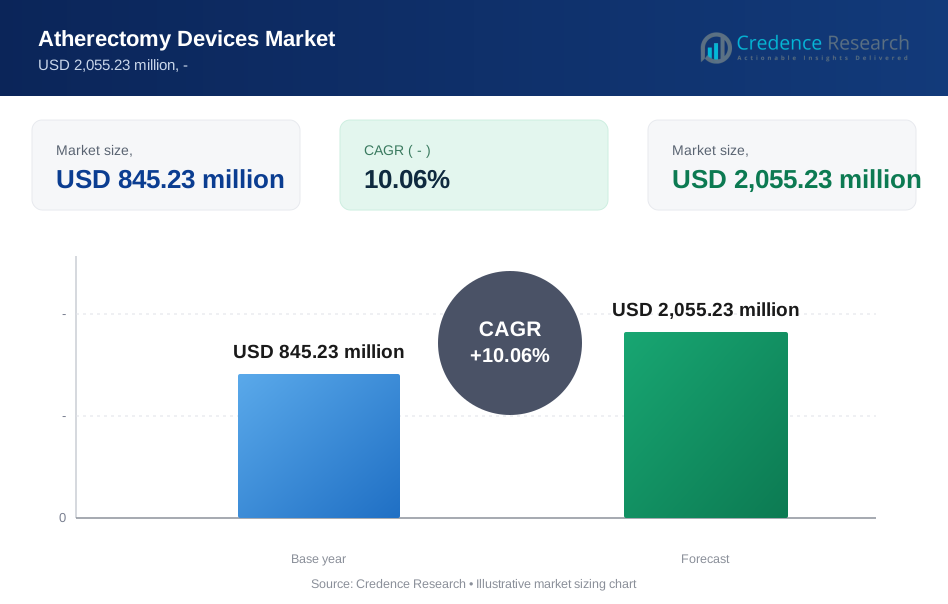
The atherectomy device market is experiencing significant growth, with a projected compound annual growth rate (CAGR) of 10.06% from USD 845.23 million in 2023 to USD 2,055.23 million by 2032. This robust expansion can be attributed to several factors driving demand for these specialized medical devices. Atherectomy devices play a crucial role in the treatment of arterial plaque buildup, a condition prevalent in patients with cardiovascular diseases such as peripheral artery disease (PAD) and coronary artery disease (CAD). As the global prevalence of these diseases continues to rise, the demand for effective treatment options, including atherectomy procedures, is expected to increase.
The growth of the atherectomy device market is being driven by several factors, with the rising incidence of cardiovascular diseases being a primary contributor. Sedentary lifestyles, unhealthy dietary habits, and aging populations globally are leading to increased prevalence of conditions like peripheral artery disease (PAD) and coronary artery disease (CAD), necessitating effective treatment options such as atherectomy procedures to address arterial blockages and restore blood flow. Furthermore, continuous technological advancements and innovations in atherectomy device design are augmenting treatment outcomes and broadening the scope of these devices. Manufacturers are consistently introducing new features like enhanced cutting mechanisms and improved navigation systems, enhancing precision, efficacy, and safety during atherectomy procedures, which in turn is propelling market growth.
Additionally, the growing adoption of atherectomy procedures as a preferred treatment modality is further contributing to market expansion. Atherectomy offers distinct advantages over traditional treatments like angioplasty and stenting, including more effective removal of calcified and fibrous plaque, reduced risk of complications, and improved long-term outcomes. As healthcare providers gain more experience and confidence in performing atherectomy procedures, the demand for associated devices is expected to steadily rise. Moreover, increasing awareness among patients about the significance of early detection and intervention for cardiovascular diseases is driving demand for minimally invasive treatment options like atherectomy. Patients are actively seeking innovative treatment approaches that offer faster recovery times and better quality of life, fueling market growth and incentivizing investments in advanced atherectomy technologies.
Market Drivers:
Rising Prevalence of Cardiovascular Diseases:
Cardiovascular diseases (CVDs) are the leading cause of death globally, according to the World Health Organization (WHO). An aging population, coupled with unhealthy lifestyle choices like smoking and a lack of physical activity, contributes to the growing number of individuals suffering from conditions like atherosclerosis, a condition characterized by plaque buildup in arteries. This rising burden of CVDs necessitates effective treatment options, driving demand for atherectomy devices.
Shift Towards Minimally Invasive Procedures:
Patients and healthcare providers are increasingly favoring minimally invasive procedures over traditional open surgeries. Atherectomy devices offer a minimally invasive approach to plaque removal, resulting in shorter hospital stays, faster recovery times, and reduced patient discomfort compared to bypass surgery.
Technological Advancements:
Continuous advancements in atherectomy technology are enhancing the effectiveness, safety, and versatility of these devices. Innovations such as directional atherectomy, which allows for more targeted plaque removal, and the development of devices compatible with smaller blood vessels are expanding the application of atherectomy procedures.
Favorable Reimbursement Scenario:
In many regions, healthcare payers are increasingly recognizing the benefits of atherectomy procedures and providing favorable reimbursement coverage. This financial support encourages healthcare providers to adopt these technologies, further fueling market growth.
Growing Focus on Peripheral Vascular Applications:
While traditionally used in coronary arteries, the application of atherectomy devices is expanding to treat peripheral artery disease (PAD). PAD affects arteries outside the heart and brain, causing pain, numbness, and increasing the risk of limb amputation. The growing prevalence of PAD unlocks new avenues for atherectomy device utilization.
Rising Healthcare Expenditure:
The global healthcare expenditure is expected to rise steadily in the coming years, fueled by factors like growing populations, increasing disposable income, and an aging population with higher healthcare needs. This increased spending translates to greater investment in advanced medical technologies, including atherectomy devices.
Market Trends:
Rising Prevalence of Cardiovascular Diseases:
A major risk factor for peripheral arterial disease (PAD), the increasing prevalence of cardiovascular diseases is fueling demand for atherectomy devices. As the global population ages, the incidence of these conditions is expected to rise further, creating a larger patient pool for atherectomy procedures.
Technological Advancements and Minimally Invasive Procedures:
Advancements in atherectomy technology are enabling minimally invasive procedures with faster recovery times for patients. This minimally invasive approach is increasingly favored by both patients and physicians, leading to a greater adoption of atherectomy devices.
Growing Geriatric Population and Increasing Healthcare Expenditure:
The global geriatric population is expanding, and this age group is more susceptible to PAD. This, coupled with rising healthcare expenditure worldwide, is creating a favorable market landscape for atherectomy devices. As healthcare budgets increase, there is more investment in innovative medical technologies and procedures.
Focus on Reimbursement Policies and Cost-Effectiveness:
Manufacturers are increasingly focusing on developing cost-effective atherectomy devices due to growing scrutiny on healthcare costs and reimbursement policies. This trend is driven by the need to ensure affordability for both patients and healthcare providers.
Market Restraints and Challenges:
High Cost of Devices and Procedures:
Atherectomy devices themselves are expensive, and the procedures utilizing them add to the overall cost burden. This can limit patient access, particularly in regions with limited healthcare budgets or for patients with inadequate insurance coverage. The high cost can also be a deterrent for hospitals and clinics considering adding these procedures to their offerings.
Scarcity of Skilled Medical Professionals:
Performing atherectomy procedures requires specialized training and expertise. Currently, there may not be a sufficient number of qualified physicians trained in these techniques to meet the growing demand for these procedures. This shortage can create bottlenecks in patient access and limit the widespread adoption of atherectomy devices.
Stringent Regulatory Requirements:
Regulatory bodies have strict requirements for the approval and marketing of medical devices. This can lead to lengthy and expensive clinical trials, which can delay the introduction of new and innovative atherectomy devices to the market. Additionally, navigating the complex regulatory landscape adds to the overall cost of device development and commercialization.
Limited Reimbursement Policies:
Reimbursement policies from government and private insurance payers can significantly impact the adoption of atherectomy devices. If these procedures are not adequately reimbursed, hospitals and physicians may be hesitant to invest in the technology due to potential financial losses. Additionally, complex reimbursement processes can create administrative burdens for healthcare providers.
Potential Complications and Considerations:
While minimally invasive, atherectomy procedures are not without risks. Potential complications include bleeding, vessel perforation, and stroke. Physicians must carefully weigh the risks and benefits for each patient, and these considerations may limit the use of atherectomy devices in certain patient populations.
Recent Developments:
In June 2023, Avinger, Inc. received FDA clearance for Pantheris LV, its next-generation image-guided atherectomy system for treating peripheral artery disease (PAD). The system offers new features, including higher cutter speeds, plaque apposition design, and enhanced torque feedback. It will be limitedly launched by the end of the quarter and expand to full commercial availability in the second half of 2023. Avinger's Lumivascular technology uses optical coherence tomography (OCT) images to guide treatment, ensuring safe and effective outcomes without ionizing radiation exposure.
In February 2023, Abbott acquired Cardiovascular Systems, a prominent medical device company known for its cutting-edge atherectomy system designed to address peripheral & coronary artery disease. Under the terms of the agreement, CSI stockholders will receive a cash consideration of $20/common share, resulting in an anticipated equity value of $890 Mn. CSI is a renowned industry leader in the field of atherectomy devices. These devices are designed to optimize the advantages of standard balloon angioplasty & stent treatments, particularly in cases involving intricate arterial diseases. The acquisition will enhance Abbott's portfolio of vascular devices by incorporating complementary technologies.
August 2022: AngioDynamics, Inc. announced that the Auryon Atherectomy System has gained 510(k) clearance for an expanded indication that includes arterial thrombectomy.
February 2022: RA Medical Systems, announced that enrollment has reached 95 subjects in the pivotal clinical trial to evaluate the safety and effectiveness of the DABRA excimer laser system as an atherectomy device for the treatment of peripheral arterial disease.
Segmentation Analysis:
By Product Type:
Atherectomy devices encompass a range of technologies designed to address arterial plaque buildup and restore blood flow. Rotational atherectomy devices employ rotating blades to ablate plaque within arteries, while directional atherectomy devices utilize cutting mechanisms to excise plaque directly from artery walls. Excimer laser atherectomy devices vaporize plaque deposits using laser technology, facilitating easier removal. Orbital atherectomy systems utilize eccentric discs that orbit within arteries to pulverize plaque buildup effectively. Additionally, support devices like guidewires, balloons, and catheters complement atherectomy procedures, aiding in navigation and enhancing treatment outcomes. Together, these devices provide comprehensive solutions for treating arterial plaque and improving vascular health.
Segments:
By Type
- Directional Coronary Atherectomy
- Rotational Atherectomy
- Orbital Atherectomy
- Laser Atherectomy
By Application
- Peripheral Vascular Applications
- Cardiovascular Applications
- Neurovascular Applications
By End-User
- Hospitals and Surgical Centres
- Ambulatory Care Centres
- Other End Users
By Regional
North America
- United States of America
- Canada
- Mexico
- Rest of North America
Europe
- United Kingdom
- Germany
- France
- Italy
- Rest of Europe
Asia-Pacific
- Japan
- China
- India
- Rest of APAC
LAMEA
- Argentina
- Brazil
- UAE
- Rest of LAMEA
Key player:
- Abbott Laboratories
- Boston Scientific Corporation
- Medtronic
- Becton, Dickinson, and Company (BD Interventional)
- Koninklijke Philips NV.
- Avinger, Inc.
- Rex Medical
- AngioDynamics
Regional Analysis:
North America:
This region is currently the dominant player in the atherectomy device market, and is forecast to maintain its lead throughout the projection period. This dominance can be attributed to several factors, including a high prevalence of peripheral arterial disease (PAD) and coronary artery disease (CAD) in the aging population, a well-established healthcare infrastructure with widespread adoption of advanced medical technologies, and favorable reimbursement policies for atherectomy procedures.
Asia Pacific:
The Asia Pacific region is expected to witness the fastest growth in the atherectomy device market. This surge is driven by a rising aging population, increasing awareness of PAD and CAD, and growing disposable incomes in the region. Additionally, governments in this region are increasingly investing in improving healthcare infrastructure, which will likely create a more fertile ground for the adoption of atherectomy devices.
Europe:
Europe represents another significant market for atherectomy devices. The presence of major market players, along with favorable government initiatives promoting advanced medical procedures and a well-developed healthcare system, contribute to market growth in this region. However, stringent regulatory processes and healthcare budget constraints might pose challenges to the atherectomy device market growth in Europe compared to North America and Asia Pacific.
Future Outlook:
- The growing global burden of cardiovascular disease, a major risk factor for arterial blockages, will continue to fuel demand for atherectomy procedures.
- As the global population ages, the incidence of age-related cardiovascular complications is expected to rise, further propelling the atherectomy device market.
- Continuous advancements in atherectomy technology, offering features like improved efficiency, precision, and minimally invasive approaches, will enhance their adoption in clinical settings.
- Positive reimbursement policies for atherectomy procedures in various regions will incentivize hospitals and healthcare providers to invest in these devices.
- The growing preference for minimally invasive procedures, with faster recovery times and reduced patient discomfort, will favor the adoption of atherectomy devices over traditional surgical interventions.
- Rising awareness among healthcare professionals about the benefits of atherectomy devices, coupled with increased training programs, will improve their utilization rates.
- Manufacturers will strive to develop cost-effective atherectomy devices, making them more accessible to healthcare institutions and patients.
- The atherectomy device market is expected to witness significant growth in emerging economies like China and India, due to rising disposable income, increasing healthcare infrastructure development, and a growing patient pool.
- Research and development efforts are focused on exploring new atherectomy technologies, such as laser-assisted and ultrasonic atherectomy, to further enhance treatment efficacy and expand treatment options.
- The integration of remote monitoring and connectivity features in atherectomy devices could streamline procedures, improve data collection, and enhance patient care.
Request a Free Sample
Fill in your details and we'll send you a free sample report.
- Sample data tables & charts
- Research methodology
Need a Custom Version of This Report?
Tailor the scope, geography, or segments to your exact requirements.
- Custom geography or segment scope
- Direct access to our analyst team
Frequently Asked Questions
What is an atherectomy device, and how does it work?
What conditions are treated using atherectomy devices?
How do atherectomy procedures differ from other cardiovascular interventions?
What are the potential benefits and risks associated with atherectomy procedures?
Table of Content
Chapter 1. Report Introduction
- 1.1 Report Description & Purpose
- 1.1.1 Report Title & Market Definition
- 1.1.2 Unique Selling Propositions (USP) & Key Differentiators
- 1.1.3 Value Proposition for Stakeholders
- 1.2 Research Objectives
- 1.2.1 Market Sizing Objectives (Volume & Revenue) (Volume Where Applicable)
- 1.2.2 Segmentation Objectives
- 1.2.3 Competitive Intelligence Objectives
- 1.2.4 Forecast & Scenario Objectives
- 1.3 Report Scope
- 1.3.1 Atherectomy Devices Scope – Segments & Subsegments Covered
- 1.3.2 Geographic Scope – Regions & Countries Covered
- 1.3.3 Historical Period, Base Year & Forecast Period (the historical period; forecast to the forecast period)
- 1.3.4 Inclusions & Exclusions
- 1.4 Industry Classification & Applicable Codes
- 1.5 Currency, Measurement Units & Valuation Basis
- 1.6 Target Stakeholders
- 1.7 Limitations & Assumptions
Chapter 2. Executive Summary
- 2.1 Global Atherectomy Devices Market Snapshot
- 2.1.1 Market Size – Historical (the historical period) & Forecast (the forecast period) (base year: USD 845.23 million → forecast year: USD 2,055.23 million)
- 2.1.2 Volume & Revenue – Global Totals (Volume Where Applicable)
- 2.1.3 Key Market Highlights – Top Five Facts
- 2.2 Atherectomy Devices Market Segmentation Snapshot
- 2.2.1 Market Split by Region – vs.
- 2.3 Competitive Snapshot
- 2.3.1 Top 10 Players by Revenue Share –
- 2.3.2 Top 10 Players by Volume Share – (Volume Where Applicable)
- 2.3.3 Recent Strategic Developments (18-Month Summary)
- 2.4 Key Investment Highlights & Strategic Conclusions
Chapter 3. Atherectomy Devices Market Dynamics & Industry Analysis
- 3.1 Market Overview & Context
- 3.1.1 Atherectomy Devices Market Position in the Broader Industry Value Chain
- 3.1.2 Demand Structure & Purchasing Dynamics
- 3.1.3 Market Maturity & Development Stage by Region
- 3.2 Atherectomy Devices Market Drivers
- 3.3 Atherectomy Devices Market Restraints & Challenges
- 3.4 Atherectomy Devices Market Opportunities
- 3.5 Porter's Five Forces Analysis
- 3.5.1 Threat of New Entrants
- 3.5.2 Bargaining Power of Suppliers
- 3.5.3 Bargaining Power of Buyers
- 3.5.4 Threat of Substitutes
- 3.5.5 Competitive Rivalry – Intensity Assessment
- 3.6 Atherectomy Devices Value Chain Analysis
- 3.6.1 Upstream – Key Inputs, Resources & Suppliers
- 3.6.1.1 Key Input/Resource 1
- 3.6.1.2 Key Input/Resource 2
- 3.6.1.3 Key Input/Resource 3
- 3.6.2 Midstream – Core Operations & Value Creation
- 3.6.2.1 Operating Model & Process Overview
- 3.6.2.2 Key Operating Locations & Capabilities by Company
- 3.6.3 Downstream – Market Channels & End Users
- 3.6.3.1 Direct Sales & Customer Engagement Channels
- 3.6.3.2 Indirect Sales, Intermediaries & Partner Channels
- 3.6.4 Value Chain Profitability Analysis
- 3.6.1 Upstream – Key Inputs, Resources & Suppliers
- 3.7 PESTEL Analysis
- 3.7.1 Political Factors
- 3.7.2 Economic Factors
- 3.7.3 Social Factors
- 3.7.4 Technological Factors
- 3.7.5 Environmental Factors
- 3.7.6 Legal Factors
- 3.8 Atherectomy Devices Supply Chain Analysis
- 3.8.1 Critical Input & Resource Availability Risk Assessment
- 3.8.2 Supplier & Operational Concentration Risk (Geographic Exposure)
- 3.8.3 Supply & Service Disruption Impact Analysis
- 3.9 Regulatory & Policy Landscape
Note: The regulatory and policy landscape section covers regulations based on their applicability to the market, Atherectomy Devices category, geography, and scope of the study. Only regulatory frameworks with a material impact on operations, compliance, trade, sustainability, or market access are analyzed in detail.
Chapter 4. Key Investment Pockets & Opportunity Analysis
- 4.1 Atherectomy Devices Market Attractiveness Analysis
- 4.1.1 By Region – Investment Attractiveness Matrix (Market Size × CAGR)
- 4.2 Absolute Revenue Growth Opportunity
- 4.2.1 By Region – Absolute Revenue Growth Through the forecast period
- 4.3 Incremental Demand Opportunity
- 4.3.1 By Region – Incremental Demand Through the forecast period
- 4.3.2 Segment – Incremental Demand
- 4.4 Emerging Submarket Opportunity Deep Dive (Subject to Applicability)
- 4.5 Priority Market Opportunity Scorecards
- 4.5.1 United States
- 4.5.2 Europe
- 4.5.3 Asia
- 4.5.4 Middle East & Africa
Note: Priority market opportunity scorecards reflect the geographic scope and strategic relevance of the study. Listed markets are indicative and may be adapted to the industry.
Chapter 5. Atherectomy Devices Cross-Border Trade & Market Access Analysis
- 5.1 International Trade & Cross-Border Activity Overview
- 5.1.1 Global Export Value by Country (the historical period)
- 5.1.2 Global Export Volume by Country (the historical period) (Volume Where Applicable)
- 5.1.3 Global Import Value by Country (the historical period)
- 5.1.4 Global Import Volume by Country (the historical period) (Volume Where Applicable)
- 5.1.5 Net Trade Balance by Country (the historical period)
- 5.2 Export Analysis – Segment
- 5.2.1 Category 1 (Applicable Classification Code)
- 5.2.2 Category 2 (Applicable Classification Code)
- 5.2.3 Category 3 (Applicable Classification Code)
- 5.2.4 Category 4 (Applicable Classification Code)
- 5.2.5 Category 5 (Applicable Classification Code)
- 5.3 Import Analysis – Segment
- 5.3.1 Category 1 (Applicable Classification Code)
- 5.3.2 Category 2 (Applicable Classification Code)
- 5.3.3 Category 3 (Applicable Classification Code)
- 5.3.4 Category 4 (Applicable Classification Code)
- 5.3.5 Category 5 (Applicable Classification Code)
- 5.4 Cross-Border Pricing & Transaction Benchmarks
- 5.4.1 Export Pricing – Segment & Country
- 5.4.2 Import Pricing – Segment & Source Country
- 5.4.3 Price Trends (the historical period)
- 5.5 Key Cross-Border Trade & Delivery Routes
- 5.5.1 Cross-Border Trade/Delivery Route 1
- 5.5.2 Cross-Border Trade/Delivery Route 2
- 5.5.3 Cross-Border Trade/Delivery Route 3
- 5.5.4 Cross-Border Trade/Delivery Route 4
- 5.5.5 Cross-Border Trade/Delivery Route 5
- 5.6 Trade Policy & Market Access Impact Assessment
- 5.6.1 Tariff & Non-Tariff Barriers
- 5.6.2 Regional Trade & Economic Integration Frameworks
- 5.6.3 Bilateral & Multilateral Trade Agreements
- 5.6.4 Cross-Border Operating, Licensing & Localization Requirements
Note: This chapter applies where cross-border trade or delivery is relevant to Atherectomy Devices. Goods, services, and digital offerings are assessed using applicable classifications and transaction measures. Import-export volumes, trade balances, and route analyses are included only where meaningful to the market.
Chapter 6. Competitive Landscape & Company Benchmarking
- 6.1 Atherectomy Devices Market Concentration & Structure
- 6.1.1 Herfindahl-Hirschman Index (HHI) – vs.
- 6.1.2 Leading, Mid-Sized & Emerging Player Structure
- 6.1.3 Global, Regional & Local Player Dynamics
- 6.2 Atherectomy Devices Market Share Analysis –
- 6.2.1 Global Revenue Share by Company
- 6.2.2 Global Volume Share by Company (Volume Where Applicable)
- 6.2.3 Regional Revenue Share
- 6.2.4 Market Share Evolution ( vs. )
- 6.2.5 Company Market Share by Key Segment
- 6.2.6 Company Market Share by Customer Group
- 6.3 Operating Scale, Capacity & Infrastructure Analysis
- 6.3.1 Global Operating Scale & Supply Capacity
- 6.3.2 Resource Utilization & Operating Efficiency
- 6.3.3 Output, Service Delivery & Activity Metrics
- 6.3.4 Operating Footprint & Infrastructure Map
- 6.3.5 Planned Operational & Capacity Expansion
- 6.4 Atherectomy Devices Competitive Benchmarking Matrix
- 6.4.1 Revenue, Growth, Profitability & Operating Metric Comparison
- 6.4.2 Channel Revenue Mix
- 6.4.3 Geographic Revenue Exposure
- 6.4.4 R&D Intensity
- 6.4.5 Sustainability Maturity
- 6.5 Strategic Developments in Atherectomy Devices (Last 24 Months)
- 6.5.1 Mergers, Acquisitions & Divestments
- 6.5.2 New Products, Services & Solutions in Atherectomy Devices
- 6.5.3 Operational & Infrastructure Expansions
- 6.5.4 Strategic Alliances, Joint Ventures & Partnerships
- 6.5.5 Distribution Expansion & Market Entry
- 6.5.6 Sustainability & ESG Initiatives
- 6.6 Competitive Strategy Mapping
- 6.6.1 Leader, Challenger, Follower & Niche Classification
- 6.6.2 Pricing Strategy Comparison
- 6.6.3 Channel Strategy Matrix
Note: Strategic developments are included based on their materiality and the availability of reliable information.
Chapter 7. Global Atherectomy Devices Market – By Sales & Delivery Channel
- 7.1 Segment Overview
- 7.1.1 Volume & Revenue Split by Channel ( & ) (Volume Where Applicable)
- 7.1.2 Channel Mix Evolution (the forecast period)
Chapter 8. Regional Market Analysis – Global Overview
- 8.1 Global Regional Overview
- 8.1.1 Regional Volume Share (Volume Where Applicable)
- 8.1.2 Regional Revenue Share
- 8.1.3 Regional Volume by Region (Volume Where Applicable)
- 8.1.4 Regional Revenue by Region
- 8.1.5 Regional Forecast Through the forecast period
- 8.2 Cross-Regional Segment Analysis
- 8.2.1 By Sales & Delivery Channel
- 8.2.2 By Competitive Positioning & Price Tier
Chapter 9. North America Atherectomy Devices Market
- 9.1 United States
- 9.2 Canada
- 9.3 Mexico
Chapter 10. Europe Atherectomy Devices Market
- 10.1 Germany
- 10.2 France
- 10.3 Italy
- 10.4 United Kingdom
- 10.5 Spain
- 10.6 Poland
- 10.7 Russia
- 10.8 Netherlands
- 10.9 Belgium
- 10.10 Sweden
- 10.11 Denmark
- 10.12 Norway
- 10.13 Rest of Europe
Chapter 11. Asia Pacific Atherectomy Devices Market
- 11.1 China
- 11.2 India
- 11.3 Japan
- 11.4 South Korea
- 11.5 Thailand
- 11.6 Indonesia
- 11.7 Vietnam
- 11.8 Malaysia
- 11.9 Australia
- 11.10 Rest of Asia Pacific
Chapter 12. Latin America Atherectomy Devices Market
- 12.1 Brazil
- 12.2 Argentina
- 12.3 Colombia
- 12.4 Chile
- 12.5 Rest of Latin America
Chapter 13. Middle East Atherectomy Devices Market
- 13.1 Saudi Arabia
- 13.2 United Arab Emirates
- 13.3 Turkey
- 13.4 Israel
- 13.5 Iran
- 13.6 Rest of the Middle East
Chapter 14. Africa Atherectomy Devices Market
- 14.1 South Africa
- 14.2 Egypt
- 14.3 Nigeria
- 14.4 Morocco
- 14.5 Rest of Africa
Chapter 15. Atherectomy Devices Company Profiles
- 15.1 [Company 01]
- 15.1.1 Company Overview
- 15.1.2 Key Management Personnel
- 15.1.3 Products & Services Portfolio
- 15.1.4 Financial Performance
- 15.1.5 Key Market Focus & Geographic Presence
- 15.1.6 Recent Developments & Strategic Initiatives
Note: The company profile list is preliminary and may change based on research findings, market developments, data availability, and client requirements.
Chapter 16. Appendices
- Appendix A – List of Abbreviations & Acronyms
- Appendix B – Industry Classification Code Reference – Full Series
- Appendix C – Supply, Output & Operating Capacity Data Tables
- Appendix D – End-Use & Demand Base Tables
- Appendix E – Demand, Adoption & Usage Assumptions
- Appendix F – Pricing & Revenue Metric Reference Tables
- Appendix G – Company Operations & Infrastructure Database
- Appendix H – Cross-Border Trade & Activity Data Tables (Where Applicable)
- Appendix I – Regulatory Summary Tables
- Appendix J – Primary Research Participant List (Anonymized)
- Appendix K – Primary Research Questionnaire Framework
- Appendix L – Data Sources & Bibliography
- Appendix M – Market Size Divergence & Source Comparison
Chapter 17. Research Methodology
- 17.1 Research Framework & Philosophy
- 17.2 Secondary Research – Sources, Hierarchy & Data Extraction
- 17.3 Data Modeling – Bottom-Up & Top-Down Market Sizing
- 17.4 Primary Research – Stakeholder Framework, LOI & Sample Sizes
- 17.5 Forecast Methodology – Regression, Scenario & Sensitivity Analysis
- 17.6 Quality Control – Four-Layer Validation Framework
- 17.7 Limitations & Standard Assumptions
- 17.8 Disclaimer
