
| REPORT ATTRIBUTE | DETAILS |
|---|---|
| Historical Period | 2019-2022 |
| Base Year | 2023 |
| Forecast Period | 2024-2032 |
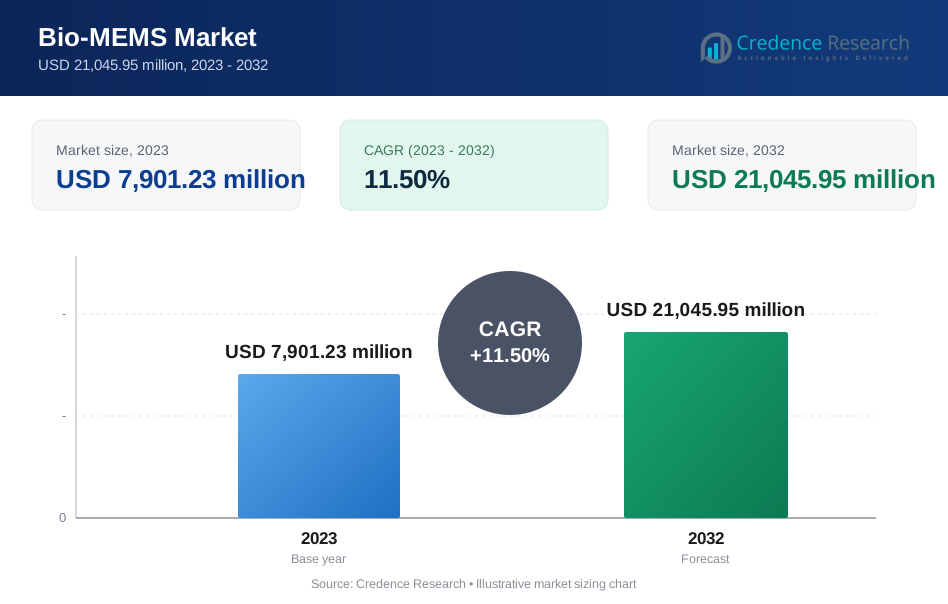
| Bio-MEMS Market Size 2023 | USD 7,901.23 Million |
| Bio-MEMS Market, CAGR | 11.50% |
| Bio-MEMS Market Size 2032 | USD 21,045.95 Million |
Market Overview
The Bio-MEMS Market is projected to grow from USD 7,901.23 million in 2023 to an estimated USD 21,045.95 million by 2032, with a compound annual growth rate (CAGR) of 11.50% from 2024 to 2032. This growth is driven by increasing demand for miniaturized medical devices, advancements in microfabrication technologies, and the growing prevalence of chronic diseases.
Key drivers in the Bio-MEMS market include the rising demand for personalized medicine, advancements in biosensing technologies, and the shift towards minimally invasive surgeries. Additionally, technological innovations in micro-electro-mechanical systems (MEMS) and bioengineering are expected to accelerate the adoption of Bio-MEMS across healthcare sectors.
Geographically, North America holds a dominant position in the Bio-MEMS market, driven by a strong healthcare infrastructure, high R&D investments, and the presence of leading market players. Europe and Asia-Pacific are also witnessing significant growth, with increasing healthcare expenditure and rising adoption of advanced medical technologies. Key players in the market include Abbott Laboratories, Medtronic, Boston Scientific, and SPTS Technologies, who are continuously innovating to enhance Bio-MEMS applications across the medical field.
Market Drivers
Rising Demand for Personalized Medicine and Precision Healthcare
The growing focus on personalized medicine and precision healthcare is a significant driver of the Bio-MEMS market. Personalized medicine, which tailors treatments to individual patient needs based on genetic, environmental, and lifestyle factors, is gaining traction worldwide. Bio-MEMS play a crucial role in this shift by enabling the development of miniature, highly sensitive devices capable of monitoring biological signals and providing real-time data. These devices are integrated into wearable sensors, implantable medical devices, and lab-on-a-chip systems, allowing physicians to make more informed decisions based on continuous health monitoring. For instance, a survey conducted by the International Consortium for Personalised Medicine (ICPerMed) highlights the increasing adoption of personalized medicine approaches in healthcare systems globally. The increasing prevalence of chronic diseases such as diabetes, cardiovascular disorders, and cancer has further heightened the demand for personalized diagnostic and therapeutic tools. Bio-MEMS devices, such as glucose sensors, cardiac monitors, and drug delivery systems, are being increasingly used to provide targeted and patient-specific treatments, ultimately driving market growth. Additionally, Bio-MEMS technology facilitates the development of point-of-care (POC) diagnostic devices, allowing patients to monitor their health conditions in real time without frequent hospital visits. This not only improves patient outcomes but also reduces healthcare costs by minimizing unnecessary hospitalizations and treatments. As healthcare systems globally shift towards more cost-effective and patient-centered models, the demand for Bio-MEMS devices is expected to surge, fueling market expansion.
Technological Advancements in Microfabrication and Nanotechnology
The rapid advancements in microfabrication techniques and nanotechnology are significantly contributing to the growth of the Bio-MEMS market. Micro-electro-mechanical systems (MEMS) technology enables the development of miniature devices with high precision and sensitivity, which are essential for medical applications. As microfabrication techniques have evolved, it has become possible to manufacture increasingly complex and efficient Bio-MEMS devices at a lower cost. For instance, a report by the National Nanotechnology Initiative (NNI) emphasizes the role of nanotechnology in enhancing the performance of Bio-MEMS devices. These devices are capable of detecting minute biological changes, such as fluctuations in pH levels, glucose concentrations, or cell behavior, which are critical for early diagnosis and timely treatment of diseases.Nanotechnology has also played a pivotal role in enhancing the performance of Bio-MEMS devices. The integration of nanomaterials, such as carbon nanotubes, graphene, and gold nanoparticles, into MEMS devices has improved their sensitivity, biocompatibility, and durability. This has opened new opportunities for the development of advanced biosensors, drug delivery systems, and tissue engineering applications. Nanotechnology-enabled Bio-MEMS devices are particularly valuable in applications like cancer detection, where early-stage identification is crucial. As technological advancements continue, Bio-MEMS devices are expected to become more efficient, cost-effective, and widely adopted across various healthcare sectors, thereby driving market growth.
Growing Adoption of Minimally Invasive Medical Procedures
The increasing preference for minimally invasive medical procedures is another key driver of the Bio-MEMS market. Minimally invasive procedures are associated with reduced patient trauma, shorter recovery times, and lower healthcare costs, which have made them increasingly popular among healthcare providers and patients alike. Bio-MEMS devices, such as micro-needles, micro-sensors, and implantable drug delivery systems, are central to these procedures as they allow for precise monitoring, diagnosis, and treatment with minimal disruption to surrounding tissues.Bio-MEMS devices are particularly beneficial in procedures involving the cardiovascular system, neurology, and oncology. For example, implantable Bio-MEMS sensors are used to monitor real-time physiological parameters like blood pressure, oxygen levels, and glucose concentrations, providing valuable data for critical decision-making during surgeries or treatments. In neurology, Bio-MEMS devices enable deep brain stimulation and precise monitoring of neural activity, offering advanced therapeutic options for conditions such as Parkinson’s disease and epilepsy. Similarly, in oncology, Bio-MEMS devices are used in targeted drug delivery systems, ensuring that therapeutic agents are released directly at tumor sites, minimizing damage to healthy tissues and improving treatment efficacy. A study published in the Journal of the American Medical Association (JAMA) highlights the growing adoption of robotic surgery and other minimally invasive techniques in hospitals across the United States. This trend is expected to continue as healthcare providers seek more effective ways to treat complex medical conditions with fewer side effects and complications, thereby boosting the Bio-MEMS market.
Increasing Investment in Healthcare and Biomedical Research
Significant investments in healthcare infrastructure and biomedical research are playing a crucial role in the growth of the Bio-MEMS market. Governments and private organizations worldwide are investing heavily in healthcare technologies to improve patient outcomes, reduce costs, and enhance the overall quality of care. Bio-MEMS technologies are at the forefront of these investments, as they offer innovative solutions for diagnostics, monitoring, and treatment. In developed regions like North America and Europe, substantial government funding for research and development (R&D) in medical technology, including Bio-MEMS, is fostering innovation and driving market growth. The U.S. government, for instance, provides significant funding through agencies such as the National Institutes of Health (NIH) and the National Science Foundation (NSF) to support cutting-edge research in bioengineering, nanotechnology, and MEMS technology. In Europe, the European Union’s Horizon Europe program is similarly funding research initiatives aimed at developing advanced medical devices and technologies. Emerging economies in Asia-Pacific and Latin America are also witnessing increased investments in healthcare infrastructure, creating opportunities for Bio-MEMS adoption. Countries like China, India, and Brazil are investing in upgrading their healthcare systems, expanding access to advanced medical technologies, and fostering local innovation. As a result, these regions are expected to experience robust growth in the Bio-MEMS market over the coming years.
Market Trends
Integration of Bio-MEMS with Wearable and Implantable Devices
A significant trend in the Bio-MEMS market is the increasing integration of Bio-MEMS technology with wearable and implantable medical devices. Wearable healthcare devices have become popular due to their ability to continuously monitor vital signs and other health parameters in real-time. Bio-MEMS sensors, which are highly sensitive and compact, are being incorporated into these devices to enhance their diagnostic and monitoring capabilities. For example, Bio-MEMS sensors embedded in wearable devices can monitor glucose levels, heart rate, and blood pressure, providing critical data for managing chronic diseases such as diabetes and cardiovascular disorders. A report by the National Nanotechnology Initiative (NNI) highlights the role of nanotechnology in enhancing the performance of Bio-MEMS devices. Additionally, implantable Bio-MEMS devices are gaining traction in applications such as drug delivery systems and cardiac monitoring. These implantable systems offer precise, localized treatments and continuous monitoring, significantly improving patient outcomes. The trend toward miniaturization and improved biocompatibility is making these devices more comfortable for long-term use, driving their adoption in the healthcare industry.
Growing Adoption of Point-of-Care Diagnostics
Another key trend in the Bio-MEMS market is the rising adoption of point-of-care (POC) diagnostics. As healthcare systems globally shift toward decentralized models of care, there is a growing demand for diagnostic tools that can be used outside traditional laboratory settings. Bio-MEMS technology is playing a critical role in the development of portable, easy-to-use diagnostic devices that can provide rapid and accurate results at the point of care. These devices, such as lab-on-a-chip systems, are being used for various diagnostic applications, including infectious diseases, cancer screening, and blood analysis. The COVID-19 pandemic has further accelerated the demand for POC diagnostics, as healthcare providers and governments recognize the need for rapid and accessible testing solutions. For instance, the increasing demand for rapid and accurate testing solutions, particularly in remote and resource-limited settings. Bio-MEMS-based POC devices offer several advantages, including reduced sample volumes, faster turnaround times, and cost-effectiveness, making them ideal for use in both developed and resource-constrained settings. This trend is expected to continue as the need for accessible, real-time diagnostics grows in the post-pandemic world.
Market Restraints and Challenges
High Costs of Development and Manufacturing
One of the primary restraints in the Bio-MEMS market is the high cost associated with the development and manufacturing of these advanced devices. Bio-MEMS technologies require specialized materials, complex fabrication processes, and precision engineering, which significantly increase production costs. Microfabrication and nanotechnology, while enabling the creation of highly sensitive and miniaturized devices, remain costly and require significant investments in research and development (R&D). For instance, a review paper published in the Journal of The Institution of Engineers (India) highlights the high costs and time-consuming nature of complex processing required for Bio-MEMS devices. For small and medium-sized companies, the upfront capital required for developing Bio-MEMS devices can be a considerable barrier to entry. Furthermore, the stringent regulatory requirements for medical devices, particularly in regions such as North America and Europe, add to the overall cost burden. These high costs may limit the widespread adoption of Bio-MEMS devices, especially in developing regions where healthcare budgets and infrastructure may not support the deployment of such advanced technologies. As a result, the high cost of development and manufacturing remains a challenge, particularly for broader market penetration.
Complex Regulatory Approval Processes
The Bio-MEMS market also faces challenges due to complex and time-consuming regulatory approval processes. Medical devices, including Bio-MEMS, must meet rigorous safety and efficacy standards before being approved for use in clinical settings. Regulatory bodies such as the U.S. Food and Drug Administration (FDA) and the European Medicines Agency (EMA) have strict guidelines for approving medical devices, particularly those that involve implantable systems or invasive diagnostics. For instance, an article by MEMS Journal outlines the critical steps in obtaining FDA approval for Bio-MEMS devices, emphasizing the complexity and length of the process. This lengthy and costly approval process can delay product launches and limit market entry for newer technologies. Additionally, companies must navigate varying regulatory requirements across different regions, adding further complexity to market expansion efforts. These regulatory challenges can slow down innovation and discourage smaller companies from entering the market, thereby hindering the overall growth of the Bio-MEMS industry.
Market Segmentation Analysis
By Type
Bio-MEMS gyroscopes and accelerometers are crucial for monitoring body orientation, movement, and the position of medical devices, particularly in neurology and orthopedics. They are widely used in wearable and implantable devices to track patient mobility and enhance treatment outcomes. As microfabrication technologies advance, the demand for these sensors is expected to rise, particularly in minimally invasive procedures where real-time data is essential. In addition to gyroscopes and accelerometers, other Bio-MEMS devices, such as pressure sensors, microfluidic systems, and biosensors, play a vital role in cardiovascular monitoring, drug delivery, and diagnostics, further driving the market as their healthcare applications expand.
By Application
Bio-MEMS technologies play a pivotal role in various medical applications, particularly in neural implants used to treat neurological disorders like Parkinson’s disease, epilepsy, and spinal cord injuries, by monitoring and modulating neural activity for improved patient outcomes. The increasing prevalence of such conditions is driving growth in this segment. Similarly, Bio-MEMS-based bionic devices are gaining traction in prosthetics and artificial organs, enhancing mobility and functionality for individuals with disabilities. ENT implants, such as cochlear devices, are also benefiting from Bio-MEMS advancements, providing improved hearing restoration and patient comfort. In cardiovascular care, Cardio-MEMS devices, including implantable sensors and monitors, are extensively used for real-time heart monitoring, enabling early intervention and improving outcomes for cardiovascular patients. Additionally, Bio-MEMS applications extend to drug delivery systems, biosensors for diagnostics, and lab-on-a-chip technologies, contributing to the broader adoption of these advanced devices in the healthcare industry.
Segments
Based on Type
- Gyroscopes
- Accelerometers
- Others
Based on Application
- Neural Implants
- Bionics
- ENT Implants
- Cardio-MEMS
- Others
Based on Region
- North America
- U.S.
- Canada
- Mexico
- Europe
- Germany
- France
- U.K.
- Italy
- Spain
- Rest of Europe
- Asia Pacific
- China
- Japan
- India
- South Korea
- South-east Asia
- Rest of Asia Pacific
- Latin America
- Brazil
- Argentina
- Rest of Latin America
- Middle East & Africa
- GCC Countries
- South Africa
- Rest of the Middle East and Africa
Regional Analysis
North America (38%):
North America holds the largest market share in the Bio-MEMS market, accounting for approximately 38% of the global market. The region's dominance can be attributed to its advanced healthcare infrastructure, high adoption of innovative medical technologies, and substantial investments in research and development (R&D). The United States, in particular, leads the market with significant contributions from its thriving biotechnology and medical device sectors. Major healthcare companies and research institutions in the region are investing heavily in Bio-MEMS technology to enhance diagnostic, monitoring, and therapeutic capabilities. The increasing prevalence of chronic diseases such as diabetes and cardiovascular disorders further drives demand for Bio-MEMS devices, particularly in applications like implantable sensors and cardio-MEMS.
Europe (30%):
Europe is the second-largest market for Bio-MEMS, holding a market share of around 30%. Countries such as Germany, the UK, and France are at the forefront of adopting Bio-MEMS technologies due to their strong healthcare systems and government initiatives supporting medical innovation. The European market is driven by a growing demand for minimally invasive surgeries, advanced diagnostics, and implantable medical devices. Additionally, Europe is a hub for medical research, with several universities and institutions working on developing cutting-edge Bio-MEMS solutions. The region's increasing focus on personalized medicine and its aging population further contribute to the rising demand for Bio-MEMS devices.
Key players
- Becton Dickinson
- Abbott Laboratories
- Boston Scientific
- PerkinElmer
- Medtronic
- Baxter International
- Teledyne DALSA Inc.
Competitive Analysis
The Bio-MEMS market is highly competitive, with key players such as Becton Dickinson, Abbott Laboratories, and Boston Scientific driving technological advancements and product innovation. These companies are heavily investing in research and development to enhance their Bio-MEMS offerings and maintain a competitive edge. Medtronic and Baxter International, with their strong presence in medical device manufacturing, have established robust portfolios in implantable Bio-MEMS devices for cardiovascular and neurological applications. Abbott Laboratories is a leader in diagnostic Bio-MEMS technologies, leveraging its expertise in biosensors. Meanwhile, Teledyne DALSA Inc. focuses on providing cutting-edge MEMS foundry services for medical applications, ensuring high precision in device fabrication. The competitive landscape is shaped by continuous innovation, partnerships, and mergers to expand product lines and improve patient outcomes. This intense competition is expected to drive further advancements in Bio-MEMS technologies, benefiting the healthcare industry.
Recent Developments
- In February 2023, BD introduced the BD Rhapsody HT Xpress System, a high-throughput single-cell multiomics platform designed to expand the scope of scientific discovery.
- In February 2022, Abbott’s CardioMEMS HF System received FDA approval to support patients battling earlier-stage heart failure.
- In October 2023, Boston Scientific announced the expected FDA approval for its Agent drug-coated balloon and Farapulse pulsed-field ablation system in 2024.
- In August 2022, PerkinElmer announced its intention to divest its Applied, Food, and Enterprise Services businesses to focus on high-growth, high-margin Life Sciences and Diagnostics.
- In September 2024, Medtronic expanded its AiBLE ecosystem with the commercial launch of several software, hardware, and imaging enhancements.
- In January 2023, Baxter announced a strategic roadmap to enhance operational effectiveness, including the plan to spin off its Renal Care and Acute Therapies global business units into an independent, publicly traded company.
- In September 2024, Teledyne DALSA introduced the Linea HS2 TDI line scan camera family, representing a significant breakthrough in next-generation TDI technology.
Market Concentration and Characteristics
The Bio-MEMS market is moderately concentrated, with a mix of large multinational corporations and specialized niche players driving innovation and competition. Major companies such as Abbott Laboratories, Medtronic, and Boston Scientific dominate the market, leveraging their strong R&D capabilities, vast distribution networks, and diverse product portfolios. However, the market also features several smaller companies and startups that specialize in specific Bio-MEMS technologies, such as diagnostic sensors, implantable devices, and microfluidic systems. The market is characterized by rapid technological advancements, ongoing product innovation, and increasing partnerships between academic institutions, research organizations, and industry leaders. As the demand for personalized healthcare and minimally invasive medical devices grows, the Bio-MEMS market continues to evolve with a focus on precision, miniaturization, and biocompatibility.
Report Coverage
The research report offers an in-depth analysis based on Type, Application and Region. It details leading market players, providing an overview of their business, product offerings, investments, revenue streams, and key applications. Additionally, the report includes insights into the competitive environment, SWOT analysis, current market trends, as well as the primary drivers and constraints. Furthermore, it discusses various factors that have driven market expansion in recent years. The report also explores market dynamics, regulatory scenarios, and technological advancements that are shaping the industry. It assesses the impact of external factors and global economic changes on market growth. Lastly, it provides strategic recommendations for new entrants and established companies to navigate the complexities of the market.
Future Outlook
- Bio-MEMS technologies will continue to evolve with innovations in nanotechnology, enhancing device sensitivity, accuracy, and biocompatibility for medical applications.
- The market will see an increased demand for Bio-MEMS devices as personalized medicine gains traction, offering tailored treatments based on real-time patient data.
- Bio-MEMS-based wearable and implantable devices will become more widespread, facilitating continuous health monitoring and improving patient outcomes.
- Point-of-care diagnostics using Bio-MEMS devices will expand, offering faster, more accurate results in decentralized healthcare settings like clinics and homes.
- As minimally invasive surgeries gain popularity, Bio-MEMS devices such as micro-sensors and implantable systems will see increased use in these procedures.
- The integration of Bio-MEMS devices with artificial intelligence and data analytics will provide deeper insights into patient health, improving diagnostic and therapeutic accuracy.
- Emerging markets, particularly in Asia-Pacific and Latin America, will see increased adoption of Bio-MEMS technologies, driven by improving healthcare infrastructure and rising healthcare spending.
- As regulatory bodies adapt to new medical technologies, streamlined approval processes will accelerate the commercialization of Bio-MEMS devices, fostering market growth.
- Both private and public sector investments in Bio-MEMS research and development will grow, driving further innovation in medical diagnostics, monitoring, and treatment.
- Collaborations between medical device companies, academic institutions, and research organizations will rise, fostering innovation and accelerating the development of new Bio-MEMS applications.
Request a Free Sample
Fill in your details and we'll send you a free sample report.
- Sample data tables & charts
- Research methodology
Need a Custom Version of This Report?
Tailor the scope, geography, or segments to your exact requirements.
- Custom geography or segment scope
- Direct access to our analyst team
Frequently Asked Questions
What is the market size of the Bio-MEMS market in 2023 and 2032?
What are the primary drivers of growth in the Bio-MEMS market?
How are technological advancements impacting the Bio-MEMS market?
Which regions are leading in the Bio-MEMS market?
What are the key applications of Bio-MEMS technologies?
Table of Content
Chapter 1. Report Introduction
- 1.1 Report Description & Purpose
- 1.1.1 Report Title & Market Definition
- 1.1.2 Unique Selling Propositions (USP) & Key Differentiators
- 1.1.3 Value Proposition for Stakeholders
- 1.2 Research Objectives
- 1.2.1 Market Sizing Objectives (Volume & Revenue)
- 1.2.2 Segmentation Objectives
- 1.2.3 Competitive Intelligence Objectives
- 1.2.4 Forecast & Scenario Objectives
- 1.3 Report Scope
- 1.3.1 Bio-MEMS Scope – Types & Subtypes Covered
- 1.3.2 Geographic Scope – Regions & Countries Covered
- 1.3.3 Historical Period, Base Year & Forecast Period (2023; forecast to 2032)
- 1.3.4 Inclusions & Exclusions
- 1.4 HS Code & Classification Framework
- 1.5 Currency, Units & Pricing Basis
- 1.6 Target Stakeholders
- 1.7 Limitations & Assumptions
Chapter 2. Executive Summary
- 2.1 Global Bio-MEMS Market Snapshot
- 2.1.1 Market Size – Historical (2023) & Forecast (2023-2032) (2023: USD 7,901.23 million → 2032: USD 21,045.95 million)
- 2.1.2 Volume & Revenue – Global Totals
- 2.1.3 Key Market Highlights – Top Five Facts
- 2.2 Bio-MEMS Market Segmentation Snapshot
- 2.2.1 Market Split by Region – 2023 vs. 2032
- 2.3 Competitive Snapshot
- 2.3.1 Top 10 Players by Revenue Share – 2023
- 2.3.2 Top 10 Players by Volume Share – 2023
- 2.3.3 Recent Strategic Developments (18-Month Summary)
- 2.4 Key Investment Highlights & Strategic Conclusions
Chapter 3. Bio-MEMS Market Dynamics & Industry Analysis
- 3.1 Market Overview & Context
- 3.1.1 Bio-MEMS Market Position in the Broader Automotive Value Chain
- 3.1.2 OEM vs. Replacement Market Dynamics
- 3.1.3 Market Maturity & Development Stage by Region
- 3.2 Bio-MEMS Market Drivers
- 3.3 Bio-MEMS Market Restraints & Challenges
- 3.4 Bio-MEMS Market Opportunities
- 3.5 Porter's Five Forces Analysis
- 3.5.1 Threat of New Entrants
- 3.5.2 Bargaining Power of Suppliers
- 3.5.3 Bargaining Power of Buyers
- 3.5.4 Threat of Substitutes
- 3.5.5 Competitive Rivalry – Intensity Assessment
- 3.6 Bio-MEMS Value Chain Analysis
- 3.6.1 Upstream – Raw Material/Input Suppliers
- 3.6.1.1 Raw Material/Input 1
- 3.6.1.2 Raw Material/Input 2
- 3.6.1.3 Raw Material/Input 3
- 3.6.2 Midstream – Production/Manufacturing/Service Delivery
- 3.6.2.1 Production/Process Overview
- 3.6.2.2 Key Facility Locations & Capacity by Manufacturer
- 3.6.3 Downstream – Distribution & End Consumer
- 3.6.3.1 Primary Channel – B2B/OEM
- 3.6.3.2 Secondary Channels – Dealer, Retail, Online, Direct
- 3.6.4 Value Chain Profitability Analysis
- 3.6.1 Upstream – Raw Material/Input Suppliers
- 3.7 PESTEL Analysis
- 3.7.1 Political Factors
- 3.7.2 Economic Factors
- 3.7.3 Social Factors
- 3.7.4 Technological Factors
- 3.7.5 Environmental Factors
- 3.7.6 Legal Factors
- 3.8 Bio-MEMS Supply Chain Analysis
- 3.8.1 Raw Material/Input Supply Risk Assessment
- 3.8.2 Manufacturing Concentration Risk (Geographic Exposure)
- 3.8.3 Trade Disruption Impact Analysis
- 3.9 Regulatory & Policy Landscape
Note: The regulatory and policy landscape section covers regulations based on their applicability to the market, Bio-MEMS category, geography, and scope of the study. Only regulatory frameworks with a material impact on operations, compliance, trade, sustainability, or market access are analyzed in detail.
Chapter 4. Key Investment Pockets & Opportunity Analysis
- 4.1 Bio-MEMS Market Attractiveness Analysis
- 4.1.1 By Region – Investment Attractiveness Matrix (Volume × CAGR)
- 4.2 Absolute Revenue Growth Opportunity
- 4.2.1 By Region – Absolute USD Growth Through 2032
- 4.3 Incremental Volume Opportunity
- 4.3.1 By Region – Incremental Volume Through 2032
- 4.3.2 Segment – Incremental Volume
- 4.4 Emerging Submarket Opportunity Deep Dive (Subject to Applicability)
- 4.5 Emerging Market Opportunity Scorecards
- 4.5.1 United States
- 4.5.2 Europe
- 4.5.3 Asia
- 4.5.4 Middle East & Africa
Note: Emerging Market Opportunity Scorecards will be included based on relevance and strategic importance. Regions listed are indicative and may vary depending on data availability and market dynamics.
Chapter 5. Bio-MEMS Import-Export Analysis & Trade Flows
- 5.1 Global Trade Overview
- 5.1.1 Global Export Value by Country (2023)
- 5.1.2 Global Export Volume by Country (2023)
- 5.1.3 Global Import Value by Country (2023)
- 5.1.4 Global Import Volume by Country (2023)
- 5.1.5 Net Trade Balance by Country (2023)
- 5.2 Export Analysis – Segment
- 5.2.1 Type 1 (HS Code)
- 5.2.2 Type 2 (HS Code)
- 5.2.3 Type 3 (HS Code)
- 5.2.4 Type 4 (HS Code)
- 5.2.5 Type 5 (HS Code)
- 5.3 Import Analysis – Segment
- 5.3.1 Type 1 (HS Code)
- 5.3.2 Type 2 (HS Code)
- 5.3.3 Type 3 (HS Code)
- 5.3.4 Type 4 (HS Code)
- 5.3.5 Type 5 (HS Code)
- 5.4 Average Unit Trade Prices
- 5.4.1 Average Export Price – Segment & Country
- 5.4.2 Average Import Price – Segment & Source Country
- 5.4.3 Price Trends (2023)
- 5.5 Key Trade Route Analysis
- 5.5.1 Trade Route 1
- 5.5.2 Trade Route 2
- 5.5.3 Trade Route 3
- 5.5.4 Trade Route 4
- 5.5.5 Trade Route 5
- 5.6 Trade Policy Impact Assessment
- 5.6.1 US Anti-Dumping & Section 301 Tariffs
- 5.6.2 EU Customs Union Impact
- 5.6.3 Major Free Trade Agreements
- 5.6.4 USMCA Rules of Origin
Note: Trade policy analysis will be included only where relevant to the Bio-MEMS market.
Chapter 6. Competitive Landscape & Company Benchmarking
- 6.1 Bio-MEMS Market Concentration & Structure
- 6.1.1 Herfindahl-Hirschman Index (HHI) – vs. 2023
- 6.1.2 Tier 1, Tier 2 & Tier 3 Market Structure
- 6.1.3 Global, Regional & Local Player Dynamics
- 6.2 Bio-MEMS Market Share Analysis – 2023
- 6.2.1 Global Revenue Share by Company
- 6.2.2 Global Volume Share by Company
- 6.2.3 Regional Revenue Share
- 6.2.4 Market Share Evolution ( vs. 2023)
- 6.2.5 OEM Segment Share by Company
- 6.2.6 Replacement Segment Share by Company
- 6.3 Production/Delivery Capacity & Facility Analysis
- 6.3.1 Global Installed Capacity
- 6.3.2 Capacity Utilization Rates
- 6.3.3 Production/Output Volume
- 6.3.4 Facility Locations & Capacity Map
- 6.3.5 Planned Capacity Additions
- 6.4 Bio-MEMS Competitive Benchmarking Matrix
- 6.4.1 Revenue, Volume, CAGR & Profitability Comparison
- 6.4.2 Channel Revenue Mix
- 6.4.3 Geographic Revenue Exposure
- 6.4.4 R&D Intensity
- 6.4.5 Sustainability Maturity
- 6.5 Strategic Developments in Bio-MEMS (Last 24 Months)
- 6.5.1 Mergers, Acquisitions & Divestments
- 6.5.2 New Bio-MEMS Launches
- 6.5.3 Facility Expansions
- 6.5.4 Strategic Alliances, Joint Ventures & Partnerships
- 6.5.5 Distribution Expansion & Market Entry
- 6.5.6 Sustainability & ESG Initiatives
- 6.6 Competitive Strategy Mapping
- 6.6.1 Leader, Challenger, Follower & Niche Classification
- 6.6.2 Pricing Strategy Comparison
- 6.6.3 Channel Strategy Matrix
Note: Strategic developments are included based on their materiality and the availability of reliable information.
Chapter 7. Global Bio-MEMS Market – By Distribution Channel
- 7.1 Segment Overview
- 7.1.1 Volume & Revenue Split by Channel (2023 & 2032)
- 7.1.2 Channel Mix Evolution (2023-2032)
Chapter 8. Regional Market Analysis – Global Overview
- 8.1 Global Regional Overview
- 8.1.1 Regional Volume Share
- 8.1.2 Regional Revenue Share
- 8.1.3 Regional Volume by Region
- 8.1.4 Regional Revenue by Region
- 8.1.5 Regional Forecast Through 2032
- 8.2 Cross-Regional Segment Analysis
- 8.2.1 By Distribution Channel
- 8.2.2 By Brand/Price Tier
Chapter 9. North America Bio-MEMS Market
- 9.1 United States
- 9.2 Canada
- 9.3 Mexico
Chapter 10. Europe Bio-MEMS Market
- 10.1 Germany
- 10.2 France
- 10.3 Italy
- 10.4 United Kingdom
- 10.5 Spain
- 10.6 Poland
- 10.7 Russia
- 10.8 Netherlands
- 10.9 Belgium
- 10.10 Sweden
- 10.11 Denmark
- 10.12 Norway
- 10.13 Rest of Europe
Chapter 11. Asia Pacific Bio-MEMS Market
- 11.1 China
- 11.2 India
- 11.3 Japan
- 11.4 South Korea
- 11.5 Thailand
- 11.6 Indonesia
- 11.7 Vietnam
- 11.8 Malaysia
- 11.9 Australia
- 11.10 Rest of Asia Pacific
Chapter 12. Latin America Bio-MEMS Market
- 12.1 Brazil
- 12.2 Argentina
- 12.3 Colombia
- 12.4 Chile
- 12.5 Rest of Latin America
Chapter 13. Middle East Bio-MEMS Market
- 13.1 Saudi Arabia
- 13.2 United Arab Emirates
- 13.3 Turkey
- 13.4 Israel
- 13.5 Iran
- 13.6 Rest of the Middle East
Chapter 14. Africa Bio-MEMS Market
- 14.1 South Africa
- 14.2 Egypt
- 14.3 Nigeria
- 14.4 Morocco
- 14.5 Rest of Africa
Chapter 15. Bio-MEMS Company Profiles
- 15.1 [Company 01]
- 15.1.1 Company Overview
- 15.1.2 Key Management Personnel
- 15.1.3 Products & Services Portfolio
- 15.1.4 Financial Performance
- 15.1.5 Key Market Focus & Geographic Presence
- 15.1.6 Recent Developments & Strategic Initiatives
Note: The company profile list is preliminary and may change based on research findings, market developments, data availability, and client requirements.
Chapter 16. Appendices
- Appendix A – List of Abbreviations & Acronyms
- Appendix B – Industry Classification Code Reference – Full Series
- Appendix C – Production & Capacity Data Tables
- Appendix D – End-Use & Demand Base Tables
- Appendix E – Consumption & Replacement Rate Assumptions
- Appendix F – ASP Reference Tables
- Appendix G – Manufacturing & Facility Database
- Appendix H – Import-Export Data Tables
- Appendix I – Regulatory Summary Tables
- Appendix J – Primary Research Participant List (Anonymized)
- Appendix K – Primary Research Questionnaire Framework
- Appendix L – Data Sources & Bibliography
- Appendix M – Market Size Divergence & Source Comparison
Chapter 17. Research Methodology
- 17.1 Research Framework & Philosophy
- 17.2 Secondary Research – Sources, Hierarchy & Data Extraction
- 17.3 Data Modeling – Bottom-Up & Top-Down Market Sizing
- 17.4 Primary Research – Stakeholder Framework, LOI & Sample Sizes
- 17.5 Forecast Methodology – Regression, Scenario & Sensitivity Analysis
- 17.6 Quality Control – Four-Layer Validation Framework
- 17.7 Limitations & Standard Assumptions
- 17.8 Disclaimer
