
| REPORT ATTRIBUTE | DETAILS |
|---|---|
| Historical Period | 2019-2022 |
| Base Year | 2023 |
| Forecast Period | 2024-2032 |
| Biologics Market Size 2024 | USD 299,995 million |
| Biologics Market, CAGR | 7.8% |
| Biologics Market Size 2032 | USD 547,096.7 million |
Market Overview
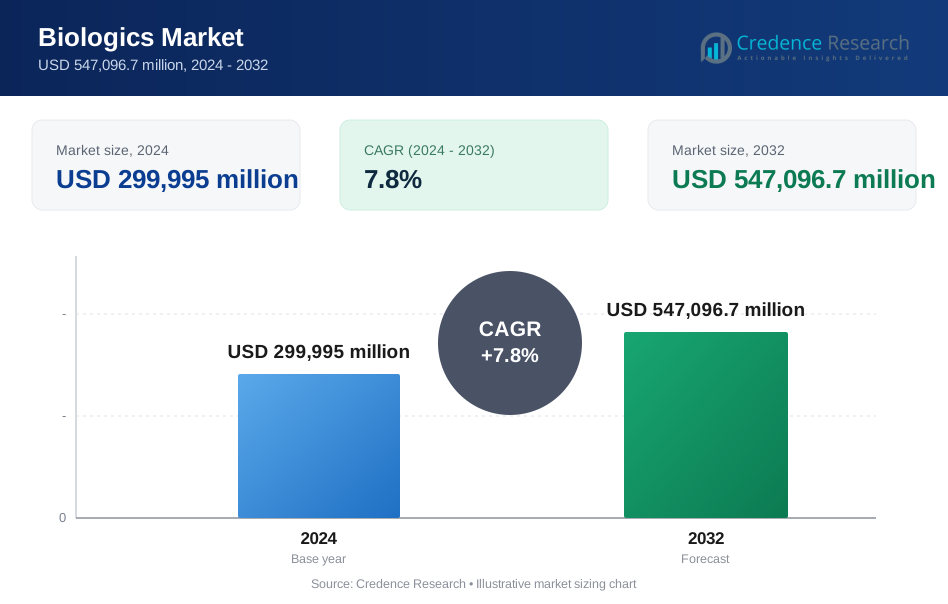
The Biologics Market is projected to grow from USD 299,995 million in 2024 to USD 547,096.7 million by 2032, reflecting a compound annual growth rate (CAGR) of 7.8%.
The Biologics Market is driven by the increasing prevalence of chronic diseases, which fuels demand for advanced therapeutics. Technological advancements in biopharmaceutical development, including innovations in genetic engineering and biotechnology, enhance product efficacy and safety, further boosting market growth. Additionally, the rising investment in research and development, coupled with favorable government policies supporting biologics, contributes to a dynamic market landscape. Emerging trends such as personalized medicine and the growing focus on monoclonal antibodies and cell-based therapies are shaping the future of the industry, creating opportunities for key players to expand their portfolios and improve patient outcomes.
The Biologics Market exhibits significant geographical variation, with North America and Europe leading in market share due to advanced healthcare systems and substantial investments in biopharmaceutical research. Key players, including Novartis AG, Pfizer Inc., and Roche Diagnostics, drive innovation and market growth through extensive R&D and diverse product portfolios. In Asia-Pacific, companies like Samsung BioLogics are gaining traction, capitalizing on rising healthcare demands and emerging market opportunities. These regional dynamics highlight the competitive landscape of the biologics sector, where established firms and new entrants collaborate to meet the growing global demand for advanced therapeutic solutions.
Market Drivers
Rising Prevalence of Chronic Diseases
The rising prevalence of chronic diseases significantly drives the Biologics Market. As global life expectancy increases, individuals are more susceptible to developing conditions such as diabetes, cancer, and autoimmune diseases. For instance, the CDC reports that chronic diseases are the leading causes of death and disability in the U.S., with heart disease, cancer, and diabetes being the most prevalent. Additionally, changing lifestyles characterized by sedentary behavior and unhealthy diets further contribute to this surge. The combination of these factors creates a growing patient population that necessitates innovative biologic therapies for effective management and treatment.
Increasing Government Support
Government support plays a crucial role in the growth of the Biologics Market. Favorable regulatory policies create an environment conducive to the development and commercialization of biologics, encouraging investment from pharmaceutical companies. For instance, the Indian government has implemented policies to promote the pharmaceutical sector, including a $1.3 billion fund to encourage domestic manufacturing of pharmaceutical ingredients. Additionally, healthcare reforms in various countries aim to improve healthcare infrastructure and expand access to essential medications, including biologics, ensuring that more patients benefit from these advanced therapies.
Advancements in Biotechnology
Technological advancements in biotechnology are transforming the Biologics Market. Genetic engineering enables the production of complex biological molecules that were previously challenging to obtain, paving the way for innovative therapeutics. Monoclonal antibodies have revolutionized disease treatment by offering highly specific targeting of pathogens and cancer cells. Moreover, the development of biosimilars provides cost-effective alternatives to branded biologics, enhancing market access and affordability for patients.
Growing Demand for Personalized Medicine
The demand for personalized medicine is rapidly expanding within the Biologics Market. Targeted therapies tailored to specific patient populations enhance treatment outcomes while minimizing side effects. Companion diagnostics are becoming increasingly essential, as they identify patients most likely to benefit from particular biologic treatments. This shift towards personalized approaches not only improves patient care but also drives innovation within the biologics sector, reinforcing its importance in modern healthcare.
Market Trends
Increasing Focus on Biosimilars
The Biologics Market is witnessing an increasing focus on biosimilars, which offer significant cost reduction as a more affordable alternative to branded biologics. This affordability is crucial in enhancing patient access to necessary treatments, thereby reducing overall healthcare costs. For instance, Aurobindo Pharma secured marketing authorization for the trastuzumab biosimilar, used in breast cancer treatment, in India. As biosimilars enter the market, they intensify competition among manufacturers, driving down prices and benefiting consumers. This competitive landscape not only encourages the development of more innovative products but also fosters greater market penetration. As healthcare providers and payers recognize the cost-effectiveness of biosimilars, their adoption is likely to increase, leading to broader acceptance within the medical community. Furthermore, as healthcare spending continues to rise, the demand for affordable treatment options will only amplify the emphasis on biosimilars, making them a key component of the biologics market.
Advancements in Cell and Gene Therapies
Advancements in cell and gene therapies are transforming the treatment landscape for complex diseases such as cancer and genetic disorders. These innovative therapies have shown remarkable promise in offering novel treatment options that address the underlying causes of diseases rather than just alleviating symptoms. As more cell and gene therapies undergo clinical trials, an increasing number of regulatory approvals are paving the way for their commercialization. This trend is significant, as it reflects growing confidence in the efficacy and safety of these treatments, further stimulating interest from both investors and healthcare providers. Additionally, the integration of digital health technologies is enhancing the development and application of these therapies. By collecting real-world evidence and data, stakeholders can gain insights into treatment efficacy and personalize patient care, ultimately improving outcomes. The focus on sustainability within the pharmaceutical industry also encourages the adoption of environmentally friendly practices in the development and production of these innovative therapies. As the demand for personalized medicine and sustainable practices grows, the advancements in cell and gene therapies will continue to shape the future of the Biologics Market, offering hope for patients with previously untreatable conditions.
Market Challenges Analysis
Complex Manufacturing Processes and Supply Chain Challenges
The Biologics Market faces significant challenges due to complex manufacturing processes that drive high production costs. The intricate nature of biologics production requires specialized equipment and expertise, making it a resource-intensive endeavor. For instance, the production of monoclonal antibodies involves multiple steps, including cell culture, purification, and formulation, each requiring precise control to ensure product consistency. Ensuring consistent quality and yield becomes increasingly difficult, particularly for complex molecules that require precision in every step of their manufacture. These challenges are compounded by supply chain vulnerabilities, as many biologics depend on global sourcing. This reliance exposes the market to potential disruptions, such as natural disasters, political instability, and trade restrictions, which can impact the availability and delivery of biologic therapies. Furthermore, maintaining quality control throughout the supply chain adds another layer of complexity, as ensuring the safety and quality of raw materials and components is paramount to the integrity of the final product.
Regulatory Hurdles and Intellectual Property Issues
Navigating the regulatory landscape presents a formidable challenge for the Biologics Market, as stringent regulations impose rigorous approval processes to ensure safety and efficacy. The time-consuming nature of these approvals often leads to delays in market access, hindering timely availability of innovative treatments. Pharmaceutical companies must invest substantial resources into research and development (R&D) to stay competitive, yet the high costs associated with developing new biologics also entail significant risks, with many projects failing to reach commercialization. Additionally, intellectual property issues further complicate market dynamics. Patent disputes can lead to protracted legal battles, delaying market entry and stifling innovation. The emergence of biosimilars has intensified these challenges, prompting legal battles over intellectual property rights that can disrupt both established products and new entrants to the market. Together, these factors create a challenging environment for biologics, where navigating regulatory hurdles and protecting intellectual property are critical for success in an increasingly competitive landscape.
Market Segmentation Analysis:
By Product:
The Biologics Market is segmented by product into several key categories, each contributing uniquely to the overall landscape. Monoclonal antibodies dominate the market, owing to their specificity and efficacy in targeting various diseases, particularly in oncology and autoimmune disorders. Recombinant hormones and proteins also play a vital role, providing essential treatments for conditions such as diabetes and growth disorders. Vaccines are another significant segment, especially with the global focus on immunization against infectious diseases. Cellular-based biologics, which include stem cell therapies, and gene-based biologics, such as gene therapies, are rapidly gaining traction due to their innovative approaches to treating complex genetic disorders. Therapeutic enzymes are also noteworthy, offering treatments for rare diseases and metabolic disorders. The "Others" category encompasses emerging biologics and niche products, indicating a diverse and evolving market that adapts to new scientific discoveries and therapeutic needs. This segmentation highlights the variety of biologic products available, catering to a broad spectrum of medical conditions.
By Application:
The application segment of the Biologics Market encompasses several critical areas, reflecting the diverse therapeutic needs addressed by these advanced treatments. Infectious diseases represent a significant portion of the market, particularly given the recent global health crises that have underscored the importance of vaccines and antiviral biologics. Cancer treatment is another prominent application, with monoclonal antibodies and other biologics playing a central role in targeted therapies and immuno-oncology. Autoimmune diseases also form a crucial application segment, as biologics offer new hope for managing conditions like rheumatoid arthritis and multiple sclerosis through precise mechanisms of action. Additionally, rare diseases represent an emerging application area, with innovative biologics providing targeted therapies for previously untreatable conditions. The "Others" category includes various applications that may not fit neatly into the primary classifications, showcasing the market's adaptability to evolving medical needs. This segmentation underscores the importance of biologics in addressing a wide array of health challenges, positioning them as integral components of modern therapeutic strategies.
Segments:
Based on Product:
- Monoclonal Antibodies
- Recombinant Hormones/Proteins
- Vaccines
- Cellular Based Biologics
- Gene-Based Biologics
- Therapeutic Enzymes
- Others
Based on Application:
- Infectious Diseases
- Cancer
- Autoimmune Diseases
- Rare Diseases
- Others
Based on Drug Classification:
- Branded Drugs
- Generic Drugs
Based on Mode of Purchase:
- Prescription Drugs
- Over-The-Counter (OTC) Drugs
Based on Distribution Channel:
- Hospital Pharmacies
- Retail Pharmacies
- Online Pharmacies
Based on the Geography:
- North America
- U.S.
- Canada
- Mexico
- Europe
- Germany
- France
- U.K.
- Italy
- Spain
- Rest of Europe
- Asia Pacific
- China
- Japan
- India
- South Korea
- South-east Asia
- Rest of Asia Pacific
- Latin America
- Brazil
- Argentina
- Rest of Latin America
- Middle East & Africa
- GCC Countries
- South Africa
- Rest of the Middle East and Africa
Regional Analysis
North America
North America holds a substantial share of the Biologics Market, accounting for approximately 45% of the global market revenue. The region benefits from a robust healthcare infrastructure, significant investments in research and development, and a high prevalence of chronic diseases, driving demand for advanced biologic therapies. The United States, in particular, is a leader in biopharmaceutical innovation, home to numerous biotech firms and research institutions that focus on developing novel biologics, including monoclonal antibodies and gene therapies. Furthermore, favorable regulatory policies and reimbursement frameworks enhance market accessibility and encourage the introduction of innovative treatments. The growing emphasis on personalized medicine and the increasing adoption of biosimilars are also contributing to market expansion in North America, positioning it as a key region for future growth in the biologics sector.
Europe
Europe represents a significant portion of the Biologics Market, contributing around 30% to the global market share. The region is characterized by a strong emphasis on healthcare reforms and a commitment to improving patient access to biologic therapies. Countries such as Germany, France, and the UK lead in market growth due to their advanced healthcare systems and high investment in biopharmaceutical research. The European Medicines Agency (EMA) plays a pivotal role in facilitating the approval of biologics, fostering an environment conducive to innovation. Additionally, the rising prevalence of chronic diseases and the growing demand for personalized medicine are propelling market growth in Europe. The increasing acceptance of biosimilars as cost-effective alternatives to branded biologics further enhances market dynamics. As healthcare budgets expand and patient needs evolve, Europe is poised to remain a significant player in the global biologics market.
Key Player Analysis
- Roche Diagnostics
- Merck & Co., Inc.
- Pfizer Inc.
- Samsung BioLogics
- GSK Biologicals
- Dickinson & Company
- AstraZeneca
- Eli Lilly and Company
- Bayer AG
- Novartis AG
- Smith’s Medical
- Hoffmann-La Roche Ltd
- AstraZeneca
Competitive Analysis
The Biologics Market is characterized by intense competition among leading players, including Novartis AG, Pfizer Inc., Roche Diagnostics, Merck & Co., Inc., and Eli Lilly and Company. These companies dominate the market through substantial investments in research and development, enabling them to innovate and expand their product portfolios. The focus on advancing treatment options for chronic diseases and cancer has intensified competition, as firms seek to address unmet medical needs. Additionally, the emergence of biosimilars has introduced new dynamics, offering cost-effective alternatives that challenge established branded products. This competitive landscape fosters ongoing innovation, as companies strive to enhance therapeutic efficacy, improve patient outcomes, and capture market share in an evolving healthcare environment. As the demand for biologics continues to rise, the competition is expected to intensify, driving further advancements and collaborations within the industry.
Recent Developments
- In September 2023, Biogen Inc. received approval from the US Food and Drug Administration (FDA) for TOFIDENCE (tocilizumab-bavi) intravenous formulation. TOFIDENCE marks the pioneering approval of the tocilizumab biosimilar in the United States, signaling a significant advancement in treatment options for specified medical conditions.
- In June 2022, Aeglea BioTherapuetics announced that it had failed to secure a biologics license application (BLA) from the FDA after administrators issued a refusal to file for the company's biologic pegzilarginase.
- In February 2022, Janssen Pharmaceutical Companies of Johnson & Johnson received the United States Food and Drug Administration (FDA) approval for CARVYKTI (ciltacabtagene autoleucel; cilia-cel). This biologic medicine treats adults with relapsed or refractory multiple myeloma (RRMM) after four or more prior lines of therapy, including a proteasome inhibitor, an immunomodulatory agent, and an anti-CD38 monoclonal antibody
Market Concentration & Characteristics
The Biologics Market exhibits a moderate level of concentration, characterized by a mix of established multinational corporations and emerging biotech firms. Major players dominate the market through extensive research and development capabilities, substantial financial resources, and established distribution networks. This concentration allows leading companies to leverage economies of scale, enhancing their ability to invest in innovative therapies and maintain competitive pricing. Additionally, the market is marked by a diverse product range, including monoclonal antibodies, vaccines, and gene therapies, catering to various therapeutic areas such as oncology, autoimmune diseases, and infectious diseases. The presence of biosimilars is also a notable characteristic, as these alternatives foster competition and increase accessibility to biologic treatments. Overall, the Biologics Market is dynamic and rapidly evolving, with continuous advancements driven by scientific innovation, regulatory support, and growing demand for effective therapies, ultimately benefiting patients and healthcare systems worldwide.Top of Form
Report Coverage
The research report offers an in-depth analysis based on Product, Application, Drug Classification, Mode of Purchase, Distribution Channel and Geography. It details leading market players, providing an overview of their business, product offerings, investments, revenue streams, and key applications. Additionally, the report includes insights into the competitive environment, SWOT analysis, current market trends, as well as the primary drivers and constraints. Furthermore, it discusses various factors that have driven market expansion in recent years. The report also explores market dynamics, regulatory scenarios, and technological advancements that are shaping the industry. It assesses the impact of external factors and global economic changes on market growth. Lastly, it provides strategic recommendations for new entrants and established companies to navigate the complexities of the market.
Future Outlook
- The Biologics Market is expected to continue expanding due to the rising prevalence of chronic diseases and increasing healthcare expenditure.
- Advancements in biotechnology and genetic engineering will drive the development of innovative biologics, including personalized medicine and targeted therapies.
- The growing acceptance of biosimilars will enhance market competition and improve patient access to affordable biologic treatments.
- Regulatory frameworks are likely to evolve, promoting faster approval processes for new biologics and facilitating market entry.
- Increased collaboration between pharmaceutical companies, academic institutions, and research organizations will foster innovation in biologic therapies.
- The expansion of healthcare infrastructure in emerging markets will create new opportunities for biologics, particularly in Asia and Latin America.
- Digital health technologies will play a crucial role in collecting real-world evidence, helping to personalize treatment decisions and improve patient outcomes.
- Sustainability initiatives will gain importance, prompting companies to adopt environmentally friendly practices in the production of biologics.
- Rising consumer awareness and demand for effective treatments will drive investments in biologics research and development.
- The ongoing trend of mergers and acquisitions within the industry will lead to greater consolidation and enhanced R&D capabilities among key players.
Request a Free Sample
Fill in your details and we'll send you a free sample report.
- Sample data tables & charts
- Research methodology
Need a Custom Version of This Report?
Tailor the scope, geography, or segments to your exact requirements.
- Custom geography or segment scope
- Direct access to our analyst team
Frequently Asked Questions
What is the size of Biologics Market?
What factors are driving the growth of the Biologics Market?
What are the key segments within the Biologics Market?
Who are the major players in this Market?
Table of Content
Chapter 1. Report Introduction
- 1.1 Report Description & Purpose
- 1.1.1 Report Title & Market Definition
- 1.1.2 Unique Selling Propositions (USP) & Key Differentiators
- 1.1.3 Value Proposition for Stakeholders
- 1.2 Research Objectives
- 1.2.1 Market Sizing Objectives (Volume & Revenue)
- 1.2.2 Segmentation Objectives
- 1.2.3 Competitive Intelligence Objectives
- 1.2.4 Forecast & Scenario Objectives
- 1.3 Report Scope
- 1.3.1 Biologics Scope – Types & Subtypes Covered
- 1.3.2 Geographic Scope – Regions & Countries Covered
- 1.3.3 Historical Period, Base Year & Forecast Period (2024; forecast to 2032)
- 1.3.4 Inclusions & Exclusions
- 1.4 HS Code & Classification Framework
- 1.5 Currency, Units & Pricing Basis
- 1.6 Target Stakeholders
- 1.7 Limitations & Assumptions
Chapter 2. Executive Summary
- 2.1 Global Biologics Market Snapshot
- 2.1.1 Market Size – Historical (2024) & Forecast (2024-2032) (2024: USD 299,995 million → 2032: USD 547,096.7 million)
- 2.1.2 Volume & Revenue – Global Totals
- 2.1.3 Key Market Highlights – Top Five Facts
- 2.2 Biologics Market Segmentation Snapshot
- 2.2.1 Market Split by Region – 2024 vs. 2032
- 2.3 Competitive Snapshot
- 2.3.1 Top 10 Players by Revenue Share – 2024
- 2.3.2 Top 10 Players by Volume Share – 2024
- 2.3.3 Recent Strategic Developments (18-Month Summary)
- 2.4 Key Investment Highlights & Strategic Conclusions
Chapter 3. Biologics Market Dynamics & Industry Analysis
- 3.1 Market Overview & Context
- 3.1.1 Biologics Market Position in the Broader Automotive Value Chain
- 3.1.2 OEM vs. Replacement Market Dynamics
- 3.1.3 Market Maturity & Development Stage by Region
- 3.2 Biologics Market Drivers
- 3.3 Biologics Market Restraints & Challenges
- 3.4 Biologics Market Opportunities
- 3.5 Porter's Five Forces Analysis
- 3.5.1 Threat of New Entrants
- 3.5.2 Bargaining Power of Suppliers
- 3.5.3 Bargaining Power of Buyers
- 3.5.4 Threat of Substitutes
- 3.5.5 Competitive Rivalry – Intensity Assessment
- 3.6 Biologics Value Chain Analysis
- 3.6.1 Upstream – Raw Material/Input Suppliers
- 3.6.1.1 Raw Material/Input 1
- 3.6.1.2 Raw Material/Input 2
- 3.6.1.3 Raw Material/Input 3
- 3.6.2 Midstream – Production/Manufacturing/Service Delivery
- 3.6.2.1 Production/Process Overview
- 3.6.2.2 Key Facility Locations & Capacity by Manufacturer
- 3.6.3 Downstream – Distribution & End Consumer
- 3.6.3.1 Primary Channel – B2B/OEM
- 3.6.3.2 Secondary Channels – Dealer, Retail, Online, Direct
- 3.6.4 Value Chain Profitability Analysis
- 3.6.1 Upstream – Raw Material/Input Suppliers
- 3.7 PESTEL Analysis
- 3.7.1 Political Factors
- 3.7.2 Economic Factors
- 3.7.3 Social Factors
- 3.7.4 Technological Factors
- 3.7.5 Environmental Factors
- 3.7.6 Legal Factors
- 3.8 Biologics Supply Chain Analysis
- 3.8.1 Raw Material/Input Supply Risk Assessment
- 3.8.2 Manufacturing Concentration Risk (Geographic Exposure)
- 3.8.3 Trade Disruption Impact Analysis
- 3.9 Regulatory & Policy Landscape
Note: The regulatory and policy landscape section covers regulations based on their applicability to the market, Biologics category, geography, and scope of the study. Only regulatory frameworks with a material impact on operations, compliance, trade, sustainability, or market access are analyzed in detail.
Chapter 4. Key Investment Pockets & Opportunity Analysis
- 4.1 Biologics Market Attractiveness Analysis
- 4.1.1 By Region – Investment Attractiveness Matrix (Volume × CAGR)
- 4.2 Absolute Revenue Growth Opportunity
- 4.2.1 By Region – Absolute USD Growth Through 2032
- 4.3 Incremental Volume Opportunity
- 4.3.1 By Region – Incremental Volume Through 2032
- 4.3.2 Segment – Incremental Volume
- 4.4 Emerging Submarket Opportunity Deep Dive (Subject to Applicability)
- 4.5 Emerging Market Opportunity Scorecards
- 4.5.1 United States
- 4.5.2 Europe
- 4.5.3 Asia
- 4.5.4 Middle East & Africa
Note: Emerging Market Opportunity Scorecards will be included based on relevance and strategic importance. Regions listed are indicative and may vary depending on data availability and market dynamics.
Chapter 5. Biologics Import-Export Analysis & Trade Flows
- 5.1 Global Trade Overview
- 5.1.1 Global Export Value by Country (2024)
- 5.1.2 Global Export Volume by Country (2024)
- 5.1.3 Global Import Value by Country (2024)
- 5.1.4 Global Import Volume by Country (2024)
- 5.1.5 Net Trade Balance by Country (2024)
- 5.2 Export Analysis – Segment
- 5.2.1 Type 1 (HS Code)
- 5.2.2 Type 2 (HS Code)
- 5.2.3 Type 3 (HS Code)
- 5.2.4 Type 4 (HS Code)
- 5.2.5 Type 5 (HS Code)
- 5.3 Import Analysis – Segment
- 5.3.1 Type 1 (HS Code)
- 5.3.2 Type 2 (HS Code)
- 5.3.3 Type 3 (HS Code)
- 5.3.4 Type 4 (HS Code)
- 5.3.5 Type 5 (HS Code)
- 5.4 Average Unit Trade Prices
- 5.4.1 Average Export Price – Segment & Country
- 5.4.2 Average Import Price – Segment & Source Country
- 5.4.3 Price Trends (2024)
- 5.5 Key Trade Route Analysis
- 5.5.1 Trade Route 1
- 5.5.2 Trade Route 2
- 5.5.3 Trade Route 3
- 5.5.4 Trade Route 4
- 5.5.5 Trade Route 5
- 5.6 Trade Policy Impact Assessment
- 5.6.1 US Anti-Dumping & Section 301 Tariffs
- 5.6.2 EU Customs Union Impact
- 5.6.3 Major Free Trade Agreements
- 5.6.4 USMCA Rules of Origin
Note: Trade policy analysis will be included only where relevant to the Biologics market.
Chapter 6. Competitive Landscape & Company Benchmarking
- 6.1 Biologics Market Concentration & Structure
- 6.1.1 Herfindahl-Hirschman Index (HHI) – vs. 2024
- 6.1.2 Tier 1, Tier 2 & Tier 3 Market Structure
- 6.1.3 Global, Regional & Local Player Dynamics
- 6.2 Biologics Market Share Analysis – 2024
- 6.2.1 Global Revenue Share by Company
- 6.2.2 Global Volume Share by Company
- 6.2.3 Regional Revenue Share
- 6.2.4 Market Share Evolution ( vs. 2024)
- 6.2.5 OEM Segment Share by Company
- 6.2.6 Replacement Segment Share by Company
- 6.3 Production/Delivery Capacity & Facility Analysis
- 6.3.1 Global Installed Capacity
- 6.3.2 Capacity Utilization Rates
- 6.3.3 Production/Output Volume
- 6.3.4 Facility Locations & Capacity Map
- 6.3.5 Planned Capacity Additions
- 6.4 Biologics Competitive Benchmarking Matrix
- 6.4.1 Revenue, Volume, CAGR & Profitability Comparison
- 6.4.2 Channel Revenue Mix
- 6.4.3 Geographic Revenue Exposure
- 6.4.4 R&D Intensity
- 6.4.5 Sustainability Maturity
- 6.5 Strategic Developments in Biologics (Last 24 Months)
- 6.5.1 Mergers, Acquisitions & Divestments
- 6.5.2 New Biologics Launches
- 6.5.3 Facility Expansions
- 6.5.4 Strategic Alliances, Joint Ventures & Partnerships
- 6.5.5 Distribution Expansion & Market Entry
- 6.5.6 Sustainability & ESG Initiatives
- 6.6 Competitive Strategy Mapping
- 6.6.1 Leader, Challenger, Follower & Niche Classification
- 6.6.2 Pricing Strategy Comparison
- 6.6.3 Channel Strategy Matrix
Note: Strategic developments are included based on their materiality and the availability of reliable information.
Chapter 7. Global Biologics Market – By Distribution Channel
- 7.1 Segment Overview
- 7.1.1 Volume & Revenue Split by Channel (2024 & 2032)
- 7.1.2 Channel Mix Evolution (2024-2032)
Chapter 8. Regional Market Analysis – Global Overview
- 8.1 Global Regional Overview
- 8.1.1 Regional Volume Share
- 8.1.2 Regional Revenue Share
- 8.1.3 Regional Volume by Region
- 8.1.4 Regional Revenue by Region
- 8.1.5 Regional Forecast Through 2032
- 8.2 Cross-Regional Segment Analysis
- 8.2.1 By Distribution Channel
- 8.2.2 By Brand/Price Tier
Chapter 9. North America Biologics Market
- 9.1 United States
- 9.2 Canada
- 9.3 Mexico
Chapter 10. Europe Biologics Market
- 10.1 Germany
- 10.2 France
- 10.3 Italy
- 10.4 United Kingdom
- 10.5 Spain
- 10.6 Poland
- 10.7 Russia
- 10.8 Netherlands
- 10.9 Belgium
- 10.10 Sweden
- 10.11 Denmark
- 10.12 Norway
- 10.13 Rest of Europe
Chapter 11. Asia Pacific Biologics Market
- 11.1 China
- 11.2 India
- 11.3 Japan
- 11.4 South Korea
- 11.5 Thailand
- 11.6 Indonesia
- 11.7 Vietnam
- 11.8 Malaysia
- 11.9 Australia
- 11.10 Rest of Asia Pacific
Chapter 12. Latin America Biologics Market
- 12.1 Brazil
- 12.2 Argentina
- 12.3 Colombia
- 12.4 Chile
- 12.5 Rest of Latin America
Chapter 13. Middle East Biologics Market
- 13.1 Saudi Arabia
- 13.2 United Arab Emirates
- 13.3 Turkey
- 13.4 Israel
- 13.5 Iran
- 13.6 Rest of the Middle East
Chapter 14. Africa Biologics Market
- 14.1 South Africa
- 14.2 Egypt
- 14.3 Nigeria
- 14.4 Morocco
- 14.5 Rest of Africa
Chapter 15. Biologics Company Profiles
- 15.1 [Company 01]
- 15.1.1 Company Overview
- 15.1.2 Key Management Personnel
- 15.1.3 Products & Services Portfolio
- 15.1.4 Financial Performance
- 15.1.5 Key Market Focus & Geographic Presence
- 15.1.6 Recent Developments & Strategic Initiatives
Note: The company profile list is preliminary and may change based on research findings, market developments, data availability, and client requirements.
Chapter 16. Appendices
- Appendix A – List of Abbreviations & Acronyms
- Appendix B – Industry Classification Code Reference – Full Series
- Appendix C – Production & Capacity Data Tables
- Appendix D – End-Use & Demand Base Tables
- Appendix E – Consumption & Replacement Rate Assumptions
- Appendix F – ASP Reference Tables
- Appendix G – Manufacturing & Facility Database
- Appendix H – Import-Export Data Tables
- Appendix I – Regulatory Summary Tables
- Appendix J – Primary Research Participant List (Anonymized)
- Appendix K – Primary Research Questionnaire Framework
- Appendix L – Data Sources & Bibliography
- Appendix M – Market Size Divergence & Source Comparison
Chapter 17. Research Methodology
- 17.1 Research Framework & Philosophy
- 17.2 Secondary Research – Sources, Hierarchy & Data Extraction
- 17.3 Data Modeling – Bottom-Up & Top-Down Market Sizing
- 17.4 Primary Research – Stakeholder Framework, LOI & Sample Sizes
- 17.5 Forecast Methodology – Regression, Scenario & Sensitivity Analysis
- 17.6 Quality Control – Four-Layer Validation Framework
- 17.7 Limitations & Standard Assumptions
- 17.8 Disclaimer
