
| REPORT ATTRIBUTE | DETAILS |
|---|---|
| Historical Period | 2020-2023 |
| Base Year | 2024 |
| Forecast Period | 2025-2032 |
| Bovine Respiratory Disease Treatment Market Size 2024 | USD 1,317.9 Million |
| Bovine Respiratory Disease Treatment Market, CAGR | 6.97% |
| Bovine Respiratory Disease Treatment Market Size 2032 | USD 2,254.9 Million |
Market Overview:
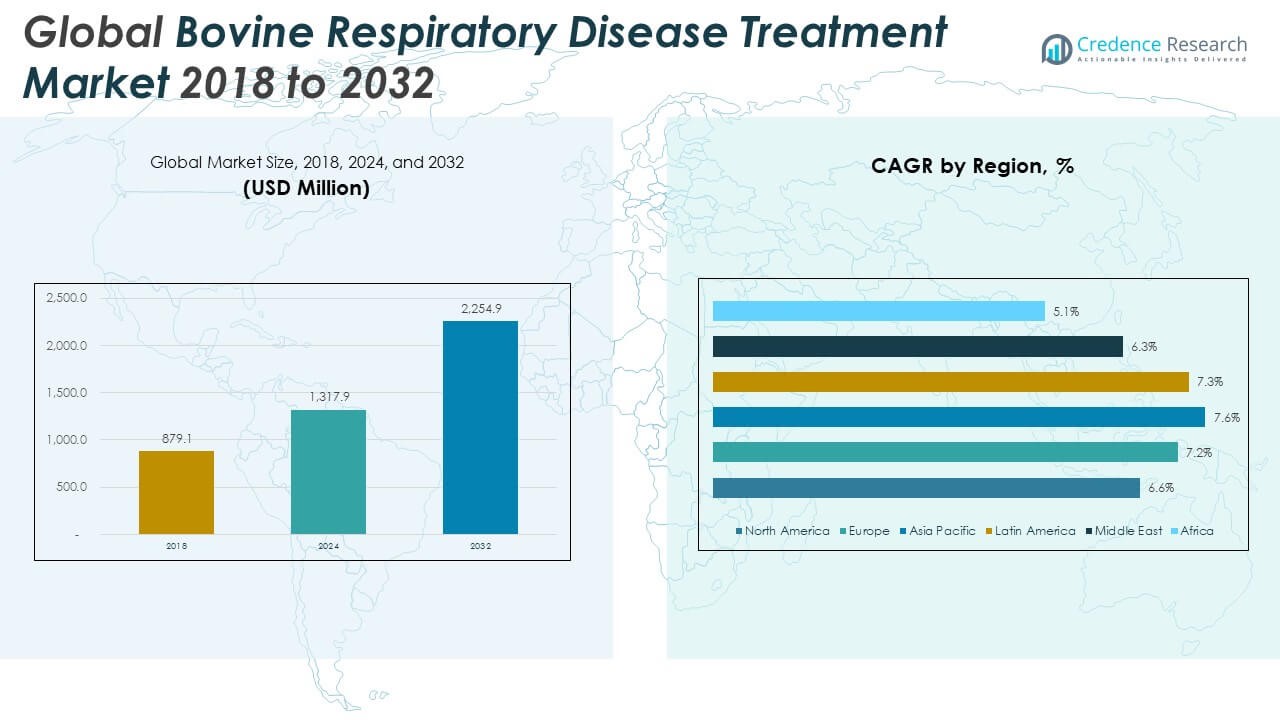
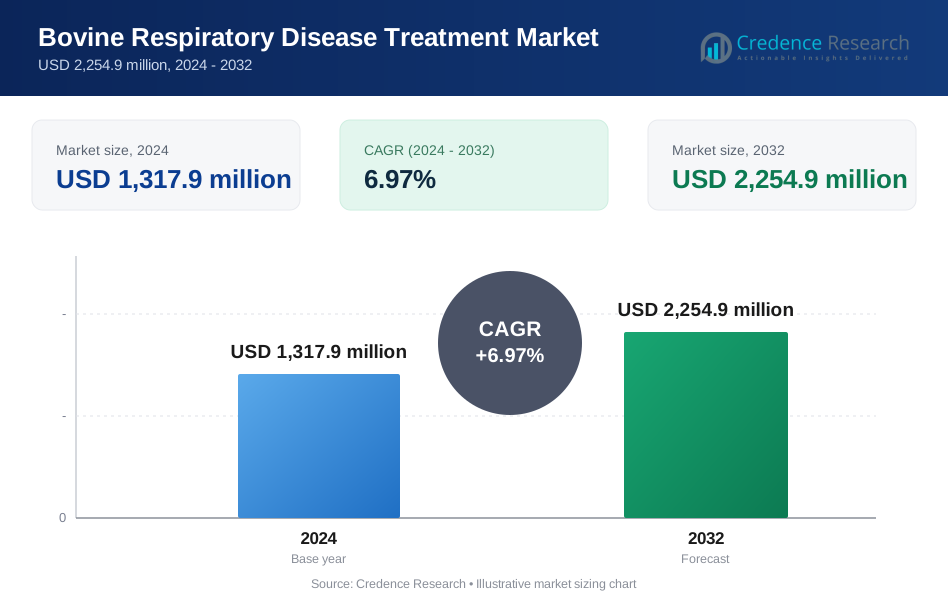
The Bovine Respiratory Disease Treatment Market size was valued at USD 879.1 million in 2018 to USD 1,317.9 million in 2024 and is anticipated to reach USD 2,254.9 million by 2032, at a CAGR of 6.97% during the forecast period.
The Bovine Respiratory Disease (BRD) Treatment Market is primarily driven by the increasing prevalence of respiratory illnesses in cattle, particularly within commercial feedlots and dairy operations. Stressors such as transportation, overcrowding, and changing weather conditions often weaken cattle immune systems, leading to higher infection rates. This has pushed demand for both preventive and therapeutic solutions. Regulatory efforts to curb antimicrobial resistance are encouraging a shift from antibiotics to vaccines, immunomodulators, and alternative therapies. Technological advancements in molecular diagnostics and precision livestock farming are enabling earlier detection and targeted treatments, improving disease outcomes and reducing herd losses. In addition, rising global consumption of beef and dairy products is fueling investments in herd health, especially in emerging economies. Growing awareness among livestock farmers about economic losses associated with BRD such as reduced weight gain, high morbidity, and treatment costs continues to reinforce the adoption of veterinary healthcare solutions and structured BRD management programs.
North America leads the global BRD treatment market due to its advanced veterinary infrastructure, large-scale cattle operations, and strong focus on preventive animal healthcare. The U.S. accounts for a significant share, supported by federal initiatives, livestock monitoring programs, and extensive use of vaccines. Europe follows, with robust veterinary pharmaceutical regulations and increasing emphasis on reducing antibiotic usage, especially in countries like Germany, France, and the Netherlands. Asia-Pacific is the fastest-growing region, propelled by rapid urbanization, expanding cattle populations, and a growing demand for animal protein in countries such as India, China, and Australia. These countries are witnessing increased veterinary expenditure and public awareness about livestock diseases. Latin America, particularly Brazil and Argentina, is also experiencing market growth due to its strong beef export sector and rising investments in cattle health. Meanwhile, the Middle East and Africa are gradually developing their veterinary infrastructure, creating long-term growth opportunities for BRD treatment solutions.
Market Insights:
- The Bovine Respiratory Disease Treatment Market grew from USD 879.1 million in 2018 to USD 1,317.9 million in 2024 and is projected to reach USD 2,254.9 million by 2032, at a CAGR of 6.97%.
- High-density feedlots, transport stress, and climate fluctuations are increasing BRD incidence, driving demand for both preventive and therapeutic interventions.
- Stricter antibiotic regulations in North America and Europe are accelerating the shift toward vaccines, probiotics, and non-antibiotic treatments.
- Rising global meat and dairy consumption, especially in Asia-Pacific and Latin America, is boosting investments in herd health and BRD management programs.
- Adoption of real-time diagnostics and smart livestock monitoring tools is enabling earlier disease detection and more precise treatment protocols.
- Antimicrobial resistance is limiting the use of traditional antibiotics, creating a challenge for producers and pushing innovation in alternative therapies.
- North America holds the largest market share, while Asia-Pacific remains the fastest-growing region, supported by expanding cattle populations and veterinary infrastructure.
Market Drivers:
Rising Incidence of BRD in Commercial Feedlots and Dairy Herds is Elevating Demand for Targeted Treatment Solutions The increasing prevalence of Bovine Respiratory Disease (BRD) across global livestock populations remains a primary driver of the Bovine Respiratory Disease Treatment Market. High-density housing, frequent animal transport, and environmental stressors such as temperature fluctuations often compromise cattle immunity. These factors lead to higher susceptibility to bacterial and viral infections, increasing the need for effective disease control. The market benefits from greater awareness among farmers and veterinarians about the economic impact of BRD, including weight loss, reduced milk yield, and increased mortality. Veterinary professionals are now adopting timely treatment regimens to prevent long-term losses. It is gaining momentum from feedlot operators seeking to minimize revenue loss caused by extended recovery times and compromised growth rates.
- Elanco’s Increxxa™ (tulathromycin injection) is a leading example, offering a single-dose, long-acting macrolide antibiotic with proven efficacy in reducing BRD-related morbidity. The product’s pharmacokinetics enable a one-time administration at 1.1 mL/100 lbs body weight, delivering rapid lung tissue penetration and maintaining therapeutic concentrations for up to 14 days, which minimizes the need for repeat treatments and reduces labor costs for feedlot operators.
Shifting Regulatory Landscape is Driving Adoption of Vaccines and Non-Antibiotic Therapies Tighter regulations on antibiotic use in livestock are significantly influencing the treatment landscape. Authorities in North America and Europe are enforcing guidelines to combat antimicrobial resistance, urging reduced reliance on traditional antibiotics. This transition supports wider adoption of vaccines, probiotics, and immunostimulants for disease prevention. The Bovine Respiratory Disease Treatment Market is responding with innovative products designed to maintain efficacy while aligning with these evolving regulatory standards. Multivalent and intranasal vaccines are gaining market share due to their ability to offer broader protection with fewer side effects. It is also witnessing increased R&D efforts to bring alternative therapies to market, particularly in geographies with stringent drug approval norms.
Growing Global Meat and Dairy Consumption is Accelerating Investments in Animal Health Rising global demand for beef and dairy products is placing pressure on producers to maintain herd health and productivity. In developing economies, urbanization and income growth are fueling dietary shifts toward higher protein intake. This shift is encouraging commercial cattle operations to invest more in preventive healthcare. The Bovine Respiratory Disease Treatment Market is expanding in response to this demand, with stakeholders seeking solutions that support animal welfare and minimize treatment downtime. Export-oriented meat producers are also under pressure to comply with international veterinary health standards, boosting the uptake of standardized treatment protocols. It is seeing stronger sales of both therapeutic and prophylactic solutions in high-output regions such as North America, Latin America, and Asia-Pacific.
Technological Innovation in Diagnostics and Livestock Management is Enhancing Treatment Precision Advances in veterinary diagnostics and digital livestock monitoring systems are improving the early detection of respiratory illness. Tools such as real-time PCR assays, automated thermography, and smart cattle wearables are enabling earlier intervention and more targeted treatments. The Bovine Respiratory Disease Treatment Market is evolving with these technologies, allowing faster isolation of affected animals and better-informed clinical decisions. Precision farming practices are integrating treatment plans with health monitoring platforms, reducing drug waste and improving recovery rates. It is also benefiting from innovations in drug delivery mechanisms, including long-acting injectables and aerosolized formulations. These developments are enhancing treatment compliance, reducing stress on animals, and improving overall herd outcomes.
- For instance, Becton, Dickinson and Company’s BD MAX™ System is a fully automated, real-time PCR platform capable of processing hundreds of respiratory samples per day with less than 1.5 minutes of hands-on time per sample. This system enables rapid, multiplex detection of BRD pathogens, facilitating same-day clinical decisions and reducing unnecessary antimicrobial use.
Market Trends:
Rising Use of Combination Therapies is Enhancing Treatment Outcomes in Complex Infections The adoption of combination therapies is becoming a key trend in the Bovine Respiratory Disease Treatment Market. Veterinarians are increasingly using synergistic drug regimens that combine antibiotics with anti-inflammatory agents or supportive care products. These multi-pronged approaches are proving effective in reducing disease severity and recovery time, especially in co-infection cases involving both viral and bacterial pathogens. The practice allows for faster symptom control and improves treatment response in high-risk cattle. It is also helping reduce the duration of drug administration, which limits animal stress and optimizes labor efficiency. This trend is supported by growing availability of ready-to-use combination formulations that simplify dosing protocols in large herds.
- For example, Elanco’s Resflor Gold also combines florfenicol and flunixin meglumine, demonstrating a mean reduction in fever duration of 1.5 days versus antibiotic-only regimens in controlled studies. These innovations are supported by company-documented clinical metrics and are designed to address co-infections, particularly where both viral and bacterial pathogens are present.
Expansion of Tele-Veterinary Services is Enabling Faster Diagnosis and Remote Monitoring Digital transformation in the veterinary sector is influencing how BRD cases are managed in real time. The Bovine Respiratory Disease Treatment Market is observing a growing trend toward tele-veterinary consultations, allowing remote areas to access professional support. Producers are using mobile apps and livestock management platforms to share symptoms, images, and behavioral data with veterinary professionals for rapid diagnosis. This approach improves decision-making and facilitates early intervention, particularly in resource-limited settings. It is reducing unnecessary travel and enabling quicker treatment recommendations for affected herds. The use of digital health tools is also helping veterinarians monitor recovery and adherence to treatment protocols without being physically present.
- For example, Merck Animal Health’s SenseHub® Beef platform enables real-time health monitoring and tele-veterinary consultations for BRD management. The system uses wearable sensors to transmit continuous biometric and behavioral data, allowing veterinarians to remotely assess cattle health. According to Merck, the platform has reduced time-to-diagnosis by up to 48 hours and cut unnecessary on-site veterinary visits by 35% in pilot deployments.
Growing Focus on Genetic Selection for Disease Resistance is Influencing Long-Term Market Strategy Genetic improvements in livestock breeding programs are creating long-term structural shifts in disease control strategies. Breeders and producers are increasingly selecting cattle with stronger immune responses and greater resistance to respiratory pathogens. The Bovine Respiratory Disease Treatment Market is witnessing a trend where genetics is viewed not just for productivity but for reducing susceptibility to diseases like BRD. This shift may gradually reduce dependency on pharmaceuticals by creating more resilient herds. Companies are partnering with genomics firms and research institutions to integrate disease resistance markers into breeding models. It is prompting a reevaluation of traditional treatment-heavy approaches in favor of holistic health management strategies.
Increased Emphasis on Sustainability and Responsible Use of Veterinary Products Sustainability concerns are shaping purchasing decisions and treatment protocols in the livestock industry. Stakeholders are placing stronger emphasis on the responsible use of veterinary medicines to minimize environmental impact and prevent antimicrobial resistance. The Bovine Respiratory Disease Treatment Market is adjusting to this trend by promoting eco-friendly formulations, biodegradable packaging, and reduced-withdrawal products. Veterinarians and producers are aligning treatment strategies with animal welfare goals and sustainable farming certifications. It is fostering innovation in green veterinary products that balance efficacy with lower ecological risk. This trend is expected to gain traction among export-focused producers and environmentally conscious markets across Europe and North America.
Market Challenges Analysis:
Growing Concerns Over Antimicrobial Resistance Are Restricting Conventional Treatment Practices Rising global concerns regarding antimicrobial resistance (AMR) are placing pressure on livestock industries to reduce antibiotic use, creating regulatory and practical challenges. The Bovine Respiratory Disease Treatment Market is facing constraints as many commonly used antibiotics are being restricted or phased out. This shift limits treatment options and forces producers to rely on preventive measures that may not offer immediate therapeutic value during outbreaks. The uncertainty surrounding acceptable drug usage increases compliance burdens for veterinarians and farmers. It is also prompting more stringent approval processes for new therapeutics, delaying product launches and innovation cycles. The transition toward alternative treatments requires substantial training and adaptation, especially in regions where antibiotics have long been the standard.
High Cost of Advanced Treatments and Diagnostics is Limiting Accessibility in Emerging Markets Advanced BRD treatments and precision diagnostic tools are often expensive and require specialized equipment and training. The Bovine Respiratory Disease Treatment Market is encountering affordability challenges in cost-sensitive regions such as Africa, parts of Asia, and Latin America. Many smallholder farmers lack the resources to invest in vaccines, biosensors, or remote monitoring technologies. It leads to delayed diagnosis and suboptimal treatment outcomes, perpetuating disease cycles and economic losses. The cost barrier also affects the penetration of combination therapies and novel drug formulations. Bridging this gap requires coordinated efforts from governments, manufacturers, and NGOs to expand access to effective and affordable disease management solutions.
Market Opportunities:
Expansion of Preventive Healthcare Programs Presents Long-Term Growth Potential The increasing shift toward preventive animal healthcare creates significant opportunities in the Bovine Respiratory Disease Treatment Market. Governments and agricultural organizations are launching vaccination drives, herd health monitoring systems, and educational initiatives to reduce disease outbreaks. It can benefit from expanding these programs into emerging regions where veterinary infrastructure is still developing. Adoption of preventive solutions such as multivalent vaccines, immunostimulants, and nutritional supplements opens new product segments. Collaborations between pharmaceutical firms and livestock cooperatives can extend market reach and improve awareness. These initiatives support long-term herd health while reducing reliance on curative treatments.
Emerging Markets Offer Untapped Demand for Scalable and Affordable Treatment Solutions Developing countries with large cattle populations represent a key growth frontier. The Bovine Respiratory Disease Treatment Market has opportunities to introduce cost-effective diagnostics, mobile health platforms, and community-based veterinary services in rural regions. It can scale through public-private partnerships and customized distribution models targeting smallholder farms. Localization of manufacturing and product innovation tailored to regional disease profiles will also support adoption. These markets are increasingly open to interventions that boost cattle productivity and ensure food security. Expanding in these areas allows manufacturers to strengthen global market presence and support sustainable livestock development.
Market Segmentation Analysis:
The Bovine Respiratory Disease Treatment Market is segmented into treatment type, disease type, and sales channel.
By treatment type, vaccines hold a significant share due to their preventive efficacy and alignment with antimicrobial resistance regulations. Antibiotics remain widely used for acute cases, though usage is increasingly monitored. NSAIDs are gaining ground for symptom relief, particularly for inflammation and pain management. Immunomodulators are emerging as complementary therapies, and other treatment types include nutritional supplements and herbal solutions.
- For instance, Bovilis Nasalgen® 3-PMHby Merck Animal Health is an intranasal, multivalent vaccine that targets five major BRD pathogens.
By disease type, lower respiratory tract infections dominate due to their severe impact on cattle health and productivity. Upper respiratory tract infections follow, often occurring in early stages or less severe outbreaks. Diphtheria, though less common, requires prompt intervention and is a recognized segment due to its clinical relevance.
- For example, Bovine Respiratory Disease (BRD) caused by Mannheimia haemolytica and Pasteurella multocida is a significant concern in feedlot cattle, leading to substantial economic losses due to reduced weight gain and milk yield.
By sales channel, veterinary hospital pharmacies lead due to direct access and expert consultation. Retail pharmacies serve walk-in demand, while online pharmacies are growing due to convenience and broader access in rural areas. The Bovine Respiratory Disease Treatment Market continues to evolve across all segments with improved product availability and targeted health strategies.
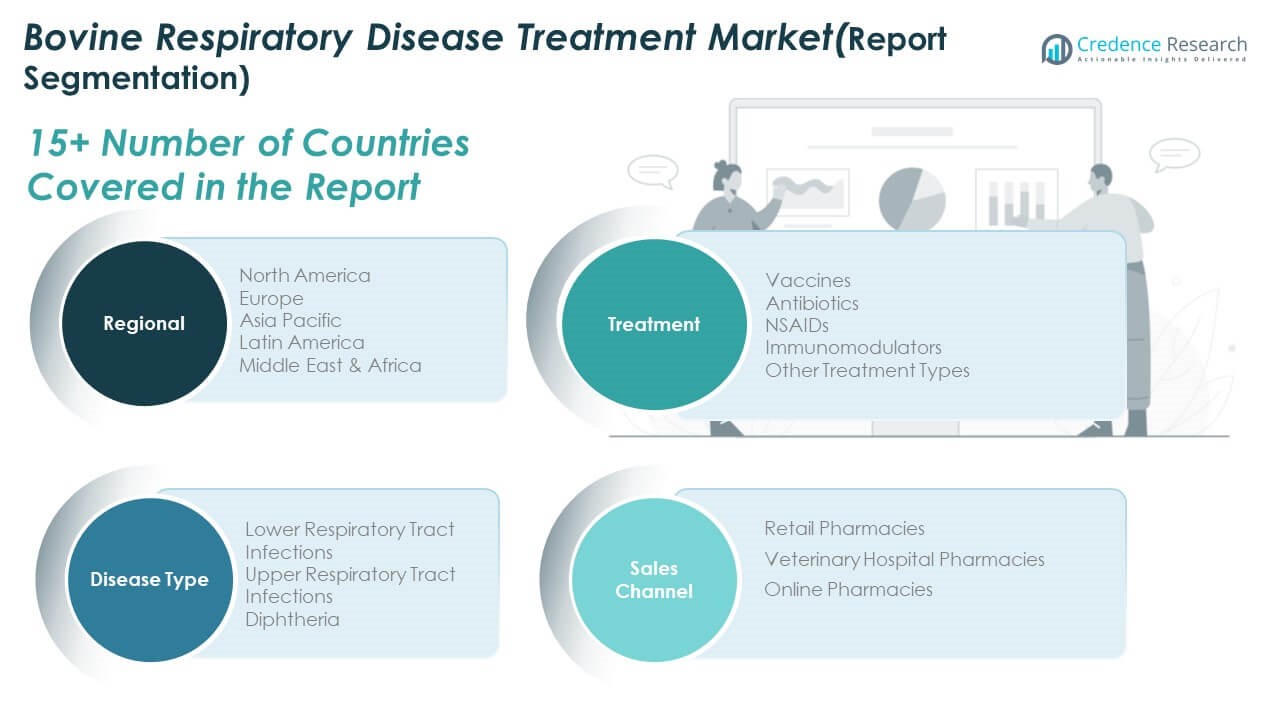
Segmentation:
By Treatment Type:
- Vaccines
- Antibiotics
- NSAIDs
- Immunomodulators
- Other Treatment Types
By Disease Type:
- Lower Respiratory Tract Infections
- Upper Respiratory Tract Infections
- Diphtheria
By Sales Channel:
- Retail Pharmacies
- Veterinary Hospital Pharmacies
- Online Pharmacies
By Region:
- North America (U.S., Canada, Mexico)
- Europe (UK, France, Germany, Italy, Spain, Russia, Rest of Europe)
- Asia Pacific (China, Japan, South Korea, India, Australia, Southeast Asia, Rest of Asia Pacific)
- Latin America (Brazil, Argentina, Rest of Latin America)
- Middle East (GCC Countries, Israel, Turkey, Rest of Middle East)
- Africa (South Africa, Egypt, Rest of Africa)
Regional Analysis:
The North America Bovine Respiratory Disease Treatment Market size was valued at USD 287.20 million in 2018 to USD 421.11 million in 2024 and is anticipated to reach USD 699.03 million by 2032, at a CAGR of 6.6% during the forecast period. North America holds the largest share in the Bovine Respiratory Disease Treatment Market, accounting for 32%. The region benefits from highly developed veterinary healthcare infrastructure, advanced cattle management practices, and widespread adoption of vaccines and diagnostics. The U.S. dominates regional consumption due to its large-scale feedlot operations and government-supported animal health monitoring systems. Canada also contributes through its strong focus on livestock export and preventive veterinary programs. The presence of leading pharmaceutical companies in the region supports rapid product innovation and availability. It continues to invest in digital veterinary solutions, promoting early detection and targeted treatment strategies.
The Europe Bovine Respiratory Disease Treatment Market size was valued at USD 192.61 million in 2018 to USD 291.79 million in 2024 and is anticipated to reach USD 506.23 million by 2032, at a CAGR of 7.2% during the forecast period. Europe accounts for 22% of the global market share, driven by strict regulatory oversight and proactive disease prevention strategies. Countries such as Germany, France, and the Netherlands lead demand due to their robust dairy and beef industries. The European Union’s policies promoting reduced antibiotic use have increased demand for vaccines and immunomodulators. The Bovine Respiratory Disease Treatment Market in this region benefits from public health initiatives and academic research funding. Veterinary associations play a strong role in educating farmers and shaping treatment protocols. It also sees growing interest in genetic selection and sustainable cattle-rearing practices.
The Asia Pacific Bovine Respiratory Disease Treatment Market size was valued at USD 232.52 million in 2018 to USD 361.11 million in 2024 and is anticipated to reach USD 646.49 million by 2032, at a CAGR of 7.6% during the forecast period. Asia Pacific holds 27% of the global market and represents the fastest-growing region due to rising meat consumption, expanding cattle populations, and improving veterinary infrastructure. China and India lead regional growth, with Australia and Japan also playing significant roles in product demand and innovation. Urbanization and income growth are pushing producers toward structured disease management solutions. The Bovine Respiratory Disease Treatment Market benefits from government-supported rural veterinary programs and public-private initiatives. It is seeing increasing penetration of mobile veterinary services and cost-effective diagnostics, particularly in Southeast Asia. Regional manufacturers are also scaling operations to meet domestic and export requirements.
The Latin America Bovine Respiratory Disease Treatment Market size was valued at USD 71.38 million in 2018 to USD 109.16 million in 2024 and is anticipated to reach USD 191.67 million by 2032, at a CAGR of 7.3% during the forecast period. Latin America contributes 8% to the global market, with Brazil and Argentina leading adoption due to their strong beef export economies. The region emphasizes respiratory disease control as part of broader herd productivity goals. The Bovine Respiratory Disease Treatment Market is supported by increased private-sector investment in veterinary services and product distribution. Access to affordable antibiotics and growing acceptance of vaccines are shaping market dynamics. It is gradually adopting electronic animal identification and health tracking systems. Government agencies are also encouraging better farm hygiene and disease surveillance practices.
The Middle East Bovine Respiratory Disease Treatment Market size was valued at USD 54.24 million in 2018 to USD 78.49 million in 2024 and is anticipated to reach USD 127.86 million by 2032, at a CAGR of 6.3% during the forecast period. The Middle East accounts for 6% of the global market, driven by increasing cattle farming in countries such as Saudi Arabia, the UAE, and Egypt. The Bovine Respiratory Disease Treatment Market benefits from rising demand for locally sourced meat and milk, supported by food security initiatives. Veterinary infrastructure is improving with new clinics, mobile services, and regional supply chains. It also gains from awareness campaigns promoting early diagnosis and proper treatment protocols. Import reliance for high-quality pharmaceuticals presents both challenges and opportunities for local manufacturing. Disease management practices are evolving with the integration of international animal health standards.
The Africa Bovine Respiratory Disease Treatment Market size was valued at USD 41.14 million in 2018 to USD 56.20 million in 2024 and is anticipated to reach USD 83.66 million by 2032, at a CAGR of 5.1% during the forecast period. Africa holds a 5% share of the global market and shows steady progress in improving livestock healthcare systems. Nigeria, South Africa, Kenya, and Ethiopia are key contributors to regional demand. The Bovine Respiratory Disease Treatment Market is expanding as governments and NGOs support vaccination campaigns and veterinary outreach in rural areas. Access to quality treatments remains a challenge, but mobile clinics and donor-funded programs are closing the gap. It is also experiencing slow but increasing use of digital animal health platforms. Long-term opportunities lie in improving disease surveillance and training for livestock handlers.
Key Player Analysis:
- Bimeda
- Boehringer Ingelheim GmbH
- Ceva
- Merck & Co. Inc.
- Elanco
- Vetoquinol
- Virbac
- Zoetis Inc.
- Bayer AG
- Idexx Laboratories
- Other Key Players
Competitive Analysis:
The Bovine Respiratory Disease Treatment Market features a moderately consolidated competitive landscape with a mix of multinational pharmaceutical companies and regional veterinary health providers. Key players focus on expanding their vaccine portfolios, introducing long-acting therapeutics, and securing regulatory approvals across multiple geographies. It continues to see strategic investments in R&D, aimed at improving efficacy, minimizing withdrawal periods, and addressing antimicrobial resistance concerns. Leading firms are leveraging partnerships with livestock associations and veterinary networks to strengthen distribution and increase brand loyalty. The market also includes emerging players that offer cost-effective generics and region-specific solutions, intensifying competition in price-sensitive areas. Companies are adopting digital platforms to promote education, track product usage, and support early intervention protocols. Innovation in combination therapies, intranasal vaccines, and targeted drug delivery systems remains a key differentiator in the race for market leadership.
Recent Developments:
- In June 2025, Merck expanded its internal generative AI solutions to accelerate clinical study report development, enhancing the speed at which medicines, including those for animal health, reach the market. This move is part of Merck’s larger strategy to streamline clinical trial processes and deliver innovative treatments more efficiently.
- In May 2025, Bimeda expanded its anti-parasitic portfolio by launching Doracide™, a doramectin topical solution designed to combat internal and external parasites in cattle. This product is bioequivalent to Dectomax® Pour-On and provides extended protection against a variety of parasites, supporting cattle health and productivity.
- In January 2025, Virbac, in collaboration with Emmyon, Inc., launched URSOLYX™ Soft Chews, a novel product aimed at supporting canine muscle health. While not directly targeting bovine respiratory disease, Virbac’s continued innovation in animal health supplements reflects its broader commitment to veterinary advancements
- In Nov 2024, Elanco acquired a contract manufacturing facility in Speke, UK, previously owned by TriRx Speke Ltd. This acquisition secures a critical part of Elanco’s global supply chain for farm animal products, ensuring continued production of key lines and reinforcing Elanco’s commitment to reliable animal health solutions.
Market Concentration & Characteristics:
The Bovine Respiratory Disease Treatment Market is moderately concentrated, with a few dominant players controlling a significant share through established product portfolios, global reach, and consistent R&D investments. It is characterized by a strong focus on preventive healthcare, growing demand for combination therapies, and increasing regulatory oversight. Companies emphasize innovation in vaccine formulations, drug delivery systems, and resistance-free treatment options. The market favors players with broad distribution networks and veterinary engagement programs. It shows steady growth in both developed and emerging regions, supported by rising meat and dairy consumption. The presence of regional manufacturers offering cost-effective alternatives adds competitive diversity and enhances accessibility in price-sensitive markets.
Report Coverage:
The research report offers an in-depth analysis based on treatment type, disease type, and sales channel. It details leading market players, providing an overview of their business, product offerings, investments, revenue streams, and key applications. Additionally, the report includes insights into the competitive environment, SWOT analysis, current market trends, as well as the primary drivers and constraints. Furthermore, it discusses various factors that have driven market expansion in recent years. The report also explores market dynamics, regulatory scenarios, and technological advancements that are shaping the industry. It assesses the impact of external factors and global economic changes on market growth. Lastly, it provides strategic recommendations for new entrants and established companies to navigate the complexities of the market.
Future Outlook:
- Demand for multivalent vaccines is expected to rise due to their efficiency in targeting multiple pathogens simultaneously.
- Adoption of precision livestock monitoring tools will support early detection and targeted treatment.
- Regulatory support for antibiotic alternatives will accelerate the development of novel immunotherapies.
- Tele-veterinary services will expand access to expert diagnosis in remote and underserved regions.
- Genetic selection for disease-resistant cattle will reduce treatment dependency over time.
- Investments in local manufacturing will improve product affordability in emerging markets.
- Sustainability initiatives will drive demand for eco-friendly formulations and biodegradable packaging.
- Public-private partnerships will strengthen veterinary infrastructure and outreach programs.
- Integration of AI and data analytics in herd health management will enhance disease forecasting.
- Growing consumer pressure for antibiotic-free meat will influence treatment protocols and product innovation.
Request a Free Sample
Fill in your details and we'll send you a free sample report.
- Sample data tables & charts
- Research methodology
Need a Custom Version of This Report?
Tailor the scope, geography, or segments to your exact requirements.
- Custom geography or segment scope
- Direct access to our analyst team
Frequently Asked Questions
What is the current size of the Bovine Respiratory Disease Treatment Market?
What factors are driving the growth of the Bovine Respiratory Disease Treatment Market?
What are the key segments within the Bovine Respiratory Disease Treatment Market?
What are some challenges faced by the Bovine Respiratory Disease Treatment Market?
Who are the major players in the Bovine Respiratory Disease Treatment Market?
Table of Content
Chapter 1. Report Introduction
- 1.1 Report Description & Purpose
- 1.1.1 Report Title & Market Definition
- 1.1.2 Unique Selling Propositions (USP) & Key Differentiators
- 1.1.3 Value Proposition for Stakeholders
- 1.2 Research Objectives
- 1.2.1 Market Sizing Objectives (Volume & Revenue)
- 1.2.2 Segmentation Objectives
- 1.2.3 Competitive Intelligence Objectives
- 1.2.4 Forecast & Scenario Objectives
- 1.3 Report Scope
- 1.3.1 Bovine Respiratory Disease Treatment Scope – Types & Subtypes Covered
- 1.3.2 Geographic Scope – Regions & Countries Covered
- 1.3.3 Historical Period, Base Year & Forecast Period (2024; forecast to 2032)
- 1.3.4 Inclusions & Exclusions
- 1.4 HS Code & Classification Framework
- 1.5 Currency, Units & Pricing Basis
- 1.6 Target Stakeholders
- 1.7 Limitations & Assumptions
Chapter 2. Executive Summary
- 2.1 Global Bovine Respiratory Disease Treatment Market Snapshot
- 2.1.1 Market Size – Historical (2024) & Forecast (2024-2032) (2024: USD 1,317.9 million → 2032: USD 2,254.9 million)
- 2.1.2 Volume & Revenue – Global Totals
- 2.1.3 Key Market Highlights – Top Five Facts
- 2.2 Bovine Respiratory Disease Treatment Market Segmentation Snapshot
- 2.2.1 Market Split by Region – 2024 vs. 2032
- 2.3 Competitive Snapshot
- 2.3.1 Top 10 Players by Revenue Share – 2024
- 2.3.2 Top 10 Players by Volume Share – 2024
- 2.3.3 Recent Strategic Developments (18-Month Summary)
- 2.4 Key Investment Highlights & Strategic Conclusions
Chapter 3. Bovine Respiratory Disease Treatment Market Dynamics & Industry Analysis
- 3.1 Market Overview & Context
- 3.1.1 Bovine Respiratory Disease Treatment Market Position in the Broader Automotive Value Chain
- 3.1.2 OEM vs. Replacement Market Dynamics
- 3.1.3 Market Maturity & Development Stage by Region
- 3.2 Bovine Respiratory Disease Treatment Market Drivers
- 3.3 Bovine Respiratory Disease Treatment Market Restraints & Challenges
- 3.4 Bovine Respiratory Disease Treatment Market Opportunities
- 3.5 Porter's Five Forces Analysis
- 3.5.1 Threat of New Entrants
- 3.5.2 Bargaining Power of Suppliers
- 3.5.3 Bargaining Power of Buyers
- 3.5.4 Threat of Substitutes
- 3.5.5 Competitive Rivalry – Intensity Assessment
- 3.6 Bovine Respiratory Disease Treatment Value Chain Analysis
- 3.6.1 Upstream – Raw Material/Input Suppliers
- 3.6.1.1 Raw Material/Input 1
- 3.6.1.2 Raw Material/Input 2
- 3.6.1.3 Raw Material/Input 3
- 3.6.2 Midstream – Production/Manufacturing/Service Delivery
- 3.6.2.1 Production/Process Overview
- 3.6.2.2 Key Facility Locations & Capacity by Manufacturer
- 3.6.3 Downstream – Distribution & End Consumer
- 3.6.3.1 Primary Channel – B2B/OEM
- 3.6.3.2 Secondary Channels – Dealer, Retail, Online, Direct
- 3.6.4 Value Chain Profitability Analysis
- 3.6.1 Upstream – Raw Material/Input Suppliers
- 3.7 PESTEL Analysis
- 3.7.1 Political Factors
- 3.7.2 Economic Factors
- 3.7.3 Social Factors
- 3.7.4 Technological Factors
- 3.7.5 Environmental Factors
- 3.7.6 Legal Factors
- 3.8 Bovine Respiratory Disease Treatment Supply Chain Analysis
- 3.8.1 Raw Material/Input Supply Risk Assessment
- 3.8.2 Manufacturing Concentration Risk (Geographic Exposure)
- 3.8.3 Trade Disruption Impact Analysis
- 3.9 Regulatory & Policy Landscape
Note: The regulatory and policy landscape section covers regulations based on their applicability to the market, Bovine Respiratory Disease Treatment category, geography, and scope of the study. Only regulatory frameworks with a material impact on operations, compliance, trade, sustainability, or market access are analyzed in detail.
Chapter 4. Key Investment Pockets & Opportunity Analysis
- 4.1 Bovine Respiratory Disease Treatment Market Attractiveness Analysis
- 4.1.1 By Region – Investment Attractiveness Matrix (Volume × CAGR)
- 4.2 Absolute Revenue Growth Opportunity
- 4.2.1 By Region – Absolute USD Growth Through 2032
- 4.3 Incremental Volume Opportunity
- 4.3.1 By Region – Incremental Volume Through 2032
- 4.3.2 Segment – Incremental Volume
- 4.4 Emerging Submarket Opportunity Deep Dive (Subject to Applicability)
- 4.5 Emerging Market Opportunity Scorecards
- 4.5.1 United States
- 4.5.2 Europe
- 4.5.3 Asia
- 4.5.4 Middle East & Africa
Note: Emerging Market Opportunity Scorecards will be included based on relevance and strategic importance. Regions listed are indicative and may vary depending on data availability and market dynamics.
Chapter 5. Bovine Respiratory Disease Treatment Import-Export Analysis & Trade Flows
- 5.1 Global Trade Overview
- 5.1.1 Global Export Value by Country (2024)
- 5.1.2 Global Export Volume by Country (2024)
- 5.1.3 Global Import Value by Country (2024)
- 5.1.4 Global Import Volume by Country (2024)
- 5.1.5 Net Trade Balance by Country (2024)
- 5.2 Export Analysis – Segment
- 5.2.1 Type 1 (HS Code)
- 5.2.2 Type 2 (HS Code)
- 5.2.3 Type 3 (HS Code)
- 5.2.4 Type 4 (HS Code)
- 5.2.5 Type 5 (HS Code)
- 5.3 Import Analysis – Segment
- 5.3.1 Type 1 (HS Code)
- 5.3.2 Type 2 (HS Code)
- 5.3.3 Type 3 (HS Code)
- 5.3.4 Type 4 (HS Code)
- 5.3.5 Type 5 (HS Code)
- 5.4 Average Unit Trade Prices
- 5.4.1 Average Export Price – Segment & Country
- 5.4.2 Average Import Price – Segment & Source Country
- 5.4.3 Price Trends (2024)
- 5.5 Key Trade Route Analysis
- 5.5.1 Trade Route 1
- 5.5.2 Trade Route 2
- 5.5.3 Trade Route 3
- 5.5.4 Trade Route 4
- 5.5.5 Trade Route 5
- 5.6 Trade Policy Impact Assessment
- 5.6.1 US Anti-Dumping & Section 301 Tariffs
- 5.6.2 EU Customs Union Impact
- 5.6.3 Major Free Trade Agreements
- 5.6.4 USMCA Rules of Origin
Note: Trade policy analysis will be included only where relevant to the Bovine Respiratory Disease Treatment market.
Chapter 6. Competitive Landscape & Company Benchmarking
- 6.1 Bovine Respiratory Disease Treatment Market Concentration & Structure
- 6.1.1 Herfindahl-Hirschman Index (HHI) – vs. 2024
- 6.1.2 Tier 1, Tier 2 & Tier 3 Market Structure
- 6.1.3 Global, Regional & Local Player Dynamics
- 6.2 Bovine Respiratory Disease Treatment Market Share Analysis – 2024
- 6.2.1 Global Revenue Share by Company
- 6.2.2 Global Volume Share by Company
- 6.2.3 Regional Revenue Share
- 6.2.4 Market Share Evolution ( vs. 2024)
- 6.2.5 OEM Segment Share by Company
- 6.2.6 Replacement Segment Share by Company
- 6.3 Production/Delivery Capacity & Facility Analysis
- 6.3.1 Global Installed Capacity
- 6.3.2 Capacity Utilization Rates
- 6.3.3 Production/Output Volume
- 6.3.4 Facility Locations & Capacity Map
- 6.3.5 Planned Capacity Additions
- 6.4 Bovine Respiratory Disease Treatment Competitive Benchmarking Matrix
- 6.4.1 Revenue, Volume, CAGR & Profitability Comparison
- 6.4.2 Channel Revenue Mix
- 6.4.3 Geographic Revenue Exposure
- 6.4.4 R&D Intensity
- 6.4.5 Sustainability Maturity
- 6.5 Strategic Developments in Bovine Respiratory Disease Treatment (Last 24 Months)
- 6.5.1 Mergers, Acquisitions & Divestments
- 6.5.2 New Bovine Respiratory Disease Treatment Launches
- 6.5.3 Facility Expansions
- 6.5.4 Strategic Alliances, Joint Ventures & Partnerships
- 6.5.5 Distribution Expansion & Market Entry
- 6.5.6 Sustainability & ESG Initiatives
- 6.6 Competitive Strategy Mapping
- 6.6.1 Leader, Challenger, Follower & Niche Classification
- 6.6.2 Pricing Strategy Comparison
- 6.6.3 Channel Strategy Matrix
Note: Strategic developments are included based on their materiality and the availability of reliable information.
Chapter 7. Global Bovine Respiratory Disease Treatment Market – By Distribution Channel
- 7.1 Segment Overview
- 7.1.1 Volume & Revenue Split by Channel (2024 & 2032)
- 7.1.2 Channel Mix Evolution (2024-2032)
Chapter 8. Regional Market Analysis – Global Overview
- 8.1 Global Regional Overview
- 8.1.1 Regional Volume Share
- 8.1.2 Regional Revenue Share
- 8.1.3 Regional Volume by Region
- 8.1.4 Regional Revenue by Region
- 8.1.5 Regional Forecast Through 2032
- 8.2 Cross-Regional Segment Analysis
- 8.2.1 By Distribution Channel
- 8.2.2 By Brand/Price Tier
Chapter 9. North America Bovine Respiratory Disease Treatment Market
- 9.1 United States
- 9.2 Canada
- 9.3 Mexico
Chapter 10. Europe Bovine Respiratory Disease Treatment Market
- 10.1 Germany
- 10.2 France
- 10.3 Italy
- 10.4 United Kingdom
- 10.5 Spain
- 10.6 Poland
- 10.7 Russia
- 10.8 Netherlands
- 10.9 Belgium
- 10.10 Sweden
- 10.11 Denmark
- 10.12 Norway
- 10.13 Rest of Europe
Chapter 11. Asia Pacific Bovine Respiratory Disease Treatment Market
- 11.1 China
- 11.2 India
- 11.3 Japan
- 11.4 South Korea
- 11.5 Thailand
- 11.6 Indonesia
- 11.7 Vietnam
- 11.8 Malaysia
- 11.9 Australia
- 11.10 Rest of Asia Pacific
Chapter 12. Latin America Bovine Respiratory Disease Treatment Market
- 12.1 Brazil
- 12.2 Argentina
- 12.3 Colombia
- 12.4 Chile
- 12.5 Rest of Latin America
Chapter 13. Middle East Bovine Respiratory Disease Treatment Market
- 13.1 Saudi Arabia
- 13.2 United Arab Emirates
- 13.3 Turkey
- 13.4 Israel
- 13.5 Iran
- 13.6 Rest of the Middle East
Chapter 14. Africa Bovine Respiratory Disease Treatment Market
- 14.1 South Africa
- 14.2 Egypt
- 14.3 Nigeria
- 14.4 Morocco
- 14.5 Rest of Africa
Chapter 15. Bovine Respiratory Disease Treatment Company Profiles
- 15.1 [Company 01]
- 15.1.1 Company Overview
- 15.1.2 Key Management Personnel
- 15.1.3 Products & Services Portfolio
- 15.1.4 Financial Performance
- 15.1.5 Key Market Focus & Geographic Presence
- 15.1.6 Recent Developments & Strategic Initiatives
Note: The company profile list is preliminary and may change based on research findings, market developments, data availability, and client requirements.
Chapter 16. Appendices
- Appendix A – List of Abbreviations & Acronyms
- Appendix B – Industry Classification Code Reference – Full Series
- Appendix C – Production & Capacity Data Tables
- Appendix D – End-Use & Demand Base Tables
- Appendix E – Consumption & Replacement Rate Assumptions
- Appendix F – ASP Reference Tables
- Appendix G – Manufacturing & Facility Database
- Appendix H – Import-Export Data Tables
- Appendix I – Regulatory Summary Tables
- Appendix J – Primary Research Participant List (Anonymized)
- Appendix K – Primary Research Questionnaire Framework
- Appendix L – Data Sources & Bibliography
- Appendix M – Market Size Divergence & Source Comparison
Chapter 17. Research Methodology
- 17.1 Research Framework & Philosophy
- 17.2 Secondary Research – Sources, Hierarchy & Data Extraction
- 17.3 Data Modeling – Bottom-Up & Top-Down Market Sizing
- 17.4 Primary Research – Stakeholder Framework, LOI & Sample Sizes
- 17.5 Forecast Methodology – Regression, Scenario & Sensitivity Analysis
- 17.6 Quality Control – Four-Layer Validation Framework
- 17.7 Limitations & Standard Assumptions
- 17.8 Disclaimer
