
| REPORT ATTRIBUTE | DETAILS |
|---|---|
| Historical Period | 2019-2022 |
| Base Year | 2023 |
| Forecast Period | 2024-2032 |
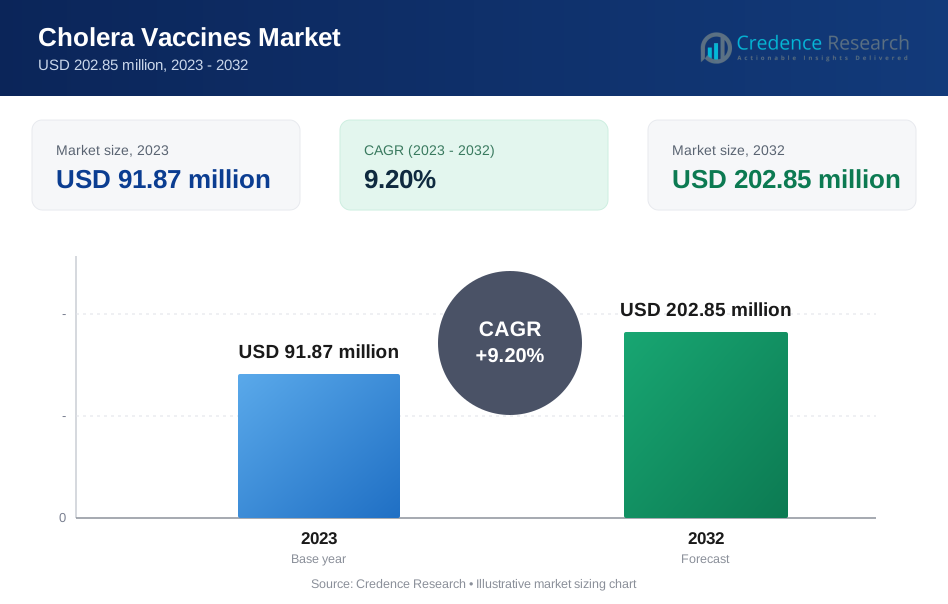
| Cholera Vaccines Market Size 2023 | USD 91.87 Million |
| Cholera Vaccines Market, CAGR | 9.20% |
| Cholera Vaccines Market Size 2032 | USD 202.85 Million |
Market Overview
The Cholera Vaccines Market is projected to grow from USD 91.87 million in 2023 to an estimated USD 202.85 million by 2032, with a compound annual growth rate (CAGR) of 9.20% from 2024 to 2032. This growth is driven by the rising prevalence of cholera outbreaks in regions with poor sanitation and limited access to clean water.
Key market drivers include growing government initiatives, international health organization efforts, and the introduction of new vaccine technologies that offer longer-lasting immunity. Furthermore, the expansion of vaccination campaigns in at-risk populations and the increased awareness of cholera prevention are contributing to market growth. Trends such as advancements in vaccine delivery methods and ongoing R&D efforts further support the positive outlook.
Geographically, the cholera vaccines market is witnessing significant demand in regions like Africa and South Asia, where cholera is most prevalent. North America and Europe are also key contributors due to their focus on disease prevention and strong healthcare infrastructure. Leading players in the market include companies like Valneva SE, Shantha Biotechnics (Sanofi), EuBiologics Co., Ltd., and PaxVax, which are actively involved in the development and distribution of cholera vaccines globally.
Market Drivers
Increasing Cholera Outbreaks in Endemic Regions
Cholera outbreaks remain a significant public health challenge, especially in regions with inadequate sanitation and unsafe drinking water. Countries in Africa, South Asia, and parts of Latin America experience recurring outbreaks due to the lack of access to clean water and proper hygiene. According to the World Health Organization (WHO), cholera infects millions of people globally each year, with several thousands of deaths, particularly in low-income and developing countries. The persistence of cholera in these regions drives the demand for effective vaccines, both as preventive measures and as a critical response to emergencies. As cholera continues to pose a major health risk, governments and global health organizations are prioritizing vaccination campaigns to control outbreaks. Humanitarian organizations like Médecins Sans Frontières (MSF) and the WHO frequently deploy oral cholera vaccines (OCV) in high-risk areas during emergencies. These vaccination campaigns have proven to be effective in curbing the spread of the disease and are increasingly being seen as the first line of defense in endemic regions. As a result, the demand for cholera vaccines is expected to rise steadily, contributing to market growth. For instance, recent surveys by the WHO highlight the urgent need for innovative treatments to combat the global burden of cholera. Manufacturers and governments are partnering to ensure that vaccines are readily available, further enhancing the accessibility of cholera vaccines to the populations in need.
Government Initiatives and International Collaborations
Governments and international health organizations play a pivotal role in driving the cholera vaccines market. Many governments in cholera-endemic regions, with the support of international bodies such as the WHO, UNICEF, and the Global Alliance for Vaccines and Immunization (GAVI), are increasingly implementing vaccination programs as part of their national cholera prevention strategies. These initiatives are often supported by global funding and donations, ensuring that the most vulnerable populations have access to life-saving vaccines.nThe WHO has established a global stockpile of oral cholera vaccines, managed by the International Coordinating Group (ICG), to respond to cholera outbreaks and humanitarian crises. The stockpile has been crucial in controlling large-scale outbreaks, especially in regions affected by natural disasters or conflicts, where access to clean water and healthcare is limited. In 2022, for instance, the WHO reported deploying millions of doses of cholera vaccines from the stockpile to countries like Ethiopia, Nigeria, and Yemen to combat severe outbreaks. Furthermore, governments in both endemic and non-endemic regions are taking preventive measures by incorporating cholera vaccines into public health programs for travelers and military personnel. As international travel increases and cholera remains a global health threat, these measures will further contribute to the growing demand for vaccines. The collaborative efforts between governments, international organizations, and vaccine manufacturers are expected to remain a significant driver of market growth, ensuring that vaccines are distributed efficiently to the populations most at risk. For instance, recent initiatives by GAVI and UNICEF have significantly improved the availability and distribution of cholera vaccines.
Technological Advancements in Vaccine Development
Advancements in vaccine technology are playing a crucial role in driving the cholera vaccines market. Researchers and manufacturers are continually working to develop more effective, long-lasting, and affordable vaccines to address the evolving nature of cholera outbreaks. Traditional cholera vaccines required multiple doses for full immunization, which posed logistical challenges in mass vaccination campaigns. However, recent innovations in oral cholera vaccines (OCV) have improved vaccine efficacy, reduced dosage requirements, and extended the duration of protection. For example, newer vaccines like Vaxchora, which has been approved by regulatory authorities such as the U.S. Food and Drug Administration (FDA), offer single-dose immunization, making it more convenient for travelers and high-risk populations. Additionally, advances in vaccine delivery mechanisms, such as thermostable formulations, are reducing the need for cold chain storage, a significant barrier to vaccine distribution in remote areas. These innovations are enhancing the accessibility and scalability of cholera vaccines in regions with limited healthcare infrastructure. Furthermore, ongoing research and development efforts are focused on improving vaccines to provide longer-lasting immunity and effectiveness against different strains of cholera. Companies and research institutions are also exploring new adjuvants and formulation techniques to reduce side effects and improve vaccine tolerability. These technological advancements are expected to drive further growth in the cholera vaccines market, as they enable the development of vaccines that can be more easily deployed in diverse settings. For instance, recent advancements in oral cholera vaccines have shown promising results in reducing cholera outbreaks.
Rising Awareness and Global Health Initiatives
Public awareness of the importance of cholera prevention and vaccination has been on the rise, driven by media campaigns, healthcare initiatives, and the efforts of international organizations. Increased awareness about the dangers of cholera and the availability of effective vaccines has led to higher vaccination rates, especially in regions where cholera outbreaks are recurrent. As more people become informed about the preventive benefits of cholera vaccines, demand is likely to grow further. Global health initiatives such as the WHO’s Global Task Force on Cholera Control (GTFCC) are working toward reducing cholera-related deaths by 90% by 2030 through the implementation of the Ending Cholera: A Global Roadmap to 2030. This ambitious plan focuses on increasing access to safe water, sanitation, and vaccines in cholera-endemic regions, which are critical components of the global effort to eliminate cholera as a public health threat. As these initiatives gain traction, the cholera vaccines market will benefit from increased investment, donor funding, and policy support aimed at achieving the GTFCC’s objectives. Moreover, vaccine manufacturers and healthcare providers are launching educational programs to promote the uptake of cholera vaccines among at-risk populations. These programs are designed to overcome vaccine hesitancy, which can be a significant barrier to immunization campaigns in certain regions. By improving public knowledge of the benefits of vaccination and dispelling myths about vaccine safety, these initiatives are expected to drive higher demand for cholera vaccines globally.
Market Trends
Growing Adoption of Oral Cholera Vaccines (OCVs)
One of the most significant trends in the cholera vaccines market is the increasing adoption of oral cholera vaccines (OCVs). OCVs, such as Shanchol and Euvichol, are gaining widespread acceptance due to their ease of administration and effectiveness in both endemic areas and emergency settings. These vaccines are often delivered through mass immunization campaigns, targeting populations in regions with poor sanitation and high vulnerability to cholera outbreaks. Oral vaccines offer a practical solution for large-scale vaccination programs, especially in resource-limited settings where access to healthcare infrastructure is challenging. The two-dose regimen of vaccines like Shanchol has been shown to provide long-lasting protection, making it a preferred option in cholera-endemic regions. The World Health Organization (WHO) has been actively promoting the use of OCVs as part of its global strategy to combat cholera, especially in countries facing humanitarian crises or natural disasters where the risk of outbreaks is high. Additionally, recent innovations in OCV formulations are improving vaccine storage stability, making them more viable for use in remote areas without sophisticated cold-chain logistics. The rising demand for OCVs, coupled with improved global stockpiling efforts, is expected to continue driving the market’s growth in the coming years. For instance, the WHO prequalified a new oral simplified vaccine for cholera in April 2024, which is expected to increase production capacity and availability.
Integration of Cholera Vaccines into Public Health Programs
Another emerging trend in the cholera vaccines market is the increasing integration of cholera vaccines into routine immunization programs and public health initiatives. Governments and global health organizations are recognizing the importance of cholera prevention in reducing disease transmission, morbidity, and mortality. Several countries, particularly in Africa and South Asia, have incorporated cholera vaccines into their national immunization schedules, especially in regions where the disease is endemic. The integration of cholera vaccines into public health frameworks is part of a broader trend of disease prevention that emphasizes vaccination as a cost-effective and sustainable solution. Countries at risk of cholera outbreaks are also investing in vaccination for travelers and healthcare workers to prevent cross-border transmission. This shift toward preventive vaccination strategies aligns with the WHO’s Global Task Force on Cholera Control, which aims to reduce cholera deaths by 90% by 2030. As more governments and organizations adopt cholera vaccination as a standard practice, the demand for vaccines will likely rise, contributing to the overall market expansion. For instance, recent studies have shown that single-dose cholera vaccines can be as effective as the standard two-dose regimen, making it easier to integrate into public health programs.
Market Restraints and Challenges
High Costs and Limited Funding
One of the primary restraints facing the cholera vaccines market is the high cost associated with vaccine development, production, and distribution. Developing effective cholera vaccines requires substantial investment in research and clinical trials, which can be a financial burden for manufacturers. Additionally, the production costs of oral cholera vaccines (OCVs) remain relatively high, limiting affordability for low-income countries where cholera is most prevalent. Limited funding from governments and international health organizations exacerbates this issue, as financial resources are often stretched thin across multiple public health priorities. Consequently, the high cost of vaccines can hinder large-scale immunization campaigns, reducing overall vaccine coverage and slowing market growth. Efforts to subsidize vaccine costs or secure funding from global health initiatives are essential to mitigate this challenge and enhance vaccine accessibility in underserved regions. For instance, recent surveys indicate that the high costs of cholera vaccines are a major concern for healthcare providers in emerging markets.
Logistical and Infrastructure Challenges
Effective distribution of cholera vaccines is another significant challenge impacting market growth. Cholera-endemic regions often suffer from inadequate healthcare infrastructure, including insufficient cold chain logistics necessary to maintain vaccine efficacy during transportation and storage. Remote and rural areas, where cholera outbreaks are most frequent, frequently lack the necessary facilities and transportation networks to support widespread vaccination efforts. Additionally, political instability, conflicts, and natural disasters can disrupt supply chains, making it difficult to deliver vaccines consistently and reliably. These logistical hurdles not only impede the timely distribution of vaccines but also increase operational costs, further limiting market expansion. Addressing these infrastructure challenges requires coordinated efforts between governments, international organizations, and private sector stakeholders to build resilient healthcare systems capable of supporting effective vaccine deployment. For instance, recent studies have highlighted the need for improved infrastructure to ensure the timely and effective distribution of cholera vaccines in affected regions.
Market Segmentation Analysis
By Product
The cholera vaccines market includes several key products, each serving different needs. Vaxchora, an FDA-approved oral vaccine, is primarily used by travelers to cholera-endemic regions due to its single-dose regimen, making it convenient for pre-travel immunization. Euvichol and its improved version, Euvichol-Plus, developed by EuBiologics, are highly effective in mass immunization campaigns, especially in endemic regions, due to their affordability and long-lasting immunity, playing a critical role in global prevention efforts. Doctoral vaccines, still in development, aim to offer enhanced protection, longer immunity, and improved stability, addressing current limitations and driving future market growth. Additionally, other cholera vaccines in this segment include combination vaccines and specialized formulations for vulnerable groups like children and the elderly, catering to diverse public health needs and increasing the market’s flexibility and resilience.
By End User
The cholera vaccines market is driven by both the public and private sectors. In the public sector, government health departments, public health agencies, and international organizations play a crucial role in controlling cholera outbreaks, particularly in endemic regions and during humanitarian crises. Public vaccination programs, in collaboration with vaccine manufacturers, ensure widespread distribution and accessibility, generating significant market demand. In the private sector, healthcare providers, clinics, hospitals, and private immunization centers cater to travelers, expatriates, and individuals seeking preventive measures against cholera. Growing awareness of cholera risks among travelers, coupled with corporate health programs and insurance-backed vaccination initiatives, is fueling market expansion in this segment.
Segments
Based on Product
- Vaxchora
- Euvichol/Euvichol-Plus
- Doctoral
- Other Products
Based on End User
- Public Sector
- Private Sector
Based on Region
- North America
- U.S.
- Canada
- Mexico
- Europe
- Germany
- France
- U.K.
- Italy
- Spain
- Rest of Europe
- Asia Pacific
- China
- Japan
- India
- South Korea
- South-east Asia
- Rest of Asia Pacific
- Latin America
- Brazil
- Argentina
- Rest of Latin America
- Middle East & Africa
- GCC Countries
- South Africa
- Rest of the Middle East and Africa
Regional Analysis
Africa (45%)
Africa holds the largest market share in the global cholera vaccines market, accounting for approximately 45% of the total revenue. The high prevalence of cholera outbreaks in sub-Saharan Africa, exacerbated by inadequate water and sanitation infrastructure, drives significant demand for cholera vaccines. Countries like the Democratic Republic of the Congo, Nigeria, and Somalia are particularly prone to cholera outbreaks, leading to extensive vaccination campaigns initiated by governments and international health organizations. The WHO, in collaboration with humanitarian organizations, has focused heavily on mass immunization campaigns across African countries, contributing to the region's dominant market position.
South Asia (30%)
South Asia is the second-largest region in the cholera vaccines market, with a market share of approximately 30%. Countries like India, Bangladesh, and Pakistan face regular cholera outbreaks due to poor sanitation and unsafe drinking water, making cholera vaccines an essential tool for public health interventions. South Asia’s large population and vulnerability to waterborne diseases further fuel the demand for cholera vaccines. Government initiatives, combined with support from international organizations like GAVI and UNICEF, have led to the widespread adoption of vaccines like Euvichol and Shanchol in these countries.
Key players
- Bavarian Nordic A/S
- Bharat Biotech
- Biological E
- EuBiologics Co. Ltd.
- Hilleman Laboratories
- Incept Pharmaceuticals Ltd.
- Shantha Biotechnics (Sanofi)
- VA Biotech
- Valneva Sweden AB
Competitive Analysis
The cholera vaccines market is characterized by the presence of several key players who contribute to its growth through innovations, product development, and global distribution. Companies like Bharat Biotech and Shantha Biotechnics (Sanofi) have established strong market positions by providing affordable, high-quality vaccines that are widely used in public health campaigns. EuBiologics Co. Ltd. and Valneva Sweden AB lead in research and development, bringing advanced vaccines like Euvichol and Vaxchora to the market, targeting both endemic populations and international travelers. Bavarian Nordic A/S, Hilleman Laboratories, and Incept Pharmaceuticals Ltd. are expanding their global footprint by investing in next-generation vaccines with enhanced efficacy. These players are supported by collaborations with governments and international organizations, further driving competition within the market. The overall competitive landscape reflects a growing focus on meeting the rising demand for cholera vaccines in both public and private sectors worldwide.
Recent Developments
- On February 15, 2023, Bavarian Nordic announced the acquisition of Vaxchora, an FDA-licensed cholera vaccine, from Emergent BioSolutions.
- On August 27, 2024, Bharat Biotech launched HILLCHOL, a next-generation oral cholera vaccine developed under license from Hilleman Laboratories.
- On March 20, 2024, Biological E commenced technology transfer from the International Vaccine Institute (IVI) to manufacture a simplified oral cholera vaccine for India and global markets.
- On August 25, 2023, EuBiologics signed an MOU with GC Biopharma for the co-production of Euvichol, an oral cholera vaccine.
- On August 27, 2024, Hilleman Laboratories, in collaboration with Bharat Biotech, launched HILLCHOL, a breakthrough oral cholera vaccine.
- On March 20, 2024, Valneva reported continued sales growth for its travel vaccines, including DUKORAL, which is used to protect against cholera.
Market Concentration and Characteristics
The cholera vaccines market is moderately concentrated, with a few key players dominating the global landscape, including Bharat Biotech, Shantha Biotechnics (Sanofi), Valneva Sweden AB, and EuBiologics Co. Ltd. These companies have established a strong market presence through their extensive distribution networks, advanced vaccine formulations, and strategic partnerships with governments and international health organizations. The market is characterized by a focus on oral cholera vaccines (OCVs) due to their ease of administration and suitability for mass immunization campaigns. Innovation and research into more effective, longer-lasting vaccines are key characteristics of the market, as companies seek to improve vaccine efficacy and expand their reach into underserved regions. Furthermore, the reliance on global stockpiles and public health funding plays a crucial role in shaping market dynamics, especially in cholera-endemic regions.
Report Coverage
The research report offers an in-depth analysis based on Product, End User and Region. It details leading market players, providing an overview of their business, product offerings, investments, revenue streams, and key applications. Additionally, the report includes insights into the competitive environment, SWOT analysis, current market trends, as well as the primary drivers and constraints. Furthermore, it discusses various factors that have driven market expansion in recent years. The report also explores market dynamics, regulatory scenarios, and technological advancements that are shaping the industry. It assesses the impact of external factors and global economic changes on market growth. Lastly, it provides strategic recommendations for new entrants and established companies to navigate the complexities of the market.
Future Outlook
- The demand for cholera vaccines is expected to increase in regions such as Africa and South Asia, where cholera outbreaks remain frequent due to poor sanitation and water access.
- Governments and international health organizations will continue to invest in large-scale vaccination programs, with global funding playing a key role in improving vaccine accessibility.
- Ongoing research and innovation will lead to the development of more effective cholera vaccines with longer-lasting immunity, improved stability, and easier administration.
- The expansion of global vaccine stockpiles by organizations such as the WHO will ensure a quicker response to cholera outbreaks, supporting market growth.
- Public health strategies are shifting toward preventive vaccination in high-risk areas, reducing cholera transmission and increasing demand for vaccines in both endemic and non-endemic regions.
- Private healthcare providers, particularly in developed regions, will increase their involvement in cholera vaccination programs, catering to travelers and expatriates seeking preventive measures.
- The future may see the introduction of combination vaccines targeting cholera and other waterborne diseases, offering broader protection and streamlining immunization efforts.
- Advances in vaccine logistics, including the use of thermostable formulations, will enhance vaccine distribution in remote areas, overcoming existing infrastructure challenges.
- Increased public awareness of the benefits of cholera vaccines through health education initiatives will drive higher vaccination rates and support market expansion.
- New entrants into the cholera vaccines market will intensify competition, leading to innovations in vaccine development, pricing strategies, and global outreach efforts, contributing to the market’s overall growth.
Request a Free Sample
Fill in your details and we'll send you a free sample report.
- Sample data tables & charts
- Research methodology
Need a Custom Version of This Report?
Tailor the scope, geography, or segments to your exact requirements.
- Custom geography or segment scope
- Direct access to our analyst team
Frequently Asked Questions
What is the projected size of the cholera vaccines market in 2023 and 2032, and what is the expected CAGR?
What factors are driving the growth of the cholera vaccines market?
How do oral cholera vaccines contribute to market growth?
Which regions have the highest demand for cholera vaccines?
What role do government and international collaborations play in the cholera vaccines market?
Table of Content
Chapter 1. Report Introduction
- 1.1 Report Description & Purpose
- 1.1.1 Report Title & Market Definition
- 1.1.2 Unique Selling Propositions (USP) & Key Differentiators
- 1.1.3 Value Proposition for Stakeholders
- 1.2 Research Objectives
- 1.2.1 Market Sizing Objectives (Volume & Revenue)
- 1.2.2 Segmentation Objectives
- 1.2.3 Competitive Intelligence Objectives
- 1.2.4 Forecast & Scenario Objectives
- 1.3 Report Scope
- 1.3.1 Cholera Vaccines Scope – Types & Subtypes Covered
- 1.3.2 Geographic Scope – Regions & Countries Covered
- 1.3.3 Historical Period, Base Year & Forecast Period (2023; forecast to 2032)
- 1.3.4 Inclusions & Exclusions
- 1.4 HS Code & Classification Framework
- 1.5 Currency, Units & Pricing Basis
- 1.6 Target Stakeholders
- 1.7 Limitations & Assumptions
Chapter 2. Executive Summary
- 2.1 Global Cholera Vaccines Market Snapshot
- 2.1.1 Market Size – Historical (2023) & Forecast (2023-2032) (2023: USD 91.87 million → 2032: USD 202.85 million)
- 2.1.2 Volume & Revenue – Global Totals
- 2.1.3 Key Market Highlights – Top Five Facts
- 2.2 Cholera Vaccines Market Segmentation Snapshot
- 2.2.1 Market Split by Region – 2023 vs. 2032
- 2.3 Competitive Snapshot
- 2.3.1 Top 10 Players by Revenue Share – 2023
- 2.3.2 Top 10 Players by Volume Share – 2023
- 2.3.3 Recent Strategic Developments (18-Month Summary)
- 2.4 Key Investment Highlights & Strategic Conclusions
Chapter 3. Cholera Vaccines Market Dynamics & Industry Analysis
- 3.1 Market Overview & Context
- 3.1.1 Cholera Vaccines Market Position in the Broader Automotive Value Chain
- 3.1.2 OEM vs. Replacement Market Dynamics
- 3.1.3 Market Maturity & Development Stage by Region
- 3.2 Cholera Vaccines Market Drivers
- 3.3 Cholera Vaccines Market Restraints & Challenges
- 3.4 Cholera Vaccines Market Opportunities
- 3.5 Porter's Five Forces Analysis
- 3.5.1 Threat of New Entrants
- 3.5.2 Bargaining Power of Suppliers
- 3.5.3 Bargaining Power of Buyers
- 3.5.4 Threat of Substitutes
- 3.5.5 Competitive Rivalry – Intensity Assessment
- 3.6 Cholera Vaccines Value Chain Analysis
- 3.6.1 Upstream – Raw Material/Input Suppliers
- 3.6.1.1 Raw Material/Input 1
- 3.6.1.2 Raw Material/Input 2
- 3.6.1.3 Raw Material/Input 3
- 3.6.2 Midstream – Production/Manufacturing/Service Delivery
- 3.6.2.1 Production/Process Overview
- 3.6.2.2 Key Facility Locations & Capacity by Manufacturer
- 3.6.3 Downstream – Distribution & End Consumer
- 3.6.3.1 Primary Channel – B2B/OEM
- 3.6.3.2 Secondary Channels – Dealer, Retail, Online, Direct
- 3.6.4 Value Chain Profitability Analysis
- 3.6.1 Upstream – Raw Material/Input Suppliers
- 3.7 PESTEL Analysis
- 3.7.1 Political Factors
- 3.7.2 Economic Factors
- 3.7.3 Social Factors
- 3.7.4 Technological Factors
- 3.7.5 Environmental Factors
- 3.7.6 Legal Factors
- 3.8 Cholera Vaccines Supply Chain Analysis
- 3.8.1 Raw Material/Input Supply Risk Assessment
- 3.8.2 Manufacturing Concentration Risk (Geographic Exposure)
- 3.8.3 Trade Disruption Impact Analysis
- 3.9 Regulatory & Policy Landscape
Note: The regulatory and policy landscape section covers regulations based on their applicability to the market, Cholera Vaccines category, geography, and scope of the study. Only regulatory frameworks with a material impact on operations, compliance, trade, sustainability, or market access are analyzed in detail.
Chapter 4. Key Investment Pockets & Opportunity Analysis
- 4.1 Cholera Vaccines Market Attractiveness Analysis
- 4.1.1 By Region – Investment Attractiveness Matrix (Volume × CAGR)
- 4.2 Absolute Revenue Growth Opportunity
- 4.2.1 By Region – Absolute USD Growth Through 2032
- 4.3 Incremental Volume Opportunity
- 4.3.1 By Region – Incremental Volume Through 2032
- 4.3.2 Segment – Incremental Volume
- 4.4 Emerging Submarket Opportunity Deep Dive (Subject to Applicability)
- 4.5 Emerging Market Opportunity Scorecards
- 4.5.1 United States
- 4.5.2 Europe
- 4.5.3 Asia
- 4.5.4 Middle East & Africa
Note: Emerging Market Opportunity Scorecards will be included based on relevance and strategic importance. Regions listed are indicative and may vary depending on data availability and market dynamics.
Chapter 5. Cholera Vaccines Import-Export Analysis & Trade Flows
- 5.1 Global Trade Overview
- 5.1.1 Global Export Value by Country (2023)
- 5.1.2 Global Export Volume by Country (2023)
- 5.1.3 Global Import Value by Country (2023)
- 5.1.4 Global Import Volume by Country (2023)
- 5.1.5 Net Trade Balance by Country (2023)
- 5.2 Export Analysis – Segment
- 5.2.1 Type 1 (HS Code)
- 5.2.2 Type 2 (HS Code)
- 5.2.3 Type 3 (HS Code)
- 5.2.4 Type 4 (HS Code)
- 5.2.5 Type 5 (HS Code)
- 5.3 Import Analysis – Segment
- 5.3.1 Type 1 (HS Code)
- 5.3.2 Type 2 (HS Code)
- 5.3.3 Type 3 (HS Code)
- 5.3.4 Type 4 (HS Code)
- 5.3.5 Type 5 (HS Code)
- 5.4 Average Unit Trade Prices
- 5.4.1 Average Export Price – Segment & Country
- 5.4.2 Average Import Price – Segment & Source Country
- 5.4.3 Price Trends (2023)
- 5.5 Key Trade Route Analysis
- 5.5.1 Trade Route 1
- 5.5.2 Trade Route 2
- 5.5.3 Trade Route 3
- 5.5.4 Trade Route 4
- 5.5.5 Trade Route 5
- 5.6 Trade Policy Impact Assessment
- 5.6.1 US Anti-Dumping & Section 301 Tariffs
- 5.6.2 EU Customs Union Impact
- 5.6.3 Major Free Trade Agreements
- 5.6.4 USMCA Rules of Origin
Note: Trade policy analysis will be included only where relevant to the Cholera Vaccines market.
Chapter 6. Competitive Landscape & Company Benchmarking
- 6.1 Cholera Vaccines Market Concentration & Structure
- 6.1.1 Herfindahl-Hirschman Index (HHI) – vs. 2023
- 6.1.2 Tier 1, Tier 2 & Tier 3 Market Structure
- 6.1.3 Global, Regional & Local Player Dynamics
- 6.2 Cholera Vaccines Market Share Analysis – 2023
- 6.2.1 Global Revenue Share by Company
- 6.2.2 Global Volume Share by Company
- 6.2.3 Regional Revenue Share
- 6.2.4 Market Share Evolution ( vs. 2023)
- 6.2.5 OEM Segment Share by Company
- 6.2.6 Replacement Segment Share by Company
- 6.3 Production/Delivery Capacity & Facility Analysis
- 6.3.1 Global Installed Capacity
- 6.3.2 Capacity Utilization Rates
- 6.3.3 Production/Output Volume
- 6.3.4 Facility Locations & Capacity Map
- 6.3.5 Planned Capacity Additions
- 6.4 Cholera Vaccines Competitive Benchmarking Matrix
- 6.4.1 Revenue, Volume, CAGR & Profitability Comparison
- 6.4.2 Channel Revenue Mix
- 6.4.3 Geographic Revenue Exposure
- 6.4.4 R&D Intensity
- 6.4.5 Sustainability Maturity
- 6.5 Strategic Developments in Cholera Vaccines (Last 24 Months)
- 6.5.1 Mergers, Acquisitions & Divestments
- 6.5.2 New Cholera Vaccines Launches
- 6.5.3 Facility Expansions
- 6.5.4 Strategic Alliances, Joint Ventures & Partnerships
- 6.5.5 Distribution Expansion & Market Entry
- 6.5.6 Sustainability & ESG Initiatives
- 6.6 Competitive Strategy Mapping
- 6.6.1 Leader, Challenger, Follower & Niche Classification
- 6.6.2 Pricing Strategy Comparison
- 6.6.3 Channel Strategy Matrix
Note: Strategic developments are included based on their materiality and the availability of reliable information.
Chapter 7. Global Cholera Vaccines Market – By Distribution Channel
- 7.1 Segment Overview
- 7.1.1 Volume & Revenue Split by Channel (2023 & 2032)
- 7.1.2 Channel Mix Evolution (2023-2032)
Chapter 8. Regional Market Analysis – Global Overview
- 8.1 Global Regional Overview
- 8.1.1 Regional Volume Share
- 8.1.2 Regional Revenue Share
- 8.1.3 Regional Volume by Region
- 8.1.4 Regional Revenue by Region
- 8.1.5 Regional Forecast Through 2032
- 8.2 Cross-Regional Segment Analysis
- 8.2.1 By Distribution Channel
- 8.2.2 By Brand/Price Tier
Chapter 9. North America Cholera Vaccines Market
- 9.1 United States
- 9.2 Canada
- 9.3 Mexico
Chapter 10. Europe Cholera Vaccines Market
- 10.1 Germany
- 10.2 France
- 10.3 Italy
- 10.4 United Kingdom
- 10.5 Spain
- 10.6 Poland
- 10.7 Russia
- 10.8 Netherlands
- 10.9 Belgium
- 10.10 Sweden
- 10.11 Denmark
- 10.12 Norway
- 10.13 Rest of Europe
Chapter 11. Asia Pacific Cholera Vaccines Market
- 11.1 China
- 11.2 India
- 11.3 Japan
- 11.4 South Korea
- 11.5 Thailand
- 11.6 Indonesia
- 11.7 Vietnam
- 11.8 Malaysia
- 11.9 Australia
- 11.10 Rest of Asia Pacific
Chapter 12. Latin America Cholera Vaccines Market
- 12.1 Brazil
- 12.2 Argentina
- 12.3 Colombia
- 12.4 Chile
- 12.5 Rest of Latin America
Chapter 13. Middle East Cholera Vaccines Market
- 13.1 Saudi Arabia
- 13.2 United Arab Emirates
- 13.3 Turkey
- 13.4 Israel
- 13.5 Iran
- 13.6 Rest of the Middle East
Chapter 14. Africa Cholera Vaccines Market
- 14.1 South Africa
- 14.2 Egypt
- 14.3 Nigeria
- 14.4 Morocco
- 14.5 Rest of Africa
Chapter 15. Cholera Vaccines Company Profiles
- 15.1 [Company 01]
- 15.1.1 Company Overview
- 15.1.2 Key Management Personnel
- 15.1.3 Products & Services Portfolio
- 15.1.4 Financial Performance
- 15.1.5 Key Market Focus & Geographic Presence
- 15.1.6 Recent Developments & Strategic Initiatives
Note: The company profile list is preliminary and may change based on research findings, market developments, data availability, and client requirements.
Chapter 16. Appendices
- Appendix A – List of Abbreviations & Acronyms
- Appendix B – Industry Classification Code Reference – Full Series
- Appendix C – Production & Capacity Data Tables
- Appendix D – End-Use & Demand Base Tables
- Appendix E – Consumption & Replacement Rate Assumptions
- Appendix F – ASP Reference Tables
- Appendix G – Manufacturing & Facility Database
- Appendix H – Import-Export Data Tables
- Appendix I – Regulatory Summary Tables
- Appendix J – Primary Research Participant List (Anonymized)
- Appendix K – Primary Research Questionnaire Framework
- Appendix L – Data Sources & Bibliography
- Appendix M – Market Size Divergence & Source Comparison
Chapter 17. Research Methodology
- 17.1 Research Framework & Philosophy
- 17.2 Secondary Research – Sources, Hierarchy & Data Extraction
- 17.3 Data Modeling – Bottom-Up & Top-Down Market Sizing
- 17.4 Primary Research – Stakeholder Framework, LOI & Sample Sizes
- 17.5 Forecast Methodology – Regression, Scenario & Sensitivity Analysis
- 17.6 Quality Control – Four-Layer Validation Framework
- 17.7 Limitations & Standard Assumptions
- 17.8 Disclaimer
