
| REPORT ATTRIBUTE | DETAILS |
|---|---|
| Historical Period | 2019-2022 |
| Base Year | 2023 |
| Forecast Period | 2024-2032 |
| Desiccant Wheels Market Size 2024 | USD 610.24 Million |
| Desiccant Wheels Market, CAGR | 4.63% |
| Desiccant Wheels Market Size 2032 | USD 917.08 Million |
Market Overview
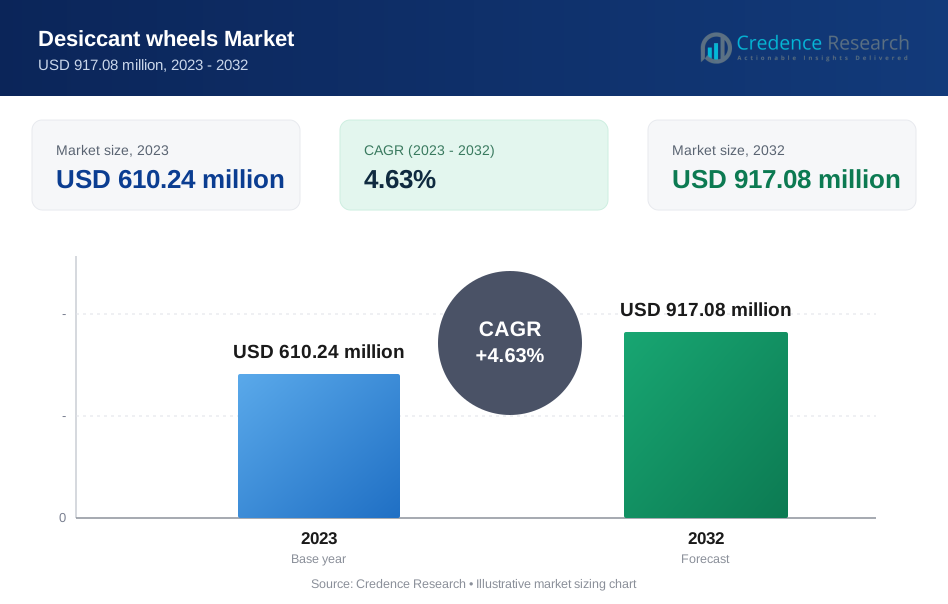
The Desiccant Wheels Market is projected to grow from USD 610.24 million in 2023 to an estimated USD 917.08 million by 2032, registering a compound annual growth rate (CAGR) of 4.63% from 2024 to 2032. This growth reflects the increasing adoption of desiccant wheels across various industries, primarily due to their efficiency in dehumidification processes.
Several factors drive the desiccant wheels market. Rising demand for energy-efficient dehumidification solutions, especially in climate-sensitive industries, is a key growth factor. Additionally, advancements in desiccant materials and technologies, such as the use of silica gel and molecular sieves, enhance the wheels' dehumidification effectiveness, fostering broader market adoption. The trend towards green building certifications and sustainable construction further contributes to the market’s growth, as desiccant wheels help in achieving energy-saving targets and improving air quality.
Geographically, North America and Europe dominate the desiccant wheels market due to the high adoption of HVAC systems and strict regulations on indoor air quality. Asia-Pacific is expected to witness significant growth, driven by rapid industrialization and rising awareness of energy efficiency in emerging economies. Key players in the market include Seibu Giken Co., Ltd., Munters Group AB, FläktGroup Holding GmbH, and Trane Technologies, which continue to invest in product innovation and expansion to meet the evolving needs of this market.
Market Drivers
Increasing Demand for Energy-Efficient Dehumidification Solutions
One of the primary drivers of the desiccant wheels market is the growing demand for energy-efficient dehumidification solutions, especially within climate-sensitive industries such as food processing, pharmaceuticals, and data centers. Desiccant wheels offer a sustainable approach to controlling humidity levels and improving air quality, making them increasingly popular in environments where precise humidity management is essential. Traditional dehumidification systems rely heavily on mechanical cooling, which consumes substantial energy. In contrast, desiccant wheels use chemical adsorption to remove moisture, making them a more energy-efficient choice.For instance, a study by the U.S. Department of Energy found that desiccant wheel systems can reduce energy consumption in HVAC systems by up to 40% compared to traditional cooling-based dehumidification methods. This significant energy saving potential is driving companies to adopt desiccant wheel technology as they seek to reduce energy consumption and operating costs. This trend aligns with broader efforts to cut down carbon emissions and achieve regulatory compliance in terms of energy usage. In many industries, regulations now mandate energy-efficient practices, further fueling the demand for desiccant wheels.
Rising Focus on Indoor Air Quality (IAQ) Standards
Indoor air quality (IAQ) has gained prominence as businesses and industries recognize its importance in ensuring a safe, productive, and comfortable environment. Poor indoor air quality can lead to various health issues, affect productivity, and, in some cases, lead to regulatory action. Desiccant wheels play a crucial role in maintaining optimal IAQ by controlling humidity levels, reducing the likelihood of mold growth, and minimizing airborne contaminants.The American Society of Heating, Refrigerating and Air-Conditioning Engineers (ASHRAE) reports that desiccant wheels can maintain indoor relative humidity levels between 40-60%, which is the optimal range for human comfort and health. This capability has made desiccant wheels particularly appealing to sectors with stringent IAQ requirements, such as healthcare, pharmaceuticals, and food and beverage processing.The demand for desiccant wheels is further driven by the growing adoption of green building certifications like LEED (Leadership in Energy and Environmental Design) and WELL Building Standard, which emphasize IAQ and energy efficiency. These certifications are becoming more influential in guiding construction and retrofitting decisions, as businesses aim to create healthier workspaces that also meet sustainability goals. As more industries prioritize IAQ, desiccant wheels are increasingly being integrated into HVAC systems to support healthy and compliant indoor environments.
Technological Advancements and Product Innovations
Advancements in desiccant materials and technology are key drivers in the growth of the desiccant wheels market. Innovations such as the use of high-performance desiccant materials-like silica gel and molecular sieves-have enhanced the moisture absorption and retention capabilities of these wheels, allowing for more efficient and effective dehumidification. Research indicates that desiccant wheels using advanced composite materials can achieve moisture removal efficiencies of up to 90% in a single pass, significantly outperforming conventional dehumidification technologies.Moreover, recent product developments in automated and smart desiccant wheel systems allow for better integration with existing HVAC systems, providing real-time monitoring and remote control of humidity levels. This increased efficiency is especially attractive to industries where humidity control is critical, such as pharmaceuticals and electronics manufacturing, where even minor humidity fluctuations can compromise product quality.A case study of a pharmaceutical manufacturing facility showed that implementing a desiccant wheel system reduced moisture-related product defects by 85% while decreasing energy costs by $150,000 annually. Similarly, a data center in Singapore reported a 30% reduction in cooling energy consumption after installing a desiccant wheel system, translating to annual savings of over $1 million in operating costs.Additionally, research and development in desiccant wheel technology are paving the way for customizable solutions that can cater to specific industry needs, whether it's low-humidity requirements in electronics or a focus on energy conservation in commercial spaces. As companies strive to optimize operational performance and cost savings, innovations in desiccant wheel technology offer a robust solution that meets both efficiency and sustainability targets.
Expanding Application Across Emerging Markets
The expanding application of desiccant wheels across emerging markets in Asia-Pacific, Latin America, and the Middle East is a significant growth driver. Rapid industrialization, urbanization, and a rising middle class in these regions have spurred demand for efficient dehumidification solutions in commercial and industrial applications. Countries like China, India, and Brazil are witnessing substantial growth in sectors such as manufacturing, food and beverage, pharmaceuticals, and electronics, all of which have high humidity control requirements. As industries in these regions mature, companies are increasingly investing in high-quality infrastructure to enhance production efficiency and ensure product quality. Desiccant wheels, which offer precise humidity control and energy savings, are finding extensive applications across various sectors as part of this trend. Moreover, governments in many of these regions are introducing regulations that emphasize energy efficiency, air quality, and workplace safety. This regulatory support is likely to further accelerate the adoption of desiccant wheels, as businesses in emerging markets seek cost-effective ways to comply with environmental and safety standards while improving operational efficiency.
Market Trends
Adoption of Smart and Connected Dehumidification Systems
One of the prominent trends in the desiccant wheels market is the increasing adoption of smart and connected dehumidification systems. Industries are moving towards digitized solutions that allow real-time monitoring and control over humidity levels, offering enhanced operational efficiency and cost savings. Manufacturers are incorporating IoT-enabled sensors and advanced control systems within desiccant wheels to facilitate remote monitoring and automation. These smart systems can be integrated seamlessly with existing HVAC setups, allowing facilities to adjust humidity levels based on data analytics and operational requirements. For instance, pharmaceutical companies that require stringent humidity control for product quality can benefit from real-time adjustments and alerts, minimizing the risk of compromised storage conditions. This trend not only improves the overall efficiency of dehumidification processes but also provides companies with a data-driven approach to manage air quality and energy consumption more effectively.For instance, a leading manufacturer of desiccant wheels reported that their latest IoT-enabled smart dehumidification system reduced energy consumption by 3,500 kWh per month in a large pharmaceutical storage facility, while maintaining humidity levels within ±2% of the target. This demonstrates the significant impact that smart and connected systems can have on operational efficiency and cost savings in real-world applications.
Growing Emphasis on Sustainable and Eco-Friendly Materials
Another key trend driving the desiccant wheels market is the industry's shift towards sustainable and eco-friendly materials in manufacturing. With an increasing emphasis on environmental impact, manufacturers are exploring greener desiccant materials, such as biodegradable silica gel, and implementing production practices that reduce carbon emissions. This shift aligns with the global push toward sustainable industrial solutions and corporate environmental responsibility. Companies that use desiccant wheels in their HVAC systems are also prioritizing products that contribute to lower energy consumption and reduced environmental footprints. In addition, the trend towards using regenerative materials in desiccant wheels allows for better longevity and lower maintenance requirements, adding to their appeal in commercial and industrial applications.Such eco-conscious advancements resonate strongly with industries aiming for green building certifications and improved energy efficiency, making sustainable desiccant wheels a preferred choice in sectors like healthcare, hospitality, and manufacturing. This growing preference for eco-friendly solutions is likely to shape future innovations in the desiccant wheels market, aligning with broader trends in environmental sustainability. For instance, a major electronics manufacturer implemented eco-friendly desiccant wheels made from biodegradable silica gel, which extended the operational lifespan of the wheels by 2,000 hours compared to traditional materials, resulting in significant cost savings and reduced waste. This example highlights the tangible benefits of adopting sustainable materials in desiccant wheel technology, showcasing both environmental and economic advantages.
Market Restraints and Challenges
High Initial Investment and Maintenance Costs
One of the primary challenges for the desiccant wheels market is the high initial investment and ongoing maintenance costs associated with these systems. Although desiccant wheels are highly efficient in controlling humidity and offer long-term energy savings, their installation often requires substantial upfront capital, especially in larger industrial and commercial facilities. This financial barrier can deter small and medium-sized businesses from adopting these systems, particularly in emerging markets where budget constraints are a concern. Additionally, while desiccant wheels are durable, they require regular maintenance and periodic replacement of desiccant materials to retain optimal performance. Maintenance costs, including replacement parts and skilled labor, can further increase operational expenses, making it challenging for some industries to justify the investment. As a result, the high costs associated with desiccant wheels limit their adoption among cost-sensitive sectors.
Competition from Alternative Dehumidification Technologies
The desiccant wheels market faces significant competition from alternative dehumidification technologies, particularly mechanical dehumidifiers and liquid desiccant systems. Mechanical dehumidifiers, which rely on refrigeration cycles to remove moisture, are often more affordable and easier to install, making them attractive options for applications where cost-efficiency is a priority. Although mechanical systems generally consume more energy, advancements in energy-efficient mechanical dehumidifiers have narrowed the performance gap between the two technologies. Similarly, liquid desiccant systems offer flexible dehumidification solutions and are gaining traction in various applications due to their effectiveness in handling high humidity loads. This increased competition challenges the desiccant wheels market, as businesses weigh the costs, efficiency, and application suitability of each option. To stay competitive, desiccant wheel manufacturers must focus on innovations that enhance performance, reduce costs, and provide a compelling advantage over alternative dehumidification methods.
Market Segmentation Analysis
By Type
The desiccant wheels market by type includes silica gel, molecular sieve, activated alumina, and other emerging materials, each serving specific applications. Silica gel desiccant wheels hold a significant market share due to their strong moisture absorption, durability, and cost-effectiveness, making them widely preferred in sectors like pharmaceuticals and food where stable humidity levels are essential. Molecular sieve wheels excel in applications requiring ultra-low humidity, such as electronics and precision manufacturing, as they effectively adsorb smaller water molecules, driving their popularity in sensitive environments. Activated alumina, though less common, is gaining traction for its unique adsorption properties, ideal for air purification and moisture control in fluctuating humidity conditions found in food storage and chemical industries. The "Others" category encompasses emerging hybrid desiccants tailored for niche markets, offering customizable moisture control solutions for specific environmental needs. This diverse range of materials supports the market’s growth across varied industrial applications.
By Application
The desiccant wheels market is experiencing robust growth across various applications and regions. In the pharmaceutical sector, strict requirements for humidity control to ensure product quality and regulatory compliance make it a dominant market segment, while the food industry uses desiccant wheels to prevent spoilage and microbial growth, particularly in hot and humid climates. The chemical sector relies on desiccant wheels to maintain process integrity by controlling moisture levels, with expected growth in emerging markets. Electronics manufacturing, highly sensitive to humidity, is also a significant segment due to the need for controlled environments to protect components. Additional applications in textiles, automotive, and construction contribute to steady market expansion. Regionally, North America leads due to high demand for energy-efficient HVAC systems and stringent air quality standards, followed closely by Europe, where sustainable practices and green building initiatives drive adoption. Asia-Pacific shows the fastest growth due to rapid industrialization and a focus on energy efficiency in countries like China and India, while Latin America and the Middle East are gradually adopting advanced dehumidification technologies, particularly in food, chemical, and pharmaceutical industries.
Segments
Based on Type
- Silica Gel
- Molecular Sieve
- Activated Alumina
- Others
Based on Application
- Pharmaceutical
- Food Industries
- Chemical
- Electronics
- Others
Based on Region
- North America
- U.S.
- Canada
- Mexico
- Europe
- Germany
- France
- U.K.
- Italy
- Spain
- Rest of Europe
- Asia Pacific
- China
- Japan
- India
- South Korea
- South-east Asia
- Rest of Asia Pacific
- Latin America
- Brazil
- Argentina
- Rest of Latin America
- Middle East & Africa
- GCC Countries
- South Africa
- Rest of the Middle East and Africa
Regional Analysis
North America (35%)
North America holds the largest share of the desiccant wheels market, accounting for approximately 35% of the global market. The region’s high demand is driven by the strong adoption of HVAC and dehumidification systems across various industries, including pharmaceuticals, food processing, and data centers. Stringent regulations around indoor air quality, energy efficiency, and building codes further support the market’s growth in this region. The United States, in particular, is a major contributor, with advanced infrastructure and a focus on sustainable solutions. Companies in North America are also investing heavily in innovative technologies, including IoT-enabled desiccant wheels, to enhance operational efficiency and support energy-saving initiatives. As environmental awareness and compliance standards continue to rise, North America is expected to retain its dominant position in the market.
Europe (25%)
Europe follows North America closely, holding a significant 25% share of the global desiccant wheels market. The region’s growth is fueled by the high demand for energy-efficient solutions, driven by stringent environmental regulations and ambitious green building initiatives. European countries, particularly Germany, the United Kingdom, and France, are at the forefront of adopting eco-friendly HVAC systems in line with sustainability targets. The EU’s commitment to reducing carbon emissions and promoting sustainable construction practices has accelerated the adoption of desiccant wheels across commercial, industrial, and institutional settings. Additionally, the pharmaceutical and food industries in Europe are key users of desiccant wheels due to strict regulatory standards for indoor air quality and controlled environments.
Key players
- Munters AB
- Rotor Source, Inc
- Seibu Giken DST AB
- FläktGroup Holding GmbH
- Novel Aire Technology LLC
- Trane Technology Plc
- Greenheck Fan Corp
- Bry-Air Pvt. Ltd
- Trotec GmbH
- Munters Corp
Competitive Analysis
The desiccant wheels market is competitive, with several key players vying for market share through product innovation, strategic expansions, and targeted acquisitions. Munters AB, a prominent player, leverages its extensive product portfolio and advanced technologies to cater to diverse industrial needs, maintaining a strong market position. Companies like Seibu Giken DST AB and FläktGroup Holding GmbH focus on specialized desiccant solutions and sustainable energy-efficient products, appealing to industries with stringent environmental regulations. Trane Technology Plc and Greenheck Fan Corp stand out with their broad HVAC offerings, integrating desiccant wheels within larger air quality solutions. Additionally, companies such as Bry-Air Pvt. Ltd and Trotec GmbH have strong regional presences, targeting niche markets with customized humidity control systems. This competitive landscape is characterized by continuous innovation, with players striving to enhance energy efficiency, durability, and adaptability to meet growing industry demands.
Recent Developments
- In July 2024, Munters signed an agreement to acquire Geoclima, an Italian manufacturer of airIn and waterIncooled chillers. This acquisition is part of Munters' strategy to enhance its data center cooling solutions. While not directly related to desiccant wheels, this acquisition broadens Munters' overall air treatment portfolio.
- In July 2024, Trane Technologies reported strong financial results but no specific mention of product launches or acquisitions directly related to desiccant wheels was noted in recent reports.
Market Concentration and Characteristics
The desiccant wheels market exhibits moderate market concentration, with a mix of established global players and specialized regional companies contributing to its dynamics. Key players, such as Munters AB, Seibu Giken DST AB, and Trane Technology Plc, hold significant shares due to their comprehensive product portfolios, technological expertise, and global reach. These companies drive innovation and set industry standards, especially in energy-efficient and sustainable dehumidification solutions. Smaller regional players and niche companies, like Bry-Air Pvt. Ltd and Trotec GmbH, cater to specific industrial needs and regional demands, enhancing market diversity. The market is characterized by steady growth, fueled by the increasing need for humidity control across sectors like pharmaceuticals, food processing, and electronics, with a growing emphasis on eco-friendly and IoT-enabled solutions. This environment encourages continuous innovation and competition, as companies seek to differentiate through enhanced product capabilities and sustainable practices.
Report Coverage
The research report offers an in-depth analysis based on Type, Application and Region. It details leading market players, providing an overview of their business, product offerings, investments, revenue streams, and key applications. Additionally, the report includes insights into the competitive environment, SWOT analysis, current market trends, as well as the primary drivers and constraints. Furthermore, it discusses various factors that have driven market expansion in recent years. The report also explores market dynamics, regulatory scenarios, and technological advancements that are shaping the industry. It assesses the impact of external factors and global economic changes on market growth. Lastly, it provides strategic recommendations for new entrants and established companies to navigate the complexities of the market.
Future Outlook
- The desiccant wheels market is likely to witness increased demand as industries prioritize energy-efficient dehumidification solutions to reduce operational costs and comply with environmental regulations.
- Innovations in desiccant materials, such as enhanced silica gels and molecular sieves, will improve performance, enabling wheels to meet specific moisture control needs across diverse industries.
- Integration of IoT technology in desiccant wheels will allow for real-time monitoring and automation, enhancing operational efficiency and facilitating remote management of humidity levels.
- Manufacturers are expected to adopt eco-friendly materials and processes, driven by the global emphasis on sustainability and reducing carbon footprints within the dehumidification sector.
- Rapid industrialization in Asia-Pacific, Latin America, and Africa will drive demand for desiccant wheels, particularly in industries like food processing, pharmaceuticals, and electronics.
- As green building certifications gain popularity, desiccant wheels will be increasingly used in HVAC systems to support energy savings and improved indoor air quality.
- Desiccant wheel technology will continue to integrate seamlessly with advanced HVAC systems, providing enhanced air quality control in commercial and industrial settings.
- Manufacturers are likely to innovate towards low-maintenance, long-lasting desiccant wheels to reduce operational costs and attract industries requiring reliable humidity control solutions.
- Compliance with stricter IAQ regulations across sectors, especially in healthcare and pharmaceuticals, will further drive the adoption of desiccant wheels in controlled environments.
- Companies will likely invest heavily in R&D to develop customized solutions that address specific industry requirements, ensuring continued growth and competitive differentiation in the desiccant wheels market.
Request a Free Sample
Fill in your details and we'll send you a free sample report.
- Sample data tables & charts
- Research methodology
Need a Custom Version of This Report?
Tailor the scope, geography, or segments to your exact requirements.
- Custom geography or segment scope
- Direct access to our analyst team
Frequently Asked Questions
What is the market size of the desiccant wheels market in 2023 and 2032, and what is its CAGR?
What is driving the growth of the desiccant wheels market?
Which industries use desiccant wheels the most?
Why are desiccant wheels important for indoor air quality (IAQ)?
Which regions lead in the desiccant wheels market?
Who are the key players in the desiccant wheels market?
Table of Content
Chapter 1. Report Introduction
- 1.1 Report Description & Purpose
- 1.1.1 Report Title & Market Definition
- 1.1.2 Unique Selling Propositions (USP) & Key Differentiators
- 1.1.3 Value Proposition for Stakeholders
- 1.2 Research Objectives
- 1.2.1 Market Sizing Objectives (Volume & Revenue) (Volume Where Applicable)
- 1.2.2 Segmentation Objectives
- 1.2.3 Competitive Intelligence Objectives
- 1.2.4 Forecast & Scenario Objectives
- 1.3 Report Scope
- 1.3.1 Desiccant wheels Scope – Segments & Subsegments Covered
- 1.3.2 Geographic Scope – Regions & Countries Covered
- 1.3.3 Historical Period, Base Year & Forecast Period (2023; forecast to 2032)
- 1.3.4 Inclusions & Exclusions
- 1.4 Industry Classification & Applicable Codes
- 1.5 Currency, Measurement Units & Valuation Basis
- 1.6 Target Stakeholders
- 1.7 Limitations & Assumptions
Chapter 2. Executive Summary
- 2.1 Global Desiccant wheels Market Snapshot
- 2.1.1 Market Size – Historical (2023) & Forecast (2023-2032) (2023: USD 610.24 million → 2032: USD 917.08 million)
- 2.1.2 Volume & Revenue – Global Totals (Volume Where Applicable)
- 2.1.3 Key Market Highlights – Top Five Facts
- 2.2 Desiccant wheels Market Segmentation Snapshot
- 2.2.1 Market Split by Region – 2023 vs. 2032
- 2.3 Competitive Snapshot
- 2.3.1 Top 10 Players by Revenue Share – 2023
- 2.3.2 Top 10 Players by Volume Share – 2023 (Volume Where Applicable)
- 2.3.3 Recent Strategic Developments (18-Month Summary)
- 2.4 Key Investment Highlights & Strategic Conclusions
Chapter 3. Desiccant wheels Market Dynamics & Industry Analysis
- 3.1 Market Overview & Context
- 3.1.1 Desiccant wheels Market Position in the Broader Industry Value Chain
- 3.1.2 Demand Structure & Purchasing Dynamics
- 3.1.3 Market Maturity & Development Stage by Region
- 3.2 Desiccant wheels Market Drivers
- 3.3 Desiccant wheels Market Restraints & Challenges
- 3.4 Desiccant wheels Market Opportunities
- 3.5 Porter's Five Forces Analysis
- 3.5.1 Threat of New Entrants
- 3.5.2 Bargaining Power of Suppliers
- 3.5.3 Bargaining Power of Buyers
- 3.5.4 Threat of Substitutes
- 3.5.5 Competitive Rivalry – Intensity Assessment
- 3.6 Desiccant wheels Value Chain Analysis
- 3.6.1 Upstream – Key Inputs, Resources & Suppliers
- 3.6.1.1 Key Input/Resource 1
- 3.6.1.2 Key Input/Resource 2
- 3.6.1.3 Key Input/Resource 3
- 3.6.2 Midstream – Core Operations & Value Creation
- 3.6.2.1 Operating Model & Process Overview
- 3.6.2.2 Key Operating Locations & Capabilities by Company
- 3.6.3 Downstream – Market Channels & End Users
- 3.6.3.1 Direct Sales & Customer Engagement Channels
- 3.6.3.2 Indirect Sales, Intermediaries & Partner Channels
- 3.6.4 Value Chain Profitability Analysis
- 3.6.1 Upstream – Key Inputs, Resources & Suppliers
- 3.7 PESTEL Analysis
- 3.7.1 Political Factors
- 3.7.2 Economic Factors
- 3.7.3 Social Factors
- 3.7.4 Technological Factors
- 3.7.5 Environmental Factors
- 3.7.6 Legal Factors
- 3.8 Desiccant wheels Supply Chain Analysis
- 3.8.1 Critical Input & Resource Availability Risk Assessment
- 3.8.2 Supplier & Operational Concentration Risk (Geographic Exposure)
- 3.8.3 Supply & Service Disruption Impact Analysis
- 3.9 Regulatory & Policy Landscape
Note: The regulatory and policy landscape section covers regulations based on their applicability to the market, Desiccant wheels category, geography, and scope of the study. Only regulatory frameworks with a material impact on operations, compliance, trade, sustainability, or market access are analyzed in detail.
Chapter 4. Key Investment Pockets & Opportunity Analysis
- 4.1 Desiccant wheels Market Attractiveness Analysis
- 4.1.1 By Region – Investment Attractiveness Matrix (Market Size × CAGR)
- 4.2 Absolute Revenue Growth Opportunity
- 4.2.1 By Region – Absolute Revenue Growth Through 2032
- 4.3 Incremental Demand Opportunity
- 4.3.1 By Region – Incremental Demand Through 2032
- 4.3.2 Segment – Incremental Demand
- 4.4 Emerging Submarket Opportunity Deep Dive (Subject to Applicability)
- 4.5 Priority Market Opportunity Scorecards
- 4.5.1 United States
- 4.5.2 Europe
- 4.5.3 Asia
- 4.5.4 Middle East & Africa
Note: Priority market opportunity scorecards reflect the geographic scope and strategic relevance of the study. Listed markets are indicative and may be adapted to the industry.
Chapter 5. Desiccant wheels Cross-Border Trade & Market Access Analysis
- 5.1 International Trade & Cross-Border Activity Overview
- 5.1.1 Global Export Value by Country (2023)
- 5.1.2 Global Export Volume by Country (2023) (Volume Where Applicable)
- 5.1.3 Global Import Value by Country (2023)
- 5.1.4 Global Import Volume by Country (2023) (Volume Where Applicable)
- 5.1.5 Net Trade Balance by Country (2023)
- 5.2 Export Analysis – Segment
- 5.2.1 Category 1 (Applicable Classification Code)
- 5.2.2 Category 2 (Applicable Classification Code)
- 5.2.3 Category 3 (Applicable Classification Code)
- 5.2.4 Category 4 (Applicable Classification Code)
- 5.2.5 Category 5 (Applicable Classification Code)
- 5.3 Import Analysis – Segment
- 5.3.1 Category 1 (Applicable Classification Code)
- 5.3.2 Category 2 (Applicable Classification Code)
- 5.3.3 Category 3 (Applicable Classification Code)
- 5.3.4 Category 4 (Applicable Classification Code)
- 5.3.5 Category 5 (Applicable Classification Code)
- 5.4 Cross-Border Pricing & Transaction Benchmarks
- 5.4.1 Export Pricing – Segment & Country
- 5.4.2 Import Pricing – Segment & Source Country
- 5.4.3 Price Trends (2023)
- 5.5 Key Cross-Border Trade & Delivery Routes
- 5.5.1 Cross-Border Trade/Delivery Route 1
- 5.5.2 Cross-Border Trade/Delivery Route 2
- 5.5.3 Cross-Border Trade/Delivery Route 3
- 5.5.4 Cross-Border Trade/Delivery Route 4
- 5.5.5 Cross-Border Trade/Delivery Route 5
- 5.6 Trade Policy & Market Access Impact Assessment
- 5.6.1 Tariff & Non-Tariff Barriers
- 5.6.2 Regional Trade & Economic Integration Frameworks
- 5.6.3 Bilateral & Multilateral Trade Agreements
- 5.6.4 Cross-Border Operating, Licensing & Localization Requirements
Note: This chapter applies where cross-border trade or delivery is relevant to Desiccant wheels. Goods, services, and digital offerings are assessed using applicable classifications and transaction measures. Import-export volumes, trade balances, and route analyses are included only where meaningful to the market.
Chapter 6. Competitive Landscape & Company Benchmarking
- 6.1 Desiccant wheels Market Concentration & Structure
- 6.1.1 Herfindahl-Hirschman Index (HHI) – vs. 2023
- 6.1.2 Leading, Mid-Sized & Emerging Player Structure
- 6.1.3 Global, Regional & Local Player Dynamics
- 6.2 Desiccant wheels Market Share Analysis – 2023
- 6.2.1 Global Revenue Share by Company
- 6.2.2 Global Volume Share by Company (Volume Where Applicable)
- 6.2.3 Regional Revenue Share
- 6.2.4 Market Share Evolution ( vs. 2023)
- 6.2.5 Company Market Share by Key Segment
- 6.2.6 Company Market Share by Customer Group
- 6.3 Operating Scale, Capacity & Infrastructure Analysis
- 6.3.1 Global Operating Scale & Supply Capacity
- 6.3.2 Resource Utilization & Operating Efficiency
- 6.3.3 Output, Service Delivery & Activity Metrics
- 6.3.4 Operating Footprint & Infrastructure Map
- 6.3.5 Planned Operational & Capacity Expansion
- 6.4 Desiccant wheels Competitive Benchmarking Matrix
- 6.4.1 Revenue, Growth, Profitability & Operating Metric Comparison
- 6.4.2 Channel Revenue Mix
- 6.4.3 Geographic Revenue Exposure
- 6.4.4 R&D Intensity
- 6.4.5 Sustainability Maturity
- 6.5 Strategic Developments in Desiccant wheels (Last 24 Months)
- 6.5.1 Mergers, Acquisitions & Divestments
- 6.5.2 New Products, Services & Solutions in Desiccant wheels
- 6.5.3 Operational & Infrastructure Expansions
- 6.5.4 Strategic Alliances, Joint Ventures & Partnerships
- 6.5.5 Distribution Expansion & Market Entry
- 6.5.6 Sustainability & ESG Initiatives
- 6.6 Competitive Strategy Mapping
- 6.6.1 Leader, Challenger, Follower & Niche Classification
- 6.6.2 Pricing Strategy Comparison
- 6.6.3 Channel Strategy Matrix
Note: Strategic developments are included based on their materiality and the availability of reliable information.
Chapter 7. Global Desiccant wheels Market – By Sales & Delivery Channel
- 7.1 Segment Overview
- 7.1.1 Volume & Revenue Split by Channel (2023 & 2032) (Volume Where Applicable)
- 7.1.2 Channel Mix Evolution (2023-2032)
Chapter 8. Regional Market Analysis – Global Overview
- 8.1 Global Regional Overview
- 8.1.1 Regional Volume Share (Volume Where Applicable)
- 8.1.2 Regional Revenue Share
- 8.1.3 Regional Volume by Region (Volume Where Applicable)
- 8.1.4 Regional Revenue by Region
- 8.1.5 Regional Forecast Through 2032
- 8.2 Cross-Regional Segment Analysis
- 8.2.1 By Sales & Delivery Channel
- 8.2.2 By Competitive Positioning & Price Tier
Chapter 9. North America Desiccant wheels Market
- 9.1 United States
- 9.2 Canada
- 9.3 Mexico
Chapter 10. Europe Desiccant wheels Market
- 10.1 Germany
- 10.2 France
- 10.3 Italy
- 10.4 United Kingdom
- 10.5 Spain
- 10.6 Poland
- 10.7 Russia
- 10.8 Netherlands
- 10.9 Belgium
- 10.10 Sweden
- 10.11 Denmark
- 10.12 Norway
- 10.13 Rest of Europe
Chapter 11. Asia Pacific Desiccant wheels Market
- 11.1 China
- 11.2 India
- 11.3 Japan
- 11.4 South Korea
- 11.5 Thailand
- 11.6 Indonesia
- 11.7 Vietnam
- 11.8 Malaysia
- 11.9 Australia
- 11.10 Rest of Asia Pacific
Chapter 12. Latin America Desiccant wheels Market
- 12.1 Brazil
- 12.2 Argentina
- 12.3 Colombia
- 12.4 Chile
- 12.5 Rest of Latin America
Chapter 13. Middle East Desiccant wheels Market
- 13.1 Saudi Arabia
- 13.2 United Arab Emirates
- 13.3 Turkey
- 13.4 Israel
- 13.5 Iran
- 13.6 Rest of the Middle East
Chapter 14. Africa Desiccant wheels Market
- 14.1 South Africa
- 14.2 Egypt
- 14.3 Nigeria
- 14.4 Morocco
- 14.5 Rest of Africa
Chapter 15. Desiccant wheels Company Profiles
- 15.1 [Company 01]
- 15.1.1 Company Overview
- 15.1.2 Key Management Personnel
- 15.1.3 Products & Services Portfolio
- 15.1.4 Financial Performance
- 15.1.5 Key Market Focus & Geographic Presence
- 15.1.6 Recent Developments & Strategic Initiatives
Note: The company profile list is preliminary and may change based on research findings, market developments, data availability, and client requirements.
Chapter 16. Appendices
- Appendix A – List of Abbreviations & Acronyms
- Appendix B – Industry Classification Code Reference – Full Series
- Appendix C – Supply, Output & Operating Capacity Data Tables
- Appendix D – End-Use & Demand Base Tables
- Appendix E – Demand, Adoption & Usage Assumptions
- Appendix F – Pricing & Revenue Metric Reference Tables
- Appendix G – Company Operations & Infrastructure Database
- Appendix H – Cross-Border Trade & Activity Data Tables (Where Applicable)
- Appendix I – Regulatory Summary Tables
- Appendix J – Primary Research Participant List (Anonymized)
- Appendix K – Primary Research Questionnaire Framework
- Appendix L – Data Sources & Bibliography
- Appendix M – Market Size Divergence & Source Comparison
Chapter 17. Research Methodology
- 17.1 Research Framework & Philosophy
- 17.2 Secondary Research – Sources, Hierarchy & Data Extraction
- 17.3 Data Modeling – Bottom-Up & Top-Down Market Sizing
- 17.4 Primary Research – Stakeholder Framework, LOI & Sample Sizes
- 17.5 Forecast Methodology – Regression, Scenario & Sensitivity Analysis
- 17.6 Quality Control – Four-Layer Validation Framework
- 17.7 Limitations & Standard Assumptions
- 17.8 Disclaimer
