
| REPORT ATTRIBUTE | DETAILS |
|---|---|
| Historical Period | 2019-2022 |
| Base Year | 2023 |
| Forecast Period | 2024-2032 |
| Diabetes Injection Pens Market Size 2023 | USD 34,856.72 Million |
| Diabetes Injection Pens Market, CAGR | 6.40% |
| Diabetes Injection Pens Market Size 2032 | USD 60,920.18 Million |
Market Overview
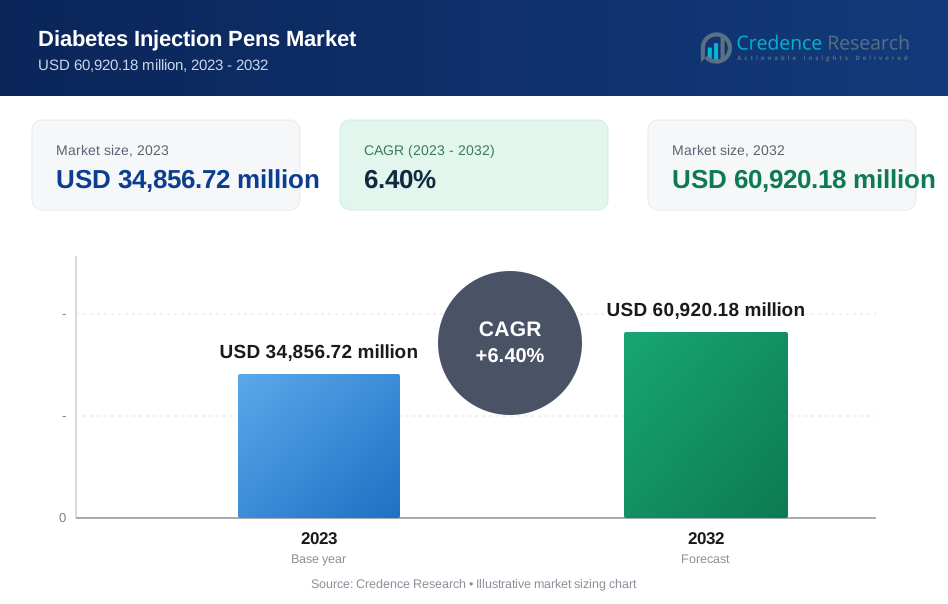
The Diabetes Injection Pens Market is projected to grow from USD 34,856.72 million in 2023 to USD 60,920.18 million by 2032, reflecting a compound annual growth rate (CAGR) of 6.40%.
The Diabetes Injection Pens Market is driven by the rising prevalence of diabetes worldwide, increasing patient awareness about diabetes management, and the growing preference for self-administration devices that offer convenience and precision. Technological advancements, such as smart insulin pens with features like dose tracking and connectivity to mobile apps, are further enhancing market growth. The shift towards personalized medicine and patient-centric care models is also boosting the adoption of injection pens. Additionally, favorable reimbursement policies and government initiatives aimed at improving diabetes care are encouraging the use of advanced injection pens, supporting the market's expansion.
The Global Diabetes Injection Pens Market is geographically diverse, with significant demand across North America, Europe, Asia-Pacific, and other regions. North America leads the market due to the high prevalence of diabetes, advanced healthcare infrastructure, and widespread adoption of innovative diabetes management solutions. Europe follows closely, driven by increasing awareness of diabetes care and supportive government policies. The Asia-Pacific region is expected to witness rapid growth, fueled by rising diabetes incidence, expanding healthcare access, and economic development. Key players in the market, such as Novo Nordisk, Sanofi S.A., Eli Lilly and Company, and Merck & Co., Inc., dominate through innovative product offerings and strong global presence.
Market Drivers
Rising Prevalence of Diabetes
The increasing prevalence of diabetes is a significant driver of the Global Diabetes Injection Pens Market. One of the primary factors contributing to this rise is the aging global population, which is more susceptible to developing diabetes due to age-related health issues. For instance, the International Diabetes Federation (IDF) reports that by 2045, 1 in 8 adults will be living with diabetes. As people live longer, the number of individuals at risk for diabetes continues to grow. Additionally, lifestyle factors such as sedentary behavior, unhealthy diets, and rising obesity rates are significantly contributing to the surge in diabetes cases. These lifestyle choices are leading to a higher incidence of type 2 diabetes, which is commonly associated with insulin resistance. As a result, there is a growing need for effective diabetes management solutions, including injection pens, which are essential for administering insulin and other diabetes medications.
Technological Advancements
Technological advancements in injection pen design and functionality are playing a crucial role in the growth of the Global Diabetes Injection Pens Market. Modern injection pens have become more user-friendly, with designs that focus on ease of use, convenience, and reduced pain during administration. For instance, smart insulin pens now feature Bluetooth connectivity and dose tracking capabilities. These improvements are encouraging more patients to adopt injection pens for their diabetes management. Furthermore, the integration of smart technology into injection pens is transforming diabetes care. Features such as dose tracking, insulin monitoring, and connectivity with mobile apps and other medical devices are enabling better disease management. These smart features allow for precise dosing and real-time monitoring, which help patients maintain better control over their blood sugar levels and enhance overall treatment outcomes.
Government Initiatives
Government initiatives are also driving the adoption of diabetes injection pens. Many governments worldwide are implementing reimbursement policies that cover diabetes medications and devices, including injection pens, making these essential tools more affordable and accessible to patients. By reducing the financial burden on patients, these reimbursement policies encourage the widespread use of advanced diabetes management solutions. Additionally, public health awareness campaigns are raising awareness about diabetes prevention, early diagnosis, and effective management. These initiatives highlight the importance of timely intervention and appropriate treatment, which can significantly improve the quality of life for individuals with diabetes. Government support in the form of education and financial assistance is crucial in promoting the use of injection pens and improving diabetes care.
Preference for Home-Based Care and Emerging Markets
The growing preference for home-based care is another key driver of the Global Diabetes Injection Pens Market. Injection pens offer the convenience of managing diabetes at home, allowing patients to administer their medications without the need for frequent hospital visits. This not only saves time but also reduces healthcare costs, making home-based care an attractive option for many patients. The cost-effectiveness of managing diabetes at home is particularly important in the context of rising healthcare expenses. Moreover, emerging markets are presenting significant growth opportunities for the diabetes injection pens market. The expanding middle class in developing countries is driving demand for healthcare products, including diabetes management tools. Additionally, investments in healthcare infrastructure in these regions are making it easier for patients to access necessary treatments. As healthcare systems in emerging markets continue to develop, the availability and adoption of diabetes injection pens are expected to increase, supporting market growth.
Market Trends
Shift Towards Reusable Pens and Integration of Smart Technology
The Global Diabetes Injection Pens Market is witnessing a significant shift towards reusable pens, driven by their cost-effectiveness and sustainability. For instance, the U.S. Food and Drug Administration expanded the indications of the Insulet SmartAdjust technology, an interoperable automated glycemic controller previously indicated for the management of type 1 diabetes, to also include management of type 2 diabetes. Reusable pens offer long-term cost savings compared to disposable options, as patients only need to replace the insulin cartridge rather than the entire device. This cost efficiency is appealing to both healthcare providers and patients, especially those requiring frequent insulin administration. Additionally, reusable pens align with global efforts towards environmental sustainability, as they generate less waste compared to disposable pens. This shift reflects a growing awareness of the environmental impact of medical devices and a commitment to reducing healthcare's ecological footprint. Alongside the move towards reusability, the integration of smart technology into diabetes injection pens is transforming diabetes management. Smart pens equipped with data tracking capabilities can monitor insulin doses, blood sugar levels, and other vital information, providing patients and healthcare professionals with valuable insights into diabetes control. The ability to connect these pens to smartphones and other devices enhances diabetes management by allowing real-time data sharing, enabling more informed treatment decisions. These advancements support personalized care and help patients achieve better health outcomes.
Focus on Patient Convenience and Growth in Pen-Based Insulin Pumps
The focus on patient convenience is another key trend shaping the Global Diabetes Injection Pens Market. Manufacturers are developing user-friendly designs that cater to patients' needs, including those with limited dexterity, such as the elderly or individuals with arthritis. Ergonomic designs, simple mechanisms, and clear instructions make these pens easier to use, improving patient adherence to insulin therapy. Some companies are even exploring needle-free injection technologies to further enhance patient comfort and reduce injection-related anxiety. These innovations aim to make diabetes management less burdensome and more accessible to a broader range of patients. In addition to conventional injection pens, there is growing interest in pen-based insulin pumps, which offer continuous insulin delivery, mimicking the body's natural insulin production. These devices are particularly beneficial for patients with type 1 diabetes, who require precise insulin dosing to maintain stable blood sugar levels. The increased adoption of pen-based insulin pumps reflects a demand for advanced diabetes management solutions that provide greater flexibility and control. As the technology behind these pumps continues to evolve, their popularity is expected to rise, further expanding the market for pen-based diabetes management devices.
Market Challenges Analysis
Regulatory Hurdles and Intellectual Property Issues
The Global Diabetes Injection Pens Market faces significant challenges related to regulatory hurdles and intellectual property issues. The development and approval of new injection pen technologies are subject to stringent regulatory requirements, which can be time-consuming and costly. For instance, the financial burden of high insulin costs that patients and insurers face is often blamed on the Food and Drug Administration’s (FDA) regulatory framework, but a new study suggests pharmaceutical companies have also been using patenting processes to unfairly maintain high costs. Regulatory bodies in different countries have specific standards that must be met to ensure the safety and efficacy of diabetes injection pens, making the approval process complex. Obtaining market authorization in multiple countries adds another layer of complexity, as manufacturers must navigate varying regulations and compliance standards. These regulatory challenges can delay the introduction of innovative products and increase the overall costs of development and commercialization. In addition to regulatory hurdles, intellectual property issues pose a significant challenge in the market. Competition among manufacturers can lead to disputes over patents, with companies seeking to protect their proprietary technologies from infringement. Patent disputes and litigation can be costly and time-consuming, potentially hindering market entry and innovation. Moreover, the entry of generic alternatives poses a threat to market share and profitability for established brands. As patents expire, generic manufacturers can introduce lower-cost alternatives, increasing competition and impacting the revenues of original product developers.
Cost-Related Concerns and Supply Chain Disruptions
Cost-related concerns and supply chain disruptions are other critical challenges impacting the Global Diabetes Injection Pens Market. The affordability of diabetes injection pens remains a significant issue, particularly in developing countries where healthcare budgets are limited, and patients may not have the financial resources to afford these devices. The high cost of injection pens can make them inaccessible to many patients, leading to disparities in diabetes care. Additionally, securing reimbursement for diabetes medications and devices can be difficult, as healthcare systems face budget constraints and prioritize cost-effective treatment options. Reimbursement challenges can limit market growth and patient access to advanced diabetes management solutions. Supply chain disruptions further exacerbate these challenges, affecting the availability and pricing of diabetes injection pens. Manufacturing challenges, such as shortages of raw materials, quality control issues, or disruptions in the production process, can lead to delays and increased costs. Global events, such as economic downturns, natural disasters, or geopolitical tensions, can also disrupt the supply chain, impacting the production and distribution of injection pens. These disruptions can result in product shortages, higher prices, and reduced market stability, making it difficult for manufacturers to meet demand and maintain consistent product availability. Addressing these challenges is crucial for ensuring the continued growth and accessibility of the diabetes injection pens market.
Market Segmentation Analysis:
By Product Type:
The Global Diabetes Injection Pens Market is segmented by product type into insulin pens and pen needles. Insulin pens dominate the market due to their convenience, ease of use, and accuracy in insulin delivery. These pens are preferred by patients who require regular insulin administration, as they offer precise dosing, which is critical for maintaining blood glucose levels within target ranges. Insulin pens are available in both reusable and disposable forms, catering to different patient needs and preferences. Pen needles, essential components of the insulin pen system, are also a significant market segment. They are designed to provide a comfortable injection experience, with advancements focusing on reducing pain and improving ease of use. The demand for pen needles is directly linked to the increasing use of insulin pens, and ongoing innovations in needle technology aim to enhance patient comfort and adherence to insulin therapy.
By Usage
Based on usage, the Global Diabetes Injection Pens Market is divided into reusable and disposable pens. Reusable insulin pens are gaining popularity due to their cost-effectiveness and environmental benefits. Patients can use these pens multiple times by replacing the insulin cartridge, reducing waste and long-term expenses. Reusable pens are particularly favored in regions with established healthcare infrastructure and higher awareness of environmental sustainability. On the other hand, disposable pens are designed for single use and are preferred for their convenience and hygiene. They are widely used in hospital settings and by patients who prioritize ease of use and minimal maintenance. Disposable pens are also advantageous in reducing the risk of contamination and ensuring accurate dosing, which is crucial for effective diabetes management. The choice between reusable and disposable pens often depends on patient lifestyle, healthcare provider recommendations, and cost considerations, with both segments contributing to the overall growth of the diabetes injection pens market.
Segments:
Based on Product Type:
- Insulin Pens
- Pens Needles
Based on Usage:
- Reusable
- Disposable
Based on Distribution Channel:
- Hospital Pharmacies
- Retails Pharmacies
- Online Medical Stores
- Diabetes Clinics
Based on the Geography:
- North America
- U.S.
- Canada
- Mexico
- Europe
- Germany
- France
- U.K.
- Italy
- Spain
- Rest of Europe
- Asia Pacific
- China
- Japan
- India
- South Korea
- South-east Asia
- Rest of Asia Pacific
- Latin America
- Brazil
- Argentina
- Rest of Latin America
- Middle East & Africa
- GCC Countries
- South Africa
- Rest of the Middle East and Africa
Regional Analysis
North America
North America dominates the global diabetes injection pens market, commanding a substantial market share of approximately 40%. This leadership position is primarily driven by the high prevalence of diabetes in the region, particularly in the United States. The advanced healthcare infrastructure, coupled with greater awareness and diagnosis rates, contributes significantly to the market's growth. For instance, the launch of advanced products and a trend towards smart devices have been observed. North America's market is characterized by a strong preference for innovative and user-friendly injection pen designs, with a growing trend towards smart, connected devices. The region's robust reimbursement policies and insurance coverage for diabetes management tools further boost market expansion. Additionally, the presence of major pharmaceutical companies and medical device manufacturers in the region fuels continuous product development and market penetration. The increasing adoption of insulin pens over traditional vial and syringe methods, due to their convenience and improved dosage accuracy, continues to drive market growth in North America.
Europe
Europe holds the second-largest share in the global diabetes injection pens market, accounting for approximately 30% of the total market. The region's strong market position is supported by its aging population, changing lifestyles, and the rising incidence of type 2 diabetes. Countries like Germany, the United Kingdom, and France lead in market adoption, driven by their well-established healthcare systems and government initiatives to combat diabetes. Europe's market is distinguished by a strong focus on eco-friendly and sustainable injection pen designs, reflecting the region's environmental consciousness. The market also benefits from ongoing research and development activities, resulting in the introduction of advanced pen technologies that offer improved dose accuracy and ease of use. Furthermore, the European market sees a growing trend towards the adoption of reusable injection pens, driven by cost-effectiveness and environmental considerations.
Key Player Analysis
- Novo Nordisk
- Sanofi S.A.
- F. Hoffmann-La Roche
- Eli Lilly and Company
- Merck & Co., Inc.
- AstraZeneca Plc.
- Pfizer Inc.
- Company 8
- Owen Mumford
- Novartis AG
Competitive Analysis
The Global Diabetes Injection Pens Market is highly competitive, with leading players such as Novo Nordisk, Sanofi S.A., Eli Lilly and Company, and Merck & Co., Inc. dominating the market. These companies maintain strong market positions through extensive product portfolios, robust research and development capabilities, and strategic partnerships. They focus on innovation, regularly introducing advanced insulin pens with features like smart technology integration, improved user-friendliness, and enhanced safety profiles. Their global distribution networks enable widespread access to their products, particularly in developed markets with high diabetes prevalence. Additionally, these companies invest significantly in marketing and awareness campaigns to educate patients and healthcare providers about the benefits of using their injection pens for effective diabetes management. Emerging players and generic manufacturers are also entering the market, intensifying competition and driving the need for continuous innovation and differentiation. The competitive landscape is further influenced by patent expirations and the introduction of cost-effective alternatives.
Recent Developments
- In August 2024, Eli Lilly announced positive topline results from the SURMOUNT-1 three-year study evaluating the efficacy and safety of tirzepatide (Zepbound ® and Mounjaro ®) once weekly for long-term weight management and delay in progression to diabetes in adults with pre-diabetes and obesity or overweight.
- In June 2024, AstraZeneca’s Farxiga (dapagliflozin) was approved by the US Food and Drug Administration (FDA) to improve glycaemic control in paediatric patients with type-2 diabetes (T2D) aged 10 years and older.
- In April 2024, Novartis announced new data demonstrating the early addition of twice-yearly* Leqvio® (inclisiran) to maximally tolerated statin therapy, prior to guideline-recommended ezetimibe, in a real-world setting significantly reduced low-density lipoprotein cholesterol (LDL-C) in patients with atherosclerotic cardiovascular disease (ASCVD).
- In May 2024, Roche announced positive results from the Phase I clinical trial of CT-388, a dual GLP-1/GIP receptor agonist being developed for the treatment of obesity and type 2 diabetes.
- In March 2023, Novo Nordisk collaborated with Diabeloop to integrate DBL-4penTM, Diabeloop’s self-learning algorithm for MDI therapy, with Novo Nordisk’s connected and reusable insulin pens, NovoPen® 6 and NovoPen Echo® Plus.
Market Concentration & Characteristics
The Global Diabetes Injection Pens Market is characterized by a moderate to high level of market concentration, with a few dominant players holding substantial market shares. Companies such as Novo Nordisk, Sanofi S.A., and Eli Lilly and Company are leading the market, leveraging their established brand recognition, extensive product portfolios, and strong research and development capabilities. These market leaders focus on continuous innovation to maintain their competitive edge, introducing advanced features such as smart technology and user-friendly designs in their injection pens. The market is driven by increasing diabetes prevalence, a growing preference for self-administration, and advancements in pen technology. The presence of established global distribution networks further enhances the market reach of these leading companies. However, the market also sees participation from emerging players and generic manufacturers, who offer cost-effective alternatives, contributing to the overall diversity of the market. This competitive dynamic drives ongoing innovation and product differentiation, shaping the market's growth trajectory.
Report Coverage
The research report offers an in-depth analysis based on Product Type, Usage, Distribution Channel and Geography. It details leading market players, providing an overview of their business, product offerings, investments, revenue streams, and key applications. Additionally, the report includes insights into the competitive environment, SWOT analysis, current market trends, as well as the primary drivers and constraints. Furthermore, it discusses various factors that have driven market expansion in recent years. The report also explores market dynamics, regulatory scenarios, and technological advancements that are shaping the industry. It assesses the impact of external factors and global economic changes on market growth. Lastly, it provides strategic recommendations for new entrants and established companies to navigate the complexities of the market.
Future Outlook
- The Global Diabetes Injection Pens Market is expected to grow steadily, driven by the rising prevalence of diabetes worldwide.
- Increasing awareness of diabetes management and the benefits of self-administration will boost demand for injection pens.
- Technological advancements, such as smart pens with connectivity features, will enhance market appeal and user convenience.
- The shift towards reusable injection pens will continue, supported by their cost-effectiveness and environmental benefits.
- Emerging markets, particularly in Asia-Pacific, will present significant growth opportunities due to improving healthcare infrastructure and rising disposable incomes.
- Government initiatives and favorable reimbursement policies will support wider adoption of diabetes injection pens.
- The integration of injection pens with digital health platforms will provide real-time monitoring and improve patient outcomes.
- The development of needle-free injection technologies will cater to patients with needle phobia, expanding the market.
- Competitive pressures will drive innovation, with manufacturers focusing on user-friendly designs and enhanced safety features.
- Collaboration between pharmaceutical companies and technology firms will lead to the development of more advanced diabetes management solutions.
Request a Free Sample
Fill in your details and we'll send you a free sample report.
- Sample data tables & charts
- Research methodology
Need a Custom Version of This Report?
Tailor the scope, geography, or segments to your exact requirements.
- Custom geography or segment scope
- Direct access to our analyst team
Frequently Asked Questions
What is the current size of the Global Diabetes Injection Pens Market?
What factors are driving the growth of the Global Diabetes Injection Pens Market?
What are the key segments within the Global Diabetes Injection Pens Market?
What are some challenges faced by the Global Diabetes Injection Pens Market?
Who are the major players in the Global Diabetes Injection Pens Market?
Table of Content
Chapter 1. Report Introduction
- 1.1 Report Description & Purpose
- 1.1.1 Report Title & Market Definition
- 1.1.2 Unique Selling Propositions (USP) & Key Differentiators
- 1.1.3 Value Proposition for Stakeholders
- 1.2 Research Objectives
- 1.2.1 Market Sizing Objectives (Volume & Revenue)
- 1.2.2 Segmentation Objectives
- 1.2.3 Competitive Intelligence Objectives
- 1.2.4 Forecast & Scenario Objectives
- 1.3 Report Scope
- 1.3.1 Diabetes Injection Pens Scope – Types & Subtypes Covered
- 1.3.2 Geographic Scope – Regions & Countries Covered
- 1.3.3 Historical Period, Base Year & Forecast Period (2023; forecast to 2032)
- 1.3.4 Inclusions & Exclusions
- 1.4 HS Code & Classification Framework
- 1.5 Currency, Units & Pricing Basis
- 1.6 Target Stakeholders
- 1.7 Limitations & Assumptions
Chapter 2. Executive Summary
- 2.1 Global Diabetes Injection Pens Market Snapshot
- 2.1.1 Market Size – Historical (2023) & Forecast (2023-2032) (2023: USD 34,856.72 million → 2032: USD 60,920.18 million)
- 2.1.2 Volume & Revenue – Global Totals
- 2.1.3 Key Market Highlights – Top Five Facts
- 2.2 Diabetes Injection Pens Market Segmentation Snapshot
- 2.2.1 Market Split by Region – 2023 vs. 2032
- 2.3 Competitive Snapshot
- 2.3.1 Top 10 Players by Revenue Share – 2023
- 2.3.2 Top 10 Players by Volume Share – 2023
- 2.3.3 Recent Strategic Developments (18-Month Summary)
- 2.4 Key Investment Highlights & Strategic Conclusions
Chapter 3. Diabetes Injection Pens Market Dynamics & Industry Analysis
- 3.1 Market Overview & Context
- 3.1.1 Diabetes Injection Pens Market Position in the Broader Automotive Value Chain
- 3.1.2 OEM vs. Replacement Market Dynamics
- 3.1.3 Market Maturity & Development Stage by Region
- 3.2 Diabetes Injection Pens Market Drivers
- 3.3 Diabetes Injection Pens Market Restraints & Challenges
- 3.4 Diabetes Injection Pens Market Opportunities
- 3.5 Porter's Five Forces Analysis
- 3.5.1 Threat of New Entrants
- 3.5.2 Bargaining Power of Suppliers
- 3.5.3 Bargaining Power of Buyers
- 3.5.4 Threat of Substitutes
- 3.5.5 Competitive Rivalry – Intensity Assessment
- 3.6 Diabetes Injection Pens Value Chain Analysis
- 3.6.1 Upstream – Raw Material/Input Suppliers
- 3.6.1.1 Raw Material/Input 1
- 3.6.1.2 Raw Material/Input 2
- 3.6.1.3 Raw Material/Input 3
- 3.6.2 Midstream – Production/Manufacturing/Service Delivery
- 3.6.2.1 Production/Process Overview
- 3.6.2.2 Key Facility Locations & Capacity by Manufacturer
- 3.6.3 Downstream – Distribution & End Consumer
- 3.6.3.1 Primary Channel – B2B/OEM
- 3.6.3.2 Secondary Channels – Dealer, Retail, Online, Direct
- 3.6.4 Value Chain Profitability Analysis
- 3.6.1 Upstream – Raw Material/Input Suppliers
- 3.7 PESTEL Analysis
- 3.7.1 Political Factors
- 3.7.2 Economic Factors
- 3.7.3 Social Factors
- 3.7.4 Technological Factors
- 3.7.5 Environmental Factors
- 3.7.6 Legal Factors
- 3.8 Diabetes Injection Pens Supply Chain Analysis
- 3.8.1 Raw Material/Input Supply Risk Assessment
- 3.8.2 Manufacturing Concentration Risk (Geographic Exposure)
- 3.8.3 Trade Disruption Impact Analysis
- 3.9 Regulatory & Policy Landscape
Note: The regulatory and policy landscape section covers regulations based on their applicability to the market, Diabetes Injection Pens category, geography, and scope of the study. Only regulatory frameworks with a material impact on operations, compliance, trade, sustainability, or market access are analyzed in detail.
Chapter 4. Key Investment Pockets & Opportunity Analysis
- 4.1 Diabetes Injection Pens Market Attractiveness Analysis
- 4.1.1 By Region – Investment Attractiveness Matrix (Volume × CAGR)
- 4.2 Absolute Revenue Growth Opportunity
- 4.2.1 By Region – Absolute USD Growth Through 2032
- 4.3 Incremental Volume Opportunity
- 4.3.1 By Region – Incremental Volume Through 2032
- 4.3.2 Segment – Incremental Volume
- 4.4 Emerging Submarket Opportunity Deep Dive (Subject to Applicability)
- 4.5 Emerging Market Opportunity Scorecards
- 4.5.1 United States
- 4.5.2 Europe
- 4.5.3 Asia
- 4.5.4 Middle East & Africa
Note: Emerging Market Opportunity Scorecards will be included based on relevance and strategic importance. Regions listed are indicative and may vary depending on data availability and market dynamics.
Chapter 5. Diabetes Injection Pens Import-Export Analysis & Trade Flows
- 5.1 Global Trade Overview
- 5.1.1 Global Export Value by Country (2023)
- 5.1.2 Global Export Volume by Country (2023)
- 5.1.3 Global Import Value by Country (2023)
- 5.1.4 Global Import Volume by Country (2023)
- 5.1.5 Net Trade Balance by Country (2023)
- 5.2 Export Analysis – Segment
- 5.2.1 Type 1 (HS Code)
- 5.2.2 Type 2 (HS Code)
- 5.2.3 Type 3 (HS Code)
- 5.2.4 Type 4 (HS Code)
- 5.2.5 Type 5 (HS Code)
- 5.3 Import Analysis – Segment
- 5.3.1 Type 1 (HS Code)
- 5.3.2 Type 2 (HS Code)
- 5.3.3 Type 3 (HS Code)
- 5.3.4 Type 4 (HS Code)
- 5.3.5 Type 5 (HS Code)
- 5.4 Average Unit Trade Prices
- 5.4.1 Average Export Price – Segment & Country
- 5.4.2 Average Import Price – Segment & Source Country
- 5.4.3 Price Trends (2023)
- 5.5 Key Trade Route Analysis
- 5.5.1 Trade Route 1
- 5.5.2 Trade Route 2
- 5.5.3 Trade Route 3
- 5.5.4 Trade Route 4
- 5.5.5 Trade Route 5
- 5.6 Trade Policy Impact Assessment
- 5.6.1 US Anti-Dumping & Section 301 Tariffs
- 5.6.2 EU Customs Union Impact
- 5.6.3 Major Free Trade Agreements
- 5.6.4 USMCA Rules of Origin
Note: Trade policy analysis will be included only where relevant to the Diabetes Injection Pens market.
Chapter 6. Competitive Landscape & Company Benchmarking
- 6.1 Diabetes Injection Pens Market Concentration & Structure
- 6.1.1 Herfindahl-Hirschman Index (HHI) – vs. 2023
- 6.1.2 Tier 1, Tier 2 & Tier 3 Market Structure
- 6.1.3 Global, Regional & Local Player Dynamics
- 6.2 Diabetes Injection Pens Market Share Analysis – 2023
- 6.2.1 Global Revenue Share by Company
- 6.2.2 Global Volume Share by Company
- 6.2.3 Regional Revenue Share
- 6.2.4 Market Share Evolution ( vs. 2023)
- 6.2.5 OEM Segment Share by Company
- 6.2.6 Replacement Segment Share by Company
- 6.3 Production/Delivery Capacity & Facility Analysis
- 6.3.1 Global Installed Capacity
- 6.3.2 Capacity Utilization Rates
- 6.3.3 Production/Output Volume
- 6.3.4 Facility Locations & Capacity Map
- 6.3.5 Planned Capacity Additions
- 6.4 Diabetes Injection Pens Competitive Benchmarking Matrix
- 6.4.1 Revenue, Volume, CAGR & Profitability Comparison
- 6.4.2 Channel Revenue Mix
- 6.4.3 Geographic Revenue Exposure
- 6.4.4 R&D Intensity
- 6.4.5 Sustainability Maturity
- 6.5 Strategic Developments in Diabetes Injection Pens (Last 24 Months)
- 6.5.1 Mergers, Acquisitions & Divestments
- 6.5.2 New Diabetes Injection Pens Launches
- 6.5.3 Facility Expansions
- 6.5.4 Strategic Alliances, Joint Ventures & Partnerships
- 6.5.5 Distribution Expansion & Market Entry
- 6.5.6 Sustainability & ESG Initiatives
- 6.6 Competitive Strategy Mapping
- 6.6.1 Leader, Challenger, Follower & Niche Classification
- 6.6.2 Pricing Strategy Comparison
- 6.6.3 Channel Strategy Matrix
Note: Strategic developments are included based on their materiality and the availability of reliable information.
Chapter 7. Global Diabetes Injection Pens Market – By Distribution Channel
- 7.1 Segment Overview
- 7.1.1 Volume & Revenue Split by Channel (2023 & 2032)
- 7.1.2 Channel Mix Evolution (2023-2032)
Chapter 8. Regional Market Analysis – Global Overview
- 8.1 Global Regional Overview
- 8.1.1 Regional Volume Share
- 8.1.2 Regional Revenue Share
- 8.1.3 Regional Volume by Region
- 8.1.4 Regional Revenue by Region
- 8.1.5 Regional Forecast Through 2032
- 8.2 Cross-Regional Segment Analysis
- 8.2.1 By Distribution Channel
- 8.2.2 By Brand/Price Tier
Chapter 9. North America Diabetes Injection Pens Market
- 9.1 United States
- 9.2 Canada
- 9.3 Mexico
Chapter 10. Europe Diabetes Injection Pens Market
- 10.1 Germany
- 10.2 France
- 10.3 Italy
- 10.4 United Kingdom
- 10.5 Spain
- 10.6 Poland
- 10.7 Russia
- 10.8 Netherlands
- 10.9 Belgium
- 10.10 Sweden
- 10.11 Denmark
- 10.12 Norway
- 10.13 Rest of Europe
Chapter 11. Asia Pacific Diabetes Injection Pens Market
- 11.1 China
- 11.2 India
- 11.3 Japan
- 11.4 South Korea
- 11.5 Thailand
- 11.6 Indonesia
- 11.7 Vietnam
- 11.8 Malaysia
- 11.9 Australia
- 11.10 Rest of Asia Pacific
Chapter 12. Latin America Diabetes Injection Pens Market
- 12.1 Brazil
- 12.2 Argentina
- 12.3 Colombia
- 12.4 Chile
- 12.5 Rest of Latin America
Chapter 13. Middle East Diabetes Injection Pens Market
- 13.1 Saudi Arabia
- 13.2 United Arab Emirates
- 13.3 Turkey
- 13.4 Israel
- 13.5 Iran
- 13.6 Rest of the Middle East
Chapter 14. Africa Diabetes Injection Pens Market
- 14.1 South Africa
- 14.2 Egypt
- 14.3 Nigeria
- 14.4 Morocco
- 14.5 Rest of Africa
Chapter 15. Diabetes Injection Pens Company Profiles
- 15.1 [Company 01]
- 15.1.1 Company Overview
- 15.1.2 Key Management Personnel
- 15.1.3 Products & Services Portfolio
- 15.1.4 Financial Performance
- 15.1.5 Key Market Focus & Geographic Presence
- 15.1.6 Recent Developments & Strategic Initiatives
Note: The company profile list is preliminary and may change based on research findings, market developments, data availability, and client requirements.
Chapter 16. Appendices
- Appendix A – List of Abbreviations & Acronyms
- Appendix B – Industry Classification Code Reference – Full Series
- Appendix C – Production & Capacity Data Tables
- Appendix D – End-Use & Demand Base Tables
- Appendix E – Consumption & Replacement Rate Assumptions
- Appendix F – ASP Reference Tables
- Appendix G – Manufacturing & Facility Database
- Appendix H – Import-Export Data Tables
- Appendix I – Regulatory Summary Tables
- Appendix J – Primary Research Participant List (Anonymized)
- Appendix K – Primary Research Questionnaire Framework
- Appendix L – Data Sources & Bibliography
- Appendix M – Market Size Divergence & Source Comparison
Chapter 17. Research Methodology
- 17.1 Research Framework & Philosophy
- 17.2 Secondary Research – Sources, Hierarchy & Data Extraction
- 17.3 Data Modeling – Bottom-Up & Top-Down Market Sizing
- 17.4 Primary Research – Stakeholder Framework, LOI & Sample Sizes
- 17.5 Forecast Methodology – Regression, Scenario & Sensitivity Analysis
- 17.6 Quality Control – Four-Layer Validation Framework
- 17.7 Limitations & Standard Assumptions
- 17.8 Disclaimer
