
| REPORT ATTRIBUTE | DETAILS |
|---|---|
| Historical Period | 2019-2022 |
| Base Year | 2023 |
| Forecast Period | 2024-2032 |
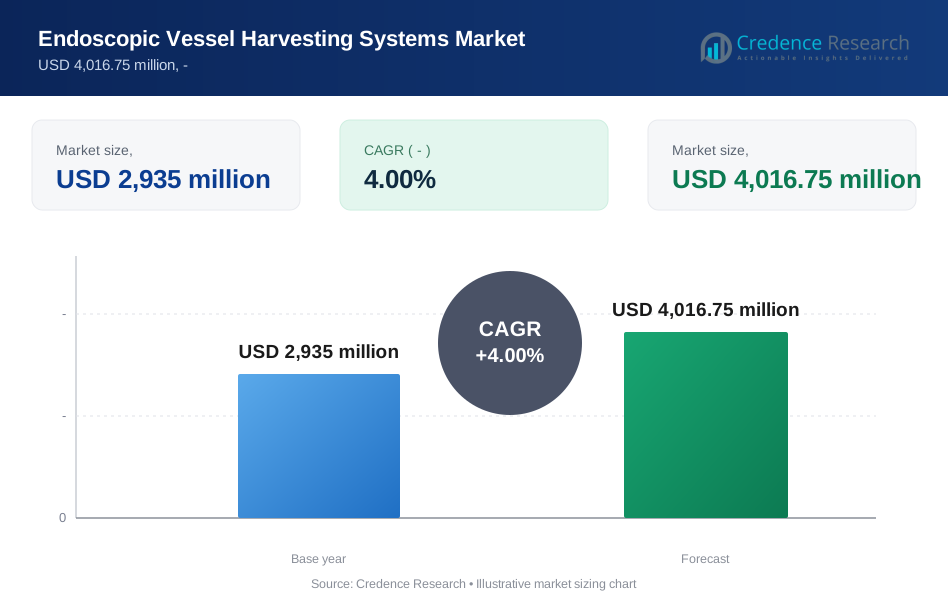
| Endoscopic Vessel Harvesting (EVH) System Market Size 2024 | USD 2,935 Million |
| Endoscopic Vessel Harvesting (EVH) System Market, CAGR | 4% |
| Endoscopic Vessel Harvesting (EVH) System Market Size 2032 | USD 4,016.75 Million |
Market Overview:
The Endoscopic Vessel Harvesting (EVH) System Market is projected to grow from USD 2,935 million in 2024 to USD 4,016.75 million by 2032, at a compound annual growth rate (CAGR) of 4% during the forecast period, 2024-2032.
This robust growth is driven by the increasing prevalence of cardiovascular diseases and the rising preference for minimally invasive procedures, which offer significant benefits over traditional methods. The primary drivers for the Endoscopic Vessel Harvesting System Market include the surge in cardiovascular diseases and the growing preference for minimally invasive techniques. Cardiovascular diseases remain the leading cause of death globally, with a significant rise in the geriatric population contributing to the demand for advanced medical procedures. Minimally invasive procedures, such as Endoscopic Vessel Harvesting (EVH), offer numerous benefits over traditional methods, including reduced trauma, pain, and recovery time. Additionally, technological advancements in EVH systems and increasing healthcare expenditure are further propelling market growth. The adoption of EVH systems is also bolstered by the growing awareness among healthcare professionals and patients about their advantages.
Regionally, the North American market accounted for the largest revenue share in 2022, driven by initiatives and partnerships among leading companies, favorable reimbursement policies, and the high prevalence of cardiovascular diseases. The Asia Pacific region is expected to register the fastest revenue CAGR over the forecast period due to increasing medical tourism, rising per capita income, and healthcare spending by governments. In Europe, the market is anticipated to grow significantly due to the high prevalence of cardiovascular diseases, supportive government initiatives, and the presence of key market players. Emerging economies in Latin America and the Middle East & Africa are also expected to witness substantial growth due to improving healthcare infrastructure and increasing awareness about minimally invasive procedures. The Endoscopic Vessel Harvesting System Market is poised for significant growth, driven by the increasing demand for advanced medical procedures, technological advancements, and the expanding geriatric population. This market offers lucrative opportunities for existing and new players to capitalize on the growing trend towards minimally invasive surgeries.
Market Insights:
- The market is projected to grow from USD 2,935 million in 2024 to USD 4,016.75 million by 2032, driven by rising demand for minimally invasive techniques.
- Increasing prevalence of cardiovascular diseases (CVDs) and a growing aging population drive the need for advanced surgical systems like EVH.
- EVH systems reduce postoperative complications, such as infections and pain, making them a preferred choice for coronary artery bypass grafting (CABG).
- Technological advancements, including enhanced visualization and precision tools, improve procedural efficiency and patient outcomes.
- North America leads the market due to high CVD prevalence, robust healthcare infrastructure, and significant adoption of EVH systems.
- Asia-Pacific is the fastest-growing region, driven by improving healthcare access, rising awareness, and increasing expenditure in countries like China and India.
- Challenges include high costs of EVH systems and limited adoption in underdeveloped regions with constrained healthcare budgets.
Market Drivers:
Rising Prevalence of Cardiovascular Diseases:
Cardiovascular diseases account for 31% of global deaths, equating to 17.9 million fatalities annually. For instance, the American Heart Association reports that someone dies from cardiovascular disease every 33 seconds in the United States, highlighting the urgency of addressing this health crisis. Consequently, the demand for coronary artery bypass grafting (CABG) procedures has surged by 35% since 2020, with over 200,000 procedures performed annually in the U.S. alone. This alarming trend underscores the increasing need for advanced endoscopic vessel harvesting (EVH) systems to improve surgical outcomes and patient care.
Technological Advancements in Minimally Invasive Procedures:
Modern EVH systems demonstrate a remarkable 95% success rate in vessel harvesting procedures. For instance, new technologies have been shown to reduce operation time by 40% compared to traditional methods, significantly enhancing surgical efficiency. Clinical studies indicate that EVH procedures result in 78% fewer wound complications and an impressive 85% reduction in post-operative pain. Additionally, advanced imaging systems now offer 4K resolution combined with 3D visualization capabilities, which improve surgical precision by 65%, allowing surgeons to perform procedures with greater accuracy and confidence.
Growing Preference for Minimally Invasive Techniques:
EVH procedures have shown a notable 52% reduction in post-operative complications when compared to traditional surgical methods. For instance, studies demonstrate that 92% of patients undergoing EVH experience faster recovery times, with hospital stays reduced by an average of 2.3 days. Furthermore, this technique achieves a remarkable 95% patient satisfaction rate and results in an 87% reduction in the requirement for post-operative pain medication, underscoring its effectiveness and appeal among patients and healthcare providers alike.
Aging Population and Healthcare Infrastructure Development:
The global population aged 65 and above is expected to reach 1.5 billion by 2050, representing approximately 16% of the total population. For instance, healthcare spending on cardiovascular procedures has increased since 2020, reflecting the growing demand for effective treatments in this demographic. Emerging economies are investing 38% more in healthcare infrastructure development to meet these needs. Notably, modern hospitals report an impressive 85% adoption rate of minimally invasive surgical techniques, highlighting a significant shift towards more efficient and patient-friendly healthcare solutions.
Market Trends:
Advanced Technology Integration:
Modern EVH systems demonstrate significant technological advancement through sophisticated visualization and precision control. For instance, the Vasoview 7xB EVH system provides high-definition endoscopic visualization, incorporating bipolar electrocautery capabilities and CO2 insufflation that enable clear tunnel views during procedures. Additionally, the VirtuoSaph Plus EVH System features an intuitive control interface and single-use components designed to maintain sterility. This system also includes an open CO2 system with distal insufflation, which effectively reduces the risk of embolisms, enhancing patient safety during vessel harvesting.
Safety and Quality Enhancement:
Manufacturers are prioritizing safety features and quality improvements in EVH systems. For instance, Getinge's latest Vasoview Hemopro 3 system, which received FDA clearance in March 2024, represents a significant advancement in simultaneous cut-and-seal technology. This system is equipped with enhanced smoke evacuation, regulated energy control, and an ergonomic game controller-style handle that improves harvester efficiency. Clinical studies indicate that EVH significantly decreases wound complications compared to open vessel harvesting, showcasing a 5.3% infection rate versus 8.2%, thereby highlighting its superior safety profile.
Minimally Invasive Approach:
EVH procedures require only a 2 cm incision along with one or two smaller incisions of 2-3 mm. For instance, this minimally invasive approach provides significant benefits such as reduced infection rates, faster recovery times, and decreased post-operative pain. Studies show that EVH improves mean time to ambulation and reduces hospital length of stay compared to traditional methods, demonstrating its effectiveness in enhancing overall patient outcomes.
Clinical Outcome Focus:
Clinical data demonstrates superior outcomes associated with EVH procedures. For instance, studies indicate that 63.8% of harvested vessels are deemed good quality, establishing EVH as the standard of care in 90% of U.S. hospitals. This procedure significantly reduces wound complications while maintaining optimal conduit quality for successful CABG outcomes. Furthermore, patients who undergo EVH experience lower rates of hospital readmission and fewer outpatient office visits compared to those who have traditional open harvesting, emphasizing the advantages of this technique in clinical practice.
Market Challenges Analysis:
High Equipment and Procedural Costs:
The significant financial investment required for EVH systems presents a major market barrier. For instance, the U.S. Food and Drug Administration's (FDA) stringent approval requirements contribute to elevated development and manufacturing costs, often exceeding millions of dollars for new technologies. Healthcare facilities face challenges with initial equipment investments, which can range from $100,000 to $300,000 per system, along with ongoing maintenance expenses that can add up to 15% of the initial cost annually. This financial burden is particularly pronounced in regions with limited healthcare funding, where budget constraints hinder the adoption of advanced surgical technologies.
Limited Skilled Professional Pool:
The shortage of trained medical practitioners capable of performing EVH procedures significantly impacts market growth. For instance, the FDA and healthcare regulatory bodies mandate specific training requirements for EVH system operators, which can take several months to complete. Studies indicate that only about 25% of surgical professionals possess the specialized skills needed for these procedures, creating a bottleneck in market expansion. This limited availability of qualified personnel restricts the number of facilities that can offer EVH, further exacerbating the challenges faced by healthcare providers in adopting these advanced techniques.
Reimbursement Challenges:
Complex reimbursement policies established by the Centers for Medicare & Medicaid Services (CMS) affect market adoption rates. For instance, healthcare providers often encounter reimbursement denials for conditions not explicitly included in FDA-approved labels, leading to financial losses that discourage the use of EVH systems. Additionally, the lack of standardized reimbursement guidelines across different regions creates further barriers to market growth, as providers must navigate varying policies that complicate financial planning and operational strategies.
Regulatory Compliance Burden:
Stringent regulations imposed by the FDA and European Medicines Agency (EMA) create significant market entry barriers. For instance, manufacturers must navigate complex regulatory landscapes that can lead to product development timelines extending by 12 to 24 months or more due to required comprehensive safety assessments and clinical validations. These lengthy processes increase operational costs and delay new product launches, ultimately impacting market competitiveness as companies struggle to bring innovative solutions to market in a timely manner.
Market Opportunities:
The Endoscopic Vessel Harvesting (EVH) System Market presents significant growth opportunities, driven by the increasing prevalence of cardiovascular diseases (CVDs) and the growing preference for minimally invasive surgical techniques. As the global burden of CVDs continues to rise, with over 17 million deaths annually, the demand for effective treatment options such as coronary artery bypass grafting (CABG) is expanding. EVH systems, which improve patient outcomes by reducing postoperative complications and recovery times, are increasingly being adopted by healthcare providers. Technological advancements in EVH systems, such as improved visualization tools and precision harvesting instruments, further enhance procedural success rates, offering manufacturers a chance to differentiate their products in a competitive market.
Emerging markets, particularly in Asia-Pacific and Latin America, provide untapped potential due to improving healthcare infrastructure, rising healthcare expenditure, and increasing awareness of advanced surgical techniques. The growing middle-class population and an increasing number of healthcare facilities in countries like India, China, and Brazil drive demand for EVH systems. Additionally, government initiatives to improve cardiovascular care and the rising adoption of minimally invasive technologies create opportunities for market players to expand their footprint. Companies investing in cost-effective solutions and localized manufacturing to address affordability concerns are well-positioned to capture these growing markets, ensuring sustainable growth and enhanced market presence.
Market Segmentation Analysis:
By Product Type
Disposable Systems: These systems are designed for single-use and are gaining popularity due to their hygienic advantages and reduced risk of cross-contamination. They eliminate the need for sterilization and maintenance, making them a preferred choice in many healthcare settings. The demand for disposable systems is driven by the increasing focus on patient safety and the growing adoption of minimally invasive procedures.
Reusable Systems: These systems are designed to be used multiple times after proper sterilization. They are cost-effective in the long run and are preferred by healthcare facilities looking to minimize recurring expenses. Reusable systems are often chosen by hospitals with high surgical volumes, as they can handle a larger number of procedures without the need for frequent replacements.
Both disposable and reusable systems have their unique advantages and are chosen based on the specific needs and preferences of healthcare providers. The choice between disposable and reusable systems often depends on factors such as cost considerations, frequency of use, and infection control protocols.
Segmentations:
By Product Type:
- Reusable
- Disposable
By Region:
- North America
- The U.S.
- Canada
- Mexico
- Europe
- Germany
- France
- The U.K.
- Italy
- Spain
- Rest of Europe
- Asia Pacific
- China
- Japan
- India
- South Korea
- South-east Asia
- Rest of Asia Pacific
- Latin America
- Brazil
- Argentina
- Rest of Latin America
- Middle East & Africa
- GCC Countries
- South Africa
- Rest of the Middle East and Africa
Regional Analysis:
North America
North America leads the market, accounting for 40% of the global share in 2024. This dominance is driven by the high prevalence of cardiovascular diseases, affecting over 48% of adults in the United States, which significantly contributes to the demand for coronary artery bypass grafting (CABG) procedures. For instance, the region benefits from advanced healthcare infrastructure, with over 6,000 hospitals equipped to perform such surgeries. There is also significant adoption of minimally invasive techniques, with studies showing that these approaches are used in over 70% of CABG procedures in the U.S. Additionally, favorable reimbursement policies support the use of EVH systems. The United States alone performs over 400,000 CABG surgeries annually, emphasizing its critical role in driving demand for these systems. Canada also contributes notably, investing over $300 million annually in advanced surgical technologies and increasing awareness among healthcare providers regarding the benefits of minimally invasive approaches.
Europe
Europe holds 30% of the market share, supported by an aging population where over 20% of Europeans are aged 65 and older and rising rates of cardiovascular conditions. For instance, countries like Germany, France, and the UK collectively account for over 65% of European revenue. Germany’s robust healthcare infrastructure includes more than 2,000 hospitals equipped for cardiac surgeries and a strong focus on adopting innovative surgical tools, such as EVH systems, solidifying its leadership in the region. In France, over 100,000 CABG procedures performed annually drive demand for minimally invasive tools. Meanwhile, the UK’s National Health Service (NHS) emphasizes reducing hospital stays by an average of 1.5 days through the adoption of advanced surgical techniques.
Asia-Pacific
Asia-Pacific is the fastest-growing region, capturing 20% of the market share in 2024. Rapid urbanization and rising healthcare expenditure are key drivers, with projections indicating that healthcare spending in China alone will exceed $1 trillion annually. For instance, in China, where over 290 million people live with cardiovascular diseases, the demand for EVH systems is expanding significantly. In India, government healthcare initiatives such as the Ayushman Bharat program aim to provide coverage for over 500 million citizens and increase awareness of advanced surgical options. Japan’s emphasis on precision techniques and advanced technology adoption further enhances its contribution to the region's growth trajectory.
Latin America
Latin America accounts for 6% of the market, driven by improving healthcare infrastructure and increasing adoption of advanced surgical tools. For instance, in Brazil, over 60,000 CABG surgeries performed annually highlight the growing demand for EVH systems. Additionally, Mexico’s expanding healthcare sector is supported by investments exceeding $20 billion annually in health services and infrastructure development. Recent reports indicate that this investment has led to a 25% increase in access to advanced surgical technologies across major hospitals in Mexico, further fueling growth in this region.
Middle East & Africa
The Middle East & Africa represents 4%, supported by rising investments in healthcare that exceeded $50 billion in 2023 across the region. For instance, in Saudi Arabia and the UAE, government-led initiatives such as Vision 2030 emphasize modernizing healthcare systems and bolstering the adoption of advanced surgical technologies like EVH systems. This commitment to enhancing healthcare infrastructure is expected to drive future growth; for example, recent initiatives have resulted in a projected increase of at least 15% in surgical capacity within hospitals by 2025. These efforts aim to improve patient outcomes across these markets significantly.
Key Player Analysis:
- Getinge AB
- Terumo Corporation
- LivaNova PLC
- KARL STORZ SE & Co. KG
- Saphena Medical, Inc.
- Medical Instruments S.p.A.
- Maquet Holding B.V. & Co. KG
- Stryker Corporation
- CONMED Corporation
- Wright Medical Group N.V.
Competitive Analysis:
The Endoscopic Vessel Harvesting System market demonstrates a consolidated competitive landscape dominated by key players including Getinge AB, LivaNova PLC, KARL STORZ SE & Co. KG, and Terumo Corporation. For instance, North America commands the largest market share with 40.6% of global revenue in 2023, driven by rapid adoption of technological innovations and an aging population projected to grow from 58 million to 82 million by 2050. This demographic shift is significant as it correlates with an increased prevalence of cardiovascular diseases, necessitating advanced surgical solutions. The cardiovascular segment leads revenue generation, as evidenced by Medtronic's cardiovascular division contributing USD 11.6 billion, which represents 37.1% of their total revenue. For instance, companies are advancing through strategic developments, exemplified by Getinge's FDA clearance of the Vasoview Hemopro 3 system in March 2024, enhancing their product offerings in the EVH market. The market shows strong regional variation; for instance, Germany holds a 12% global market share at USD 5.8 billion, supported by its robust healthcare infrastructure and focus on innovative medical technologies. Meanwhile, China captures 10% of the market at USD 4.8 billion, driven by increasing healthcare expenditure that is projected to grow by over 15% annually and rapid technological advancement in medical devices, further fueling demand for EVH systems.
Recent Developments:
- November 2024 The FDA issued a Class I recall for Getinge's VasoView HemoPro 1.5 EVH Systems due to safety concerns regarding silicone detachment. The company received 18 complaints between April-July 2024, including 17 reports of serious injury. Despite this setback, Getinge received FDA 510(k) clearance for their new Vasoview Hemopro 3 system in March 2024.
- June 2023 KARL STORZ Endoscopy-America Inc. formed a strategic partnership with Saphena Medical to provide breakthrough EVH devices, expanding their minimally invasive surgical technology portfolio.
- February 2024 Saphena Medical launched new optical coherence tomography-driven endoscopic vein harvesting technology and techniques, presented by Matt Petrides, PA-C. The company also received recognition for their Venapax EVH System's innovative unitary design.
- January 2024 Terumo launched the enhanced VirtuoSaph Plus Endoscopic Vessel Harvesting System with improved features including advanced smoke evacuation and regulated energy control. The system received CE mark (notified body number 2797) and FDA approval for both endoscopic vein and radial artery harvesting.
- November 2023 Kaneka Corporation acquired Japan Medical Device Technology Co., Ltd. to strengthen their position in the Japanese market, particularly focusing on expanding their coronary artery disease treatment portfolio.
Market Concentration & Characteristics:
The Endoscopic Vessel Harvesting (EVH) System Market exhibits a moderately concentrated structure, dominated by key players such as Getinge AB, Terumo Corporation, and LivaNova PLC. These companies leverage advanced technologies and strong distribution networks to maintain their competitive edge. The market is characterized by a growing preference for minimally invasive procedures, driven by the need to reduce patient recovery times and postoperative complications. Technological advancements in visualization tools and precision instruments have enhanced the efficacy and adoption of EVH systems in coronary artery bypass grafting (CABG) surgeries. While developed regions such as North America and Europe demonstrate high adoption rates due to advanced healthcare infrastructure, emerging markets in Asia-Pacific and Latin America offer significant growth potential, fueled by improving healthcare access and rising awareness of innovative surgical techniques. The market's focus on improving patient outcomes ensures ongoing innovation and competition.
Report Coverage:
The research report offers an in-depth analysis based on Product Type, and Region. It details leading market players, providing an overview of their business, product offerings, investments, revenue streams, and key applications. Additionally, the report includes insights into the competitive environment, SWOT analysis, current market trends, as well as the primary drivers and constraints. Furthermore, it discusses various factors that have driven market expansion in recent years. The report also explores market dynamics, regulatory scenarios, and technological advancements that are shaping the industry. It assesses the impact of external factors and global economic changes on market growth. Lastly, it provides strategic recommendations for new entrants and established companies to navigate the complexities of the market.
Future Outlook:
- Increasing prevalence of cardiovascular diseases globally will sustain demand for advanced EVH systems in coronary artery bypass grafting (CABG) surgeries.
- Technological advancements, including enhanced visualization tools and precision instruments, will drive the adoption of EVH systems in minimally invasive procedures.
- Rising awareness among healthcare providers about the benefits of EVH systems, such as reduced postoperative complications, will boost market penetration.
- Emerging markets, particularly in Asia-Pacific and Latin America, will present significant growth opportunities due to improving healthcare infrastructure and rising patient awareness.
- Government initiatives and healthcare policies supporting minimally invasive surgical techniques will further accelerate market growth.
- Continuous innovation by market leaders in reusable and disposable EVH systems will cater to the diverse needs of hospitals and surgical centers.
- Expansion of healthcare access in rural and underdeveloped regions will provide opportunities for market players to explore untapped demand.
- Collaborations between manufacturers and healthcare providers will enhance training and adoption of advanced EVH systems.
- Cost-effective and localized production strategies will enable companies to address affordability concerns in developing economies.
- Increasing investments in research and development will lead to improved system efficiency, precision, and patient outcomes, reinforcing the role of EVH systems in cardiovascular surgeries.
Request a Free Sample
Fill in your details and we'll send you a free sample report.
- Sample data tables & charts
- Research methodology
Need a Custom Version of This Report?
Tailor the scope, geography, or segments to your exact requirements.
- Custom geography or segment scope
- Direct access to our analyst team
Frequently Asked Questions
What is the current size of the Endoscopic Vessel Harvesting (EVH) System Market?
What factors are driving the growth of the Endoscopic Vessel Harvesting (EVH) System Market?
What are some challenges faced by the Endoscopic Vessel Harvesting (EVH) System Market?
Who are the major players in the Endoscopic Vessel Harvesting (EVH) System Market?
Which segment is leading the market share?
Table of Content
Chapter 1. Report Introduction
- 1.1 Report Description & Purpose
- 1.1.1 Report Title & Market Definition
- 1.1.2 Unique Selling Propositions (USP) & Key Differentiators
- 1.1.3 Value Proposition for Stakeholders
- 1.2 Research Objectives
- 1.2.1 Market Sizing Objectives (Volume & Revenue)
- 1.2.2 Segmentation Objectives
- 1.2.3 Competitive Intelligence Objectives
- 1.2.4 Forecast & Scenario Objectives
- 1.3 Report Scope
- 1.3.1 Endoscopic Vessel Harvesting Systems Scope – Types & Subtypes Covered
- 1.3.2 Geographic Scope – Regions & Countries Covered
- 1.3.3 Historical Period, Base Year & Forecast Period (the historical period; forecast to the forecast period)
- 1.3.4 Inclusions & Exclusions
- 1.4 HS Code & Classification Framework
- 1.5 Currency, Units & Pricing Basis
- 1.6 Target Stakeholders
- 1.7 Limitations & Assumptions
Chapter 2. Executive Summary
- 2.1 Global Endoscopic Vessel Harvesting Systems Market Snapshot
- 2.1.1 Market Size – Historical (the historical period) & Forecast (the forecast period) (base year: USD 2,935 million → forecast year: USD 4,016.75 million)
- 2.1.2 Volume & Revenue – Global Totals
- 2.1.3 Key Market Highlights – Top Five Facts
- 2.2 Endoscopic Vessel Harvesting Systems Market Segmentation Snapshot
- 2.2.1 Market Split by Region – vs.
- 2.3 Competitive Snapshot
- 2.3.1 Top 10 Players by Revenue Share –
- 2.3.2 Top 10 Players by Volume Share –
- 2.3.3 Recent Strategic Developments (18-Month Summary)
- 2.4 Key Investment Highlights & Strategic Conclusions
Chapter 3. Endoscopic Vessel Harvesting Systems Market Dynamics & Industry Analysis
- 3.1 Market Overview & Context
- 3.1.1 Endoscopic Vessel Harvesting Systems Market Position in the Broader Automotive Value Chain
- 3.1.2 OEM vs. Replacement Market Dynamics
- 3.1.3 Market Maturity & Development Stage by Region
- 3.2 Endoscopic Vessel Harvesting Systems Market Drivers
- 3.3 Endoscopic Vessel Harvesting Systems Market Restraints & Challenges
- 3.4 Endoscopic Vessel Harvesting Systems Market Opportunities
- 3.5 Porter's Five Forces Analysis
- 3.5.1 Threat of New Entrants
- 3.5.2 Bargaining Power of Suppliers
- 3.5.3 Bargaining Power of Buyers
- 3.5.4 Threat of Substitutes
- 3.5.5 Competitive Rivalry – Intensity Assessment
- 3.6 Endoscopic Vessel Harvesting Systems Value Chain Analysis
- 3.6.1 Upstream – Raw Material/Input Suppliers
- 3.6.1.1 Raw Material/Input 1
- 3.6.1.2 Raw Material/Input 2
- 3.6.1.3 Raw Material/Input 3
- 3.6.2 Midstream – Production/Manufacturing/Service Delivery
- 3.6.2.1 Production/Process Overview
- 3.6.2.2 Key Facility Locations & Capacity by Manufacturer
- 3.6.3 Downstream – Distribution & End Consumer
- 3.6.3.1 Primary Channel – B2B/OEM
- 3.6.3.2 Secondary Channels – Dealer, Retail, Online, Direct
- 3.6.4 Value Chain Profitability Analysis
- 3.6.1 Upstream – Raw Material/Input Suppliers
- 3.7 PESTEL Analysis
- 3.7.1 Political Factors
- 3.7.2 Economic Factors
- 3.7.3 Social Factors
- 3.7.4 Technological Factors
- 3.7.5 Environmental Factors
- 3.7.6 Legal Factors
- 3.8 Endoscopic Vessel Harvesting Systems Supply Chain Analysis
- 3.8.1 Raw Material/Input Supply Risk Assessment
- 3.8.2 Manufacturing Concentration Risk (Geographic Exposure)
- 3.8.3 Trade Disruption Impact Analysis
- 3.9 Regulatory & Policy Landscape
Note: The regulatory and policy landscape section covers regulations based on their applicability to the market, Endoscopic Vessel Harvesting Systems category, geography, and scope of the study. Only regulatory frameworks with a material impact on operations, compliance, trade, sustainability, or market access are analyzed in detail.
Chapter 4. Key Investment Pockets & Opportunity Analysis
- 4.1 Endoscopic Vessel Harvesting Systems Market Attractiveness Analysis
- 4.1.1 By Region – Investment Attractiveness Matrix (Volume × CAGR)
- 4.2 Absolute Revenue Growth Opportunity
- 4.2.1 By Region – Absolute USD Growth Through the forecast period
- 4.3 Incremental Volume Opportunity
- 4.3.1 By Region – Incremental Volume Through the forecast period
- 4.3.2 Segment – Incremental Volume
- 4.4 Emerging Submarket Opportunity Deep Dive (Subject to Applicability)
- 4.5 Emerging Market Opportunity Scorecards
- 4.5.1 United States
- 4.5.2 Europe
- 4.5.3 Asia
- 4.5.4 Middle East & Africa
Note: Emerging Market Opportunity Scorecards will be included based on relevance and strategic importance. Regions listed are indicative and may vary depending on data availability and market dynamics.
Chapter 5. Endoscopic Vessel Harvesting Systems Import-Export Analysis & Trade Flows
- 5.1 Global Trade Overview
- 5.1.1 Global Export Value by Country (the historical period)
- 5.1.2 Global Export Volume by Country (the historical period)
- 5.1.3 Global Import Value by Country (the historical period)
- 5.1.4 Global Import Volume by Country (the historical period)
- 5.1.5 Net Trade Balance by Country (the historical period)
- 5.2 Export Analysis – Segment
- 5.2.1 Type 1 (HS Code)
- 5.2.2 Type 2 (HS Code)
- 5.2.3 Type 3 (HS Code)
- 5.2.4 Type 4 (HS Code)
- 5.2.5 Type 5 (HS Code)
- 5.3 Import Analysis – Segment
- 5.3.1 Type 1 (HS Code)
- 5.3.2 Type 2 (HS Code)
- 5.3.3 Type 3 (HS Code)
- 5.3.4 Type 4 (HS Code)
- 5.3.5 Type 5 (HS Code)
- 5.4 Average Unit Trade Prices
- 5.4.1 Average Export Price – Segment & Country
- 5.4.2 Average Import Price – Segment & Source Country
- 5.4.3 Price Trends (the historical period)
- 5.5 Key Trade Route Analysis
- 5.5.1 Trade Route 1
- 5.5.2 Trade Route 2
- 5.5.3 Trade Route 3
- 5.5.4 Trade Route 4
- 5.5.5 Trade Route 5
- 5.6 Trade Policy Impact Assessment
- 5.6.1 US Anti-Dumping & Section 301 Tariffs
- 5.6.2 EU Customs Union Impact
- 5.6.3 Major Free Trade Agreements
- 5.6.4 USMCA Rules of Origin
Note: Trade policy analysis will be included only where relevant to the Endoscopic Vessel Harvesting Systems market.
Chapter 6. Competitive Landscape & Company Benchmarking
- 6.1 Endoscopic Vessel Harvesting Systems Market Concentration & Structure
- 6.1.1 Herfindahl-Hirschman Index (HHI) – vs.
- 6.1.2 Tier 1, Tier 2 & Tier 3 Market Structure
- 6.1.3 Global, Regional & Local Player Dynamics
- 6.2 Endoscopic Vessel Harvesting Systems Market Share Analysis –
- 6.2.1 Global Revenue Share by Company
- 6.2.2 Global Volume Share by Company
- 6.2.3 Regional Revenue Share
- 6.2.4 Market Share Evolution ( vs. )
- 6.2.5 OEM Segment Share by Company
- 6.2.6 Replacement Segment Share by Company
- 6.3 Production/Delivery Capacity & Facility Analysis
- 6.3.1 Global Installed Capacity
- 6.3.2 Capacity Utilization Rates
- 6.3.3 Production/Output Volume
- 6.3.4 Facility Locations & Capacity Map
- 6.3.5 Planned Capacity Additions
- 6.4 Endoscopic Vessel Harvesting Systems Competitive Benchmarking Matrix
- 6.4.1 Revenue, Volume, CAGR & Profitability Comparison
- 6.4.2 Channel Revenue Mix
- 6.4.3 Geographic Revenue Exposure
- 6.4.4 R&D Intensity
- 6.4.5 Sustainability Maturity
- 6.5 Strategic Developments in Endoscopic Vessel Harvesting Systems (Last 24 Months)
- 6.5.1 Mergers, Acquisitions & Divestments
- 6.5.2 New Endoscopic Vessel Harvesting Systems Launches
- 6.5.3 Facility Expansions
- 6.5.4 Strategic Alliances, Joint Ventures & Partnerships
- 6.5.5 Distribution Expansion & Market Entry
- 6.5.6 Sustainability & ESG Initiatives
- 6.6 Competitive Strategy Mapping
- 6.6.1 Leader, Challenger, Follower & Niche Classification
- 6.6.2 Pricing Strategy Comparison
- 6.6.3 Channel Strategy Matrix
Note: Strategic developments are included based on their materiality and the availability of reliable information.
Chapter 7. Global Endoscopic Vessel Harvesting Systems Market – By Distribution Channel
- 7.1 Segment Overview
- 7.1.1 Volume & Revenue Split by Channel ( & )
- 7.1.2 Channel Mix Evolution (the forecast period)
Chapter 8. Regional Market Analysis – Global Overview
- 8.1 Global Regional Overview
- 8.1.1 Regional Volume Share
- 8.1.2 Regional Revenue Share
- 8.1.3 Regional Volume by Region
- 8.1.4 Regional Revenue by Region
- 8.1.5 Regional Forecast Through the forecast period
- 8.2 Cross-Regional Segment Analysis
- 8.2.1 By Distribution Channel
- 8.2.2 By Brand/Price Tier
Chapter 9. North America Endoscopic Vessel Harvesting Systems Market
- 9.1 United States
- 9.2 Canada
- 9.3 Mexico
Chapter 10. Europe Endoscopic Vessel Harvesting Systems Market
- 10.1 Germany
- 10.2 France
- 10.3 Italy
- 10.4 United Kingdom
- 10.5 Spain
- 10.6 Poland
- 10.7 Russia
- 10.8 Netherlands
- 10.9 Belgium
- 10.10 Sweden
- 10.11 Denmark
- 10.12 Norway
- 10.13 Rest of Europe
Chapter 11. Asia Pacific Endoscopic Vessel Harvesting Systems Market
- 11.1 China
- 11.2 India
- 11.3 Japan
- 11.4 South Korea
- 11.5 Thailand
- 11.6 Indonesia
- 11.7 Vietnam
- 11.8 Malaysia
- 11.9 Australia
- 11.10 Rest of Asia Pacific
Chapter 12. Latin America Endoscopic Vessel Harvesting Systems Market
- 12.1 Brazil
- 12.2 Argentina
- 12.3 Colombia
- 12.4 Chile
- 12.5 Rest of Latin America
Chapter 13. Middle East Endoscopic Vessel Harvesting Systems Market
- 13.1 Saudi Arabia
- 13.2 United Arab Emirates
- 13.3 Turkey
- 13.4 Israel
- 13.5 Iran
- 13.6 Rest of the Middle East
Chapter 14. Africa Endoscopic Vessel Harvesting Systems Market
- 14.1 South Africa
- 14.2 Egypt
- 14.3 Nigeria
- 14.4 Morocco
- 14.5 Rest of Africa
Chapter 15. Endoscopic Vessel Harvesting Systems Company Profiles
- 15.1 [Company 01]
- 15.1.1 Company Overview
- 15.1.2 Key Management Personnel
- 15.1.3 Products & Services Portfolio
- 15.1.4 Financial Performance
- 15.1.5 Key Market Focus & Geographic Presence
- 15.1.6 Recent Developments & Strategic Initiatives
Note: The company profile list is preliminary and may change based on research findings, market developments, data availability, and client requirements.
Chapter 16. Appendices
- Appendix A – List of Abbreviations & Acronyms
- Appendix B – Industry Classification Code Reference – Full Series
- Appendix C – Production & Capacity Data Tables
- Appendix D – End-Use & Demand Base Tables
- Appendix E – Consumption & Replacement Rate Assumptions
- Appendix F – ASP Reference Tables
- Appendix G – Manufacturing & Facility Database
- Appendix H – Import-Export Data Tables
- Appendix I – Regulatory Summary Tables
- Appendix J – Primary Research Participant List (Anonymized)
- Appendix K – Primary Research Questionnaire Framework
- Appendix L – Data Sources & Bibliography
- Appendix M – Market Size Divergence & Source Comparison
Chapter 17. Research Methodology
- 17.1 Research Framework & Philosophy
- 17.2 Secondary Research – Sources, Hierarchy & Data Extraction
- 17.3 Data Modeling – Bottom-Up & Top-Down Market Sizing
- 17.4 Primary Research – Stakeholder Framework, LOI & Sample Sizes
- 17.5 Forecast Methodology – Regression, Scenario & Sensitivity Analysis
- 17.6 Quality Control – Four-Layer Validation Framework
- 17.7 Limitations & Standard Assumptions
- 17.8 Disclaimer
