
| REPORT ATTRIBUTE | DETAILS |
|---|---|
| Historical Period | 2020-2023 |
| Base Year | 2024 |
| Forecast Period | 2025-2032 |
| Folding Furniture Market Size 2024 | USD5,974.22 million |
| Folding Furniture Market, CAGR | 7.89% |
| Folding Furniture Market Size 2032 | USD10,971.45 million |
Market Overview
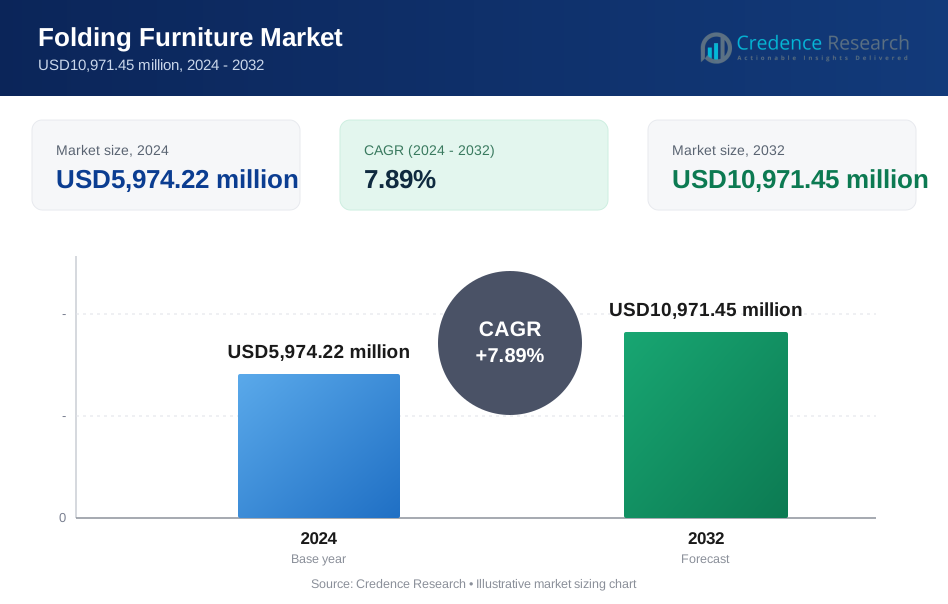
The Global Folding Furniture Market is projected to grow from USD5,974.22 million in 2024 to an estimated USD10,971.45 million based on 2032, with a compound annual growth rate (CAGR) of 7.89% from 2025 to 2032. This significant growth reflects rising consumer interest in space-saving solutions, particularly in urban settings where compact living spaces drive the need for functional and flexible furniture.
Key drivers influencing the market include rapid urbanization, smaller living spaces, and growing demand for portable and cost-effective furniture solutions. Rising awareness of interior space optimization and the integration of smart home elements are further supporting demand. The hospitality and event management sectors are also major contributors, using folding furniture for its ease of transport and storage. Trends such as DIY home décor, sustainability, and modular furniture concepts continue to reshape product development in this market.
Geographically, North America and Europe currently lead the market due to higher living standards and early adoption of innovative furniture designs. However, the Asia-Pacific region is expected to witness the fastest growth rate, driven by increasing urban housing development and lifestyle changes in countries such as China, India, and Japan. Key players in the global folding furniture market include IKEA, La-Z-Boy, Meco Corporation, Dorel Industries Inc., and Inter IKEA Systems B.V., who continue to innovate in functionality and design.
Market Insights
- The global folding furniture market is projected to grow from USD5,974.22 million in 2024 to USD10,971.45 million by 2032, at a CAGR of 7.89% from 2025 to 2032.
- Rising urbanization and shrinking residential spaces are driving strong demand for space-saving and multifunctional furniture solutions.
- Increasing adoption of foldable tables, chairs, beds, and storage units across residential and commercial sectors supports market expansion.
- A key restraint is consumer concern over the long-term durability and strength of folding furniture, especially in high-use environments.
- Aesthetic limitations and design constraints also challenge adoption in premium or luxury interior segments.
- North America and Europe currently lead the market due to early innovation adoption and strong consumer purchasing power.
- Asia-Pacific is poised for the fastest growth, fueled by urban housing developments and lifestyle shifts in India, China, and Japan.
Report Scope
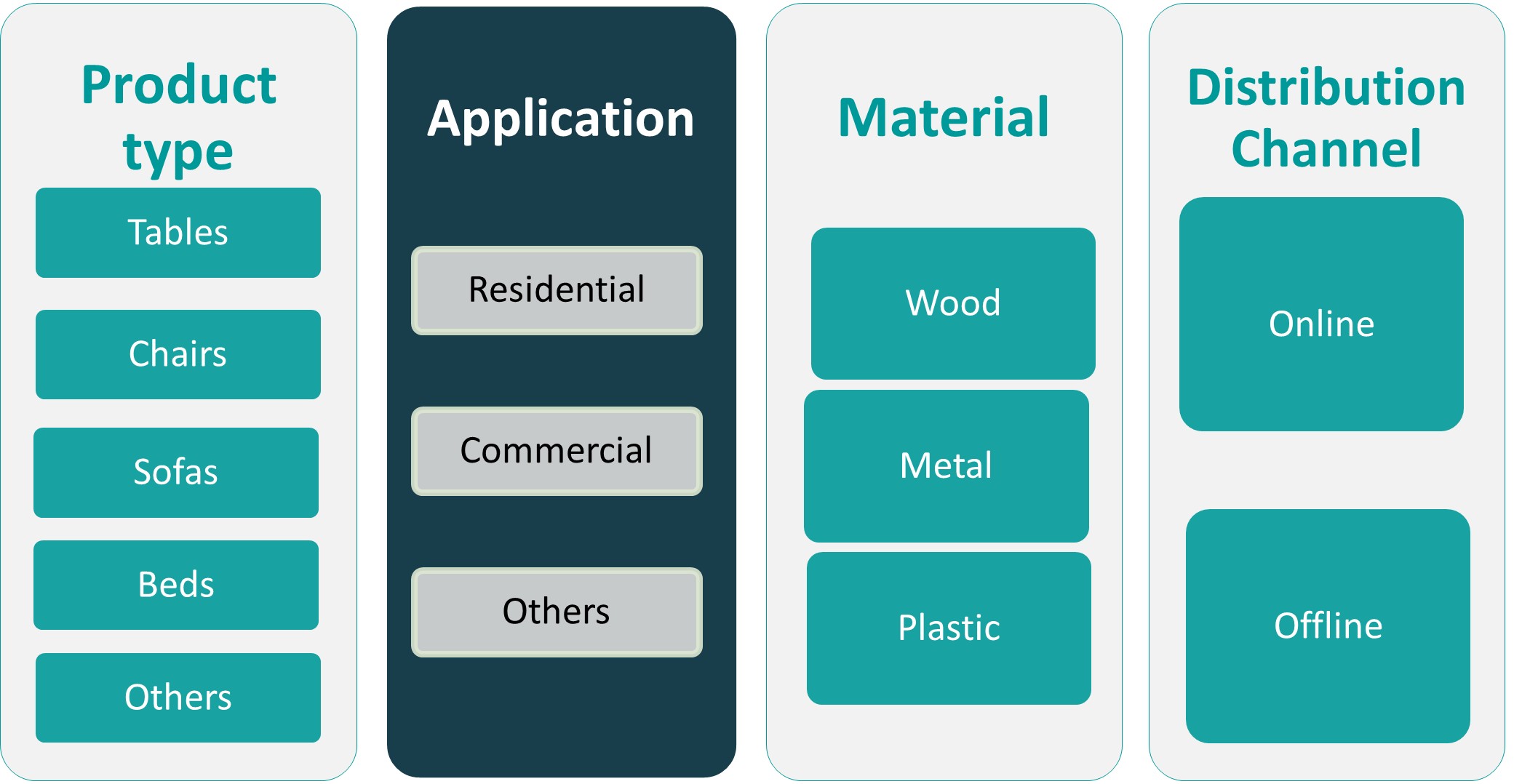
This report segments the Global Folding Furniture Market as follows:
Market Drivers
Rising Urbanization and Shrinking Living Spaces
One of the primary drivers propelling the growth of the global folding furniture market is the rapid pace of urbanization across developed and developing economies. With increasing migration to urban centers, particularly in Asia-Pacific and parts of Latin America, there has been a corresponding rise in demand for compact, efficient, and multifunctional living arrangements. For instance, IKEA has introduced space-saving shelving units with foldable tables that can function as both a desk and a dining table, catering to urban consumers seeking multifunctional solutions. As urban populations grow, real estate prices surge, and the average size of residential spaces continues to decline. This trend is compelling consumers to seek furniture solutions that are not only space-saving but also versatile and aesthetically pleasing. Folding furniture, such as wall-mounted beds, collapsible tables, and stackable chairs, offers a practical solution to accommodate modern urban lifestyles. The ability to easily store, reposition, or transform furniture in small apartments, co-living spaces, and student accommodations makes foldable furniture a preferred choice among younger and urban-dwelling consumers. For instance, companies like Expand Furniture specialize in modular and foldable furniture designed for compact living spaces. This trend is especially evident in countries like Japan, India, and China, where high-density housing and minimalist design preferences converge to accelerate market growth.
Increasing Consumer Demand for Flexible and Multifunctional Furniture
The modern consumer exhibits a growing inclination toward products that offer both functionality and design efficiency. Folding furniture addresses this preference by providing flexibility in use and efficient spatial management. For instance, Steelcase has developed multifunctional furniture solutions that adapt to changing workspaces, allowing users to reconfigure their environments with ease. Consumers now prioritize furniture that can adapt to multiple needs — a table that converts into a desk, a bed that folds into a wall unit, or a seating arrangement that can be easily stored when not in use. The versatility offered by foldable furniture meets the rising demand for modular interiors, especially in residential applications where homeowners are looking to maximize their limited spaces. Additionally, many consumers value the mobility aspect of folding furniture, which is ideal for renters or individuals who frequently relocate. For instance, Maanavi Homes has emphasized the importance of convertible furniture in modern home design, offering solutions that blend functionality with aesthetics. Folding furniture offers not only ease of transport but also simplicity in assembly and disassembly, reducing logistical burdens during moving or reconfiguring living spaces. This evolving preference for convenience, utility, and mobility is significantly influencing purchasing decisions and is a critical driver of the folding furniture market’s expansin.
Growth in Hospitality, Event Management, and Commercial Sectors
The growing use of folding furniture in commercial sectors — particularly hospitality, education, and event management — has also bolstered market demand. Hotels, restaurants, banquet halls, and event venues frequently require flexible seating and table arrangements to accommodate varying group sizes and event formats. Folding tables and chairs are cost-effective, easy to store, and allow for quick reconfiguration of spaces, thereby enhancing operational efficiency. In the education sector, schools and training centers prefer foldable desks and chairs for their adaptability in multipurpose rooms. Similarly, coworking spaces and shared offices are integrating folding furniture solutions to facilitate dynamic work environments that can transition between collaborative meetings, individual work, and social events. These commercial applications require products that balance functionality, durability, and aesthetics — a combination that modern foldable furniture increasingly delivers. As these sectors continue to prioritize adaptability and space optimization, folding furniture will remain a staple component of their infrastructure.
Sustainability and Innovations in Design and Materials
Environmental awareness and sustainability concerns are shaping purchasing behaviors across all industries, including furniture. Consumers and businesses alike are increasingly seeking eco-friendly furniture options made from renewable, recyclable, or sustainably sourced materials. In response, manufacturers in the folding furniture market are investing in sustainable production techniques and incorporating responsibly sourced wood, recycled metal, and biodegradable plastics. This shift not only aligns with regulatory requirements in several regions but also enhances brand reputation and customer loyalty. Furthermore, ongoing innovations in design and materials have enhanced the appeal and functionality of foldable furniture. New-age designs prioritize ergonomic features, aesthetic value, and long-term durability, all while maintaining compactness and ease of use. Advancements such as hydraulic folding mechanisms, lightweight metal alloys, and fold-flat engineering have redefined consumer expectations. These innovations cater to both practical needs and style-conscious buyers, making folding furniture a viable option for premium as well as budget-conscious segments. As sustainability and smart design converge, the folding furniture market is poised to benefit from a surge in eco-aware and design-savvy consumers.
Market Trends
Integration of Smart and Modular Design Features
The folding furniture market is experiencing a significant trend toward the integration of smart and modular design features. Manufacturers are increasingly developing products that blend advanced functionality with intuitive mechanisms, allowing users to easily transform their furniture according to changing needs. One example is the rise of multi-functional beds, with over 500,000 units of foldable wall beds sold annually in the U.S. Beds that convert into cabinets or desks, as well as dining tables that extend and collapse with minimal effort, are becoming popular among consumers seeking efficiency in compact living spaces. These innovations cater especially to urban professionals, students, and digital nomads who prioritize space optimization and multifunctionality. The incorporation of modular components allows users to configure furniture layouts according to their interior design and functional preferences. Additionally, many products now include built-in charging ports, lighting, and storage, merging convenience with innovation. Smart furniture brands continue to develop solutions that focus on seamless transformation, durability, and aesthetic appeal. With over 68% of urban households seeking space-saving solutions, demand for intelligent and adaptable folding furniture is steadily increasing across residential and commercial applications.
Rising Popularity of Eco-Friendly and Sustainable Materials
Sustainability has emerged as a pivotal trend in the global folding furniture market, driving innovation in both materials and production processes. Consumers are becoming more environmentally conscious and actively seeking products that align with their eco-friendly values. An example of this trend is the increased usage of bamboo in furniture production, with manufacturers producing more than 20 million square feet of bamboo panels annually for furniture applications. Companies are focusing on recyclable, biodegradable, and responsibly sourced materials such as reclaimed wood, recycled aluminum, and low-VOC finishes. These materials not only reduce environmental impact but also offer durability and modern aesthetics, which appeal to design-conscious buyers. Several brands are adopting green manufacturing techniques, including water-based adhesives, minimal-waste production, and energy-efficient assembly lines. The shift toward sustainable furniture is reinforced by environmental initiatives, with more than 45 countries implementing regulations on eco-friendly materials and sustainable manufacturing practices. Transparency in sourcing and eco-label certifications is influencing buyer decisions, as consumers increasingly evaluate brand commitments to sustainability. This movement is particularly prominent among millennial and Gen Z demographics, who prioritize ethical consumption. As sustainability continues to reshape the global furniture landscape, companies that innovate with environmentally friendly folding furniture will gain a competitive edge. The trend aligns with circular economy principles, promoting longevity, reuse, and recyclability across product life cycles.
Growing Adoption in the Hospitality and Event Industries
The adoption of folding furniture in the hospitality and event industries has become a notable trend, driven by the growing need for flexibility, portability, and cost-efficiency. Hotels, restaurants, banquet halls, and event management companies increasingly prefer foldable tables, chairs, and stage units to quickly adapt to varying group sizes and layout requirements. These businesses benefit from the ease of transportation, space-saving storage, and simple setup that folding furniture provides. Additionally, the post-pandemic hospitality sector is focusing on outdoor and modular setups that can easily be rearranged for distancing and safety. Lightweight yet sturdy designs are in demand for events ranging from corporate conferences to weddings and public exhibitions. Manufacturers are responding by offering customizable, stackable, and aesthetically pleasing folding furniture that matches brand themes and design needs. Furthermore, product innovations such as locking mechanisms for added stability, scratch-resistant finishes, and weatherproof materials are enhancing usability in diverse environments. This trend is expected to continue growing, especially as the global event and tourism sectors rebound and place greater emphasis on operational efficiency and scalable infrastructure. Folding furniture solutions offer a practical and adaptable response to these evolving business requirements.
Expansion of E-Commerce and Direct-to-Consumer Sales Channels
The expansion of e-commerce and direct-to-consumer (DTC) sales channels is transforming how folding furniture reaches end users, making it a major trend in the market. Online platforms provide consumers with access to a wide variety of designs, sizes, materials, and brands, all from the convenience of their homes. The digital shopping experience, supported by high-resolution product images, augmented reality (AR) previews, customer reviews, and virtual room settings, is reshaping consumer expectations and purchase behavior. In response, many manufacturers are investing in user-friendly websites, mobile apps, and online-exclusive product lines to capture a broader audience. Additionally, the DTC model allows companies to offer competitive pricing by eliminating intermediaries, while also collecting valuable customer insights for product development. Brands are enhancing logistics with flat-pack delivery, easy assembly instructions, and responsive customer service to build trust and improve the post-purchase experience. The shift toward online furniture retail has been accelerated by the pandemic and is now a long-term change influencing market dynamics. Companies that embrace omnichannel strategies and digital innovation are expected to outperform competitors in reaching tech-savvy, convenience-oriented consumers looking for space-saving folding furniture solutions.
Market Challenges
Durability and Structural Limitations
A major challenge in the global folding furniture market lies in addressing concerns related to durability and structural integrity. While folding furniture offers convenience and space-saving advantages, it often faces skepticism from consumers regarding its long-term sturdiness and load-bearing capacity. Compared to conventional furniture, foldable designs require hinges, joints, and collapsible mechanisms that are more prone to wear and tear over time. Frequent folding and unfolding, particularly in commercial settings such as events or hospitality venues, can weaken these mechanisms, reducing product lifespan. For instance, certain manufacturers have introduced reinforced joints and advanced materials to enhance durability. Additionally, lower-cost folding furniture options may compromise on material quality to remain price-competitive, further contributing to negative perceptions of reliability. Studies highlight that engineered wood and metal-based folding furniture have shown improved longevity compared to plastic variants. This becomes a deterrent for consumers who prioritize durability and safety, especially for heavy-duty or everyday-use furniture. Manufacturers must invest in high-quality engineering, reinforced joints, and premium materials to overcome these limitations, which can increase production costs and retail prices. Balancing functionality with robustness remains a critical hurdle that players in the market need to address to build trust and encourage repeat purchases.
Design Constraints and Limited Aesthetic Appeal
Another significant challenge impacting the folding furniture market is the constraint on design flexibility and aesthetic variety. Unlike traditional furniture that can explore diverse forms, ornate designs, and intricate details, folding furniture often prioritizes functionality and compactness, which limits creative possibilities. Consumers seeking stylish, luxury, or personalized home décor may view folding furniture as utilitarian and less visually appealing. This perception restricts its adoption in upscale residential and commercial interiors, where design cohesion and visual impact are essential. Although advancements in materials and engineering are gradually improving the aesthetics of foldable pieces, achieving a balance between sleek design and foldable functionality remains complex. Manufacturers must continually innovate to create designs that combine modern appeal with compact usability without sacrificing structural efficiency. Overcoming this aesthetic barrier is vital to unlocking new customer segments and expanding the market beyond small spaces and temporary-use scenarios.
Market Opportunities
Expansion into Emerging Economies and Urban Residential Projects
The rapid urbanization and infrastructure development in emerging economies present a significant opportunity for folding furniture manufacturers. Countries such as India, China, Indonesia, and Brazil are witnessing a surge in urban housing demand, driven by population growth and rural-to-urban migration. With residential spaces becoming increasingly compact in densely populated cities, there is a growing need for space-efficient and multi-functional furniture solutions. Government initiatives promoting affordable housing and smart city development further reinforce this demand. Folding furniture, which caters precisely to such spatial constraints, is well-positioned to capitalize on these trends. Companies can expand their reach by forming partnerships with real estate developers and modular home designers to integrate folding furniture into urban housing projects from the outset. Additionally, localized manufacturing and customization aligned with regional preferences can enhance product acceptance in these markets.
Rising Demand in Rental Furniture and Co-living Sectors
The growth of rental furniture services and co-living spaces offers another promising opportunity for the folding furniture market. As mobility increases among young professionals, students, and digital nomads, the preference for flexible and temporary living arrangements continues to rise. Folding furniture aligns perfectly with the requirements of this segment by offering portability, ease of storage, and adaptability. Furniture rental startups and shared accommodation providers actively seek cost-effective, lightweight, and stylish furniture that supports frequent reconfiguration. Manufacturers can tap into this growing sector by offering foldable solutions tailored for short-term use and easy relocation, thus expanding their footprint in a fast-evolving and tech-savvy consumer landscape.
Market Segmentation Analysis
By Product Type
The global folding furniture market is segmented by product type into tables, chairs, sofas, beds, and others. Among these, folding chairs and tables dominate the market due to their wide applicability in both residential and commercial environments. Folding beds and sofas are gaining momentum as consumers prioritize space optimization in compact urban dwellings. The “others” category, which includes storage units and workstations, is also expanding with the growing trend of remote work and multi-purpose furniture. Manufacturers continue to innovate across all product types, introducing enhanced functionality, portability, and aesthetic appeal to meet evolving consumer preferences.
By Application
Based on application, the market is categorized into residential, commercial, and others. The residential segment holds the largest share, driven by increasing urban population, rising rental housing, and the growing need for space-saving furniture in apartments and small homes. The commercial segment, comprising hospitality, educational institutions, and event venues, is also witnessing steady growth. Folding furniture provides a practical solution for temporary setups and reconfigurable spaces in these sectors. The “others” category includes outdoor and recreational uses, which are expanding due to increasing consumer interest in travel and leisure activities.
Segments
Based on Product Type
- Tables
- Chairs
- Sofas
- Beds
- Others
Based on Application
- Residential
- Commercial
- Others
Based on Material
- Wood
- Metal
- Plastic
Based on Distribution Channel
- Online
- Offline
Based on Region
- North America
- U.S.
- Canada
- Mexico
- Europe
- Germany
- France
- U.K.
- Italy
- Spain
- Rest of Europe
- Asia Pacific
- China
- Japan
- India
- South Korea
- South-east Asia
- Rest of Asia Pacific
- Latin America
- Brazil
- Argentina
- Rest of Latin America
- Middle East & Africa
- GCC Countries
- South Africa
- Rest of the Middle East and Africa
Regional Analysis
Europe (26.8%)
Europe represents the second-largest market with a 26.8% share. Countries like Germany, the UK, and France are key contributors, supported by growing urban populations, a preference for minimalist interior design, and an emphasis on sustainable furniture solutions. European consumers tend to favor high-quality, aesthetically pleasing foldable furniture made from wood and eco-friendly materials. The region's robust tourism and event industries also contribute to demand in the commercial sector.
Asia-Pacific (22.4%)
The Asia-Pacific region is the fastest-growing market and holds a 22.4% share. Rapid urbanization, rising disposable incomes, and the proliferation of compact living spaces in densely populated cities across China, India, Japan, and Southeast Asia are driving significant growth. The expansion of e-commerce, growing awareness of space-saving solutions, and the increasing influence of Western home décor trends further support folding furniture adoption in this region. Manufacturers are also investing in localized production and affordable designs to meet regional demand efficiently.
Key players
- Flexsteel Industries, Inc.
- Haworth, Inc.
- Meco Corporation
- Dorel Industries, Inc.
- Murphy Wall Beds Hardware, Inc.
Competitive Analysis
The global folding furniture market features a mix of established manufacturers and specialized brands, each competing on design innovation, material quality, and market reach. Flexsteel Industries, Inc. leverages its long-standing presence and extensive product portfolio to offer durable and versatile folding furniture for both residential and commercial settings. Haworth, Inc. focuses on ergonomics and modern aesthetics, particularly in the office and modular furniture segment. Meco Corporation has built a strong reputation in the folding chair and table category, emphasizing functionality and affordability. Dorel Industries, Inc. operates across multiple furniture brands, targeting diverse customer segments with a range of foldable solutions. Murphy Wall Beds Hardware, Inc. specializes in wall-mounted beds, capitalizing on growing urban housing trends and space-saving needs. Together, these companies compete by enhancing product performance, investing in sustainable materials, and expanding their digital sales channels to capture evolving consumer demand globally.
Recent Developments
- In March 13, 2025, Haworth Group reported \$2.5 billion in 2024 global sales—driven in part by innovative ancillary products such as folding training tables and mobile work surfaces.
- In January 30, 2025, Dorel Industries unveiled a major restructuring of its Home segment—streamlining operations to focus on high‑growth categories including space‑saving furniture.
- In April 17, 2025, Murphy Wall Beds Hardware released “Twin Murphy Beds for Siblings: The Stylish Space‑Saving Solution for Growing Families,” introducing new twin‑size hardware kits.
Market Concentration and Characteristics
The global folding furniture market is moderately concentrated, with a mix of well-established multinational players and numerous regional manufacturers competing across different product segments. Key players such as Flexsteel Industries, Dorel Industries, and Haworth maintain a significant share by offering diverse, high-quality portfolios and leveraging strong distribution networks. The market is characterized by intense competition based on design innovation, material durability, price competitiveness, and space-saving functionality. Additionally, consumer preference for portability, multifunctionality, and modern aesthetics influences product development. The rise of e-commerce and demand for sustainable and customizable solutions are reshaping market dynamics, encouraging both global and local players to adapt rapidly to changing trends and expand into emerging urban markets.
Report Coverage
The research report offers an in-depth analysis based on Product Type, Application, Material, Distribution Channel and Region. It details leading market players, providing an overview of their business, product offerings, investments, revenue streams, and key applications. Additionally, the report includes insights into the competitive environment, SWOT analysis, current market trends, as well as the primary drivers and constraints. Furthermore, it discusses various factors that have driven market expansion in recent years. The report also explores market dynamics, regulatory scenarios, and technological advancements that are shaping the industry. It assesses the impact of external factors and global economic changes on market growth. Lastly, it provides strategic recommendations for new entrants and established companies to navigate the complexities of the market.
Future Outlook
- The market will benefit from expanding urban populations and the rising preference for compact living spaces, especially in Asia-Pacific and Latin America. Folding furniture will become a key element in maximizing limited residential square footage.
- Manufacturers are expected to incorporate smart functionalities such as automated folding, embedded lighting, and charging ports to meet the demand for tech-integrated home solutions. These innovations will enhance convenience and user experience.
- The growing popularity of co-living spaces and rental furniture services among millennials and Gen Z will fuel demand for portable, lightweight, and multi-use folding furniture. This trend will drive new business models and leasing opportunities.
- The future will see a greater focus on eco-friendly designs using recyclable, biodegradable, and sustainably sourced materials. Companies aligning with green practices will gain competitive advantages and customer trust.
- Online retail is projected to become the dominant sales platform, supported by augmented reality tools, virtual room planning, and seamless customization options. Direct-to-consumer strategies will reduce costs and expand market reach.
- Future product development will prioritize enhanced durability, minimalistic design, and multifunctional use without compromising aesthetics. Advanced composite materials and fold-flat mechanisms will play a critical role.
- The commercial application of folding furniture in hotels, restaurants, schools, and coworking spaces will continue to grow. Adaptable furniture solutions will support flexible and modular infrastructure needs.
- Emerging markets in Africa, Southeast Asia, and South America will offer significant growth potential due to rising disposable incomes and urban development. Strategic local manufacturing will help address price sensitivity.
- Consumers will increasingly demand customizable and modular furniture tailored to specific needs and spaces. Personalized folding furniture will see higher adoption in both residential and institutional setups.
- Leading companies will form alliances with real estate developers, e-commerce platforms, and interior designers to expand global reach. Collaborative innovation will help accelerate product adoption and market penetration.
Request a Free Sample
Fill in your details and we'll send you a free sample report.
- Sample data tables & charts
- Research methodology
Need a Custom Version of This Report?
Tailor the scope, geography, or segments to your exact requirements.
- Custom geography or segment scope
- Direct access to our analyst team
Frequently Asked Questions
What is the market size of the global folding furniture market in 2023, and what are its projections for 2032 along with the CAGR?
Which regions are leading and emerging in the folding furniture market?
What are the benefits of folding furniture?
Which materials are typically used in manufacturing folding furniture?
What sorts of folding furniture will be had within the marketplace?
Who are the key players in the folding furniture market?
What are the key factors driving the growth of the folding furniture market?
Are there any green alternatives available within the folding furniture market?
What are the challenges confronted by the folding furniture market?
How can clients ensure the quality and safety of folding furniture?
Is the folding furniture market expected to grow in the coming years?
Who are the key players in the global folding furniture market?
Table of Content
Chapter 1. Report Introduction
- 1.1 Report Description & Purpose
- 1.1.1 Report Title & Market Definition
- 1.1.2 Unique Selling Propositions (USP) & Key Differentiators
- 1.1.3 Value Proposition for Stakeholders
- 1.2 Research Objectives
- 1.2.1 Market Sizing Objectives (Volume & Revenue)
- 1.2.2 Segmentation Objectives
- 1.2.3 Competitive Intelligence Objectives
- 1.2.4 Forecast & Scenario Objectives
- 1.3 Report Scope
- 1.3.1 Folding Furniture Scope – Types & Subtypes Covered
- 1.3.2 Geographic Scope – Regions & Countries Covered
- 1.3.3 Historical Period, Base Year & Forecast Period (2024; forecast to 2032)
- 1.3.4 Inclusions & Exclusions
- 1.4 HS Code & Classification Framework
- 1.5 Currency, Units & Pricing Basis
- 1.6 Target Stakeholders
- 1.7 Limitations & Assumptions
Chapter 2. Executive Summary
- 2.1 Global Folding Furniture Market Snapshot
- 2.1.1 Market Size – Historical (2024) & Forecast (2024-2032) (2024: USD5,974.22 million → 2032: USD10,971.45 million)
- 2.1.2 Volume & Revenue – Global Totals
- 2.1.3 Key Market Highlights – Top Five Facts
- 2.2 Folding Furniture Market Segmentation Snapshot
- 2.2.1 Market Split by Region – 2024 vs. 2032
- 2.3 Competitive Snapshot
- 2.3.1 Top 10 Players by Revenue Share – 2024
- 2.3.2 Top 10 Players by Volume Share – 2024
- 2.3.3 Recent Strategic Developments (18-Month Summary)
- 2.4 Key Investment Highlights & Strategic Conclusions
Chapter 3. Folding Furniture Market Dynamics & Industry Analysis
- 3.1 Market Overview & Context
- 3.1.1 Folding Furniture Market Position in the Broader Automotive Value Chain
- 3.1.2 OEM vs. Replacement Market Dynamics
- 3.1.3 Market Maturity & Development Stage by Region
- 3.2 Folding Furniture Market Drivers
- 3.3 Folding Furniture Market Restraints & Challenges
- 3.4 Folding Furniture Market Opportunities
- 3.5 Porter's Five Forces Analysis
- 3.5.1 Threat of New Entrants
- 3.5.2 Bargaining Power of Suppliers
- 3.5.3 Bargaining Power of Buyers
- 3.5.4 Threat of Substitutes
- 3.5.5 Competitive Rivalry – Intensity Assessment
- 3.6 Folding Furniture Value Chain Analysis
- 3.6.1 Upstream – Raw Material/Input Suppliers
- 3.6.1.1 Raw Material/Input 1
- 3.6.1.2 Raw Material/Input 2
- 3.6.1.3 Raw Material/Input 3
- 3.6.2 Midstream – Production/Manufacturing/Service Delivery
- 3.6.2.1 Production/Process Overview
- 3.6.2.2 Key Facility Locations & Capacity by Manufacturer
- 3.6.3 Downstream – Distribution & End Consumer
- 3.6.3.1 Primary Channel – B2B/OEM
- 3.6.3.2 Secondary Channels – Dealer, Retail, Online, Direct
- 3.6.4 Value Chain Profitability Analysis
- 3.6.1 Upstream – Raw Material/Input Suppliers
- 3.7 PESTEL Analysis
- 3.7.1 Political Factors
- 3.7.2 Economic Factors
- 3.7.3 Social Factors
- 3.7.4 Technological Factors
- 3.7.5 Environmental Factors
- 3.7.6 Legal Factors
- 3.8 Folding Furniture Supply Chain Analysis
- 3.8.1 Raw Material/Input Supply Risk Assessment
- 3.8.2 Manufacturing Concentration Risk (Geographic Exposure)
- 3.8.3 Trade Disruption Impact Analysis
- 3.9 Regulatory & Policy Landscape
Note: The regulatory and policy landscape section covers regulations based on their applicability to the market, Folding Furniture category, geography, and scope of the study. Only regulatory frameworks with a material impact on operations, compliance, trade, sustainability, or market access are analyzed in detail.
Chapter 4. Key Investment Pockets & Opportunity Analysis
- 4.1 Folding Furniture Market Attractiveness Analysis
- 4.1.1 By Region – Investment Attractiveness Matrix (Volume × CAGR)
- 4.2 Absolute Revenue Growth Opportunity
- 4.2.1 By Region – Absolute USD Growth Through 2032
- 4.3 Incremental Volume Opportunity
- 4.3.1 By Region – Incremental Volume Through 2032
- 4.3.2 Segment – Incremental Volume
- 4.4 Emerging Submarket Opportunity Deep Dive (Subject to Applicability)
- 4.5 Emerging Market Opportunity Scorecards
- 4.5.1 United States
- 4.5.2 Europe
- 4.5.3 Asia
- 4.5.4 Middle East & Africa
Note: Emerging Market Opportunity Scorecards will be included based on relevance and strategic importance. Regions listed are indicative and may vary depending on data availability and market dynamics.
Chapter 5. Folding Furniture Import-Export Analysis & Trade Flows
- 5.1 Global Trade Overview
- 5.1.1 Global Export Value by Country (2024)
- 5.1.2 Global Export Volume by Country (2024)
- 5.1.3 Global Import Value by Country (2024)
- 5.1.4 Global Import Volume by Country (2024)
- 5.1.5 Net Trade Balance by Country (2024)
- 5.2 Export Analysis – Segment
- 5.2.1 Type 1 (HS Code)
- 5.2.2 Type 2 (HS Code)
- 5.2.3 Type 3 (HS Code)
- 5.2.4 Type 4 (HS Code)
- 5.2.5 Type 5 (HS Code)
- 5.3 Import Analysis – Segment
- 5.3.1 Type 1 (HS Code)
- 5.3.2 Type 2 (HS Code)
- 5.3.3 Type 3 (HS Code)
- 5.3.4 Type 4 (HS Code)
- 5.3.5 Type 5 (HS Code)
- 5.4 Average Unit Trade Prices
- 5.4.1 Average Export Price – Segment & Country
- 5.4.2 Average Import Price – Segment & Source Country
- 5.4.3 Price Trends (2024)
- 5.5 Key Trade Route Analysis
- 5.5.1 Trade Route 1
- 5.5.2 Trade Route 2
- 5.5.3 Trade Route 3
- 5.5.4 Trade Route 4
- 5.5.5 Trade Route 5
- 5.6 Trade Policy Impact Assessment
- 5.6.1 US Anti-Dumping & Section 301 Tariffs
- 5.6.2 EU Customs Union Impact
- 5.6.3 Major Free Trade Agreements
- 5.6.4 USMCA Rules of Origin
Note: Trade policy analysis will be included only where relevant to the Folding Furniture market.
Chapter 6. Competitive Landscape & Company Benchmarking
- 6.1 Folding Furniture Market Concentration & Structure
- 6.1.1 Herfindahl-Hirschman Index (HHI) – vs. 2024
- 6.1.2 Tier 1, Tier 2 & Tier 3 Market Structure
- 6.1.3 Global, Regional & Local Player Dynamics
- 6.2 Folding Furniture Market Share Analysis – 2024
- 6.2.1 Global Revenue Share by Company
- 6.2.2 Global Volume Share by Company
- 6.2.3 Regional Revenue Share
- 6.2.4 Market Share Evolution ( vs. 2024)
- 6.2.5 OEM Segment Share by Company
- 6.2.6 Replacement Segment Share by Company
- 6.3 Production/Delivery Capacity & Facility Analysis
- 6.3.1 Global Installed Capacity
- 6.3.2 Capacity Utilization Rates
- 6.3.3 Production/Output Volume
- 6.3.4 Facility Locations & Capacity Map
- 6.3.5 Planned Capacity Additions
- 6.4 Folding Furniture Competitive Benchmarking Matrix
- 6.4.1 Revenue, Volume, CAGR & Profitability Comparison
- 6.4.2 Channel Revenue Mix
- 6.4.3 Geographic Revenue Exposure
- 6.4.4 R&D Intensity
- 6.4.5 Sustainability Maturity
- 6.5 Strategic Developments in Folding Furniture (Last 24 Months)
- 6.5.1 Mergers, Acquisitions & Divestments
- 6.5.2 New Folding Furniture Launches
- 6.5.3 Facility Expansions
- 6.5.4 Strategic Alliances, Joint Ventures & Partnerships
- 6.5.5 Distribution Expansion & Market Entry
- 6.5.6 Sustainability & ESG Initiatives
- 6.6 Competitive Strategy Mapping
- 6.6.1 Leader, Challenger, Follower & Niche Classification
- 6.6.2 Pricing Strategy Comparison
- 6.6.3 Channel Strategy Matrix
Note: Strategic developments are included based on their materiality and the availability of reliable information.
Chapter 7. Global Folding Furniture Market – By Distribution Channel
- 7.1 Segment Overview
- 7.1.1 Volume & Revenue Split by Channel (2024 & 2032)
- 7.1.2 Channel Mix Evolution (2024-2032)
Chapter 8. Regional Market Analysis – Global Overview
- 8.1 Global Regional Overview
- 8.1.1 Regional Volume Share
- 8.1.2 Regional Revenue Share
- 8.1.3 Regional Volume by Region
- 8.1.4 Regional Revenue by Region
- 8.1.5 Regional Forecast Through 2032
- 8.2 Cross-Regional Segment Analysis
- 8.2.1 By Distribution Channel
- 8.2.2 By Brand/Price Tier
Chapter 9. North America Folding Furniture Market
- 9.1 United States
- 9.2 Canada
- 9.3 Mexico
Chapter 10. Europe Folding Furniture Market
- 10.1 Germany
- 10.2 France
- 10.3 Italy
- 10.4 United Kingdom
- 10.5 Spain
- 10.6 Poland
- 10.7 Russia
- 10.8 Netherlands
- 10.9 Belgium
- 10.10 Sweden
- 10.11 Denmark
- 10.12 Norway
- 10.13 Rest of Europe
Chapter 11. Asia Pacific Folding Furniture Market
- 11.1 China
- 11.2 India
- 11.3 Japan
- 11.4 South Korea
- 11.5 Thailand
- 11.6 Indonesia
- 11.7 Vietnam
- 11.8 Malaysia
- 11.9 Australia
- 11.10 Rest of Asia Pacific
Chapter 12. Latin America Folding Furniture Market
- 12.1 Brazil
- 12.2 Argentina
- 12.3 Colombia
- 12.4 Chile
- 12.5 Rest of Latin America
Chapter 13. Middle East Folding Furniture Market
- 13.1 Saudi Arabia
- 13.2 United Arab Emirates
- 13.3 Turkey
- 13.4 Israel
- 13.5 Iran
- 13.6 Rest of the Middle East
Chapter 14. Africa Folding Furniture Market
- 14.1 South Africa
- 14.2 Egypt
- 14.3 Nigeria
- 14.4 Morocco
- 14.5 Rest of Africa
Chapter 15. Folding Furniture Company Profiles
- 15.1 [Company 01]
- 15.1.1 Company Overview
- 15.1.2 Key Management Personnel
- 15.1.3 Products & Services Portfolio
- 15.1.4 Financial Performance
- 15.1.5 Key Market Focus & Geographic Presence
- 15.1.6 Recent Developments & Strategic Initiatives
Note: The company profile list is preliminary and may change based on research findings, market developments, data availability, and client requirements.
Chapter 16. Appendices
- Appendix A – List of Abbreviations & Acronyms
- Appendix B – Industry Classification Code Reference – Full Series
- Appendix C – Production & Capacity Data Tables
- Appendix D – End-Use & Demand Base Tables
- Appendix E – Consumption & Replacement Rate Assumptions
- Appendix F – ASP Reference Tables
- Appendix G – Manufacturing & Facility Database
- Appendix H – Import-Export Data Tables
- Appendix I – Regulatory Summary Tables
- Appendix J – Primary Research Participant List (Anonymized)
- Appendix K – Primary Research Questionnaire Framework
- Appendix L – Data Sources & Bibliography
- Appendix M – Market Size Divergence & Source Comparison
Chapter 17. Research Methodology
- 17.1 Research Framework & Philosophy
- 17.2 Secondary Research – Sources, Hierarchy & Data Extraction
- 17.3 Data Modeling – Bottom-Up & Top-Down Market Sizing
- 17.4 Primary Research – Stakeholder Framework, LOI & Sample Sizes
- 17.5 Forecast Methodology – Regression, Scenario & Sensitivity Analysis
- 17.6 Quality Control – Four-Layer Validation Framework
- 17.7 Limitations & Standard Assumptions
- 17.8 Disclaimer
