
| REPORT ATTRIBUTE | DETAILS |
|---|---|
| Historical Period | 2020-2023 |
| Base Year | 2024 |
| Forecast Period | 2025-2032 |
| Gasket and Seals Market Size 2024 | USD 61.39 billion |
| Gasket and Seals Market, CAGR | 5.80% |
| Gasket and Seals Market Size 2032 | USD 96.37 billion |
Market Overview
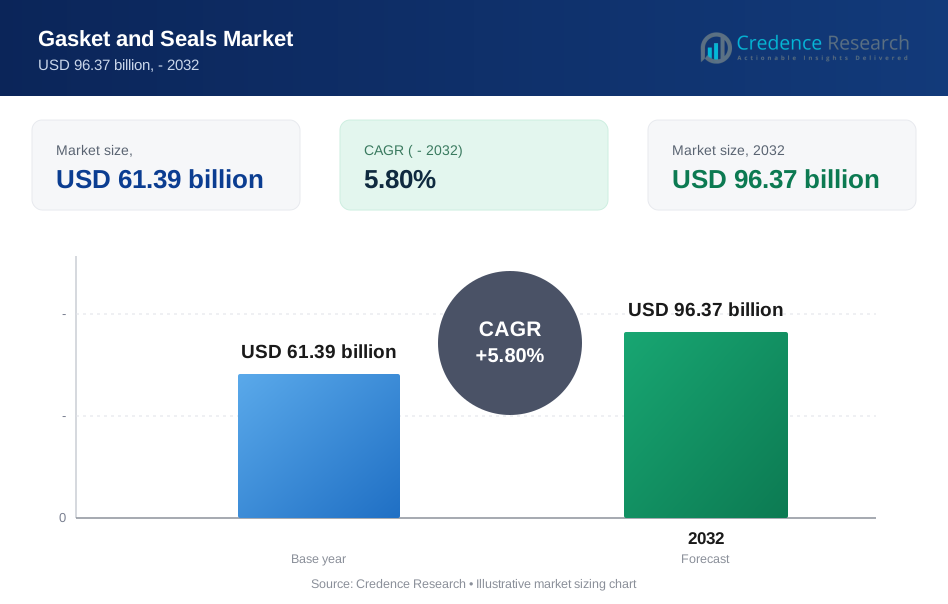
The global gasket and seals market is projected to grow from USD 61.39 billion in 2024 to an estimated USD 96.37 billion by 2032, reflecting a compound annual growth rate (CAGR) of 5.80% from 2025 to 2032. This growth is driven by the increasing demand for sealing solutions across various industries, including automotive, aerospace, and manufacturing, as they are essential for preventing leaks and ensuring system efficiency.
Key drivers of this market include the rising demand for high-performance seals in automotive applications and the expansion of manufacturing activities worldwide. Trends such as the development of advanced materials and technologies to enhance sealing performance and durability are also contributing to market growth. Additionally, the shift towards electric vehicles is creating new opportunities for gasket and seal manufacturers to innovate and meet evolving requirements.
Geographically, the Asia-Pacific region dominates the market, owing to rapid industrialization and a strong automotive sector in countries like China and India. North America and Europe also hold significant market shares, supported by established manufacturing bases and technological advancements. Key players in the gasket and seals market include Trelleborg AB, SKF Group, Parker Hannifin Corporation, and Federal-Mogul Corporation, all of which are focusing on product innovation and strategic collaborations to strengthen their market positions.
Market Insights
- The global gasket and seals market is projected to grow from USD 61.39 billion in 2024 to USD 96.37 billion by 2032, with a CAGR of 5.80% from 2025 to 2032.
- Increasing demand for sealing solutions in industries like automotive, aerospace, and manufacturing, alongside advancements in materials and technologies, is driving market growth.
- The rise of electric vehicles is creating new opportunities for gasket and seal manufacturers, as specialized sealing solutions are required for EV components like batteries and electric motors.
- Volatility in raw material prices and supply chain disruptions pose challenges for manufacturers, potentially impacting production costs and lead times.
- Asia-Pacific dominates the market, driven by rapid industrialization and a robust automotive sector in countries like China and India.
- North America and Europe hold substantial market shares, supported by established manufacturing bases and advanced technological innovations.
- Major players like Trelleborg AB, SKF Group, and Parker Hannifin Corporation focus on innovation, product differentiation, and strategic partnerships to strengthen market positions
Market Drivers
Growth in Manufacturing and Industrial Applications
The expanding industrial and manufacturing sectors globally are key drivers for the gasket and seals market. Industries such as chemicals, oil and gas, power generation, and machinery heavily rely on gaskets and seals to maintain operational efficiency and prevent leaks. Gaskets and seals are essential in preventing contamination, ensuring leak-proof operation, and maintaining pressure control in these critical systems. As the demand for energy and chemicals continues to grow, especially in emerging markets, the need for effective sealing solutions in manufacturing and processing plants rises. For example, in the oil and gas sector, gaskets and seals are crucial in pipelines, refineries, and offshore drilling equipment to prevent hazardous leaks, reduce maintenance costs, and improve safety. Additionally, the growth in power generation and renewable energy industries, particularly in wind and solar energy sectors, also contributes to the increasing demand for gaskets and seals in turbine and machinery systems. As industrial activities expand and new plants and facilities are built, the gasket and seals market is poised for sustained growth.
Stringent Environmental and Safety Regulations
The tightening of environmental and safety regulations is another important driver for the gasket and seals market. Industries around the world are increasingly subject to regulations aimed at reducing pollution, enhancing energy efficiency, and ensuring worker safety. For example, industries such as oil and gas, chemical manufacturing, and automotive are required to adhere to strict environmental standards, including controlling emissions and minimizing the leakage of hazardous materials. Gaskets and seals play a vital role in meeting these regulatory requirements by providing reliable sealing solutions that prevent the escape of fluids, gases, and contaminants. As governments and regulatory bodies impose stricter environmental laws, the demand for high-performance gaskets and seals that can meet these requirements grows. Additionally, sealing solutions help prevent accidents and improve workplace safety by ensuring that machinery and equipment operate within safe parameters, further contributing to the market’s growth. In response to these regulations, manufacturers are investing in developing seals that meet or exceed industry standards for performance, durability, and environmental sustainability.
Increasing Demand from Automotive and Aerospace Industries
The automotive and aerospace industries are significant drivers of the global gasket and seals market. In the automotive sector, gaskets and seals are essential components in engines, transmission systems, exhaust systems, and fuel systems to prevent leakage and maintain system integrity. The continuous advancements in automotive technology, such as the rise of electric vehicles (EVs), further increase the demand for high-quality sealing solutions. For instance, companies like NOK and Eneos have collaborated to develop self-lubricating rubber for automotive sealing materials, enhancing seal performance by reducing friction. Similarly, in the aerospace sector, gaskets and seals are critical for ensuring the safety, efficiency, and reliability of aircraft engines, fuel systems, and hydraulic systems. With the global increase in air travel and aircraft production, particularly in emerging economies, the demand for sealing solutions in aerospace applications is expected to rise significantly.
Technological Advancements and Material Innovations
Technological advancements in sealing materials and manufacturing processes play a crucial role in shaping the growth of the gasket and seals market. Modern sealing solutions are increasingly designed to withstand extreme operating conditions, including high temperatures, pressure, and aggressive chemicals. The development of advanced materials, such as PTFE (polytetrafluoroethylene), elastomers, graphite, and composites, has expanded the range of applications for gaskets and seals. For instance, Garlock has introduced the GYLON EPIX, a new generation of PTFE gaskets that combine the benefits of a 3-dimensional surface with traditional flat gaskets, providing superior sealing performance across various applications. Innovations in production techniques, such as 3D printing and automated manufacturing, also enhance the precision, efficiency, and cost-effectiveness of gasket and seal production, contributing to further market expansion.
Market Trends
Increasing Focus on Sustainability and Environmentally Friendly Materials
Sustainability is becoming an increasingly important focus in the gasket and seals market, driven by the growing awareness of environmental issues and regulatory pressure. Industries are under increasing scrutiny to reduce their environmental impact, and the gasket and seals sector is no exception. Manufacturers are responding to this trend by developing more sustainable and eco-friendly sealing solutions that minimize environmental harm. This includes the use of biodegradable or recyclable materials, as well as sealing solutions that help reduce emissions and waste in industrial processes. For instance, natural rubber and bio-based elastomers are gaining traction as environmentally friendly alternatives to synthetic materials. The automotive and manufacturing sectors are actively seeking sealing materials that not only meet performance and durability requirements but also comply with environmental regulations. Additionally, the rising demand for energy-efficient and low-emission products in industries such as automotive and industrial machinery is pushing for innovative sealing solutions that help reduce energy consumption and prevent leaks, contributing to the overall sustainability efforts of these industries. The trend towards environmentally conscious manufacturing is expected to continue to shape the gasket and seals market in the coming years.
Expansion of Gasket and Seal Applications Across Diverse Industries
The applications of gaskets and seals are broadening across diverse industries, driven by the increasing complexity of machinery and the growing need for reliable sealing solutions in challenging environments. While gaskets and seals have traditionally been associated with automotive and aerospace sectors, their use is expanding into industries such as oil and gas, chemical processing, power generation, pharmaceuticals, and renewable energy. In the oil and gas sector, gaskets and seals are crucial in preventing hazardous leaks in pipelines, refineries, and drilling equipment, as well as improving system efficiency. In the power generation industry, sealing solutions are used to prevent energy losses, reduce emissions, and ensure the smooth operation of turbines, engines, and reactors. Additionally, the renewable energy sector, particularly wind and solar power, is increasingly relying on gaskets and seals to ensure the efficiency and longevity of turbines, solar panels, and other equipment. In the pharmaceutical and food processing industries, sealing solutions are essential for maintaining hygiene standards and preventing contamination in manufacturing processes. The growing number of industrial applications across these sectors is creating new opportunities for gasket and seal manufacturers to innovate and offer solutions that meet the specific requirements of each industry. This trend of expanding applications is broadening the scope of the gasket and seals market and contributing to its steady growth.
Rising Demand for Electric Vehicle (EV) Sealing Solutions
The global transition to electric vehicles (EVs) is significantly impacting the gasket and seals market. As the automotive industry focuses on reducing emissions and improving fuel efficiency, the demand for electric vehicles is surging. EVs require specialized sealing solutions for their unique components, including batteries, electric motors, and cooling systems. Gaskets and seals are essential in maintaining battery integrity by preventing leaks and enhancing thermal management in battery packs. For instance, companies like NOK and Eneos are collaborating to develop advanced sealing materials that meet the unique requirements of EVs, such as self-lubricating rubber, which enhances seal performance by reducing friction. Additionally, sealing solutions are crucial in protecting electric motors from contaminants and ensuring the long-term performance of these systems. The demand for lightweight, durable, and high-performance gaskets and seals that can withstand the unique environmental and operational conditions of electric vehicles is driving innovation in the market
Advancements in Sealing Materials and Technology
The development of new sealing materials and manufacturing technologies is a prominent trend in the gasket and seals market. Traditionally, sealing materials such as elastomers, metals, and composites have been widely used in various applications. However, with the growing demand for performance and reliability in extreme environments, manufacturers are investing in new, advanced materials that offer enhanced durability, resistance to heat, chemicals, and pressure, and better overall sealing properties. For instance, government agencies and companies are promoting the use of advanced materials like PTFE and silicone due to their superior resistance to high temperatures and chemicals. Additionally, manufacturers are incorporating new technologies, such as 3D printing and automated manufacturing, to improve production efficiency and precision. These advancements are driving the overall performance of sealing solutions and enabling their use in increasingly demanding environments, further expanding the scope of the gasket and seals market across multiple industries.
Market Challenges
Stringent Regulatory and Compliance Requirements
Another significant challenge in the gasket and seals market is the increasing complexity of regulatory and compliance requirements across various industries. Many industries, including automotive, aerospace, pharmaceuticals, and chemicals, have strict standards for materials used in gaskets and seals, especially concerning environmental and safety regulations. For example, gaskets and seals used in automotive and aerospace applications must meet stringent specifications regarding durability, temperature resistance, and chemical compatibility. As governments around the world continue to implement stricter environmental laws, manufacturers must ensure their sealing solutions comply with evolving regulations on sustainability, emissions, and hazardous substances. Meeting these high standards requires significant investment in research and development, as well as close coordination with regulatory bodies. Additionally, the lack of global standardization in regulatory frameworks can complicate market access for gasket and seal manufacturers, as they must tailor products to meet different regional regulations, increasing time-to-market and costs. Compliance with these evolving standards remains a major challenge for companies in the gasket and seals market.
Rising raw material costs and supply chain disruptions
Rising raw material costs and supply chain disruptions significantly challenge the global gasket and seals market. The production of these components relies on materials like rubber, metals, and polymers, which are subject to price volatility due to geopolitical tensions, fluctuating demand, and economic conditions. For instance, steel prices have experienced sharp increases driven by global demand spikes and supply shortages. Similarly, rubber costs are influenced by crude oil prices and natural rubber production levels. These fluctuations directly impact manufacturing costs, squeezing profit margins and complicating pricing strategies for producers.The COVID-19 pandemic further exacerbated these issues by disrupting global supply chains, causing material shortages and delays. Survey data from the rubber industry highlights how labor shortages and polymer allocations have compounded production challenges, forcing manufacturers to operate with reduced resources. Such disruptions have led to increased lead times and higher production costs, creating a ripple effect across industries reliant on gaskets and seals.To address these challenges, companies are exploring alternatives like diversifying suppliers, investing in advanced material technologies, and adopting waste reduction strategies. Some firms are also leveraging domestic production capabilities to minimize exposure to international supply chain risks. These measures aim to stabilize operations while maintaining competitiveness in a volatile marke.
Market Opportunities
Growth in the Electric Vehicle (EV) Market
One of the most promising opportunities for the global gasket and seals market lies in the rapid growth of the electric vehicle (EV) sector. As the automotive industry shifts towards electric mobility to meet stringent environmental regulations and reduce emissions, the demand for specialized sealing solutions is increasing. EVs require advanced gaskets and seals for components such as battery packs, electric motors, cooling systems, and power electronics to ensure optimal performance and safety. With the ongoing rise in EV production and sales, there is a significant opportunity for gasket and seal manufacturers to develop new, high-performance materials and solutions tailored to the unique requirements of electric vehicles. The increasing focus on energy efficiency, safety, and longer vehicle lifespans in EVs creates demand for sealing solutions that can withstand extreme temperatures, vibrations, and moisture exposure. This trend offers manufacturers an avenue for innovation and market expansion as they adapt to the specific needs of the evolving automotive landscape.
Expansion of Industrial Applications Across Emerging Markets
Another notable opportunity for the gasket and seals market is the expansion of industrial applications, particularly in emerging markets such as Asia-Pacific, Latin America, and Africa. As industrialization accelerates in these regions, driven by the growth of manufacturing, oil and gas exploration, and infrastructure development, the demand for high-quality sealing solutions is poised to increase. Gaskets and seals play a crucial role in preventing leakage, improving safety, and ensuring the efficiency of equipment in industries such as oil and gas, power generation, and chemicals. The continued development of infrastructure and industrial sectors in these regions presents a vast opportunity for gasket and seal manufacturers to expand their presence and cater to the increasing demand for durable, reliable sealing solutions in these growing markets.
Market Segmentation Analysis
By Product
The product segment of the gasket and seals market is divided into gaskets and seals, each with further subdivisions. Gaskets are categorized as metallic, semi-metallic, and non-metallic. Metallic gaskets, often used in high-temperature and high-pressure applications, dominate industries such as automotive, aerospace, and oil and gas due to their durability. Semi-metallic gaskets offer a balance between performance and cost, typically used in applications requiring moderate performance. Non-metallic gaskets are preferred in industries requiring chemical resistance, such as the chemical and pharmaceutical sectors.Seals, on the other hand, are classified into shaft seals, molded packing & seals, and motor vehicle body seals. Shaft seals are extensively used in automotive, machinery, and industrial applications to prevent fluid leaks. Molded packing & seals are essential for sealing valves, pumps, and other equipment in the industrial sector. Motor vehicle body seals play a critical role in ensuring vehicle safety and comfort, preventing the ingress of dust, water, and noise.
By Application
The gasket and seals market serves various industries, with automotive being the largest application segment. Gaskets and seals are used in automotive engines, transmissions, and exhaust systems to ensure efficiency and prevent leaks. Other key applications include electrical and electronics, where gaskets and seals protect sensitive components from dust, moisture, and heat. The marine & rail sector also relies heavily on gaskets and seals to ensure the functionality of machinery and prevent leaks in harsh environments.Industrial & manufacturing applications represent a significant share of the market, as gaskets and seals are essential for ensuring equipment efficiency and safety in sectors such as power generation, chemicals, and machinery. Aerospace applications require specialized sealing solutions due to high-performance requirements in engines and hydraulic systems. In the oil and gas industry, gaskets and seals are crucial for preventing leaks in pipelines, refineries, and offshore drilling systems. The chemicals and petrochemicals sector demands sealing solutions that can withstand aggressive chemicals and high temperatures.
Segments
Based on Product
- Gasket
- Metallic
- Semi-metallic
- Non-metallic
- Seals
- Shaft Seal
- Molded Packing & Seals
- Motor Vehicle Body Seals
Based on Application
- Automotive
- Electrical & Electronics
- Marine & Rail
- Industrial & Manufacturing
- Aerospace
- Oil & Gas
- Chemicals & Petrochemicals
- Others
Based on End User
- Original equipment manufacturer (OEM)
- Aftersales Market
Based on Region
- North America
- U.S.
- Canada
- Mexico
- Europe
- Germany
- France
- U.K.
- Italy
- Spain
- Rest of Europe
- Asia Pacific
- China
- Japan
- India
- South Korea
- South-east Asia
- Rest of Asia Pacific
- Latin America
- Brazil
- Argentina
- Rest of Latin America
- Middle East & Africa
- GCC Countries
- South Africa
- Rest of the Middle East and Africa
Regional Analysis
Asia-Pacific (42%)
Asia-Pacific holds the largest share of the global gasket and seals market, accounting for approximately 42% of the total market. This dominance is primarily driven by the region's rapid industrialization and strong automotive, manufacturing, and construction sectors. Countries like China, India, Japan, and South Korea are major contributors to this growth. The automotive industry, particularly in China and India, is expanding at a rapid pace, driving the demand for high-quality sealing solutions for engines, transmissions, and other components. Additionally, the growing oil and gas sector in countries like China and Indonesia, as well as industrial manufacturing in emerging markets, continues to fuel the demand for gaskets and seals. The Asia-Pacific region's increasing focus on infrastructure development and energy projects also bolsters market growth.
North America (24%)
North America holds a significant market share of approximately 24%. The United States and Canada are key markets for gaskets and seals, with demand driven by established automotive, aerospace, and industrial manufacturing sectors. In the automotive sector, the demand for gaskets and seals is influenced by both OEMs and the aftermarket. Additionally, the aerospace industry, which requires specialized sealing solutions for aircraft engines, hydraulic systems, and fuel systems, contributes significantly to market growth. The oil and gas industry, particularly in the United States, plays a critical role in the gasket and seals market, as sealing solutions are vital for preventing leaks in drilling systems, pipelines, and refineries.
Key players
- Smiths Group Plc
- SKF
- Dana Limited
- Freudenberg Sealing Technologies GmbH & Co. KG
- Flowserve Corporation
Competitive Analysis
The global gasket and seals market is highly competitive, with several leading players dominating the landscape. Smiths Group Plc stands out for its comprehensive product portfolio and innovation, offering a range of high-performance sealing solutions across multiple industries, including aerospace and automotive. SKF, a global leader in bearings, also holds a significant share of the sealing solutions market, leveraging its engineering expertise to provide reliable and durable products. Dana Limited offers advanced sealing systems, especially in the automotive sector, with a focus on precision and performance. Freudenberg Sealing Technologies GmbH & Co. KG excels in offering specialized sealing products with high resistance to extreme temperatures and chemicals, catering to industries like automotive, aerospace, and energy. Flowserve Corporation is renowned for its sealing solutions in fluid control applications, particularly in oil and gas and chemical processing sectors. These companies continue to innovate, focusing on product development, technological advancements, and strategic partnerships to maintain competitive advantages.
Recent Developments
- On February 12, 2025, SKF India Limited's Board of Directors approved the appointment of Ms. Surbhi Srivastava, Head of People Experience, to the Senior Management Team. Ms. Srivastava holds a Bachelor of Science from Fergusson College and an MBA from Symbiosis Institute of Business Management, Pune, with over 20 years of experience across various industries.
- In May 2024, Trelleborg announced plans to invest in a new production facility in Casablanca, Morocco, dedicated to aerospace sealing solutions. Construction commenced prior to January 2025, with operations expected to begin by the end of 2025.
- In November 2023, Freudenberg Sealing Technologies reported that sales of its Simriz perfluoroelastomeric (FFKM) compounds had more than doubled in North America over the preceding 24 months. This surge was attributed to the compounds' quality, performance, and availability during supply chain disruptions.
- On May 2, 2023, The Yokohama Rubber Co., Ltd. completed the acquisition of all outstanding shares of Trelleborg Wheel Systems Holding AB, expanding its presence in the off-highway tire sector
Market Concentration and Characteristics
The global gasket and seals market exhibits a moderate to high level of market concentration, with a few key players holding significant market shares. Leading companies such as Smiths Group Plc, SKF, Dana Limited, Freudenberg Sealing Technologies GmbH & Co. KG, and Flowserve Corporation dominate the market due to their extensive product portfolios, strong brand presence, and technological expertise. These companies focus on innovation, product differentiation, and expanding their market reach through strategic partnerships and acquisitions. Despite the dominance of these large players, the market also features a wide range of small and medium-sized enterprises (SMEs) offering specialized or regional sealing solutions. The market is characterized by a high degree of competition, with companies continuously improving the performance, durability, and cost-efficiency of their products to cater to diverse industries such as automotive, aerospace, industrial manufacturing, and oil and gas.
Report Coverage
The research report offers an in-depth analysis based on Product, Application, End User and Region. It details leading market players, providing an overview of their business, product offerings, investments, revenue streams, and key applications. Additionally, the report includes insights into the competitive environment, SWOT analysis, current market trends, as well as the primary drivers and constraints. Furthermore, it discusses various factors that have driven market expansion in recent years. The report also explores market dynamics, regulatory scenarios, and technological advancements that are shaping the industry. It assesses the impact of external factors and global economic changes on market growth. Lastly, it provides strategic recommendations for new entrants and established companies to navigate the complexities of the market.
Future Outlook
- The rising production of vehicles, particularly electric and hybrid models, will continue to drive demand for advanced sealing solutions in engine, battery, and electronic components.
- Rapid industrialization and infrastructure development in Asia-Pacific, Latin America, and Africa will create strong growth opportunities for gasket and seal manufacturers.
- The global push towards sustainable energy sources will boost the need for sealing solutions in wind turbines, solar systems, and related equipment.
- Future developments will focus on lightweight, high-performance materials that enhance durability, resistance, and efficiency in extreme operational environments.
- Integration of sensors and smart materials in sealing systems will enable predictive maintenance and improve performance monitoring across industries.
- Compliance with evolving global standards will drive demand for eco-friendly and high-performance gaskets and seals in regulated industries such as chemicals and oil & gas.
- The increasing need for maintenance and replacement in aging industrial equipment and vehicles will fuel growth in the aftermarket segment for gaskets and seals.
- The aerospace sector will demand precision-engineered, high-temperature, and chemical-resistant sealing solutions to meet advanced safety and performance criteria.
- Manufacturers will increasingly offer tailored sealing products to meet the unique operational and environmental needs of specific industries and applications.
- Mergers, acquisitions, and strategic partnerships among key players will strengthen global distribution networks and accelerate innovation in product development.
Request a Free Sample
Fill in your details and we'll send you a free sample report.
- Sample data tables & charts
- Research methodology
Need a Custom Version of This Report?
Tailor the scope, geography, or segments to your exact requirements.
- Custom geography or segment scope
- Direct access to our analyst team
Frequently Asked Questions
What is the market size of the global gasket and seals market in 2023 and 2032?
What are the key drivers of the global gasket and seals market?
Which industries contribute the most to the demand for gaskets and seals?
Which region dominates the global gasket and seals market?
Who are the major players in this market?
Table of Content
Chapter 1. Report Introduction
- 1.1 Report Description & Purpose
- 1.1.1 Report Title & Market Definition
- 1.1.2 Unique Selling Propositions (USP) & Key Differentiators
- 1.1.3 Value Proposition for Stakeholders
- 1.2 Research Objectives
- 1.2.1 Market Sizing Objectives (Volume & Revenue)
- 1.2.2 Segmentation Objectives
- 1.2.3 Competitive Intelligence Objectives
- 1.2.4 Forecast & Scenario Objectives
- 1.3 Report Scope
- 1.3.1 Gasket and Seals Scope – Types & Subtypes Covered
- 1.3.2 Geographic Scope – Regions & Countries Covered
- 1.3.3 Historical Period, Base Year & Forecast Period (the historical period; forecast to 2032)
- 1.3.4 Inclusions & Exclusions
- 1.4 HS Code & Classification Framework
- 1.5 Currency, Units & Pricing Basis
- 1.6 Target Stakeholders
- 1.7 Limitations & Assumptions
Chapter 2. Executive Summary
- 2.1 Global Gasket and Seals Market Snapshot
- 2.1.1 Market Size – Historical (the historical period) & Forecast (2032) (base year: USD 61.39 billion → 2032: USD 96.37 billion)
- 2.1.2 Volume & Revenue – Global Totals
- 2.1.3 Key Market Highlights – Top Five Facts
- 2.2 Gasket and Seals Market Segmentation Snapshot
- 2.2.1 Market Split by Region – vs. 2032
- 2.3 Competitive Snapshot
- 2.3.1 Top 10 Players by Revenue Share –
- 2.3.2 Top 10 Players by Volume Share –
- 2.3.3 Recent Strategic Developments (18-Month Summary)
- 2.4 Key Investment Highlights & Strategic Conclusions
Chapter 3. Gasket and Seals Market Dynamics & Industry Analysis
- 3.1 Market Overview & Context
- 3.1.1 Gasket and Seals Market Position in the Broader Automotive Value Chain
- 3.1.2 OEM vs. Replacement Market Dynamics
- 3.1.3 Market Maturity & Development Stage by Region
- 3.2 Gasket and Seals Market Drivers
- 3.3 Gasket and Seals Market Restraints & Challenges
- 3.4 Gasket and Seals Market Opportunities
- 3.5 Porter's Five Forces Analysis
- 3.5.1 Threat of New Entrants
- 3.5.2 Bargaining Power of Suppliers
- 3.5.3 Bargaining Power of Buyers
- 3.5.4 Threat of Substitutes
- 3.5.5 Competitive Rivalry – Intensity Assessment
- 3.6 Gasket and Seals Value Chain Analysis
- 3.6.1 Upstream – Raw Material/Input Suppliers
- 3.6.1.1 Raw Material/Input 1
- 3.6.1.2 Raw Material/Input 2
- 3.6.1.3 Raw Material/Input 3
- 3.6.2 Midstream – Production/Manufacturing/Service Delivery
- 3.6.2.1 Production/Process Overview
- 3.6.2.2 Key Facility Locations & Capacity by Manufacturer
- 3.6.3 Downstream – Distribution & End Consumer
- 3.6.3.1 Primary Channel – B2B/OEM
- 3.6.3.2 Secondary Channels – Dealer, Retail, Online, Direct
- 3.6.4 Value Chain Profitability Analysis
- 3.6.1 Upstream – Raw Material/Input Suppliers
- 3.7 PESTEL Analysis
- 3.7.1 Political Factors
- 3.7.2 Economic Factors
- 3.7.3 Social Factors
- 3.7.4 Technological Factors
- 3.7.5 Environmental Factors
- 3.7.6 Legal Factors
- 3.8 Gasket and Seals Supply Chain Analysis
- 3.8.1 Raw Material/Input Supply Risk Assessment
- 3.8.2 Manufacturing Concentration Risk (Geographic Exposure)
- 3.8.3 Trade Disruption Impact Analysis
- 3.9 Regulatory & Policy Landscape
Note: The regulatory and policy landscape section covers regulations based on their applicability to the market, Gasket and Seals category, geography, and scope of the study. Only regulatory frameworks with a material impact on operations, compliance, trade, sustainability, or market access are analyzed in detail.
Chapter 4. Key Investment Pockets & Opportunity Analysis
- 4.1 Gasket and Seals Market Attractiveness Analysis
- 4.1.1 By Region – Investment Attractiveness Matrix (Volume × CAGR)
- 4.2 Absolute Revenue Growth Opportunity
- 4.2.1 By Region – Absolute USD Growth Through 2032
- 4.3 Incremental Volume Opportunity
- 4.3.1 By Region – Incremental Volume Through 2032
- 4.3.2 Segment – Incremental Volume
- 4.4 Emerging Submarket Opportunity Deep Dive (Subject to Applicability)
- 4.5 Emerging Market Opportunity Scorecards
- 4.5.1 United States
- 4.5.2 Europe
- 4.5.3 Asia
- 4.5.4 Middle East & Africa
Note: Emerging Market Opportunity Scorecards will be included based on relevance and strategic importance. Regions listed are indicative and may vary depending on data availability and market dynamics.
Chapter 5. Gasket and Seals Import-Export Analysis & Trade Flows
- 5.1 Global Trade Overview
- 5.1.1 Global Export Value by Country (the historical period)
- 5.1.2 Global Export Volume by Country (the historical period)
- 5.1.3 Global Import Value by Country (the historical period)
- 5.1.4 Global Import Volume by Country (the historical period)
- 5.1.5 Net Trade Balance by Country (the historical period)
- 5.2 Export Analysis – Segment
- 5.2.1 Type 1 (HS Code)
- 5.2.2 Type 2 (HS Code)
- 5.2.3 Type 3 (HS Code)
- 5.2.4 Type 4 (HS Code)
- 5.2.5 Type 5 (HS Code)
- 5.3 Import Analysis – Segment
- 5.3.1 Type 1 (HS Code)
- 5.3.2 Type 2 (HS Code)
- 5.3.3 Type 3 (HS Code)
- 5.3.4 Type 4 (HS Code)
- 5.3.5 Type 5 (HS Code)
- 5.4 Average Unit Trade Prices
- 5.4.1 Average Export Price – Segment & Country
- 5.4.2 Average Import Price – Segment & Source Country
- 5.4.3 Price Trends (the historical period)
- 5.5 Key Trade Route Analysis
- 5.5.1 Trade Route 1
- 5.5.2 Trade Route 2
- 5.5.3 Trade Route 3
- 5.5.4 Trade Route 4
- 5.5.5 Trade Route 5
- 5.6 Trade Policy Impact Assessment
- 5.6.1 US Anti-Dumping & Section 301 Tariffs
- 5.6.2 EU Customs Union Impact
- 5.6.3 Major Free Trade Agreements
- 5.6.4 USMCA Rules of Origin
Note: Trade policy analysis will be included only where relevant to the Gasket and Seals market.
Chapter 6. Competitive Landscape & Company Benchmarking
- 6.1 Gasket and Seals Market Concentration & Structure
- 6.1.1 Herfindahl-Hirschman Index (HHI) – vs.
- 6.1.2 Tier 1, Tier 2 & Tier 3 Market Structure
- 6.1.3 Global, Regional & Local Player Dynamics
- 6.2 Gasket and Seals Market Share Analysis –
- 6.2.1 Global Revenue Share by Company
- 6.2.2 Global Volume Share by Company
- 6.2.3 Regional Revenue Share
- 6.2.4 Market Share Evolution ( vs. )
- 6.2.5 OEM Segment Share by Company
- 6.2.6 Replacement Segment Share by Company
- 6.3 Production/Delivery Capacity & Facility Analysis
- 6.3.1 Global Installed Capacity
- 6.3.2 Capacity Utilization Rates
- 6.3.3 Production/Output Volume
- 6.3.4 Facility Locations & Capacity Map
- 6.3.5 Planned Capacity Additions
- 6.4 Gasket and Seals Competitive Benchmarking Matrix
- 6.4.1 Revenue, Volume, CAGR & Profitability Comparison
- 6.4.2 Channel Revenue Mix
- 6.4.3 Geographic Revenue Exposure
- 6.4.4 R&D Intensity
- 6.4.5 Sustainability Maturity
- 6.5 Strategic Developments in Gasket and Seals (Last 24 Months)
- 6.5.1 Mergers, Acquisitions & Divestments
- 6.5.2 New Gasket and Seals Launches
- 6.5.3 Facility Expansions
- 6.5.4 Strategic Alliances, Joint Ventures & Partnerships
- 6.5.5 Distribution Expansion & Market Entry
- 6.5.6 Sustainability & ESG Initiatives
- 6.6 Competitive Strategy Mapping
- 6.6.1 Leader, Challenger, Follower & Niche Classification
- 6.6.2 Pricing Strategy Comparison
- 6.6.3 Channel Strategy Matrix
Note: Strategic developments are included based on their materiality and the availability of reliable information.
Chapter 7. Global Gasket and Seals Market – By Distribution Channel
- 7.1 Segment Overview
- 7.1.1 Volume & Revenue Split by Channel ( & 2032)
- 7.1.2 Channel Mix Evolution (2032)
Chapter 8. Regional Market Analysis – Global Overview
- 8.1 Global Regional Overview
- 8.1.1 Regional Volume Share
- 8.1.2 Regional Revenue Share
- 8.1.3 Regional Volume by Region
- 8.1.4 Regional Revenue by Region
- 8.1.5 Regional Forecast Through 2032
- 8.2 Cross-Regional Segment Analysis
- 8.2.1 By Distribution Channel
- 8.2.2 By Brand/Price Tier
Chapter 9. North America Gasket and Seals Market
- 9.1 United States
- 9.2 Canada
- 9.3 Mexico
Chapter 10. Europe Gasket and Seals Market
- 10.1 Germany
- 10.2 France
- 10.3 Italy
- 10.4 United Kingdom
- 10.5 Spain
- 10.6 Poland
- 10.7 Russia
- 10.8 Netherlands
- 10.9 Belgium
- 10.10 Sweden
- 10.11 Denmark
- 10.12 Norway
- 10.13 Rest of Europe
Chapter 11. Asia Pacific Gasket and Seals Market
- 11.1 China
- 11.2 India
- 11.3 Japan
- 11.4 South Korea
- 11.5 Thailand
- 11.6 Indonesia
- 11.7 Vietnam
- 11.8 Malaysia
- 11.9 Australia
- 11.10 Rest of Asia Pacific
Chapter 12. Latin America Gasket and Seals Market
- 12.1 Brazil
- 12.2 Argentina
- 12.3 Colombia
- 12.4 Chile
- 12.5 Rest of Latin America
Chapter 13. Middle East Gasket and Seals Market
- 13.1 Saudi Arabia
- 13.2 United Arab Emirates
- 13.3 Turkey
- 13.4 Israel
- 13.5 Iran
- 13.6 Rest of the Middle East
Chapter 14. Africa Gasket and Seals Market
- 14.1 South Africa
- 14.2 Egypt
- 14.3 Nigeria
- 14.4 Morocco
- 14.5 Rest of Africa
Chapter 15. Gasket and Seals Company Profiles
- 15.1 [Company 01]
- 15.1.1 Company Overview
- 15.1.2 Key Management Personnel
- 15.1.3 Products & Services Portfolio
- 15.1.4 Financial Performance
- 15.1.5 Key Market Focus & Geographic Presence
- 15.1.6 Recent Developments & Strategic Initiatives
Note: The company profile list is preliminary and may change based on research findings, market developments, data availability, and client requirements.
Chapter 16. Appendices
- Appendix A – List of Abbreviations & Acronyms
- Appendix B – Industry Classification Code Reference – Full Series
- Appendix C – Production & Capacity Data Tables
- Appendix D – End-Use & Demand Base Tables
- Appendix E – Consumption & Replacement Rate Assumptions
- Appendix F – ASP Reference Tables
- Appendix G – Manufacturing & Facility Database
- Appendix H – Import-Export Data Tables
- Appendix I – Regulatory Summary Tables
- Appendix J – Primary Research Participant List (Anonymized)
- Appendix K – Primary Research Questionnaire Framework
- Appendix L – Data Sources & Bibliography
- Appendix M – Market Size Divergence & Source Comparison
Chapter 17. Research Methodology
- 17.1 Research Framework & Philosophy
- 17.2 Secondary Research – Sources, Hierarchy & Data Extraction
- 17.3 Data Modeling – Bottom-Up & Top-Down Market Sizing
- 17.4 Primary Research – Stakeholder Framework, LOI & Sample Sizes
- 17.5 Forecast Methodology – Regression, Scenario & Sensitivity Analysis
- 17.6 Quality Control – Four-Layer Validation Framework
- 17.7 Limitations & Standard Assumptions
- 17.8 Disclaimer
