
| REPORT ATTRIBUTE | DETAILS |
|---|---|
| Historical Period | 2019-2022 |
| Base Year | 2023 |
| Forecast Period | 2024-2032 |
| Hepatitis B Vaccine Market Size 2023 | USD 8,321.79 million |
| Hepatitis B Vaccine Market, CAGR | 4.67% |
| Hepatitis B Vaccine Market Size 2032 | USD 12,549.22 million |
Market Overview
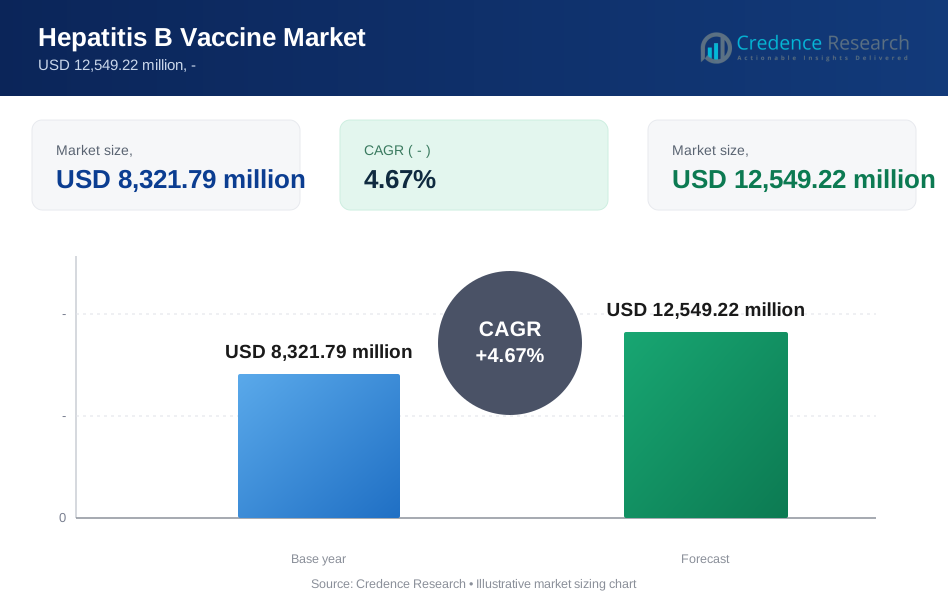
The global hepatitis B vaccine market is projected to grow from USD 8,321.79 million in 2023 to an estimated USD 12,549.22 million by 2032, with a compound annual growth rate (CAGR) of 4.67% from 2024 to 2032. This growth is driven by increasing awareness of hepatitis B prevention, rising immunization initiatives by governments and health organizations, and the launch of new and more effective vaccine formulations.
Key market drivers include rising public health campaigns aimed at preventing hepatitis B and the incorporation of the vaccine into national immunization programs. Increasing healthcare expenditure and advancements in vaccine technology also bolster market growth. The adoption of combination vaccines, which include hepatitis B alongside other immunizations, is another emerging trend that is expected to support market expansion.
Geographically, the Asia Pacific region dominates the global hepatitis B vaccine market due to high disease prevalence and strong government support for vaccination programs. North America and Europe also hold significant market shares, driven by advanced healthcare infrastructure and a focus on preventive healthcare. Key players in the market include Merck & Co., Inc., GlaxoSmithKline plc, Sanofi Pasteur, and Dynavax Technologies Corporation, who are actively involved in vaccine development, production, and distribution.
Market Drivers
Increasing Prevalence of Hepatitis B Infections Globally
The rising prevalence of hepatitis B infections worldwide is a primary driver of the hepatitis B vaccine market. The chronic hepatitis B infection affects a substantial portion of the world's population, with new infections occurring annually at concerning rates. This significant burden on global health systems is increasing the demand for effective vaccination programs. Countries with high prevalence rates, particularly in regions such as Asia and Africa, are intensifying efforts to vaccinate vulnerable populations, including newborns, healthcare workers, and high-risk adults. Government surveys indicate that many nations are allocating more resources to combat this preventable disease through comprehensive immunization strategies. The heightened focus on vaccination as a preventive measure is expected to drive market growth in the coming years. Health ministries in various countries report expanding vaccination coverage and implementing targeted programs to reach underserved populations. This global push towards hepatitis B prevention through vaccination is creating a robust and growing market for hepatitis B vaccines.
Government and Global Health Organization Initiatives
Strong support from governments and global health organizations is bolstering the market for hepatitis B vaccines. Data from international health agencies shows that numerous countries have integrated hepatitis B vaccination into their national immunization schedules, aiming to reduce both the incidence and mortality rates associated with the disease. For instance, health authority recommendations emphasize the importance of administering the first dose of the hepatitis B vaccine to infants within 24 hours of birth, followed by subsequent doses. Government reports indicate that such initiatives are often accompanied by public awareness campaigns, funding for vaccine procurement, and training for healthcare workers, all of which contribute to increased vaccine uptake. Additionally, global health partnerships and funding from international organizations further enhance access to vaccines in low- and middle-income countries. Surveys conducted by health ministries reveal improved vaccination rates and coverage in many regions due to these concerted efforts. These initiatives are driving overall market expansion by creating sustained demand for hepatitis B vaccines across diverse geographical areas.
Advancements in Vaccine Development and Technology
Technological advancements in vaccine development are significantly impacting the hepatitis B vaccine market. Research data from pharmaceutical companies and academic institutions highlight the development of innovative vaccines, such as recombinant and synthetic peptide vaccines, which have improved safety profiles, efficacy rates, and ease of production. Clinical trial results indicate that these new-generation vaccines often offer better immune responses, fewer side effects, and longer-lasting protection, making them more appealing to both healthcare providers and patients. Moreover, health authority approvals and recommendations for combination vaccines that include hepatitis B alongside other immunizations are increasing overall immunization coverage and compliance, particularly in pediatric populations. Government health surveys report higher acceptance rates for these combination vaccines among parents and healthcare providers. Ongoing research and development activities, as evidenced by patent filings and clinical trial registrations, aim to create vaccines with broader protection and simpler dosing schedules, which are expected to further propel market growth in the coming years.
Growing Focus on Preventive Healthcare and Immunization
A growing emphasis on preventive healthcare and immunization across the globe is another key factor driving the hepatitis B vaccine market. There is a rising recognition of the cost-effectiveness of vaccination as a public health strategy to prevent the transmission of infectious diseases, reduce the burden on healthcare systems, and improve population health outcomes. This trend is particularly evident in developed countries, where vaccination programs are well-established and continuously evolving to include new recommendations and broader target groups. In developing and emerging markets, there is an increasing push towards improving healthcare access and expanding immunization coverage, supported by international aid and government policies. As preventive healthcare continues to gain prominence, the demand for hepatitis B vaccines is expected to grow, driven by efforts to eliminate hepatitis B as a public health threat by 2030, in line with the WHO's global health targets.
Market Trends
Shift Toward Innovative Vaccine Technologies and Combination Formulations
A notable trend in the global hepatitis B vaccine market is the increasing adoption of innovative vaccine technologies and combination formulations. Recent advances in vaccine development, particularly the use of recombinant DNA technology and synthetic peptides, have led to the creation of vaccines with enhanced safety, efficacy, and longer-lasting protection. For instance, these new vaccines can stimulate a stronger immune response with fewer doses, making them increasingly preferred by healthcare providers. Additionally, there is a growing trend towards combination vaccines that include hepatitis B alongside other vaccines, such as those for diphtheria, tetanus, pertussis, Haemophilus influenzae type b, and polio. Government surveys show that combination vaccines are gaining traction due to their ability to simplify immunization schedules, increase vaccine uptake, and reduce overall healthcare costs, particularly in pediatric populations. This trend reflects the broader push toward more efficient, accessible, and comprehensive immunization programs worldwide.
Expansion of Immunization Programs in High-Prevalence Regions
Another significant trend in the global hepatitis B vaccine market is the expansion of immunization programs, particularly in regions with high hepatitis B prevalence, such as Asia and Sub-Saharan Africa. Government data reveals that health organizations in these areas are intensifying efforts to broaden vaccine coverage among high-risk populations, including infants, healthcare workers, and adults with coexisting medical conditions. These efforts are supported by international initiatives, such as the strategy to eliminate viral hepatitis by 2030, which includes targets for expanding hepatitis B vaccination coverage. For instance, increased funding to provide affordable vaccines to low- and middle-income countries. Additionally, there is a growing focus on integrating hepatitis B vaccination into routine immunization programs, strengthening healthcare infrastructure, and enhancing public awareness campaigns to encourage vaccination. Health authority reports indicate that as these programs expand and strengthen, the demand for hepatitis B vaccines continues to rise, contributing to sustained market growth.
Market Restraints and Challenges
High Costs and Limited Access in Low-Income Regions
One of the major restraints in the global hepatitis B vaccine market is the high cost of vaccination and limited access, particularly in low-income regions. Despite international efforts and subsidies from global health organizations, many countries still face challenges in funding comprehensive immunization programs. The cost of the vaccine, coupled with logistical challenges related to storage, distribution, and administration, especially in rural and remote areas, poses a barrier to widespread vaccine uptake. Healthcare infrastructure limitations, such as inadequate cold chain systems and a shortage of trained healthcare personnel, further hinder vaccination efforts. For instance, many low-income countries struggle to maintain proper vaccine storage temperatures throughout the supply chain. Government data from several developing nations indicates that rural regions often have significantly lower hepatitis B vaccination rates compared to urban areas. These factors contribute to uneven vaccine coverage across different regions, with many low-income countries struggling to achieve the recommended vaccination rates set by global health authorities, thereby impacting the overall growth potential of the hepatitis B vaccine market.
Vaccine Hesitancy and Misinformation
Vaccine hesitancy and the spread of misinformation represent another critical challenge for the global hepatitis B vaccine market. In various parts of the world, cultural beliefs, religious concerns, and distrust in vaccines or healthcare authorities have led to skepticism about the safety and efficacy of vaccines, including those for hepatitis B. This hesitancy is often fueled by misinformation on social media and other platforms, which can undermine public confidence in vaccination programs. For example, in some countries have a significant portion of parents express concerns about vaccine side effects, despite scientific evidence of safety. Government data from certain regions shows declining vaccination rates correlating with the rise of anti-vaccine movements. Additionally, the lack of education and awareness about the benefits of hepatitis B vaccination, particularly in rural or underdeveloped regions, can lead to lower vaccination rates. Public health surveys indicate that many individuals in some communities are unaware of the long-term risks of hepatitis B infection. Efforts to counteract misinformation and promote vaccine acceptance require sustained public health campaigns and community engagement, which can be resource-intensive and slow to yield results.
Market Segmentation Analysis
By Composition
The global hepatitis B vaccine market is segmented into combination vaccines and mono vaccines based on composition. Combination vaccines, which include hepatitis B alongside other immunizations, are gaining popularity due to their convenience and ability to improve immunization coverage, especially in pediatric populations. These vaccines simplify immunization schedules and reduce the number of injections, making them a preferred choice among healthcare providers and parents. For instance, government surveys have shown increasing adoption rates of combination vaccines in national immunization programs across several countries. Mono vaccines specifically targeting hepatitis B are often utilized in catch-up vaccination programs or for high-risk adult populations. Data from health authorities indicates growing demand for both types, driven by increasing awareness and vaccination mandates across various regions. Industry reports highlight the expanding market share of combination vaccines, particularly in developed economies with established healthcare systems.
By End User
The market is further segmented by end users into adult and pediatric hepatitis B vaccines. Pediatric hepatitis B vaccines represent a significant market share, driven by the universal recommendation for newborn vaccination in many countries. For example, national health surveys reveal high immunization rates among infants and young children in regions with robust immunization programs. Meanwhile, the adult hepatitis B vaccine segment is also expanding, driven by the rising awareness of hepatitis B's risks among unvaccinated adults, healthcare workers, and high-risk groups. Government data shows increasing vaccination efforts targeting these groups, along with recommendations for booster doses in certain populations. There is a growing demand for adult vaccines in occupational health settings and travel clinics. Additionally, public health campaigns have contributed to higher uptake rates among previously unvaccinated adults, as evidenced by immunization registry data from various countries.
Segments
Based on composition
- Combination Vaccines
- Mono Vaccines
Based on end user
- Adult Hepatitis B Vaccines
- Pediatric Hepatitis B Vaccines
Based on distribution channel
- Government Supplies
- Private Sectors
- Non-Governmental Organizations
Based on region
- North America
- U.S.
- Canada
- Mexico
- Europe
- Germany
- France
- U.K.
- Italy
- Spain
- Rest of Europe
- Asia Pacific
- China
- Japan
- India
- South Korea
- South-east Asia
- Rest of Asia Pacific
- Latin America
- Brazil
- Argentina
- Rest of Latin America
- Middle East & Africa
- GCC Countries
- South Africa
- Rest of the Middle East and Africa
Regional Analysis
Asia Pacific (37%):
Asia Pacific holds the largest share of the global hepatitis B vaccine market, accounting for approximately 37% of the total market in 2023. This dominance is primarily due to the high prevalence of hepatitis B infections in countries such as China, India, and Southeast Asian nations. For instance, in certain provinces of China, hepatitis B prevalence rates among adults were as high as 10-12%. Strong government initiatives have led to extensive immunization programs targeting both infants and high-risk adult populations. Additionally, the availability of low-cost vaccines and increasing public awareness campaigns are further driving market growth in this region.
North America (24%):
North America represents around 24% of the global market share. The presence of advanced healthcare infrastructure, high public awareness, and robust government vaccination programs contribute to the significant market share. For instance, a recent government report indicated that over 90% of newborns in the United States receive the hepatitis B vaccine before hospital discharge. The United States and Canada have implemented comprehensive hepatitis B vaccination policies, including routine vaccination for all newborns, adolescents, and adults in high-risk categories. Moreover, the focus on preventive healthcare, supported by both private and public healthcare providers, continues to sustain demand for hepatitis B vaccines in this region.
Key players
- Beijing Minhai Biotechnology
- CSL Limited
- Dynavax Technologies
- Emergent BioSolutions
- GlaxoSmithKline Biologicals
- Merck & Co., Inc.
- Novartis AG
- Pfizer Inc.
- Sanofi Pasteur
- Serum Institute of India
- Sinovac Biotech
Competitive Analysis
The global hepatitis B vaccine market is characterized by intense competition among leading pharmaceutical companies, each leveraging its strengths to capture market share. Merck & Co., Inc. and GlaxoSmithKline Biologicals are prominent players with established vaccine portfolios and extensive distribution networks, enabling them to dominate both developed and emerging markets. Pfizer Inc. and Novartis AG also contribute significantly with their advanced vaccine technologies and strong R&D capabilities. Dynavax Technologies stands out for its innovative approaches, including the development of novel adjuvants. Sanofi Pasteur and CSL Limited are recognized for their robust product lines and global reach. Beijing Minhai Biotechnology and Sinovac Biotech focus on the Asian market with competitive pricing strategies, while Serum Institute of India provides cost-effective vaccines for low- and middle-income countries, enhancing accessibility and market penetration.
Recent Developments
- In August 2024, Pfizer and BioNTech received U.S. FDA approval and authorization for their Omicron KP.2-adapted COVID-19 vaccine. While not directly related to tablet counting machines, this development showcases Pfizer's continued focus on vaccine production and distribution, which may indirectly impact their need for tablet counting technology.
- In July 2024, Novartis reported strong sales growth and core margin expansion in Q2, raising their full-year 2024 bottom-line guidance. Although not specifically mentioning tablet counting machines, this growth could potentially lead to increased investment in manufacturing equipment, including tablet counting technology.
- In August 2024, Sanofi announced that Sarclisa induction treatment demonstrated significantly improved progression-free survival in patients with newly diagnosed multiple myeloma eligible for transplant. While this is not directly related to tablet counting machines, it indicates Sanofi's ongoing development of new treatments, which may require advanced manufacturing and counting technologies.
Market Concentration and Characteristics
The global hepatitis B vaccine market exhibits a moderate to high level of concentration, with a few key players dominating the landscape due to their extensive resources, established product portfolios, and global reach. Major pharmaceutical companies like Merck & Co., Inc., GlaxoSmithKline Biologicals, and Pfizer Inc. hold significant market shares, leveraging their advanced vaccine technologies and expansive distribution networks. These companies drive innovation and set industry standards, often influencing market trends and pricing. The market is characterized by strong competition, driven by ongoing research and development efforts to enhance vaccine efficacy and safety. Additionally, the presence of regional players such as Beijing Minhai Biotechnology and Serum Institute of India highlights the market's diverse characteristics, with a blend of multinational corporations and local firms addressing varying regional needs and price sensitivities. This competitive landscape ensures continued advancements and accessibility in hepatitis B vaccination.
Report Coverage
The research report offers an in-depth analysis based on composition, end user, distribution channel and region. It details leading market players, providing an overview of their business, product offerings, investments, revenue streams, and key applications. Additionally, the report includes insights into the competitive environment, SWOT analysis, current market trends, as well as the primary drivers and constraints. Furthermore, it discusses various factors that have driven market expansion in recent years. The report also explores market dynamics, regulatory scenarios, and technological advancements that are shaping the industry. It assesses the impact of external factors and global economic changes on market growth. Lastly, it provides strategic recommendations for new entrants and established companies to navigate the complexities of the market.
Future Outlook
- The global push for higher vaccination rates is expected to continue, particularly in high-prevalence regions such as Asia and Sub-Saharan Africa. This will drive demand for hepatitis B vaccines as governments and health organizations aim to achieve greater immunization coverage.
- Ongoing advancements in vaccine technology, including new adjuvants and combination formulations, will likely enhance vaccine efficacy and safety. These innovations will support broader acceptance and utilization across various populations.
- The market for combination vaccines, integrating hepatitis B with other immunizations, is projected to grow. This trend will streamline vaccination schedules and improve overall immunization rates.
- Future strategies will increasingly target high-risk groups, such as healthcare workers and individuals with chronic liver conditions, to reduce transmission rates and improve health outcomes in these vulnerable populations.
- The integration of hepatitis B vaccines into routine immunization programs will expand, particularly in low- and middle-income countries. This will increase access and ensure that more individuals receive timely vaccinations.
- Government-backed vaccination initiatives and support from global health organizations, such as WHO and Gavi, will continue to play a critical role in market growth. These efforts will focus on reducing costs and improving vaccine accessibility.
- A growing emphasis on preventive healthcare will drive demand for hepatitis B vaccines. Increased public awareness of the benefits of vaccination will contribute to higher uptake and reduced disease incidence.
- The entry of new market players, particularly from emerging economies, will enhance competition and drive innovation. This will lead to a broader range of vaccine options and potentially lower costs.
- Efforts to combat vaccine hesitancy through education and awareness campaigns will be crucial in improving vaccine uptake. Addressing misinformation and building public trust will support market growth.
- Enhancements in vaccine production and supply chain management will ensure better distribution and availability. Improved logistics and cold chain infrastructure will facilitate access to vaccines in remote and underserved areas.
Request a Free Sample
Fill in your details and we'll send you a free sample report.
- Sample data tables & charts
- Research methodology
Need a Custom Version of This Report?
Tailor the scope, geography, or segments to your exact requirements.
- Custom geography or segment scope
- Direct access to our analyst team
Frequently Asked Questions
What is the projected growth of the global hepatitis B vaccine market?
What are the key drivers of market growth for hepatitis B vaccines?
Which region holds the largest share of the global hepatitis B vaccine market?
Who are the major players in the hepatitis B vaccine market?
How increasing prevalence of hepatitis B infections impacting the market?
Table of Content
Chapter 1. Report Introduction
- 1.1 Report Description & Purpose
- 1.1.1 Report Title & Market Definition
- 1.1.2 Unique Selling Propositions (USP) & Key Differentiators
- 1.1.3 Value Proposition for Stakeholders
- 1.2 Research Objectives
- 1.2.1 Market Sizing Objectives (Volume & Revenue)
- 1.2.2 Segmentation Objectives
- 1.2.3 Competitive Intelligence Objectives
- 1.2.4 Forecast & Scenario Objectives
- 1.3 Report Scope
- 1.3.1 Hepatitis B Vaccine Scope – Types & Subtypes Covered
- 1.3.2 Geographic Scope – Regions & Countries Covered
- 1.3.3 Historical Period, Base Year & Forecast Period (the historical period; forecast to the forecast period)
- 1.3.4 Inclusions & Exclusions
- 1.4 HS Code & Classification Framework
- 1.5 Currency, Units & Pricing Basis
- 1.6 Target Stakeholders
- 1.7 Limitations & Assumptions
Chapter 2. Executive Summary
- 2.1 Global Hepatitis B Vaccine Market Snapshot
- 2.1.1 Market Size – Historical (the historical period) & Forecast (the forecast period) (base year: USD 8,321.79 million → forecast year: USD 12,549.22 million)
- 2.1.2 Volume & Revenue – Global Totals
- 2.1.3 Key Market Highlights – Top Five Facts
- 2.2 Hepatitis B Vaccine Market Segmentation Snapshot
- 2.2.1 Market Split by Region – vs.
- 2.3 Competitive Snapshot
- 2.3.1 Top 10 Players by Revenue Share –
- 2.3.2 Top 10 Players by Volume Share –
- 2.3.3 Recent Strategic Developments (18-Month Summary)
- 2.4 Key Investment Highlights & Strategic Conclusions
Chapter 3. Hepatitis B Vaccine Market Dynamics & Industry Analysis
- 3.1 Market Overview & Context
- 3.1.1 Hepatitis B Vaccine Market Position in the Broader Automotive Value Chain
- 3.1.2 OEM vs. Replacement Market Dynamics
- 3.1.3 Market Maturity & Development Stage by Region
- 3.2 Hepatitis B Vaccine Market Drivers
- 3.3 Hepatitis B Vaccine Market Restraints & Challenges
- 3.4 Hepatitis B Vaccine Market Opportunities
- 3.5 Porter's Five Forces Analysis
- 3.5.1 Threat of New Entrants
- 3.5.2 Bargaining Power of Suppliers
- 3.5.3 Bargaining Power of Buyers
- 3.5.4 Threat of Substitutes
- 3.5.5 Competitive Rivalry – Intensity Assessment
- 3.6 Hepatitis B Vaccine Value Chain Analysis
- 3.6.1 Upstream – Raw Material/Input Suppliers
- 3.6.1.1 Raw Material/Input 1
- 3.6.1.2 Raw Material/Input 2
- 3.6.1.3 Raw Material/Input 3
- 3.6.2 Midstream – Production/Manufacturing/Service Delivery
- 3.6.2.1 Production/Process Overview
- 3.6.2.2 Key Facility Locations & Capacity by Manufacturer
- 3.6.3 Downstream – Distribution & End Consumer
- 3.6.3.1 Primary Channel – B2B/OEM
- 3.6.3.2 Secondary Channels – Dealer, Retail, Online, Direct
- 3.6.4 Value Chain Profitability Analysis
- 3.6.1 Upstream – Raw Material/Input Suppliers
- 3.7 PESTEL Analysis
- 3.7.1 Political Factors
- 3.7.2 Economic Factors
- 3.7.3 Social Factors
- 3.7.4 Technological Factors
- 3.7.5 Environmental Factors
- 3.7.6 Legal Factors
- 3.8 Hepatitis B Vaccine Supply Chain Analysis
- 3.8.1 Raw Material/Input Supply Risk Assessment
- 3.8.2 Manufacturing Concentration Risk (Geographic Exposure)
- 3.8.3 Trade Disruption Impact Analysis
- 3.9 Regulatory & Policy Landscape
Note: The regulatory and policy landscape section covers regulations based on their applicability to the market, Hepatitis B Vaccine category, geography, and scope of the study. Only regulatory frameworks with a material impact on operations, compliance, trade, sustainability, or market access are analyzed in detail.
Chapter 4. Key Investment Pockets & Opportunity Analysis
- 4.1 Hepatitis B Vaccine Market Attractiveness Analysis
- 4.1.1 By Region – Investment Attractiveness Matrix (Volume × CAGR)
- 4.2 Absolute Revenue Growth Opportunity
- 4.2.1 By Region – Absolute USD Growth Through the forecast period
- 4.3 Incremental Volume Opportunity
- 4.3.1 By Region – Incremental Volume Through the forecast period
- 4.3.2 Segment – Incremental Volume
- 4.4 Emerging Submarket Opportunity Deep Dive (Subject to Applicability)
- 4.5 Emerging Market Opportunity Scorecards
- 4.5.1 United States
- 4.5.2 Europe
- 4.5.3 Asia
- 4.5.4 Middle East & Africa
Note: Emerging Market Opportunity Scorecards will be included based on relevance and strategic importance. Regions listed are indicative and may vary depending on data availability and market dynamics.
Chapter 5. Hepatitis B Vaccine Import-Export Analysis & Trade Flows
- 5.1 Global Trade Overview
- 5.1.1 Global Export Value by Country (the historical period)
- 5.1.2 Global Export Volume by Country (the historical period)
- 5.1.3 Global Import Value by Country (the historical period)
- 5.1.4 Global Import Volume by Country (the historical period)
- 5.1.5 Net Trade Balance by Country (the historical period)
- 5.2 Export Analysis – Segment
- 5.2.1 Type 1 (HS Code)
- 5.2.2 Type 2 (HS Code)
- 5.2.3 Type 3 (HS Code)
- 5.2.4 Type 4 (HS Code)
- 5.2.5 Type 5 (HS Code)
- 5.3 Import Analysis – Segment
- 5.3.1 Type 1 (HS Code)
- 5.3.2 Type 2 (HS Code)
- 5.3.3 Type 3 (HS Code)
- 5.3.4 Type 4 (HS Code)
- 5.3.5 Type 5 (HS Code)
- 5.4 Average Unit Trade Prices
- 5.4.1 Average Export Price – Segment & Country
- 5.4.2 Average Import Price – Segment & Source Country
- 5.4.3 Price Trends (the historical period)
- 5.5 Key Trade Route Analysis
- 5.5.1 Trade Route 1
- 5.5.2 Trade Route 2
- 5.5.3 Trade Route 3
- 5.5.4 Trade Route 4
- 5.5.5 Trade Route 5
- 5.6 Trade Policy Impact Assessment
- 5.6.1 US Anti-Dumping & Section 301 Tariffs
- 5.6.2 EU Customs Union Impact
- 5.6.3 Major Free Trade Agreements
- 5.6.4 USMCA Rules of Origin
Note: Trade policy analysis will be included only where relevant to the Hepatitis B Vaccine market.
Chapter 6. Competitive Landscape & Company Benchmarking
- 6.1 Hepatitis B Vaccine Market Concentration & Structure
- 6.1.1 Herfindahl-Hirschman Index (HHI) – vs.
- 6.1.2 Tier 1, Tier 2 & Tier 3 Market Structure
- 6.1.3 Global, Regional & Local Player Dynamics
- 6.2 Hepatitis B Vaccine Market Share Analysis –
- 6.2.1 Global Revenue Share by Company
- 6.2.2 Global Volume Share by Company
- 6.2.3 Regional Revenue Share
- 6.2.4 Market Share Evolution ( vs. )
- 6.2.5 OEM Segment Share by Company
- 6.2.6 Replacement Segment Share by Company
- 6.3 Production/Delivery Capacity & Facility Analysis
- 6.3.1 Global Installed Capacity
- 6.3.2 Capacity Utilization Rates
- 6.3.3 Production/Output Volume
- 6.3.4 Facility Locations & Capacity Map
- 6.3.5 Planned Capacity Additions
- 6.4 Hepatitis B Vaccine Competitive Benchmarking Matrix
- 6.4.1 Revenue, Volume, CAGR & Profitability Comparison
- 6.4.2 Channel Revenue Mix
- 6.4.3 Geographic Revenue Exposure
- 6.4.4 R&D Intensity
- 6.4.5 Sustainability Maturity
- 6.5 Strategic Developments in Hepatitis B Vaccine (Last 24 Months)
- 6.5.1 Mergers, Acquisitions & Divestments
- 6.5.2 New Hepatitis B Vaccine Launches
- 6.5.3 Facility Expansions
- 6.5.4 Strategic Alliances, Joint Ventures & Partnerships
- 6.5.5 Distribution Expansion & Market Entry
- 6.5.6 Sustainability & ESG Initiatives
- 6.6 Competitive Strategy Mapping
- 6.6.1 Leader, Challenger, Follower & Niche Classification
- 6.6.2 Pricing Strategy Comparison
- 6.6.3 Channel Strategy Matrix
Note: Strategic developments are included based on their materiality and the availability of reliable information.
Chapter 7. Global Hepatitis B Vaccine Market – By Distribution Channel
- 7.1 Segment Overview
- 7.1.1 Volume & Revenue Split by Channel ( & )
- 7.1.2 Channel Mix Evolution (the forecast period)
Chapter 8. Regional Market Analysis – Global Overview
- 8.1 Global Regional Overview
- 8.1.1 Regional Volume Share
- 8.1.2 Regional Revenue Share
- 8.1.3 Regional Volume by Region
- 8.1.4 Regional Revenue by Region
- 8.1.5 Regional Forecast Through the forecast period
- 8.2 Cross-Regional Segment Analysis
- 8.2.1 By Distribution Channel
- 8.2.2 By Brand/Price Tier
Chapter 9. North America Hepatitis B Vaccine Market
- 9.1 United States
- 9.2 Canada
- 9.3 Mexico
Chapter 10. Europe Hepatitis B Vaccine Market
- 10.1 Germany
- 10.2 France
- 10.3 Italy
- 10.4 United Kingdom
- 10.5 Spain
- 10.6 Poland
- 10.7 Russia
- 10.8 Netherlands
- 10.9 Belgium
- 10.10 Sweden
- 10.11 Denmark
- 10.12 Norway
- 10.13 Rest of Europe
Chapter 11. Asia Pacific Hepatitis B Vaccine Market
- 11.1 China
- 11.2 India
- 11.3 Japan
- 11.4 South Korea
- 11.5 Thailand
- 11.6 Indonesia
- 11.7 Vietnam
- 11.8 Malaysia
- 11.9 Australia
- 11.10 Rest of Asia Pacific
Chapter 12. Latin America Hepatitis B Vaccine Market
- 12.1 Brazil
- 12.2 Argentina
- 12.3 Colombia
- 12.4 Chile
- 12.5 Rest of Latin America
Chapter 13. Middle East Hepatitis B Vaccine Market
- 13.1 Saudi Arabia
- 13.2 United Arab Emirates
- 13.3 Turkey
- 13.4 Israel
- 13.5 Iran
- 13.6 Rest of the Middle East
Chapter 14. Africa Hepatitis B Vaccine Market
- 14.1 South Africa
- 14.2 Egypt
- 14.3 Nigeria
- 14.4 Morocco
- 14.5 Rest of Africa
Chapter 15. Hepatitis B Vaccine Company Profiles
- 15.1 [Company 01]
- 15.1.1 Company Overview
- 15.1.2 Key Management Personnel
- 15.1.3 Products & Services Portfolio
- 15.1.4 Financial Performance
- 15.1.5 Key Market Focus & Geographic Presence
- 15.1.6 Recent Developments & Strategic Initiatives
Note: The company profile list is preliminary and may change based on research findings, market developments, data availability, and client requirements.
Chapter 16. Appendices
- Appendix A – List of Abbreviations & Acronyms
- Appendix B – Industry Classification Code Reference – Full Series
- Appendix C – Production & Capacity Data Tables
- Appendix D – End-Use & Demand Base Tables
- Appendix E – Consumption & Replacement Rate Assumptions
- Appendix F – ASP Reference Tables
- Appendix G – Manufacturing & Facility Database
- Appendix H – Import-Export Data Tables
- Appendix I – Regulatory Summary Tables
- Appendix J – Primary Research Participant List (Anonymized)
- Appendix K – Primary Research Questionnaire Framework
- Appendix L – Data Sources & Bibliography
- Appendix M – Market Size Divergence & Source Comparison
Chapter 17. Research Methodology
- 17.1 Research Framework & Philosophy
- 17.2 Secondary Research – Sources, Hierarchy & Data Extraction
- 17.3 Data Modeling – Bottom-Up & Top-Down Market Sizing
- 17.4 Primary Research – Stakeholder Framework, LOI & Sample Sizes
- 17.5 Forecast Methodology – Regression, Scenario & Sensitivity Analysis
- 17.6 Quality Control – Four-Layer Validation Framework
- 17.7 Limitations & Standard Assumptions
- 17.8 Disclaimer
