
| REPORT ATTRIBUTE | DETAILS |
|---|---|
| Historical Period | 2020-2023 |
| Base Year | 2024 |
| Forecast Period | 2025-2032 |
| High-Performance Liquid Chromatography (HPLC) Market Size 2024 | USD 5,264 million |
| High-Performance Liquid Chromatography (HPLC) Market, CAGR | 4.95% |
| High-Performance Liquid Chromatography (HPLC) Market Size 2032 | USD 7,747.75 million |
Market Overview:
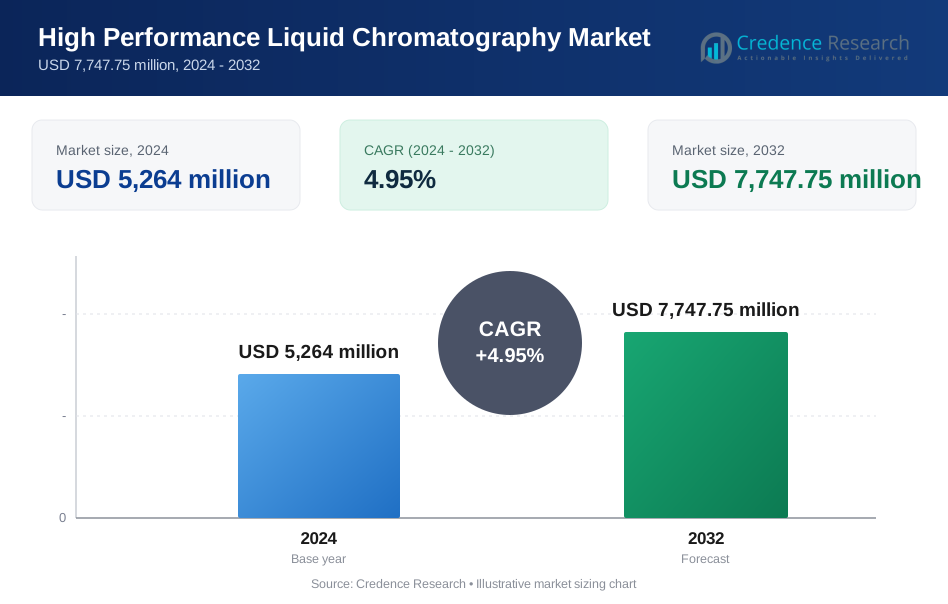
The High-Performance Liquid Chromatography (HPLC) Market in the pharmaceutical sector is projected to grow from USD 5,264 million in 2024 to USD 7,747.75 million by 2032, with a compound annual growth rate (CAGR) of 4.95%.
The High-Performance Liquid Chromatography (HPLC) market in the pharmaceutical sector is driven by increasing demand for precise and efficient drug development and quality control. The growing focus on personalized medicine and the need for advanced analytical techniques to meet regulatory requirements are key factors fueling market growth. Additionally, the rise in biopharmaceuticals and biologics has led to the adoption of HPLC for complex sample analysis. Technological advancements in HPLC systems, such as improved sensitivity, enhanced automation, and faster analysis times, are also contributing to market expansion. Furthermore, the increasing need for high-quality and accurate results in pharmaceutical R&D, coupled with the rising prevalence of chronic diseases, is driving HPLC adoption. Trends indicate a shift towards miniaturization, with micro HPLC systems gaining popularity for their efficiency in drug development processes. As the pharmaceutical industry continues to evolve, the demand for reliable and efficient analytical tools like HPLC is expected to grow substantially.
The High-Performance Liquid Chromatography (HPLC) market in the pharmaceutical sector is experiencing growth across various regions. North America leads the market, driven by a strong pharmaceutical industry and technological advancements, with key players like Thermo Fisher Scientific, Inc. and Agilent Technologies, Inc. Europe follows closely, benefiting from robust pharmaceutical and biopharmaceutical sectors, with significant contributions from Merck KGaA and Waters Corporation. The Asia-Pacific region is expanding rapidly, with rising pharmaceutical manufacturing and research in countries like China and India, where Shimadzu Corporation and PerkinElmer, Inc. play a key role. The Rest of the World, including regions like Latin America, the Middle East, and Africa, is also showing growth potential, with increasing pharmaceutical investments and applications of HPLC. Global players are expanding their footprints to tap into these growing markets.
Market Insights:
- The HPLC market in the pharmaceutical sector is projected to grow from USD 5,264 million in 2024 to USD 7,747.75 million by 2032, with a CAGR of 4.95%.
- Increasing demand for precise and efficient drug development and quality control is driving market growth.
- The rise of biopharmaceuticals and biologics has led to the adoption of HPLC for complex sample analysis.
- Technological advancements in HPLC systems, such as enhanced sensitivity, automation, and miniaturization, contribute to market expansion.
- Regulatory compliance and standardization push pharmaceutical companies to rely on HPLC to meet stringent guidelines.
- The growing focus on personalized medicine is increasing the demand for HPLC in pharmaceutical R&D.
- North America holds the largest market share (39%) in 2024, followed by Europe (30%), Asia-Pacific (21%), and Rest of the World (10%).
Market Drivers:
Increasing Demand for Quality Control and Drug Development:
One of the primary drivers of the High-Performance Liquid Chromatography (HPLC) market in the pharmaceutical sector is the growing need for accurate and efficient drug development processes. For instance, Novasep introduced the Hipersep Process M HPLC system in October 2021 for commercial-scale purification of oligonucleotides, peptides, insulin, and other pharmaceutically significant molecules. As pharmaceutical companies focus on developing new drugs and therapies, stringent quality control measures become essential to ensure safety and efficacy. HPLC provides precise separation, identification, and quantification of compounds, making it an indispensable tool in the pharmaceutical industry. The continuous demand for high-quality, reliable analytical data is propelling the use of HPLC systems in both drug discovery and quality control testing.
Regulatory Compliance and Standardization:
Regulatory agencies, such as the U.S. FDA and the European Medicines Agency, require pharmaceutical companies to meet strict guidelines for drug development and manufacturing processes. HPLC is widely recognized as the gold standard in analytical testing, particularly for its ability to meet the stringent requirements set by these authorities. For instance, Waters updated its Acquity UPLC systems (I-Class Plus, H-Class Plus, and H-Class Plus Bio) with a reduced system dispersion of 7 to 12 μL and a diminished dwell volume of 75 to 400 μL to improve analytical performance. As global regulatory standards become more rigorous, pharmaceutical companies increasingly rely on HPLC systems to ensure compliance with regulatory frameworks. This drive for adherence to compliance regulations is significantly boosting the HPLC market.
Rise of Biopharmaceuticals and Personalized Medicine:
The growing focus on biopharmaceuticals and personalized medicine is another key factor influencing the HPLC market. Biologics, which are complex molecules derived from living organisms, require highly specialized analytical techniques for their development. HPLC is well-suited for analyzing these biologics due to its precision and ability to handle complex samples. Additionally, as personalized medicine becomes more prevalent, the need for tailored drug therapies and the corresponding analytical tools, such as HPLC, has increased. This trend is fueling the adoption of HPLC in pharmaceutical research and development.
Technological Advancements in HPLC Systems:
Continuous technological advancements in HPLC systems have also contributed to market growth. Innovations, such as faster analysis times, improved sensitivity, enhanced automation, and miniaturized systems, have expanded the capabilities of HPLC. These advancements improve the efficiency and cost-effectiveness of pharmaceutical research, making HPLC even more attractive for pharmaceutical companies. With better performance and increased ease of use, modern HPLC systems are becoming integral to the pharmaceutical industry's need for rapid, accurate, and high-throughput analysis.
Market Trends
Miniaturization of HPLC Systems:
A significant trend in the High-Performance Liquid Chromatography (HPLC) market is the miniaturization of systems. With the demand for more efficient and cost-effective solutions in pharmaceutical analysis, micro HPLC systems have gained popularity. These compact systems offer the same high-level performance as traditional HPLC but with smaller sample sizes, faster analysis times, and reduced operational costs. For instance, Axcend launched a small footprint, full-stack chromatography system that enables scientists to perform HPLC anywhere. This trend is particularly relevant in pharmaceutical research and development, where high-throughput screening is crucial. Miniaturized systems are helping to streamline workflows and increase productivity while maintaining accuracy and reliability.
Integration of Automation and Data Analytics:
Automation and data analytics are becoming increasingly integrated into HPLC systems to enhance efficiency and reduce human error. Pharmaceutical companies are increasingly adopting automated HPLC systems that can handle multiple samples simultaneously, reduce operator involvement, and provide faster results. Along with automation, advanced data analytics software allows for the rapid processing and interpretation of complex data, enabling researchers to make informed decisions quickly. The integration of these technologies ensures a higher level of consistency and precision in pharmaceutical analysis.
Increasing Focus on Biopharmaceuticals and Novel Therapies:
The rising prominence of biopharmaceuticals and the growing focus on novel therapies are significantly influencing the HPLC market. As the pharmaceutical industry shifts toward biologics, HPLC is being increasingly utilized to analyze the complex structures of biologic drugs. For instance, In February 2022, Shimadzu Corporation launched the Nexera XS inert high-performance liquid chromatograph, incorporating rust-resistant and nonmetallic materials for stable measurements of biopharmaceuticals. The ability of HPLC to handle complex protein-based and peptide-based molecules makes it indispensable for biopharmaceutical development. Additionally, the shift towards personalized medicine, which demands tailored therapies, has created a need for precise analytical methods like HPLC to ensure the safety and efficacy of individualized treatments.
Advancements in Green Chemistry:
Sustainability and green chemistry are emerging as critical trends in the HPLC market. There is growing emphasis on reducing the environmental impact of analytical processes, including minimizing solvent consumption and improving waste disposal methods. Manufacturers are developing eco-friendly HPLC solutions that incorporate green solvents and energy-efficient technologies. This trend aligns with the broader shift toward sustainability in the pharmaceutical industry, where companies are actively seeking to minimize their environmental footprint while maintaining the high standards required for pharmaceutical analysis.
Market Challenges Analysis:
High Initial Investment and Maintenance Costs:
One of the primary challenges facing the High-Performance Liquid Chromatography (HPLC) market in the pharmaceutical industry is the high initial investment and ongoing maintenance costs associated with these systems. The sophisticated technology and precision required for HPLC systems make them expensive to purchase and maintain. For pharmaceutical companies, particularly small and medium-sized enterprises, these costs can be a significant barrier to adopting HPLC technology. For instance, Agilent Technologies offers the Agilent Lab Advisor software designed for calibration, diagnosis, and maintenance of their LC instruments, helping to lower the total cost of ownership. Additionally, the need for specialized training and expertise to operate and maintain these systems further adds to the overall financial burden. This challenge can limit the accessibility of HPLC for some companies, hindering widespread adoption, especially in developing regions or smaller pharmaceutical labs with constrained budgets. The cost factor may also lead to companies postponing upgrades to newer systems, affecting their ability to keep pace with technological advancements and regulatory changes.
Complexity in Handling and Interpretation of Results:
Another challenge in the HPLC market is the complexity involved in handling and interpreting the data generated by these systems. While HPLC is a powerful tool for pharmaceutical analysis, the data it produces can be intricate and requires skilled personnel to accurately analyze and interpret the results. The need for expertise in chromatography, method development, and troubleshooting can limit the efficiency of using HPLC systems. Additionally, as pharmaceutical research and development processes become increasingly fast-paced, there is a growing need for automation and data integration. However, fully integrating these technologies into HPLC systems to simplify data management and analysis while ensuring accuracy remains a challenge. Without the proper infrastructure and expertise, the effective use of HPLC systems can be impeded, leading to delays and potential errors in the pharmaceutical development process. Moreover, the learning curve associated with understanding complex software and chromatographic techniques can hinder the timely application of HPLC in routine analysis.
Market Opportunities:
The High-Performance Liquid Chromatography (HPLC) market in the pharmaceutical industry presents several promising opportunities as the demand for precise and efficient analytical techniques continues to rise. One of the key opportunities lies in the growing biopharmaceutical sector, where HPLC plays a critical role in the analysis and development of biologics, including proteins, monoclonal antibodies, and other complex biologic drugs. As the global market for biologics expands, pharmaceutical companies will increasingly rely on HPLC to meet the stringent analytical requirements for these high-value products. Additionally, the rise of personalized medicine, which focuses on tailoring treatments to individual patients, creates a growing need for reliable analytical methods such as HPLC to ensure the safety and efficacy of these therapies.
Furthermore, the increasing emphasis on sustainability within the pharmaceutical industry offers an opportunity for innovation in HPLC technology. As pharmaceutical companies strive to reduce their environmental footprint, there is a rising demand for eco-friendly HPLC systems that incorporate green solvents and energy-efficient components. Companies that develop and promote HPLC solutions that align with these sustainability goals are well-positioned to capture market share. Additionally, the integration of automation and advanced data analytics into HPLC systems presents opportunities to enhance operational efficiency, reduce human error, and improve throughput, all of which are crucial in the fast-paced pharmaceutical environment. These advancements not only meet the industry's increasing efficiency demands but also make HPLC technology more accessible to a broader range of pharmaceutical manufacturers, from small-scale labs to large pharmaceutical firms.
Market Segmentation Analysis:
By Product:
The High-Performance Liquid Chromatography (HPLC) market is segmented by product into instruments, consumables, and software. Instruments dominate the market due to their essential role in pharmaceutical analysis, with advancements in automation and miniaturization driving demand. Consumables, such as columns and reagents, also represent a significant market segment, essential for efficient HPLC operations. Software solutions are gaining traction for enhancing data management and integration, allowing pharmaceutical companies to optimize analytical processes.
By Application:
The application segment of the HPLC market in the pharmaceutical industry is primarily divided into drug development, quality control, and research. HPLC is crucial in drug development for compound identification and purification. In quality control, it ensures the safety, efficacy, and consistency of pharmaceutical products. Additionally, pharmaceutical research, particularly in biologics and personalized medicine, benefits from HPLC’s precision in analyzing complex compounds and ensuring regulatory compliance. The expanding focus on biologics and the need for personalized therapies drive demand across these application areas.
Segments:
Based on Product
- Instruments • Consumables • Accessories
Based on Application
- Clinical Research • Diagnostic • Forensics • Others
Based on the Geography:
- North America
- U.S.
- Canada
- Mexico
- Europe
- Germany
- France
- U.K.
- Italy
- Spain
- Rest of Europe
- Asia Pacific
- China
- Japan
- India
- South Korea
- South-east Asia
- Rest of Asia Pacific
- Latin America
- Brazil
- Argentina
- Rest of Latin America
- Middle East & Africa
- GCC Countries
- South Africa
- Rest of the Middle East and Africa
Regional Analysis:
North America:
North America is expected to hold the largest share of the High-Performance Liquid Chromatography (HPLC) market in the pharmaceutical industry, accounting for 39% of the market in 2024. The region’s dominance is primarily due to its well-established pharmaceutical industry, advanced research infrastructure, and stringent regulatory requirements that necessitate precise analytical methods. The U.S. is the major contributor to the market, with robust R&D investments in pharmaceuticals, biologics, and personalized medicine. Additionally, the region's focus on technological advancements, including the integration of automation and data analytics in HPLC systems, further strengthens its market position. Furthermore, the increasing prevalence of chronic diseases and the growing demand for high-quality pharmaceuticals contribute to North America's leading market share.
Europe:
Europe holds a significant portion of the global HPLC market, with a share of 30% in 2024. The region benefits from a strong pharmaceutical and biopharmaceutical sector, particularly in countries like Germany, the United Kingdom, and Switzerland. European pharmaceutical companies are increasingly focusing on the development of biologics and advanced therapies, which require sophisticated analytical techniques such as HPLC. Additionally, Europe’s commitment to stringent regulatory standards, such as those set by the European Medicines Agency (EMA), further drives the adoption of HPLC systems for drug development and quality control. The rising demand for personalized medicine and the expansion of clinical trials in Europe are expected to bolster the growth of HPLC in the region.
Asia-Pacific:
The Asia-Pacific region is experiencing significant growth in the HPLC market, projected to account for 21% of the market share in 2024. The increasing pharmaceutical manufacturing capacity in countries like China, India, and Japan, combined with a rapidly growing pharmaceutical research sector, is driving the adoption of HPLC technology. The region is witnessing an expansion in biopharmaceutical production, which requires advanced analytical systems like HPLC for ensuring product quality and regulatory compliance. Furthermore, the growing investments in healthcare infrastructure, coupled with the rising prevalence of chronic diseases, are fueling demand for HPLC in drug development and quality control applications in this region.
Rest of the World:
The Rest of the World (RoW) segment, comprising regions such as Latin America, the Middle East, and Africa, accounts for 10% of the HPLC market in 2024. While the market share is relatively smaller compared to other regions, the growing pharmaceutical industries in countries like Brazil and South Africa, along with the increasing focus on improving healthcare standards, present growth opportunities. As pharmaceutical companies in these regions invest in upgrading analytical technologies, the demand for HPLC systems is expected to rise, particularly for applications in drug quality control and research.
Key Player Analysis:
- Waters Corporation
- PerkinElmer, Inc.
- Agilent Technologies, Inc.
- Bio-Rad Laboratories, Inc.
- YMC Co. Ltd.
- Shimadzu Corporation
- Restek Corporation
- Thermo Fisher Scientific, Inc.
- Merck KGaA
- Hitachi, Ltd.
Competitive Analysis:
The High-Performance Liquid Chromatography (HPLC) market in the pharmaceutical sector is highly competitive, with leading players such as Thermo Fisher Scientific, Inc., Merck KGaA, Shimadzu Corporation, Waters Corporation, Agilent Technologies, Inc., Bio-Rad Laboratories, Inc., PerkinElmer, Inc., Hitachi, Ltd., YMC Co. Ltd., and Restek Corporation dominating the landscape. These companies leverage advanced technologies to enhance the performance and efficiency of HPLC systems, including innovations in automation, data analytics, and miniaturization. With the increasing demand for precision in drug development and quality control, these players focus on providing comprehensive HPLC solutions that cater to various pharmaceutical applications, from biopharmaceuticals to personalized medicine. Strategic collaborations, such as partnerships for new product developments and joint marketing efforts, are common in the market. Additionally, the growing trend toward sustainability has prompted companies to introduce eco-friendly solutions, including green solvents and energy-efficient technologies, to meet the pharmaceutical industry's evolving needs.
Recent Developments
- In 2023, Waters Corporation introduced the Alliance iS, a next-generation intelligent HPLC system designed to enhance ease-of-use while proactively detecting errors and troubleshooting, ultimately reducing compliance risks.
- In the same year, Agilent Technologies teamed up with Plasmion for a joint marketing initiative featuring the Agilent Ultivo triple-quadrupole liquid chromatography–mass spectrometry (LC-MS) and the LC/MSD iQ single-quadrupole LC-MS instruments, along with Plasmion's Sicrit ion source.
- In April 2023, Thermo Fisher Scientific launched new low-flow HPLC columns, the Thermo Scientific µPAC Neo HPLC Columns, specifically designed for proteomic research. These columns offer enhanced separation performance and stability when analyzing biologically complex samples.
Market Concentration & Characteristics:
The High-Performance Liquid Chromatography (HPLC) market in the pharmaceutical sector exhibits moderate concentration, with a few key players holding a significant share of the market. Companies such as Thermo Fisher Scientific, Agilent Technologies, and Waters Corporation dominate the industry, driving technological advancements and innovation in HPLC systems. These market leaders focus on providing high-quality, reliable, and efficient analytical solutions that meet the rigorous requirements of pharmaceutical applications, including drug development, quality control, and regulatory compliance. The market is characterized by continuous improvements in system sensitivity, automation, and miniaturization to meet the growing demand for faster and more accurate results. Additionally, the increasing trend toward personalized medicine and biologics further fuels competition, as pharmaceutical companies seek advanced analytical tools for complex sample analysis. As the demand for HPLC systems continues to rise, new entrants are also emerging, contributing to the diversification and growth of the market.
Report Coverage:
The research report offers an in-depth analysis based on Product, Application and Geography. It details leading market players, providing an overview of their business, product offerings, investments, revenue streams, and key applications. Additionally, the report includes insights into the competitive environment, SWOT analysis, current market trends, as well as the primary drivers and constraints. Furthermore, it discusses various factors that have driven market expansion in recent years. The report also explores market dynamics, regulatory scenarios, and technological advancements that are shaping the industry. It assesses the impact of external factors and global economic changes on market growth. Lastly, it provides strategic recommendations for new entrants and established companies to navigate the complexities of the market.
Future Outlook:
- The demand for High-Performance Liquid Chromatography (HPLC) systems will continue to grow as the pharmaceutical industry focuses on more precise drug development processes.
- Technological advancements will drive the development of faster, more efficient HPLC systems, enhancing their role in drug discovery and quality control.
- Increased adoption of HPLC in the growing biopharmaceutical and biologics markets will boost demand for advanced analytical techniques.
- Personalized medicine will further expand the need for accurate and reliable HPLC systems to tailor drug therapies to individual patients.
- The integration of automation and advanced data analytics into HPLC systems will improve workflow efficiency and reduce human error.
- Growing investments in healthcare infrastructure, particularly in emerging markets, will create new opportunities for HPLC adoption.
- The pharmaceutical industry's increasing emphasis on sustainability will encourage the development of eco-friendly HPLC solutions.
- Regulatory agencies will continue to enforce strict guidelines, increasing the need for reliable HPLC systems to ensure compliance.
- Miniaturization of HPLC systems will make them more accessible to smaller pharmaceutical labs, broadening their application range.
- The rise in chronic diseases and the need for high-quality pharmaceutical products will drive the continued reliance on HPLC for precise analytical testing.
Request a Free Sample
Fill in your details and we'll send you a free sample report.
- Sample data tables & charts
- Research methodology
Need a Custom Version of This Report?
Tailor the scope, geography, or segments to your exact requirements.
- Custom geography or segment scope
- Direct access to our analyst team
Frequently Asked Questions
What is the current size of the High-Performance Liquid Chromatography (HPLC) in Pharmaceutical Market?
What factors are driving the growth of the High-Performance Liquid Chromatography (HPLC) in Pharmaceutical Market?
What are some challenges faced by the High-Performance Liquid Chromatography (HPLC) in Pharmaceutical Market?
Who are the major players in the High-Performance Liquid Chromatography (HPLC) in Pharmaceutical Market?
Table of Content
Chapter 1. Report Introduction
- 1.1 Report Description & Purpose
- 1.1.1 Report Title & Market Definition
- 1.1.2 Unique Selling Propositions (USP) & Key Differentiators
- 1.1.3 Value Proposition for Stakeholders
- 1.2 Research Objectives
- 1.2.1 Market Sizing Objectives (Volume & Revenue)
- 1.2.2 Segmentation Objectives
- 1.2.3 Competitive Intelligence Objectives
- 1.2.4 Forecast & Scenario Objectives
- 1.3 Report Scope
- 1.3.1 High Performance Liquid Chromatography Scope – Types & Subtypes Covered
- 1.3.2 Geographic Scope – Regions & Countries Covered
- 1.3.3 Historical Period, Base Year & Forecast Period (2024; forecast to 2032)
- 1.3.4 Inclusions & Exclusions
- 1.4 HS Code & Classification Framework
- 1.5 Currency, Units & Pricing Basis
- 1.6 Target Stakeholders
- 1.7 Limitations & Assumptions
Chapter 2. Executive Summary
- 2.1 Global High Performance Liquid Chromatography Market Snapshot
- 2.1.1 Market Size – Historical (2024) & Forecast (2024-2032) (2024: USD 5,264 million → 2032: USD 7,747.75 million)
- 2.1.2 Volume & Revenue – Global Totals
- 2.1.3 Key Market Highlights – Top Five Facts
- 2.2 High Performance Liquid Chromatography Market Segmentation Snapshot
- 2.2.1 Market Split by Region – 2024 vs. 2032
- 2.3 Competitive Snapshot
- 2.3.1 Top 10 Players by Revenue Share – 2024
- 2.3.2 Top 10 Players by Volume Share – 2024
- 2.3.3 Recent Strategic Developments (18-Month Summary)
- 2.4 Key Investment Highlights & Strategic Conclusions
Chapter 3. High Performance Liquid Chromatography Market Dynamics & Industry Analysis
- 3.1 Market Overview & Context
- 3.1.1 High Performance Liquid Chromatography Market Position in the Broader Automotive Value Chain
- 3.1.2 OEM vs. Replacement Market Dynamics
- 3.1.3 Market Maturity & Development Stage by Region
- 3.2 High Performance Liquid Chromatography Market Drivers
- 3.3 High Performance Liquid Chromatography Market Restraints & Challenges
- 3.4 High Performance Liquid Chromatography Market Opportunities
- 3.5 Porter's Five Forces Analysis
- 3.5.1 Threat of New Entrants
- 3.5.2 Bargaining Power of Suppliers
- 3.5.3 Bargaining Power of Buyers
- 3.5.4 Threat of Substitutes
- 3.5.5 Competitive Rivalry – Intensity Assessment
- 3.6 High Performance Liquid Chromatography Value Chain Analysis
- 3.6.1 Upstream – Raw Material/Input Suppliers
- 3.6.1.1 Raw Material/Input 1
- 3.6.1.2 Raw Material/Input 2
- 3.6.1.3 Raw Material/Input 3
- 3.6.2 Midstream – Production/Manufacturing/Service Delivery
- 3.6.2.1 Production/Process Overview
- 3.6.2.2 Key Facility Locations & Capacity by Manufacturer
- 3.6.3 Downstream – Distribution & End Consumer
- 3.6.3.1 Primary Channel – B2B/OEM
- 3.6.3.2 Secondary Channels – Dealer, Retail, Online, Direct
- 3.6.4 Value Chain Profitability Analysis
- 3.6.1 Upstream – Raw Material/Input Suppliers
- 3.7 PESTEL Analysis
- 3.7.1 Political Factors
- 3.7.2 Economic Factors
- 3.7.3 Social Factors
- 3.7.4 Technological Factors
- 3.7.5 Environmental Factors
- 3.7.6 Legal Factors
- 3.8 High Performance Liquid Chromatography Supply Chain Analysis
- 3.8.1 Raw Material/Input Supply Risk Assessment
- 3.8.2 Manufacturing Concentration Risk (Geographic Exposure)
- 3.8.3 Trade Disruption Impact Analysis
- 3.9 Regulatory & Policy Landscape
Note: The regulatory and policy landscape section covers regulations based on their applicability to the market, High Performance Liquid Chromatography category, geography, and scope of the study. Only regulatory frameworks with a material impact on operations, compliance, trade, sustainability, or market access are analyzed in detail.
Chapter 4. Key Investment Pockets & Opportunity Analysis
- 4.1 High Performance Liquid Chromatography Market Attractiveness Analysis
- 4.1.1 By Region – Investment Attractiveness Matrix (Volume × CAGR)
- 4.2 Absolute Revenue Growth Opportunity
- 4.2.1 By Region – Absolute USD Growth Through 2032
- 4.3 Incremental Volume Opportunity
- 4.3.1 By Region – Incremental Volume Through 2032
- 4.3.2 Segment – Incremental Volume
- 4.4 Emerging Submarket Opportunity Deep Dive (Subject to Applicability)
- 4.5 Emerging Market Opportunity Scorecards
- 4.5.1 United States
- 4.5.2 Europe
- 4.5.3 Asia
- 4.5.4 Middle East & Africa
Note: Emerging Market Opportunity Scorecards will be included based on relevance and strategic importance. Regions listed are indicative and may vary depending on data availability and market dynamics.
Chapter 5. High Performance Liquid Chromatography Import-Export Analysis & Trade Flows
- 5.1 Global Trade Overview
- 5.1.1 Global Export Value by Country (2024)
- 5.1.2 Global Export Volume by Country (2024)
- 5.1.3 Global Import Value by Country (2024)
- 5.1.4 Global Import Volume by Country (2024)
- 5.1.5 Net Trade Balance by Country (2024)
- 5.2 Export Analysis – Segment
- 5.2.1 Type 1 (HS Code)
- 5.2.2 Type 2 (HS Code)
- 5.2.3 Type 3 (HS Code)
- 5.2.4 Type 4 (HS Code)
- 5.2.5 Type 5 (HS Code)
- 5.3 Import Analysis – Segment
- 5.3.1 Type 1 (HS Code)
- 5.3.2 Type 2 (HS Code)
- 5.3.3 Type 3 (HS Code)
- 5.3.4 Type 4 (HS Code)
- 5.3.5 Type 5 (HS Code)
- 5.4 Average Unit Trade Prices
- 5.4.1 Average Export Price – Segment & Country
- 5.4.2 Average Import Price – Segment & Source Country
- 5.4.3 Price Trends (2024)
- 5.5 Key Trade Route Analysis
- 5.5.1 Trade Route 1
- 5.5.2 Trade Route 2
- 5.5.3 Trade Route 3
- 5.5.4 Trade Route 4
- 5.5.5 Trade Route 5
- 5.6 Trade Policy Impact Assessment
- 5.6.1 US Anti-Dumping & Section 301 Tariffs
- 5.6.2 EU Customs Union Impact
- 5.6.3 Major Free Trade Agreements
- 5.6.4 USMCA Rules of Origin
Note: Trade policy analysis will be included only where relevant to the High Performance Liquid Chromatography market.
Chapter 6. Competitive Landscape & Company Benchmarking
- 6.1 High Performance Liquid Chromatography Market Concentration & Structure
- 6.1.1 Herfindahl-Hirschman Index (HHI) – vs. 2024
- 6.1.2 Tier 1, Tier 2 & Tier 3 Market Structure
- 6.1.3 Global, Regional & Local Player Dynamics
- 6.2 High Performance Liquid Chromatography Market Share Analysis – 2024
- 6.2.1 Global Revenue Share by Company
- 6.2.2 Global Volume Share by Company
- 6.2.3 Regional Revenue Share
- 6.2.4 Market Share Evolution ( vs. 2024)
- 6.2.5 OEM Segment Share by Company
- 6.2.6 Replacement Segment Share by Company
- 6.3 Production/Delivery Capacity & Facility Analysis
- 6.3.1 Global Installed Capacity
- 6.3.2 Capacity Utilization Rates
- 6.3.3 Production/Output Volume
- 6.3.4 Facility Locations & Capacity Map
- 6.3.5 Planned Capacity Additions
- 6.4 High Performance Liquid Chromatography Competitive Benchmarking Matrix
- 6.4.1 Revenue, Volume, CAGR & Profitability Comparison
- 6.4.2 Channel Revenue Mix
- 6.4.3 Geographic Revenue Exposure
- 6.4.4 R&D Intensity
- 6.4.5 Sustainability Maturity
- 6.5 Strategic Developments in High Performance Liquid Chromatography (Last 24 Months)
- 6.5.1 Mergers, Acquisitions & Divestments
- 6.5.2 New High Performance Liquid Chromatography Launches
- 6.5.3 Facility Expansions
- 6.5.4 Strategic Alliances, Joint Ventures & Partnerships
- 6.5.5 Distribution Expansion & Market Entry
- 6.5.6 Sustainability & ESG Initiatives
- 6.6 Competitive Strategy Mapping
- 6.6.1 Leader, Challenger, Follower & Niche Classification
- 6.6.2 Pricing Strategy Comparison
- 6.6.3 Channel Strategy Matrix
Note: Strategic developments are included based on their materiality and the availability of reliable information.
Chapter 7. Global High Performance Liquid Chromatography Market – By Distribution Channel
- 7.1 Segment Overview
- 7.1.1 Volume & Revenue Split by Channel (2024 & 2032)
- 7.1.2 Channel Mix Evolution (2024-2032)
Chapter 8. Regional Market Analysis – Global Overview
- 8.1 Global Regional Overview
- 8.1.1 Regional Volume Share
- 8.1.2 Regional Revenue Share
- 8.1.3 Regional Volume by Region
- 8.1.4 Regional Revenue by Region
- 8.1.5 Regional Forecast Through 2032
- 8.2 Cross-Regional Segment Analysis
- 8.2.1 By Distribution Channel
- 8.2.2 By Brand/Price Tier
Chapter 9. North America High Performance Liquid Chromatography Market
- 9.1 United States
- 9.2 Canada
- 9.3 Mexico
Chapter 10. Europe High Performance Liquid Chromatography Market
- 10.1 Germany
- 10.2 France
- 10.3 Italy
- 10.4 United Kingdom
- 10.5 Spain
- 10.6 Poland
- 10.7 Russia
- 10.8 Netherlands
- 10.9 Belgium
- 10.10 Sweden
- 10.11 Denmark
- 10.12 Norway
- 10.13 Rest of Europe
Chapter 11. Asia Pacific High Performance Liquid Chromatography Market
- 11.1 China
- 11.2 India
- 11.3 Japan
- 11.4 South Korea
- 11.5 Thailand
- 11.6 Indonesia
- 11.7 Vietnam
- 11.8 Malaysia
- 11.9 Australia
- 11.10 Rest of Asia Pacific
Chapter 12. Latin America High Performance Liquid Chromatography Market
- 12.1 Brazil
- 12.2 Argentina
- 12.3 Colombia
- 12.4 Chile
- 12.5 Rest of Latin America
Chapter 13. Middle East High Performance Liquid Chromatography Market
- 13.1 Saudi Arabia
- 13.2 United Arab Emirates
- 13.3 Turkey
- 13.4 Israel
- 13.5 Iran
- 13.6 Rest of the Middle East
Chapter 14. Africa High Performance Liquid Chromatography Market
- 14.1 South Africa
- 14.2 Egypt
- 14.3 Nigeria
- 14.4 Morocco
- 14.5 Rest of Africa
Chapter 15. High Performance Liquid Chromatography Company Profiles
- 15.1 [Company 01]
- 15.1.1 Company Overview
- 15.1.2 Key Management Personnel
- 15.1.3 Products & Services Portfolio
- 15.1.4 Financial Performance
- 15.1.5 Key Market Focus & Geographic Presence
- 15.1.6 Recent Developments & Strategic Initiatives
Note: The company profile list is preliminary and may change based on research findings, market developments, data availability, and client requirements.
Chapter 16. Appendices
- Appendix A – List of Abbreviations & Acronyms
- Appendix B – Industry Classification Code Reference – Full Series
- Appendix C – Production & Capacity Data Tables
- Appendix D – End-Use & Demand Base Tables
- Appendix E – Consumption & Replacement Rate Assumptions
- Appendix F – ASP Reference Tables
- Appendix G – Manufacturing & Facility Database
- Appendix H – Import-Export Data Tables
- Appendix I – Regulatory Summary Tables
- Appendix J – Primary Research Participant List (Anonymized)
- Appendix K – Primary Research Questionnaire Framework
- Appendix L – Data Sources & Bibliography
- Appendix M – Market Size Divergence & Source Comparison
Chapter 17. Research Methodology
- 17.1 Research Framework & Philosophy
- 17.2 Secondary Research – Sources, Hierarchy & Data Extraction
- 17.3 Data Modeling – Bottom-Up & Top-Down Market Sizing
- 17.4 Primary Research – Stakeholder Framework, LOI & Sample Sizes
- 17.5 Forecast Methodology – Regression, Scenario & Sensitivity Analysis
- 17.6 Quality Control – Four-Layer Validation Framework
- 17.7 Limitations & Standard Assumptions
- 17.8 Disclaimer
