
| REPORT ATTRIBUTE | DETAILS |
|---|---|
| Historical Period | 2019-2022 |
| Base Year | 2023 |
| Forecast Period | 2024-2032 |
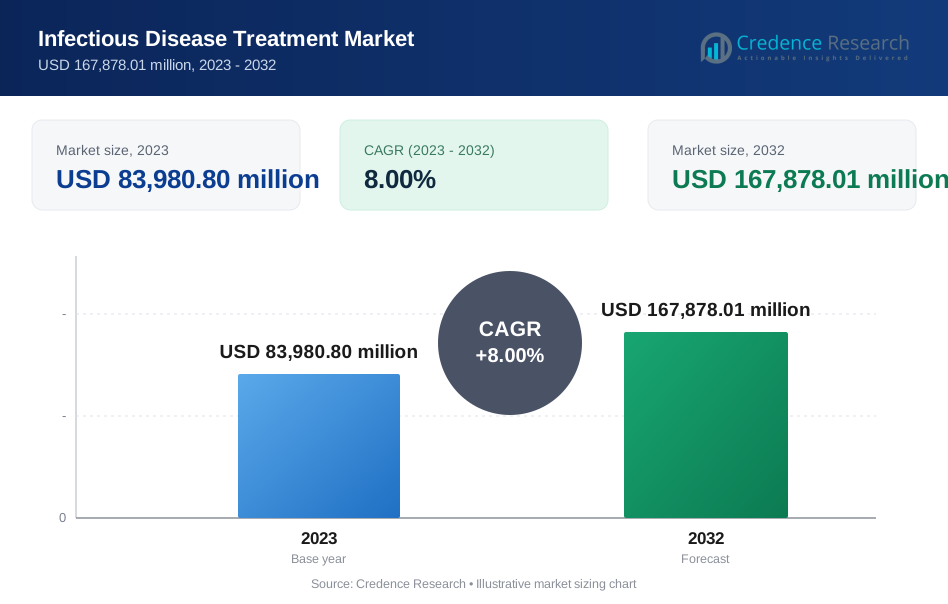
| Infectious Disease Treatment Market Size 2023 | USD 83,980.80 million |
| Infectious Disease Treatment Market, CAGR | 8.00% |
| Infectious Disease Treatment Market Size 2032 | USD 167,878.01 million |
Market Overview
The infectious disease treatments market is projected to grow from USD 83,980.80 million in 2023 to an estimated USD 167,878.01 million by 2032, with a compound annual growth rate (CAGR) of 8.00% from 2024 to 2032. This substantial growth underscores the increasing global urgency to manage and mitigate the spread of various infectious diseases, driven by rising healthcare expenditures, advancements in medical technologies, and increasing public health awareness.
Several factors fuel the market's expansion, including the increasing prevalence of infectious diseases worldwide, ongoing research and development in the medical field, and the emergence of multidrug-resistant pathogens. Additionally, the recent global pandemic has significantly heightened awareness and investment in infectious disease control, further accelerating market growth. These drivers ensure sustained investments and innovations in treatment solutions, enhancing the market's overall development trajectory.
Geographically, North America currently leads the market due to its advanced healthcare infrastructure, robust research initiatives, and significant investment in drug development. However, Asia-Pacific is expected to experience the fastest growth, driven by increasing healthcare spending and the rising incidence of infectious diseases in the region. Key players in this market include Pfizer Inc., Merck & Co., Inc., Johnson & Johnson Services, Inc., GlaxoSmithKline plc, and Gilead Sciences, Inc. These companies are at the forefront of developing innovative treatments that are significantly shaping the market landscape.
Market Drivers
Rising Global Prevalence of Infectious Diseases:
The increasing incidence of infectious diseases worldwide acts as a primary catalyst for the expansion of the infectious disease treatments market. Factors such as global travel, urbanization, and climate change have facilitated the rapid spread of pathogens across borders, contributing to outbreaks of diseases like COVID-19, tuberculosis, and malaria. For instance, according to the World Health Organization (WHO), in 2022, there were an estimated 10.6 million new cases of tuberculosis worldwide. The COVID-19 pandemic further highlighted the global vulnerability to infectious diseases, with over 768 million confirmed cases reported globally as of September 2023, according to WHO data. Additionally, the resurgence of diseases that were previously under control, such as measles, due to declining vaccination rates, has prompted urgent responses from healthcare systems. The U.S. Centers for Disease Control and Prevention (CDC) reported a significant increase in measles cases in recent years, with 1,282 cases confirmed in 2019, the highest number since 1992. This growing disease burden necessitates robust healthcare interventions and the continuous development of effective treatments, thereby driving the demand for advanced therapeutic solutions in this sector.
Technological Advancements in Treatment and Diagnosis:
Technological innovations in medical research, including the development of novel antibiotics, antivirals, and vaccines, significantly propel the infectious disease treatments market. These advancements enhance the efficacy and speed of treatments, improving patient outcomes and reducing the spread of infections. For instance, the rapid development of mRNA vaccine technology during the COVID-19 pandemic marked a groundbreaking advance in vaccine production, offering quicker responses to emerging infectious threats. The U.S. Food and Drug Administration (FDA) reported that the first COVID-19 vaccines were developed and authorized for emergency use in less than a year, a process that traditionally took several years. Furthermore, improvements in diagnostic technologies, such as PCR and CRISPR-based tests, allow for faster and more accurate detection of pathogens, which is critical for effective disease management and containment. The National Institutes of Health (NIH) has supported numerous research initiatives in this area, including the development of rapid, point-of-care diagnostic tests for various infectious diseases. These technological advancements not only improve treatment outcomes but also contribute to more efficient disease surveillance and outbreak control strategies.
Increased Healthcare Expenditure and Government Initiatives:
Governments worldwide are increasingly investing in healthcare infrastructure, particularly in infectious disease control and prevention, in response to the growing healthcare burden posed by epidemics and pandemics. These investments often translate into better healthcare facilities, more significant funding for research and development, and increased access to effective treatment options. For instance, the U.S. government's fiscal year 2023 budget included substantial allocations for infectious disease research and preparedness, with billions dedicated to pandemic preparedness and response. National health programs aiming to control and eliminate infectious diseases also drive the market by fostering environments conducive to the adoption of new treatments. The President's Emergency Plan for AIDS Relief (PEPFAR) has provided support to over 20 million people living with HIV/AIDS globally since its inception in 2003, according to the U.S. Department of State. Similarly, the Global Fund to Fight AIDS, Tuberculosis, and Malaria has invested more than $55 billion in programs to defeat these diseases since 2002. These initiatives have not only saved millions of lives but have also stimulated research and development in infectious disease treatments, contributing significantly to market growth.
Public Awareness and Education:
Public awareness campaigns and educational programs play a crucial role in the prevention and treatment of infectious diseases. By increasing understanding of disease transmission, symptoms, and prevention methods, these initiatives help reduce the incidence of diseases and encourage timely medical intervention, driving demand for treatment solutions. Effective communication strategies during outbreaks, such as those employed during the COVID-19 pandemic, are critical in informing the public about available treatments and preventive measures, thus fostering a proactive approach to healthcare.
Market Trends
Shift Toward Personalized Medicine and Targeted Therapies:
A major trend in the infectious disease treatments market is the increasing focus on personalized medicine and targeted therapies. Industry surveys indicate growing investment in developing treatments tailored to patients' genetic profiles and specific pathogens. This approach is enhancing treatment efficacy while reducing adverse effects and drug resistance. Government health agencies report rising use of genomic sequencing to identify pathogen strains, enabling more precise antiviral and antibiotic therapies. Biotechnology advances like CRISPR are supporting the development of highly specific interventions. Market analyses show an influx of innovative drugs and treatment protocols offering personalized solutions. Leading pharmaceutical companies are expanding their precision medicine pipelines for infectious diseases. Healthcare providers report improved patient outcomes with personalized approaches. Research institutions are seeing increased funding for studies on tailored therapies. Patient advocacy groups are calling for greater access to personalized treatments. Regulatory bodies are adapting approval processes to accommodate personalized medicine. Overall, the trend towards precision in infectious disease management is reshaping the market landscape and driving innovation.
Integration of Digital Health Technologies and Telemedicine:
The infectious disease treatments market is being transformed by the integration of digital health technologies and telemedicine. Industry reports show a surge in telemedicine adoption, accelerated by the COVID-19 pandemic. Healthcare providers increasingly use digital platforms for remote patient monitoring, consultations, and care delivery. Government health agencies report improved access to care in remote areas through telemedicine. Wearable device manufacturers note growing use of their products for real-time health monitoring in infectious disease management. Mobile health app developers report increased downloads and usage for disease tracking. Hospitals and clinics are investing in digital infrastructure to support telemedicine services. Insurance companies are expanding coverage for virtual care related to infectious diseases. Telemedicine platforms report rising user numbers for infectious disease consultations. Health tech companies are developing AI-powered tools for disease diagnosis and treatment planning. Medical associations are updating guidelines to incorporate telemedicine in infectious disease care protocols. This digital transformation is enhancing care coordination, improving patient outcomes, and driving market growth in the infectious disease sector.
Market Restraints and Challenges
Rising Antimicrobial Resistance (AMR):
Antimicrobial resistance poses a critical challenge to the infectious disease treatments market. Government health agencies report alarming increases in drug-resistant pathogens, undermining the efficacy of existing antibiotics and antivirals. Industry surveys indicate pharmaceutical companies are struggling to develop new treatments fast enough to combat evolving resistant strains. The CDC and WHO have highlighted AMR as a top global health threat, with resistant infections becoming more common and difficult to treat. Healthcare providers report longer hospital stays and higher mortality rates for patients with resistant infections. Agricultural use of antibiotics is also contributing to resistance, according to FDA data. Pharmaceutical companies cite the high costs and risks of antibiotic development as major barriers, with many large firms exiting the space. Public-private partnerships are emerging to incentivize new antibiotic discovery, but progress remains slow. Healthcare systems worldwide are implementing antibiotic stewardship programs to preserve existing drugs, but surveys show inconsistent adoption. Overall, AMR is significantly impacting treatment options, patient outcomes, and healthcare costs across the infectious disease market.
High Costs and Regulatory Hurdles in Drug Development:
The infectious disease treatments market faces substantial challenges from the high costs and regulatory complexities of drug development. Industry reports indicate the average cost to bring a new infectious disease treatment to market has risen dramatically over the past decades. Pharmaceutical companies cite lengthy clinical trials, stringent safety requirements, and low success rates as key factors driving up costs. Government agencies like the FDA have implemented programs to accelerate approval for certain infectious disease treatments, but the overall regulatory process remains lengthy and expensive. Surveys of biotech startups show many struggle to secure sufficient funding to advance promising candidates through clinical trials. For larger pharmaceutical firms, the uncertain return on investment for new antibiotics has led many to deprioritize infectious disease R&D. Patent expirations on existing drugs further squeeze profit margins in the space. Contract research organizations report increasing demand for their services as companies seek to control costs. Despite these challenges, some areas like vaccines have seen continued investment. Overall, the high costs and regulatory hurdles create significant barriers to bringing new infectious disease treatments to market.
Market Segmentation Analysis
By mode of treatment
The infectious disease treatments market is primarily segmented into vaccines and drugs. Vaccines have gained significant traction due to increased focus on preventive healthcare. For instance, a recent survey by a leading health organization found that public awareness of vaccine importance has risen substantially in the past few years. Government initiatives for mass vaccination programs have further bolstered this segment. The drugs segment, however, remains dominant in the market. A report from a prominent pharmaceutical association highlighted that research and development efforts for novel therapies have intensified, particularly in response to antibiotic resistance. For example, a major pharmaceutical company recently announced breakthrough antiviral treatments showing promising results in clinical trials. The drugs segment encompasses antiviral, antifungal, and antibacterial medications, each playing a crucial role in managing various infectious diseases. Industry experts predict continued growth in both segments, with a slight edge for drugs due to the immediate need for treating existing infections.
By target organism
The infectious disease treatments market is further segmented based on target organisms: antifungal, antiviral, antibacterial, anti-parasite, and others. The antifungal segment has shown steady growth, particularly due to rising fungal infections in immunocompromised patients. A recent healthcare survey reported an increase in hospital-acquired fungal infections, driving demand for advanced antifungal therapies. The antiviral segment has experienced significant expansion, fueled by the global prevalence of viral infections like HIV and hepatitis. For instance, a government health agency reported a surge in funding for antiviral research in response to recent viral outbreaks. The antibacterial segment continues to dominate the market, with high demand driven by the persistent threat of bacterial infections and antibiotic resistance. A pharmaceutical industry report highlighted increased investment in developing novel antibiotics to combat resistant strains. The anti-parasite segment, while smaller, remains crucial in regions affected by diseases like malaria. Lastly, the "others" category, focusing on emerging and rare pathogens, has shown potential for growth, with several biotech firms reporting progress in developing treatments for neglected tropical diseases.
Segments
Based on Mode of Treatment
- Vaccines
- Drugs
Based on Target Organism
- Antifungal
- Antiviral
- Antibacterial
- Anti-parasite
- Others
Based on Infection Type
- Viral
- Parasitic
- Fungal
- Bacterial
- Others
Based on Distribution Channel
- Clinics
- Hospitals
- Others
Based on Region
- North America
- Europe
- Asia Pacific
- Latin America
- Middle East & Africa
Regional Analysis
Europe (30%):
Europe follows closely, representing around 30% of the global market share. The region benefits from a robust healthcare system, extensive R&D activities, and proactive measures to combat antibiotic resistance. Key European countries like Germany, the UK, and France are major players in the market, focusing on innovative treatments and comprehensive healthcare policies. For instance, data from government health surveys indicate a strong emphasis on addressing public health challenges, particularly the rising threat of multidrug-resistant organisms. European health authorities report substantial investments in research and development of new antimicrobial therapies, reflecting the region's commitment to maintaining its position in the global market.
Asia Pacific (20%):
Asia Pacific is the fastest-growing region, holding approximately 20% of the market share, with expectations of substantial growth in the coming years. This growth is primarily driven by the high prevalence of infectious diseases, increasing healthcare expenditure, and growing awareness of disease prevention in countries like China, India, and Japan. For instance, surveys conducted by healthcare companies in the region reveal a rising demand for advanced treatments and preventive measures. Government data from countries such as India and China show significant increases in healthcare budgets and initiatives to improve access to medical care. Additionally, pharmaceutical companies report expanding their presence in the Asia Pacific market, capitalizing on the region's large population base and rising income levels to meet the growing demand for infectious disease treatments.
Key players
- Pfizer Inc.
- Hoffmann-La Roche AG
- Abbott Laboratories
- Merck & Co., Inc.
- Allergan, Inc.
- AbbVie, Inc.
- Bayer AG
- Baxter International Inc.
- Bristol-Myers Squibb Company
- Actelion Pharmaceuticals Ltd.
- Gilead Sciences Inc.
Competitive Analysis
The infectious disease treatments market is highly competitive, with several key players leading the industry through innovation, extensive product portfolios, and strategic partnerships. Companies like Pfizer Inc. and Merck & Co., Inc. have established strong global footprints, leveraging their robust R&D capabilities to introduce advanced therapies. Hoffmann-La Roche AG and Gilead Sciences Inc. are prominent in the antiviral and antibacterial segments, driven by their focus on treating critical infectious diseases such as HIV and hepatitis. Abbott Laboratories and Bayer AG excel in developing a wide range of treatments, from vaccines to drugs, ensuring a comprehensive approach to infectious disease management. AbbVie, Inc. and Bristol-Myers Squibb Company further enhance market competition through their innovative drug offerings and strategic acquisitions. As the demand for effective treatments rises, these companies continue to play pivotal roles in shaping the future of the infectious disease treatments market.
Recent Developments
- In September 2024, Pfizer announced positive results from a Phase 3 trial of its investigational oral antiviral treatment for COVIDIn19.
- In August 2024, Roche launched a new rapid test for detecting multiple respiratory viruses, including COVIDIn19, influenza, and RSV.
- In July 2024, Merck completed the acquisition of Prometheus Biosciences Inc. for $10.8 billion, expanding its immunology portfolio.
- In August 2024, AbbVie completed the acquisition of Cerevel Therapeutics, strengthening its neuroscience portfolio.
- In September 2024, Bayer presented new data on its oncology portfolio at the ESMO 2024 Congress, including results from trials on prostate cancer treatments.
- In February 2024, The U.S. FDA approved an expanded indication for Gilead's Biktarvy to treat people with HIV with suppressed viral loads and preInexisting resistance.
- In April 2023, BristolInMyers Squibb acquired Celgene, expanding its portfolio in hematology and immunology.
Market Concentration and Characteristics
The infectious disease treatments market is moderately concentrated, with a few key players such as Pfizer Inc., HoffmannInLa Roche AG, Merck & Co., Inc., and Gilead Sciences Inc. holding significant market shares. These companies dominate the market due to their extensive research and development capabilities, broad product portfolios, and global reach. The market is characterized by high competition, driven by the continuous need for innovation in response to emerging infectious diseases and antibiotic resistance. Strategic collaborations, mergers, and acquisitions are common as companies seek to expand their market presence and develop advanced treatment solutions, ensuring a dynamic and evolving market landscape.
Report Coverage
The research report offers an inIndepth analysis based on Mode of Treatment, Target Organism, Infection Type, Distribution Channel and Region. It details leading market players, providing an overview of their business, product offerings, investments, revenue streams, and key applications. Additionally, the report includes insights into the competitive environment, SWOT analysis, current market trends, as well as the primary drivers and constraints. Furthermore, it discusses various factors that have driven market expansion in recent years. The report also explores market dynamics, regulatory scenarios, and technological advancements that are shaping the industry. It assesses the impact of external factors and global economic changes on market growth. Lastly, it provides strategic recommendations for new entrants and established companies to navigate the complexities of the market.
Future Outlook
- The infectious disease treatments market will witness significant investment in research and development, focusing on novel therapies and vaccines to combat emerging and reInemerging infectious diseases.
- Continued innovation in antiviral treatments is expected, particularly for diseases like HIV, hepatitis, and influenza, driven by the need for more effective and less toxic treatment options.
- The market will see a growing demand for vaccines, propelled by global vaccination initiatives and heightened awareness of preventive healthcare, especially in developing regions.
- Efforts to address antimicrobial resistance will intensify, with pharmaceutical companies developing new antibacterial agents and combination therapies to tackle drugInresistant infections.
- The infectious disease treatments market will expand significantly in emerging markets, where increasing healthcare access and rising disposable incomes drive demand for advanced treatments.
- The integration of technology in infectious disease treatments, such as AIIndriven drug discovery and telemedicine, will enhance the efficiency and accessibility of healthcare solutions globally.
- International collaborations and partnerships between governments, NGOs, and pharmaceutical companies will increase, aiming to improve global health outcomes through shared resources and knowledge.
- The adoption of personalized medicine in infectious disease treatments will grow, enabling more targeted and effective therapies based on individual patient profiles and pathogen characteristics.
- Regulatory agencies are expected to provide more support for the fastIntrack approval of new infectious disease treatments, especially in response to public health emergencies.
- The market will likely experience further consolidation as leading companies acquire smaller firms with innovative technologies, strengthening their market position and expanding their treatment portfolios.
Request a Free Sample
Fill in your details and we'll send you a free sample report.
- Sample data tables & charts
- Research methodology
Need a Custom Version of This Report?
Tailor the scope, geography, or segments to your exact requirements.
- Custom geography or segment scope
- Direct access to our analyst team
Frequently Asked Questions
What is the projected growth of the infectious disease treatments market?
What factors are driving the growth of the infectious disease treatments market?
Which region currently leads the infectious disease treatments market?
How is the Asia-Pacific region expected to perform in the infectious diseasetreatments market?
Who are the major players in this market?
Table of Content
Chapter 1. Report Introduction
- 1.1 Report Description & Purpose
- 1.1.1 Report Title & Market Definition
- 1.1.2 Unique Selling Propositions (USP) & Key Differentiators
- 1.1.3 Value Proposition for Stakeholders
- 1.2 Research Objectives
- 1.2.1 Market Sizing Objectives (Volume & Revenue)
- 1.2.2 Segmentation Objectives
- 1.2.3 Competitive Intelligence Objectives
- 1.2.4 Forecast & Scenario Objectives
- 1.3 Report Scope
- 1.3.1 Infectious Disease Treatment Scope – Types & Subtypes Covered
- 1.3.2 Geographic Scope – Regions & Countries Covered
- 1.3.3 Historical Period, Base Year & Forecast Period (2023; forecast to 2032)
- 1.3.4 Inclusions & Exclusions
- 1.4 HS Code & Classification Framework
- 1.5 Currency, Units & Pricing Basis
- 1.6 Target Stakeholders
- 1.7 Limitations & Assumptions
Chapter 2. Executive Summary
- 2.1 Global Infectious Disease Treatment Market Snapshot
- 2.1.1 Market Size – Historical (2023) & Forecast (2023-2032) (2023: USD 83,980.80 million → 2032: USD 167,878.01 million)
- 2.1.2 Volume & Revenue – Global Totals
- 2.1.3 Key Market Highlights – Top Five Facts
- 2.2 Infectious Disease Treatment Market Segmentation Snapshot
- 2.2.1 Market Split by Region – 2023 vs. 2032
- 2.3 Competitive Snapshot
- 2.3.1 Top 10 Players by Revenue Share – 2023
- 2.3.2 Top 10 Players by Volume Share – 2023
- 2.3.3 Recent Strategic Developments (18-Month Summary)
- 2.4 Key Investment Highlights & Strategic Conclusions
Chapter 3. Infectious Disease Treatment Market Dynamics & Industry Analysis
- 3.1 Market Overview & Context
- 3.1.1 Infectious Disease Treatment Market Position in the Broader Automotive Value Chain
- 3.1.2 OEM vs. Replacement Market Dynamics
- 3.1.3 Market Maturity & Development Stage by Region
- 3.2 Infectious Disease Treatment Market Drivers
- 3.3 Infectious Disease Treatment Market Restraints & Challenges
- 3.4 Infectious Disease Treatment Market Opportunities
- 3.5 Porter's Five Forces Analysis
- 3.5.1 Threat of New Entrants
- 3.5.2 Bargaining Power of Suppliers
- 3.5.3 Bargaining Power of Buyers
- 3.5.4 Threat of Substitutes
- 3.5.5 Competitive Rivalry – Intensity Assessment
- 3.6 Infectious Disease Treatment Value Chain Analysis
- 3.6.1 Upstream – Raw Material/Input Suppliers
- 3.6.1.1 Raw Material/Input 1
- 3.6.1.2 Raw Material/Input 2
- 3.6.1.3 Raw Material/Input 3
- 3.6.2 Midstream – Production/Manufacturing/Service Delivery
- 3.6.2.1 Production/Process Overview
- 3.6.2.2 Key Facility Locations & Capacity by Manufacturer
- 3.6.3 Downstream – Distribution & End Consumer
- 3.6.3.1 Primary Channel – B2B/OEM
- 3.6.3.2 Secondary Channels – Dealer, Retail, Online, Direct
- 3.6.4 Value Chain Profitability Analysis
- 3.6.1 Upstream – Raw Material/Input Suppliers
- 3.7 PESTEL Analysis
- 3.7.1 Political Factors
- 3.7.2 Economic Factors
- 3.7.3 Social Factors
- 3.7.4 Technological Factors
- 3.7.5 Environmental Factors
- 3.7.6 Legal Factors
- 3.8 Infectious Disease Treatment Supply Chain Analysis
- 3.8.1 Raw Material/Input Supply Risk Assessment
- 3.8.2 Manufacturing Concentration Risk (Geographic Exposure)
- 3.8.3 Trade Disruption Impact Analysis
- 3.9 Regulatory & Policy Landscape
Note: The regulatory and policy landscape section covers regulations based on their applicability to the market, Infectious Disease Treatment category, geography, and scope of the study. Only regulatory frameworks with a material impact on operations, compliance, trade, sustainability, or market access are analyzed in detail.
Chapter 4. Key Investment Pockets & Opportunity Analysis
- 4.1 Infectious Disease Treatment Market Attractiveness Analysis
- 4.1.1 By Region – Investment Attractiveness Matrix (Volume × CAGR)
- 4.2 Absolute Revenue Growth Opportunity
- 4.2.1 By Region – Absolute USD Growth Through 2032
- 4.3 Incremental Volume Opportunity
- 4.3.1 By Region – Incremental Volume Through 2032
- 4.3.2 Segment – Incremental Volume
- 4.4 Emerging Submarket Opportunity Deep Dive (Subject to Applicability)
- 4.5 Emerging Market Opportunity Scorecards
- 4.5.1 United States
- 4.5.2 Europe
- 4.5.3 Asia
- 4.5.4 Middle East & Africa
Note: Emerging Market Opportunity Scorecards will be included based on relevance and strategic importance. Regions listed are indicative and may vary depending on data availability and market dynamics.
Chapter 5. Infectious Disease Treatment Import-Export Analysis & Trade Flows
- 5.1 Global Trade Overview
- 5.1.1 Global Export Value by Country (2023)
- 5.1.2 Global Export Volume by Country (2023)
- 5.1.3 Global Import Value by Country (2023)
- 5.1.4 Global Import Volume by Country (2023)
- 5.1.5 Net Trade Balance by Country (2023)
- 5.2 Export Analysis – Segment
- 5.2.1 Type 1 (HS Code)
- 5.2.2 Type 2 (HS Code)
- 5.2.3 Type 3 (HS Code)
- 5.2.4 Type 4 (HS Code)
- 5.2.5 Type 5 (HS Code)
- 5.3 Import Analysis – Segment
- 5.3.1 Type 1 (HS Code)
- 5.3.2 Type 2 (HS Code)
- 5.3.3 Type 3 (HS Code)
- 5.3.4 Type 4 (HS Code)
- 5.3.5 Type 5 (HS Code)
- 5.4 Average Unit Trade Prices
- 5.4.1 Average Export Price – Segment & Country
- 5.4.2 Average Import Price – Segment & Source Country
- 5.4.3 Price Trends (2023)
- 5.5 Key Trade Route Analysis
- 5.5.1 Trade Route 1
- 5.5.2 Trade Route 2
- 5.5.3 Trade Route 3
- 5.5.4 Trade Route 4
- 5.5.5 Trade Route 5
- 5.6 Trade Policy Impact Assessment
- 5.6.1 US Anti-Dumping & Section 301 Tariffs
- 5.6.2 EU Customs Union Impact
- 5.6.3 Major Free Trade Agreements
- 5.6.4 USMCA Rules of Origin
Note: Trade policy analysis will be included only where relevant to the Infectious Disease Treatment market.
Chapter 6. Competitive Landscape & Company Benchmarking
- 6.1 Infectious Disease Treatment Market Concentration & Structure
- 6.1.1 Herfindahl-Hirschman Index (HHI) – vs. 2023
- 6.1.2 Tier 1, Tier 2 & Tier 3 Market Structure
- 6.1.3 Global, Regional & Local Player Dynamics
- 6.2 Infectious Disease Treatment Market Share Analysis – 2023
- 6.2.1 Global Revenue Share by Company
- 6.2.2 Global Volume Share by Company
- 6.2.3 Regional Revenue Share
- 6.2.4 Market Share Evolution ( vs. 2023)
- 6.2.5 OEM Segment Share by Company
- 6.2.6 Replacement Segment Share by Company
- 6.3 Production/Delivery Capacity & Facility Analysis
- 6.3.1 Global Installed Capacity
- 6.3.2 Capacity Utilization Rates
- 6.3.3 Production/Output Volume
- 6.3.4 Facility Locations & Capacity Map
- 6.3.5 Planned Capacity Additions
- 6.4 Infectious Disease Treatment Competitive Benchmarking Matrix
- 6.4.1 Revenue, Volume, CAGR & Profitability Comparison
- 6.4.2 Channel Revenue Mix
- 6.4.3 Geographic Revenue Exposure
- 6.4.4 R&D Intensity
- 6.4.5 Sustainability Maturity
- 6.5 Strategic Developments in Infectious Disease Treatment (Last 24 Months)
- 6.5.1 Mergers, Acquisitions & Divestments
- 6.5.2 New Infectious Disease Treatment Launches
- 6.5.3 Facility Expansions
- 6.5.4 Strategic Alliances, Joint Ventures & Partnerships
- 6.5.5 Distribution Expansion & Market Entry
- 6.5.6 Sustainability & ESG Initiatives
- 6.6 Competitive Strategy Mapping
- 6.6.1 Leader, Challenger, Follower & Niche Classification
- 6.6.2 Pricing Strategy Comparison
- 6.6.3 Channel Strategy Matrix
Note: Strategic developments are included based on their materiality and the availability of reliable information.
Chapter 7. Global Infectious Disease Treatment Market – By Distribution Channel
- 7.1 Segment Overview
- 7.1.1 Volume & Revenue Split by Channel (2023 & 2032)
- 7.1.2 Channel Mix Evolution (2023-2032)
Chapter 8. Regional Market Analysis – Global Overview
- 8.1 Global Regional Overview
- 8.1.1 Regional Volume Share
- 8.1.2 Regional Revenue Share
- 8.1.3 Regional Volume by Region
- 8.1.4 Regional Revenue by Region
- 8.1.5 Regional Forecast Through 2032
- 8.2 Cross-Regional Segment Analysis
- 8.2.1 By Distribution Channel
- 8.2.2 By Brand/Price Tier
Chapter 9. North America Infectious Disease Treatment Market
- 9.1 United States
- 9.2 Canada
- 9.3 Mexico
Chapter 10. Europe Infectious Disease Treatment Market
- 10.1 Germany
- 10.2 France
- 10.3 Italy
- 10.4 United Kingdom
- 10.5 Spain
- 10.6 Poland
- 10.7 Russia
- 10.8 Netherlands
- 10.9 Belgium
- 10.10 Sweden
- 10.11 Denmark
- 10.12 Norway
- 10.13 Rest of Europe
Chapter 11. Asia Pacific Infectious Disease Treatment Market
- 11.1 China
- 11.2 India
- 11.3 Japan
- 11.4 South Korea
- 11.5 Thailand
- 11.6 Indonesia
- 11.7 Vietnam
- 11.8 Malaysia
- 11.9 Australia
- 11.10 Rest of Asia Pacific
Chapter 12. Latin America Infectious Disease Treatment Market
- 12.1 Brazil
- 12.2 Argentina
- 12.3 Colombia
- 12.4 Chile
- 12.5 Rest of Latin America
Chapter 13. Middle East Infectious Disease Treatment Market
- 13.1 Saudi Arabia
- 13.2 United Arab Emirates
- 13.3 Turkey
- 13.4 Israel
- 13.5 Iran
- 13.6 Rest of the Middle East
Chapter 14. Africa Infectious Disease Treatment Market
- 14.1 South Africa
- 14.2 Egypt
- 14.3 Nigeria
- 14.4 Morocco
- 14.5 Rest of Africa
Chapter 15. Infectious Disease Treatment Company Profiles
- 15.1 [Company 01]
- 15.1.1 Company Overview
- 15.1.2 Key Management Personnel
- 15.1.3 Products & Services Portfolio
- 15.1.4 Financial Performance
- 15.1.5 Key Market Focus & Geographic Presence
- 15.1.6 Recent Developments & Strategic Initiatives
Note: The company profile list is preliminary and may change based on research findings, market developments, data availability, and client requirements.
Chapter 16. Appendices
- Appendix A – List of Abbreviations & Acronyms
- Appendix B – Industry Classification Code Reference – Full Series
- Appendix C – Production & Capacity Data Tables
- Appendix D – End-Use & Demand Base Tables
- Appendix E – Consumption & Replacement Rate Assumptions
- Appendix F – ASP Reference Tables
- Appendix G – Manufacturing & Facility Database
- Appendix H – Import-Export Data Tables
- Appendix I – Regulatory Summary Tables
- Appendix J – Primary Research Participant List (Anonymized)
- Appendix K – Primary Research Questionnaire Framework
- Appendix L – Data Sources & Bibliography
- Appendix M – Market Size Divergence & Source Comparison
Chapter 17. Research Methodology
- 17.1 Research Framework & Philosophy
- 17.2 Secondary Research – Sources, Hierarchy & Data Extraction
- 17.3 Data Modeling – Bottom-Up & Top-Down Market Sizing
- 17.4 Primary Research – Stakeholder Framework, LOI & Sample Sizes
- 17.5 Forecast Methodology – Regression, Scenario & Sensitivity Analysis
- 17.6 Quality Control – Four-Layer Validation Framework
- 17.7 Limitations & Standard Assumptions
- 17.8 Disclaimer
