
| REPORT ATTRIBUTE | DETAILS |
|---|---|
| Historical Period | 2019-2022 |
| Base Year | 2023 |
| Forecast Period | 2024-2032 |
| Intravenous Solution Market Size 2024 | USD 13628.5 Million |
| Intravenous Solution Market, CAGR | 7.92% |
| Intravenous Solution Market Size 2032 | USD 25076.31 Million |
Market Overview:
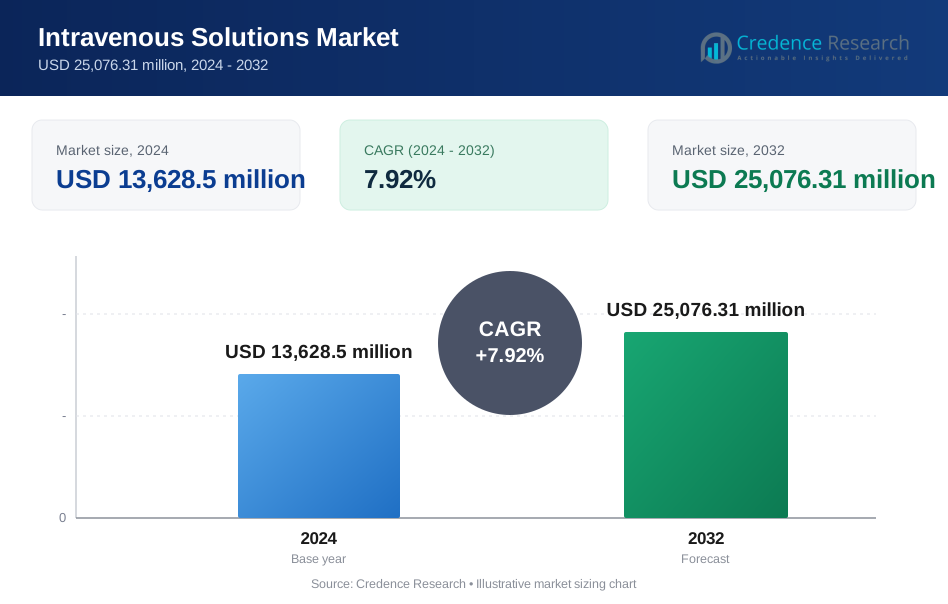
The Intravenous Solution market is projected to grow from USD 13628.5 million in 2024 to an estimated USD 25076.31 million by 2032, with a compound annual growth rate (CAGR) of 7.92% from 2024 to 2032.
Market drivers for the IV solution market include the growing burden of chronic diseases such as diabetes, cancer, and cardiovascular disorders, which often require continuous medical care and frequent hospitalizations. The increasing geriatric population, who are more susceptible to chronic conditions, is also contributing to the market growth. Furthermore, the rising demand for parenteral nutrition due to the growing number of patients with malnutrition and gastrointestinal disorders is driving the market. The advancements in IV solution formulations, including the development of multi-chamber bags and ready-to-use solutions, are enhancing the efficiency and safety of IV therapy, thereby boosting market adoption. Additionally, the growing focus on patient-centered care and the shift towards home healthcare services are expected to create new opportunities in the market.
Regionally, North America dominates the intravenous solution market, accounting for the largest share due to the well-established healthcare infrastructure, high prevalence of chronic diseases, and significant healthcare expenditure. The Asia-Pacific region is anticipated to witness the fastest growth during the forecast period, driven by the rising healthcare investments, increasing awareness about IV therapy, and the growing burden of chronic diseases. The expanding middle-class population and improving access to healthcare services in emerging economies such as China and India are also contributing to the market growth in this region. Europe is expected to maintain a substantial market share, supported by the increasing demand for advanced IV solutions and the presence of leading market players. Other regions, including Latin America and the Middle East & Africa, are also expected to contribute to market growth, albeit at a slower pace, due to improving healthcare infrastructure and rising healthcare awareness.
Market Drivers:
Growing Prevalence of Chronic Diseases:
The rising prevalence of chronic diseases such as diabetes, cancer, and cardiovascular disorders is a primary driver of the intravenous (IV) solution market. As these conditions often require prolonged treatment and frequent hospitalizations, there is a growing demand for IV solutions to deliver medications, fluids, and nutrients efficiently. For instance, data from the Centers for Disease Control and Prevention (CDC) indicates that more than half of adults in the US had at least one chronic condition in 2018. Chronic diseases not only increase the need for IV therapy but also highlight the importance of reliable and effective solutions to manage patient health over extended periods. This growing demand is expected to sustain the market’s growth trajectory, with healthcare providers increasingly relying on IV solutions for their therapeutic benefits in managing chronic conditions.
Increasing Geriatric Population:
The global increase in the geriatric population is another significant driver of the IV solution market. Elderly individuals are more susceptible to chronic diseases, dehydration, and malnutrition, which often necessitate the use of IV solutions for treatment and management. For instance, according to the World Health Organization (WHO), the number of people aged 60 years and older is expected to increase from 1 billion in 2020 to 1.4 billion by 2030. The aging population requires specialized healthcare services, including IV therapy, to address their complex medical needs. This demographic shift is contributing to the rising demand for IV solutions in hospitals, long-term care facilities, and even home healthcare settings. As the global population continues to age, the market for IV solutions is expected to grow in response to the increased healthcare needs of the elderly.
Advancements in IV Solution Formulations:
Technological advancements in IV solution formulations are playing a crucial role in driving the market forward. The development of multi-chamber bags, ready-to-use solutions, and personalized IV therapy options has enhanced the safety, efficiency, and convenience of IV treatments. These innovations address the growing need for tailored healthcare solutions, enabling healthcare providers to deliver more precise and effective care to patients. The introduction of advanced IV formulations also reduces the risk of medication errors and contamination, further boosting their adoption in clinical settings. As these innovations continue to evolve, they are expected to drive significant growth in the IV solution market by meeting the increasing demand for advanced and reliable healthcare solutions.
Rising Adoption of Home Healthcare Services:
The shift towards home healthcare services is another key driver of the IV solution market. With the growing focus on patient-centered care, there is an increasing demand for IV solutions that can be administered in the comfort of patients’ homes. This trend is particularly significant for patients with chronic conditions who require long-term treatment, as it offers a more convenient and cost-effective alternative to hospital-based care. For instance, adults aged 65 and older in the United States prefer to age in their own homes rather than move to a nursing home or assisted living facility. The rising adoption of home healthcare is supported by advancements in portable IV equipment and the availability of pre-mixed, ready-to-use IV solutions, which simplify the administration process for both patients and caregivers. As home healthcare continues to expand, the demand for IV solutions is expected to increase, driving further growth in the market.
Market Trends:
Increasing Demand for Parenteral Nutrition:
One of the significant trends in the intravenous (IV) solution market is the rising demand for parenteral nutrition, driven by the increasing incidence of malnutrition and gastrointestinal disorders. Patients who are unable to ingest or absorb nutrients orally require parenteral nutrition, which is delivered directly into the bloodstream through IV solutions. This trend is particularly noticeable in the growing elderly population and patients undergoing surgical procedures, chemotherapy, or those with severe illnesses. The development of specialized IV solutions designed to meet specific nutritional needs is also contributing to this trend, enabling healthcare providers to offer more personalized care and improving patient outcomes.
Growing Focus on Customized IV Solutions:
Customization in IV therapy is gaining traction as healthcare providers increasingly recognize the importance of tailored treatments. The market is witnessing a shift towards the development of customized IV solutions that cater to the unique needs of individual patients, particularly those with complex medical conditions. This trend is driven by advancements in medical research and technology, allowing for the creation of IV solutions with precise formulations that address specific health issues. The increasing availability of customized IV solutions is expected to enhance the effectiveness of treatments, reduce the risk of adverse reactions, and improve overall patient satisfaction, further driving market growth.
Expansion of Outpatient and Home-Based IV Therapy:
The expansion of outpatient and home-based IV therapy is another key trend in the market. As healthcare systems worldwide strive to reduce hospital stays and healthcare costs, there is a growing emphasis on providing IV therapy in outpatient settings and patients’ homes. This shift is supported by advancements in portable IV equipment and the development of user-friendly, ready-to-use IV solutions that can be administered outside traditional hospital environments. The trend towards outpatient and home-based care is not only convenient for patients but also contributes to a reduction in healthcare-associated infections and overall healthcare expenditures. As this trend continues to gain momentum, it is expected to significantly impact the IV solution market, leading to increased demand for products that support these care models.
Integration of Smart IV Therapy Technologies:
The integration of smart technologies into IV therapy is an emerging trend that is transforming the market. Smart IV pumps and infusion systems are being increasingly adopted in healthcare settings, offering enhanced accuracy, safety, and efficiency in the administration of IV solutions. For instance, the Institute for Safe Medication Practices (ISMP) highlights that smart infusion pumps with dose error-reduction systems are now used in more than 80% of US hospitals. These technologies allow for real-time monitoring and adjustment of fluid delivery, reducing the risk of errors and improving patient safety. The trend towards digitization in healthcare is further driving the adoption of these smart systems, as they offer improved data management, better patient monitoring, and integration with electronic health records. As smart IV therapy technologies continue to evolve, they are expected to play a crucial role in the future of the IV solution market, driving innovation and growth in the industry.
Market Restraints and Challenges:
High Cost of Advanced IV Solutions:
One of the primary restraints in the intravenous (IV) solution market is the high cost associated with advanced IV solutions and related technologies. While innovations such as multi-chamber bags, ready-to-use formulations, and smart infusion systems offer significant benefits, they often come at a premium price. This can limit their adoption, particularly in low- and middle-income regions where healthcare budgets are constrained. The high cost of these advanced solutions can also burden healthcare providers, who may face challenges in balancing the need for cutting-edge treatments with budgetary limitations, ultimately impacting market growth.
Stringent Regulatory Requirements:
The IV solution market is subject to stringent regulatory requirements, which pose significant challenges for manufacturers. Regulatory bodies such as the FDA in the United States and the EMA in Europe enforce strict guidelines for the production, labeling, and distribution of IV solutions to ensure patient safety. These regulations often require extensive testing and validation, which can delay the approval and market entry of new products. Compliance with these regulatory standards also adds to the overall cost of product development, making it challenging for smaller players to compete in the market.
Risks of Contamination and Medication Errors:
Another key challenge in the IV solution market is the risk of contamination and medication errors during the preparation and administration of IV solutions. Even with advancements in technology, there remains a significant risk of human error, which can lead to adverse patient outcomes. Contamination can occur at various stages, from manufacturing to administration, making it crucial for healthcare providers to maintain stringent quality control measures. The potential for these risks can deter the adoption of IV solutions, especially in regions with less developed healthcare infrastructure, where the capacity to manage and mitigate such risks may be limited.
Market Segmentation Analysis:
By Type, the market is categorized into crystalloids, colloids, and blood products. Crystalloids, which include saline and dextrose solutions, hold the largest market share due to their widespread use in rehydration, electrolyte imbalance correction, and as a carrier for medications. Colloids, such as albumin and dextran, are utilized in specific cases requiring volume expansion, although their market share is smaller compared to crystalloids. Blood products, used in transfusion and critical care, represent a niche segment, but they are vital in managing severe conditions.
By Solution Composition, the market is divided into saline, glucose, Ringer’s lactate, and others. Saline solutions dominate this segment, being the most commonly administered IV fluids for rehydration and electrolyte management. Glucose solutions are also significant, particularly in providing energy in cases of hypoglycemia or when oral intake is insufficient. Ringer’s lactate, known for its balanced electrolyte content, is preferred in surgical and trauma cases. Other compositions, including specialized nutrient-rich solutions, cater to specific medical needs, such as parenteral nutrition.
Segmentation:
By Type,
- Crystalloids,
- Colloids,
- Blood products.
By Solution Composition,
- Saline,
- Glucose,
- Ringer’s lactate,
- Others
- North America
- US
- Canada
- Mexico
- Europe
- Germany
- France
- UK
- Italy
- Spain
- Rest of Europe
- Asia Pacific
- China
- Japan
- India
- South Korea
- South-east Asia
- Rest of Asia Pacific
- Latin America
- Brazil
- Argentina
- Rest of Latin America
- Middle East & Africa
- GCC Countries
- South Africa
- Rest of Middle East and Africa
Regional Analysis:
North America
North America holds the largest market share in the global intravenous (IV) solution market, accounting for approximately 35% of the total market. The dominance of this region is primarily attributed to its well-established healthcare infrastructure, high prevalence of chronic diseases, and significant healthcare expenditure. The United States, in particular, drives the majority of the market in this region, with a robust demand for advanced IV solutions in both hospital and home healthcare settings. The presence of leading market players and continuous advancements in IV therapy technologies further bolster the market in North America. Additionally, the region's aging population and rising incidence of lifestyle-related diseases contribute to the sustained demand for IV solutions. The trend towards outpatient and home-based care is also gaining traction in this region, further driving market growth.
Europe
Europe is the second-largest market for intravenous solutions, capturing around 28% of the global market share. The region’s market is driven by the increasing demand for advanced healthcare solutions, coupled with a high burden of chronic diseases and an aging population. Countries like Germany, France, and the United Kingdom are at the forefront of the market, with well-established healthcare systems and a strong focus on patient safety and care quality. The European market is also characterized by stringent regulatory standards, which ensure the safety and efficacy of IV solutions, thereby driving the adoption of high-quality products. Moreover, the growing trend of home healthcare and the rising awareness of parenteral nutrition are expected to further enhance market growth in the region.
Asia-Pacific
The Asia-Pacific region is anticipated to witness the fastest growth in the IV solution market, with a market share of approximately 22%. The rapid expansion of the market in this region is driven by increasing healthcare investments, improving healthcare infrastructure, and the growing prevalence of chronic diseases. Emerging economies such as China and India are leading the growth, with rising healthcare awareness, expanding middle-class populations, and government initiatives aimed at improving healthcare access. The region's market is also supported by the increasing adoption of advanced medical technologies and the growing demand for home healthcare solutions. As the region continues to develop economically and demographically, the IV solution market is expected to experience significant growth.
Latin America, Middle East, and Africa
Latin America, the Middle East, and Africa collectively account for the remaining 15% of the global IV solution market share. While these regions have relatively smaller market sizes compared to North America and Europe, they are expected to grow steadily over the forecast period. In Latin America, countries like Brazil and Mexico are driving market growth due to improving healthcare systems and increasing demand for IV therapy. The Middle East and Africa, although facing challenges such as limited healthcare infrastructure, are witnessing gradual market expansion, driven by rising healthcare investments and increasing awareness of IV solutions. The growth in these regions is also supported by international partnerships and collaborations aimed at enhancing healthcare delivery and accessibility.
Key Player Analysis:
- Baxter International Inc (US)
- Baxter, B. Braun Melsungen AG
- Braun Melsungen AG (Germany)
- Fresenius SE & Co. KGaA (Germany)
- Grifols S.A. (Spain)
- ICU Medical Inc (US)
- JW Life Science
- Otsuka Pharmaceutical Co. Ltd.
- Pfizer Inc (US)
- Terumo Medical Corporation (Japan)
- Vifor Pharma Management Ltd.
Competitive Analysis:
The intravenous (IV) solution market is highly competitive, with several key players dominating the landscape. Major companies such as Baxter International Inc., B. Braun Melsungen AG, Fresenius Kabi, and ICU Medical, Inc. lead the market due to their extensive product portfolios, global distribution networks, and strong brand recognition. These companies continuously invest in research and development to innovate and expand their IV solution offerings, particularly in advanced formulations and smart IV technologies. The competitive landscape is also characterized by strategic collaborations, mergers, and acquisitions, as companies aim to strengthen their market positions and expand their geographic reach. Additionally, smaller regional players are gaining traction by offering cost-effective solutions tailored to local markets, further intensifying competition. As the demand for IV solutions grows globally, the market is expected to witness ongoing competition, driven by technological advancements and the need for high-quality, safe, and efficient products.
Recent Developments:
- In November 2023, the U.S. Food and Drug Administration (FDA) approved Grifols, S.A. (Spain) for its Gamunex-C immunoglobulin (Ig) purification and filling facility at its Clayton, North Carolina, manufacturing campus. Gamunex-C is used to treat primary humoral immunodeficiency disease (PIDD) in patients aged 2 years and older and can be administered either subcutaneously or intravenously.
- In November 2023, Fresenius Kabi (Germany) introduced Tyenne, a biosimilar to tocilizumab. Tyenne offers a more cost-effective and safer alternative for European patients currently using tocilizumab. It is the third biosimilar from Fresenius Kabi to be approved in Europe and is available for both intravenous and subcutaneous administration.
- In October 2023, Braun Melsungen AG (Germany) launched the Introcan Safety 2 IV Catheter with Multi-Access Blood Control, expanding its range of passive needlestick prevention catheters.
- In April 2023, Baxter International Inc. (US) launched ZOSYN (piperacillin and tazobactam) Injection in the US market. Zosyn premix is a key addition to Baxter’s portfolio of anti-infective medications, addressing critical healthcare needs.
- In September 2022, Braun Medical Inc. introduced CARESAFE IV Administration Sets, featuring an optional AirStop component.
Market Concentration & Characteristics:
The intravenous (IV) solution market is moderately concentrated, with a few dominant players such as Baxter International Inc., Fresenius Kabi, B. Braun Melsungen AG, and ICU Medical, Inc. leading the industry. These companies hold substantial market shares due to their broad product portfolios, advanced manufacturing capabilities, and extensive global distribution networks. The market is characterized by high entry barriers, including stringent regulatory requirements, significant capital investments, and the need for specialized technology and expertise. This concentration is further reinforced by the continuous consolidation activities, where larger companies acquire smaller firms to expand their market presence and product offerings. Despite this, the market also sees competition from regional and local players who cater to specific markets with tailored, cost-effective solutions. This blend of global dominance and regional competition defines the market's dynamic and competitive landscape, with ongoing innovation and strategic alliances shaping its future
Report Coverage:
The research report offers an in-depth analysis based on By Type, By Solution Composition. It details leading market players, providing an overview of their business, product offerings, investments, revenue streams, and key applications. Additionally, the report includes insights into the competitive environment, SWOT analysis, current market trends, as well as the primary drivers and constraints. Furthermore, it discusses various factors that have driven market expansion in recent years. The report also explores market dynamics, regulatory scenarios, and technological advancements that are shaping the industry. It assesses the impact of external factors and global economic changes on market growth. Lastly, it provides strategic recommendations for new entrants and established companies to navigate the complexities of the market.
Future Outlook:
- The intravenous solution market is expected to continue growing due to the rising global prevalence of chronic diseases.
- Increasing demand for parenteral nutrition will drive the adoption of advanced IV solutions.
- Technological advancements, such as smart IV pumps and personalized formulations, will further boost market expansion.
- The aging population worldwide will lead to higher demand for IV therapies, particularly in-home healthcare settings.
- Regulatory pressures will push manufacturers to innovate and ensure higher safety and quality standards in IV solutions.
- Emerging markets in Asia-Pacific and Latin America will witness rapid growth, driven by improving healthcare infrastructure.
- Market consolidation will likely continue, with key players acquiring smaller companies to expand their portfolios.
- The shift towards outpatient and home-based care will fuel demand for portable and easy-to-use IV solutions.
- Environmental concerns will drive innovation in sustainable and eco-friendly IV packaging materials.
- The integration of digital health technologies will enhance patient monitoring and the efficiency of IV therapy administration.
Request a Free Sample
Fill in your details and we'll send you a free sample report.
- Sample data tables & charts
- Research methodology
Need a Custom Version of This Report?
Tailor the scope, geography, or segments to your exact requirements.
- Custom geography or segment scope
- Direct access to our analyst team
Frequently Asked Questions
What is the current size of the Intravenous Solution market?
What is the expected CAGR of the market from 2024 to 2032?
What are the key drivers of the Intravenous Solution market?
What challenges does the Intravenous Solution market face?
Table of Content
Chapter 1. Report Introduction
- 1.1 Report Description & Purpose
- 1.1.1 Report Title & Market Definition
- 1.1.2 Unique Selling Propositions (USP) & Key Differentiators
- 1.1.3 Value Proposition for Stakeholders
- 1.2 Research Objectives
- 1.2.1 Market Sizing Objectives (Volume & Revenue)
- 1.2.2 Segmentation Objectives
- 1.2.3 Competitive Intelligence Objectives
- 1.2.4 Forecast & Scenario Objectives
- 1.3 Report Scope
- 1.3.1 Intravenous Solutions Scope – Types & Subtypes Covered
- 1.3.2 Geographic Scope – Regions & Countries Covered
- 1.3.3 Historical Period, Base Year & Forecast Period (2024; forecast to 2032)
- 1.3.4 Inclusions & Exclusions
- 1.4 HS Code & Classification Framework
- 1.5 Currency, Units & Pricing Basis
- 1.6 Target Stakeholders
- 1.7 Limitations & Assumptions
Chapter 2. Executive Summary
- 2.1 Global Intravenous Solutions Market Snapshot
- 2.1.1 Market Size – Historical (2024) & Forecast (2024-2032) (2024: USD 13,628.5 million → 2032: USD 25,076.31 million)
- 2.1.2 Volume & Revenue – Global Totals
- 2.1.3 Key Market Highlights – Top Five Facts
- 2.2 Intravenous Solutions Market Segmentation Snapshot
- 2.2.1 Market Split by Region – 2024 vs. 2032
- 2.3 Competitive Snapshot
- 2.3.1 Top 10 Players by Revenue Share – 2024
- 2.3.2 Top 10 Players by Volume Share – 2024
- 2.3.3 Recent Strategic Developments (18-Month Summary)
- 2.4 Key Investment Highlights & Strategic Conclusions
Chapter 3. Intravenous Solutions Market Dynamics & Industry Analysis
- 3.1 Market Overview & Context
- 3.1.1 Intravenous Solutions Market Position in the Broader Automotive Value Chain
- 3.1.2 OEM vs. Replacement Market Dynamics
- 3.1.3 Market Maturity & Development Stage by Region
- 3.2 Intravenous Solutions Market Drivers
- 3.3 Intravenous Solutions Market Restraints & Challenges
- 3.4 Intravenous Solutions Market Opportunities
- 3.5 Porter's Five Forces Analysis
- 3.5.1 Threat of New Entrants
- 3.5.2 Bargaining Power of Suppliers
- 3.5.3 Bargaining Power of Buyers
- 3.5.4 Threat of Substitutes
- 3.5.5 Competitive Rivalry – Intensity Assessment
- 3.6 Intravenous Solutions Value Chain Analysis
- 3.6.1 Upstream – Raw Material/Input Suppliers
- 3.6.1.1 Raw Material/Input 1
- 3.6.1.2 Raw Material/Input 2
- 3.6.1.3 Raw Material/Input 3
- 3.6.2 Midstream – Production/Manufacturing/Service Delivery
- 3.6.2.1 Production/Process Overview
- 3.6.2.2 Key Facility Locations & Capacity by Manufacturer
- 3.6.3 Downstream – Distribution & End Consumer
- 3.6.3.1 Primary Channel – B2B/OEM
- 3.6.3.2 Secondary Channels – Dealer, Retail, Online, Direct
- 3.6.4 Value Chain Profitability Analysis
- 3.6.1 Upstream – Raw Material/Input Suppliers
- 3.7 PESTEL Analysis
- 3.7.1 Political Factors
- 3.7.2 Economic Factors
- 3.7.3 Social Factors
- 3.7.4 Technological Factors
- 3.7.5 Environmental Factors
- 3.7.6 Legal Factors
- 3.8 Intravenous Solutions Supply Chain Analysis
- 3.8.1 Raw Material/Input Supply Risk Assessment
- 3.8.2 Manufacturing Concentration Risk (Geographic Exposure)
- 3.8.3 Trade Disruption Impact Analysis
- 3.9 Regulatory & Policy Landscape
Note: The regulatory and policy landscape section covers regulations based on their applicability to the market, Intravenous Solutions category, geography, and scope of the study. Only regulatory frameworks with a material impact on operations, compliance, trade, sustainability, or market access are analyzed in detail.
Chapter 4. Key Investment Pockets & Opportunity Analysis
- 4.1 Intravenous Solutions Market Attractiveness Analysis
- 4.1.1 By Region – Investment Attractiveness Matrix (Volume × CAGR)
- 4.2 Absolute Revenue Growth Opportunity
- 4.2.1 By Region – Absolute USD Growth Through 2032
- 4.3 Incremental Volume Opportunity
- 4.3.1 By Region – Incremental Volume Through 2032
- 4.3.2 Segment – Incremental Volume
- 4.4 Emerging Submarket Opportunity Deep Dive (Subject to Applicability)
- 4.5 Emerging Market Opportunity Scorecards
- 4.5.1 United States
- 4.5.2 Europe
- 4.5.3 Asia
- 4.5.4 Middle East & Africa
Note: Emerging Market Opportunity Scorecards will be included based on relevance and strategic importance. Regions listed are indicative and may vary depending on data availability and market dynamics.
Chapter 5. Intravenous Solutions Import-Export Analysis & Trade Flows
- 5.1 Global Trade Overview
- 5.1.1 Global Export Value by Country (2024)
- 5.1.2 Global Export Volume by Country (2024)
- 5.1.3 Global Import Value by Country (2024)
- 5.1.4 Global Import Volume by Country (2024)
- 5.1.5 Net Trade Balance by Country (2024)
- 5.2 Export Analysis – Segment
- 5.2.1 Type 1 (HS Code)
- 5.2.2 Type 2 (HS Code)
- 5.2.3 Type 3 (HS Code)
- 5.2.4 Type 4 (HS Code)
- 5.2.5 Type 5 (HS Code)
- 5.3 Import Analysis – Segment
- 5.3.1 Type 1 (HS Code)
- 5.3.2 Type 2 (HS Code)
- 5.3.3 Type 3 (HS Code)
- 5.3.4 Type 4 (HS Code)
- 5.3.5 Type 5 (HS Code)
- 5.4 Average Unit Trade Prices
- 5.4.1 Average Export Price – Segment & Country
- 5.4.2 Average Import Price – Segment & Source Country
- 5.4.3 Price Trends (2024)
- 5.5 Key Trade Route Analysis
- 5.5.1 Trade Route 1
- 5.5.2 Trade Route 2
- 5.5.3 Trade Route 3
- 5.5.4 Trade Route 4
- 5.5.5 Trade Route 5
- 5.6 Trade Policy Impact Assessment
- 5.6.1 US Anti-Dumping & Section 301 Tariffs
- 5.6.2 EU Customs Union Impact
- 5.6.3 Major Free Trade Agreements
- 5.6.4 USMCA Rules of Origin
Note: Trade policy analysis will be included only where relevant to the Intravenous Solutions market.
Chapter 6. Competitive Landscape & Company Benchmarking
- 6.1 Intravenous Solutions Market Concentration & Structure
- 6.1.1 Herfindahl-Hirschman Index (HHI) – vs. 2024
- 6.1.2 Tier 1, Tier 2 & Tier 3 Market Structure
- 6.1.3 Global, Regional & Local Player Dynamics
- 6.2 Intravenous Solutions Market Share Analysis – 2024
- 6.2.1 Global Revenue Share by Company
- 6.2.2 Global Volume Share by Company
- 6.2.3 Regional Revenue Share
- 6.2.4 Market Share Evolution ( vs. 2024)
- 6.2.5 OEM Segment Share by Company
- 6.2.6 Replacement Segment Share by Company
- 6.3 Production/Delivery Capacity & Facility Analysis
- 6.3.1 Global Installed Capacity
- 6.3.2 Capacity Utilization Rates
- 6.3.3 Production/Output Volume
- 6.3.4 Facility Locations & Capacity Map
- 6.3.5 Planned Capacity Additions
- 6.4 Intravenous Solutions Competitive Benchmarking Matrix
- 6.4.1 Revenue, Volume, CAGR & Profitability Comparison
- 6.4.2 Channel Revenue Mix
- 6.4.3 Geographic Revenue Exposure
- 6.4.4 R&D Intensity
- 6.4.5 Sustainability Maturity
- 6.5 Strategic Developments in Intravenous Solutions (Last 24 Months)
- 6.5.1 Mergers, Acquisitions & Divestments
- 6.5.2 New Intravenous Solutions Launches
- 6.5.3 Facility Expansions
- 6.5.4 Strategic Alliances, Joint Ventures & Partnerships
- 6.5.5 Distribution Expansion & Market Entry
- 6.5.6 Sustainability & ESG Initiatives
- 6.6 Competitive Strategy Mapping
- 6.6.1 Leader, Challenger, Follower & Niche Classification
- 6.6.2 Pricing Strategy Comparison
- 6.6.3 Channel Strategy Matrix
Note: Strategic developments are included based on their materiality and the availability of reliable information.
Chapter 7. Global Intravenous Solutions Market – By Distribution Channel
- 7.1 Segment Overview
- 7.1.1 Volume & Revenue Split by Channel (2024 & 2032)
- 7.1.2 Channel Mix Evolution (2024-2032)
Chapter 8. Regional Market Analysis – Global Overview
- 8.1 Global Regional Overview
- 8.1.1 Regional Volume Share
- 8.1.2 Regional Revenue Share
- 8.1.3 Regional Volume by Region
- 8.1.4 Regional Revenue by Region
- 8.1.5 Regional Forecast Through 2032
- 8.2 Cross-Regional Segment Analysis
- 8.2.1 By Distribution Channel
- 8.2.2 By Brand/Price Tier
Chapter 9. North America Intravenous Solutions Market
- 9.1 United States
- 9.2 Canada
- 9.3 Mexico
Chapter 10. Europe Intravenous Solutions Market
- 10.1 Germany
- 10.2 France
- 10.3 Italy
- 10.4 United Kingdom
- 10.5 Spain
- 10.6 Poland
- 10.7 Russia
- 10.8 Netherlands
- 10.9 Belgium
- 10.10 Sweden
- 10.11 Denmark
- 10.12 Norway
- 10.13 Rest of Europe
Chapter 11. Asia Pacific Intravenous Solutions Market
- 11.1 China
- 11.2 India
- 11.3 Japan
- 11.4 South Korea
- 11.5 Thailand
- 11.6 Indonesia
- 11.7 Vietnam
- 11.8 Malaysia
- 11.9 Australia
- 11.10 Rest of Asia Pacific
Chapter 12. Latin America Intravenous Solutions Market
- 12.1 Brazil
- 12.2 Argentina
- 12.3 Colombia
- 12.4 Chile
- 12.5 Rest of Latin America
Chapter 13. Middle East Intravenous Solutions Market
- 13.1 Saudi Arabia
- 13.2 United Arab Emirates
- 13.3 Turkey
- 13.4 Israel
- 13.5 Iran
- 13.6 Rest of the Middle East
Chapter 14. Africa Intravenous Solutions Market
- 14.1 South Africa
- 14.2 Egypt
- 14.3 Nigeria
- 14.4 Morocco
- 14.5 Rest of Africa
Chapter 15. Intravenous Solutions Company Profiles
- 15.1 [Company 01]
- 15.1.1 Company Overview
- 15.1.2 Key Management Personnel
- 15.1.3 Products & Services Portfolio
- 15.1.4 Financial Performance
- 15.1.5 Key Market Focus & Geographic Presence
- 15.1.6 Recent Developments & Strategic Initiatives
Note: The company profile list is preliminary and may change based on research findings, market developments, data availability, and client requirements.
Chapter 16. Appendices
- Appendix A – List of Abbreviations & Acronyms
- Appendix B – Industry Classification Code Reference – Full Series
- Appendix C – Production & Capacity Data Tables
- Appendix D – End-Use & Demand Base Tables
- Appendix E – Consumption & Replacement Rate Assumptions
- Appendix F – ASP Reference Tables
- Appendix G – Manufacturing & Facility Database
- Appendix H – Import-Export Data Tables
- Appendix I – Regulatory Summary Tables
- Appendix J – Primary Research Participant List (Anonymized)
- Appendix K – Primary Research Questionnaire Framework
- Appendix L – Data Sources & Bibliography
- Appendix M – Market Size Divergence & Source Comparison
Chapter 17. Research Methodology
- 17.1 Research Framework & Philosophy
- 17.2 Secondary Research – Sources, Hierarchy & Data Extraction
- 17.3 Data Modeling – Bottom-Up & Top-Down Market Sizing
- 17.4 Primary Research – Stakeholder Framework, LOI & Sample Sizes
- 17.5 Forecast Methodology – Regression, Scenario & Sensitivity Analysis
- 17.6 Quality Control – Four-Layer Validation Framework
- 17.7 Limitations & Standard Assumptions
- 17.8 Disclaimer
