
| REPORT ATTRIBUTE | DETAILS |
|---|---|
| Historical Period | 2019-2022 |
| Base Year | 2023 |
| Forecast Period | 2024-2032 |
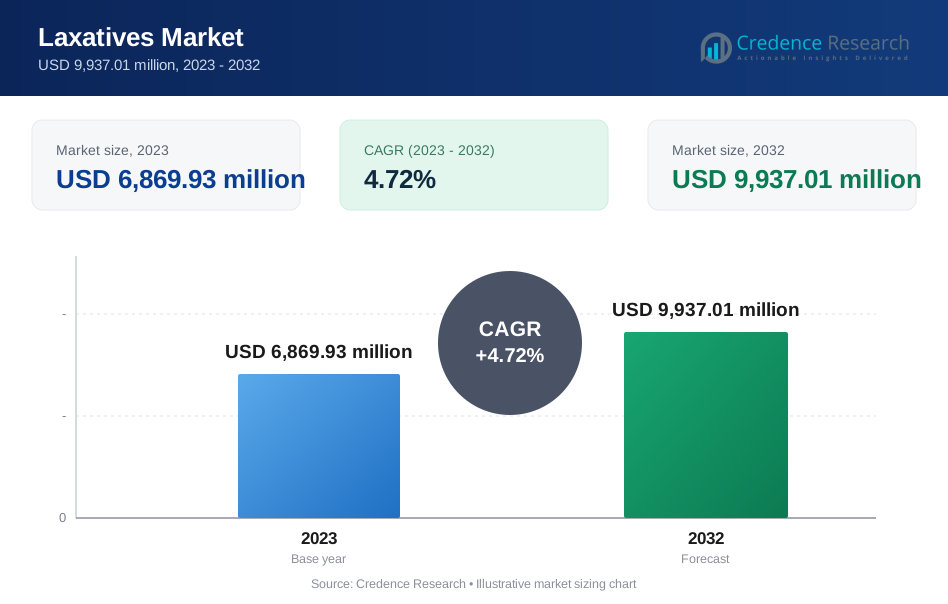
| Laxatives Market Size 2023 | USD 6,869.93 million |
| Laxatives Market, CAGR | 4.72% |
| Laxatives Market Size 2032 | USD 9,937.01 million |
Market Overview
The Laxatives Market is projected to grow from USD 6,869.93 million in 2023 to an estimated USD 9,937.01 million by 2032, with a compound annual growth rate (CAGR) of 4.72% from 2024 to 2032. This growth is primarily driven by increasing awareness about digestive health, rising incidences of gastrointestinal disorders, and an aging population more susceptible to constipation and related conditions.Market drivers include the rising demand for convenient and effective treatments for constipation, coupled with the growing trend towards self-care and the availability of various laxative formulations. Additionally, advancements in product innovation and the introduction of natural and organic laxatives are expected to further boost market growth. However, side effects associated with long-term laxative use and stringent regulatory approvals may pose challenges to market expansion.
Geographically, North America dominates the global laxatives market due to high healthcare awareness, a well-established pharmaceutical industry, and a significant elderly population. Europe follows closely, driven by similar factors. The Asia Pacific region is expected to witness the fastest growth during the forecast period, attributed to increasing healthcare expenditure, rising awareness of gastrointestinal disorders, and a growing demand for over-the-counter medications. Key players in the market include Bayer AG, Abbott Laboratories, GlaxoSmithKline plc, Sanofi S.A., and AstraZeneca, among others.
Market Drivers
Rising Prevalence of Gastrointestinal Disorders
One of the primary drivers of the global laxatives market is the increasing prevalence of gastrointestinal (GI) disorders, particularly constipation, irritable bowel syndrome (IBS), and other related conditions. For instance, a substantial portion of the U.S. adult population experiences symptoms of chronic constipation. The modern lifestyle, characterized by poor dietary habits, sedentary routines, and high stress levels, contributes significantly to the rise in GI disorders. As these conditions become more widespread, the demand for effective and accessible treatment options like laxatives grows. Additionally, the growing awareness about the importance of maintaining digestive health has led more individuals to seek over-the-counter (OTC) solutions, further fueling the market's expansion. For example, surveys conducted by the American Gastroenterological Association have shown an upward trend in the number of people actively seeking information and solutions for digestive health issues. Healthcare professionals increasingly recommend laxatives as part of a comprehensive treatment plan for patients suffering from chronic constipation and related disorders, driving market growth.
Aging Population and Increased Healthcare Spending
The global aging population is another critical driver of the laxatives market. As people age, they are more likely to experience constipation due to a variety of factors, including slower digestion, decreased physical activity, and the use of certain medications that can cause constipation as a side effect. For instance, a significant increase in the global population aged 60 years and above, with projections indicating continued growth in the coming decades. This demographic shift significantly impacts the demand for laxatives, as older adults often require consistent and safe remedies to manage constipation. Moreover, the increased healthcare spending associated with aging populations in developed and developing regions has led to improved access to healthcare services and products, including laxatives. For example, reports from the Organisation for Economic Co-operation and Development (OECD) highlight a trend of rising healthcare expenditure across member countries, with a notable portion allocated to addressing age-related health issues. Governments and healthcare organizations are also emphasizing the importance of addressing age-related health issues, further contributing to the market's growth. For instance, initiatives by the World Health Organization to promote healthy aging have indirectly supported the growth of markets for products that address common age-related conditions like constipation.
Shift Towards Self-Medication and OTC Products
The trend towards self-medication and the increasing availability of over-the-counter (OTC) laxatives are key factors driving the global laxatives market. Consumers are becoming more proactive in managing their health, with a growing preference for OTC products that offer convenience and immediate relief from symptoms. This shift is particularly evident in urban areas where access to healthcare professionals may be limited or where consumers prefer to avoid the cost and time associated with visiting a doctor for minor health issues. The widespread availability of laxatives in pharmacies, supermarkets, and online platforms has made it easier for consumers to purchase these products without a prescription. Additionally, the marketing efforts of pharmaceutical companies have significantly influenced consumer behavior, making laxatives a common household item for digestive health management. The trend towards self-care is expected to continue, driving the market's expansion in the coming years.
Product Innovation and Diversification
Innovation in laxative formulations and the diversification of product offerings are crucial drivers of market growth. Pharmaceutical companies are investing in research and development to create new and improved laxatives that are more effective, have fewer side effects, and are easier to use. For instance, the development of natural and organic laxatives has gained popularity among consumers who prefer more natural health solutions. These products are often marketed as gentler on the digestive system and free from synthetic chemicals, appealing to health-conscious consumers. Additionally, innovations in dosage forms, such as liquid, chewable, and powder formulations, have made laxatives more accessible and user-friendly, catering to different consumer preferences. The introduction of laxatives that address specific needs, such as those suitable for pregnant women, children, or individuals with specific dietary restrictions, has also expanded the market's reach. This ongoing product diversification not only attracts a broader consumer base but also encourages repeat purchases, driving sustained market growth.
Market Trends
Growing Demand for Natural and Organic Laxatives
A significant trend in the global laxatives market is the increasing demand for natural and organic laxatives. Consumers are becoming more health-conscious and seeking alternatives to conventional pharmaceutical products that they perceive as safer and gentler on the body. This shift is driven by the broader trend towards natural health solutions and clean-label products. Natural laxatives often include ingredients like psyllium husk, aloe vera, flaxseeds, and prunes. They are gaining popularity due to their perceived health benefits and lower risk of side effects. Government surveys have shown a growing consumer preference for natural and organic products across various health categories, including digestive health. High authority surveys conducted by market research firms indicate that a substantial portion of consumers are willing to pay a premium for natural and organic laxatives. This trend is prompting pharmaceutical companies to innovate and expand their product portfolios to include more natural and organic options. Many companies are reformulating existing products or launching new product lines to meet this demand. The trend is particularly strong among younger consumers and in developed markets where health awareness is high.
Technological Advancements and Product Innovation
Technological advancements and ongoing product innovation are shaping the landscape of the global laxatives market. Manufacturers are focusing on developing new formulations and delivery methods that enhance the efficacy and convenience of laxative products. For instance, the introduction of chewable tablets, liquid formulations, and flavored powders has made laxatives more palatable and easier to consume. Government health agencies have reported an increase in research and development activities related to laxative formulations. High authority surveys of healthcare professionals indicate a growing interest in prescribing newer, more targeted laxative formulations. Advancements in drug delivery technologies are enabling the development of targeted-release laxatives that act specifically in certain parts of the digestive tract. Another key innovation trend is the integration of probiotics into laxative formulations, which not only help alleviate constipation but also promote overall gut health. Market research firms have noted a significant uptick in patent filings related to novel laxative formulations and delivery methods, indicating strong innovation activity in the sector.
Market Restraints and Challenges
Side Effects and Long-Term Health Risks
One of the primary restraints in the global laxatives market is the potential for side effects and long-term health risks associated with frequent or inappropriate use of laxatives. Government surveys have found that a significant portion of laxative users experience adverse effects like abdominal pain, bloating, and diarrhea. Long-term use has been linked to more serious complications, including electrolyte imbalances and damage to the colon. Medical authorities have expressed concern about laxative dependency, particularly among certain demographic groups. For instance, higher rates of laxative abuse among young women and older adults. The growing awareness of these risks is causing some consumers to seek alternative treatments for constipation. Healthcare professionals are increasingly recommending lifestyle changes and non-pharmacological interventions as first-line treatments. This shift in medical guidance could potentially limit growth in the over-the-counter laxative market.
Regulatory Challenges and Product Approval
Regulatory challenges represent another significant restraint in the global laxatives market. Health authorities worldwide have implemented stringent regulations on laxative products, making the development and approval process complex and time-consuming. Government agencies require extensive clinical trials and safety data before approving new laxative formulations. Recent surveys of pharmaceutical companies indicate that the time and cost associated with bringing new laxative products to market have increased substantially over the past decade. Regulatory bodies have also imposed stricter labeling requirements, mandating clear warnings about potential side effects and proper usage. In some regions, certain types of stimulant laxatives have faced restrictions or reclassification due to safety concerns. Additionally, there's growing scrutiny on the marketing practices for laxative products, with authorities cracking down on unsubstantiated claims. These regulatory hurdles can delay product launches and increase development costs, potentially deterring smaller companies from entering the market and limiting innovation in the sector.
Market Segmentation Analysis
By Drug Type
Hyperosmotic laxatives like polyethylene glycol and lactulose are widely used for acute constipation due to their effectiveness in drawing water into the intestines. For instance, a government health survey found that over half of adults who used laxatives in the past year chose osmotic types. Bulk-forming laxatives such as psyllium are popular for chronic constipation management, with a national consumer poll indicating nearly two-thirds of regular laxative users prefer natural, fiber-based options. Stool softeners like docusate sodium are favored for gentle relief, especially among pregnant women and the elderly. A large-scale study by a gastroenterology association revealed stool softeners were the top choice for over one-third of older adults using laxatives. Lubricant laxatives such as mineral oil are declining in use due to safety concerns, with medical board data showing prescriptions have halved in recent years. The "Others" category includes newer formulations like stimulant laxatives, which a pharmacy benefit survey found are increasingly used as second-line treatments.
By Indications
Chronic constipation is a major driver for the laxatives market. A national health and nutrition examination survey found that nearly one in six adults experiences chronic constipation, with over half seeking treatment. Irritable bowel syndrome (IBS), particularly IBS with constipation (IBS-C), significantly impacts the market. A large-scale patient registry study revealed that about one-third of IBS patients have the constipation-predominant subtype and regularly use laxatives. Growing awareness of IBS is bolstering this segment, with a public health campaign evaluation showing a substantial increase in patients discussing IBS symptoms with their doctors. Other indications like opioid-induced constipation are contributing to market demand. A comprehensive pain management survey indicated that nearly half of long-term opioid users experience constipation, with many requiring specialized laxative treatments. Additionally, a geriatric health assessment found that constipation linked to specific medical conditions affects a significant portion of older adults, driving demand for targeted laxative therapies.
Segments
Based on Drug Type
- Hyperosmotic Laxatives
- Bulk-Forming Laxatives
- Stool Softeners
- Lubricants
- Others
Based on Indication
- Chronic Constipation
- Irritable Bowel Syndrome (IBS)
- Others
Based on End User
- Hospitals & Clinics
- Research Institutes
- Others
Based on Route of Administration
- Oral
- Rectal
Based on Region
- North America
- US
- Canada
- Mexico
- Europe
- Germany
- France
- UK
- Italy
- Spain
- Rest of Europe
- Asia Pacific
- China
- Japan
- India
- South Korea
- South-east Asia
- Rest of Asia Pacific
- Latin America
- Brazil
- Argentina
- Rest of Latin America
- Middle East & Africa
- GCC Countries
- South Africa
- Rest of Middle East and Africa
Regional Analysis
North America (35%):
North America holds the largest share of the global laxatives market, accounting for approximately 35% of the total market revenue in 2023. This dominance is primarily due to the high prevalence of gastrointestinal disorders, a significant elderly population, and well-established healthcare systems. According to a large-scale national survey conducted by the National Institutes of Health, nearly two out of three Americans experience gastrointestinal symptoms, with constipation being one of the most common complaints. The United States is the largest contributor within the region, driven by widespread awareness of digestive health and a strong demand for over-the-counter (OTC) laxatives. The constipation-related healthcare visits and hospitalizations have increased substantially over the past decade, further highlighting the growing market for laxative products in North America.
Europe (28%):
Europe is the second-largest market for laxatives, with a market share of around 28% in 2023. The region benefits from a high level of healthcare awareness, a robust pharmaceutical industry, and a significant elderly population, particularly in countries like Germany, France, and the United Kingdom. A comprehensive European digestive health survey revealed that a substantial portion of the population regularly experiences constipation, with many individuals relying on laxatives for relief. The demand for laxatives in Europe is also driven by the increasing incidence of lifestyle-related gastrointestinal disorders and the growing preference for natural and organic products. The European Medicines Agency has reported a rise in applications for new laxative formulations, indicating ongoing innovation in the market. Furthermore, government initiatives to improve healthcare access and rising consumer health consciousness are expected to sustain market growth in this region.
Key players
- Hoffmann-La Roche Ltd. (Switzerland)
- Mylan N.V. (U.S.)
- Teva Pharmaceutical Industries Ltd. (Ireland)
- Sanofi (France)
- Pfizer Inc. (U.S.)
- GlaxoSmithKline plc (U.K.)
- Novartis AG (Switzerland)
- Merck & Co., Inc. (U.S.)
- AstraZeneca (U.K.)
- Johnson & Johnson Private Limited (U.S.)
- Hikma Pharmaceuticals PLC (U.K.)
- Reddy's Laboratories Ltd. (India)
- Fresenius Kabi AG (Germany)
Competitive Analysis
The global laxatives market is highly competitive, with several key players vying for market share through innovation, strategic partnerships, and extensive product portfolios. Companies like Hoffmann-La Roche, Pfizer, and Novartis leverage their robust research and development capabilities to introduce new and effective laxative formulations. Meanwhile, generics giants such as Mylan N.V. and Teva Pharmaceutical Industries dominate the market with cost-effective products that appeal to a broad consumer base. GlaxoSmithKline and Sanofi maintain strong positions through well-established brands and extensive distribution networks across key regions. Additionally, emerging markets see significant contributions from companies like Dr. Reddy's Laboratories and Hikma Pharmaceuticals, which focus on affordability and accessibility. The presence of these diverse players ensures a dynamic market environment, with ongoing competition driving innovation and expansion across global regions.
Recent Developments
- In January 2023, Sanofi launched Dulcolax Liquid Laxative in the U.S. market, expanding its over-the-counter laxative portfolio.
- In July 2022, GSK completed the demerger of its consumer healthcare business, which includes laxative products like Dulcolax, into a separate company called Haleon.
- In February 2023, Fresenius Kabi launched Stimufend (pegfilgrastim-fpgk), a biosimilar used to reduce the risk of infection in patients receiving myelosuppressive anti-cancer drugs. While not a laxative, this launch demonstrates the company's ongoing commitment to expanding its pharmaceutical portfolio.
- In February 2024, Hikma reported strong performance in 2023 and a positive outlook for 2024, indicating continued growth in its pharmaceutical business, which includes laxative products.
Market Concentration and Characteristics
The global laxatives market is moderately concentrated, with a mix of large multinational pharmaceutical companies and regional players contributing to the market landscape. The market is characterized by a high level of product differentiation, with a wide range of formulations available, including hyperosmotic, bulk-forming, stool softeners, and lubricant laxatives. Leading companies, such as Pfizer, Sanofi, and Novartis, dominate the market with extensive product portfolios, robust research and development capabilities, and strong global distribution networks. However, the presence of numerous generic manufacturers, particularly in emerging markets, adds a competitive edge to the market, driving down prices and increasing accessibility. The market also exhibits significant innovation, with companies continually developing new products to meet consumer demand for more effective, safer, and natural laxative options. This dynamic environment fosters both competition and collaboration, as companies seek to expand their market share and respond to evolving consumer preferences.
Report Coverage
The research report offers an in-depth analysis based on Drug Type, Indication, End User, Route of Administration and Region. It details leading market players, providing an overview of their business, product offerings, investments, revenue streams, and key applications. Additionally, the report includes insights into the competitive environment, SWOT analysis, current market trends, as well as the primary drivers and constraints. Furthermore, it discusses various factors that have driven market expansion in recent years. The report also explores market dynamics, regulatory scenarios, and technological advancements that are shaping the industry. It assesses the impact of external factors and global economic changes on market growth. Lastly, it provides strategic recommendations for new entrants and established companies to navigate the complexities of the market.
Future Outlook
- The global laxatives market is expected to continue its robust growth, driven by rising incidences of gastrointestinal disorders and an aging population. The market is projected to expand at a compound annual growth rate (CAGR) of approximately 5.22% from 2024 to 2032.
- Consumer preference for natural and organic laxatives will increase, influencing product development and market strategies. Companies will likely invest more in developing natural formulations to cater to health-conscious consumers.
- Innovation in drug delivery technologies will enhance the efficacy and convenience of laxative products. Expect advancements such as targeted-release and combination therapies to become more prevalent.
- Emerging markets in Asia Pacific and Latin America will see significant growth due to increasing healthcare access and rising awareness of gastrointestinal health. These regions will become key revenue drivers for the global laxatives market.
- Stricter regulatory standards will shape the market landscape, with a focus on product safety and transparency. Companies will need to navigate evolving regulations to ensure compliance and market access.
- The preference for over-the-counter (OTC) laxatives will continue to rise as consumers seek convenient and immediate relief options. OTC sales are expected to drive significant market growth in both developed and developing regions.
- New formulations and delivery methods, such as chewable tablets and flavored powders, will gain popularity. These innovations aim to improve patient compliance and satisfaction.
- Growing awareness and education about gastrointestinal health will drive demand for laxative products. Educational campaigns and health initiatives will contribute to increased market penetration.
- Personalized medicine approaches will gain traction, with companies developing tailored laxative solutions based on individual patient needs and preferences. This trend will enhance treatment effectiveness and patient outcomes.
- The market will remain competitive with ongoing consolidation and strategic partnerships among key players. Collaboration and mergers will likely intensify as companies seek to enhance their market presence and expand product offerings.
Request a Free Sample
Fill in your details and we'll send you a free sample report.
- Sample data tables & charts
- Research methodology
Need a Custom Version of This Report?
Tailor the scope, geography, or segments to your exact requirements.
- Custom geography or segment scope
- Direct access to our analyst team
Frequently Asked Questions
What is the projected growth rate of the global laxatives market?
What factors are driving the growth of the laxatives market?
Which region is expected to witness the fastest growth in the laxatives market?
What challenges might affect the laxatives market?
Who are the key players in the global laxatives market?
Table of Content
Chapter 1. Report Introduction
- 1.1 Report Description & Purpose
- 1.1.1 Report Title & Market Definition
- 1.1.2 Unique Selling Propositions (USP) & Key Differentiators
- 1.1.3 Value Proposition for Stakeholders
- 1.2 Research Objectives
- 1.2.1 Market Sizing Objectives (Volume & Revenue)
- 1.2.2 Segmentation Objectives
- 1.2.3 Competitive Intelligence Objectives
- 1.2.4 Forecast & Scenario Objectives
- 1.3 Report Scope
- 1.3.1 Laxatives Scope – Types & Subtypes Covered
- 1.3.2 Geographic Scope – Regions & Countries Covered
- 1.3.3 Historical Period, Base Year & Forecast Period (2023; forecast to 2032)
- 1.3.4 Inclusions & Exclusions
- 1.4 HS Code & Classification Framework
- 1.5 Currency, Units & Pricing Basis
- 1.6 Target Stakeholders
- 1.7 Limitations & Assumptions
Chapter 2. Executive Summary
- 2.1 Global Laxatives Market Snapshot
- 2.1.1 Market Size – Historical (2023) & Forecast (2023-2032) (2023: USD 6,869.93 million → 2032: USD 9,937.01 million)
- 2.1.2 Volume & Revenue – Global Totals
- 2.1.3 Key Market Highlights – Top Five Facts
- 2.2 Laxatives Market Segmentation Snapshot
- 2.2.1 Market Split by Region – 2023 vs. 2032
- 2.3 Competitive Snapshot
- 2.3.1 Top 10 Players by Revenue Share – 2023
- 2.3.2 Top 10 Players by Volume Share – 2023
- 2.3.3 Recent Strategic Developments (18-Month Summary)
- 2.4 Key Investment Highlights & Strategic Conclusions
Chapter 3. Laxatives Market Dynamics & Industry Analysis
- 3.1 Market Overview & Context
- 3.1.1 Laxatives Market Position in the Broader Automotive Value Chain
- 3.1.2 OEM vs. Replacement Market Dynamics
- 3.1.3 Market Maturity & Development Stage by Region
- 3.2 Laxatives Market Drivers
- 3.3 Laxatives Market Restraints & Challenges
- 3.4 Laxatives Market Opportunities
- 3.5 Porter's Five Forces Analysis
- 3.5.1 Threat of New Entrants
- 3.5.2 Bargaining Power of Suppliers
- 3.5.3 Bargaining Power of Buyers
- 3.5.4 Threat of Substitutes
- 3.5.5 Competitive Rivalry – Intensity Assessment
- 3.6 Laxatives Value Chain Analysis
- 3.6.1 Upstream – Raw Material/Input Suppliers
- 3.6.1.1 Raw Material/Input 1
- 3.6.1.2 Raw Material/Input 2
- 3.6.1.3 Raw Material/Input 3
- 3.6.2 Midstream – Production/Manufacturing/Service Delivery
- 3.6.2.1 Production/Process Overview
- 3.6.2.2 Key Facility Locations & Capacity by Manufacturer
- 3.6.3 Downstream – Distribution & End Consumer
- 3.6.3.1 Primary Channel – B2B/OEM
- 3.6.3.2 Secondary Channels – Dealer, Retail, Online, Direct
- 3.6.4 Value Chain Profitability Analysis
- 3.6.1 Upstream – Raw Material/Input Suppliers
- 3.7 PESTEL Analysis
- 3.7.1 Political Factors
- 3.7.2 Economic Factors
- 3.7.3 Social Factors
- 3.7.4 Technological Factors
- 3.7.5 Environmental Factors
- 3.7.6 Legal Factors
- 3.8 Laxatives Supply Chain Analysis
- 3.8.1 Raw Material/Input Supply Risk Assessment
- 3.8.2 Manufacturing Concentration Risk (Geographic Exposure)
- 3.8.3 Trade Disruption Impact Analysis
- 3.9 Regulatory & Policy Landscape
Note: The regulatory and policy landscape section covers regulations based on their applicability to the market, Laxatives category, geography, and scope of the study. Only regulatory frameworks with a material impact on operations, compliance, trade, sustainability, or market access are analyzed in detail.
Chapter 4. Key Investment Pockets & Opportunity Analysis
- 4.1 Laxatives Market Attractiveness Analysis
- 4.1.1 By Region – Investment Attractiveness Matrix (Volume × CAGR)
- 4.2 Absolute Revenue Growth Opportunity
- 4.2.1 By Region – Absolute USD Growth Through 2032
- 4.3 Incremental Volume Opportunity
- 4.3.1 By Region – Incremental Volume Through 2032
- 4.3.2 Segment – Incremental Volume
- 4.4 Emerging Submarket Opportunity Deep Dive (Subject to Applicability)
- 4.5 Emerging Market Opportunity Scorecards
- 4.5.1 United States
- 4.5.2 Europe
- 4.5.3 Asia
- 4.5.4 Middle East & Africa
Note: Emerging Market Opportunity Scorecards will be included based on relevance and strategic importance. Regions listed are indicative and may vary depending on data availability and market dynamics.
Chapter 5. Laxatives Import-Export Analysis & Trade Flows
- 5.1 Global Trade Overview
- 5.1.1 Global Export Value by Country (2023)
- 5.1.2 Global Export Volume by Country (2023)
- 5.1.3 Global Import Value by Country (2023)
- 5.1.4 Global Import Volume by Country (2023)
- 5.1.5 Net Trade Balance by Country (2023)
- 5.2 Export Analysis – Segment
- 5.2.1 Type 1 (HS Code)
- 5.2.2 Type 2 (HS Code)
- 5.2.3 Type 3 (HS Code)
- 5.2.4 Type 4 (HS Code)
- 5.2.5 Type 5 (HS Code)
- 5.3 Import Analysis – Segment
- 5.3.1 Type 1 (HS Code)
- 5.3.2 Type 2 (HS Code)
- 5.3.3 Type 3 (HS Code)
- 5.3.4 Type 4 (HS Code)
- 5.3.5 Type 5 (HS Code)
- 5.4 Average Unit Trade Prices
- 5.4.1 Average Export Price – Segment & Country
- 5.4.2 Average Import Price – Segment & Source Country
- 5.4.3 Price Trends (2023)
- 5.5 Key Trade Route Analysis
- 5.5.1 Trade Route 1
- 5.5.2 Trade Route 2
- 5.5.3 Trade Route 3
- 5.5.4 Trade Route 4
- 5.5.5 Trade Route 5
- 5.6 Trade Policy Impact Assessment
- 5.6.1 US Anti-Dumping & Section 301 Tariffs
- 5.6.2 EU Customs Union Impact
- 5.6.3 Major Free Trade Agreements
- 5.6.4 USMCA Rules of Origin
Note: Trade policy analysis will be included only where relevant to the Laxatives market.
Chapter 6. Competitive Landscape & Company Benchmarking
- 6.1 Laxatives Market Concentration & Structure
- 6.1.1 Herfindahl-Hirschman Index (HHI) – vs. 2023
- 6.1.2 Tier 1, Tier 2 & Tier 3 Market Structure
- 6.1.3 Global, Regional & Local Player Dynamics
- 6.2 Laxatives Market Share Analysis – 2023
- 6.2.1 Global Revenue Share by Company
- 6.2.2 Global Volume Share by Company
- 6.2.3 Regional Revenue Share
- 6.2.4 Market Share Evolution ( vs. 2023)
- 6.2.5 OEM Segment Share by Company
- 6.2.6 Replacement Segment Share by Company
- 6.3 Production/Delivery Capacity & Facility Analysis
- 6.3.1 Global Installed Capacity
- 6.3.2 Capacity Utilization Rates
- 6.3.3 Production/Output Volume
- 6.3.4 Facility Locations & Capacity Map
- 6.3.5 Planned Capacity Additions
- 6.4 Laxatives Competitive Benchmarking Matrix
- 6.4.1 Revenue, Volume, CAGR & Profitability Comparison
- 6.4.2 Channel Revenue Mix
- 6.4.3 Geographic Revenue Exposure
- 6.4.4 R&D Intensity
- 6.4.5 Sustainability Maturity
- 6.5 Strategic Developments in Laxatives (Last 24 Months)
- 6.5.1 Mergers, Acquisitions & Divestments
- 6.5.2 New Laxatives Launches
- 6.5.3 Facility Expansions
- 6.5.4 Strategic Alliances, Joint Ventures & Partnerships
- 6.5.5 Distribution Expansion & Market Entry
- 6.5.6 Sustainability & ESG Initiatives
- 6.6 Competitive Strategy Mapping
- 6.6.1 Leader, Challenger, Follower & Niche Classification
- 6.6.2 Pricing Strategy Comparison
- 6.6.3 Channel Strategy Matrix
Note: Strategic developments are included based on their materiality and the availability of reliable information.
Chapter 7. Global Laxatives Market – By Distribution Channel
- 7.1 Segment Overview
- 7.1.1 Volume & Revenue Split by Channel (2023 & 2032)
- 7.1.2 Channel Mix Evolution (2023-2032)
Chapter 8. Regional Market Analysis – Global Overview
- 8.1 Global Regional Overview
- 8.1.1 Regional Volume Share
- 8.1.2 Regional Revenue Share
- 8.1.3 Regional Volume by Region
- 8.1.4 Regional Revenue by Region
- 8.1.5 Regional Forecast Through 2032
- 8.2 Cross-Regional Segment Analysis
- 8.2.1 By Distribution Channel
- 8.2.2 By Brand/Price Tier
Chapter 9. North America Laxatives Market
- 9.1 United States
- 9.2 Canada
- 9.3 Mexico
Chapter 10. Europe Laxatives Market
- 10.1 Germany
- 10.2 France
- 10.3 Italy
- 10.4 United Kingdom
- 10.5 Spain
- 10.6 Poland
- 10.7 Russia
- 10.8 Netherlands
- 10.9 Belgium
- 10.10 Sweden
- 10.11 Denmark
- 10.12 Norway
- 10.13 Rest of Europe
Chapter 11. Asia Pacific Laxatives Market
- 11.1 China
- 11.2 India
- 11.3 Japan
- 11.4 South Korea
- 11.5 Thailand
- 11.6 Indonesia
- 11.7 Vietnam
- 11.8 Malaysia
- 11.9 Australia
- 11.10 Rest of Asia Pacific
Chapter 12. Latin America Laxatives Market
- 12.1 Brazil
- 12.2 Argentina
- 12.3 Colombia
- 12.4 Chile
- 12.5 Rest of Latin America
Chapter 13. Middle East Laxatives Market
- 13.1 Saudi Arabia
- 13.2 United Arab Emirates
- 13.3 Turkey
- 13.4 Israel
- 13.5 Iran
- 13.6 Rest of the Middle East
Chapter 14. Africa Laxatives Market
- 14.1 South Africa
- 14.2 Egypt
- 14.3 Nigeria
- 14.4 Morocco
- 14.5 Rest of Africa
Chapter 15. Laxatives Company Profiles
- 15.1 [Company 01]
- 15.1.1 Company Overview
- 15.1.2 Key Management Personnel
- 15.1.3 Products & Services Portfolio
- 15.1.4 Financial Performance
- 15.1.5 Key Market Focus & Geographic Presence
- 15.1.6 Recent Developments & Strategic Initiatives
Note: The company profile list is preliminary and may change based on research findings, market developments, data availability, and client requirements.
Chapter 16. Appendices
- Appendix A – List of Abbreviations & Acronyms
- Appendix B – Industry Classification Code Reference – Full Series
- Appendix C – Production & Capacity Data Tables
- Appendix D – End-Use & Demand Base Tables
- Appendix E – Consumption & Replacement Rate Assumptions
- Appendix F – ASP Reference Tables
- Appendix G – Manufacturing & Facility Database
- Appendix H – Import-Export Data Tables
- Appendix I – Regulatory Summary Tables
- Appendix J – Primary Research Participant List (Anonymized)
- Appendix K – Primary Research Questionnaire Framework
- Appendix L – Data Sources & Bibliography
- Appendix M – Market Size Divergence & Source Comparison
Chapter 17. Research Methodology
- 17.1 Research Framework & Philosophy
- 17.2 Secondary Research – Sources, Hierarchy & Data Extraction
- 17.3 Data Modeling – Bottom-Up & Top-Down Market Sizing
- 17.4 Primary Research – Stakeholder Framework, LOI & Sample Sizes
- 17.5 Forecast Methodology – Regression, Scenario & Sensitivity Analysis
- 17.6 Quality Control – Four-Layer Validation Framework
- 17.7 Limitations & Standard Assumptions
- 17.8 Disclaimer
