
| REPORT ATTRIBUTE | DETAILS |
|---|---|
| Historical Period | 2019-2022 |
| Base Year | 2023 |
| Forecast Period | 2024-2032 |
| Molecular Diagnostics Market Size 2023 | USD 15,293.47 million |
| Molecular Diagnostics Market, CAGR | 4.75% |
| Molecular Diagnostics MarketSize 2032 | USD 23,221.61 million |
Market Overview
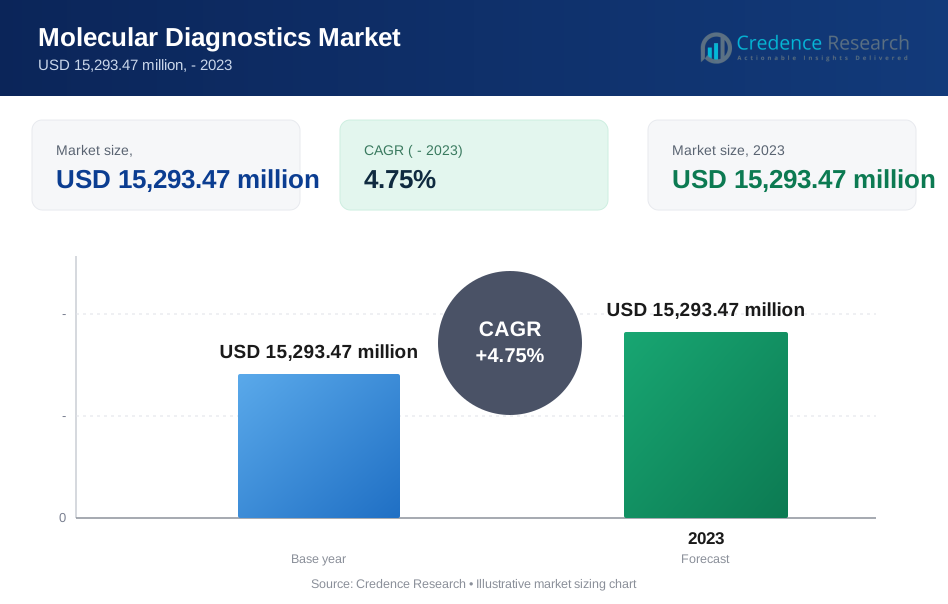
The Molecular Diagnostics Market is projected to grow from USD 15,293.47 million in 2023 to an estimated USD 23,221.61 million by 2032, with a compound annual growth rate (CAGR) of 4.75% from 2024 to 2032. This robust expansion is driven by the increasing adoption of personalized medicine, rising prevalence of infectious diseases, and a growing need for rapid and accurate diagnostic testing.
Key market drivers include technological advancements in molecular diagnostics, such as the development of next-generation sequencing (NGS) and point-of-care molecular testing, which enhance diagnostic accuracy and reduce turnaround times. Moreover, increasing demand for biomarkers and companion diagnostics to support targeted therapies is fueling market growth. Favorable government policies and significant investments in healthcare infrastructure further support market expansion, while trends toward decentralized testing continue to shape the industry landscape.
Geographically, North America dominates the molecular diagnostics market, attributed to well-established healthcare systems, high adoption rates of advanced diagnostics, and ongoing R&D initiatives. Europe follows, benefiting from supportive healthcare policies and robust laboratory networks. The Asia-Pacific region is expected to witness the fastest growth due to rising healthcare spending and increasing awareness of early disease diagnosis. Key market players include Roche Diagnostics, Abbott Laboratories, Thermo Fisher Scientific, Hologic Inc., and Qiagen, who lead the market through innovative product offerings and strategic collaborations.
Market Drivers
Rising Prevalence of Infectious Diseases and Chronic Conditions
The increasing prevalence of infectious diseases, such as COVID-19, HIV, and tuberculosis, as well as chronic conditions, including cancer and genetic disorders, significantly drives the molecular diagnostics market. The necessity for rapid and accurate testing solutions has heightened in light of recent global pandemics and the growing burden of chronic diseases worldwide. Molecular diagnostics offer highly sensitive and specific tools to detect pathogens, mutations, and genetic markers, leading to earlier diagnosis and more effective patient management. This capability has been further underscored during the COVID-19 pandemic, where molecular diagnostic tests, particularly polymerase chain reaction (PCR)-based assays, became critical in disease detection and outbreak control. Furthermore, the ongoing need for monitoring and managing chronic conditions has spurred the adoption of molecular tests to guide therapeutic decision-making, enabling better patient outcomes. For instance, in the U.S. alone, there were 3.8 million emergency department visits related to infectious and parasitic diseases in 2021, highlighting the significant burden these diseases place on healthcare systems. Additionally, chronic conditions such as diabetes affected nearly 31.9 million adults in 2023, further emphasizing the growing need for advanced diagnostic solutions.
Technological Advancements and Innovation in Diagnostic Tools
Continuous innovation in molecular diagnostics technologies is a pivotal driver for market growth. The development of next-generation sequencing (NGS), digital PCR, microarray technologies, and other advanced testing modalities has transformed molecular diagnostics, allowing for higher precision, faster turnaround times, and more comprehensive disease profiling. NGS, for instance, facilitates large-scale genomic analysis, enabling precise identification of genetic mutations and biomarkers associated with various diseases, including cancer. Similarly, point-of-care molecular diagnostics have emerged to meet the demand for quick and actionable results outside of traditional laboratory settings, providing timely and efficient testing in decentralized locations. These technological advancements have made molecular diagnostics more accessible, reducing costs, improving patient outcomes, and expanding the market's reach across diverse healthcare environments.For instance, next-generation sequencing (NGS) has revolutionized genomic analysis by enabling large-scale identification of genetic mutations. This technology is crucial in cancer diagnostics, where it helps identify specific mutations that guide targeted therapies. In fact, comprehensive genomic profiling tests like FoundationOne CDx have been approved for multiple cancer treatments, offering critical insights into personalized care.
Growing Focus on Personalized Medicine and Companion Diagnostics
The rising emphasis on personalized medicine is another significant driver boosting the molecular diagnostics market. Personalized medicine aims to tailor treatments based on individual patient profiles, including genetic, molecular, and environmental factors. This approach relies heavily on molecular diagnostic tools to identify biomarkers that guide targeted therapies, optimize drug efficacy, and minimize adverse effects. The increasing availability and demand for companion diagnostics—tests that help predict patient response to specific therapies—are contributing to the market's expansion. Companion diagnostics are widely used in oncology, where they assist in selecting the most appropriate treatment based on the genetic makeup of a tumor. For pharmaceutical companies, the integration of companion diagnostics with novel therapeutics enhances clinical success rates and improves patient outcomes, driving further investment and innovation in the field.For instance, in 2023, personalized medicines accounted for over one-third of new drug approvals by the U.S. FDA, with 26 new personalized treatments introduced—including seven for cancer and several others for rare diseases. This growing trend underscores the importance of companion diagnostics in guiding targeted therapies based on individual genetic profiles.
Increasing Government Support and Investments in Healthcare Infrastructure
Supportive government policies, increased public and private investments, and improved healthcare infrastructure are vital drivers propelling the molecular diagnostics market. Many countries have implemented initiatives and funding programs aimed at promoting the development and deployment of advanced diagnostic technologies. For example, government-backed projects focusing on infectious disease testing, cancer screening, and genetic testing have provided financial incentives for research and development. Regulatory authorities, such as the U.S. Food and Drug Administration (FDA) and the European Medicines Agency (EMA), have also introduced streamlined approval pathways for innovative molecular tests, fostering market growth. Furthermore, the expansion of healthcare infrastructure in emerging markets, particularly in Asia-Pacific and Latin America, has accelerated access to molecular diagnostics. This development ensures better reach and improved healthcare outcomes for a larger segment of the population, creating a positive impact on market growth. Additionally, collaborations between public and private sectors have fueled technological advancements and facilitated widespread adoption, enhancing the global market presence of molecular diagnostics solutions.
Market Trends
Growing Demand for Point-of-Care (POC) Molecular Diagnostics
The molecular diagnostics market is witnessing a strong shift toward point-of-care (POC) testing solutions. This trend is driven by the increasing need for rapid, accurate, and actionable diagnostic results, particularly in emergency and remote settings. POC molecular diagnostics allow healthcare professionals to conduct tests closer to patients, significantly reducing the turnaround time and expediting clinical decision-making. The rise of portable and easy-to-use molecular testing devices has enhanced accessibility to diagnostic tools, leading to improved patient outcomes in various care settings, such as clinics, community health centers, and even at-home testing kits. The COVID-19 pandemic further accelerated the adoption of POC molecular diagnostics, with demand surging for quick and reliable testing to control and monitor the spread of the virus. For instance, during the COVID-19 pandemic, point-of-care (POC) molecular diagnostics played a crucial role in managing the spread of the virus. Rapid POC molecular tests allowed healthcare providers to quickly identify infected individuals, even in remote or emergency settings, significantly reducing the time between testing and clinical decision-making. This rapid response was essential for controlling outbreaks and ensuring timely treatment in critical care scenarios.
Integration of Artificial Intelligence (AI) and Data Analytics
The integration of artificial intelligence (AI) and advanced data analytics is reshaping the molecular diagnostics landscape, enhancing accuracy, efficiency, and scalability of diagnostic solutions. AI algorithms are being leveraged to analyze complex genetic and molecular data, enabling the identification of disease patterns, biomarkers, and potential treatment targets with unprecedented precision. AI-driven tools are capable of processing vast datasets rapidly, which aids in faster diagnosis, predictive analytics, and personalized treatment recommendations. In addition, AI is improving automation in molecular diagnostics workflows, reducing human errors and boosting laboratory productivity. Advanced data analytics platforms also facilitate real-time tracking of infectious disease outbreaks and epidemiological trends, providing actionable insights for public health responses.This integration of AI and data-driven analytics is transforming how clinicians, researchers, and public health agencies utilize molecular diagnostics to optimize healthcare delivery, contributing to ongoing advancements and growth in the market.
Market Restraints and Challenges
High Costs and Limited Accessibility
One of the primary restraints in the molecular diagnostics market is the high cost associated with advanced testing technologies and procedures. The development, production, and implementation of molecular diagnostic tests, such as next-generation sequencing (NGS) and digital PCR, often entail substantial expenses, making them less accessible to healthcare providers in low-resource settings. Additionally, specialized equipment, reagents, and skilled personnel are required to operate these complex diagnostic platforms, further driving up costs and limiting widespread adoption. In many regions, particularly low- and middle-income countries, healthcare systems struggle to integrate and scale molecular diagnostics due to financial constraints and infrastructure gaps. This cost barrier can hinder patient access to timely and accurate diagnostic tests, posing a challenge to equitable healthcare delivery. While efforts are being made to reduce costs and broaden accessibility through innovations and subsidies, affordability remains a significant challenge in scaling these technologies across diverse populations.
Regulatory Complexities and Approval Delays
Stringent regulatory requirements and complex approval processes present another significant challenge for the molecular diagnostics market. Due to the critical role of molecular diagnostic tests in patient care, regulatory bodies, such as the U.S. Food and Drug Administration (FDA) and the European Medicines Agency (EMA), enforce rigorous validation protocols and compliance standards. While these measures are essential for ensuring safety and accuracy, they can also create prolonged delays in product approvals and market entry. The evolving regulatory landscape for new and emerging technologies, such as companion diagnostics and liquid biopsies, can lead to inconsistencies and slow the commercialization of innovative solutions. For manufacturers, navigating the regulatory environment often involves significant time and resource investments, which can impede innovation and increase costs. Harmonizing international regulatory standards and streamlining approval pathways will be crucial in addressing these challenges and accelerating market growth.
Market Segmentation Analysis
By Product
The molecular diagnostics market is segmented by product into three main categories. The instruments segment comprises advanced diagnostic equipment, including PCR machines, sequencers, and other molecular diagnostic tools, which are essential for performing complex tests and represent a significant revenue source. The reagents segment includes critical components such as chemicals, enzymes, and kits necessary for conducting molecular tests, with steady growth anticipated due to the continuous demand for testing. Additionally, the others category covers consumables and ancillary products like software and data analysis tools, which are becoming increasingly vital for enhancing laboratory operations and efficiency.
By application
The molecular diagnostics market is segmented by application into several key areas. Pharmacogenomics focuses on how genetic variations influence individual responses to medications, driving growth as personalized medicine gains traction. In the realm of neurological diseases, molecular diagnostics are essential for diagnosing disorders like Alzheimer's and Parkinson's through genetic testing and biomarker identification. The cardiovascular segment is also witnessing increased demand for early detection of heart diseases and genetic risk assessments. Additionally, microbiology plays a critical role in detecting infectious agents, including bacteria, viruses, and fungi, with rapid testing becoming crucial following recent pandemics. Finally, the market also encompasses oncology and genetic testing for inherited disorders, which are increasingly recognized as awareness around these conditions grows.
Segments
Based on Product
- Instruments
- Reagents
- Others
Based on Application
- Pharmacogenomics
- Neurological Disease
- Cardiovascular Disease
- Microbiology
Based on Test Location
- Point of Care
- Self-Test or OTC
- Central Laboratories
Based on Technology
- In Situ Hybridization
- Isothermal Nucleic Acid Amplification Technology (INAAT)
- Chips and Microarrays
- Mass Spectrometry
- Others
Based on Region
- North America
- U.S.
- Canada
- Mexico
- Europe
- Germany
- France
- U.K.
- Italy
- Spain
- Rest of Europe
- Asia Pacific
- China
- Japan
- India
- South Korea
- South-east Asia
- Rest of Asia Pacific
- Latin America
- Brazil
- Argentina
- Rest of Latin America
- Middle East & Africa
- GCC Countries
- South Africa
- Rest of the Middle East and Africa
Regional Analysis
North America (40%)
North America leads the molecular diagnostics market, accounting for approximately 40% of the global share. This dominance is primarily attributed to advanced healthcare infrastructure, high levels of investment in research and development, and a strong presence of major market players. The United States, in particular, has been at the forefront of adopting innovative molecular diagnostic technologies, driven by increasing prevalence rates of chronic diseases and a growing focus on personalized medicine. Additionally, favorable reimbursement policies and a well-established regulatory framework further enhance the region's market position.
Europe (30%)
Europe holds around 30% of the molecular diagnostics market share, benefiting from a robust healthcare system and supportive government initiatives aimed at improving healthcare delivery. Countries such as Germany, the UK, and France are significant contributors to this market, with strong emphasis on research and innovation in diagnostics. The European region is also witnessing increasing collaboration between public and private sectors to enhance molecular diagnostic capabilities. Furthermore, the growing prevalence of infectious diseases and the rising demand for personalized medicine are key drivers of market growth in this region.
Key players
- BD
- bio Merieux SA
- Bio-Rad Laboratories, Inc.
- Abbott
- Agilent Technologies, Inc.
- Danaher
- Hologic Inc. (Gen Probe)
- Illumina, Inc.
- Grifols, S.A.
- QIAGEN
- Hoffmann-La Roche, Ltd.
- Siemens Healthineers AG
- Sysmex Corporation
Competitive Analysis
The molecular diagnostics market is characterized by strong competition among key players, each leveraging unique strengths to capture market share. Companies such as Roche and Abbott excel in their extensive product portfolios, offering a range of advanced diagnostic solutions that address various medical needs. Innovators like Illumina and Thermo Fisher Scientific lead in technological advancements, focusing on next-generation sequencing and precision diagnostics. Additionally, firms such as Hologic and QIAGEN emphasize strategic partnerships and collaborations to enhance their market position. The landscape is further shaped by ongoing mergers and acquisitions, enabling companies to expand their capabilities and reach. As personalized medicine and rapid diagnostic solutions gain prominence, these key players are well-positioned to adapt and thrive, driving continued growth in the molecular diagnostics market.
Recent Developments
- In February 2024, BioMérieux received FDA clearance and a CLIA waiver for its SpotFire molecular diagnostics system, aimed at point-of-care testing. This system is expected to drive future growth in BioMérieux’s molecular biology business.
- In July 2024, Danaher launched two new CLIA- and CAP-certified diagnostic labs to accelerate the development of companion diagnostics (CDx) and complementary diagnostics (CoDx).
- In July 2024, Illumina acquired Fluent BioSciences to expand its single-cell analysis technology and enhance its multiomics capabilities.
- In May 2024, Grifols announced a €130 million investment to expand its Barcelona industrial complex with new purification and fill-and-finish facilities for its Bioscience Division and a new R&D center.
- In 2024, QIAGEN announced plans for the U.S. regulatory submission of a new syndromic panel for meningitis as part of its QIAstat-Dx product line.
- In July 2024, Siemens Healthineers acquired Novartis’ radiopharmaceutical business for €200 million ($223 million), expanding its PET imaging capabilities across Europe.
Market Concentration and Characteristics
The molecular diagnostics market exhibits moderate concentration, characterized by a diverse range of players, from established multinational corporations to emerging companies. Major players such as Roche, Abbott, and Thermo Fisher dominate the market, leveraging extensive research and development capabilities, broad product portfolios, and strong distribution networks to maintain competitive advantages. The market is characterized by rapid technological advancements, particularly in areas such as next-generation sequencing and point-of-care testing, which drive innovation and create opportunities for new entrants. Additionally, the increasing demand for personalized medicine and companion diagnostics is fostering collaboration among key stakeholders, including pharmaceutical companies and diagnostic manufacturers, further intensifying competition. As healthcare systems globally prioritize early disease detection and patient-centered care, the molecular diagnostics market continues to evolve, marked by strategic partnerships, mergers, and acquisitions aimed at enhancing product offerings and expanding market reach.
Report Coverage
The research report offers an in-depth analysis based on Product, Application, Test Location, Technology and Region. It details leading market players, providing an overview of their business, product offerings, investments, revenue streams, and key applications. Additionally, the report includes insights into the competitive environment, SWOT analysis, current market trends, as well as the primary drivers and constraints. Furthermore, it discusses various factors that have driven market expansion in recent years. The report also explores market dynamics, regulatory scenarios, and technological advancements that are shaping the industry. It assesses the impact of external factors and global economic changes on market growth. Lastly, it provides strategic recommendations for new entrants and established companies to navigate the complexities of the market.
Future Outlook
- The demand for personalized medicine will continue to rise, driving advancements in molecular diagnostics that cater to individual patient profiles and genetic variations.
- Ongoing innovations in testing technologies, such as next-generation sequencing (NGS) and digital PCR, will enhance the sensitivity and specificity of molecular diagnostic tests.
- The trend towards point-of-care testing will gain momentum, enabling faster diagnostic results in various healthcare settings, particularly in remote and underserved areas.
- With a heightened focus on public health due to recent pandemics, the market for infectious disease molecular diagnostics is expected to expand significantly, emphasizing rapid testing solutions.
- The incorporation of artificial intelligence and machine learning into molecular diagnostics will streamline data analysis, improve diagnostic accuracy, and facilitate personalized treatment plans.
- As the market evolves, regulatory frameworks will adapt to accommodate new technologies, potentially streamlining approval processes and encouraging innovation in molecular diagnostics.
- The increasing preference for less invasive diagnostic methods, such as liquid biopsies, will drive growth in cancer diagnostics, allowing for earlier detection and better monitoring of treatment responses.
- Emerging markets in Asia-Pacific, Latin America, and Africa will experience significant growth in molecular diagnostics as healthcare infrastructure improves and access to advanced diagnostic tools increases.
- The collaboration between pharmaceutical companies and diagnostic developers will intensify, promoting the use of companion diagnostics to enhance targeted therapies and improve patient outcomes.
- As the molecular diagnostics market continues to expand, there will be increased investment in research and development, fostering innovation and the introduction of next-generation diagnostic solutions that address unmet clinical needs.
Request a Free Sample
Fill in your details and we'll send you a free sample report.
- Sample data tables & charts
- Research methodology
Need a Custom Version of This Report?
Tailor the scope, geography, or segments to your exact requirements.
- Custom geography or segment scope
- Direct access to our analyst team
Frequently Asked Questions
What is the projected market size of the molecular diagnostics market in 2023 and 2032?
What is the compound annual growth rate (CAGR) for the molecular diagnostics market?
What are the key drivers of growth in the molecular diagnostics market?
Which regions are leading in the molecular diagnostics market?
What types of technologies are used in molecular diagnostics?
Table of Content
Chapter 1. Report Introduction
- 1.1 Report Description & Purpose
- 1.1.1 Report Title & Market Definition
- 1.1.2 Unique Selling Propositions (USP) & Key Differentiators
- 1.1.3 Value Proposition for Stakeholders
- 1.2 Research Objectives
- 1.2.1 Market Sizing Objectives (Volume & Revenue)
- 1.2.2 Segmentation Objectives
- 1.2.3 Competitive Intelligence Objectives
- 1.2.4 Forecast & Scenario Objectives
- 1.3 Report Scope
- 1.3.1 Molecular Diagnostics Scope – Types & Subtypes Covered
- 1.3.2 Geographic Scope – Regions & Countries Covered
- 1.3.3 Historical Period, Base Year & Forecast Period (the historical period; forecast to 2023)
- 1.3.4 Inclusions & Exclusions
- 1.4 HS Code & Classification Framework
- 1.5 Currency, Units & Pricing Basis
- 1.6 Target Stakeholders
- 1.7 Limitations & Assumptions
Chapter 2. Executive Summary
- 2.1 Global Molecular Diagnostics Market Snapshot
- 2.1.1 Market Size – Historical (the historical period) & Forecast (2023) (base year: USD 15,293.47 million → 2023: USD 15,293.47 million)
- 2.1.2 Volume & Revenue – Global Totals
- 2.1.3 Key Market Highlights – Top Five Facts
- 2.2 Molecular Diagnostics Market Segmentation Snapshot
- 2.2.1 Market Split by Region – vs. 2023
- 2.3 Competitive Snapshot
- 2.3.1 Top 10 Players by Revenue Share –
- 2.3.2 Top 10 Players by Volume Share –
- 2.3.3 Recent Strategic Developments (18-Month Summary)
- 2.4 Key Investment Highlights & Strategic Conclusions
Chapter 3. Molecular Diagnostics Market Dynamics & Industry Analysis
- 3.1 Market Overview & Context
- 3.1.1 Molecular Diagnostics Market Position in the Broader Automotive Value Chain
- 3.1.2 OEM vs. Replacement Market Dynamics
- 3.1.3 Market Maturity & Development Stage by Region
- 3.2 Molecular Diagnostics Market Drivers
- 3.3 Molecular Diagnostics Market Restraints & Challenges
- 3.4 Molecular Diagnostics Market Opportunities
- 3.5 Porter's Five Forces Analysis
- 3.5.1 Threat of New Entrants
- 3.5.2 Bargaining Power of Suppliers
- 3.5.3 Bargaining Power of Buyers
- 3.5.4 Threat of Substitutes
- 3.5.5 Competitive Rivalry – Intensity Assessment
- 3.6 Molecular Diagnostics Value Chain Analysis
- 3.6.1 Upstream – Raw Material/Input Suppliers
- 3.6.1.1 Raw Material/Input 1
- 3.6.1.2 Raw Material/Input 2
- 3.6.1.3 Raw Material/Input 3
- 3.6.2 Midstream – Production/Manufacturing/Service Delivery
- 3.6.2.1 Production/Process Overview
- 3.6.2.2 Key Facility Locations & Capacity by Manufacturer
- 3.6.3 Downstream – Distribution & End Consumer
- 3.6.3.1 Primary Channel – B2B/OEM
- 3.6.3.2 Secondary Channels – Dealer, Retail, Online, Direct
- 3.6.4 Value Chain Profitability Analysis
- 3.6.1 Upstream – Raw Material/Input Suppliers
- 3.7 PESTEL Analysis
- 3.7.1 Political Factors
- 3.7.2 Economic Factors
- 3.7.3 Social Factors
- 3.7.4 Technological Factors
- 3.7.5 Environmental Factors
- 3.7.6 Legal Factors
- 3.8 Molecular Diagnostics Supply Chain Analysis
- 3.8.1 Raw Material/Input Supply Risk Assessment
- 3.8.2 Manufacturing Concentration Risk (Geographic Exposure)
- 3.8.3 Trade Disruption Impact Analysis
- 3.9 Regulatory & Policy Landscape
Note: The regulatory and policy landscape section covers regulations based on their applicability to the market, Molecular Diagnostics category, geography, and scope of the study. Only regulatory frameworks with a material impact on operations, compliance, trade, sustainability, or market access are analyzed in detail.
Chapter 4. Key Investment Pockets & Opportunity Analysis
- 4.1 Molecular Diagnostics Market Attractiveness Analysis
- 4.1.1 By Region – Investment Attractiveness Matrix (Volume × CAGR)
- 4.2 Absolute Revenue Growth Opportunity
- 4.2.1 By Region – Absolute USD Growth Through 2023
- 4.3 Incremental Volume Opportunity
- 4.3.1 By Region – Incremental Volume Through 2023
- 4.3.2 Segment – Incremental Volume
- 4.4 Emerging Submarket Opportunity Deep Dive (Subject to Applicability)
- 4.5 Emerging Market Opportunity Scorecards
- 4.5.1 United States
- 4.5.2 Europe
- 4.5.3 Asia
- 4.5.4 Middle East & Africa
Note: Emerging Market Opportunity Scorecards will be included based on relevance and strategic importance. Regions listed are indicative and may vary depending on data availability and market dynamics.
Chapter 5. Molecular Diagnostics Import-Export Analysis & Trade Flows
- 5.1 Global Trade Overview
- 5.1.1 Global Export Value by Country (the historical period)
- 5.1.2 Global Export Volume by Country (the historical period)
- 5.1.3 Global Import Value by Country (the historical period)
- 5.1.4 Global Import Volume by Country (the historical period)
- 5.1.5 Net Trade Balance by Country (the historical period)
- 5.2 Export Analysis – Segment
- 5.2.1 Type 1 (HS Code)
- 5.2.2 Type 2 (HS Code)
- 5.2.3 Type 3 (HS Code)
- 5.2.4 Type 4 (HS Code)
- 5.2.5 Type 5 (HS Code)
- 5.3 Import Analysis – Segment
- 5.3.1 Type 1 (HS Code)
- 5.3.2 Type 2 (HS Code)
- 5.3.3 Type 3 (HS Code)
- 5.3.4 Type 4 (HS Code)
- 5.3.5 Type 5 (HS Code)
- 5.4 Average Unit Trade Prices
- 5.4.1 Average Export Price – Segment & Country
- 5.4.2 Average Import Price – Segment & Source Country
- 5.4.3 Price Trends (the historical period)
- 5.5 Key Trade Route Analysis
- 5.5.1 Trade Route 1
- 5.5.2 Trade Route 2
- 5.5.3 Trade Route 3
- 5.5.4 Trade Route 4
- 5.5.5 Trade Route 5
- 5.6 Trade Policy Impact Assessment
- 5.6.1 US Anti-Dumping & Section 301 Tariffs
- 5.6.2 EU Customs Union Impact
- 5.6.3 Major Free Trade Agreements
- 5.6.4 USMCA Rules of Origin
Note: Trade policy analysis will be included only where relevant to the Molecular Diagnostics market.
Chapter 6. Competitive Landscape & Company Benchmarking
- 6.1 Molecular Diagnostics Market Concentration & Structure
- 6.1.1 Herfindahl-Hirschman Index (HHI) – vs.
- 6.1.2 Tier 1, Tier 2 & Tier 3 Market Structure
- 6.1.3 Global, Regional & Local Player Dynamics
- 6.2 Molecular Diagnostics Market Share Analysis –
- 6.2.1 Global Revenue Share by Company
- 6.2.2 Global Volume Share by Company
- 6.2.3 Regional Revenue Share
- 6.2.4 Market Share Evolution ( vs. )
- 6.2.5 OEM Segment Share by Company
- 6.2.6 Replacement Segment Share by Company
- 6.3 Production/Delivery Capacity & Facility Analysis
- 6.3.1 Global Installed Capacity
- 6.3.2 Capacity Utilization Rates
- 6.3.3 Production/Output Volume
- 6.3.4 Facility Locations & Capacity Map
- 6.3.5 Planned Capacity Additions
- 6.4 Molecular Diagnostics Competitive Benchmarking Matrix
- 6.4.1 Revenue, Volume, CAGR & Profitability Comparison
- 6.4.2 Channel Revenue Mix
- 6.4.3 Geographic Revenue Exposure
- 6.4.4 R&D Intensity
- 6.4.5 Sustainability Maturity
- 6.5 Strategic Developments in Molecular Diagnostics (Last 24 Months)
- 6.5.1 Mergers, Acquisitions & Divestments
- 6.5.2 New Molecular Diagnostics Launches
- 6.5.3 Facility Expansions
- 6.5.4 Strategic Alliances, Joint Ventures & Partnerships
- 6.5.5 Distribution Expansion & Market Entry
- 6.5.6 Sustainability & ESG Initiatives
- 6.6 Competitive Strategy Mapping
- 6.6.1 Leader, Challenger, Follower & Niche Classification
- 6.6.2 Pricing Strategy Comparison
- 6.6.3 Channel Strategy Matrix
Note: Strategic developments are included based on their materiality and the availability of reliable information.
Chapter 7. Global Molecular Diagnostics Market – By Distribution Channel
- 7.1 Segment Overview
- 7.1.1 Volume & Revenue Split by Channel ( & 2023)
- 7.1.2 Channel Mix Evolution (2023)
Chapter 8. Regional Market Analysis – Global Overview
- 8.1 Global Regional Overview
- 8.1.1 Regional Volume Share
- 8.1.2 Regional Revenue Share
- 8.1.3 Regional Volume by Region
- 8.1.4 Regional Revenue by Region
- 8.1.5 Regional Forecast Through 2023
- 8.2 Cross-Regional Segment Analysis
- 8.2.1 By Distribution Channel
- 8.2.2 By Brand/Price Tier
Chapter 9. North America Molecular Diagnostics Market
- 9.1 United States
- 9.2 Canada
- 9.3 Mexico
Chapter 10. Europe Molecular Diagnostics Market
- 10.1 Germany
- 10.2 France
- 10.3 Italy
- 10.4 United Kingdom
- 10.5 Spain
- 10.6 Poland
- 10.7 Russia
- 10.8 Netherlands
- 10.9 Belgium
- 10.10 Sweden
- 10.11 Denmark
- 10.12 Norway
- 10.13 Rest of Europe
Chapter 11. Asia Pacific Molecular Diagnostics Market
- 11.1 China
- 11.2 India
- 11.3 Japan
- 11.4 South Korea
- 11.5 Thailand
- 11.6 Indonesia
- 11.7 Vietnam
- 11.8 Malaysia
- 11.9 Australia
- 11.10 Rest of Asia Pacific
Chapter 12. Latin America Molecular Diagnostics Market
- 12.1 Brazil
- 12.2 Argentina
- 12.3 Colombia
- 12.4 Chile
- 12.5 Rest of Latin America
Chapter 13. Middle East Molecular Diagnostics Market
- 13.1 Saudi Arabia
- 13.2 United Arab Emirates
- 13.3 Turkey
- 13.4 Israel
- 13.5 Iran
- 13.6 Rest of the Middle East
Chapter 14. Africa Molecular Diagnostics Market
- 14.1 South Africa
- 14.2 Egypt
- 14.3 Nigeria
- 14.4 Morocco
- 14.5 Rest of Africa
Chapter 15. Molecular Diagnostics Company Profiles
- 15.1 [Company 01]
- 15.1.1 Company Overview
- 15.1.2 Key Management Personnel
- 15.1.3 Products & Services Portfolio
- 15.1.4 Financial Performance
- 15.1.5 Key Market Focus & Geographic Presence
- 15.1.6 Recent Developments & Strategic Initiatives
Note: The company profile list is preliminary and may change based on research findings, market developments, data availability, and client requirements.
Chapter 16. Appendices
- Appendix A – List of Abbreviations & Acronyms
- Appendix B – Industry Classification Code Reference – Full Series
- Appendix C – Production & Capacity Data Tables
- Appendix D – End-Use & Demand Base Tables
- Appendix E – Consumption & Replacement Rate Assumptions
- Appendix F – ASP Reference Tables
- Appendix G – Manufacturing & Facility Database
- Appendix H – Import-Export Data Tables
- Appendix I – Regulatory Summary Tables
- Appendix J – Primary Research Participant List (Anonymized)
- Appendix K – Primary Research Questionnaire Framework
- Appendix L – Data Sources & Bibliography
- Appendix M – Market Size Divergence & Source Comparison
Chapter 17. Research Methodology
- 17.1 Research Framework & Philosophy
- 17.2 Secondary Research – Sources, Hierarchy & Data Extraction
- 17.3 Data Modeling – Bottom-Up & Top-Down Market Sizing
- 17.4 Primary Research – Stakeholder Framework, LOI & Sample Sizes
- 17.5 Forecast Methodology – Regression, Scenario & Sensitivity Analysis
- 17.6 Quality Control – Four-Layer Validation Framework
- 17.7 Limitations & Standard Assumptions
- 17.8 Disclaimer
