
| REPORT ATTRIBUTE | DETAILS |
|---|---|
| Historical Period | 2020-2023 |
| Base Year | 2024 |
| Forecast Period | 2025-2032 |
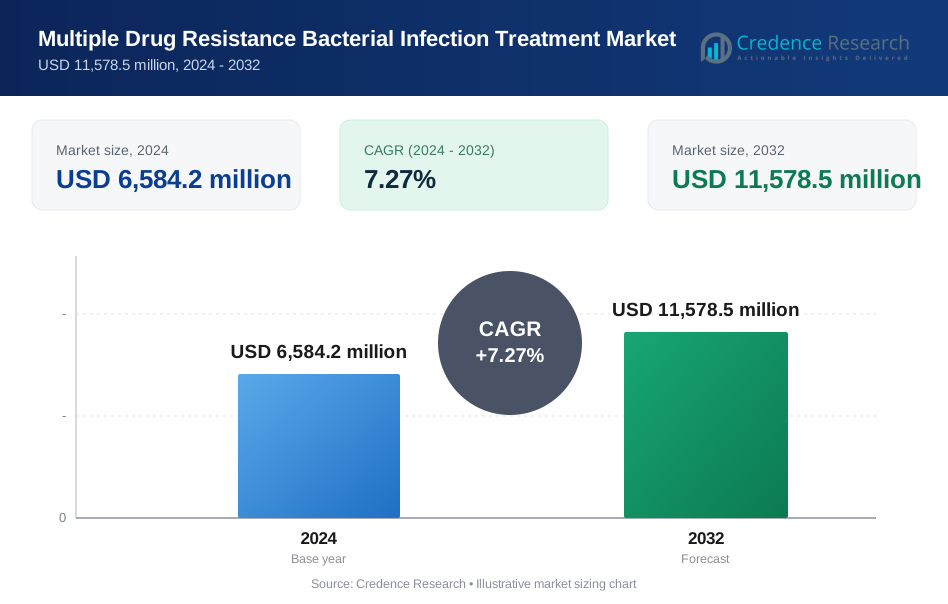
| IMultiple Drug Resistance Bacterial Infection Treatment MarketSize 2024 | USD 6,584.2 million |
| Multiple Drug Resistance Bacterial Infection Treatment Market, CAGR | 7.27% |
| Multiple Drug Resistance Bacterial Infection Treatment Market Size 2032 | USD 11,578.5 million |
Market Overview:
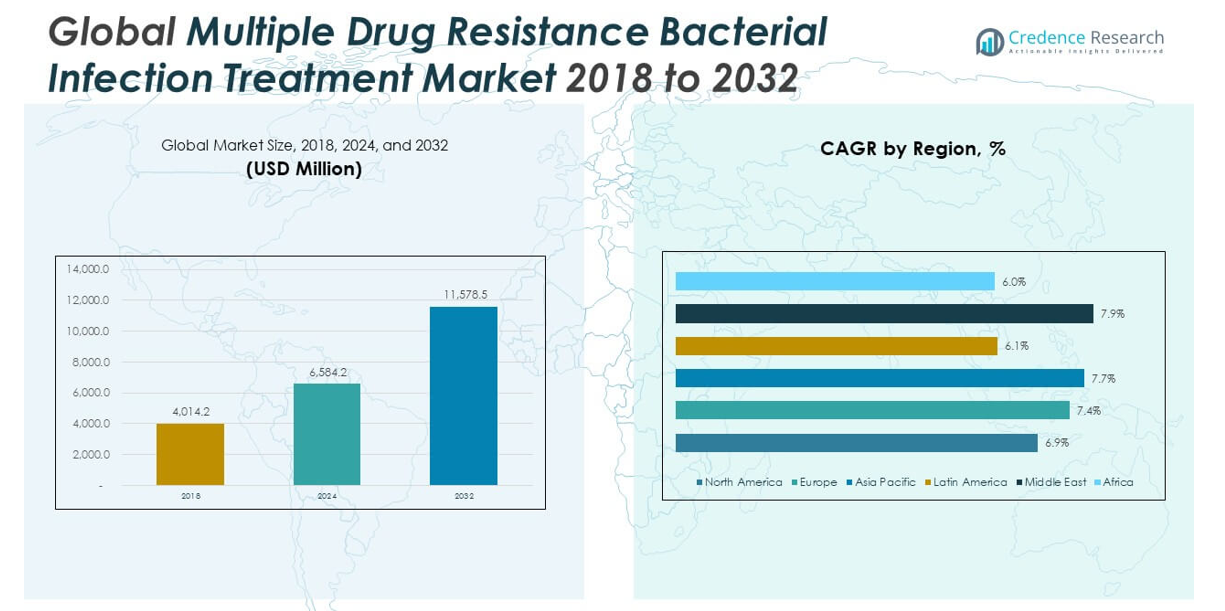
The Global Multiple Drug Resistance Bacterial Infection Treatment Market size was valued at USD 4,014.2 million in 2018 to USD 6,584.2 million in 2024 and is anticipated to reach USD 11,578.5 million by 2032, at a CAGR of 7.27% during the forecast period.
Key drivers of this market include the widespread prevalence of drug-resistant infections, the growing use of broad-spectrum antibiotics, and the emergence of high-risk bacterial strains that no longer respond to conventional treatment. Rising awareness among healthcare providers about AMR, combined with stronger national and international stewardship policies, is accelerating investment in research and innovation. Technological advancements-such as bacteriophage therapy, antimicrobial peptides, and combination drug regimens-are expanding the treatment landscape. Regulatory support in the form of fast-track approvals, government incentives like the PASTEUR Act in the U.S., and public-private partnerships are encouraging pharmaceutical innovation. In parallel, the availability of rapid diagnostic tools and precision medicine approaches is helping clinicians target resistant infections more effectively, supporting treatment efficacy and patient outcomes.
Regionally, North America leads the Global Multiple Drug Resistance Bacterial Infection Treatment Market, owing to its advanced healthcare infrastructure, high R&D spending, and access to cutting-edge therapies. The region also benefits from favorable regulatory frameworks that accelerate the approval and distribution of novel antimicrobials. Europe holds the second-largest share, supported by national reimbursement strategies and coordinated antibiotic resistance surveillance programs. Asia Pacific is emerging as the fastest-growing region, driven by a high burden of resistant infections, rising healthcare investments, and improving hospital capacity in countries such as India and China. Latin America, the Middle East, and Africa represent smaller shares but offer long-term potential as global funding expands, local manufacturing increases, and diagnostic infrastructure improves. Challenges persist in low-resource settings, where limited access to advanced treatments and inadequate surveillance hinder appropriate care. Nonetheless, global health efforts continue to push the market toward more equitable access and faster innovation to combat the growing threat of antibiotic resistance.
Market Insights:
- The Global Multiple Drug Resistance Bacterial Infection Treatment Market was valued at USD 4,014.2 million in 2018, reached USD 6,584.2 million in 2024, and is projected to hit USD 11,578.5 million by 2032 at a CAGR of 7.27%.
- The rising prevalence of multidrug-resistant pathogens like Klebsiella pneumoniae, Pseudomonas aeruginosa, and Acinetobacter baumannii is creating urgent demand for new treatment options, especially in ICU and surgical wards.
- Pharmaceutical and biotech companies are heavily investing in next-generation therapies, including antimicrobial peptides, phage therapy, and combination regimens, supported by public-private funding and regulatory incentives.
- Government policies such as the PASTEUR Act (U.S.) and UK’s subscription models are de-risking antibiotic development and promoting innovation through fast-track approvals and procurement guarantees.
- Rapid diagnostics like PCR panels and next-generation sequencing are improving targeted treatment, reducing empirical broad-spectrum antibiotic use, and enhancing antimicrobial stewardship.
- Despite the need, high development costs, low ROI, and limited commercial viability are constraining innovation, leading some companies to exit the antibiotic development pipeline.
- North America dominates the market due to its strong healthcare system and R&D capacity, while Asia Pacific is the fastest-growing region owing to a high infection burden and expanding healthcare infrastructure.
Market Drivers:
Escalating Prevalence of Drug-Resistant Infections Across Healthcare Settings:
The growing burden of hospital-acquired and community-onset drug-resistant infections is a primary driver of the Global Multiple Drug Resistance Bacterial Infection Treatment Market. Pathogens such as Klebsiella pneumoniae, Pseudomonas aeruginosa, Acinetobacter baumannii, and Staphylococcus aureus are increasingly exhibiting resistance to multiple antibiotics, limiting treatment options. Intensive care units, surgical wards, and long-term care facilities report rising incidences of multidrug-resistant (MDR) infections, often linked to invasive procedures and prolonged antibiotic use. It is creating an urgent demand for novel therapeutic approaches and reformulated antibiotic regimens. The spread of resistant bacteria across international borders underscores the need for globally coordinated interventions. The healthcare sector is intensifying efforts to contain MDR pathogens through targeted drug development and strengthened infection control practices.
- For instance, Pfizer’s antibiotic ZAVICEFTA (ceftazidime-avibactam) has been approved in over 70 countries for the treatment of complicated infections caused by MDR Gram-negative bacteria, and clinical trials have demonstrated its efficacy against more than 90% of carbapenem-resistant Enterobacteriaceae isolates tested in surveillance studies.
Rising Investment in Research and Innovation for Next-Generation Therapies:
Global pharmaceutical and biotechnology companies are actively investing in the development of new antimicrobial agents, combination therapies, and non-traditional treatments such as phage therapy. The Global Multiple Drug Resistance Bacterial Infection Treatment Market benefits from a growing pipeline of drug candidates supported by venture capital, public funding, and regulatory incentives. Innovation is addressing previously untreatable infections with advanced beta-lactamase inhibitors, antimicrobial peptides, and monoclonal antibodies. Governments and global health organizations are allocating dedicated funds to overcome the scientific and commercial challenges of antimicrobial development. It is encouraging collaboration between academic institutions and private firms to accelerate discovery and clinical trials. The increased R&D activity signals a shift toward strategic long-term solutions for AMR.
- For instance, GSK’s antibiotic cefiderocol received FDA approval for the treatment of complicated urinary tract infections and hospital-acquired pneumonia, with pivotal trials showing a 72.6% clinical cure rate in patients with carbapenem-resistant infections.
Supportive Government Policies and Global Health Security Initiatives:
National governments and multilateral health agencies are strengthening policy frameworks to combat antibiotic resistance. The Global Multiple Drug Resistance Bacterial Infection Treatment Market is gaining momentum from legislation such as the PASTEUR Act in the United States and subscription-based payment models in the United Kingdom. These mechanisms aim to de-risk antibiotic innovation and ensure commercial viability for developers. Global platforms like the Global AMR R&D Hub and WHO’s AWaRe classification further guide stewardship and development priorities. It supports antimicrobial pipeline diversification by offering fast-track approvals and procurement guarantees for high-priority drugs. This policy support plays a critical role in enabling access and affordability for emerging therapies.
Advancements in Rapid Diagnostics and Precision Medicine Integration:
The availability of rapid diagnostic tools and microbiology platforms is transforming how physicians identify and treat MDR bacterial infections. Early and accurate detection allows for timely intervention with targeted therapies, reducing reliance on empirical broad-spectrum antibiotics. The Global Multiple Drug Resistance Bacterial Infection Treatment Market benefits from increased adoption of PCR-based panels, next-generation sequencing, and point-of-care diagnostics. These tools improve clinical decision-making, minimize resistance escalation, and support antimicrobial stewardship. Integration with electronic medical records and AI-driven decision support systems is further enhancing treatment outcomes. It positions precision medicine as a key enabler of effective resistance management strategies.
Market Trends:
Shift Toward Non-Traditional Antimicrobial Approaches and Alternative Modalities:
A notable trend shaping the Global Multiple Drug Resistance Bacterial Infection Treatment Market is the shift toward non-traditional treatment modalities beyond conventional antibiotics. Researchers are exploring bacteriophage therapy, antimicrobial peptides, and immune-modulating biologics to target resistant bacteria without fostering further resistance. These alternatives offer precision targeting and may bypass common resistance mechanisms found in traditional drugs. Startups and academic institutions are leading pilot studies and early-phase trials, with growing interest from global health investors. It reflects an industry pivot toward durable and less resistance-prone solutions for critical infections. This trend signals a diversification of the therapeutic landscape that could redefine clinical practice in the coming decade.
- For instance, Adaptive Phage Therapeutics has advanced its phage therapy platform into clinical trials, with compassionate use cases showing successful eradication of MDR Pseudomonas aeruginosa infections in over 80% of treated patients.
Expansion of Hospital-Based Stewardship Programs and Drug Utilization Guidelines:
Hospitals and health systems are prioritizing structured antimicrobial stewardship programs to manage resistance and optimize therapeutic outcomes. These programs standardize prescribing practices, encourage susceptibility-guided therapy, and track resistance patterns across institutions. The Global Multiple Drug Resistance Bacterial Infection Treatment Market aligns with this trend by providing access to narrow-spectrum and combination therapies designed for stewardship integration. Hospitals increasingly adopt clinical decision support tools and infectious disease consult protocols to improve antibiotic selection. It enables rational use of advanced therapies while containing costs and limiting resistance acceleration. This institutional focus supports both clinical outcomes and commercial uptake of targeted drug regimens.
- For instance, the Cleveland Clinic reported a 33% reduction in broad-spectrum antibiotic use and a 23% decrease in hospital-onset Clostridioides difficile infections within two years of implementing a comprehensive antimicrobial stewardship program.
Growing Role of Public-Private Partnerships in Accelerating Product Development:
Public-private partnerships are emerging as critical enablers of antimicrobial innovation and market stability. Organizations such as CARB-X, GARDP, and the AMR Action Fund are providing funding, expertise, and infrastructure support to early-stage developers. The Global Multiple Drug Resistance Bacterial Infection Treatment Market benefits from these collaborations, which address key funding gaps and help navigate regulatory pathways. Partnerships between government bodies and pharmaceutical companies are also facilitating late-stage trials and ensuring post-approval market access. It demonstrates a coordinated effort to overcome commercial disincentives in antibiotic R&D. This collaborative model is reshaping how the global community responds to drug-resistant threats.
Increased Emphasis on Long-Acting and Depot Formulations for Improved Compliance:
The market is witnessing increased interest in long-acting injectable formulations and depot delivery systems aimed at improving adherence in both inpatient and outpatient settings. These innovations reduce dosing frequency, simplify administration, and support better outcomes in high-risk populations. The Global Multiple Drug Resistance Bacterial Infection Treatment Market is responding to demand for simplified regimens, especially in settings with limited access to continuous care. Pharmaceutical companies are investing in extended-release technologies and exploring combination therapies within long-acting platforms. It supports efforts to reduce treatment discontinuation and resistance propagation due to underdosing. This trend aligns with broader healthcare goals of improving patient compliance and health system efficiency.
Market Challenges Analysis:
High Development Costs and Limited Commercial Viability of New Antibiotics:
The high cost of research and development, coupled with low financial returns, presents a major barrier for companies operating in the Global Multiple Drug Resistance Bacterial Infection Treatment Market. Antibiotics are typically used for short durations and reserved for severe cases, limiting revenue potential compared to chronic disease treatments. Pharmaceutical firms often hesitate to invest in this space due to uncertain market uptake, pricing challenges, and restrictive reimbursement models. It struggles to attract sustained investment despite rising medical need. The lack of scalable commercial models has led several companies to exit the antibiotic development pipeline. Without viable incentives and long-term revenue assurance, innovation in this market remains at risk of stagnation.
Diagnostic Gaps, Access Inequality, and Regulatory Fragmentation:
Limited access to accurate and timely diagnostics impedes effective treatment of multidrug-resistant infections, particularly in low- and middle-income countries. Many healthcare systems lack the infrastructure to perform microbial sensitivity testing, leading to empirical treatment and misuse of broad-spectrum antibiotics. The Global Multiple Drug Resistance Bacterial Infection Treatment Market also faces challenges from fragmented regulatory frameworks, which delay market approvals and complicate global product launches. It must navigate country-specific policies, varying surveillance capacities, and inconsistent clinical guidelines. Access inequality remains a persistent issue, with advanced therapies largely unavailable in regions most affected by resistant infections. Addressing these barriers requires coordinated global action to align policy, infrastructure, and equitable distribution.
Market Opportunities:
Expanding Access in Emerging Economies and Underserved Regions:
Rising healthcare investments and infrastructure development across Asia Pacific, Latin America, and Africa present strong growth opportunities. These regions face a high burden of drug-resistant infections but often lack access to timely diagnosis and effective treatments. The Global Multiple Drug Resistance Bacterial Infection Treatment Market can grow by addressing these gaps through affordable, scalable, and regionally adapted solutions. Governments and international agencies are increasing funding for antibiotic access, training, and surveillance systems in these markets. It creates a pathway for pharmaceutical companies to expand their footprint and improve health outcomes. Public-private collaborations focused on localized manufacturing and supply chain support will further enhance market reach.
Innovation in Targeted Therapies and Digital Integration:
The growing demand for precision medicine opens doors for therapies tailored to specific resistance profiles. Integration of rapid diagnostic tools with treatment protocols allows for accurate targeting of MDR pathogens. The Global Multiple Drug Resistance Bacterial Infection Treatment Market can capitalize on this trend by supporting the development of narrow-spectrum antibiotics and biologics. Digital platforms, including AI-powered clinical decision tools, can optimize antibiotic use and reduce resistance. It enables more effective stewardship and better patient outcomes across care settings. Companies that invest in smart, data-driven approaches can lead the next phase of antimicrobial innovation.
Market Segmentation Analysis:
By Drug Class
The market includes several critical drug classes aimed at combating resistant bacterial strains. Beta lactamase inhibitors and oxazolidinones are experiencing strong demand due to their effectiveness against multidrug-resistant organisms. Cephalosporins and beta lactams continue to play a key role in standard treatment regimens but face growing resistance challenges. Cyclic lipopeptides and glycolipopeptides are primarily used in hospital settings for complex infections. The others category includes a range of investigational or less common agents, contributing to treatment diversity.
- For instance, Cubist Pharmaceuticals’ daptomycin (a cyclic lipopeptide) has been used in over 1 million patients worldwide for the treatment of complicated skin and bloodstream infections caused by MRSA and other resistant Gram-positive bacteria.
By Route of Administration
Intravenous (IV) administration dominates the market, especially in critical care and hospital environments where rapid therapeutic action is essential. IV drugs are preferred for severe and hospital-acquired infections. Oral formulations hold a significant share in outpatient care and follow-up treatment, offering convenience and reduced hospitalization. The market is witnessing increased adoption of oral drugs with strong bioavailability and patient compliance.
- For instance, Pfizer’s oral antibiotic linezolid has demonstrated over 90% bioavailability, enabling effective outpatient management of MRSA and VRE infections without the need for prolonged hospitalization.
By Distribution Channel
Hospital pharmacies account for the largest share, given the high volume of resistant infections treated in acute care settings. Retail pharmacies serve patients in recovery phases and community settings, especially for oral therapies. Online pharmacies are growing steadily, driven by increasing digital healthcare usage and home-based treatment demand. The Global Multiple Drug Resistance Bacterial Infection Treatment Market benefits from this diversified distribution landscape, which ensures timely access to critical medications.
Segmentation:
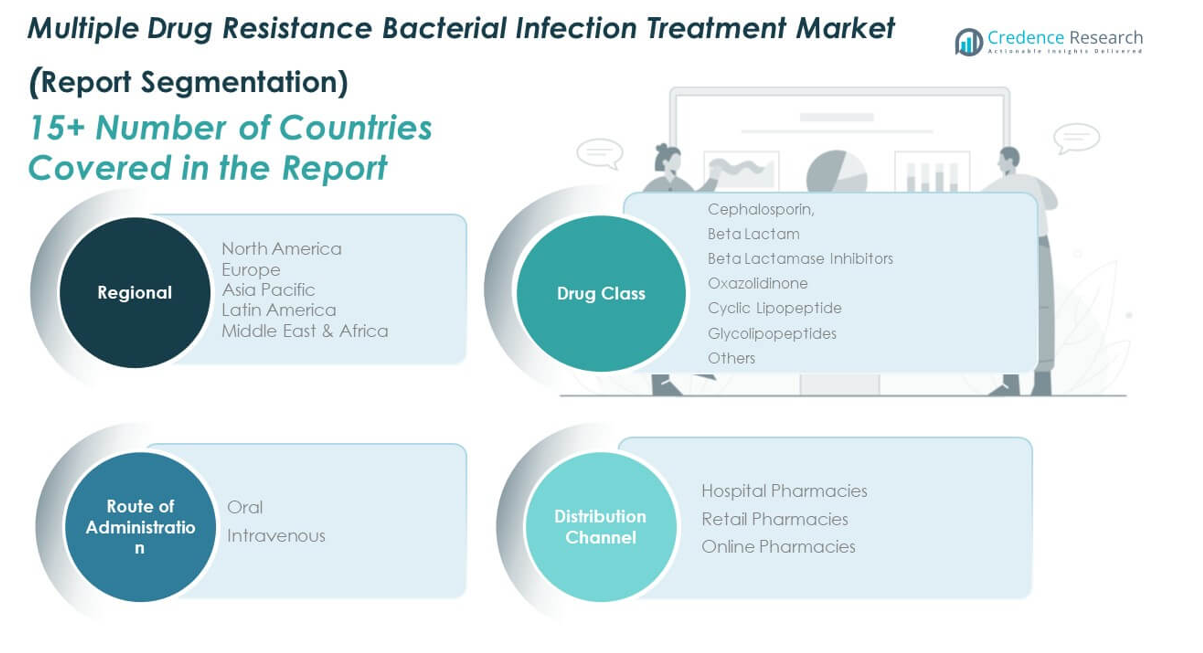
By Drug Class
- Cephalosporin
- Beta Lactam
- Beta Lactamase Inhibitors
- Oxazolidinone
- Cyclic Lipopeptide
- Glycolipopeptides
- Others
By Route of Administration
- Oral
- Intravenous
By Distribution Channel
- Hospital Pharmacies
- Retail Pharmacies
- Online Pharmacies
By Region
- North America
- U.S.
- Canada
- Mexico
- Europe
- Germany
- France
- U.K.
- Italy
- Spain
- Rest of Europe
- Asia Pacific
- China
- Japan
- India
- South Korea
- South-east Asia
- Rest of Asia Pacific
- Latin America
- Brazil
- Argentina
- Rest of Latin America
- Middle East & Africa
- GCC Countries
- South Africa
- Rest of the Middle East and Africa
Regional Analysis:
North America
The North America Multiple Drug Resistance Bacterial Infection Treatment Market size was valued at USD 1,075.01 million in 2018 to USD 1,724.30 million in 2024 and is anticipated to reach USD 2,940.94 million by 2032, at a CAGR of 6.9% during the forecast period. The Global Multiple Drug Resistance Bacterial Infection Treatment Market holds its largest share in North America, driven by high healthcare spending, strong R&D investment, and rapid adoption of novel therapies. It benefits from advanced diagnostic infrastructure, robust regulatory frameworks, and government initiatives like the PASTEUR Act supporting antibiotic innovation. Hospitals across the U.S. and Canada implement comprehensive antimicrobial stewardship programs to manage resistance. Biopharmaceutical firms in the region lead global innovation pipelines. The availability of reimbursement and fast-track approvals further supports product commercialization.
Europe
The Europe Multiple Drug Resistance Bacterial Infection Treatment Market size was valued at USD 927.69 million in 2018 to USD 1,537.40 million in 2024 and is anticipated to reach USD 2,740.63 million by 2032, at a CAGR of 7.4% during the forecast period. Europe accounts for the second-largest market share, supported by coordinated surveillance programs and national antibiotic resistance strategies. It benefits from funding mechanisms and public-private partnerships promoting drug development. Countries like Germany, France, and the UK focus on hospital-acquired infection control and early diagnosis. The European Medicines Agency (EMA) supports accelerated approvals for high-priority antimicrobial agents. Reimbursement models, including subscription-based payment systems in the UK, help derisk commercial challenges for new therapies.
Asia Pacific
The Asia Pacific Multiple Drug Resistance Bacterial Infection Treatment Market size was valued at USD 1,208.69 million in 2018 to USD 2,035.82 million in 2024 and is anticipated to reach USD 3,705.12 million by 2032, at a CAGR of 7.7% during the forecast period. It represents the fastest-growing region in the Global Multiple Drug Resistance Bacterial Infection Treatment Market. Rising antibiotic misuse, high infection burden, and expanding hospital infrastructure contribute to market growth. Countries such as China and India are investing in healthcare capacity, diagnostics, and antibiotic development. It sees increasing public awareness and government action on antimicrobial resistance. Growing pharmaceutical manufacturing capability also supports local production and accessibility of critical drugs.
Latin America
The Latin America Multiple Drug Resistance Bacterial Infection Treatment Market size was valued at USD 325.96 million in 2018 to USD 503.03 million in 2024 and is anticipated to reach USD 810.49 million by 2032, at a CAGR of 6.1% during the forecast period. The market is expanding steadily due to rising healthcare access, urbanization, and higher demand for infection control. Brazil and Argentina are leading in adopting infection surveillance and resistant strain monitoring. It still faces challenges related to healthcare funding and diagnostic reach in rural settings. Public hospitals in urban centers are increasingly adopting advanced treatments and antimicrobial guidelines. Regional partnerships and global health initiatives are helping close the treatment gap.
Middle East
The Middle East Multiple Drug Resistance Bacterial Infection Treatment Market size was valued at USD 303.48 million in 2018 to USD 516.67 million in 2024 and is anticipated to reach USD 952.91 million by 2032, at a CAGR of 7.9% during the forecast period. It shows strong potential driven by expanding healthcare infrastructure and rising government attention to antimicrobial resistance. Gulf Cooperation Council (GCC) countries are investing in infection control programs and modern hospital systems. The region imports most antibiotics but is moving toward local production. Clinical guidelines are being updated to manage resistance more effectively. Awareness campaigns and public health policy changes are increasing the use of evidence-based treatment protocols.
Africa
The Africa Multiple Drug Resistance Bacterial Infection Treatment Market size was valued at USD 173.42 million in 2018 to USD 266.94 million in 2024 and is anticipated to reach USD 428.40 million by 2032, at a CAGR of 6.0% during the forecast period. The market remains in early growth stages due to infrastructure gaps and limited diagnostic capabilities. It faces a high burden of infectious diseases with limited access to effective antibiotics. South Africa leads regional progress in antimicrobial stewardship and drug availability. International aid and global funding programs are supporting treatment access and laboratory capacity. It continues to build resilience through training, public health partnerships, and improved supply chains.
Key Player Analysis:
- Abbott
- Actelion Pharmaceuticals Ltd.
- Albany Molecular Research, Inc.
- Allergan plc
- AstraZeneca
- Bayer AG
- Biocon
- GSK plc
- Merck & Co., Inc.
- Pfizer, Inc.
- Sanofi
- Teva Pharmaceuticals Industries Ltd.
- Wockhardt
- Other Key Players
Competitive Analysis:
The Global Multiple Drug Resistance Bacterial Infection Treatment Market features a mix of major pharmaceutical companies, biotech firms, and public-private collaborations. Leading players such as Pfizer Inc., Merck & Co., GlaxoSmithKline plc, and Cipla Ltd. are investing in advanced antibiotics, beta-lactamase inhibitors, and combination therapies. Smaller biotechnology firms are contributing innovative approaches, including phage therapy and antimicrobial peptides. It remains competitive due to rapid product development, strategic licensing deals, and acquisitions aimed at expanding antimicrobial pipelines. Partnerships with organizations like CARB-X and GARDP are helping bridge early-stage funding gaps and support clinical progression. Companies that align with global health priorities and adapt to evolving stewardship standards maintain a strategic advantage. The market rewards firms that combine scientific innovation with regulatory agility and commercial scalability.
Recent Developments:
- In April 2025, Bayer announced plans to launch several groundbreaking products with blockbuster potential, including a new hormone-free treatment for menopause and a new therapy for heart failure with preserved ejection fraction. These launches are part of Bayer’s strategy to accelerate medical innovation and expand its differentiated pipeline in key therapeutic areas.
- In March 2025, Merck opened a new $1 billion, 225,000-square-foot facility in Durham, North Carolina, dedicated to vaccine manufacturing. This expansion is part of Merck’s ongoing investment in U.S. manufacturing and research capabilities, leveraging advanced technologies such as data analytics, generative AI, and digital twins to enhance production and workforce training.
- In February 2025, Biocon Biologics launched YESINTEK™ (ustekinumab-kfce), a biosimilar to Stelara®, in the United States. This product is approved for the treatment of Crohn’s disease, ulcerative colitis, plaque psoriasis, and psoriatic arthritis, marking Biocon’s first product launch in the U.S. as a fully integrated global biosimilars organization.
- In January 2025, AstraZeneca and Daiichi Sankyo’s Biologics License Application for datopotamab deruxtecan (Dato-DXd) was granted Priority Review in the U.S. for patients with previously treated advanced EGFR-mutated non-small cell lung cancer. This partnership aims to address acquired resistance to front-line therapies, a significant challenge in the treatment of advanced lung cancer.
- In May 2024, GSK became the founding partner of the Fleming Initiative, a global network led by Imperial College Healthcare NHS Trust and Imperial College London to develop new interventions against antimicrobial resistance (AMR). GSK pledged £45 million to support this collaborative effort, which brings together scientific, clinical, and policy expertise to address the urgent threat of drug-resistant infections.
Market Concentration & Characteristics:
The Global Multiple Drug Resistance Bacterial Infection Treatment Market is moderately concentrated, with a few large pharmaceutical companies dominating advanced antibiotic development and commercialization. It includes a growing number of biotech firms and research-driven startups focused on novel mechanisms and niche therapies. Market entry barriers remain high due to lengthy regulatory processes, complex clinical trials, and limited return on investment. Public-private partnerships and government incentives are helping smaller players compete by supporting early-stage innovation. It is characterized by urgent unmet needs, short treatment windows, and high regulatory scrutiny. The market favors companies that demonstrate scientific differentiation, rapid diagnostics integration, and alignment with stewardship principles.
Report Coverage:
The research report offers an in-depth analysis based on by drug class, route of administration, and distribution channel. It details leading market players, providing an overview of their business, product offerings, investments, revenue streams, and key applications. Additionally, the report includes insights into the competitive environment, SWOT analysis, current market trends, as well as the primary drivers and constraints. Furthermore, it discusses various factors that have driven market expansion in recent years. The report also explores market dynamics, regulatory scenarios, and technological advancements that are shaping the industry. It assesses the impact of external factors and global economic changes on market growth. Lastly, it provides strategic recommendations for new entrants and established companies to navigate the complexities of the market.
Future Outlook:
- Rising global incidence of multidrug-resistant infections will continue to drive demand for novel therapeutic options.
- Expanded public and private funding will support early-stage antimicrobial development and clinical trials.
- Innovative therapies such as bacteriophage treatment and antimicrobial peptides will gain regulatory and commercial traction.
- Integration of rapid diagnostics will enhance targeted treatment and improve clinical outcomes.
- Subscription-based reimbursement models will improve the commercial viability of new antibiotics.
- Emerging markets will offer growth potential due to increasing awareness and rising healthcare infrastructure.
- Long-acting injectable formulations will support better compliance and reduce resistance risks.
- Strategic collaborations between pharma companies and global health organizations will accelerate product pipelines.
- Artificial intelligence and genomic tools will play a larger role in resistance detection and drug discovery.
- Strengthened global stewardship frameworks will align drug use with public health priorities and sustain market growth.
Request a Free Sample
Fill in your details and we'll send you a free sample report.
- Sample data tables & charts
- Research methodology
Need a Custom Version of This Report?
Tailor the scope, geography, or segments to your exact requirements.
- Custom geography or segment scope
- Direct access to our analyst team
Frequently Asked Questions
What is the current size of the Global Multiple Drug Resistance Bacterial Infection Treatment Market?
What are the key segments within the Global Multiple Drug Resistance Bacterial Infection Treatment Market?
What are some challenges faced by the Global Multiple Drug Resistance Bacterial Infection Treatment Market?
Who are the major players in the Global Multiple Drug Resistance Bacterial Infection Treatment Market?
Table of Content
Chapter 1. Report Introduction
- 1.1 Report Description & Purpose
- 1.1.1 Report Title & Market Definition
- 1.1.2 Unique Selling Propositions (USP) & Key Differentiators
- 1.1.3 Value Proposition for Stakeholders
- 1.2 Research Objectives
- 1.2.1 Market Sizing Objectives (Volume & Revenue) (Volume Where Applicable)
- 1.2.2 Segmentation Objectives
- 1.2.3 Competitive Intelligence Objectives
- 1.2.4 Forecast & Scenario Objectives
- 1.3 Report Scope
- 1.3.1 Multiple Drug Resistance Bacterial Infection Treatment Scope – Segments & Subsegments Covered
- 1.3.2 Geographic Scope – Regions & Countries Covered
- 1.3.3 Historical Period, Base Year & Forecast Period (2024; forecast to 2032)
- 1.3.4 Inclusions & Exclusions
- 1.4 Industry Classification & Applicable Codes
- 1.5 Currency, Measurement Units & Valuation Basis
- 1.6 Target Stakeholders
- 1.7 Limitations & Assumptions
Chapter 2. Executive Summary
- 2.1 Global Multiple Drug Resistance Bacterial Infection Treatment Market Snapshot
- 2.1.1 Market Size – Historical (2024) & Forecast (2024-2032) (2024: USD 6,584.2 million → 2032: USD 11,578.5 million)
- 2.1.2 Volume & Revenue – Global Totals (Volume Where Applicable)
- 2.1.3 Key Market Highlights – Top Five Facts
- 2.2 Multiple Drug Resistance Bacterial Infection Treatment Market Segmentation Snapshot
- 2.2.1 Market Split by Region – 2024 vs. 2032
- 2.3 Competitive Snapshot
- 2.3.1 Top 10 Players by Revenue Share – 2024
- 2.3.2 Top 10 Players by Volume Share – 2024 (Volume Where Applicable)
- 2.3.3 Recent Strategic Developments (18-Month Summary)
- 2.4 Key Investment Highlights & Strategic Conclusions
Chapter 3. Multiple Drug Resistance Bacterial Infection Treatment Market Dynamics & Industry Analysis
- 3.1 Market Overview & Context
- 3.1.1 Multiple Drug Resistance Bacterial Infection Treatment Market Position in the Broader Industry Value Chain
- 3.1.2 Demand Structure & Purchasing Dynamics
- 3.1.3 Market Maturity & Development Stage by Region
- 3.2 Multiple Drug Resistance Bacterial Infection Treatment Market Drivers
- 3.3 Multiple Drug Resistance Bacterial Infection Treatment Market Restraints & Challenges
- 3.4 Multiple Drug Resistance Bacterial Infection Treatment Market Opportunities
- 3.5 Porter's Five Forces Analysis
- 3.5.1 Threat of New Entrants
- 3.5.2 Bargaining Power of Suppliers
- 3.5.3 Bargaining Power of Buyers
- 3.5.4 Threat of Substitutes
- 3.5.5 Competitive Rivalry – Intensity Assessment
- 3.6 Multiple Drug Resistance Bacterial Infection Treatment Value Chain Analysis
- 3.6.1 Upstream – Key Inputs, Resources & Suppliers
- 3.6.1.1 Key Input/Resource 1
- 3.6.1.2 Key Input/Resource 2
- 3.6.1.3 Key Input/Resource 3
- 3.6.2 Midstream – Core Operations & Value Creation
- 3.6.2.1 Operating Model & Process Overview
- 3.6.2.2 Key Operating Locations & Capabilities by Company
- 3.6.3 Downstream – Market Channels & End Users
- 3.6.3.1 Direct Sales & Customer Engagement Channels
- 3.6.3.2 Indirect Sales, Intermediaries & Partner Channels
- 3.6.4 Value Chain Profitability Analysis
- 3.6.1 Upstream – Key Inputs, Resources & Suppliers
- 3.7 PESTEL Analysis
- 3.7.1 Political Factors
- 3.7.2 Economic Factors
- 3.7.3 Social Factors
- 3.7.4 Technological Factors
- 3.7.5 Environmental Factors
- 3.7.6 Legal Factors
- 3.8 Multiple Drug Resistance Bacterial Infection Treatment Supply Chain Analysis
- 3.8.1 Critical Input & Resource Availability Risk Assessment
- 3.8.2 Supplier & Operational Concentration Risk (Geographic Exposure)
- 3.8.3 Supply & Service Disruption Impact Analysis
- 3.9 Regulatory & Policy Landscape
Note: The regulatory and policy landscape section covers regulations based on their applicability to the market, Multiple Drug Resistance Bacterial Infection Treatment category, geography, and scope of the study. Only regulatory frameworks with a material impact on operations, compliance, trade, sustainability, or market access are analyzed in detail.
Chapter 4. Key Investment Pockets & Opportunity Analysis
- 4.1 Multiple Drug Resistance Bacterial Infection Treatment Market Attractiveness Analysis
- 4.1.1 By Region – Investment Attractiveness Matrix (Market Size × CAGR)
- 4.2 Absolute Revenue Growth Opportunity
- 4.2.1 By Region – Absolute Revenue Growth Through 2032
- 4.3 Incremental Demand Opportunity
- 4.3.1 By Region – Incremental Demand Through 2032
- 4.3.2 Segment – Incremental Demand
- 4.4 Emerging Submarket Opportunity Deep Dive (Subject to Applicability)
- 4.5 Priority Market Opportunity Scorecards
- 4.5.1 United States
- 4.5.2 Europe
- 4.5.3 Asia
- 4.5.4 Middle East & Africa
Note: Priority market opportunity scorecards reflect the geographic scope and strategic relevance of the study. Listed markets are indicative and may be adapted to the industry.
Chapter 5. Multiple Drug Resistance Bacterial Infection Treatment Cross-Border Trade & Market Access Analysis
- 5.1 International Trade & Cross-Border Activity Overview
- 5.1.1 Global Export Value by Country (2024)
- 5.1.2 Global Export Volume by Country (2024) (Volume Where Applicable)
- 5.1.3 Global Import Value by Country (2024)
- 5.1.4 Global Import Volume by Country (2024) (Volume Where Applicable)
- 5.1.5 Net Trade Balance by Country (2024)
- 5.2 Export Analysis – Segment
- 5.2.1 Category 1 (Applicable Classification Code)
- 5.2.2 Category 2 (Applicable Classification Code)
- 5.2.3 Category 3 (Applicable Classification Code)
- 5.2.4 Category 4 (Applicable Classification Code)
- 5.2.5 Category 5 (Applicable Classification Code)
- 5.3 Import Analysis – Segment
- 5.3.1 Category 1 (Applicable Classification Code)
- 5.3.2 Category 2 (Applicable Classification Code)
- 5.3.3 Category 3 (Applicable Classification Code)
- 5.3.4 Category 4 (Applicable Classification Code)
- 5.3.5 Category 5 (Applicable Classification Code)
- 5.4 Cross-Border Pricing & Transaction Benchmarks
- 5.4.1 Export Pricing – Segment & Country
- 5.4.2 Import Pricing – Segment & Source Country
- 5.4.3 Price Trends (2024)
- 5.5 Key Cross-Border Trade & Delivery Routes
- 5.5.1 Cross-Border Trade/Delivery Route 1
- 5.5.2 Cross-Border Trade/Delivery Route 2
- 5.5.3 Cross-Border Trade/Delivery Route 3
- 5.5.4 Cross-Border Trade/Delivery Route 4
- 5.5.5 Cross-Border Trade/Delivery Route 5
- 5.6 Trade Policy & Market Access Impact Assessment
- 5.6.1 Tariff & Non-Tariff Barriers
- 5.6.2 Regional Trade & Economic Integration Frameworks
- 5.6.3 Bilateral & Multilateral Trade Agreements
- 5.6.4 Cross-Border Operating, Licensing & Localization Requirements
Note: This chapter applies where cross-border trade or delivery is relevant to Multiple Drug Resistance Bacterial Infection Treatment. Goods, services, and digital offerings are assessed using applicable classifications and transaction measures. Import-export volumes, trade balances, and route analyses are included only where meaningful to the market.
Chapter 6. Competitive Landscape & Company Benchmarking
- 6.1 Multiple Drug Resistance Bacterial Infection Treatment Market Concentration & Structure
- 6.1.1 Herfindahl-Hirschman Index (HHI) – vs. 2024
- 6.1.2 Leading, Mid-Sized & Emerging Player Structure
- 6.1.3 Global, Regional & Local Player Dynamics
- 6.2 Multiple Drug Resistance Bacterial Infection Treatment Market Share Analysis – 2024
- 6.2.1 Global Revenue Share by Company
- 6.2.2 Global Volume Share by Company (Volume Where Applicable)
- 6.2.3 Regional Revenue Share
- 6.2.4 Market Share Evolution ( vs. 2024)
- 6.2.5 Company Market Share by Key Segment
- 6.2.6 Company Market Share by Customer Group
- 6.3 Operating Scale, Capacity & Infrastructure Analysis
- 6.3.1 Global Operating Scale & Supply Capacity
- 6.3.2 Resource Utilization & Operating Efficiency
- 6.3.3 Output, Service Delivery & Activity Metrics
- 6.3.4 Operating Footprint & Infrastructure Map
- 6.3.5 Planned Operational & Capacity Expansion
- 6.4 Multiple Drug Resistance Bacterial Infection Treatment Competitive Benchmarking Matrix
- 6.4.1 Revenue, Growth, Profitability & Operating Metric Comparison
- 6.4.2 Channel Revenue Mix
- 6.4.3 Geographic Revenue Exposure
- 6.4.4 R&D Intensity
- 6.4.5 Sustainability Maturity
- 6.5 Strategic Developments in Multiple Drug Resistance Bacterial Infection Treatment (Last 24 Months)
- 6.5.1 Mergers, Acquisitions & Divestments
- 6.5.2 New Products, Services & Solutions in Multiple Drug Resistance Bacterial Infection Treatment
- 6.5.3 Operational & Infrastructure Expansions
- 6.5.4 Strategic Alliances, Joint Ventures & Partnerships
- 6.5.5 Distribution Expansion & Market Entry
- 6.5.6 Sustainability & ESG Initiatives
- 6.6 Competitive Strategy Mapping
- 6.6.1 Leader, Challenger, Follower & Niche Classification
- 6.6.2 Pricing Strategy Comparison
- 6.6.3 Channel Strategy Matrix
Note: Strategic developments are included based on their materiality and the availability of reliable information.
Chapter 7. Global Multiple Drug Resistance Bacterial Infection Treatment Market – By Sales & Delivery Channel
- 7.1 Segment Overview
- 7.1.1 Volume & Revenue Split by Channel (2024 & 2032) (Volume Where Applicable)
- 7.1.2 Channel Mix Evolution (2024-2032)
Chapter 8. Regional Market Analysis – Global Overview
- 8.1 Global Regional Overview
- 8.1.1 Regional Volume Share (Volume Where Applicable)
- 8.1.2 Regional Revenue Share
- 8.1.3 Regional Volume by Region (Volume Where Applicable)
- 8.1.4 Regional Revenue by Region
- 8.1.5 Regional Forecast Through 2032
- 8.2 Cross-Regional Segment Analysis
- 8.2.1 By Sales & Delivery Channel
- 8.2.2 By Competitive Positioning & Price Tier
Chapter 9. North America Multiple Drug Resistance Bacterial Infection Treatment Market
- 9.1 United States
- 9.2 Canada
- 9.3 Mexico
Chapter 10. Europe Multiple Drug Resistance Bacterial Infection Treatment Market
- 10.1 Germany
- 10.2 France
- 10.3 Italy
- 10.4 United Kingdom
- 10.5 Spain
- 10.6 Poland
- 10.7 Russia
- 10.8 Netherlands
- 10.9 Belgium
- 10.10 Sweden
- 10.11 Denmark
- 10.12 Norway
- 10.13 Rest of Europe
Chapter 11. Asia Pacific Multiple Drug Resistance Bacterial Infection Treatment Market
- 11.1 China
- 11.2 India
- 11.3 Japan
- 11.4 South Korea
- 11.5 Thailand
- 11.6 Indonesia
- 11.7 Vietnam
- 11.8 Malaysia
- 11.9 Australia
- 11.10 Rest of Asia Pacific
Chapter 12. Latin America Multiple Drug Resistance Bacterial Infection Treatment Market
- 12.1 Brazil
- 12.2 Argentina
- 12.3 Colombia
- 12.4 Chile
- 12.5 Rest of Latin America
Chapter 13. Middle East Multiple Drug Resistance Bacterial Infection Treatment Market
- 13.1 Saudi Arabia
- 13.2 United Arab Emirates
- 13.3 Turkey
- 13.4 Israel
- 13.5 Iran
- 13.6 Rest of the Middle East
Chapter 14. Africa Multiple Drug Resistance Bacterial Infection Treatment Market
- 14.1 South Africa
- 14.2 Egypt
- 14.3 Nigeria
- 14.4 Morocco
- 14.5 Rest of Africa
Chapter 15. Multiple Drug Resistance Bacterial Infection Treatment Company Profiles
- 15.1 [Company 01]
- 15.1.1 Company Overview
- 15.1.2 Key Management Personnel
- 15.1.3 Products & Services Portfolio
- 15.1.4 Financial Performance
- 15.1.5 Key Market Focus & Geographic Presence
- 15.1.6 Recent Developments & Strategic Initiatives
Note: The company profile list is preliminary and may change based on research findings, market developments, data availability, and client requirements.
Chapter 16. Appendices
- Appendix A – List of Abbreviations & Acronyms
- Appendix B – Industry Classification Code Reference – Full Series
- Appendix C – Supply, Output & Operating Capacity Data Tables
- Appendix D – End-Use & Demand Base Tables
- Appendix E – Demand, Adoption & Usage Assumptions
- Appendix F – Pricing & Revenue Metric Reference Tables
- Appendix G – Company Operations & Infrastructure Database
- Appendix H – Cross-Border Trade & Activity Data Tables (Where Applicable)
- Appendix I – Regulatory Summary Tables
- Appendix J – Primary Research Participant List (Anonymized)
- Appendix K – Primary Research Questionnaire Framework
- Appendix L – Data Sources & Bibliography
- Appendix M – Market Size Divergence & Source Comparison
Chapter 17. Research Methodology
- 17.1 Research Framework & Philosophy
- 17.2 Secondary Research – Sources, Hierarchy & Data Extraction
- 17.3 Data Modeling – Bottom-Up & Top-Down Market Sizing
- 17.4 Primary Research – Stakeholder Framework, LOI & Sample Sizes
- 17.5 Forecast Methodology – Regression, Scenario & Sensitivity Analysis
- 17.6 Quality Control – Four-Layer Validation Framework
- 17.7 Limitations & Standard Assumptions
- 17.8 Disclaimer
