
Market Overview:
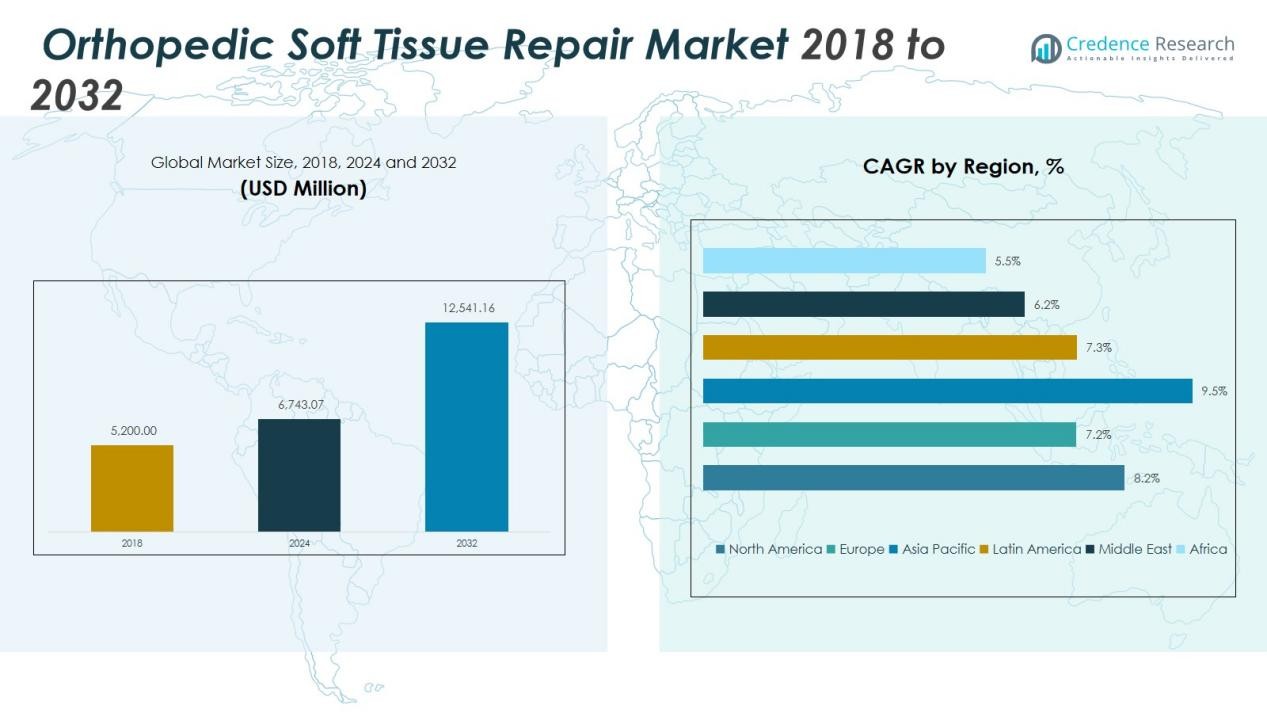
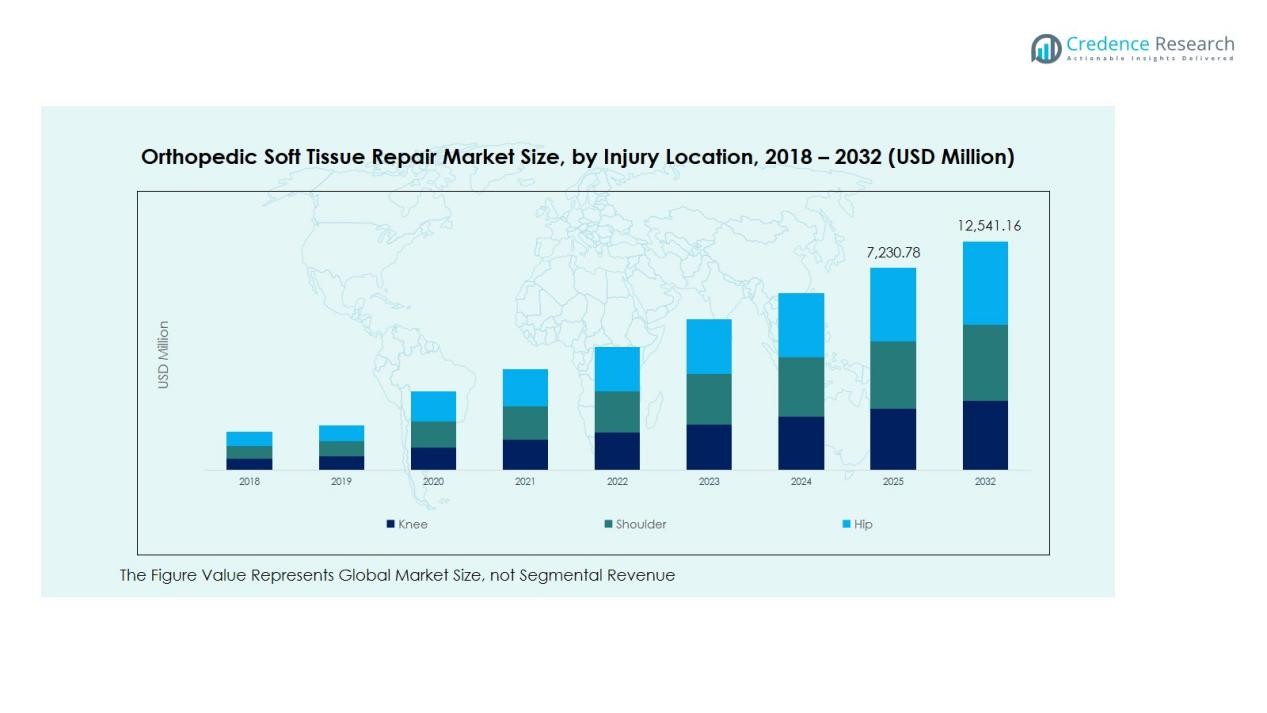
The Global Orthopedic Soft Tissue Repair Market size was valued at USD 5,200 million in 2018 to USD 6,743.07 million in 2024 and is anticipated to reach USD 12,541.16 million by 2032, at a CAGR of 8.18% during the forecast period.
| REPORT ATTRIBUTE | DETAILS |
|---|---|
| Historical Period | 2020-2023 |
| Base Year | 2024 |
| Forecast Period | 2025-2032 |
| Orthopedic Soft Tissue Repair Market Size 2024 | USD 6,743.07 Million |
| Orthopedic Soft Tissue Repair Market, CAGR | 8.18% |
| Orthopedic Soft Tissue Repair Market Size 2032 | USD 12,541.16 Million |
Growth in this market is driven by the increasing prevalence of sports injuries, trauma cases, and musculoskeletal disorders linked to aging populations and obesity. The adoption of tissue scaffolds, regenerative biologics, and arthroscopic repair devices enhances recovery outcomes and reduces postoperative complications. Rising awareness of early diagnosis and improved access to orthopedic care are further accelerating market demand across developed and emerging regions.
Regionally, North America leads the Global Orthopedic Soft Tissue Repair Market, supported by advanced healthcare infrastructure and high patient awareness. Europe follows with strong adoption of innovative surgical procedures and growing geriatric demographics. The Asia-Pacific region is expected to witness the fastest growth due to expanding healthcare infrastructure, increasing sports participation, and improving access to orthopedic treatment in developing economies.
Market Insights:
- The Global Orthopedic Soft Tissue Repair Market was valued at USD 5,200 million in 2018, reached USD 6,743.07 million in 2024, and is projected to attain USD 12,541.16 million by 2032, growing at a CAGR of 8.18% during the forecast period.
- North America holds 38% of the market share, driven by advanced healthcare infrastructure and high surgical adoption, followed by Europe with 25%, supported by an aging population and strong hospital systems.
- The Asia-Pacific region holds 28% of the share and is the fastest-growing market due to expanding healthcare infrastructure, increasing sports injuries, and improving access to orthopedic care in developing economies.
- By application, rotator cuff repair accounts for 30% of the total share, supported by the high prevalence of shoulder-related injuries and advancements in arthroscopic repair systems.
- By injury location, knee repair dominates with 35% share, driven by rising cases of ligament and meniscus tears requiring minimally invasive and regenerative repair procedures.
Market Drivers:
Rising Prevalence of Sports Injuries and Trauma Cases Driving Treatment Demand
The Global Orthopedic Soft Tissue Repair Market benefits from the increasing incidence of sports injuries and trauma-related conditions. A growing number of professional and recreational athletes experience ligament, tendon, and cartilage damage that requires surgical intervention. It is supported by higher awareness of early treatment and advanced orthopedic procedures. The rise in road accidents and workplace injuries also fuels the demand for effective tissue repair solutions worldwide.
- For instance, Zimmer Biomet’s ROSA robotics-enabled integration in total knee arthroplasty provides surgeons with enhanced data and visualization for accurate bone resections and precise implant placement, which can lead to better functional outcomes and implant longevity.
Growing Geriatric Population and Age-Related Degenerative Disorders
An expanding elderly population is leading to more cases of degenerative musculoskeletal disorders. Conditions such as rotator cuff tears, meniscus injuries, and tendon degeneration are more frequent among aging adults. The Global Orthopedic Soft Tissue Repair Market is benefiting from this demographic shift, supported by improved access to orthopedic care and advanced treatment technologies. It continues to see higher demand for minimally invasive and regenerative procedures aimed at faster recovery.
- For Instance, Miach Orthopaedics' Bridge-Enhanced ACL Repair (BEAR) implant was studied in younger, active patients (primarily ages 14-35).
Technological Advancements in Biologics and Regenerative Materials
Continuous innovation in biologics, scaffolds, and biomaterials is transforming treatment outcomes in soft tissue repair. The market benefits from the introduction of bioactive implants, allografts, and synthetic meshes that promote natural healing. It gains strength from increased R&D investments in regenerative medicine and orthopedic biomaterials. These innovations reduce recovery time, improve tissue integration, and enhance long-term success rates for patients.
Expanding Healthcare Infrastructure and Access to Advanced Surgical Techniques
Global healthcare infrastructure development is supporting wider access to specialized orthopedic procedures. Hospitals and surgical centers are adopting advanced arthroscopic systems and robotic-assisted repair techniques. The Global Orthopedic Soft Tissue Repair Market is experiencing steady adoption in emerging economies, supported by rising healthcare expenditure and skilled surgical professionals. It continues to expand as governments and private sectors invest in modernizing orthopedic facilities and training programs.
Market Trends:
Integration of Biologic and Regenerative Solutions Enhancing Repair Efficiency
The Global Orthopedic Soft Tissue Repair Market is witnessing strong adoption of biologic and regenerative therapies designed to improve healing efficiency. Surgeons increasingly use platelet-rich plasma (PRP), stem cell therapies, and collagen-based scaffolds to accelerate tissue regeneration. It reflects a growing focus on biologically compatible materials that minimize immune reactions and enhance patient recovery. Manufacturers are introducing hybrid repair systems that combine biologics with synthetic implants for better structural support. Advancements in 3D printing and biomimetic materials are helping create patient-specific grafts with improved precision. These developments are redefining the treatment approach for tendon, ligament, and cartilage injuries by emphasizing natural restoration and long-term durability.
- For instance, Magellan Stem Cells' MAG200 off-the-shelf stem cell therapy demonstrated that 75% of patients receiving the treatment reported improvement or complete recovery from osteoarthritis symptoms, with sustained pain reduction averaging 3.25 points on the pain rating scale across all treatment cohorts at 12-month follow-up in clinical trials.
Shift Toward Minimally Invasive and Arthroscopic Repair Procedures
The global market is shifting toward minimally invasive and arthroscopic techniques due to shorter recovery periods and reduced postoperative risks. Hospitals and ambulatory surgical centers are rapidly expanding the use of arthroscopy for rotator cuff, ACL, and meniscus repairs. It benefits from improvements in high-definition visualization systems and suture anchor technologies that enable greater procedural accuracy. Growing demand for outpatient orthopedic surgeries is promoting cost-effective and efficient care models. The Global Orthopedic Soft Tissue Repair Market is also seeing wider acceptance of robotic-assisted and navigation-guided procedures, improving surgical outcomes and consistency. These innovations support precision-driven interventions, offering patients faster rehabilitation and improved quality of life while lowering hospital stays and healthcare costs.
- For Instance, Arthrex's latest high-definition visualization system (such as the Synergy Vision™) achieves a 4K pixel resolution on a compact camera head (typically around 4-5 mm in diameter for the scope), enabling clearer intra-articular views during rotator cuff repairs.
Market Challenges Analysis:
High Procedure Costs and Limited Reimbursement Restraining Market Accessibility
The Global Orthopedic Soft Tissue Repair Market faces challenges from high treatment costs and inconsistent reimbursement frameworks. Advanced biologic materials, implants, and arthroscopic devices increase surgical expenses, limiting access in low-income regions. It also encounters varied insurance coverage policies, creating financial uncertainty for patients and hospitals. Limited reimbursement for innovative biologics and regenerative therapies discourages rapid adoption despite clinical benefits. Many healthcare systems in developing economies lack adequate funding for advanced orthopedic procedures. These cost-related constraints continue to slow down market penetration across middle- and low-income populations.
Complex Surgical Procedures and Postoperative Complications Affecting Adoption
Orthopedic soft tissue repair procedures often require specialized skills and advanced surgical tools. The market is challenged by the shortage of trained orthopedic surgeons in emerging countries. It also faces concerns about postoperative complications such as infection, re-tears, or implant failure, which impact patient outcomes. Prolonged rehabilitation and inconsistent recovery rates reduce overall patient satisfaction. Strict regulatory approval processes for new biologic implants and devices further delay market entry. The Global Orthopedic Soft Tissue Repair Market continues to balance innovation with safety, requiring ongoing clinical validation and surgeon training to ensure broader adoption.
Market Opportunities:
Expansion of Regenerative Medicine and Biologic Implant Innovations
The Global Orthopedic Soft Tissue Repair Market offers strong opportunities through advancements in regenerative medicine and biologic implants. Demand for stem cell-based therapies, bioengineered grafts, and collagen scaffolds is increasing due to their superior healing potential. It benefits from expanding R&D investments focused on tissue regeneration and natural healing enhancement. The adoption of biodegradable materials and hybrid biomimetic designs creates pathways for improved long-term outcomes. Collaboration between medical device companies and research institutions is driving product innovation and clinical validation. These developments position biologics as a major growth catalyst across both developed and emerging markets.
Rising Investments in Emerging Healthcare Markets and Outpatient Care Expansion
Expanding healthcare infrastructure and investments in emerging economies present strong growth opportunities. The market is witnessing higher demand for advanced orthopedic care in Asia-Pacific, Latin America, and the Middle East. It gains momentum from increasing sports participation, rising incomes, and improving insurance coverage in these regions. The shift toward outpatient and ambulatory surgical centers supports cost-efficient and faster treatment delivery. Technological integration such as robotic-assisted systems and telemedicine follow-ups is enhancing procedural access and patient care. The Global Orthopedic Soft Tissue Repair Market is positioned to capitalize on these expanding healthcare ecosystems and evolving treatment models.
Market Segmentation Analysis:
By Application
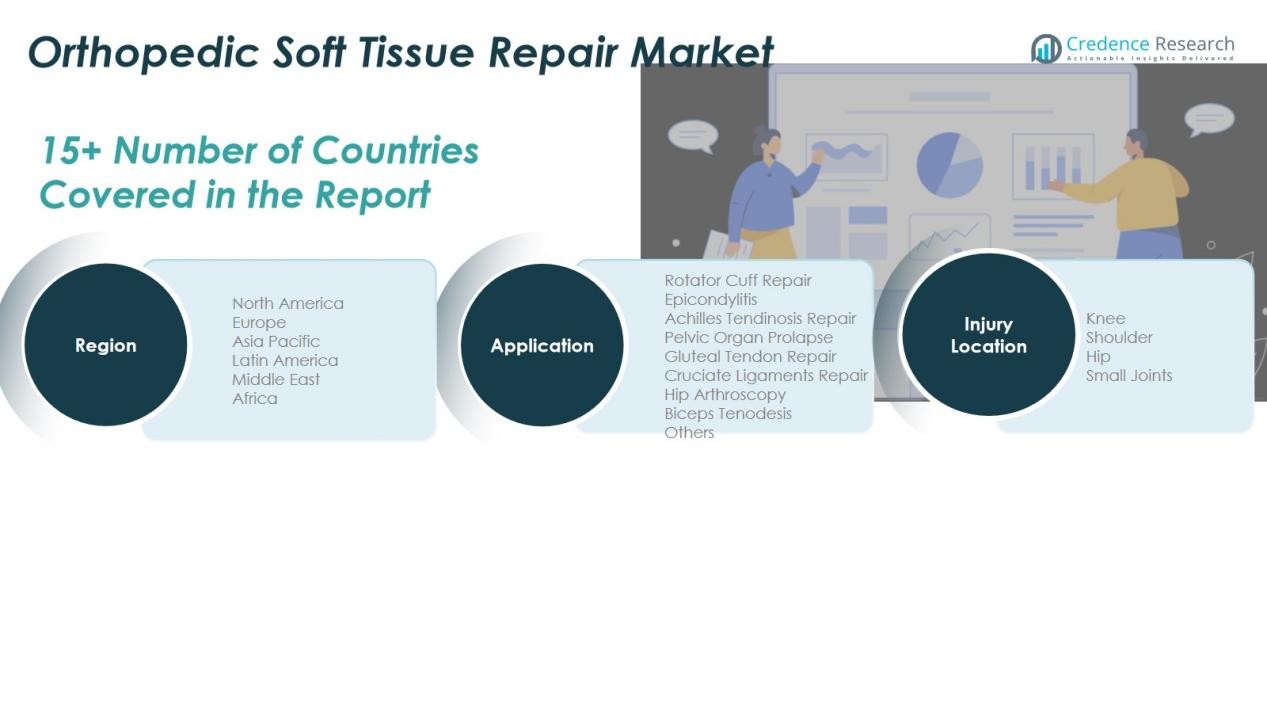
The Global Orthopedic Soft Tissue Repair Market is segmented into rotator cuff repair, epicondylitis, Achilles tendinosis repair, pelvic organ prolapse, gluteal tendon repair, cruciate ligaments repair, hip arthroscopy, biceps tenodesis, and others. Rotator cuff repair dominates due to the high incidence of shoulder injuries and advancements in arthroscopic techniques. It benefits from the growing use of bioabsorbable anchors and biologic grafts. Cruciate ligament and Achilles tendon repairs show steady growth, supported by rising sports-related injuries and improved rehabilitation outcomes. Demand for pelvic and gluteal tendon repair procedures is increasing due to higher awareness and improved diagnosis rates.
- For Instance, BEAR II clinical trial, the BEAR (Bridge-Enhanced ACL Restoration) scaffold had a repair failure (re-tear requiring revision surgery) rate of 14% at 24 months postoperatively, compared to a 6% failure rate in the traditional autograft reconstruction group [2].
By Injury Location
This segment includes knee, shoulder, hip, and small joints. Knee repairs hold a major share owing to the high prevalence of ligament and meniscus tears. It is followed by shoulder repairs driven by the rising cases of rotator cuff and labral injuries. Hip and small joint procedures are expanding with improved arthroscopy tools and regenerative repair materials. The market is witnessing a consistent rise in minimally invasive surgical interventions across all injury locations.
- For Instance, A single-center study using Zimmer Biomet's ROSA Knee System between February 2023 and June 2024 reported a mean difference of approximately 0.5 degrees between planned and achieved angles for femoral coronal alignment.
By Region
Regionally, North America leads the market, supported by advanced orthopedic infrastructure and a strong presence of major medical device companies. Europe follows with increasing adoption of biologics and a growing geriatric population. The Asia-Pacific region is expected to register the fastest growth due to expanding healthcare access, rising sports participation, and increasing awareness of orthopedic conditions. It continues to attract high investments from global healthcare manufacturers and local providers.
Segmentations:
By Application:
- Rotator Cuff Repair
- Epicondylitis
- Achilles Tendinosis Repair
- Pelvic Organ Prolapse
- Gluteal Tendon Repair
- Cruciate Ligaments Repair
- Hip Arthroscopy
- Biceps Tenodesis
- Others
By Injury Location:
- Knee
- Shoulder
- Hip
- Small Joints
By Region:
- North America
- U.S.
- Canada
- Mexico
- Europe
- Germany
- France
- U.K.
- Italy
- Spain
- Rest of Europe
- Asia Pacific
- China
- Japan
- India
- South Korea
- South-east Asia
- Rest of Asia Pacific
- Latin America
- Brazil
- Argentina
- Rest of Latin America
- Middle East & Africa
- GCC Countries
- South Africa
- Rest of the Middle East and Africa
Regional Analysis:
North America
The North America Orthopedic Soft Tissue Repair Market size was valued at USD 2,199.60 million in 2018 to USD 2,822.61 million in 2024 and is anticipated to reach USD 5,243.48 million by 2032, at a CAGR of 8.2% during the forecast period. North America holds 38% of the Global Orthopedic Soft Tissue Repair Market share, supported by strong healthcare infrastructure and advanced treatment technologies. It benefits from early adoption of biologic implants, tissue scaffolds, and arthroscopic systems. The region is home to leading players such as Stryker, Arthrex, and Zimmer Biomet, which drive innovation and clinical outcomes. The U.S. remains the major revenue contributor due to high procedure volumes and growing sports-related injuries. It continues to see steady adoption of regenerative repair solutions across hospitals and outpatient centers.
Europe
The Europe Orthopedic Soft Tissue Repair Market size was valued at USD 1,123.20 million in 2018 to USD 1,387.54 million in 2024 and is anticipated to reach USD 2,404.80 million by 2032, at a CAGR of 7.2% during the forecast period. Europe accounts for 25% of the global market, driven by expanding geriatric populations and robust healthcare systems. The Global Orthopedic Soft Tissue Repair Market in this region benefits from growing acceptance of biologic grafts and minimally invasive techniques. Germany, France, and the United Kingdom lead the market with high surgery rates and access to advanced medical facilities. It also experiences steady growth through R&D investments in tissue engineering and repair biomaterials. The region’s emphasis on patient safety and cost-effective treatment supports continuous product innovation.
Asia Pacific
The Asia Pacific Orthopedic Soft Tissue Repair Market size was valued at USD 1,284.40 million in 2018 to USD 1,738.67 million in 2024 and is anticipated to reach USD 3,565.46 million by 2032, at a CAGR of 9.5% during the forecast period. The region contributes 28% of the total global share and is the fastest-growing market. The Global Orthopedic Soft Tissue Repair Market is expanding in this region due to rising healthcare investments and a growing middle-class population. China, Japan, and India lead the market owing to increasing sports injuries, medical tourism, and healthcare modernization. It also benefits from wider availability of affordable surgical devices and biologics. Strengthening healthcare infrastructure and government support for advanced treatments continue to accelerate market growth.
Latin America
The Latin America Orthopedic Soft Tissue Repair Market size was valued at USD 348.40 million in 2018 to USD 447.67 million in 2024 and is anticipated to reach USD 775.92 million by 2032, at a CAGR of 7.3% during the forecast period. Latin America contributes 6% of the global share and shows steady growth driven by improving access to orthopedic care. The market benefits from rising sports participation, trauma cases, and healthcare reforms. Brazil and Mexico lead regional adoption with increasing hospital investments and skilled surgeons. It is gaining momentum through government initiatives that promote affordable orthopedic treatments. Local partnerships with international device manufacturers are further boosting product availability and awareness.
Middle East
The Middle East Orthopedic Soft Tissue Repair Market size was valued at USD 145.60 million in 2018 to USD 172.58 million in 2024 and is anticipated to reach USD 277.23 million by 2032, at a CAGR of 6.2% during the forecast period. The region holds 2% of the global market share and benefits from expanding private healthcare infrastructure. The Global Orthopedic Soft Tissue Repair Market in this region gains traction from rising adoption of arthroscopic and biologic repair systems. The UAE, Saudi Arabia, and Israel are key contributors with high investments in specialized orthopedic centers. It experiences growth through collaborations with global healthcare providers and medical tourism. The focus on sports medicine and trauma care continues to enhance market potential across the region.
Africa
The Africa Orthopedic Soft Tissue Repair Market size was valued at USD 98.80 million in 2018 to USD 174.00 million in 2024 and is anticipated to reach USD 274.27 million by 2032, at a CAGR of 5.5% during the forecast period. Africa holds 1% of the global market share with expanding opportunities in orthopedic and trauma care. It benefits from government healthcare investments and support from international organizations. South Africa and Nigeria dominate the region, supported by growing hospital networks and skilled medical practitioners. It is witnessing gradual improvement in surgical capabilities and training programs. Ongoing collaborations with global medical device manufacturers are helping strengthen orthopedic treatment capacity and market expansion.
Key Player Analysis:
- Integra Lifesciences Corporation
- Arthrex, Inc.
- Smith & Nephew
- DePuy Synthes
- Stryker Corporation
- ConMed Linvatec
- Zimmer Biomet
- Wright Medical Group N.V.
- Boston Scientific Corporation
- Braun SE
Competitive Analysis:
The Global Orthopedic Soft Tissue Repair Market is highly competitive, characterized by strong innovation, strategic alliances, and expanding product portfolios. Key players include Integra Lifesciences Corporation, Arthrex, Inc., Smith & Nephew, DePuy Synthes, Stryker Corporation, ConMed Linvatec, Zimmer Biomet, and Wright Medical Group N.V. It is driven by continuous advancements in biologics, minimally invasive devices, and regenerative repair systems. Companies focus on research, product differentiation, and targeted acquisitions to strengthen their market presence. North America and Europe remain primary operational hubs for product development and distribution. It experiences rising competition in the Asia-Pacific region, where multinational firms are investing in localized production and surgeon training. Strong emphasis on safety, performance efficiency, and clinical outcomes defines competitive success across the global landscape.
Recent Developments:
- In April 2024, Integra LifeSciences completes the acquisition of Acclarent, Inc., expanding its ENT portfolio under the Codman Specialty Surgical division.
- In October 2025, Johnson & Johnson announces its plan to spin off its orthopedics business into a standalone company named DePuy Synthes, with expected completion within 18 to 24 months.
Report Coverage:
The research report offers an in-depth analysis based on Application, Injury Location and Region. It details leading market players, providing an overview of their business, product offerings, investments, revenue streams, and key applications. Additionally, the report includes insights into the competitive environment, SWOT analysis, current market trends, as well as the primary drivers and constraints. Furthermore, it discusses various factors that have driven market expansion in recent years. The report also explores market dynamics, regulatory scenarios, and technological advancements that are shaping the industry. It assesses the impact of external factors and global economic changes on market growth. Lastly, it provides strategic recommendations for new entrants and established companies to navigate the complexities of the market.
Future Outlook:
- The Global Orthopedic Soft Tissue Repair Market is expected to witness steady technological integration across biologic and synthetic repair materials.
- Advancements in regenerative medicine will enhance the adoption of stem cell and growth factor-based therapies.
- Increasing demand for minimally invasive and arthroscopic surgeries will continue to shape product innovation.
- Integration of robotics and navigation systems will improve surgical precision and patient recovery outcomes.
- Healthcare providers will emphasize cost-efficient repair solutions to expand access in developing economies.
- Rising sports participation and aging demographics will create sustained demand for ligament and tendon repair procedures.
- Collaborations between medical device companies and research institutions will accelerate the development of advanced biomaterials.
- Asia-Pacific is projected to emerge as a key growth region due to expanding healthcare infrastructure and training programs.
- Digital health platforms and remote monitoring tools will support post-surgical rehabilitation and patient engagement.
- The market will evolve toward patient-specific implants, personalized repair strategies, and value-based orthopedic care delivery.

Request a Free Sample
Fill in your details and we'll send you a free sample report.
- Sample data tables & charts
- Research methodology
Market Dynamics
Rising Prevalence of Sports Injuries and Trauma Cases
Increasing participation in sports and physical activities, along with a higher incidence of road accidents and workplace injuries, is leading to more ligament, tendon, and cartilage damage that requires orthopedic soft tissue repair procedures.
Growing Geriatric Population and Age-Related Degenerative Disorders
The expanding elderly demographic is experiencing more degenerative musculoskeletal conditions such as rotator cuff tears and tendon degeneration, driving demand for advanced and minimally invasive soft tissue repair solutions.
Technological Advancements in Biologics and Regenerative Materials
Continuous innovation in biologics, scaffolds, and biomaterials is improving healing outcomes, reducing recovery times, and enhancing the long-term success of soft tissue repairs, making these procedures more attractive to both patients and providers.
Expanding Healthcare Infrastructure and Access to Advanced Surgical Techniques
Investment in healthcare infrastructure, especially in emerging markets, is increasing access to specialized orthopedic care and enabling the adoption of advanced arthroscopic and robotic-assisted repair techniques.
Shift Toward Minimally Invasive and Outpatient Procedures
The preference for minimally invasive and arthroscopic surgeries, which offer shorter recovery periods and lower complication rates, is accelerating the adoption of new devices and techniques in orthopedic soft tissue repair.
Need a Custom Version of This Report?
Tailor the scope, geography, or segments to your exact requirements.
- Custom geography or segment scope
- Direct access to our analyst team
Frequently Asked Questions
What is the current market size for the Global Orthopedic Soft Tissue Repair Market, and what is its projected size in 2032?
At what Compound Annual Growth Rate is the Global Orthopedic Soft Tissue Repair Market projected to grow between 2024 and 2032?
Which Global Orthopedic Soft Tissue Repair Market segment held the largest share in 2024?
What are the primary factors fueling the growth of the Global Orthopedic Soft Tissue Repair Market?
Who are the leading companies in the Global Orthopedic Soft Tissue Repair Market?
Which region commanded the largest share of the Global Orthopedic Soft Tissue Repair Market in 2024?
Table of Content
Chapter 1 Market Segmentation
- 1.1 Segmentation Framework
- 1.1.1 Product and Service Classification
- 1.1.2 Application and End-Use Classification
- 1.1.3 Technology and Solution Classification
- 1.1.4 Customer and Distribution Channel Classification
- 1.1.5 Geographic Segmentation
- 1.1.6 Market Segment Definitions and Boundaries
- 1.2 By Application
- 1.2.1 Rotator Cuff Repair
- 1.2.2 Epicondylitis
- 1.2.3 Achilles Tendinosis Repair
- 1.2.4 Pelvic Organ Prolapse
- 1.2.5 Gluteal Tendon Repair
- 1.2.6 Cruciate Ligaments Repair
- 1.2.7 Hip Arthroscopy
- 1.2.8 Biceps Tenodesis
- 1.2.9 Others
- 1.3 By Injury Location
- 1.3.1 Knee
- 1.3.2 Shoulder
- 1.3.3 Hip
- 1.3.4 Small Joints
Chapter 2 Introduction
- 2.1 Report Objectives and Scope
- 2.2 Product Definition and Industry Terminology
- 2.3 Market Inclusions and Exclusions
- 2.4 Research Process
- 2.4.1 Primary Research and Expert Interviews
- 2.4.2 Secondary Research and Source Review
- 2.4.3 Top-Down and Bottom-Up Estimation
- 2.4.4 Data Triangulation and Verification
- 2.5 Market Size Measurement Basis
- 2.5.1 2018: USD 5,200 million → Forecast year: USD 12,541.16 million
- 2.6 Historical and Forecast Reference Periods
- 2.6.1 Base Year: 2018
- 2.7 Research Assumptions and Limitations
Chapter 3 Executive Summary
- 3.1 Market Snapshot and Key Findings
- 3.2 Base-Year Market Size, 2018
- 3.3 Forecast Market Size
- 3.4 Revenue and Volume Growth Outlook
- 3.5 Key Demand and Supply Indicators
- 3.6 Leading Market Segments
- 3.7 Fastest-Growing Market Opportunities
- 3.8 Regional Performance Highlights
- 3.9 Technology and Industry Transformation
- 3.10 Competitive Landscape Summary
- 3.11 Analyst View and Strategic Implications
Chapter 4 Global Orthopedic Soft Tissue Repair Market Trends and Developments
- 4.1 Historical Industry Development
- 4.2 Recent Market Trends and Developments
- 4.3 Demand and Customer Behavior Trends
- 4.4 Technology and Product Innovation
- 4.5 Artificial Intelligence, Automation and Digitalization
- 4.6 Local Manufacturing and Supply Chain Realignment
- 4.7 Industry Partnerships, Mergers and Acquisitions
- 4.8 Sustainability and Circular Economy Developments
- 4.9 Government and Private Sector Investment Trends
- 4.10 Emerging Business Models and Commercialization
- 4.11 Industry Developments and Announcements
Chapter 5 Global Orthopedic Soft Tissue Repair Market Production, Supply and Demand Analysis
- 5.1 Demand Trend and Consumption Analysis
- 5.2 Demand Forecast
- 5.3 Production and Output Trend
- 5.4 Production and Output Forecast
- 5.5 Installed Capacity and Capacity Utilization
- 5.6 Company-Wise Production Plants and Statistics
- 5.6.1 Installed Production Capacity
- 5.6.2 Actual Production
- 5.6.3 Planned Capacity and Expansion Targets
- 5.7 Supply Chain Structure and Procurement Trends
- 5.8 Supply-Demand Gap and Bottlenecks
- 5.9 Import Dependence and Sourcing Structure
- 5.10 Contract Manufacturing and Outsourcing
- 5.11 Regional Supply and Demand Concentration
Chapter 6 Global Orthopedic Soft Tissue Repair Market Pricing Analysis
- 6.1 Pricing Structure and Measurement
- 6.2 Historical Pricing Trends
- 6.3 Pricing Outlook
- 6.4 Average Selling Price and Unit Economics
- 6.5 Pricing by Product and Market Segment
- 6.6 Geographic Pricing Differences
- 6.7 Key Input, Energy, Labor and Logistics Costs
- 6.8 Contract Pricing and Purchasing Models
- 6.9 Pricing Sensitivity and Competitive Positioning
- 6.10 Price, Margin and Profitability Implications
Chapter 7 Global Orthopedic Soft Tissue Repair Market Dynamics
- 7.1 Market Growth Drivers
- 7.1.1 Demand-Side Drivers
- 7.1.2 Technology and Innovation Drivers
- 7.1.3 Infrastructure and Investment Drivers
- 7.1.4 Regulatory and Policy Drivers
- 7.2 Market Restraints
- 7.2.1 Cost and Affordability Constraints
- 7.2.2 Technology and Adoption Barriers
- 7.2.3 Supply Chain and Operational Constraints
- 7.3 Market Challenges
- 7.3.1 Competitive Pressure and Margin Erosion
- 7.3.2 Skills, Infrastructure and Implementation Gaps
- 7.4 Emerging Market Opportunities
- 7.5 Market Dynamics Impact and Time-Horizon Assessment
Chapter 8 Global Orthopedic Soft Tissue Repair Value Chain Analysis
- 8.1 Industry Value Chain Overview
- 8.2 Upstream Suppliers and Critical Inputs
- 8.3 Technology and Component Providers
- 8.4 Manufacturing or Service Delivery
- 8.5 Distribution, Channel Partners and Integrators
- 8.6 Downstream Applications and End Users
- 8.7 Value Addition and Profit Pools
- 8.8 Vertical Integration and Outsourcing
- 8.9 Supplier Concentration and Risk
- 8.10 Supply Chain Localization and Resilience
Chapter 9 Global Orthopedic Soft Tissue Repair Market Regulations and Policies
- 9.1 Relevant Laws, Standards and Compliance Frameworks
- 9.2 Product, Service, Safety and Quality Requirements
- 9.3 Government Policies, Incentives and Subsidies
- 9.4 Imports, Exports and Trade Barriers
- 9.5 Public Procurement and Local Content Requirements
- 9.6 Environmental and Sustainability Compliance
- 9.7 Upcoming Policy Changes and Market Implications
Chapter 10 Global Orthopedic Soft Tissue Repair Market Hotspots and Opportunities
- 10.1 Market Opportunity Mapping and Growth Hotspots
- 10.2 High-Growth Applications and Customer Groups
- 10.3 Underserved Markets and White-Space Opportunities
- 10.4 Emerging Technology and Product Opportunities
- 10.5 New Capacity and Investment Hotspots
- 10.6 Market Entry and Expansion Opportunities
- 10.7 Distribution and Partnership Opportunities
- 10.8 Near-Term and Long-Term Commercial Potential
- 10.9 Opportunity Attractiveness and Execution Risks
Chapter 11 Global Orthopedic Soft Tissue Repair Market Outlook
- 11.1 Market Size and Analysis
- 11.1.1 Revenue (Market Measurement: 2018: USD 5,200 million → Forecast year: USD 12,541.16 million)
- 11.1.2 Market Volume and Quantity Sold
- 11.1.3 Historical Market Size
- 11.1.4 Base-Year Market Size, 2018
- 11.2 Market Forecast
- 11.2.1 Revenue Forecast
- 11.2.2 Volume Forecast
- 11.2.3 CAGR and Year-on-Year Growth
- 11.2.4 Incremental Revenue Opportunity
- 11.3 Forecast Assumptions and Scenario Analysis
- 11.3.1 Base-Case Forecast
- 11.3.2 Optimistic and Conservative Scenarios
- 11.3.3 Technology, Pricing and Policy Sensitivities
- 11.4 Market Attractiveness and Growth Outlook
Chapter 12 Global Orthopedic Soft Tissue Repair Market Segmentation and Outlook
- 12.1 Segmentation Summary and Market Shares, 2018
- 12.2 Largest and Fastest-Growing Segments
- 12.3 By Application - Market Size and Forecast
- 12.3.1 Segment Definition and Scope
- 12.3.2 Historical Market Size
- 12.3.3 Revenue Forecast
- 12.3.4 Volume Forecast
- 12.3.5 Base-Year Market Share, 2018
- 12.3.6 Segment CAGR and Growth Drivers
- 12.3.7 Subsegment Market Size and Forecast
- 12.3.7.1 Rotator Cuff Repair
- 12.3.7.2 Epicondylitis
- 12.3.7.3 Achilles Tendinosis Repair
- 12.3.7.4 Pelvic Organ Prolapse
- 12.3.7.5 Gluteal Tendon Repair
- 12.3.7.6 Cruciate Ligaments Repair
- 12.3.7.7 Hip Arthroscopy
- 12.3.7.8 Biceps Tenodesis
- 12.3.7.9 Others
- 12.3.8 Subsegment Pricing and Adoption Trends
- 12.3.9 Leading Suppliers and Competition
- 12.3.10 Regional Demand and Opportunities
- 12.4 By Injury Location - Market Size and Forecast
- 12.4.1 Segment Definition and Scope
- 12.4.2 Historical Market Size
- 12.4.3 Revenue Forecast
- 12.4.4 Volume Forecast
- 12.4.5 Base-Year Market Share, 2018
- 12.4.6 Segment CAGR and Growth Drivers
- 12.4.7 Subsegment Market Size and Forecast
- 12.4.7.1 Knee
- 12.4.7.2 Shoulder
- 12.4.7.3 Hip
- 12.4.7.4 Small Joints
- 12.4.8 Subsegment Pricing and Adoption Trends
- 12.4.9 Leading Suppliers and Competition
- 12.4.10 Regional Demand and Opportunities
- 12.5 Segment Growth Comparison
- 12.6 Segment Attractiveness and Priority Matrix
Chapter 13 Global Orthopedic Soft Tissue Repair End-Use and Application Market Outlook
- 13.1 End-Use Industry and Customer Demand Structure
- 13.2 Leading Applications and Customer Groups
- 13.3 End-Use Market Size, Share and Forecast
- 13.4 Major End-Use Industry Deep Dives
- 13.4.1 Customer Requirements and Use Cases
- 13.4.2 Demand and Replacement Cycles
- 13.4.3 Technical and Regulatory Considerations
- 13.4.4 Purchasing and Procurement Models
- 13.4.5 Leading Vendors and Distribution Channels
- 13.4.6 Forecast and Commercial Opportunities
- 13.5 Emerging Applications and Cross-Segment Demand
- 13.6 End-Use Industry Investment Priorities
Chapter 14 Global Orthopedic Soft Tissue Repair Geographic Market Outlook
- 14.1 Regional Market Size and Share, 2018
- 14.2 Regional Market Forecast
- 14.3 Regional Pricing, Production and Demand Differences
- 14.4 North America
- 14.4.1 United States
- 14.4.2 Canada
- 14.4.3 Mexico
- 14.5 Europe
- 14.5.1 Germany
- 14.5.2 France
- 14.5.3 Italy
- 14.5.4 United Kingdom
- 14.5.5 Spain
- 14.5.6 Poland
- 14.5.7 Russia
- 14.5.8 Netherlands
- 14.5.9 Belgium
- 14.5.10 Sweden
- 14.5.11 Denmark
- 14.5.12 Norway
- 14.5.13 Rest of Europe
- 14.6 Asia Pacific
- 14.6.1 China
- 14.6.2 India
- 14.6.3 Japan
- 14.6.4 South Korea
- 14.6.5 Thailand
- 14.6.6 Indonesia
- 14.6.7 Vietnam
- 14.6.8 Malaysia
- 14.6.9 Australia
- 14.6.10 Rest of Asia Pacific
- 14.7 Latin America
- 14.7.1 Brazil
- 14.7.2 Argentina
- 14.7.3 Colombia
- 14.7.4 Chile
- 14.7.5 Rest of Latin America
- 14.8 Middle East
- 14.8.1 Saudi Arabia
- 14.8.2 United Arab Emirates
- 14.8.3 Turkey
- 14.8.4 Israel
- 14.8.5 Iran
- 14.8.6 Rest of the Middle East
- 14.9 Africa
- 14.9.1 South Africa
- 14.9.2 Egypt
- 14.9.3 Nigeria
- 14.9.4 Morocco
- 14.9.5 Rest of Africa
- 14.10 Regional Investment, Policy and Supply Chain Differences
- 14.11 Regional Competitive Landscape
- 14.12 Geographic Growth Hotspots
Chapter 15 Global Orthopedic Soft Tissue Repair Technology, Innovation and Sustainability Outlook
- 15.1 Technology Landscape and Maturity
- 15.2 Product, Process and Service Innovation
- 15.3 AI, Automation and Digital Tools in the Industry
- 15.4 Technology Adoption and Performance Benchmarking
- 15.5 Innovation Pipeline and R&D Investment
- 15.6 Patent and Intellectual Property Trends
- 15.7 Energy Efficiency and Resource Management
- 15.8 Sustainability, Recycling and Circularity
- 15.9 Technology Roadmap
- 15.10 Risks of Obsolescence and Technology Substitution
Chapter 16 Global Orthopedic Soft Tissue Repair Market Key Strategic Imperatives
- 16.1 Growth and Market Entry Priorities
- 16.2 High-Return Products and Segments
- 16.3 Pricing, Profitability and Cost Optimization
- 16.4 Technology Investment and Product Differentiation
- 16.5 Supply Chain Localization and Resilience
- 16.6 Distribution and Customer Acquisition
- 16.7 Partnership, Acquisition and Capacity Strategy
- 16.8 Regional Expansion Priorities
- 16.9 Short-, Medium- and Long-Term Actions
Chapter 17 Competition Outlook
- 17.1 Industry Competition Characteristics
- 17.2 Market Structure and Concentration
- 17.3 Market Share and Competitive Positioning, 2018
- 17.4 Company-Wise Revenue and Product Benchmarking
- 17.5 Production and Service Capacity Benchmarking
- 17.6 Technology, Pricing and Differentiation
- 17.7 Regional Footprint and Distribution Strength
- 17.8 Mergers, Acquisitions and Strategic Alliances
- 17.9 New Entrants and Competitive Threats
- 17.10 Porter's Five Forces and Industry Attractiveness
- 17.11 Competitive Outlook
Chapter 18 Company Profiles
- 18.1 Company Coverage and Selection Criteria
- 18.2 Integra Lifesciences Corporation
- 18.2.1 Business Description
- 18.2.2 Company Ownership and Geographic Presence
- 18.2.3 Product and Service Portfolio
- 18.2.4 Manufacturing and Operating Footprint
- 18.2.5 Production Capacity and Expansion Plans
- 18.2.6 Financial Performance and Investment
- 18.2.7 Market Share and Competitive Position
- 18.2.8 Technology and Innovation Capabilities
- 18.2.9 Strategic Alliances or Partnerships
- 18.2.10 Recent Developments
- 18.2.11 Growth Strategy and Outlook
- 18.3 Arthrex, Inc.
- 18.4 Smith & Nephew
- 18.5 DePuy Synthes
- 18.6 Stryker Corporation
- 18.7 ConMed Linvatec
- 18.8 Zimmer Biomet
- 18.9 Wright Medical Group N.V.
- 18.10 Boston Scientific Corporation
- 18.11 B. Braun SE
- 18.12 Other Relevant Market Participants
Note: Every listed company is profiled on the structure shown under the first company. The company list is preliminary and may change based on research findings, market developments, data availability and client requirements.
Chapter 19 Disclaimer
- 19.1 Research and Forecast Disclaimer
- 19.2 Data Source and Estimation Limitations
Note: The depth of individual sections depends on data availability for this market. Volume, capacity, trade and other unit-based metrics are included where applicable.

