
| REPORT ATTRIBUTE | DETAILS |
|---|---|
| Historical Period | 2020-2023 |
| Base Year | 2024 |
| Forecast Period | 2025-2032 |
| Personal Protective Equipment Market Size 2023 | USD 37877.36 Million |
| Personal Protective Equipment Market, CAGR | 6.23% |
| Personal Protective Equipment Market Size 2032 | USD 65507.83 Million |
Market Overview:
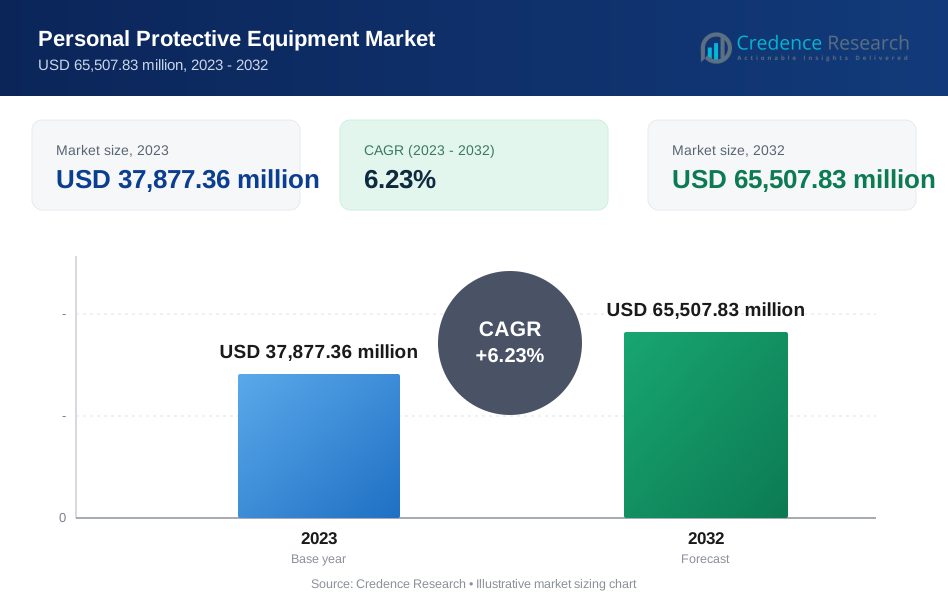
The Personal Protective Equipment Market is projected to grow from USD 37877.36 million in 2023 to an estimated USD 65507.83 million by 2032, with a compound annual growth rate (CAGR) of 6.23% from 2023 to 2032.
The Personal Protective Equipment market growth is primarily driven by stringent regulatory frameworks enforcing workplace safety across diverse sectors such as manufacturing, construction, and healthcare. These regulations compel organizations to adopt protective gear to mitigate occupational hazards and ensure employee well-being. The COVID-19 pandemic further emphasized the critical need for PPE, prompting businesses and governments to invest heavily in protective equipment stockpiles and infrastructure. Technological advancements in PPE materials and designs, including the emergence of smart and reusable products, enhance user comfort and protection, thereby increasing adoption rates. Furthermore, growing environmental concerns motivate manufacturers and end-users to shift towards sustainable PPE solutions, reducing waste and minimizing environmental impact. Together, these factors fuel sustained market expansion by aligning safety, innovation, and sustainability priorities.
North America leads the global Personal Protective Equipment market, benefiting from well-established safety regulations and high industrial activity levels, which drive consistent demand for advanced protective gear. The region is projected to maintain steady growth as regulatory compliance remains a critical focus for employers. Meanwhile, Asia-Pacific exhibits the fastest growth due to rapid industrialization in key countries such as China, India, and Japan, where expanding manufacturing, mining, and construction sectors increase PPE requirements. Europe commands a significant share of the healthcare PPE market, supported by strong healthcare infrastructure and stringent safety standards that propel consistent demand. The Middle East and Africa region is witnessing gradual market growth spurred by increasing industrial projects and growing awareness of worker safety. Latin America shows steady expansion with improving industrial safety protocols and rising investments in healthcare sectors. Collectively, these regional dynamics shape the global PPE market landscape by balancing mature markets with rapidly developing economies.
Market Insights:
- The Personal Protective Equipment Market is projected to grow from USD 37,877.36 million in 2023 to USD 65,507.83 million by 2032, with a CAGR of 6.23%.
- Stringent regulatory frameworks across manufacturing, construction, and healthcare sectors drive sustained demand for PPE to ensure workplace safety.
- The COVID-19 pandemic amplified awareness and accelerated PPE adoption across healthcare and non-healthcare industries globally.
- Advances in materials and design, including smart and reusable PPE, enhance comfort and protection, increasing user compliance.
- Growing environmental concerns push manufacturers and end-users toward sustainable PPE solutions, reducing waste and environmental impact.
- North America leads the market with strong safety regulations and industrial activity, while Asia-Pacific shows the fastest growth due to rapid industrialization.
- Challenges such as high production costs, supply chain disruptions, and counterfeit products threaten market stability and require robust quality control measures.
Market Drivers:
Stringent Regulatory Frameworks Driving Compliance and Safety Standards
The Personal Protective Equipment Market experiences significant growth due to increasingly stringent regulations governing workplace safety across various industries. Governments and regulatory bodies worldwide enforce strict guidelines that mandate the use of PPE to protect workers from occupational hazards. Compliance with these regulations compels companies to invest heavily in protective gear, ensuring safety and reducing liability risks. Industries such as construction, manufacturing, healthcare, and mining prioritize PPE procurement to align with legal requirements and avoid penalties. The evolving nature of safety standards requires continuous upgrades and innovations in PPE offerings. Organizations recognize that adherence to these frameworks enhances employee confidence and productivity. This regulatory environment creates sustained demand and fuels market expansion globally.
Impact of Global Health Crises on Market Demand and Awareness
Health emergencies, particularly the COVID-19 pandemic, have highlighted the essential role of PPE in safeguarding public and occupational health. The pandemic triggered unprecedented demand for protective masks, gloves, face shields, and gowns across healthcare and non-healthcare sectors. It heightened awareness about infection control and personal safety, extending PPE adoption beyond traditional industries to the general public and corporate environments. Organizations increased stockpiles and established supply chains to mitigate risks associated with future health crises. This experience reinforced the importance of PPE in pandemic preparedness and workplace resilience. Manufacturers responded by scaling production capacities and developing innovative products to meet evolving safety requirements. The lingering focus on hygiene and protection maintains robust demand for PPE worldwide.
Advancements in Material Technology and Product Innovation Enhancing Usability
Technological innovations in materials and design significantly drive the Personal Protective Equipment Market by improving comfort, durability, and effectiveness. The development of lightweight, breathable, and reusable PPE products increases user compliance and reduces waste. Integration of smart technologies, such as sensors and connectivity features, allows real-time monitoring of environmental conditions and wearer health, enhancing safety outcomes. Manufacturers continually invest in research and development to create PPE that balances protection with ergonomics. Innovations also address specific industry needs, tailoring products for specialized hazards. These advancements expand market opportunities by appealing to a wider range of end-users and applications. Enhanced product performance contributes to sustained adoption and competitive differentiation.
- For instance, in 2023, MSA Safety launched the V-Gard® C1™ Hard Hat, which uses reflective technology to reduce helmet surface temperatures by up to 20°F, enhancing comfort for outdoor workers.
Growing Environmental Concerns Promoting Sustainable PPE Solutions
The increasing focus on environmental sustainability influences the Personal Protective Equipment Market by driving demand for eco-friendly and recyclable products. Single-use PPE generates significant waste, prompting governments, industries, and consumers to seek alternatives that minimize environmental impact. Manufacturers develop biodegradable materials and reusable designs to address waste management challenges. Sustainable PPE solutions align with corporate social responsibility initiatives and regulatory expectations on environmental stewardship. The shift toward green procurement policies in both public and private sectors encourages adoption of environmentally responsible PPE. This trend fosters innovation in material science and production processes. Market players investing in sustainability position themselves favorably to capture evolving customer preferences and regulatory incentives.
- For instance, in October 2023, 3M launched the Aura™ 95 Particulate Respirator 1870+ Gen 3, a partially biodegradable N95 mask designed to address environmental concerns.
Market Trends:
Increased Adoption of Smart and Connected PPE Enhancing Workplace Safety
The Personal Protective Equipment Market witnesses a rising trend toward smart and connected PPE that integrates sensors and IoT technologies. These advanced products enable real-time monitoring of environmental hazards and wearer health parameters, improving risk detection and response. Organizations implement smart PPE to enhance safety compliance and reduce workplace accidents. The ability to track usage patterns and exposure levels helps employers enforce regulations more effectively. Technological progress drives innovation in wearable safety devices, expanding applications beyond traditional PPE categories. This shift creates new opportunities for manufacturers to differentiate their offerings. It also aligns with digital transformation efforts within industries focused on operational efficiency and worker protection.
- For instance, the Kenzen Smart Monitoring System, for instance, is a wearable patch that monitors employees’ heart rates, body temperatures, and hydration levels, sending real-time alerts to prevent heat exhaustion and dehydration in high-risk industries.
Growth in Demand for Customized and Industry-Specific Protective Equipment
Customization gains traction within the Personal Protective Equipment Market as industries seek tailored solutions to meet unique hazard profiles. Sectors such as oil and gas, chemical manufacturing, and healthcare require specialized PPE designed to address specific risks, environmental conditions, and regulatory standards. Suppliers respond by offering products with enhanced material properties, sizes, and functional features catering to these demands. Customized PPE improves comfort and effectiveness, leading to higher user adoption and compliance rates. It supports diverse workplace environments by accommodating varying safety challenges. This trend prompts manufacturers to invest in flexible production capabilities and innovation. The market evolves toward personalized protective strategies, meeting precise customer needs.
- For example, DuPont’s IoT-enabled PPE not only enhances compliance but can also be customized for different industrial environments, supporting higher user adoption and effectiveness.
Sustainability Initiatives Influencing Product Development and Procurement Practices
The Personal Protective Equipment Market reflects growing sustainability concerns through increased focus on eco-friendly materials and waste reduction. Companies prioritize developing reusable and biodegradable PPE to minimize environmental impact without compromising safety. Procurement policies in both public and private sectors shift toward greener alternatives, favoring suppliers who demonstrate environmental responsibility. Circular economy principles influence product design, manufacturing, and end-of-life management. Sustainability-driven innovation encourages collaboration among manufacturers, regulators, and end-users to establish standards and certifications. This evolving landscape drives market competitiveness and brand differentiation. It also aligns PPE with broader corporate sustainability goals and global environmental commitments.
Expansion of E-commerce and Digital Sales Channels Transforming Market Accessibility
Digital transformation impacts the Personal Protective Equipment Market by accelerating the adoption of e-commerce and online distribution platforms. Buyers increasingly rely on digital channels for convenient access to a wide range of PPE products, with faster procurement cycles and transparent pricing. Manufacturers and distributors invest in robust online presences to engage customers and expand market reach. Digital tools facilitate product customization, inventory management, and customer support, enhancing overall experience. This shift lowers barriers for small and medium enterprises to source PPE efficiently. The growing importance of online channels stimulates competition and innovation in marketing strategies. It also supports global market penetration and responsiveness to dynamic safety needs.
Market Challenges Analysis:
High Production Costs and Supply Chain Disruptions Affect Market Stability
The Personal Protective Equipment Market faces challenges related to elevated production costs driven by the use of advanced materials and stringent quality standards. Manufacturers incur significant expenses to meet safety certifications and regulatory requirements, which impact product pricing and profit margins. Fluctuations in raw material availability and prices further strain production budgets. Global supply chain disruptions, including transportation delays and trade restrictions, complicate timely delivery and inventory management. These factors create volatility in product availability and increase operational risks for suppliers and buyers alike. Smaller manufacturers and new entrants struggle to maintain cost competitiveness against established players. The market must navigate these obstacles to ensure consistent supply and affordability for end-users.
- For instance, in 2022, 3M publicly reported that higher raw material costs and supply chain disruptions led to a 6% increase in the cost of goods sold for its Safety and Industrial segment, including PPE.
Counterfeit Products and Quality Control Issues Undermine Market Credibility
The prevalence of counterfeit and substandard PPE products challenges the integrity of the Personal Protective Equipment Market. Low-quality imitations undermine user safety and erode trust in genuine brands. It poses significant risks to worker health and exposes organizations to liability and regulatory penalties. Effective quality control mechanisms and robust certification processes become essential to combat fraudulent products. Enforcement of intellectual property rights and stricter import regulations also play critical roles in addressing this issue. Market players invest in advanced authentication technologies and supply chain transparency to safeguard brand reputation. Failure to control counterfeit distribution threatens market growth and end-user confidence.
Market Opportunities:
Expansion into Emerging Markets Driven by Industrial Growth and Infrastructure Development
The Personal Protective Equipment Market benefits from expanding opportunities in emerging economies experiencing rapid industrialization and infrastructure growth. Countries in Asia-Pacific, Latin America, and Africa invest heavily in construction, manufacturing, and mining projects, increasing demand for workplace safety solutions. It enables market players to penetrate new customer segments and establish long-term partnerships with local industries. Rising awareness of occupational health and safety regulations in these regions further supports PPE adoption. Companies that tailor products to meet local standards and environmental conditions position themselves to capture significant market share. This expansion diversifies revenue streams and reduces dependence on mature markets. Emerging economies represent a vital growth frontier for the PPE industry.
Innovation in Sustainable and Smart PPE Products Enhancing Competitive Advantage
The Personal Protective Equipment Market presents opportunities through innovation focused on sustainability and smart technologies. Demand for eco-friendly materials and reusable designs grows amid heightened environmental concerns and regulatory pressures. It drives manufacturers to develop products that reduce waste and lifecycle environmental impact. Smart PPE equipped with sensors and connectivity features offers enhanced protection and real-time data monitoring, meeting evolving workplace safety needs. These innovations attract customers seeking advanced, efficient, and responsible protective solutions. Investing in research and development in these areas strengthens brand differentiation and opens new revenue channels. Embracing sustainable and intelligent PPE technologies positions companies at the forefront of market evolution.
Market Segmentation Analysis:
The Personal Protective Equipment Market segments by product and end-use reflect diverse demand patterns driven by safety requirements across industries.
By product, Hand Protection constitutes a major share, with Disposable Gloves leading due to their widespread use in healthcare and industrial settings, followed by Durable Gloves that cater to heavy-duty applications. Respiratory Protection covers Surgical Masks, Respirator Masks, and other related products, experiencing significant growth driven by heightened awareness of airborne hazards and infection control. The Protective Clothing segment includes Coveralls, Gowns, and other protective garments, essential in environments requiring full-body protection. Face Protection and Eye Protection segments meet critical safety needs in construction, manufacturing, and medical sectors. The Others category comprises miscellaneous PPE products tailored to specialized applications.
By end-use, hospitals dominate PPE consumption due to stringent hygiene and safety protocols. The Home Healthcare segment gains traction with rising elderly care and chronic disease management, increasing PPE adoption in residential settings. Outpatient and Primary Care Facilities require reliable PPE for safe patient interactions, supporting steady market growth. The Others end-use segment includes industries like manufacturing and construction that maintain consistent PPE demand to comply with occupational safety standards.
Segmentation:
By Product:
- Hand Protection
- Disposable Gloves
- Durable Gloves
- Respiratory Protection
- Surgical Masks
- Respirator Masks
- Others
- Protective Clothing
- Coveralls
- Gowns
- Others
- Face Protection
- Eye Protection
- Others (Miscellaneous PPE products)
By End-Use:
- Hospitals
- Home Healthcare
- Outpatient/Primary Care Facilities
- Others
By Regional:
- North America (including U.S., Canada, Mexico)
- Europe (including UK, France, Germany, Italy, Spain, Russia, Belgium, Netherlands, Austria, Sweden, Poland, Denmark, Switzerland, and Rest of Europe)
- Asia Pacific (including China, Japan, South Korea, India, Australia, Thailand, Indonesia, Vietnam, Malaysia, Philippines, Taiwan, Rest of Asia Pacific)
- Latin America (including Brazil, Argentina, Peru, Chile, Colombia, Rest of Latin America)
- Middle East (including UAE, KSA, Israel, Turkey, Iran, Rest of Middle East)
- Africa (including Egypt, Nigeria, Algeria, Morocco, Rest of Africa)
Regional Analysis:
North America Holds a Significant Share Driven by Stringent Safety Regulations
The North American region commands a substantial share of the Personal Protective Equipment Market, accounting for approximately 32% of the global market. It benefits from well-established regulatory frameworks enforced by agencies such as OSHA and NIOSH that mandate rigorous workplace safety standards. High industrial activity in sectors like construction, oil and gas, and healthcare sustains consistent demand for PPE products. The region also invests heavily in technological innovations, including smart PPE and sustainable solutions, maintaining its competitive edge. Increasing focus on worker safety and regulatory compliance encourages organizations to adopt advanced protective gear. It supports continuous growth despite market maturity. The presence of prominent PPE manufacturers further strengthens North America’s leadership position.
Asia-Pacific Exhibits Rapid Growth Fueled by Industrial Expansion and Infrastructure Projects
The Asia-Pacific region holds around 28% of the global Personal Protective Equipment Market and experiences the fastest growth rate worldwide. Rapid industrialization in countries such as China, India, Japan, and Southeast Asian nations drives PPE demand across manufacturing, construction, and mining sectors. Urbanization and large-scale infrastructure development projects elevate the need for workplace safety solutions. Rising awareness of occupational health and safety standards propels adoption among local enterprises. It attracts investments from global PPE suppliers aiming to capitalize on expanding opportunities. The growing middle class and government initiatives supporting industrial safety further boost market penetration. Asia-Pacific’s dynamic economic environment positions it as a critical growth engine for the PPE market.
Europe Maintains Strong Market Presence Supported by Healthcare and Manufacturing Sectors
Europe accounts for approximately 25% of the Personal Protective Equipment Market, reflecting steady demand across healthcare, automotive, and manufacturing industries. It possesses mature safety regulations and advanced healthcare infrastructure, which create sustained requirements for high-quality PPE. The region’s emphasis on environmental sustainability encourages adoption of reusable and eco-friendly protective equipment. It fosters innovation and development of green PPE solutions among European manufacturers. Market players benefit from established distribution networks and increasing investments in occupational health initiatives. The focus on worker well-being and regulatory enforcement sustains steady growth despite economic fluctuations. Europe continues to play a vital role in shaping global PPE standards and trends.
Key Player Analysis:
- 3M
- Honeywell International Inc.
- DuPont de Nemours, Inc.
- MSA Safety Incorporated
- Kimberly-Clark Corporation
Competitive Analysis:
The Personal Protective Equipment Market features intense competition among global and regional players striving to expand their market presence. Leading companies invest heavily in research and development to innovate advanced PPE products, including smart and sustainable solutions, enhancing their competitive advantage. It drives product differentiation through improved safety features, comfort, and compliance with evolving regulations. Strategic partnerships, mergers, and acquisitions help market participants strengthen distribution networks and enter new geographies. Manufacturers also focus on cost optimization to address price sensitivity among end-users. Companies like 3M, Honeywell, Ansell, DuPont, and MSA Safety dominate the market, leveraging strong brand recognition and extensive product portfolios. Emerging players emphasize niche product offerings and customized solutions to capture specific industry segments. It intensifies competition by fostering continuous innovation and improved customer engagement. This competitive landscape propels the Personal Protective Equipment Market toward technological advancement and enhanced safety standards globally.
Recent Developments:
- In May 2025, Honeywell International Inc. completed the sale of its Personal Protective Equipment (PPE) business to Protective Industrial Products, Inc. (PIP) for $1.325 billion. This transaction marks Honeywell’s full exit from the PPE space, following the earlier divestiture of its lifestyle and performance footwear business in 2021.
- In May 2025, DuPont de Nemours, Inc. announced a strategic partnership with Epicore Biosystems to advance worker safety through smart wearable technology. The collaboration leverages DuPont’s expertise in protective garments and Epicore’s wearable hydration management technology, aiming to provide real-time hydration and physiological tracking for workers in high-risk environments.
- In 2024, 3M continued to expand its Personal Safety Division’s product portfolio with the launch of several new PPE solutions. Notably, the 3M Speedglas G5-03 Pro Welding Helmet Series was introduced in Q1 2024, featuring advanced features such as a new TAP function for grind and cut, optional task light, safety helmet adapter, and ergonomic headband.
Market Concentration & Characteristics:
The Personal Protective Equipment Market demonstrates a moderately concentrated structure dominated by a few key global players that control a significant portion of the market share. It is characterized by a mix of established multinational corporations and numerous regional manufacturers catering to diverse industry needs. Market leaders focus on innovation, compliance with stringent safety standards, and broad product portfolios to maintain their competitive positions. The presence of regional players allows customization and cost-effective solutions tailored to local market demands. It experiences steady demand across multiple sectors, including healthcare, construction, and manufacturing, driving consistent growth. The market’s characteristics include high regulatory influence, ongoing technological advancements, and increasing emphasis on sustainable products. This combination shapes a competitive yet dynamic landscape with opportunities for both established and emerging participants to expand their footprint.
Report Coverage:
The research report offers an in-depth analysis based on product and end use. It details leading market players, providing an overview of their business, product offerings, investments, revenue streams, and key applications. Additionally, the report includes insights into the competitive environment, SWOT analysis, current market trends, as well as the primary drivers and constraints. Furthermore, it discusses various factors that have driven market expansion in recent years. The report also explores market dynamics, regulatory scenarios, and technological advancements that are shaping the industry. It assesses the impact of external factors and global economic changes on market growth. Lastly, it provides strategic recommendations for new entrants and established companies to navigate the complexities of the market.
Future Outlook:
- The Personal Protective Equipment Market will experience steady growth driven by heightened global safety awareness.
- Emerging technologies like smart PPE will enhance real-time hazard detection and worker protection.
- Adoption of sustainable and reusable PPE solutions will rise in response to environmental regulations.
- Expanding industrial activities in developing regions will create new market opportunities.
- Integration of AI and IoT in PPE will improve product functionality and user compliance.
- Regulatory bodies will continue tightening safety standards, increasing PPE demand.
- Customized and industry-specific PPE designs will address diverse workplace hazards more effectively.
- E-commerce platforms will streamline PPE distribution and broaden customer access.
- Collaborations between manufacturers and healthcare sectors will drive innovation and quality improvements.
- Investment in research and development will accelerate the creation of next-generation protective equipment.
Request a Free Sample
Fill in your details and we'll send you a free sample report.
- Sample data tables & charts
- Research methodology
Need a Custom Version of This Report?
Tailor the scope, geography, or segments to your exact requirements.
- Custom geography or segment scope
- Direct access to our analyst team
Frequently Asked Questions
What is the current size of the Personal Protective Equipment Market?
What factors are driving the growth of the Personal Protective Equipment Market?
What are the key regions contributing to the Personal Protective Equipment Market growth?
What are some challenges faced by the Personal Protective Equipment Market?
Who are the major players in the Personal Protective Equipment Market?
Table of Content
Chapter 1. Report Introduction
- 1.1 Report Description & Purpose
- 1.1.1 Report Title & Market Definition
- 1.1.2 Unique Selling Propositions (USP) & Key Differentiators
- 1.1.3 Value Proposition for Stakeholders
- 1.2 Research Objectives
- 1.2.1 Market Sizing Objectives (Volume & Revenue) (Volume Where Applicable)
- 1.2.2 Segmentation Objectives
- 1.2.3 Competitive Intelligence Objectives
- 1.2.4 Forecast & Scenario Objectives
- 1.3 Report Scope
- 1.3.1 Personal Protective Equipment Scope – Segments & Subsegments Covered
- 1.3.2 Geographic Scope – Regions & Countries Covered
- 1.3.3 Historical Period, Base Year & Forecast Period (2023; forecast to 2032)
- 1.3.4 Inclusions & Exclusions
- 1.4 Industry Classification & Applicable Codes
- 1.5 Currency, Measurement Units & Valuation Basis
- 1.6 Target Stakeholders
- 1.7 Limitations & Assumptions
Chapter 2. Executive Summary
- 2.1 Global Personal Protective Equipment Market Snapshot
- 2.1.1 Market Size – Historical (2023) & Forecast (2023-2032) (2023: USD 37,877.36 million → 2032: USD 65,507.83 million)
- 2.1.2 Volume & Revenue – Global Totals (Volume Where Applicable)
- 2.1.3 Key Market Highlights – Top Five Facts
- 2.2 Personal Protective Equipment Market Segmentation Snapshot
- 2.2.1 Market Split by Region – 2023 vs. 2032
- 2.3 Competitive Snapshot
- 2.3.1 Top 10 Players by Revenue Share – 2023
- 2.3.2 Top 10 Players by Volume Share – 2023 (Volume Where Applicable)
- 2.3.3 Recent Strategic Developments (18-Month Summary)
- 2.4 Key Investment Highlights & Strategic Conclusions
Chapter 3. Personal Protective Equipment Market Dynamics & Industry Analysis
- 3.1 Market Overview & Context
- 3.1.1 Personal Protective Equipment Market Position in the Broader Industry Value Chain
- 3.1.2 Demand Structure & Purchasing Dynamics
- 3.1.3 Market Maturity & Development Stage by Region
- 3.2 Personal Protective Equipment Market Drivers
- 3.3 Personal Protective Equipment Market Restraints & Challenges
- 3.4 Personal Protective Equipment Market Opportunities
- 3.5 Porter's Five Forces Analysis
- 3.5.1 Threat of New Entrants
- 3.5.2 Bargaining Power of Suppliers
- 3.5.3 Bargaining Power of Buyers
- 3.5.4 Threat of Substitutes
- 3.5.5 Competitive Rivalry – Intensity Assessment
- 3.6 Personal Protective Equipment Value Chain Analysis
- 3.6.1 Upstream – Key Inputs, Resources & Suppliers
- 3.6.1.1 Key Input/Resource 1
- 3.6.1.2 Key Input/Resource 2
- 3.6.1.3 Key Input/Resource 3
- 3.6.2 Midstream – Core Operations & Value Creation
- 3.6.2.1 Operating Model & Process Overview
- 3.6.2.2 Key Operating Locations & Capabilities by Company
- 3.6.3 Downstream – Market Channels & End Users
- 3.6.3.1 Direct Sales & Customer Engagement Channels
- 3.6.3.2 Indirect Sales, Intermediaries & Partner Channels
- 3.6.4 Value Chain Profitability Analysis
- 3.6.1 Upstream – Key Inputs, Resources & Suppliers
- 3.7 PESTEL Analysis
- 3.7.1 Political Factors
- 3.7.2 Economic Factors
- 3.7.3 Social Factors
- 3.7.4 Technological Factors
- 3.7.5 Environmental Factors
- 3.7.6 Legal Factors
- 3.8 Personal Protective Equipment Supply Chain Analysis
- 3.8.1 Critical Input & Resource Availability Risk Assessment
- 3.8.2 Supplier & Operational Concentration Risk (Geographic Exposure)
- 3.8.3 Supply & Service Disruption Impact Analysis
- 3.9 Regulatory & Policy Landscape
Note: The regulatory and policy landscape section covers regulations based on their applicability to the market, Personal Protective Equipment category, geography, and scope of the study. Only regulatory frameworks with a material impact on operations, compliance, trade, sustainability, or market access are analyzed in detail.
Chapter 4. Key Investment Pockets & Opportunity Analysis
- 4.1 Personal Protective Equipment Market Attractiveness Analysis
- 4.1.1 By Region – Investment Attractiveness Matrix (Market Size × CAGR)
- 4.2 Absolute Revenue Growth Opportunity
- 4.2.1 By Region – Absolute Revenue Growth Through 2032
- 4.3 Incremental Demand Opportunity
- 4.3.1 By Region – Incremental Demand Through 2032
- 4.3.2 Segment – Incremental Demand
- 4.4 Emerging Submarket Opportunity Deep Dive (Subject to Applicability)
- 4.5 Priority Market Opportunity Scorecards
- 4.5.1 United States
- 4.5.2 Europe
- 4.5.3 Asia
- 4.5.4 Middle East & Africa
Note: Priority market opportunity scorecards reflect the geographic scope and strategic relevance of the study. Listed markets are indicative and may be adapted to the industry.
Chapter 5. Personal Protective Equipment Cross-Border Trade & Market Access Analysis
- 5.1 International Trade & Cross-Border Activity Overview
- 5.1.1 Global Export Value by Country (2023)
- 5.1.2 Global Export Volume by Country (2023) (Volume Where Applicable)
- 5.1.3 Global Import Value by Country (2023)
- 5.1.4 Global Import Volume by Country (2023) (Volume Where Applicable)
- 5.1.5 Net Trade Balance by Country (2023)
- 5.2 Export Analysis – Segment
- 5.2.1 Category 1 (Applicable Classification Code)
- 5.2.2 Category 2 (Applicable Classification Code)
- 5.2.3 Category 3 (Applicable Classification Code)
- 5.2.4 Category 4 (Applicable Classification Code)
- 5.2.5 Category 5 (Applicable Classification Code)
- 5.3 Import Analysis – Segment
- 5.3.1 Category 1 (Applicable Classification Code)
- 5.3.2 Category 2 (Applicable Classification Code)
- 5.3.3 Category 3 (Applicable Classification Code)
- 5.3.4 Category 4 (Applicable Classification Code)
- 5.3.5 Category 5 (Applicable Classification Code)
- 5.4 Cross-Border Pricing & Transaction Benchmarks
- 5.4.1 Export Pricing – Segment & Country
- 5.4.2 Import Pricing – Segment & Source Country
- 5.4.3 Price Trends (2023)
- 5.5 Key Cross-Border Trade & Delivery Routes
- 5.5.1 Cross-Border Trade/Delivery Route 1
- 5.5.2 Cross-Border Trade/Delivery Route 2
- 5.5.3 Cross-Border Trade/Delivery Route 3
- 5.5.4 Cross-Border Trade/Delivery Route 4
- 5.5.5 Cross-Border Trade/Delivery Route 5
- 5.6 Trade Policy & Market Access Impact Assessment
- 5.6.1 Tariff & Non-Tariff Barriers
- 5.6.2 Regional Trade & Economic Integration Frameworks
- 5.6.3 Bilateral & Multilateral Trade Agreements
- 5.6.4 Cross-Border Operating, Licensing & Localization Requirements
Note: This chapter applies where cross-border trade or delivery is relevant to Personal Protective Equipment. Goods, services, and digital offerings are assessed using applicable classifications and transaction measures. Import-export volumes, trade balances, and route analyses are included only where meaningful to the market.
Chapter 6. Competitive Landscape & Company Benchmarking
- 6.1 Personal Protective Equipment Market Concentration & Structure
- 6.1.1 Herfindahl-Hirschman Index (HHI) – vs. 2023
- 6.1.2 Leading, Mid-Sized & Emerging Player Structure
- 6.1.3 Global, Regional & Local Player Dynamics
- 6.2 Personal Protective Equipment Market Share Analysis – 2023
- 6.2.1 Global Revenue Share by Company
- 6.2.2 Global Volume Share by Company (Volume Where Applicable)
- 6.2.3 Regional Revenue Share
- 6.2.4 Market Share Evolution ( vs. 2023)
- 6.2.5 Company Market Share by Key Segment
- 6.2.6 Company Market Share by Customer Group
- 6.3 Operating Scale, Capacity & Infrastructure Analysis
- 6.3.1 Global Operating Scale & Supply Capacity
- 6.3.2 Resource Utilization & Operating Efficiency
- 6.3.3 Output, Service Delivery & Activity Metrics
- 6.3.4 Operating Footprint & Infrastructure Map
- 6.3.5 Planned Operational & Capacity Expansion
- 6.4 Personal Protective Equipment Competitive Benchmarking Matrix
- 6.4.1 Revenue, Growth, Profitability & Operating Metric Comparison
- 6.4.2 Channel Revenue Mix
- 6.4.3 Geographic Revenue Exposure
- 6.4.4 R&D Intensity
- 6.4.5 Sustainability Maturity
- 6.5 Strategic Developments in Personal Protective Equipment (Last 24 Months)
- 6.5.1 Mergers, Acquisitions & Divestments
- 6.5.2 New Products, Services & Solutions in Personal Protective Equipment
- 6.5.3 Operational & Infrastructure Expansions
- 6.5.4 Strategic Alliances, Joint Ventures & Partnerships
- 6.5.5 Distribution Expansion & Market Entry
- 6.5.6 Sustainability & ESG Initiatives
- 6.6 Competitive Strategy Mapping
- 6.6.1 Leader, Challenger, Follower & Niche Classification
- 6.6.2 Pricing Strategy Comparison
- 6.6.3 Channel Strategy Matrix
Note: Strategic developments are included based on their materiality and the availability of reliable information.
Chapter 7. Global Personal Protective Equipment Market – By Sales & Delivery Channel
- 7.1 Segment Overview
- 7.1.1 Volume & Revenue Split by Channel (2023 & 2032) (Volume Where Applicable)
- 7.1.2 Channel Mix Evolution (2023-2032)
Chapter 8. Regional Market Analysis – Global Overview
- 8.1 Global Regional Overview
- 8.1.1 Regional Volume Share (Volume Where Applicable)
- 8.1.2 Regional Revenue Share
- 8.1.3 Regional Volume by Region (Volume Where Applicable)
- 8.1.4 Regional Revenue by Region
- 8.1.5 Regional Forecast Through 2032
- 8.2 Cross-Regional Segment Analysis
- 8.2.1 By Sales & Delivery Channel
- 8.2.2 By Competitive Positioning & Price Tier
Chapter 9. North America Personal Protective Equipment Market
- 9.1 United States
- 9.2 Canada
- 9.3 Mexico
Chapter 10. Europe Personal Protective Equipment Market
- 10.1 Germany
- 10.2 France
- 10.3 Italy
- 10.4 United Kingdom
- 10.5 Spain
- 10.6 Poland
- 10.7 Russia
- 10.8 Netherlands
- 10.9 Belgium
- 10.10 Sweden
- 10.11 Denmark
- 10.12 Norway
- 10.13 Rest of Europe
Chapter 11. Asia Pacific Personal Protective Equipment Market
- 11.1 China
- 11.2 India
- 11.3 Japan
- 11.4 South Korea
- 11.5 Thailand
- 11.6 Indonesia
- 11.7 Vietnam
- 11.8 Malaysia
- 11.9 Australia
- 11.10 Rest of Asia Pacific
Chapter 12. Latin America Personal Protective Equipment Market
- 12.1 Brazil
- 12.2 Argentina
- 12.3 Colombia
- 12.4 Chile
- 12.5 Rest of Latin America
Chapter 13. Middle East Personal Protective Equipment Market
- 13.1 Saudi Arabia
- 13.2 United Arab Emirates
- 13.3 Turkey
- 13.4 Israel
- 13.5 Iran
- 13.6 Rest of the Middle East
Chapter 14. Africa Personal Protective Equipment Market
- 14.1 South Africa
- 14.2 Egypt
- 14.3 Nigeria
- 14.4 Morocco
- 14.5 Rest of Africa
Chapter 15. Personal Protective Equipment Company Profiles
- 15.1 [Company 01]
- 15.1.1 Company Overview
- 15.1.2 Key Management Personnel
- 15.1.3 Products & Services Portfolio
- 15.1.4 Financial Performance
- 15.1.5 Key Market Focus & Geographic Presence
- 15.1.6 Recent Developments & Strategic Initiatives
Note: The company profile list is preliminary and may change based on research findings, market developments, data availability, and client requirements.
Chapter 16. Appendices
- Appendix A – List of Abbreviations & Acronyms
- Appendix B – Industry Classification Code Reference – Full Series
- Appendix C – Supply, Output & Operating Capacity Data Tables
- Appendix D – End-Use & Demand Base Tables
- Appendix E – Demand, Adoption & Usage Assumptions
- Appendix F – Pricing & Revenue Metric Reference Tables
- Appendix G – Company Operations & Infrastructure Database
- Appendix H – Cross-Border Trade & Activity Data Tables (Where Applicable)
- Appendix I – Regulatory Summary Tables
- Appendix J – Primary Research Participant List (Anonymized)
- Appendix K – Primary Research Questionnaire Framework
- Appendix L – Data Sources & Bibliography
- Appendix M – Market Size Divergence & Source Comparison
Chapter 17. Research Methodology
- 17.1 Research Framework & Philosophy
- 17.2 Secondary Research – Sources, Hierarchy & Data Extraction
- 17.3 Data Modeling – Bottom-Up & Top-Down Market Sizing
- 17.4 Primary Research – Stakeholder Framework, LOI & Sample Sizes
- 17.5 Forecast Methodology – Regression, Scenario & Sensitivity Analysis
- 17.6 Quality Control – Four-Layer Validation Framework
- 17.7 Limitations & Standard Assumptions
- 17.8 Disclaimer
