
| REPORT ATTRIBUTE | DETAILS |
|---|---|
| Historical Period | 2019-2022 |
| Base Year | 2023 |
| Forecast Period | 2024-2032 |
| Pharmacovigilance Market Size 2023 | USD 9,574.26 Million |
| Pharmacovigilance Market, CAGR | 7.48% |
| Pharmacovigilance Market Size 2032 | USD 18,325.43 Million |
Market Overview
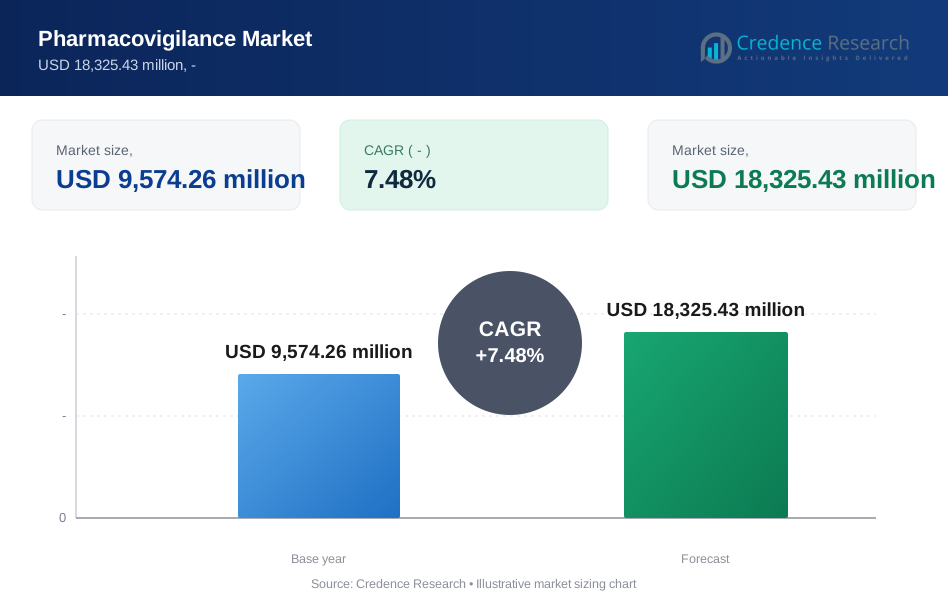
The Pharmacovigilance Market is projected to grow from USD 9,574.26 million in 2023 to USD 18,325.43 million by 2032, at a compound annual growth rate (CAGR) of 7.48%.
The Pharmacovigilance Market is driven by increasing regulatory requirements for drug safety, rising consumer awareness about adverse drug reactions, and the growing complexity of drug development processes. Enhanced focus on patient safety and the integration of advanced technologies like AI and big data analytics further support market expansion. Additionally, the increasing number of clinical trials and a higher incidence of chronic diseases globally contribute to the demand for robust pharmacovigilance systems. These factors collectively ensure rigorous monitoring and reporting of drug safety, bolstering the growth of the pharmacovigilance sector.
The Pharmacovigilance Market exhibits significant regional variations, with North America and Europe leading in market share due to stringent regulatory frameworks and advanced healthcare systems. Asia Pacific is emerging as a high-growth region due to expanding pharmaceutical industries and increasing awareness. Key players shaping the market include Accenture, IQVIA Inc., Cognizant, and ICON plc., who drive innovation and offer comprehensive pharmacovigilance solutions. These companies leverage their global reach and technological advancements to enhance drug safety monitoring and regulatory compliance across diverse geographies.
Market Drivers
Increasing Prevalence of Chronic Diseases
The growing incidence of chronic diseases, including diabetes, cardiovascular conditions, and cancer, is significantly driving the demand for medications. For instance, the CDC estimates that six in ten adults in the United States currently live with a chronic disease such as cancer, heart disease, or diabetes. As more individuals manage these conditions with prescribed treatments, there is a heightened need for effective pharmacovigilance to monitor medication safety. Rigorous safety monitoring becomes crucial to detect and address adverse drug reactions (ADRs), ensuring that the therapeutic benefits of medications outweigh potential risks. The increased reliance on drugs to manage chronic health issues underscores the necessity for comprehensive surveillance systems to safeguard patient well-being.
Rising Drug Development and Approval Rates
The pharmaceutical industry is experiencing a surge in drug innovation, with new medications continuously entering the market. For example, the Food and Drug Administration (FDA) approved 38 new drugs per year from 2010 through 2019, which is 60 percent more than the yearly average over the previous decade. This trend necessitates robust pharmacovigilance services to verify the safety and efficacy of these new drugs. Stringent regulatory frameworks mandate extensive pharmacovigilance activities as part of the drug approval process and ongoing post-market surveillance. As drug development accelerates, the need for thorough monitoring systems becomes more critical to comply with regulatory standards and ensure patient safety throughout the drug lifecycle.
Increasing Regulatory Scrutiny
Health authorities globally are imposing more stringent regulations on drug safety, compelling pharmaceutical companies to invest in comprehensive pharmacovigilance systems. This increased regulatory scrutiny is driven by a heightened focus on ensuring that drugs do not pose unforeseen risks to patients. Additionally, growing public awareness and concern about drug safety issues have intensified pressure on regulatory bodies to enforce rigorous safety standards. Companies must navigate this complex regulatory environment to maintain compliance and uphold their commitment to patient safety.
Advancements in Technology
Technological advancements, particularly in data analytics and artificial intelligence, are transforming the pharmacovigilance landscape. Big data analytics enables faster and more accurate identification of ADRs, enhancing the efficiency of safety monitoring processes. Moreover, the proliferation of digital health technologies, such as wearable devices and electronic health records, provides valuable data that supports pharmacovigilance efforts. These innovations facilitate more proactive and precise safety assessments, contributing to improved drug safety outcomes and advancing the field of pharmacovigilance.
Market Trends
Digital Transformation and Technological Advancements
The landscape of pharmacovigilance is being significantly reshaped by digital transformation, driven by the increasing availability of big data from various sources, including electronic health records, claims databases, and social media. For instance, the landscape of pharmacovigilance is being significantly reshaped by digital transformation, driven by the increasing availability of big data from various sources. These data-rich environments are enabling more sophisticated, data-driven insights into drug safety. Advanced analytics tools, powered by artificial intelligence (AI) and machine learning, are now being utilized to identify safety signals, predict adverse events, and optimize pharmacovigilance processes. AI algorithms analyze vast amounts of data to uncover patterns and predict potential risks, leading to more proactive safety measures and streamlined monitoring operations. This technological evolution is enhancing the accuracy and efficiency of pharmacovigilance, ensuring a more robust approach to drug safety.
Outsourcing Trends and Risk-Based Approaches
In response to the growing complexity of pharmacovigilance requirements, pharmaceutical companies are increasingly outsourcing these activities to specialized service providers. This trend is driven by the need to leverage external expertise and reduce operational costs. Outsourcing allows companies to tap into specialized knowledge and advanced technologies that may not be available in-house. Additionally, strategic partnerships between pharmaceutical companies, technology providers, and regulatory bodies are becoming more prevalent, aimed at addressing complex pharmacovigilance challenges collaboratively. Concurrently, the adoption of risk-based pharmacovigilance (RBPV) is gaining traction, focusing resources on drugs with higher safety risks. RBPV enhances efficiency and effectiveness by prioritizing safety monitoring based on the risk profile of various medications. This approach emphasizes proactive monitoring and risk mitigation strategies, improving overall drug safety and regulatory compliance.
Market Challenges Analysis
Data Quality, Completeness, and Privacy Concerns
A major challenge in pharmacovigilance is ensuring high data quality and completeness. Variability in data sources, including electronic health records, claims databases, and social media, can result in discrepancies in data quality and completeness. For instance, in the realm of data quality and completeness, a study titled “Pharmacovigilance in the Era of Big Data: Challenges and Opportunities” highlighted that one of the major challenges in leveraging big data for pharmacovigilance is ensuring data quality and reliability. Incomplete or missing data can significantly impede the identification and analysis of safety signals, leading to potential gaps in drug safety monitoring. Additionally, maintaining data privacy and security is paramount, as pharmacovigilance activities must adhere to stringent regulations such as GDPR and HIPAA. The risk of data breaches and unauthorized access to sensitive patient information poses a constant threat, necessitating robust security measures and compliance practices.
Global Harmonization and Technological Adoption Challenges
Efforts to harmonize pharmacovigilance regulations across different regions face challenges due to regulatory differences between countries. These discrepancies can complicate global safety monitoring and data sharing, as legal and technical barriers may hinder efficient cross-border data exchange. Furthermore, the adoption of emerging technologies, such as artificial intelligence and big data analytics, presents its own set of difficulties. Implementing these advanced technologies can be costly and require specialized technical expertise. Additionally, ethical considerations surrounding data privacy, bias, and transparency must be addressed to ensure responsible use of these technologies. Resource constraints, including budget limitations and a shortage of skilled professionals, exacerbate these challenges, making it difficult for pharmaceutical companies to invest in and maintain robust pharmacovigilance systems.
Market Segmentation Analysis:
By Product Life Cycle:
The Global Pharmacovigilance Market is segmented based on the product life cycle stages, including Pre-clinical, Phase I, Phase II, Phase III, and Phase IV. Each phase requires distinct pharmacovigilance activities to ensure drug safety and efficacy. The Pre-clinical phase involves initial safety assessments and toxicity studies before human trials. In Phase I, pharmacovigilance focuses on early safety data from a small group of healthy volunteers or patients. Phase II extends to a larger patient population to further assess safety and efficacy. The critical Phase III involves large-scale trials to confirm the drug's benefit-risk profile. Finally, Phase IV, or post-marketing surveillance, continues safety monitoring after the drug's release, addressing long-term effects and rare adverse events.
By Type:
The market also segments based on reporting and monitoring types: Spontaneous Reporting, Intensified ADR Reporting, Targeted Spontaneous Reporting, Cohort Event Monitoring, and EHR Mining. Spontaneous Reporting is the traditional method where healthcare professionals report adverse drug reactions voluntarily. Intensified ADR Reporting involves proactive measures to capture more detailed safety data. Targeted Spontaneous Reporting focuses on specific drugs or patient groups. Cohort Event Monitoring tracks safety across predefined patient groups, while EHR Mining leverages electronic health records for real-time data analysis. Each type offers unique insights and enhances the overall safety monitoring process, catering to various regulatory and research needs.
Segments:
Based on Product Life Cycle:
- Pre-clinical
- Phase I
- Phase II
- Phase III
- Phase IV
Based on Type:
- Spontaneous Reporting
- Intensified ADR Reporting
- Targeted Spontaneous Reporting
- Cohort Event Monitoring
- EHR Mining
Based on Service Provider:
- In-house
- Contract Outsourcing
Based on End-use:
- Pharmaceuticals
- Biotechnology Companies
- Medical Device Manufacturers
- Others
Based on Process Flow:
- Case Data Management
- Case Logging
- Case Data Analysis
- Medical Reviewing & Reporting
- Signal Detection
- Adverse Event Logging
- Adverse Event Analysis
- Adverse Event Review & Reporting
- Risk Management System
- Risk Evaluation System
- Risk Mitigation System
Based on Therapeutic Area:
- Oncology
- Neurology
- Cardiology
- Respiratory Systems
- Others
Based on the Geography:
- North America
- U.S.
- Canada
- Mexico
- Europe
- Germany
- France
- U.K.
- Italy
- Spain
- Rest of Europe
- Asia Pacific
- China
- Japan
- India
- South Korea
- South-east Asia
- Rest of Asia Pacific
- Latin America
- Brazil
- Argentina
- Rest of Latin America
- Middle East & Africa
- GCC Countries
- South Africa
- Rest of the Middle East and Africa
Regional Analysis
North America
North America commands a substantial market share of approximately 40% in the global pharmacovigilance industry. This leadership position stems from the region's robust pharmaceutical and biotechnology sectors, stringent regulatory environment, and advanced healthcare infrastructure. The United States, in particular, drives much of North America's market growth, hosting numerous pharmaceutical giants, contract research organizations, and innovative biotech firms. These entities leverage cutting-edge technologies, including artificial intelligence and big data analytics, to enhance drug safety monitoring and adverse event reporting. North American pharmacovigilance practices benefit from significant investment in research and development, as well as a highly skilled workforce trained in the latest safety monitoring methodologies. The region's market is characterized by a strong emphasis on post-marketing surveillance and real-world evidence gathering, driven by regulatory requirements and a growing focus on patient-centric healthcare.
Europe
Europe holds a significant market share of about 30% in the global pharmacovigilance sector, demonstrating a commitment to drug safety and regulatory excellence. Countries like Germany, the United Kingdom, and Switzerland lead the European market, benefiting from a well-established pharmaceutical industry and harmonized regulatory framework under the European Medicines Agency (EMA). European pharmacovigilance practices are distinguished by their comprehensive approach, encompassing both traditional and innovative methods of safety signal detection. The region excels in developing and implementing risk management plans, with a particular focus on proactive safety measures throughout the drug lifecycle. Europe's pharmacovigilance market also benefits from strong collaboration between academic institutions, healthcare providers, and pharmaceutical companies, fostering the development of novel pharmacovigilance strategies. The continent's emphasis on data privacy and security, exemplified by regulations like GDPR, has led to the creation of robust systems for handling sensitive patient information in pharmacovigilance activities.
Key Player Analysis
- Accenture
- IQVIA Inc.
- Cognizant
- Clinquest Group B.V. (Linical Americas)
- IBM
- Laboratory Corporation of America Holdings
- ArisGlobal
- Capgemini
- ITClinical
- ICON plc.
- TAKE Solutions Limited
- Parexel International (MA) Corporation
- Wipro
- United BioSource LLC
- BioClinica Inc. (Clario)
- ClinChoice (formerly FMD K&L)
Competitive Analysis
The Global Pharmacovigilance Market is highly competitive, with key players including Accenture, IQVIA Inc., Cognizant, ICON plc., Clinquest Group B.V. (Linical Americas), and Parexel International (MA) Corporation. These leading firms leverage their extensive industry experience and technological expertise to offer comprehensive pharmacovigilance solutions. They are continuously enhancing their service portfolios by incorporating advanced technologies like artificial intelligence and big data analytics to improve drug safety and regulatory compliance. The market competition is driven by their innovation in risk management, data analysis, and regulatory adherence, positioning them to effectively meet the increasing demand for robust pharmacovigilance systems across various therapeutic areas. Their strategic initiatives, including mergers and acquisitions, further strengthen their market position and operational capabilities.
Recent Developments
- In January 2024, Accenture made a strategic investment in QuantHealth, an AI-powered clinical trial design company that simulates clinical trials in the cloud.
- In August 2024, Cognizant completed its acquisition of Belcan, a global supplier of Engineering Research & Development (ER&D) services.
- In 2024, IQVIA released a white paper discussing the impact of AI and regulatory changes on the pharmaceutical industry, with insights on the role of Generative AI in drug development and pharmacovigilance.
- In March 2024, ArisGlobal announced three cutting-edge product offerings that will transform pharmacovigilance and regulatory operations.
Market Concentration & Characteristics
The Global Pharmacovigilance Market exhibits moderate to high market concentration, with a few leading players dominating the landscape. Major firms such as Accenture, IQVIA Inc., and Cognizant significantly influence market dynamics through their extensive service offerings and advanced technological capabilities. The market is characterized by a blend of established multinational corporations and specialized service providers, contributing to a competitive environment. Key characteristics include a focus on integrating cutting-edge technologies like artificial intelligence and big data analytics into pharmacovigilance processes to enhance safety monitoring and regulatory compliance. Companies are also increasingly adopting outsourcing strategies to leverage specialized expertise and reduce operational costs. This concentration and specialization drive continuous innovation and improvements in drug safety management, ensuring that pharmacovigilance practices align with evolving regulatory standards and industry demands.
Report Coverage
The research report offers an in-depth analysis based on Product Life Cycle, Type, Service Provider, End-use, Process Flow, Therapeutic Area and Geography. It details leading market players, providing an overview of their business, product offerings, investments, revenue streams, and key applications. Additionally, the report includes insights into the competitive environment, SWOT analysis, current market trends, as well as the primary drivers and constraints. Furthermore, it discusses various factors that have driven market expansion in recent years. The report also explores market dynamics, regulatory scenarios, and technological advancements that are shaping the industry. It assesses the impact of external factors and global economic changes on market growth. Lastly, it provides strategic recommendations for new entrants and established companies to navigate the complexities of the market.
Future Outlook
- The Global Pharmacovigilance Market is expected to grow significantly as the demand for comprehensive drug safety monitoring intensifies.
- Advancements in artificial intelligence and machine learning will increasingly drive efficiency in adverse event detection and analysis.
- The integration of big data analytics will enhance the ability to identify and manage safety signals more effectively.
- Regulatory pressures will continue to escalate, pushing companies to adopt more robust and compliant pharmacovigilance systems.
- The rise of digital health technologies will provide valuable data sources, contributing to improved pharmacovigilance practices.
- Outsourcing pharmacovigilance activities will become more prevalent as companies seek cost-effective and specialized services.
- Increased global collaboration will facilitate better data sharing and harmonization of pharmacovigilance practices across different regions.
- The growing emphasis on patient-centric approaches will drive more proactive safety monitoring and reporting.
- Emerging markets will present new opportunities and challenges as regulatory frameworks and industry practices evolve.
- Continuous innovation and adaptation to evolving technologies and regulations will be critical for maintaining effective drug safety management.
Request a Free Sample
Fill in your details and we'll send you a free sample report.
- Sample data tables & charts
- Research methodology
Need a Custom Version of This Report?
Tailor the scope, geography, or segments to your exact requirements.
- Custom geography or segment scope
- Direct access to our analyst team
Frequently Asked Questions
What is the current size of the Global Pharmacovigilance Market?
What factors are driving the growth of the Global Pharmacovigilance Market?
What are the key segments within the Global Pharmacovigilance Market?
What are some challenges faced by the Global Pharmacovigilance Market?
Who are the major players in the Global Pharmacovigilance Market?
Table of Content
Chapter 1. Report Introduction
- 1.1 Report Description & Purpose
- 1.1.1 Report Title & Market Definition
- 1.1.2 Unique Selling Propositions (USP) & Key Differentiators
- 1.1.3 Value Proposition for Stakeholders
- 1.2 Research Objectives
- 1.2.1 Market Sizing Objectives (Volume & Revenue) (Volume Where Applicable)
- 1.2.2 Segmentation Objectives
- 1.2.3 Competitive Intelligence Objectives
- 1.2.4 Forecast & Scenario Objectives
- 1.3 Report Scope
- 1.3.1 Pharmacovigilance Scope – Segments & Subsegments Covered
- 1.3.2 Geographic Scope – Regions & Countries Covered
- 1.3.3 Historical Period, Base Year & Forecast Period (the historical period; forecast to the forecast period)
- 1.3.4 Inclusions & Exclusions
- 1.4 Industry Classification & Applicable Codes
- 1.5 Currency, Measurement Units & Valuation Basis
- 1.6 Target Stakeholders
- 1.7 Limitations & Assumptions
Chapter 2. Executive Summary
- 2.1 Global Pharmacovigilance Market Snapshot
- 2.1.1 Market Size – Historical (the historical period) & Forecast (the forecast period) (base year: USD 9,574.26 million → forecast year: USD 18,325.43 million)
- 2.1.2 Volume & Revenue – Global Totals (Volume Where Applicable)
- 2.1.3 Key Market Highlights – Top Five Facts
- 2.2 Pharmacovigilance Market Segmentation Snapshot
- 2.2.1 Market Split by Region – vs.
- 2.3 Competitive Snapshot
- 2.3.1 Top 10 Players by Revenue Share –
- 2.3.2 Top 10 Players by Volume Share – (Volume Where Applicable)
- 2.3.3 Recent Strategic Developments (18-Month Summary)
- 2.4 Key Investment Highlights & Strategic Conclusions
Chapter 3. Pharmacovigilance Market Dynamics & Industry Analysis
- 3.1 Market Overview & Context
- 3.1.1 Pharmacovigilance Market Position in the Broader Industry Value Chain
- 3.1.2 Demand Structure & Purchasing Dynamics
- 3.1.3 Market Maturity & Development Stage by Region
- 3.2 Pharmacovigilance Market Drivers
- 3.3 Pharmacovigilance Market Restraints & Challenges
- 3.4 Pharmacovigilance Market Opportunities
- 3.5 Porter's Five Forces Analysis
- 3.5.1 Threat of New Entrants
- 3.5.2 Bargaining Power of Suppliers
- 3.5.3 Bargaining Power of Buyers
- 3.5.4 Threat of Substitutes
- 3.5.5 Competitive Rivalry – Intensity Assessment
- 3.6 Pharmacovigilance Value Chain Analysis
- 3.6.1 Upstream – Key Inputs, Resources & Suppliers
- 3.6.1.1 Key Input/Resource 1
- 3.6.1.2 Key Input/Resource 2
- 3.6.1.3 Key Input/Resource 3
- 3.6.2 Midstream – Core Operations & Value Creation
- 3.6.2.1 Operating Model & Process Overview
- 3.6.2.2 Key Operating Locations & Capabilities by Company
- 3.6.3 Downstream – Market Channels & End Users
- 3.6.3.1 Direct Sales & Customer Engagement Channels
- 3.6.3.2 Indirect Sales, Intermediaries & Partner Channels
- 3.6.4 Value Chain Profitability Analysis
- 3.6.1 Upstream – Key Inputs, Resources & Suppliers
- 3.7 PESTEL Analysis
- 3.7.1 Political Factors
- 3.7.2 Economic Factors
- 3.7.3 Social Factors
- 3.7.4 Technological Factors
- 3.7.5 Environmental Factors
- 3.7.6 Legal Factors
- 3.8 Pharmacovigilance Supply Chain Analysis
- 3.8.1 Critical Input & Resource Availability Risk Assessment
- 3.8.2 Supplier & Operational Concentration Risk (Geographic Exposure)
- 3.8.3 Supply & Service Disruption Impact Analysis
- 3.9 Regulatory & Policy Landscape
Note: The regulatory and policy landscape section covers regulations based on their applicability to the market, Pharmacovigilance category, geography, and scope of the study. Only regulatory frameworks with a material impact on operations, compliance, trade, sustainability, or market access are analyzed in detail.
Chapter 4. Key Investment Pockets & Opportunity Analysis
- 4.1 Pharmacovigilance Market Attractiveness Analysis
- 4.1.1 By Region – Investment Attractiveness Matrix (Market Size × CAGR)
- 4.2 Absolute Revenue Growth Opportunity
- 4.2.1 By Region – Absolute Revenue Growth Through the forecast period
- 4.3 Incremental Demand Opportunity
- 4.3.1 By Region – Incremental Demand Through the forecast period
- 4.3.2 Segment – Incremental Demand
- 4.4 Emerging Submarket Opportunity Deep Dive (Subject to Applicability)
- 4.5 Priority Market Opportunity Scorecards
- 4.5.1 United States
- 4.5.2 Europe
- 4.5.3 Asia
- 4.5.4 Middle East & Africa
Note: Priority market opportunity scorecards reflect the geographic scope and strategic relevance of the study. Listed markets are indicative and may be adapted to the industry.
Chapter 5. Pharmacovigilance Cross-Border Trade & Market Access Analysis
- 5.1 International Trade & Cross-Border Activity Overview
- 5.1.1 Global Export Value by Country (the historical period)
- 5.1.2 Global Export Volume by Country (the historical period) (Volume Where Applicable)
- 5.1.3 Global Import Value by Country (the historical period)
- 5.1.4 Global Import Volume by Country (the historical period) (Volume Where Applicable)
- 5.1.5 Net Trade Balance by Country (the historical period)
- 5.2 Export Analysis – Segment
- 5.2.1 Category 1 (Applicable Classification Code)
- 5.2.2 Category 2 (Applicable Classification Code)
- 5.2.3 Category 3 (Applicable Classification Code)
- 5.2.4 Category 4 (Applicable Classification Code)
- 5.2.5 Category 5 (Applicable Classification Code)
- 5.3 Import Analysis – Segment
- 5.3.1 Category 1 (Applicable Classification Code)
- 5.3.2 Category 2 (Applicable Classification Code)
- 5.3.3 Category 3 (Applicable Classification Code)
- 5.3.4 Category 4 (Applicable Classification Code)
- 5.3.5 Category 5 (Applicable Classification Code)
- 5.4 Cross-Border Pricing & Transaction Benchmarks
- 5.4.1 Export Pricing – Segment & Country
- 5.4.2 Import Pricing – Segment & Source Country
- 5.4.3 Price Trends (the historical period)
- 5.5 Key Cross-Border Trade & Delivery Routes
- 5.5.1 Cross-Border Trade/Delivery Route 1
- 5.5.2 Cross-Border Trade/Delivery Route 2
- 5.5.3 Cross-Border Trade/Delivery Route 3
- 5.5.4 Cross-Border Trade/Delivery Route 4
- 5.5.5 Cross-Border Trade/Delivery Route 5
- 5.6 Trade Policy & Market Access Impact Assessment
- 5.6.1 Tariff & Non-Tariff Barriers
- 5.6.2 Regional Trade & Economic Integration Frameworks
- 5.6.3 Bilateral & Multilateral Trade Agreements
- 5.6.4 Cross-Border Operating, Licensing & Localization Requirements
Note: This chapter applies where cross-border trade or delivery is relevant to Pharmacovigilance. Goods, services, and digital offerings are assessed using applicable classifications and transaction measures. Import-export volumes, trade balances, and route analyses are included only where meaningful to the market.
Chapter 6. Competitive Landscape & Company Benchmarking
- 6.1 Pharmacovigilance Market Concentration & Structure
- 6.1.1 Herfindahl-Hirschman Index (HHI) – vs.
- 6.1.2 Leading, Mid-Sized & Emerging Player Structure
- 6.1.3 Global, Regional & Local Player Dynamics
- 6.2 Pharmacovigilance Market Share Analysis –
- 6.2.1 Global Revenue Share by Company
- 6.2.2 Global Volume Share by Company (Volume Where Applicable)
- 6.2.3 Regional Revenue Share
- 6.2.4 Market Share Evolution ( vs. )
- 6.2.5 Company Market Share by Key Segment
- 6.2.6 Company Market Share by Customer Group
- 6.3 Operating Scale, Capacity & Infrastructure Analysis
- 6.3.1 Global Operating Scale & Supply Capacity
- 6.3.2 Resource Utilization & Operating Efficiency
- 6.3.3 Output, Service Delivery & Activity Metrics
- 6.3.4 Operating Footprint & Infrastructure Map
- 6.3.5 Planned Operational & Capacity Expansion
- 6.4 Pharmacovigilance Competitive Benchmarking Matrix
- 6.4.1 Revenue, Growth, Profitability & Operating Metric Comparison
- 6.4.2 Channel Revenue Mix
- 6.4.3 Geographic Revenue Exposure
- 6.4.4 R&D Intensity
- 6.4.5 Sustainability Maturity
- 6.5 Strategic Developments in Pharmacovigilance (Last 24 Months)
- 6.5.1 Mergers, Acquisitions & Divestments
- 6.5.2 New Products, Services & Solutions in Pharmacovigilance
- 6.5.3 Operational & Infrastructure Expansions
- 6.5.4 Strategic Alliances, Joint Ventures & Partnerships
- 6.5.5 Distribution Expansion & Market Entry
- 6.5.6 Sustainability & ESG Initiatives
- 6.6 Competitive Strategy Mapping
- 6.6.1 Leader, Challenger, Follower & Niche Classification
- 6.6.2 Pricing Strategy Comparison
- 6.6.3 Channel Strategy Matrix
Note: Strategic developments are included based on their materiality and the availability of reliable information.
Chapter 7. Global Pharmacovigilance Market – By Sales & Delivery Channel
- 7.1 Segment Overview
- 7.1.1 Volume & Revenue Split by Channel ( & ) (Volume Where Applicable)
- 7.1.2 Channel Mix Evolution (the forecast period)
Chapter 8. Regional Market Analysis – Global Overview
- 8.1 Global Regional Overview
- 8.1.1 Regional Volume Share (Volume Where Applicable)
- 8.1.2 Regional Revenue Share
- 8.1.3 Regional Volume by Region (Volume Where Applicable)
- 8.1.4 Regional Revenue by Region
- 8.1.5 Regional Forecast Through the forecast period
- 8.2 Cross-Regional Segment Analysis
- 8.2.1 By Sales & Delivery Channel
- 8.2.2 By Competitive Positioning & Price Tier
Chapter 9. North America Pharmacovigilance Market
- 9.1 United States
- 9.2 Canada
- 9.3 Mexico
Chapter 10. Europe Pharmacovigilance Market
- 10.1 Germany
- 10.2 France
- 10.3 Italy
- 10.4 United Kingdom
- 10.5 Spain
- 10.6 Poland
- 10.7 Russia
- 10.8 Netherlands
- 10.9 Belgium
- 10.10 Sweden
- 10.11 Denmark
- 10.12 Norway
- 10.13 Rest of Europe
Chapter 11. Asia Pacific Pharmacovigilance Market
- 11.1 China
- 11.2 India
- 11.3 Japan
- 11.4 South Korea
- 11.5 Thailand
- 11.6 Indonesia
- 11.7 Vietnam
- 11.8 Malaysia
- 11.9 Australia
- 11.10 Rest of Asia Pacific
Chapter 12. Latin America Pharmacovigilance Market
- 12.1 Brazil
- 12.2 Argentina
- 12.3 Colombia
- 12.4 Chile
- 12.5 Rest of Latin America
Chapter 13. Middle East Pharmacovigilance Market
- 13.1 Saudi Arabia
- 13.2 United Arab Emirates
- 13.3 Turkey
- 13.4 Israel
- 13.5 Iran
- 13.6 Rest of the Middle East
Chapter 14. Africa Pharmacovigilance Market
- 14.1 South Africa
- 14.2 Egypt
- 14.3 Nigeria
- 14.4 Morocco
- 14.5 Rest of Africa
Chapter 15. Pharmacovigilance Company Profiles
- 15.1 [Company 01]
- 15.1.1 Company Overview
- 15.1.2 Key Management Personnel
- 15.1.3 Products & Services Portfolio
- 15.1.4 Financial Performance
- 15.1.5 Key Market Focus & Geographic Presence
- 15.1.6 Recent Developments & Strategic Initiatives
Note: The company profile list is preliminary and may change based on research findings, market developments, data availability, and client requirements.
Chapter 16. Appendices
- Appendix A – List of Abbreviations & Acronyms
- Appendix B – Industry Classification Code Reference – Full Series
- Appendix C – Supply, Output & Operating Capacity Data Tables
- Appendix D – End-Use & Demand Base Tables
- Appendix E – Demand, Adoption & Usage Assumptions
- Appendix F – Pricing & Revenue Metric Reference Tables
- Appendix G – Company Operations & Infrastructure Database
- Appendix H – Cross-Border Trade & Activity Data Tables (Where Applicable)
- Appendix I – Regulatory Summary Tables
- Appendix J – Primary Research Participant List (Anonymized)
- Appendix K – Primary Research Questionnaire Framework
- Appendix L – Data Sources & Bibliography
- Appendix M – Market Size Divergence & Source Comparison
Chapter 17. Research Methodology
- 17.1 Research Framework & Philosophy
- 17.2 Secondary Research – Sources, Hierarchy & Data Extraction
- 17.3 Data Modeling – Bottom-Up & Top-Down Market Sizing
- 17.4 Primary Research – Stakeholder Framework, LOI & Sample Sizes
- 17.5 Forecast Methodology – Regression, Scenario & Sensitivity Analysis
- 17.6 Quality Control – Four-Layer Validation Framework
- 17.7 Limitations & Standard Assumptions
- 17.8 Disclaimer
