
| REPORT ATTRIBUTE | DETAILS |
|---|---|
| Historical Period | 2019-2022 |
| Base Year | 2023 |
| Forecast Period | 2024-2032 |
| Pre-Menstrual Syndrome Treatment Market Size 2023 | USD 1524.2 million |
| Pre-Menstrual Syndrome Treatment Market, CAGR | 3.80% |
| Pre-Menstrual Syndrome Treatment Market Size 2032 | USD 2132.15 million |
Market Insights
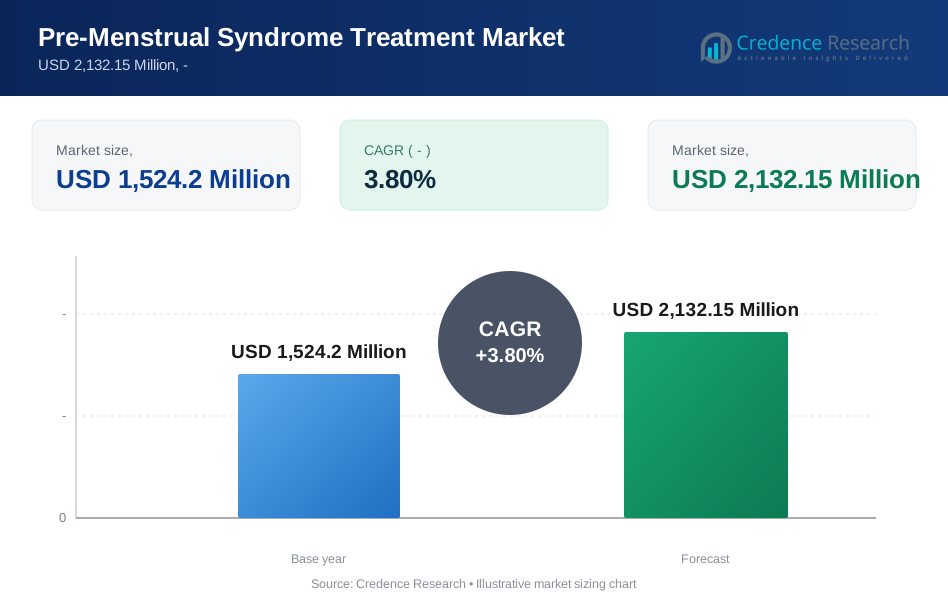
- Between 2024 and 2032, the global market for pre-menstrual syndrome treatment is projected to expand at a compound annual growth rate (CAGR) of 3.80%, from an estimated USD 1524.2 million in 2023 to USD 2132.15 million in 2032.
- The largest category is pharmaceutical treatments. Non-pharmaceutical treatments, on the other hand, are expected to grow at a strong CAGR.
- The retail pharmacies category will expand at a rapid rate of growth.
- Throughout the projected period, the CAGR for hospitals and clinics is anticipated to be the highest.
- North America controlled the pre-menstrual syndrome treatment market.
- Regarding the market share of pre-menstrual syndrome treatment, Europe is expected to come second.
- Asia Pacific is expected to experience the fastest growth in the pre-menstrual syndrome treatment industry.
- The availability of over-the-counter (OTC) medications, the growing number of women exhibiting PMS symptoms, and public health initiatives promoting awareness of PMS and its treatment are all factors driving the growth of the global market.
- The pre-menstrual syndrome treatment market is anticipated to expand due to the development of new, more effective treatments, including non-hormonal and natural options, and the ease with which healthcare providers can be accessed are made possible by the growth of telemedicine.
Executive Summary
Market Definition
Treatment for premenstrual syndrome (PMS) refers to the therapeutic approaches used to reduce emotional, physical, and psychological symptoms that women experience, including bloating, breast tenderness, body pain, exhaustion, mood swings, and anxiety. PMS typically appears at the conclusion of the luteal phase and disappears either right before or right after menstruation. Antidepressants, analgesics, NSAIDs, diuretics, ovarian suppression agents, and hormonal contraceptives are some of the medications used in treatment.
Market Overview
It is predicted that the pre-menstrual syndrome treatment industry will continue its upward trajectory between 2024 and 2032, growing at a compound annual growth rate (CAGR) of 3.80%. From its projected USD 1524.2 million in 2023 to USD 2132.15 million in 2032, the market will continue to grow.
The shifts in modern life and stress levels may make premenstrual syndrome (PMS) symptoms more severe, which is one of the key causes driving the premenstrual syndrome treatment market's growth. Because of their desk employment, reliance on technology, and urban life, many women lead sedentary lives with little physical activity. Exercise deficiency can throw hormones out of balance and make PMS symptoms worse. Weight gain brought on by sedentary behavior is linked to an increase in PMS symptoms because of heightened inflammation and hormonal swings. Busy lives frequently result in erratic eating habits and bad dietary decisions, such as consuming a lot of processed food and consuming insufficient amounts of vital nutrients. An inadequate diet might exacerbate PMS symptoms by impacting the hormonal balance of the body.
Along with lifestyle and stress-related issues, the Pre-Menstrual Syndrome (PMS) Treatment Market is growing due to increased public knowledge of the many treatment options available for PMS and related diseases. The knowledge of different drugs has grown, including painkillers, hormone therapies, and antidepressants. It is more common for women to discuss these options with medical specialists. These factors are anticipated to support the development of the pre-menstrual syndrome treatment market.
Segmentation by Treatment Type
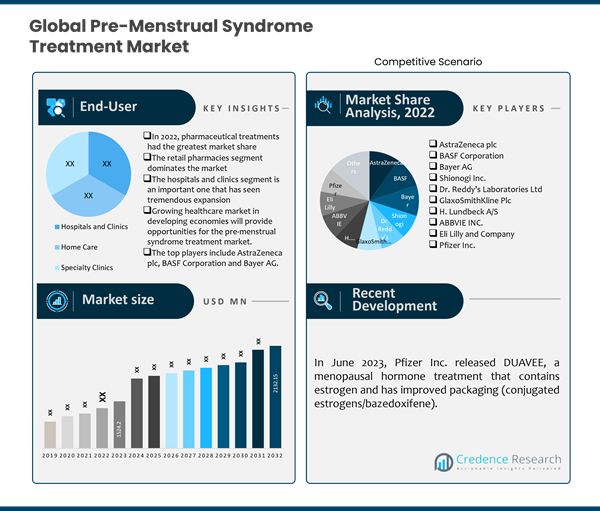
- Pharmaceutical treatments are the market leader in terms of treatment type. A sizeable portion of the market for PMS therapies is devoted to pharmaceuticals, which aim to reduce the numerous behavioral, emotional, and physical symptoms connected to the illness. Since many women of reproductive age suffer from PMS, there is a constant need for efficient therapeutic solutions. The pharmacological interventions for PMS can be generally divided into multiple types, each focusing on distinct symptoms or underlying causes.
- The non-pharmaceutical treatments category will exhibit a sizable CAGR during the projected period. Premenstrual syndrome (PMS) nonpharmaceutical treatments include a range of methods that do not use medication. The goal of these therapies is to lessen the physical, emotional, and behavioral changes that can arise during the luteal phase of the menstrual cycle and are linked to PMS.
Segmentation by Distribution Channel
- The retail pharmacies category is projected to develop at a greater CAGR over the forecast period. Due to their widespread presence, retail pharmacies provide a handy point of access for many people pursuing treatment for PMS. Their broad reach is ensured by their frequent locations in suburban, rural, and urban areas.
- The hospital pharmacies category will likely register a significant CAGR during forecasting. Hospital pharmacies play a crucial role in the management of PMS by offering essential services that improve patient care, encourage teamwork, guarantee pharmaceutical safety, and support the market's continued growth for PMS treatments. They play a crucial role in the efficient management of PMS because of their involvement in everything from direct patient interaction to larger contributions to the healthcare system.
- Other distribution channels, such as online pharmacies, supermarkets, and hypermarkets, further enhance the need for pre-menstrual syndrome treatment.
Segmentation by End-User
- The hospitals and clinics category is projected to grow faster over the projection period. Clinics and hospitals are crucial to the PMS treatment industry. Hospitals are appropriate for severe cases and multidisciplinary treatment approaches since they offer complete, specialist care as well as advanced diagnostic services. Clinics serve a wider range of patients by providing easily accessible, individualized care with an emphasis on primary care and holistic treatment choices.
- Other end-users, including home care and specialty clinics, also influence the need for pre-menstrual syndrome treatment.
Segmentation by Region
- North America has a large network of healthcare facilities, which makes it the market leader for pre-menstrual syndrome treatment.
- Europe is estimated to rank second in pre-menstrual syndrome treatment market size.
- It is anticipated that the pre-menstrual syndrome treatment market in Asia Pacific will grow quickly.
- The remaining need for pre-menstrual syndrome treatment is met by regions including Latin America, the Middle East, and Africa.
The market for pre-menstrual syndrome treatment has been greatly impacted by advances in medical research, which have improved treatment options and spurred innovation. Discoveries in medicine have increased the understanding of the basic causes and mechanisms of PMS. This include variations in hormone levels, imbalances in neurotransmitters, and hereditary predispositions. These realizations have made it possible to create tailored treatments that target particular PMS symptoms.
North America presently occupies the leading spot in the global market for premenstrual syndrome treatments because of an increase in the condition's prevalence and awareness among females in this region. Therefore, it is anticipated that there will be a high incidence of treatment. For example, a 2020 study that appeared in the Indian Journal of Research found that the symptoms of premenstrual syndrome cost the US economy $2 billion or 600 million working hours annually. Premenstrual syndrome discomfort affects around 80% of reproductive women at some point in their lives, according to research conducted in 2020 by the British Menopause Society and Women's Health Concern. Premenstrual syndrome causes discomfort for most women, especially in the first week of the cycle. However, in 5–10% of women, the discomfort is so severe that it causes concerns.
It is projected that the pre-menstrual syndrome treatment market will develop at the fastest rate in the Asia Pacific region. Much of the world's population resides in Asia Pacific, where nations like China and India have sizable populations. There is a growing need for healthcare services, particularly PMS treatment, as these populations grow and become more urbanized. The Asia Pacific region has seen urbanization and changing lifestyles, which have led to higher stress levels and nutritional changes that are known to affect PMS symptoms. Because of this, PMS is now more common, which has raised the need for remedies.
Key Highlights of the Report
The global pre-menstrual syndrome treatment market is segmented by treatment type, distribution channel, end-user, and region. Pharmaceutical treatments are the market spearhead in terms of treatment type. Retail pharmacies are the top distribution channel category. Hospitals and clinics are anticipated to increase at the highest CAGR during the projection period. North America is seeing the most growth in the pre-menstrual syndrome treatment market.
Premenstrual syndrome affects approximately three out of every four women at some point in their lives. A study that was released in the General Psychiatry Journal 2020 predicted that 90% of women who were fertile would probably have premenstrual symptoms, which could range in intensity from mild to severe. Between 20 and 40 percent of women have premenstrual syndrome. One of the main factors driving the premenstrual syndrome treatment market size is the rising incidence of premenstrual dysphoric disorder around the world. This could be attributed to the busy schedules and sedentary lifestyles of working women. The market is also being driven by the general public's increasing awareness of luteal phase therapy and other treatment alternatives for PMS and related diseases.
The region with the largest projected global market share for pre-menstrual syndrome treatment is expected to be North America. Compared to other locations, North America has a generally higher awareness of PMS, which results in a larger number of diagnosis and treatment requests from those who are suffering symptoms. Research and development for pharmaceuticals is concentrated in North America. As a result, a variety of therapeutic alternatives are now available, including drugs that are designed to address PMS symptoms particularly. In comparison to other places where PMS symptoms might be less common or less publicly acknowledged, North America may have a larger market due to cultural variables influencing the willingness to seek treatment for symptoms. In addition, it is projected that the Asia Pacific market will grow at the quickest rate. Due to a combination of exports and domestic demand, the pharmaceutical business in Asia Pacific is growing quickly. This expansion makes it simpler to obtain a variety of pharmaceutical goods, such as PMS treatments. Additionally, societal perceptions of open communication and discussion of women's health issues are gradually changing. As a result of this cultural shift, more women are seeking medical guidance and treatment for PMS symptoms.
Which Key Factors Are Driving The Global Pre-Menstrual Syndrome Treatment Market?
Pre-menstrual syndrome treatments are becoming more widely available as a result of advancements in medical technology that offer improved alternatives for managing the condition, as well as growing awareness of the mental health implications of PMS that support all-encompassing treatment strategies.
What Are The Main Challenges Confronting The Global Pre-Menstrual Syndrome Treatment Market?
Natural and alternative remedies are preferred over pharmaceutical ones, which is one of the major challenges affecting the premenstrual syndrome treatment sector. Some women might not be able to pay for more costly treatment options.
What Market Opportunities Exist For Pre-Menstrual Syndrome Treatment Globally?
The market for pre-menstrual syndrome treatment is expanding due to several causes, including the rising demand for supplements and nutraceuticals for PMS management and the need to align PMS treatments with more general wellness and health trends.
Market Drivers
Advancements in Medical Research
The fundamental mechanisms and causes of PMS, including hormone fluctuations, neurotransmitter abnormalities, and hereditary factors, have become better understood via research. As a result of this increased understanding, more effective treatments can be created by focusing on particular components of the illness with tailored therapies. Novel drugs and treatment modalities for PMS are frequently developed as a result of research advancements. As an example, the treatment of severe PMS symptoms has been effectively achieved with the use of selective serotonin reuptake inhibitors (SSRIs), which alter neurotransmitter levels. In a similar vein, nutritional supplements and hormone therapy have been shown by science to be effective treatment alternatives.
Extensive research-driven clinical trials offer vital information on the safety and effectiveness of novel medicines. This proof is necessary to secure regulatory permission and provider acceptance, which will enable market adoption. The development of biomarkers and genetics has made it possible to treat PMS patients individually. Biomarker analysis and genetic testing can assist in individualized therapy planning, maximizing therapeutic benefits and reducing adverse effects. These factors are propelling the growth of the pre-menstrual syndrome treatment industry.
Market Restraints
Lack of Standardized Treatment Guidelines
Healthcare professionals' diagnoses and treatments of PMS are inconsistent in the absence of set criteria. This causes a lack of consistency in treatment modalities, which can be perplexing to patients as well as healthcare professionals. Patients may find it difficult to decide on the best course of action because different medical specialists may suggest different treatments. The results of treatment could differ greatly between patients because there is a lack of uniformity. Without criteria, it might be challenging to determine which therapies consistently yield the best outcomes, even though some may be more effective than others. Both patients and healthcare professionals may become frustrated as a result of this discrepancy. From a commercial standpoint, the lack of established protocols may impede the advancement of novel interventions and cures. Researchers and pharmaceutical firms may be less likely to fund PMS.
Opportunities
Development of Innovative Therapies
NSAIDs for pain management and hormonal contraceptives for hormone regulation are common traditional therapies for PMS. On the other hand, novel treatments can more specifically target particular hormonal imbalances or metabolic pathways linked to PMS. This could entail receiving therapies that alter neurotransmitters like serotonin, which is linked to PMS symptoms and regulates mood. Personalized therapy techniques may result from advances in recognizing individual differences in hormone and genetic makeup. For example, genetic testing may be able to pinpoint particular mutations or variants that make people more susceptible to severe PMS symptoms, enabling the development of customized treatments. Mobile apps, wearable tech, and digital health platforms can all offer individualized feedback and real-time symptom monitoring. These technologies make it possible to continuously monitor menstrual cycles and symptoms, which makes it easier to intervene early and modify treatment plans individually. Acupuncture, herbal supplements, and other alternative therapies are becoming more and more popular as PMS remedies. Research and clinical trial innovations can confirm the effectiveness and safety of these methods, giving patients more choices. These factors will create opportunities for the pre-menstrual syndrome treatment sector.
Competitive Landscape
Key Players
A number of significant players dominate the highly competitive global market for pre-menstrual syndrome treatment. A handful of the top market players are shown below, together with their respective market shares:
- AstraZeneca plc
- BASF Corporation
- Bayer AG
- Shionogi Inc.
- Dr. Reddy’s Laboratories Ltd
- GlaxoSmithKline Plc
- H. Lundbeck A/S
- ABBVIE INC.
- Eli Lilly and Company
- Pfizer Inc.
- Others
In order to stay competitive, these organizations give priority to product innovation, expansion of their distribution channels, and mergers and acquisitions.
By creating cutting-edge ideas and goods, the foremost manufacturers in the global market for pre-menstrual syndrome treatment consistently strive to stay one step ahead of the competition.
In September 2023, Aiming to improve the treatment options for people with anxiety, depression, and other central nervous system (CNS) disorders, Vistagen, a late-stage biopharmaceutical company, announced that one of its five experimental neuroactive nasal sprays, PH80, showed statistically significant improvement over placebo in an exploratory Phase 2A study for the acute management of premenstrual dysphoric disorder (PMDD) symptoms, including depressive symptoms and behavioral and physical symptoms.
In June 2021, According to Movant Sciences and Pfizer, Inc., MYFEMBREE (religieux 40 mg, estradiol 1 mg, and norethindrone acetate 0.5 mg) is the first once-daily medication approved by the FDA for the treatment of heavy menstrual bleeding linked to uterine fibroids in premenopausal women. The treatment course can last up to 24 months. According to the conditions of their previously disclosed partnership, Movant and Pfizer would jointly market MYFEMBREE in the United States. The release of MYFEMBREE is planned.
How are Companies Performing in the Pre-Menstrual Syndrome Treatment Market?
Pharmaceutical companies are making significant investments in R&D to discover novel therapies that treat the range of pre-menstrual syndrome symptoms. For example, a well-known healthcare company introduced a novel nutritional supplement intended especially to reduce PMS symptoms. This medication uses a combination of natural substances to help with mood stability and reduce bloating.
Pharmaceutical companies are conducting research and development for products such as oral medications that do not require surgery. The US Food and Drug Administration (FDA) approved AbbVie and Neurocrine Biosciences, Inc.'s ORIAHN (elagolix, estradiol, and norethindrone acetate capsules; elagolix capsules) in May 2020. For the treatment of heavy menstrual bleeding linked to uterine fibroids in premenopausal women, ORIAHNN is the first FDA-approved oral pharmaceutical alternative without surgery.
Significant companies are launching systematic campaigns to meet the increasing requirement for products for hormonal replacement treatment. I-MAB Biopharma Co., Ltd. and Jumpcan Pharmaceutical Group collaborated on the research and marketing of eftansomatropin alfa (TJ101) in China in November 2021. A phase 3 clinical trial is underway to treat pediatric growth hormone deficit with TJ101, a long-acting recombinant human growth hormone. It is anticipated that this partnership will improve its standing in the sector for hormonal replacement treatment. Furthermore, Pfizer's NGENLA was authorized by Korea's Ministry of Food and Drug Safety in February 2023 to treat growth hormone insufficiency.
Summary of Key Findings
- The need for the pre-menstrual syndrome treatment sector is supported by improved capabilities and infrastructure in hospitals, clinics, and healthcare facilities.
- The market is segmented by treatment type, distribution channel, end-user, and region.
- In the market, the most prevalent treatment type is pharmaceutical treatment.
- Retail pharmacies are the foremost distribution channel category.
- Hospitals and clinics are expected to grow fastest in terms of CAGR during the forecast period.
- In terms of market development, North America is a leader; the market is highly competitive with key players including AstraZeneca plc, BASF Corporation, Bayer AG, Shionogi Inc., Dr. Reddy’s Laboratories Ltd, GlaxoSmithKline Plc, H. Lundbeck A/S, ABBVIE INC., Eli Lilly and Company, Pfizer Inc., and Others.
Future Outlook
- The pre-menstrual syndrome treatment industry is expected to increase significantly in North America, and its outlook is positive worldwide.
- Technological advancements in medicine are anticipated to be major drivers of the industry.
- Side effects of hormonal treatments are the main barriers to the industry's expansion in the pre-menstrual syndrome treatment sector.
- Developing new products, reaching a wider market, and maintaining competitive prices are all necessary for major businesses to stay ahead of the competition.
How the Credence Research Pre-Menstrual Syndrome Treatment Market Report Can Help CXOs
The Credence Research Pre-Menstrual Syndrome Treatment Market Report provides CXOs with an extensive market overview and comprises the following:
- Market size and growth forecast: The study offers comprehensive market estimations for pre-menstrual syndrome treatment globally, broken down by treatment type, distribution channel, end-user, and region. Furthermore, the report includes market forecasts through 2032, derived from key drivers and trends.
- Market segmentation: The pre-menstrual syndrome treatment market is divided into segments by treatment type, distribution channel, end-user, and region in the research report. This segmentation helps CXOs understand the market and the opportunities inside each area in great depth.
- Competitive landscape: The study report provides a thorough analysis of the leading businesses in the pre-menstrual syndrome treatment sector, together with details on their revenue streams, product lines, and business strategies. With this information, CXOs can assess and identify their competitors.
- Key trends and drivers: The study report analyzes and highlights the key developments and elements driving the market for pre-menstrual syndrome treatment. CXOs can utilize this information to make well-informed choices regarding their plans and investments.
The Credence Research Pre-Menstrual Syndrome Treatment Market Report provides CXOs with insights that they may utilize to:
- Identify growth opportunities: This analysis is likely to help CXOs find fresh growth prospects in the pre-menstrual syndrome treatment sector. For example, the research recognizes the increasing requirement for pre-menstrual syndrome treatment from hospitals and clinics as a crucial opportunity.
- Make informed investment decisions: The study aids CXOs in making informed decisions about pre-menstrual syndrome treatment. For example, it delivers information on the key variables to consider while picking pre-menstrual syndrome treatment solutions and evaluating suppliers.
- Develop competitive strategies: CXOs can utilize the research report to establish competitive strategies for their pre-menstrual syndrome treatment firms. The study paper explores the primary tactics employed by pre-menstrual syndrome treatment providers to set themselves apart from their rivals.
- Track market developments: By tracking market advancements, this research report could assist CXOs in remaining ahead of the curve. For example, it provides information about the latest advancements and patterns in the pre-menstrual syndrome treatment industry.
The Credence Research Pre-Menstrual Syndrome Treatment Market Report is helpful for CXOs who want to learn more about the market and identify potential opportunities.
Segmentation
-
By Treatment Type
- Pharmaceutical treatments
- Non-steroidal anti-inflammatory Drugs (NSAIDs)
- Antidepressants
- Hormonal Treatments
- Diuretics
- Analgesics
- Others
- Non-pharmaceutical treatments
- Dietary Supplements
- Lifestyle Modifications
- Alternative Therapies
- Cognitive Behavioral Therapy (CBT)
-
By Distribution Channel
- Retail Pharmacies
- Hospital Pharmacies
- Online Pharmacies
- Supermarkets and Hypermarkets
-
By End-User
- Hospitals and Clinics
- Home Care
- Specialty Clinics
-
By Region
- North America
- U.S.
- Canada
- Mexico
- Europe
- Germany
- France
- UK
- Italy
- Spain
- Rest of Europe
- Asia Pacific
- China
- Japan
- India
- South Korea
- South-east Asia
- Rest of Asia Pacific
- Latin America
- Brazil
- Argentina
- Rest of Latin America
- Middle East & Africa
- GCC Countries
- South Africa
- The Rest of the Middle East and Africa
- North America
- Pharmaceutical treatments
Adjacent Markets
Several adjacent markets in the pre-menstrual syndrome treatment market have high revenue growth opportunities. The key adjacent markets for the pre-menstrual syndrome treatment market -
Adjacent Markets |
||
| Women's Health Supplements | Endocrine Disorder Treatments | Medical Devices for Women's Health |
| Hormonal Disorder Treatments | Telemedicine and Digital Health | Personal Care Products |
| Mental Health Treatments | Alternative and Complementary Medicine | Healthcare IT Solutions |
Request a Free Sample
Fill in your details and we'll send you a free sample report.
- Sample data tables & charts
- Research methodology
Need a Custom Version of This Report?
Tailor the scope, geography, or segments to your exact requirements.
- Custom geography or segment scope
- Direct access to our analyst team
Frequently Asked Questions
How much does the global market currently hold for pre-menstrual syndrome treatment?
What is the pre-menstrual syndrome treatment market's projected growth rate between 2024 and 2032?
In terms of treatment type, which market category is leading?
Regarding the distribution channel, which market category is in the lead?
Which end-user category is anticipated to grow at the fastest rate throughout the forecast period?
In which region is the market for pre-menstrual syndrome treatment expanding?
Who are the main players in the global pre-menstrual syndrome treatment industry?
Which market factors are the primary drivers of the pre-menstrual syndrome treatment industry?
What main market challenges prevent the growth of the pre-menstrual syndrome treatment sector?
What are the main market opportunities for the pre-menstrual syndrome treatment sector?
Table of Content
Chapter 1. Report Introduction
- 1.1 Report Description & Purpose
- 1.1.1 Report Title & Market Definition
- 1.1.2 Unique Selling Propositions (USP) & Key Differentiators
- 1.1.3 Value Proposition for Stakeholders
- 1.2 Research Objectives
- 1.2.1 Market Sizing Objectives (Volume & Revenue)
- 1.2.2 Segmentation Objectives
- 1.2.3 Competitive Intelligence Objectives
- 1.2.4 Forecast & Scenario Objectives
- 1.3 Report Scope
- 1.3.1 Pre-Menstrual Syndrome Treatment Scope – Types & Subtypes Covered
- 1.3.2 Geographic Scope – Regions & Countries Covered
- 1.3.3 Historical Period, Base Year & Forecast Period (the historical period; forecast to the forecast period)
- 1.3.4 Inclusions & Exclusions
- 1.4 HS Code & Classification Framework
- 1.5 Currency, Units & Pricing Basis
- 1.6 Target Stakeholders
- 1.7 Limitations & Assumptions
Chapter 2. Executive Summary
- 2.1 Global Pre-Menstrual Syndrome Treatment Market Snapshot
- 2.1.1 Market Size – Historical (the historical period) & Forecast (the forecast period) (base year: USD 1,524.2 Million → forecast year: USD 2,132.15 Million)
- 2.1.2 Volume & Revenue – Global Totals
- 2.1.3 Key Market Highlights – Top Five Facts
- 2.2 Pre-Menstrual Syndrome Treatment Market Segmentation Snapshot
- 2.2.1 Market Split by Region – vs.
- 2.3 Competitive Snapshot
- 2.3.1 Top 10 Players by Revenue Share –
- 2.3.2 Top 10 Players by Volume Share –
- 2.3.3 Recent Strategic Developments (18-Month Summary)
- 2.4 Key Investment Highlights & Strategic Conclusions
Chapter 3. Pre-Menstrual Syndrome Treatment Market Dynamics & Industry Analysis
- 3.1 Market Overview & Context
- 3.1.1 Pre-Menstrual Syndrome Treatment Market Position in the Broader Automotive Value Chain
- 3.1.2 OEM vs. Replacement Market Dynamics
- 3.1.3 Market Maturity & Development Stage by Region
- 3.2 Pre-Menstrual Syndrome Treatment Market Drivers
- 3.3 Pre-Menstrual Syndrome Treatment Market Restraints & Challenges
- 3.4 Pre-Menstrual Syndrome Treatment Market Opportunities
- 3.5 Porter's Five Forces Analysis
- 3.5.1 Threat of New Entrants
- 3.5.2 Bargaining Power of Suppliers
- 3.5.3 Bargaining Power of Buyers
- 3.5.4 Threat of Substitutes
- 3.5.5 Competitive Rivalry – Intensity Assessment
- 3.6 Pre-Menstrual Syndrome Treatment Value Chain Analysis
- 3.6.1 Upstream – Raw Material/Input Suppliers
- 3.6.1.1 Raw Material/Input 1
- 3.6.1.2 Raw Material/Input 2
- 3.6.1.3 Raw Material/Input 3
- 3.6.2 Midstream – Production/Manufacturing/Service Delivery
- 3.6.2.1 Production/Process Overview
- 3.6.2.2 Key Facility Locations & Capacity by Manufacturer
- 3.6.3 Downstream – Distribution & End Consumer
- 3.6.3.1 Primary Channel – B2B/OEM
- 3.6.3.2 Secondary Channels – Dealer, Retail, Online, Direct
- 3.6.4 Value Chain Profitability Analysis
- 3.6.1 Upstream – Raw Material/Input Suppliers
- 3.7 PESTEL Analysis
- 3.7.1 Political Factors
- 3.7.2 Economic Factors
- 3.7.3 Social Factors
- 3.7.4 Technological Factors
- 3.7.5 Environmental Factors
- 3.7.6 Legal Factors
- 3.8 Pre-Menstrual Syndrome Treatment Supply Chain Analysis
- 3.8.1 Raw Material/Input Supply Risk Assessment
- 3.8.2 Manufacturing Concentration Risk (Geographic Exposure)
- 3.8.3 Trade Disruption Impact Analysis
- 3.9 Regulatory & Policy Landscape
Note: The regulatory and policy landscape section covers regulations based on their applicability to the market, Pre-Menstrual Syndrome Treatment category, geography, and scope of the study. Only regulatory frameworks with a material impact on operations, compliance, trade, sustainability, or market access are analyzed in detail.
Chapter 4. Key Investment Pockets & Opportunity Analysis
- 4.1 Pre-Menstrual Syndrome Treatment Market Attractiveness Analysis
- 4.1.1 By Region – Investment Attractiveness Matrix (Volume × CAGR)
- 4.2 Absolute Revenue Growth Opportunity
- 4.2.1 By Region – Absolute USD Growth Through the forecast period
- 4.3 Incremental Volume Opportunity
- 4.3.1 By Region – Incremental Volume Through the forecast period
- 4.3.2 Segment – Incremental Volume
- 4.4 Emerging Submarket Opportunity Deep Dive (Subject to Applicability)
- 4.5 Emerging Market Opportunity Scorecards
- 4.5.1 United States
- 4.5.2 Europe
- 4.5.3 Asia
- 4.5.4 Middle East & Africa
Note: Emerging Market Opportunity Scorecards will be included based on relevance and strategic importance. Regions listed are indicative and may vary depending on data availability and market dynamics.
Chapter 5. Pre-Menstrual Syndrome Treatment Import-Export Analysis & Trade Flows
- 5.1 Global Trade Overview
- 5.1.1 Global Export Value by Country (the historical period)
- 5.1.2 Global Export Volume by Country (the historical period)
- 5.1.3 Global Import Value by Country (the historical period)
- 5.1.4 Global Import Volume by Country (the historical period)
- 5.1.5 Net Trade Balance by Country (the historical period)
- 5.2 Export Analysis – Segment
- 5.2.1 Type 1 (HS Code)
- 5.2.2 Type 2 (HS Code)
- 5.2.3 Type 3 (HS Code)
- 5.2.4 Type 4 (HS Code)
- 5.2.5 Type 5 (HS Code)
- 5.3 Import Analysis – Segment
- 5.3.1 Type 1 (HS Code)
- 5.3.2 Type 2 (HS Code)
- 5.3.3 Type 3 (HS Code)
- 5.3.4 Type 4 (HS Code)
- 5.3.5 Type 5 (HS Code)
- 5.4 Average Unit Trade Prices
- 5.4.1 Average Export Price – Segment & Country
- 5.4.2 Average Import Price – Segment & Source Country
- 5.4.3 Price Trends (the historical period)
- 5.5 Key Trade Route Analysis
- 5.5.1 Trade Route 1
- 5.5.2 Trade Route 2
- 5.5.3 Trade Route 3
- 5.5.4 Trade Route 4
- 5.5.5 Trade Route 5
- 5.6 Trade Policy Impact Assessment
- 5.6.1 US Anti-Dumping & Section 301 Tariffs
- 5.6.2 EU Customs Union Impact
- 5.6.3 Major Free Trade Agreements
- 5.6.4 USMCA Rules of Origin
Note: Trade policy analysis will be included only where relevant to the Pre-Menstrual Syndrome Treatment market.
Chapter 6. Competitive Landscape & Company Benchmarking
- 6.1 Pre-Menstrual Syndrome Treatment Market Concentration & Structure
- 6.1.1 Herfindahl-Hirschman Index (HHI) – vs.
- 6.1.2 Tier 1, Tier 2 & Tier 3 Market Structure
- 6.1.3 Global, Regional & Local Player Dynamics
- 6.2 Pre-Menstrual Syndrome Treatment Market Share Analysis –
- 6.2.1 Global Revenue Share by Company
- 6.2.2 Global Volume Share by Company
- 6.2.3 Regional Revenue Share
- 6.2.4 Market Share Evolution ( vs. )
- 6.2.5 OEM Segment Share by Company
- 6.2.6 Replacement Segment Share by Company
- 6.3 Production/Delivery Capacity & Facility Analysis
- 6.3.1 Global Installed Capacity
- 6.3.2 Capacity Utilization Rates
- 6.3.3 Production/Output Volume
- 6.3.4 Facility Locations & Capacity Map
- 6.3.5 Planned Capacity Additions
- 6.4 Pre-Menstrual Syndrome Treatment Competitive Benchmarking Matrix
- 6.4.1 Revenue, Volume, CAGR & Profitability Comparison
- 6.4.2 Channel Revenue Mix
- 6.4.3 Geographic Revenue Exposure
- 6.4.4 R&D Intensity
- 6.4.5 Sustainability Maturity
- 6.5 Strategic Developments in Pre-Menstrual Syndrome Treatment (Last 24 Months)
- 6.5.1 Mergers, Acquisitions & Divestments
- 6.5.2 New Pre-Menstrual Syndrome Treatment Launches
- 6.5.3 Facility Expansions
- 6.5.4 Strategic Alliances, Joint Ventures & Partnerships
- 6.5.5 Distribution Expansion & Market Entry
- 6.5.6 Sustainability & ESG Initiatives
- 6.6 Competitive Strategy Mapping
- 6.6.1 Leader, Challenger, Follower & Niche Classification
- 6.6.2 Pricing Strategy Comparison
- 6.6.3 Channel Strategy Matrix
Note: Strategic developments are included based on their materiality and the availability of reliable information.
Chapter 7. Global Pre-Menstrual Syndrome Treatment Market – By Distribution Channel
- 7.1 Segment Overview
- 7.1.1 Volume & Revenue Split by Channel ( & )
- 7.1.2 Channel Mix Evolution (the forecast period)
Chapter 8. Regional Market Analysis – Global Overview
- 8.1 Global Regional Overview
- 8.1.1 Regional Volume Share
- 8.1.2 Regional Revenue Share
- 8.1.3 Regional Volume by Region
- 8.1.4 Regional Revenue by Region
- 8.1.5 Regional Forecast Through the forecast period
- 8.2 Cross-Regional Segment Analysis
- 8.2.1 By Distribution Channel
- 8.2.2 By Brand/Price Tier
Chapter 9. North America Pre-Menstrual Syndrome Treatment Market
- 9.1 United States
- 9.2 Canada
- 9.3 Mexico
Chapter 10. Europe Pre-Menstrual Syndrome Treatment Market
- 10.1 Germany
- 10.2 France
- 10.3 Italy
- 10.4 United Kingdom
- 10.5 Spain
- 10.6 Poland
- 10.7 Russia
- 10.8 Netherlands
- 10.9 Belgium
- 10.10 Sweden
- 10.11 Denmark
- 10.12 Norway
- 10.13 Rest of Europe
Chapter 11. Asia Pacific Pre-Menstrual Syndrome Treatment Market
- 11.1 China
- 11.2 India
- 11.3 Japan
- 11.4 South Korea
- 11.5 Thailand
- 11.6 Indonesia
- 11.7 Vietnam
- 11.8 Malaysia
- 11.9 Australia
- 11.10 Rest of Asia Pacific
Chapter 12. Latin America Pre-Menstrual Syndrome Treatment Market
- 12.1 Brazil
- 12.2 Argentina
- 12.3 Colombia
- 12.4 Chile
- 12.5 Rest of Latin America
Chapter 13. Middle East Pre-Menstrual Syndrome Treatment Market
- 13.1 Saudi Arabia
- 13.2 United Arab Emirates
- 13.3 Turkey
- 13.4 Israel
- 13.5 Iran
- 13.6 Rest of the Middle East
Chapter 14. Africa Pre-Menstrual Syndrome Treatment Market
- 14.1 South Africa
- 14.2 Egypt
- 14.3 Nigeria
- 14.4 Morocco
- 14.5 Rest of Africa
Chapter 15. Pre-Menstrual Syndrome Treatment Company Profiles
- 15.1 [Company 01]
- 15.1.1 Company Overview
- 15.1.2 Key Management Personnel
- 15.1.3 Products & Services Portfolio
- 15.1.4 Financial Performance
- 15.1.5 Key Market Focus & Geographic Presence
- 15.1.6 Recent Developments & Strategic Initiatives
Note: The company profile list is preliminary and may change based on research findings, market developments, data availability, and client requirements.
Chapter 16. Appendices
- Appendix A – List of Abbreviations & Acronyms
- Appendix B – Industry Classification Code Reference – Full Series
- Appendix C – Production & Capacity Data Tables
- Appendix D – End-Use & Demand Base Tables
- Appendix E – Consumption & Replacement Rate Assumptions
- Appendix F – ASP Reference Tables
- Appendix G – Manufacturing & Facility Database
- Appendix H – Import-Export Data Tables
- Appendix I – Regulatory Summary Tables
- Appendix J – Primary Research Participant List (Anonymized)
- Appendix K – Primary Research Questionnaire Framework
- Appendix L – Data Sources & Bibliography
- Appendix M – Market Size Divergence & Source Comparison
Chapter 17. Research Methodology
- 17.1 Research Framework & Philosophy
- 17.2 Secondary Research – Sources, Hierarchy & Data Extraction
- 17.3 Data Modeling – Bottom-Up & Top-Down Market Sizing
- 17.4 Primary Research – Stakeholder Framework, LOI & Sample Sizes
- 17.5 Forecast Methodology – Regression, Scenario & Sensitivity Analysis
- 17.6 Quality Control – Four-Layer Validation Framework
- 17.7 Limitations & Standard Assumptions
- 17.8 Disclaimer
