
| REPORT ATTRIBUTE | DETAILS |
|---|---|
| Historical Period | 2020-2023 |
| Base Year | 2024 |
| Forecast Period | 2025-2032 |
| Pressure Relief Devices Market Size 2024 | USD 3,401.9 million |
| Pressure Relief Devices Market, CAGR | 7.17% |
| Pressure Relief Devices Market Size 2032 | USD 5,930.6 million |
Market Overview:
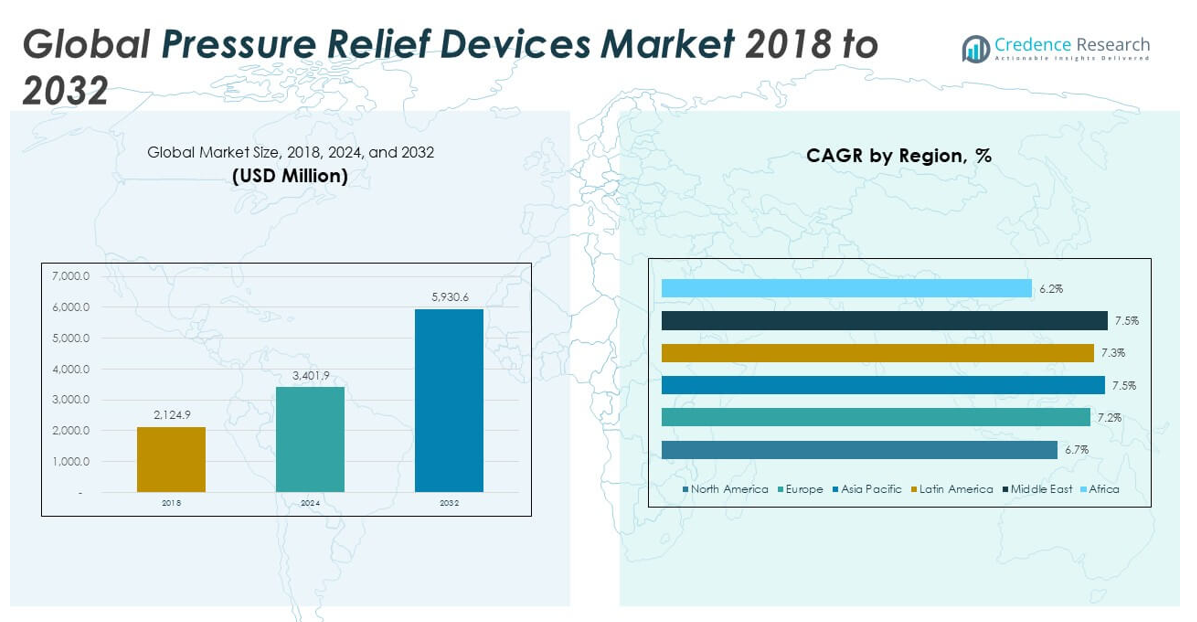
The Global Pressure Relief Devices Market size was valued at USD 2,124.9 million in 2018 to USD 3,401.9 million in 2024 and is anticipated to reach USD 5,930.6 million by 2032, at a CAGR of 7.17% during the forecast period.
One of the primary drivers of the Global Pressure Relief Devices Market is the growing incidence of pressure ulcers, also known as bedsores or decubitus ulcers, particularly among elderly and bedridden patients. According to the National Pressure Injury Advisory Panel (NPIAP), pressure injuries affect millions of patients worldwide, often leading to longer hospital stays, increased treatment costs, and diminished quality of life. With the global population aging rapidly, healthcare systems face a rising burden of mobility-related complications. Pressure relief devices have proven effective in preventing and managing these injuries, prompting hospitals, nursing homes, and home care providers to invest in modern, cost-effective solutions. Furthermore, the rise in surgical procedures and intensive care admissions globally has heightened the demand for devices that help reduce prolonged pressure on vulnerable body areas. Technological innovations-such as pressure mapping sensors, automatic pressure adjustment systems, and integration with patient monitoring tools-are enhancing the clinical efficacy of these devices. Regulatory support for improved patient care, alongside reimbursement frameworks in regions like North America and Europe, has encouraged broader adoption across both public and private healthcare sectors.
Regionally, North America holds the largest share of the Global Pressure Relief Devices Market, accounting for over 35% in 2024. The dominance of the U.S. market can be attributed to its well-established healthcare infrastructure, widespread awareness of pressure ulcers, strong reimbursement systems, and presence of leading medical device manufacturers. The U.S. Centers for Medicare & Medicaid Services (CMS) incentivize healthcare providers to prevent pressure injuries, further driving demand for effective devices. Europe follows closely, driven by rising elderly populations, national healthcare mandates focused on reducing hospital-acquired conditions, and active procurement of pressure-relieving systems across hospitals and long-term care facilities. Countries such as Germany, the U.K., and France continue to invest heavily in-patient safety and comfort. Meanwhile, the Asia-Pacific region is emerging as the fastest-growing market, with a projected CAGR surpassing that of developed economies. Rapid healthcare infrastructure development in China, India, and Southeast Asia, along with growing awareness and improving access to hospital care, supports robust market expansion. Government-led initiatives to modernize hospitals and home care services also contribute to demand in the region. In contrast, Latin America and the Middle East & Africa are growing at a slower pace, mainly due to limited healthcare access and budget constraints. However, rising investments in public health infrastructure and training programs to prevent hospital-acquired infections offer long-term potential in these underserved regions.
Market Insights:
- The Global Pressure Relief Devices Market increased from USD 2,124.9 million in 2018 to USD 3,401.9 million in 2024 and is projected to reach USD 5,930.6 million by 2032, growing at a CAGR of 7.17%.
- Aging populations are driving consistent demand for pressure relief devices, especially in long-term care, rehabilitation, and home settings due to higher risk of pressure ulcers.
- Rising prevalence of chronic illnesses and the growing number of surgical procedures are expanding the need for support surfaces that prevent complications from prolonged immobility.
- Advanced technologies such as pressure mapping sensors, automatic air flow systems, and moisture control fabrics are improving device efficiency and patient outcomes.
- Supportive healthcare policies and reimbursement systems, especially in the U.S., Europe, and developed Asia-Pacific countries, are boosting the adoption of preventive care devices.
- High costs of technologically advanced systems limit market penetration in low- and middle-income countries, where hospitals often face budget constraints and limited insurance coverage.
- Lack of standardized usage protocols and insufficient training among caregivers hinder optimal use, reducing the clinical impact of these devices in some healthcare settings.
Market Drivers:
Growing Geriatric Population and Increased Risk of Pressure Ulcers Fuel Demand for Relief Solutions:
The expanding elderly population worldwide significantly contributes to the demand for pressure relief devices. Older adults are more prone to limited mobility, fragile skin, and chronic health conditions that elevate the risk of pressure ulcers. The growing number of long-term care facilities and rising rates of hospitalization among aging individuals create consistent need for support surfaces and advanced bedding systems. The Global Pressure Relief Devices Market responds to these trends by offering products designed to reduce continuous pressure on vulnerable body areas. It plays a critical role in elderly patient care across hospitals, rehabilitation centers, and homecare environments. This demographic shift reinforces the long-term demand for efficient and durable pressure-relieving technologies.
- For instance, the Hill-Rom P500 surface demonstrated a 54% reduction in pressure ulcer wound volume after seven weeks of use in a clinical setting, confirming its effectiveness in supporting skin integrity for high-risk geriatric patients.
Rising Incidence of Chronic Diseases and Surgical Procedures Drives Product Adoption:
Chronic illnesses such as diabetes, vascular disorders, and spinal injuries contribute to reduced mobility and impaired wound healing, increasing the risk of pressure injuries. The growing global burden of these diseases is creating a larger patient pool that benefits from preventive care with pressure relief systems. Post-surgical patients, especially those in intensive care units, require extended periods of immobilization, further driving demand for support surfaces. The Global Pressure Relief Devices Market serves this segment by offering dynamic systems such as alternating pressure mattresses and low-air-loss beds that improve patient positioning and skin integrity. It enables hospitals to enhance clinical outcomes and reduce post-operative complications. These systems have become standard tools in critical care and recovery settings.
- For instance, the use of Hill-Rom’s VersaCare P500 low-air-loss mattress in a clinical trial was associated with higher Braden scores, indicating improved skin integrity and a lower risk of pressure ulcers in surgical patients compared to standard surfaces.
Technological Advancements Enhance Functionality and Clinical Outcomes:
Innovation in material science and medical device engineering has introduced a new generation of pressure relief devices that improve comfort and therapeutic efficiency. Features such as pressure mapping sensors, automatic air adjustments, moisture-wicking covers, and microclimate control are being integrated into modern support surfaces. These advancements enable real-time pressure redistribution, reducing the likelihood of skin breakdown and enhancing patient comfort. The Global Pressure Relief Devices Market benefits from continuous R&D investment aimed at improving device responsiveness and usability. It is also seeing increased adoption of connected solutions that allow remote monitoring and data tracking, aligning with broader digital health trends. These technologies support better clinical decision-making and targeted interventions.
Healthcare Policies and Reimbursement Frameworks Promote Preventive Care:
Healthcare systems around the world are placing stronger emphasis on preventing hospital-acquired conditions, including pressure ulcers, through quality mandates and financial incentives. In countries such as the United States, regulatory bodies like CMS reduce reimbursements for treating preventable pressure injuries, prompting hospitals to invest in preventive technologies. The Global Pressure Relief Devices Market aligns with these policies by offering compliant solutions that reduce liability and improve patient safety metrics. It supports value-based care initiatives that prioritize patient outcomes over volume-driven services. In Europe and Asia-Pacific, similar reimbursement models and government-backed programs are accelerating adoption. These structural shifts in healthcare delivery models reinforce the demand for reliable, standards-based pressure relief systems.
Market Trends:
Integration of Smart Technologies and Remote Monitoring Systems Improves Device Functionality:
The demand for smart pressure relief devices is increasing as healthcare facilities seek to enhance patient monitoring and operational efficiency. Devices equipped with sensors, connectivity features, and real-time pressure mapping capabilities are becoming more common. These technologies enable continuous monitoring of patient positioning and skin conditions, helping caregivers intervene early to prevent ulcers. The Global Pressure Relief Devices Market is embracing this trend by incorporating advanced electronics and wireless connectivity into support systems. It allows clinicians to track device performance and patient response remotely, reducing the need for constant physical supervision. This shift supports improved workflow in both hospital and home care environments.
- For instance, the Hill-Rom medical air mattress features a smart alarm system that provides visual and audible alerts for pressure drops or malfunctions, supporting proactive intervention and patient safety.
Rising Preference for Home Healthcare Solutions Boosts Demand for Portable Devices:
With a growing focus on aging in place and reducing hospital readmissions, more patients are being cared for at home. This transition fuels demand for compact, user-friendly pressure relief devices that support outpatient recovery and chronic care. The Global Pressure Relief Devices Market is responding with lightweight, foldable, and battery-operated systems designed for home use. It caters to individuals requiring long-term use without constant clinical oversight. Manufacturers are developing products that combine portability with clinical-grade performance, meeting the expectations of caregivers and patients alike. This trend is driving product innovation and creating new revenue streams outside institutional settings.
- For instance, Drive DeVilbiss Healthcare's portable pressure relief mattress weighs under 5 kg and offers up to 12 hours of battery life, making it highly suitable for home healthcare environments.
Sustainability and Eco-Conscious Design Influence Product Development:
Healthcare providers and manufacturers are placing greater emphasis on environmentally responsible products. Pressure relief devices made with recyclable materials, low-energy components, and durable, reusable covers are gaining popularity. The Global Pressure Relief Devices Market is seeing a shift toward sustainability in both product design and manufacturing practices. It supports hospital initiatives to reduce waste and meet environmental compliance targets. Companies are exploring alternative materials and cleaner production processes without compromising performance. This trend aligns with the broader healthcare industry’s commitment to reducing environmental impact.
Customization and Patient-Centric Design Enhance Comfort and Compliance:
Demand for personalized care has led to increased interest in pressure relief devices tailored to individual patient needs. Adjustable firmness levels, modular components, and ergonomically contoured surfaces offer greater comfort and flexibility. The Global Pressure Relief Devices Market is incorporating design features that accommodate different body types, weight ranges, and mobility levels. It addresses the need for devices that support both therapeutic goals and patient lifestyle preferences. This focus on user-centric solutions improves patient satisfaction and increases adherence to prescribed usage. Customization is becoming a key differentiator in an increasingly competitive market.
Market Challenges Analysis:
High Cost of Advanced Devices Limits Adoption in Price-Sensitive Markets:
The high upfront cost of technologically advanced pressure relief devices presents a significant barrier to widespread adoption, particularly in low- and middle-income countries. Products with features such as dynamic air systems, sensor-based feedback, and integrated electronics often require substantial investment, limiting access in resource-constrained settings. Many healthcare providers operate within strict budget limitations and prioritize essential equipment over preventive devices. The Global Pressure Relief Devices Market must contend with affordability issues that affect public hospitals, long-term care centers, and home care users alike. Reimbursement gaps further restrict adoption, especially in regions lacking supportive insurance frameworks. This challenge affects the market’s ability to scale and reach underserved populations.
Lack of Standardized Protocols and Awareness Hinders Effective Utilization:
Despite clinical evidence supporting pressure relief devices, many healthcare facilities lack standardized guidelines on device selection, placement, and usage. Inadequate staff training and inconsistent protocols lead to suboptimal deployment and reduced patient benefit. The Global Pressure Relief Devices Market faces limitations due to uneven awareness among clinicians, caregivers, and patients regarding the importance of early pressure injury prevention. It also struggles with inconsistent assessment tools across regions and care settings, making it difficult to track outcomes or compare device efficacy. Education, guideline development, and integration into clinical workflows are necessary to ensure devices deliver intended therapeutic value. Bridging this knowledge gap remains a critical market priority.
Market Opportunities:
Expansion of Home Healthcare and Aging-in-Place Models Creates New Growth Avenues:
The shift toward home-based care opens strong opportunities for portable and user-friendly pressure relief solutions. An increasing number of elderly and chronically ill patients now receive care outside hospital settings, requiring devices that are easy to operate and maintain. The Global Pressure Relief Devices Market can capitalize on this shift by developing compact, cost-effective systems tailored for home use. It supports care continuity and reduces hospital readmission linked to pressure ulcers. Manufacturers can also target caregivers and outpatient services with training and bundled service offerings. The home healthcare trend enables companies to reach new demographics beyond traditional clinical environments.
Rising Demand for Technologically Advanced and Customizable Devices Encourages Innovation:
Healthcare providers are seeking advanced pressure relief systems that combine comfort, data analytics, and smart monitoring. Devices that integrate with electronic health records and provide real-time alerts help clinicians make proactive decisions. The Global Pressure Relief Devices Market can leverage this demand by investing in R&D for intelligent surfaces, modular designs, and AI-powered feedback systems. It allows care teams to personalize support based on patient risk profiles and evolving needs. Customization and automation create opportunities to differentiate products and enhance long-term compliance. This trend supports premium product adoption across hospitals and specialty care facilities.
Market Segmentation Analysis:
By Device Type
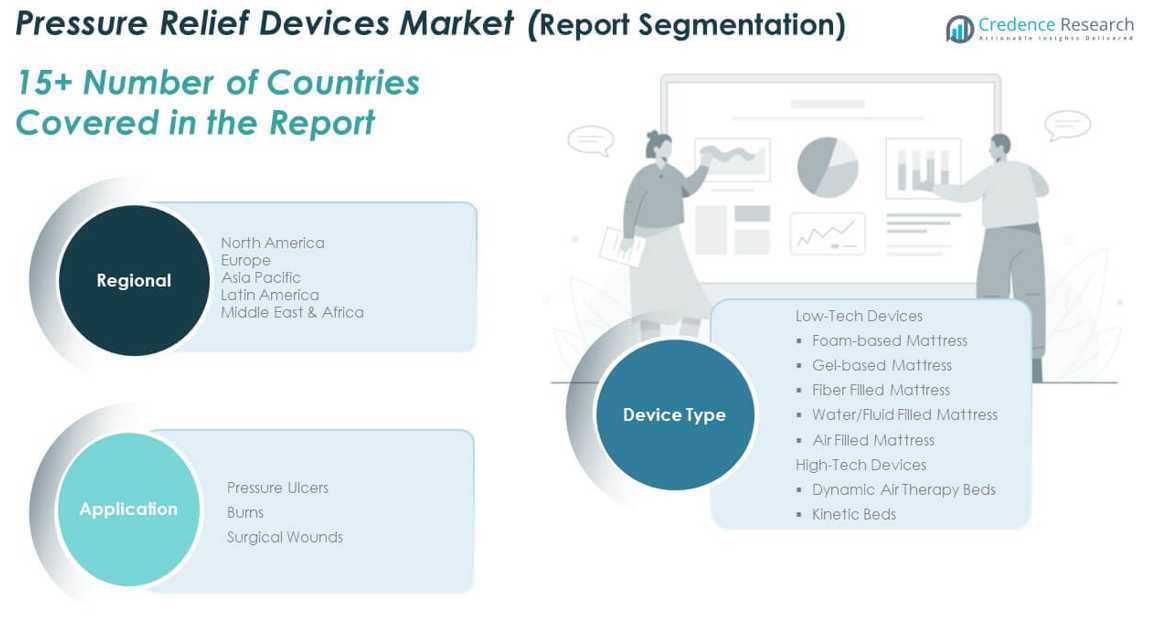
The Global Pressure Relief Devices Market is categorized into low-tech and high-tech devices. Low-tech devices dominate the market due to their cost-effectiveness and broad usage in home care and long-term care settings. Foam-based mattresses hold a significant revenue share because of their affordability and basic pressure redistribution capabilities. Gel-based and fiber-filled mattresses are used in moderate-risk environments where patient comfort and heat dispersion are critical. Water/fluid-filled mattresses offer adaptable support, while air-filled mattresses provide enhanced pressure distribution. High-tech devices such as dynamic air therapy beds and kinetic beds are gaining prominence in intensive care and surgical recovery units. These systems automatically adjust pressure and patient positioning, making them suitable for high-risk or immobile patients.
- For instance, Stryker’s foam-based mattresses have been shown to reduce peak pressure points in long-term care patients, while Hill-Rom’s air-filled mattresses provide better pressure distribution compared to foam mattresses.
By Application
The application segment includes pressure ulcers, burns, and surgical wounds. Pressure ulcers remain the leading application due to their high prevalence, particularly among geriatric and bedridden patients. Devices designed for this application aim to prevent skin breakdown and enhance recovery. In the case of burns, specialized pressure relief systems are utilized in acute care to protect sensitive tissue and reduce further injury. Surgical wounds are another critical application area, especially during post-operative immobilization. Hospitals increasingly adopt pressure-relieving surfaces to reduce the risk of wound dehiscence and improve recovery outcomes. The market addresses diverse clinical needs, supporting better patient care across acute, chronic, and post-surgical settings.
- For instance, the Hill-Rom Clinitron Air Fluidized Therapy system facilitated complete healing of a hard-to-heal sacral pressure ulcer in an 83-year-old patient within one month, demonstrating its clinical efficacy for complex wound care.
Segmentation:
By Device Type
- Low-Tech Devices
- Foam-based Mattress
- Gel-based Mattress
- Fiber Filled Mattress
- Water/Fluid Filled Mattress
- Air Filled Mattress
- High-Tech Devices
- Dynamic Air Therapy Beds
- Kinetic Beds
By Application
- Pressure Ulcers
- Burns
- Surgical Wounds
By Region
- North America
- U.S.
- Canada
- Mexico
- Europe
- UK
- France
- Germany
- Italy
- Spain
- Russia
- Rest of Europe
- Asia Pacific
- China
- Japan
- South Korea
- India
- Australia
- Southeast Asia
- Rest of Asia Pacific
- Latin America
- Brazil
- Argentina
- Rest of Latin America
- Middle East
- GCC Countries
- Israel
- Turkey
- Rest of Middle East
- Africa
- South Africa
- Egypt
- Rest of Africa
Regional Analysis:
North America
The North America Pressure Relief Devices Market size was valued at USD 521.87 million in 2018 to USD 812.76 million in 2024 and is anticipated to reach USD 1,364.04 million by 2032, at a CAGR of 6.7% during the forecast period. North America holds the largest share of the Global Pressure Relief Devices Market, accounting for over 35% of total revenue in 2024. The presence of a well-developed healthcare infrastructure, high awareness of pressure ulcer management, and robust reimbursement frameworks in the U.S. and Canada support steady growth. Hospitals and long-term care facilities actively invest in both low-tech and high-tech devices to meet regulatory standards and improve patient outcomes. The U.S. Centers for Medicare & Medicaid Services (CMS) encourages pressure ulcer prevention, which boosts the demand for preventive technologies. Leading medical device manufacturers in this region continue to expand their offerings to meet clinical and homecare needs.
Europe
The Europe Pressure Relief Devices Market size was valued at USD 462.79 million in 2018 to USD 742.68 million in 2024 and is anticipated to reach USD 1,298.80 million by 2032, at a CAGR of 7.2% during the forecast period. Europe represents a significant share of the Global Pressure Relief Devices Market, driven by national healthcare mandates and aging populations. Countries like Germany, the UK, and France invest in pressure ulcer prevention across hospital and nursing home environments. It benefits from centralized procurement policies and initiatives aimed at reducing hospital-acquired conditions. Public health systems provide support for the adoption of pressure relief solutions, particularly in elderly care settings. Strong presence of local and international manufacturers ensures consistent supply and innovation across care facilities.
Asia Pacific
The Asia Pacific Pressure Relief Devices Market size was valued at USD 716.08 million in 2018 to USD 1,165.40 million in 2024 and is anticipated to reach USD 2,075.71 million by 2032, at a CAGR of 7.5% during the forecast period. Asia Pacific is the fastest-growing region in the Global Pressure Relief Devices Market due to rapid healthcare infrastructure development in China, India, Japan, and Southeast Asia. Expanding hospital networks, increasing elderly populations, and rising surgical volumes drive demand. Governments in the region are investing in healthcare modernization, which includes preventive care equipment. Urbanization and rising health awareness are contributing to higher adoption in both public and private sectors. Domestic manufacturers are also emerging, supporting accessibility in price-sensitive segments.
Latin America
The Latin America Pressure Relief Devices Market size was valued at USD 223.54 million in 2018 to USD 360.07 million in 2024 and is anticipated to reach USD 632.79 million by 2032, at a CAGR of 7.3% during the forecast period. Latin America accounts for a moderate share of the Global Pressure Relief Devices Market. Brazil and Mexico are the leading contributors due to their expanding hospital capacity and growing focus on elderly care. Economic constraints limit access to high-end devices, but there is rising interest in low-tech solutions across public hospitals and clinics. Awareness campaigns and international partnerships are helping improve access to basic pressure ulcer prevention technologies. Imports still dominate the market due to limited regional manufacturing capacity.
Middle East
The Middle East Pressure Relief Devices Market size was valued at USD 142.37 million in 2018 to USD 232.30 million in 2024 and is anticipated to reach USD 415.14 million by 2032, at a CAGR of 7.5% during the forecast period. The region is experiencing growing demand for pressure relief devices, particularly in Gulf Cooperation Council (GCC) countries where healthcare spending is increasing. High prevalence of diabetes and obesity in the population raises the risk of pressure injuries. Governments are enhancing hospital infrastructure and introducing quality standards, which support device procurement. Demand is rising for both high-tech beds in tertiary care and low-tech surfaces in homecare. International suppliers dominate the market, often through distributor networks and tenders.
Africa
The Africa Pressure Relief Devices Market size was valued at USD 58.22 million in 2018 to USD 88.69 million in 2024 and is anticipated to reach USD 144.11 million by 2032, at a CAGR of 6.2% during the forecast period. Africa represents the smallest share of the Global Pressure Relief Devices Market. Limited healthcare infrastructure, budget constraints, and low awareness restrict widespread adoption. Public hospitals often rely on basic foam mattresses, while high-tech devices remain scarce. International aid programs and NGO initiatives occasionally support product availability. Some countries are beginning to prioritize hospital-acquired condition prevention, but progress is uneven across the region. It requires significant investment in training and infrastructure to improve access to pressure relief solutions.
Key Player Analysis:
- Solventum
- Arjo
- Essity Health & Medical
- Baxter International Inc
- Invacare Corporation
- Paramount Bed Co., Ltd.
- Smith+Nephew
- Stryker
- BSN Medical
- Kinetic Concepts, Inc.
- Other Key Players
Competitive Analysis:
The Global Pressure Relief Devices Market features a competitive landscape led by key players such as Arjo, Invacare Corporation, Hill-Rom Holdings (Baxter), Stryker Corporation, Drive DeVilbiss Healthcare, and Smith & Nephew. These companies maintain strong market positions through extensive product portfolios, strategic partnerships, and continuous investment in R&D. The market includes both premium technology providers and cost-focused manufacturers, creating a mix of innovation and affordability. It is characterized by moderate consolidation, with leading firms expanding globally through mergers and regional distribution networks. Competitive advantage often depends on product differentiation, regulatory compliance, and clinical performance. The Global Pressure Relief Devices Market rewards players that offer integrated solutions combining comfort, durability, and digital features. It also pressures manufacturers to respond quickly to evolving customer needs in both institutional and homecare settings. Market participants must adapt to pricing pressures, changing care models, and demand for customized solutions to maintain long-term growth.
Recent Developments:
- In June 2025, Solventum announced the launch of a preassembled, see-through VH2O2 Test Pack for low-temperature medical instrument sterilization. This innovation aims to improve the safety and efficiency of sterilization processes in healthcare facilities, supporting infection control protocols for critical patient care environments.
- In April 2025, Arjo introduced the Maxi Move 5, the latest generation of its flagship patient floor lift. The Maxi Move 5 features advanced technical solutions such as the Arjo Motion Assist, which reduces the physical force required for patient transfers by up to 68% compared to competitor devices, significantly enhancing caregiver safety and operational efficiency. The product is currently available in the United States, Germany, France, and the Netherlands, with plans to expand to about 40 countries by the end of 2025.
- In September 2024, Baxter International Inc. launched the next generation of The Vest APX System for airway clearance. This system, designed for patients with chronic lung conditions, offers enhanced comfort, a user-friendly touchscreen, and unique garment designs while maintaining the high-frequency chest wall oscillation technology that has been clinically validated in over 60 studies. The Vest APX System received FDA 510(k) clearance earlier in 2024 and is now available for order in the United States.
Market Concentration & Characteristics:
The Global Pressure Relief Devices Market exhibits moderate concentration, with a few dominant players controlling a significant share through established brand presence and global distribution networks. It features a mix of multinational corporations and regional manufacturers offering a wide range of solutions across price points. The market favors companies that combine clinical efficacy with technological innovation and user-centric design. It is shaped by healthcare regulations, patient safety standards, and procurement trends in hospitals, long-term care, and homecare environments. Customization, portability, and integration with digital health platforms are emerging as key product characteristics. The Global Pressure Relief Devices Market responds to diverse end-user needs by offering both advanced dynamic systems and affordable static options. It operates in a value-driven ecosystem where reimbursement models and preventive care priorities influence purchasing decisions.
Report Coverage:
The research report offers an in-depth analysis based on by device type and application. It details leading market players, providing an overview of their business, product offerings, investments, revenue streams, and key applications. Additionally, the report includes insights into the competitive environment, SWOT analysis, current market trends, as well as the primary drivers and constraints. Furthermore, it discusses various factors that have driven market expansion in recent years. The report also explores market dynamics, regulatory scenarios, and technological advancements that are shaping the industry. It assesses the impact of external factors and global economic changes on market growth. Lastly, it provides strategic recommendations for new entrants and established companies to navigate the complexities of the market.
Future Outlook:
- Increasing elderly population will raise long-term demand for pressure ulcer prevention devices.
- Home healthcare growth will boost adoption of portable and user-friendly relief systems.
- Smart technologies and connected devices will support real-time monitoring and early intervention.
- Rising chronic disease burden will expand the target patient base across all care settings.
- Technological innovation will drive development of modular and customizable support surfaces.
- Expanding reimbursement coverage in emerging economies will improve product accessibility.
- Focus on sustainability will lead manufacturers to adopt eco-friendly materials and processes.
- Digital integration with hospital IT systems will enhance care coordination and device usage.
- Greater awareness and training will improve clinical application and treatment outcomes.
- Market competition will intensify as regional players introduce cost-effective alternatives.

Request a Free Sample
Fill in your details and we'll send you a free sample report.
- Sample data tables & charts
- Research methodology
Market Dynamics
Aging Population and Increased Risk of Pressure Ulcers
The global rise in elderly populations is leading to higher rates of immobility and chronic conditions, significantly increasing the risk of pressure ulcers. This demographic trend is driving sustained demand for pressure relief devices in hospitals, long-term care, and homecare settings.
Rising Incidence of Chronic Diseases and Surgical Procedures
Chronic illnesses such as diabetes and vascular disorders, along with a growing number of surgical procedures, are expanding the patient pool at risk for pressure injuries. This is fueling adoption of advanced support surfaces and dynamic therapy beds to prevent complications from prolonged immobility.
Technological Advancements in Pressure Relief Devices
Innovations such as pressure mapping sensors, automatic air adjustment, and moisture control fabrics are enhancing the clinical efficacy and comfort of pressure relief devices. These advancements are encouraging healthcare providers to upgrade to more effective and user-friendly systems.
Supportive Healthcare Policies and Reimbursement Frameworks
Regulatory mandates and reimbursement incentives, especially in North America and Europe, are prompting healthcare facilities to invest in preventive technologies. These policies reduce financial risk for providers and accelerate the adoption of pressure relief solutions.
Expansion of Home Healthcare and Portable Device Demand
The shift toward home-based care and aging-in-place models is increasing demand for portable, easy-to-use pressure relief devices. Manufacturers are responding with compact and battery-operated systems, enabling broader access outside traditional clinical environments.
Need a Custom Version of This Report?
Tailor the scope, geography, or segments to your exact requirements.
- Custom geography or segment scope
- Direct access to our analyst team
Frequently Asked Questions
What is the current size of the Global Pressure Relief Devices Market?
What are the key segments within the Global Pressure Relief Devices Market
What are some challenges faced by the Global Pressure Relief Devices Market?
Who are the major players in the Global Pressure Relief Devices Market?
Table of Content
Chapter 1 Market Segmentation
- 1.1 Segmentation Framework
- 1.1.1 Product and Service Classification
- 1.1.2 Application and End-Use Classification
- 1.1.3 Technology and Solution Classification
- 1.1.4 Customer and Distribution Channel Classification
- 1.1.5 Geographic Segmentation
- 1.1.6 Market Segment Definitions and Boundaries
- 1.2 By End User
- 1.2.1 Hospitals
- 1.2.2 Long-term Care Facilities
- 1.2.3 Homecare Settings
- 1.3 By Application
- 1.3.1 Pressure Ulcers
- 1.3.2 Burns
- 1.3.3 Surgical Wounds
- 1.4 By Device Type
- 1.4.1 Foam-based Mattress
- 1.4.2 Gel-based Mattress
- 1.4.3 Fiber Filled Mattress
- 1.4.4 Water/Fluid Filled Mattress
- 1.4.5 Air Filled Mattress
- 1.4.6 Dynamic Air Therapy Beds
- 1.4.7 Kinetic Beds
Chapter 2 Introduction
- 2.1 Report Objectives and Scope
- 2.2 Product Definition and Industry Terminology
- 2.3 Market Inclusions and Exclusions
- 2.4 Research Process
- 2.4.1 Primary Research and Expert Interviews
- 2.4.2 Secondary Research and Source Review
- 2.4.3 Top-Down and Bottom-Up Estimation
- 2.4.4 Data Triangulation and Verification
- 2.5 Market Size Measurement Basis
- 2.5.1 2024: USD 3,401.9 million → 2032: USD 5,930.6 million
- 2.6 Historical and Forecast Reference Periods
- 2.6.1 Base Year: 2024
- 2.6.2 Forecast Period: 2024-2032
- 2.7 Research Assumptions and Limitations
Chapter 3 Executive Summary
- 3.1 Market Snapshot and Key Findings
- 3.2 Base-Year Market Size, 2024
- 3.3 Forecast Market Size, 2032
- 3.4 Revenue and Volume Growth Outlook
- 3.5 Key Demand and Supply Indicators
- 3.6 Leading Market Segments
- 3.7 Fastest-Growing Market Opportunities
- 3.8 Regional Performance Highlights
- 3.9 Technology and Industry Transformation
- 3.10 Competitive Landscape Summary
- 3.11 Analyst View and Strategic Implications
Chapter 4 Global Pressure Relief Devices Market Trends and Developments
- 4.1 Historical Industry Development
- 4.2 Recent Market Trends and Developments
- 4.3 Demand and Customer Behavior Trends
- 4.4 Technology and Product Innovation
- 4.5 Artificial Intelligence, Automation and Digitalization
- 4.6 Local Manufacturing and Supply Chain Realignment
- 4.7 Industry Partnerships, Mergers and Acquisitions
- 4.8 Sustainability and Circular Economy Developments
- 4.9 Government and Private Sector Investment Trends
- 4.10 Emerging Business Models and Commercialization
- 4.11 Industry Developments and Announcements
Chapter 5 Global Pressure Relief Devices Market Production, Supply and Demand Analysis
- 5.1 Demand Trend and Consumption Analysis
- 5.2 Demand Forecast, 2024-2032
- 5.3 Production and Output Trend
- 5.4 Production and Output Forecast, 2024-2032
- 5.5 Installed Capacity and Capacity Utilization
- 5.6 Company-Wise Production Plants and Statistics
- 5.6.1 Installed Production Capacity
- 5.6.2 Actual Production
- 5.6.3 Planned Capacity and Expansion Targets
- 5.7 Supply Chain Structure and Procurement Trends
- 5.8 Supply-Demand Gap and Bottlenecks
- 5.9 Import Dependence and Sourcing Structure
- 5.10 Contract Manufacturing and Outsourcing
- 5.11 Regional Supply and Demand Concentration
Chapter 6 Global Pressure Relief Devices Market Pricing Analysis
- 6.1 Pricing Structure and Measurement
- 6.2 Historical Pricing Trends
- 6.3 Pricing Outlook, 2024-2032
- 6.4 Average Selling Price and Unit Economics
- 6.5 Pricing by Product and Market Segment
- 6.6 Geographic Pricing Differences
- 6.7 Key Input, Energy, Labor and Logistics Costs
- 6.8 Contract Pricing and Purchasing Models
- 6.9 Pricing Sensitivity and Competitive Positioning
- 6.10 Price, Margin and Profitability Implications
Chapter 7 Global Pressure Relief Devices Market Dynamics
- 7.1 Market Growth Drivers
- 7.1.1 Demand-Side Drivers
- 7.1.2 Technology and Innovation Drivers
- 7.1.3 Infrastructure and Investment Drivers
- 7.1.4 Regulatory and Policy Drivers
- 7.2 Market Restraints
- 7.2.1 Cost and Affordability Constraints
- 7.2.2 Technology and Adoption Barriers
- 7.2.3 Supply Chain and Operational Constraints
- 7.3 Market Challenges
- 7.3.1 Competitive Pressure and Margin Erosion
- 7.3.2 Skills, Infrastructure and Implementation Gaps
- 7.4 Emerging Market Opportunities
- 7.5 Market Dynamics Impact and Time-Horizon Assessment
Chapter 8 Global Pressure Relief Devices Value Chain Analysis
- 8.1 Industry Value Chain Overview
- 8.2 Upstream Suppliers and Critical Inputs
- 8.3 Technology and Component Providers
- 8.4 Manufacturing or Service Delivery
- 8.5 Distribution, Channel Partners and Integrators
- 8.6 Downstream Applications and End Users
- 8.7 Value Addition and Profit Pools
- 8.8 Vertical Integration and Outsourcing
- 8.9 Supplier Concentration and Risk
- 8.10 Supply Chain Localization and Resilience
Chapter 9 Global Pressure Relief Devices Market Regulations and Policies
- 9.1 Relevant Laws, Standards and Compliance Frameworks
- 9.2 Product, Service, Safety and Quality Requirements
- 9.3 Government Policies, Incentives and Subsidies
- 9.4 Imports, Exports and Trade Barriers
- 9.5 Public Procurement and Local Content Requirements
- 9.6 Environmental and Sustainability Compliance
- 9.7 Upcoming Policy Changes and Market Implications
Chapter 10 Global Pressure Relief Devices Market Hotspots and Opportunities
- 10.1 Market Opportunity Mapping and Growth Hotspots
- 10.2 High-Growth Applications and Customer Groups
- 10.3 Underserved Markets and White-Space Opportunities
- 10.4 Emerging Technology and Product Opportunities
- 10.5 New Capacity and Investment Hotspots
- 10.6 Market Entry and Expansion Opportunities
- 10.7 Distribution and Partnership Opportunities
- 10.8 Near-Term and Long-Term Commercial Potential
- 10.9 Opportunity Attractiveness and Execution Risks
Chapter 11 Global Pressure Relief Devices Market Outlook, 2024-2032
- 11.1 Market Size and Analysis
- 11.1.1 Revenue (Market Measurement: 2024: USD 3,401.9 million → 2032: USD 5,930.6 million)
- 11.1.2 Market Volume and Quantity Sold
- 11.1.3 Historical Market Size
- 11.1.4 Base-Year Market Size, 2024
- 11.2 Market Forecast, 2024-2032
- 11.2.1 Revenue Forecast to 2032
- 11.2.2 Volume Forecast to 2032
- 11.2.3 CAGR and Year-on-Year Growth
- 11.2.4 Incremental Revenue Opportunity
- 11.3 Forecast Assumptions and Scenario Analysis
- 11.3.1 Base-Case Forecast
- 11.3.2 Optimistic and Conservative Scenarios
- 11.3.3 Technology, Pricing and Policy Sensitivities
- 11.4 Market Attractiveness and Growth Outlook
Chapter 12 Global Pressure Relief Devices Market Segmentation and Outlook
- 12.1 Segmentation Summary and Market Shares, 2024
- 12.2 Largest and Fastest-Growing Segments
- 12.3 By End User - Market Size and Forecast, 2024-2032
- 12.3.1 Segment Definition and Scope
- 12.3.2 Historical Market Size
- 12.3.3 Revenue Forecast, 2024-2032
- 12.3.4 Volume Forecast, 2024-2032
- 12.3.5 Base-Year Market Share, 2024
- 12.3.6 Segment CAGR and Growth Drivers
- 12.3.7 Subsegment Market Size and Forecast
- 12.3.7.1 Hospitals
- 12.3.7.2 Long-term Care Facilities
- 12.3.7.3 Homecare Settings
- 12.3.8 Subsegment Pricing and Adoption Trends
- 12.3.9 Leading Suppliers and Competition
- 12.3.10 Regional Demand and Opportunities
- 12.4 By Application - Market Size and Forecast, 2024-2032
- 12.4.1 Segment Definition and Scope
- 12.4.2 Historical Market Size
- 12.4.3 Revenue Forecast, 2024-2032
- 12.4.4 Volume Forecast, 2024-2032
- 12.4.5 Base-Year Market Share, 2024
- 12.4.6 Segment CAGR and Growth Drivers
- 12.4.7 Subsegment Market Size and Forecast
- 12.4.7.1 Pressure Ulcers
- 12.4.7.2 Burns
- 12.4.7.3 Surgical Wounds
- 12.4.8 Subsegment Pricing and Adoption Trends
- 12.4.9 Leading Suppliers and Competition
- 12.4.10 Regional Demand and Opportunities
- 12.5 By Device Type - Market Size and Forecast, 2024-2032
- 12.5.1 Segment Definition and Scope
- 12.5.2 Historical Market Size
- 12.5.3 Revenue Forecast, 2024-2032
- 12.5.4 Volume Forecast, 2024-2032
- 12.5.5 Base-Year Market Share, 2024
- 12.5.6 Segment CAGR and Growth Drivers
- 12.5.7 Subsegment Market Size and Forecast
- 12.5.7.1 Foam-based Mattress
- 12.5.7.2 Gel-based Mattress
- 12.5.7.3 Fiber Filled Mattress
- 12.5.7.4 Water/Fluid Filled Mattress
- 12.5.7.5 Air Filled Mattress
- 12.5.7.6 Dynamic Air Therapy Beds
- 12.5.7.7 Kinetic Beds
- 12.5.8 Subsegment Pricing and Adoption Trends
- 12.5.9 Leading Suppliers and Competition
- 12.5.10 Regional Demand and Opportunities
- 12.6 Segment Growth Comparison
- 12.7 Segment Attractiveness and Priority Matrix
Chapter 13 Global Pressure Relief Devices End-Use and Application Market Outlook
- 13.1 End-Use Industry and Customer Demand Structure
- 13.2 Leading Applications and Customer Groups
- 13.3 End-Use Market Size, Share and Forecast
- 13.4 Major End-Use Industry Deep Dives
- 13.4.1 Customer Requirements and Use Cases
- 13.4.2 Demand and Replacement Cycles
- 13.4.3 Technical and Regulatory Considerations
- 13.4.4 Purchasing and Procurement Models
- 13.4.5 Leading Vendors and Distribution Channels
- 13.4.6 Forecast and Commercial Opportunities
- 13.5 Emerging Applications and Cross-Segment Demand
- 13.6 End-Use Industry Investment Priorities
Chapter 14 Global Pressure Relief Devices Geographic Market Outlook, 2024-2032
- 14.1 Regional Market Size and Share, 2024
- 14.2 Regional Market Forecast, 2024-2032
- 14.3 Regional Pricing, Production and Demand Differences
- 14.4 North America
- 14.4.1 United States
- 14.4.2 Canada
- 14.4.3 Mexico
- 14.5 Europe
- 14.5.1 Germany
- 14.5.2 France
- 14.5.3 Italy
- 14.5.4 United Kingdom
- 14.5.5 Spain
- 14.5.6 Poland
- 14.5.7 Russia
- 14.5.8 Netherlands
- 14.5.9 Belgium
- 14.5.10 Sweden
- 14.5.11 Denmark
- 14.5.12 Norway
- 14.5.13 Rest of Europe
- 14.6 Asia Pacific
- 14.6.1 China
- 14.6.2 India
- 14.6.3 Japan
- 14.6.4 South Korea
- 14.6.5 Thailand
- 14.6.6 Indonesia
- 14.6.7 Vietnam
- 14.6.8 Malaysia
- 14.6.9 Australia
- 14.6.10 Rest of Asia Pacific
- 14.7 Latin America
- 14.7.1 Brazil
- 14.7.2 Argentina
- 14.7.3 Colombia
- 14.7.4 Chile
- 14.7.5 Rest of Latin America
- 14.8 Middle East
- 14.8.1 Saudi Arabia
- 14.8.2 United Arab Emirates
- 14.8.3 Turkey
- 14.8.4 Israel
- 14.8.5 Iran
- 14.8.6 Rest of the Middle East
- 14.9 Africa
- 14.9.1 South Africa
- 14.9.2 Egypt
- 14.9.3 Nigeria
- 14.9.4 Morocco
- 14.9.5 Rest of Africa
- 14.10 Regional Investment, Policy and Supply Chain Differences
- 14.11 Regional Competitive Landscape
- 14.12 Geographic Growth Hotspots
Chapter 15 Global Pressure Relief Devices Technology, Innovation and Sustainability Outlook
- 15.1 Technology Landscape and Maturity
- 15.2 Product, Process and Service Innovation
- 15.3 AI, Automation and Digital Tools in the Industry
- 15.4 Technology Adoption and Performance Benchmarking
- 15.5 Innovation Pipeline and R&D Investment
- 15.6 Patent and Intellectual Property Trends
- 15.7 Energy Efficiency and Resource Management
- 15.8 Sustainability, Recycling and Circularity
- 15.9 Technology Roadmap, 2024-2032
- 15.10 Risks of Obsolescence and Technology Substitution
Chapter 16 Global Pressure Relief Devices Market Key Strategic Imperatives
- 16.1 Growth and Market Entry Priorities
- 16.2 High-Return Products and Segments
- 16.3 Pricing, Profitability and Cost Optimization
- 16.4 Technology Investment and Product Differentiation
- 16.5 Supply Chain Localization and Resilience
- 16.6 Distribution and Customer Acquisition
- 16.7 Partnership, Acquisition and Capacity Strategy
- 16.8 Regional Expansion Priorities
- 16.9 Short-, Medium- and Long-Term Actions
Chapter 17 Competition Outlook
- 17.1 Industry Competition Characteristics
- 17.2 Market Structure and Concentration
- 17.3 Market Share and Competitive Positioning, 2024
- 17.4 Company-Wise Revenue and Product Benchmarking
- 17.5 Production and Service Capacity Benchmarking
- 17.6 Technology, Pricing and Differentiation
- 17.7 Regional Footprint and Distribution Strength
- 17.8 Mergers, Acquisitions and Strategic Alliances
- 17.9 New Entrants and Competitive Threats
- 17.10 Porter's Five Forces and Industry Attractiveness
- 17.11 Competitive Outlook, 2024-2032
Chapter 18 Company Profiles
- 18.1 Company Coverage and Selection Criteria
- 18.2 Arjo
- 18.2.1 Business Description
- 18.2.2 Company Ownership and Geographic Presence
- 18.2.3 Product and Service Portfolio
- 18.2.4 Manufacturing and Operating Footprint
- 18.2.5 Production Capacity and Expansion Plans
- 18.2.6 Financial Performance and Investment
- 18.2.7 Market Share and Competitive Position
- 18.2.8 Technology and Innovation Capabilities
- 18.2.9 Strategic Alliances or Partnerships
- 18.2.10 Recent Developments
- 18.2.11 Growth Strategy and Outlook
- 18.3 Baxter International Inc.
- 18.4 Invacare Corporation
- 18.5 Stryker
- 18.6 Smith+Nephew
- 18.7 Essity Health & Medical
- 18.8 Solventum
- 18.9 Paramount Bed Co., Ltd.
- 18.10 BSN Medical
- 18.11 Kinetic Concepts, Inc.
- 18.12 Other Relevant Market Participants
Note: Every listed company is profiled on the structure shown under the first company. The company list is preliminary and may change based on research findings, market developments, data availability and client requirements.
Chapter 19 Disclaimer
- 19.1 Research and Forecast Disclaimer
- 19.2 Data Source and Estimation Limitations
Note: The depth of individual sections depends on data availability for this market. Volume, capacity, trade and other unit-based metrics are included where applicable.

