
| REPORT ATTRIBUTE | DETAILS |
|---|---|
| Historical Period | 2019-2022 |
| Base Year | 2023 |
| Forecast Period | 2024-2032 |
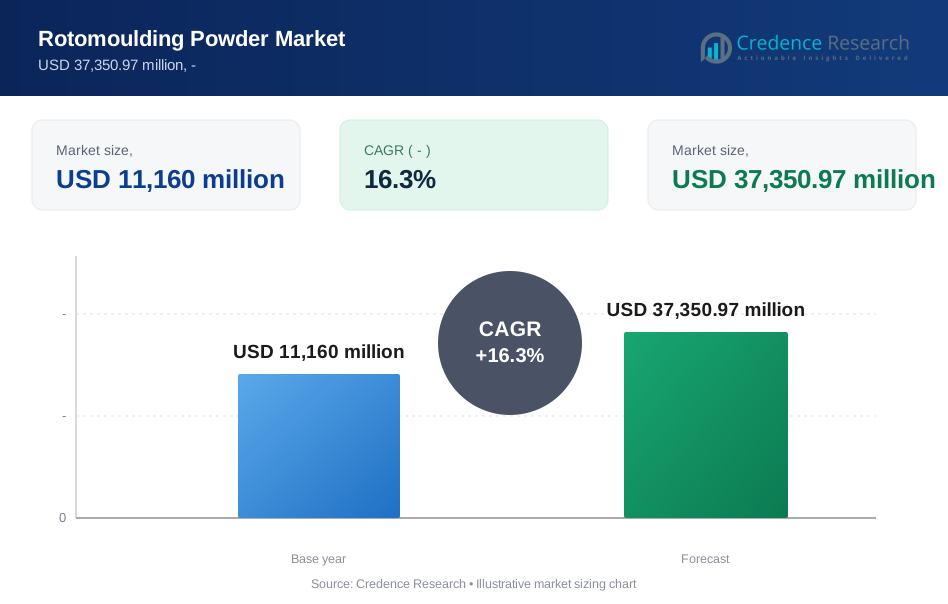
| Rotomoulding Powder Market Size 2024 | USD 11,160 Million |
| Rotomoulding Powder Market, CAGR | 16.3% |
| Rotomoulding Powder Market Size 2032 | USD 37,350.97 Million |
Market Overview:
The Rotomoulding Powder Market is experiencing substantial growth, driven by the increasing demand for lightweight and durable materials across various applications. As of 2024, the global Rotomoulding Powder Market is valued at USD 11,160 million and is projected to grow at a compound annual growth rate (CAGR) of 16.3% over the forecast period, reaching approximately USD 37,350.97 million by 2032. This robust growth is indicative of the rising adoption of rotomoulding technology in sectors such as automotive, packaging, and construction, where the benefits of rotomoulded products, including versatility and cost-effectiveness, are highly valued.
Key factors driving the market's expansion include the increasing need for high-quality and eco-friendly materials in manufacturing processes, as well as advancements in rotomoulding technologies that enhance product performance. The growing popularity of rotomoulding for producing complex shapes and large components without the need for seams is also contributing to market growth. Additionally, the shift towards sustainable practices in manufacturing is propelling the use of recyclable and reusable rotomoulding powders.
Regionally, North America dominates the Rotomoulding Powder Market, primarily due to the presence of established manufacturing hubs and a strong emphasis on innovation. Europe follows closely, driven by stringent environmental regulations and a growing focus on sustainability. The Asia-Pacific region is expected to witness significant growth during the forecast period, fueled by rapid industrialization, increasing infrastructure development, and rising consumer demand for rotomoulded products in emerging economies like China and India. These factors collectively create a favorable environment for the growth of the Rotomoulding Powder Market.
Market Drivers:
Increasing Demand for Lightweight Materials:
The demand for lightweight materials in various industries, particularly automotive and packaging, is a significant driver of the Rotomoulding Powder Market. Lightweight materials contribute to improved fuel efficiency in vehicles, which is essential for meeting stringent environmental regulations. According to the International Energy Agency (IEA), the automotive sector is expected to achieve a 30% reduction in vehicle weight by 2025, which will likely boost the adoption of rotomoulded products. For instance, Ford is investing $11 billion to develop electric vehicles and lightweight materials, while General Motors aims for a 40% reduction in vehicle weight by 2035. This growing emphasis on reducing weight is driving manufacturers to adopt rotomoulding technology to produce components that meet these requirements.
Technological Advancements in Rotomoulding:
Technological advancements in rotomoulding processes significantly enhance product performance and expand applications. Innovations such as advanced heating methods, automation, and improved material formulations are transforming the industry. For instance, research conducted by the American Society for Testing and Materials (ASTM) indicates that modern rotomoulding techniques can reduce production time by up to 25% while improving the consistency of product quality. Companies like BASF have reported that their new formulations can enhance the durability of rotomoulded products by 40%. As manufacturers adopt these advanced technologies, the efficiency and versatility of rotomoulding will continue to improve, attracting more industries to utilize these materials.
Growing Environmental Awareness and Sustainability Initiatives:
There is an increasing global emphasis on sustainability and eco-friendly practices, which is influencing the Rotomoulding Powder Market. Governments and regulatory bodies are pushing for sustainable manufacturing practices to mitigate environmental impact. For instance, the European Union has set ambitious goals to reduce greenhouse gas emissions by 55% by 2030, which includes promoting the use of recyclable and eco-friendly materials in manufacturing. This shift is encouraging companies to invest in rotomoulding powders that are not only high-performing but also sustainable. Research by the World Bank indicates that investments in sustainable materials can lead to a 20% reduction in overall manufacturing costs by 2030. Initiatives like the U.S. Green Building Council’s LEED certification further support the trend toward sustainability, expected to accelerate the adoption of rotomoulded products across various sectors.
Expansion of Infrastructure and Industrial Development:
Rapid industrialization and infrastructure development, particularly in emerging economies, are driving the demand for rotomoulded products. Countries like India and China are investing heavily in infrastructure projects, including transportation, housing, and urban development. According to the Asian Development Bank (ADB), Asia is projected to require about $26 trillion in infrastructure investment by 2030 to maintain economic growth. For instance, India’s National Infrastructure Pipeline plans to invest $1.4 trillion by 2025 to enhance connectivity and urban infrastructure. This growing demand for infrastructure will increase the need for durable and versatile materials, such as rotomoulded products, which are ideal for various applications. Furthermore, the construction industry is increasingly recognizing the benefits of rotomoulding technology in producing high-quality components, thereby further propelling market growth.
Market Trends:
Shift Towards Sustainable Materials The Rotomoulding Powder Market is increasingly leaning toward sustainability, with manufacturers focusing on developing eco-friendly materials. As consumers and industries prioritize environmental responsibility, there is a notable shift towards recyclable and biodegradable rotomoulding powders. Government initiatives are also influencing this trend; for instance, the European Union has proposed regulations to encourage the use of sustainable materials in various sectors. The European Commission reports that adopting sustainable practices could reduce material costs by 15% for businesses by 2030. Companies such as BASF are investing approximately €2 billion in research to create more sustainable formulations, emphasizing the importance of eco-friendly solutions. Furthermore, organizations like the World Wildlife Fund (WWF) advocate for sustainable sourcing and production methods, which align with the rising demand for green products in the market. In the United States, the Environmental Protection Agency (EPA) has launched initiatives to promote the use of recycled materials, contributing to a broader industry shift toward sustainability.
Increased Automation and Digitalization:
The incorporation of automation and digital technologies in the rotomoulding process is another significant trend reshaping the market. Advanced manufacturing techniques, including the use of robotics and real-time monitoring systems, are improving production efficiency and product quality. For instance, research by the International Federation of Robotics (IFR) indicates that the adoption of robotics in manufacturing could increase productivity by up to 30%. Companies like LyondellBasell are implementing smart manufacturing technologies, investing over $1 billion in automation projects to enhance operational efficiency. The U.S. Department of Commerce highlights that such technological advancements are crucial for maintaining competitiveness in the global market. Additionally, the National Institute of Standards and Technology (NIST) has recognized the importance of Industry 4.0 principles, promoting the integration of digital tools to streamline operations. As automation becomes more prevalent, the rotomoulding industry is expected to benefit from increased precision and efficiency, further driving market growth.
Market Challenge Analysis:
Raw Material Price Volatility:
One of the significant challenges facing the Rotomoulding Powder Market is the volatility in raw material prices. Fluctuations in the cost of key materials, such as polyethylene and PVC, can significantly impact production costs and profit margins for manufacturers. For instance, a report from the International Energy Agency (IEA) highlights that global oil prices can directly affect the price of polyethylene, as it is derived from petrochemical sources. In recent years, geopolitical tensions and supply chain disruptions have led to unpredictable price movements, forcing manufacturers to adjust their pricing strategies frequently. This instability can create uncertainty for businesses, making it challenging to maintain competitive pricing while ensuring profitability. Additionally, smaller manufacturers may struggle more than larger companies to absorb these costs, potentially leading to market consolidation as weaker players exit the industry. As a result, companies must develop robust supply chain strategies and explore alternative materials to mitigate the impact of price fluctuations.
Regulatory Compliance and Environmental Standards:
Another challenge in the Rotomoulding Powder Market is the increasing complexity of regulatory compliance and environmental standards. Governments around the world are implementing stricter regulations aimed at reducing environmental impact and promoting sustainability. For example, the European Union's Circular Economy Action Plan emphasizes the need for recyclable materials and sets ambitious targets for reducing plastic waste. Companies in the rotomoulding sector must navigate these regulations, which can vary significantly by region, adding to the compliance burden. Adapting to these requirements often necessitates significant investment in research and development, as well as changes to manufacturing processes. Additionally, failure to comply with these regulations can result in severe penalties and reputational damage. As organizations strive to meet these standards, they may encounter challenges in sourcing compliant materials or modifying existing products. Consequently, companies must prioritize compliance strategies and invest in sustainable practices to thrive in an increasingly regulated market.
Market Segmentation Analysis:
By Type
The Rotomoulding Powder Market is segmented by type into polyethylene, polyvinyl chloride (PVC), and others. Polyethylene remains the dominant type due to its lightweight and durable properties, making it ideal for various applications. PVC is gaining traction for its versatility and resistance to chemicals, while other materials cater to niche applications requiring specific characteristics.
By Technology
The market is divided by technology into conventional rotomoulding and advanced rotomoulding techniques. Conventional rotomoulding continues to be widely used due to its established processes and cost-effectiveness. However, advanced techniques, such as rotational molding with automation and enhanced heating methods, are emerging, offering improved precision and efficiency.
By End-User
End-users in the Rotomoulding Powder Market include automotive, packaging, construction, and consumer goods. The automotive sector is experiencing significant growth, driven by the demand for lightweight components. The packaging industry benefits from rotomoulding’s ability to create complex shapes, while the construction sector values its durability. Consumer goods are increasingly utilizing rotomoulded products for their versatility and design flexibility.
Segmentation:
Based on Product Type:
- Polyethylene
- Polyvinyl Chloride (PVC)
- Other Materials
Based on Technology:
- Conventional Rotomoulding
- Advanced Rotomoulding Techniques
Based on End-User:
- Automotive
- Packaging
- Construction
- Consumer Goods
Based on Region:
- North America
- U.S.
- Canada
- Mexico
- Europe
- Germany
- France
- U.K.
- Italy
- Spain
- Rest of Europe
- Asia Pacific
- China
- Japan
- India
- South Korea
- South-east Asia
- Rest of Asia Pacific
- Latin America
- Brazil
- Argentina
- Rest of Latin America
- Middle East & Africa
- GCC Countries
- South Africa
- Rest of the Middle East and Africa
Regional Analysis:
North America
North America holds a significant share of the Rotomoulding Powder Market, accounting for approximately 35% of the total market share. The region is characterized by a strong presence of established manufacturers and advanced technological infrastructure. The automotive and packaging industries are major contributors to market growth, driven by the increasing demand for lightweight and durable materials. Companies like DuPont and LyondellBasell are leading players, continuously innovating to meet market needs. Additionally, stringent regulations aimed at reducing environmental impact have prompted manufacturers to adopt sustainable practices, further boosting demand for eco-friendly rotomoulding powders. The U.S. government's initiatives to promote energy efficiency and sustainability in manufacturing are also enhancing market prospects. However, fluctuating raw material prices remain a concern, challenging manufacturers to maintain competitive pricing while ensuring quality.
Europe
Europe is another key player in the Rotomoulding Powder Market, representing approximately 30% of the market share. The region's growth is driven by stringent environmental regulations and a strong emphasis on sustainability. The European Union's Circular Economy Action Plan aims to promote the use of recyclable materials, significantly impacting the demand for rotomoulded products. Major companies in the region, such as BASF and Solvay, are investing heavily in research and development to create innovative and sustainable materials. The construction and automotive sectors are particularly influential, as they increasingly adopt rotomoulding technology for its versatility and efficiency. Moreover, the rising consumer awareness regarding environmentally friendly products is driving manufacturers to develop eco-conscious solutions. However, companies face challenges in navigating complex regulatory frameworks and ensuring compliance, which can increase operational costs.
Asia-Pacific
The Asia-Pacific region is poised for substantial growth in the Rotomoulding Powder Market, projected to account for around 25% of the market share by 2032. Rapid industrialization, urbanization, and increasing infrastructure development in countries like China and India are driving this growth. The region's expanding middle class is also contributing to rising consumer demand for durable and versatile products. Government initiatives aimed at improving infrastructure are expected to bolster the demand for rotomoulded products in various applications, including construction and transportation. Major players in the region, such as Reliance Industries and Chevron Phillips Chemical Company, are investing in capacity expansion to meet the growing demand. However, challenges such as fluctuating raw material costs and increasing competition from local manufacturers may pose hurdles. As the region continues to develop, the emphasis on sustainability and compliance with environmental regulations will likely shape market dynamics.
Key Player Analysis:
- Total
- Broadway Colours
- BASF S.E.
- DuPont
- Dow Chemical Company
- ExxonMobil
- Pacific Poly Plast
- Kiel Industries
- VPals
- Matrix Polymers
- PHYCHEM TECHNOLOGIES PVT. LTD
- SABIC
- Reliance Industries Limited
- Prisma Colour Limited
- K. K. Nag Ltd.
Competitive Analysis:
The Rotomoulding Powder Market is characterized by a diverse landscape of established players and emerging companies, each vying for market share through innovation and sustainability initiatives. Key players such as BASF, LyondellBasell, and Reliance Industries dominate the market, leveraging their extensive research and development capabilities to produce high-quality, eco-friendly materials. These companies are increasingly focused on creating sustainable formulations that meet stringent environmental regulations, which is essential in regions like Europe, where regulatory compliance is a significant concern. Smaller players are also entering the market, often specializing in niche applications or innovative solutions, creating a competitive dynamic that fosters rapid innovation. Strategic partnerships and collaborations are common as companies seek to enhance their technological capabilities and expand their product offerings. For example, joint ventures between material suppliers and manufacturers are helping to develop new rotomoulding powders tailored to specific industry needs. Additionally, the market is witnessing a trend toward automation and digitalization, with companies investing in smart manufacturing technologies to improve efficiency and reduce costs. However, challenges such as fluctuating raw material prices and regulatory compliance remain significant hurdles for all players. As sustainability continues to be a key driver, companies that prioritize eco-friendly practices and invest in innovative solutions will likely gain a competitive edge in the evolving market landscape.
Recent Developments:
- PTT Global Chemical Public Company Limited (GC) has established Matrix Polymers Thai (MPT), a new production facility in Thailand, strengthening their presence in the rotomoulding powder market. This follows GC's strategic acquisition of a 49% stake in Revolve Group Limited (RGL) in 20181.
- The Matrix Polymers Thai facility, launched in July 2023, manufactures powder colored plastic compounds for the rotational molding industry. This facility specifically targets the growing Asia Pacific market demand for high-quality rotomoulding materials1.
Market Concentration & Characteristics:
The Rotomoulding Powder Market exhibits a moderate level of concentration, characterized by a mix of large multinational corporations and smaller specialized firms. Major players such as BASF, LyondellBasell, and Reliance Industries command significant market share due to their extensive resources, established supply chains, and strong research and development capabilities. These companies focus on innovation, creating high-quality, eco-friendly rotomoulding powders that meet stringent regulatory standards, particularly in regions like Europe and North America. However, the market also features numerous smaller enterprises that cater to niche segments or local markets, contributing to a competitive landscape that fosters diversity in product offerings. This dual structure allows for a range of choices for consumers, from standardized products to customized solutions. Additionally, the market is characterized by a growing emphasis on sustainability, with many companies prioritizing the development of recyclable and biodegradable materials in response to increasing consumer demand for eco-friendly products. The dynamics of the market are influenced by fluctuating raw material prices and regulatory pressures, pushing companies to innovate continuously and adapt to changing market conditions. Overall, the combination of established players and emerging firms creates a vibrant marketplace, driving technological advancements and sustainability initiatives while maintaining a competitive environment.
Report Coverage:
This report provides a comprehensive analysis of the Rotomoulding Powder Market, encompassing key trends, drivers, challenges, and opportunities shaping the industry landscape from 2024 to 2032. It covers regional insights, detailing market dynamics across North America, Europe, and the Asia-Pacific region, with a focus on market share percentages and growth projections. The report highlights significant market drivers, such as the increasing demand for lightweight and sustainable materials, along with technological advancements in rotomoulding processes. It also addresses the challenges posed by raw material price volatility and regulatory compliance, which impact manufacturers' operational strategies. Competitive analysis is included to evaluate the positioning of major players, market concentration, and emerging trends in innovation and sustainability initiatives. Additionally, the report delves into consumer preferences and their influence on product development, offering insights into how companies can adapt to meet evolving demands. By providing a thorough overview of the market landscape, this report serves as a valuable resource for stakeholders, including manufacturers, suppliers, investors, and policymakers, seeking to understand the current state and future potential of the Rotomoulding Powder Market. It aims to equip decision-makers with actionable insights that can guide strategic planning and investment decisions in this dynamic sector.
Future Outlook:
- Increased adoption of rotomoulding technology across diverse industries will drive innovation in product applications.
- Manufacturers will prioritize research and development to enhance the performance characteristics of rotomoulding powders.
- Growing environmental awareness will lead to a rise in demand for sustainable and recyclable materials in the market.
- Strategic collaborations and partnerships among companies will facilitate knowledge sharing and technological advancements.
- Expansion of production capacities in emerging economies will create new opportunities and enhance market competitiveness.
- Advancements in automation and digitalization will streamline manufacturing processes, improving efficiency and reducing costs.
- Increased focus on lightweight materials in automotive and packaging sectors will bolster market demand.
- Regulatory frameworks promoting eco-friendly practices will encourage the use of compliant materials in rotomoulding applications.
- The rise of e-commerce will create new distribution channels for rotomoulded products, expanding market reach.
- Continued investment in infrastructure development, particularly in Asia-Pacific, will significantly contribute to the market's growth trajectory.
Request a Free Sample
Fill in your details and we'll send you a free sample report.
- Sample data tables & charts
- Research methodology
Need a Custom Version of This Report?
Tailor the scope, geography, or segments to your exact requirements.
- Custom geography or segment scope
- Direct access to our analyst team
Frequently Asked Questions
What is the current value of the Rotomoulding Powder Market?
What is the projected growth rate of the market through 2032?
What are the main factors driving the growth of the Rotomoulding Powder Market?
Which regions are leading in the Rotomoulding Powder Market?
How is sustainability influencing the Rotomoulding Powder Market?
Table of Content
Chapter 1. Report Introduction
- 1.1 Report Description & Purpose
- 1.1.1 Report Title & Market Definition
- 1.1.2 Unique Selling Propositions (USP) & Key Differentiators
- 1.1.3 Value Proposition for Stakeholders
- 1.2 Research Objectives
- 1.2.1 Market Sizing Objectives (Volume & Revenue)
- 1.2.2 Segmentation Objectives
- 1.2.3 Competitive Intelligence Objectives
- 1.2.4 Forecast & Scenario Objectives
- 1.3 Report Scope
- 1.3.1 Rotomoulding Powder Scope – Types & Subtypes Covered
- 1.3.2 Geographic Scope – Regions & Countries Covered
- 1.3.3 Historical Period, Base Year & Forecast Period (the historical period; forecast to the forecast period)
- 1.3.4 Inclusions & Exclusions
- 1.4 HS Code & Classification Framework
- 1.5 Currency, Units & Pricing Basis
- 1.6 Target Stakeholders
- 1.7 Limitations & Assumptions
Chapter 2. Executive Summary
- 2.1 Global Rotomoulding Powder Market Snapshot
- 2.1.1 Market Size – Historical (the historical period) & Forecast (the forecast period) (base year: USD 11,160 million → forecast year: USD 37,350.97 million)
- 2.1.2 Volume & Revenue – Global Totals
- 2.1.3 Key Market Highlights – Top Five Facts
- 2.2 Rotomoulding Powder Market Segmentation Snapshot
- 2.2.1 Market Split by Region – vs.
- 2.3 Competitive Snapshot
- 2.3.1 Top 10 Players by Revenue Share –
- 2.3.2 Top 10 Players by Volume Share –
- 2.3.3 Recent Strategic Developments (18-Month Summary)
- 2.4 Key Investment Highlights & Strategic Conclusions
Chapter 3. Rotomoulding Powder Market Dynamics & Industry Analysis
- 3.1 Market Overview & Context
- 3.1.1 Rotomoulding Powder Market Position in the Broader Automotive Value Chain
- 3.1.2 OEM vs. Replacement Market Dynamics
- 3.1.3 Market Maturity & Development Stage by Region
- 3.2 Rotomoulding Powder Market Drivers
- 3.3 Rotomoulding Powder Market Restraints & Challenges
- 3.4 Rotomoulding Powder Market Opportunities
- 3.5 Porter's Five Forces Analysis
- 3.5.1 Threat of New Entrants
- 3.5.2 Bargaining Power of Suppliers
- 3.5.3 Bargaining Power of Buyers
- 3.5.4 Threat of Substitutes
- 3.5.5 Competitive Rivalry – Intensity Assessment
- 3.6 Rotomoulding Powder Value Chain Analysis
- 3.6.1 Upstream – Raw Material/Input Suppliers
- 3.6.1.1 Raw Material/Input 1
- 3.6.1.2 Raw Material/Input 2
- 3.6.1.3 Raw Material/Input 3
- 3.6.2 Midstream – Production/Manufacturing/Service Delivery
- 3.6.2.1 Production/Process Overview
- 3.6.2.2 Key Facility Locations & Capacity by Manufacturer
- 3.6.3 Downstream – Distribution & End Consumer
- 3.6.3.1 Primary Channel – B2B/OEM
- 3.6.3.2 Secondary Channels – Dealer, Retail, Online, Direct
- 3.6.4 Value Chain Profitability Analysis
- 3.6.1 Upstream – Raw Material/Input Suppliers
- 3.7 PESTEL Analysis
- 3.7.1 Political Factors
- 3.7.2 Economic Factors
- 3.7.3 Social Factors
- 3.7.4 Technological Factors
- 3.7.5 Environmental Factors
- 3.7.6 Legal Factors
- 3.8 Rotomoulding Powder Supply Chain Analysis
- 3.8.1 Raw Material/Input Supply Risk Assessment
- 3.8.2 Manufacturing Concentration Risk (Geographic Exposure)
- 3.8.3 Trade Disruption Impact Analysis
- 3.9 Regulatory & Policy Landscape
Note: The regulatory and policy landscape section covers regulations based on their applicability to the market, Rotomoulding Powder category, geography, and scope of the study. Only regulatory frameworks with a material impact on operations, compliance, trade, sustainability, or market access are analyzed in detail.
Chapter 4. Key Investment Pockets & Opportunity Analysis
- 4.1 Rotomoulding Powder Market Attractiveness Analysis
- 4.1.1 By Region – Investment Attractiveness Matrix (Volume × CAGR)
- 4.2 Absolute Revenue Growth Opportunity
- 4.2.1 By Region – Absolute USD Growth Through the forecast period
- 4.3 Incremental Volume Opportunity
- 4.3.1 By Region – Incremental Volume Through the forecast period
- 4.3.2 Segment – Incremental Volume
- 4.4 Emerging Submarket Opportunity Deep Dive (Subject to Applicability)
- 4.5 Emerging Market Opportunity Scorecards
- 4.5.1 United States
- 4.5.2 Europe
- 4.5.3 Asia
- 4.5.4 Middle East & Africa
Note: Emerging Market Opportunity Scorecards will be included based on relevance and strategic importance. Regions listed are indicative and may vary depending on data availability and market dynamics.
Chapter 5. Rotomoulding Powder Import-Export Analysis & Trade Flows
- 5.1 Global Trade Overview
- 5.1.1 Global Export Value by Country (the historical period)
- 5.1.2 Global Export Volume by Country (the historical period)
- 5.1.3 Global Import Value by Country (the historical period)
- 5.1.4 Global Import Volume by Country (the historical period)
- 5.1.5 Net Trade Balance by Country (the historical period)
- 5.2 Export Analysis – Segment
- 5.2.1 Type 1 (HS Code)
- 5.2.2 Type 2 (HS Code)
- 5.2.3 Type 3 (HS Code)
- 5.2.4 Type 4 (HS Code)
- 5.2.5 Type 5 (HS Code)
- 5.3 Import Analysis – Segment
- 5.3.1 Type 1 (HS Code)
- 5.3.2 Type 2 (HS Code)
- 5.3.3 Type 3 (HS Code)
- 5.3.4 Type 4 (HS Code)
- 5.3.5 Type 5 (HS Code)
- 5.4 Average Unit Trade Prices
- 5.4.1 Average Export Price – Segment & Country
- 5.4.2 Average Import Price – Segment & Source Country
- 5.4.3 Price Trends (the historical period)
- 5.5 Key Trade Route Analysis
- 5.5.1 Trade Route 1
- 5.5.2 Trade Route 2
- 5.5.3 Trade Route 3
- 5.5.4 Trade Route 4
- 5.5.5 Trade Route 5
- 5.6 Trade Policy Impact Assessment
- 5.6.1 US Anti-Dumping & Section 301 Tariffs
- 5.6.2 EU Customs Union Impact
- 5.6.3 Major Free Trade Agreements
- 5.6.4 USMCA Rules of Origin
Note: Trade policy analysis will be included only where relevant to the Rotomoulding Powder market.
Chapter 6. Competitive Landscape & Company Benchmarking
- 6.1 Rotomoulding Powder Market Concentration & Structure
- 6.1.1 Herfindahl-Hirschman Index (HHI) – vs.
- 6.1.2 Tier 1, Tier 2 & Tier 3 Market Structure
- 6.1.3 Global, Regional & Local Player Dynamics
- 6.2 Rotomoulding Powder Market Share Analysis –
- 6.2.1 Global Revenue Share by Company
- 6.2.2 Global Volume Share by Company
- 6.2.3 Regional Revenue Share
- 6.2.4 Market Share Evolution ( vs. )
- 6.2.5 OEM Segment Share by Company
- 6.2.6 Replacement Segment Share by Company
- 6.3 Production/Delivery Capacity & Facility Analysis
- 6.3.1 Global Installed Capacity
- 6.3.2 Capacity Utilization Rates
- 6.3.3 Production/Output Volume
- 6.3.4 Facility Locations & Capacity Map
- 6.3.5 Planned Capacity Additions
- 6.4 Rotomoulding Powder Competitive Benchmarking Matrix
- 6.4.1 Revenue, Volume, CAGR & Profitability Comparison
- 6.4.2 Channel Revenue Mix
- 6.4.3 Geographic Revenue Exposure
- 6.4.4 R&D Intensity
- 6.4.5 Sustainability Maturity
- 6.5 Strategic Developments in Rotomoulding Powder (Last 24 Months)
- 6.5.1 Mergers, Acquisitions & Divestments
- 6.5.2 New Rotomoulding Powder Launches
- 6.5.3 Facility Expansions
- 6.5.4 Strategic Alliances, Joint Ventures & Partnerships
- 6.5.5 Distribution Expansion & Market Entry
- 6.5.6 Sustainability & ESG Initiatives
- 6.6 Competitive Strategy Mapping
- 6.6.1 Leader, Challenger, Follower & Niche Classification
- 6.6.2 Pricing Strategy Comparison
- 6.6.3 Channel Strategy Matrix
Note: Strategic developments are included based on their materiality and the availability of reliable information.
Chapter 7. Global Rotomoulding Powder Market – By Distribution Channel
- 7.1 Segment Overview
- 7.1.1 Volume & Revenue Split by Channel ( & )
- 7.1.2 Channel Mix Evolution (the forecast period)
Chapter 8. Regional Market Analysis – Global Overview
- 8.1 Global Regional Overview
- 8.1.1 Regional Volume Share
- 8.1.2 Regional Revenue Share
- 8.1.3 Regional Volume by Region
- 8.1.4 Regional Revenue by Region
- 8.1.5 Regional Forecast Through the forecast period
- 8.2 Cross-Regional Segment Analysis
- 8.2.1 By Distribution Channel
- 8.2.2 By Brand/Price Tier
Chapter 9. North America Rotomoulding Powder Market
- 9.1 United States
- 9.2 Canada
- 9.3 Mexico
Chapter 10. Europe Rotomoulding Powder Market
- 10.1 Germany
- 10.2 France
- 10.3 Italy
- 10.4 United Kingdom
- 10.5 Spain
- 10.6 Poland
- 10.7 Russia
- 10.8 Netherlands
- 10.9 Belgium
- 10.10 Sweden
- 10.11 Denmark
- 10.12 Norway
- 10.13 Rest of Europe
Chapter 11. Asia Pacific Rotomoulding Powder Market
- 11.1 China
- 11.2 India
- 11.3 Japan
- 11.4 South Korea
- 11.5 Thailand
- 11.6 Indonesia
- 11.7 Vietnam
- 11.8 Malaysia
- 11.9 Australia
- 11.10 Rest of Asia Pacific
Chapter 12. Latin America Rotomoulding Powder Market
- 12.1 Brazil
- 12.2 Argentina
- 12.3 Colombia
- 12.4 Chile
- 12.5 Rest of Latin America
Chapter 13. Middle East Rotomoulding Powder Market
- 13.1 Saudi Arabia
- 13.2 United Arab Emirates
- 13.3 Turkey
- 13.4 Israel
- 13.5 Iran
- 13.6 Rest of the Middle East
Chapter 14. Africa Rotomoulding Powder Market
- 14.1 South Africa
- 14.2 Egypt
- 14.3 Nigeria
- 14.4 Morocco
- 14.5 Rest of Africa
Chapter 15. Rotomoulding Powder Company Profiles
- 15.1 [Company 01]
- 15.1.1 Company Overview
- 15.1.2 Key Management Personnel
- 15.1.3 Products & Services Portfolio
- 15.1.4 Financial Performance
- 15.1.5 Key Market Focus & Geographic Presence
- 15.1.6 Recent Developments & Strategic Initiatives
Note: The company profile list is preliminary and may change based on research findings, market developments, data availability, and client requirements.
Chapter 16. Appendices
- Appendix A – List of Abbreviations & Acronyms
- Appendix B – Industry Classification Code Reference – Full Series
- Appendix C – Production & Capacity Data Tables
- Appendix D – End-Use & Demand Base Tables
- Appendix E – Consumption & Replacement Rate Assumptions
- Appendix F – ASP Reference Tables
- Appendix G – Manufacturing & Facility Database
- Appendix H – Import-Export Data Tables
- Appendix I – Regulatory Summary Tables
- Appendix J – Primary Research Participant List (Anonymized)
- Appendix K – Primary Research Questionnaire Framework
- Appendix L – Data Sources & Bibliography
- Appendix M – Market Size Divergence & Source Comparison
Chapter 17. Research Methodology
- 17.1 Research Framework & Philosophy
- 17.2 Secondary Research – Sources, Hierarchy & Data Extraction
- 17.3 Data Modeling – Bottom-Up & Top-Down Market Sizing
- 17.4 Primary Research – Stakeholder Framework, LOI & Sample Sizes
- 17.5 Forecast Methodology – Regression, Scenario & Sensitivity Analysis
- 17.6 Quality Control – Four-Layer Validation Framework
- 17.7 Limitations & Standard Assumptions
- 17.8 Disclaimer
