
| REPORT ATTRIBUTE | DETAILS |
|---|---|
| Historical Period | 2019-2022 |
| Base Year | 2023 |
| Forecast Period | 2024-2032 |
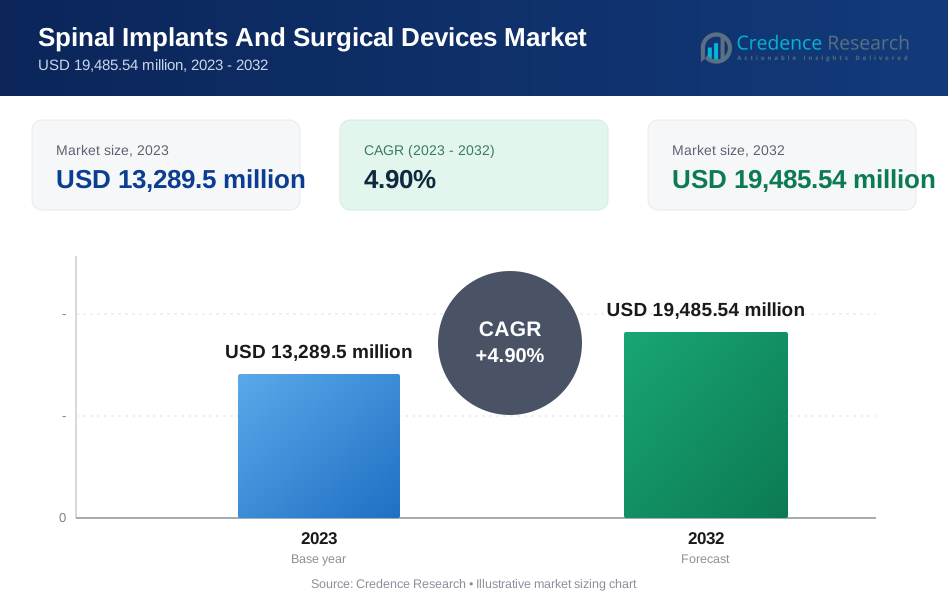
| Spinal Implants and Surgical Devices Market Size 2024 | USD 13,289.5 million |
| Spinal Implants and Surgical Devices Market, CAGR | 4.90% |
| Spinal Implants and Surgical Devices Market Size 2032 | USD 19,485.54 million |
Market Overview
The global Spinal Implants and Surgical Devices Market is projected to grow from USD 13,289.5 million in 2023 to an estimated USD 19,485.54 million by 2032, reflecting a compound annual growth rate (CAGR) of 4.90% from 2024 to 2032. This growth is driven by increasing demand for advanced spinal implant technologies, rising prevalence of spinal disorders, and an aging population.
Key drivers in this market include a rise in spinal injury cases, greater awareness of spinal care, and an increasing number of spinal surgeries performed globally. The market is also shaped by trends such as the development of biodegradable and 3D-printed implants, along with robotic-assisted surgeries that offer improved precision and outcomes. Additionally, investments in research and development by key players are enabling the introduction of innovative products to meet the growing demand for effective and less invasive spinal treatment solutions.
Geographically, North America holds the largest market share due to the region’s high incidence of spinal disorders, robust healthcare infrastructure, and substantial investments in healthcare technologies. Europe and the Asia-Pacific region also show promising growth potential, driven by increasing healthcare expenditures and improved accessibility to advanced spinal treatments. Key players in the global Spinal Implants and Surgical Devices Market include Medtronic PLC, Johnson & Johnson, Stryker Corporation, Zimmer Biomet Holdings, Inc., and Globus Medical, Inc., who are continuously enhancing their product portfolios to maintain competitive positions.
Market Drivers
Increasing Incidence of Spinal Disorders and Degenerative Diseases
Spinal disorders, including degenerative disc disease, herniated discs, spinal stenosis, and scoliosis, are becoming more prevalent due to lifestyle changes, an aging population, and increased awareness about spinal health. For instance, the prevalence of conditions such as degenerative disc disease and herniated discs has significantly risen, particularly among older adults, who are more susceptible to these ailments due to age-related degeneration of spinal structures. This trend necessitates surgical interventions, often involving spinal implants, to alleviate pain and restore function.As people age, they face a higher risk of degenerative spine conditions, often necessitating surgical intervention and the use of spinal implants. This rise in spinal issues is pushing demand for effective and reliable solutions, thus boosting the spinal implants and surgical devices market. Additionally, sedentary lifestyles contribute to obesity and poor posture, leading to an increase in back pain and other spinal disorders even among younger individuals. These factors are driving demand for both surgical and non-surgical treatment options, leading to advancements in spinal implants designed to improve patient outcomes. Moreover, as the population ages, the rate of osteoporosis-related fractures increases, prompting more spinal surgeries and further expanding the market for implants and devices specifically developed for such conditions.
Advancements in Spinal Implant Technology and Surgical Techniques
Innovations in spinal implant technology and minimally invasive surgical techniques are significant contributors to market growth. For instance, advancements in spinal implant technology have led to the development of innovative materials like titanium and polyetheretherketone (PEEK), which enhance the strength and biocompatibility of implants. These materials not only improve patient outcomes by reducing complication rates but also facilitate faster recovery times after surgery. Furthermore, minimally invasive techniques have gained popularity as they offer advantages such as reduced trauma, shorter hospital stays, and quicker recovery periods. For instance, technologies like robotic-assisted surgery and 3D navigation systems are being integrated into spinal procedures, providing surgeons with improved precision and control. Such innovations are driving demand for next-generation spinal implants that align with these advanced surgical techniques. Consequently, the market is benefiting from the integration of digital health technologies, such as AI-driven diagnostics and patient-specific implants, which are enhancing the efficiency and effectiveness of spinal surgeries.
Growing Adoption of Biodegradable and 3D-Printed Implants
The spinal implants market is experiencing increased adoption of biodegradable implants designed to be gradually absorbed by the body over time. This innovation not only reduces the burden on healthcare systems but also minimizes patient discomfort and complications associated with permanent implants. For instance, biodegradable implants are particularly beneficial in pediatric cases where ongoing bone growth necessitates future adjustments. In parallel, 3D printing technology is transforming the production of spinal implants. Customizable, patient-specific implants are becoming more accessible due to 3D printing, which allows for precise modeling based on individual anatomical needs. For instance, this technology reduces the chances of implant rejection, enhances fit, and optimizes functionality. Many leading companies are investing heavily in R&D for 3D-printed spinal implants, which are anticipated to play a significant role in market expansion. The capability of 3D printing to create complex, biocompatible structures at a lower cost is further encouraging healthcare providers to adopt these implants, driving sustained growth in the spinal implants and surgical devices market.
Rising Healthcare Expenditure and Investments in Emerging Markets
Increased healthcare spending in both developed and emerging markets is a major driver for the spinal implants and surgical devices market. As governments and private healthcare providers invest in modernizing healthcare infrastructure, particularly in emerging markets like Asia-Pacific, Latin America, and the Middle East, access to advanced spinal care is expanding. This investment supports the establishment of specialized spinal surgery centers, equipping them with state-of-the-art spinal implants and surgical devices to meet the rising demand. Additionally, favorable government policies and regulatory frameworks are encouraging multinational companies to expand their operations in these regions. Growing middle-class populations in countries such as China, India, and Brazil are leading to a higher demand for quality healthcare services, including spinal surgeries. Increased healthcare spending, combined with greater awareness of spinal health and more affordable treatment options, is driving market growth in these regions. As a result, emerging markets are not only contributing to global revenue but are also expected to become key growth engines for the spinal implants and surgical devices market over the next decade.
Market Trends
Increased Focus on Minimally Invasive Spine Surgery (MISS) and Technological Integration
The trend towards minimally invasive spine surgery (MISS) is gaining momentum due to its numerous advantages over traditional open surgeries. For instance, procedures utilizing MISS techniques typically involve smaller incisions, which significantly reduce trauma to surrounding tissues and muscles. This approach not only leads to quicker recovery times but also minimizes post-operative pain and hospital stays. As healthcare providers increasingly recognize these benefits, there is a notable shift in investment towards advanced technologies that facilitate MISS, such as endoscopic spine surgery and percutaneous techniques. Moreover, the integration of advanced technologies like robotic-assisted surgery, 3D navigation systems, and augmented reality is enhancing surgical precision. These innovations enable surgeons to navigate complex spinal anatomy more effectively, thereby improving the accuracy of implant placement and reducing the potential for human error. As these technologies become more accessible and economically viable, healthcare facilities around the globe are adopting them at an accelerated pace.
Rising Adoption of Customizable and Biocompatible Implant Materials
Another significant trend in the spinal implants and surgical devices market is the increasing adoption of customizable implants made from advanced biocompatible materials. For instance, advancements in 3D printing technology allow for the creation of patient-specific implants tailored to individual spinal anatomies. This customization leads to better fitting implants that align closely with patients' unique needs, thus reducing complications and enhancing long-term outcomes. The use of biocompatible materials such as titanium, polyetheretherketone (PEEK), and biodegradable polymers is also on the rise. These materials are designed to integrate seamlessly with the body, minimizing immune responses while promoting better fusion. Notably, biodegradable implants offer a unique advantage by dissolving naturally over time, which eliminates the necessity for a second surgical procedure to remove them. This focus on material innovation not only improves patient outcomes but also enhances overall satisfaction with spinal surgeries.
Market Restraints and Challenges
High Costs and Limited Reimbursement Policies
One of the primary challenges in the spinal implants and surgical devices market is the high cost associated with advanced spinal implants and surgical procedures. State-of-the-art implants and minimally invasive surgical technologies, such as robotic-assisted devices and 3D navigation systems, require significant investment, which can result in high treatment costs for patients. This financial barrier makes it difficult for many individuals to access these advanced spinal treatments, particularly in regions with limited healthcare funding and resources. Additionally, these procedures often necessitate specialized surgical skills and training, which can further drive up the cost. Compounding the issue is the inconsistent reimbursement landscape. In many countries, insurance coverage for spinal surgeries is limited, and reimbursement policies for advanced spinal implants and minimally invasive procedures can be complex and vary significantly. In regions where government support and insurance policies are less comprehensive, patients may face substantial out-of-pocket expenses, which can limit access to these treatments. As a result, high costs and restrictive reimbursement policies remain significant barriers to market growth, especially in emerging markets where healthcare budgets and insurance coverage are limited.
Stringent Regulatory Requirements and Lengthy Approval Processes
The spinal implants and surgical devices market is also hindered by stringent regulatory requirements and lengthy approval processes. Spinal implants are categorized as high-risk medical devices, which means they are subject to rigorous testing and approval by regulatory bodies such as the U.S. Food and Drug Administration (FDA) and the European Medicines Agency (EMA). These stringent requirements are essential for ensuring patient safety; however, they can lead to prolonged product development timelines and increased costs for manufacturers. Furthermore, the regulatory landscape can vary greatly between regions, creating additional challenges for companies seeking to expand globally. For instance, while some countries have streamlined processes, others may have more complex regulatory frameworks that require multiple rounds of testing and documentation. These obstacles can delay the introduction of new products to the market, limit innovation, and impose substantial compliance costs on manufacturers. As a result, navigating the regulatory landscape remains a significant challenge for companies operating in the spinal implants and surgical devices market.
Market Segmentation Analysis
By Product Type
The global spinal implants market includes a variety of product segments, with spinal fusion devices representing one of the largest due to their role in stabilizing the spine and promoting vertebral fusion for conditions like degenerative disc disease and scoliosis. Innovations such as interbody cages and pedicle screws have enhanced fusion outcomes and are widely used, especially in regions with high spinal disorder prevalence. Spinal biologics, including growth factors, bone graft substitutes, and stem cell products, are increasingly utilized to facilitate fusion and bone healing, benefiting from advancements in regenerative medicine and the demand for less invasive treatments. Vertebral compression fracture treatment devices, such as kyphoplasty and vertebroplasty systems, address the rising incidence of fractures related to osteoporosis, particularly in aging populations, by stabilizing the spine and reducing pain. Non-fusion devices, like dynamic stabilization systems and artificial discs, are gaining traction as they allow for spinal mobility while correcting alignment and reducing pain, aligning with the trend toward minimally invasive procedures. Additionally, spinal bone growth stimulators, which use electrical stimulation to enhance post-surgical bone healing, are in demand due to the growing number of fusion surgeries and the need for improved recovery solutions.
By Technology
By technology, the spinal implants and surgical devices market includes key segments such as fixation technologies, vertebral compression fracture treatment, and motion preservation technologies. Fixation technologies, including screws, rods, and plates, play a crucial role in stabilizing the spine during fusion procedures, supporting proper alignment and reducing post-surgical complications. As spinal fusion remains a primary treatment for spinal instability, fixation devices hold a significant market share. Vertebral compression fracture treatment technologies, such as balloon kyphoplasty and vertebroplasty, focus on stabilizing fractured vertebrae and relieving pain; these are increasingly adopted due to the rising prevalence of osteoporosis and related fractures, especially in aging populations. Meanwhile, motion preservation technologies, such as artificial discs and dynamic stabilization devices, are gaining popularity as they provide alternatives to traditional fusion by allowing spinal mobility and flexibility, appealing to patients seeking less invasive solutions. The trend towards minimally invasive techniques and the demand for solutions that preserve natural movement are driving the adoption of these advanced technologies.
Segments
Based on Product Type
- Spinal fusion devices
- spinal biologics
- vertebral compression fracture treatment devices
- non-fusion devices
- spinal bone growth stimulators
Based on Technology
- Fixation technologies
- vertebral compression fracture treatment
- motion preservation technologies
Based on Surgery type
- Open surgery
- MIS Gravel
Based on Procedure type
- Discectomy
- laminectomy
- foraminotomy
- corpectomy
- facetectomy
Based on Region
- North America
- US
- Canada
- Mexico
- Europe
- Germany
- France
- UK
- Italy
- Spain
- Rest of Europe
- Asia Pacific
- China
- Japan
- India
- South Korea
- South-east Asia
- Rest of Asia Pacific
- Latin America
- Brazil
- Argentina
- Rest of Latin America
- Middle East & Africa
- GCC Countries
- South Africa
Regional Analysis
North America (40%):
North America holds the largest share of the global spinal implants and surgical devices market, accounting for approximately 40% of the market. This dominance can be attributed to several factors, including the high prevalence of spinal disorders, a robust healthcare system, and a well-established network of hospitals and surgical centers. Additionally, the region benefits from significant investments in advanced medical technologies, making it a hub for innovations in spinal implants and minimally invasive surgical procedures. The United States, in particular, drives market growth within North America due to favorable reimbursement policies, increased awareness of spinal health, and a growing aging population.
Europe (25%):
Europe represents the second-largest market, holding roughly 25% of the global share. The region’s growth is fueled by a high demand for advanced spinal surgeries and rising healthcare expenditure across countries such as Germany, France, and the United Kingdom. Additionally, Europe has a well-developed healthcare infrastructure and a strong focus on research and development in spinal technologies. As the region sees an aging population and a growing incidence of osteoporosis-related fractures, the demand for spinal implants and surgical devices is expected to increase. Moreover, favorable regulatory frameworks and initiatives supporting innovative healthcare solutions contribute to the steady expansion of the European market.
Key players
- Medtronic
- DePuy Synthes Companies
- Stryker Corporation
- NuVasive Inc.
- Zimmer Biomet Holdings, Inc.
- Globus Medical, Inc.
- Alphatec Holdings, Inc.
- Braun Melsungen AG
- Orthofix Medical Inc.
- RTI Surgical Holdings, Inc.
- K2M Group Holdings, Inc.
- Aesculap Implant Systems, LLC
- Paradigm Spine, LLC
- Life Spine, Inc.
- Spinal Elements, Inc.
- AxioMed LLC
- Joimax GmbH
- Spine Wave, Inc.
- Interventional Spine, Inc.
- Amedica Corporation
Competitive Analysis
The global spinal implants and surgical devices market is highly competitive, with key players continually striving to enhance their product portfolios and expand their market presence. Leading companies like Medtronic, DePuy Synthes, and Stryker Corporation dominate the market with extensive product lines and strong distribution networks. These companies invest significantly in research and development to introduce innovative, minimally invasive solutions and advanced technologies, such as robotic-assisted systems and 3D printing. Additionally, emerging players such as NuVasive Inc., Globus Medical, and Alphatec Holdings focus on niche segments and target specific spinal conditions, gaining a competitive edge through specialized products and patient-specific solutions. Mergers, acquisitions, and strategic partnerships are common in this market, enabling companies to expand their capabilities and improve product offerings. As a result, competitive dynamics in this market are driven by continuous innovation, a focus on patient outcomes, and the adoption of advanced technologies.
Recent Developments
- In May 2024, Medtronic reported a strong finish to fiscal year 2024, highlighting broadInbased growth across its Neuroscience Portfolio, which includes Cranial & Spinal Technologies. The company is entering new product cycles in highIngrowth markets, focusing on innovations that leverage AI technology to enhance patient outcomes and operational efficiency.
- In March 2024, Stryker announced the acquisition of a leading spinal device manufacturer to expand its portfolio in the spinal therapeutics market. This acquisition aligns with Stryker's strategy to enhance its offerings in minimally invasive spine surgery and improve patient care through advanced technologies .
- In January 2024, NuVasive introduced a new spinal fusion system that utilizes advanced imaging technology for better surgical precision. This system aims to reduce complications and improve recovery times for patients undergoing spinal surgeries.
- In February 2024, Zimmer Biomet launched a new range of customizable spinal implants made from biocompatible materials. These implants are designed to meet the specific anatomical needs of patients, reducing the risk of complications and enhancing longInterm outcomes.
- In April 2024, Globus Medical announced the expansion of its spinal product line with the introduction of a new roboticInassisted surgical system. This system is designed to improve accuracy in spinal surgeries and is expected to enhance patient recovery experiences.
- In January 2024, K2M unveiled a new platform of spinal devices that integrate advanced imaging technologies to facilitate minimally invasive spine surgeries. This launch is part of K2M's ongoing commitment to innovation in spinal care.
- In February 2024, Aesculap announced the introduction of a nextIngeneration spinal implant designed for enhanced stability and reduced recovery time postInsurgery. The implant features biocompatible materials that promote better integration with human tissue.
- In March 2024, Paradigm Spine launched an innovative interbody fusion device aimed at improving surgical outcomes in patients with degenerative disc disease. This device incorporates advanced materials that enhance fusion rates.
- In April 2024, Life Spine introduced a new line of expandable interbody devices designed for minimally invasive procedures. These devices aim to provide surgeons with greater flexibility during surgery while ensuring optimal patient outcome .
- In January 2024, AxioMed received FDA clearance for its innovative viscoelastic spinal disc replacement device, which aims to provide an alternative treatment option for patients suffering from chronic back pain due to disc degeneration.
- In February 2024, Joimax launched a new endoscopic system specifically designed for spinal surgeries. This system enhances visualization and access during minimally invasive procedures, improving overall surgical outcomes.
- In March 2024, Spine Wave introduced a novel expandable cage technology aimed at improving stability and fusion rates in lumbar spine surgeries. This innovation reflects the company's commitment to advancing spinal care solutions.
- In April 2024, Interventional Spine announced the launch of a new nonInfusion technology aimed at treating degenerative disc disease without traditional fusion methods. This approach is expected to reduce recovery times and improve patient satisfaction.
Market Concentration and Characteristics
The global Spinal Implants and Surgical Devices Market is moderately concentrated, with a mix of well-established players and emerging companies that focus on various niches within the market. Large corporations such as Medtronic, DePuy Synthes, and Stryker Corporation hold significant market shares due to their broad product portfolios, extensive research and development efforts, and established distribution networks. These leading players dominate the market by continually innovating and introducing advanced technologies, including minimally invasive devices, robotic-assisted systems, and biocompatible materials. Smaller players and niche companies like NuVasive, Globus Medical, and Joimax GmbH also contribute to the competitive landscape by focusing on specialized products for specific spinal disorders and leveraging unique technological advancements, such as patient-specific and 3D-printed implants. The market is characterized by rapid technological evolution, a focus on enhancing patient outcomes, and a high degree of regulatory oversight due to the critical nature of spinal procedures and implants.
Report Coverage
The research report offers an in-depth analysis based on Product Type, Technology, Surgery type, Procedure type and Region. It details leading market players, providing an overview of their business, product offerings, investments, revenue streams, and key applications. Additionally, the report includes insights into the competitive environment, SWOT analysis, current market trends, as well as the primary drivers and constraints. Furthermore, it discusses various factors that have driven market expansion in recent years. The report also explores market dynamics, regulatory scenarios, and technological advancements that are shaping the industry. It assesses the impact of external factors and global economic changes on market growth. Lastly, it provides strategic recommendations for new entrants and established companies to navigate the complexities of the market.
Future Outlook
- The market is expected to see increased adoption of minimally invasive spinal surgery techniques, driven by patient demand for shorter recovery times, less pain, and reduced hospital stays.
- 3D printing is likely to play a pivotal role in producing patient-specific spinal implants, offering better customization, improved fit, and lower chances of rejection.
- Robotic-assisted technology will continue to enhance surgical precision, supporting the adoption of complex spinal surgeries with improved outcomes and reduced risks.
- The demand for biocompatible and biodegradable materials will grow, as these implants offer fewer complications, integrate well with the body, and eliminate the need for removal surgeries.
- Growth in emerging regions will be driven by rising healthcare expenditures, improved access to advanced treatments, and expanding awareness of spinal health.
- As patients seek solutions that maintain spinal mobility, the market for motion-preserving devices such as artificial discs and dynamic stabilization systems will expand.
- AI-based tools will increasingly assist in surgical planning and diagnostics, improving accuracy, patient outcomes, and decision-making for complex spinal procedures.
- Outpatient settings will become more popular for spinal procedures due to advancements in minimally invasive techniques, reducing healthcare costs and enhancing patient convenience.
- The market will likely explore regenerative treatments, such as stem cell therapies and spinal biologics, to promote natural healing and complement traditional implants.
- Stringent regulatory standards will continue to shape the market, with companies investing in compliance to ensure safety and effectiveness, thus enhancing trust and adoption.
Request a Free Sample
Fill in your details and we'll send you a free sample report.
- Sample data tables & charts
- Research methodology
Need a Custom Version of This Report?
Tailor the scope, geography, or segments to your exact requirements.
- Custom geography or segment scope
- Direct access to our analyst team
Frequently Asked Questions
What is the size of Spinal Implants And Surgical Devices Market?
What are the primary drivers of growth in the spinal implants market?
How is technology shaping advancements in spinal implants and surgeries?
Which regions are expected to lead the market growth?
Table of Content
Chapter 1. Report Introduction
- 1.1 Report Description & Purpose
- 1.1.1 Report Title & Market Definition
- 1.1.2 Unique Selling Propositions (USP) & Key Differentiators
- 1.1.3 Value Proposition for Stakeholders
- 1.2 Research Objectives
- 1.2.1 Market Sizing Objectives (Volume & Revenue)
- 1.2.2 Segmentation Objectives
- 1.2.3 Competitive Intelligence Objectives
- 1.2.4 Forecast & Scenario Objectives
- 1.3 Report Scope
- 1.3.1 Spinal Implants And Surgical Devices Scope – Types & Subtypes Covered
- 1.3.2 Geographic Scope – Regions & Countries Covered
- 1.3.3 Historical Period, Base Year & Forecast Period (2023; forecast to 2032)
- 1.3.4 Inclusions & Exclusions
- 1.4 HS Code & Classification Framework
- 1.5 Currency, Units & Pricing Basis
- 1.6 Target Stakeholders
- 1.7 Limitations & Assumptions
Chapter 2. Executive Summary
- 2.1 Global Spinal Implants And Surgical Devices Market Snapshot
- 2.1.1 Market Size – Historical (2023) & Forecast (2023-2032) (2023: USD 13,289.5 million → 2032: USD 19,485.54 million)
- 2.1.2 Volume & Revenue – Global Totals
- 2.1.3 Key Market Highlights – Top Five Facts
- 2.2 Spinal Implants And Surgical Devices Market Segmentation Snapshot
- 2.2.1 Market Split by Region – 2023 vs. 2032
- 2.3 Competitive Snapshot
- 2.3.1 Top 10 Players by Revenue Share – 2023
- 2.3.2 Top 10 Players by Volume Share – 2023
- 2.3.3 Recent Strategic Developments (18-Month Summary)
- 2.4 Key Investment Highlights & Strategic Conclusions
Chapter 3. Spinal Implants And Surgical Devices Market Dynamics & Industry Analysis
- 3.1 Market Overview & Context
- 3.1.1 Spinal Implants And Surgical Devices Market Position in the Broader Automotive Value Chain
- 3.1.2 OEM vs. Replacement Market Dynamics
- 3.1.3 Market Maturity & Development Stage by Region
- 3.2 Spinal Implants And Surgical Devices Market Drivers
- 3.3 Spinal Implants And Surgical Devices Market Restraints & Challenges
- 3.4 Spinal Implants And Surgical Devices Market Opportunities
- 3.5 Porter's Five Forces Analysis
- 3.5.1 Threat of New Entrants
- 3.5.2 Bargaining Power of Suppliers
- 3.5.3 Bargaining Power of Buyers
- 3.5.4 Threat of Substitutes
- 3.5.5 Competitive Rivalry – Intensity Assessment
- 3.6 Spinal Implants And Surgical Devices Value Chain Analysis
- 3.6.1 Upstream – Raw Material/Input Suppliers
- 3.6.1.1 Raw Material/Input 1
- 3.6.1.2 Raw Material/Input 2
- 3.6.1.3 Raw Material/Input 3
- 3.6.2 Midstream – Production/Manufacturing/Service Delivery
- 3.6.2.1 Production/Process Overview
- 3.6.2.2 Key Facility Locations & Capacity by Manufacturer
- 3.6.3 Downstream – Distribution & End Consumer
- 3.6.3.1 Primary Channel – B2B/OEM
- 3.6.3.2 Secondary Channels – Dealer, Retail, Online, Direct
- 3.6.4 Value Chain Profitability Analysis
- 3.6.1 Upstream – Raw Material/Input Suppliers
- 3.7 PESTEL Analysis
- 3.7.1 Political Factors
- 3.7.2 Economic Factors
- 3.7.3 Social Factors
- 3.7.4 Technological Factors
- 3.7.5 Environmental Factors
- 3.7.6 Legal Factors
- 3.8 Spinal Implants And Surgical Devices Supply Chain Analysis
- 3.8.1 Raw Material/Input Supply Risk Assessment
- 3.8.2 Manufacturing Concentration Risk (Geographic Exposure)
- 3.8.3 Trade Disruption Impact Analysis
- 3.9 Regulatory & Policy Landscape
Note: The regulatory and policy landscape section covers regulations based on their applicability to the market, Spinal Implants And Surgical Devices category, geography, and scope of the study. Only regulatory frameworks with a material impact on operations, compliance, trade, sustainability, or market access are analyzed in detail.
Chapter 4. Key Investment Pockets & Opportunity Analysis
- 4.1 Spinal Implants And Surgical Devices Market Attractiveness Analysis
- 4.1.1 By Region – Investment Attractiveness Matrix (Volume × CAGR)
- 4.2 Absolute Revenue Growth Opportunity
- 4.2.1 By Region – Absolute USD Growth Through 2032
- 4.3 Incremental Volume Opportunity
- 4.3.1 By Region – Incremental Volume Through 2032
- 4.3.2 Segment – Incremental Volume
- 4.4 Emerging Submarket Opportunity Deep Dive (Subject to Applicability)
- 4.5 Emerging Market Opportunity Scorecards
- 4.5.1 United States
- 4.5.2 Europe
- 4.5.3 Asia
- 4.5.4 Middle East & Africa
Note: Emerging Market Opportunity Scorecards will be included based on relevance and strategic importance. Regions listed are indicative and may vary depending on data availability and market dynamics.
Chapter 5. Spinal Implants And Surgical Devices Import-Export Analysis & Trade Flows
- 5.1 Global Trade Overview
- 5.1.1 Global Export Value by Country (2023)
- 5.1.2 Global Export Volume by Country (2023)
- 5.1.3 Global Import Value by Country (2023)
- 5.1.4 Global Import Volume by Country (2023)
- 5.1.5 Net Trade Balance by Country (2023)
- 5.2 Export Analysis – Segment
- 5.2.1 Type 1 (HS Code)
- 5.2.2 Type 2 (HS Code)
- 5.2.3 Type 3 (HS Code)
- 5.2.4 Type 4 (HS Code)
- 5.2.5 Type 5 (HS Code)
- 5.3 Import Analysis – Segment
- 5.3.1 Type 1 (HS Code)
- 5.3.2 Type 2 (HS Code)
- 5.3.3 Type 3 (HS Code)
- 5.3.4 Type 4 (HS Code)
- 5.3.5 Type 5 (HS Code)
- 5.4 Average Unit Trade Prices
- 5.4.1 Average Export Price – Segment & Country
- 5.4.2 Average Import Price – Segment & Source Country
- 5.4.3 Price Trends (2023)
- 5.5 Key Trade Route Analysis
- 5.5.1 Trade Route 1
- 5.5.2 Trade Route 2
- 5.5.3 Trade Route 3
- 5.5.4 Trade Route 4
- 5.5.5 Trade Route 5
- 5.6 Trade Policy Impact Assessment
- 5.6.1 US Anti-Dumping & Section 301 Tariffs
- 5.6.2 EU Customs Union Impact
- 5.6.3 Major Free Trade Agreements
- 5.6.4 USMCA Rules of Origin
Note: Trade policy analysis will be included only where relevant to the Spinal Implants And Surgical Devices market.
Chapter 6. Competitive Landscape & Company Benchmarking
- 6.1 Spinal Implants And Surgical Devices Market Concentration & Structure
- 6.1.1 Herfindahl-Hirschman Index (HHI) – vs. 2023
- 6.1.2 Tier 1, Tier 2 & Tier 3 Market Structure
- 6.1.3 Global, Regional & Local Player Dynamics
- 6.2 Spinal Implants And Surgical Devices Market Share Analysis – 2023
- 6.2.1 Global Revenue Share by Company
- 6.2.2 Global Volume Share by Company
- 6.2.3 Regional Revenue Share
- 6.2.4 Market Share Evolution ( vs. 2023)
- 6.2.5 OEM Segment Share by Company
- 6.2.6 Replacement Segment Share by Company
- 6.3 Production/Delivery Capacity & Facility Analysis
- 6.3.1 Global Installed Capacity
- 6.3.2 Capacity Utilization Rates
- 6.3.3 Production/Output Volume
- 6.3.4 Facility Locations & Capacity Map
- 6.3.5 Planned Capacity Additions
- 6.4 Spinal Implants And Surgical Devices Competitive Benchmarking Matrix
- 6.4.1 Revenue, Volume, CAGR & Profitability Comparison
- 6.4.2 Channel Revenue Mix
- 6.4.3 Geographic Revenue Exposure
- 6.4.4 R&D Intensity
- 6.4.5 Sustainability Maturity
- 6.5 Strategic Developments in Spinal Implants And Surgical Devices (Last 24 Months)
- 6.5.1 Mergers, Acquisitions & Divestments
- 6.5.2 New Spinal Implants And Surgical Devices Launches
- 6.5.3 Facility Expansions
- 6.5.4 Strategic Alliances, Joint Ventures & Partnerships
- 6.5.5 Distribution Expansion & Market Entry
- 6.5.6 Sustainability & ESG Initiatives
- 6.6 Competitive Strategy Mapping
- 6.6.1 Leader, Challenger, Follower & Niche Classification
- 6.6.2 Pricing Strategy Comparison
- 6.6.3 Channel Strategy Matrix
Note: Strategic developments are included based on their materiality and the availability of reliable information.
Chapter 7. Global Spinal Implants And Surgical Devices Market – By Distribution Channel
- 7.1 Segment Overview
- 7.1.1 Volume & Revenue Split by Channel (2023 & 2032)
- 7.1.2 Channel Mix Evolution (2023-2032)
Chapter 8. Regional Market Analysis – Global Overview
- 8.1 Global Regional Overview
- 8.1.1 Regional Volume Share
- 8.1.2 Regional Revenue Share
- 8.1.3 Regional Volume by Region
- 8.1.4 Regional Revenue by Region
- 8.1.5 Regional Forecast Through 2032
- 8.2 Cross-Regional Segment Analysis
- 8.2.1 By Distribution Channel
- 8.2.2 By Brand/Price Tier
Chapter 9. North America Spinal Implants And Surgical Devices Market
- 9.1 United States
- 9.2 Canada
- 9.3 Mexico
Chapter 10. Europe Spinal Implants And Surgical Devices Market
- 10.1 Germany
- 10.2 France
- 10.3 Italy
- 10.4 United Kingdom
- 10.5 Spain
- 10.6 Poland
- 10.7 Russia
- 10.8 Netherlands
- 10.9 Belgium
- 10.10 Sweden
- 10.11 Denmark
- 10.12 Norway
- 10.13 Rest of Europe
Chapter 11. Asia Pacific Spinal Implants And Surgical Devices Market
- 11.1 China
- 11.2 India
- 11.3 Japan
- 11.4 South Korea
- 11.5 Thailand
- 11.6 Indonesia
- 11.7 Vietnam
- 11.8 Malaysia
- 11.9 Australia
- 11.10 Rest of Asia Pacific
Chapter 12. Latin America Spinal Implants And Surgical Devices Market
- 12.1 Brazil
- 12.2 Argentina
- 12.3 Colombia
- 12.4 Chile
- 12.5 Rest of Latin America
Chapter 13. Middle East Spinal Implants And Surgical Devices Market
- 13.1 Saudi Arabia
- 13.2 United Arab Emirates
- 13.3 Turkey
- 13.4 Israel
- 13.5 Iran
- 13.6 Rest of the Middle East
Chapter 14. Africa Spinal Implants And Surgical Devices Market
- 14.1 South Africa
- 14.2 Egypt
- 14.3 Nigeria
- 14.4 Morocco
- 14.5 Rest of Africa
Chapter 15. Spinal Implants And Surgical Devices Company Profiles
- 15.1 [Company 01]
- 15.1.1 Company Overview
- 15.1.2 Key Management Personnel
- 15.1.3 Products & Services Portfolio
- 15.1.4 Financial Performance
- 15.1.5 Key Market Focus & Geographic Presence
- 15.1.6 Recent Developments & Strategic Initiatives
Note: The company profile list is preliminary and may change based on research findings, market developments, data availability, and client requirements.
Chapter 16. Appendices
- Appendix A – List of Abbreviations & Acronyms
- Appendix B – Industry Classification Code Reference – Full Series
- Appendix C – Production & Capacity Data Tables
- Appendix D – End-Use & Demand Base Tables
- Appendix E – Consumption & Replacement Rate Assumptions
- Appendix F – ASP Reference Tables
- Appendix G – Manufacturing & Facility Database
- Appendix H – Import-Export Data Tables
- Appendix I – Regulatory Summary Tables
- Appendix J – Primary Research Participant List (Anonymized)
- Appendix K – Primary Research Questionnaire Framework
- Appendix L – Data Sources & Bibliography
- Appendix M – Market Size Divergence & Source Comparison
Chapter 17. Research Methodology
- 17.1 Research Framework & Philosophy
- 17.2 Secondary Research – Sources, Hierarchy & Data Extraction
- 17.3 Data Modeling – Bottom-Up & Top-Down Market Sizing
- 17.4 Primary Research – Stakeholder Framework, LOI & Sample Sizes
- 17.5 Forecast Methodology – Regression, Scenario & Sensitivity Analysis
- 17.6 Quality Control – Four-Layer Validation Framework
- 17.7 Limitations & Standard Assumptions
- 17.8 Disclaimer
