
| REPORT ATTRIBUTE | DETAILS |
|---|---|
| Historical Period | 2019-2022 |
| Base Year | 2023 |
| Forecast Period | 2024-2032 |
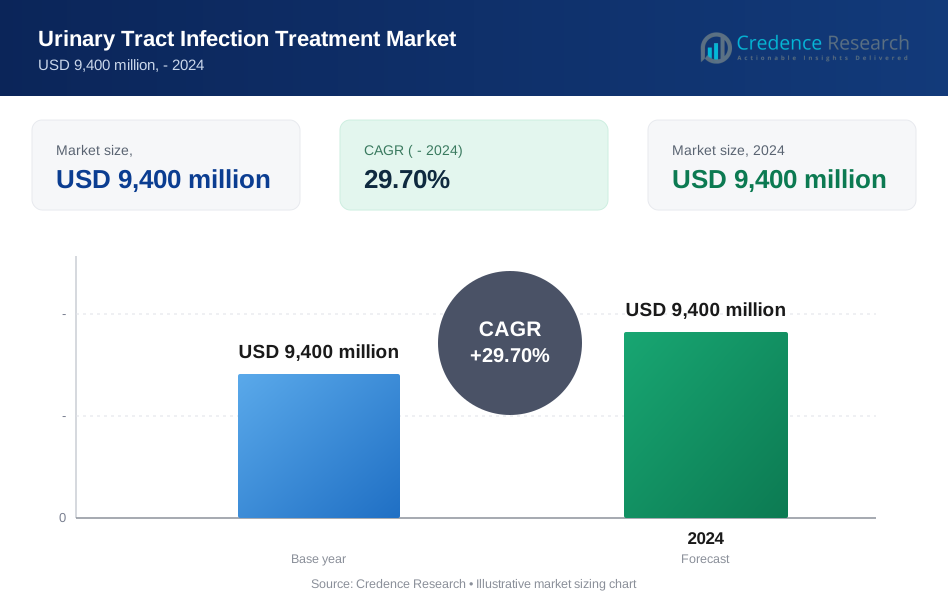
| Urinary Tract Infection (UTI) Treatment Market Size 2024 | USD 9,400 million |
| Urinary Tract Infection (UTI) Treatment Market, CAGR | 29.70% |
| Urinary Tract Infection (UTI) Treatment Market Size 2032 | USD 75,274.46 million |
Market Overview:
The Urinary Tract Infection (UTI) Treatment Market is expected to grow from USD 9,400 million in 2024 to an impressive USD 75,274.46 million by 2032, reflecting a strong CAGR of 29.70% during the forecast period. This significant growth is attributed to the rising prevalence of urinary tract infections globally, coupled with advancements in diagnostics and treatment. Factors such as increasing awareness of UTIs, particularly among women, the aging population, and a rise in hospital-acquired infections have led to greater demand for effective treatments. Additionally, new drug development, including innovative antibiotic therapies and non-antibiotic alternatives, are supporting market expansion. Key market drivers include the increasing incidence of antibiotic-resistant UTIs, which is pushing pharmaceutical companies to focus on the development of advanced therapies. For instance, the rise of multidrug-resistant bacteria, such as E. coli, which causes the majority of UTIs, has intensified the need for novel treatment approaches. Moreover, growing healthcare expenditure, rising government initiatives for infection control, and improvements in diagnostic technologies, such as rapid point-of-care tests, are accelerating the adoption of more effective UTI treatments. Increasing awareness campaigns around hygiene and sexual health are also contributing to the market's growth, particularly in emerging markets. Regional Analysis shows that North America holds the largest market share, driven by the region's high prevalence of UTIs, advanced healthcare infrastructure, and extensive R&D activities. The United States is the leading market due to robust pharmaceutical innovation and access to high-quality healthcare services. Europe follows closely, with countries like Germany and France contributing to market growth due to their strong focus on infection control and antibiotic stewardship programs. The Asia-Pacific region is projected to witness the fastest growth, owing to increasing healthcare access, rising awareness of UTI-related complications, and a growing patient population in countries like China and India.Market Drivers:
Rising Prevalence of Antibiotic-Resistant Infections:
A key driver of the Urinary Tract Infection (UTI) Treatment Market is the increasing prevalence of antibiotic-resistant infections. According to the Centers for Disease Control and Prevention (CDC), antibiotic-resistant bacteria, particularly strains of E. coli, are responsible for a growing number of complicated UTIs. These resistant infections pose significant treatment challenges and have led to the development of new therapeutic strategies, including advanced antibiotics and combination therapies. As a result, pharmaceutical companies are investing heavily in research to combat antibiotic resistance, which has become a global health concern.Advancements in Diagnostic Technologies:
Technological advancements in diagnostics are also driving market growth. Rapid and accurate detection of UTIs is critical to ensuring timely treatment and reducing complications. For instance, the National Institutes of Health (NIH) highlights the growing use of point-of-care diagnostic tools that allow for faster UTI detection in outpatient and emergency care settings. These innovations help clinicians prescribe more targeted treatments, reducing the misuse of broad-spectrum antibiotics and minimizing the risk of resistance. Additionally, advancements in urine culture tests and molecular diagnostics are improving the accuracy of UTI diagnosis, which is critical for tailoring effective treatment plans.Increased Healthcare Awareness and Hygiene Practices:
The growing emphasis on healthcare awareness and hygiene is another key factor contributing to the market’s expansion. Public health campaigns, particularly aimed at women, who are more susceptible to UTIs, have raised awareness about the importance of proper hygiene and early treatment. For example, initiatives by organizations like the World Health Organization (WHO) and local governments promote education on UTI prevention, including the significance of proper hydration and hygiene practices. This increased awareness is leading to higher rates of early diagnosis and treatment, preventing complications and promoting better patient outcomes.Rising Geriatric Population and Comorbidities:
The global aging population is another important market driver. Older adults are more prone to UTIs due to weakened immune systems and underlying conditions like diabetes and kidney problems. According to the World Health Organization (WHO), the number of people aged 60 years and older is expected to double by 2050, which will lead to a higher incidence of UTIs. This growing demographic, coupled with the increased prevalence of chronic conditions, drives demand for more effective and accessible treatment options for UTIs.Market Trends:
Development of Novel Antibiotic Alternatives:
One of the significant trends in the Urinary Tract Infection (UTI) Treatment Market is the increasing development of non-antibiotic therapies. With rising antibiotic resistance, there is a growing interest in alternative treatments. Companies and researchers are focusing on developing bacteriophages, vaccines, and probiotics that can either prevent or treat UTIs without relying on antibiotics. For instance, research funded by the National Institutes of Health (NIH) is exploring bacteriophage therapy, which uses viruses that specifically target bacterial cells. This innovation could provide a powerful tool in addressing recurrent and resistant UTIs.Increased Use of Telemedicine and Digital Health Tools:
The use of telemedicine and digital health platforms for diagnosing and managing UTIs is becoming increasingly prevalent. The American Telemedicine Association has reported a surge in the use of telehealth services for UTI consultations, particularly during the COVID-19 pandemic. Patients can now access healthcare professionals remotely for symptoms like frequent urination and discomfort, leading to faster diagnosis and treatment. This trend has also facilitated the use of remote urine testing kits, enabling patients to send samples from home for analysis, reducing the need for in-person visits.Rise in Probiotic-Based Preventive Measures:
The trend towards probiotic-based preventive therapies is gaining traction as a complementary or preventive treatment for UTIs. According to studies published by the American Society for Microbiology, certain strains of probiotics, particularly Lactobacillus, have shown promise in reducing the recurrence of UTIs by balancing vaginal and urinary microbiota. This has led to the commercialization of probiotic supplements and products targeted at women prone to recurrent infections, emphasizing natural and non-invasive preventive strategies.Focus on Women's Health and UTI Management
The increasing emphasis on women’s health is shaping the UTI treatment landscape, as women are disproportionately affected by these infections. Companies are launching products specifically tailored for female anatomy and hygiene needs, focusing on prevention and early treatment. Organizations like the Office on Women’s Health (U.S.) continue to raise awareness through campaigns highlighting the importance of maintaining urinary tract health. This focus on gender-specific treatment approaches is expected to continue, fostering innovation in both diagnostic and therapeutic solutions tailored to women's health.Market Challenges Analysis
Antibiotic Resistance and Limited Treatment Options
A significant restraint in the Urinary Tract Infection (UTI) Treatment Market is the growing problem of antibiotic resistance. The World Health Organization (WHO) has recognized antibiotic resistance as a global health crisis, and this is particularly evident in UTI treatment, where common pathogens such as E. coli have developed resistance to standard antibiotics like trimethoprim-sulfamethoxazole and fluoroquinolones. This limits the effectiveness of traditional treatment regimens and complicates patient outcomes, as healthcare providers must rely on less familiar or more costly antibiotics, which may not always be accessible or affordable in all regions. Additionally, the development of new antibiotics has slowed significantly, creating a bottleneck in the availability of effective treatments.Side Effects and Recurrence
The side effects of long-term antibiotic use pose another challenge. Prolonged or repeated antibiotic treatments can lead to gastrointestinal issues, allergic reactions, and, in some cases, more severe side effects like Clostridium difficile infections. Furthermore, recurrent UTIs are a major problem, especially for women, with many experiencing multiple infections per year. Despite treatment, UTIs can return, leading to increased antibiotic usage, potential side effects, and growing resistance. The lack of highly effective preventive measures and the recurrence of infections continue to restrain the market’s ability to provide long-term solutions.Lack of Awareness and Diagnostic Challenges in Low-Resource Settings
A further challenge is the lack of awareness and inadequate diagnostic infrastructure in low-resource settings. In many regions, patients may not recognize the early symptoms of UTIs, leading to delayed diagnosis and treatment. Additionally, diagnostic tools such as urine cultures and rapid testing kits are often limited in availability or prohibitively expensive in developing countries, complicating the timely detection of infections and appropriate treatment. This gap in access to both diagnostics and treatment options remains a key challenge for the global UTI treatment market.Market Segmentation Analysis:
By Type, the market is categorized into antibiotics, non-antibiotic therapies, and probiotics. Antibiotics, such as fluoroquinolones and cephalosporins, remain the most common treatment for UTIs, especially for uncomplicated cases. However, with the rise of antibiotic resistance, there is growing interest in non-antibiotic therapies, including vaccines and natural products like probiotics, aimed at preventing recurrent infections. By Technology, the market includes traditional urine culture testing and advanced rapid diagnostic technologies. Traditional methods remain widely used but are increasingly being supplemented by rapid point-of-care tests that offer faster diagnosis, enabling timely and targeted treatment. These newer technologies are particularly useful in emergency and outpatient settings, where speed and accuracy are critical. By End User, the market is segmented into hospitals, clinics, and homecare settings. Hospitals dominate the segment due to their ability to handle complex or recurrent UTI cases and manage severe complications. However, with the rise of telemedicine and at-home testing kits, the homecare segment is experiencing significant growth, offering patients greater convenience and quicker access to diagnostic tools and treatments.Segmentations:
By Drug Class:- Penicillin & Combinations
- Quinolones
- Cephalosporin
- Aminoglycoside Antibiotics
- Sulphonamides (Sulfamethoxazole, Trimethoprim)
- Azoles and Amphotericin B
- Tetracycline (Doxycycline)
- Nitrofurans (Nitrofurantoin)
- Others
- Complicated Urinary Tract Infection
- Uncomplicated Urinary Tract Infection
- Hospital Pharmacies
- Gynecology and Urology Clinics
- Drug Stores
- Retail Pharmacies
- Online Drug Stores
- North America
- Europe
- Asia & Pacific
- Latin America
- Middle East & Africa
Regional Analysis:
North America
North America holds the largest share of the Urinary Tract Infection (UTI) Treatment Market, accounting for approximately 35% of the global market. This dominance is attributed to the high prevalence of UTIs in the region, driven by factors such as an aging population, increased healthcare awareness, and a strong healthcare infrastructure. The United States leads the market, where advanced diagnostic technologies and access to high-quality treatment options have contributed to better patient outcomes. The growing concern over antibiotic resistance, particularly with common UTI-causing pathogens like E. coli, has also pushed pharmaceutical companies to invest in the development of novel treatments. Moreover, government initiatives to promote infection control and awareness campaigns, especially among women and the elderly, further support market growth in this region.Europe
Europe holds approximately 30% of the global UTI treatment market, making it the second-largest region. Countries such as Germany, France, and the United Kingdom are key contributors to this market, driven by their robust healthcare systems and strong regulatory frameworks. The European healthcare sector places a significant focus on combating antibiotic resistance, which has been a growing issue in UTI treatment. In addition, the European Medicines Agency (EMA) plays an essential role in promoting the development and approval of new UTI therapies. Public health initiatives aimed at improving hygiene and increasing awareness of UTI symptoms have further expanded the market in Europe.Asia-Pacific
The Asia-Pacific region is expected to witness the fastest growth in the UTI treatment market, with a projected market share of around 20% by 2032. This growth is largely driven by the region’s increasing population, rising healthcare awareness, and improving access to healthcare services. Countries such as China, India, and Japan are at the forefront of this expansion, as governments invest in healthcare infrastructure and promote preventive healthcare initiatives. Additionally, increasing awareness about UTI complications, particularly in women, and growing healthcare expenditure are contributing to the market’s growth. The demand for innovative and affordable treatment options is rising, especially in rural and underserved areas, further driving market expansion.Latin America and Middle East & Africa
Latin America and the Middle East & Africa together account for approximately 15% of the global UTI treatment market. In Latin America, countries like Brazil and Mexico are seeing increased demand for UTI treatment due to improving healthcare systems and growing public awareness. However, limited access to advanced diagnostics and treatments remains a challenge. In the Middle East & Africa, countries such as Saudi Arabia and the UAE are investing heavily in healthcare infrastructure, but the market still faces obstacles due to economic constraints and a lack of awareness in some regions. Nevertheless, the growing adoption of telemedicine and mobile healthcare platforms is expected to improve access to treatment over time.Key Player Analysis:
- Pfizer Inc.
- GlaxoSmithKline plc
- Cipla Inc.
- Merck & Co., Inc.
- Johnson & Johnson
- Bayer AG
- AstraZeneca plc
- Novartis AG
- Teva Pharmaceutical Industries Ltd.
- F. Hoffmann-La Roche Ltd.
Competitive Analysis:
The Urinary Tract Infection (UTI) Treatment Market is highly competitive, with a mix of global pharmaceutical giants and emerging players driving innovation. Major companies like Pfizer, GlaxoSmithKline, and Merck hold significant market shares due to their broad portfolios of antibiotics and continuous R&D investments in novel therapies to combat antibiotic resistance. These leaders are focusing on developing non-antibiotic alternatives and advanced diagnostic tools to address the growing issue of multidrug-resistant bacteria. Additionally, companies like Cipla and Teva Pharmaceuticals are contributing with cost-effective generic treatments, which are particularly vital in emerging markets. The competitive landscape is also shaped by collaborations and partnerships, as key players seek to enhance their market presence and develop innovative products. Rising demand for new therapies to tackle resistant strains and the growth of telemedicine solutions are further intensifying competition among both established companies and new entrants in the market.Recent Developments:
- In April 2024, the FDA approved Pivya (pivmecillinam) tablets for the treatment of uncomplicated UTIs in adult women. This marks the first new antibiotic treatment for UTIs in over two decades. Pivya targets bacteria such as Escherichia coli and Proteus mirabilis with a unique mechanism, offering an alternative to existing therapies, particularly in cases of antibiotic resistance.
- In 2023, GSK completed phase 3 trials for gepotidacin, a novel antibiotic that addresses antibiotic-resistant UTIs. Gepotidacin’s distinct mechanism of action inhibits bacterial DNA replication, providing a new treatment option in a market that has seen limited innovation in the past 20 years.
- A 2023 study from Vanderbilt University Medical Center highlighted ongoing research into developing new antibiotic classes for uncomplicated UTIs. This international collaboration is poised to introduce much-needed alternatives to combat the increasing antibiotic resistance in UTI pathogens.
- UTILITY therapeutics Ltd. received Priority Review and Qualified Infectious Disease Product designations for its UTI treatment, Pivya, indicating its importance in addressing public health challenges related to antibiotic resistance.
Market Concentration & Characteristics:
The Urinary Tract Infection (UTI) Treatment Market is moderately fragmented, with a mix of established pharmaceutical giants and emerging companies. Major players like Pfizer, GlaxoSmithKline, and Merck hold significant market shares due to their wide portfolios of antibiotics and ongoing research into antibiotic-resistant treatments. These companies dominate with extensive global distribution networks and strong research and development (R&D) investments aimed at addressing growing concerns over antimicrobial resistance. Additionally, emerging players such as UTILITY Therapeutics are gaining traction with the development of novel therapies, such as Pivya (pivmecillinam), targeting resistant strains of bacteria. The market is characterized by increasing focus on non-antibiotic alternatives, innovative diagnostic tools, and the growing impact of telemedicine, particularly for remote diagnosis and treatment. As resistance to standard antibiotics increases, the competitive landscape is evolving with a push towards new treatment options and rapid diagnostic technologies.Report Coverage:
The research report offers an in-depth analysis based on Drug Class, Application, Distribution Channel, and Region. It details leading market players, providing an overview of their business, product offerings, investments, revenue streams, and key applications. Additionally, the report includes insights into the competitive environment, SWOT analysis, current market trends, as well as the primary drivers and constraints. Furthermore, it discusses various factors that have driven market expansion in recent years. The report also explores market dynamics, regulatory scenarios, and technological advancements that are shaping the industry. It assesses the impact of external factors and global economic changes on market growth. Lastly, it provides strategic recommendations for new entrants and established companies to navigate the complexities of the market.Future Outlook:
- The increasing prevalence of antibiotic-resistant bacteria, such as multidrug-resistant E. coli, will drive the development of novel therapies, including bacteriophages and non-antibiotic solutions.
- Telemedicine and digital health tools will continue to expand, offering faster diagnosis and treatment options for UTI patients, particularly through remote consultations and at-home urine test kits.
- The growing use of rapid diagnostic technologies will improve the speed and accuracy of UTI detection, reducing over-prescription of antibiotics and leading to more targeted treatments.
- Probiotic-based preventive measures will gain popularity, as research shows that probiotics, particularly Lactobacillus strains, can help reduce UTI recurrence.
- Biologic treatments and vaccines will emerge as a potential solution to prevent UTIs, particularly among high-risk populations such as women and the elderly.
- Increasing awareness of women's health will drive product innovations, with companies developing female-specific UTI prevention and treatment solutions.
- Non-antibiotic therapies, such as bacteriophages and herbal treatments, will gain traction as alternatives to traditional antibiotics.
- The Asia-Pacific region will witness rapid growth, driven by increasing healthcare access, rising awareness, and expanding populations.
- Government regulations focusing on combating antibiotic resistance will push pharmaceutical companies to innovate and develop new UTI treatments.
- Research collaborations between academic institutions and pharmaceutical companies will drive advancements in UTI treatment and diagnostic technologies.
Request a Free Sample
Fill in your details and we'll send you a free sample report.
- Sample data tables & charts
- Research methodology
Need a Custom Version of This Report?
Tailor the scope, geography, or segments to your exact requirements.
- Custom geography or segment scope
- Direct access to our analyst team
Frequently Asked Questions
What is the current size of the Urinary Tract Infection (UTI) Treatment Market?
What factors are driving the growth of the Urinary Tract Infection (UTI) Treatment Market?
What are some challenges faced by the Urinary Tract Infection (UTI) Treatment Market?
Which segment is leading the market share?
Table of Content
Chapter 1. Report Introduction
- 1.1 Report Description & Purpose
- 1.1.1 Report Title & Market Definition
- 1.1.2 Unique Selling Propositions (USP) & Key Differentiators
- 1.1.3 Value Proposition for Stakeholders
- 1.2 Research Objectives
- 1.2.1 Market Sizing Objectives (Volume & Revenue) (Volume Where Applicable)
- 1.2.2 Segmentation Objectives
- 1.2.3 Competitive Intelligence Objectives
- 1.2.4 Forecast & Scenario Objectives
- 1.3 Report Scope
- 1.3.1 Urinary Tract Infection Treatment Scope – Segments & Subsegments Covered
- 1.3.2 Geographic Scope – Regions & Countries Covered
- 1.3.3 Historical Period, Base Year & Forecast Period (the historical period; forecast to 2024)
- 1.3.4 Inclusions & Exclusions
- 1.4 Industry Classification & Applicable Codes
- 1.5 Currency, Measurement Units & Valuation Basis
- 1.6 Target Stakeholders
- 1.7 Limitations & Assumptions
Chapter 2. Executive Summary
- 2.1 Global Urinary Tract Infection Treatment Market Snapshot
- 2.1.1 Market Size – Historical (the historical period) & Forecast (2024) (base year: USD 9,400 million → 2024: USD 9,400 million)
- 2.1.2 Volume & Revenue – Global Totals (Volume Where Applicable)
- 2.1.3 Key Market Highlights – Top Five Facts
- 2.2 Urinary Tract Infection Treatment Market Segmentation Snapshot
- 2.2.1 Market Split by Region – vs. 2024
- 2.3 Competitive Snapshot
- 2.3.1 Top 10 Players by Revenue Share –
- 2.3.2 Top 10 Players by Volume Share – (Volume Where Applicable)
- 2.3.3 Recent Strategic Developments (18-Month Summary)
- 2.4 Key Investment Highlights & Strategic Conclusions
Chapter 3. Urinary Tract Infection Treatment Market Dynamics & Industry Analysis
- 3.1 Market Overview & Context
- 3.1.1 Urinary Tract Infection Treatment Market Position in the Broader Industry Value Chain
- 3.1.2 Demand Structure & Purchasing Dynamics
- 3.1.3 Market Maturity & Development Stage by Region
- 3.2 Urinary Tract Infection Treatment Market Drivers
- 3.3 Urinary Tract Infection Treatment Market Restraints & Challenges
- 3.4 Urinary Tract Infection Treatment Market Opportunities
- 3.5 Porter's Five Forces Analysis
- 3.5.1 Threat of New Entrants
- 3.5.2 Bargaining Power of Suppliers
- 3.5.3 Bargaining Power of Buyers
- 3.5.4 Threat of Substitutes
- 3.5.5 Competitive Rivalry – Intensity Assessment
- 3.6 Urinary Tract Infection Treatment Value Chain Analysis
- 3.6.1 Upstream – Key Inputs, Resources & Suppliers
- 3.6.1.1 Key Input/Resource 1
- 3.6.1.2 Key Input/Resource 2
- 3.6.1.3 Key Input/Resource 3
- 3.6.2 Midstream – Core Operations & Value Creation
- 3.6.2.1 Operating Model & Process Overview
- 3.6.2.2 Key Operating Locations & Capabilities by Company
- 3.6.3 Downstream – Market Channels & End Users
- 3.6.3.1 Direct Sales & Customer Engagement Channels
- 3.6.3.2 Indirect Sales, Intermediaries & Partner Channels
- 3.6.4 Value Chain Profitability Analysis
- 3.6.1 Upstream – Key Inputs, Resources & Suppliers
- 3.7 PESTEL Analysis
- 3.7.1 Political Factors
- 3.7.2 Economic Factors
- 3.7.3 Social Factors
- 3.7.4 Technological Factors
- 3.7.5 Environmental Factors
- 3.7.6 Legal Factors
- 3.8 Urinary Tract Infection Treatment Supply Chain Analysis
- 3.8.1 Critical Input & Resource Availability Risk Assessment
- 3.8.2 Supplier & Operational Concentration Risk (Geographic Exposure)
- 3.8.3 Supply & Service Disruption Impact Analysis
- 3.9 Regulatory & Policy Landscape
Note: The regulatory and policy landscape section covers regulations based on their applicability to the market, Urinary Tract Infection Treatment category, geography, and scope of the study. Only regulatory frameworks with a material impact on operations, compliance, trade, sustainability, or market access are analyzed in detail.
Chapter 4. Key Investment Pockets & Opportunity Analysis
- 4.1 Urinary Tract Infection Treatment Market Attractiveness Analysis
- 4.1.1 By Region – Investment Attractiveness Matrix (Market Size × CAGR)
- 4.2 Absolute Revenue Growth Opportunity
- 4.2.1 By Region – Absolute Revenue Growth Through 2024
- 4.3 Incremental Demand Opportunity
- 4.3.1 By Region – Incremental Demand Through 2024
- 4.3.2 Segment – Incremental Demand
- 4.4 Emerging Submarket Opportunity Deep Dive (Subject to Applicability)
- 4.5 Priority Market Opportunity Scorecards
- 4.5.1 United States
- 4.5.2 Europe
- 4.5.3 Asia
- 4.5.4 Middle East & Africa
Note: Priority market opportunity scorecards reflect the geographic scope and strategic relevance of the study. Listed markets are indicative and may be adapted to the industry.
Chapter 5. Urinary Tract Infection Treatment Cross-Border Trade & Market Access Analysis
- 5.1 International Trade & Cross-Border Activity Overview
- 5.1.1 Global Export Value by Country (the historical period)
- 5.1.2 Global Export Volume by Country (the historical period) (Volume Where Applicable)
- 5.1.3 Global Import Value by Country (the historical period)
- 5.1.4 Global Import Volume by Country (the historical period) (Volume Where Applicable)
- 5.1.5 Net Trade Balance by Country (the historical period)
- 5.2 Export Analysis – Segment
- 5.2.1 Category 1 (Applicable Classification Code)
- 5.2.2 Category 2 (Applicable Classification Code)
- 5.2.3 Category 3 (Applicable Classification Code)
- 5.2.4 Category 4 (Applicable Classification Code)
- 5.2.5 Category 5 (Applicable Classification Code)
- 5.3 Import Analysis – Segment
- 5.3.1 Category 1 (Applicable Classification Code)
- 5.3.2 Category 2 (Applicable Classification Code)
- 5.3.3 Category 3 (Applicable Classification Code)
- 5.3.4 Category 4 (Applicable Classification Code)
- 5.3.5 Category 5 (Applicable Classification Code)
- 5.4 Cross-Border Pricing & Transaction Benchmarks
- 5.4.1 Export Pricing – Segment & Country
- 5.4.2 Import Pricing – Segment & Source Country
- 5.4.3 Price Trends (the historical period)
- 5.5 Key Cross-Border Trade & Delivery Routes
- 5.5.1 Cross-Border Trade/Delivery Route 1
- 5.5.2 Cross-Border Trade/Delivery Route 2
- 5.5.3 Cross-Border Trade/Delivery Route 3
- 5.5.4 Cross-Border Trade/Delivery Route 4
- 5.5.5 Cross-Border Trade/Delivery Route 5
- 5.6 Trade Policy & Market Access Impact Assessment
- 5.6.1 Tariff & Non-Tariff Barriers
- 5.6.2 Regional Trade & Economic Integration Frameworks
- 5.6.3 Bilateral & Multilateral Trade Agreements
- 5.6.4 Cross-Border Operating, Licensing & Localization Requirements
Note: This chapter applies where cross-border trade or delivery is relevant to Urinary Tract Infection Treatment. Goods, services, and digital offerings are assessed using applicable classifications and transaction measures. Import-export volumes, trade balances, and route analyses are included only where meaningful to the market.
Chapter 6. Competitive Landscape & Company Benchmarking
- 6.1 Urinary Tract Infection Treatment Market Concentration & Structure
- 6.1.1 Herfindahl-Hirschman Index (HHI) – vs.
- 6.1.2 Leading, Mid-Sized & Emerging Player Structure
- 6.1.3 Global, Regional & Local Player Dynamics
- 6.2 Urinary Tract Infection Treatment Market Share Analysis –
- 6.2.1 Global Revenue Share by Company
- 6.2.2 Global Volume Share by Company (Volume Where Applicable)
- 6.2.3 Regional Revenue Share
- 6.2.4 Market Share Evolution ( vs. )
- 6.2.5 Company Market Share by Key Segment
- 6.2.6 Company Market Share by Customer Group
- 6.3 Operating Scale, Capacity & Infrastructure Analysis
- 6.3.1 Global Operating Scale & Supply Capacity
- 6.3.2 Resource Utilization & Operating Efficiency
- 6.3.3 Output, Service Delivery & Activity Metrics
- 6.3.4 Operating Footprint & Infrastructure Map
- 6.3.5 Planned Operational & Capacity Expansion
- 6.4 Urinary Tract Infection Treatment Competitive Benchmarking Matrix
- 6.4.1 Revenue, Growth, Profitability & Operating Metric Comparison
- 6.4.2 Channel Revenue Mix
- 6.4.3 Geographic Revenue Exposure
- 6.4.4 R&D Intensity
- 6.4.5 Sustainability Maturity
- 6.5 Strategic Developments in Urinary Tract Infection Treatment (Last 24 Months)
- 6.5.1 Mergers, Acquisitions & Divestments
- 6.5.2 New Products, Services & Solutions in Urinary Tract Infection Treatment
- 6.5.3 Operational & Infrastructure Expansions
- 6.5.4 Strategic Alliances, Joint Ventures & Partnerships
- 6.5.5 Distribution Expansion & Market Entry
- 6.5.6 Sustainability & ESG Initiatives
- 6.6 Competitive Strategy Mapping
- 6.6.1 Leader, Challenger, Follower & Niche Classification
- 6.6.2 Pricing Strategy Comparison
- 6.6.3 Channel Strategy Matrix
Note: Strategic developments are included based on their materiality and the availability of reliable information.
Chapter 7. Global Urinary Tract Infection Treatment Market – By Sales & Delivery Channel
- 7.1 Segment Overview
- 7.1.1 Volume & Revenue Split by Channel ( & 2024) (Volume Where Applicable)
- 7.1.2 Channel Mix Evolution (2024)
Chapter 8. Regional Market Analysis – Global Overview
- 8.1 Global Regional Overview
- 8.1.1 Regional Volume Share (Volume Where Applicable)
- 8.1.2 Regional Revenue Share
- 8.1.3 Regional Volume by Region (Volume Where Applicable)
- 8.1.4 Regional Revenue by Region
- 8.1.5 Regional Forecast Through 2024
- 8.2 Cross-Regional Segment Analysis
- 8.2.1 By Sales & Delivery Channel
- 8.2.2 By Competitive Positioning & Price Tier
Chapter 9. North America Urinary Tract Infection Treatment Market
- 9.1 United States
- 9.2 Canada
- 9.3 Mexico
Chapter 10. Europe Urinary Tract Infection Treatment Market
- 10.1 Germany
- 10.2 France
- 10.3 Italy
- 10.4 United Kingdom
- 10.5 Spain
- 10.6 Poland
- 10.7 Russia
- 10.8 Netherlands
- 10.9 Belgium
- 10.10 Sweden
- 10.11 Denmark
- 10.12 Norway
- 10.13 Rest of Europe
Chapter 11. Asia Pacific Urinary Tract Infection Treatment Market
- 11.1 China
- 11.2 India
- 11.3 Japan
- 11.4 South Korea
- 11.5 Thailand
- 11.6 Indonesia
- 11.7 Vietnam
- 11.8 Malaysia
- 11.9 Australia
- 11.10 Rest of Asia Pacific
Chapter 12. Latin America Urinary Tract Infection Treatment Market
- 12.1 Brazil
- 12.2 Argentina
- 12.3 Colombia
- 12.4 Chile
- 12.5 Rest of Latin America
Chapter 13. Middle East Urinary Tract Infection Treatment Market
- 13.1 Saudi Arabia
- 13.2 United Arab Emirates
- 13.3 Turkey
- 13.4 Israel
- 13.5 Iran
- 13.6 Rest of the Middle East
Chapter 14. Africa Urinary Tract Infection Treatment Market
- 14.1 South Africa
- 14.2 Egypt
- 14.3 Nigeria
- 14.4 Morocco
- 14.5 Rest of Africa
Chapter 15. Urinary Tract Infection Treatment Company Profiles
- 15.1 [Company 01]
- 15.1.1 Company Overview
- 15.1.2 Key Management Personnel
- 15.1.3 Products & Services Portfolio
- 15.1.4 Financial Performance
- 15.1.5 Key Market Focus & Geographic Presence
- 15.1.6 Recent Developments & Strategic Initiatives
Note: The company profile list is preliminary and may change based on research findings, market developments, data availability, and client requirements.
Chapter 16. Appendices
- Appendix A – List of Abbreviations & Acronyms
- Appendix B – Industry Classification Code Reference – Full Series
- Appendix C – Supply, Output & Operating Capacity Data Tables
- Appendix D – End-Use & Demand Base Tables
- Appendix E – Demand, Adoption & Usage Assumptions
- Appendix F – Pricing & Revenue Metric Reference Tables
- Appendix G – Company Operations & Infrastructure Database
- Appendix H – Cross-Border Trade & Activity Data Tables (Where Applicable)
- Appendix I – Regulatory Summary Tables
- Appendix J – Primary Research Participant List (Anonymized)
- Appendix K – Primary Research Questionnaire Framework
- Appendix L – Data Sources & Bibliography
- Appendix M – Market Size Divergence & Source Comparison
Chapter 17. Research Methodology
- 17.1 Research Framework & Philosophy
- 17.2 Secondary Research – Sources, Hierarchy & Data Extraction
- 17.3 Data Modeling – Bottom-Up & Top-Down Market Sizing
- 17.4 Primary Research – Stakeholder Framework, LOI & Sample Sizes
- 17.5 Forecast Methodology – Regression, Scenario & Sensitivity Analysis
- 17.6 Quality Control – Four-Layer Validation Framework
- 17.7 Limitations & Standard Assumptions
- 17.8 Disclaimer
