
| REPORT ATTRIBUTE | DETAILS |
|---|---|
| Historical Period | 2020-2023 |
| Base Year | 2024 |
| Forecast Period | 2025-2032 |
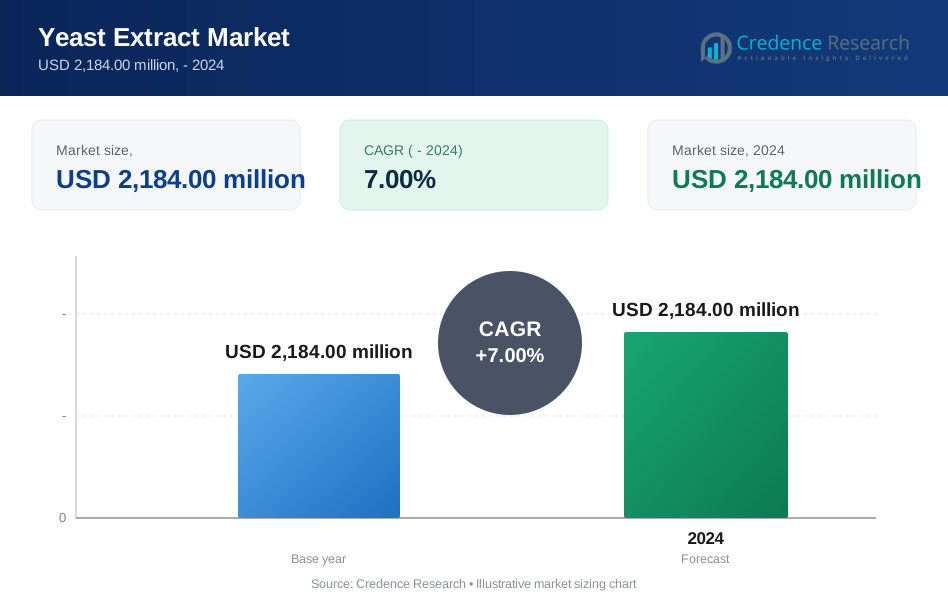
| Yeast Extract Market Size 2024 | USD 2,184.00 Million |
| Yeast Extract Market, CAGR | 7.00% |
| Yeast Extract Market Size 2032 | USD 3,751.16 Million |
Market Overview
The Global Yeast Extract Market is projected to grow from USD 2,184.00 million in 2024 to an estimated USD 3,751.16 million by 2032, with a compound annual growth rate (CAGR) of 7.00% from 2025 to 2032. This growth is driven by the increasing demand for natural flavor enhancers, protein-rich products, and the growing popularity of yeast extract in various applications, including food and beverages, pharmaceuticals, and animal feed.
Key drivers fueling the growth of the yeast extract market include the rising demand for plant-based protein alternatives, clean label products, and the increasing popularity of functional foods. Moreover, trends such as the growing inclination towards savory food products, an increase in health-conscious consumers, and the expanding application of yeast extract in the pharmaceutical industry contribute significantly to market expansion. The market is also witnessing innovations in yeast extract production and processing, further boosting its adoption in various industries.
Geographically, the yeast extract market exhibits strong growth across regions, with North America, Europe, and Asia-Pacific emerging as key markets. Europe, driven by the demand for natural food ingredients, holds a significant share, while Asia-Pacific is expected to witness the highest growth rate due to increased urbanization and a shift towards plant-based diets. Key players in the market include DSM, Lesaffre, Kerry Group, and Angel Yeast, which are focusing on expanding their product portfolios and strategic partnerships to gain a competitive edge.
Market Insights
- The global yeast extract market is projected to grow from USD 2,184.00 million in 2024 to USD 3,751.16 million by 2032, with a CAGR of 7.00% from 2025 to 2032.
- Key drivers include rising demand for natural flavor enhancers, plant-based protein alternatives, clean-label products, and health-conscious consumer preferences.
- Yeast extract’s nutritional benefits, including its rich content of B-vitamins, proteins, and immune-boosting properties, are driving its growth in food, beverages, and supplements.
- Fluctuations in raw material prices and supply chain disruptions may impact the consistent production and pricing of yeast extract, posing challenges to market growth.
- Europe holds a significant market share due to the high demand for clean-label and natural food ingredients, with strict regulations promoting product quality.
- Asia-Pacific is expected to experience the highest growth rate, driven by urbanization, increasing adoption of processed foods, and rising demand for plant-based diets.
- Major players such as DSM, Lesaffre, and Kerry Group dominate the market, focusing on innovation and expanding product portfolios to strengthen their competitive positions.
Market Drivers
Increasing Health Consciousness and Nutritional Benefits
As consumers become more health-conscious, the demand for functional foods and ingredients that offer nutritional benefits has increased. Yeast extract is recognized for its health benefits, which has further propelled its adoption across various applications. It is a rich source of B-vitamins, proteins, and dietary fiber, which are essential for supporting overall health, improving immune function, and enhancing gut health. The bioactive compounds in yeast extract, such as beta-glucans, have also been shown to provide potential health benefits, including supporting immune function and reducing cholesterol levels. With the rise of functional foods and the growing preference for nutrient-dense ingredients, yeast extract has emerged as a key ingredient in dietary supplements, energy bars, and beverages aimed at improving health. Its potential to enhance the nutritional profile of various food products, while being a natural ingredient, positions it as a popular choice for health-conscious consumers seeking to improve their overall well-being through diet.
Expanding Applications in the Pharmaceutical and Animal Feed Industries
Yeast extract is not only a popular ingredient in the food and beverage industry but is also experiencing growing demand in other sectors such as pharmaceuticals and animal feed. In the pharmaceutical industry, yeast extract is used in the production of vaccines, antibiotics, and probiotics due to its high content of bioactive compounds, including polysaccharides and peptides, which support immune system health and overall wellness. Its role in enhancing the effectiveness of pharmaceutical products by providing essential nutrients is making it a preferred ingredient in various formulations. Furthermore, yeast extract is increasingly being incorporated into animal feed due to its high nutritional value, which supports the growth and health of livestock. It is especially valuable in the production of high-quality feed for poultry, swine, and aquaculture, where it is used to enhance growth, improve feed conversion rates, and boost overall animal health. As both the pharmaceutical and animal feed industries continue to grow, the demand for yeast extract as a functional ingredient in these sectors is expected to increase, providing a substantial boost to the overall market.
Rising Demand for Natural and Clean Label Products
The increasing consumer preference for natural and clean label products is one of the primary drivers of the yeast extract market. In recent years, there has been a significant shift in consumer behavior toward products that are free from artificial additives, preservatives, and flavor enhancers. This change is largely driven by rising awareness about the health risks associated with synthetic ingredients. Yeast extract, being a natural, minimally processed ingredient, is highly favored by both consumers and manufacturers who are seeking clean label options. With its natural umami flavor and versatility, yeast extract is increasingly used as a substitute for monosodium glutamate (MSG) and other artificial flavor enhancers in various food and beverage applications.For instance, yeast extract is increasingly used in processed foods, soups, sauces, and seasonings due to its natural umami flavor and versatility. This trend is driven by consumers seeking products free from artificial additives and preservatives, which has led to a significant increase in the use of yeast extract as a substitute for monosodium glutamate (MSG) and other artificial flavor enhancers. As a result, the demand for yeast extract has surged, particularly in these sectors, contributing to the market’s growth.The appeal of yeast extract extends beyond its flavor-enhancing properties. It is also valued for its ability to enhance the overall taste experience without adding artificial ingredients, making it a preferred choice for manufacturers looking to maintain a clean label. This shift toward natural ingredients is not only driven by consumer preferences but also by regulatory pressures to reduce the use of artificial additives in food products.
Growing Popularity of Plant-Based and Vegan Diets
Another key driver for the yeast extract market is the increasing shift toward plant-based and vegan diets. As more consumers adopt plant-based lifestyles due to health, environmental, and ethical reasons, the demand for plant-based ingredients and alternatives has surged. Yeast extract fits perfectly into this trend, offering a high-protein, nutrient-rich, and vegan-friendly alternative to traditional meat-based flavor enhancers. Yeast extract is rich in essential amino acids, vitamins (especially B-vitamins), and minerals, making it an attractive ingredient for plant-based food products.For instance, yeast extract plays a crucial role in plant-based meat substitutes and vegan products by providing a savory umami flavor and masking off-notes, making these products more palatable and similar to their animal-based counterparts. This is particularly important in dairy alternatives, where yeast extract helps to mask earthy or beany notes, enhancing the overall taste experience and contributing to the growth of the plant-based food industry.The nutritional benefits of yeast extract also align with the health-conscious aspect of plant-based diets. Its high content of essential nutrients supports the nutritional profile of vegan products, making them more appealing to consumers seeking healthier alternatives. Additionally, yeast extract’s ability to enhance flavor without adding animal-derived ingredients makes it a vital component in the formulation of vegan foods.
Market Trends
Technological Advancements in Yeast Extract Production
Technological advancements in yeast extract production are another key trend driving growth in the global market. As the demand for yeast extract grows across industries, manufacturers are investing in more efficient and sustainable production processes. Modern biotechnological methods, such as fermentation optimization and genetic engineering of yeast strains, have led to improved yields and the ability to produce yeast extract more cost-effectively. These innovations are also enabling the creation of specialized yeast extracts with tailored flavor profiles and enhanced nutritional benefits. For instance, companies are developing yeast extract variants enriched with specific vitamins or bioactive compounds, catering to the demand for functional ingredients in food and beverages, as well as dietary supplements. Additionally, advances in fermentation technology have resulted in more sustainable production methods, reducing energy consumption and waste generation, which are important considerations for both consumers and companies in an increasingly eco-conscious market. As technology continues to evolve, yeast extract manufacturers will be better equipped to meet growing demand while ensuring product quality and sustainability.
Expansion of Yeast Extract Applications in Pharmaceuticals and Animal Feed
In addition to its use in the food and beverage sector, yeast extract is increasingly being utilized in pharmaceuticals and animal feed, contributing to the market’s expansion. In the pharmaceutical industry, yeast extract is valued for its rich composition of bioactive compounds, such as beta-glucans, peptides, and nucleotides, which have immune-boosting, anti-inflammatory, and anti-viral properties. These properties make yeast extract an ideal ingredient in the development of immune-supporting supplements, probiotics, and vaccines. Yeast extract’s potential as a natural source of bioactive compounds is opening new opportunities for its use in the production of functional foods, dietary supplements, and nutraceuticals aimed at promoting health and preventing disease.In the animal feed industry, yeast extract is being increasingly incorporated into livestock and poultry diets. The ingredient enhances animal feed's nutritional profile by providing essential amino acids, vitamins, and minerals that support animal health and productivity. It is also used to promote gut health in animals, improving digestion and nutrient absorption, which in turn leads to better overall performance. As the global demand for protein-rich animal products rises, yeast extract is playing an increasingly important role in improving the efficiency of animal production systems. Moreover, its inclusion in aquaculture feed is helping enhance the growth and health of fish, thereby driving its adoption in the aquaculture industry. The growing focus on sustainable, high-quality feed that supports animal health is fueling the rise in demand for yeast extract in these sectors.
Increased Demand for Umami and Savory Flavors in Food Products
One of the most significant trends in the global yeast extract market is the growing consumer demand for umami and savory flavors in food products. Umami, one of the five basic tastes, is gaining popularity among consumers seeking rich, full-bodied flavors in their meals. Yeast extract, known for its natural umami flavor, is increasingly being used in a variety of food products, from soups, sauces, and seasonings to processed snacks and ready-to-eat meals. The shift toward more savory tastes can be attributed to the desire for more complex, satisfying flavors, which are particularly sought after in the growing category of plant-based and vegan foods. As more consumers move away from artificial flavorings and monosodium glutamate (MSG), yeast extract offers a cleaner, natural alternative to enhance the flavor profile of many food and beverage products. The versatility of yeast extract in different culinary applications, including its ability to replicate the umami flavors traditionally derived from meat, is making it a highly desirable ingredient across global food markets.For instance, the increased demand for umami and savory flavors in food products is evident in the growing use of yeast extract in various culinary applications. Yeast extract is a natural source of umami flavor, making it a popular choice for enhancing the taste of soups, sauces, seasonings, snacks, and ready-to-eat meals. This trend is particularly pronounced in the plant-based and vegan food sectors, where yeast extract is used to replicate the rich flavors traditionally associated with meat and dairy products. Additionally, yeast extract's ability to mask off-notes in plant-based dairy alternatives and provide a satisfying mouthfeel in meat substitutes has made it an essential ingredient in the formulation of vegan cheeses, spreads, and nutritional yeast. As consumers increasingly seek natural, savory flavors and move away from artificial additives, yeast extract's versatility and nutritional benefits position it as a key component in the evolving global food landscape.
Rise of Plant-Based and Vegan Products
Another prominent trend shaping the yeast extract market is the rise of plant-based and vegan diets, which is leading to increased adoption of yeast extract in plant-based food formulations. As consumer awareness of the environmental and ethical implications of animal-based food production continues to grow, many individuals are transitioning to plant-based and vegan diets. Yeast extract is a perfect fit for this trend, as it is both a plant-derived ingredient and a source of high-quality protein, vitamins, and minerals, making it an ideal addition to plant-based products. The ingredient is used in the formulation of meat alternatives, dairy-free cheeses, vegan spreads, and nutritional yeast, providing a natural, savory flavor that replicates the richness typically found in animal-based products. Furthermore, its nutrient profile, including B-vitamins and amino acids, aligns with the nutritional needs of vegan diets, further boosting its demand. As the plant-based food sector continues to grow globally, yeast extract is poised to become an essential ingredient in this burgeoning market, catering to the increasing demand for plant-based, nutritious, and flavorful foods.The integration of yeast extract into plant-based products not only enhances flavor but also contributes to the nutritional value of these foods. For example, in vegan cheese formulations, yeast extract helps to create a rich, cheesy flavor while providing essential nutrients like B-vitamins and protein. This dual role of enhancing both taste and nutritional content makes yeast extract a critical component in the development of plant-based and vegan food products. As consumers increasingly prioritize health, sustainability, and taste, yeast extract is well-positioned to meet these evolving demands in the global food industry.
Market Challenges
Regulatory Challenges and Quality Standards
The yeast extract market also faces regulatory challenges and stringent quality standards across different regions. As yeast extract is used in food, beverages, and supplements, manufacturers must comply with various food safety regulations, quality assurance protocols, and labeling requirements set by regulatory bodies such as the FDA, EFSA, and others. These regulations often vary by region and can lead to increased costs for manufacturers to meet compliance standards. Additionally, the rising demand for non-GMO and organic products has prompted manufacturers to invest in processes that guarantee the authenticity and purity of yeast extract. These certifications and standards can increase operational costs and create barriers for smaller players in the market. The ongoing changes in regulatory frameworks and the need for consistent product quality require manufacturers to stay updated on evolving requirements, invest in proper testing facilities, and ensure that their products meet global standards, thus posing a significant challenge to market growth.
Fluctuating Raw Material Prices and Supply Chain Disruptions
One of the key challenges faced by the global yeast extract market is the volatility in the prices of raw materials and supply chain disruptions. Yeast extract is derived from yeast, primarily Saccharomyces cerevisiae, which is produced through fermentation processes. The cost of yeast production can fluctuate due to several factors, such as the availability of raw materials (like molasses and other carbohydrate sources), energy prices, and labor costs. Additionally, any disruptions in the supply chain, such as transportation delays, regulatory changes, or geopolitical events, can impact the availability and cost of raw materials required for yeast extract production.For instance, the COVID-19 pandemic and geopolitical tensions have exacerbated supply chain disruptions, affecting the availability of yeast extract by increasing global shipping costs and impacting the import and export of raw materials like molasses, which are essential for yeast production. These uncertainties may result in higher production costs, making it difficult for manufacturers to maintain competitive pricing, potentially limiting the growth of the yeast extract market. To mitigate these challenges, manufacturers need to diversify their supply chains and adopt more resilient sourcing strategies to ensure a consistent supply of raw materials.
Market Opportunities
Expansion in Plant-Based and Vegan Food Segments
A significant market opportunity for the global yeast extract industry lies in the growing demand for plant-based and vegan food products. As consumer preferences shift towards healthier and more sustainable diets, the demand for plant-based protein alternatives and clean-label products is rising. Yeast extract, with its rich nutritional profile, including high-quality protein, vitamins, and essential amino acids, is increasingly being used as a key ingredient in plant-based food formulations. It provides a natural and savory umami flavor, which is crucial for enhancing the taste of meat and dairy substitutes. As the plant-based food market continues to expand, driven by health, ethical, and environmental concerns, yeast extract offers a valuable opportunity for manufacturers to tap into this high-growth sector. By aligning with the demand for clean-label and plant-based ingredients, yeast extract producers can position themselves as key players in the evolving global food landscape.
Rising Demand in Nutraceuticals and Functional Foods
The growing focus on health and wellness presents a promising opportunity for the yeast extract market in the nutraceuticals and functional foods segments. Consumers are increasingly seeking products that offer additional health benefits beyond basic nutrition, such as improved immunity, gut health, and overall well-being. Yeast extract, rich in bioactive compounds like beta-glucans, nucleotides, and peptides, is highly valued for its potential immune-boosting and anti-inflammatory properties. As the demand for functional foods and dietary supplements rises, yeast extract has the opportunity to play a significant role in formulating immune-supporting and health-enhancing products. Manufacturers can leverage these health benefits to meet the growing consumer interest in preventive health, making yeast extract a key ingredient in this expanding market.
Market Segmentation Analysis
By Type
The yeast extract market is primarily segmented by type into powder and paste forms. Powdered yeast extract holds the largest market share due to its convenience and longer shelf life. It is widely used in the food and beverage industry, particularly for applications like seasonings, soups, and sauces. Powdered yeast extract is preferred for its easy blending and versatility in formulations. On the other hand, paste yeast extract is more commonly used in food products that require a more viscous consistency, such as spreads, dressings, and marinades. While the powder form is more dominant, the paste form is also seeing growing demand, especially in the processed food sector where texture and flavor concentration are crucial.
By Application
The food and beverages segment holds the largest share in the yeast extract market. Yeast extract is widely used as a natural flavor enhancer, particularly in savory products such as soups, sauces, snacks, and seasonings. Its ability to provide umami, a rich, savory taste, makes it a popular alternative to monosodium glutamate (MSG) and artificial flavor enhancers.The pharmaceuticals segment is also expanding, with yeast extract being incorporated into health supplements and pharmaceutical formulations due to its nutritional content, including B-vitamins, proteins, and immune-boosting properties. It is particularly valued for its beta-glucans, which are known for their immune-enhancing capabilities.The animal feed segment is witnessing growth as well, as yeast extract is used to improve the nutritional value of animal feed, promoting better digestion and supporting animal health. Yeast extract is commonly included in feeds for poultry, swine, and aquaculture to boost growth and overall health. Other applications of yeast extract are emerging in industries like cosmetics and personal care, where its antioxidant properties and ability to support skin health are being leveraged.
Segments
Based on Type
- Powder
- Paste
Based on Application
- Food & Beverages
- Pharmaceuticals
- Animal Feed
- Others
Based on Source
- Baker’s Yeast
- Brewer’s Yeast
Based on Region
- North America
- U.S.
- Canada
- Mexico
- Europe
- Germany
- France
- U.K.
- Italy
- Spain
- Rest of Europe
- Asia Pacific
- China
- Japan
- India
- South Korea
- South-east Asia
- Rest of Asia Pacific
- Latin America
- Brazil
- Argentina
- Rest of Latin America
- Middle East & Africa
- GCC Countries
- South Africa
- Rest of the Middle East and Africa
Regional Analysis
Europe (35%)
Europe holds the largest market share in the global yeast extract market, accounting for approximately 35% of the total market. The region’s strong demand for natural food ingredients, particularly clean-label products, drives the consumption of yeast extract in food and beverages. European consumers are increasingly shifting away from artificial additives, fueling the growth of yeast extract as a natural alternative. Additionally, the demand for plant-based and vegan products is contributing to the expansion of the market, as yeast extract serves as a key ingredient in meat substitutes and other plant-based formulations. The growing trend of functional foods and the presence of major players like DSM and Lesaffre in Europe further strengthens its market leadership. Strict regulations on food safety and quality also drive the demand for premium, regulated yeast extract products, positioning Europe as a leader in innovation and quality assurance.
Asia-Pacific (30%)
Asia-Pacific is expected to witness the highest growth rate in the yeast extract market, accounting for approximately 30% of the market share. This region is driven by rapid urbanization, changing dietary habits, and a growing preference for processed foods and nutritional supplements. Countries like China, India, and Japan are major contributors to this growth, with increasing adoption of yeast extract in both food and beverage applications as well as animal feed. The region’s rising awareness of health and wellness, coupled with a surge in the demand for plant-based and functional foods, presents significant opportunities for yeast extract producers. Additionally, the expanding pharmaceutical and animal feed industries in Asia-Pacific are expected to further fuel market growth in the coming years.
Key players
- Lesaffre Group
- DSM N.V.
- AB Mauri
- Lallemand Inc.
- Kerry Group
- Leiber GmbH
- Specialty Biotech Co., Ltd.
- Synergy Flavors
- Biospringer
Competitive Analysis
The global yeast extract market is highly competitive, with key players focusing on product innovation, strategic acquisitions, and expanding their global footprint. Lesaffre Group, DSM N.V., and Kerry Group dominate the market due to their extensive product portfolios, strong R&D investments, and well-established distribution networks. These companies leverage advanced fermentation technologies to enhance product quality and cater to the growing demand for clean-label and natural ingredients. Lallemand Inc., AB Mauri, and Leiber GmbH also play significant roles by offering specialized yeast extracts tailored for various applications, including food and pharmaceuticals. Emerging players such as Specialty Biotech Co., Ltd. and Synergy Flavors focus on niche markets and customized solutions. Biospringer, a subsidiary of Lesaffre, strengthens the competition with its expertise in natural yeast-derived ingredients. As demand for yeast extract rises, companies are investing in sustainable production processes and expanding their presence in high-growth regions like Asia-Pacific and North America.
Recent Developments
- In October 2024, The acquisition was officially completed, allowing Lesaffre to expand its yeast extract offerings and integrate DSM-Firmenich employees into its operations.
- In October 2024, The sale was completed, with DSM-Firmenich focusing on high-growth areas and maintaining a technology partnership with Lesaffre.
Market Concentration and Characteristics
The global yeast extract market exhibits moderate concentration, with a few key players such as Lesaffre Group, DSM N.V., and Kerry Group dominating the market. These companies hold a significant share due to their extensive product portfolios, technological advancements, and strong distribution networks. While the market is led by established giants, there is room for smaller players and niche companies, such as Leiber GmbH and Biospringer, to cater to specialized needs and local markets. The market is characterized by intense competition focused on innovation, sustainability, and the development of clean-label and natural products. Additionally, companies are increasingly investing in R&D to develop yeast extracts with tailored functionalities to meet the rising consumer demand for plant-based, health-focused, and functional ingredients in various applications. As the demand for yeast extract continues to grow, especially in food, pharmaceuticals, and animal feed, the market is expected to remain dynamic with opportunities for both large and emerging players.
Report Coverage
The research report offers an in-depth analysis based on Type, Application, Source and Region. It details leading market players, providing an overview of their business, product offerings, investments, revenue streams, and key applications. Additionally, the report includes insights into the competitive environment, SWOT analysis, current market trends, as well as the primary drivers and constraints. Furthermore, it discusses various factors that have driven market expansion in recent years. The report also explores market dynamics, regulatory scenarios, and technological advancements that are shaping the industry. It assesses the impact of external factors and global economic changes on market growth. Lastly, it provides strategic recommendations for new entrants and established companies to navigate the complexities of the market.
Future Outlook
- The global shift toward plant-based diets will drive increased demand for yeast extract, especially as a natural flavor enhancer and nutrient source in meat substitutes.
- With consumers seeking health benefits in their food, yeast extract will see more integration into functional food products, thanks to its immune-boosting properties and nutritional value.
- Ongoing innovation in fermentation technology will lead to more efficient production methods, improving yield and cost-effectiveness while ensuring product quality.
- The growing consumer preference for clean-label and natural ingredients will drive the adoption of yeast extract as a versatile, non-GMO, and additive-free ingredient in food products.
- Yeast extract’s bioactive compounds will lead to further expansion in the pharmaceutical industry, especially in immune-supporting supplements, probiotics, and functional medicines.
- The demand for environmentally sustainable production methods will push yeast extract manufacturers to adopt greener technologies and reduce energy consumption during production processes.
- Asia-Pacific, Latin America, and the Middle East will see rapid adoption of yeast extract as urbanization increases, leading to greater demand for processed foods and animal feed.
- Yeast extract’s role in improving animal health and productivity, particularly in poultry, livestock, and aquaculture, will lead to growing usage in animal feed formulations.
- Yeast extract’s ability to enhance flavor and nutritional content will drive its increased use in clean-label beverages, such as functional drinks and plant-based milk alternatives.
- The yeast extract market will see more mergers, acquisitions, and partnerships as major players consolidate their positions, broaden their product offerings, and expand into emerging markets.
Request a Free Sample
Fill in your details and we'll send you a free sample report.
- Sample data tables & charts
- Research methodology
Need a Custom Version of This Report?
Tailor the scope, geography, or segments to your exact requirements.
- Custom geography or segment scope
- Direct access to our analyst team
Frequently Asked Questions
What is the market size of the global yeast extract market in 2023 and 2032?
What are the key drivers of growth in the yeast extract market?
Which regions are driving growth in the yeast extract market?
How is yeast extract used in the pharmaceutical industry?
Who are the key players in the yeast extract market?
Table of Content
Chapter 1. Report Introduction
- 1.1 Report Description & Purpose
- 1.1.1 Report Title & Market Definition
- 1.1.2 Unique Selling Propositions (USP) & Key Differentiators
- 1.1.3 Value Proposition for Stakeholders
- 1.2 Research Objectives
- 1.2.1 Market Sizing Objectives (Volume & Revenue)
- 1.2.2 Segmentation Objectives
- 1.2.3 Competitive Intelligence Objectives
- 1.2.4 Forecast & Scenario Objectives
- 1.3 Report Scope
- 1.3.1 Yeast Extract Scope – Types & Subtypes Covered
- 1.3.2 Geographic Scope – Regions & Countries Covered
- 1.3.3 Historical Period, Base Year & Forecast Period (the historical period; forecast to 2024)
- 1.3.4 Inclusions & Exclusions
- 1.4 HS Code & Classification Framework
- 1.5 Currency, Units & Pricing Basis
- 1.6 Target Stakeholders
- 1.7 Limitations & Assumptions
Chapter 2. Executive Summary
- 2.1 Global Yeast Extract Market Snapshot
- 2.1.1 Market Size – Historical (the historical period) & Forecast (2024) (base year: USD 2,184.00 million → 2024: USD 2,184.00 million)
- 2.1.2 Volume & Revenue – Global Totals
- 2.1.3 Key Market Highlights – Top Five Facts
- 2.2 Yeast Extract Market Segmentation Snapshot
- 2.2.1 Market Split by Region – vs. 2024
- 2.3 Competitive Snapshot
- 2.3.1 Top 10 Players by Revenue Share –
- 2.3.2 Top 10 Players by Volume Share –
- 2.3.3 Recent Strategic Developments (18-Month Summary)
- 2.4 Key Investment Highlights & Strategic Conclusions
Chapter 3. Yeast Extract Market Dynamics & Industry Analysis
- 3.1 Market Overview & Context
- 3.1.1 Yeast Extract Market Position in the Broader Automotive Value Chain
- 3.1.2 OEM vs. Replacement Market Dynamics
- 3.1.3 Market Maturity & Development Stage by Region
- 3.2 Yeast Extract Market Drivers
- 3.3 Yeast Extract Market Restraints & Challenges
- 3.4 Yeast Extract Market Opportunities
- 3.5 Porter's Five Forces Analysis
- 3.5.1 Threat of New Entrants
- 3.5.2 Bargaining Power of Suppliers
- 3.5.3 Bargaining Power of Buyers
- 3.5.4 Threat of Substitutes
- 3.5.5 Competitive Rivalry – Intensity Assessment
- 3.6 Yeast Extract Value Chain Analysis
- 3.6.1 Upstream – Raw Material/Input Suppliers
- 3.6.1.1 Raw Material/Input 1
- 3.6.1.2 Raw Material/Input 2
- 3.6.1.3 Raw Material/Input 3
- 3.6.2 Midstream – Production/Manufacturing/Service Delivery
- 3.6.2.1 Production/Process Overview
- 3.6.2.2 Key Facility Locations & Capacity by Manufacturer
- 3.6.3 Downstream – Distribution & End Consumer
- 3.6.3.1 Primary Channel – B2B/OEM
- 3.6.3.2 Secondary Channels – Dealer, Retail, Online, Direct
- 3.6.4 Value Chain Profitability Analysis
- 3.6.1 Upstream – Raw Material/Input Suppliers
- 3.7 PESTEL Analysis
- 3.7.1 Political Factors
- 3.7.2 Economic Factors
- 3.7.3 Social Factors
- 3.7.4 Technological Factors
- 3.7.5 Environmental Factors
- 3.7.6 Legal Factors
- 3.8 Yeast Extract Supply Chain Analysis
- 3.8.1 Raw Material/Input Supply Risk Assessment
- 3.8.2 Manufacturing Concentration Risk (Geographic Exposure)
- 3.8.3 Trade Disruption Impact Analysis
- 3.9 Regulatory & Policy Landscape
Note: The regulatory and policy landscape section covers regulations based on their applicability to the market, Yeast Extract category, geography, and scope of the study. Only regulatory frameworks with a material impact on operations, compliance, trade, sustainability, or market access are analyzed in detail.
Chapter 4. Key Investment Pockets & Opportunity Analysis
- 4.1 Yeast Extract Market Attractiveness Analysis
- 4.1.1 By Region – Investment Attractiveness Matrix (Volume × CAGR)
- 4.2 Absolute Revenue Growth Opportunity
- 4.2.1 By Region – Absolute USD Growth Through 2024
- 4.3 Incremental Volume Opportunity
- 4.3.1 By Region – Incremental Volume Through 2024
- 4.3.2 Segment – Incremental Volume
- 4.4 Emerging Submarket Opportunity Deep Dive (Subject to Applicability)
- 4.5 Emerging Market Opportunity Scorecards
- 4.5.1 United States
- 4.5.2 Europe
- 4.5.3 Asia
- 4.5.4 Middle East & Africa
Note: Emerging Market Opportunity Scorecards will be included based on relevance and strategic importance. Regions listed are indicative and may vary depending on data availability and market dynamics.
Chapter 5. Yeast Extract Import-Export Analysis & Trade Flows
- 5.1 Global Trade Overview
- 5.1.1 Global Export Value by Country (the historical period)
- 5.1.2 Global Export Volume by Country (the historical period)
- 5.1.3 Global Import Value by Country (the historical period)
- 5.1.4 Global Import Volume by Country (the historical period)
- 5.1.5 Net Trade Balance by Country (the historical period)
- 5.2 Export Analysis – Segment
- 5.2.1 Type 1 (HS Code)
- 5.2.2 Type 2 (HS Code)
- 5.2.3 Type 3 (HS Code)
- 5.2.4 Type 4 (HS Code)
- 5.2.5 Type 5 (HS Code)
- 5.3 Import Analysis – Segment
- 5.3.1 Type 1 (HS Code)
- 5.3.2 Type 2 (HS Code)
- 5.3.3 Type 3 (HS Code)
- 5.3.4 Type 4 (HS Code)
- 5.3.5 Type 5 (HS Code)
- 5.4 Average Unit Trade Prices
- 5.4.1 Average Export Price – Segment & Country
- 5.4.2 Average Import Price – Segment & Source Country
- 5.4.3 Price Trends (the historical period)
- 5.5 Key Trade Route Analysis
- 5.5.1 Trade Route 1
- 5.5.2 Trade Route 2
- 5.5.3 Trade Route 3
- 5.5.4 Trade Route 4
- 5.5.5 Trade Route 5
- 5.6 Trade Policy Impact Assessment
- 5.6.1 US Anti-Dumping & Section 301 Tariffs
- 5.6.2 EU Customs Union Impact
- 5.6.3 Major Free Trade Agreements
- 5.6.4 USMCA Rules of Origin
Note: Trade policy analysis will be included only where relevant to the Yeast Extract market.
Chapter 6. Competitive Landscape & Company Benchmarking
- 6.1 Yeast Extract Market Concentration & Structure
- 6.1.1 Herfindahl-Hirschman Index (HHI) – vs.
- 6.1.2 Tier 1, Tier 2 & Tier 3 Market Structure
- 6.1.3 Global, Regional & Local Player Dynamics
- 6.2 Yeast Extract Market Share Analysis –
- 6.2.1 Global Revenue Share by Company
- 6.2.2 Global Volume Share by Company
- 6.2.3 Regional Revenue Share
- 6.2.4 Market Share Evolution ( vs. )
- 6.2.5 OEM Segment Share by Company
- 6.2.6 Replacement Segment Share by Company
- 6.3 Production/Delivery Capacity & Facility Analysis
- 6.3.1 Global Installed Capacity
- 6.3.2 Capacity Utilization Rates
- 6.3.3 Production/Output Volume
- 6.3.4 Facility Locations & Capacity Map
- 6.3.5 Planned Capacity Additions
- 6.4 Yeast Extract Competitive Benchmarking Matrix
- 6.4.1 Revenue, Volume, CAGR & Profitability Comparison
- 6.4.2 Channel Revenue Mix
- 6.4.3 Geographic Revenue Exposure
- 6.4.4 R&D Intensity
- 6.4.5 Sustainability Maturity
- 6.5 Strategic Developments in Yeast Extract (Last 24 Months)
- 6.5.1 Mergers, Acquisitions & Divestments
- 6.5.2 New Yeast Extract Launches
- 6.5.3 Facility Expansions
- 6.5.4 Strategic Alliances, Joint Ventures & Partnerships
- 6.5.5 Distribution Expansion & Market Entry
- 6.5.6 Sustainability & ESG Initiatives
- 6.6 Competitive Strategy Mapping
- 6.6.1 Leader, Challenger, Follower & Niche Classification
- 6.6.2 Pricing Strategy Comparison
- 6.6.3 Channel Strategy Matrix
Note: Strategic developments are included based on their materiality and the availability of reliable information.
Chapter 7. Global Yeast Extract Market – By Distribution Channel
- 7.1 Segment Overview
- 7.1.1 Volume & Revenue Split by Channel ( & 2024)
- 7.1.2 Channel Mix Evolution (2024)
Chapter 8. Regional Market Analysis – Global Overview
- 8.1 Global Regional Overview
- 8.1.1 Regional Volume Share
- 8.1.2 Regional Revenue Share
- 8.1.3 Regional Volume by Region
- 8.1.4 Regional Revenue by Region
- 8.1.5 Regional Forecast Through 2024
- 8.2 Cross-Regional Segment Analysis
- 8.2.1 By Distribution Channel
- 8.2.2 By Brand/Price Tier
Chapter 9. North America Yeast Extract Market
- 9.1 United States
- 9.2 Canada
- 9.3 Mexico
Chapter 10. Europe Yeast Extract Market
- 10.1 Germany
- 10.2 France
- 10.3 Italy
- 10.4 United Kingdom
- 10.5 Spain
- 10.6 Poland
- 10.7 Russia
- 10.8 Netherlands
- 10.9 Belgium
- 10.10 Sweden
- 10.11 Denmark
- 10.12 Norway
- 10.13 Rest of Europe
Chapter 11. Asia Pacific Yeast Extract Market
- 11.1 China
- 11.2 India
- 11.3 Japan
- 11.4 South Korea
- 11.5 Thailand
- 11.6 Indonesia
- 11.7 Vietnam
- 11.8 Malaysia
- 11.9 Australia
- 11.10 Rest of Asia Pacific
Chapter 12. Latin America Yeast Extract Market
- 12.1 Brazil
- 12.2 Argentina
- 12.3 Colombia
- 12.4 Chile
- 12.5 Rest of Latin America
Chapter 13. Middle East Yeast Extract Market
- 13.1 Saudi Arabia
- 13.2 United Arab Emirates
- 13.3 Turkey
- 13.4 Israel
- 13.5 Iran
- 13.6 Rest of the Middle East
Chapter 14. Africa Yeast Extract Market
- 14.1 South Africa
- 14.2 Egypt
- 14.3 Nigeria
- 14.4 Morocco
- 14.5 Rest of Africa
Chapter 15. Yeast Extract Company Profiles
- 15.1 [Company 01]
- 15.1.1 Company Overview
- 15.1.2 Key Management Personnel
- 15.1.3 Products & Services Portfolio
- 15.1.4 Financial Performance
- 15.1.5 Key Market Focus & Geographic Presence
- 15.1.6 Recent Developments & Strategic Initiatives
Note: The company profile list is preliminary and may change based on research findings, market developments, data availability, and client requirements.
Chapter 16. Appendices
- Appendix A – List of Abbreviations & Acronyms
- Appendix B – Industry Classification Code Reference – Full Series
- Appendix C – Production & Capacity Data Tables
- Appendix D – End-Use & Demand Base Tables
- Appendix E – Consumption & Replacement Rate Assumptions
- Appendix F – ASP Reference Tables
- Appendix G – Manufacturing & Facility Database
- Appendix H – Import-Export Data Tables
- Appendix I – Regulatory Summary Tables
- Appendix J – Primary Research Participant List (Anonymized)
- Appendix K – Primary Research Questionnaire Framework
- Appendix L – Data Sources & Bibliography
- Appendix M – Market Size Divergence & Source Comparison
Chapter 17. Research Methodology
- 17.1 Research Framework & Philosophy
- 17.2 Secondary Research – Sources, Hierarchy & Data Extraction
- 17.3 Data Modeling – Bottom-Up & Top-Down Market Sizing
- 17.4 Primary Research – Stakeholder Framework, LOI & Sample Sizes
- 17.5 Forecast Methodology – Regression, Scenario & Sensitivity Analysis
- 17.6 Quality Control – Four-Layer Validation Framework
- 17.7 Limitations & Standard Assumptions
- 17.8 Disclaimer
