
| REPORT ATTRIBUTE | DETAILS |
|---|---|
| Historical Period | 2020-2023 |
| Base Year | 2024 |
| Forecast Period | 2025-2032 |
| 3D Cell Culture Market Size 2023 | USD 1,200.00 million |
| 3D Cell Culture Market, CAGR | 11.20% |
| 3D Cell Culture Market Size 2032 | USD 3,119.78 million |
Market Overview
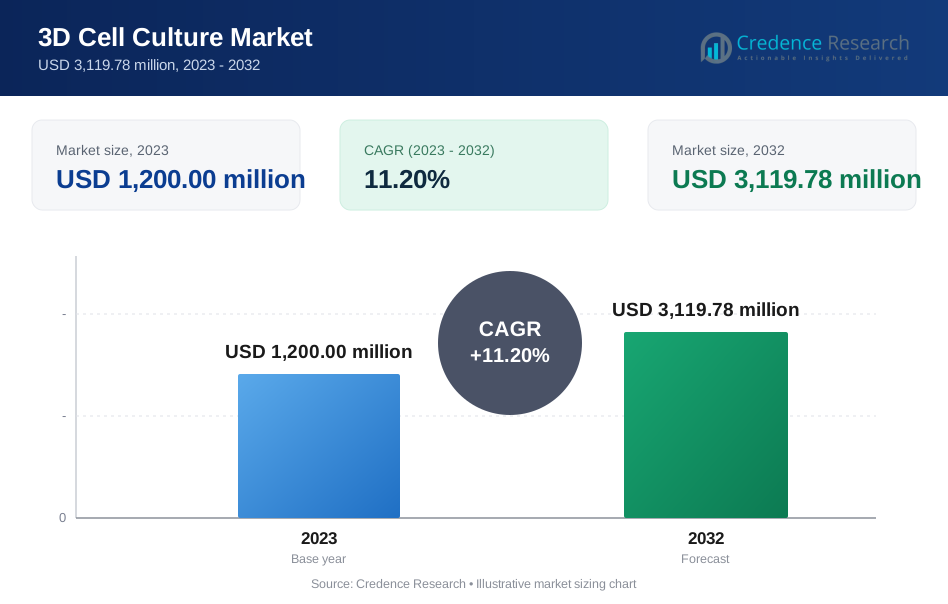
Global 3D Cell Culture Market size was valued at USD 1,200.00 million in 2023 and is anticipated to reach USD 3,119.78 million by 2032, at a CAGR of 11.20% during the forecast period (2023-2032).
The global 3D cell culture market is experiencing strong growth, driven by increasing demand for advanced in vitro models that better replicate human physiology compared to traditional 2D cultures. Pharmaceutical and biotechnology companies are actively adopting 3D cell culture systems to enhance drug discovery, reduce attrition rates in clinical trials, and support personalized medicine. The growing focus on regenerative medicine and stem cell research also fuels market expansion. Additionally, technological advancements in scaffold-based platforms, microfluidics, and organ-on-a-chip models are streamlining complex cell culture processes, boosting their adoption in both academic and industrial settings. Rising government and private investments in cancer research and tissue engineering further stimulate innovation in this space. Furthermore, the global shift toward animal-free testing methods, supported by regulatory and ethical considerations, is accelerating the adoption of 3D cell culture techniques, positioning the market for sustained growth across diverse biomedical applications.
The geographical landscape of the global 3D cell culture market is marked by strong growth across North America, Europe, Asia-Pacific, and other emerging regions. North America and Europe remain key hubs due to advanced research infrastructure, significant R&D investments, and the presence of leading biotechnology firms and academic institutions. Meanwhile, Asia-Pacific is rapidly emerging as a high-growth region driven by increasing government support, expanding pharmaceutical industries, and a surge in clinical trials and regenerative medicine initiatives. In terms of key players, the market is highly competitive and includes well-established companies such as Thermo Fisher Scientific, Merck KGaA, Corning Incorporated, Lonza, and Avantor, Inc. Other notable contributors include Reprocell Inc., Emulate, Inc., 3D Biotek LLC, Synthecon, InSphero AG, and Greiner Bio-One International GmbH. These companies are focused on strategic collaborations, product innovation, and expanding their global footprint to strengthen their positions in the evolving 3D cell culture landscape.
Market Insights
- The global 3D cell culture market was valued at USD 1,200.00 million in 2023 and is projected to reach USD 3,119.78 million by 2032, growing at a CAGR of 11.20% during the forecast period.
- Increasing demand for more predictive and physiologically relevant in vitro models is driving the adoption of 3D cell culture technologies.
- The market is witnessing a shift toward scaffold-free and microfluidics-based systems due to their enhanced biomimicry and dynamic cell interactions.
- Key players such as Thermo Fisher Scientific, Merck KGaA, Corning, Lonza, and Avantor are focusing on strategic expansions, innovation, and partnerships to gain competitive advantage.
- High setup and operational costs, along with a lack of standardized protocols, continue to restrain widespread adoption across developing markets.
- North America leads the global market due to its advanced research infrastructure and strong pharmaceutical industry presence.
- Asia-Pacific is emerging as a high-growth region with increasing investments in biomedical research and regenerative medicine.
Report Scope
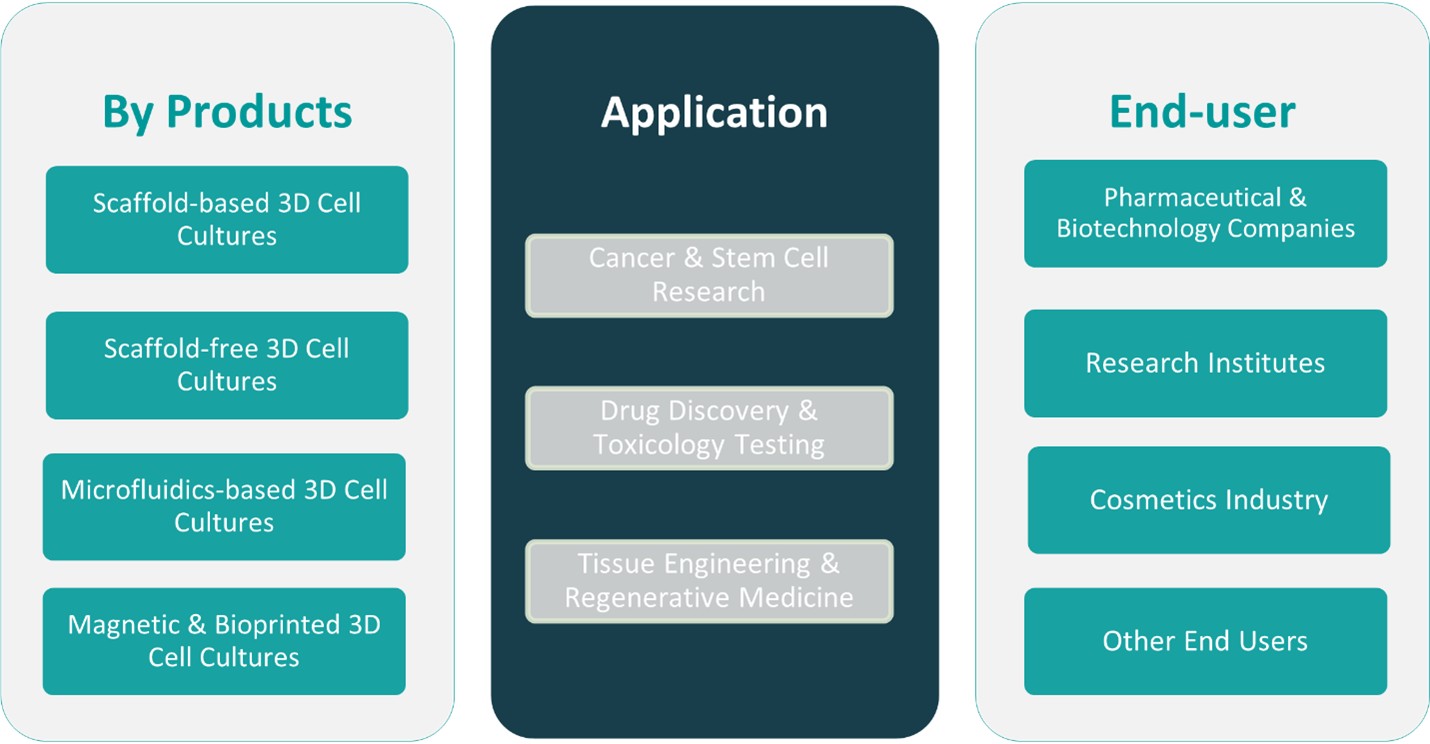
This report segments the Global 3D Cell Culture Market as follows:
Market Drivers
Rising Demand for Predictive In Vitro Models
One of the primary drivers propelling the global 3D cell culture market is the growing demand for more accurate and predictive in vitro models in biomedical research. Traditional 2D cell cultures fail to replicate the complexity of human tissues, often resulting in limited translational relevance to in vivo conditions. In contrast, 3D cell cultures provide enhanced cell-to-cell and cell-to-matrix interactions, closely mimicking the native cellular environment. This capability significantly improves the reliability of preclinical studies, helping researchers predict drug efficacy and toxicity more accurately. Consequently, pharmaceutical and biotechnology companies are increasingly integrating 3D culture systems into their R&D pipelines to reduce the high costs and failure rates associated with drug development.
Expanding Applications in Drug Discovery and Cancer Research
The rising application of 3D cell culture technologies in drug discovery and cancer research is another major growth driver. For instance, cancer research institutions in Germany have utilized 3D models to better understand tumor microenvironments and evaluate therapeutic responses, as noted in a survey by the European Medicines Agency. This has led to the widespread use of 3D models in oncology research for screening anti-cancer agents, evaluating therapeutic responses, and understanding disease progression. Moreover, regulatory bodies and research institutions are promoting the use of such models to improve the predictive validity of experimental data. As precision medicine continues to evolve, 3D cell cultures are playing a critical role in the development of patient-specific treatment strategies, thereby driving their adoption across multiple research domains.
Surge in Regenerative Medicine and Stem Cell Research
The surge in regenerative medicine and stem cell-based therapies has significantly boosted the demand for 3D cell culture systems. For instance, researchers in Japan have developed organoids using 3D culture platforms to model liver diseases, as reported by the Ministry of Health, Labour and Welfare. These cultures provide an optimal environment for the proliferation and differentiation of stem cells, which is essential for generating functional tissues and organs. As researchers strive to develop cell-based treatments for chronic diseases, including cardiovascular, neurological, and musculoskeletal disorders, the need for 3D platforms that support tissue architecture and cellular functionality becomes increasingly critical. Moreover, the development of organoids and tissue constructs for disease modeling and transplantation has added momentum to the use of 3D cultures in clinical and translational research. The synergy between stem cell technology and 3D culture methods is expected to accelerate breakthroughs in regenerative medicine.
Technological Advancements and Ethical Compliance
Technological innovations in scaffolds, hydrogels, bioreactors, and microfluidic systems have significantly enhanced the performance, reproducibility, and scalability of 3D cell culture techniques. These advancements enable researchers to design complex and dynamic models that more accurately simulate physiological processes, thereby attracting investment from both public and private sectors. At the same time, the growing emphasis on reducing animal testing in research and cosmetics has led to increased regulatory support for alternative testing methods, including 3D cell culture. This shift toward ethical and sustainable research practices has created a favorable environment for market growth. As industries strive to meet regulatory standards while maintaining scientific integrity, 3D cell culture emerges as a viable and efficient solution, further driving its global adoption.
Market Trends
Growing Integration of Organoids and Organ-on-a-Chip Models
One of the most prominent trends in the global 3D cell culture market is the growing integration of organoids and organ-on-a-chip technologies. Organoids, derived from stem cells, replicate the architecture and function of specific organs, making them valuable tools for disease modeling, drug testing, and personalized medicine. For instance, research institutions in the United States have developed liver organoids using 3D culture systems to study drug-induced liver injuries, as highlighted in a report by the National Institutes of Health (NIH). Similarly, organ-on-a-chip systems combine microfluidics with 3D cell cultures to simulate the mechanical and physiological functions of entire organ systems. These technologies provide more accurate data than traditional models, allowing researchers to predict human responses with greater precision. As demand for personalized therapies and non-animal testing solutions increases, the adoption of these advanced 3D models continues to rise across academic institutions, pharmaceutical companies, and contract research organizations.
Rising Collaborations and Strategic Partnerships
The global 3D cell culture market is witnessing a rise in collaborations and strategic partnerships among biotechnology firms, research institutions, and academic bodies. For instance, a partnership between a U.K.-based biotech company and academic institutions has led to the development of novel scaffold materials for tissue engineering, as highlighted in a report by the British Society for Cell Biology. These alliances aim to accelerate innovation, reduce R&D costs, and enhance access to advanced technologies. Joint efforts are focused on developing novel scaffold materials, expanding application areas, and standardizing protocols to ensure data reproducibility. Such partnerships also help smaller companies access broader distribution networks and regulatory expertise. As the market matures, these collaborative models are expected to play a vital role in shaping the future landscape of 3D cell culture technologies, fostering innovation and ensuring sustainable growth.
Increased Adoption in Toxicology and Cosmetic Testing
The increased use of 3D cell culture in toxicology studies and cosmetic testing is another notable trend driving market evolution. Regulatory pressures and public awareness around the ethical treatment of animals have led to a significant shift toward alternative testing methods. 3D cultures offer a more ethical, reproducible, and physiologically relevant platform for assessing toxicity and efficacy, particularly in the cosmetic and personal care industries. Companies are leveraging these models to comply with evolving safety regulations while maintaining product innovation. Additionally, the use of 3D cultures in environmental toxicology and chemical screening is gaining traction, as they allow for high-throughput testing and more realistic cellular responses, minimizing the need for animal testing and enhancing research reliability.
Emergence of Automation and High-Throughput Screening
Automation and high-throughput screening (HTS) are becoming increasingly integrated into 3D cell culture workflows, streamlining experimental processes and enhancing reproducibility. Advances in robotics, imaging technologies, and automated liquid handling systems have made it feasible to scale 3D cell culture experiments for large-scale drug screening applications. This trend addresses the historical challenge of low scalability associated with 3D cultures, enabling their use in industrial and clinical research environments. As drug discovery continues to demand more efficient and data-rich preclinical models, automated 3D cell culture platforms are emerging as essential tools. This technological shift is attracting growing investment from biopharma companies and diagnostic labs aiming to improve R&D productivity.
Market Challenges Analysis
High Cost and Technical Complexity of 3D Culture Systems
One of the primary challenges facing the global 3D cell culture market is the high cost and technical complexity associated with its technologies. Compared to conventional 2D culture methods, 3D systems require advanced equipment, specialized materials such as hydrogels and scaffolds, and skilled personnel to manage and interpret results. For instance, a report by the National Institute of Standards and Technology (NIST) highlights the financial burden of acquiring advanced equipment and specialized materials like hydrogels and scaffolds, which significantly increases operational costs for smaller research institutions.. The complexity of simulating intricate biological processes also demands continuous innovation and training, which adds to operational costs. These factors may slow down adoption in low-resource settings and limit broader market penetration.
Regulatory Uncertainty and Validation Barriers
Regulatory uncertainty and validation challenges further complicate the growth of the 3D cell culture market. While 3D culture models offer superior physiological relevance, regulatory bodies have not yet fully standardized guidelines for their use in drug testing and safety assessments. This creates a gap in regulatory acceptance, making it difficult for companies to rely solely on 3D models for clinical submissions or product approvals. Moreover, validating 3D models against established in vivo or 2D standards can be time-consuming and resource-intensive. The lack of universally accepted benchmarks makes it challenging to demonstrate equivalence or superiority in terms of accuracy and predictive value. As a result, many organizations continue to use 3D systems as supplementary tools rather than primary platforms, limiting their commercial and regulatory utility. Addressing these challenges through regulatory harmonization and industry-wide collaboration is essential for unlocking the full potential of 3D cell culture technologies.
Market Opportunities
The global 3D cell culture market presents substantial growth opportunities driven by the expanding scope of personalized medicine and patient-specific therapies. As the healthcare sector shifts toward precision-based treatment approaches, the demand for biologically relevant and patient-derived models is rapidly increasing. 3D cell culture systems, including organoids and spheroids, provide a promising platform for modeling individual patient conditions, testing drug responses, and tailoring treatment plans accordingly. This trend is particularly beneficial in oncology, where tumor heterogeneity poses significant challenges for standardized therapies. Moreover, the integration of 3D cultures into high-throughput drug screening workflows enables the pharmaceutical industry to accelerate preclinical testing while improving the accuracy of efficacy and toxicity assessments. As a result, companies investing in innovative 3D platforms and personalized cell-based assays are well-positioned to gain a competitive edge in a rapidly evolving research environment.
In addition, the growing interest in space biology, regenerative medicine, and biofabrication presents new avenues for market expansion. With rising investments in tissue engineering, 3D bioprinting, and the development of complex tissue constructs, 3D cell culture technologies are increasingly being utilized to support the creation of functional human tissues for transplantation and disease modeling. Governments and private institutions worldwide are allocating significant funding to advance regenerative therapies and reduce dependence on animal testing. The increased use of 3D cell cultures in stem cell research, toxicology studies, and cosmetic testing further enhances their application potential across various sectors. As automation and AI-driven analytics continue to evolve, the integration of these technologies with 3D culture platforms is expected to streamline experimental workflows, reduce labor costs, and generate reproducible, high-quality data. Collectively, these advancements offer promising opportunities for stakeholders to expand their research capabilities and commercialize innovative solutions in the global life sciences market.
Market Segmentation Analysis:
By Products:
The global 3D cell culture market is segmented by product into scaffold-based, scaffold-free, microfluidics-based, and magnetic & bioprinted 3D cell cultures. Among these, scaffold-based systems currently dominate the market, owing to their widespread use in academic and pharmaceutical research for supporting complex tissue development and cellular interactions. These platforms utilize materials like hydrogels and porous scaffolds to mimic the extracellular matrix, promoting realistic cellular behavior. Scaffold-free systems, such as spheroids, are gaining traction due to their simplicity, cost-effectiveness, and ability to simulate in vivo-like environments without the need for external matrices. Meanwhile, microfluidics-based 3D cultures—also known as organ-on-a-chip models—are increasingly adopted for their precision in mimicking organ-level functions and fluid dynamics. Magnetic and bioprinted 3D cell cultures represent the cutting-edge of tissue engineering, allowing for the controlled assembly of cells into functional tissues with high spatial accuracy. The expanding utility of these advanced platforms across biomedical research is expected to drive robust growth across all product segments.
By Application:
By application, the 3D cell culture market is segmented into cancer & stem cell research, drug discovery & toxicology testing, and tissue engineering & regenerative medicine. Cancer & stem cell research remains the largest application area, driven by the urgent need for more predictive tumor models and personalized therapy solutions. These 3D cultures enable researchers to observe tumor behavior, drug resistance, and cellular differentiation more accurately than traditional 2D cultures. Drug discovery & toxicology testing is another significant segment benefiting from the reproducibility and human-like responses of 3D models, which enhance preclinical screening efficiency while reducing animal testing. Additionally, tissue engineering and regenerative medicine are witnessing rapid adoption of 3D culture systems for developing organoids, bioengineered tissues, and cell-based therapies. This segment holds long-term potential, particularly with increasing investment in stem cell research and transplantation therapies. Collectively, these applications underscore the essential role of 3D cultures in transforming biomedical research and clinical development.
Segments:
Based on Products:
- Scaffold-based 3D Cell Cultures
- Scaffold-free 3D Cell Cultures
- Microfluidics-based 3D Cell Cultures
- Magnetic & Bioprinted 3D Cell Cultures
Based on Application:
- Cancer & Stem Cell Research
- Drug Discovery & Toxicology Testing
- Tissue Engineering & Regenerative Medicine
Based on End- User:
- Pharmaceutical & Biotechnology Companies
- Research Institutes
- Cosmetics Industry
- Other End Users
Based on the Geography:
- North America
- U.S.
- Canada
- Mexico
- Europe
- UK
- France
- Germany
- Italy
- Spain
- Russia
- Belgium
- Netherlands
- Austria
- Sweden
- Poland
- Denmark
- Switzerland
- Rest of Europe
- Asia Pacific
- China
- Japan
- South Korea
- India
- Australia
- Thailand
- Indonesia
- Vietnam
- Malaysia
- Philippines
- Taiwan
- Rest of Asia Pacific
- Latin America
- Brazil
- Argentina
- Peru
- Chile
- Colombia
- Rest of Latin America
- Middle East
- UAE
- KSA
- Israel
- Turkey
- Iran
- Rest of Middle East
- Africa
- Egypt
- Nigeria
- Algeria
- Morocco
- Rest of Africa
Regional Analysis
North America
North America held the largest share of the global 3D cell culture market in 2023, accounting for over 40% of the total revenue. This dominance is attributed to the region's advanced healthcare infrastructure, strong presence of pharmaceutical and biotechnology companies, and a robust funding environment for cell-based research. The United States leads the market, supported by continuous investments in oncology research, regenerative medicine, and organ-on-a-chip technologies. Furthermore, the presence of key market players and research institutions with access to advanced laboratory facilities accelerates the adoption of innovative 3D culture platforms. Government initiatives such as the 21st Century Cures Act and collaborations between academia and industry continue to drive market growth across North America.
Europe
Europe captured nearly 27% of the global 3D cell culture market in 2023, driven by the region’s strong focus on biomedical research, ethical shift away from animal testing, and the increasing number of research grants across EU nations. Countries such as Germany, the UK, and France are at the forefront of technological adoption in drug discovery and tissue engineering. Additionally, regulatory frameworks like REACH (Registration, Evaluation, Authorisation and Restriction of Chemicals) in the EU are promoting the use of alternative testing models, including 3D cell cultures. The rising prevalence of chronic diseases and the aging population further stimulate demand for stem cell and regenerative therapies across European healthcare systems.
Asia-Pacific
Asia-Pacific held an estimated 21% share of the global 3D cell culture market in 2023 and is anticipated to witness the fastest growth during the forecast period. This growth is primarily fueled by increasing R&D expenditure, government funding in biotechnology, and the growing pharmaceutical manufacturing base in countries such as China, Japan, South Korea, and India. Academic and research institutions in the region are rapidly adopting 3D culture techniques for cancer biology, stem cell research, and precision medicine. The expansion of clinical trial activities and contract research organizations (CROs) in the region also supports market growth by increasing demand for predictive and cost-effective preclinical testing platforms.
Latin America and Middle East & Africa
Latin America and the Middle East & Africa collectively accounted for approximately 12% of the global market share in 2023. Although still emerging, these regions show growing interest in advanced research technologies, supported by rising investments in academic research and healthcare modernization. Brazil, Mexico, and South Africa are among the countries expanding their research capabilities in oncology and toxicology. However, challenges such as limited funding, high technology costs, and lack of skilled personnel slightly hinder market penetration. Despite these constraints, increasing awareness of 3D cell culture benefits and international collaborations are expected to foster gradual growth in these regions.
Key Player Analysis
- Thermo Fisher Scientific, Inc.
- Merck KGaA
- Corning Incorporated
- Lonza
- Tecan Trading AG
- Avantor, Inc.
- Reprocell Inc.
- 3D Biotek LLC
- Emulate, Inc.
- Synthecon, Incorporated
- InSphero AG
- Kirkstall Ltd.
- Greiner Bio-One International GmbH
- PromoCell GmbH
Competitive Analysis
The competitive landscape of the global 3D cell culture market is characterized by the presence of several prominent players focused on innovation, product development, and strategic partnerships. Leading companies such as Thermo Fisher Scientific, Merck KGaA, Corning Incorporated, Lonza, Tecan Trading AG, Avantor, Inc., Reprocell Inc., 3D Biotek LLC, Emulate, Inc., Synthecon, InSphero AG, Kirkstall Ltd., Greiner Bio-One International GmbH, and PromoCell GmbH play a significant role in shaping the market dynamics. These players are actively investing in advanced 3D cell culture platforms, including scaffold-based systems, organ-on-chip technologies, and bioprinted models, to cater to evolving research and clinical applications. Their strategies often include mergers, acquisitions, and collaborations with research institutions and biotech firms to strengthen market positioning and expand global reach. Furthermore, many of these companies are focused on enhancing product portfolios by integrating automation and AI-driven tools to meet growing demand for high-throughput screening and precision medicine. The competition remains intense, with continuous emphasis on product quality, technological innovation, and regulatory compliance to sustain growth in this rapidly advancing market.
Recent Developments
- In April 2025, Lonza implemented a streamlined operating model to enhance its multimodality offerings, including cell and gene technologies.
- In February 2025, Reprocell's StemRNA™ Clinical Seed iPSCs were utilized in a Phase 3 trial for Gameto's Fertilo therapy.
- In March 2025, Avantor expanded its European manufacturing site to quadruple capacity for hydration solutions essential for cell culture media.
- In January 2025, Merck completed the acquisition of HUB Organoids Holding B.V., enhancing its portfolio with organoid technologies to improve drug development processes by providing earlier drug response data.
- In January 2025, Corning showcased its latest advancements in 3D cell culture, including spheroids and organoids, at the SLAS2025 conference.
Market Concentration & Characteristics
The global 3D cell culture market exhibits moderate to high market concentration, with a few established players holding significant shares due to their robust product portfolios, global distribution networks, and consistent investments in research and development. Market characteristics include a strong emphasis on innovation, particularly in scaffold-free, bioprinting, and microfluidics-based technologies, which enhance the physiological relevance of in vitro models. The market is also marked by rapid technological evolution, high entry barriers, and strong regulatory oversight, especially in pharmaceutical and clinical applications. Collaboration between academic institutions and industry leaders further drives technological advancements. Additionally, customer preference is shifting towards customized, user-friendly systems that support automation and scalability. While North America and Europe dominate in terms of technological adoption and infrastructure, the Asia-Pacific region is emerging with high growth potential driven by expanding research initiatives and healthcare investments. Overall, the market is dynamic, innovation-driven, and increasingly focused on personalized and translational medicine applications.
Report Coverage
The research report offers an in-depth analysis based on Products, Application, End-User and Geography. It details leading market players, providing an overview of their business, product offerings, investments, revenue streams, and key applications. Additionally, the report includes insights into the competitive environment, SWOT analysis, current market trends, as well as the primary drivers and constraints. Furthermore, it discusses various factors that have driven market expansion in recent years. The report also explores market dynamics, regulatory scenarios, and technological advancements that are shaping the industry. It assesses the impact of external factors and global economic changes on market growth. Lastly, it provides strategic recommendations for new entrants and established companies to navigate the complexities of the market.
Future Outlook
- The demand for organ-on-a-chip and microfluidics-based models is expected to surge, offering more dynamic and physiologically relevant environments for cell culture studies.
- Pharmaceutical companies are likely to increase investments in 3D culture technologies to improve the predictability of preclinical testing and reduce drug development costs.
- Collaboration between biotechnology firms and academic institutions will drive innovation and accelerate the commercialization of advanced 3D cell culture platforms.
- Growing applications in regenerative medicine will push the market forward, especially in areas such as tissue repair and organ reconstruction.
- The cosmetics industry will increasingly adopt 3D cell cultures for product testing, replacing traditional animal-based methods and complying with regulatory restrictions.
- The expansion of CROs and CDMOs offering 3D culture services will make these technologies more accessible to small and mid-sized life sciences companies.
- Enhanced imaging and analytical tools tailored for 3D cultures will improve data quality and interpretation, encouraging broader adoption.
- Increased government and private sector funding in biomedical research will contribute to the development and integration of 3D culture models.
- Customizable and modular 3D culture platforms will cater to specific research needs, boosting adoption across diverse application areas.
- Sustainability and reproducibility in cell culture models will become key differentiators, promoting the use of defined and xeno-free materials in 3D systems.
Request a Free Sample
Fill in your details and we'll send you a free sample report.
- Sample data tables & charts
- Research methodology
Need a Custom Version of This Report?
Tailor the scope, geography, or segments to your exact requirements.
- Custom geography or segment scope
- Direct access to our analyst team
Frequently Asked Questions
What is the current size of the Global 3D Cell Culture market?
What factors are driving the growth of the Global 3D Cell Culture market?
Who are the key participants in the market for 3D Cell Culture globally?
What are the main market factors driving the 3D Cell Culture sector?
What main market challenges prevent the 3D Cell Culture sector from growing?
What are the main market opportunities for the 3D Cell Culture sector?
Table of Content
Chapter 1. Report Introduction
- 1.1 Report Description & Purpose
- 1.1.1 Report Title & Market Definition
- 1.1.2 Unique Selling Propositions (USP) & Key Differentiators
- 1.1.3 Value Proposition for Stakeholders
- 1.2 Research Objectives
- 1.2.1 Market Sizing Objectives (Volume & Revenue)
- 1.2.2 Segmentation Objectives
- 1.2.3 Competitive Intelligence Objectives
- 1.2.4 Forecast & Scenario Objectives
- 1.3 Report Scope
- 1.3.1 3D Cell Culture Scope – Types & Subtypes Covered
- 1.3.2 Geographic Scope – Regions & Countries Covered
- 1.3.3 Historical Period, Base Year & Forecast Period (2023; forecast to 2032)
- 1.3.4 Inclusions & Exclusions
- 1.4 HS Code & Classification Framework
- 1.5 Currency, Units & Pricing Basis
- 1.6 Target Stakeholders
- 1.7 Limitations & Assumptions
Chapter 2. Executive Summary
- 2.1 Global 3D Cell Culture Market Snapshot
- 2.1.1 Market Size – Historical (2023) & Forecast (2023-2032) (2023: USD 1,200.00 million → 2032: USD 3,119.78 million)
- 2.1.2 Volume & Revenue – Global Totals
- 2.1.3 Key Market Highlights – Top Five Facts
- 2.2 3D Cell Culture Market Segmentation Snapshot
- 2.2.1 Market Split by Region – 2023 vs. 2032
- 2.3 Competitive Snapshot
- 2.3.1 Top 10 Players by Revenue Share – 2023
- 2.3.2 Top 10 Players by Volume Share – 2023
- 2.3.3 Recent Strategic Developments (18-Month Summary)
- 2.4 Key Investment Highlights & Strategic Conclusions
Chapter 3. 3D Cell Culture Market Dynamics & Industry Analysis
- 3.1 Market Overview & Context
- 3.1.1 3D Cell Culture Market Position in the Broader Automotive Value Chain
- 3.1.2 OEM vs. Replacement Market Dynamics
- 3.1.3 Market Maturity & Development Stage by Region
- 3.2 3D Cell Culture Market Drivers
- 3.3 3D Cell Culture Market Restraints & Challenges
- 3.4 3D Cell Culture Market Opportunities
- 3.5 Porter's Five Forces Analysis
- 3.5.1 Threat of New Entrants
- 3.5.2 Bargaining Power of Suppliers
- 3.5.3 Bargaining Power of Buyers
- 3.5.4 Threat of Substitutes
- 3.5.5 Competitive Rivalry – Intensity Assessment
- 3.6 3D Cell Culture Value Chain Analysis
- 3.6.1 Upstream – Raw Material/Input Suppliers
- 3.6.1.1 Raw Material/Input 1
- 3.6.1.2 Raw Material/Input 2
- 3.6.1.3 Raw Material/Input 3
- 3.6.2 Midstream – Production/Manufacturing/Service Delivery
- 3.6.2.1 Production/Process Overview
- 3.6.2.2 Key Facility Locations & Capacity by Manufacturer
- 3.6.3 Downstream – Distribution & End Consumer
- 3.6.3.1 Primary Channel – B2B/OEM
- 3.6.3.2 Secondary Channels – Dealer, Retail, Online, Direct
- 3.6.4 Value Chain Profitability Analysis
- 3.6.1 Upstream – Raw Material/Input Suppliers
- 3.7 PESTEL Analysis
- 3.7.1 Political Factors
- 3.7.2 Economic Factors
- 3.7.3 Social Factors
- 3.7.4 Technological Factors
- 3.7.5 Environmental Factors
- 3.7.6 Legal Factors
- 3.8 3D Cell Culture Supply Chain Analysis
- 3.8.1 Raw Material/Input Supply Risk Assessment
- 3.8.2 Manufacturing Concentration Risk (Geographic Exposure)
- 3.8.3 Trade Disruption Impact Analysis
- 3.9 Regulatory & Policy Landscape
Note: The regulatory and policy landscape section covers regulations based on their applicability to the market, 3D Cell Culture category, geography, and scope of the study. Only regulatory frameworks with a material impact on operations, compliance, trade, sustainability, or market access are analyzed in detail.
Chapter 4. Key Investment Pockets & Opportunity Analysis
- 4.1 3D Cell Culture Market Attractiveness Analysis
- 4.1.1 By Region – Investment Attractiveness Matrix (Volume × CAGR)
- 4.2 Absolute Revenue Growth Opportunity
- 4.2.1 By Region – Absolute USD Growth Through 2032
- 4.3 Incremental Volume Opportunity
- 4.3.1 By Region – Incremental Volume Through 2032
- 4.3.2 Segment – Incremental Volume
- 4.4 Emerging Submarket Opportunity Deep Dive (Subject to Applicability)
- 4.5 Emerging Market Opportunity Scorecards
- 4.5.1 United States
- 4.5.2 Europe
- 4.5.3 Asia
- 4.5.4 Middle East & Africa
Note: Emerging Market Opportunity Scorecards will be included based on relevance and strategic importance. Regions listed are indicative and may vary depending on data availability and market dynamics.
Chapter 5. 3D Cell Culture Import-Export Analysis & Trade Flows
- 5.1 Global Trade Overview
- 5.1.1 Global Export Value by Country (2023)
- 5.1.2 Global Export Volume by Country (2023)
- 5.1.3 Global Import Value by Country (2023)
- 5.1.4 Global Import Volume by Country (2023)
- 5.1.5 Net Trade Balance by Country (2023)
- 5.2 Export Analysis – Segment
- 5.2.1 Type 1 (HS Code)
- 5.2.2 Type 2 (HS Code)
- 5.2.3 Type 3 (HS Code)
- 5.2.4 Type 4 (HS Code)
- 5.2.5 Type 5 (HS Code)
- 5.3 Import Analysis – Segment
- 5.3.1 Type 1 (HS Code)
- 5.3.2 Type 2 (HS Code)
- 5.3.3 Type 3 (HS Code)
- 5.3.4 Type 4 (HS Code)
- 5.3.5 Type 5 (HS Code)
- 5.4 Average Unit Trade Prices
- 5.4.1 Average Export Price – Segment & Country
- 5.4.2 Average Import Price – Segment & Source Country
- 5.4.3 Price Trends (2023)
- 5.5 Key Trade Route Analysis
- 5.5.1 Trade Route 1
- 5.5.2 Trade Route 2
- 5.5.3 Trade Route 3
- 5.5.4 Trade Route 4
- 5.5.5 Trade Route 5
- 5.6 Trade Policy Impact Assessment
- 5.6.1 US Anti-Dumping & Section 301 Tariffs
- 5.6.2 EU Customs Union Impact
- 5.6.3 Major Free Trade Agreements
- 5.6.4 USMCA Rules of Origin
Note: Trade policy analysis will be included only where relevant to the 3D Cell Culture market.
Chapter 6. Competitive Landscape & Company Benchmarking
- 6.1 3D Cell Culture Market Concentration & Structure
- 6.1.1 Herfindahl-Hirschman Index (HHI) – vs. 2023
- 6.1.2 Tier 1, Tier 2 & Tier 3 Market Structure
- 6.1.3 Global, Regional & Local Player Dynamics
- 6.2 3D Cell Culture Market Share Analysis – 2023
- 6.2.1 Global Revenue Share by Company
- 6.2.2 Global Volume Share by Company
- 6.2.3 Regional Revenue Share
- 6.2.4 Market Share Evolution ( vs. 2023)
- 6.2.5 OEM Segment Share by Company
- 6.2.6 Replacement Segment Share by Company
- 6.3 Production/Delivery Capacity & Facility Analysis
- 6.3.1 Global Installed Capacity
- 6.3.2 Capacity Utilization Rates
- 6.3.3 Production/Output Volume
- 6.3.4 Facility Locations & Capacity Map
- 6.3.5 Planned Capacity Additions
- 6.4 3D Cell Culture Competitive Benchmarking Matrix
- 6.4.1 Revenue, Volume, CAGR & Profitability Comparison
- 6.4.2 Channel Revenue Mix
- 6.4.3 Geographic Revenue Exposure
- 6.4.4 R&D Intensity
- 6.4.5 Sustainability Maturity
- 6.5 Strategic Developments in 3D Cell Culture (Last 24 Months)
- 6.5.1 Mergers, Acquisitions & Divestments
- 6.5.2 New 3D Cell Culture Launches
- 6.5.3 Facility Expansions
- 6.5.4 Strategic Alliances, Joint Ventures & Partnerships
- 6.5.5 Distribution Expansion & Market Entry
- 6.5.6 Sustainability & ESG Initiatives
- 6.6 Competitive Strategy Mapping
- 6.6.1 Leader, Challenger, Follower & Niche Classification
- 6.6.2 Pricing Strategy Comparison
- 6.6.3 Channel Strategy Matrix
Note: Strategic developments are included based on their materiality and the availability of reliable information.
Chapter 7. Global 3D Cell Culture Market – By Distribution Channel
- 7.1 Segment Overview
- 7.1.1 Volume & Revenue Split by Channel (2023 & 2032)
- 7.1.2 Channel Mix Evolution (2023-2032)
Chapter 8. Regional Market Analysis – Global Overview
- 8.1 Global Regional Overview
- 8.1.1 Regional Volume Share
- 8.1.2 Regional Revenue Share
- 8.1.3 Regional Volume by Region
- 8.1.4 Regional Revenue by Region
- 8.1.5 Regional Forecast Through 2032
- 8.2 Cross-Regional Segment Analysis
- 8.2.1 By Distribution Channel
- 8.2.2 By Brand/Price Tier
Chapter 9. North America 3D Cell Culture Market
- 9.1 United States
- 9.2 Canada
- 9.3 Mexico
Chapter 10. Europe 3D Cell Culture Market
- 10.1 Germany
- 10.2 France
- 10.3 Italy
- 10.4 United Kingdom
- 10.5 Spain
- 10.6 Poland
- 10.7 Russia
- 10.8 Netherlands
- 10.9 Belgium
- 10.10 Sweden
- 10.11 Denmark
- 10.12 Norway
- 10.13 Rest of Europe
Chapter 11. Asia Pacific 3D Cell Culture Market
- 11.1 China
- 11.2 India
- 11.3 Japan
- 11.4 South Korea
- 11.5 Thailand
- 11.6 Indonesia
- 11.7 Vietnam
- 11.8 Malaysia
- 11.9 Australia
- 11.10 Rest of Asia Pacific
Chapter 12. Latin America 3D Cell Culture Market
- 12.1 Brazil
- 12.2 Argentina
- 12.3 Colombia
- 12.4 Chile
- 12.5 Rest of Latin America
Chapter 13. Middle East 3D Cell Culture Market
- 13.1 Saudi Arabia
- 13.2 United Arab Emirates
- 13.3 Turkey
- 13.4 Israel
- 13.5 Iran
- 13.6 Rest of the Middle East
Chapter 14. Africa 3D Cell Culture Market
- 14.1 South Africa
- 14.2 Egypt
- 14.3 Nigeria
- 14.4 Morocco
- 14.5 Rest of Africa
Chapter 15. 3D Cell Culture Company Profiles
- 15.1 [Company 01]
- 15.1.1 Company Overview
- 15.1.2 Key Management Personnel
- 15.1.3 Products & Services Portfolio
- 15.1.4 Financial Performance
- 15.1.5 Key Market Focus & Geographic Presence
- 15.1.6 Recent Developments & Strategic Initiatives
Note: The company profile list is preliminary and may change based on research findings, market developments, data availability, and client requirements.
Chapter 16. Appendices
- Appendix A – List of Abbreviations & Acronyms
- Appendix B – Industry Classification Code Reference – Full Series
- Appendix C – Production & Capacity Data Tables
- Appendix D – End-Use & Demand Base Tables
- Appendix E – Consumption & Replacement Rate Assumptions
- Appendix F – ASP Reference Tables
- Appendix G – Manufacturing & Facility Database
- Appendix H – Import-Export Data Tables
- Appendix I – Regulatory Summary Tables
- Appendix J – Primary Research Participant List (Anonymized)
- Appendix K – Primary Research Questionnaire Framework
- Appendix L – Data Sources & Bibliography
- Appendix M – Market Size Divergence & Source Comparison
Chapter 17. Research Methodology
- 17.1 Research Framework & Philosophy
- 17.2 Secondary Research – Sources, Hierarchy & Data Extraction
- 17.3 Data Modeling – Bottom-Up & Top-Down Market Sizing
- 17.4 Primary Research – Stakeholder Framework, LOI & Sample Sizes
- 17.5 Forecast Methodology – Regression, Scenario & Sensitivity Analysis
- 17.6 Quality Control – Four-Layer Validation Framework
- 17.7 Limitations & Standard Assumptions
- 17.8 Disclaimer
