
Market Overview
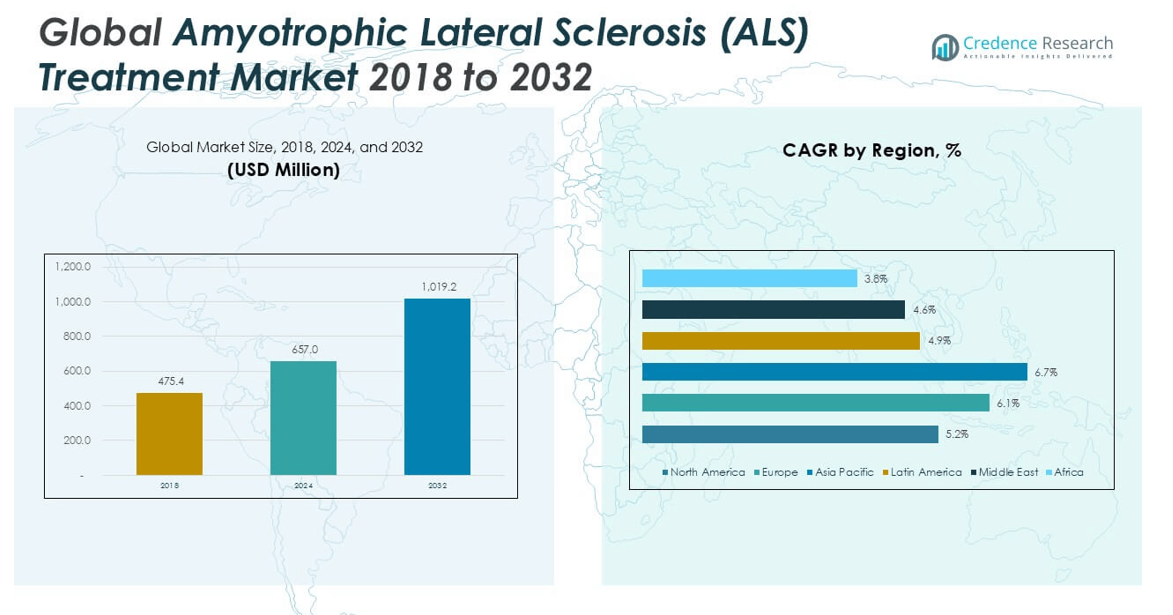
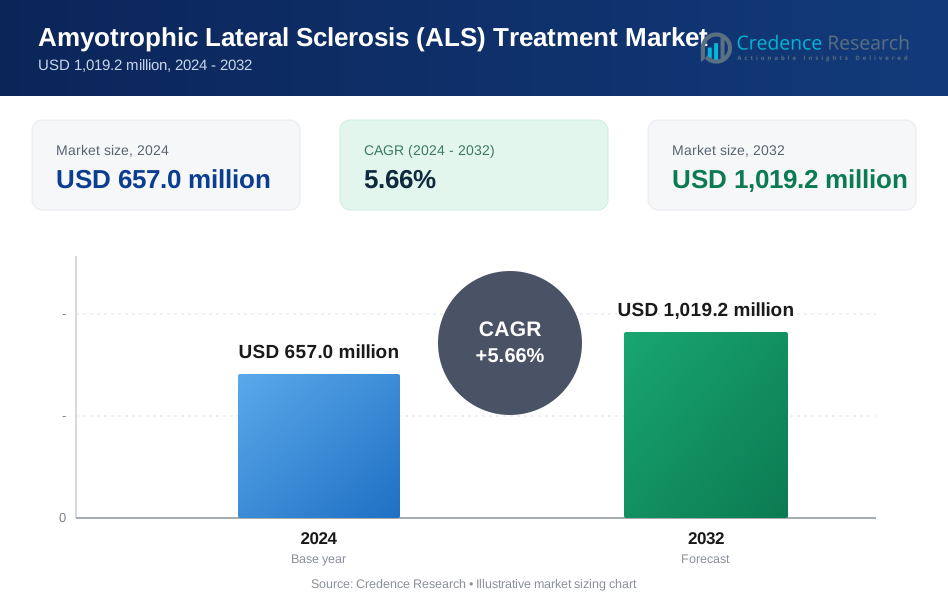
The Global Amyotrophic Lateral Sclerosis (ALS) Treatment Market is projected to grow from USD 657.0 million in 2024 to an estimated USD 1,019.2 million by 2032, with a compound annual growth rate (CAGR) of 5.66% from 2025 to 2032.
| REPORT ATTRIBUTE | DETAILS |
|---|---|
| Historical Period | 2020-2023 |
| Base Year | 2024 |
| Forecast Period | 2025-2032 |
| Amyotrophic Lateral Sclerosis (ALS) Treatment Market Size 2024 | USD 657.0 million |
| Amyotrophic Lateral Sclerosis (ALS) Treatment Market, CAGR | 5.66% |
| Amyotrophic Lateral Sclerosis (ALS) Treatment Market Size 2032 | USD 1,019.2 million |
The market is witnessing a surge in drug approvals, supportive regulatory frameworks, and collaboration among pharmaceutical companies for the development of novel therapeutics. Trends such as the increasing use of stem cell therapies, gene therapy, and biomarkers for ALS diagnosis and monitoring are shaping the future landscape. Additionally, the integration of digital health tools and AI-based platforms is helping in better tracking of disease progression and personalized treatment approaches, thereby improving patient outcomes.
Geographically, North America holds the largest market share due to its advanced healthcare infrastructure, increased healthcare expenditure, and strong presence of key players. Europe follows closely, supported by favorable reimbursement policies and active clinical research. Meanwhile, the Asia-Pacific region is expected to witness the fastest growth owing to improving healthcare access, rising patient awareness, and a growing elderly population. Key players in the market include Mitsubishi Tanabe Pharma, Amylyx Pharmaceuticals, Cytokinetics, BrainStorm Cell Therapeutics, and Biogen Inc.
Market Insights
- The market is projected to grow from USD 657.0 million in 2024 to USD 1,019.2 million by 2032, registering a CAGR of 5.66% from 2025 to 2032.
- Rising prevalence of ALS, along with early diagnosis initiatives and growing awareness, is driving demand for effective treatment options.
- Technological advancements in gene therapies, stem cell research, and digital health tools are shaping the future of ALS treatment.
- Increased R\&D investments and regulatory support for orphan drugs are accelerating the development of novel therapeutics.
- High drug development costs, limited patient population, and complex disease biology continue to challenge therapeutic innovation.
- North America holds the largest market share, supported by advanced infrastructure, high healthcare spending, and active clinical trials.
- Asia Pacific is expected to witness the fastest growth due to improving healthcare access, rising elderly population, and growing regional investments.
Market Drivers
Rising Disease Prevalence and Aging Population Drive Demand for Effective ALS Therapies
The Global Amyotrophic Lateral Sclerosis (ALS) Treatment Market is experiencing growth due to the increasing incidence of ALS, especially among the aging population. ALS primarily affects individuals between the ages of 40 and 70, making age a significant risk factor. The expanding geriatric demographic worldwide has created a larger patient pool, leading to higher demand for diagnostic services and long-term treatment options. Early diagnosis and improved disease awareness have enabled more patients to access therapy at earlier stages. It continues to benefit from public and private programs that raise awareness about neurodegenerative conditions. Countries with aging populations, such as Japan and several European nations, are contributing significantly to this trend.
- For instance, there were approximately 45,000 people diagnosed with ALS worldwide in 2024, with around 15,000 patients aged 60 and above in countries experiencing strong demographic aging.
Pipeline Expansion and Regulatory Support Accelerate Therapeutic Innovation
An active pipeline of innovative therapies is propelling the Global Amyotrophic Lateral Sclerosis (ALS) Treatment Market forward. Multiple pharmaceutical companies are developing disease-modifying drugs and gene therapies to address unmet clinical needs. Fast-track and orphan drug designations granted by regulatory bodies such as the FDA and EMA encourage quicker development and approval. It benefits from increased R\&D funding aimed at targeting the molecular basis of ALS, resulting in novel mechanisms of action. Recent approvals and breakthroughs, including combination therapies and extended-release formulations, have helped expand treatment choices. These developments support long-term growth and improve patient quality of life.
- For instance, in 2024, regulatory authorities approved 3 new ALS therapies and granted orphan drug designation to 12 investigational ALS treatments, reflecting the high level of ongoing innovation in the field.
Advancements in Biomarkers and Diagnostic Technologies Improve Patient Outcomes
Improved diagnostic capabilities and the emergence of reliable biomarkers have enhanced the treatment landscape of the Global Amyotrophic Lateral Sclerosis (ALS) Treatment Market. Early detection plays a critical role in disease management and in the timing of therapy initiation. It now benefits from the integration of imaging technologies, genetic testing, and fluid-based biomarkers that assist in tracking disease progression. These tools have allowed physicians to tailor treatments more accurately, improving therapeutic outcomes. Technology-driven solutions are increasing diagnostic accuracy and reducing delays in treatment onset. This progress strengthens physician confidence and supports broader clinical adoption of advanced therapies.
Rising Investment from Public and Private Sectors Supports Market Growth
Growing investments from government bodies, academic institutions, and biopharmaceutical companies are bolstering the Global Amyotrophic Lateral Sclerosis (ALS) Treatment Market. Research grants and healthcare funding continue to support initiatives aimed at understanding disease pathology and accelerating drug discovery. It benefits from public-private partnerships that facilitate data sharing and clinical trial acceleration. Venture capital firms and philanthropic organizations are contributing significant financial resources to ALS-related projects. This funding environment fuels the growth of biotech startups focused on ALS and supports the commercial development of promising therapies. Increasing collaboration across stakeholders is strengthening the innovation pipeline and improving patient access to treatment.
Market Trends
Emergence of Disease-Modifying Therapies Is Shifting Treatment Paradigms
The Global Amyotrophic Lateral Sclerosis (ALS) Treatment Market is experiencing a shift from symptomatic treatment toward disease-modifying therapies. New drug candidates are targeting the underlying mechanisms of ALS, including oxidative stress, mitochondrial dysfunction, and glutamate toxicity. These therapies aim to slow disease progression rather than only managing symptoms. It is witnessing growing interest in small molecule drugs and biologics that can influence disease pathways at the cellular level. Recent product approvals and clinical trials indicate a strong pipeline with the potential to improve survival rates and patient outcomes. This trend reflects a strategic focus on innovation that addresses long-standing therapeutic gaps.
- For instance, as of 2024, over 25 disease-modifying drug candidates for ALS were in various stages of clinical trials globally, including small molecules and biologics targeting key disease pathways.
Integration of Digital Health and Remote Monitoring Is Enhancing Patient Management
The adoption of digital health platforms and remote patient monitoring is transforming the way ALS is managed. Wearable devices, mobile apps, and telehealth services help clinicians track disease progression and modify treatment plans in real-time. It is seeing increased integration of AI and data analytics tools that collect and interpret patient-reported outcomes and motor function metrics. These digital advancements enable earlier intervention, support clinical decision-making, and reduce the burden on healthcare systems. They are especially valuable for patients with limited mobility, allowing consistent care delivery without frequent hospital visits. This trend strengthens the market’s responsiveness to evolving patient needs.
- For instance, a 2024 report from the ALS Association indicated that more than 15,000 ALS patients in the United States were actively using digital health platforms and remote monitoring devices to manage their condition.
Expansion of Global Clinical Trials Is Fueling Therapeutic Discoveries
Global clinical trial activity is expanding, contributing to a broader range of therapeutic options in the Global Amyotrophic Lateral Sclerosis (ALS) Treatment Market. Pharmaceutical and biotech companies are increasing collaborations with academic institutions and research hospitals to conduct multicenter trials. It benefits from international trial networks that accelerate recruitment and improve data diversity. Regulatory agencies are supporting these efforts by simplifying approval processes for ALS trials. Clinical research now includes a focus on combination therapies and gene-editing technologies. This momentum enhances global innovation and increases the likelihood of breakthrough treatments.
Personalized Medicine and Genetic Profiling Are Reshaping the Treatment Landscape
The rise of personalized medicine is redefining therapeutic approaches in ALS care. Advances in genetic profiling have revealed specific mutations associated with ALS subtypes, leading to more targeted treatment strategies. It is adapting to these changes by incorporating precision medicine tools into clinical practice. Biopharmaceutical companies are designing drugs for specific patient populations based on genetic markers and disease progression patterns. This tailored approach improves treatment efficacy and minimizes side effects. The growing use of companion diagnostics supports this trend and creates new opportunities for specialized care models.
Market Challenges
High Drug Development Costs and Limited Commercial Viability Impede Innovation
The Global Amyotrophic Lateral Sclerosis (ALS) Treatment Market faces significant challenges due to high R\&D costs and low commercial returns. Drug development for ALS involves complex clinical trials with uncertain outcomes, often requiring long timelines and substantial investment. It suffers from limited market size, which restricts the potential return on investment for pharmaceutical companies. These factors deter some firms from pursuing ALS-focused research, despite unmet clinical needs. The low prevalence of the disease makes patient recruitment for trials difficult, further slowing innovation. Companies also encounter difficulties in pricing new therapies while maintaining affordability and access.
- For instance, in 2024, the average authorization time for new feed enzyme products in the European Union reached 540 days, with companies investing approximately 12 million US dollars in legal and scientific resources to secure product approval.
Lack of Curative Treatments and Complex Disease Biology Limit Therapeutic Progress
Despite advancements, the ALS treatment landscape remains limited to a few approved drugs with modest efficacy. The Global Amyotrophic Lateral Sclerosis (ALS) Treatment Market struggles with the absence of curative therapies due to the disease's complex and poorly understood pathophysiology. It deals with challenges in identifying consistent biomarkers and understanding disease heterogeneity across patients. This complexity hampers drug targeting and slows therapeutic breakthroughs. Delayed diagnosis and limited early-stage intervention further reduce treatment effectiveness. The need for multi-disciplinary care and long-term support places a burden on healthcare systems and patients alike.
Market Opportunities
Emerging Gene and Cell Therapies Offer New Avenues for Treatment Innovation
The Global Amyotrophic Lateral Sclerosis (ALS) Treatment Market holds strong potential in gene and cell-based therapies. Breakthroughs in CRISPR technology, stem cell research, and RNA-targeted therapies are opening new possibilities for disease modification. It is beginning to benefit from clinical trials exploring the correction of genetic mutations such as SOD1 and C9orf72, which are linked to familial ALS. These advanced therapies offer the prospect of altering disease progression rather than managing symptoms alone. Early success in trial phases is encouraging investors and biopharmaceutical firms to enter this segment. The continued development of delivery platforms and improved safety profiles could further strengthen this opportunity.
Strategic Collaborations and Orphan Drug Incentives Can Expand Market Reach
Supportive regulatory frameworks and global health initiatives create favorable conditions for market expansion. The Global Amyotrophic Lateral Sclerosis (ALS) Treatment Market can leverage orphan drug designations, fast-track approvals, and funding incentives provided by agencies such as the FDA and EMA. It stands to benefit from increased partnerships between academic institutions, biotech startups, and large pharmaceutical companies. These collaborations help reduce development risk and improve access to novel compounds. Market players can also explore underpenetrated regions where diagnostic awareness and access to care are improving. Strengthening global networks and clinical trial diversity can unlock further growth potential.
Market Segmentation Analysis
By Type
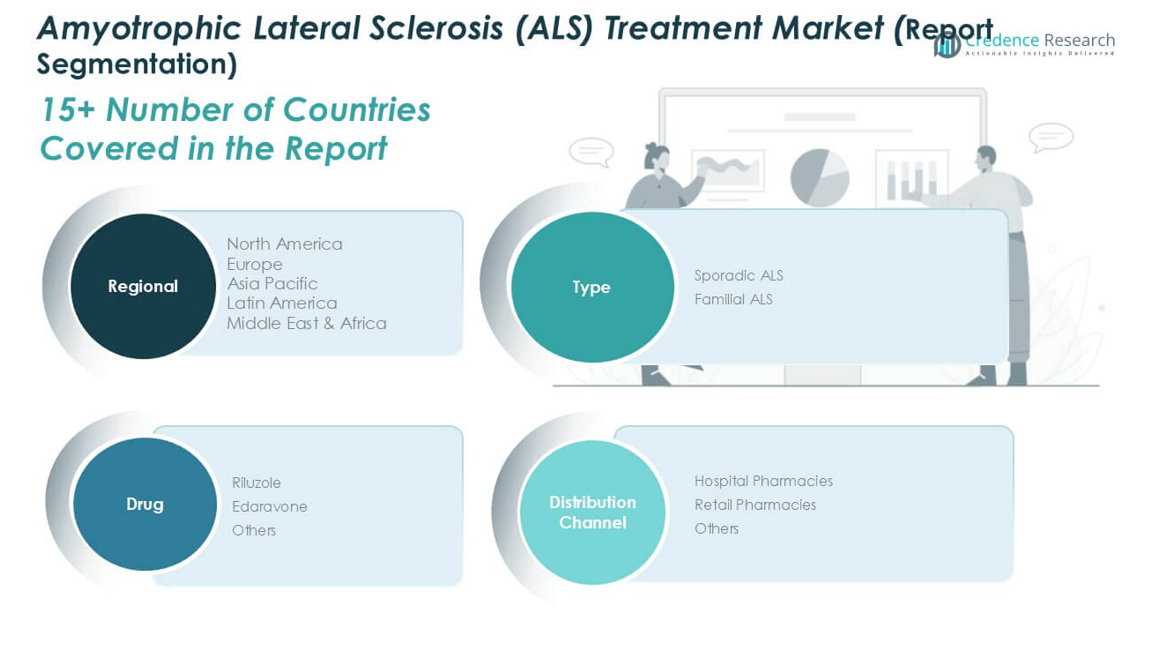
The Global Amyotrophic Lateral Sclerosis (ALS) Treatment Market is segmented into sporadic ALS and familial ALS. Sporadic ALS accounts for the dominant market share due to its higher prevalence, representing over 90% of all ALS cases worldwide. It continues to generate strong demand for available treatments, with diagnosis rates rising through improved awareness and access to care. Familial ALS, though rare, is gaining attention due to advancements in genetic research and targeted therapies. Innovations focused on known mutations such as SOD1 and C9orf72 are driving development in this segment. Market players are expanding their research pipelines to address both segments with tailored approaches.
- For instance, company disclosures from leading animal nutrition firms indicate that global phytase enzyme production reached approximately 45,000 metric tons in 2023, underscoring its prominence in feed formulations.
By Drug
The market is divided into Riluzole, Edaravone, and others. Riluzole remains the most widely prescribed drug due to its early regulatory approval and established safety profile. Edaravone has emerged as a significant competitor, offering neuroprotective effects with a distinct mechanism of action. It is seeing rising uptake among patients with early-stage ALS. The "others" segment includes pipeline drugs, off-label medications, and emerging gene or cell-based therapies, which hold long-term potential. Market growth in this area depends on ongoing clinical trials and regulatory outcomes.
- For instance, government export data show that over 80,000 metric tons of dry animal feed enzymes were shipped globally in 2023, highlighting the dominance of this form in commercial feed supply chains.
By Distribution Channel
Based on distribution, the market includes hospital pharmacies, retail pharmacies, and others. Hospital pharmacies dominate due to their direct link to ALS clinics and specialized care facilities. It reflects higher drug volumes dispensed during treatment cycles and hospital-based therapy initiation. Retail pharmacies offer convenience and improved access for outpatient refills, while the "others" segment includes online platforms and specialty pharmacies catering to chronic care needs. Distribution dynamics are shifting gradually with telehealth expansion and personalized medicine trends.
Segments
Based on Type
- Sporadic ALS
- Familial ALS
Based on Drug
- Riluzole
- Edaravone
- Others
Based on Distribution Channel
- Hospital Pharmacies
- Retail Pharmacies
- Others
Based on Region
- North America
- U.S.
- Canada
- Mexico
- Europe
- UK
- France
- Germany
- Italy
- Spain
- Russia
- Belgium
- Netherlands
- Austria
- Sweden
- Poland
- Denmark
- Switzerland
- Rest of Europe
- Asia Pacific
- China
- Japan
- South Korea
- India
- Australia
- Thailand
- Indonesia
- Vietnam
- Malaysia
- Philippines
- Taiwan
- Rest of Asia Pacific
- Latin America
- Brazil
- Argentina
- Peru
- Chile
- Colombia
- Rest of Latin America
- Middle East
- UAE
- KSA
- Israel
- Turkey
- Iran
- Rest of Middle East
- Africa
- Egypt
- Nigeria
- Algeria
- Morocco
- Rest of Africa
Regional Analysis
North America Amyotrophic Lateral Sclerosis (ALS) Treatment Market
North America holds the largest share in the Amyotrophic Lateral Sclerosis (ALS) Treatment Market, accounting for 32.2% of the global market in 2024. It is projected to grow from USD 211.60 million in 2024 to USD 315.96 million by 2032, registering a CAGR of 5.2%. The United States leads this region due to its strong healthcare infrastructure, high disease awareness, and favorable reimbursement policies. Strong research funding, early adoption of innovative therapies, and active participation in clinical trials support market leadership. It also benefits from the presence of key pharmaceutical companies with a focus on neurodegenerative diseases. Continued investment in gene therapy and digital health platforms will likely sustain the region’s dominance.
Europe Amyotrophic Lateral Sclerosis (ALS) Treatment Market
Europe commands a market share of 26.8% and is estimated to grow from USD 176.03 million in 2024 to USD 281.41 million in 2032, with a CAGR of 6.1%. Countries such as Germany, the UK, and France drive growth through robust regulatory support and strong emphasis on orphan drug development. It benefits from government-backed healthcare programs and widespread access to ALS centers. Pharmaceutical firms are leveraging EU-based clinical networks to advance drug trials and diagnostics. Ongoing collaborations between research institutions and biotech companies are fueling therapy innovation. The increasing elderly population across Western Europe supports sustained demand.
Asia Pacific Amyotrophic Lateral Sclerosis (ALS) Treatment Market
Asia Pacific represents 22.1% of the global ALS treatment market and is projected to grow from USD 145.59 million in 2024 to USD 244.61 million by 2032, achieving the highest CAGR of 6.7%. Japan, China, and India are key contributors, driven by growing healthcare investments and rising awareness. It benefits from increasing government initiatives, improved diagnostic infrastructure, and local clinical trials. Japan leads in terms of drug availability and early access programs. Expanding insurance coverage and the rise in ALS-focused non-profit organizations are improving access to care. Market players are targeting the region to tap into its large patient pool and unmet medical needs.
Latin America Amyotrophic Lateral Sclerosis (ALS) Treatment Market
Latin America holds a 9.6% market share and is projected to expand from USD 62.89 million in 2024 to USD 91.73 million by 2032, at a CAGR of 4.9%. Brazil and Mexico dominate this region with increasing government support and improved public healthcare access. It faces challenges such as limited specialist availability and delayed diagnosis, yet rising awareness is improving the outlook. International partnerships and clinical studies are slowly entering the region. The demand for cost-effective treatment solutions is prompting generic drug entry. Economic stabilization and targeted investments may accelerate market access over the forecast period.
Middle East Amyotrophic Lateral Sclerosis (ALS) Treatment Market
The Middle East accounts for 6.5% of the global ALS market and is forecast to grow from USD 42.76 million in 2024 to USD 61.15 million by 2032, registering a CAGR of 4.6%. The UAE and Saudi Arabia lead regional growth due to improving healthcare infrastructure and policy reforms. It is benefiting from rising investments in specialty care services and digital health initiatives. Awareness campaigns and education efforts are gradually reducing diagnosis delays. Expansion of neurology clinics and import of advanced therapeutics support market development. Though still in early stages, the market holds long-term growth potential with sustained reforms.
Africa Amyotrophic Lateral Sclerosis (ALS) Treatment Market
Africa holds the smallest share of the global ALS treatment market at 2.8%, with projected growth from USD 18.14 million in 2024 to USD 24.36 million by 2032, at a CAGR of 3.8%. It remains an underpenetrated market due to limited infrastructure, low diagnosis rates, and restricted access to therapy. South Africa shows relatively stronger growth, supported by urban healthcare development and NGO-driven awareness initiatives. It faces challenges related to affordability and trained specialists. International aid programs and strategic outreach by pharmaceutical firms are slowly improving access. Future progress depends on regional health investment and public-private collaboration.
Key players
- AB Science
- Avicena Group
- Biogen
- BrainStorm Therapeutics
- Covis Pharmaceutical Inc.
- Cytokinetics Inc.
- Eisai Co. Ltd.
- GSK plc
- Ionis Pharmaceuticals, Inc.
- Mitsubishi Tanabe Pharma Corp.
- Neuralstem Inc.
- Newron Pharmaceuticals S.p.A.
Competitive Analysis
The Global Amyotrophic Lateral Sclerosis (ALS) Treatment Market is moderately competitive, with key players focusing on expanding their drug pipelines and securing regulatory approvals. It features a mix of established pharmaceutical companies and emerging biotech firms that are investing in R\&D to develop disease-modifying therapies and personalized treatment approaches. Companies such as Biogen, Mitsubishi Tanabe Pharma, and Cytokinetics lead the market with strong portfolios and global distribution. Emerging players like BrainStorm Therapeutics and Ionis Pharmaceuticals are gaining traction through clinical innovations targeting genetic mutations and neuroinflammation. Strategic collaborations, licensing agreements, and orphan drug incentives continue to shape competitive dynamics. Firms are also enhancing market presence through partnerships with academic institutions and healthcare providers to advance clinical trials and improve treatment access.
Recent Developments
- In January 2025, AB Science initiated a new Phase III clinical trial (AB23005) for masitinib in Amyotrophic Lateral Sclerosis (ALS), aligning the trial design with guidance from both the FDA and EMA to enhance patient targeting and improve trial outcomes. This trial, which will replace a previous study, aims to address challenges related to trial design and patient selection in ALS research.
Market Concentration and Characteristics
The Global Amyotrophic Lateral Sclerosis (ALS) Treatment Market exhibits moderate market concentration, with a few leading pharmaceutical and biotechnology companies holding significant revenue shares. It is characterized by high entry barriers due to complex clinical trial requirements, regulatory challenges, and limited patient populations. The market focuses heavily on innovation, driven by unmet medical needs and demand for disease-modifying therapies. It shows strong reliance on orphan drug designations and accelerated approval pathways. Strategic partnerships, clinical trial advancements, and investment in precision medicine define the competitive environment. The market remains research-intensive, with companies continuously seeking novel targets and improved therapeutic approaches.
Report Coverage
The research report offers an in-depth analysis based on Type, Drug, Distribution Channel and Region. It details leading market players, providing an overview of their business, product offerings, investments, revenue streams, and key applications. Additionally, the report includes insights into the competitive environment, SWOT analysis, current market trends, as well as the primary drivers and constraints. Furthermore, it discusses various factors that have driven market expansion in recent years. The report also explores market dynamics, regulatory scenarios, and technological advancements that are shaping the industry. It assesses the impact of external factors and global economic changes on market growth. Lastly, it provides strategic recommendations for new entrants and established companies to navigate the complexities of the market.
Future Outlook
- The market will see a strong shift toward therapies that aim to slow disease progression rather than manage symptoms alone. Companies will invest heavily in R\&D targeting underlying disease mechanisms.
- Gene-editing technologies and RNA-targeted drugs will gain momentum in treating genetic variants of ALS. These therapies could provide long-term benefits by addressing root causes at the molecular level.
- Biomarker-based tools will support early detection, better monitoring, and patient-specific treatment selection. This trend will lead to improved clinical outcomes and more efficient drug development.
- Telemedicine and wearable technologies will play a greater role in managing ALS care. These tools will help clinicians track patient progress and adjust treatment plans in real time.
- Government funding and private capital will continue to fuel innovation and clinical trial expansion. Funding incentives and grants will accelerate the pipeline of novel ALS therapies.
- The market will move toward combination regimens that address multiple disease pathways. Custom treatment protocols based on patient phenotype and progression rate will become more common.
- Asia Pacific, Latin America, and the Middle East will see increased clinical trial activity and improved access to new treatments. These regions will offer new growth avenues for global companies.
- Partnerships between pharmaceutical firms, biotech startups, and academic institutions will intensify. These collaborations will drive faster innovation and reduce development risks.
- Regulatory agencies will continue to prioritize ALS therapies through orphan drug designation, fast-track approvals, and extended exclusivity. This will encourage continued development despite limited patient populations.
- Global efforts by patient organizations and policymakers will improve access to treatments and support reimbursement. Education, advocacy, and support services will remain essential to long-term market sustainability.
Request a Free Sample
Fill in your details and we'll send you a free sample report.
- Sample data tables & charts
- Research methodology
Need a Custom Version of This Report?
Tailor the scope, geography, or segments to your exact requirements.
- Custom geography or segment scope
- Direct access to our analyst team
Frequently Asked Questions
What is the market size of the Global ALS Treatment Market in 2023, and what is the projected size by 2032?
Which region holds the largest market share in ALS treatment?
What are the current trends influencing the ALS treatment landscape?
Who are the leading players in the ALS treatment market?
Table of Content
Chapter 1. Report Introduction
- 1.1 Report Description & Purpose
- 1.1.1 Report Title & Market Definition
- 1.1.2 Unique Selling Propositions (USP) & Key Differentiators
- 1.1.3 Value Proposition for Stakeholders
- 1.2 Research Objectives
- 1.2.1 Market Sizing Objectives (Volume & Revenue)
- 1.2.2 Segmentation Objectives
- 1.2.3 Competitive Intelligence Objectives
- 1.2.4 Forecast & Scenario Objectives
- 1.3 Report Scope
- 1.3.1 Amyotrophic Lateral Sclerosis (ALS) Treatment Scope – Types & Subtypes Covered
- 1.3.2 Geographic Scope – Regions & Countries Covered
- 1.3.3 Historical Period, Base Year & Forecast Period (2024; forecast to 2032)
- 1.3.4 Inclusions & Exclusions
- 1.4 HS Code & Classification Framework
- 1.5 Currency, Units & Pricing Basis
- 1.6 Target Stakeholders
- 1.7 Limitations & Assumptions
Chapter 2. Executive Summary
- 2.1 Global Amyotrophic Lateral Sclerosis (ALS) Treatment Market Snapshot
- 2.1.1 Market Size – Historical (2024) & Forecast (2024-2032) (2024: USD 657.0 million → 2032: USD 1,019.2 million)
- 2.1.2 Volume & Revenue – Global Totals
- 2.1.3 Key Market Highlights – Top Five Facts
- 2.2 Amyotrophic Lateral Sclerosis (ALS) Treatment Market Segmentation Snapshot
- 2.2.1 Market Split by Region – 2024 vs. 2032
- 2.3 Competitive Snapshot
- 2.3.1 Top 10 Players by Revenue Share – 2024
- 2.3.2 Top 10 Players by Volume Share – 2024
- 2.3.3 Recent Strategic Developments (18-Month Summary)
- 2.4 Key Investment Highlights & Strategic Conclusions
Chapter 3. Amyotrophic Lateral Sclerosis (ALS) Treatment Market Dynamics & Industry Analysis
- 3.1 Market Overview & Context
- 3.1.1 Amyotrophic Lateral Sclerosis (ALS) Treatment Market Position in the Broader Automotive Value Chain
- 3.1.2 OEM vs. Replacement Market Dynamics
- 3.1.3 Market Maturity & Development Stage by Region
- 3.2 Amyotrophic Lateral Sclerosis (ALS) Treatment Market Drivers
- 3.3 Amyotrophic Lateral Sclerosis (ALS) Treatment Market Restraints & Challenges
- 3.4 Amyotrophic Lateral Sclerosis (ALS) Treatment Market Opportunities
- 3.5 Porter's Five Forces Analysis
- 3.5.1 Threat of New Entrants
- 3.5.2 Bargaining Power of Suppliers
- 3.5.3 Bargaining Power of Buyers
- 3.5.4 Threat of Substitutes
- 3.5.5 Competitive Rivalry – Intensity Assessment
- 3.6 Amyotrophic Lateral Sclerosis (ALS) Treatment Value Chain Analysis
- 3.6.1 Upstream – Raw Material/Input Suppliers
- 3.6.1.1 Raw Material/Input 1
- 3.6.1.2 Raw Material/Input 2
- 3.6.1.3 Raw Material/Input 3
- 3.6.2 Midstream – Production/Manufacturing/Service Delivery
- 3.6.2.1 Production/Process Overview
- 3.6.2.2 Key Facility Locations & Capacity by Manufacturer
- 3.6.3 Downstream – Distribution & End Consumer
- 3.6.3.1 Primary Channel – B2B/OEM
- 3.6.3.2 Secondary Channels – Dealer, Retail, Online, Direct
- 3.6.4 Value Chain Profitability Analysis
- 3.6.1 Upstream – Raw Material/Input Suppliers
- 3.7 PESTEL Analysis
- 3.7.1 Political Factors
- 3.7.2 Economic Factors
- 3.7.3 Social Factors
- 3.7.4 Technological Factors
- 3.7.5 Environmental Factors
- 3.7.6 Legal Factors
- 3.8 Amyotrophic Lateral Sclerosis (ALS) Treatment Supply Chain Analysis
- 3.8.1 Raw Material/Input Supply Risk Assessment
- 3.8.2 Manufacturing Concentration Risk (Geographic Exposure)
- 3.8.3 Trade Disruption Impact Analysis
- 3.9 Regulatory & Policy Landscape
Note: The regulatory and policy landscape section covers regulations based on their applicability to the market, Amyotrophic Lateral Sclerosis (ALS) Treatment category, geography, and scope of the study. Only regulatory frameworks with a material impact on operations, compliance, trade, sustainability, or market access are analyzed in detail.
Chapter 4. Key Investment Pockets & Opportunity Analysis
- 4.1 Amyotrophic Lateral Sclerosis (ALS) Treatment Market Attractiveness Analysis
- 4.1.1 By Region – Investment Attractiveness Matrix (Volume × CAGR)
- 4.2 Absolute Revenue Growth Opportunity
- 4.2.1 By Region – Absolute USD Growth Through 2032
- 4.3 Incremental Volume Opportunity
- 4.3.1 By Region – Incremental Volume Through 2032
- 4.3.2 Segment – Incremental Volume
- 4.4 Emerging Submarket Opportunity Deep Dive (Subject to Applicability)
- 4.5 Emerging Market Opportunity Scorecards
- 4.5.1 United States
- 4.5.2 Europe
- 4.5.3 Asia
- 4.5.4 Middle East & Africa
Note: Emerging Market Opportunity Scorecards will be included based on relevance and strategic importance. Regions listed are indicative and may vary depending on data availability and market dynamics.
Chapter 5. Amyotrophic Lateral Sclerosis (ALS) Treatment Import-Export Analysis & Trade Flows
- 5.1 Global Trade Overview
- 5.1.1 Global Export Value by Country (2024)
- 5.1.2 Global Export Volume by Country (2024)
- 5.1.3 Global Import Value by Country (2024)
- 5.1.4 Global Import Volume by Country (2024)
- 5.1.5 Net Trade Balance by Country (2024)
- 5.2 Export Analysis – Segment
- 5.2.1 Type 1 (HS Code)
- 5.2.2 Type 2 (HS Code)
- 5.2.3 Type 3 (HS Code)
- 5.2.4 Type 4 (HS Code)
- 5.2.5 Type 5 (HS Code)
- 5.3 Import Analysis – Segment
- 5.3.1 Type 1 (HS Code)
- 5.3.2 Type 2 (HS Code)
- 5.3.3 Type 3 (HS Code)
- 5.3.4 Type 4 (HS Code)
- 5.3.5 Type 5 (HS Code)
- 5.4 Average Unit Trade Prices
- 5.4.1 Average Export Price – Segment & Country
- 5.4.2 Average Import Price – Segment & Source Country
- 5.4.3 Price Trends (2024)
- 5.5 Key Trade Route Analysis
- 5.5.1 Trade Route 1
- 5.5.2 Trade Route 2
- 5.5.3 Trade Route 3
- 5.5.4 Trade Route 4
- 5.5.5 Trade Route 5
- 5.6 Trade Policy Impact Assessment
- 5.6.1 US Anti-Dumping & Section 301 Tariffs
- 5.6.2 EU Customs Union Impact
- 5.6.3 Major Free Trade Agreements
- 5.6.4 USMCA Rules of Origin
Note: Trade policy analysis will be included only where relevant to the Amyotrophic Lateral Sclerosis (ALS) Treatment market.
Chapter 6. Competitive Landscape & Company Benchmarking
- 6.1 Amyotrophic Lateral Sclerosis (ALS) Treatment Market Concentration & Structure
- 6.1.1 Herfindahl-Hirschman Index (HHI) – vs. 2024
- 6.1.2 Tier 1, Tier 2 & Tier 3 Market Structure
- 6.1.3 Global, Regional & Local Player Dynamics
- 6.2 Amyotrophic Lateral Sclerosis (ALS) Treatment Market Share Analysis – 2024
- 6.2.1 Global Revenue Share by Company
- 6.2.2 Global Volume Share by Company
- 6.2.3 Regional Revenue Share
- 6.2.4 Market Share Evolution ( vs. 2024)
- 6.2.5 OEM Segment Share by Company
- 6.2.6 Replacement Segment Share by Company
- 6.3 Production/Delivery Capacity & Facility Analysis
- 6.3.1 Global Installed Capacity
- 6.3.2 Capacity Utilization Rates
- 6.3.3 Production/Output Volume
- 6.3.4 Facility Locations & Capacity Map
- 6.3.5 Planned Capacity Additions
- 6.4 Amyotrophic Lateral Sclerosis (ALS) Treatment Competitive Benchmarking Matrix
- 6.4.1 Revenue, Volume, CAGR & Profitability Comparison
- 6.4.2 Channel Revenue Mix
- 6.4.3 Geographic Revenue Exposure
- 6.4.4 R&D Intensity
- 6.4.5 Sustainability Maturity
- 6.5 Strategic Developments in Amyotrophic Lateral Sclerosis (ALS) Treatment (Last 24 Months)
- 6.5.1 Mergers, Acquisitions & Divestments
- 6.5.2 New Amyotrophic Lateral Sclerosis (ALS) Treatment Launches
- 6.5.3 Facility Expansions
- 6.5.4 Strategic Alliances, Joint Ventures & Partnerships
- 6.5.5 Distribution Expansion & Market Entry
- 6.5.6 Sustainability & ESG Initiatives
- 6.6 Competitive Strategy Mapping
- 6.6.1 Leader, Challenger, Follower & Niche Classification
- 6.6.2 Pricing Strategy Comparison
- 6.6.3 Channel Strategy Matrix
Note: Strategic developments are included based on their materiality and the availability of reliable information.
Chapter 7. Global Amyotrophic Lateral Sclerosis (ALS) Treatment Market – By Distribution Channel
- 7.1 Segment Overview
- 7.1.1 Volume & Revenue Split by Channel (2024 & 2032)
- 7.1.2 Channel Mix Evolution (2024-2032)
Chapter 8. Regional Market Analysis – Global Overview
- 8.1 Global Regional Overview
- 8.1.1 Regional Volume Share
- 8.1.2 Regional Revenue Share
- 8.1.3 Regional Volume by Region
- 8.1.4 Regional Revenue by Region
- 8.1.5 Regional Forecast Through 2032
- 8.2 Cross-Regional Segment Analysis
- 8.2.1 By Distribution Channel
- 8.2.2 By Brand/Price Tier
Chapter 9. North America Amyotrophic Lateral Sclerosis (ALS) Treatment Market
- 9.1 United States
- 9.2 Canada
- 9.3 Mexico
Chapter 10. Europe Amyotrophic Lateral Sclerosis (ALS) Treatment Market
- 10.1 Germany
- 10.2 France
- 10.3 Italy
- 10.4 United Kingdom
- 10.5 Spain
- 10.6 Poland
- 10.7 Russia
- 10.8 Netherlands
- 10.9 Belgium
- 10.10 Sweden
- 10.11 Denmark
- 10.12 Norway
- 10.13 Rest of Europe
Chapter 11. Asia Pacific Amyotrophic Lateral Sclerosis (ALS) Treatment Market
- 11.1 China
- 11.2 India
- 11.3 Japan
- 11.4 South Korea
- 11.5 Thailand
- 11.6 Indonesia
- 11.7 Vietnam
- 11.8 Malaysia
- 11.9 Australia
- 11.10 Rest of Asia Pacific
Chapter 12. Latin America Amyotrophic Lateral Sclerosis (ALS) Treatment Market
- 12.1 Brazil
- 12.2 Argentina
- 12.3 Colombia
- 12.4 Chile
- 12.5 Rest of Latin America
Chapter 13. Middle East Amyotrophic Lateral Sclerosis (ALS) Treatment Market
- 13.1 Saudi Arabia
- 13.2 United Arab Emirates
- 13.3 Turkey
- 13.4 Israel
- 13.5 Iran
- 13.6 Rest of the Middle East
Chapter 14. Africa Amyotrophic Lateral Sclerosis (ALS) Treatment Market
- 14.1 South Africa
- 14.2 Egypt
- 14.3 Nigeria
- 14.4 Morocco
- 14.5 Rest of Africa
Chapter 15. Amyotrophic Lateral Sclerosis (ALS) Treatment Company Profiles
- 15.1 [Company 01]
- 15.1.1 Company Overview
- 15.1.2 Key Management Personnel
- 15.1.3 Products & Services Portfolio
- 15.1.4 Financial Performance
- 15.1.5 Key Market Focus & Geographic Presence
- 15.1.6 Recent Developments & Strategic Initiatives
Note: The company profile list is preliminary and may change based on research findings, market developments, data availability, and client requirements.
Chapter 16. Appendices
- Appendix A – List of Abbreviations & Acronyms
- Appendix B – Industry Classification Code Reference – Full Series
- Appendix C – Production & Capacity Data Tables
- Appendix D – End-Use & Demand Base Tables
- Appendix E – Consumption & Replacement Rate Assumptions
- Appendix F – ASP Reference Tables
- Appendix G – Manufacturing & Facility Database
- Appendix H – Import-Export Data Tables
- Appendix I – Regulatory Summary Tables
- Appendix J – Primary Research Participant List (Anonymized)
- Appendix K – Primary Research Questionnaire Framework
- Appendix L – Data Sources & Bibliography
- Appendix M – Market Size Divergence & Source Comparison
Chapter 17. Research Methodology
- 17.1 Research Framework & Philosophy
- 17.2 Secondary Research – Sources, Hierarchy & Data Extraction
- 17.3 Data Modeling – Bottom-Up & Top-Down Market Sizing
- 17.4 Primary Research – Stakeholder Framework, LOI & Sample Sizes
- 17.5 Forecast Methodology – Regression, Scenario & Sensitivity Analysis
- 17.6 Quality Control – Four-Layer Validation Framework
- 17.7 Limitations & Standard Assumptions
- 17.8 Disclaimer
