
| REPORT ATTRIBUTE | DETAILS |
|---|---|
| Historical Period | 2019-2022 |
| Base Year | 2023 |
| Forecast Period | 2024-2032 |
| Anatomic Pathology Market Size 2023 | USD 30,201.89 Million |
| Anatomic Pathology Market, CAGR | 8.65% |
| Anatomic Pathology Market Size 2032 | USD 63,723.80 Million |
Market Overview
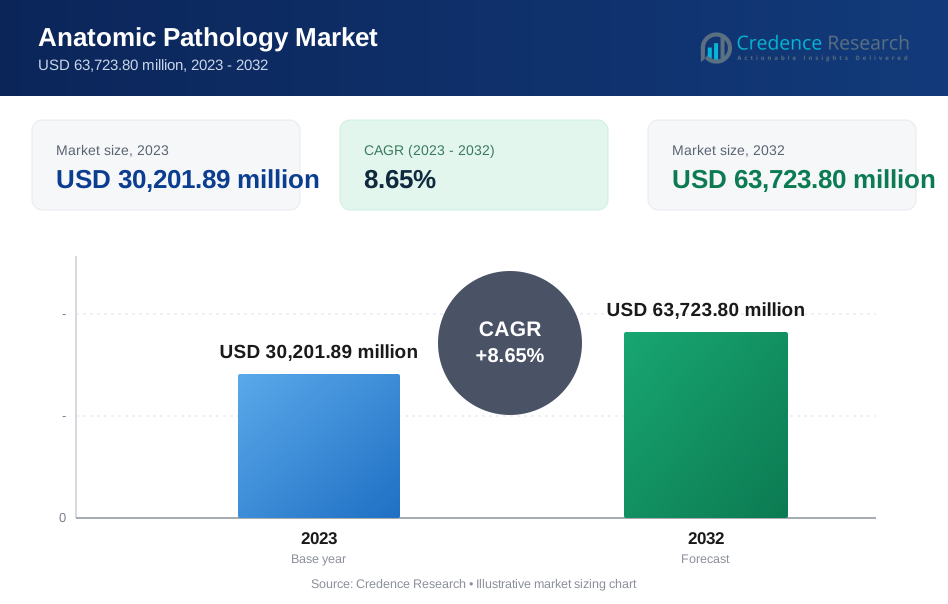
The Anatomic Pathology Market is projected to grow from USD 30,201.89 million in 2023 to an estimated USD 63,723.80 million by 2032, reflecting a robust compound annual growth rate (CAGR) of 8.65% from 2024 to 2032. This substantial expansion highlights the increasing demand for precise diagnostic services, driven by the rising incidence of cancer and other chronic diseases.
Key market drivers include the growing focus on personalized medicine and early diagnostic methods, which are essential in effectively managing complex diseases. Technological advancements, such as digital pathology and AI integration, are enhancing diagnostic accuracy and efficiency, thereby fueling market expansion. The increasing adoption of minimally invasive procedures and the need for better patient outcomes are also contributing to the upward trend in anatomic pathology.
Geographically, North America dominates the market due to well-established healthcare infrastructure and high adoption rates of advanced diagnostic solutions. Meanwhile, Asia-Pacific is expected to witness the fastest growth, driven by increasing healthcare investments and the rising prevalence of chronic diseases in the region. Prominent players in the global anatomic pathology market include F. Hoffmann-La Roche AG, Thermo Fisher Scientific, Inc., Danaher Corporation, and Sakura Finetek USA, Inc., all of whom are focused on expanding their product portfolios and enhancing diagnostic technologies.
Market Drivers
Rising Prevalence of Chronic Diseases and Cancer
The increasing incidence of chronic diseases, particularly cancer, is one of the most prominent drivers of the anatomic pathology market. According to the World Health Organization (WHO), cancer is among the leading causes of death globally, with millions of new cases diagnosed each year. For instance, according to the World Health Organization, cancer is among the leading causes of death globally, with an estimated 19.3 million new cancer cases diagnosed in 2020. Additionally, the American Cancer Society projects that in 2024, approximately 2,001,140 new cases of cancer will be diagnosed in the United States alone. Chronic diseases such as cardiovascular, respiratory, and kidney diseases are also on the rise, necessitating accurate and timely diagnostic tools for effective management and treatment. Anatomic pathology, through biopsy and histological analysis, enables pathologists to detect disease presence, progression, and severity. This precision is essential in cancer management, where early detection significantly improves patient outcomes.Healthcare providers, laboratories, and research institutions are increasingly investing in anatomic pathology to provide advanced diagnostic services that meet the growing demand. The use of pathology to detect molecular abnormalities has become crucial in diagnosing a wide array of diseases, making it an indispensable component of modern healthcare. The continued prevalence of chronic illnesses, paired with an aging global population, is expected to fuel the demand for anatomic pathology, as this discipline provides the most detailed and definitive diagnoses in a clinical setting.
Advances in Technology and the Shift to Digital Pathology
Rapid advancements in technology, particularly the integration of digital pathology and artificial intelligence (AI), are revolutionizing the anatomic pathology market. Digital pathology involves scanning and analyzing histological slides through digital imaging, allowing for enhanced precision and speed in diagnostic processes. AI algorithms can assist pathologists in identifying patterns, abnormalities, and potential disease markers, thereby improving diagnostic accuracy and reducing human error. These technological tools enable pathologists to process a larger volume of cases efficiently, meeting the increasing demand for pathology services without compromising quality.Digital pathology also facilitates remote consultations and collaborative diagnostics, where pathologists from different regions or institutions can review cases together. This is particularly beneficial in regions facing a shortage of trained pathologists, as digital solutions bridge the gap in healthcare access and reduce turnaround time. Laboratories that adopt digital pathology also gain an advantage by streamlining workflows, automating routine tasks, and potentially lowering operational costs. As digital pathology becomes more widely implemented, it is anticipated to drive substantial growth within the anatomic pathology market by enhancing both the quality and accessibility of diagnostic services.
Growing Emphasis on Personalized Medicine
Personalized medicine has emerged as a key trend in healthcare, emphasizing the need for tailored treatments based on individual patient characteristics, such as genetic profile, lifestyle, and disease state. Anatomic pathology plays a crucial role in this approach, providing detailed insights into disease at the molecular and cellular levels. Through advanced diagnostic techniques, pathologists can identify unique disease markers, predict disease progression, and suggest treatments that are most likely to be effective for a specific patient. For example, in cancer treatment, biomarkers detected through anatomic pathology can indicate whether a patient is likely to respond to specific chemotherapy or targeted therapy drugs.As healthcare systems prioritize personalized medicine, the demand for anatomic pathology services that facilitate these individualized approaches continues to grow. The application of molecular pathology and genetic profiling, which are often part of anatomic pathology procedures, is expanding rapidly in fields like oncology, neurology, and cardiology. This growth not only boosts the demand for specialized pathology services but also drives research into new diagnostic methods and tools that enhance patient-centered care. Thus, the emphasis on personalized medicine is a significant market driver, as healthcare providers and patients alike seek more precise, individualized diagnostic options.
Increased Government and Private Investments in Healthcare Infrastructure
Global healthcare systems are witnessing a surge in investments from both government bodies and private entities aimed at strengthening healthcare infrastructure, particularly in emerging economies. This investment is directed towards building new medical facilities, equipping existing ones with advanced diagnostic tools, and expanding laboratory services. In addition to providing general healthcare services, many countries are focusing on improving their diagnostic capabilities to detect diseases early, enhance treatment options, and ultimately improve public health outcomes. Anatomic pathology, as a fundamental diagnostic discipline, is a key focus area in this infrastructure development.For instance, several governments are launching initiatives to combat cancer and other life-threatening diseases by investing in screening programs and diagnostic services, which rely heavily on anatomic pathology. Private healthcare providers are also investing in cutting-edge pathology labs and technology to stay competitive in the market and meet patient expectations for accurate and timely diagnoses. Moreover, as healthcare infrastructure improves, access to diagnostic services, including anatomic pathology, is expanding in underserved and rural areas. The increased financial support and focus on building healthcare infrastructure will likely propel the anatomic pathology market forward by broadening the reach and capabilities of pathology services globally.
Market Trends
Adoption of Digital Pathology and AI-Driven Diagnostics
One of the most notable trends in the anatomic pathology market is the rapid adoption of digital pathology and artificial intelligence (AI) for diagnostic purposes. Digital pathology involves converting traditional histology slides into digital images, which pathologists can then analyze using computer-based tools. This transformation allows for high-resolution viewing, enhanced visualization, and easier sharing of slides across locations, facilitating collaborative diagnostics and remote consultations. AI-driven diagnostics further enhance this trend by providing pathologists with advanced image analysis tools that can identify patterns and anomalies, aiding in more accurate and faster diagnoses. AI algorithms are increasingly being trained on large datasets to recognize markers for various diseases, including cancer, which supports more consistent and objective diagnoses.For instance, a study conducted at the University of California, Los Angeles (UCLA) involved the analysis of over 50,000 digital pathology images using AI algorithms, resulting in a 17% reduction in diagnostic errors compared to traditional methods. This example demonstrates the potential of AI-driven diagnostics to significantly improve accuracy in pathology.This trend not only increases diagnostic efficiency but also addresses challenges related to the shortage of skilled pathologists in certain regions by enabling remote assessments. With continuous improvements in AI technology, digital pathology is poised to become a standard practice, leading to greater accuracy, shorter turnaround times, and enhanced patient outcomes.
Expansion of Molecular and Biomarker-Based Pathology
Another significant trend in the anatomic pathology market is the growing emphasis on molecular pathology and biomarker-based diagnostics. Molecular pathology uses advanced techniques to study disease at the genetic and molecular levels, enabling pathologists to identify specific biomarkers associated with various conditions. This approach has proven especially valuable in oncology, where identifying biomarkers can help predict a patient's response to targeted therapies, paving the way for personalized treatment plans. Biomarker-based diagnostics also allow for earlier detection and a better understanding of disease progression, which is critical for conditions like cancer, where early intervention significantly impacts patient outcomes.For instance, researchers at the Memorial Sloan Kettering Cancer Center identified 32 distinct molecular subtypes of cancer across 10,000 tumor samples using advanced biomarker analysis techniques, leading to more targeted treatment approaches for patients. This research highlights the power of molecular pathology in refining cancer diagnosis and treatment strategies.In response to this trend, an increasing number of anatomic pathology laboratories are investing in molecular testing capabilities, integrating techniques such as immunohistochemistry (IHC), fluorescence in situ hybridization (FISH), and next-generation sequencing (NGS) into their workflows. The expansion of molecular pathology is aligning the field of anatomic pathology with the broader movement towards precision medicine, where treatments are tailored to the unique genetic makeup of individual patients, thereby enhancing therapeutic effectiveness and improving long-term health outcomes.
Market Restraints and Challenges
High Costs and Limited Accessibility of Advanced Diagnostic Technologies
One of the primary restraints in the anatomic pathology market is the high cost of advanced diagnostic technologies, which limits accessibility, particularly in low-income and rural regions. Digital pathology systems, molecular diagnostics equipment, and AI-driven tools often require substantial upfront investment in both hardware and software. Additionally, the maintenance and training costs associated with these technologies can be significant. This financial barrier restricts smaller laboratories and healthcare facilities from adopting advanced diagnostic tools, creating a disparity in service quality and availability. As a result, patients in underserved regions may lack access to accurate and timely diagnoses, which impacts overall health outcomes. Although innovations and investments are helping to drive down costs over time, the current expense of advanced technologies remains a considerable challenge for widespread adoption in the anatomic pathology market.
Shortage of Skilled Pathologists and Complexity of Specialized Techniques
The shortage of skilled pathologists and the complexity of specialized techniques present further challenges in the anatomic pathology market. Despite the increasing demand for pathology services, many regions face a shortage of trained professionals who can perform complex diagnostic procedures accurately. Techniques such as molecular pathology and biomarker analysis require specific expertise, limiting the number of labs that can offer these services. Additionally, the integration of digital pathology and AI-based diagnostics requires pathologists to acquire new technical skills, which may pose a barrier for some professionals. The combination of a growing workload, a shortage of specialists, and the need for continual training adds to the operational pressures on laboratories. This challenge underscores the need for investment in training programs and educational initiatives to expand the pool of qualified pathologists and enhance the capabilities of existing professionals in handling advanced technologies in anatomic pathology.
Market Segmentation Analysis
By Product
The anatomic pathology market's product segmentation encompasses services, consumables, and instruments, each serving distinct yet complementary roles in diagnostics. The services segment, including histopathology and cytopathology, is essential for disease diagnosis and monitoring, with histopathology focusing on tissue analysis and cytopathology examining individual cells—both critical in oncology and other diagnostic areas. The consumables segment features antibodies (primary and secondary), kits & reagents (such as stains and solvents), and probes; antibodies, widely used in immunohistochemistry, aid in detecting tissue-specific markers, especially valuable in cancer diagnostics and research, while kits and reagents are vital for sample preparation and staining processes. Instruments, particularly slide staining systems, play a key role in automating pathology workflows, enhancing efficiency, and ensuring consistency in staining procedures, with demand for automated solutions rising as laboratories seek to streamline operations.
By Application
The anatomic pathology market's applications are primarily divided into disease diagnostics and medical research. Disease diagnostics is the largest segment, fueled by the rising incidence of cancer and chronic diseases, with particular demand for accurate pathology services in cancer types like breast cancer. Anatomic pathology is essential in confirming disease presence and guiding treatment plans. Meanwhile, the medical research segment leverages anatomic pathology to deepen understanding of disease mechanisms and support the development of new treatments. This area is rapidly growing, as pathology is critical in translational research, biomarker discovery, and drug development efforts.
Segments
Based on Product
- Services
- Histopathology
- Cytopathology
- Consumables
- Antibodies
- Primary
- Secondary
- Kits & Reagent
- Strain & Solvent
- Others
- Probes
- Others
- Instruments
- Slide Staining System
- Others
Based on Application
- Disease Diagnostics
- Medical Research
Based on End User
- Hospital Laboratories
- Clinical Laboratories
- Others
Based on Region
- North America
- U.S.
- Canada
- Mexico
- Europe
- Germany
- France
- U.K.
- Italy
- Spain
- Rest of Europe
- Asia Pacific
- China
- Japan
- India
- South Korea
- South-east Asia
- Rest of Asia Pacific
- Latin America
- Brazil
- Argentina
- Rest of Latin America
- Middle East & Africa
- GCC Countries
- South Africa
- Rest of the Middle East and Africa
Regional Analysis
North America (40%)
North America holds the largest share of the anatomic pathology market, accounting for approximately 40%. The region’s dominance is attributed to advanced healthcare infrastructure, high adoption rates of cutting-edge technologies, and substantial investment in medical research. The prevalence of chronic diseases, particularly cancer, is high in North America, which has driven demand for precise and timely diagnostics. The United States leads this market, supported by numerous academic institutions, research centers, and specialized pathology laboratories that continuously push for innovation in diagnostic tools and procedures. Government initiatives promoting early cancer detection and personalized medicine further support market expansion. Additionally, the presence of key market players focused on research and development in the region contributes to North America's leading position.
Europe (30%)
Europe accounts for around 30% of the anatomic pathology market. Factors driving growth in this region include an aging population, a high incidence of cancer, and increased focus on healthcare infrastructure improvement. European countries such as Germany, France, and the United Kingdom are leading the adoption of digital pathology and molecular diagnostics, particularly in oncology diagnostics. The European Union’s emphasis on preventive healthcare, early diagnosis, and research funding initiatives for cancer and other chronic diseases are also crucial in shaping the market. Additionally, stringent regulatory standards in Europe require high-quality diagnostics, which encourages healthcare providers to invest in advanced pathology technologies and services.
Key players
- Hoffmann-La Roche Ltd
- Danaher Corp.
- PHC Holding Corp.
- Abcam Plc
- Hologic Inc.
- Agilent Technologies
- Becton Dickinson & Co.
- Sakura Finetek USA Inc.
- Merck KGaA
- BIO SB
Competitive Analysis
The anatomic pathology market is highly competitive, with several key players driving innovation and expanding market reach. Leading companies such as F. Hoffmann-La Roche and Danaher Corp. dominate through comprehensive product portfolios and significant investment in research and development. Companies like Agilent Technologies and Becton Dickinson focus on providing advanced diagnostic solutions, while Sakura Finetek and BIO SB emphasize specialized pathology instruments and consumables. Abcam Plc and Merck KGaA are key players in reagents and antibodies, supporting a wide array of pathology applications. To remain competitive, many companies are investing in digital pathology and AI integration, enhancing diagnostic accuracy and efficiency. The continuous innovation in product offerings and strategic partnerships has enabled these companies to strengthen their global footprint, meeting the growing demand for precise and efficient pathology services, especially in oncology and personalized medicine applications.
Recent Developments
- In June 2022, Roche launched the VENTANA DP 600 slide scanner, a digital pathology tool designed to improve precision diagnostics and enhance patient care in anatomic pathology.
- In July 2024, Danaher opened two new Centers of Innovation in diagnostics, including a lab in Newcastle, UK, aimed at accelerating precision medicine development. These centers are equipped with advanced diagnostic technologies, including those from its subsidiary Leica Biosystems, which specializes in anatomic pathology.
- In September 2022, PHC Holdings expanded its anatomical pathology presence in Europe by acquiring Microm Microtech France and Laurypath, further strengthening its subsidiary Epredia's market position.
- In October 2023, Hologic completed the acquisition of Endomag, a company specializing in breast cancer surgery technologies, further expanding its portfolio in cancer diagnostic.
- In October 2023, Agilent signed a multiyear distribution agreement with Proscia to offer a comprehensive digital diagnostic pathology system, combining Agilent’s staining solutions with Proscia’s Concentriq Dx platform.
Market Concentration and Characteristics
The anatomic pathology market is moderately concentrated, with a few major players holding significant market shares, such as F. Hoffmann-La Roche, Danaher Corp., and Agilent Technologies, who drive innovation in diagnostic tools and digital pathology. These leading companies benefit from extensive R&D investments and established global networks, allowing them to cater to the high demand for accurate diagnostic solutions, particularly in cancer and chronic disease management. While the market is dominated by large corporations, smaller and regional companies play essential roles in offering specialized and accessible solutions, especially in emerging markets. Key characteristics of the market include a strong focus on precision diagnostics, increasing adoption of digital and AI-driven technologies, and a rising demand for automated laboratory systems. This mix of global leaders and smaller, specialized providers contributes to a dynamic market landscape with continuous advancements in technology and service offerings.
Report Coverage
The research report offers an in-depth analysis based on Product, Application, End User, and Region. It details leading market players, providing an overview of their business, product offerings, investments, revenue streams, and key applications. Additionally, the report includes insights into the competitive environment, SWOT analysis, current market trends, as well as the primary drivers and constraints. Furthermore, it discusses various factors that have driven market expansion in recent years. The report also explores market dynamics, regulatory scenarios, and technological advancements that are shaping the industry. It assesses the impact of external factors and global economic changes on market growth. Lastly, it provides strategic recommendations for new entrants and established companies to navigate the complexities of the market.
Future Outlook
- The market will see a surge in digital pathology adoption as healthcare facilities invest in technologies to streamline diagnostics, enhance collaboration, and improve accuracy.
- AI will increasingly support pathologists in analyzing complex images, helping to identify disease patterns and reduce diagnostic errors, leading to improved patient outcomes.
- Molecular diagnostics and biomarker analysis will continue to grow, allowing for personalized medicine approaches that enhance targeted therapies, especially in oncology.
- With cancer rates on the rise globally, demand for anatomic pathology services focused on cancer detection and monitoring will significantly increase.
- Emerging regions such as Asia-Pacific and Latin America will experience accelerated market growth due to improving healthcare infrastructure and increasing awareness of early disease diagnosis.
- Laboratories will emphasize automation in anatomic pathology to manage higher case volumes efficiently and maintain diagnostic quality amidst rising demand.
- The use of telepathology will expand, allowing remote analysis and consultations, which will enhance diagnostic reach in underserved regions and mitigate pathologist shortages.
- Companies will continue to invest in R&D to introduce innovative pathology solutions, with a focus on AI, molecular diagnostics, and automated systems.
- Regulatory bodies will impose stringent standards, driving laboratories to maintain high-quality diagnostics and safety protocols in pathology processes.
- As healthcare systems increasingly prioritize personalized treatment, anatomic pathology will play a critical role in supporting precision medicine initiatives for individualized patient care.
Request a Free Sample
Fill in your details and we'll send you a free sample report.
- Sample data tables & charts
- Research methodology
Need a Custom Version of This Report?
Tailor the scope, geography, or segments to your exact requirements.
- Custom geography or segment scope
- Direct access to our analyst team
Frequently Asked Questions
What is the projected market size and growth rate of the anatomic pathology market?
What factors are driving the growth of the anatomic pathology market?
How is digital pathology impacting the anatomic pathology market?
Which regions are leading in the anatomic pathology market?
Who are the key players in the anatomic pathology market?
Why is there a focus on minimally invasive procedures in anatomic pathology?
Table of Content
Chapter 1. Report Introduction
- 1.1 Report Description & Purpose
- 1.1.1 Report Title & Market Definition
- 1.1.2 Unique Selling Propositions (USP) & Key Differentiators
- 1.1.3 Value Proposition for Stakeholders
- 1.2 Research Objectives
- 1.2.1 Market Sizing Objectives (Volume & Revenue)
- 1.2.2 Segmentation Objectives
- 1.2.3 Competitive Intelligence Objectives
- 1.2.4 Forecast & Scenario Objectives
- 1.3 Report Scope
- 1.3.1 Anatomic Pathology Scope – Types & Subtypes Covered
- 1.3.2 Geographic Scope – Regions & Countries Covered
- 1.3.3 Historical Period, Base Year & Forecast Period (2023; forecast to 2032)
- 1.3.4 Inclusions & Exclusions
- 1.4 HS Code & Classification Framework
- 1.5 Currency, Units & Pricing Basis
- 1.6 Target Stakeholders
- 1.7 Limitations & Assumptions
Chapter 2. Executive Summary
- 2.1 Global Anatomic Pathology Market Snapshot
- 2.1.1 Market Size – Historical (2023) & Forecast (2023-2032) (2023: USD 30,201.89 million → 2032: USD 63,723.80 million)
- 2.1.2 Volume & Revenue – Global Totals
- 2.1.3 Key Market Highlights – Top Five Facts
- 2.2 Anatomic Pathology Market Segmentation Snapshot
- 2.2.1 Market Split by Region – 2023 vs. 2032
- 2.3 Competitive Snapshot
- 2.3.1 Top 10 Players by Revenue Share – 2023
- 2.3.2 Top 10 Players by Volume Share – 2023
- 2.3.3 Recent Strategic Developments (18-Month Summary)
- 2.4 Key Investment Highlights & Strategic Conclusions
Chapter 3. Anatomic Pathology Market Dynamics & Industry Analysis
- 3.1 Market Overview & Context
- 3.1.1 Anatomic Pathology Market Position in the Broader Automotive Value Chain
- 3.1.2 OEM vs. Replacement Market Dynamics
- 3.1.3 Market Maturity & Development Stage by Region
- 3.2 Anatomic Pathology Market Drivers
- 3.3 Anatomic Pathology Market Restraints & Challenges
- 3.4 Anatomic Pathology Market Opportunities
- 3.5 Porter's Five Forces Analysis
- 3.5.1 Threat of New Entrants
- 3.5.2 Bargaining Power of Suppliers
- 3.5.3 Bargaining Power of Buyers
- 3.5.4 Threat of Substitutes
- 3.5.5 Competitive Rivalry – Intensity Assessment
- 3.6 Anatomic Pathology Value Chain Analysis
- 3.6.1 Upstream – Raw Material/Input Suppliers
- 3.6.1.1 Raw Material/Input 1
- 3.6.1.2 Raw Material/Input 2
- 3.6.1.3 Raw Material/Input 3
- 3.6.2 Midstream – Production/Manufacturing/Service Delivery
- 3.6.2.1 Production/Process Overview
- 3.6.2.2 Key Facility Locations & Capacity by Manufacturer
- 3.6.3 Downstream – Distribution & End Consumer
- 3.6.3.1 Primary Channel – B2B/OEM
- 3.6.3.2 Secondary Channels – Dealer, Retail, Online, Direct
- 3.6.4 Value Chain Profitability Analysis
- 3.6.1 Upstream – Raw Material/Input Suppliers
- 3.7 PESTEL Analysis
- 3.7.1 Political Factors
- 3.7.2 Economic Factors
- 3.7.3 Social Factors
- 3.7.4 Technological Factors
- 3.7.5 Environmental Factors
- 3.7.6 Legal Factors
- 3.8 Anatomic Pathology Supply Chain Analysis
- 3.8.1 Raw Material/Input Supply Risk Assessment
- 3.8.2 Manufacturing Concentration Risk (Geographic Exposure)
- 3.8.3 Trade Disruption Impact Analysis
- 3.9 Regulatory & Policy Landscape
Note: The regulatory and policy landscape section covers regulations based on their applicability to the market, Anatomic Pathology category, geography, and scope of the study. Only regulatory frameworks with a material impact on operations, compliance, trade, sustainability, or market access are analyzed in detail.
Chapter 4. Key Investment Pockets & Opportunity Analysis
- 4.1 Anatomic Pathology Market Attractiveness Analysis
- 4.1.1 By Region – Investment Attractiveness Matrix (Volume × CAGR)
- 4.2 Absolute Revenue Growth Opportunity
- 4.2.1 By Region – Absolute USD Growth Through 2032
- 4.3 Incremental Volume Opportunity
- 4.3.1 By Region – Incremental Volume Through 2032
- 4.3.2 Segment – Incremental Volume
- 4.4 Emerging Submarket Opportunity Deep Dive (Subject to Applicability)
- 4.5 Emerging Market Opportunity Scorecards
- 4.5.1 United States
- 4.5.2 Europe
- 4.5.3 Asia
- 4.5.4 Middle East & Africa
Note: Emerging Market Opportunity Scorecards will be included based on relevance and strategic importance. Regions listed are indicative and may vary depending on data availability and market dynamics.
Chapter 5. Anatomic Pathology Import-Export Analysis & Trade Flows
- 5.1 Global Trade Overview
- 5.1.1 Global Export Value by Country (2023)
- 5.1.2 Global Export Volume by Country (2023)
- 5.1.3 Global Import Value by Country (2023)
- 5.1.4 Global Import Volume by Country (2023)
- 5.1.5 Net Trade Balance by Country (2023)
- 5.2 Export Analysis – Segment
- 5.2.1 Type 1 (HS Code)
- 5.2.2 Type 2 (HS Code)
- 5.2.3 Type 3 (HS Code)
- 5.2.4 Type 4 (HS Code)
- 5.2.5 Type 5 (HS Code)
- 5.3 Import Analysis – Segment
- 5.3.1 Type 1 (HS Code)
- 5.3.2 Type 2 (HS Code)
- 5.3.3 Type 3 (HS Code)
- 5.3.4 Type 4 (HS Code)
- 5.3.5 Type 5 (HS Code)
- 5.4 Average Unit Trade Prices
- 5.4.1 Average Export Price – Segment & Country
- 5.4.2 Average Import Price – Segment & Source Country
- 5.4.3 Price Trends (2023)
- 5.5 Key Trade Route Analysis
- 5.5.1 Trade Route 1
- 5.5.2 Trade Route 2
- 5.5.3 Trade Route 3
- 5.5.4 Trade Route 4
- 5.5.5 Trade Route 5
- 5.6 Trade Policy Impact Assessment
- 5.6.1 US Anti-Dumping & Section 301 Tariffs
- 5.6.2 EU Customs Union Impact
- 5.6.3 Major Free Trade Agreements
- 5.6.4 USMCA Rules of Origin
Note: Trade policy analysis will be included only where relevant to the Anatomic Pathology market.
Chapter 6. Competitive Landscape & Company Benchmarking
- 6.1 Anatomic Pathology Market Concentration & Structure
- 6.1.1 Herfindahl-Hirschman Index (HHI) – vs. 2023
- 6.1.2 Tier 1, Tier 2 & Tier 3 Market Structure
- 6.1.3 Global, Regional & Local Player Dynamics
- 6.2 Anatomic Pathology Market Share Analysis – 2023
- 6.2.1 Global Revenue Share by Company
- 6.2.2 Global Volume Share by Company
- 6.2.3 Regional Revenue Share
- 6.2.4 Market Share Evolution ( vs. 2023)
- 6.2.5 OEM Segment Share by Company
- 6.2.6 Replacement Segment Share by Company
- 6.3 Production/Delivery Capacity & Facility Analysis
- 6.3.1 Global Installed Capacity
- 6.3.2 Capacity Utilization Rates
- 6.3.3 Production/Output Volume
- 6.3.4 Facility Locations & Capacity Map
- 6.3.5 Planned Capacity Additions
- 6.4 Anatomic Pathology Competitive Benchmarking Matrix
- 6.4.1 Revenue, Volume, CAGR & Profitability Comparison
- 6.4.2 Channel Revenue Mix
- 6.4.3 Geographic Revenue Exposure
- 6.4.4 R&D Intensity
- 6.4.5 Sustainability Maturity
- 6.5 Strategic Developments in Anatomic Pathology (Last 24 Months)
- 6.5.1 Mergers, Acquisitions & Divestments
- 6.5.2 New Anatomic Pathology Launches
- 6.5.3 Facility Expansions
- 6.5.4 Strategic Alliances, Joint Ventures & Partnerships
- 6.5.5 Distribution Expansion & Market Entry
- 6.5.6 Sustainability & ESG Initiatives
- 6.6 Competitive Strategy Mapping
- 6.6.1 Leader, Challenger, Follower & Niche Classification
- 6.6.2 Pricing Strategy Comparison
- 6.6.3 Channel Strategy Matrix
Note: Strategic developments are included based on their materiality and the availability of reliable information.
Chapter 7. Global Anatomic Pathology Market – By Distribution Channel
- 7.1 Segment Overview
- 7.1.1 Volume & Revenue Split by Channel (2023 & 2032)
- 7.1.2 Channel Mix Evolution (2023-2032)
Chapter 8. Regional Market Analysis – Global Overview
- 8.1 Global Regional Overview
- 8.1.1 Regional Volume Share
- 8.1.2 Regional Revenue Share
- 8.1.3 Regional Volume by Region
- 8.1.4 Regional Revenue by Region
- 8.1.5 Regional Forecast Through 2032
- 8.2 Cross-Regional Segment Analysis
- 8.2.1 By Distribution Channel
- 8.2.2 By Brand/Price Tier
Chapter 9. North America Anatomic Pathology Market
- 9.1 United States
- 9.2 Canada
- 9.3 Mexico
Chapter 10. Europe Anatomic Pathology Market
- 10.1 Germany
- 10.2 France
- 10.3 Italy
- 10.4 United Kingdom
- 10.5 Spain
- 10.6 Poland
- 10.7 Russia
- 10.8 Netherlands
- 10.9 Belgium
- 10.10 Sweden
- 10.11 Denmark
- 10.12 Norway
- 10.13 Rest of Europe
Chapter 11. Asia Pacific Anatomic Pathology Market
- 11.1 China
- 11.2 India
- 11.3 Japan
- 11.4 South Korea
- 11.5 Thailand
- 11.6 Indonesia
- 11.7 Vietnam
- 11.8 Malaysia
- 11.9 Australia
- 11.10 Rest of Asia Pacific
Chapter 12. Latin America Anatomic Pathology Market
- 12.1 Brazil
- 12.2 Argentina
- 12.3 Colombia
- 12.4 Chile
- 12.5 Rest of Latin America
Chapter 13. Middle East Anatomic Pathology Market
- 13.1 Saudi Arabia
- 13.2 United Arab Emirates
- 13.3 Turkey
- 13.4 Israel
- 13.5 Iran
- 13.6 Rest of the Middle East
Chapter 14. Africa Anatomic Pathology Market
- 14.1 South Africa
- 14.2 Egypt
- 14.3 Nigeria
- 14.4 Morocco
- 14.5 Rest of Africa
Chapter 15. Anatomic Pathology Company Profiles
- 15.1 [Company 01]
- 15.1.1 Company Overview
- 15.1.2 Key Management Personnel
- 15.1.3 Products & Services Portfolio
- 15.1.4 Financial Performance
- 15.1.5 Key Market Focus & Geographic Presence
- 15.1.6 Recent Developments & Strategic Initiatives
Note: The company profile list is preliminary and may change based on research findings, market developments, data availability, and client requirements.
Chapter 16. Appendices
- Appendix A – List of Abbreviations & Acronyms
- Appendix B – Industry Classification Code Reference – Full Series
- Appendix C – Production & Capacity Data Tables
- Appendix D – End-Use & Demand Base Tables
- Appendix E – Consumption & Replacement Rate Assumptions
- Appendix F – ASP Reference Tables
- Appendix G – Manufacturing & Facility Database
- Appendix H – Import-Export Data Tables
- Appendix I – Regulatory Summary Tables
- Appendix J – Primary Research Participant List (Anonymized)
- Appendix K – Primary Research Questionnaire Framework
- Appendix L – Data Sources & Bibliography
- Appendix M – Market Size Divergence & Source Comparison
Chapter 17. Research Methodology
- 17.1 Research Framework & Philosophy
- 17.2 Secondary Research – Sources, Hierarchy & Data Extraction
- 17.3 Data Modeling – Bottom-Up & Top-Down Market Sizing
- 17.4 Primary Research – Stakeholder Framework, LOI & Sample Sizes
- 17.5 Forecast Methodology – Regression, Scenario & Sensitivity Analysis
- 17.6 Quality Control – Four-Layer Validation Framework
- 17.7 Limitations & Standard Assumptions
- 17.8 Disclaimer
