
| REPORT ATTRIBUTE | DETAILS |
|---|---|
| Historical Period | 2020-2023 |
| Base Year | 2024 |
| Forecast Period | 2025-2032 |
| Automotive Interior Ambient Lighting Systems Market Size 2024 | USD 37,202.25 million |
| Automotive Interior Ambient Lighting Systems Market, CAGR | 6.6% |
| Automotive Interior Ambient Lighting Systems Market Size 2032 | USD 62,033.57 million |
Market Overview
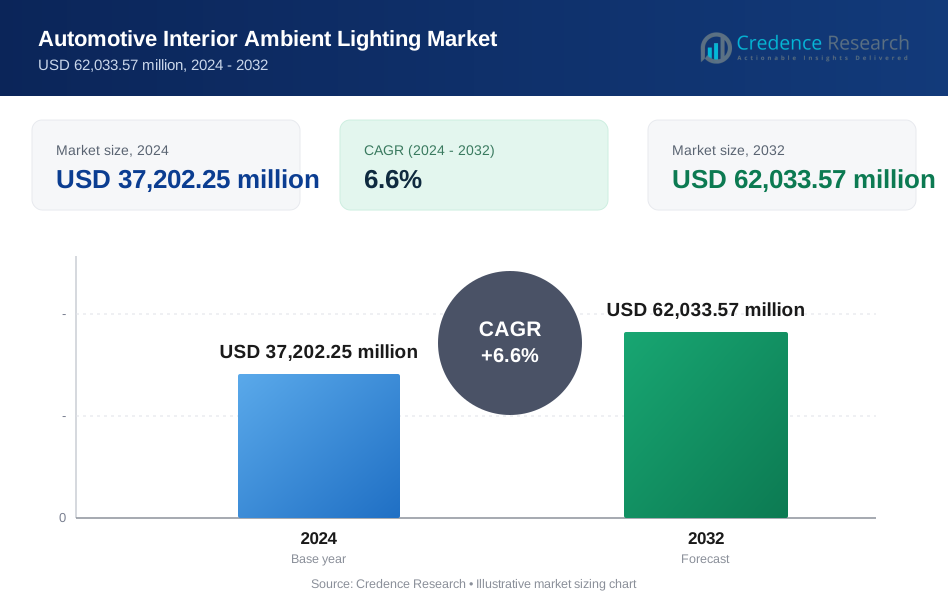
The Automotive Interior Ambient Lighting Systems Market is projected to grow from USD 37,202.25 million in 2024 to an estimated USD 62,033.57 million by 2032, with a compound annual growth rate (CAGR) of 6.6% from 2024 to 2032.
Key drivers of the automotive interior ambient lighting systems market include increasing consumer demand for enhanced in-car experiences and aesthetic appeal. As automakers focus on improving cabin interiors and offering more personalized and premium features, ambient lighting systems have become an essential part of vehicle design. The growing popularity of electric vehicles (EVs) and autonomous cars, which offer more flexibility in interior design, is further propelling the demand for advanced lighting solutions. Additionally, technological advancements in LED and OLED lighting, along with the integration of smart lighting systems that adjust based on user preferences and driving conditions, are driving market growth. Automakers are also incorporating these systems to create mood-based environments and enhance the overall comfort of passengers.
Regionally, North America and Europe are leading the automotive interior ambient lighting systems market due to the high demand for luxury vehicles and technological innovations. In these regions, consumers expect cutting-edge in-car technologies, including sophisticated lighting solutions. The United States, Germany, and the United Kingdom are key markets where automakers are incorporating advanced ambient lighting to enhance the user experience. In the Asia Pacific region, countries like China, Japan, and South Korea are expected to witness significant market growth, driven by strong automotive manufacturing sectors and rising disposable incomes. Moreover, increasing adoption of electric vehicles in China is driving the demand for innovative interior features, including ambient lighting systems.
Market Insights
- The Automotive Interior Ambient Lighting Systems Market is projected to grow from USD 37,202.25 million in 2024 to USD 62,033.57 million by 2032, with a CAGR of 6.6% during the forecast period.
- Increasing consumer demand for personalized and premium in-car experiences is driving the adoption of ambient lighting systems. Technological innovations in LED and OLED lighting are enhancing system capabilities.
- Integration of smart lighting systems that adjust based on user preferences, time of day, or driving conditions is propelling market growth.
- The rise of electric and autonomous vehicles, which offer more flexible and customizable interior designs, is contributing to the demand for innovative ambient lighting solutions.
- High initial costs of advanced lighting technologies and potential complications in the integration of these systems into standard vehicle models can limit market growth.
- North America and Europe are leading regions, with high demand for luxury vehicles and advanced technologies, pushing the adoption of premium interior lighting systems.
- The Asia Pacific region, particularly China, Japan, and South Korea, is witnessing significant growth due to strong automotive manufacturing and increased adoption of electric vehicles.
Market Drivers
Increasing Consumer Demand for Personalized In-Car Experiences
Consumer preference for personalized in-car experiences is a significant driver in the automotive interior ambient lighting systems market. Automakers are increasingly incorporating ambient lighting features to enhance the overall user experience, with a growing focus on customization. For instance, luxury automaker Mercedes-Benz offers a “64-color ambient lighting” system, allowing drivers and passengers to choose from a wide range of colors to create a personalized atmosphere. This feature is available in several high-end Mercedes models, reflecting the increasing consumer demand for more control over in-car environments. The importance of aesthetics and comfort in vehicle interiors is expected to further drive the adoption of ambient lighting systems, especially among premium vehicle buyers.
Technological Advancements in LED and OLED Lighting
Technological advancements in LED and OLED lighting have greatly impacted the automotive interior lighting market. LEDs provide enhanced energy efficiency, longer lifespans, and a broader range of colors, making them highly suitable for ambient lighting applications. For instance, the Ford Mustang Mach-E, an electric SUV, uses LED ambient lighting to create a premium in-car experience, adjusting the lighting to enhance the driving environment. Additionally, OLED lighting, with its flexibility and ultra-thin design, is gaining traction for its ability to integrate seamlessly into vehicle interiors. BMW’s iX electric SUV incorporates OLED lighting technology to offer a more dynamic and customizable interior lighting experience.
Growing Popularity of Electric Vehicles (EVs) and Autonomous Cars
The rise in electric vehicles (EVs) and autonomous cars has significantly influenced the automotive interior ambient lighting systems market. EVs, due to their unique design and the absence of a traditional engine, provide more flexibility for interior features like ambient lighting. Tesla Model S, a widely popular EV, offers customizable interior lighting that enhances the cabin atmosphere. The global electric vehicle market is seeing rapid growth. Autonomous vehicles, which allow for a more flexible and futuristic cabin layout, will also drive demand for advanced interior lighting systems. These vehicles require new in-car environments that prioritize comfort, luxury, and personalization, making ambient lighting a key feature in their design.
Integration with Infotainment Systems and Smart Technologies
The integration of ambient lighting systems with infotainment systems and smart technologies is another key driver of market growth. This allows consumers to control their in-car lighting through voice commands, mobile apps, or even facial recognition. Ford’s SYNC 4 system, available in models like the Ford F-150, allows drivers to control ambient lighting settings through voice commands and touchscreen interfaces. A study by the World Bank highlights that smart technology integration in vehicles will account for over 30% of the automotive market's value by 2030, with a growing emphasis on connected features. As consumers increasingly demand vehicles that are more connected and intuitive, ambient lighting systems that work in tandem with digital platforms will become more widespread. This trend is particularly strong in premium vehicles, where automakers like Audi and BMW are incorporating advanced lighting controls into their infotainment systems to create a seamless and modern user experience.
Market Trends
Increasing Adoption of Smart Lighting Systems
The automotive industry is increasingly integrating smart lighting systems into vehicles to enhance user experience and vehicle functionality. Smart lighting systems, which automatically adjust based on driving conditions, ambient light, and user preferences, are becoming a prominent trend. These systems can change color, intensity, and pattern to create a dynamic and responsive in-car atmosphere. Research conducted by the International Energy Agency (IEA) highlights that such systems are becoming more prevalent as car manufacturers seek to offer more advanced, technology-driven interiors. In particular, Ford and BMW have pioneered the integration of ambient lighting with their infotainment systems, allowing drivers to control lighting through voice recognition or mobile apps. This shift towards connected, intelligent vehicle environments is expected to grow, with more automakers focusing on enhancing the driver-passenger experience through the use of smart technologies.
Enhanced Focus on Energy Efficiency
Energy-efficient lighting solutions are a growing trend in the automotive industry, driven by both environmental concerns and the rise of electric vehicles (EVs). Automakers are increasingly prioritizing the use of LED and OLED lighting due to their energy efficiency, long lifespan, and minimal environmental impact. The World Bank's 2022 report on sustainable automotive solutions emphasizes the importance of reducing energy consumption in vehicles, especially with the increasing penetration of EVs. These lighting systems not only reduce energy consumption compared to traditional lighting but also contribute to the overall sustainability efforts of automotive manufacturers. For example, Tesla’s Model 3 uses energy-efficient LED lighting throughout its interior, which helps optimize the vehicle’s energy use and performance.
Integration with In-Car Entertainment Systems
There is a growing trend of integrating ambient lighting with in-car entertainment systems to create a more immersive driving experience. By synchronizing lighting with music, video, or driving modes, manufacturers are elevating the sensory experience for passengers. Companies such as Audi and Mercedes-Benz have been at the forefront of this integration, with Audi offering dynamic ambient lighting that changes according to the music playing in the car. Research from the World Economic Forum suggests that automotive brands are increasingly focused on creating a cohesive and engaging environment inside the car, transforming it into a personalized space. As infotainment systems become more advanced, the integration of ambient lighting will continue to evolve, playing a central role in shaping modern vehicle interiors.
Growing Popularity of Color Customization
Vehicle interior color customization, particularly in ambient lighting, is becoming a popular trend among consumers seeking more personalized car environments. Automakers are introducing more options for customers to select lighting colors and intensities to match their preferences or moods. This trend is particularly prominent in luxury car brands such as BMW, Audi, and Mercedes-Benz, which offer multiple color options for interior lighting. For instance, report by the International Trade Administration (ITA), around 75% of luxury vehicle buyers in the U.S. indicated that they prefer having customizable lighting options in their vehicles. As consumer demand for personalized experiences increases, automakers are expected to continue expanding the scope of color customization in vehicle interiors.
Market Challenges Analysis
High Integration Costs and Technological Complexity
One of the significant challenges in the automotive interior ambient lighting systems market is the high cost of integrating advanced lighting technologies into vehicles. The adoption of LED, OLED, and smart lighting systems, which are commonly used for ambient lighting, requires substantial investment in research, development, and manufacturing processes. Automakers face high upfront costs associated with the development of these technologies, which include the sourcing of specialized materials, designing custom lighting solutions, and ensuring compatibility with vehicle systems. Furthermore, the integration of ambient lighting systems with other vehicle technologies such as infotainment, voice recognition, and adaptive systems adds another layer of complexity. The process of ensuring seamless integration across various systems, while maintaining consistent performance and reliability, requires advanced engineering expertise. For instance, manufacturers like BMW and Mercedes-Benz have invested heavily in these technologies, but the cost and complexity involved limit the widespread adoption of sophisticated ambient lighting systems in mass-market vehicles. According to reports from the International Trade Administration (ITA), the cost of integrating these systems is a significant barrier for automakers, particularly in emerging markets where cost sensitivity is higher.
Limited Consumer Awareness and Perceived Value
Another challenge facing the automotive interior ambient lighting market is limited consumer awareness and the perceived value of ambient lighting features, especially in lower-priced vehicles. While ambient lighting is becoming a standard feature in high-end models, it is often viewed as a luxury or non-essential feature in budget-conscious segments. Consumers may not fully appreciate the benefits of ambient lighting, such as its ability to improve the driving experience, enhance comfort, and promote relaxation. As a result, automakers may struggle to justify the added expense of advanced lighting systems in more affordable vehicles. Additionally, consumer education about the potential of ambient lighting systems and how they can enhance the in-car experience remains limited in many markets. While automakers are increasingly marketing customizable lighting systems as premium features, the average consumer may still prioritize other features, such as fuel efficiency, safety, and performance, over the aesthetic and comfort benefits provided by advanced lighting.
Market Opportunities
The growing adoption of electric vehicles (EVs) presents a significant opportunity for the automotive interior ambient lighting systems market. As electric vehicles become increasingly popular, manufacturers are focusing on offering advanced and personalized features to enhance the overall consumer experience. Unlike traditional vehicles, EVs provide more flexibility in interior design due to the absence of an internal combustion engine and related components. This flexibility allows automakers to incorporate innovative and customizable ambient lighting solutions into their designs. For instance, automakers such as Tesla and Rivian are already integrating sophisticated lighting systems in their EVs, creating an opportunity for other manufacturers to follow suit. The continued expansion of the EV market will drive the demand for more advanced interior features, including ambient lighting, as consumers seek vehicles that offer a premium, comfortable, and unique driving environment.
The rise of autonomous vehicles (AVs) also presents a significant opportunity for the automotive interior ambient lighting systems market. As vehicles become more autonomous, the interior space is expected to shift from a functional driving environment to a more leisure-oriented space, where lighting plays a critical role in creating a relaxing and enjoyable atmosphere. Ambient lighting systems can be customized to align with different driving modes, moods, or activities, enhancing the overall passenger experience. Companies like Waymo and Uber are investing in autonomous vehicle technology, which will further fuel the demand for innovative in-car features like ambient lighting. As AVs become more widespread, the need for enhanced comfort and personalized interior environments will increase, opening new growth opportunities for ambient lighting systems in the automotive sector.
Market Segmentation Analysis
By Lighting Application
The automotive interior ambient lighting systems market is primarily segmented by lighting applications, which include dashboard lighting, footwell lighting, doors, and other areas. Each of these segments plays a vital role in enhancing both the aesthetic and functional aspects of vehicle interiors. Dashboard lighting holds a significant share of the market due to its central role in illuminating the vehicle’s control panel and enhancing the driver's visual experience. Footwell lighting, which provides a soft and ambient glow at the feet of passengers, is growing in popularity due to its ability to improve the overall passenger experience by creating a more inviting and comfortable environment.
By Vehicle Type
The vehicle segment of the automotive interior ambient lighting systems market is divided into conventional cars and green cars. Conventional cars dominate the market due to their large share and continued reliance on ambient lighting for enhanced driving and passenger comfort. However, green cars, including electric and hybrid vehicles, have seen an increasing demand for advanced and energy-efficient lighting solutions. The growing popularity of electric vehicles (EVs) is driving innovations in lighting systems that prioritize energy efficiency and sustainability, thus enhancing the overall appeal of these vehicles.
Segmentations
Based on Lighting Application
- Dashboard
- Footwell
- Doors
- Others
Based on Vehicle type
- Conventional Cars
- Green Cars
Based on Regional
- North America
- U.S.
- Canada
- Mexico
- Europe
- Germany
- France
- U.K.
- Italy
- Spain
- Rest of Europe
- Asia Pacific
- China
- Japan
- India
- South Korea
- South-east Asia
- Rest of Asia Pacific
- Latin America
- Brazil
- Argentina
- Rest of Latin America
- Middle East & Africa
- GCC Countries
- South Africa
- Rest of the Middle East and Africa
Regional Analysis
North America
North America is a key region for the automotive interior ambient lighting systems market, with the United States being the largest contributor to the regional market share. North America holds a significant market share, estimated at around 35% of the global market. The demand for advanced in-car technologies, including ambient lighting systems, is driven primarily by the region’s high adoption of luxury vehicles and electric vehicles (EVs). The growing trend toward autonomous vehicles (AVs) in North America is also contributing to this demand. As AVs prioritize passenger comfort and premium features, automakers are adopting advanced lighting technologies to improve the overall cabin experience. Furthermore, the region's strict environmental regulations and government incentives for electric mobility contribute to the adoption of EVs and associated in-car technologies, including ambient lighting.
Europe
Europe is another dominant region in the automotive interior ambient lighting systems market, accounting for 30% of the global market share. Europe’s automotive industry is renowned for its strong emphasis on luxury and premium vehicles, with manufacturers like Mercedes-Benz, BMW, Audi, and Volkswagen incorporating advanced ambient lighting solutions in their high-end models. The region is also a leader in the development and adoption of electric vehicles, which are expected to drive further growth in the ambient lighting market. Germany, as the largest automotive hub in Europe, is at the forefront of these developments. Audi, for instance, integrates customizable ambient lighting into its models, offering users the ability to adjust the lighting to suit their mood or driving conditions. The demand for personalized interior features is growing in both luxury and mid-range vehicle segments, as consumers in Europe are increasingly seeking differentiated and premium in-car experiences.
Asia-Pacific
The Asia-Pacific (APAC) region is experiencing rapid growth in the automotive interior ambient lighting systems market, driven by the burgeoning automotive manufacturing sectors in countries like China, Japan, South Korea, and India. Asia-Pacific holds a market share of approximately 25%, with China being the largest contributor to this growth. The APAC region is home to several global automotive giants such as Toyota, Honda, Hyundai, and BYD, which are increasingly incorporating advanced lighting systems into their vehicles. China, in particular, is a key driver of growth in the automotive lighting market due to its massive electric vehicle adoption. The Chinese government’s strong support for EVs, coupled with rising consumer disposable income, is fostering the rapid adoption of electric and hybrid vehicles, which in turn drives the demand for advanced lighting solutions.
Key Player Analysis
- VALEO SERVICE
- HELLA GmbH & Co. KGaA
- OSRAM GmbH
- LSI Industries
- EVERLIGHT ELECTRONICS CO., LTD.
- TOSHIBA CORPORATION
- DRÄXLMAIER Group
- Oshino Lamps America Ltd
- Innotec
- Antolin
Competitive Analysis
The competitive landscape of the automotive interior ambient lighting systems market is marked by the presence of both established automotive giants and emerging technology-driven companies. Leading automakers like Mercedes-Benz, BMW, Audi, and Tesla dominate the premium vehicle segment by integrating advanced ambient lighting solutions into their high-end models. These companies are leveraging cutting-edge technologies such as LED, OLED, and smart lighting systems to provide a personalized in-car experience. Mercedes-Benz, for instance, offers a 64-color ambient lighting system in its luxury models, which allows drivers to adjust the lighting based on their preferences. BMW and Audi are similarly focused on offering customizable lighting systems, integrating them with infotainment and driving modes to enhance comfort and aesthetics. In addition to traditional automakers, tier-1 suppliers such as Hella, Koito Manufacturing, and Valeo play a crucial role in the development and supply of lighting systems. These companies are collaborating with vehicle manufacturers to provide high-quality lighting solutions. For example, Hella supplies advanced ambient lighting technologies to automakers, contributing to their ability to offer dynamic and color-changing lighting systems. Moreover, as electric vehicles (EVs) and autonomous vehicles (AVs) gain traction, new entrants, including Rivian and Lucid Motors, are integrating innovative lighting features to attract tech-savvy consumers. The growing trend towards smart and connected lighting-which integrates with infotainment and vehicle sensors-has increased the market's competitiveness, pushing companies to continuously innovate. Companies are also increasingly adopting partnerships and acquisitions to enhance their R&D capabilities and stay ahead in this fast-evolving market.
Recent Developments
- July 2023: OSRAM launched the intelligent RGB LED, OSIRE E3731i, designed for interior automotive lighting. This LED features a digital core that enables low-latency transmission over a standard serial bus interface with any microcontroller. It supports connection of up to 1,000 LEDs in a daisy chain, all controlled by a single microcontroller. The OSP is available for use by any car or microcontroller manufacturer.
- April 2024: Hyundai launched the Grand i10 Nios Corporate Edition in India, offering a range of features, including footwell lighting, a front room lamp, driver seat height adjustment, a front passenger seat back pocket, an 8.89 cm speedometer with multi-information display, and a 17.14 cm touchscreen display, among others.
Market Concentration & Characteristics
The automotive interior ambient lighting systems market is moderately concentrated, with a mix of dominant players and emerging companies driving innovation and market growth. The market is primarily led by established automotive manufacturers like Mercedes-Benz, BMW, Audi, and Tesla, which continue to invest heavily in advanced lighting technologies for their premium and luxury vehicle offerings. These automakers have integrated ambient lighting systems as a key feature in their vehicles, particularly in high-end models, making it an essential part of the overall driving experience. Alongside these OEMs, tier-1 suppliers such as Hella, Valeo, and Koito Manufacturing play a significant role, providing the lighting components and technologies that automakers use to enhance vehicle interiors. These suppliers are responsible for developing innovative lighting solutions, including energy-efficient LED, OLED, and dynamic smart lighting systems. In addition to the dominant players, newer entrants, particularly in the electric vehicle (EV) and autonomous vehicle (AV) sectors, are driving further market fragmentation. Companies like Rivian and Lucid Motors are incorporating advanced ambient lighting systems into their EV models to provide a more personalized and premium in-car environment. This trend is particularly evident in the Asia-Pacific region, where companies such as BYD and Geely are also investing in interior lighting technologies. The market is characterized by rapid technological advancements, with a focus on customization, energy efficiency, and seamless integration with other in-car technologies.
Report Coverage
The research report offers an in-depth analysis based on lighting application and vehicle type. It details leading market players, providing an overview of their business, product offerings, investments, revenue streams, and key applications. Additionally, the report includes insights into the competitive environment, SWOT analysis, current market trends, as well as the primary drivers and constraints. Furthermore, it discusses various factors that have driven market expansion in recent years. The report also explores market dynamics, regulatory scenarios, and technological advancements that are shaping the industry. It assesses the impact of external factors and global economic changes on market growth. Lastly, it provides strategic recommendations for new entrants and established companies to navigate the complexities of the market.
Future Outlook
- The automotive interior ambient lighting systems market will continue to evolve as consumer demand for personalized, high-tech vehicle interiors grows.
- Advancements in LED and OLED technologies will enhance the functionality and aesthetic appeal of ambient lighting solutions, making them more energy-efficient and versatile.
- Smart lighting systems, capable of adjusting based on driving conditions and user preferences, will become standard in premium and mainstream vehicles.
- As electric and autonomous vehicles gain traction, the market for advanced interior features, including customizable lighting, will expand.
- Manufacturers will increasingly focus on creating mood-based lighting solutions that enhance comfort and driving experiences, particularly in luxury and high-end vehicles.
- Integration with vehicle infotainment systems and smartphone apps will offer users greater control over their ambient lighting settings.
- The demand for ambient lighting will rise as automakers push for innovative designs that align with the evolving tastes of tech-savvy consumers.
- With growing environmental awareness, there will be a greater emphasis on energy-efficient lighting systems that contribute to sustainable vehicle design.
- The Asia Pacific region, particularly China and India, will see strong growth due to the increasing adoption of electric vehicles and rising disposable incomes.
- Ongoing research and development will continue to drive innovation in the automotive interior lighting sector, leading to the introduction of more advanced, cost-effective solutions.
Request a Free Sample
Fill in your details and we'll send you a free sample report.
- Sample data tables & charts
- Research methodology
Need a Custom Version of This Report?
Tailor the scope, geography, or segments to your exact requirements.
- Custom geography or segment scope
- Direct access to our analyst team
Frequently Asked Questions
What is the projected growth of the Automotive Interior Ambient Lighting Systems Market?
What are the key drivers of the market growth?
How do technological advancements impact the market?
Who are the major players in the global Automotive interior ambient lighting Market?
What are the major market drivers of the automotive interior ambient lighting industry?
What are the major market restraints of the automotive interior ambient lighting industry?
What are the major market opportunities of the automotive interior ambient lighting industry?
Table of Content
Chapter 1. Report Introduction
- 1.1 Report Description & Purpose
- 1.1.1 Report Title & Market Definition
- 1.1.2 Unique Selling Propositions (USP) & Key Differentiators
- 1.1.3 Value Proposition for Stakeholders
- 1.2 Research Objectives
- 1.2.1 Market Sizing Objectives (Volume & Revenue) (Volume Where Applicable)
- 1.2.2 Segmentation Objectives
- 1.2.3 Competitive Intelligence Objectives
- 1.2.4 Forecast & Scenario Objectives
- 1.3 Report Scope
- 1.3.1 Automotive Interior Ambient Lighting Scope – Segments & Subsegments Covered
- 1.3.2 Geographic Scope – Regions & Countries Covered
- 1.3.3 Historical Period, Base Year & Forecast Period (2024; forecast to 2032)
- 1.3.4 Inclusions & Exclusions
- 1.4 Industry Classification & Applicable Codes
- 1.5 Currency, Measurement Units & Valuation Basis
- 1.6 Target Stakeholders
- 1.7 Limitations & Assumptions
Chapter 2. Executive Summary
- 2.1 Global Automotive Interior Ambient Lighting Market Snapshot
- 2.1.1 Market Size – Historical (2024) & Forecast (2024-2032) (2024: USD 37,202.25 million → 2032: USD 62,033.57 million)
- 2.1.2 Volume & Revenue – Global Totals (Volume Where Applicable)
- 2.1.3 Key Market Highlights – Top Five Facts
- 2.2 Automotive Interior Ambient Lighting Market Segmentation Snapshot
- 2.2.1 Market Split by Region – 2024 vs. 2032
- 2.3 Competitive Snapshot
- 2.3.1 Top 10 Players by Revenue Share – 2024
- 2.3.2 Top 10 Players by Volume Share – 2024 (Volume Where Applicable)
- 2.3.3 Recent Strategic Developments (18-Month Summary)
- 2.4 Key Investment Highlights & Strategic Conclusions
Chapter 3. Automotive Interior Ambient Lighting Market Dynamics & Industry Analysis
- 3.1 Market Overview & Context
- 3.1.1 Automotive Interior Ambient Lighting Market Position in the Broader Industry Value Chain
- 3.1.2 Demand Structure & Purchasing Dynamics
- 3.1.3 Market Maturity & Development Stage by Region
- 3.2 Automotive Interior Ambient Lighting Market Drivers
- 3.3 Automotive Interior Ambient Lighting Market Restraints & Challenges
- 3.4 Automotive Interior Ambient Lighting Market Opportunities
- 3.5 Porter's Five Forces Analysis
- 3.5.1 Threat of New Entrants
- 3.5.2 Bargaining Power of Suppliers
- 3.5.3 Bargaining Power of Buyers
- 3.5.4 Threat of Substitutes
- 3.5.5 Competitive Rivalry – Intensity Assessment
- 3.6 Automotive Interior Ambient Lighting Value Chain Analysis
- 3.6.1 Upstream – Key Inputs, Resources & Suppliers
- 3.6.1.1 Key Input/Resource 1
- 3.6.1.2 Key Input/Resource 2
- 3.6.1.3 Key Input/Resource 3
- 3.6.2 Midstream – Core Operations & Value Creation
- 3.6.2.1 Operating Model & Process Overview
- 3.6.2.2 Key Operating Locations & Capabilities by Company
- 3.6.3 Downstream – Market Channels & End Users
- 3.6.3.1 Direct Sales & Customer Engagement Channels
- 3.6.3.2 Indirect Sales, Intermediaries & Partner Channels
- 3.6.4 Value Chain Profitability Analysis
- 3.6.1 Upstream – Key Inputs, Resources & Suppliers
- 3.7 PESTEL Analysis
- 3.7.1 Political Factors
- 3.7.2 Economic Factors
- 3.7.3 Social Factors
- 3.7.4 Technological Factors
- 3.7.5 Environmental Factors
- 3.7.6 Legal Factors
- 3.8 Automotive Interior Ambient Lighting Supply Chain Analysis
- 3.8.1 Critical Input & Resource Availability Risk Assessment
- 3.8.2 Supplier & Operational Concentration Risk (Geographic Exposure)
- 3.8.3 Supply & Service Disruption Impact Analysis
- 3.9 Regulatory & Policy Landscape
Note: The regulatory and policy landscape section covers regulations based on their applicability to the market, Automotive Interior Ambient Lighting category, geography, and scope of the study. Only regulatory frameworks with a material impact on operations, compliance, trade, sustainability, or market access are analyzed in detail.
Chapter 4. Key Investment Pockets & Opportunity Analysis
- 4.1 Automotive Interior Ambient Lighting Market Attractiveness Analysis
- 4.1.1 By Region – Investment Attractiveness Matrix (Market Size × CAGR)
- 4.2 Absolute Revenue Growth Opportunity
- 4.2.1 By Region – Absolute Revenue Growth Through 2032
- 4.3 Incremental Demand Opportunity
- 4.3.1 By Region – Incremental Demand Through 2032
- 4.3.2 Segment – Incremental Demand
- 4.4 Emerging Submarket Opportunity Deep Dive (Subject to Applicability)
- 4.5 Priority Market Opportunity Scorecards
- 4.5.1 United States
- 4.5.2 Europe
- 4.5.3 Asia
- 4.5.4 Middle East & Africa
Note: Priority market opportunity scorecards reflect the geographic scope and strategic relevance of the study. Listed markets are indicative and may be adapted to the industry.
Chapter 5. Automotive Interior Ambient Lighting Cross-Border Trade & Market Access Analysis
- 5.1 International Trade & Cross-Border Activity Overview
- 5.1.1 Global Export Value by Country (2024)
- 5.1.2 Global Export Volume by Country (2024) (Volume Where Applicable)
- 5.1.3 Global Import Value by Country (2024)
- 5.1.4 Global Import Volume by Country (2024) (Volume Where Applicable)
- 5.1.5 Net Trade Balance by Country (2024)
- 5.2 Export Analysis – Segment
- 5.2.1 Category 1 (Applicable Classification Code)
- 5.2.2 Category 2 (Applicable Classification Code)
- 5.2.3 Category 3 (Applicable Classification Code)
- 5.2.4 Category 4 (Applicable Classification Code)
- 5.2.5 Category 5 (Applicable Classification Code)
- 5.3 Import Analysis – Segment
- 5.3.1 Category 1 (Applicable Classification Code)
- 5.3.2 Category 2 (Applicable Classification Code)
- 5.3.3 Category 3 (Applicable Classification Code)
- 5.3.4 Category 4 (Applicable Classification Code)
- 5.3.5 Category 5 (Applicable Classification Code)
- 5.4 Cross-Border Pricing & Transaction Benchmarks
- 5.4.1 Export Pricing – Segment & Country
- 5.4.2 Import Pricing – Segment & Source Country
- 5.4.3 Price Trends (2024)
- 5.5 Key Cross-Border Trade & Delivery Routes
- 5.5.1 Cross-Border Trade/Delivery Route 1
- 5.5.2 Cross-Border Trade/Delivery Route 2
- 5.5.3 Cross-Border Trade/Delivery Route 3
- 5.5.4 Cross-Border Trade/Delivery Route 4
- 5.5.5 Cross-Border Trade/Delivery Route 5
- 5.6 Trade Policy & Market Access Impact Assessment
- 5.6.1 Tariff & Non-Tariff Barriers
- 5.6.2 Regional Trade & Economic Integration Frameworks
- 5.6.3 Bilateral & Multilateral Trade Agreements
- 5.6.4 Cross-Border Operating, Licensing & Localization Requirements
Note: This chapter applies where cross-border trade or delivery is relevant to Automotive Interior Ambient Lighting. Goods, services, and digital offerings are assessed using applicable classifications and transaction measures. Import-export volumes, trade balances, and route analyses are included only where meaningful to the market.
Chapter 6. Competitive Landscape & Company Benchmarking
- 6.1 Automotive Interior Ambient Lighting Market Concentration & Structure
- 6.1.1 Herfindahl-Hirschman Index (HHI) – vs. 2024
- 6.1.2 Leading, Mid-Sized & Emerging Player Structure
- 6.1.3 Global, Regional & Local Player Dynamics
- 6.2 Automotive Interior Ambient Lighting Market Share Analysis – 2024
- 6.2.1 Global Revenue Share by Company
- 6.2.2 Global Volume Share by Company (Volume Where Applicable)
- 6.2.3 Regional Revenue Share
- 6.2.4 Market Share Evolution ( vs. 2024)
- 6.2.5 Company Market Share by Key Segment
- 6.2.6 Company Market Share by Customer Group
- 6.3 Operating Scale, Capacity & Infrastructure Analysis
- 6.3.1 Global Operating Scale & Supply Capacity
- 6.3.2 Resource Utilization & Operating Efficiency
- 6.3.3 Output, Service Delivery & Activity Metrics
- 6.3.4 Operating Footprint & Infrastructure Map
- 6.3.5 Planned Operational & Capacity Expansion
- 6.4 Automotive Interior Ambient Lighting Competitive Benchmarking Matrix
- 6.4.1 Revenue, Growth, Profitability & Operating Metric Comparison
- 6.4.2 Channel Revenue Mix
- 6.4.3 Geographic Revenue Exposure
- 6.4.4 R&D Intensity
- 6.4.5 Sustainability Maturity
- 6.5 Strategic Developments in Automotive Interior Ambient Lighting (Last 24 Months)
- 6.5.1 Mergers, Acquisitions & Divestments
- 6.5.2 New Products, Services & Solutions in Automotive Interior Ambient Lighting
- 6.5.3 Operational & Infrastructure Expansions
- 6.5.4 Strategic Alliances, Joint Ventures & Partnerships
- 6.5.5 Distribution Expansion & Market Entry
- 6.5.6 Sustainability & ESG Initiatives
- 6.6 Competitive Strategy Mapping
- 6.6.1 Leader, Challenger, Follower & Niche Classification
- 6.6.2 Pricing Strategy Comparison
- 6.6.3 Channel Strategy Matrix
Note: Strategic developments are included based on their materiality and the availability of reliable information.
Chapter 7. Global Automotive Interior Ambient Lighting Market – By Sales & Delivery Channel
- 7.1 Segment Overview
- 7.1.1 Volume & Revenue Split by Channel (2024 & 2032) (Volume Where Applicable)
- 7.1.2 Channel Mix Evolution (2024-2032)
Chapter 8. Regional Market Analysis – Global Overview
- 8.1 Global Regional Overview
- 8.1.1 Regional Volume Share (Volume Where Applicable)
- 8.1.2 Regional Revenue Share
- 8.1.3 Regional Volume by Region (Volume Where Applicable)
- 8.1.4 Regional Revenue by Region
- 8.1.5 Regional Forecast Through 2032
- 8.2 Cross-Regional Segment Analysis
- 8.2.1 By Sales & Delivery Channel
- 8.2.2 By Competitive Positioning & Price Tier
Chapter 9. North America Automotive Interior Ambient Lighting Market
- 9.1 United States
- 9.2 Canada
- 9.3 Mexico
Chapter 10. Europe Automotive Interior Ambient Lighting Market
- 10.1 Germany
- 10.2 France
- 10.3 Italy
- 10.4 United Kingdom
- 10.5 Spain
- 10.6 Poland
- 10.7 Russia
- 10.8 Netherlands
- 10.9 Belgium
- 10.10 Sweden
- 10.11 Denmark
- 10.12 Norway
- 10.13 Rest of Europe
Chapter 11. Asia Pacific Automotive Interior Ambient Lighting Market
- 11.1 China
- 11.2 India
- 11.3 Japan
- 11.4 South Korea
- 11.5 Thailand
- 11.6 Indonesia
- 11.7 Vietnam
- 11.8 Malaysia
- 11.9 Australia
- 11.10 Rest of Asia Pacific
Chapter 12. Latin America Automotive Interior Ambient Lighting Market
- 12.1 Brazil
- 12.2 Argentina
- 12.3 Colombia
- 12.4 Chile
- 12.5 Rest of Latin America
Chapter 13. Middle East Automotive Interior Ambient Lighting Market
- 13.1 Saudi Arabia
- 13.2 United Arab Emirates
- 13.3 Turkey
- 13.4 Israel
- 13.5 Iran
- 13.6 Rest of the Middle East
Chapter 14. Africa Automotive Interior Ambient Lighting Market
- 14.1 South Africa
- 14.2 Egypt
- 14.3 Nigeria
- 14.4 Morocco
- 14.5 Rest of Africa
Chapter 15. Automotive Interior Ambient Lighting Company Profiles
- 15.1 [Company 01]
- 15.1.1 Company Overview
- 15.1.2 Key Management Personnel
- 15.1.3 Products & Services Portfolio
- 15.1.4 Financial Performance
- 15.1.5 Key Market Focus & Geographic Presence
- 15.1.6 Recent Developments & Strategic Initiatives
Note: The company profile list is preliminary and may change based on research findings, market developments, data availability, and client requirements.
Chapter 16. Appendices
- Appendix A – List of Abbreviations & Acronyms
- Appendix B – Industry Classification Code Reference – Full Series
- Appendix C – Supply, Output & Operating Capacity Data Tables
- Appendix D – End-Use & Demand Base Tables
- Appendix E – Demand, Adoption & Usage Assumptions
- Appendix F – Pricing & Revenue Metric Reference Tables
- Appendix G – Company Operations & Infrastructure Database
- Appendix H – Cross-Border Trade & Activity Data Tables (Where Applicable)
- Appendix I – Regulatory Summary Tables
- Appendix J – Primary Research Participant List (Anonymized)
- Appendix K – Primary Research Questionnaire Framework
- Appendix L – Data Sources & Bibliography
- Appendix M – Market Size Divergence & Source Comparison
Chapter 17. Research Methodology
- 17.1 Research Framework & Philosophy
- 17.2 Secondary Research – Sources, Hierarchy & Data Extraction
- 17.3 Data Modeling – Bottom-Up & Top-Down Market Sizing
- 17.4 Primary Research – Stakeholder Framework, LOI & Sample Sizes
- 17.5 Forecast Methodology – Regression, Scenario & Sensitivity Analysis
- 17.6 Quality Control – Four-Layer Validation Framework
- 17.7 Limitations & Standard Assumptions
- 17.8 Disclaimer
