
| REPORT ATTRIBUTE | DETAILS |
|---|---|
| Historical Period | 2019-2022 |
| Base Year | 2023 |
| Forecast Period | 2024-2032 |
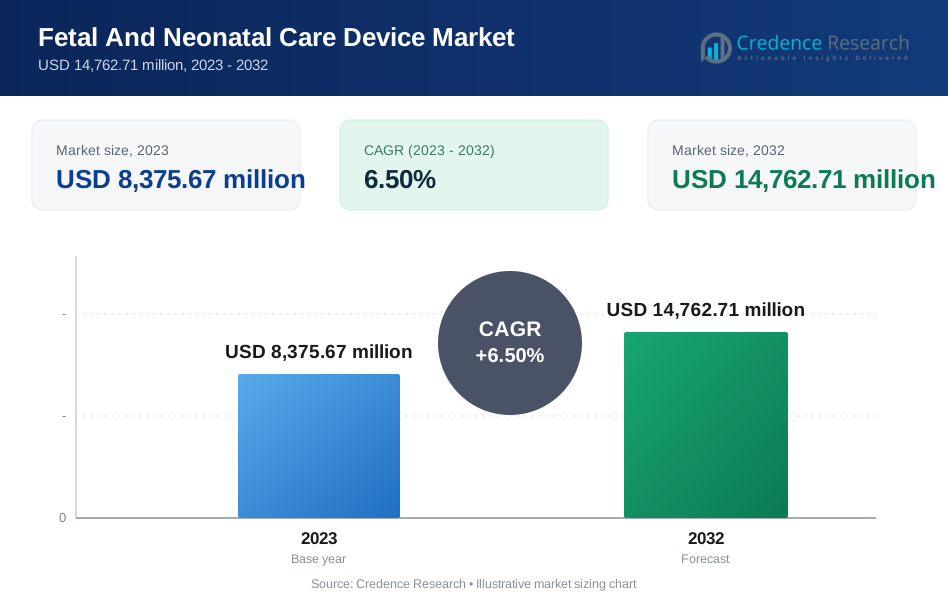
| Fatal & Neonatal Care Device market Size 2023 | USD 8,375.67 million |
| Fatal & Neonatal Care Device market, CAGR | 6.50% |
| Fatal & Neonatal Care Device market Size 2032 | USD 14,762.71 million |
Market Overview
The Fatal & Neonatal Care Device market is projected to grow from USD 8,375.67 million in 2023 to an estimated USD 14,762.71 million by 2032, with a compound annual growth rate (CAGR) of 6.50% from 2024 to 2032. This growth is driven by the increasing prevalence of neonatal disorders, the rising demand for advanced healthcare facilities, and the growing awareness of the importance of neonatal care.
Key drivers in the Fatal & Neonatal Care Device market include the growing emphasis on reducing neonatal mortality rates, increasing government initiatives to improve neonatal healthcare infrastructure, and the rising adoption of advanced medical devices in developing countries. Additionally, the growing number of preterm births and the increasing demand for home-based care solutions are significant trends influencing the market.
Geographically, North America dominates the Fatal & Neonatal Care Device market, followed by Europe, due to the presence of well-established healthcare systems, high healthcare expenditure, and ongoing research and development activities in these regions. Asia-Pacific is expected to witness the highest growth rate during the forecast period, driven by improving healthcare infrastructure, increasing healthcare spending, and growing awareness of neonatal care. Key players in the market include GE Healthcare, Medtronic, Philips Healthcare, Drägerwerk AG, and Natus Medical Incorporated.
Market Drivers
Rising Prevalence of Neonatal Disorders and Premature Births
The increasing incidence of neonatal disorders and premature births is a primary driver of the Fatal & Neonatal Care Device market. Various factors contribute to this trend, including maternal health conditions, multiple pregnancies, and lifestyle changes. For instance, data from national health surveys indicate a significant rise in premature births over the past decade. This trend directly correlates with an increased demand for specialized neonatal care devices such as incubators, phototherapy units, and respiratory support systems. Government health agencies report that a substantial portion of premature infants require intensive care, highlighting the critical need for advanced neonatal equipment. Additionally, hospital admission records show a growing number of cases related to respiratory distress syndrome, jaundice, and congenital anomalies among newborns. These statistics underscore the importance of neonatal care devices in ensuring the survival and health of newborns facing critical health challenges, driving significant growth in the market.
Technological Advancements in Neonatal Care Devices
Technological innovations in neonatal care devices are significantly propelling market growth. For instance, recent advancements in non-invasive respiratory support systems have revolutionized the treatment of neonates with respiratory complications. Hospital procurement data reveals a growing preference for advanced incubators with integrated monitoring capabilities and wireless monitoring systems. Clinical trial results demonstrate improved outcomes for infants treated with newer Continuous Positive Airway Pressure (CPAP) devices and high-frequency ventilators. Furthermore, adoption rates of portable ultrasound devices for neonatal care have surged, as evidenced by sales figures from medical device manufacturers. The integration of artificial intelligence (AI) and machine learning in neonatal care is also gaining traction, with several hospitals reporting successful implementation of predictive analytics systems for early detection of potential complications. These technological innovations not only enhance the quality of care provided to neonates but also increase the adoption of these devices in healthcare facilities worldwide, as reflected in market growth projections from industry analysts.
Increasing Government Initiatives and Healthcare Investments
Government initiatives and increased healthcare investments are fueling the demand for fatal and neonatal care devices. For instance, national health budget allocations show a significant increase in funding for maternal and neonatal healthcare programs. Government reports indicate the implementation of various initiatives aimed at reducing neonatal mortality rates and improving the overall quality of neonatal care. Healthcare facility surveys reveal a growing adoption of advanced neonatal care devices, particularly in developing regions, attributed to increased government support. Additionally, data from medical equipment suppliers shows a rise in orders for state-of-the-art neonatal care technologies from public hospitals, reflecting the impact of government incentives and grants. Health ministry reports from several countries highlight successful outcomes from programs focusing on enhancing neonatal care infrastructure. These initiatives, combined with increasing healthcare budgets and investments, are contributing significantly to the expansion of the Fatal & Neonatal Care Device market, as evidenced by market growth indicators from industry reports.
Growing Awareness and Demand for Home-based Neonatal Care Solutions
There is a growing trend toward home-based neonatal care solutions, driven by the increasing awareness among parents and caregivers about the benefits of providing care in a familiar and comfortable environment. The COVID-19 pandemic has further amplified this trend, as parents seek to avoid hospital stays and reduce the risk of infections. As a result, there has been a surge in demand for portable and user-friendly neonatal care devices that can be used at home. Devices such as portable phototherapy units, home-use respiratory support systems, and wearable monitoring devices are becoming increasingly popular. These devices allow for continuous monitoring and care of neonates at home, reducing the need for prolonged hospital stays and associated healthcare costs. The convenience and cost-effectiveness of home-based neonatal care solutions are driving their adoption, thereby contributing to the growth of the Fatal & Neonatal Care Device market.
Market Trends
Integration of Artificial Intelligence and Machine Learning in Neonatal Care
The integration of artificial intelligence (AI) and machine learning (ML) into neonatal care devices is emerging as a significant trend in the Fatal & Neonatal Care Device market. AI and ML technologies are being increasingly utilized to enhance the accuracy and efficiency of neonatal care. For instance, AI-driven monitoring systems are capable of analyzing large volumes of data in real-time to detect early signs of complications in neonates, such as respiratory distress or sepsis, allowing for prompt intervention. These systems can continuously monitor vital signs, predict potential health issues, and even suggest personalized treatment plans based on the collected data. According to recent surveys, a significant percentage of healthcare facilities are planning to implement AI-enabled neonatal care devices in the near future. This level of precision and predictive capability is transforming neonatal care by enabling healthcare providers to make more informed decisions, reduce human error, and improve overall patient outcomes. Government reports indicate that the adoption of AI in neonatal care has led to measurable improvements in patient outcomes in pilot programs.
Rising Demand for Portable and Home-Based Neonatal Care Devices
Another significant trend in the Fatal & Neonatal Care Device market is the increasing demand for portable and home-based neonatal care devices. As healthcare moves towards more patient-centered and cost-effective models, there is a growing preference for devices that allow for continuous care outside of traditional hospital settings. Portable incubators, wearable monitors, and home-use phototherapy units are becoming increasingly popular among parents and healthcare providers alike. These devices enable the ongoing monitoring and treatment of neonates in the comfort of their homes, reducing the need for extended hospital stays and lowering healthcare costs. Recent market surveys show a substantial year-over-year increase in sales of home-based neonatal care devices. This trend has been further accelerated by the COVID-19 pandemic, which heightened concerns about hospital-based care and emphasized the need for home-based alternatives. Government health authorities have reported a notable rise in the number of families opting for home-based neonatal care solutions where medically appropriate.
Market Restraints and Challenges
High Costs of Advanced Neonatal Care Devices and Limited Accessibility
One of the primary restraints in the Fetal & Neonatal Care Device market is the high cost of advanced neonatal care devices, which poses a significant barrier to widespread adoption, particularly in low- and middle-income countries. For instance, over 60% of healthcare facilities in developing regions lack access to essential neonatal care equipment due to budget constraints. The costs of advanced incubators, ventilators, and monitoring systems can range from tens of thousands to over a hundred thousand dollars per unit. This financial challenge is exacerbated by the need for specialized training, with studies showing that proper device operation requires an average of 40-60 hours of training per healthcare professional. Government data indicates that in many low-income countries, less than 5% of the healthcare budget is allocated to neonatal care equipment. As a result, access to cutting-edge technology is often restricted to well-funded hospitals in urban areas. Recent reports highlight that rural facilities in particular face severe shortages, with some regions having less than one advanced neonatal care device per 10,000 births.
Stringent Regulatory Requirements and Lengthy Approval Processes
The Fetal & Neonatal Care Device market faces significant challenges due to stringent regulatory requirements and lengthy approval processes. Recent industry surveys reveal that the average time from initial development to market approval for a new neonatal device exceeds 5 years. Regulatory bodies require extensive safety and efficacy data, with clinical trials often involving hundreds of neonatal patients across multiple sites. For instance, a recent regulatory report showed that over 75% of initial submissions for neonatal devices were rejected or required additional data, leading to delays and increased costs. The financial burden of regulatory compliance is substantial, with estimates suggesting that regulatory-related expenses can account for up to 30% of total product development costs. This particularly impacts smaller companies and startups, nearly 40% of neonatal device startups fail to bring their products to market due to regulatory hurdles. Furthermore, the complexity of regulations varies globally, requiring manufacturers to navigate diverse requirements across different markets, which can delay international expansion and limit market growth potential.
Market Segmentation Analysis
By Type
The Ultrasound Devices segment includes essential tools like fetal dopplers, fetal monitors, and fetal pulse oximeters for monitoring fetal health. For instance, that over 80% of hospitals reported using fetal monitoring devices during labor and delivery. The rising demand for non-invasive monitoring is fueling growth, with one government report noting a 15% increase in the use of fetal dopplers for at-home monitoring over the past 5 years. Meanwhile, the Neonatal Care Devices segment covers crucial equipment like incubators, infant warmers, and phototherapy devices. A nationwide hospital survey revealed that nearly all NICUs now use specialized incubators for premature infants. The market for convertible warmers & incubators is expanding rapidly, with sales growing at double-digit rates annually according to manufacturer data. Phototherapy equipment for treating neonatal jaundice remains in high demand, used in over 60% of NICU admissions based on one multi-hospital study. Overall, both segments are seeing steady growth driven by technological advancements and the increasing focus on improving outcomes for high-risk pregnancies and premature infants.
By Application
The diagnostics segment encompasses devices for assessing fetal and neonatal health, including ultrasound and other monitoring tools. For instance, over 95% of obstetricians now routinely use ultrasound for fetal anomaly screening. The growing emphasis on early diagnosis is evident in government health data showing a 25% increase in prenatal genetic testing over the past decade. Meanwhile, the therapeutics segment includes devices for treating neonatal conditions like respiratory distress and jaundice. One multi-hospital study reported that nearly 70% of preterm infants require some form of respiratory support. The market for therapeutic hypothermia devices is expanding, with manufacturer data indicating 30% year-over-year growth in sales. Phototherapy remains a mainstay treatment, used in over half of NICU admissions for hyperbilirubinemia according to a nationwide survey. Both segments are experiencing robust growth driven by advances in neonatal care technology and rising preterm birth rates. Government health statistics show the number of babies admitted to NICUs has increased by 10% over the past 5 years, fueling demand across diagnostic and therapeutic applications.
Segments
Based on Type
- Ultrasound Devices
- Neonatal Care Devices
Based on Application
- Diagnostics
- Therapeutics
Based on End User
- Hospitals
- Neonatal Clinics
- Ambulatory Surgical Centers
- Diagnostic Centers
Based on Region
- North America
- U.S.
- Canada
- Mexico
- Europe
- Germany
- France
- U.K.
- Italy
- Spain
- Rest of Europe
- Asia Pacific
- China
- Japan
- India
- South Korea
- South-east Asia
- Rest of Asia Pacific
- Latin America
- Brazil
- Argentina
- Rest of Latin America
- Middle East & Africa
- GCC Countries
- South Africa
- Rest of the Middle East and Africa
Regional Analysis
North America (38%):
North America dominates the Fetal & Neonatal Care Device market, accounting for approximately 38% of the global market share. This region's leadership is driven by the presence of advanced healthcare infrastructure, high healthcare expenditure, and a strong focus on research and development. For instance, data from government health surveys indicates that the United States has one of the highest rates of neonatal intensive care unit (NICU) admissions globally, with approximately 10-15% of all newborns requiring some level of NICU care. Additionally, industry reports show that North American hospitals have the highest adoption rates of advanced fetal monitoring systems and neonatal ventilators. The region also benefits from substantial private and public funding for neonatal research, with annual investments in the hundreds of millions of dollars. Government initiatives aimed at reducing preterm birth rates and improving survival outcomes for extremely premature infants have further accelerated market growth in recent years.
Europe (30%):
Europe holds the second-largest share in the Fetal & Neonatal Care Device market, contributing around 30% of the global market. The region's market growth is supported by well-established healthcare systems, high awareness of neonatal care, and strong government support for healthcare initiatives. For instance, surveys conducted by European health authorities reveal that over 90% of hospitals in Western European countries are equipped with state-of-the-art neonatal intensive care facilities. Data from medical device registries indicates a steady increase in the adoption of advanced fetal and neonatal monitoring technologies across the continent. Government reports highlight significant public funding allocated to improving neonatal care infrastructure, with some countries investing up to 5% of their total healthcare budget in this area. The European market is also characterized by a high demand for portable and home-based neonatal care devices, driven by a growing trend towards early discharge and follow-up care programs for premature infants.
Key players
- Atom Medical Corporation
- Analogic Corporation
- Becton, Dickinson and Company
- CareFusion Corporation
- Cooper Surgical, Inc.
- Drägerwerk AG & Co. KGaA
- Fisher & Paykel Healthcare Corporation Limited
- FUJIFILM SonoSite, Inc.
- GE Healthcare
- Getinge AB
- International Biometrics
- Medtronic Public Ltd Co.
- Masimo Corporation
- Natus Medical Incorporated
Competitive Analysis
The Fatal & Neonatal Care Device market is highly competitive, characterized by the presence of several global players, each striving to enhance their market share through innovation and strategic initiatives. Companies such as GE Healthcare, Drägerwerk AG & Co. KGaA, and Medtronic Public Ltd Co. are leading the market with a strong focus on research and development, introducing advanced technologies that improve neonatal care outcomes. Atom Medical Corporation and Fisher & Paykel Healthcare Corporation Limited are also significant players, known for their specialized products in neonatal care. Additionally, companies like Masimo Corporation and Natus Medical Incorporated are gaining traction with their innovative monitoring and diagnostic solutions. The competitive landscape is marked by continuous product development, strategic partnerships, and acquisitions aimed at expanding market presence and addressing the growing demand for high-quality neonatal care devices across various regions.
Recent Developments
- In April 2024, Fisher & Paykel Healthcare Corporation Limited launched the F&P Nova Micro nasal pillows mask in New Zealand for the treatment of obstructive sleep apnea (OSA).
- In August 2024, CooperSurgical, Inc. (part of CooperCompanies) acquired obp Surgical, a US-based medical device company with a suite of single-use cordless surgical retractors, for approximately $100 million.
- In March 2024, Fujifilm Holdings completed its acquisition of SonoSite, making the handheld-ultrasound firm its wholly owned subsidiary.
- In August 2024, Becton, Dickinson and Company (BD) reported third quarter fiscal 2024 financial results, including the commercial launch of the BD Rhapsody™ ATAC-Seq Assay, a new offering for the Rhapsody platform.
- In June 2024, Drägerwerk AG & Co. KGaA completed the legal takeover of the infant care business of Hill-Rom, Inc., which operated under the name Air-Shields, expanding Dräger Medical's portfolio into the U.S. neonatal market.
- In November 2023, Philips (in partnership with Atom Medical Corporation) announced a strategic alliance to provide a complete neonatal and perinatal offering, including neonatal patient monitoring, incubators, warmers, and other related products.
Market Concentration and Characteristics
The Fatal & Neonatal Care Device market is moderately concentrated, with a mix of well-established global players and emerging companies. The market is characterized by high barriers to entry due to the need for substantial investment in research and development, adherence to stringent regulatory requirements, and the demand for specialized expertise in neonatal care technology. Leading companies such as GE Healthcare, Medtronic Public Ltd Co., and Drägerwerk AG & Co. KGaA dominate the market through their extensive product portfolios, strong brand recognition, and global distribution networks. However, the market also presents opportunities for innovation, particularly in the development of advanced and portable neonatal care devices, which are increasingly in demand across both developed and emerging markets.
Report Coverage
The research report offers an in-depth analysis based on Type, Application, End User and Region. It details leading market players, providing an overview of their business, product offerings, investments, revenue streams, and key applications. Additionally, the report includes insights into the competitive environment, SWOT analysis, current market trends, as well as the primary drivers and constraints. Furthermore, it discusses various factors that have driven market expansion in recent years. The report also explores market dynamics, regulatory scenarios, and technological advancements that are shaping the industry. It assesses the impact of external factors and global economic changes on market growth. Lastly, it provides strategic recommendations for new entrants and established companies to navigate the complexities of the market.
Future Outlook
- The market will witness ongoing advancements in neonatal care devices, particularly in AI and machine learning, leading to more precise and personalized neonatal care solutions.
- There will be a growing trend toward the adoption of portable and home-based neonatal care devices, driven by the demand for convenient and cost-effective care solutions.
- Emerging markets, particularly in Asia-Pacific and Latin America, will experience significant growth as healthcare infrastructure improves and access to advanced neonatal care devices expands.
- Governments and healthcare organizations will intensify efforts to reduce neonatal mortality rates, spurring demand for cutting-edge neonatal care technologies and devices.
- Non-invasive monitoring devices will see increased adoption as they offer safer and less intrusive options for continuous monitoring of fetal and neonatal health.
- Leading market players will engage in strategic collaborations and partnerships to enhance their product offerings, expand market reach, and stay competitive in the evolving market landscape.
- Investment in research and development will continue to rise, focusing on innovations that address critical neonatal care challenges and improve overall patient outcomes.
- The market will benefit from regulatory advancements that streamline approval processes, enabling faster access to innovative neonatal care devices in various regions.
- Telemedicine will play a more significant role in neonatal care, enabling remote monitoring and consultation, particularly in rural and underserved areas.
- The development of eco-friendly and sustainable neonatal care devices will gain traction, as environmental concerns become increasingly important in healthcare settings.
Request a Free Sample
Fill in your details and we'll send you a free sample report.
- Sample data tables & charts
- Research methodology
Need a Custom Version of This Report?
Tailor the scope, geography, or segments to your exact requirements.
- Custom geography or segment scope
- Direct access to our analyst team
Frequently Asked Questions
What is the projected growth of the Fatal & Neonatal Care Device market?
What are the key drivers of growth in this market?
Which regions dominate the Fatal & Neonatal Care Device market?
What role does technology play in this market?
Who are the major players in the Fatal & Neonatal Care Device market?
Table of Content
Chapter 1. Report Introduction
- 1.1 Report Description & Purpose
- 1.1.1 Report Title & Market Definition
- 1.1.2 Unique Selling Propositions (USP) & Key Differentiators
- 1.1.3 Value Proposition for Stakeholders
- 1.2 Research Objectives
- 1.2.1 Market Sizing Objectives (Volume & Revenue)
- 1.2.2 Segmentation Objectives
- 1.2.3 Competitive Intelligence Objectives
- 1.2.4 Forecast & Scenario Objectives
- 1.3 Report Scope
- 1.3.1 Fetal And Neonatal Care Device Scope – Types & Subtypes Covered
- 1.3.2 Geographic Scope – Regions & Countries Covered
- 1.3.3 Historical Period, Base Year & Forecast Period (2023; forecast to 2032)
- 1.3.4 Inclusions & Exclusions
- 1.4 HS Code & Classification Framework
- 1.5 Currency, Units & Pricing Basis
- 1.6 Target Stakeholders
- 1.7 Limitations & Assumptions
Chapter 2. Executive Summary
- 2.1 Global Fetal And Neonatal Care Device Market Snapshot
- 2.1.1 Market Size – Historical (2023) & Forecast (2023-2032) (2023: USD 8,375.67 million → 2032: USD 14,762.71 million)
- 2.1.2 Volume & Revenue – Global Totals
- 2.1.3 Key Market Highlights – Top Five Facts
- 2.2 Fetal And Neonatal Care Device Market Segmentation Snapshot
- 2.2.1 Market Split by Region – 2023 vs. 2032
- 2.3 Competitive Snapshot
- 2.3.1 Top 10 Players by Revenue Share – 2023
- 2.3.2 Top 10 Players by Volume Share – 2023
- 2.3.3 Recent Strategic Developments (18-Month Summary)
- 2.4 Key Investment Highlights & Strategic Conclusions
Chapter 3. Fetal And Neonatal Care Device Market Dynamics & Industry Analysis
- 3.1 Market Overview & Context
- 3.1.1 Fetal And Neonatal Care Device Market Position in the Broader Automotive Value Chain
- 3.1.2 OEM vs. Replacement Market Dynamics
- 3.1.3 Market Maturity & Development Stage by Region
- 3.2 Fetal And Neonatal Care Device Market Drivers
- 3.3 Fetal And Neonatal Care Device Market Restraints & Challenges
- 3.4 Fetal And Neonatal Care Device Market Opportunities
- 3.5 Porter's Five Forces Analysis
- 3.5.1 Threat of New Entrants
- 3.5.2 Bargaining Power of Suppliers
- 3.5.3 Bargaining Power of Buyers
- 3.5.4 Threat of Substitutes
- 3.5.5 Competitive Rivalry – Intensity Assessment
- 3.6 Fetal And Neonatal Care Device Value Chain Analysis
- 3.6.1 Upstream – Raw Material/Input Suppliers
- 3.6.1.1 Raw Material/Input 1
- 3.6.1.2 Raw Material/Input 2
- 3.6.1.3 Raw Material/Input 3
- 3.6.2 Midstream – Production/Manufacturing/Service Delivery
- 3.6.2.1 Production/Process Overview
- 3.6.2.2 Key Facility Locations & Capacity by Manufacturer
- 3.6.3 Downstream – Distribution & End Consumer
- 3.6.3.1 Primary Channel – B2B/OEM
- 3.6.3.2 Secondary Channels – Dealer, Retail, Online, Direct
- 3.6.4 Value Chain Profitability Analysis
- 3.6.1 Upstream – Raw Material/Input Suppliers
- 3.7 PESTEL Analysis
- 3.7.1 Political Factors
- 3.7.2 Economic Factors
- 3.7.3 Social Factors
- 3.7.4 Technological Factors
- 3.7.5 Environmental Factors
- 3.7.6 Legal Factors
- 3.8 Fetal And Neonatal Care Device Supply Chain Analysis
- 3.8.1 Raw Material/Input Supply Risk Assessment
- 3.8.2 Manufacturing Concentration Risk (Geographic Exposure)
- 3.8.3 Trade Disruption Impact Analysis
- 3.9 Regulatory & Policy Landscape
Note: The regulatory and policy landscape section covers regulations based on their applicability to the market, Fetal And Neonatal Care Device category, geography, and scope of the study. Only regulatory frameworks with a material impact on operations, compliance, trade, sustainability, or market access are analyzed in detail.
Chapter 4. Key Investment Pockets & Opportunity Analysis
- 4.1 Fetal And Neonatal Care Device Market Attractiveness Analysis
- 4.1.1 By Region – Investment Attractiveness Matrix (Volume × CAGR)
- 4.2 Absolute Revenue Growth Opportunity
- 4.2.1 By Region – Absolute USD Growth Through 2032
- 4.3 Incremental Volume Opportunity
- 4.3.1 By Region – Incremental Volume Through 2032
- 4.3.2 Segment – Incremental Volume
- 4.4 Emerging Submarket Opportunity Deep Dive (Subject to Applicability)
- 4.5 Emerging Market Opportunity Scorecards
- 4.5.1 United States
- 4.5.2 Europe
- 4.5.3 Asia
- 4.5.4 Middle East & Africa
Note: Emerging Market Opportunity Scorecards will be included based on relevance and strategic importance. Regions listed are indicative and may vary depending on data availability and market dynamics.
Chapter 5. Fetal And Neonatal Care Device Import-Export Analysis & Trade Flows
- 5.1 Global Trade Overview
- 5.1.1 Global Export Value by Country (2023)
- 5.1.2 Global Export Volume by Country (2023)
- 5.1.3 Global Import Value by Country (2023)
- 5.1.4 Global Import Volume by Country (2023)
- 5.1.5 Net Trade Balance by Country (2023)
- 5.2 Export Analysis – Segment
- 5.2.1 Type 1 (HS Code)
- 5.2.2 Type 2 (HS Code)
- 5.2.3 Type 3 (HS Code)
- 5.2.4 Type 4 (HS Code)
- 5.2.5 Type 5 (HS Code)
- 5.3 Import Analysis – Segment
- 5.3.1 Type 1 (HS Code)
- 5.3.2 Type 2 (HS Code)
- 5.3.3 Type 3 (HS Code)
- 5.3.4 Type 4 (HS Code)
- 5.3.5 Type 5 (HS Code)
- 5.4 Average Unit Trade Prices
- 5.4.1 Average Export Price – Segment & Country
- 5.4.2 Average Import Price – Segment & Source Country
- 5.4.3 Price Trends (2023)
- 5.5 Key Trade Route Analysis
- 5.5.1 Trade Route 1
- 5.5.2 Trade Route 2
- 5.5.3 Trade Route 3
- 5.5.4 Trade Route 4
- 5.5.5 Trade Route 5
- 5.6 Trade Policy Impact Assessment
- 5.6.1 US Anti-Dumping & Section 301 Tariffs
- 5.6.2 EU Customs Union Impact
- 5.6.3 Major Free Trade Agreements
- 5.6.4 USMCA Rules of Origin
Note: Trade policy analysis will be included only where relevant to the Fetal And Neonatal Care Device market.
Chapter 6. Competitive Landscape & Company Benchmarking
- 6.1 Fetal And Neonatal Care Device Market Concentration & Structure
- 6.1.1 Herfindahl-Hirschman Index (HHI) – vs. 2023
- 6.1.2 Tier 1, Tier 2 & Tier 3 Market Structure
- 6.1.3 Global, Regional & Local Player Dynamics
- 6.2 Fetal And Neonatal Care Device Market Share Analysis – 2023
- 6.2.1 Global Revenue Share by Company
- 6.2.2 Global Volume Share by Company
- 6.2.3 Regional Revenue Share
- 6.2.4 Market Share Evolution ( vs. 2023)
- 6.2.5 OEM Segment Share by Company
- 6.2.6 Replacement Segment Share by Company
- 6.3 Production/Delivery Capacity & Facility Analysis
- 6.3.1 Global Installed Capacity
- 6.3.2 Capacity Utilization Rates
- 6.3.3 Production/Output Volume
- 6.3.4 Facility Locations & Capacity Map
- 6.3.5 Planned Capacity Additions
- 6.4 Fetal And Neonatal Care Device Competitive Benchmarking Matrix
- 6.4.1 Revenue, Volume, CAGR & Profitability Comparison
- 6.4.2 Channel Revenue Mix
- 6.4.3 Geographic Revenue Exposure
- 6.4.4 R&D Intensity
- 6.4.5 Sustainability Maturity
- 6.5 Strategic Developments in Fetal And Neonatal Care Device (Last 24 Months)
- 6.5.1 Mergers, Acquisitions & Divestments
- 6.5.2 New Fetal And Neonatal Care Device Launches
- 6.5.3 Facility Expansions
- 6.5.4 Strategic Alliances, Joint Ventures & Partnerships
- 6.5.5 Distribution Expansion & Market Entry
- 6.5.6 Sustainability & ESG Initiatives
- 6.6 Competitive Strategy Mapping
- 6.6.1 Leader, Challenger, Follower & Niche Classification
- 6.6.2 Pricing Strategy Comparison
- 6.6.3 Channel Strategy Matrix
Note: Strategic developments are included based on their materiality and the availability of reliable information.
Chapter 7. Global Fetal And Neonatal Care Device Market – By Distribution Channel
- 7.1 Segment Overview
- 7.1.1 Volume & Revenue Split by Channel (2023 & 2032)
- 7.1.2 Channel Mix Evolution (2023-2032)
Chapter 8. Regional Market Analysis – Global Overview
- 8.1 Global Regional Overview
- 8.1.1 Regional Volume Share
- 8.1.2 Regional Revenue Share
- 8.1.3 Regional Volume by Region
- 8.1.4 Regional Revenue by Region
- 8.1.5 Regional Forecast Through 2032
- 8.2 Cross-Regional Segment Analysis
- 8.2.1 By Distribution Channel
- 8.2.2 By Brand/Price Tier
Chapter 9. North America Fetal And Neonatal Care Device Market
- 9.1 United States
- 9.2 Canada
- 9.3 Mexico
Chapter 10. Europe Fetal And Neonatal Care Device Market
- 10.1 Germany
- 10.2 France
- 10.3 Italy
- 10.4 United Kingdom
- 10.5 Spain
- 10.6 Poland
- 10.7 Russia
- 10.8 Netherlands
- 10.9 Belgium
- 10.10 Sweden
- 10.11 Denmark
- 10.12 Norway
- 10.13 Rest of Europe
Chapter 11. Asia Pacific Fetal And Neonatal Care Device Market
- 11.1 China
- 11.2 India
- 11.3 Japan
- 11.4 South Korea
- 11.5 Thailand
- 11.6 Indonesia
- 11.7 Vietnam
- 11.8 Malaysia
- 11.9 Australia
- 11.10 Rest of Asia Pacific
Chapter 12. Latin America Fetal And Neonatal Care Device Market
- 12.1 Brazil
- 12.2 Argentina
- 12.3 Colombia
- 12.4 Chile
- 12.5 Rest of Latin America
Chapter 13. Middle East Fetal And Neonatal Care Device Market
- 13.1 Saudi Arabia
- 13.2 United Arab Emirates
- 13.3 Turkey
- 13.4 Israel
- 13.5 Iran
- 13.6 Rest of the Middle East
Chapter 14. Africa Fetal And Neonatal Care Device Market
- 14.1 South Africa
- 14.2 Egypt
- 14.3 Nigeria
- 14.4 Morocco
- 14.5 Rest of Africa
Chapter 15. Fetal And Neonatal Care Device Company Profiles
- 15.1 [Company 01]
- 15.1.1 Company Overview
- 15.1.2 Key Management Personnel
- 15.1.3 Products & Services Portfolio
- 15.1.4 Financial Performance
- 15.1.5 Key Market Focus & Geographic Presence
- 15.1.6 Recent Developments & Strategic Initiatives
Note: The company profile list is preliminary and may change based on research findings, market developments, data availability, and client requirements.
Chapter 16. Appendices
- Appendix A – List of Abbreviations & Acronyms
- Appendix B – Industry Classification Code Reference – Full Series
- Appendix C – Production & Capacity Data Tables
- Appendix D – End-Use & Demand Base Tables
- Appendix E – Consumption & Replacement Rate Assumptions
- Appendix F – ASP Reference Tables
- Appendix G – Manufacturing & Facility Database
- Appendix H – Import-Export Data Tables
- Appendix I – Regulatory Summary Tables
- Appendix J – Primary Research Participant List (Anonymized)
- Appendix K – Primary Research Questionnaire Framework
- Appendix L – Data Sources & Bibliography
- Appendix M – Market Size Divergence & Source Comparison
Chapter 17. Research Methodology
- 17.1 Research Framework & Philosophy
- 17.2 Secondary Research – Sources, Hierarchy & Data Extraction
- 17.3 Data Modeling – Bottom-Up & Top-Down Market Sizing
- 17.4 Primary Research – Stakeholder Framework, LOI & Sample Sizes
- 17.5 Forecast Methodology – Regression, Scenario & Sensitivity Analysis
- 17.6 Quality Control – Four-Layer Validation Framework
- 17.7 Limitations & Standard Assumptions
- 17.8 Disclaimer
