
| REPORT ATTRIBUTE | DETAILS |
|---|---|
| Historical Period | 2020-2023 |
| Base Year | 2024 |
| Forecast Period | 2025-2032 |
| Hemodynamic Monitoring Market Size 2024 | USD 1,636.2 million |
| Hemodynamic Monitoring Market, CAGR | 5.4% |
| Hemodynamic Monitoring Market Size 2032 | USD 2,492.08 million |
Market Overview:
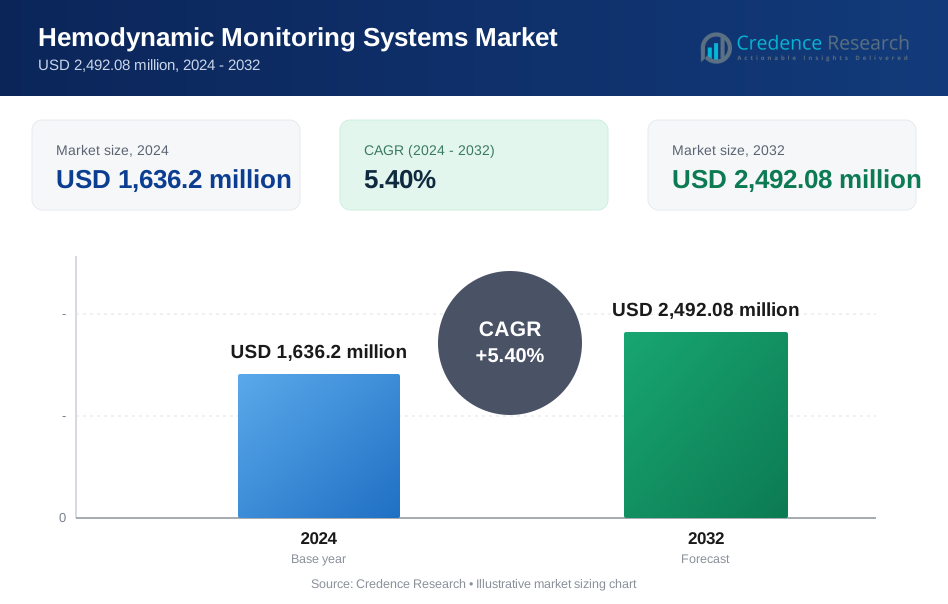
The Hemodynamic Monitoring Market is projected to grow from USD 1,636.2 million in 2024 to USD 2,492.08 million by 2032, at a CAGR of 5.4%.
The hemodynamic monitoring market is driven by the increasing prevalence of cardiovascular diseases, rising demand for minimally invasive procedures, and advancements in monitoring technologies. The growing aging population, which is more susceptible to heart conditions, further fuels the market demand. Additionally, the adoption of advanced hemodynamic monitoring systems in critical care settings and during surgical procedures enhances patient outcomes, supporting market growth. Emerging trends include the integration of artificial intelligence (AI) and machine learning in monitoring systems to provide real-time data analysis and predictive insights, which streamline decision-making processes for healthcare professionals. The shift towards home-based monitoring and telehealth services also represents a key trend, driven by patient preference for less hospital stay and improved post-surgical care. The market's expansion is further supported by increasing healthcare spending in developing regions and the growing awareness of the importance of early detection and management of cardiac conditions.
The hemodynamic monitoring market is geographically segmented into North America, Europe, Asia Pacific, and the Rest of the World (RoW), including Latin America, the Middle East, and Africa. North America holds the largest market share due to advanced healthcare infrastructure and high adoption of innovative technologies. Europe follows closely, driven by well-established healthcare systems and increasing awareness of cardiovascular monitoring. The Asia Pacific region is experiencing rapid growth, fueled by rising healthcare investments in emerging economies like China, India, and Japan. The Rest of the World, though smaller in market share, is witnessing gradual expansion with increasing healthcare modernization efforts. Key players like Edwards Lifesciences, GE Healthcare, Philips Healthcare, and ICU Medical are capitalizing on opportunities in these regions through innovation and strategic partnerships.
Market Insights:
- The hemodynamic monitoring market is expected to grow from USD 1,636.2 million in 2024 to USD 2,492.08 million by 2032, with a CAGR of 5.4%.
- Increasing prevalence of cardiovascular diseases and rising demand for minimally invasive procedures are major drivers of market growth.
- Advancements in monitoring technologies, including AI and machine learning integration, are enhancing real-time data analysis and decision-making in healthcare.
- The aging population, more susceptible to chronic diseases, is driving the demand for continuous monitoring and critical care solutions.
- Home-based monitoring and telehealth services are growing trends, catering to patient preference for less hospital stay and improved post-surgical care.
- North America holds the largest market share in 2024 (40%), followed by Europe (30%), with the Asia Pacific region experiencing the fastest growth (20%).
- Key players like Edwards Lifesciences, GE Healthcare, Philips Healthcare, and ICU Medical are leveraging innovation and partnerships to capture growth opportunities across all regions.
Market Drivers:
Increasing Prevalence of Cardiovascular Diseases:
The rising incidence of cardiovascular diseases globally is a major driver of the hemodynamic monitoring market. With a growing number of people affected by heart conditions such as heart failure, hypertension, and coronary artery disease, the need for continuous monitoring and management has become more critical. For instance, Edwards Lifesciences offers the HemoSphere advanced monitoring platform, which brings pressure, flow, and tissue oximetry to a single screen, enabling proactive, individualized patient management. Hemodynamic monitoring systems provide essential real-time data on blood flow and pressure, allowing healthcare professionals to make timely interventions. This growing demand for precise monitoring systems is significantly propelling market growth.
Advancements in Monitoring Technologies:
Technological advancements in hemodynamic monitoring systems are enhancing their accuracy, ease of use, and ability to provide non-invasive or minimally invasive solutions. The development of portable and wearable devices that allow continuous monitoring, even outside traditional healthcare settings, has expanded the application of these systems. Such innovations, including wireless monitoring systems and AI-integrated tools, enable more efficient and reliable data collection, providing better patient outcomes and driving adoption in hospitals and home healthcare environments.
Aging Population and Growing Need for Critical Care:
The aging population is more prone to chronic diseases, including cardiovascular and respiratory conditions, which require continuous hemodynamic monitoring. As life expectancy increases, the demand for critical care services also rises, creating a need for advanced monitoring solutions in intensive care units and surgical settings. Hemodynamic monitoring systems play a crucial role in managing patients with complex health conditions, further fueling market demand.
Rising Healthcare Spending and Growing Awareness:
Increasing healthcare expenditures, particularly in emerging economies, have led to greater adoption of advanced medical technologies, including hemodynamic monitoring systems. Governments and healthcare organizations are investing in modernizing healthcare infrastructures, promoting early diagnosis, and improving patient management. For instance, Mayo Clinic uses a heart rhythm monitoring laboratory that performs in-person tests and monitors data from wearable devices, enabling technicians to respond immediately to unusual readings. Additionally, growing awareness about the benefits of timely monitoring in preventing complications and enhancing treatment outcomes is encouraging more widespread use of these systems.
Market Trends:
Integration of Artificial Intelligence and Predictive Analytics:
One of the current trends in the hemodynamic monitoring market is the growing integration of artificial intelligence (AI) and predictive analytics in monitoring systems. AI-powered tools enable real-time analysis of vast amounts of data, helping clinicians detect abnormalities and predict potential complications before they become critical. This capability enhances decision-making processes and allows for more personalized treatment plans, leading to better patient outcomes. For instance, A European registry monitoring 702 patients undergoing major non-cardiac surgery using the Acumen™ HPI software showed that HPI software monitoring might decrease both the severity and duration of intra-operative hypotension in non-cardiac surgery patients. As AI continues to evolve, its role in improving the accuracy and efficiency of hemodynamic monitoring systems is expected to expand.
Adoption of Wearable and Portable Devices:
The demand for wearable and portable hemodynamic monitoring devices is rising, driven by the growing preference for patient-friendly solutions. These devices offer continuous monitoring capabilities outside traditional healthcare settings, providing patients with greater mobility and convenience. With the shift toward outpatient care and home-based monitoring, healthcare providers are increasingly adopting these portable devices to monitor patients remotely. This trend is particularly prominent in the management of chronic conditions, where continuous monitoring is essential for early detection and timely interventions.
Rise in Telehealth and Remote Monitoring:
Telehealth and remote monitoring services have gained significant traction in recent years, and their integration with hemodynamic monitoring systems has further strengthened this trend. The ability to monitor patients in real time from a distance, especially in rural or underserved areas, has improved access to critical care. For instance, Stony Brook University Hospital implemented a remote patient monitoring program for post-surgical home care and identified a rare postoperative complication in a 65-year-old male, which prompted a hospital visit and successful treatment. Remote monitoring systems also enable healthcare professionals to track patients’ vital signs and make adjustments to their treatment plans without requiring in-person visits, contributing to cost-effectiveness and better patient management.
Focus on Minimally Invasive and Non-Invasive Monitoring:
Minimally invasive and non-invasive hemodynamic monitoring technologies are gaining popularity as they reduce the risks associated with traditional invasive procedures. These technologies provide accurate and reliable data while enhancing patient comfort and safety. As healthcare providers seek to improve patient experiences and outcomes, the adoption of less invasive monitoring techniques continues to grow.
Market Challenges Analysis:
High Costs of Advanced Monitoring Systems:
One of the major challenges facing the hemodynamic monitoring market is the high cost associated with advanced monitoring systems. These systems, especially those that incorporate cutting-edge technologies such as artificial intelligence and wireless connectivity, require significant investment in both procurement and implementation. For instance, the costs include not only the equipment itself but also the infrastructure needed to support the integration of these systems into existing healthcare environments. Many healthcare providers, particularly in developing regions, face budget constraints that limit their ability to adopt these advanced systems. As a result, the high upfront costs pose a barrier to the widespread adoption of these technologies, particularly in small and mid-sized hospitals. Moreover, the need for ongoing maintenance, calibration, and potential training for healthcare personnel further adds to the financial burden, which can delay implementation and limit access to these life-saving technologies in resource-constrained settings. Without affordable solutions, the market’s growth potential could be hampered, especially in emerging economies.
Technical Challenges and Data Management:
Another significant challenge in the hemodynamic monitoring market is the complexity of data management and the technical challenges associated with integrating monitoring systems into existing healthcare infrastructures. Hemodynamic monitoring devices generate vast amounts of data that require accurate interpretation and real-time analysis to be effective. Managing, storing, and processing this data can be challenging, especially for healthcare facilities lacking robust digital infrastructure. Baxter acquired Cheetah Medical in September 2019 to expand its patient monitoring solutions with non-invasive hemodynamic monitoring technologies for fluid management. Additionally, the integration of new systems with existing electronic health records (EHR) and hospital information systems (HIS) is often complex, leading to issues with data compatibility and interoperability. Technical difficulties can delay the seamless operation of hemodynamic monitoring systems, potentially affecting patient care. Moreover, ensuring the accuracy and reliability of these devices, especially in remote and telehealth settings, remains a challenge. Data security is another concern, as patient information must be safeguarded from potential breaches. Addressing these technical hurdles is crucial for the smooth adoption and functionality of advanced hemodynamic monitoring technologies across diverse healthcare settings, while also maintaining compliance with regulatory standards.
Market Opportunities:
The hemodynamic monitoring market presents significant opportunities driven by the growing focus on personalized and precision medicine. As healthcare shifts toward individualized patient care, there is a rising demand for advanced monitoring systems that can offer real-time, patient-specific data. This creates a favorable environment for the development and adoption of innovative hemodynamic monitoring solutions tailored to meet the unique needs of diverse patient populations. The increasing integration of AI and predictive analytics into these systems further enhances their potential, enabling healthcare providers to make data-driven decisions and offer more accurate treatment plans. The expansion of wearable and portable devices that allow continuous monitoring outside of hospital settings also opens new avenues for home-based care, especially for patients with chronic conditions.
Moreover, the growing healthcare infrastructure in emerging economies represents a promising opportunity for market expansion. Governments and private sectors in these regions are investing in modernizing their healthcare systems, increasing access to advanced medical technologies, including hemodynamic monitoring devices. As awareness of cardiovascular diseases and their management grows in developing countries, the demand for early detection and real-time monitoring solutions is expected to rise. Additionally, partnerships between healthcare providers and technology companies to develop affordable, user-friendly hemodynamic monitoring devices can further accelerate market growth. By addressing cost challenges and improving accessibility, manufacturers can tap into previously underserved markets, driving increased adoption and creating long-term growth potential for the global hemodynamic monitoring market.
Market Segmentation Analysis:
By Application:
In the hemodynamic monitoring market, the application segment includes critical care, surgery, and home-based monitoring. Critical care applications dominate due to the high demand for continuous monitoring in intensive care units. Surgery applications are growing as hemodynamic monitoring enhances patient safety during complex procedures, while home-based monitoring is gaining traction with the rise of outpatient care.
By Platform:
The market is segmented by platform into invasive, minimally invasive, and non-invasive monitoring systems. Invasive monitoring remains prevalent in critical care settings, where accuracy is paramount. However, minimally invasive and non-invasive systems are gaining popularity due to advancements in technology that improve patient comfort, safety, and ease of use without compromising accuracy.
By Payload:
The payload segment refers to the various devices used for data collection, such as sensors, monitors, and disposable components. Sensors play a critical role in collecting real-time data, while monitors display and analyze this information. The demand for disposable components is increasing due to their role in infection control and improved hygiene standards in healthcare settings.
Segments:
Based on Product
- Monitors
- Disposables
Based on Type
- Invasive
- Minimally invasive
- Noninvasive
Based on End User
- Hospitals
- Clinics and ambulatory care centers
- Home care settings
Based on the Geography:
- North America
- U.S.
- Canada
- Mexico
- Europe
- Germany
- France
- U.K.
- Italy
- Spain
- Rest of Europe
- Asia Pacific
- China
- Japan
- India
- South Korea
- South-east Asia
- Rest of Asia Pacific
- Latin America
- Brazil
- Argentina
- Rest of Latin America
- Middle East & Africa
- GCC Countries
- South Africa
- Rest of the Middle East and Africa
Regional Analysis:
North America:
North America holds a significant share of the hemodynamic monitoring market, accounting for 40% of the global market in 2024. This region's dominance can be attributed to the presence of advanced healthcare infrastructure, high adoption rates of innovative medical technologies, and the increasing prevalence of cardiovascular diseases. The United States, in particular, is a key contributor due to its large patient population, growing demand for minimally invasive procedures, and substantial healthcare spending. The region also benefits from the presence of major industry players and a favorable regulatory environment that supports the adoption of new technologies. In addition, the rising incidence of lifestyle-related diseases and the aging population further drive demand for hemodynamic monitoring systems in North America.
Europe:
Europe is another prominent region in the hemodynamic monitoring market, capturing 30% of the global market share in 2024. The market in Europe is driven by well-established healthcare systems, strong government support for medical advancements, and increasing awareness of the importance of early diagnosis and monitoring of cardiovascular conditions. Countries like Germany, France, and the United Kingdom are leading in terms of the adoption of advanced monitoring systems, particularly in critical care and surgical settings. The aging population and the rising incidence of chronic diseases across Europe are key factors fueling market growth. Additionally, the European Union’s focus on improving healthcare quality and patient outcomes continues to create opportunities for the expansion of hemodynamic monitoring technologies.
Asia Pacific:
The Asia Pacific region is expected to witness the fastest growth in the hemodynamic monitoring market, holding a market share of 20% in 2024. The region’s growth is primarily driven by the increasing prevalence of cardiovascular diseases, a rapidly aging population, and the rising demand for advanced healthcare services. Emerging economies like China, India, and Japan are investing heavily in healthcare infrastructure improvements, which is creating significant opportunities for the adoption of hemodynamic monitoring systems. Additionally, growing awareness of the benefits of early diagnosis and the shift towards home-based monitoring are contributing to market expansion in the region. Government initiatives to modernize healthcare and the increasing presence of local and international manufacturers also support market growth.
Rest of the World (RoW):
The Rest of the World, which includes regions like Latin America, the Middle East, and Africa, accounts for 10% of the global hemodynamic monitoring market share in 2024. While these regions have traditionally lagged behind in terms of healthcare infrastructure, there is a growing demand for advanced medical technologies due to increasing healthcare spending and the rising burden of cardiovascular diseases. Governments and private healthcare providers in these regions are making efforts to improve access to advanced monitoring systems. In particular, Latin America is emerging as a key market, driven by investments in healthcare modernization and increasing awareness of the importance of early cardiovascular disease detection and management.
Key Player Analysis:
- Philips Healthcare
- ICU Medical
- Edwards Lifesciences
- LiDCO Group
- GE Healthcare
- OSYPKA MEDICAL GMBH (Germany)
- Uscom (Australia)
- Cheetah Medical (US)
- NI Medical (Israel)
- CareTaker Medical (US)
Competitive Analysis:
The hemodynamic monitoring market is highly competitive, with several key players driving innovation and market expansion. Leading companies such as Edwards Lifesciences, GE Healthcare, Philips Healthcare, LiDCO Group, and ICU Medical hold significant market shares due to their strong product portfolios, advanced monitoring technologies, and extensive global presence. These companies focus on continuous product development, with a strong emphasis on non-invasive and minimally invasive monitoring systems to enhance patient safety and comfort. Additionally, they engage in strategic partnerships, mergers, and acquisitions to expand their market reach and strengthen their technological capabilities. The growing integration of artificial intelligence and data analytics in monitoring systems further intensifies competition, as companies strive to provide real-time, precise, and predictive solutions to healthcare providers. The leading players also benefit from established distribution networks and strong relationships with healthcare institutions, enabling them to maintain their competitive edge in a rapidly evolving market.
Recent Developments:
- In June 2023, Merit Medical Systems, Inc. completed the acquisition of a dialysis catheter portfolio and the BioSentry biopsy tract sealant system from AngioDynamics, Inc. for a cash sum of USD 100,000. This acquisition strengthens Merit Medical's cardiac intervention portfolio.
- In June 2023, Mindray Medical and Edwards Lifesciences Corporation collaborated to integrate the Edwards FloTrac sensor into Mindray's BeneVision N hemodynamic monitor, with plans to launch the product in Europe following its market acceptance in China.
- In May 2023, Inspira Technologies OXY B.H.N. Ltd. announced the development of VORTX, a respiratory technology aimed at improving hemodynamic performance and reducing oxygenator failures.
- In May 2023, Koninklijke Philips N.V. launched the Zenition 10 image-guided therapy system, designed to improve patient throughput through enhanced speed and efficiency, expanding its diagnosis and treatment segment.
Market Concentration & Characteristics:
The hemodynamic monitoring market is moderately concentrated, with a few key players dominating a significant portion of the global market. Companies such as Edwards Lifesciences, GE Healthcare, and Philips Healthcare hold substantial market shares due to their strong product portfolios and continuous innovation. These industry leaders are characterized by their focus on developing advanced monitoring technologies, including non-invasive and minimally invasive solutions, which are in high demand across critical care and surgical settings. Despite the presence of major players, the market also offers opportunities for new entrants and smaller companies, especially in niche segments like wearable and portable monitoring devices. Increasing adoption of artificial intelligence (AI) and data analytics in monitoring systems is reshaping the market landscape, creating room for technological advancements. The growing demand for personalized, real-time monitoring solutions further emphasizes the need for product differentiation and technological leadership among market participants.
Report Coverage:
The research report offers an in-depth analysis based on Product, Type, End User and Geography. It details leading market players, providing an overview of their business, product offerings, investments, revenue streams, and key applications. Additionally, the report includes insights into the competitive environment, SWOT analysis, current market trends, as well as the primary drivers and constraints. Furthermore, it discusses various factors that have driven market expansion in recent years. The report also explores market dynamics, regulatory scenarios, and technological advancements that are shaping the industry. It assesses the impact of external factors and global economic changes on market growth. Lastly, it provides strategic recommendations for new entrants and established companies to navigate the complexities of the market.
Future Outlook:
- The demand for minimally invasive and non-invasive hemodynamic monitoring systems will continue to rise.
- Integration of artificial intelligence and machine learning will enhance data accuracy and predictive capabilities in monitoring systems.
- Home-based and remote monitoring solutions will gain popularity, driven by patient preferences for less hospital stay and improved outpatient care.
- Technological advancements will lead to the development of more compact, portable, and wearable hemodynamic monitoring devices.
- Increasing prevalence of cardiovascular diseases will drive the need for continuous and precise monitoring solutions globally.
- Emerging markets, especially in Asia Pacific, will see significant growth due to improving healthcare infrastructure and rising awareness.
- Strategic partnerships and collaborations between healthcare providers and technology firms will fuel innovation in monitoring technologies.
- The aging global population will contribute to the growing demand for critical care monitoring systems.
- Regulatory standards will evolve to support the adoption of advanced hemodynamic monitoring systems in various regions.
- Companies will focus on product differentiation and user-friendly designs to meet the increasing demand for personalized healthcare solutions.
Request a Free Sample
Fill in your details and we'll send you a free sample report.
- Sample data tables & charts
- Research methodology
Need a Custom Version of This Report?
Tailor the scope, geography, or segments to your exact requirements.
- Custom geography or segment scope
- Direct access to our analyst team
Frequently Asked Questions
What is the current size of the Hemodynamic Monitoring Market?
Which Component Type segment governs the demand for Hemodynamic Monitoring Systems in the world?
Which Application segment is expected to post the fastest growth during the forecast period?
Who are the major players in the global Hemodynamic Monitoring Systems Market?
What are the major market drivers of the Hemodynamic Monitoring Systems industry?
What are the major market restraints of the Hemodynamic Monitoring Systems industry?
What are the major market opportunities of the Hemodynamic Monitoring Systems industry?
Table of Content
Chapter 1. Report Introduction
- 1.1 Report Description & Purpose
- 1.1.1 Report Title & Market Definition
- 1.1.2 Unique Selling Propositions (USP) & Key Differentiators
- 1.1.3 Value Proposition for Stakeholders
- 1.2 Research Objectives
- 1.2.1 Market Sizing Objectives (Volume & Revenue)
- 1.2.2 Segmentation Objectives
- 1.2.3 Competitive Intelligence Objectives
- 1.2.4 Forecast & Scenario Objectives
- 1.3 Report Scope
- 1.3.1 Hemodynamic Monitoring Systems Scope – Types & Subtypes Covered
- 1.3.2 Geographic Scope – Regions & Countries Covered
- 1.3.3 Historical Period, Base Year & Forecast Period (2024; forecast to 2032)
- 1.3.4 Inclusions & Exclusions
- 1.4 HS Code & Classification Framework
- 1.5 Currency, Units & Pricing Basis
- 1.6 Target Stakeholders
- 1.7 Limitations & Assumptions
Chapter 2. Executive Summary
- 2.1 Global Hemodynamic Monitoring Systems Market Snapshot
- 2.1.1 Market Size – Historical (2024) & Forecast (2024-2032) (2024: USD 1,636.2 million → 2032: USD 2,492.08 million)
- 2.1.2 Volume & Revenue – Global Totals
- 2.1.3 Key Market Highlights – Top Five Facts
- 2.2 Hemodynamic Monitoring Systems Market Segmentation Snapshot
- 2.2.1 Market Split by Region – 2024 vs. 2032
- 2.3 Competitive Snapshot
- 2.3.1 Top 10 Players by Revenue Share – 2024
- 2.3.2 Top 10 Players by Volume Share – 2024
- 2.3.3 Recent Strategic Developments (18-Month Summary)
- 2.4 Key Investment Highlights & Strategic Conclusions
Chapter 3. Hemodynamic Monitoring Systems Market Dynamics & Industry Analysis
- 3.1 Market Overview & Context
- 3.1.1 Hemodynamic Monitoring Systems Market Position in the Broader Automotive Value Chain
- 3.1.2 OEM vs. Replacement Market Dynamics
- 3.1.3 Market Maturity & Development Stage by Region
- 3.2 Hemodynamic Monitoring Systems Market Drivers
- 3.3 Hemodynamic Monitoring Systems Market Restraints & Challenges
- 3.4 Hemodynamic Monitoring Systems Market Opportunities
- 3.5 Porter's Five Forces Analysis
- 3.5.1 Threat of New Entrants
- 3.5.2 Bargaining Power of Suppliers
- 3.5.3 Bargaining Power of Buyers
- 3.5.4 Threat of Substitutes
- 3.5.5 Competitive Rivalry – Intensity Assessment
- 3.6 Hemodynamic Monitoring Systems Value Chain Analysis
- 3.6.1 Upstream – Raw Material/Input Suppliers
- 3.6.1.1 Raw Material/Input 1
- 3.6.1.2 Raw Material/Input 2
- 3.6.1.3 Raw Material/Input 3
- 3.6.2 Midstream – Production/Manufacturing/Service Delivery
- 3.6.2.1 Production/Process Overview
- 3.6.2.2 Key Facility Locations & Capacity by Manufacturer
- 3.6.3 Downstream – Distribution & End Consumer
- 3.6.3.1 Primary Channel – B2B/OEM
- 3.6.3.2 Secondary Channels – Dealer, Retail, Online, Direct
- 3.6.4 Value Chain Profitability Analysis
- 3.6.1 Upstream – Raw Material/Input Suppliers
- 3.7 PESTEL Analysis
- 3.7.1 Political Factors
- 3.7.2 Economic Factors
- 3.7.3 Social Factors
- 3.7.4 Technological Factors
- 3.7.5 Environmental Factors
- 3.7.6 Legal Factors
- 3.8 Hemodynamic Monitoring Systems Supply Chain Analysis
- 3.8.1 Raw Material/Input Supply Risk Assessment
- 3.8.2 Manufacturing Concentration Risk (Geographic Exposure)
- 3.8.3 Trade Disruption Impact Analysis
- 3.9 Regulatory & Policy Landscape
Note: The regulatory and policy landscape section covers regulations based on their applicability to the market, Hemodynamic Monitoring Systems category, geography, and scope of the study. Only regulatory frameworks with a material impact on operations, compliance, trade, sustainability, or market access are analyzed in detail.
Chapter 4. Key Investment Pockets & Opportunity Analysis
- 4.1 Hemodynamic Monitoring Systems Market Attractiveness Analysis
- 4.1.1 By Region – Investment Attractiveness Matrix (Volume × CAGR)
- 4.2 Absolute Revenue Growth Opportunity
- 4.2.1 By Region – Absolute USD Growth Through 2032
- 4.3 Incremental Volume Opportunity
- 4.3.1 By Region – Incremental Volume Through 2032
- 4.3.2 Segment – Incremental Volume
- 4.4 Emerging Submarket Opportunity Deep Dive (Subject to Applicability)
- 4.5 Emerging Market Opportunity Scorecards
- 4.5.1 United States
- 4.5.2 Europe
- 4.5.3 Asia
- 4.5.4 Middle East & Africa
Note: Emerging Market Opportunity Scorecards will be included based on relevance and strategic importance. Regions listed are indicative and may vary depending on data availability and market dynamics.
Chapter 5. Hemodynamic Monitoring Systems Import-Export Analysis & Trade Flows
- 5.1 Global Trade Overview
- 5.1.1 Global Export Value by Country (2024)
- 5.1.2 Global Export Volume by Country (2024)
- 5.1.3 Global Import Value by Country (2024)
- 5.1.4 Global Import Volume by Country (2024)
- 5.1.5 Net Trade Balance by Country (2024)
- 5.2 Export Analysis – Segment
- 5.2.1 Type 1 (HS Code)
- 5.2.2 Type 2 (HS Code)
- 5.2.3 Type 3 (HS Code)
- 5.2.4 Type 4 (HS Code)
- 5.2.5 Type 5 (HS Code)
- 5.3 Import Analysis – Segment
- 5.3.1 Type 1 (HS Code)
- 5.3.2 Type 2 (HS Code)
- 5.3.3 Type 3 (HS Code)
- 5.3.4 Type 4 (HS Code)
- 5.3.5 Type 5 (HS Code)
- 5.4 Average Unit Trade Prices
- 5.4.1 Average Export Price – Segment & Country
- 5.4.2 Average Import Price – Segment & Source Country
- 5.4.3 Price Trends (2024)
- 5.5 Key Trade Route Analysis
- 5.5.1 Trade Route 1
- 5.5.2 Trade Route 2
- 5.5.3 Trade Route 3
- 5.5.4 Trade Route 4
- 5.5.5 Trade Route 5
- 5.6 Trade Policy Impact Assessment
- 5.6.1 US Anti-Dumping & Section 301 Tariffs
- 5.6.2 EU Customs Union Impact
- 5.6.3 Major Free Trade Agreements
- 5.6.4 USMCA Rules of Origin
Note: Trade policy analysis will be included only where relevant to the Hemodynamic Monitoring Systems market.
Chapter 6. Competitive Landscape & Company Benchmarking
- 6.1 Hemodynamic Monitoring Systems Market Concentration & Structure
- 6.1.1 Herfindahl-Hirschman Index (HHI) – vs. 2024
- 6.1.2 Tier 1, Tier 2 & Tier 3 Market Structure
- 6.1.3 Global, Regional & Local Player Dynamics
- 6.2 Hemodynamic Monitoring Systems Market Share Analysis – 2024
- 6.2.1 Global Revenue Share by Company
- 6.2.2 Global Volume Share by Company
- 6.2.3 Regional Revenue Share
- 6.2.4 Market Share Evolution ( vs. 2024)
- 6.2.5 OEM Segment Share by Company
- 6.2.6 Replacement Segment Share by Company
- 6.3 Production/Delivery Capacity & Facility Analysis
- 6.3.1 Global Installed Capacity
- 6.3.2 Capacity Utilization Rates
- 6.3.3 Production/Output Volume
- 6.3.4 Facility Locations & Capacity Map
- 6.3.5 Planned Capacity Additions
- 6.4 Hemodynamic Monitoring Systems Competitive Benchmarking Matrix
- 6.4.1 Revenue, Volume, CAGR & Profitability Comparison
- 6.4.2 Channel Revenue Mix
- 6.4.3 Geographic Revenue Exposure
- 6.4.4 R&D Intensity
- 6.4.5 Sustainability Maturity
- 6.5 Strategic Developments in Hemodynamic Monitoring Systems (Last 24 Months)
- 6.5.1 Mergers, Acquisitions & Divestments
- 6.5.2 New Hemodynamic Monitoring Systems Launches
- 6.5.3 Facility Expansions
- 6.5.4 Strategic Alliances, Joint Ventures & Partnerships
- 6.5.5 Distribution Expansion & Market Entry
- 6.5.6 Sustainability & ESG Initiatives
- 6.6 Competitive Strategy Mapping
- 6.6.1 Leader, Challenger, Follower & Niche Classification
- 6.6.2 Pricing Strategy Comparison
- 6.6.3 Channel Strategy Matrix
Note: Strategic developments are included based on their materiality and the availability of reliable information.
Chapter 7. Global Hemodynamic Monitoring Systems Market – By Distribution Channel
- 7.1 Segment Overview
- 7.1.1 Volume & Revenue Split by Channel (2024 & 2032)
- 7.1.2 Channel Mix Evolution (2024-2032)
Chapter 8. Regional Market Analysis – Global Overview
- 8.1 Global Regional Overview
- 8.1.1 Regional Volume Share
- 8.1.2 Regional Revenue Share
- 8.1.3 Regional Volume by Region
- 8.1.4 Regional Revenue by Region
- 8.1.5 Regional Forecast Through 2032
- 8.2 Cross-Regional Segment Analysis
- 8.2.1 By Distribution Channel
- 8.2.2 By Brand/Price Tier
Chapter 9. North America Hemodynamic Monitoring Systems Market
- 9.1 United States
- 9.2 Canada
- 9.3 Mexico
Chapter 10. Europe Hemodynamic Monitoring Systems Market
- 10.1 Germany
- 10.2 France
- 10.3 Italy
- 10.4 United Kingdom
- 10.5 Spain
- 10.6 Poland
- 10.7 Russia
- 10.8 Netherlands
- 10.9 Belgium
- 10.10 Sweden
- 10.11 Denmark
- 10.12 Norway
- 10.13 Rest of Europe
Chapter 11. Asia Pacific Hemodynamic Monitoring Systems Market
- 11.1 China
- 11.2 India
- 11.3 Japan
- 11.4 South Korea
- 11.5 Thailand
- 11.6 Indonesia
- 11.7 Vietnam
- 11.8 Malaysia
- 11.9 Australia
- 11.10 Rest of Asia Pacific
Chapter 12. Latin America Hemodynamic Monitoring Systems Market
- 12.1 Brazil
- 12.2 Argentina
- 12.3 Colombia
- 12.4 Chile
- 12.5 Rest of Latin America
Chapter 13. Middle East Hemodynamic Monitoring Systems Market
- 13.1 Saudi Arabia
- 13.2 United Arab Emirates
- 13.3 Turkey
- 13.4 Israel
- 13.5 Iran
- 13.6 Rest of the Middle East
Chapter 14. Africa Hemodynamic Monitoring Systems Market
- 14.1 South Africa
- 14.2 Egypt
- 14.3 Nigeria
- 14.4 Morocco
- 14.5 Rest of Africa
Chapter 15. Hemodynamic Monitoring Systems Company Profiles
- 15.1 [Company 01]
- 15.1.1 Company Overview
- 15.1.2 Key Management Personnel
- 15.1.3 Products & Services Portfolio
- 15.1.4 Financial Performance
- 15.1.5 Key Market Focus & Geographic Presence
- 15.1.6 Recent Developments & Strategic Initiatives
Note: The company profile list is preliminary and may change based on research findings, market developments, data availability, and client requirements.
Chapter 16. Appendices
- Appendix A – List of Abbreviations & Acronyms
- Appendix B – Industry Classification Code Reference – Full Series
- Appendix C – Production & Capacity Data Tables
- Appendix D – End-Use & Demand Base Tables
- Appendix E – Consumption & Replacement Rate Assumptions
- Appendix F – ASP Reference Tables
- Appendix G – Manufacturing & Facility Database
- Appendix H – Import-Export Data Tables
- Appendix I – Regulatory Summary Tables
- Appendix J – Primary Research Participant List (Anonymized)
- Appendix K – Primary Research Questionnaire Framework
- Appendix L – Data Sources & Bibliography
- Appendix M – Market Size Divergence & Source Comparison
Chapter 17. Research Methodology
- 17.1 Research Framework & Philosophy
- 17.2 Secondary Research – Sources, Hierarchy & Data Extraction
- 17.3 Data Modeling – Bottom-Up & Top-Down Market Sizing
- 17.4 Primary Research – Stakeholder Framework, LOI & Sample Sizes
- 17.5 Forecast Methodology – Regression, Scenario & Sensitivity Analysis
- 17.6 Quality Control – Four-Layer Validation Framework
- 17.7 Limitations & Standard Assumptions
- 17.8 Disclaimer
