Market Overview:
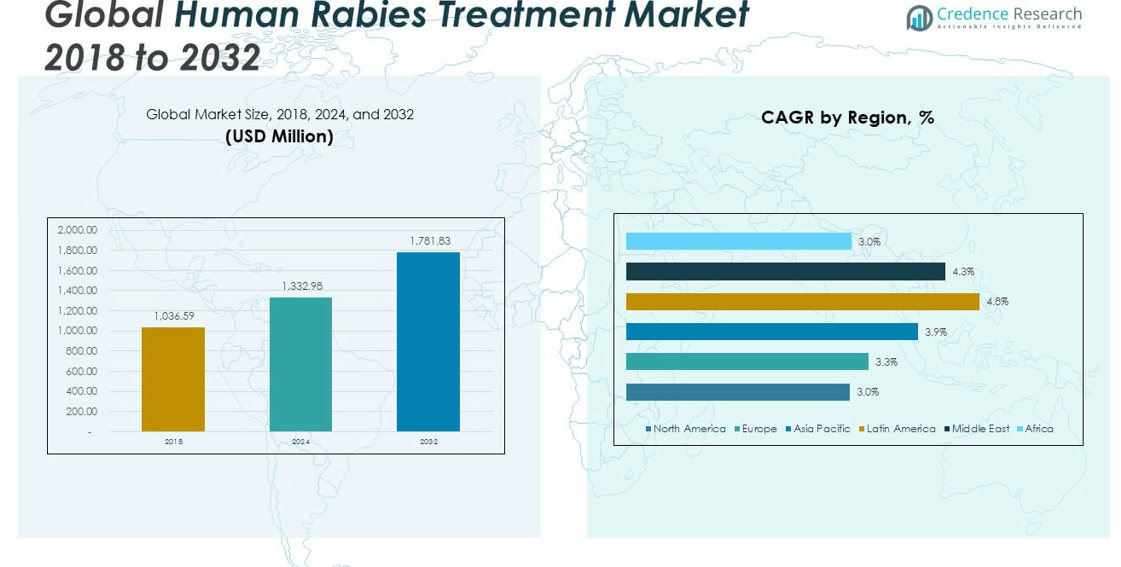
The Global Human Rabies Treatment Market size was valued at USD 1,036.59 million in 2018 to USD 1,332.98 million in 2024 and is anticipated to reach USD 1,781.83 million by 2032, at a CAGR of 3.67% during the forecast period.
| REPORT ATTRIBUTE | DETAILS |
|---|---|
| Historical Period | 2020-2023 |
| Base Year | 2024 |
| Forecast Period | 2025-2032 |
| Human Rabies Treatment Market Size 2024 | USD 1,332.98 million |
| Human Rabies Treatment Market, CAGR | 3.67% |
| Human Rabies Treatment Market Size 2032 | USD 1,781.83 million |
The human rabies treatment market is primarily driven by the persistent burden of rabies infections in low- and middle-income countries, where animal control and vaccination measures remain limited. The growing incidence of dog bites in densely populated regions is pushing governments and health agencies to implement broader pre-exposure and post-exposure prophylaxis programs. Public health initiatives by the World Health Organization (WHO) and support from non-governmental organizations are promoting wider access to vaccines and immunoglobulin in vulnerable populations. Increasing awareness campaigns have contributed to early reporting of bite incidents, which boosts treatment demand. In response, pharmaceutical companies are advancing vaccine technologies, focusing on purified cell culture vaccines that offer fewer side effects and improved immunogenicity compared to older formulations. Manufacturing advancements and investment in cold chain logistics are ensuring better distribution in rural and remote areas, enhancing treatment availability where it is needed most. The market is also benefiting from a growing focus on achieving the WHO’s goal of eliminating dog-mediated human rabies by 2030, which has led to strategic collaborations between global health organizations and vaccine manufacturers.
Geographically, the human rabies treatment market shows significant variation in growth and penetration based on regional healthcare infrastructure and disease prevalence. North America leads the market due to its robust public health systems, strong regulatory frameworks, and high public awareness of rabies prevention. The region benefits from widespread availability of advanced rabies vaccines and immunoglobulin, with routine post-exposure prophylaxis accessible through established healthcare networks. Europe holds a strong position as well, though its growth remains moderate due to the relatively low incidence of rabies and stringent regulations governing vaccine use. In contrast, the Asia-Pacific region, particularly countries such as India, China, and the Philippines, is experiencing the fastest market growth. This surge is driven by a high prevalence of rabies, increasing dog bite cases, growing government-led vaccination campaigns, and international efforts to improve access to treatment in rural and underserved areas. Africa and parts of Latin America are also emerging markets due to growing awareness, international funding support, and gradual improvements in healthcare delivery. However, challenges like inconsistent vaccine supply, lack of trained personnel, and limited cold chain infrastructure still hinder rapid progress.
Market Insights:
- The Global Human Rabies Treatment Market grew from USD 1,036.59 million in 2018 to USD 1,332.98 million in 2024 and is projected to reach USD 1,781.83 million by 2032, at a CAGR of 3.67%.
- High rabies prevalence in Asia and Africa, driven by poor animal control and limited healthcare access, continues to fuel demand for vaccines and immunoglobulins.
- National vaccination drives and WHO’s “Zero by 30” strategy are boosting public health efforts and expanding treatment access in high-risk regions.
- Manufacturers are replacing older nerve tissue vaccines with cell culture-based alternatives, improving safety, efficacy, and dosage efficiency.
- Investments in cold chain logistics and remote healthcare delivery are improving vaccine distribution in rural and underserved regions.
- Challenges such as high treatment costs, supply shortages, and weak infrastructure in low-income countries limit consistent access to timely care.
- North America leads due to robust healthcare systems and availability, while Asia-Pacific shows the fastest growth, supported by large disease burden and expanding immunization programs.
Market Drivers:
High Disease Prevalence in Developing Countries Drives Treatment Demand:
The Global Human Rabies Treatment Market is strongly influenced by the continued prevalence of rabies in developing countries, where poor animal control and limited access to healthcare contribute to widespread infections. Countries across Asia and Africa account for the majority of global rabies-related deaths, primarily due to bites from infected dogs. In rural areas, access to timely post-exposure prophylaxis remains limited, which elevates the risk of fatality. Governments and non-governmental organizations are increasing their focus on expanding vaccination coverage and education to prevent further transmission. It benefits from coordinated public health responses and the deployment of rapid-response medical teams in high-risk regions. These developments are creating sustained demand for vaccines and immunoglobulins.
- For instance, The Serum Institute of India (SII) is the world’s largest vaccine manufacturer by doses produced, responsible for over 60% of the global supply of vaccines, including significant rabies vaccine output. Their Rabivax-S product is widely used worldwide and offers both pre- and post-exposure prophylaxis following international protocols.
Government-Led Vaccination Programs and International Initiatives:
The expansion of national rabies control programs and global campaigns has become a major growth factor in the Global Human Rabies Treatment Market. Countries like India, Indonesia, and the Philippines have launched large-scale dog vaccination drives and public awareness campaigns to reduce disease incidence. Global initiatives such as the WHO-led “Zero by 30” strategy are encouraging cross-sector collaboration between public health authorities, veterinary services, and pharmaceutical manufacturers. It is witnessing growth as public funding and international grants support procurement and distribution of rabies vaccines and immunoglobulin. Multilateral partnerships are helping scale access in underserved areas through better infrastructure and healthcare training. These programs are building long-term market stability by ensuring consistent demand.
- For instance, Humane Society International (HSI), not Zoetis, is a documented lead partner in mass rabies dog vaccination campaigns in the Philippines. HSI uses digital tracking technology to achieve and document over 70% dog vaccination coverage, which is the scientifically recognized threshold for population immunity.
Advancements in Vaccine Formulations and Manufacturing Capacity:
Technological innovation in vaccine production is playing a crucial role in supporting the Global Human Rabies Treatment Market. Manufacturers have moved away from older nerve tissue vaccines to develop purified cell culture-based options that deliver improved safety and immune response. It is seeing an increase in adoption due to reduced side effects, lower dosage requirements, and compatibility with broader patient groups. Companies are scaling up production through regional manufacturing hubs and contract manufacturing agreements. These capabilities are helping lower costs and improve supply chain resilience. Investments in automation and biotechnological advances are enabling faster and more consistent output to meet rising global demand.
Improved Access Through Cold Chain and Distribution Network Expansion:
The expansion of cold chain logistics and regional distribution networks is significantly impacting the Global Human Rabies Treatment Market. Vaccines and immunoglobulins require controlled temperatures for storage and transport, especially in tropical climates. Health authorities and pharmaceutical companies are investing in refrigerated transport systems, mobile vaccination units, and remote health centers to improve last-mile delivery. It is gaining traction in areas previously underserved due to logistical constraints. Collaborations with local healthcare providers and governments are enhancing reach and reliability. These infrastructure improvements are helping ensure timely and effective administration of life-saving treatment in high-risk zones.
Market Trends:
Emergence of Monoclonal Antibody-Based Treatments:
The Global Human Rabies Treatment Market is witnessing a growing shift toward monoclonal antibody-based therapies as alternatives to traditional rabies immunoglobulins. These biologics offer improved consistency, longer shelf life, and reduced risk of blood-borne pathogen transmission. Developers are focusing on producing cost-effective monoclonal antibodies suitable for mass deployment in endemic areas. It is seeing early adoption in clinical settings with strong research backing and government interest. Regulatory authorities are streamlining approval pathways to accelerate the availability of these next-generation biologics. This trend is likely to reshape the market landscape over the coming decade.
- For instance, in 2018, Zydus Lifesciences launched Rabimabs in India-reportedly the world’s first approved monoclonal antibody for rabies post-exposure prophylaxis-demonstrating non-inferiority to equine rabies immunoglobulin in a Phase 3 trial involving 1,000 participants, with 100% seroconversion rates at 14 and 28 days post-administration according to company-published clinical data.
Integration of Rabies Vaccination into Routine Immunization Schedules:
Many countries are integrating rabies vaccines into national immunization schedules, particularly in areas with high transmission risk. This approach treats rabies prevention as a core public health priority rather than an emergency measure. It is expanding its reach through school-based and community-wide programs that deliver pre-exposure prophylaxis to at-risk populations, including children. Standardization within national healthcare systems is enabling consistent vaccine delivery and funding. The inclusion of rabies vaccines in routine programs helps normalize treatment and reduce stigma. This trend is contributing to sustained and predictable market demand.
- For instance, in 2022, Gavi, the Vaccine Alliance, supported the integration of rabies pre-exposure prophylaxis in Tanzania’s Expanded Programme on Immunization, reaching more than 63,000 children in high-incidence districts during the initial rollout year, according to Gavi’s annual implementation reports.
Private Sector Involvement in Community-Based Healthcare Delivery:
Pharmaceutical companies and private health service providers are increasingly participating in community-based delivery of rabies prevention and treatment. The Global Human Rabies Treatment Market is evolving with support from public-private partnerships that deploy mobile clinics, education campaigns, and localized vaccination drives. It benefits from operational flexibility and innovation driven by private entities. Companies are leveraging digital platforms to track vaccine usage, monitor patient outcomes, and manage inventory in real time. These efforts complement government strategies and help bridge critical access gaps in rural regions. Private sector engagement continues to grow as part of a broader shift toward decentralized care.
Rising Focus on One Health Approach for Zoonotic Disease Management:
Governments and international health organizations are adopting a “One Health” approach, which promotes coordinated management of human, animal, and environmental health. Rabies, being a zoonotic disease, is a primary target of this strategy. The Global Human Rabies Treatment Market is aligning with this multidisciplinary model to support prevention efforts across veterinary services, wildlife management, and human healthcare. It reflects a more systemic view of disease control, aiming to eliminate rabies at its source through mass dog vaccination and surveillance. This approach encourages inter-agency coordination, improves data collection, and enhances response efficiency. The trend is driving structural shifts in how rabies treatment is prioritized globally.
Market Challenges Analysis:
Limited Access to Treatment in High-Risk Regions Hinders Market Growth:
One of the most pressing challenges in the Global Human Rabies Treatment Market is the limited access to timely and adequate treatment in rural and underserved regions. In many endemic countries, remote communities lack healthcare infrastructure, trained personnel, and reliable cold chain systems necessary for vaccine and immunoglobulin storage. It struggles to meet demand in these regions due to logistical difficulties and inconsistent government funding. Patients in these areas often face long travel distances and high out-of-pocket costs, leading to delayed or missed treatment. Language barriers, cultural stigma, and lack of awareness about the fatal nature of rabies also reduce the effectiveness of outreach programs. These access-related issues continue to obstruct the market’s potential despite global efforts to scale treatment availability.
High Treatment Costs and Supply Shortages Impact Affordability and Continuity:
The high cost of human rabies vaccines and immunoglobulins remains a key constraint in the Global Human Rabies Treatment Market, especially in low-income countries. Procurement challenges, dependence on a few manufacturers, and fluctuations in global supply often lead to stockouts and inconsistent availability. It faces pricing pressure, particularly for immunoglobulin products, which are expensive to produce and require advanced purification processes. Budget constraints at national and local levels limit the ability of governments to maintain consistent inventory levels. The absence of locally produced alternatives in many countries increases reliance on imports, further straining affordability. These issues disrupt treatment continuity and weaken the overall impact of prevention campaigns.
Market Opportunities:
Expansion of Government and Donor-Funded Immunization Programs:
The Global Human Rabies Treatment Market holds significant opportunity through the expansion of publicly funded immunization efforts in endemic regions. Governments and global health organizations are committing greater financial and logistical resources toward rabies elimination, creating long-term procurement demand. It benefits from rising investment in national stockpiles, public health infrastructure, and mass dog vaccination campaigns. Donor-backed initiatives like Gavi support broader access to life-saving biologics, especially in high-burden areas. These programs also promote health education and early treatment-seeking behavior, which strengthen prevention outcomes. The growing political will to achieve WHO’s “Zero by 30” target is unlocking new funding pathways and regional partnerships.
Rising Potential for Biologic Innovation and Local Manufacturing:
Innovation in monoclonal antibodies, thermostable vaccines, and intradermal delivery methods presents untapped opportunity in the Global Human Rabies Treatment Market. Developers are working to reduce production costs and improve efficacy through novel biologics and recombinant technologies. It stands to gain from increasing support for local manufacturing capabilities in Asia and Africa, which would reduce dependency on imports. Public-private partnerships can accelerate technology transfer and create region-specific supply chains. The demand for safer, low-dose, and long-lasting formulations will drive future product differentiation. These innovations align with evolving health system needs and are likely to reshape access dynamics in the coming years.
Market Segmentation Analysis:
By Product Type
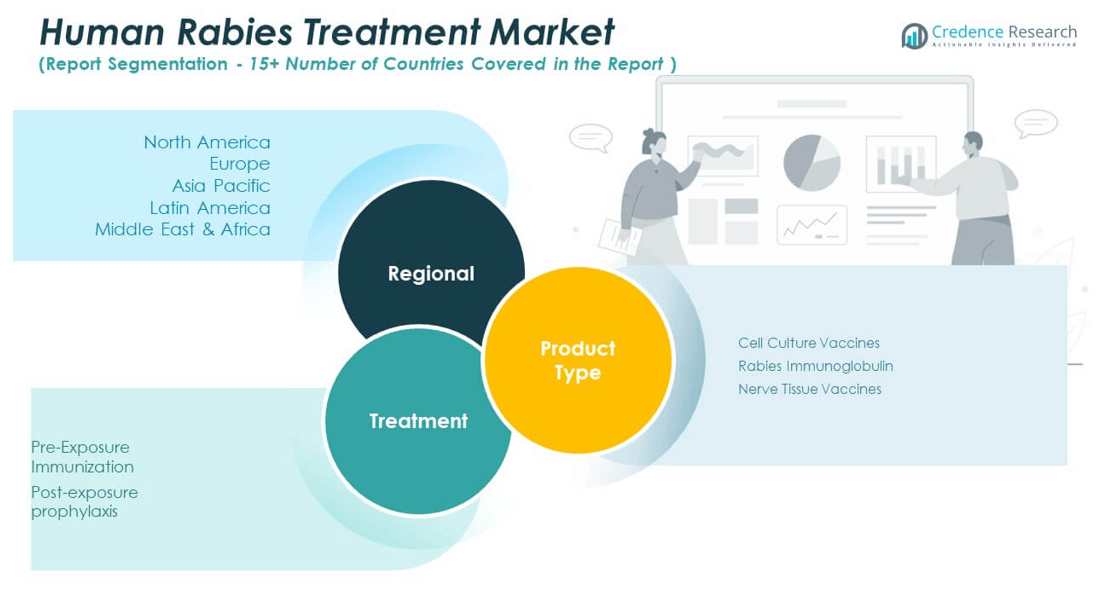
The Global Human Rabies Treatment Market includes three primary product types: cell culture vaccines, rabies immunoglobulin, and nerve tissue vaccines. Cell culture vaccines lead the market due to their enhanced safety, efficacy, and reduced adverse effects. These vaccines are replacing traditional formulations in both public and private healthcare systems. Rabies immunoglobulin occupies a substantial share, especially for immediate passive protection following confirmed exposure. It is vital for post-exposure prophylaxis, particularly in high-risk or immunocompromised individuals. Nerve tissue vaccines are declining in use due to WHO recommendations and their known neurological side effects. Their presence is limited to a few low-income countries where access to modern alternatives remains constrained.
- For instance, Sanofi Verorab® (Purified Vero Cell Rabies Vaccine, PVRV) is extensively clinically studied; it consistently achieves seroconversion rates above 98% within 14 days of the standard dosing schedule.
By Treatment
The market is categorized into pre-exposure immunization and post-exposure prophylaxis. Post-exposure prophylaxis dominates the Global Human Rabies Treatment Market, supported by widespread use following suspected or confirmed exposure to the virus. It remains the cornerstone of emergency rabies response programs in both endemic and non-endemic regions. Pre-exposure immunization is growing in relevance among veterinarians, laboratory workers, and travellers to high-risk zones. It also gains momentum through school-based and community health initiatives. These treatment segments reflect both reactive and preventive strategies that shape procurement, policy focus, and vaccine deployment across global markets.
- For instance, Bharat Biotech’s Indirab® (chromatographically purified Vero cell rabies vaccine) matches the efficacy and safety of established international vaccines, achieving protective antibody levels (>0.5 IU/mL) in all study participants receiving both intramuscular and intradermal regimens.
Segmentation:
By Product Type
- Cell Culture Vaccines
- Rabies Immunoglobulin
- Nerve Tissue Vaccines
By Treatment
- Pre-Exposure Immunization
- Post-Exposure Prophylaxis
By Region
- North America
- U.S.
- Canada
- Mexico
- Europe
- Germany
- France
- U.K.
- Italy
- Spain
- Rest of Europe
- Asia Pacific
- China
- Japan
- India
- South Korea
- South-east Asia
- Rest of Asia Pacific
- Latin America
- Brazil
- Argentina
- Rest of Latin America
- Middle East & Africa
- GCC Countries
- South Africa
- Rest of the Middle East and Africa
Regional Analysis:
North America
The North America Human Rabies Treatment Market size was valued at USD 225.77 million in 2018 to USD 280.16 million in 2024 and is anticipated to reach USD 356.37 million by 2032, at a CAGR of 3.0% during the forecast period. North America holds approximately 21% share of the Global Human Rabies Treatment Market, led by the United States. It benefits from strong healthcare infrastructure, established vaccine distribution systems, and widespread awareness about rabies prevention. Routine post-exposure prophylaxis and availability of advanced immunoglobulin support early intervention. Government surveillance programs and animal control regulations maintain low disease prevalence. Pharmaceutical companies maintain stable production and availability of high-quality biologics across the region. The market continues to grow at a modest pace due to steady demand for travel-related vaccinations and rapid emergency response systems.
Europe
The Europe Human Rabies Treatment Market size was valued at USD 284.02 million in 2018 to USD 357.24 million in 2024 and is anticipated to reach USD 463.28 million by 2032, at a CAGR of 3.3% during the forecast period. Europe accounts for around 27% of the Global Human Rabies Treatment Market and demonstrates consistent demand despite low rabies prevalence. It maintains strong regulatory control over vaccine quality and import. The presence of centralized healthcare systems ensures reliable access to prophylaxis in case of exposure. Demand is primarily driven by travelers, veterinarians, and laboratory workers. Countries like France, Germany, and the UK dominate the regional share. Market expansion remains moderate due to effective dog control measures and low incidence of rabies.
Asia Pacific
The Asia Pacific Human Rabies Treatment Market size was valued at USD 359.38 million in 2018 to USD 469.74 million in 2024 and is anticipated to reach USD 641.46 million by 2032, at a CAGR of 3.9% during the forecast period. Asia Pacific leads the Global Human Rabies Treatment Market with a dominant share of over 35%. It is driven by high rabies burden in countries like India, China, and the Philippines. Government-led mass dog vaccination programs and international funding support regional market growth. Access to treatment is improving due to investment in rural healthcare and cold chain infrastructure. Pharmaceutical manufacturers are expanding production capacity to meet local demand. The region shows strong growth potential due to persistent infection rates and increased public awareness.
Latin America
The Latin America Human Rabies Treatment Market size was valued at USD 103.66 million in 2018 to USD 142.84 million in 2024 and is anticipated to reach USD 207.94 million by 2032, at a CAGR of 4.8% during the forecast period. Latin America represents around 11% of the Global Human Rabies Treatment Market. Countries like Brazil and Mexico drive regional demand through government immunization efforts and anti-rabies campaigns. Access disparities exist between urban and rural regions, impacting treatment outcomes. It is benefiting from partnerships between public health agencies and global health organizations. Local production capabilities remain limited, increasing reliance on imports. Market growth is fueled by rising awareness and expanding veterinary and healthcare outreach in high-risk zones.
Middle East
The Middle East Human Rabies Treatment Market size was valued at USD 40.12 million in 2018 to USD 53.64 million in 2024 and is anticipated to reach USD 75.37 million by 2032, at a CAGR of 4.3% during the forecast period. The region holds around 4% of the Global Human Rabies Treatment Market. It sees moderate demand driven by both human and animal exposures in border and rural areas. Gulf countries like Saudi Arabia and the UAE maintain high vaccine availability and healthcare access. Other nations in the region face challenges in consistent treatment supply. Public sector investments are enhancing disease surveillance and reporting systems. Cross-border collaboration supports vaccine availability and outbreak response.
Africa
The Africa Human Rabies Treatment Market size was valued at USD 23.63 million in 2018 to USD 29.36 million in 2024 and is anticipated to reach USD 37.42 million by 2032, at a CAGR of 3.0% during the forecast period. Africa contributes nearly 3% to the Global Human Rabies Treatment Market. It faces the highest disease burden but remains under-served due to weak infrastructure and limited vaccine availability. Treatment gaps persist due to long distances to clinics, cost barriers, and cold chain deficiencies. International aid and NGO initiatives are expanding access in priority regions. It holds high potential for growth with sustained support and expanded local distribution. Increasing training of health workers and rural outreach is gradually improving outcomes.
Key Player Analysis:
- Bio Med Pvt. Ltd.
- Biological E Ltd.
- Cadila Healthcare
- GSK plc
- Grifols S.A.
- Kamada Ltd.
- Kedrion S.p.A.
- Novartis AG
- Serum Institute of India
- Sanofi Pasteur SA
- Other Key Players
Competitive Analysis:
The Global Human Rabies Treatment Market features a competitive landscape dominated by established pharmaceutical companies and regional vaccine manufacturers. Key players include Sanofi Pasteur, Serum Institute of India, GSK plc, Biological E Ltd., and Cadila Healthcare. It sees strong participation from companies with WHO prequalified vaccines and global distribution capabilities. Leading firms focus on producing cell culture-based vaccines and rabies immunoglobulin to meet rising demand. Strategic initiatives such as partnerships with government health agencies, expansion into high-burden regions, and investment in cold chain logistics strengthen market positions. Emerging players in Asia and Latin America are expanding production to reduce dependency on imports. Continuous innovation, price competitiveness, and manufacturing scalability remain critical factors driving market leadership. The market's structure supports both multinational firms and domestic suppliers operating under international collaboration frameworks. It reflects a balance between global health mandates and local access solutions.
Recent Developments:
- In April 2025, Cadila Pharmaceuticals marked the third anniversary of ThRabis®, which is the world’s first three-dose rabies vaccine, highlighting its impact in simplifying rabies immunization regimens. While this is a product milestone, Cadila remains active in expanding the reach of ThRabis®, particularly in global markets with high rabies prevalence.
- In early April 2025, Grifols S.A. was the subject of renewed acquisition discussions, with Canadian investment fund Brookfield resuming takeover talks that could potentially impact the company’s global operations, including its plasma-derived rabies immunoglobulin business. In March 2025, Grifols also proposed to acquire the remaining 53.78% stake in Biotest AG for approximately €320 million, signaling continued expansion in the biologics sector.
- In January 2025, Kamada Ltd. announced the signing of a $25 million, three-year supply contract for KAMRAB® (human rabies immune globulin) and VARIZIG® in Latin America. This agreement secures Kamada’s expanded presence in major international markets and sustains the availability of life-saving passive immunization products for rabies exposure.
Market Concentration & Characteristics:
The Global Human Rabies Treatment Market is moderately concentrated, with a few multinational firms controlling a significant share of vaccine and immunoglobulin production. It features strong dominance by companies such as Sanofi Pasteur, GSK plc, and Serum Institute of India, which supply to both domestic and international public health programs. Entry barriers include stringent regulatory approvals, WHO prequalification requirements, and complex cold chain logistics. The market is characterized by high product specialization, stable demand in endemic regions, and growing focus on biologics and next-generation formulations. It supports both large-scale manufacturers and regional suppliers aligned with government procurement frameworks and donor-funded initiatives.
Report Coverage:
The research report offers an in-depth analysis based on product type and treatment. It details leading market players, providing an overview of their business, product offerings, investments, revenue streams, and key applications. Additionally, the report includes insights into the competitive environment, SWOT analysis, current market trends, as well as the primary drivers and constraints. Furthermore, it discusses various factors that have driven market expansion in recent years. The report also explores market dynamics, regulatory scenarios, and technological advancements that are shaping the industry. It assesses the impact of external factors and global economic changes on market growth. Lastly, it provides strategic recommendations for new entrants and established companies to navigate the complexities of the market.
Future Outlook:
- Increasing investments in public immunization programs will expand vaccine access in high-burden regions.
- Adoption of monoclonal antibody-based alternatives will improve treatment efficacy and supply stability.
- Regional manufacturing hubs in Asia and Africa will reduce dependency on global suppliers.
- Integration of rabies vaccines into routine immunization schedules will drive consistent demand.
- Technological advancements will enhance cold chain infrastructure and last-mile delivery.
- Growing awareness campaigns will boost early reporting and prompt post-exposure treatment.
- Strategic collaborations between global health agencies and vaccine producers will accelerate reach.
- Policy support for One Health initiatives will strengthen cross-sector disease control strategies.
- Demand for pre-exposure prophylaxis will rise among high-risk populations and travelers.
- Increased funding from global donors will improve availability of affordable biologics and diagnostics.

Request a Free Sample
Fill in your details and we'll send you a free sample report.
- Sample data tables & charts
- Research methodology
Market Dynamics
High Disease Prevalence in Developing Countries
Persistent rabies infections in Asia and Africa, driven by poor animal control and limited healthcare access, continue to fuel demand for vaccines and immunoglobulins, especially in rural and underserved regions.
Government-Led Vaccination Programs and International Initiatives
National vaccination drives and global campaigns such as the WHO’s 'Zero by 30' strategy are expanding treatment access and creating stable, long-term demand for rabies prophylaxis products.
Advancements in Vaccine Formulations and Manufacturing Capacity
The shift from nerve tissue to cell culture-based vaccines, along with increased manufacturing capacity and regional production hubs, is improving safety, efficacy, and supply reliability, supporting broader market growth.
Improved Access Through Cold Chain and Distribution Network Expansion
Investments in cold chain logistics and last-mile delivery infrastructure are enabling more consistent and timely distribution of vaccines and immunoglobulins, particularly in remote and high-risk areas.
Emergence of Monoclonal Antibody-Based Treatments
The development and early adoption of monoclonal antibody-based therapies are providing safer, more consistent alternatives to traditional immunoglobulins, enhancing treatment options and supply stability in the market.
Need a Custom Version of This Report?
Tailor the scope, geography, or segments to your exact requirements.
- Custom geography or segment scope
- Direct access to our analyst team
Frequently Asked Questions
What is the current size of the Global Human Rabies Treatment Market?
What are the key segments within the Global Human Rabies Treatment Market?
What are some challenges faced by the Global Human Rabies Treatment Market?
Who are the major players in the Global Human Rabies Treatment Market?
Table of Content
Chapter 1 Market Segmentation
- 1.1 Segmentation Framework
- 1.1.1 Product and Service Classification
- 1.1.2 Application and End-Use Classification
- 1.1.3 Technology and Solution Classification
- 1.1.4 Customer and Distribution Channel Classification
- 1.1.5 Geographic Segmentation
- 1.1.6 Market Segment Definitions and Boundaries
- 1.2 By Treatment
- 1.2.1 Pre-Exposure Immunization
- 1.2.2 Post-Exposure Prophylaxis
- 1.3 By Product Type
- 1.3.1 Cell Culture Vaccines
- 1.3.2 Rabies Immunoglobulin
- 1.3.3 Nerve Tissue Vaccines
Chapter 2 Introduction
- 2.1 Report Objectives and Scope
- 2.2 Product Definition and Industry Terminology
- 2.3 Market Inclusions and Exclusions
- 2.4 Research Process
- 2.4.1 Primary Research and Expert Interviews
- 2.4.2 Secondary Research and Source Review
- 2.4.3 Top-Down and Bottom-Up Estimation
- 2.4.4 Data Triangulation and Verification
- 2.5 Market Size Measurement Basis
- 2.5.1 2024: USD 1,332.98 million → 2032: USD 1,781.83 million
- 2.6 Historical and Forecast Reference Periods
- 2.6.1 Base Year: 2024
- 2.6.2 Forecast Period: 2024-2032
- 2.7 Research Assumptions and Limitations
Chapter 3 Executive Summary
- 3.1 Market Snapshot and Key Findings
- 3.2 Base-Year Market Size, 2024
- 3.3 Forecast Market Size, 2032
- 3.4 Revenue and Volume Growth Outlook
- 3.5 Key Demand and Supply Indicators
- 3.6 Leading Market Segments
- 3.7 Fastest-Growing Market Opportunities
- 3.8 Regional Performance Highlights
- 3.9 Technology and Industry Transformation
- 3.10 Competitive Landscape Summary
- 3.11 Analyst View and Strategic Implications
Chapter 4 Global Human Rabies Treatment Market Trends and Developments
- 4.1 Historical Industry Development
- 4.2 Recent Market Trends and Developments
- 4.3 Demand and Customer Behavior Trends
- 4.4 Technology and Product Innovation
- 4.5 Artificial Intelligence, Automation and Digitalization
- 4.6 Local Manufacturing and Supply Chain Realignment
- 4.7 Industry Partnerships, Mergers and Acquisitions
- 4.8 Sustainability and Circular Economy Developments
- 4.9 Government and Private Sector Investment Trends
- 4.10 Emerging Business Models and Commercialization
- 4.11 Industry Developments and Announcements
Chapter 5 Global Human Rabies Treatment Market Production, Supply and Demand Analysis
- 5.1 Demand Trend and Consumption Analysis
- 5.2 Demand Forecast, 2024-2032
- 5.3 Production and Output Trend
- 5.4 Production and Output Forecast, 2024-2032
- 5.5 Installed Capacity and Capacity Utilization
- 5.6 Company-Wise Production Plants and Statistics
- 5.6.1 Installed Production Capacity
- 5.6.2 Actual Production
- 5.6.3 Planned Capacity and Expansion Targets
- 5.7 Supply Chain Structure and Procurement Trends
- 5.8 Supply-Demand Gap and Bottlenecks
- 5.9 Import Dependence and Sourcing Structure
- 5.10 Contract Manufacturing and Outsourcing
- 5.11 Regional Supply and Demand Concentration
Chapter 6 Global Human Rabies Treatment Market Pricing Analysis
- 6.1 Pricing Structure and Measurement
- 6.2 Historical Pricing Trends
- 6.3 Pricing Outlook, 2024-2032
- 6.4 Average Selling Price and Unit Economics
- 6.5 Pricing by Product and Market Segment
- 6.6 Geographic Pricing Differences
- 6.7 Key Input, Energy, Labor and Logistics Costs
- 6.8 Contract Pricing and Purchasing Models
- 6.9 Pricing Sensitivity and Competitive Positioning
- 6.10 Price, Margin and Profitability Implications
Chapter 7 Global Human Rabies Treatment Market Dynamics
- 7.1 Market Growth Drivers
- 7.1.1 Demand-Side Drivers
- 7.1.2 Technology and Innovation Drivers
- 7.1.3 Infrastructure and Investment Drivers
- 7.1.4 Regulatory and Policy Drivers
- 7.2 Market Restraints
- 7.2.1 Cost and Affordability Constraints
- 7.2.2 Technology and Adoption Barriers
- 7.2.3 Supply Chain and Operational Constraints
- 7.3 Market Challenges
- 7.3.1 Competitive Pressure and Margin Erosion
- 7.3.2 Skills, Infrastructure and Implementation Gaps
- 7.4 Emerging Market Opportunities
- 7.5 Market Dynamics Impact and Time-Horizon Assessment
Chapter 8 Global Human Rabies Treatment Value Chain Analysis
- 8.1 Industry Value Chain Overview
- 8.2 Upstream Suppliers and Critical Inputs
- 8.3 Technology and Component Providers
- 8.4 Manufacturing or Service Delivery
- 8.5 Distribution, Channel Partners and Integrators
- 8.6 Downstream Applications and End Users
- 8.7 Value Addition and Profit Pools
- 8.8 Vertical Integration and Outsourcing
- 8.9 Supplier Concentration and Risk
- 8.10 Supply Chain Localization and Resilience
Chapter 9 Global Human Rabies Treatment Market Regulations and Policies
- 9.1 Relevant Laws, Standards and Compliance Frameworks
- 9.2 Product, Service, Safety and Quality Requirements
- 9.3 Government Policies, Incentives and Subsidies
- 9.4 Imports, Exports and Trade Barriers
- 9.5 Public Procurement and Local Content Requirements
- 9.6 Environmental and Sustainability Compliance
- 9.7 Upcoming Policy Changes and Market Implications
Chapter 10 Global Human Rabies Treatment Market Hotspots and Opportunities
- 10.1 Market Opportunity Mapping and Growth Hotspots
- 10.2 High-Growth Applications and Customer Groups
- 10.3 Underserved Markets and White-Space Opportunities
- 10.4 Emerging Technology and Product Opportunities
- 10.5 New Capacity and Investment Hotspots
- 10.6 Market Entry and Expansion Opportunities
- 10.7 Distribution and Partnership Opportunities
- 10.8 Near-Term and Long-Term Commercial Potential
- 10.9 Opportunity Attractiveness and Execution Risks
Chapter 11 Global Human Rabies Treatment Market Outlook, 2024-2032
- 11.1 Market Size and Analysis
- 11.1.1 Revenue (Market Measurement: 2024: USD 1,332.98 million → 2032: USD 1,781.83 million)
- 11.1.2 Market Volume and Quantity Sold
- 11.1.3 Historical Market Size
- 11.1.4 Base-Year Market Size, 2024
- 11.2 Market Forecast, 2024-2032
- 11.2.1 Revenue Forecast to 2032
- 11.2.2 Volume Forecast to 2032
- 11.2.3 CAGR and Year-on-Year Growth
- 11.2.4 Incremental Revenue Opportunity
- 11.3 Forecast Assumptions and Scenario Analysis
- 11.3.1 Base-Case Forecast
- 11.3.2 Optimistic and Conservative Scenarios
- 11.3.3 Technology, Pricing and Policy Sensitivities
- 11.4 Market Attractiveness and Growth Outlook
Chapter 12 Global Human Rabies Treatment Market Segmentation and Outlook
- 12.1 Segmentation Summary and Market Shares, 2024
- 12.2 Largest and Fastest-Growing Segments
- 12.3 By Treatment - Market Size and Forecast, 2024-2032
- 12.3.1 Segment Definition and Scope
- 12.3.2 Historical Market Size
- 12.3.3 Revenue Forecast, 2024-2032
- 12.3.4 Volume Forecast, 2024-2032
- 12.3.5 Base-Year Market Share, 2024
- 12.3.6 Segment CAGR and Growth Drivers
- 12.3.7 Subsegment Market Size and Forecast
- 12.3.7.1 Pre-Exposure Immunization
- 12.3.7.2 Post-Exposure Prophylaxis
- 12.3.8 Subsegment Pricing and Adoption Trends
- 12.3.9 Leading Suppliers and Competition
- 12.3.10 Regional Demand and Opportunities
- 12.4 By Product Type - Market Size and Forecast, 2024-2032
- 12.4.1 Segment Definition and Scope
- 12.4.2 Historical Market Size
- 12.4.3 Revenue Forecast, 2024-2032
- 12.4.4 Volume Forecast, 2024-2032
- 12.4.5 Base-Year Market Share, 2024
- 12.4.6 Segment CAGR and Growth Drivers
- 12.4.7 Subsegment Market Size and Forecast
- 12.4.7.1 Cell Culture Vaccines
- 12.4.7.2 Rabies Immunoglobulin
- 12.4.7.3 Nerve Tissue Vaccines
- 12.4.8 Subsegment Pricing and Adoption Trends
- 12.4.9 Leading Suppliers and Competition
- 12.4.10 Regional Demand and Opportunities
- 12.5 Segment Growth Comparison
- 12.6 Segment Attractiveness and Priority Matrix
Chapter 13 Global Human Rabies Treatment Geographic Market Outlook, 2024-2032
- 13.1 Regional Market Size and Share, 2024
- 13.2 Regional Market Forecast, 2024-2032
- 13.3 Regional Pricing, Production and Demand Differences
- 13.4 North America
- 13.4.1 United States
- 13.4.2 Canada
- 13.4.3 Mexico
- 13.5 Europe
- 13.5.1 Germany
- 13.5.2 France
- 13.5.3 Italy
- 13.5.4 United Kingdom
- 13.5.5 Spain
- 13.5.6 Poland
- 13.5.7 Russia
- 13.5.8 Netherlands
- 13.5.9 Belgium
- 13.5.10 Sweden
- 13.5.11 Denmark
- 13.5.12 Norway
- 13.5.13 Rest of Europe
- 13.6 Asia Pacific
- 13.6.1 China
- 13.6.2 India
- 13.6.3 Japan
- 13.6.4 South Korea
- 13.6.5 Thailand
- 13.6.6 Indonesia
- 13.6.7 Vietnam
- 13.6.8 Malaysia
- 13.6.9 Australia
- 13.6.10 Rest of Asia Pacific
- 13.7 Latin America
- 13.7.1 Brazil
- 13.7.2 Argentina
- 13.7.3 Colombia
- 13.7.4 Chile
- 13.7.5 Rest of Latin America
- 13.8 Middle East
- 13.8.1 Saudi Arabia
- 13.8.2 United Arab Emirates
- 13.8.3 Turkey
- 13.8.4 Israel
- 13.8.5 Iran
- 13.8.6 Rest of the Middle East
- 13.9 Africa
- 13.9.1 South Africa
- 13.9.2 Egypt
- 13.9.3 Nigeria
- 13.9.4 Morocco
- 13.9.5 Rest of Africa
- 13.10 Regional Investment, Policy and Supply Chain Differences
- 13.11 Regional Competitive Landscape
- 13.12 Geographic Growth Hotspots
Chapter 14 Global Human Rabies Treatment Technology, Innovation and Sustainability Outlook
- 14.1 Technology Landscape and Maturity
- 14.2 Product, Process and Service Innovation
- 14.3 AI, Automation and Digital Tools in the Industry
- 14.4 Technology Adoption and Performance Benchmarking
- 14.5 Innovation Pipeline and R&D Investment
- 14.6 Patent and Intellectual Property Trends
- 14.7 Energy Efficiency and Resource Management
- 14.8 Sustainability, Recycling and Circularity
- 14.9 Technology Roadmap, 2024-2032
- 14.10 Risks of Obsolescence and Technology Substitution
Chapter 15 Global Human Rabies Treatment Market Key Strategic Imperatives
- 15.1 Growth and Market Entry Priorities
- 15.2 High-Return Products and Segments
- 15.3 Pricing, Profitability and Cost Optimization
- 15.4 Technology Investment and Product Differentiation
- 15.5 Supply Chain Localization and Resilience
- 15.6 Distribution and Customer Acquisition
- 15.7 Partnership, Acquisition and Capacity Strategy
- 15.8 Regional Expansion Priorities
- 15.9 Short-, Medium- and Long-Term Actions
Chapter 16 Competition Outlook
- 16.1 Industry Competition Characteristics
- 16.2 Market Structure and Concentration
- 16.3 Market Share and Competitive Positioning, 2024
- 16.4 Company-Wise Revenue and Product Benchmarking
- 16.5 Production and Service Capacity Benchmarking
- 16.6 Technology, Pricing and Differentiation
- 16.7 Regional Footprint and Distribution Strength
- 16.8 Mergers, Acquisitions and Strategic Alliances
- 16.9 New Entrants and Competitive Threats
- 16.10 Porter's Five Forces and Industry Attractiveness
- 16.11 Competitive Outlook, 2024-2032
Chapter 17 Company Profiles
- 17.1 Company Coverage and Selection Criteria
- 17.2 Sanofi Pasteur SA
- 17.2.1 Business Description
- 17.2.2 Company Ownership and Geographic Presence
- 17.2.3 Product and Service Portfolio
- 17.2.4 Manufacturing and Operating Footprint
- 17.2.5 Production Capacity and Expansion Plans
- 17.2.6 Financial Performance and Investment
- 17.2.7 Market Share and Competitive Position
- 17.2.8 Technology and Innovation Capabilities
- 17.2.9 Strategic Alliances or Partnerships
- 17.2.10 Recent Developments
- 17.2.11 Growth Strategy and Outlook
- 17.3 Serum Institute of India
- 17.4 GSK plc
- 17.5 Biological E Ltd.
- 17.6 Cadila Healthcare
- 17.7 Grifols S.A.
- 17.8 Kamada Ltd.
- 17.9 Kedrion S.p.A.
- 17.10 Bio Med Pvt. Ltd.
- 17.11 Novartis AG
- 17.12 Other Relevant Market Participants
Note: Every listed company is profiled on the structure shown under the first company. The company list is preliminary and may change based on research findings, market developments, data availability and client requirements.
Chapter 18 Disclaimer
- 18.1 Research and Forecast Disclaimer
- 18.2 Data Source and Estimation Limitations
Note: The depth of individual sections depends on data availability for this market. Volume, capacity, trade and other unit-based metrics are included where applicable.