Market overview
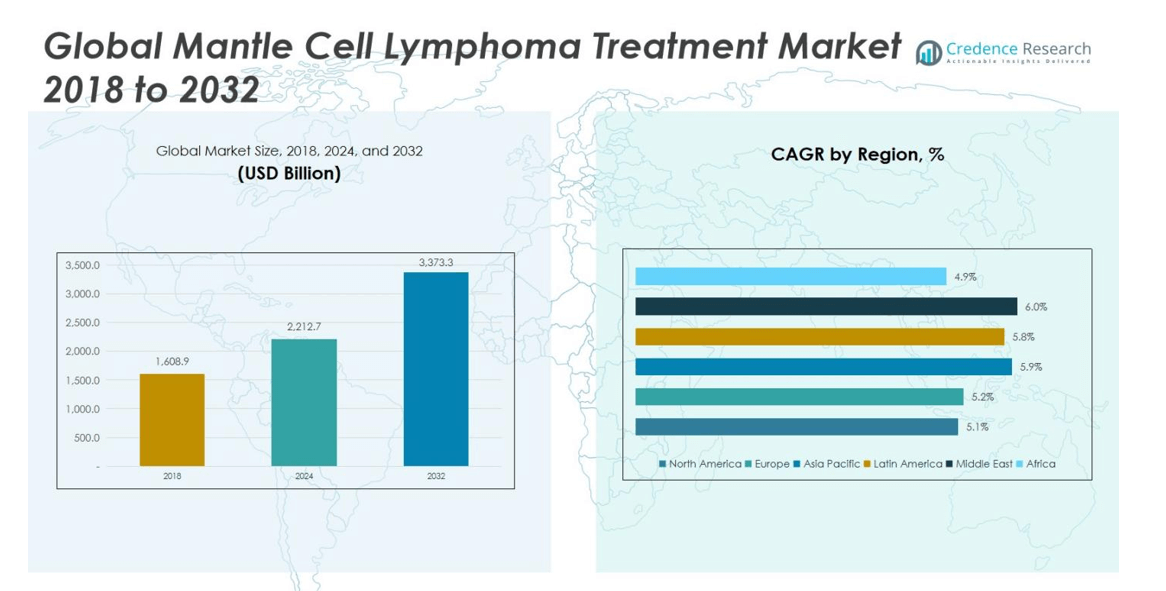
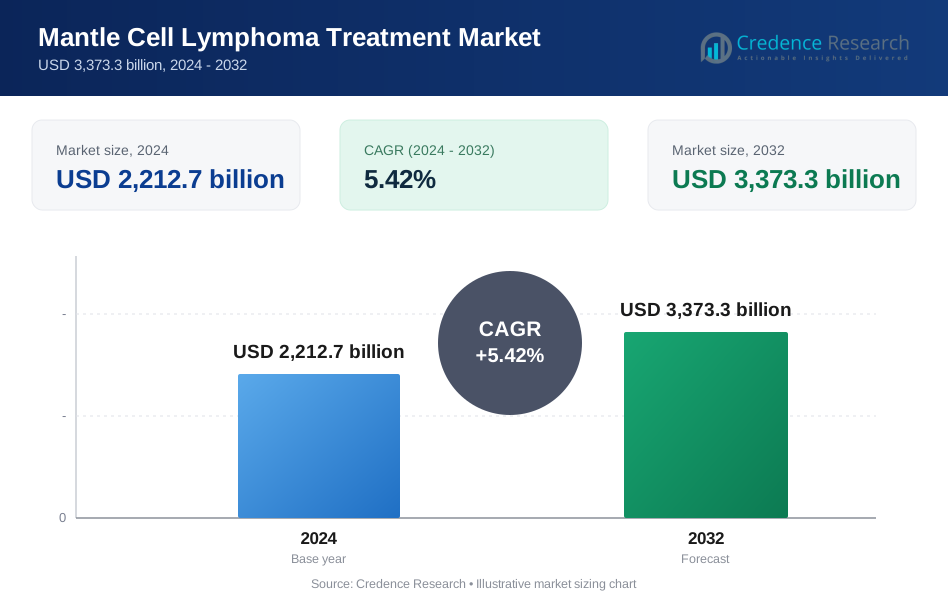
The Global Mantle Cell Lymphoma Treatment Market was valued at USD 1,608.9 billion in 2018, increased to USD 2,212.7 billion in 2024, and is anticipated to reach USD 3,373.3 billion by 2032, growing at a CAGR of 5.42% during the forecast period.
| REPORT ATTRIBUTE | DETAILS |
|---|---|
| Historical Period | 2020-2023 |
| Base Year | 2024 |
| Forecast Period | 2025-2032 |
| Mantle Cell Lymphoma Treatment Market Size 2024 | USD 2,212.7 billion |
| Mantle Cell Lymphoma Treatment Market, CAGR | 5.42% |
| Mantle Cell Lymphoma Treatment Market Size 2032 | USD 3,373.3 million |
The global Mantle Cell Lymphoma Treatment Market features key players including AstraZeneca, AbbVie, Bristol Myers Squibb, Bayer, and Eli Lilly. These companies leverage broad portfolios spanning BTK inhibitors, monoclonal antibodies, and novel immunotherapies to capture market opportunities. Regional leadership lies with North America, which commands 45 % of the market share thanks to high treatment adoption, reimbursement infrastructure, and concentration of clinical‑trial activity. The major players’ strategic focus on first‑line and relapsed/refractory therapies aligns well with this region’s advanced healthcare ecosystem, reinforcing both innovation pipelines and commercial penetration.
Market Insights
- The Global Mantle Cell Lymphoma Treatment Market was valued at USD 2,212.7 billion in 2024 and is projected to reach USD 3,373.3 billion by 2032, growing at a CAGR of 5.42% during the forecast period.
- Key drivers of the market include the rising incidence of Mantle Cell Lymphoma, the aging population, and advancements in targeted therapies, particularly Bruton’s tyrosine kinase inhibitors (BTK).
- Current trends show a shift towards combination therapies and the increasing adoption of oral treatments, offering more convenience and enhancing patient adherence.
- North America holds the largest share of the market, commanding 45% of the global market in 2024, driven by advanced healthcare infrastructure and a high number of treatment options.
- Challenges include high treatment costs and limited awareness, which may restrict access in low- and middle-income regions, limiting overall market growth potential.
Market Segmentation Analysis:
By Therapy Type
In the global Mantle Cell Lymphoma (MCL) treatment market by therapy type, the targeted therapy segment is dominant, capturing 37.8% of the market. The segment’s strength is rooted in the growing adoption of Bruton’s tyrosine kinase (BTK) inhibitors, next-generation small-molecules, and personalized treatments, which are displacing more toxic, non-specific chemotherapy regimens. Key drivers include rising incidence in aging populations, improved molecular diagnostics that enable targeted therapy deployment, and expanding regulatory approvals for novel agents. Although chemotherapy remains a substantial component, the transition toward targeted therapies is reshaping the therapy-type landscape.
- For instance, AstraZeneca’s acalabrutinib (Calquence) received FDA approval in 2019 for adult patients with MCL, offering a more selective BTK inhibition profile and fewer off-target effects compared to first-generation agents.
By Drug
Within the drug segment of the MCL treatment market, the established monoclonal antibody Rituximab (anti-CD20) leads with a share 28.8% in the broader lymphoma market context. Though specific precise share for MCL alone is not publicly broken down, Rituximab’s entrenched role in first-line and relapsed/refractory treatment protocols underpins its dominance. It is further propelled by combination regimens (e.g., with cyclophosphamide, bendamustine) and wide global availability. Drivers include its proven clinical efficacy, standard-of-care status, healthcare reimbursement familiarity, and the persistence of CD20 as a validated target in B-cell malignancies.
- For instance, the FDA-approved use of subcutaneous Rituximab Hycela (Genentech) has expanded access and reduced administration time by up to 70%, supporting sustained adoption in both hospital and outpatient oncology settings.
By Route of Administration
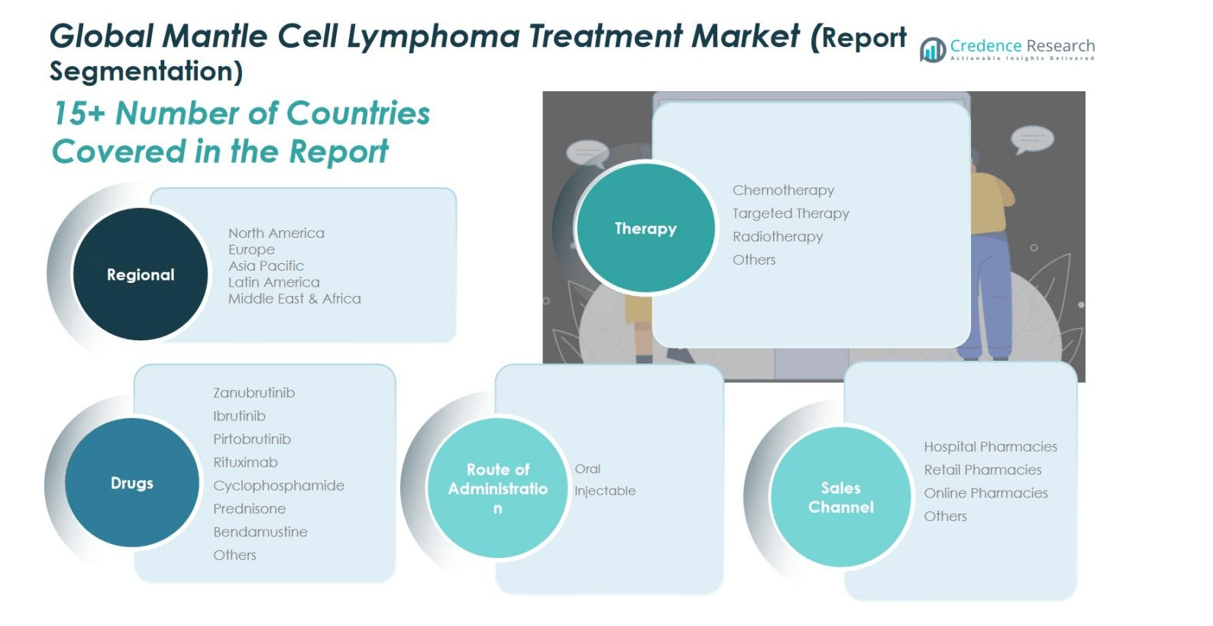
In the route-of-administration segment of lymphoma treatments, the injectable (intravenous) route retains the largest share around 78.7% of revenue led by parenteral infusions of monoclonal antibodies and chemotherapy agents. In the MCL context, most therapies (e.g., Rituximab, bendamustine, cyclophosphamide) are administered intravenously, driving dominance of the injectable route. The primary drivers include the high usage of in-hospital treatment settings, the requirement for controlled infusion settings, and established clinician preference. However, oral therapies (e.g., BTK inhibitors like ibrutinib, zanubrutinib) are expanding rapidly, supported by patient convenience and the shift toward outpatient care.
Key Growth Drivers
Rising Incidence and Aging Population
The increasing global incidence of Mantle Cell Lymphoma (MCL) is a major growth driver for the treatment market. As populations age, the risk of developing lymphoma, particularly in older adults, grows significantly. This demographic shift is contributing to higher diagnosis rates, resulting in increased demand for effective treatments. The aging population is expected to continue to be a substantial factor, with individuals over 65 being at a higher risk, further boosting the demand for both novel and established therapies in the MCL treatment market.
- For instance, BeiGene’s Brukinsa (zanubrutinib) has shown durable responses in Phase III trials, offering a viable option for elderly patients unable to tolerate intensive chemotherapy.
Advancements in Targeted Therapies
Targeted therapies, especially Bruton’s tyrosine kinase (BTK) inhibitors, are transforming the MCL treatment landscape, contributing to market growth. These therapies offer precision treatment with fewer side effects compared to traditional chemotherapy, leading to better patient outcomes. The approval of new BTK inhibitors such as zanubrutinib and pirtobrutinib has expanded the treatment options, making targeted therapy a central pillar of MCL treatment. This shift toward personalized medicine has significantly enhanced the adoption of targeted therapies, driving the growth of the market.
- For instance, Eli Lilly’s pirtobrutinib (Jaypirca), which gained FDA accelerated approval in 2023 after showing durable responses in heavily pretreated relapsed or refractory MCL patients, including those previously treated with covalent BTK inhibitors.
Expanding Regulatory Approvals
The growing number of regulatory approvals for new therapies is fueling the expansion of the MCL treatment market. With advancements in drug development and clinical trials, more drugs are receiving approval from regulatory bodies like the FDA and EMA. This has led to the introduction of innovative treatment options such as novel monoclonal antibodies and BTK inhibitors. As these treatments prove their efficacy in clinical trials and gain approval, they offer hope for better outcomes, driving their adoption and increasing market size in both developed and emerging markets.
Key Trends & Opportunities
Shift Towards Oral Therapies
Oral therapies, particularly targeted therapies such as ibrutinib, are becoming a prominent trend in the MCL treatment market. Unlike intravenous treatments, which require hospital visits, oral therapies provide the convenience of home administration, improving patient adherence and quality of life. This trend is accelerating due to the shift toward outpatient care and the growing preference for less invasive treatment options. Oral therapies are gaining popularity, opening up opportunities for pharmaceutical companies to expand their market share with more patient-friendly treatments.
- For instance, ibrutinib has shown durable responses in relapsed/refractory MCL patients, with around 31% of patients receiving treatment for two or more years and some for over four years, reflecting its sustained efficacy and tolerability in long-term use.
Increased Focus on Combination Therapies
Combination therapies, which use multiple drugs or treatment modalities in conjunction, are gaining traction in the MCL treatment market. This approach is seen as an opportunity to enhance therapeutic efficacy, reduce relapse rates, and improve overall survival rates. Combinations of targeted therapies with chemotherapy or immunotherapy are emerging as powerful options for managing MCL, providing more effective treatment regimens. As more research supports the benefits of combination therapies, their adoption is expected to rise, presenting new growth opportunities for pharmaceutical companies involved in MCL treatment.
- For instance, Kite Pharma’s brexucabtagene autoleucel (Tecartus), a CAR T-cell therapy, is also being evaluated in combination with other immune modulators in ongoing studies to extend durable responses in MCL patients resistant to prior lines of treatment.
Key Challenges
High Treatment Costs
One of the significant challenges facing the MCL treatment market is the high cost of new therapies, particularly novel targeted treatments like BTK inhibitors. These therapies, while highly effective, come with a hefty price tag that may limit access for some patients, especially in low- and middle-income regions. The high cost of drugs and treatment regimens poses a barrier to market growth, as insurance coverage and reimbursement options may not always fully support these advanced treatments, restricting their availability to a broader patient population.
Limited Awareness and Early Detection
Another challenge impacting the MCL treatment market is the limited awareness and early detection of the disease. MCL often goes undiagnosed in its early stages, which can result in delayed treatment initiation and poorer patient outcomes. While awareness is increasing, particularly in the medical community, MCL is still a rare disease, and early symptoms may be overlooked or misdiagnosed. This hinders the potential for early intervention and timely treatment, which is critical for improving survival rates and quality of life for MCL patients.
Regional Analysis
North America
North America dominates the global Mantle Cell Lymphoma (MCL) treatment market, with a market size of USD 550.73 billion in 2018, growing to USD 743.46 billion in 2024, and projected to reach USD 1,105.09 billion by 2032, at a CAGR of 5.1%. This region holds the largest market share of 45%, driven by advanced healthcare infrastructure, high treatment adoption, and strong reimbursement systems. The presence of key pharmaceutical companies and ongoing clinical trials for new therapies further contributes to market growth. North America's dominance is expected to continue due to increasing awareness and advanced treatment options.
Europe
Europe’s Mantle Cell Lymphoma treatment market, valued at USD 439.87 billion in 2018, is expected to grow to USD 596.60 billion by 2024 and reach USD 892.57 billion by 2032, growing at a CAGR of 5.2%. Europe holds a significant market share of 27%. This growth is driven by increasing healthcare investments, expanding access to new therapies, and improving early diagnostic technologies. Additionally, supportive regulatory frameworks in key European markets, such as the UK, Germany, and France, contribute to the rapid adoption of advanced treatments for MCL, solidifying Europe's position in the global market.
Asia Pacific
Asia Pacific's Mantle Cell Lymphoma treatment market, valued at USD 371.98 billion in 2018, is expected to grow to USD 527.31 billion by 2024 and reach USD 835.90 billion by 2032, with the highest CAGR of 5.9%. The region holds a market share of 18%. The rapid expansion of healthcare infrastructure, rising incidences of lymphoma, and increasing access to advanced treatments are the primary drivers of market growth. The growing awareness and availability of novel therapies, coupled with favorable government initiatives, further support Asia Pacific’s expanding share in the global MCL treatment market.
Latin America
Latin America’s Mantle Cell Lymphoma treatment market, valued at USD 162.66 billion in 2018, is projected to reach USD 228.92 billion in 2024 and USD 359.59 billion by 2032, growing at a CAGR of 5.8%. This region holds a market share of 7%. The increasing healthcare accessibility, especially in Brazil and Mexico, and rising awareness about lymphoma treatment are driving the growth. Government initiatives and improvements in healthcare systems are also helping to expand market reach. As healthcare access improves across the region, the MCL treatment market is expected to grow steadily.
Middle East
The Middle East Mantle Cell Lymphoma treatment market was valued at USD 51.97 billion in 2018, growing to USD 74.03 billion in 2024, and is expected to reach USD 118.06 billion by 2032, at a CAGR of 6.0%. The region holds a market share of 3%. Growth is fueled by increasing healthcare investments, advancements in medical technologies, and rising demand for targeted therapies. As the region’s healthcare infrastructure continues to improve, more patients gain access to advanced treatments, contributing to significant market growth in the coming years.
Africa
Africa’s Mantle Cell Lymphoma treatment market, valued at USD 31.70 billion in 2018, is expected to grow to USD 42.36 billion by 2024 and reach USD 62.07 billion by 2032, growing at a CAGR of 4.9%. The region holds a market share of 2%. Growth in the African market is driven by increasing awareness, improving healthcare infrastructure, and expanding access to innovative therapies. However, challenges such as lower healthcare budgets, limited access to novel treatments, and lower awareness in certain regions may hinder the pace of growth in comparison to other regions.
Market Segmentations:
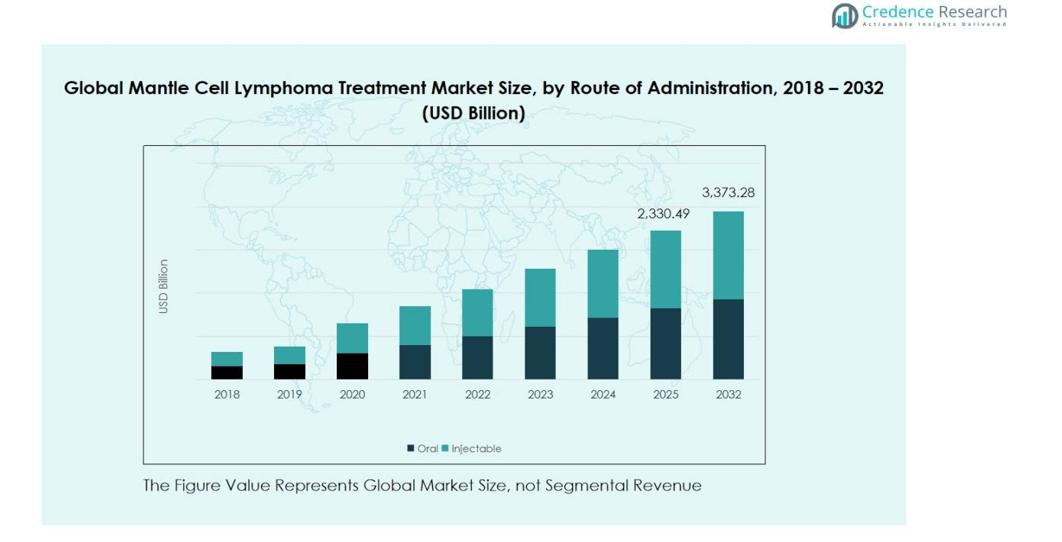
By Therapy Type
- Chemotherapy
- Targeted Therapy
- Radiotherapy
- Others
By Drug:
- Zanubrutinib
- Ibrutinib
- Pirtobrutinib
- Rituximab
- Cyclophosphamide
- Prednisone
- Bendamustine
- Others
By Route of Administration
- Oral
- Injectable
By Distribution Channel:
- Hospital Pharmacies
- Retail Pharmacies
- Online Pharmacies
- Others
By Geography
- North America
- U.S.
- Canada
- Mexico
- Europe
- Germany
- France
- U.K.
- Italy
- Spain
- Rest of Europe
- Asia Pacific
- China
- Japan
- India
- South Korea
- South-east Asia
- Rest of Asia Pacific
- Latin America
- Brazil
- Argentina
- Rest of Latin America
- Middle East & Africa
- GCC Countries
- South Africa
- Rest of the Middle East and Africa
Competitive Landscape
Competitive analysis in the global Mantle Cell Lymphoma (MCL) treatment market is shaped by the presence of key players such as AstraZeneca, AbbVie, Bristol Myers Squibb, Bayer, and Eli Lilly. These companies dominate the market through their extensive portfolios of targeted therapies, monoclonal antibodies, and chemotherapy agents. AstraZeneca and AbbVie, in particular, have made significant strides with their Bruton’s tyrosine kinase (BTK) inhibitors, such as Imbruvica and Calquence, which are central to first-line and relapsed MCL treatment regimens. The market also sees intense competition from emerging biotechnology firms focusing on novel therapies, including next-generation BTK inhibitors and combination therapies. In addition, partnerships, mergers, and acquisitions are common strategies to enhance product offerings and expand market presence. The increasing approval of new drugs and combination therapies, coupled with clinical advancements, ensures the competitive dynamics remain highly active. As the market continues to grow, key players are expected to expand their footprint through regional expansion and continuous innovation in drug development.
Key Player Analysis
- AstraZeneca
- Celgene Corporation
- Abbvie, Inc.
- Astellas Pharma, Inc.
- Biogen, Inc.
- Bayer AG
- Bristol Myers Squibb Company
- Eli Lilly and Company
- Kite Pharma
- Other Key Player
Recent Developments
- In May 2024, Bristol Myers Squibb’s CAR T cell therapy lisocabtagene maraleucel (Breyanzi®) received U.S. Food and Drug Administration (FDA) approval for adult patients with relapsed or refractory Mantle Cell Lymphoma (MCL) who had received at least two prior lines of systemic therapy, including a Bruton's tyrosine kinase (BTK) inhibitor.
- In August 2025, Galapagos NV’s second‑generation anti‑CD19/4‑1BB CAR T therapy candidate GLPG5101 was granted Regenerative Medicine Advanced Therapy (RMAT) designation by the FDA for treatment of relapsed/refractory MCL, based on Phase 1/2 data showing a 100 % complete response rate in evaluable patients.
- In November 2025, the European Commission approved Breyanzi® for adult patients in the EU with relapsed or refractory MCL after at least two prior lines of therapy including a BTK inhibitor, expanding its indication in Europe.
- In July 2025, Johnson & Johnson’s BTK inhibitor ibrutinib (brand name Imbruvica) gained approval from the European Commission for first‑line treatment of MCL in adult patients eligible for autologous stem cell transplant.
Report Coverage
The research report offers an in-depth analysis based on Therapy Type, Drug, Route Of Administration, Distribution Channel and Geography. It details leading market players, providing an overview of their business, product offerings, investments, revenue streams, and key applications. Additionally, the report includes insights into the competitive environment, SWOT analysis, current market trends, as well as the primary drivers and constraints. Furthermore, it discusses various factors that have driven market expansion in recent years. The report also explores market dynamics, regulatory scenarios, and technological advancements that are shaping the industry. It assesses the impact of external factors and global economic changes on market growth. Lastly, it provides strategic recommendations for new entrants and established companies to navigate the complexities of the market.
Future Outlook
- The global Mantle Cell Lymphoma treatment market is expected to grow steadily due to increasing diagnosis rates and the aging population.
- Targeted therapies, especially BTK inhibitors, will continue to dominate the treatment landscape, offering more effective and less toxic options.
- Combination therapies will gain traction, as they provide enhanced efficacy and help reduce relapse rates in patients.
- The approval of new drugs, especially next-generation therapies, will expand treatment options and drive market growth.
- Oral therapies will see increased adoption due to their convenience, reducing the need for hospital visits and improving patient adherence.
- Expanding healthcare access in emerging markets, particularly in Asia Pacific and Latin America, will significantly contribute to market expansion.
- The growing emphasis on personalized medicine will lead to more tailored treatments, improving patient outcomes.
- Increased focus on early detection and improved diagnostic tools will lead to earlier interventions and better treatment success rat
- Rising collaborations between pharmaceutical companies and research institutions will accelerate innovation and the development of new MCL therapies.
- Challenges related to high treatment costs may be mitigated by improved insurance coverage and government reimbursement policies, making treatments more accessible.
Request a Free Sample
Fill in your details and we'll send you a free sample report.
- Sample data tables & charts
- Research methodology
Market Dynamics
Rising Incidence and Aging Population
The increasing global incidence of Mantle Cell Lymphoma, particularly among older adults, is driving demand for treatment. As the population ages, diagnosis rates rise, leading to greater need for both established and novel therapies.
Advancements in Targeted Therapies
Innovations such as Bruton’s tyrosine kinase (BTK) inhibitors and next-generation small molecules are transforming treatment by offering more effective and less toxic alternatives to traditional chemotherapy, thus expanding the market.
Expanding Regulatory Approvals
A growing number of regulatory approvals for new drugs, including novel monoclonal antibodies and BTK inhibitors, is broadening the range of available treatments and accelerating market growth in both developed and emerging regions.
Shift Toward Oral and Combination Therapies
The increasing adoption of oral therapies and combination regimens enhances patient convenience, adherence, and outcomes, supporting a shift away from hospital-based infusions and driving further market expansion.
Improved Diagnostic Tools and Early Detection
Advances in molecular diagnostics and greater awareness are enabling earlier and more accurate detection of MCL, resulting in timely intervention and increased uptake of advanced therapies.
Need a Custom Version of This Report?
Tailor the scope, geography, or segments to your exact requirements.
- Custom geography or segment scope
- Direct access to our analyst team
Frequently Asked Questions
What is the current market size for Global Mantle Cell Lymphoma Treatment Market, and what is its projected size in 2032?
At what Compound Annual Growth Rate is the Global Mantle Cell Lymphoma Treatment Market projected to grow between 2025 and 2032?
Which Global Mantle Cell Lymphoma Treatment Market segment held the largest share in 2024?
Who are the major players in this market?
What are the primary factors fueling the growth of the Global Mantle Cell Lymphoma Treatment Market?
Who are the leading companies in the Global Mantle Cell Lymphoma Treatment Market?
Table of Content
Chapter 1 Market Segmentation
- 1.1 Segmentation Framework
- 1.1.1 Product and Service Classification
- 1.1.2 Application and End-Use Classification
- 1.1.3 Technology and Solution Classification
- 1.1.4 Customer and Distribution Channel Classification
- 1.1.5 Geographic Segmentation
- 1.1.6 Market Segment Definitions and Boundaries
- 1.2 By Drug
- 1.2.1 Zanubrutinib
- 1.2.2 Ibrutinib
- 1.2.3 Pirtobrutinib
- 1.2.4 Rituximab
- 1.2.5 Cyclophosphamide
- 1.2.6 Bendamustine
- 1.2.7 Others
- 1.3 By Therapy Type
- 1.3.1 Chemotherapy
- 1.3.2 Targeted Therapy
- 1.3.3 Radiotherapy
- 1.3.4 Others
- 1.4 By Route of Administration
- 1.4.1 Oral
- 1.4.2 Injectable
Chapter 2 Introduction
- 2.1 Report Objectives and Scope
- 2.2 Product Definition and Industry Terminology
- 2.3 Market Inclusions and Exclusions
- 2.4 Research Process
- 2.4.1 Primary Research and Expert Interviews
- 2.4.2 Secondary Research and Source Review
- 2.4.3 Top-Down and Bottom-Up Estimation
- 2.4.4 Data Triangulation and Verification
- 2.5 Market Size Measurement Basis
- 2.5.1 2024: USD 2,212.7 billion → 2032: USD 3,373.3 billion
- 2.6 Historical and Forecast Reference Periods
- 2.6.1 Base Year: 2024
- 2.6.2 Forecast Period: 2024-2032
- 2.7 Research Assumptions and Limitations
Chapter 3 Executive Summary
- 3.1 Market Snapshot and Key Findings
- 3.2 Base-Year Market Size, 2024
- 3.3 Forecast Market Size, 2032
- 3.4 Revenue and Volume Growth Outlook
- 3.5 Key Demand and Supply Indicators
- 3.6 Leading Market Segments
- 3.7 Fastest-Growing Market Opportunities
- 3.8 Regional Performance Highlights
- 3.9 Technology and Industry Transformation
- 3.10 Competitive Landscape Summary
- 3.11 Analyst View and Strategic Implications
Chapter 4 Global Mantle Cell Lymphoma Treatment Market Trends and Developments
- 4.1 Historical Industry Development
- 4.2 Recent Market Trends and Developments
- 4.3 Demand and Customer Behavior Trends
- 4.4 Technology and Product Innovation
- 4.5 Artificial Intelligence, Automation and Digitalization
- 4.6 Local Manufacturing and Supply Chain Realignment
- 4.7 Industry Partnerships, Mergers and Acquisitions
- 4.8 Sustainability and Circular Economy Developments
- 4.9 Government and Private Sector Investment Trends
- 4.10 Emerging Business Models and Commercialization
- 4.11 Industry Developments and Announcements
Chapter 5 Global Mantle Cell Lymphoma Treatment Market Production, Supply and Demand Analysis
- 5.1 Demand Trend and Consumption Analysis
- 5.2 Demand Forecast, 2024-2032
- 5.3 Production and Output Trend
- 5.4 Production and Output Forecast, 2024-2032
- 5.5 Installed Capacity and Capacity Utilization
- 5.6 Company-Wise Production Plants and Statistics
- 5.6.1 Installed Production Capacity
- 5.6.2 Actual Production
- 5.6.3 Planned Capacity and Expansion Targets
- 5.7 Supply Chain Structure and Procurement Trends
- 5.8 Supply-Demand Gap and Bottlenecks
- 5.9 Import Dependence and Sourcing Structure
- 5.10 Contract Manufacturing and Outsourcing
- 5.11 Regional Supply and Demand Concentration
Chapter 6 Global Mantle Cell Lymphoma Treatment Market Pricing Analysis
- 6.1 Pricing Structure and Measurement
- 6.2 Historical Pricing Trends
- 6.3 Pricing Outlook, 2024-2032
- 6.4 Average Selling Price and Unit Economics
- 6.5 Pricing by Product and Market Segment
- 6.6 Geographic Pricing Differences
- 6.7 Key Input, Energy, Labor and Logistics Costs
- 6.8 Contract Pricing and Purchasing Models
- 6.9 Pricing Sensitivity and Competitive Positioning
- 6.10 Price, Margin and Profitability Implications
Chapter 7 Global Mantle Cell Lymphoma Treatment Market Dynamics
- 7.1 Market Growth Drivers
- 7.1.1 Demand-Side Drivers
- 7.1.2 Technology and Innovation Drivers
- 7.1.3 Infrastructure and Investment Drivers
- 7.1.4 Regulatory and Policy Drivers
- 7.2 Market Restraints
- 7.2.1 Cost and Affordability Constraints
- 7.2.2 Technology and Adoption Barriers
- 7.2.3 Supply Chain and Operational Constraints
- 7.3 Market Challenges
- 7.3.1 Competitive Pressure and Margin Erosion
- 7.3.2 Skills, Infrastructure and Implementation Gaps
- 7.4 Emerging Market Opportunities
- 7.5 Market Dynamics Impact and Time-Horizon Assessment
Chapter 8 Global Mantle Cell Lymphoma Treatment Value Chain Analysis
- 8.1 Industry Value Chain Overview
- 8.2 Upstream Suppliers and Critical Inputs
- 8.3 Technology and Component Providers
- 8.4 Manufacturing or Service Delivery
- 8.5 Distribution, Channel Partners and Integrators
- 8.6 Downstream Applications and End Users
- 8.7 Value Addition and Profit Pools
- 8.8 Vertical Integration and Outsourcing
- 8.9 Supplier Concentration and Risk
- 8.10 Supply Chain Localization and Resilience
Chapter 9 Global Mantle Cell Lymphoma Treatment Market Regulations and Policies
- 9.1 Relevant Laws, Standards and Compliance Frameworks
- 9.2 Product, Service, Safety and Quality Requirements
- 9.3 Government Policies, Incentives and Subsidies
- 9.4 Imports, Exports and Trade Barriers
- 9.5 Public Procurement and Local Content Requirements
- 9.6 Environmental and Sustainability Compliance
- 9.7 Upcoming Policy Changes and Market Implications
Chapter 10 Global Mantle Cell Lymphoma Treatment Market Hotspots and Opportunities
- 10.1 Market Opportunity Mapping and Growth Hotspots
- 10.2 High-Growth Applications and Customer Groups
- 10.3 Underserved Markets and White-Space Opportunities
- 10.4 Emerging Technology and Product Opportunities
- 10.5 New Capacity and Investment Hotspots
- 10.6 Market Entry and Expansion Opportunities
- 10.7 Distribution and Partnership Opportunities
- 10.8 Near-Term and Long-Term Commercial Potential
- 10.9 Opportunity Attractiveness and Execution Risks
Chapter 11 Global Mantle Cell Lymphoma Treatment Market Outlook, 2024-2032
- 11.1 Market Size and Analysis
- 11.1.1 Revenue (Market Measurement: 2024: USD 2,212.7 billion → 2032: USD 3,373.3 billion)
- 11.1.2 Market Volume and Quantity Sold
- 11.1.3 Historical Market Size
- 11.1.4 Base-Year Market Size, 2024
- 11.2 Market Forecast, 2024-2032
- 11.2.1 Revenue Forecast to 2032
- 11.2.2 Volume Forecast to 2032
- 11.2.3 CAGR and Year-on-Year Growth
- 11.2.4 Incremental Revenue Opportunity
- 11.3 Forecast Assumptions and Scenario Analysis
- 11.3.1 Base-Case Forecast
- 11.3.2 Optimistic and Conservative Scenarios
- 11.3.3 Technology, Pricing and Policy Sensitivities
- 11.4 Market Attractiveness and Growth Outlook
Chapter 12 Global Mantle Cell Lymphoma Treatment Market Segmentation and Outlook
- 12.1 Segmentation Summary and Market Shares, 2024
- 12.2 Largest and Fastest-Growing Segments
- 12.3 By Drug - Market Size and Forecast, 2024-2032
- 12.3.1 Segment Definition and Scope
- 12.3.2 Historical Market Size
- 12.3.3 Revenue Forecast, 2024-2032
- 12.3.4 Volume Forecast, 2024-2032
- 12.3.5 Base-Year Market Share, 2024
- 12.3.6 Segment CAGR and Growth Drivers
- 12.3.7 Subsegment Market Size and Forecast
- 12.3.7.1 Zanubrutinib
- 12.3.7.2 Ibrutinib
- 12.3.7.3 Pirtobrutinib
- 12.3.7.4 Rituximab
- 12.3.7.5 Cyclophosphamide
- 12.3.7.6 Bendamustine
- 12.3.7.7 Others
- 12.3.8 Subsegment Pricing and Adoption Trends
- 12.3.9 Leading Suppliers and Competition
- 12.3.10 Regional Demand and Opportunities
- 12.4 By Therapy Type - Market Size and Forecast, 2024-2032
- 12.4.1 Segment Definition and Scope
- 12.4.2 Historical Market Size
- 12.4.3 Revenue Forecast, 2024-2032
- 12.4.4 Volume Forecast, 2024-2032
- 12.4.5 Base-Year Market Share, 2024
- 12.4.6 Segment CAGR and Growth Drivers
- 12.4.7 Subsegment Market Size and Forecast
- 12.4.7.1 Chemotherapy
- 12.4.7.2 Targeted Therapy
- 12.4.7.3 Radiotherapy
- 12.4.7.4 Others
- 12.4.8 Subsegment Pricing and Adoption Trends
- 12.4.9 Leading Suppliers and Competition
- 12.4.10 Regional Demand and Opportunities
- 12.5 By Route of Administration - Market Size and Forecast, 2024-2032
- 12.5.1 Segment Definition and Scope
- 12.5.2 Historical Market Size
- 12.5.3 Revenue Forecast, 2024-2032
- 12.5.4 Volume Forecast, 2024-2032
- 12.5.5 Base-Year Market Share, 2024
- 12.5.6 Segment CAGR and Growth Drivers
- 12.5.7 Subsegment Market Size and Forecast
- 12.5.7.1 Oral
- 12.5.7.2 Injectable
- 12.5.8 Subsegment Pricing and Adoption Trends
- 12.5.9 Leading Suppliers and Competition
- 12.5.10 Regional Demand and Opportunities
- 12.6 Segment Growth Comparison
- 12.7 Segment Attractiveness and Priority Matrix
Chapter 13 Global Mantle Cell Lymphoma Treatment Geographic Market Outlook, 2024-2032
- 13.1 Regional Market Size and Share, 2024
- 13.2 Regional Market Forecast, 2024-2032
- 13.3 Regional Pricing, Production and Demand Differences
- 13.4 North America
- 13.4.1 United States
- 13.4.2 Canada
- 13.4.3 Mexico
- 13.5 Europe
- 13.5.1 Germany
- 13.5.2 France
- 13.5.3 Italy
- 13.5.4 United Kingdom
- 13.5.5 Spain
- 13.5.6 Poland
- 13.5.7 Russia
- 13.5.8 Netherlands
- 13.5.9 Belgium
- 13.5.10 Sweden
- 13.5.11 Denmark
- 13.5.12 Norway
- 13.5.13 Rest of Europe
- 13.6 Asia Pacific
- 13.6.1 China
- 13.6.2 India
- 13.6.3 Japan
- 13.6.4 South Korea
- 13.6.5 Thailand
- 13.6.6 Indonesia
- 13.6.7 Vietnam
- 13.6.8 Malaysia
- 13.6.9 Australia
- 13.6.10 Rest of Asia Pacific
- 13.7 Latin America
- 13.7.1 Brazil
- 13.7.2 Argentina
- 13.7.3 Colombia
- 13.7.4 Chile
- 13.7.5 Rest of Latin America
- 13.8 Middle East
- 13.8.1 Saudi Arabia
- 13.8.2 United Arab Emirates
- 13.8.3 Turkey
- 13.8.4 Israel
- 13.8.5 Iran
- 13.8.6 Rest of the Middle East
- 13.9 Africa
- 13.9.1 South Africa
- 13.9.2 Egypt
- 13.9.3 Nigeria
- 13.9.4 Morocco
- 13.9.5 Rest of Africa
- 13.10 Regional Investment, Policy and Supply Chain Differences
- 13.11 Regional Competitive Landscape
- 13.12 Geographic Growth Hotspots
Chapter 14 Global Mantle Cell Lymphoma Treatment Technology, Innovation and Sustainability Outlook
- 14.1 Technology Landscape and Maturity
- 14.2 Product, Process and Service Innovation
- 14.3 AI, Automation and Digital Tools in the Industry
- 14.4 Technology Adoption and Performance Benchmarking
- 14.5 Innovation Pipeline and R&D Investment
- 14.6 Patent and Intellectual Property Trends
- 14.7 Energy Efficiency and Resource Management
- 14.8 Sustainability, Recycling and Circularity
- 14.9 Technology Roadmap, 2024-2032
- 14.10 Risks of Obsolescence and Technology Substitution
Chapter 15 Global Mantle Cell Lymphoma Treatment Market Key Strategic Imperatives
- 15.1 Growth and Market Entry Priorities
- 15.2 High-Return Products and Segments
- 15.3 Pricing, Profitability and Cost Optimization
- 15.4 Technology Investment and Product Differentiation
- 15.5 Supply Chain Localization and Resilience
- 15.6 Distribution and Customer Acquisition
- 15.7 Partnership, Acquisition and Capacity Strategy
- 15.8 Regional Expansion Priorities
- 15.9 Short-, Medium- and Long-Term Actions
Chapter 16 Competition Outlook
- 16.1 Industry Competition Characteristics
- 16.2 Market Structure and Concentration
- 16.3 Market Share and Competitive Positioning, 2024
- 16.4 Company-Wise Revenue and Product Benchmarking
- 16.5 Production and Service Capacity Benchmarking
- 16.6 Technology, Pricing and Differentiation
- 16.7 Regional Footprint and Distribution Strength
- 16.8 Mergers, Acquisitions and Strategic Alliances
- 16.9 New Entrants and Competitive Threats
- 16.10 Porter's Five Forces and Industry Attractiveness
- 16.11 Competitive Outlook, 2024-2032
Chapter 17 Company Profiles
- 17.1 Company Coverage and Selection Criteria
- 17.2 AstraZeneca
- 17.2.1 Business Description
- 17.2.2 Company Ownership and Geographic Presence
- 17.2.3 Product and Service Portfolio
- 17.2.4 Manufacturing and Operating Footprint
- 17.2.5 Production Capacity and Expansion Plans
- 17.2.6 Financial Performance and Investment
- 17.2.7 Market Share and Competitive Position
- 17.2.8 Technology and Innovation Capabilities
- 17.2.9 Strategic Alliances or Partnerships
- 17.2.10 Recent Developments
- 17.2.11 Growth Strategy and Outlook
- 17.3 AbbVie
- 17.4 Bristol Myers Squibb
- 17.5 Bayer
- 17.6 Eli Lilly
- 17.7 Kite Pharma
- 17.8 Celgene Corporation
- 17.9 Astellas Pharma
- 17.10 Biogen
- 17.11 Johnson & Johnson
- 17.12 Other Relevant Market Participants
Note: Every listed company is profiled on the structure shown under the first company. The company list is preliminary and may change based on research findings, market developments, data availability and client requirements.
Chapter 18 Disclaimer
- 18.1 Research and Forecast Disclaimer
- 18.2 Data Source and Estimation Limitations
Note: The depth of individual sections depends on data availability for this market. Volume, capacity, trade and other unit-based metrics are included where applicable.