Market Overview:
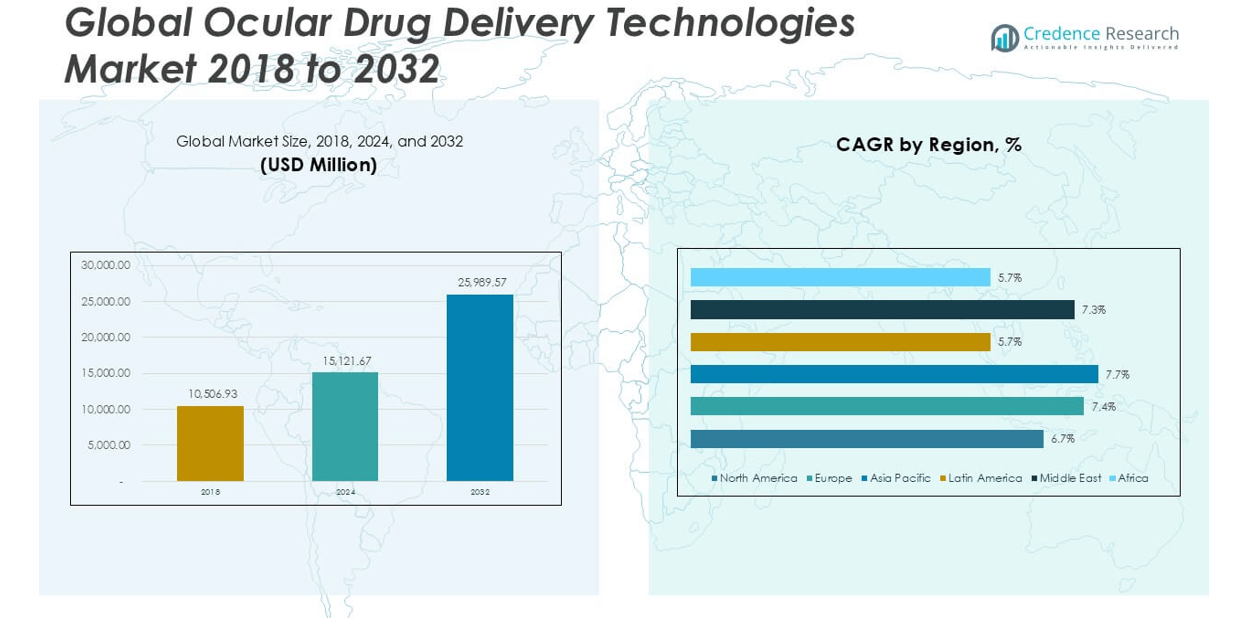
The Ocular Drug Delivery Technologies market size was valued at USD 10,506.93 million in 2018, increased to USD 15,121.67 million in 2024, and is anticipated to reach USD 25,989.57 million by 2032, growing at a CAGR of 7.07% during the forecast period.
| REPORT ATTRIBUTE | DETAILS |
|---|---|
| Historical Period | 2020-2023 |
| Base Year | 2024 |
| Forecast Period | 2025-2032 |
| Ocular Drug Delivery Technologies Market Size 2024 | USD 15,121.67 million |
| Ocular Drug Delivery Technologies Market, CAGR | 7.07% |
| Ocular Drug Delivery Technologies Market Size 2032 | USD 25,989.57 million |
The ocular drug delivery technologies market is driven by key players such as Alimera Sciences, Allergan Plc, Valeant Pharmaceuticals International, Inc., Ocular Therapeutix, Santen Pharmaceutical Co. Ltd., and EyeGate Pharma, which lead the industry through innovative sustained-release implants, biodegradable inserts, and targeted delivery systems. These companies leverage strategic collaborations, product launches, and R&D investments to strengthen their market presence. North America emerged as the dominant region in 2024, accounting for 30.9% of the global market share, driven by its advanced healthcare infrastructure, high prevalence of chronic eye conditions, and early adoption of novel drug delivery solutions. Europe and Asia Pacific follow closely, supported by rising geriatric populations and expanding healthcare access.
Market Insights
- The ocular drug delivery technologies market was valued at USD 15,121.67 million in 2024 and is projected to reach USD 25,989.57 million by 2032, growing at a CAGR of 7.07% during the forecast period.
- Market growth is driven by the increasing prevalence of chronic eye disorders such as glaucoma and age-related macular degeneration, along with rising demand for sustained and targeted drug delivery systems.
- Key trends include the integration of nanotechnology and biodegradable polymers, as well as growing adoption of minimally invasive delivery methods like ocular implants and inserts.
- The market is highly competitive, with leading companies such as Alimera Sciences, Allergan Plc, Santen Pharmaceutical Co. Ltd., and Ocular Therapeutix investing in innovation and strategic partnerships to strengthen their portfolios.
- North America held the largest regional share at 30.9%, followed by Europe at 29.9%, while topical medications dominated the product segment due to ease of use and patient compliance.
Market Segmentation Analysis:
By Product
The topical medication segment dominated the ocular drug delivery technologies market in 2024, accounting for the largest revenue share due to its widespread use, ease of application, and non-invasive nature. These include eye drops and ointments that are commonly prescribed for conditions like dry eye, conjunctivitis, and glaucoma. Despite their limited bioavailability, the low cost and high patient compliance continue to drive their adoption. Meanwhile, ocular inserts such as punctal plugs and drug-eluting contact lenses are gaining traction due to their potential to improve drug retention and reduce dosing frequency. Ocular implants, including intravitreal and episcleral implants, are increasingly used in chronic conditions like age-related macular degeneration, where sustained and targeted drug delivery is crucial. However, these options are typically reserved for severe cases due to their invasive nature.
- For instance, Ocular Therapeutix’s DEXTENZA, a 0.4 mg dexamethasone intracanalicular insert, delivers a sustained dose for up to 30 days, eliminating the need for daily steroid eye drops post-ophthalmic surgery.
By Indication
Glaucoma emerged as the leading indication in the ocular drug delivery technologies market, capturing the largest market share in 2024. This dominance is primarily attributed to the chronic nature of the disease, which requires continuous medication to lower intraocular pressure and prevent optic nerve damage. The high global prevalence of glaucoma, especially among the aging population, continues to drive demand for long-term and effective delivery systems. Age-related macular degeneration (AMD) also holds a significant market share, particularly for its demand in advanced delivery methods like intravitreal implants. The growing incidence of AMD due to increasing life expectancy and lifestyle factors further supports the segment’s growth. Other indications, including diabetic retinopathy and conjunctivitis, contribute moderately to the market, benefiting from advancements in both topical and implant-based drug delivery methods.
- For instance, Genentech’s Susvimo (ranibizumab), designed for AMD, delivers medication via a port delivery system and showed a refill interval of up to 24 weeks with comparable efficacy to monthly injections.
Market Overview
Rising Prevalence of Chronic Eye Disorders
The growing global incidence of chronic ocular conditions such as glaucoma, diabetic retinopathy, and age-related macular degeneration (AMD) is significantly driving the demand for advanced drug delivery systems. These disorders often require long-term and sustained therapeutic interventions, which traditional delivery methods fail to adequately address. As the aging population increases-especially in developed and emerging economies-the burden of these vision-threatening diseases continues to rise, creating a consistent need for more effective and patient-friendly ocular drug delivery technologies that enhance therapeutic efficacy and reduce dosing frequency.
- For instance, Alimera Sciences reported that over 91,000 units of its sustained-release intravitreal implant ILUVIEN® have been sold globally since its launch, reflecting its strong adoption for the treatment of diabetic macular edema and chronic diabetic eye disease.
Advancements in Sustained and Targeted Delivery Systems
Innovations in sustained-release and targeted ocular drug delivery systems are accelerating market growth by improving drug bioavailability and reducing systemic side effects. Technologies such as intravitreal implants, drug-eluting contact lenses, and biodegradable ocular inserts have demonstrated significant clinical advantages over conventional eye drops and ointments. These novel systems ensure localized and prolonged drug release directly to the affected tissues, thereby enhancing treatment adherence and outcomes. Increased investment in R&D by pharmaceutical and biotech companies is further boosting the development and commercialization of such next-generation ocular delivery platforms.
- For instance, Ocular Therapeutix has successfully developed DEXTENZA®, a resorbable intracanalicular insert that delivers 0.4 mg of dexamethasone over a 30-day period post-ocular surgery. As of early 2024, the company reported administering over 120,000 inserts, demonstrating both clinical efficacy and patient preference for sustained-release options.
Growing Adoption of Minimally Invasive Therapies
The rising preference for minimally invasive and patient-compliant therapies has led to greater demand for innovative ocular drug delivery technologies. Patients and healthcare providers increasingly favor delivery formats that reduce the need for frequent administration and minimize surgical intervention. Technologies like punctal plugs and in-situ forming gels offer improved comfort, reduced treatment burden, and enhanced convenience. This shift is not only improving patient satisfaction and adherence but also encouraging the integration of these systems into standard treatment protocols for various ophthalmic diseases.
Key Trends & Opportunities
Increasing Integration of Nanotechnology and Biodegradable Polymers
The integration of nanotechnology and biodegradable polymers into ocular drug delivery platforms is creating promising avenues for precision medicine. Nanocarriers enable improved drug penetration across ocular barriers, allowing for better therapeutic concentration in posterior segments of the eye. Concurrently, biodegradable polymers support sustained drug release without the need for removal, thus enhancing patient compliance. These technological advancements are expected to pave the way for targeted, controlled, and longer-acting ophthalmic therapies, opening new opportunities for treating complex eye diseases that were previously difficult to manage.
- For instance, Graybug Vision Inc. developed GB-102, a sunitinib malate-based intravitreal injectable formulation using proprietary polymeric nanoparticles designed for sustained delivery. In the ALTISSIMO Phase 2b trial, GB-102 demonstrated drug presence in the vitreous humor for up to 12 months post-injection, significantly extending treatment intervals for wet AMD.
Expanding Application in Pediatric and Geriatric Populations
The ocular drug delivery technologies market is witnessing expanding applications across pediatric and geriatric populations, driven by a growing demand for age-appropriate, easy-to-use treatment solutions. Older adults often struggle with adherence to complex dosing regimens, while pediatric patients require non-invasive and painless options. The development of user-friendly delivery systems such as eye sprays, mucoadhesive formulations, and ocular films presents untapped growth opportunities. As healthcare systems increasingly emphasize age-specific therapies, companies investing in this space stand to gain a competitive advantage.
- For instance, Santen Pharmaceutical Co., Ltd. launched Ikervis®, a once-daily cyclosporine A cationic emulsion indicated for severe keratitis in adults with dry eye disease. The formulation’s tolerability and simplified dosing regimen made it suitable for elderly patients with reduced dexterity, achieving commercial approval in over 25 countries, including markets with large geriatric populations such as Germany, France, and Japan.
Key Challenges
Limited Drug Bioavailability in Traditional Delivery Routes
One of the primary challenges in ocular drug delivery is the low bioavailability associated with traditional topical formulations like eye drops. Rapid tear turnover, blinking, and ocular barriers significantly reduce the amount of drug that reaches the target tissues, often necessitating higher or more frequent doses. This inefficiency not only impacts treatment outcomes but also increases the risk of side effects. Despite ongoing advancements, achieving optimal drug penetration and sustained retention in the eye remains a critical technical hurdle for developers.
High Development and Regulatory Costs
The development of advanced ocular drug delivery technologies involves complex formulation science, clinical validation, and stringent regulatory approvals, all of which drive up costs. Companies must invest heavily in R&D, conduct long-term clinical trials, and meet rigorous safety and efficacy standards before gaining market entry. This high capital requirement often limits participation to well-established players and creates barriers for small and mid-sized firms. Moreover, navigating differing regulatory frameworks across regions adds further complexity to global commercialization efforts.
Patient Compliance and Acceptance Issues
While novel ocular drug delivery systems offer clinical benefits, patient acceptance and compliance remain challenges, particularly with invasive or semi-invasive methods like intravitreal injections or implants. Many patients express reluctance or fear regarding procedures that involve direct contact with the eye or surgical intervention. Even with sustained-release benefits, the perception of discomfort or risk may hinder widespread adoption. Overcoming these psychological and behavioral barriers through education, awareness, and improved device design is essential for maximizing market potential.
Regional Analysis
North America
North America held the largest share in the ocular drug delivery technologies market in 2024, accounting for approximately 30.9% of global revenue. The market size rose from USD 3,315.99 million in 2018 to USD 4,671.30 million in 2024 and is projected to reach USD 7,796.87 million by 2032, growing at a CAGR of 6.7%. This growth is driven by the region’s advanced healthcare infrastructure, high prevalence of chronic eye disorders such as glaucoma and AMD, and widespread adoption of innovative drug delivery systems. Increased healthcare spending and strong presence of key pharmaceutical companies further support market expansion.
Europe
Europe represented around 29.9% of the global ocular drug delivery technologies market in 2024. The market value increased from USD 2,989.22 million in 2018 to USD 4,395.44 million in 2024 and is expected to reach USD 7,768.28 million by 2032, expanding at a CAGR of 7.4%. The region’s growth is fueled by a rising geriatric population, favorable reimbursement policies, and increased focus on long-term ophthalmic treatments. Additionally, robust R&D efforts in drug formulation and delivery systems and the presence of well-regulated healthcare systems are contributing significantly to the steady growth of the market across European nations.
Asia Pacific
Asia Pacific accounted for roughly 24.5% of the global ocular drug delivery technologies market in 2024. The market grew from USD 2,476.48 million in 2018 to USD 3,700.27 million in 2024 and is anticipated to reach USD 6,671.52 million by 2032, registering the highest CAGR of 7.7%. Rapid economic development, increasing healthcare access, and a large patient population suffering from vision-related diseases are major factors driving regional growth. Rising investments in healthcare infrastructure, expanding awareness about eye health, and growing pharmaceutical activity-particularly in China, India, and Japan-further enhance the region’s market potential.
Latin America
Latin America contributed approximately 10% of the global ocular drug delivery technologies market share in 2024. The market expanded from USD 1,132.65 million in 2018 to USD 1,516.70 million in 2024 and is projected to reach USD 2,346.86 million by 2032, with a CAGR of 5.7%. Growth in this region is supported by improving healthcare systems, rising incidence of diabetes-related eye disorders, and growing demand for non-invasive treatment methods. However, limited access to advanced drug delivery technologies and uneven healthcare coverage across countries may slightly hinder broader market adoption in the region.
Middle East
The Middle East accounted for around 3.7% of the global market share in 2024. The market rose from USD 385.60 million in 2018 to USD 560.80 million in 2024 and is expected to reach USD 977.21 million by 2032, growing at a CAGR of 7.3%. The region’s market growth is being driven by a rising burden of lifestyle diseases like diabetes, increased awareness of eye care, and expanding availability of specialized ophthalmic services. Government-led healthcare reforms and investments in medical technology are also supporting the adoption of innovative ocular drug delivery solutions in the region.
Africa
Africa held the smallest share of the ocular drug delivery technologies market in 2024, capturing about 1.8% of the global market. The market size grew from USD 206.99 million in 2018 to USD 277.16 million in 2024 and is forecast to reach USD 428.83 million by 2032, registering a CAGR of 5.7%. While the market remains in its nascent stages, gradual improvements in healthcare infrastructure, increasing awareness about ophthalmic diseases, and support from international health initiatives are encouraging growth. Nevertheless, challenges such as limited access to advanced treatments and affordability issues persist across much of the region.
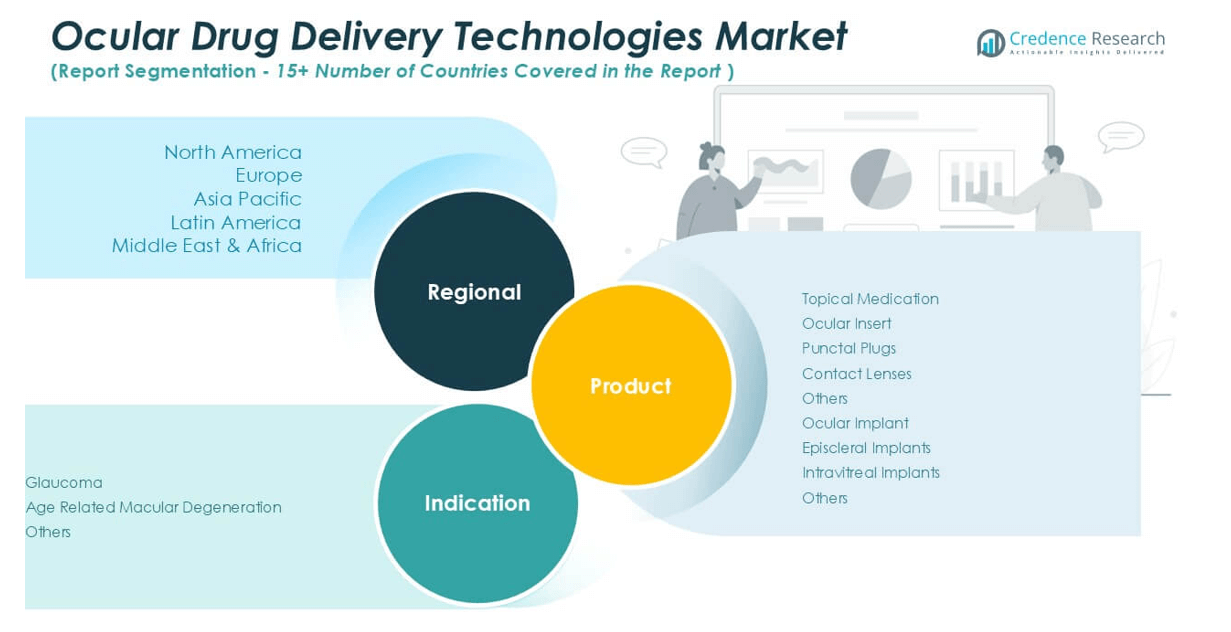
Market Segmentations:
By Product
- Topical Medication
- Ocular Insert
- Punctal Plugs
- Contact Lenses
- Others
- Ocular Implant
- Episcleral Implants
- Intravitreal Implants
- Others
By Indication
- Glaucoma
- Age-Related Macular Degeneration
- Others
By Geography
- North America
- U.S.
- Canada
- Mexico
- Europe
- Germany
- France
- U.K.
- Italy
- Spain
- Rest of Europe
- Asia Pacific
- China
- Japan
- India
- South Korea
- South-east Asia
- Rest of Asia Pacific
- Latin America
- Brazil
- Argentina
- Rest of Latin America
- Middle East & Africa
- GCC Countries
- South Africa
- Rest of the Middle East and Africa
Competitive Landscape
The competitive landscape of the ocular drug delivery technologies market is characterized by the presence of several established players and emerging innovators striving to enhance therapeutic outcomes through advanced delivery systems. Key companies such as Alimera Sciences, Allergan Plc, Santen Pharmaceutical Co. Ltd., and Ocular Therapeutix dominate the market with strong product portfolios and robust distribution networks. These firms focus on sustained-release implants, biodegradable inserts, and targeted delivery mechanisms to address chronic ocular conditions like glaucoma and age-related macular degeneration. Strategic initiatives such as mergers, acquisitions, licensing agreements, and partnerships are common, aiming to expand therapeutic reach and accelerate innovation. Startups like Oculis Pharma and Graybug Vision Inc. contribute to market dynamism through research in nanotechnology and minimally invasive platforms. Competitive intensity is further heightened by increasing R&D investments and regulatory approvals for novel drug delivery solutions. Companies also emphasize geographic expansion and patient-centric product development to maintain a competitive edge in this evolving landscape.
Key Player Analysis
- Alimera Sciences
- Valeant Pharmaceuticals International, Inc.
- Ocular Therapeutix
- Allergan, Plc.
- Oculis Pharma
- Santen Pharmaceutical Co. Ltd.
- EyeGate Pharma
- Envisia Therapeutics, Inc.
- Graybug Vision Inc.
Recent Developments
- In May 2023, Eyenovia announced FDA approval of Mydcombi™, the First Ophthalmic Spray for Mydriasis leveraging the proprietary Optejet® device platform.
- In September 2023, Otsuka collaborated with ShapeTX with an aim to develop novel AAV gene therapies for ocular diseases.
- In May 2023, Eyenovia announced FDA approval of Mydcombi™, the First Ophthalmic Spray for Mydriasis leveraging the proprietary Optejet® device platform.
- In February 2022, Alimera Sciences, Inc. announced that its Ireland-based subsidiary Alimera Sciences Europe Limited introduced ILUVIEN through Brill Pharma, its distribution partner in Spain to treat non-infectious posterior uveitis
Market Concentration & Characteristics
The Ocular Drug Delivery Technologies Market exhibits a moderately concentrated structure, with a mix of established pharmaceutical companies and emerging biotech firms competing for market share. Major players such as Alimera Sciences, Allergan Plc, Ocular Therapeutix, and Santen Pharmaceutical Co. Ltd. hold significant influence due to their extensive product portfolios and strong global distribution networks. It features high entry barriers due to complex formulation requirements, stringent regulatory standards, and the need for substantial R&D investments. Innovation in sustained-release implants, biodegradable inserts, and targeted delivery platforms shapes competitive dynamics. Companies focus on differentiation through technological advancements and strategic alliances to enhance treatment efficacy and patient compliance. The market is characterized by growing demand for non-invasive and long-acting delivery systems, particularly for chronic conditions like glaucoma and age-related macular degeneration. It also shows a strong pipeline of novel therapies, driven by increasing investment in ocular research. Despite competition, the market offers significant growth opportunities through unmet clinical needs and aging demographics.
Report Coverage
The research report offers an in-depth analysis based on Product, Indication and Geography. It details leading market players, providing an overview of their business, product offerings, investments, revenue streams, and key applications. Additionally, the report includes insights into the competitive environment, SWOT analysis, current market trends, as well as the primary drivers and constraints. Furthermore, it discusses various factors that have driven market expansion in recent years. The report also explores market dynamics, regulatory scenarios, and technological advancements that are shaping the industry. It assesses the impact of external factors and global economic changes on market growth. Lastly, it provides strategic recommendations for new entrants and established companies to navigate the complexities of the market.
Future Outlook
- The market will continue to grow steadily due to the increasing global burden of chronic eye diseases.
- Demand for sustained-release and targeted drug delivery systems will rise to improve treatment adherence.
- Biodegradable implants and inserts will gain popularity as alternatives to traditional eye drops.
- Technological advancements such as nanocarriers and in-situ gels will enhance drug penetration and retention.
- Companies will invest more in R&D to develop minimally invasive and patient-friendly therapies.
- Strategic partnerships and licensing agreements will become key growth strategies among major players.
- Regulatory support for innovative drug delivery platforms will help accelerate product approvals.
- The aging population will drive demand for long-term ophthalmic treatments across global markets.
- Asia Pacific is expected to witness the fastest growth due to expanding healthcare infrastructure and rising awareness.
- Market players will increasingly focus on personalized treatment approaches and combination therapies.

Request a Free Sample
Fill in your details and we'll send you a free sample report.
- Sample data tables & charts
- Research methodology
Market Dynamics
Rising Prevalence of Chronic Eye Disorders
The increasing incidence of chronic ocular diseases such as glaucoma, diabetic retinopathy, and age-related macular degeneration is fueling demand for advanced drug delivery systems that offer sustained and effective treatment, especially as the global population ages.
Advancements in Sustained and Targeted Delivery Systems
Innovations such as intravitreal implants, drug-eluting contact lenses, and biodegradable ocular inserts are improving drug bioavailability and reducing dosing frequency, making therapies more effective and patient-friendly.
Growing Adoption of Minimally Invasive Therapies
There is a shift towards minimally invasive and patient-compliant drug delivery formats, such as punctal plugs and in-situ forming gels, which reduce the need for frequent administration and surgical intervention, thereby improving patient adherence.
Integration of Nanotechnology and Biodegradable Polymers
The use of nanocarriers and biodegradable polymers in ocular drug delivery platforms is enabling more precise, controlled, and longer-acting therapies, enhancing drug penetration and retention in ocular tissues.
Expanding Application in Pediatric and Geriatric Populations
The development of age-appropriate, easy-to-use delivery systems is addressing the unique needs of pediatric and elderly patients, broadening the market’s reach and improving compliance in these growing demographic segments.
Need a Custom Version of This Report?
Tailor the scope, geography, or segments to your exact requirements.
- Custom geography or segment scope
- Direct access to our analyst team
Frequently Asked Questions
What is the current size of the Ocular Drug Delivery Technologies Market?
What are the key segments within the Ocular Drug Delivery Technologies Market?
What are some challenges faced by the Ocular Drug Delivery Technologies Market
Who are the major players in the Ocular Drug Delivery Technologies Market?
Table of Content
Chapter 1 Market Segmentation
- 1.1 Segmentation Framework
- 1.1.1 Product and Service Classification
- 1.1.2 Application and End-Use Classification
- 1.1.3 Technology and Solution Classification
- 1.1.4 Customer and Distribution Channel Classification
- 1.1.5 Geographic Segmentation
- 1.1.6 Market Segment Definitions and Boundaries
- 1.2 By Product
- 1.2.1 Topical Medication
- 1.2.2 Ocular Insert
- 1.2.3 Ocular Implant
- 1.2.4 Others
- 1.3 By Indication
- 1.3.1 Glaucoma
- 1.3.2 Age-Related Macular Degeneration
- 1.3.3 Others
- 1.4 By Ocular Insert Type
- 1.4.1 Punctal Plugs
- 1.4.2 Contact Lenses
- 1.4.3 Others
- 1.5 By Ocular Implant Type
- 1.5.1 Episcleral Implants
- 1.5.2 Intravitreal Implants
Chapter 2 Introduction
- 2.1 Report Objectives and Scope
- 2.2 Product Definition and Industry Terminology
- 2.3 Market Inclusions and Exclusions
- 2.4 Research Process
- 2.4.1 Primary Research and Expert Interviews
- 2.4.2 Secondary Research and Source Review
- 2.4.3 Top-Down and Bottom-Up Estimation
- 2.4.4 Data Triangulation and Verification
- 2.5 Market Size Measurement Basis
- 2.5.1 2024: USD 15,121.67 million → 2032: USD 25,989.57 million
- 2.6 Historical and Forecast Reference Periods
- 2.6.1 Base Year: 2024
- 2.6.2 Forecast Period: 2024-2032
- 2.7 Research Assumptions and Limitations
Chapter 3 Executive Summary
- 3.1 Market Snapshot and Key Findings
- 3.2 Base-Year Market Size, 2024
- 3.3 Forecast Market Size, 2032
- 3.4 Revenue and Volume Growth Outlook
- 3.5 Key Demand and Supply Indicators
- 3.6 Leading Market Segments
- 3.7 Fastest-Growing Market Opportunities
- 3.8 Regional Performance Highlights
- 3.9 Technology and Industry Transformation
- 3.10 Competitive Landscape Summary
- 3.11 Analyst View and Strategic Implications
Chapter 4 Global Ocular Drug Delivery Technologies Market Trends and Developments
- 4.1 Historical Industry Development
- 4.2 Recent Market Trends and Developments
- 4.3 Demand and Customer Behavior Trends
- 4.4 Technology and Product Innovation
- 4.5 Artificial Intelligence, Automation and Digitalization
- 4.6 Local Manufacturing and Supply Chain Realignment
- 4.7 Industry Partnerships, Mergers and Acquisitions
- 4.8 Sustainability and Circular Economy Developments
- 4.9 Government and Private Sector Investment Trends
- 4.10 Emerging Business Models and Commercialization
- 4.11 Industry Developments and Announcements
Chapter 5 Global Ocular Drug Delivery Technologies Market Production, Supply and Demand Analysis
- 5.1 Demand Trend and Consumption Analysis
- 5.2 Demand Forecast, 2024-2032
- 5.3 Production and Output Trend
- 5.4 Production and Output Forecast, 2024-2032
- 5.5 Installed Capacity and Capacity Utilization
- 5.6 Company-Wise Production Plants and Statistics
- 5.6.1 Installed Production Capacity
- 5.6.2 Actual Production
- 5.6.3 Planned Capacity and Expansion Targets
- 5.7 Supply Chain Structure and Procurement Trends
- 5.8 Supply-Demand Gap and Bottlenecks
- 5.9 Import Dependence and Sourcing Structure
- 5.10 Contract Manufacturing and Outsourcing
- 5.11 Regional Supply and Demand Concentration
Chapter 6 Global Ocular Drug Delivery Technologies Market Pricing Analysis
- 6.1 Pricing Structure and Measurement
- 6.2 Historical Pricing Trends
- 6.3 Pricing Outlook, 2024-2032
- 6.4 Average Selling Price and Unit Economics
- 6.5 Pricing by Product and Market Segment
- 6.6 Geographic Pricing Differences
- 6.7 Key Input, Energy, Labor and Logistics Costs
- 6.8 Contract Pricing and Purchasing Models
- 6.9 Pricing Sensitivity and Competitive Positioning
- 6.10 Price, Margin and Profitability Implications
Chapter 7 Global Ocular Drug Delivery Technologies Market Dynamics
- 7.1 Market Growth Drivers
- 7.1.1 Demand-Side Drivers
- 7.1.2 Technology and Innovation Drivers
- 7.1.3 Infrastructure and Investment Drivers
- 7.1.4 Regulatory and Policy Drivers
- 7.2 Market Restraints
- 7.2.1 Cost and Affordability Constraints
- 7.2.2 Technology and Adoption Barriers
- 7.2.3 Supply Chain and Operational Constraints
- 7.3 Market Challenges
- 7.3.1 Competitive Pressure and Margin Erosion
- 7.3.2 Skills, Infrastructure and Implementation Gaps
- 7.4 Emerging Market Opportunities
- 7.5 Market Dynamics Impact and Time-Horizon Assessment
Chapter 8 Global Ocular Drug Delivery Technologies Value Chain Analysis
- 8.1 Industry Value Chain Overview
- 8.2 Upstream Suppliers and Critical Inputs
- 8.3 Technology and Component Providers
- 8.4 Manufacturing or Service Delivery
- 8.5 Distribution, Channel Partners and Integrators
- 8.6 Downstream Applications and End Users
- 8.7 Value Addition and Profit Pools
- 8.8 Vertical Integration and Outsourcing
- 8.9 Supplier Concentration and Risk
- 8.10 Supply Chain Localization and Resilience
Chapter 9 Global Ocular Drug Delivery Technologies Market Regulations and Policies
- 9.1 Relevant Laws, Standards and Compliance Frameworks
- 9.2 Product, Service, Safety and Quality Requirements
- 9.3 Government Policies, Incentives and Subsidies
- 9.4 Imports, Exports and Trade Barriers
- 9.5 Public Procurement and Local Content Requirements
- 9.6 Environmental and Sustainability Compliance
- 9.7 Upcoming Policy Changes and Market Implications
Chapter 10 Global Ocular Drug Delivery Technologies Market Hotspots and Opportunities
- 10.1 Market Opportunity Mapping and Growth Hotspots
- 10.2 High-Growth Applications and Customer Groups
- 10.3 Underserved Markets and White-Space Opportunities
- 10.4 Emerging Technology and Product Opportunities
- 10.5 New Capacity and Investment Hotspots
- 10.6 Market Entry and Expansion Opportunities
- 10.7 Distribution and Partnership Opportunities
- 10.8 Near-Term and Long-Term Commercial Potential
- 10.9 Opportunity Attractiveness and Execution Risks
Chapter 11 Global Ocular Drug Delivery Technologies Market Outlook, 2024-2032
- 11.1 Market Size and Analysis
- 11.1.1 Revenue (Market Measurement: 2024: USD 15,121.67 million → 2032: USD 25,989.57 million)
- 11.1.2 Market Volume and Quantity Sold
- 11.1.3 Historical Market Size
- 11.1.4 Base-Year Market Size, 2024
- 11.2 Market Forecast, 2024-2032
- 11.2.1 Revenue Forecast to 2032
- 11.2.2 Volume Forecast to 2032
- 11.2.3 CAGR and Year-on-Year Growth
- 11.2.4 Incremental Revenue Opportunity
- 11.3 Forecast Assumptions and Scenario Analysis
- 11.3.1 Base-Case Forecast
- 11.3.2 Optimistic and Conservative Scenarios
- 11.3.3 Technology, Pricing and Policy Sensitivities
- 11.4 Market Attractiveness and Growth Outlook
Chapter 12 Global Ocular Drug Delivery Technologies Market Segmentation and Outlook
- 12.1 Segmentation Summary and Market Shares, 2024
- 12.2 Largest and Fastest-Growing Segments
- 12.3 By Product - Market Size and Forecast, 2024-2032
- 12.3.1 Segment Definition and Scope
- 12.3.2 Historical Market Size
- 12.3.3 Revenue Forecast, 2024-2032
- 12.3.4 Volume Forecast, 2024-2032
- 12.3.5 Base-Year Market Share, 2024
- 12.3.6 Segment CAGR and Growth Drivers
- 12.3.7 Subsegment Market Size and Forecast
- 12.3.7.1 Topical Medication
- 12.3.7.2 Ocular Insert
- 12.3.7.3 Ocular Implant
- 12.3.7.4 Others
- 12.3.8 Subsegment Pricing and Adoption Trends
- 12.3.9 Leading Suppliers and Competition
- 12.3.10 Regional Demand and Opportunities
- 12.4 By Indication - Market Size and Forecast, 2024-2032
- 12.4.1 Segment Definition and Scope
- 12.4.2 Historical Market Size
- 12.4.3 Revenue Forecast, 2024-2032
- 12.4.4 Volume Forecast, 2024-2032
- 12.4.5 Base-Year Market Share, 2024
- 12.4.6 Segment CAGR and Growth Drivers
- 12.4.7 Subsegment Market Size and Forecast
- 12.4.7.1 Glaucoma
- 12.4.7.2 Age-Related Macular Degeneration
- 12.4.7.3 Others
- 12.4.8 Subsegment Pricing and Adoption Trends
- 12.4.9 Leading Suppliers and Competition
- 12.4.10 Regional Demand and Opportunities
- 12.5 By Ocular Insert Type - Market Size and Forecast, 2024-2032
- 12.5.1 Segment Definition and Scope
- 12.5.2 Historical Market Size
- 12.5.3 Revenue Forecast, 2024-2032
- 12.5.4 Volume Forecast, 2024-2032
- 12.5.5 Base-Year Market Share, 2024
- 12.5.6 Segment CAGR and Growth Drivers
- 12.5.7 Subsegment Market Size and Forecast
- 12.5.7.1 Punctal Plugs
- 12.5.7.2 Contact Lenses
- 12.5.7.3 Others
- 12.5.8 Subsegment Pricing and Adoption Trends
- 12.5.9 Leading Suppliers and Competition
- 12.5.10 Regional Demand and Opportunities
- 12.6 By Ocular Implant Type - Market Size and Forecast, 2024-2032
- 12.6.1 Segment Definition and Scope
- 12.6.2 Historical Market Size
- 12.6.3 Revenue Forecast, 2024-2032
- 12.6.4 Volume Forecast, 2024-2032
- 12.6.5 Base-Year Market Share, 2024
- 12.6.6 Segment CAGR and Growth Drivers
- 12.6.7 Subsegment Market Size and Forecast
- 12.6.7.1 Episcleral Implants
- 12.6.7.2 Intravitreal Implants
- 12.6.8 Subsegment Pricing and Adoption Trends
- 12.6.9 Leading Suppliers and Competition
- 12.6.10 Regional Demand and Opportunities
- 12.7 Segment Growth Comparison
- 12.8 Segment Attractiveness and Priority Matrix
Chapter 13 Global Ocular Drug Delivery Technologies Geographic Market Outlook, 2024-2032
- 13.1 Regional Market Size and Share, 2024
- 13.2 Regional Market Forecast, 2024-2032
- 13.3 Regional Pricing, Production and Demand Differences
- 13.4 North America
- 13.4.1 United States
- 13.4.2 Canada
- 13.4.3 Mexico
- 13.5 Europe
- 13.5.1 Germany
- 13.5.2 France
- 13.5.3 Italy
- 13.5.4 United Kingdom
- 13.5.5 Spain
- 13.5.6 Poland
- 13.5.7 Russia
- 13.5.8 Netherlands
- 13.5.9 Belgium
- 13.5.10 Sweden
- 13.5.11 Denmark
- 13.5.12 Norway
- 13.5.13 Rest of Europe
- 13.6 Asia Pacific
- 13.6.1 China
- 13.6.2 India
- 13.6.3 Japan
- 13.6.4 South Korea
- 13.6.5 Thailand
- 13.6.6 Indonesia
- 13.6.7 Vietnam
- 13.6.8 Malaysia
- 13.6.9 Australia
- 13.6.10 Rest of Asia Pacific
- 13.7 Latin America
- 13.7.1 Brazil
- 13.7.2 Argentina
- 13.7.3 Colombia
- 13.7.4 Chile
- 13.7.5 Rest of Latin America
- 13.8 Middle East
- 13.8.1 Saudi Arabia
- 13.8.2 United Arab Emirates
- 13.8.3 Turkey
- 13.8.4 Israel
- 13.8.5 Iran
- 13.8.6 Rest of the Middle East
- 13.9 Africa
- 13.9.1 South Africa
- 13.9.2 Egypt
- 13.9.3 Nigeria
- 13.9.4 Morocco
- 13.9.5 Rest of Africa
- 13.10 Regional Investment, Policy and Supply Chain Differences
- 13.11 Regional Competitive Landscape
- 13.12 Geographic Growth Hotspots
Chapter 14 Global Ocular Drug Delivery Technologies Technology, Innovation and Sustainability Outlook
- 14.1 Technology Landscape and Maturity
- 14.2 Product, Process and Service Innovation
- 14.3 AI, Automation and Digital Tools in the Industry
- 14.4 Technology Adoption and Performance Benchmarking
- 14.5 Innovation Pipeline and R&D Investment
- 14.6 Patent and Intellectual Property Trends
- 14.7 Energy Efficiency and Resource Management
- 14.8 Sustainability, Recycling and Circularity
- 14.9 Technology Roadmap, 2024-2032
- 14.10 Risks of Obsolescence and Technology Substitution
Chapter 15 Global Ocular Drug Delivery Technologies Market Key Strategic Imperatives
- 15.1 Growth and Market Entry Priorities
- 15.2 High-Return Products and Segments
- 15.3 Pricing, Profitability and Cost Optimization
- 15.4 Technology Investment and Product Differentiation
- 15.5 Supply Chain Localization and Resilience
- 15.6 Distribution and Customer Acquisition
- 15.7 Partnership, Acquisition and Capacity Strategy
- 15.8 Regional Expansion Priorities
- 15.9 Short-, Medium- and Long-Term Actions
Chapter 16 Competition Outlook
- 16.1 Industry Competition Characteristics
- 16.2 Market Structure and Concentration
- 16.3 Market Share and Competitive Positioning, 2024
- 16.4 Company-Wise Revenue and Product Benchmarking
- 16.5 Production and Service Capacity Benchmarking
- 16.6 Technology, Pricing and Differentiation
- 16.7 Regional Footprint and Distribution Strength
- 16.8 Mergers, Acquisitions and Strategic Alliances
- 16.9 New Entrants and Competitive Threats
- 16.10 Porter's Five Forces and Industry Attractiveness
- 16.11 Competitive Outlook, 2024-2032
Chapter 17 Company Profiles
- 17.1 Company Coverage and Selection Criteria
- 17.2 Alimera Sciences
- 17.2.1 Business Description
- 17.2.2 Company Ownership and Geographic Presence
- 17.2.3 Product and Service Portfolio
- 17.2.4 Manufacturing and Operating Footprint
- 17.2.5 Production Capacity and Expansion Plans
- 17.2.6 Financial Performance and Investment
- 17.2.7 Market Share and Competitive Position
- 17.2.8 Technology and Innovation Capabilities
- 17.2.9 Strategic Alliances or Partnerships
- 17.2.10 Recent Developments
- 17.2.11 Growth Strategy and Outlook
- 17.3 Allergan Plc
- 17.4 Valeant Pharmaceuticals International, Inc.
- 17.5 Ocular Therapeutix
- 17.6 Santen Pharmaceutical Co. Ltd.
- 17.7 EyeGate Pharma
- 17.8 Oculis Pharma
- 17.9 Graybug Vision Inc.
- 17.10 Envisia Therapeutics, Inc.
- 17.11 Eyenovia
- 17.12 Other Relevant Market Participants
Note: Every listed company is profiled on the structure shown under the first company. The company list is preliminary and may change based on research findings, market developments, data availability and client requirements.
Chapter 18 Disclaimer
- 18.1 Research and Forecast Disclaimer
- 18.2 Data Source and Estimation Limitations
Note: The depth of individual sections depends on data availability for this market. Volume, capacity, trade and other unit-based metrics are included where applicable.