
| REPORT ATTRIBUTE | DETAILS |
|---|---|
| Historical Period | 2019-2022 |
| Base Year | 2023 |
| Forecast Period | 2024-2032 |
| Online Gambling And Betting Market Size 2023 | USD 103,764.00 Million |
| Online Gambling And Betting Market, CAGR | 6.50% |
| Online Gambling And Betting Market Size 2032 | USD 182,891.35 Million |
Market Overview
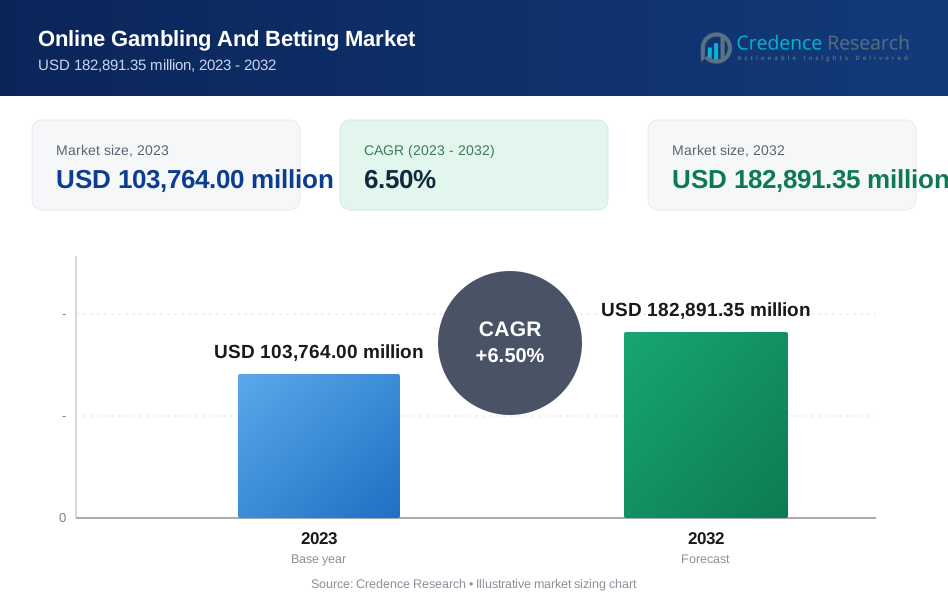
The online gambling and betting market is projected to grow from USD 103,764.00 million in 2023 to an estimated USD 182,891.35 million by 2032, with a compound annual growth rate (CAGR) of 6.50% from 2024 to 2032. This market growth is driven by increasing internet penetration, advancements in mobile technology, and the rising acceptance of digital payment methods.
Key market drivers include the growing preference for online entertainment and the convenience of accessing gambling and betting platforms from mobile devices. Trends such as the integration of live-streaming and virtual reality (VR) into online gambling experiences, as well as the increasing popularity of e-sports betting, are reshaping the landscape and attracting a larger audience.
Geographically, Europe dominates the market due to well-established regulations and a high number of online gamblers. However, the Asia-Pacific region is expected to witness the fastest growth, driven by rising disposable incomes and increased smartphone usage. Key players in the online gambling and betting market include Bet365, Flutter Entertainment, Entain PLC, and Kindred Group. These companies are focused on expanding their product offerings and leveraging innovative technologies to enhance the user experience.
Market Drivers
Increasing Internet Penetration and Mobile Device Usage
The rapid rise of internet connectivity globally has been a major catalyst for the growth of the online gambling and betting market. As more individuals gain access to the internet, particularly in emerging markets, the number of potential users for online gambling platforms increases significantly. The global internet penetration rate continues to grow, providing greater opportunities for market expansion. For instance, the National Telecommunications and Information Administration (NTIA) reported that 13 million more people used the internet in the United States in 2023 compared to 2021. In regions such as Asia-Pacific, Latin America, and Africa, where internet usage is growing at an unprecedented pace, online gambling platforms are witnessing a surge in users. Mobile device adoption is another significant factor contributing to market growth. The widespread use of smartphones and tablets has enabled users to access gambling platforms conveniently from anywhere and at any time. The integration of mobile applications with user-friendly interfaces, secure payment systems, and high-speed internet has made online gambling more accessible to the masses. With the growing affordability of smartphones and enhanced mobile network coverage, particularly in developing regions, the online gambling market is expected to expand rapidly. Mobile gaming is becoming the dominant mode of access, with more operators optimizing their platforms for mobile users, creating a seamless and engaging gambling experience.
Legalization and Regulatory Developments
The shift in legal frameworks and the relaxation of government regulations in various countries have significantly contributed to the growth of the online gambling and betting market. Traditionally, gambling has faced strict regulations in many regions, with some countries banning or heavily restricting the practice. However, over the past few years, several governments have recognized the potential economic benefits of legalizing and regulating online gambling. By creating a structured and legal environment for online gambling, governments can generate significant tax revenue while also ensuring consumer protection. For instance, in Europe, where online gambling has been legal for several years, countries like the UK, Malta, and Sweden have well-established regulatory frameworks that provide a safe and regulated market for operators and users. In the United States, the legalization of sports betting in various states has spurred significant growth in the online betting industry. The U.S. Supreme Court’s decision to strike down the Professional and Amateur Sports Protection Act (PASPA) in 2018 has led to a wave of states adopting legal frameworks for sports betting, with many opting for online platforms as a primary mode of betting. The evolution of regulations in the Asia-Pacific region is also driving market growth. Countries like India and Japan are gradually opening up to the idea of regulating online gambling. These regulatory changes are not only increasing market legitimacy but also encouraging global operators to enter new markets, further fueling competition and innovation. For instance, the American Gaming Association reported that the legalization of sports betting has generated over $650 million in tax revenue for state and local governments in the U.S. since the Supreme Court ruling.
Advancements in Technology
Technological advancements have been a key driver in transforming the online gambling and betting industry. Innovations in areas such as artificial intelligence (AI), blockchain, virtual reality (VR), and augmented reality (AR) are revolutionizing the way online gambling platforms operate and how users engage with them. AI and machine learning are being utilized to enhance the user experience through personalized recommendations, customer support chatbots, and fraud detection systems. These technologies enable operators to provide a more tailored gambling experience, improving user satisfaction and retention. Additionally, AI algorithms help detect problematic gambling behavior, allowing platforms to intervene and offer responsible gambling solutions. Blockchain technology is playing an increasingly significant role in ensuring transparency, security, and fairness in online gambling. The decentralized nature of blockchain allows for provably fair gaming, where users can verify the outcomes of games in real time. Furthermore, blockchain facilitates faster and more secure transactions, enabling the use of cryptocurrencies as a payment method. This not only appeals to tech-savvy users but also opens up opportunities in regions where traditional banking infrastructure may be limited. VR and AR technologies are enhancing the immersive experience of online gambling by allowing users to engage in lifelike simulations of physical casinos. With VR headsets, players can explore virtual casinos, interact with other users, and participate in live dealer games as if they were in a real-world environment. This level of immersion is particularly appealing to younger demographics and is expected to be a major growth area for the market in the coming years.
Rising Popularity of E-Sports and Sports Betting
The growing popularity of e-sports and traditional sports betting is a significant driver for the online gambling and betting market. E-sports, or competitive video gaming, has rapidly evolved into a global phenomenon, attracting millions of viewers and participants. The rise of professional gaming tournaments and leagues has created new opportunities for online betting platforms to tap into this emerging market. E-sports betting offers unique opportunities for users to wager on their favorite teams, players, and matches in real-time. As e-sports gain mainstream recognition and the prize pools for major tournaments continue to grow, so does the number of users interested in betting on these events. This trend is particularly pronounced among younger demographics, who are more inclined to engage with online platforms and mobile apps for betting. In addition to e-sports, traditional sports betting continues to be a dominant force in the online gambling industry. Major sporting events such as the FIFA World Cup, the Olympics, and various national leagues attract millions of bettors worldwide. The integration of live streaming, real-time data analytics, and in-play betting options has made online sports betting more dynamic and engaging for users. With the ongoing expansion of legal sports betting in markets such as the United States and Europe, the demand for online platforms is expected to grow substantially. Moreover, partnerships between online gambling platforms and major sports leagues, teams, and media outlets are further driving the popularity of online sports betting. These collaborations enhance brand visibility and credibility while offering users exclusive promotions, content, and betting opportunities. The convergence of sports and entertainment through online betting is creating a lucrative ecosystem that continues to attract new users and drive market growth.
Market Trends
Growth of Mobile Gambling and Betting Applications
One of the most significant trends in the online gambling and betting market is the increasing adoption of mobile platforms. With the proliferation of smartphones and high-speed internet access, users now prefer to gamble and place bets through mobile applications. Mobile gambling apps offer convenience, allowing users to access their favorite games or betting opportunities from any location and at any time. This trend is further supported by the growing sophistication of mobile apps, which now include enhanced user interfaces, secure payment gateways, and real-time updates. Moreover, operators are developing apps that cater specifically to mobile users, offering a seamless experience that mimics traditional desktop platforms. The rise of 5G technology is expected to further enhance mobile gambling by improving connectivity, speed, and the ability to handle more immersive gaming experiences such as live dealer games and augmented reality (AR) features.
Integration of Emerging Technologies
The online gambling and betting market is rapidly integrating emerging technologies such as artificial intelligence (AI), blockchain, and virtual reality (VR) to enhance user engagement and security. AI is being used to provide personalized experiences, analyze user behavior, and optimize marketing strategies for operators. It also plays a crucial role in identifying problematic gambling behavior, enabling platforms to promote responsible gambling practices. For instance, the U.S. Government Accountability Office reported that federal agencies are using AI to enhance regulatory practices and improve user experiences. Blockchain technology, on the other hand, is gaining traction for its potential to ensure transparency and fairness in gambling transactions. Blockchain-based platforms allow for verifiable gaming outcomes and secure, decentralized transactions, which is particularly appealing to users concerned about security and fairness. Additionally, VR is revolutionizing the online gambling experience by offering immersive, interactive environments that replicate real-world casinos. Players can engage in live dealer games and explore virtual casinos, creating a more engaging and realistic gambling experience. These technological advancements are shaping the future of the online gambling and betting industry, offering innovative ways for users to engage with platforms. For instance, the World Economic Forum highlighted VR as one of the top emerging technologies of 2024, emphasizing its potential to transform various industries.
Market Restraints and Challenges
Regulatory and Legal Restrictions
One of the primary challenges facing the online gambling and betting market is the complex and often restrictive regulatory landscape. While some regions have embraced online gambling, others impose stringent regulations or outright bans, limiting market growth. In countries with uncertain or evolving legal frameworks, operators face challenges in obtaining licenses, complying with local laws, and managing taxation policies. The inconsistent regulations across borders make it difficult for global operators to scale their services uniformly, often requiring them to tailor their offerings to specific regions. Furthermore, governments frequently update gambling laws, creating an unpredictable environment for operators who may need to adjust their business models quickly. This regulatory uncertainty can limit investment and hinder the growth of new market entrants, particularly in regions like Asia and the Middle East, where gambling laws remain strict or ambiguous.
Concerns Over Problem Gambling and Addiction
Another significant challenge for the online gambling and betting industry is the increasing concern over problem gambling and addiction. The ease of access provided by online platforms, especially via mobile devices, has raised concerns about the potential for compulsive gambling behavior. Many users are vulnerable to gambling addiction, and the 24/7 availability of online platforms can exacerbate these issues. Governments and regulatory bodies are introducing stricter measures to promote responsible gambling, which could include imposing limits on betting amounts, setting up self-exclusion programs, or even mandating cooling-off periods for users. While these measures are crucial for user protection, they can impact operators’ revenue streams and user engagement. Moreover, platforms that fail to adequately address responsible gambling concerns risk damaging their reputation, losing customer trust, and facing legal repercussions. Balancing growth with responsible gambling practices remains a critical challenge for the industry.
Market Segmentation Analysis
By Type
The online gambling and betting market is segmented by type, with sports betting leading as the largest segment, driven by the popularity of major sporting events like football, basketball, and horse racing. The rise of live betting has enhanced user engagement, attracting both casual and professional bettors, especially through mobile platforms. Online casinos, offering games such as slots, blackjack, and live dealer experiences, are also growing rapidly, boosted by technological innovations like virtual reality (VR) and artificial intelligence (AI) that enhance personalization. Online poker, with variants like Texas Hold’em and Omaha, continues to thrive, fueled by tournaments and real-time multiplayer games. The bingo segment, though smaller, is gaining popularity among casual gamblers for its social and community-oriented appeal, while other types of gambling, such as lotteries, e-sports betting, and virtual sports, are increasingly capturing younger audiences, particularly through competitive gaming.
By Device
Desktop devices have traditionally been the primary means of accessing online gambling platforms, offering larger screens and more processing power, particularly beneficial for high-quality graphics in casino games. However, as users increasingly shift to mobile devices, the growth of the desktop segment is slowing. Mobile devices, including smartphones and tablets, are rapidly becoming the dominant platform for online gambling, offering the convenience of on-the-go access and optimized apps for real-time gameplay and betting. This mobile segment is poised for substantial growth. Additionally, devices like smart TVs and gaming consoles, while currently holding a smaller market share, present emerging opportunities as technology evolves.
Segments
Based on Type
- Sports Betting
- Casinos
- Poker
- Bingo
- Others
Based on Device
- Desktop
- Mobile
- Others
Based on Region
- North America
- U.S.
- Canada
- Mexico
- Europe
- Germany
- France
- U.K.
- Italy
- Spain
- Rest of Europe
- Asia Pacific
- China
- Japan
- India
- South Korea
- South-east Asia
- Rest of Asia Pacific
- Latin America
- Brazil
- Argentina
- Rest of Latin America
- Middle East & Africa
- GCC Countries
- South Africa
- Rest of the Middle East and Africa
Regional Analysis
Europe (41%):
Europe dominates the global online gambling and betting market, holding a market share of approximately 41% in 2023. This dominance is primarily driven by well-established regulations, especially in countries like the UK, Malta, and Sweden, where online gambling is fully legalized and regulated. The high internet penetration rate and the growing popularity of mobile betting have further fueled growth. The UK Gambling Commission and Malta Gaming Authority have created stable and secure regulatory environments, attracting both local and international operators. Sports betting remains the largest segment in Europe, with significant contributions from football betting, horse racing, and casino games. As a result, Europe is expected to maintain its leadership in the market, though growth may be slower due to market saturation.
North America (25%):
North America, particularly the United States, is emerging as one of the fastest-growing regions in the online gambling and betting market, holding around 25% of the market share in 2023. This rapid growth is largely due to the legalization of online sports betting in numerous states following the U.S. Supreme Court’s repeal of PASPA in 2018. States like New Jersey, Pennsylvania, and Michigan have established significant online gambling markets, while others are following suit. Canada also offers growth potential, driven by increasing interest in online gambling and favorable regulatory developments. As more U.S. states legalize online betting, North America's share in the global market is expected to increase substantially in the coming years.
Key players
- William Hill Limited
- Bally’s Corporation
- Bet 365 Group Ltd.
- Betsson AB
- Entain Plc.
- FireKeepers
- Flutter Entertainment Plc.
- Churchill Downs Inc.
- Kindred Group
- Ladbrokes Coral Group Plc
- Sky Betting & Gambling
- Sportech Plc
- The Stars Group Plc
Competitive Analysis
The online gambling and betting market is highly competitive, with several major players vying for market share. Bet365 Group Ltd. and Flutter Entertainment Plc. are recognized as industry leaders, offering a wide range of sports betting, casino, and poker options across global markets. Companies like Entain Plc. and William Hill Limited are also major players, focusing on strategic partnerships and technological advancements to expand their presence. Kindred Group and Betsson AB have strong European market positions, while Bally’s Corporation and Churchill Downs Inc. are prominent in North America, capitalizing on the growing U.S. sports betting sector. Each company competes by enhancing user experience through mobile apps, live streaming, and personalized services, while navigating regulatory challenges and expanding their global footprints. Innovation and market expansion are key to maintaining a competitive edge in this evolving market.
Recent Developments
- In July 2022, 888 Holdings acquired William Hill, creating a global betting and gaming leader by bringing together two highly complementary businesses.
- In May 2023, Bally’s Corporation entered into exclusive, multi-year agreements with Kambi Group plc and White Hat Gaming to serve as Bally’s B2B online sports betting and platform providers.
- In September 2023, Bet365 partnered with mobile-focused gaming content provider Gaming Realms. Following the agreement, Gaming Realms provides Bet365 with its online gaming content selection.
- In June 2023, Betsson AB partnered with Groupe Partouche to launch online casino services in Belgium. The collaboration leverages Groupe Partouche’s dominance in the market for traditional casinos and Betsson’s expertise in the online gaming industry.
- In January 2023, Entain announced the acquisition of BetEnt B.V., an online betting and gaming website. The acquisition is aimed at providing customers with various product offerings.
- In September 2023, Flutter Entertainment Plc acquired an initial 51% stake in MaxBet, Serbia’s #2 omni-channel sports betting and gaming operator.
- In January 2023, Churchill Downs Incorporated entered into a multi-year agreement with bet365 for online sports betting and iGaming market access in Pennsylvania.
- In July 2023, Kindred Group launched a proprietary tech platform in Pennsylvania, United States. The company offers access to Unibet Casino and Sportsbook apps on the Kindred platform.
Market Concentration and Characteristics
The online gambling and betting market is moderately concentrated, with a few key players dominating a significant portion of the market share. Leading companies such as Bet365 Group Ltd., Flutter Entertainment Plc., and Entain Plc. hold substantial market positions due to their expansive global presence, diverse product offerings, and technological innovations. The market is characterized by fierce competition, with operators continuously enhancing user experiences through mobile apps, live streaming, and real-time betting features. Additionally, the sector is marked by rapid consolidation, as major companies pursue mergers and acquisitions to expand their geographical reach and strengthen their competitive edge. Despite the presence of dominant players, new entrants still find opportunities by focusing on niche markets, innovative technologies, and localized betting solutions.
Report Coverage
The research report offers an in-depth analysis based on Type, Device and Region. It details leading market players, providing an overview of their business, product offerings, investments, revenue streams, and key applications. Additionally, the report includes insights into the competitive environment, SWOT analysis, current market trends, as well as the primary drivers and constraints. Furthermore, it discusses various factors that have driven market expansion in recent years. The report also explores market dynamics, regulatory scenarios, and technological advancements that are shaping the industry. It assesses the impact of external factors and global economic changes on market growth. Lastly, it provides strategic recommendations for new entrants and established companies to navigate the complexities of the market.
Future Outlook
- The widespread adoption of smartphones and high-speed internet will continue to drive mobile gambling, making it the dominant platform for users globally.
- As more countries and U.S. states legalize sports betting, this segment is expected to see significant growth, particularly with the integration of live betting and real-time data analytics.
- Technologies such as artificial intelligence (AI), virtual reality (VR), and blockchain will reshape the user experience by offering more personalized, secure, and immersive gambling options.
- E-sports betting will grow as a popular segment, driven by the increasing global viewership of competitive video gaming and its appeal to younger demographics.
- Governments and regulatory bodies are likely to impose stricter regulations around responsible gambling practices, which may impact growth but ensure long-term sustainability.
- The Asia-Pacific region is expected to see rapid growth, fueled by increasing internet penetration, rising disposable incomes, and expanding interest in online gambling, particularly in sports betting.
- Operators will invest more in promoting responsible gambling through AI-driven monitoring and self-exclusion tools to mitigate the risk of gambling addiction and maintain trust.
- The market will witness continued consolidation as larger operators acquire smaller competitors to expand their market share, geographic presence, and technological capabilities.
- The use of cryptocurrencies for gambling transactions will gain traction, providing enhanced security and anonymity for users, particularly in regions with strict banking regulations.
- Emerging markets in regions such as Latin America, Africa, and the Middle East will present new opportunities as governments increasingly consider legalizing and regulating online gambling.
Request a Free Sample
Fill in your details and we'll send you a free sample report.
- Sample data tables & charts
- Research methodology
Need a Custom Version of This Report?
Tailor the scope, geography, or segments to your exact requirements.
- Custom geography or segment scope
- Direct access to our analyst team
Frequently Asked Questions
What is the market size of the online gambling and betting industry in 2023 and 2032?
What are the key factors driving the growth of the online gambling and betting market?
Which region dominates the online gambling and betting market?
How is mobile technology influencing the online gambling market?
What role do emerging technologies play in online gambling?
Table of Content
Chapter 1. Report Introduction
- 1.1 Report Description & Purpose
- 1.1.1 Report Title & Market Definition
- 1.1.2 Unique Selling Propositions (USP) & Key Differentiators
- 1.1.3 Value Proposition for Stakeholders
- 1.2 Research Objectives
- 1.2.1 Market Sizing Objectives (Volume & Revenue) (Volume Where Applicable)
- 1.2.2 Segmentation Objectives
- 1.2.3 Competitive Intelligence Objectives
- 1.2.4 Forecast & Scenario Objectives
- 1.3 Report Scope
- 1.3.1 Online Gambling And Betting Scope – Segments & Subsegments Covered
- 1.3.2 Geographic Scope – Regions & Countries Covered
- 1.3.3 Historical Period, Base Year & Forecast Period (2023; forecast to 2032)
- 1.3.4 Inclusions & Exclusions
- 1.4 Industry Classification & Applicable Codes
- 1.5 Currency, Measurement Units & Valuation Basis
- 1.6 Target Stakeholders
- 1.7 Limitations & Assumptions
Chapter 2. Executive Summary
- 2.1 Global Online Gambling And Betting Market Snapshot
- 2.1.1 Market Size – Historical (2023) & Forecast (2023-2032) (2023: USD 103,764.00 million → 2032: USD 182,891.35 million)
- 2.1.2 Volume & Revenue – Global Totals (Volume Where Applicable)
- 2.1.3 Key Market Highlights – Top Five Facts
- 2.2 Online Gambling And Betting Market Segmentation Snapshot
- 2.2.1 Market Split by Region – 2023 vs. 2032
- 2.3 Competitive Snapshot
- 2.3.1 Top 10 Players by Revenue Share – 2023
- 2.3.2 Top 10 Players by Volume Share – 2023 (Volume Where Applicable)
- 2.3.3 Recent Strategic Developments (18-Month Summary)
- 2.4 Key Investment Highlights & Strategic Conclusions
Chapter 3. Online Gambling And Betting Market Dynamics & Industry Analysis
- 3.1 Market Overview & Context
- 3.1.1 Online Gambling And Betting Market Position in the Broader Industry Value Chain
- 3.1.2 Demand Structure & Purchasing Dynamics
- 3.1.3 Market Maturity & Development Stage by Region
- 3.2 Online Gambling And Betting Market Drivers
- 3.3 Online Gambling And Betting Market Restraints & Challenges
- 3.4 Online Gambling And Betting Market Opportunities
- 3.5 Porter's Five Forces Analysis
- 3.5.1 Threat of New Entrants
- 3.5.2 Bargaining Power of Suppliers
- 3.5.3 Bargaining Power of Buyers
- 3.5.4 Threat of Substitutes
- 3.5.5 Competitive Rivalry – Intensity Assessment
- 3.6 Online Gambling And Betting Value Chain Analysis
- 3.6.1 Upstream – Key Inputs, Resources & Suppliers
- 3.6.1.1 Key Input/Resource 1
- 3.6.1.2 Key Input/Resource 2
- 3.6.1.3 Key Input/Resource 3
- 3.6.2 Midstream – Core Operations & Value Creation
- 3.6.2.1 Operating Model & Process Overview
- 3.6.2.2 Key Operating Locations & Capabilities by Company
- 3.6.3 Downstream – Market Channels & End Users
- 3.6.3.1 Direct Sales & Customer Engagement Channels
- 3.6.3.2 Indirect Sales, Intermediaries & Partner Channels
- 3.6.4 Value Chain Profitability Analysis
- 3.6.1 Upstream – Key Inputs, Resources & Suppliers
- 3.7 PESTEL Analysis
- 3.7.1 Political Factors
- 3.7.2 Economic Factors
- 3.7.3 Social Factors
- 3.7.4 Technological Factors
- 3.7.5 Environmental Factors
- 3.7.6 Legal Factors
- 3.8 Online Gambling And Betting Supply Chain Analysis
- 3.8.1 Critical Input & Resource Availability Risk Assessment
- 3.8.2 Supplier & Operational Concentration Risk (Geographic Exposure)
- 3.8.3 Supply & Service Disruption Impact Analysis
- 3.9 Regulatory & Policy Landscape
Note: The regulatory and policy landscape section covers regulations based on their applicability to the market, Online Gambling And Betting category, geography, and scope of the study. Only regulatory frameworks with a material impact on operations, compliance, trade, sustainability, or market access are analyzed in detail.
Chapter 4. Key Investment Pockets & Opportunity Analysis
- 4.1 Online Gambling And Betting Market Attractiveness Analysis
- 4.1.1 By Region – Investment Attractiveness Matrix (Market Size × CAGR)
- 4.2 Absolute Revenue Growth Opportunity
- 4.2.1 By Region – Absolute Revenue Growth Through 2032
- 4.3 Incremental Demand Opportunity
- 4.3.1 By Region – Incremental Demand Through 2032
- 4.3.2 Segment – Incremental Demand
- 4.4 Emerging Submarket Opportunity Deep Dive (Subject to Applicability)
- 4.5 Priority Market Opportunity Scorecards
- 4.5.1 United States
- 4.5.2 Europe
- 4.5.3 Asia
- 4.5.4 Middle East & Africa
Note: Priority market opportunity scorecards reflect the geographic scope and strategic relevance of the study. Listed markets are indicative and may be adapted to the industry.
Chapter 5. Online Gambling And Betting Cross-Border Trade & Market Access Analysis
- 5.1 International Trade & Cross-Border Activity Overview
- 5.1.1 Global Export Value by Country (2023)
- 5.1.2 Global Export Volume by Country (2023) (Volume Where Applicable)
- 5.1.3 Global Import Value by Country (2023)
- 5.1.4 Global Import Volume by Country (2023) (Volume Where Applicable)
- 5.1.5 Net Trade Balance by Country (2023)
- 5.2 Export Analysis – Segment
- 5.2.1 Category 1 (Applicable Classification Code)
- 5.2.2 Category 2 (Applicable Classification Code)
- 5.2.3 Category 3 (Applicable Classification Code)
- 5.2.4 Category 4 (Applicable Classification Code)
- 5.2.5 Category 5 (Applicable Classification Code)
- 5.3 Import Analysis – Segment
- 5.3.1 Category 1 (Applicable Classification Code)
- 5.3.2 Category 2 (Applicable Classification Code)
- 5.3.3 Category 3 (Applicable Classification Code)
- 5.3.4 Category 4 (Applicable Classification Code)
- 5.3.5 Category 5 (Applicable Classification Code)
- 5.4 Cross-Border Pricing & Transaction Benchmarks
- 5.4.1 Export Pricing – Segment & Country
- 5.4.2 Import Pricing – Segment & Source Country
- 5.4.3 Price Trends (2023)
- 5.5 Key Cross-Border Trade & Delivery Routes
- 5.5.1 Cross-Border Trade/Delivery Route 1
- 5.5.2 Cross-Border Trade/Delivery Route 2
- 5.5.3 Cross-Border Trade/Delivery Route 3
- 5.5.4 Cross-Border Trade/Delivery Route 4
- 5.5.5 Cross-Border Trade/Delivery Route 5
- 5.6 Trade Policy & Market Access Impact Assessment
- 5.6.1 Tariff & Non-Tariff Barriers
- 5.6.2 Regional Trade & Economic Integration Frameworks
- 5.6.3 Bilateral & Multilateral Trade Agreements
- 5.6.4 Cross-Border Operating, Licensing & Localization Requirements
Note: This chapter applies where cross-border trade or delivery is relevant to Online Gambling And Betting. Goods, services, and digital offerings are assessed using applicable classifications and transaction measures. Import-export volumes, trade balances, and route analyses are included only where meaningful to the market.
Chapter 6. Competitive Landscape & Company Benchmarking
- 6.1 Online Gambling And Betting Market Concentration & Structure
- 6.1.1 Herfindahl-Hirschman Index (HHI) – vs. 2023
- 6.1.2 Leading, Mid-Sized & Emerging Player Structure
- 6.1.3 Global, Regional & Local Player Dynamics
- 6.2 Online Gambling And Betting Market Share Analysis – 2023
- 6.2.1 Global Revenue Share by Company
- 6.2.2 Global Volume Share by Company (Volume Where Applicable)
- 6.2.3 Regional Revenue Share
- 6.2.4 Market Share Evolution ( vs. 2023)
- 6.2.5 Company Market Share by Key Segment
- 6.2.6 Company Market Share by Customer Group
- 6.3 Operating Scale, Capacity & Infrastructure Analysis
- 6.3.1 Global Operating Scale & Supply Capacity
- 6.3.2 Resource Utilization & Operating Efficiency
- 6.3.3 Output, Service Delivery & Activity Metrics
- 6.3.4 Operating Footprint & Infrastructure Map
- 6.3.5 Planned Operational & Capacity Expansion
- 6.4 Online Gambling And Betting Competitive Benchmarking Matrix
- 6.4.1 Revenue, Growth, Profitability & Operating Metric Comparison
- 6.4.2 Channel Revenue Mix
- 6.4.3 Geographic Revenue Exposure
- 6.4.4 R&D Intensity
- 6.4.5 Sustainability Maturity
- 6.5 Strategic Developments in Online Gambling And Betting (Last 24 Months)
- 6.5.1 Mergers, Acquisitions & Divestments
- 6.5.2 New Products, Services & Solutions in Online Gambling And Betting
- 6.5.3 Operational & Infrastructure Expansions
- 6.5.4 Strategic Alliances, Joint Ventures & Partnerships
- 6.5.5 Distribution Expansion & Market Entry
- 6.5.6 Sustainability & ESG Initiatives
- 6.6 Competitive Strategy Mapping
- 6.6.1 Leader, Challenger, Follower & Niche Classification
- 6.6.2 Pricing Strategy Comparison
- 6.6.3 Channel Strategy Matrix
Note: Strategic developments are included based on their materiality and the availability of reliable information.
Chapter 7. Global Online Gambling And Betting Market – By Sales & Delivery Channel
- 7.1 Segment Overview
- 7.1.1 Volume & Revenue Split by Channel (2023 & 2032) (Volume Where Applicable)
- 7.1.2 Channel Mix Evolution (2023-2032)
Chapter 8. Regional Market Analysis – Global Overview
- 8.1 Global Regional Overview
- 8.1.1 Regional Volume Share (Volume Where Applicable)
- 8.1.2 Regional Revenue Share
- 8.1.3 Regional Volume by Region (Volume Where Applicable)
- 8.1.4 Regional Revenue by Region
- 8.1.5 Regional Forecast Through 2032
- 8.2 Cross-Regional Segment Analysis
- 8.2.1 By Sales & Delivery Channel
- 8.2.2 By Competitive Positioning & Price Tier
Chapter 9. North America Online Gambling And Betting Market
- 9.1 United States
- 9.2 Canada
- 9.3 Mexico
Chapter 10. Europe Online Gambling And Betting Market
- 10.1 Germany
- 10.2 France
- 10.3 Italy
- 10.4 United Kingdom
- 10.5 Spain
- 10.6 Poland
- 10.7 Russia
- 10.8 Netherlands
- 10.9 Belgium
- 10.10 Sweden
- 10.11 Denmark
- 10.12 Norway
- 10.13 Rest of Europe
Chapter 11. Asia Pacific Online Gambling And Betting Market
- 11.1 China
- 11.2 India
- 11.3 Japan
- 11.4 South Korea
- 11.5 Thailand
- 11.6 Indonesia
- 11.7 Vietnam
- 11.8 Malaysia
- 11.9 Australia
- 11.10 Rest of Asia Pacific
Chapter 12. Latin America Online Gambling And Betting Market
- 12.1 Brazil
- 12.2 Argentina
- 12.3 Colombia
- 12.4 Chile
- 12.5 Rest of Latin America
Chapter 13. Middle East Online Gambling And Betting Market
- 13.1 Saudi Arabia
- 13.2 United Arab Emirates
- 13.3 Turkey
- 13.4 Israel
- 13.5 Iran
- 13.6 Rest of the Middle East
Chapter 14. Africa Online Gambling And Betting Market
- 14.1 South Africa
- 14.2 Egypt
- 14.3 Nigeria
- 14.4 Morocco
- 14.5 Rest of Africa
Chapter 15. Online Gambling And Betting Company Profiles
- 15.1 [Company 01]
- 15.1.1 Company Overview
- 15.1.2 Key Management Personnel
- 15.1.3 Products & Services Portfolio
- 15.1.4 Financial Performance
- 15.1.5 Key Market Focus & Geographic Presence
- 15.1.6 Recent Developments & Strategic Initiatives
Note: The company profile list is preliminary and may change based on research findings, market developments, data availability, and client requirements.
Chapter 16. Appendices
- Appendix A – List of Abbreviations & Acronyms
- Appendix B – Industry Classification Code Reference – Full Series
- Appendix C – Supply, Output & Operating Capacity Data Tables
- Appendix D – End-Use & Demand Base Tables
- Appendix E – Demand, Adoption & Usage Assumptions
- Appendix F – Pricing & Revenue Metric Reference Tables
- Appendix G – Company Operations & Infrastructure Database
- Appendix H – Cross-Border Trade & Activity Data Tables (Where Applicable)
- Appendix I – Regulatory Summary Tables
- Appendix J – Primary Research Participant List (Anonymized)
- Appendix K – Primary Research Questionnaire Framework
- Appendix L – Data Sources & Bibliography
- Appendix M – Market Size Divergence & Source Comparison
Chapter 17. Research Methodology
- 17.1 Research Framework & Philosophy
- 17.2 Secondary Research – Sources, Hierarchy & Data Extraction
- 17.3 Data Modeling – Bottom-Up & Top-Down Market Sizing
- 17.4 Primary Research – Stakeholder Framework, LOI & Sample Sizes
- 17.5 Forecast Methodology – Regression, Scenario & Sensitivity Analysis
- 17.6 Quality Control – Four-Layer Validation Framework
- 17.7 Limitations & Standard Assumptions
- 17.8 Disclaimer
