
| REPORT ATTRIBUTE | DETAILS |
|---|---|
| Historical Period | 2019-2022 |
| Base Year | 2023 |
| Forecast Period | 2024-2032 |
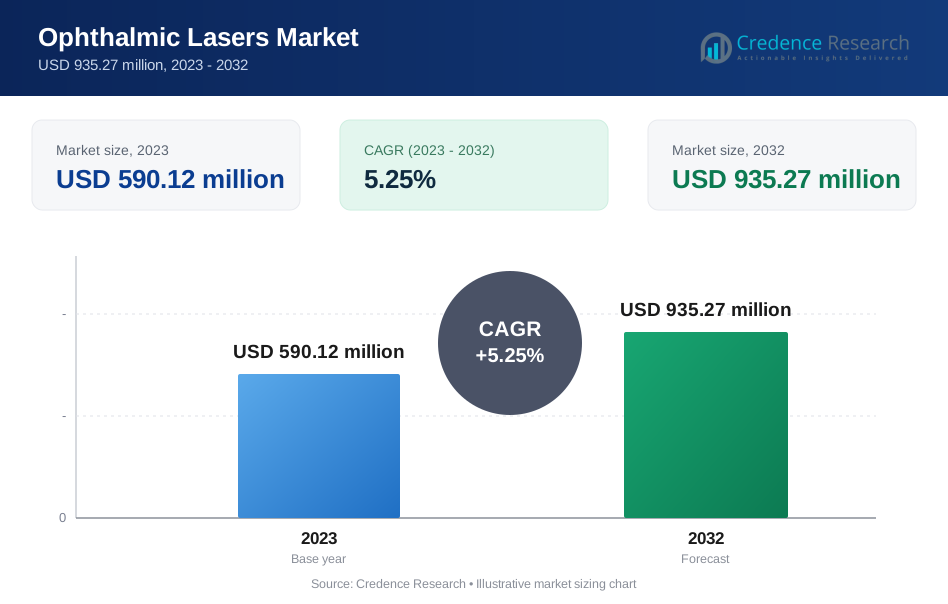
| Ophthalmic Lasers Market Size 2023 | USD 590.12 Million |
| Ophthalmic Lasers Market, CAGR | 5.25% |
| Ophthalmic Lasers Market Size 2032 | USD 935.27 Million |
Market Overview
The Ophthalmic Lasers market is projected to grow from USD 590.12 million in 2023 to an estimated USD 935.27 million by 2032, with a compound annual growth rate (CAGR) of 5.25% from 2024 to 2032. This growth is driven by the increasing prevalence of eye disorders such as glaucoma, cataracts, and diabetic retinopathy, which require advanced laser treatment.
Key market drivers include the rising geriatric population, increasing awareness of eye health, and the growing adoption of minimally invasive surgeries. Additionally, the integration of artificial intelligence (AI) in ophthalmic laser systems is enhancing diagnostic accuracy and treatment efficiency, contributing to the market's positive outlook. However, the high cost of laser systems and the need for skilled professionals may challenge market growth.
Geographically, North America holds the largest market share due to the presence of leading industry players and advanced healthcare infrastructure. Europe follows closely, driven by a growing elderly population and increasing healthcare expenditure. The Asia-Pacific region is expected to witness the fastest growth, attributed to rising healthcare investments, a large patient pool, and increasing adoption of advanced medical technologies. Key players in the Ophthalmic Lasers market include Alcon, Bausch & Lomb, Carl Zeiss Meditec AG, Lumenis Ltd., and Topcon Corporation.
Market Drivers
Increasing Prevalence of Eye Disorders
The growing prevalence of eye disorders such as glaucoma, cataracts, and diabetic retinopathy is a major driver of the ophthalmic lasers market. With the aging global population, these conditions are becoming increasingly common. For instance, data from the World Health Organization indicates that glaucoma affected nearly 76 million people worldwide in 2020, with projections showing this number could rise to 111.8 million by 2040. Cataracts remain the leading cause of blindness globally, accounting for approximately half of all cases. Ophthalmic lasers offer minimally invasive, precise treatment options for these conditions, with advantages like quicker recovery times and reduced risks compared to traditional surgeries. The U.S. National Eye Institute reports that over 24 million Americans aged 40 and older have cataracts. In Europe, the European Society of Cataract & Refractive Surgeons notes that cataract surgery is one of the most frequently performed operations, with over 4 million procedures conducted annually. As the burden of eye disorders continues to grow worldwide, the demand for advanced ophthalmic laser treatments is expected to increase substantially, driving market growth.
Technological Advancements in Laser Technology
Ongoing technological advancements in laser technology are significantly propelling the ophthalmic lasers market forward. Innovations like femtosecond lasers have revolutionized procedures such as cataract surgery, offering unprecedented precision and safety. For example, the American Academy of Ophthalmology reports that femtosecond laser-assisted cataract surgery can achieve more precise corneal incisions and lens fragmentation compared to manual techniques. The integration of artificial intelligence (AI) and machine learning is enhancing diagnostic accuracy and treatment personalization in ophthalmic care. A study published in Nature Medicine demonstrated that an AI system could diagnose over 50 eye diseases with accuracy comparable to expert ophthalmologists. Additionally, the development of portable laser devices is expanding access to advanced eye care in underserved regions. The World Health Organization's Vision 2020 initiative highlights the importance of such technologies in addressing global eye health disparities. As per data from the International Agency for the Prevention of Blindness, approximately 90% of visually impaired people live in low and middle-income countries, underscoring the potential impact of portable ophthalmic laser technologies in these regions.
Growing Adoption of Minimally Invasive Surgeries
The increasing preference for minimally invasive surgeries is driving significant growth in the ophthalmic lasers market. Patients and healthcare providers are gravitating towards procedures that offer shorter recovery times, reduced pain, and lower complication risks. For instance, the American Refractive Surgery Council reports that over 700,000 LASIK procedures are performed annually in the United States, highlighting the popularity of this minimally invasive laser eye surgery. In the treatment of glaucoma, laser trabeculoplasty has gained favor as a less invasive alternative to traditional surgery. The Glaucoma Research Foundation notes that laser trabeculoplasty can effectively lower intraocular pressure in many patients, often delaying or eliminating the need for more invasive surgical interventions. The trend towards outpatient procedures is also fueling the adoption of ophthalmic lasers. According to the Ambulatory Surgery Center Association, more than 23 million procedures are performed annually in ambulatory surgery centers in the U.S., with ophthalmic procedures being among the most common. This shift towards minimally invasive, outpatient laser surgeries is expected to continue driving market growth.
Rising Healthcare Expenditure and Awareness
The increasing healthcare expenditure and growing awareness of eye health are also significant drivers of the ophthalmic lasers market. Governments and private organizations are investing heavily in healthcare infrastructure, particularly in emerging economies, to improve access to advanced medical technologies. This investment is enabling the widespread adoption of ophthalmic lasers in both developed and developing regions. For instance, countries like China and India are witnessing significant growth in healthcare spending, which is facilitating the introduction of advanced laser systems in their healthcare facilities. Moreover, public awareness campaigns about the importance of regular eye check-ups and early diagnosis of eye disorders are raising the demand for ophthalmic services. Initiatives by non-governmental organizations (NGOs) and health agencies to combat blindness and visual impairment are also contributing to increased awareness. As more people become aware of the benefits of early diagnosis and treatment, the demand for ophthalmic lasers is expected to rise. Additionally, the growing prevalence of health insurance coverage is making advanced treatments like laser surgeries more accessible to a broader population, further driving market growth.
Market Trends
Integration of Artificial Intelligence and Machine Learning
One of the most significant trends in the ophthalmic lasers market is the integration of artificial intelligence (AI) and machine learning (ML) technologies into laser systems. These advanced technologies are enhancing the precision, efficiency, and outcomes of ophthalmic procedures. AI and ML algorithms can analyze vast amounts of data, including patient history, imaging results, and treatment outcomes, to assist clinicians in making more informed decisions. For instance, a study by the American Academy of Ophthalmology found that AI-assisted diagnosis of diabetic retinopathy achieved over 90% sensitivity and specificity, comparable to human experts. This data-driven approach allows for personalized treatment plans, improving the accuracy and effectiveness of laser procedures. Additionally, AI is being utilized to optimize the calibration and operation of laser devices, reducing the likelihood of errors during surgery. The U.S. Food and Drug Administration has approved several AI-powered ophthalmic devices in recent years, indicating growing acceptance of this technology. The adoption of AI-powered ophthalmic lasers is not only improving patient outcomes but also increasing the efficiency of ophthalmic practices.
Rising Adoption of Femtosecond Lasers
Another notable trend in the ophthalmic lasers market is the rising adoption of femtosecond lasers, particularly in cataract and refractive surgeries. Femtosecond lasers operate at ultra-short pulse durations, enabling precise tissue cutting with minimal thermal damage to surrounding areas. This level of precision is particularly beneficial in delicate ophthalmic procedures, such as creating corneal flaps in LASIK surgery or performing lens fragmentation in cataract surgery. For instance, a survey conducted by the American Society of Cataract and Refractive Surgery revealed that over 70% of surgeons believe femtosecond laser-assisted cataract surgery provides better outcomes than traditional methods. The use of femtosecond lasers is associated with improved surgical outcomes, faster recovery times, and reduced risks of complications, which are driving their increasing adoption among ophthalmic surgeons. Moreover, ongoing advancements in femtosecond laser technology, such as enhanced imaging integration and improved user interfaces, are further contributing to their growing popularity. The European Society of Cataract and Refractive Surgeons reported a significant increase in the use of femtosecond lasers for cataract surgery across Europe in recent years.
Market Restraints and Challenges
High Cost of Ophthalmic Laser Systems
A significant restraint in the ophthalmic lasers market is the high cost associated with these advanced medical devices. Ophthalmic laser systems involve sophisticated technology and precision engineering, which contribute to their substantial price tags. For many hospitals and eye care clinics, especially in developing regions, the initial investment required to acquire these systems is prohibitive. This financial barrier limits the adoption of cutting-edge laser technologies, hindering market growth. For instance, a survey by the American Society of Cataract and Refractive Surgery found that the average cost of a femtosecond laser system for cataract surgery exceeds $400,000. Additionally, the costs extend beyond the initial purchase; maintenance, calibration, and the need for specialized consumables add to the ongoing expenses. Insurance reimbursement rates for procedures involving ophthalmic lasers may not always cover these costs adequately, placing further financial strain on healthcare providers. As a result, smaller practices and clinics may opt for alternative, less expensive treatment methods, thereby reducing the overall demand for ophthalmic laser systems.
Shortage of Skilled Professionals
Another challenge facing the ophthalmic lasers market is the shortage of skilled professionals trained to operate these complex devices. The effective and safe use of ophthalmic lasers requires specialized training and expertise. In many regions, there is a gap between the availability of advanced laser technology and the number of ophthalmologists proficient in using it. For example, a study by the International Council of Ophthalmology reported that there is only one ophthalmologist per 200,000 people in developing countries, compared to one per 20,000 in developed nations. This skills gap leads to underutilization of the equipment and can compromise patient outcomes if not addressed properly. Training programs for ophthalmic laser operation are time-consuming and may not be readily accessible or affordable for all practitioners. Moreover, retaining skilled professionals in less developed areas poses an additional challenge due to limited resources and opportunities for professional growth. The shortage of trained operators not only restricts the adoption of ophthalmic lasers but also impacts the overall quality of eye care services, thereby restraining market expansion.
Market Segmentation Analysis
By Product
Diode lasers have gained popularity in ophthalmic treatments due to their compact size, efficiency, and versatility. They are particularly useful in retinal photocoagulation and glaucoma procedures. For instance, a survey by the American Society of Retina Specialists found that over 80% of retina specialists use diode lasers for panretinal photocoagulation in diabetic retinopathy cases. Femtosecond lasers, known for their ultra-short pulse durations, are increasingly adopted in corneal surgeries like LASIK and cataract removal. The American Society of Cataract and Refractive Surgery reported that femtosecond laser-assisted cataract surgery has seen a steady increase in adoption among surgeons over the past decade. Excimer lasers remain essential in refractive surgeries, effectively correcting vision errors such as myopia and astigmatism by reshaping the cornea. According to data from the International Society of Refractive Surgery, excimer laser procedures continue to be the most common type of laser vision correction performed worldwide. Selective Laser Trabeculoplasty (SLT) lasers are preferred for their non-invasive and repeatable approach to treating open-angle glaucoma. The World Glaucoma Association has highlighted SLT as a first-line treatment option in many countries due to its efficacy and safety profile.
By Application
The application of lasers in ophthalmology spans several critical areas, including glaucoma management. For instance, the European Glaucoma Society guidelines now recommend SLT as a first-line treatment option for open-angle glaucoma, reflecting its growing acceptance among ophthalmologists. In cataract removal, laser-assisted surgeries, particularly with femtosecond lasers, are gaining traction. A survey conducted by the American Academy of Ophthalmology found that an increasing number of cataract surgeons are incorporating femtosecond laser technology into their practices, citing improved precision and potentially better visual outcomes. Refractive error corrections, such as LASIK and PRK, utilize excimer and femtosecond lasers to correct vision impairments. The U.S. Food and Drug Administration has reported a consistent safety profile for laser vision correction procedures, contributing to their sustained popularity. For diabetic retinopathy, laser photocoagulation remains a standard treatment to prevent vision loss. The International Diabetes Federation has emphasized the importance of regular eye screenings and timely laser interventions for diabetic patients to prevent vision-threatening complications. Additionally, laser treatments are expanding into other areas like age-related macular degeneration. The National Eye Institute has funded several clinical trials exploring new laser-based therapies for AMD, indicating the growing potential of lasers in managing this condition.
Segments
Based on Product
- Diode Lasers
- Femtosecond Lasers
- Excimer Lasers
- Selective Laser Trabeculoplasty (SLT) Lasers
- Others
Based on Application
- Glaucoma
- Cataract Removal
- Refractive Error Corrections
- Diabetic Retinopathy
- Others
Based on End User
- Hospital
- Ambulatory Surgical Centers
- Ophthalmic Clinics
Based on Region
- North America
- The U.S
- Canada
- Mexico
- Europe
- Germany
- France
- The U.K.
- Italy
- Spain
- Rest of Europe
- Asia Pacific
- China
- Japan
- India
- South Korea
- South-east Asia
- Rest of Asia Pacific
- Latin America
- Brazil
- Argentina
- Rest of Latin America
- Middle East & Africa
- GCC Countries
- South Africa
- Rest of Middle East and Africa
Regional Analysis
North America (35%):
North America holds the largest share of the global ophthalmic lasers market, accounting for approximately 35% of the total market. For instance, a survey by the American Academy of Ophthalmology found that laser procedures are among the most commonly performed ophthalmic surgeries in the U.S. The region's dominance is further supported by the presence of leading manufacturers and a high prevalence of eye disorders. Government initiatives, such as the National Eye Institute's research funding programs, contribute to market growth. Additionally, favorable reimbursement policies and substantial investment in ophthalmic research bolster the market in this region.
Europe (30%):
Europe follows closely, with a market share of around 30%, with countries like Germany, the United Kingdom, and France leading the way. For instance, there is a rising trend in the number of cataract surgeries performed across European countries, many of which utilize laser technology. The region's growth is attributed to an aging population and increasing incidence of ophthalmic diseases. European governments' initiatives to improve eye care services, such as the European Vision Institute's research programs, contribute to market expansion. The adoption of minimally invasive surgeries and continuous innovation by key industry players further drive the market's growth in Europe.
Key players
- Alcon Laboratories, Inc.
- Johnson & Johnson Vision (formerly Abbott Medical Optics, Inc.)
- Carl Zeiss Meditec AG
- Bausch & Lomb Incorporated
- Ellex Medical Lasers Limited
- Topcon Corporation
- Ziemer Ophthalmic Systems AG
- IRIDEX Corporation
- NIDEK Co., Ltd.
- Lumenis
Competitive Analysis
The ophthalmic lasers market is highly competitive, with leading companies leveraging innovation, strategic partnerships, and global expansion to enhance their market positions. Alcon Laboratories, Inc. maintains a dominant presence due to its extensive portfolio of advanced laser systems and a robust global distribution network. Johnson & Johnson Vision, following the acquisition of Abbott Medical Optics, has significantly expanded its offerings in refractive surgery technologies, strengthening its market foothold. Carl Zeiss Meditec AG and Bausch & Lomb Incorporated are notable for their cutting-edge laser technologies and comprehensive eye care solutions, catering to a wide range of ophthalmic needs. Specialized companies like Ellex Medical Lasers Limited and IRIDEX Corporation focus on niche laser treatments, enhancing their competitiveness through continuous innovation and specialized expertise. Topcon Corporation and NIDEK Co., Ltd. capitalize on their long-standing experience in ophthalmic equipment to provide integrated laser solutions, appealing to a broad customer base. Lumenis, despite recent acquisitions, continues to be a key player by developing innovative laser technologies that address evolving clinical requirements. The competitive landscape is shaped by ongoing technological advancements, mergers and acquisitions, and a commitment to meeting the dynamic needs of ophthalmic professionals worldwide.
Recent Developments
- In December 2023, Alcon completed the acquisition of Belkin Vision, expanding its glaucoma portfolio with Direct Selective Laser Trabeculoplasty (DSLT) technology.
- In February 2017, Johnson & Johnson completed the acquisition of Abbott Medical Optics for $4.325 billion, expanding into cataract surgery, laser refractive surgery, and consumer eye health.
- In January 2024, IRIDEX launched new Iridex 532 and Iridex 577 Lasers in the US market, marking 35 years of laser innovation in treating retina disorders and glaucoma.
- In September 2024, Ziemer Ophthalmic Systems AG will showcase its eye care solutions at the ESCRS 2024 in Barcelona, Spain.
- In March 2023, Bausch + Lomb and Novaliq GmbH announced the publication of results from the MOJAVE trial for NOV03, a treatment for Dry Eye Disease associated with Meibomian Gland Dysfunction.
Market Concentration and Characteristics
The ophthalmic lasers market exhibits a moderate to high level of market concentration, dominated by several key players who hold significant market shares due to their extensive product offerings and global presence. Companies such as Alcon Laboratories, Inc., Johnson & Johnson Vision, Carl Zeiss Meditec AG, and Bausch & Lomb Incorporated lead the market through continuous innovation, advanced laser technologies, and strong distribution networks. The market is characterized by high entry barriers, including substantial capital investment requirements, stringent regulatory approvals, and the need for specialized technical expertise. Technological advancements and a focus on minimally invasive surgical procedures define the market's characteristics, with an emphasis on integrating artificial intelligence and machine learning to enhance precision and patient outcomes. The competitive landscape is shaped by strategic collaborations, mergers and acquisitions, and a relentless pursuit of innovation to meet the increasing global demand driven by the rising prevalence of ophthalmic disorders.
Report Coverage
The research report offers an inIndepth analysis based on Product, Application, End User and Region. It details leading market players, providing an overview of their business, product offerings, investments, revenue streams, and key applications. Additionally, the report includes insights into the competitive environment, SWOT analysis, current market trends, as well as the primary drivers and constraints. Furthermore, it discusses various factors that have driven market expansion in recent years. The report also explores market dynamics, regulatory scenarios, and technological advancements that are shaping the industry. It assesses the impact of external factors and global economic changes on market growth. Lastly, it provides strategic recommendations for new entrants and established companies to navigate the complexities of the market.
Future Outlook
- Continuous innovation in laser technology, including the integration of artificial intelligence and machine learning, will enhance precision and efficiency in ophthalmic procedures. These advancements will lead to the development of more sophisticated laser systems, propelling market expansion.
- The global increase in eye disorders such as glaucoma, cataracts, and diabetic retinopathy will boost the demand for ophthalmic lasers. An aging population will further amplify this need, as ageInrelated eye conditions become more common.
- Growth in emerging economies, particularly in AsiaInPacific and Latin America, will present significant opportunities for the ophthalmic lasers market. Improved healthcare infrastructure and increased awareness of eye health in these regions will facilitate market penetration.
- The preference for minimally invasive surgeries will drive the adoption of ophthalmic lasers. Patients seeking quicker recovery times and fewer complications will opt for laser treatments over traditional surgical methods.
- Manufacturers will focus on costIneffective production to lower the prices of ophthalmic laser systems. Affordable devices will make advanced treatments accessible to smaller clinics and emerging markets, expanding the customer base.
- Efforts to train more ophthalmologists in laser procedures will mitigate the shortage of skilled professionals. Enhanced training programs and partnerships with educational institutions will ensure proficiency in using advanced laser systems.
- Streamlined regulatory processes will enable faster approval of new ophthalmic laser technologies. Companies will benefit from reduced timeIntoInmarket, allowing them to respond swiftly to evolving clinical needs.
- Companies will engage in mergers, acquisitions, and partnerships to expand their product portfolios and global reach. These strategic alliances will enhance competitiveness and drive innovation within the market.
- The trend toward personalized medicine will encourage the development of laser systems tailored to individual patient needs. Customized treatments will improve outcomes and patient satisfaction, promoting the adoption of advanced laser technologies.
- Manufacturers will prioritize environmentally friendly practices in producing ophthalmic lasers. Sustainable manufacturing and energyInefficient devices will meet regulatory requirements and appeal to ecoInconscious consumers.
Request a Free Sample
Fill in your details and we'll send you a free sample report.
- Sample data tables & charts
- Research methodology
Need a Custom Version of This Report?
Tailor the scope, geography, or segments to your exact requirements.
- Custom geography or segment scope
- Direct access to our analyst team
Frequently Asked Questions
What is driving the growth of the Ophthalmic Lasers market?
What is the projected growth of the Ophthalmic Lasers market?
Which regions hold the largest market share in the Ophthalmic Lasers market?
What are some of the challenges faced by the Ophthalmic Lasers market?
How is technology influencing the Ophthalmic Lasers market?
Table of Content
Chapter 1. Report Introduction
- 1.1 Report Description & Purpose
- 1.1.1 Report Title & Market Definition
- 1.1.2 Unique Selling Propositions (USP) & Key Differentiators
- 1.1.3 Value Proposition for Stakeholders
- 1.2 Research Objectives
- 1.2.1 Market Sizing Objectives (Volume & Revenue)
- 1.2.2 Segmentation Objectives
- 1.2.3 Competitive Intelligence Objectives
- 1.2.4 Forecast & Scenario Objectives
- 1.3 Report Scope
- 1.3.1 Ophthalmic Lasers Scope – Types & Subtypes Covered
- 1.3.2 Geographic Scope – Regions & Countries Covered
- 1.3.3 Historical Period, Base Year & Forecast Period (2023; forecast to 2032)
- 1.3.4 Inclusions & Exclusions
- 1.4 HS Code & Classification Framework
- 1.5 Currency, Units & Pricing Basis
- 1.6 Target Stakeholders
- 1.7 Limitations & Assumptions
Chapter 2. Executive Summary
- 2.1 Global Ophthalmic Lasers Market Snapshot
- 2.1.1 Market Size – Historical (2023) & Forecast (2023-2032) (2023: USD 590.12 million → 2032: USD 935.27 million)
- 2.1.2 Volume & Revenue – Global Totals
- 2.1.3 Key Market Highlights – Top Five Facts
- 2.2 Ophthalmic Lasers Market Segmentation Snapshot
- 2.2.1 Market Split by Region – 2023 vs. 2032
- 2.3 Competitive Snapshot
- 2.3.1 Top 10 Players by Revenue Share – 2023
- 2.3.2 Top 10 Players by Volume Share – 2023
- 2.3.3 Recent Strategic Developments (18-Month Summary)
- 2.4 Key Investment Highlights & Strategic Conclusions
Chapter 3. Ophthalmic Lasers Market Dynamics & Industry Analysis
- 3.1 Market Overview & Context
- 3.1.1 Ophthalmic Lasers Market Position in the Broader Automotive Value Chain
- 3.1.2 OEM vs. Replacement Market Dynamics
- 3.1.3 Market Maturity & Development Stage by Region
- 3.2 Ophthalmic Lasers Market Drivers
- 3.3 Ophthalmic Lasers Market Restraints & Challenges
- 3.4 Ophthalmic Lasers Market Opportunities
- 3.5 Porter's Five Forces Analysis
- 3.5.1 Threat of New Entrants
- 3.5.2 Bargaining Power of Suppliers
- 3.5.3 Bargaining Power of Buyers
- 3.5.4 Threat of Substitutes
- 3.5.5 Competitive Rivalry – Intensity Assessment
- 3.6 Ophthalmic Lasers Value Chain Analysis
- 3.6.1 Upstream – Raw Material/Input Suppliers
- 3.6.1.1 Raw Material/Input 1
- 3.6.1.2 Raw Material/Input 2
- 3.6.1.3 Raw Material/Input 3
- 3.6.2 Midstream – Production/Manufacturing/Service Delivery
- 3.6.2.1 Production/Process Overview
- 3.6.2.2 Key Facility Locations & Capacity by Manufacturer
- 3.6.3 Downstream – Distribution & End Consumer
- 3.6.3.1 Primary Channel – B2B/OEM
- 3.6.3.2 Secondary Channels – Dealer, Retail, Online, Direct
- 3.6.4 Value Chain Profitability Analysis
- 3.6.1 Upstream – Raw Material/Input Suppliers
- 3.7 PESTEL Analysis
- 3.7.1 Political Factors
- 3.7.2 Economic Factors
- 3.7.3 Social Factors
- 3.7.4 Technological Factors
- 3.7.5 Environmental Factors
- 3.7.6 Legal Factors
- 3.8 Ophthalmic Lasers Supply Chain Analysis
- 3.8.1 Raw Material/Input Supply Risk Assessment
- 3.8.2 Manufacturing Concentration Risk (Geographic Exposure)
- 3.8.3 Trade Disruption Impact Analysis
- 3.9 Regulatory & Policy Landscape
Note: The regulatory and policy landscape section covers regulations based on their applicability to the market, Ophthalmic Lasers category, geography, and scope of the study. Only regulatory frameworks with a material impact on operations, compliance, trade, sustainability, or market access are analyzed in detail.
Chapter 4. Key Investment Pockets & Opportunity Analysis
- 4.1 Ophthalmic Lasers Market Attractiveness Analysis
- 4.1.1 By Region – Investment Attractiveness Matrix (Volume × CAGR)
- 4.2 Absolute Revenue Growth Opportunity
- 4.2.1 By Region – Absolute USD Growth Through 2032
- 4.3 Incremental Volume Opportunity
- 4.3.1 By Region – Incremental Volume Through 2032
- 4.3.2 Segment – Incremental Volume
- 4.4 Emerging Submarket Opportunity Deep Dive (Subject to Applicability)
- 4.5 Emerging Market Opportunity Scorecards
- 4.5.1 United States
- 4.5.2 Europe
- 4.5.3 Asia
- 4.5.4 Middle East & Africa
Note: Emerging Market Opportunity Scorecards will be included based on relevance and strategic importance. Regions listed are indicative and may vary depending on data availability and market dynamics.
Chapter 5. Ophthalmic Lasers Import-Export Analysis & Trade Flows
- 5.1 Global Trade Overview
- 5.1.1 Global Export Value by Country (2023)
- 5.1.2 Global Export Volume by Country (2023)
- 5.1.3 Global Import Value by Country (2023)
- 5.1.4 Global Import Volume by Country (2023)
- 5.1.5 Net Trade Balance by Country (2023)
- 5.2 Export Analysis – Segment
- 5.2.1 Type 1 (HS Code)
- 5.2.2 Type 2 (HS Code)
- 5.2.3 Type 3 (HS Code)
- 5.2.4 Type 4 (HS Code)
- 5.2.5 Type 5 (HS Code)
- 5.3 Import Analysis – Segment
- 5.3.1 Type 1 (HS Code)
- 5.3.2 Type 2 (HS Code)
- 5.3.3 Type 3 (HS Code)
- 5.3.4 Type 4 (HS Code)
- 5.3.5 Type 5 (HS Code)
- 5.4 Average Unit Trade Prices
- 5.4.1 Average Export Price – Segment & Country
- 5.4.2 Average Import Price – Segment & Source Country
- 5.4.3 Price Trends (2023)
- 5.5 Key Trade Route Analysis
- 5.5.1 Trade Route 1
- 5.5.2 Trade Route 2
- 5.5.3 Trade Route 3
- 5.5.4 Trade Route 4
- 5.5.5 Trade Route 5
- 5.6 Trade Policy Impact Assessment
- 5.6.1 US Anti-Dumping & Section 301 Tariffs
- 5.6.2 EU Customs Union Impact
- 5.6.3 Major Free Trade Agreements
- 5.6.4 USMCA Rules of Origin
Note: Trade policy analysis will be included only where relevant to the Ophthalmic Lasers market.
Chapter 6. Competitive Landscape & Company Benchmarking
- 6.1 Ophthalmic Lasers Market Concentration & Structure
- 6.1.1 Herfindahl-Hirschman Index (HHI) – vs. 2023
- 6.1.2 Tier 1, Tier 2 & Tier 3 Market Structure
- 6.1.3 Global, Regional & Local Player Dynamics
- 6.2 Ophthalmic Lasers Market Share Analysis – 2023
- 6.2.1 Global Revenue Share by Company
- 6.2.2 Global Volume Share by Company
- 6.2.3 Regional Revenue Share
- 6.2.4 Market Share Evolution ( vs. 2023)
- 6.2.5 OEM Segment Share by Company
- 6.2.6 Replacement Segment Share by Company
- 6.3 Production/Delivery Capacity & Facility Analysis
- 6.3.1 Global Installed Capacity
- 6.3.2 Capacity Utilization Rates
- 6.3.3 Production/Output Volume
- 6.3.4 Facility Locations & Capacity Map
- 6.3.5 Planned Capacity Additions
- 6.4 Ophthalmic Lasers Competitive Benchmarking Matrix
- 6.4.1 Revenue, Volume, CAGR & Profitability Comparison
- 6.4.2 Channel Revenue Mix
- 6.4.3 Geographic Revenue Exposure
- 6.4.4 R&D Intensity
- 6.4.5 Sustainability Maturity
- 6.5 Strategic Developments in Ophthalmic Lasers (Last 24 Months)
- 6.5.1 Mergers, Acquisitions & Divestments
- 6.5.2 New Ophthalmic Lasers Launches
- 6.5.3 Facility Expansions
- 6.5.4 Strategic Alliances, Joint Ventures & Partnerships
- 6.5.5 Distribution Expansion & Market Entry
- 6.5.6 Sustainability & ESG Initiatives
- 6.6 Competitive Strategy Mapping
- 6.6.1 Leader, Challenger, Follower & Niche Classification
- 6.6.2 Pricing Strategy Comparison
- 6.6.3 Channel Strategy Matrix
Note: Strategic developments are included based on their materiality and the availability of reliable information.
Chapter 7. Global Ophthalmic Lasers Market – By Distribution Channel
- 7.1 Segment Overview
- 7.1.1 Volume & Revenue Split by Channel (2023 & 2032)
- 7.1.2 Channel Mix Evolution (2023-2032)
Chapter 8. Regional Market Analysis – Global Overview
- 8.1 Global Regional Overview
- 8.1.1 Regional Volume Share
- 8.1.2 Regional Revenue Share
- 8.1.3 Regional Volume by Region
- 8.1.4 Regional Revenue by Region
- 8.1.5 Regional Forecast Through 2032
- 8.2 Cross-Regional Segment Analysis
- 8.2.1 By Distribution Channel
- 8.2.2 By Brand/Price Tier
Chapter 9. North America Ophthalmic Lasers Market
- 9.1 United States
- 9.2 Canada
- 9.3 Mexico
Chapter 10. Europe Ophthalmic Lasers Market
- 10.1 Germany
- 10.2 France
- 10.3 Italy
- 10.4 United Kingdom
- 10.5 Spain
- 10.6 Poland
- 10.7 Russia
- 10.8 Netherlands
- 10.9 Belgium
- 10.10 Sweden
- 10.11 Denmark
- 10.12 Norway
- 10.13 Rest of Europe
Chapter 11. Asia Pacific Ophthalmic Lasers Market
- 11.1 China
- 11.2 India
- 11.3 Japan
- 11.4 South Korea
- 11.5 Thailand
- 11.6 Indonesia
- 11.7 Vietnam
- 11.8 Malaysia
- 11.9 Australia
- 11.10 Rest of Asia Pacific
Chapter 12. Latin America Ophthalmic Lasers Market
- 12.1 Brazil
- 12.2 Argentina
- 12.3 Colombia
- 12.4 Chile
- 12.5 Rest of Latin America
Chapter 13. Middle East Ophthalmic Lasers Market
- 13.1 Saudi Arabia
- 13.2 United Arab Emirates
- 13.3 Turkey
- 13.4 Israel
- 13.5 Iran
- 13.6 Rest of the Middle East
Chapter 14. Africa Ophthalmic Lasers Market
- 14.1 South Africa
- 14.2 Egypt
- 14.3 Nigeria
- 14.4 Morocco
- 14.5 Rest of Africa
Chapter 15. Ophthalmic Lasers Company Profiles
- 15.1 [Company 01]
- 15.1.1 Company Overview
- 15.1.2 Key Management Personnel
- 15.1.3 Products & Services Portfolio
- 15.1.4 Financial Performance
- 15.1.5 Key Market Focus & Geographic Presence
- 15.1.6 Recent Developments & Strategic Initiatives
Note: The company profile list is preliminary and may change based on research findings, market developments, data availability, and client requirements.
Chapter 16. Appendices
- Appendix A – List of Abbreviations & Acronyms
- Appendix B – Industry Classification Code Reference – Full Series
- Appendix C – Production & Capacity Data Tables
- Appendix D – End-Use & Demand Base Tables
- Appendix E – Consumption & Replacement Rate Assumptions
- Appendix F – ASP Reference Tables
- Appendix G – Manufacturing & Facility Database
- Appendix H – Import-Export Data Tables
- Appendix I – Regulatory Summary Tables
- Appendix J – Primary Research Participant List (Anonymized)
- Appendix K – Primary Research Questionnaire Framework
- Appendix L – Data Sources & Bibliography
- Appendix M – Market Size Divergence & Source Comparison
Chapter 17. Research Methodology
- 17.1 Research Framework & Philosophy
- 17.2 Secondary Research – Sources, Hierarchy & Data Extraction
- 17.3 Data Modeling – Bottom-Up & Top-Down Market Sizing
- 17.4 Primary Research – Stakeholder Framework, LOI & Sample Sizes
- 17.5 Forecast Methodology – Regression, Scenario & Sensitivity Analysis
- 17.6 Quality Control – Four-Layer Validation Framework
- 17.7 Limitations & Standard Assumptions
- 17.8 Disclaimer
