
| REPORT ATTRIBUTE | DETAILS |
|---|---|
| Historical Period | 2019-2022 |
| Base Year | 2023 |
| Forecast Period | 2024-2032 |
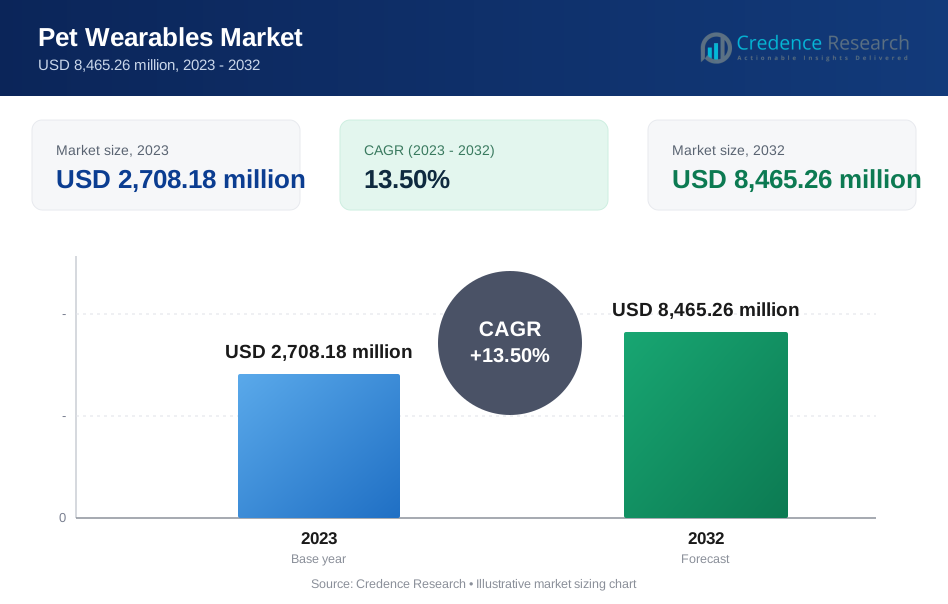
| Pet Wearables Market Size 2023 | USD 2,708.18 Million |
| Pet Wearables Market, CAGR | 13.50% |
| Pet Wearables Market Size 2032 | USD 8,465.26 Million |
Market Overview
The global Pet Wearables Market is projected to grow from USD 2,708.18 million in 2023 to an estimated USD 8,465.26 million by 2032, with a compound annual growth rate (CAGR) of 13.50% from 2024 to 2032. This significant growth trajectory reflects the increasing adoption of pet tracking devices, health monitoring wearables, and smart collars, driven by rising awareness about pet health and safety.
Key drivers of the pet wearables market include the growing demand for real-time monitoring of pets' health and location, which is particularly appealing to tech-savvy pet owners and veterinary professionals. Additionally, trends such as the integration of IoT and AI in wearables allow pet owners to track their pets’ activity levels, monitor vital signs, and set fitness goals. These advancements enhance the relationship between pet owners and their pets, boosting market demand. The growing awareness regarding pet obesity and chronic diseases further supports the adoption of these devices.
Geographically, North America dominates the pet wearables market, attributed to the high rate of pet ownership and technological adoption. However, Asia-Pacific is expected to experience the fastest growth due to the increasing pet adoption rate and rising disposable incomes in countries like China and India. Key players in the market include Whistle Labs, PetPace, Garmin Ltd., and Tractive, who continue to innovate and expand product offerings to meet evolving consumer needs.
Market Drivers
Increasing Pet Ownership and Humanization of Pets
The rising number of pet owners worldwide, coupled with a trend of treating pets as family members, significantly drives demand for pet wearables. This humanization trend encourages pet owners to invest in their pets' health, safety, and general well-being. Wearable devices allow pet owners to monitor vital health metrics, track activity levels, and even prevent pets from wandering into dangerous areas. With a growing interest in preventive healthcare for pets, the demand for devices like smart collars, GPS trackers, and health monitors has surged. According to market studies, households are increasingly prioritizing expenditure on pet care, with pet wearables now considered an essential tool to enhance quality of life for pets. This shift in perspective from pet ownership to pet parenting drives consistent investment in pet technology. For instance, a survey conducted by the American Pet Products Association found that 70% of U.S. households owned a pet in 2023, with 69 million households owning at least one dog.Moreover, as people look to adopt pets during periods of remote work and increased time spent at home, the market for pet care products, including wearables, expands further. These wearables provide pet owners with peace of mind and a sense of connection with their pets even when they are away, thereby increasing adoption rates across regions.
Technological Advancements in IoT and AI-Enabled Pet Wearables
The integration of advanced technologies like the Internet of Things (IoT), artificial intelligence (AI), and big data analytics has revolutionized the pet wearables market. IoT-enabled devices allow pet owners to access real-time data on their pets' location, activity, and health metrics. This capability enhances preventive care by providing early indicators of health issues, potentially reducing the need for emergency veterinary services. AI algorithms, on the other hand, can analyze a pet's behavior patterns, detect anomalies, and generate personalized care recommendations based on age, breed, and activity level. For instance, a leading pet wearable manufacturer reported that their AI-enabled smart collar was able to detect early signs of illness in over 15,000 pets during a 12-month period, potentially saving pet owners millions in veterinary costs.Furthermore, AI-driven predictive analytics enable pet owners to understand behavioral and health trends, contributing to enhanced preventive care and well-being. Manufacturers are leveraging these advanced technologies to develop more user-friendly devices that seamlessly integrate into a pet owner's lifestyle. Innovations like long battery life, waterproof designs, and multi-functional capabilities are increasingly making wearables reliable and efficient, boosting market demand. These technological advancements make pet wearables not only a convenience but also a necessity for pet owners focused on ensuring their pets' safety and health.
Rising Awareness of Pet Health and Wellness
With increasing pet obesity and chronic health conditions, pet owners and veterinarians are prioritizing proactive health monitoring. This awareness is a major driver of demand for health-monitoring wearables that track factors such as heart rate, respiratory rate, temperature, and sleep patterns. As pet owners become more health-conscious on behalf of their pets, the demand for accurate, real-time health data has grown significantly. Pet wearables provide insights into activity levels and potential health risks, supporting preventive care measures.Veterinary professionals and pet care providers are also adopting these devices to enhance clinical care by accessing precise health metrics during consultations. As a result, the market for pet wearables is expected to grow in line with the broader trend of pet wellness and preventive healthcare. Devices that allow remote health monitoring enable veterinarians to offer telemedicine services, particularly beneficial in remote or underserved areas. This aligns with the rising focus on pet wellness, making pet wearables a valuable tool for owners and veterinary practitioners alike. For instance, a study by a veterinary telemedicine platform revealed that remote health monitoring through pet wearables led to a 30% increase in early disease detection and a 25% reduction in emergency veterinary visits among participating pet owners over a 6-month period.
Increasing Adoption of GPS and Location-Based Tracking Devices
One of the critical market drivers for pet wearables is the increasing adoption of GPS-based tracking devices, which help prevent pet loss and theft. GPS tracking devices, often integrated with smartphones, allow pet owners to monitor their pets’ real-time location and set virtual boundaries, triggering alerts if the pet crosses these boundaries. This feature offers peace of mind to pet owners who wish to ensure their pets’ safety, especially in urban areas or near hazardous environments. The growing rate of pet thefts in some regions has also led to a greater reliance on GPS-enabled collars and similar tracking devices.With advancements in GPS technology, pet wearables are becoming increasingly accurate, reliable, and efficient. Some devices now offer multi-pet monitoring features, while others combine GPS tracking with health monitoring, providing a comprehensive solution to pet owners. The versatility of these devices and the security they offer to pet owners have made GPS-based wearables one of the fastest-growing segments in the pet wearables market. Additionally, GPS-enabled wearables facilitate the swift recovery of lost pets, minimizing stress for pet owners and ensuring pet safety.
Market Trends
Rise of Health Monitoring and Activity Tracking Features
A significant trend in the global pet wearables market is the rising demand for health monitoring and activity tracking features. Pet owners increasingly seek devices that provide real-time insights into their pets' health status, activity levels, and even behavioral patterns. Health monitoring wearables, equipped with sensors to measure metrics such as heart rate, respiratory rate, body temperature, and sleep quality, are gaining traction as preventive pet healthcare becomes a priority. For instance, PetPace launched its PetPace 2.0 collar in March 2024, an AI-powered smart dog collar that measures various vital signs and health-related biometrics, including internal temperature, pulse, respiratory rate, heart rate variability, behavior, sleep quality, activity, and posture.This trend aligns with the growing concerns over pet obesity and chronic conditions, as pet owners look to promote active lifestyles for their animals and detect potential health issues early. Moreover, advancements in sensor technology and data analytics have enhanced the accuracy and reliability of these devices, enabling pet owners and veterinarians to make data-driven decisions. The emphasis on health monitoring in pet wearables reflects broader wellness trends, underscoring the shift toward preventive care and fitness tracking within the pet industry.
Increasing Popularity of GPS Tracking and Geofencing Capabilities
The adoption of GPS tracking and geofencing capabilities in pet wearables has become a dominant trend, especially among pet owners who prioritize safety and security. With GPS-enabled devices, owners can track their pets' real-time location, establish virtual boundaries, and receive alerts if the pet wanders beyond these limits. The rise in pet thefts in some regions and the desire to prevent pets from getting lost have made GPS tracking an essential feature in pet wearables. For instance, in June 2022, Furbo launched a 360-degree dog camera that rotates 360 degrees at its base to follow the active pup while offering a wide-angle lens, colored night vision, and auto dog tracking.Many devices now offer additional layers of protection, such as location history and proximity alerts, which add an extra level of reassurance for pet owners. Additionally, these devices often integrate seamlessly with mobile applications, allowing pet owners to monitor and track their pets remotely. Geofencing, in particular, is gaining popularity as it provides a proactive safety measure, helping owners establish designated safe zones for their pets. The demand for GPS-enabled pet wearables highlights the market's focus on enhancing pet safety and security, making these features a standard expectation among consumers seeking comprehensive pet tracking solutions. The importance of such features is underscored by statistics from Stray Animal Statistics, which reported in January 2022 that 5500 stray dogs are put to rest each day, and of these stray dogs, only 17% of dogs in shelters return to their pet parents.
Market Restraints and Challenges
High Cost of Pet Wearables and Limited Affordability
One of the primary restraints in the global pet wearables market is the relatively high cost of devices, which limits their affordability for a broad range of pet owners. Advanced pet wearables with features such as GPS tracking, health monitoring, and activity tracking often come with substantial price tags, placing them out of reach for budget-conscious consumers. The ongoing maintenance costs, such as subscription fees for GPS services or app integrations, add to the financial burden, creating a barrier to widespread adoption. This cost factor is particularly challenging in emerging markets where disposable income may not support luxury expenditures on pet technology. Additionally, since pet wearables are often perceived as supplementary rather than essential, some pet owners may hesitate to invest in them. The high cost associated with purchasing and maintaining pet wearables limits market expansion, especially in price-sensitive regions.
Battery Life and Device Durability Concerns
Battery life and device durability pose significant challenges to the adoption and satisfaction of pet wearables. Many pet wearables, particularly those with GPS tracking and real-time health monitoring, require frequent charging, which can be inconvenient for pet owners and impractical for long-term monitoring. Devices with limited battery life hinder continuous tracking and can reduce the overall reliability of the wearables, especially for pet owners who rely on these devices for safety and health purposes. Moreover, durability is a key concern as pets are often active outdoors, exposing devices to rough handling, water, and varying weather conditions. Wearables that lack water resistance or are prone to damage from rugged use may fail to perform consistently, deterring pet owners from investing in them. The challenges of battery life and durability affect user experience, impacting the adoption rate and overall growth potential of the pet wearables market. Manufacturers need to address these technical limitations to improve consumer confidence and drive market expansion.
Market Segmentation Analysis
By Product
The pet wearables market is segmented by product type, with smart collars leading due to their multi-functional capabilities, including GPS tracking, activity monitoring, and health tracking. Smart cameras are also gaining popularity, especially for pet owners who wish to monitor their pets remotely and interact with them in real-time. Smart harnesses and vests, though niche, provide enhanced functionality for pets requiring more comprehensive tracking and monitoring. These devices, equipped with advanced sensors, serve specialized applications such as tracking working dogs or pets in outdoor environments. Other devices, including wearable pet toys and trackers, continue to capture interest, but at a lower adoption rate compared to core wearable products.
By Application
In terms of application, identification and tracking dominate the market, largely due to the widespread use of GPS-enabled wearables for pet safety and location tracking. Behavior monitoring and control applications are also expanding as pet owners seek insights into their pets’ habits, activity levels, and health. Facilitation, safety, and security applications are witnessing significant growth, driven by increasing demand for wearable solutions that offer peace of mind and proactive health management. As awareness of pet health and wellness grows, these applications are expected to play a critical role in the market’s expansion.
Segments
Based on product
- Smart Collar
- Smart Camera
- Smart Harness
- Smart Vest
- Others
Based on application
- Identification & Tracking
- Behavior Monitoring & Control
- Facilitation
- Safety & Security
- Others
Based on component
- GPS Chips
- RFID Chip
- Sensors
- Processors
- Others
Based on technology
- RFID
- GPS
- Sensors
Based on distribution channel
- Online
- Offline
Based on Region
- North America
- U.S.
- Canada
- Mexico
- Europe
- Germany
- France
- U.K.
- Italy
- Spain
- Rest of Europe
- Asia Pacific
- China
- Japan
- India
- South Korea
- South-east Asia
- Rest of Asia Pacific
- Latin America
- Brazil
- Argentina
- Rest of Latin America
- Middle East & Africa
- GCC Countries
- South Africa
- Rest of the Middle East and Africa
Regional Analysis
North America (38%):
North America holds the largest market share in the global pet wearables market, accounting for approximately 38%. This dominance is attributed to high pet ownership rates, particularly in the United States, where nearly 70% of households own at least one pet. The region’s technological adoption is robust, with consumers showing a strong preference for innovative pet care solutions, including health monitoring and GPS tracking. In addition, North America’s emphasis on preventive pet healthcare and pet wellness drives demand for devices that track activity, location, and health metrics. With numerous companies based in this region, product availability and competitive pricing further contribute to market growth. North America is expected to retain its lead due to continued investments in pet technology and high consumer spending on pet-related products.
Europe (25%):
Europe holds the second-largest share of the pet wearables market, representing approximately 25% of the global market. Key markets within Europe, such as the United Kingdom, Germany, and France, demonstrate strong pet ownership and a growing interest in pet health and safety products. European consumers are particularly focused on pet wellness, driving demand for wearables that provide health insights and behavioral data. The region’s regulatory environment also supports the growth of pet wearables, with standards that encourage product safety and innovation. Additionally, Europe’s well-developed e-commerce channels make it easy for consumers to access a wide variety of pet wearables, facilitating further market expansion.
Key players
- Avid Identification Systems, Inc.
- Barking Labs
- Datamars
- Falana
- Fit Bark Service
- Garmin Ltd.
- GoPro Inc.
- LATSEN
- Link My Pet
- Loc8tor Ltd.
- Mars Incorporated
- PETFON
- Pet Pace
Competitive Analysis
The global pet wearables market is highly competitive, driven by technological innovation, diverse product offerings, and an expanding consumer base. Key players like Garmin Ltd. and GoPro Inc. leverage their established technology expertise to develop advanced, multi-functional wearables that meet the demands of tech-savvy pet owners. Companies such as Avid Identification Systems, Inc. and Datamars focus on identification solutions, building on RFID technology for effective pet tracking and safety. Emerging players like Fit Bark Service and Link My Pet cater to the health-conscious pet owner segment, offering devices with activity tracking and health monitoring features. Meanwhile, companies like Mars Incorporated have adopted a broad portfolio approach, serving both mainstream and niche markets. The competitive landscape is marked by a focus on innovation, with players investing in features such as GPS tracking, health monitoring, and geofencing, while striving to enhance device reliability, battery life, and user experience.
Recent Developments
- In March 2024, PetPace introduced PetPace 2.0, an AI-powered smart dog collar. This new collar provides continuous medical insights to veterinarians, researchers, and pet owners, collecting and transmitting near-real-time health alerts based on analytics from millions of data points.
- In October 2023, Garmin acquired Lumishore, a UK-based company that designs and manufactures premium LED lighting systems for boats. While this acquisition is not directly related to pet wearables, it demonstrates Garmin's continued expansion in various technology sectors, which could potentially influence their pet wearable offerings in the future.
- In January 2024, GoPro announced an agreement to acquire Forcite Helmet Systems, a company that specializes in embedding technology into helmets. Although this acquisition is primarily focused on motorcycle helmets, GoPro's CEO mentioned the potential to expand into other helmet categories over time, which could potentially include pet-related products in the future.
- In November 2024, Mars announced the acquisition of Kellanova (formerly part of Kellogg Company) for $35.9 billion. While this acquisition is primarily focused on the snacking industry, it demonstrates Mars' continued growth and expansion, which could potentially impact their pet care division, including pet wearables.
Market Concentration and Characteristics
The global pet wearables market is moderately concentrated, with a mix of established technology companies and emerging niche players competing to capture a growing consumer base. Key players such as Garmin Ltd., GoPro Inc., and Mars Incorporated hold significant market shares due to their advanced technological capabilities, strong brand recognition, and extensive distribution networks. However, the market also sees continuous entry of smaller, innovative companies like Fit Bark and PETFON, which focus on specific segments like health monitoring or GPS tracking. The market is characterized by rapid technological advancements, particularly in IoT and AI, and a growing emphasis on product differentiation to meet varying consumer demands for safety, health, and real-time monitoring of pets. This competitive environment fosters ongoing product innovation, with companies striving to enhance device functionality, improve battery life, and ensure durability to meet the rising expectations of pet owners worldwide.
Report Coverage
The research report offers an in-depth analysis based on product, application, component, technology, distribution channel and Region. It details leading market players, providing an overview of their business, product offerings, investments, revenue streams, and key applications. Additionally, the report includes insights into the competitive environment, SWOT analysis, current market trends, as well as the primary drivers and constraints. Furthermore, it discusses various factors that have driven market expansion in recent years. The report also explores market dynamics, regulatory scenarios, and technological advancements that are shaping the industry. It assesses the impact of external factors and global economic changes on market growth. Lastly, it provides strategic recommendations for new entrants and established companies to navigate the complexities of the market.
Future Outlook
- The global pet wearables market is expected to witness steady growth, driven by increasing pet ownership and heightened awareness about pet health and safety.
- Ongoing developments in IoT, AI, and sensor technology will enable more accurate and sophisticated tracking, enhancing the functionality and appeal of pet wearables.
- The demand for devices that monitor vital health metrics, such as heart rate and activity levels, is projected to grow, aligning with pet owners’ focus on preventive healthcare.
- GPS-enabled wearables will continue to gain traction as pet owners prioritize real-time location tracking and geofencing for improved safety and security.
- Wearables will likely feature more seamless integration with mobile applications, enabling pet owners to access health data and location tracking on their smartphones with ease.
- Asia-Pacific and Latin America are expected to see rapid growth in pet wearables adoption, supported by rising disposable incomes and evolving attitudes towards pet care.
- Manufacturers will prioritize improvements in battery life and device durability, addressing key consumer concerns to enhance usability and reliability in various environments.
- Online platforms will continue to dominate sales, but an increasing number of offline channels, including specialty pet stores, will also contribute to market accessibility.
- Companies will focus on niche segments, such as working dogs or pets with specific health needs, to offer customized solutions and tap into underserved market segments.
- As eco-consciousness grows, manufacturers are likely to explore sustainable materials and designs for pet wearables, aligning with consumer preferences for environmentally friendly products.
Request a Free Sample
Fill in your details and we'll send you a free sample report.
- Sample data tables & charts
- Research methodology
Need a Custom Version of This Report?
Tailor the scope, geography, or segments to your exact requirements.
- Custom geography or segment scope
- Direct access to our analyst team
Frequently Asked Questions
What is the market size of the global pet wearables market in 2023 and its expected size by 2032?
What factors are driving the growth of the pet wearables market?
How is IoT and AI integration influencing the pet wearables market?
Which region holds the largest market share in the pet wearables industry?
Why is the Asia-Pacific region expected to see fast growth in the pet wearables market?
Who are the key players in the global pet wearables market?
Table of Content
Chapter 1. Report Introduction
- 1.1 Report Description & Purpose
- 1.1.1 Report Title & Market Definition
- 1.1.2 Unique Selling Propositions (USP) & Key Differentiators
- 1.1.3 Value Proposition for Stakeholders
- 1.2 Research Objectives
- 1.2.1 Market Sizing Objectives (Volume & Revenue)
- 1.2.2 Segmentation Objectives
- 1.2.3 Competitive Intelligence Objectives
- 1.2.4 Forecast & Scenario Objectives
- 1.3 Report Scope
- 1.3.1 Pet Wearables Scope – Types & Subtypes Covered
- 1.3.2 Geographic Scope – Regions & Countries Covered
- 1.3.3 Historical Period, Base Year & Forecast Period (2023; forecast to 2032)
- 1.3.4 Inclusions & Exclusions
- 1.4 HS Code & Classification Framework
- 1.5 Currency, Units & Pricing Basis
- 1.6 Target Stakeholders
- 1.7 Limitations & Assumptions
Chapter 2. Executive Summary
- 2.1 Global Pet Wearables Market Snapshot
- 2.1.1 Market Size – Historical (2023) & Forecast (2023-2032) (2023: USD 2,708.18 million → 2032: USD 8,465.26 million)
- 2.1.2 Volume & Revenue – Global Totals
- 2.1.3 Key Market Highlights – Top Five Facts
- 2.2 Pet Wearables Market Segmentation Snapshot
- 2.2.1 Market Split by Region – 2023 vs. 2032
- 2.3 Competitive Snapshot
- 2.3.1 Top 10 Players by Revenue Share – 2023
- 2.3.2 Top 10 Players by Volume Share – 2023
- 2.3.3 Recent Strategic Developments (18-Month Summary)
- 2.4 Key Investment Highlights & Strategic Conclusions
Chapter 3. Pet Wearables Market Dynamics & Industry Analysis
- 3.1 Market Overview & Context
- 3.1.1 Pet Wearables Market Position in the Broader Automotive Value Chain
- 3.1.2 OEM vs. Replacement Market Dynamics
- 3.1.3 Market Maturity & Development Stage by Region
- 3.2 Pet Wearables Market Drivers
- 3.3 Pet Wearables Market Restraints & Challenges
- 3.4 Pet Wearables Market Opportunities
- 3.5 Porter's Five Forces Analysis
- 3.5.1 Threat of New Entrants
- 3.5.2 Bargaining Power of Suppliers
- 3.5.3 Bargaining Power of Buyers
- 3.5.4 Threat of Substitutes
- 3.5.5 Competitive Rivalry – Intensity Assessment
- 3.6 Pet Wearables Value Chain Analysis
- 3.6.1 Upstream – Raw Material/Input Suppliers
- 3.6.1.1 Raw Material/Input 1
- 3.6.1.2 Raw Material/Input 2
- 3.6.1.3 Raw Material/Input 3
- 3.6.2 Midstream – Production/Manufacturing/Service Delivery
- 3.6.2.1 Production/Process Overview
- 3.6.2.2 Key Facility Locations & Capacity by Manufacturer
- 3.6.3 Downstream – Distribution & End Consumer
- 3.6.3.1 Primary Channel – B2B/OEM
- 3.6.3.2 Secondary Channels – Dealer, Retail, Online, Direct
- 3.6.4 Value Chain Profitability Analysis
- 3.6.1 Upstream – Raw Material/Input Suppliers
- 3.7 PESTEL Analysis
- 3.7.1 Political Factors
- 3.7.2 Economic Factors
- 3.7.3 Social Factors
- 3.7.4 Technological Factors
- 3.7.5 Environmental Factors
- 3.7.6 Legal Factors
- 3.8 Pet Wearables Supply Chain Analysis
- 3.8.1 Raw Material/Input Supply Risk Assessment
- 3.8.2 Manufacturing Concentration Risk (Geographic Exposure)
- 3.8.3 Trade Disruption Impact Analysis
- 3.9 Regulatory & Policy Landscape
Note: The regulatory and policy landscape section covers regulations based on their applicability to the market, Pet Wearables category, geography, and scope of the study. Only regulatory frameworks with a material impact on operations, compliance, trade, sustainability, or market access are analyzed in detail.
Chapter 4. Key Investment Pockets & Opportunity Analysis
- 4.1 Pet Wearables Market Attractiveness Analysis
- 4.1.1 By Region – Investment Attractiveness Matrix (Volume × CAGR)
- 4.2 Absolute Revenue Growth Opportunity
- 4.2.1 By Region – Absolute USD Growth Through 2032
- 4.3 Incremental Volume Opportunity
- 4.3.1 By Region – Incremental Volume Through 2032
- 4.3.2 Segment – Incremental Volume
- 4.4 Emerging Submarket Opportunity Deep Dive (Subject to Applicability)
- 4.5 Emerging Market Opportunity Scorecards
- 4.5.1 United States
- 4.5.2 Europe
- 4.5.3 Asia
- 4.5.4 Middle East & Africa
Note: Emerging Market Opportunity Scorecards will be included based on relevance and strategic importance. Regions listed are indicative and may vary depending on data availability and market dynamics.
Chapter 5. Pet Wearables Import-Export Analysis & Trade Flows
- 5.1 Global Trade Overview
- 5.1.1 Global Export Value by Country (2023)
- 5.1.2 Global Export Volume by Country (2023)
- 5.1.3 Global Import Value by Country (2023)
- 5.1.4 Global Import Volume by Country (2023)
- 5.1.5 Net Trade Balance by Country (2023)
- 5.2 Export Analysis – Segment
- 5.2.1 Type 1 (HS Code)
- 5.2.2 Type 2 (HS Code)
- 5.2.3 Type 3 (HS Code)
- 5.2.4 Type 4 (HS Code)
- 5.2.5 Type 5 (HS Code)
- 5.3 Import Analysis – Segment
- 5.3.1 Type 1 (HS Code)
- 5.3.2 Type 2 (HS Code)
- 5.3.3 Type 3 (HS Code)
- 5.3.4 Type 4 (HS Code)
- 5.3.5 Type 5 (HS Code)
- 5.4 Average Unit Trade Prices
- 5.4.1 Average Export Price – Segment & Country
- 5.4.2 Average Import Price – Segment & Source Country
- 5.4.3 Price Trends (2023)
- 5.5 Key Trade Route Analysis
- 5.5.1 Trade Route 1
- 5.5.2 Trade Route 2
- 5.5.3 Trade Route 3
- 5.5.4 Trade Route 4
- 5.5.5 Trade Route 5
- 5.6 Trade Policy Impact Assessment
- 5.6.1 US Anti-Dumping & Section 301 Tariffs
- 5.6.2 EU Customs Union Impact
- 5.6.3 Major Free Trade Agreements
- 5.6.4 USMCA Rules of Origin
Note: Trade policy analysis will be included only where relevant to the Pet Wearables market.
Chapter 6. Competitive Landscape & Company Benchmarking
- 6.1 Pet Wearables Market Concentration & Structure
- 6.1.1 Herfindahl-Hirschman Index (HHI) – vs. 2023
- 6.1.2 Tier 1, Tier 2 & Tier 3 Market Structure
- 6.1.3 Global, Regional & Local Player Dynamics
- 6.2 Pet Wearables Market Share Analysis – 2023
- 6.2.1 Global Revenue Share by Company
- 6.2.2 Global Volume Share by Company
- 6.2.3 Regional Revenue Share
- 6.2.4 Market Share Evolution ( vs. 2023)
- 6.2.5 OEM Segment Share by Company
- 6.2.6 Replacement Segment Share by Company
- 6.3 Production/Delivery Capacity & Facility Analysis
- 6.3.1 Global Installed Capacity
- 6.3.2 Capacity Utilization Rates
- 6.3.3 Production/Output Volume
- 6.3.4 Facility Locations & Capacity Map
- 6.3.5 Planned Capacity Additions
- 6.4 Pet Wearables Competitive Benchmarking Matrix
- 6.4.1 Revenue, Volume, CAGR & Profitability Comparison
- 6.4.2 Channel Revenue Mix
- 6.4.3 Geographic Revenue Exposure
- 6.4.4 R&D Intensity
- 6.4.5 Sustainability Maturity
- 6.5 Strategic Developments in Pet Wearables (Last 24 Months)
- 6.5.1 Mergers, Acquisitions & Divestments
- 6.5.2 New Pet Wearables Launches
- 6.5.3 Facility Expansions
- 6.5.4 Strategic Alliances, Joint Ventures & Partnerships
- 6.5.5 Distribution Expansion & Market Entry
- 6.5.6 Sustainability & ESG Initiatives
- 6.6 Competitive Strategy Mapping
- 6.6.1 Leader, Challenger, Follower & Niche Classification
- 6.6.2 Pricing Strategy Comparison
- 6.6.3 Channel Strategy Matrix
Note: Strategic developments are included based on their materiality and the availability of reliable information.
Chapter 7. Global Pet Wearables Market – By Distribution Channel
- 7.1 Segment Overview
- 7.1.1 Volume & Revenue Split by Channel (2023 & 2032)
- 7.1.2 Channel Mix Evolution (2023-2032)
Chapter 8. Regional Market Analysis – Global Overview
- 8.1 Global Regional Overview
- 8.1.1 Regional Volume Share
- 8.1.2 Regional Revenue Share
- 8.1.3 Regional Volume by Region
- 8.1.4 Regional Revenue by Region
- 8.1.5 Regional Forecast Through 2032
- 8.2 Cross-Regional Segment Analysis
- 8.2.1 By Distribution Channel
- 8.2.2 By Brand/Price Tier
Chapter 9. North America Pet Wearables Market
- 9.1 United States
- 9.2 Canada
- 9.3 Mexico
Chapter 10. Europe Pet Wearables Market
- 10.1 Germany
- 10.2 France
- 10.3 Italy
- 10.4 United Kingdom
- 10.5 Spain
- 10.6 Poland
- 10.7 Russia
- 10.8 Netherlands
- 10.9 Belgium
- 10.10 Sweden
- 10.11 Denmark
- 10.12 Norway
- 10.13 Rest of Europe
Chapter 11. Asia Pacific Pet Wearables Market
- 11.1 China
- 11.2 India
- 11.3 Japan
- 11.4 South Korea
- 11.5 Thailand
- 11.6 Indonesia
- 11.7 Vietnam
- 11.8 Malaysia
- 11.9 Australia
- 11.10 Rest of Asia Pacific
Chapter 12. Latin America Pet Wearables Market
- 12.1 Brazil
- 12.2 Argentina
- 12.3 Colombia
- 12.4 Chile
- 12.5 Rest of Latin America
Chapter 13. Middle East Pet Wearables Market
- 13.1 Saudi Arabia
- 13.2 United Arab Emirates
- 13.3 Turkey
- 13.4 Israel
- 13.5 Iran
- 13.6 Rest of the Middle East
Chapter 14. Africa Pet Wearables Market
- 14.1 South Africa
- 14.2 Egypt
- 14.3 Nigeria
- 14.4 Morocco
- 14.5 Rest of Africa
Chapter 15. Pet Wearables Company Profiles
- 15.1 [Company 01]
- 15.1.1 Company Overview
- 15.1.2 Key Management Personnel
- 15.1.3 Products & Services Portfolio
- 15.1.4 Financial Performance
- 15.1.5 Key Market Focus & Geographic Presence
- 15.1.6 Recent Developments & Strategic Initiatives
Note: The company profile list is preliminary and may change based on research findings, market developments, data availability, and client requirements.
Chapter 16. Appendices
- Appendix A – List of Abbreviations & Acronyms
- Appendix B – Industry Classification Code Reference – Full Series
- Appendix C – Production & Capacity Data Tables
- Appendix D – End-Use & Demand Base Tables
- Appendix E – Consumption & Replacement Rate Assumptions
- Appendix F – ASP Reference Tables
- Appendix G – Manufacturing & Facility Database
- Appendix H – Import-Export Data Tables
- Appendix I – Regulatory Summary Tables
- Appendix J – Primary Research Participant List (Anonymized)
- Appendix K – Primary Research Questionnaire Framework
- Appendix L – Data Sources & Bibliography
- Appendix M – Market Size Divergence & Source Comparison
Chapter 17. Research Methodology
- 17.1 Research Framework & Philosophy
- 17.2 Secondary Research – Sources, Hierarchy & Data Extraction
- 17.3 Data Modeling – Bottom-Up & Top-Down Market Sizing
- 17.4 Primary Research – Stakeholder Framework, LOI & Sample Sizes
- 17.5 Forecast Methodology – Regression, Scenario & Sensitivity Analysis
- 17.6 Quality Control – Four-Layer Validation Framework
- 17.7 Limitations & Standard Assumptions
- 17.8 Disclaimer
