
Market Overview
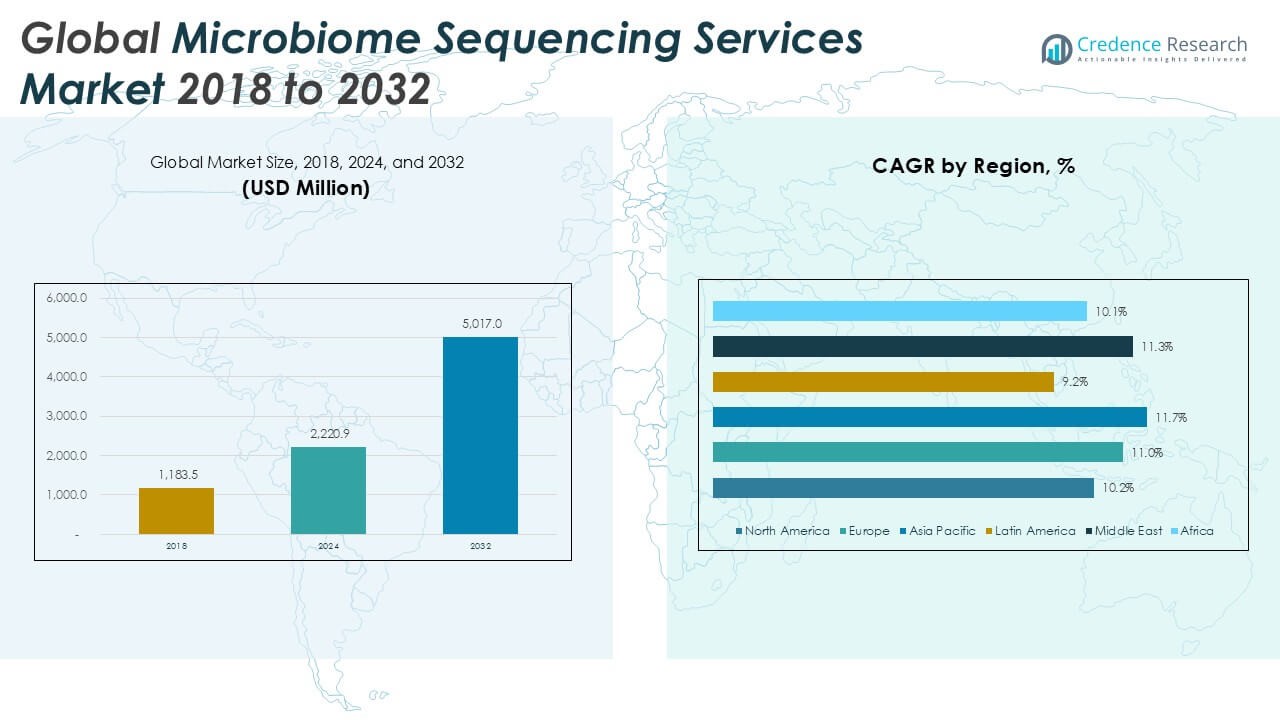
The Global Microbiome Sequencing Services Market is projected to grow from USD 2,220.9 million in 2024 to an estimated USD 5,017.0 million by 2032, with a compound annual growth rate (CAGR) of 10.76% from 2025 to 2032.
| REPORT ATTRIBUTE | DETAILS |
|---|---|
| Historical Period | 2020-2023 |
| Base Year | 2024 |
| Forecast Period | 2025-2032 |
| Microbiome Sequencing Services Market Size 2024 | USD 2,220.9 Million |
| Microbiome Sequencing Services Market, CAGR | 10.76% |
| Microbiome Sequencing Services Market Size 2032 | USD 5,017.0 Million |
Growing emphasis on disease prevention, early diagnostics, and precision medicine is fueling the demand for advanced sequencing tools. Key trends include integration of artificial intelligence and machine learning in sequencing data interpretation and growing applications of microbiome analysis in oncology, neurology, and gastrointestinal disorders. Additionally, increasing collaborations between biotech firms and academic institutions are supporting innovation and expanding the global service portfolio. For instance, companies are offering customizable sequencing platforms and cloud-based bioinformatics services to streamline data access and analysis, which enhances service adoption across various research domains.
Geographically, North America leads the market owing to well-established healthcare infrastructure, high research expenditure, and favorable regulatory support for genomic studies. Europe follows due to strong academic networks and government initiatives. Meanwhile, Asia-Pacific is expected to witness the fastest growth, driven by increasing investments in biotechnology and rising awareness about personalized medicine. Key players in the market include Illumina, Inc., Thermo Fisher Scientific, Inc., Zymo Research Corporation, Diversigen Inc., and BaseClear B.V., among others.
Market Insights
- The Global Microbiome Sequencing Services Market is projected to grow from USD 2,220.9 million in 2024 to USD 5,017.0 million by 2032, at a CAGR of 10.76% from 2025 to 2032.
- Increasing focus on personalized medicine and microbiome-based therapeutics is a major factor accelerating market growth.
- Advancements in next-generation sequencing (NGS) technologies and AI-based data analytics are enhancing service efficiency and accuracy.
- High costs associated with sequencing infrastructure and lack of standardization in protocols are key market restraints.
- North America holds the largest market share due to strong research infrastructure and high genomic funding.
- Asia-Pacific is expected to witness the fastest growth, supported by rising biotech investments and expanding healthcare access.
- Leading companies such as Illumina, Thermo Fisher Scientific, and Zymo Research continue to drive innovation and expand global service reach.
 Market Drivers
Rising Prevalence of Chronic Diseases and Demand for Precision Medicine Boost Market Growth
The Global Microbiome Sequencing Services Market is witnessing strong growth due to the rising burden of chronic diseases such as cancer, obesity, and diabetes. Researchers and clinicians are increasingly relying on microbiome profiling to identify disease biomarkers and understand microbial influences on disease progression. The demand for personalized and precision medicine is pushing the adoption of sequencing services that help tailor therapeutic strategies based on individual microbiome compositions. Governments and health organizations are supporting precision healthcare programs, driving research into microbial diagnostics. Microbiome data allows physicians to predict patient responses and select more effective treatments. This shift toward individualized medicine continues to generate demand for high-quality microbiome sequencing.
- For instance, the National Institutes of Health’s Human Microbiome Project analyzed over 11,000 biological samples from more than 240 healthy volunteers, generating more than 3,500 gigabases of sequence data to support precision medicine and chronic disease research in a single multi-year study.
Technological Advancements in Next-Generation Sequencing Accelerate Market Expansion
Rapid innovations in next-generation sequencing (NGS) platforms are expanding the capabilities and efficiency of microbiome analysis. These advancements reduce turnaround time, improve data accuracy, and increase affordability, making sequencing services accessible to more research and clinical settings. The Global Microbiome Sequencing Services Market benefits from improvements in sequencing throughput and read depth, which support in-depth microbial profiling. Companies are launching novel solutions that integrate sequencing hardware with advanced software for real-time analysis. High-throughput sequencing enables large-scale population studies and supports the development of microbiome-based therapies. The market gains from continuous R\&D efforts that enhance resolution and lower sequencing costs.
- For instance, Illumina reported that its NovaSeq 6000 platform was used to sequence more than 1,000,000 microbiome samples globally in 2024, enabling high-throughput analysis for clinical trials, population health studies, and pharmaceutical research.
Growing Investments in Microbiome Research by Public and Private Sectors Support Market Demand
Governments and private investors are increasing funding for microbiome-related research across healthcare, agriculture, and environmental science. This funding enables institutions to conduct more in-depth studies and expand their use of microbiome sequencing services. The Global Microbiome Sequencing Services Market benefits from strategic partnerships between biotech firms, universities, and healthcare providers. These collaborations help develop innovative solutions and bring advanced sequencing services to new applications. Increased grants for microbiome studies allow more organizations to explore microbial roles in health and disease. The growing recognition of the microbiome’s importance supports long-term market expansion.
Expanding Applications Across Multiple Industries Enhance Market Scope
Microbiome sequencing is no longer limited to human health but is now applied across food safety, agriculture, and cosmetics. Companies use microbial profiling to enhance soil fertility, improve livestock health, and ensure food quality. In the cosmetics industry, brands are exploring skin microbiome data to develop personalized skincare products. The Global Microbiome Sequencing Services Market grows by serving the unique needs of diverse industries with specialized analysis services. Broader adoption across sectors increases the customer base and creates new revenue streams. It supports market diversification and reinforces the value of sequencing services in both clinical and commercial settings.
Market Trends
Wider Integration of Microbiome Analysis in Clinical Diagnostics and Therapeutics
The Global Microbiome Sequencing Services Market is experiencing increased adoption in clinical diagnostics and therapeutic development. Researchers use microbiome profiling to identify disease biomarkers and track disease progression, especially in gastrointestinal, metabolic, and autoimmune conditions. Hospitals and diagnostic laboratories are integrating sequencing services to develop personalized treatment plans. Pharmaceutical companies are investing in microbiome research to enhance drug efficacy and reduce adverse reactions. The shift toward precision medicine is pushing healthcare systems to incorporate microbial data into clinical workflows. It supports the development of microbiome-based therapeutics and companion diagnostics.
- For instance, in 2024, over 420 hospitals and diagnostic laboratories in the United States implemented clinical microbiome sequencing protocols, resulting in more than 210,000 patient samples analyzed for personalized diagnostics and therapeutic guidance, as reported in industry surveys and healthcare authority registries.
Advancements in Next-Generation Sequencing (NGS) Enhance Efficiency and Accuracy
Next-generation sequencing technologies have significantly improved the speed, cost-efficiency, and accuracy of microbiome analysis. The Global Microbiome Sequencing Services Market benefits from new platforms that offer higher throughput and better resolution for taxonomic and functional profiling. Automation and AI integration into sequencing workflows help streamline data interpretation. Laboratories can now process large sample volumes without compromising data quality. Cloud-based analytics platforms make microbiome data more accessible for research and clinical applications. It allows researchers to generate deeper insights from complex microbial communities.
- For instance, in 2024, a leading NGS platform provider reported processing over 2,600,000 microbiome samples globally using automated sequencing and AI-powered analytics, enabling laboratories to deliver results for large-scale clinical and research projects, according to company performance reports and industry data.
Growing Interest from Non-Medical Sectors Diversifies Market Opportunities
Food, agriculture, and cosmetic industries are increasingly investing in microbiome sequencing to support product development and safety validation. The Global Microbiome Sequencing Services Market supports soil health monitoring, livestock microbiota analysis, and personalized skincare solutions. Companies in the food industry use microbiome data to improve product shelf life and safety. In agriculture, sequencing services guide crop improvement and soil restoration strategies. The cosmetics sector leverages skin microbiome analysis for personalized formulations. It enables broader commercialization of microbiome applications beyond healthcare.
Rising Public and Private Funding Fuels Research and Commercialization
Government bodies and private investors are allocating significant capital to microbiome research and development. The Global Microbiome Sequencing Services Market benefits from increased grants, venture capital, and collaborative research initiatives. Funding supports infrastructure development, advanced tool creation, and large-scale population studies. Partnerships between academic institutions, startups, and established biotechnology firms continue to expand the market’s innovation pipeline. Regulatory bodies are also developing frameworks to support the clinical use of microbiome data. It strengthens the foundation for commercial growth and accelerates global adoption.
Market Challenges
High Cost of Sequencing and Data Analysis Limits Broader Adoption Across Emerging Markets
The Global Microbiome Sequencing Services Market faces challenges due to the high cost associated with next-generation sequencing platforms and advanced bioinformatics tools. Many academic institutions and clinical labs in emerging economies struggle to afford the infrastructure and expertise required for high-throughput sequencing. The expense of sample preparation, data storage, and interpretation tools adds to the total cost. Limited funding and low awareness further hinder market expansion in low- and middle-income regions. Small-scale service providers also face pricing pressure from large players with established resources. It creates an uneven playing field, slowing the adoption rate outside North America and Europe.
- For instance, a recent industry survey found that the total cost for a single human gut microbiome sequencing project-including DNA extraction, library preparation, sequencing, and bioinformatics analysis-can exceed 2,000 units per sample at leading service providers, while initial investment in a high-throughput sequencer such as the Illumina NovaSeq platform can require over 800,000 units, making such technology out of reach for many smaller labs and institutions.
Lack of Standardization and Regulatory Clarity Restrains Clinical Integration
The absence of standardized protocols for sample collection, sequencing methods, and data interpretation poses a major challenge for the Global Microbiome Sequencing Services Market. Laboratories often use different reference databases and sequencing techniques, which complicates result comparison and reproducibility. Regulatory frameworks governing microbiome data in diagnostics and therapeutics remain underdeveloped in many regions. It delays clinical validation and limits physician trust in microbiome-driven solutions. Data privacy and ethical concerns surrounding personal microbiome information also pose compliance challenges. This uncertainty affects investor confidence and slows product approvals for microbiome-based innovations.
Market Opportunities
Expansion of Personalized Medicine and Therapeutics Offers Significant Growth Potential
The Global Microbiome Sequencing Services Market stands to benefit from the growing demand for personalized medicine and microbiome-based therapeutics. It enables healthcare providers to tailor treatments based on individual microbial profiles, improving patient outcomes. Pharmaceutical companies increasingly invest in microbiome research to develop targeted drugs and probiotics. The rising prevalence of chronic diseases drives interest in microbiome diagnostics and therapeutics. Collaborative efforts between research institutions and commercial entities create new avenues for innovation. Increasing awareness about the microbiome’s role in health encourages adoption of sequencing services in clinical settings.
Emerging Applications in Agriculture, Food Safety, and Cosmetics Open New Revenue Streams
Expanding microbiome sequencing applications beyond healthcare presents lucrative opportunities for market growth. The Global Microbiome Sequencing Services Market benefits from rising demand in agriculture for soil health monitoring and crop yield optimization. Food industry players use microbial profiling to ensure product safety and enhance fermentation processes. Cosmetic companies leverage skin microbiome analysis to develop personalized skincare solutions. These diversified applications increase the overall addressable market and encourage cross-sector collaborations. It allows service providers to offer customized sequencing solutions tailored to unique industry needs, driving long-term growth.
Market Segmentation Analysis
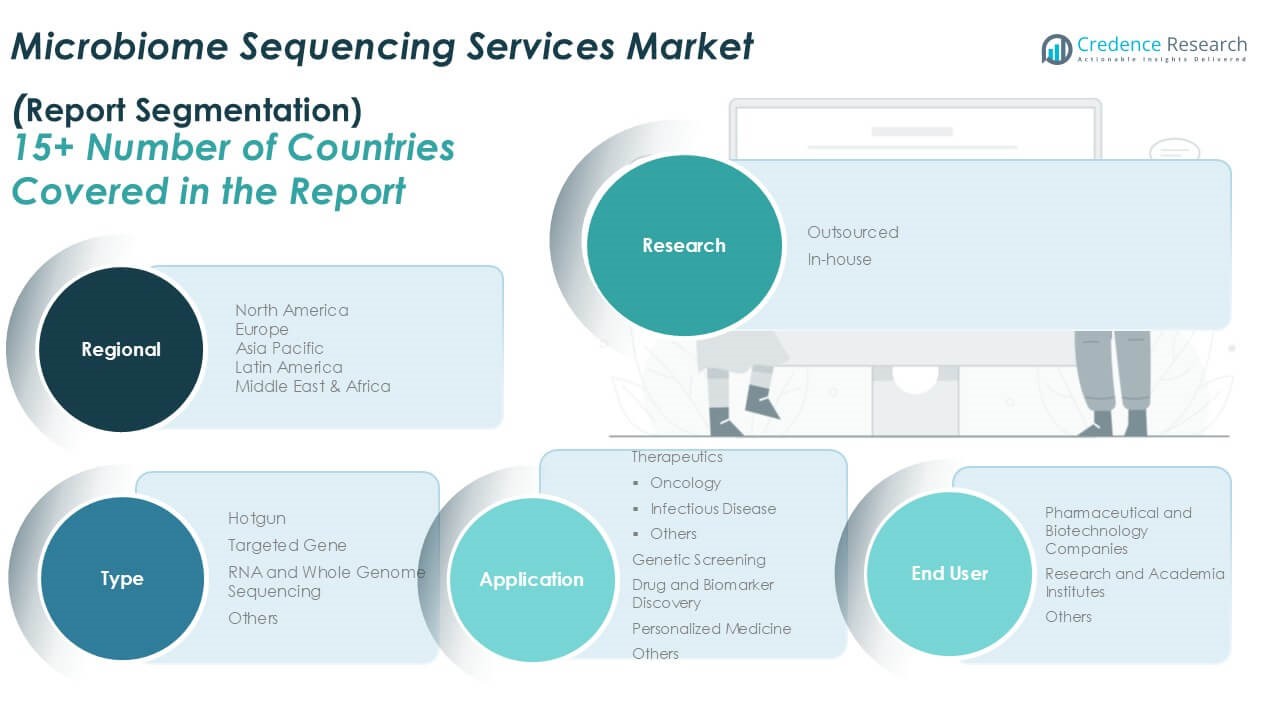
By Research Segment
The Global Microbiome Sequencing Services Market is segmented into plasma-derived and recombinant coagulation, outsourced, and in-house research services. Outsourced research holds a significant market share due to cost-efficiency, scalability, and access to specialized expertise. Pharmaceutical companies and academic institutions increasingly rely on contract research organizations to manage complex sequencing tasks. In-house research is gaining momentum among large biotechnology firms that prefer greater control over data security and intellectual property. Plasma-derived and recombinant approaches remain essential in studies focusing on therapeutic development. The flexibility of outsourcing, combined with advances in sequencing technologies, supports market growth across all research segments.
- For instance, a 2024 industry report found that over 80% of intracranial pressure monitoring procedures globally still utilize invasive techniques, with more than 400,000 EVD and microtransducer devices deployed annually in hospitals and neurosurgical centers worldwide
By Type
The market is categorized by sequencing type into shotgun, targeted gene, RNA and whole genome sequencing, and others. Shotgun sequencing leads the segment due to its comprehensive profiling of microbial communities without prior knowledge of specific genes. Targeted gene sequencing remains widely used for its cost-effectiveness and accuracy in studying known genes like 16S rRNA. RNA sequencing is gaining traction for its ability to analyze gene expression in microbiomes, while whole genome sequencing provides complete microbial characterization. The variety of methods allows researchers to choose based on study complexity and budget, making this segment highly dynamic.
- For instance, clinical data show that in 2023, more than 2.8 million TBI patients in the United States alone underwent ICP monitoring, highlighting the critical role of these devices in acute neurocritical care settings
By Application
Applications include therapeutics, genetic screening, drug and biomarker discovery, personalized medicine, and others. Therapeutics dominate the market, with oncology and infectious disease research driving demand. Genetic screening supports early diagnosis and risk assessment, while drug and biomarker discovery benefits from microbiome insights into disease mechanisms. Personalized medicine applications are expanding as clinicians integrate microbiome data into patient care strategies. The segment’s diversity reflects the growing use of microbiome sequencing across multiple medical disciplines.
By End User Industry
End users include pharmaceutical and biotechnology companies, research and academic institutes, and others. Pharmaceutical and biotech firms hold the largest share, driven by drug development and therapeutic innovation. Research institutions contribute significantly through academic studies and clinical trials. It helps push the boundaries of microbiome science and generate foundational knowledge. Other end users include food, agriculture, and cosmetic companies exploring microbiome applications in their respective domains. The diverse customer base supports long-term market stability.
Segments
Based on Research
- Plasma Derived and Recombinant Coagulation
- Outsourced
- In-house
Based on Type
- Hotgun
- Targeted Gene
- RNA and Whole Genome Sequencing
- Others
Based on Application
- Therapeutics
- Oncology
- Infectious Disease
- Others
- Genetic Screening
- Drug and Biomarker Discovery
- Personalized Medicine
- Others
Based on End User Industry
- Pharmaceutical and Biotechnology Companies
- Research and Academia Institutes
- Others
Based on Region
- North America
- U.S.
- Canada
- Mexico
- Europe
- UK
- France
- Germany
- Italy
- Spain
- Russia
- Belgium
- Netherlands
- Austria
- Sweden
- Poland
- Denmark
- Switzerland
- Rest of Europe
- Asia Pacific
- China
- Japan
- South Korea
- India
- Australia
- Thailand
- Indonesia
- Vietnam
- Malaysia
- Philippines
- Taiwan
- Rest of Asia Pacific
- Latin America
- Brazil
- Argentina
- Peru
- Chile
- Colombia
- Rest of Latin America
- Middle East
- UAE
- KSA
- Israel
- Turkey
- Iran
- Rest of Middle East
- Africa
- Egypt
- Nigeria
- Algeria
- Morocco
- Rest of Africa
Regional Analysis
North America Microbiome Sequencing Services Market
North America held the largest share in the Global Microbiome Sequencing Services Market, accounting for 31.7% of the total revenue in 2024. The market in this region was valued at USD 704.59 million in 2024 and is projected to reach USD 1,533.20 million by 2032, growing at a CAGR of 10.2%. The region benefits from robust healthcare infrastructure, high research funding, and a strong presence of key biotechnology firms. The U.S. leads the regional growth with wide adoption of next-generation sequencing (NGS) technologies in clinical diagnostics and therapeutics. Favorable regulatory support and government-backed microbiome research initiatives continue to strengthen market dynamics. It remains a key hub for microbiome-based drug development and academic collaborations.
Europe Microbiome Sequencing Services Market
Europe represented approximately 26.5% of the global market share in 2024, reaching a valuation of USD 588.34 million, and is expected to grow to USD 1,354.59 million by 2032 at a CAGR of 11.0%. The region shows strong research activity, especially in Germany, the UK, and France, supported by government grants and academic networks. Pharmaceutical firms across Europe are increasingly incorporating microbiome sequencing into early-stage R\&D for personalized therapies. The market also benefits from stringent food and healthcare safety regulations, which drive demand for microbial profiling. It is positioning itself as a center for sustainable biotech innovation through public-private partnerships.
Asia Pacific Microbiome Sequencing Services Market
Asia Pacific accounted for 24.4% of the global revenue in 2024, with a market size of USD 540.62 million, projected to reach USD 1,304.42 million by 2032 at the highest CAGR of 11.7%. Countries such as China, Japan, South Korea, and India are leading regional growth with strong government investment in genomics and biotechnology infrastructure. Growing awareness of personalized healthcare and expanding clinical trials are driving service adoption. Academic institutions and research labs in the region increasingly collaborate with global biotech firms. It offers significant cost advantages for outsourcing sequencing projects, supporting expansion across diagnostics and agriculture.
Latin America Microbiome Sequencing Services Market
The Latin American market was valued at USD 214.09 million in 2024 and is forecasted to reach USD 431.46 million by 2032, registering a CAGR of 9.2%. It represented around 9.6% of the global market share in 2024. Brazil and Mexico are the leading contributors, driven by increased investments in public health research and adoption of advanced sequencing technologies in university-led projects. Government efforts to improve healthcare infrastructure support the growth of precision medicine initiatives. Despite challenges in technical expertise and funding, the region continues to expand through academic-industry collaborations. It offers untapped potential in areas like infectious disease diagnostics and agricultural microbiome studies.
Middle East Microbiome Sequencing Services Market
The Middle East accounted for 4.8% of the global market in 2024, with a valuation of USD 106.86 million, and is projected to grow to USD 250.85 million by 2032 at a CAGR of 11.3%. The region shows increasing interest in genomics-based healthcare solutions, supported by national health strategies in countries like the UAE and Saudi Arabia. Investment in digital health and precision medicine initiatives is gaining momentum. Hospitals and research centers are adopting sequencing platforms to support personalized diagnostics. It benefits from strategic partnerships with global biotech companies and ongoing infrastructure modernization efforts.
Africa Microbiome Sequencing Services Market
Africa contributed 3.0% to the global market share in 2024, with a market value of USD 66.37 million, expected to reach USD 142.48 million by 2032, growing at a CAGR of 10.1%. South Africa leads in regional adoption due to its research-focused institutions and public health programs. Limited funding and infrastructure pose challenges, but international collaborations and grants support microbiome research. Demand is rising for sequencing services in areas such as infectious diseases and nutrition science. It is slowly building a foundation for clinical application through pilot projects and educational initiatives. The region remains underpenetrated but holds long-term growth potential.
Key players
- Baseclear B.V.
- Clinical-Microbiomics A/S
- Diversigen, Inc.
- Merieux Nutrisciences Corporation
- Metabiomics Corp.
- Microbiome Therapeutics, LLC
- Microbiome Insights Inc.
- Molzym GmbH & Co. Kg
- Shanghai Realbio Technology Co., Ltd
- Resphera Biosciences, LLC
Competitive Analysis
The Global Microbiome Sequencing Services Market features a mix of established biotechnology companies and emerging players focused on niche microbiome applications. Companies compete based on service range, technological capabilities, data analytics expertise, and customized research offerings. Leading firms such as Baseclear B.V., Diversigen, and Microbiome Insights Inc. invest in expanding their sequencing platforms and bioinformatics tools. Strategic partnerships with pharmaceutical companies and research institutions strengthen market presence. It remains highly dynamic, with players innovating to improve sequencing accuracy and turnaround times. Emerging companies focus on specialized applications such as clinical diagnostics, environmental microbiome studies, and skin microbiome analysis to gain market share. Competitive differentiation depends on quality, scalability, and ability to deliver end-to-end sequencing solutions.
Recent Developments
- In April 2024, Clinical‑Microbiomics A/S launched advanced long‑read 16S, ITS, 18S, isolate, and metagenomic services under its CHAMP platform to enhance microbial community profiling resolution
- In March 2024, BaseClear B.V. hosted an expert workshop focusing on microbiome analysis and microbial strain assessment. The workshop aimed to support regulatory-driven innovation by bringing together academics, industry experts, and regulators to discuss the assessment of microbiome-modulating products for safety. BaseClear is a company specializing in microbial genomics and offers services like metagenomics, microbiome analysis, and microbial strain characterization for regulatory approval. The workshop highlighted the increasing interest in microbiome-targeting products and the need for robust methods to assess their safety.
Market Concentration and Characteristics
The Global Microbiome Sequencing Services Market is moderately fragmented, with a mix of established players and specialized service providers competing on innovation, scalability, and customization. It is characterized by rapid technological advancement, high research intensity, and growing demand for precision diagnostics. Companies focus on expanding service portfolios, integrating AI-driven analytics, and forming strategic collaborations with academic and clinical institutions. Barriers to entry remain moderate due to the need for advanced infrastructure and regulatory compliance. The market shows high potential for niche applications in therapeutics, agriculture, and consumer health. It continues to evolve as firms invest in personalized sequencing solutions and global expansion strategies.
Report Coverage
The research report offers an in-depth analysis based on Research, Type, Application, End User Industry and Region. It details leading market players, providing an overview of their business, product offerings, investments, revenue streams, and key applications. Additionally, the report includes insights into the competitive environment, SWOT analysis, current market trends, as well as the primary drivers and constraints. Furthermore, it discusses various factors that have driven market expansion in recent years. The report also explores market dynamics, regulatory scenarios, and technological advancements that are shaping the industry. It assesses the impact of external factors and global economic changes on market growth. Lastly, it provides strategic recommendations for new entrants and established companies to navigate the complexities of the market.
Future Outlook
- The growing need for individualized treatment strategies will increase the demand for microbiome sequencing in clinical diagnostics and therapeutics.
- Advanced analytics will streamline microbial data processing, enabling faster, more accurate insights for clinical and research applications.
- The market will benefit from increased use in agriculture, food safety, and cosmetics, opening new commercial opportunities beyond the healthcare sector.
- Governments in Asia Pacific, Middle East, and Africa are investing in genomics infrastructure, which will support broader adoption of sequencing services.
- Partnerships between biotech companies, academic institutions, and pharma firms will promote service expansion and technology development.
- Technological advancements will lower the cost of sequencing, making services more accessible to smaller labs and institutions.
- Clearer regulatory guidelines will facilitate the use of microbiome sequencing in routine diagnostics and personalized care.
- Cloud technologies will enhance storage, access, and analysis of sequencing data, supporting real-time collaboration and scalability.
- Drug developers will continue investing in microbiome-targeted therapies, increasing the demand for high-throughput and reliable sequencing services.
- Growing public understanding of gut health and its connection to overall wellness will drive consumer interest in microbiome profiling.

Request a Free Sample
Fill in your details and we'll send you a free sample report.
- Sample data tables & charts
- Research methodology
Market Dynamics
Rising Prevalence of Chronic Diseases and Precision Medicine
The increasing burden of chronic diseases such as cancer, obesity, and diabetes is driving demand for microbiome sequencing to identify disease biomarkers and tailor individualized therapies, supporting the shift toward precision medicine.
Technological Advancements in Next-Generation Sequencing
Rapid improvements in NGS platforms and integration of AI-based analytics are making microbiome sequencing faster, more accurate, and cost-effective, expanding its accessibility for both research and clinical applications.
Growing Investments and Collaborations in Microbiome Research
Public and private sector funding, along with strategic partnerships between biotech firms, academic institutions, and healthcare providers, are enabling more in-depth studies and accelerating innovation in microbiome sequencing services.
Expanding Applications Across Industries
Microbiome sequencing is increasingly used beyond healthcare, including in agriculture, food safety, and cosmetics, which broadens the market scope and creates new revenue streams for service providers.
Need a Custom Version of This Report?
Tailor the scope, geography, or segments to your exact requirements.
- Custom geography or segment scope
- Direct access to our analyst team
Frequently Asked Questions
What is the current and projected market size of the Global Microbiome Sequencing Services Market?
What factors are driving the growth of the microbiome sequencing services market?
Which regions are leading in the adoption of microbiome sequencing services?
What are the main applications of microbiome sequencing services?
Who are the key players in the Global Microbiome Sequencing Services Market?
Table of Content
Chapter 1 Market Segmentation
- 1.1 Segmentation Framework
- 1.1.1 Product and Service Classification
- 1.1.2 Application and End-Use Classification
- 1.1.3 Technology and Solution Classification
- 1.1.4 Customer and Distribution Channel Classification
- 1.1.5 Geographic Segmentation
- 1.1.6 Market Segment Definitions and Boundaries
- 1.2 By Type
- 1.2.1 Shotgun Sequencing
- 1.2.2 Targeted Gene Sequencing
- 1.2.3 RNA and Whole Genome Sequencing
- 1.2.4 Others
- 1.3 By Research
- 1.3.1 Plasma Derived and Recombinant Coagulation
- 1.3.2 Outsourced
- 1.3.3 In-house
- 1.4 By Application
- 1.4.1 Therapeutics
- 1.4.2 Oncology
- 1.4.3 Infectious Disease
- 1.4.4 Genetic Screening
- 1.4.5 Drug and Biomarker Discovery
- 1.4.6 Personalized Medicine
- 1.4.7 Others
- 1.5 By End User Industry
- 1.5.1 Pharmaceutical and Biotechnology Companies
- 1.5.2 Research and Academia Institutes
- 1.5.3 Others
Chapter 2 Introduction
- 2.1 Report Objectives and Scope
- 2.2 Product Definition and Industry Terminology
- 2.3 Market Inclusions and Exclusions
- 2.4 Research Process
- 2.4.1 Primary Research and Expert Interviews
- 2.4.2 Secondary Research and Source Review
- 2.4.3 Top-Down and Bottom-Up Estimation
- 2.4.4 Data Triangulation and Verification
- 2.5 Market Size Measurement Basis
- 2.5.1 2024: USD 2,220.9 million → 2032: USD 5,017.0 million
- 2.6 Historical and Forecast Reference Periods
- 2.6.1 Base Year: 2024
- 2.6.2 Forecast Period: 2024-2032
- 2.7 Research Assumptions and Limitations
Chapter 3 Executive Summary
- 3.1 Market Snapshot and Key Findings
- 3.2 Base-Year Market Size, 2024
- 3.3 Forecast Market Size, 2032
- 3.4 Revenue and Volume Growth Outlook
- 3.5 Key Demand and Supply Indicators
- 3.6 Leading Market Segments
- 3.7 Fastest-Growing Market Opportunities
- 3.8 Regional Performance Highlights
- 3.9 Technology and Industry Transformation
- 3.10 Competitive Landscape Summary
- 3.11 Analyst View and Strategic Implications
Chapter 4 Global Microbiome Sequencing Services Market Trends and Developments
- 4.1 Historical Industry Development
- 4.2 Recent Market Trends and Developments
- 4.3 Demand and Customer Behavior Trends
- 4.4 Technology and Product Innovation
- 4.5 Artificial Intelligence, Automation and Digitalization
- 4.6 Local Manufacturing and Supply Chain Realignment
- 4.7 Industry Partnerships, Mergers and Acquisitions
- 4.8 Sustainability and Circular Economy Developments
- 4.9 Government and Private Sector Investment Trends
- 4.10 Emerging Business Models and Commercialization
- 4.11 Industry Developments and Announcements
Chapter 5 Global Microbiome Sequencing Services Market Supply and Demand Analysis
- 5.1 Demand Trend and Consumption Analysis
- 5.2 Demand Forecast, 2024-2032
- 5.3 Supply Chain Structure and Procurement Trends
- 5.4 Supply-Demand Gap and Bottlenecks
- 5.5 Import Dependence and Sourcing Structure
- 5.6 Regional Supply and Demand Concentration
Chapter 6 Global Microbiome Sequencing Services Market Pricing Analysis
- 6.1 Pricing Structure and Measurement
- 6.2 Historical Pricing Trends
- 6.3 Pricing Outlook, 2024-2032
- 6.4 Pricing by Product and Market Segment
- 6.5 Geographic Pricing Differences
- 6.6 Key Input, Energy, Labor and Logistics Costs
- 6.7 Contract Pricing and Purchasing Models
- 6.8 Pricing Sensitivity and Competitive Positioning
- 6.9 Price, Margin and Profitability Implications
Chapter 7 Global Microbiome Sequencing Services Market Dynamics
- 7.1 Market Growth Drivers
- 7.1.1 Demand-Side Drivers
- 7.1.2 Technology and Innovation Drivers
- 7.1.3 Infrastructure and Investment Drivers
- 7.1.4 Regulatory and Policy Drivers
- 7.2 Market Restraints
- 7.2.1 Cost and Affordability Constraints
- 7.2.2 Technology and Adoption Barriers
- 7.2.3 Supply Chain and Operational Constraints
- 7.3 Market Challenges
- 7.3.1 Competitive Pressure and Margin Erosion
- 7.3.2 Skills, Infrastructure and Implementation Gaps
- 7.4 Emerging Market Opportunities
- 7.5 Market Dynamics Impact and Time-Horizon Assessment
Chapter 8 Global Microbiome Sequencing Services Value Chain Analysis
- 8.1 Industry Value Chain Overview
- 8.2 Upstream Suppliers and Critical Inputs
- 8.3 Technology and Component Providers
- 8.4 Manufacturing or Service Delivery
- 8.5 Distribution, Channel Partners and Integrators
- 8.6 Downstream Applications and End Users
- 8.7 Value Addition and Profit Pools
- 8.8 Vertical Integration and Outsourcing
- 8.9 Supplier Concentration and Risk
- 8.10 Supply Chain Localization and Resilience
Chapter 9 Global Microbiome Sequencing Services Market Regulations and Policies
- 9.1 Relevant Laws, Standards and Compliance Frameworks
- 9.2 Product, Service, Safety and Quality Requirements
- 9.3 Government Policies, Incentives and Subsidies
- 9.4 Imports, Exports and Trade Barriers
- 9.5 Public Procurement and Local Content Requirements
- 9.6 Data Protection, AI and Cybersecurity Compliance
- 9.7 Upcoming Policy Changes and Market Implications
Chapter 10 Global Microbiome Sequencing Services Market Hotspots and Opportunities
- 10.1 Market Opportunity Mapping and Growth Hotspots
- 10.2 High-Growth Applications and Customer Groups
- 10.3 Underserved Markets and White-Space Opportunities
- 10.4 Emerging Technology and Product Opportunities
- 10.5 New Capacity and Investment Hotspots
- 10.6 Market Entry and Expansion Opportunities
- 10.7 Distribution and Partnership Opportunities
- 10.8 Near-Term and Long-Term Commercial Potential
- 10.9 Opportunity Attractiveness and Execution Risks
Chapter 11 Global Microbiome Sequencing Services Market Outlook, 2024-2032
- 11.1 Market Size and Analysis
- 11.1.1 Revenue (Market Measurement: 2024: USD 2,220.9 million → 2032: USD 5,017.0 million)
- 11.1.2 Historical Market Size
- 11.1.3 Base-Year Market Size, 2024
- 11.2 Market Forecast, 2024-2032
- 11.2.1 Revenue Forecast to 2032
- 11.2.2 CAGR and Year-on-Year Growth
- 11.2.3 Incremental Revenue Opportunity
- 11.3 Forecast Assumptions and Scenario Analysis
- 11.3.1 Base-Case Forecast
- 11.3.2 Optimistic and Conservative Scenarios
- 11.3.3 Technology, Pricing and Policy Sensitivities
- 11.4 Market Attractiveness and Growth Outlook
Chapter 12 Global Microbiome Sequencing Services Market Segmentation and Outlook
- 12.1 Segmentation Summary and Market Shares, 2024
- 12.2 Largest and Fastest-Growing Segments
- 12.3 By Type - Market Size and Forecast, 2024-2032
- 12.3.1 Segment Definition and Scope
- 12.3.2 Historical Market Size
- 12.3.3 Revenue Forecast, 2024-2032
- 12.3.4 Base-Year Market Share, 2024
- 12.3.5 Segment CAGR and Growth Drivers
- 12.3.6 Subsegment Market Size and Forecast
- 12.3.6.1 Shotgun Sequencing
- 12.3.6.2 Targeted Gene Sequencing
- 12.3.6.3 RNA and Whole Genome Sequencing
- 12.3.6.4 Others
- 12.3.7 Subsegment Pricing and Adoption Trends
- 12.3.8 Leading Suppliers and Competition
- 12.3.9 Regional Demand and Opportunities
- 12.4 By Research - Market Size and Forecast, 2024-2032
- 12.4.1 Segment Definition and Scope
- 12.4.2 Historical Market Size
- 12.4.3 Revenue Forecast, 2024-2032
- 12.4.4 Base-Year Market Share, 2024
- 12.4.5 Segment CAGR and Growth Drivers
- 12.4.6 Subsegment Market Size and Forecast
- 12.4.6.1 Plasma Derived and Recombinant Coagulation
- 12.4.6.2 Outsourced
- 12.4.6.3 In-house
- 12.4.7 Subsegment Pricing and Adoption Trends
- 12.4.8 Leading Suppliers and Competition
- 12.4.9 Regional Demand and Opportunities
- 12.5 By Application - Market Size and Forecast, 2024-2032
- 12.5.1 Segment Definition and Scope
- 12.5.2 Historical Market Size
- 12.5.3 Revenue Forecast, 2024-2032
- 12.5.4 Base-Year Market Share, 2024
- 12.5.5 Segment CAGR and Growth Drivers
- 12.5.6 Subsegment Market Size and Forecast
- 12.5.6.1 Therapeutics
- 12.5.6.2 Oncology
- 12.5.6.3 Infectious Disease
- 12.5.6.4 Genetic Screening
- 12.5.6.5 Drug and Biomarker Discovery
- 12.5.6.6 Personalized Medicine
- 12.5.6.7 Others
- 12.5.7 Subsegment Pricing and Adoption Trends
- 12.5.8 Leading Suppliers and Competition
- 12.5.9 Regional Demand and Opportunities
- 12.6 By End User Industry - Market Size and Forecast, 2024-2032
- 12.6.1 Segment Definition and Scope
- 12.6.2 Historical Market Size
- 12.6.3 Revenue Forecast, 2024-2032
- 12.6.4 Base-Year Market Share, 2024
- 12.6.5 Segment CAGR and Growth Drivers
- 12.6.6 Subsegment Market Size and Forecast
- 12.6.6.1 Pharmaceutical and Biotechnology Companies
- 12.6.6.2 Research and Academia Institutes
- 12.6.6.3 Others
- 12.6.7 Subsegment Pricing and Adoption Trends
- 12.6.8 Leading Suppliers and Competition
- 12.6.9 Regional Demand and Opportunities
- 12.7 Segment Growth Comparison
- 12.8 Segment Attractiveness and Priority Matrix
Chapter 13 Global Microbiome Sequencing Services End-Use and Application Market Outlook
- 13.1 End-Use Industry and Customer Demand Structure
- 13.2 Leading Applications and Customer Groups
- 13.3 End-Use Market Size, Share and Forecast
- 13.4 Major End-Use Industry Deep Dives
- 13.4.1 Customer Requirements and Use Cases
- 13.4.2 Demand and Replacement Cycles
- 13.4.3 Technical and Regulatory Considerations
- 13.4.4 Purchasing and Procurement Models
- 13.4.5 Leading Vendors and Distribution Channels
- 13.4.6 Forecast and Commercial Opportunities
- 13.5 Emerging Applications and Cross-Segment Demand
- 13.6 End-Use Industry Investment Priorities
Chapter 14 Global Microbiome Sequencing Services Geographic Market Outlook, 2024-2032
- 14.1 Regional Market Size and Share, 2024
- 14.2 Regional Market Forecast, 2024-2032
- 14.3 Regional Pricing, Production and Demand Differences
- 14.4 North America
- 14.4.1 United States
- 14.4.2 Canada
- 14.4.3 Mexico
- 14.5 Europe
- 14.5.1 Germany
- 14.5.2 France
- 14.5.3 Italy
- 14.5.4 United Kingdom
- 14.5.5 Spain
- 14.5.6 Poland
- 14.5.7 Russia
- 14.5.8 Netherlands
- 14.5.9 Belgium
- 14.5.10 Sweden
- 14.5.11 Denmark
- 14.5.12 Norway
- 14.5.13 Rest of Europe
- 14.6 Asia Pacific
- 14.6.1 China
- 14.6.2 India
- 14.6.3 Japan
- 14.6.4 South Korea
- 14.6.5 Thailand
- 14.6.6 Indonesia
- 14.6.7 Vietnam
- 14.6.8 Malaysia
- 14.6.9 Australia
- 14.6.10 Rest of Asia Pacific
- 14.7 Latin America
- 14.7.1 Brazil
- 14.7.2 Argentina
- 14.7.3 Colombia
- 14.7.4 Chile
- 14.7.5 Rest of Latin America
- 14.8 Middle East
- 14.8.1 Saudi Arabia
- 14.8.2 United Arab Emirates
- 14.8.3 Turkey
- 14.8.4 Israel
- 14.8.5 Iran
- 14.8.6 Rest of the Middle East
- 14.9 Africa
- 14.9.1 South Africa
- 14.9.2 Egypt
- 14.9.3 Nigeria
- 14.9.4 Morocco
- 14.9.5 Rest of Africa
- 14.10 Regional Investment, Policy and Supply Chain Differences
- 14.11 Regional Competitive Landscape
- 14.12 Geographic Growth Hotspots
Chapter 15 Global Microbiome Sequencing Services Technology, Innovation and Sustainability Outlook
- 15.1 Technology Landscape and Maturity
- 15.2 Product, Process and Service Innovation
- 15.3 AI, Automation and Digital Tools in the Industry
- 15.4 Technology Adoption and Performance Benchmarking
- 15.5 Innovation Pipeline and R&D Investment
- 15.6 Energy Efficiency and Resource Management
- 15.7 Sustainability, Recycling and Circularity
- 15.8 Technology Roadmap, 2024-2032
- 15.9 Risks of Obsolescence and Technology Substitution
Chapter 16 Global Microbiome Sequencing Services Market Key Strategic Imperatives
- 16.1 Growth and Market Entry Priorities
- 16.2 High-Return Products and Segments
- 16.3 Pricing, Profitability and Cost Optimization
- 16.4 Technology Investment and Product Differentiation
- 16.5 Supply Chain Localization and Resilience
- 16.6 Distribution and Customer Acquisition
- 16.7 Partnership, Acquisition and Capacity Strategy
- 16.8 Regional Expansion Priorities
- 16.9 Short-, Medium- and Long-Term Actions
Chapter 17 Competition Outlook
- 17.1 Industry Competition Characteristics
- 17.2 Market Structure and Concentration
- 17.3 Market Share and Competitive Positioning, 2024
- 17.4 Company-Wise Revenue and Product Benchmarking
- 17.5 Production and Service Capacity Benchmarking
- 17.6 Technology, Pricing and Differentiation
- 17.7 Regional Footprint and Distribution Strength
- 17.8 Mergers, Acquisitions and Strategic Alliances
- 17.9 New Entrants and Competitive Threats
- 17.10 Porter's Five Forces and Industry Attractiveness
- 17.11 Competitive Outlook, 2024-2032
Chapter 18 Company Profiles
- 18.1 Company Coverage and Selection Criteria
- 18.2 Illumina, Inc.
- 18.2.1 Business Description
- 18.2.2 Company Ownership and Geographic Presence
- 18.2.3 Product and Service Portfolio
- 18.2.4 Manufacturing and Operating Footprint
- 18.2.5 Financial Performance and Investment
- 18.2.6 Market Share and Competitive Position
- 18.2.7 Technology and Innovation Capabilities
- 18.2.8 Strategic Alliances or Partnerships
- 18.2.9 Recent Developments
- 18.2.10 Growth Strategy and Outlook
- 18.3 Thermo Fisher Scientific, Inc.
- 18.4 Zymo Research Corporation
- 18.5 Diversigen Inc.
- 18.6 BaseClear B.V.
- 18.7 Clinical-Microbiomics A/S
- 18.8 Microbiome Insights Inc.
- 18.9 Merieux Nutrisciences Corporation
- 18.10 Metabiomics Corp.
- 18.11 Molzym GmbH & Co. Kg
- 18.12 Other Relevant Market Participants
Note: Every listed company is profiled on the structure shown under the first company. The company list is preliminary and may change based on research findings, market developments, data availability and client requirements.
Chapter 19 Disclaimer
- 19.1 Research and Forecast Disclaimer
- 19.2 Data Source and Estimation Limitations
Note: The depth of individual sections depends on data availability for this market. Volume, capacity, trade and other unit-based metrics are included where applicable.

