Market Overview
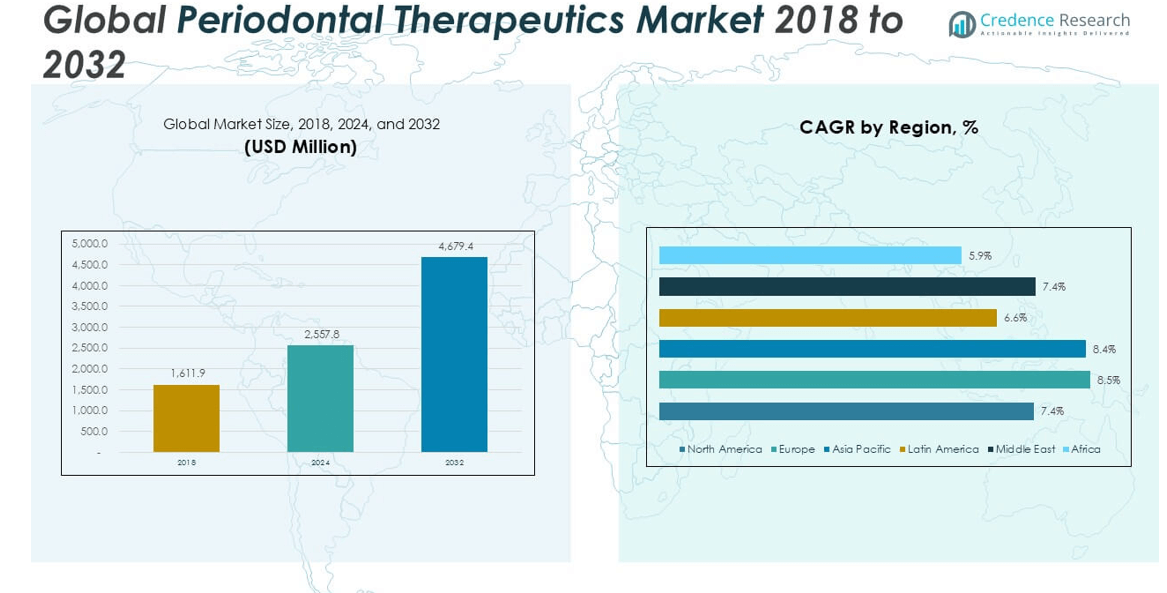
The Global Periodontal Therapeutics Market is projected to grow from USD 2,557.8 million in 2024 to an estimated USD 4,679.4 million by 2032, with a compound annual growth rate (CAGR) of 7.86% from 2025 to 2032.
| REPORT ATTRIBUTE | DETAILS |
|---|---|
| Historical Period | 2020-2023 |
| Base Year | 2024 |
| Forecast Period | 2025-2032 |
| Periodontal Therapeutics Market Size 2024 | USD 2,557.8 million |
| Periodontal Therapeutics Market, CAGR | 7.86% |
| Periodontal Therapeutics Market Size 2032 | USD 4,679.4 million |
Key drivers fueling the periodontal therapeutics market include the rising demand for non-invasive treatment options, increased investment in dental healthcare infrastructure, and a growing geriatric population that is more susceptible to gum diseases. In addition, trends such as the integration of biotechnology in oral care, adoption of targeted drug delivery systems, and development of antibiotic and antiseptic therapies are enhancing treatment outcomes and patient compliance. The market is also benefiting from a surge in dental tourism and favorable reimbursement policies in certain regions.
Geographically, North America dominates the global market due to high healthcare expenditure, well-established dental care systems, and strong awareness about periodontal health. Europe follows closely, supported by widespread insurance coverage and dental care policies. Meanwhile, the Asia-Pacific region is expected to witness the fastest growth, driven by expanding healthcare access, urbanization, and rising disposable incomes. Key players in the market include Colgate-Palmolive, Pfizer Inc., 3M, Dentsply Sirona, GlaxoSmithKline plc, and Sunstar Group, among others.
Market Insights
- The Global Periodontal Therapeutics Market is projected to grow from USD 2,557.8 million in 2024 to USD 4,679.4 million by 2032, at a CAGR of 7.86% from 2025 to 2032.
- An increasing number of patients affected by chronic and aggressive periodontitis is fueling demand for effective therapeutic solutions.
- Technological innovations such as targeted drug delivery systems and laser-assisted therapies are improving treatment precision and outcomes.
- A growing aging population more susceptible to gum diseases is expanding the need for long-term periodontal care.
- Expensive procedures and limited insurance coverage in many regions restrict access to advanced periodontal therapies.
- Rural and low-income populations continue to face challenges in accessing consistent and affordable periodontal treatment.
- North America dominates the market, while Asia-Pacific is expected to register the fastest growth due to improving healthcare access and rising oral health awareness.
Market Drivers
Rising Prevalence of Periodontal Diseases Among Aging Populations
The Global Periodontal Therapeutics Market is expanding due to the increasing prevalence of periodontal diseases, particularly among the elderly. Aging populations are more vulnerable to gum infections, bone loss, and other oral complications that require ongoing treatment. With global life expectancy on the rise, the demand for periodontal care continues to escalate. Many seniors face chronic conditions like diabetes and cardiovascular disease, which further heighten their risk for periodontal issues. Governments and healthcare systems are emphasizing oral health in geriatric care programs, boosting market demand. The market benefits from public and private efforts to integrate dental care into routine health check-ups for the elderly.
- For instance, the U.S. Centers for Disease Control and Prevention reported that over 34,000,000 adults aged 65 and older in the United States had some form of periodontal disease in 2024, reflecting the high burden among aging populations.
Growing Awareness of Oral Health and Early Intervention
Public awareness campaigns and educational programs are increasing recognition of the importance of oral hygiene and early periodontal intervention. Patients are now more likely to seek treatment during the early stages of gum disease, improving therapeutic outcomes and expanding the market for periodontal products. Dentists and healthcare providers are actively promoting preventive care strategies and regular dental visits. This has led to increased prescriptions of antimicrobials, antibiotics, and scaling treatments. The Global Periodontal Therapeutics Market is responding to this demand by offering a broader range of effective and user-friendly treatment options. This shift toward prevention supports consistent revenue growth for manufacturers and service providers.
- For instance, a 2024 industry survey by the American Dental Association found that more than 7,500,000 scaling and root planing procedures were performed in U.S. dental practices in a single year, demonstrating increased early intervention and preventive care efforts.
Technological Advancements in Treatment Modalities and Drug Delivery
The market is driven by advancements in drug formulations and delivery systems that enhance treatment effectiveness. Companies are investing in sustained-release gels, biodegradable chips, and targeted drug delivery platforms for improved results. These innovations reduce treatment time, increase patient compliance, and minimize side effects. The Global Periodontal Therapeutics Market is witnessing strong interest from pharmaceutical and biotechnology firms aiming to differentiate their offerings. Digital dentistry and laser-assisted procedures are also contributing to improved treatment precision. It continues to evolve through research and development focused on long-term disease management.
Expansion of Dental Infrastructure and Government Support
Emerging economies are investing in dental care infrastructure, enabling wider access to periodontal treatments. Governments are funding oral healthcare initiatives and supporting insurance coverage for periodontal procedures. These actions are improving patient access and encouraging timely treatment. The Global Periodontal Therapeutics Market is gaining momentum in countries where healthcare reforms are prioritizing dental health. Urbanization and lifestyle changes are increasing exposure to risk factors such as tobacco use and poor diet, further driving demand. It benefits from these systemic efforts to reduce the overall burden of oral disease.
Market Trends
Rising Focus on Preventive Oral Care and Early Diagnosis
Governments and healthcare providers are increasingly promoting preventive oral care through public health campaigns and regular dental checkups. Early diagnosis of periodontal diseases helps avoid invasive procedures and supports long-term oral health. The Global Periodontal Therapeutics Market benefits from this shift, with more patients seeking timely treatment. Dentists recommend therapeutic products such as antimicrobial mouth rinses, localized antibiotics, and enzyme suppressants for managing early-stage gum diseases. This trend encourages market players to develop targeted and accessible solutions. Improved awareness among patients enhances treatment outcomes and drives product adoption across various demographics.
- For instance, in 2024, over 14,000,000 dental checkups specifically included periodontal screening as part of national preventive care programs in the United States, according to government health agency data and dental association surveys.
Integration of Advanced Drug Delivery Systems in Periodontal Therapy
Drug manufacturers are introducing innovative delivery systems like sustained-release gels, microspheres, and biodegradable chips. These technologies ensure precise application and prolonged therapeutic effect in periodontal pockets. The Global Periodontal Therapeutics Market sees significant demand for such delivery mechanisms due to their convenience and higher efficacy. It supports better patient compliance and reduces the need for frequent clinical visits. Key players invest in R\&D to enhance bioavailability and minimize side effects. These advancements improve overall treatment standards and attract interest from both providers and patients.
- For instance, in 2024, more than 1,200,000 periodontal procedures in Europe and North America used advanced drug delivery systems such as microspheres and sustained-release gels, as reported by pharmaceutical company registries and dental health surveys
Growing Preference for Minimally Invasive and Non-Surgical Treatments
Patients and dental professionals prefer non-surgical approaches that reduce recovery time and treatment discomfort. Scaling and root planing, combined with pharmacological therapies, are commonly used to treat mild to moderate periodontitis. The Global Periodontal Therapeutics Market aligns with this preference by offering a wide range of topical and systemic solutions. It includes antibiotic gels, antiseptic chips, and host modulation agents. This shift drives demand for maintenance-focused products that support long-term oral health. Market players are expanding product lines to meet this evolving preference.
Expansion of Dental Infrastructure in Developing Economies
Emerging countries are improving access to dental care through investments in clinics, equipment, and training. These developments support higher treatment rates and increase demand for periodontal therapeutics. The Global Periodontal Therapeutics Market sees strong growth in Asia-Pacific, Latin America, and parts of the Middle East. It benefits from rising disposable incomes, urbanization, and lifestyle changes contributing to oral health issues. Governments are supporting these efforts by funding public dental programs and insurance coverage. This infrastructure growth enables wider product availability and drives competitive entry.
Market Challenges
Limited Access to Dental Care in Low-Income and Rural Areas
Many low-income and rural populations lack access to proper dental care due to inadequate infrastructure and limited financial resources. Patients often delay treatment, allowing periodontal diseases to progress and reducing the effectiveness of available therapeutics. The Global Periodontal Therapeutics Market faces challenges in reaching these underserved communities. It depends on government funding, mobile clinics, and public awareness campaigns to improve access. Without consistent dental checkups, early intervention becomes difficult, impacting long-term market growth. The absence of insurance coverage for dental procedures further limits treatment uptake.
- For instance, a national survey in the United States found that over 74 million adults-primarily from low-income and rural backgrounds-did not visit a dentist in the previous year due to cost barriers and lack of insurance coverage. In some rural counties, there is only one dentist available for every 5,000 to 10,000 residents, making timely access to periodontal care nearly impossible for many individuals.
High Treatment Costs and Lack of Reimbursement Policies
Periodontal therapies, especially advanced drug formulations and specialist procedures, often involve high out-of-pocket expenses. Many healthcare systems do not fully cover periodontal treatments, making them unaffordable for a significant portion of the population. The Global Periodontal Therapeutics Market struggles with low treatment adherence due to these financial constraints. It discourages patients from completing full therapeutic regimens, reducing product demand. This cost barrier also restricts innovation, as companies face difficulty in securing returns on high-investment products. Lack of standard reimbursement frameworks in emerging economies further complicates market expansion.
Market Opportunities
Growing Demand for Innovative and Personalized Therapeutic Solutions
The shift toward personalized medicine creates opportunities for targeted periodontal therapeutics tailored to individual patient profiles. Advancements in genetic testing and biomarker identification support the development of customized treatment plans. The Global Periodontal Therapeutics Market can capitalize on these trends by introducing precision-based solutions with improved efficacy. It opens doors for biotechnology firms to collaborate with dental care providers and enhance patient outcomes. Demand for novel drug delivery methos and bioactive agents is also increasing. Companies focusing on these innovations can strengthen their market presence and improve treatment accessibility.
Expansion Potential in Emerging Markets Through Infrastructure and Education
Rapid urbanization and rising disposable incomes in emerging economies offer significant market expansion opportunities. Governments are investing in healthcare infrastructure and promoting dental awareness through public initiatives. The Global Periodontal Therapeutics Market stands to benefit from these efforts by increasing its reach in previously underserved regions. It can grow further through partnerships with local dental institutions and distribution networks. Training programs for dental professionals and awareness campaigns among patients can improve treatment adoption. Market players that align with regional healthcare strategies will gain a competitive edge.
Market Segmentation Analysis
By Product
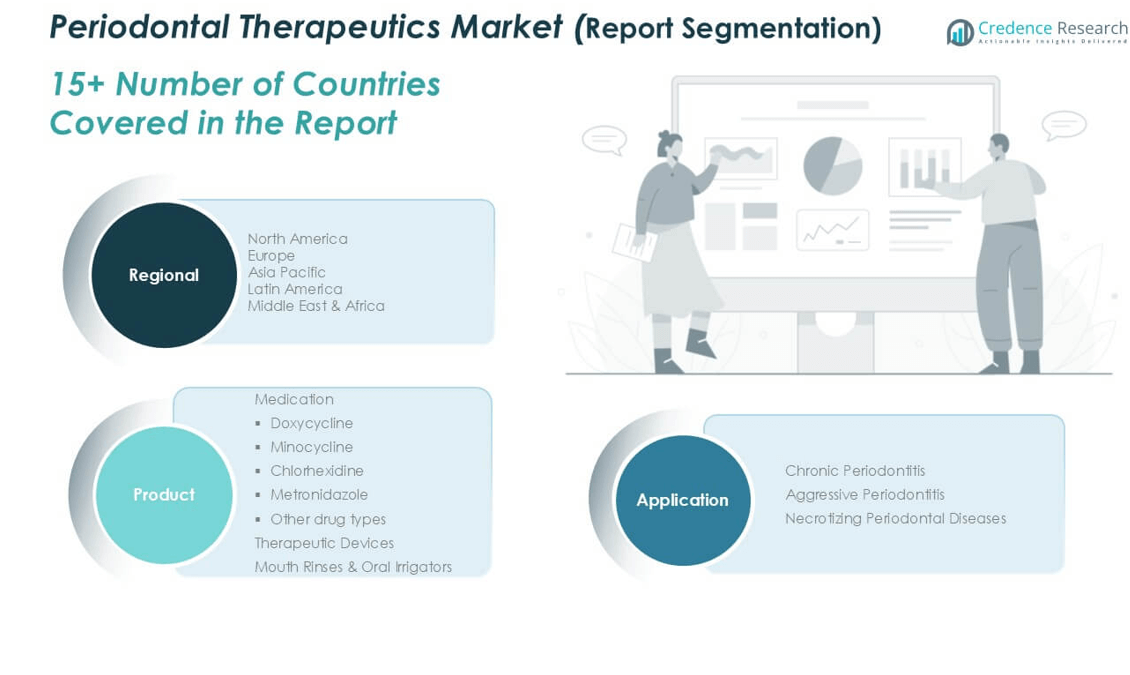
The Global Periodontal Therapeutics Market divides primarily into medication, therapeutic devices, and mouth rinses & oral irrigators. Medication holds a significant revenue share, driven by key drugs such as doxycycline, minocycline, chlorhexidine, and metronidazole. These antibiotics and antiseptics remain essential in controlling bacterial infections associated with periodontal diseases. Other drug types, including host modulation agents, also contribute to the product mix. Therapeutic devices, including localized drug delivery systems, support targeted treatment and improve patient compliance. Mouth rinses and oral irrigators play a crucial role in daily oral hygiene, aiding in plaque control and inflammation reduction.
- For instance, over 16 million prescriptions for periodontal antibiotics and antiseptics (including doxycycline and chlorhexidine) were dispensed in the United States alone, while more than 4 million localized drug delivery devices and 28 million bottles of therapeutic mouth rinses were sold globally in the same year.
By Application
The market categorizes applications into chronic periodontitis, aggressive periodontitis, and necrotizing periodontal diseases. Chronic periodontitis accounts for the largest share due to its widespread prevalence globally. It requires continuous therapeutic intervention to manage symptoms and prevent progression. Aggressive periodontitis affects younger populations and demands rapid and effective treatment options. Necrotizing periodontal diseases, although less common, require specialized therapeutics due to their severe tissue destruction. The Global Periodontal Therapeutics Market benefits from focused treatment protocols tailored to each application, enhancing clinical outcomes and expanding product adoption across diverse patient groups.
- For instance, according to global health data, more than 740 million individuals worldwide received treatment for chronic periodontitis in 2023, compared to approximately 38 million for aggressive periodontitis and 2.5 million for necrotizing periodontal diseases.
Segments
Based on Product
- Medication
- Doxycycline
- Minocycline
- Chlorhexidine
- Metronidazole
- Other drug types
- Therapeutic Devices
- Mouth Rinses & Oral Irrigators
Based on Application
- Chronic Periodontitis
- Aggressive Periodontitis
- Necrotizing Periodontal Diseases
Based on Region
- North America
- U.S.
- Canada
- Mexico
- Europe
- UK
- France
- Germany
- Italy
- Spain
- Russia
- Belgium
- Netherlands
- Austria
- Sweden
- Poland
- Denmark
- Switzerland
- Rest of Europe
- Asia Pacific
- China
- Japan
- South Korea
- India
- Australia
- Thailand
- Indonesia
- Vietnam
- Malaysia
- Philippines
- Taiwan
- Rest of Asia Pacific
- Latin America
- Brazil
- Argentina
- Peru
- Chile
- Colombia
- Rest of Latin America
- Middle East
- UAE
- KSA
- Israel
- Turkey
- Iran
- Rest of Middle East
- Africa
- Egypt
- Nigeria
- Algeria
- Morocco
- Rest of Africa
Regional Analysis
North America Periodontal Therapeutics Market
North America accounted for a market value of USD 611.10 million in 2024, projected to reach USD 1,076.27 million by 2032, expanding at a CAGR of 7.4%. The region represents approximately 23.9% of the global Periodontal Therapeutics Market share in 2024. Strong dental care infrastructure, rising awareness about periodontal health, and the presence of major pharmaceutical companies support regional growth. The United States dominates the regional market due to advanced healthcare facilities and insurance coverage for dental procedures. It shows steady demand for both therapeutic drugs and preventive oral care solutions. Clinical trials and product innovations continue to shape the North American market landscape.
Europe Periodontal Therapeutics Market
Europe held a market value of USD 576.39 million in 2024, forecasted to grow to USD 1,101.54 million by 2032 at a CAGR of 8.5%. It constitutes 22.5% of the global market share in 2024. Rising incidence of chronic periodontitis and expanding access to dental care services are major drivers in this region. Countries such as Germany, the UK, and France show strong adoption of advanced therapeutics and drug delivery technologies. The market benefits from government-supported dental programs and favorable reimbursement frameworks. Increasing research collaborations with universities and clinical institutions further enhance product development and innovation.
Asia Pacific Periodontal Therapeutics Market
Asia Pacific leads the global market with a value of USD 887.20 million in 2024, projected to reach USD 1,684.60 million by 2032, at a CAGR of 8.4%. This region holds the 34.7% share of the global Periodontal Therapeutics Market in 2024, the highest among all regions. Rapid urbanization, a growing elderly population, and increasing awareness of dental hygiene are driving demand. China, Japan, and India represent key markets due to their expanding healthcare infrastructure and rising income levels. It sees strong growth in the adoption of mouth rinses, oral irrigators, and localized drug therapies. Pharmaceutical firms are targeting the region for clinical trials and distribution partnerships.
Latin America Periodontal Therapeutics Market
Latin America reached a market value of USD 252.42 million in 2024, expected to grow to USD 421.15 million by 2032, with a CAGR of 6.6%. The region contributes 9.9% to the global market share in 2024. Brazil and Mexico lead the regional market due to their large population base and growing public investment in oral health. It is gradually adopting modern periodontal treatment options through both public initiatives and private dental chains. The region shows increasing interest in minimally invasive therapies and over-the-counter oral care solutions. Public health campaigns are encouraging early diagnosis and preventive treatment approaches.
Middle East Periodontal Therapeutics Market
The Middle East recorded a market size of USD 166.99 million in 2024, projected to reach USD 294.80 million by 2032, growing at a CAGR of 7.4%. This accounts for approximately 6.5% of the global market share in 2024. Countries like Saudi Arabia and the UAE are leading investments in healthcare modernization, including dental care services. The region experiences growing demand for advanced medications and oral hygiene products. It benefits from medical tourism and collaborations with global healthcare providers. Increasing awareness among middle-income groups supports broader treatment accessibility
Africa Periodontal Therapeutics Market
Africa had a market value of USD 63.73 million in 2024, estimated to reach USD 101.08 million by 2032, expanding at a CAGR of 5.9%. It represents the smallest regional share at 2.5% of the global Periodontal Therapeutics Market in 2024. The region faces challenges in dental care accessibility and infrastructure development. South Africa, Nigeria, and Kenya show potential for future growth through public-private partnerships and international funding. It sees gradual progress in oral health education and adoption of affordable therapeutic options. NGOs and global health organizations are instrumental in expanding treatment reach across underserved populations.
Key players
- Pfizer Inc.
- Lupin Ltd
- Teva Pharmaceuticals USA, Inc.
- Sun Pharmaceutical Industries Ltd.
- Bausch Health Companies Inc.
- Dentsply Sirona
- Biolase, Inc.
- Millennium Dental Technologies
- DEKA Dental Lasers
Competitive Analysis
The Periodontal Therapeutics Market is highly competitive, driven by innovation in drug formulations and treatment devices. Major pharmaceutical companies such as Pfizer Inc., Teva Pharmaceuticals, and Lupin Ltd focus on expanding their product portfolios with antibiotics, antiseptics, and targeted therapies. Medical device manufacturers like Dentsply Sirona, Biolase, and Millennium Dental Technologies specialize in non-invasive solutions, including laser systems and oral irrigators. It shows strong interest in technologies that enhance patient compliance and treatment efficiency. Emerging players are investing in localized delivery systems and precision medicine to gain market share. Strategic collaborations, product launches, and mergers are key growth approaches. Market participants differentiate through pricing, technological advancements, and geographic expansion.
Recent Developments
- In April 2025, Pfizer highlighted that its medicines and vaccines reached over 414 million patients globally in 2024, and also reported ongoing advancements in its research and development efforts. This includes a robust pipeline of 115 programs in development (from Phase 1 through registration) as of February 4, 2025. Pfizer's focus on innovation and expanding access to its products were also emphasized in the report.
- In February 2024, Biolase introduced the Waterlase iPlus Premier Edition at the Chicago Midwinter Meeting, highlighting its new modular software design, enhanced user interface, and remote diagnostic capabilities. The system is designed to be more efficient and user-friendly for dental professionals.
Market Concentration and Characteristics
The Periodontal Therapeutics Market displays moderate concentration with a mix of global pharmaceutical firms and specialized dental device manufacturers. It features a competitive environment where key players hold significant market shares through established brand presence and broad product portfolios. The market is characterized by steady demand for antibiotics, antiseptics, and non-invasive treatment options. Innovation in drug delivery systems and increased emphasis on preventive care define its core characteristics. It attracts investments in R\&D to enhance efficacy and patient compliance. The presence of both prescription-based and over-the-counter products supports diverse consumer access. Regulatory standards and reimbursement policies influence product development and commercialization strategies.
Report Coverage
The research report offers an in-depth analysis based on Product, Application and Region. It details leading market players, providing an overview of their business, product offerings, investments, revenue streams, and key applications. Additionally, the report includes insights into the competitive environment, SWOT analysis, current market trends, as well as the primary drivers and constraints. Furthermore, it discusses various factors that have driven market expansion in recent years. The report also explores market dynamics, regulatory scenarios, and technological advancements that are shaping the industry. It assesses the impact of external factors and global economic changes on market growth. Lastly, it provides strategic recommendations for new entrants and established companies to navigate the complexities of the market.
Future Outlook
- The market will see growing demand for personalized therapies tailored to individual patient needs using genetic and diagnostic insights. This shift will improve treatment outcomes and support long-term disease management.
- Biotech innovations will introduce new drug classes and biologics to address chronic and aggressive periodontitis. These therapies will offer higher efficacy with fewer side effects.
- Future developments will focus on smart delivery technologies such as bioresorbable gels and microspheres. These systems will enhance localized treatment precision and reduce dosage frequency.
- Digital tools like 3D imaging, AI-driven diagnostics, and treatment planning software will be widely adopted. These technologies will streamline procedures and support more accurate interventions.
- Manufacturers will introduce more products for maintenance and long-term oral hygiene. This trend will support a preventive care approach and reduce recurrence rates.
- Companies will increase investment in Asia Pacific, Latin America, and the Middle East to tap into underpenetrated regions. Rising incomes and urbanization will drive demand for modern periodontal care.
- Governments and organizations will intensify public education campaigns about periodontal disease prevention. These initiatives will support early diagnosis and treatment adherence.
- Future treatment protocols will rely more on minimally invasive techniques like laser therapy. These methods will reduce recovery time and enhance patient satisfaction.
- Key players will pursue partnerships with dental clinics, research institutions, and biotech firms. These collaborations will accelerate product development and market penetration.
- Regulatory bodies will enforce stricter quality and safety standards for periodontal therapeutics. This will improve clinical outcomes and boost patient trust in available treatments.

Request a Free Sample
Fill in your details and we'll send you a free sample report.
- Sample data tables & charts
- Research methodology
Market Dynamics
Rising Prevalence of Periodontal Diseases Among Aging Populations
As global populations age, the incidence of periodontal diseases increases, particularly among seniors who are more susceptible to gum infections and related complications. This demographic shift is driving sustained demand for periodontal therapeutics and long-term oral care solutions.
Growing Awareness of Oral Health and Early Intervention
Public health campaigns and educational initiatives are increasing awareness about the importance of oral hygiene and early treatment of gum diseases. This leads to higher rates of preventive care, early diagnosis, and increased adoption of periodontal therapeutics.
Technological Advancements in Treatment Modalities and Drug Delivery
Innovations such as targeted drug delivery systems, sustained-release gels, and laser-assisted therapies are improving treatment precision, patient compliance, and clinical outcomes. These advancements are expanding the market by offering more effective and user-friendly solutions.
Expansion of Dental Infrastructure and Government Support
Investments in dental healthcare infrastructure, particularly in emerging economies, and supportive government policies are improving access to periodontal treatments. This expansion enables broader market penetration and supports higher treatment rates.
Preference for Minimally Invasive and Non-Surgical Treatments
Patients and providers increasingly favor non-surgical and minimally invasive therapies, such as scaling, root planing, and localized drug delivery, which reduce recovery times and discomfort. This trend is fueling demand for innovative therapeutic products and devices.
Need a Custom Version of This Report?
Tailor the scope, geography, or segments to your exact requirements.
- Custom geography or segment scope
- Direct access to our analyst team
Frequently Asked Questions
What is the market size of the Global Periodontal Therapeutics Market in 2023 and 2032, and what is its CAGR?
Which region currently leads the Global Periodontal Therapeutics Market?
What are the major trends influencing the periodontal therapeutics market?
Who are the key players operating in the Global Periodontal Therapeutics Market?
Table of Content
Chapter 1 Market Segmentation
- 1.1 Segmentation Framework
- 1.1.1 Product and Service Classification
- 1.1.2 Application and End-Use Classification
- 1.1.3 Technology and Solution Classification
- 1.1.4 Customer and Distribution Channel Classification
- 1.1.5 Geographic Segmentation
- 1.1.6 Market Segment Definitions and Boundaries
- 1.2 By Product
- 1.2.1 Medication
- 1.2.2 Therapeutic Devices
- 1.2.3 Mouth Rinses & Oral Irrigators
- 1.3 By Application
- 1.3.1 Chronic Periodontitis
- 1.3.2 Aggressive Periodontitis
- 1.3.3 Necrotizing Periodontal Diseases
- 1.4 By Medication Type
- 1.4.1 Doxycycline
- 1.4.2 Minocycline
- 1.4.3 Chlorhexidine
- 1.4.4 Metronidazole
- 1.4.5 Other drug types
Chapter 2 Introduction
- 2.1 Report Objectives and Scope
- 2.2 Product Definition and Industry Terminology
- 2.3 Market Inclusions and Exclusions
- 2.4 Research Process
- 2.4.1 Primary Research and Expert Interviews
- 2.4.2 Secondary Research and Source Review
- 2.4.3 Top-Down and Bottom-Up Estimation
- 2.4.4 Data Triangulation and Verification
- 2.5 Market Size Measurement Basis
- 2.5.1 2023: USD 2,372.5 million → 2032: USD 4,679.4 million
- 2.6 Historical and Forecast Reference Periods
- 2.6.1 Base Year: 2023
- 2.6.2 Forecast Period: 2023-2032
- 2.7 Research Assumptions and Limitations
Chapter 3 Executive Summary
- 3.1 Market Snapshot and Key Findings
- 3.2 Base-Year Market Size, 2023
- 3.3 Forecast Market Size, 2032
- 3.4 Revenue and Volume Growth Outlook
- 3.5 Key Demand and Supply Indicators
- 3.6 Leading Market Segments
- 3.7 Fastest-Growing Market Opportunities
- 3.8 Regional Performance Highlights
- 3.9 Technology and Industry Transformation
- 3.10 Competitive Landscape Summary
- 3.11 Analyst View and Strategic Implications
Chapter 4 Global Periodontal Therapeutics Market Trends and Developments
- 4.1 Historical Industry Development
- 4.2 Recent Market Trends and Developments
- 4.3 Demand and Customer Behavior Trends
- 4.4 Technology and Product Innovation
- 4.5 Artificial Intelligence, Automation and Digitalization
- 4.6 Local Manufacturing and Supply Chain Realignment
- 4.7 Industry Partnerships, Mergers and Acquisitions
- 4.8 Sustainability and Circular Economy Developments
- 4.9 Government and Private Sector Investment Trends
- 4.10 Emerging Business Models and Commercialization
- 4.11 Industry Developments and Announcements
Chapter 5 Global Periodontal Therapeutics Market Production, Supply and Demand Analysis
- 5.1 Demand Trend and Consumption Analysis
- 5.2 Demand Forecast, 2023-2032
- 5.3 Production and Output Trend
- 5.4 Production and Output Forecast, 2023-2032
- 5.5 Installed Capacity and Capacity Utilization
- 5.6 Company-Wise Production Plants and Statistics
- 5.6.1 Installed Production Capacity
- 5.6.2 Actual Production
- 5.6.3 Planned Capacity and Expansion Targets
- 5.7 Supply Chain Structure and Procurement Trends
- 5.8 Supply-Demand Gap and Bottlenecks
- 5.9 Import Dependence and Sourcing Structure
- 5.10 Contract Manufacturing and Outsourcing
- 5.11 Regional Supply and Demand Concentration
Chapter 6 Global Periodontal Therapeutics Market Pricing Analysis
- 6.1 Pricing Structure and Measurement
- 6.2 Historical Pricing Trends
- 6.3 Pricing Outlook, 2023-2032
- 6.4 Average Selling Price and Unit Economics
- 6.5 Pricing by Product and Market Segment
- 6.6 Geographic Pricing Differences
- 6.7 Key Input, Energy, Labor and Logistics Costs
- 6.8 Contract Pricing and Purchasing Models
- 6.9 Pricing Sensitivity and Competitive Positioning
- 6.10 Price, Margin and Profitability Implications
Chapter 7 Global Periodontal Therapeutics Market Dynamics
- 7.1 Market Growth Drivers
- 7.1.1 Demand-Side Drivers
- 7.1.2 Technology and Innovation Drivers
- 7.1.3 Infrastructure and Investment Drivers
- 7.1.4 Regulatory and Policy Drivers
- 7.2 Market Restraints
- 7.2.1 Cost and Affordability Constraints
- 7.2.2 Technology and Adoption Barriers
- 7.2.3 Supply Chain and Operational Constraints
- 7.3 Market Challenges
- 7.3.1 Competitive Pressure and Margin Erosion
- 7.3.2 Skills, Infrastructure and Implementation Gaps
- 7.4 Emerging Market Opportunities
- 7.5 Market Dynamics Impact and Time-Horizon Assessment
Chapter 8 Global Periodontal Therapeutics Value Chain Analysis
- 8.1 Industry Value Chain Overview
- 8.2 Upstream Suppliers and Critical Inputs
- 8.3 Technology and Component Providers
- 8.4 Manufacturing or Service Delivery
- 8.5 Distribution, Channel Partners and Integrators
- 8.6 Downstream Applications and End Users
- 8.7 Value Addition and Profit Pools
- 8.8 Vertical Integration and Outsourcing
- 8.9 Supplier Concentration and Risk
- 8.10 Supply Chain Localization and Resilience
Chapter 9 Global Periodontal Therapeutics Market Regulations and Policies
- 9.1 Relevant Laws, Standards and Compliance Frameworks
- 9.2 Product, Service, Safety and Quality Requirements
- 9.3 Government Policies, Incentives and Subsidies
- 9.4 Imports, Exports and Trade Barriers
- 9.5 Public Procurement and Local Content Requirements
- 9.6 Environmental and Sustainability Compliance
- 9.7 Upcoming Policy Changes and Market Implications
Chapter 10 Global Periodontal Therapeutics Market Hotspots and Opportunities
- 10.1 Market Opportunity Mapping and Growth Hotspots
- 10.2 High-Growth Applications and Customer Groups
- 10.3 Underserved Markets and White-Space Opportunities
- 10.4 Emerging Technology and Product Opportunities
- 10.5 New Capacity and Investment Hotspots
- 10.6 Market Entry and Expansion Opportunities
- 10.7 Distribution and Partnership Opportunities
- 10.8 Near-Term and Long-Term Commercial Potential
- 10.9 Opportunity Attractiveness and Execution Risks
Chapter 11 Global Periodontal Therapeutics Market Outlook, 2023-2032
- 11.1 Market Size and Analysis
- 11.1.1 Revenue (Market Measurement: 2023: USD 2,372.5 million → 2032: USD 4,679.4 million)
- 11.1.2 Market Volume and Quantity Sold
- 11.1.3 Historical Market Size
- 11.1.4 Base-Year Market Size, 2023
- 11.2 Market Forecast, 2023-2032
- 11.2.1 Revenue Forecast to 2032
- 11.2.2 Volume Forecast to 2032
- 11.2.3 CAGR and Year-on-Year Growth
- 11.2.4 Incremental Revenue Opportunity
- 11.3 Forecast Assumptions and Scenario Analysis
- 11.3.1 Base-Case Forecast
- 11.3.2 Optimistic and Conservative Scenarios
- 11.3.3 Technology, Pricing and Policy Sensitivities
- 11.4 Market Attractiveness and Growth Outlook
Chapter 12 Global Periodontal Therapeutics Market Segmentation and Outlook
- 12.1 Segmentation Summary and Market Shares, 2023
- 12.2 Largest and Fastest-Growing Segments
- 12.3 By Product - Market Size and Forecast, 2023-2032
- 12.3.1 Segment Definition and Scope
- 12.3.2 Historical Market Size
- 12.3.3 Revenue Forecast, 2023-2032
- 12.3.4 Volume Forecast, 2023-2032
- 12.3.5 Base-Year Market Share, 2023
- 12.3.6 Segment CAGR and Growth Drivers
- 12.3.7 Subsegment Market Size and Forecast
- 12.3.7.1 Medication
- 12.3.7.2 Therapeutic Devices
- 12.3.7.3 Mouth Rinses & Oral Irrigators
- 12.3.8 Subsegment Pricing and Adoption Trends
- 12.3.9 Leading Suppliers and Competition
- 12.3.10 Regional Demand and Opportunities
- 12.4 By Application - Market Size and Forecast, 2023-2032
- 12.4.1 Segment Definition and Scope
- 12.4.2 Historical Market Size
- 12.4.3 Revenue Forecast, 2023-2032
- 12.4.4 Volume Forecast, 2023-2032
- 12.4.5 Base-Year Market Share, 2023
- 12.4.6 Segment CAGR and Growth Drivers
- 12.4.7 Subsegment Market Size and Forecast
- 12.4.7.1 Chronic Periodontitis
- 12.4.7.2 Aggressive Periodontitis
- 12.4.7.3 Necrotizing Periodontal Diseases
- 12.4.8 Subsegment Pricing and Adoption Trends
- 12.4.9 Leading Suppliers and Competition
- 12.4.10 Regional Demand and Opportunities
- 12.5 By Medication Type - Market Size and Forecast, 2023-2032
- 12.5.1 Segment Definition and Scope
- 12.5.2 Historical Market Size
- 12.5.3 Revenue Forecast, 2023-2032
- 12.5.4 Volume Forecast, 2023-2032
- 12.5.5 Base-Year Market Share, 2023
- 12.5.6 Segment CAGR and Growth Drivers
- 12.5.7 Subsegment Market Size and Forecast
- 12.5.7.1 Doxycycline
- 12.5.7.2 Minocycline
- 12.5.7.3 Chlorhexidine
- 12.5.7.4 Metronidazole
- 12.5.7.5 Other drug types
- 12.5.8 Subsegment Pricing and Adoption Trends
- 12.5.9 Leading Suppliers and Competition
- 12.5.10 Regional Demand and Opportunities
- 12.6 Segment Growth Comparison
- 12.7 Segment Attractiveness and Priority Matrix
Chapter 13 Global Periodontal Therapeutics End-Use and Application Market Outlook
- 13.1 End-Use Industry and Customer Demand Structure
- 13.2 Leading Applications and Customer Groups
- 13.3 End-Use Market Size, Share and Forecast
- 13.4 Major End-Use Industry Deep Dives
- 13.4.1 Customer Requirements and Use Cases
- 13.4.2 Demand and Replacement Cycles
- 13.4.3 Technical and Regulatory Considerations
- 13.4.4 Purchasing and Procurement Models
- 13.4.5 Leading Vendors and Distribution Channels
- 13.4.6 Forecast and Commercial Opportunities
- 13.5 Emerging Applications and Cross-Segment Demand
- 13.6 End-Use Industry Investment Priorities
Chapter 14 Global Periodontal Therapeutics Geographic Market Outlook, 2023-2032
- 14.1 Regional Market Size and Share, 2023
- 14.2 Regional Market Forecast, 2023-2032
- 14.3 Regional Pricing, Production and Demand Differences
- 14.4 North America
- 14.4.1 United States
- 14.4.2 Canada
- 14.4.3 Mexico
- 14.5 Europe
- 14.5.1 Germany
- 14.5.2 France
- 14.5.3 Italy
- 14.5.4 United Kingdom
- 14.5.5 Spain
- 14.5.6 Poland
- 14.5.7 Russia
- 14.5.8 Netherlands
- 14.5.9 Belgium
- 14.5.10 Sweden
- 14.5.11 Denmark
- 14.5.12 Norway
- 14.5.13 Rest of Europe
- 14.6 Asia Pacific
- 14.6.1 China
- 14.6.2 India
- 14.6.3 Japan
- 14.6.4 South Korea
- 14.6.5 Thailand
- 14.6.6 Indonesia
- 14.6.7 Vietnam
- 14.6.8 Malaysia
- 14.6.9 Australia
- 14.6.10 Rest of Asia Pacific
- 14.7 Latin America
- 14.7.1 Brazil
- 14.7.2 Argentina
- 14.7.3 Colombia
- 14.7.4 Chile
- 14.7.5 Rest of Latin America
- 14.8 Middle East
- 14.8.1 Saudi Arabia
- 14.8.2 United Arab Emirates
- 14.8.3 Turkey
- 14.8.4 Israel
- 14.8.5 Iran
- 14.8.6 Rest of the Middle East
- 14.9 Africa
- 14.9.1 South Africa
- 14.9.2 Egypt
- 14.9.3 Nigeria
- 14.9.4 Morocco
- 14.9.5 Rest of Africa
- 14.10 Regional Investment, Policy and Supply Chain Differences
- 14.11 Regional Competitive Landscape
- 14.12 Geographic Growth Hotspots
Chapter 15 Global Periodontal Therapeutics Technology, Innovation and Sustainability Outlook
- 15.1 Technology Landscape and Maturity
- 15.2 Product, Process and Service Innovation
- 15.3 AI, Automation and Digital Tools in the Industry
- 15.4 Technology Adoption and Performance Benchmarking
- 15.5 Innovation Pipeline and R&D Investment
- 15.6 Patent and Intellectual Property Trends
- 15.7 Energy Efficiency and Resource Management
- 15.8 Sustainability, Recycling and Circularity
- 15.9 Technology Roadmap, 2023-2032
- 15.10 Risks of Obsolescence and Technology Substitution
Chapter 16 Global Periodontal Therapeutics Market Key Strategic Imperatives
- 16.1 Growth and Market Entry Priorities
- 16.2 High-Return Products and Segments
- 16.3 Pricing, Profitability and Cost Optimization
- 16.4 Technology Investment and Product Differentiation
- 16.5 Supply Chain Localization and Resilience
- 16.6 Distribution and Customer Acquisition
- 16.7 Partnership, Acquisition and Capacity Strategy
- 16.8 Regional Expansion Priorities
- 16.9 Short-, Medium- and Long-Term Actions
Chapter 17 Competition Outlook
- 17.1 Industry Competition Characteristics
- 17.2 Market Structure and Concentration
- 17.3 Market Share and Competitive Positioning, 2023
- 17.4 Company-Wise Revenue and Product Benchmarking
- 17.5 Production and Service Capacity Benchmarking
- 17.6 Technology, Pricing and Differentiation
- 17.7 Regional Footprint and Distribution Strength
- 17.8 Mergers, Acquisitions and Strategic Alliances
- 17.9 New Entrants and Competitive Threats
- 17.10 Porter's Five Forces and Industry Attractiveness
- 17.11 Competitive Outlook, 2023-2032
Chapter 18 Company Profiles
- 18.1 Company Coverage and Selection Criteria
- 18.2 Pfizer Inc.
- 18.2.1 Business Description
- 18.2.2 Company Ownership and Geographic Presence
- 18.2.3 Product and Service Portfolio
- 18.2.4 Manufacturing and Operating Footprint
- 18.2.5 Production Capacity and Expansion Plans
- 18.2.6 Financial Performance and Investment
- 18.2.7 Market Share and Competitive Position
- 18.2.8 Technology and Innovation Capabilities
- 18.2.9 Strategic Alliances or Partnerships
- 18.2.10 Recent Developments
- 18.2.11 Growth Strategy and Outlook
- 18.3 Teva Pharmaceuticals USA, Inc.
- 18.4 Lupin Ltd
- 18.5 Sun Pharmaceutical Industries Ltd.
- 18.6 Bausch Health Companies Inc.
- 18.7 Dentsply Sirona
- 18.8 Biolase, Inc.
- 18.9 Millennium Dental Technologies
- 18.10 DEKA Dental Lasers
- 18.11 GlaxoSmithKline plc
- 18.12 Other Relevant Market Participants
Note: Every listed company is profiled on the structure shown under the first company. The company list is preliminary and may change based on research findings, market developments, data availability and client requirements.
Chapter 19 Disclaimer
- 19.1 Research and Forecast Disclaimer
- 19.2 Data Source and Estimation Limitations
Note: The depth of individual sections depends on data availability for this market. Volume, capacity, trade and other unit-based metrics are included where applicable.