
Why two diabetes autoantibody assay formats could each gain $42 million in annual sales
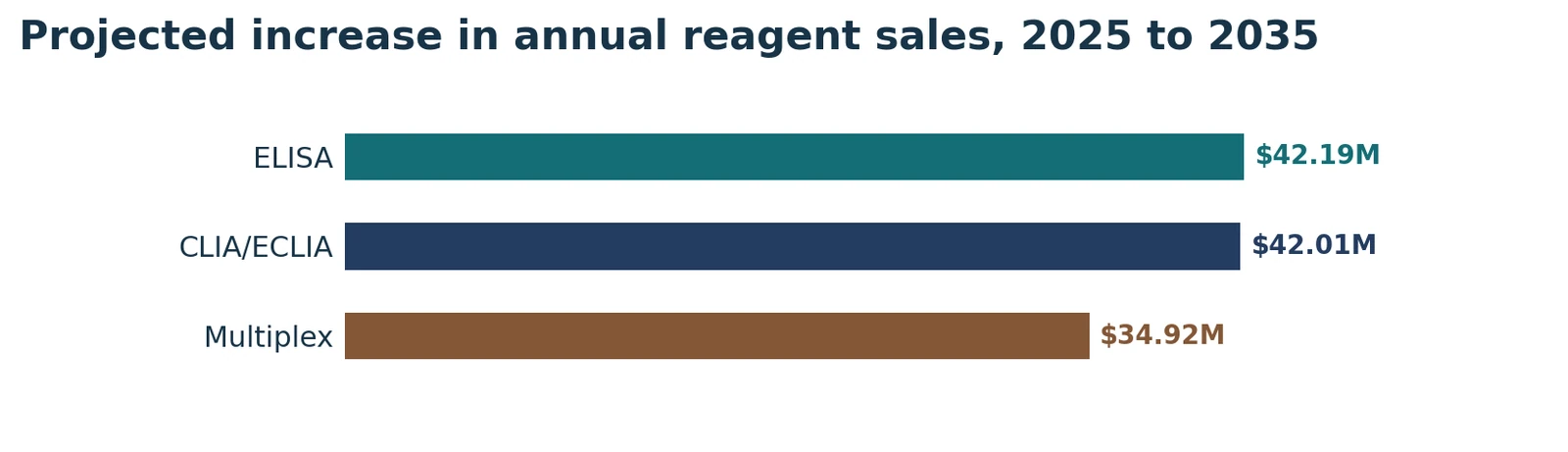
ELISA and chemiluminescence assays are each projected to add about $42 million in annual diabetes autoantibody kit and reagent sales by 2035. ELISA earns more per result, while CLIA/ECLIA relies on nearly three times as many new determinations.
 Dr. Pankaj SharmaHealthcare Domain Expert & Medical Advisor 6 min read
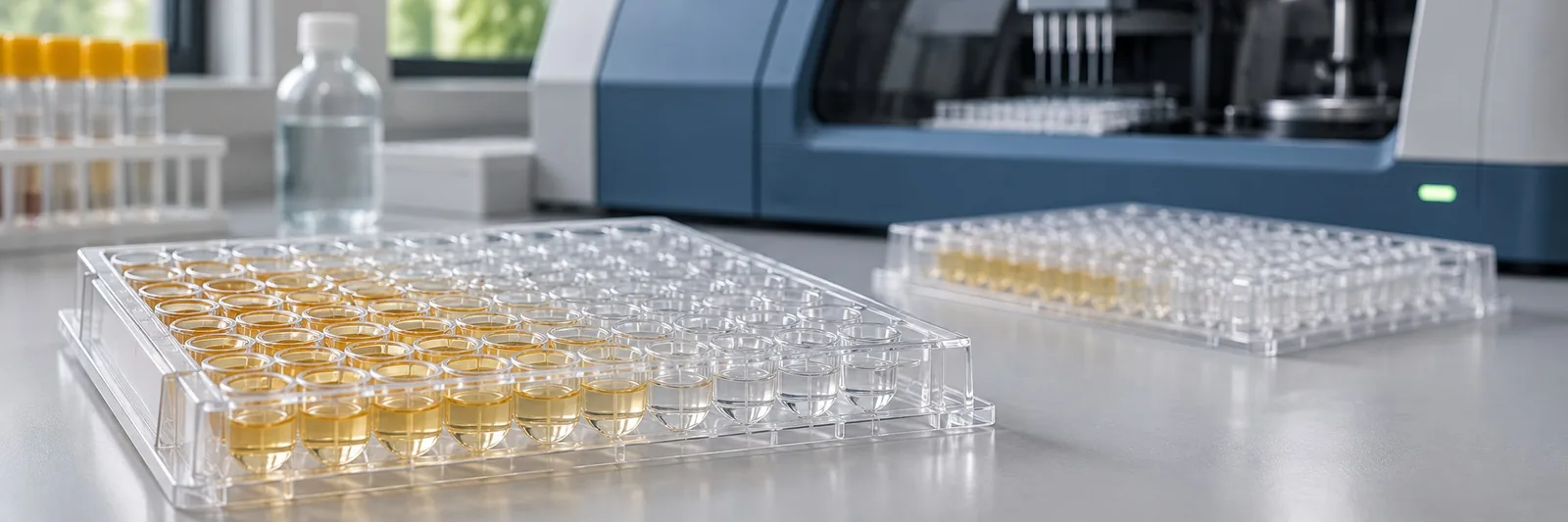
Microplates on a laboratory bench. AI-generated editorial illustration.
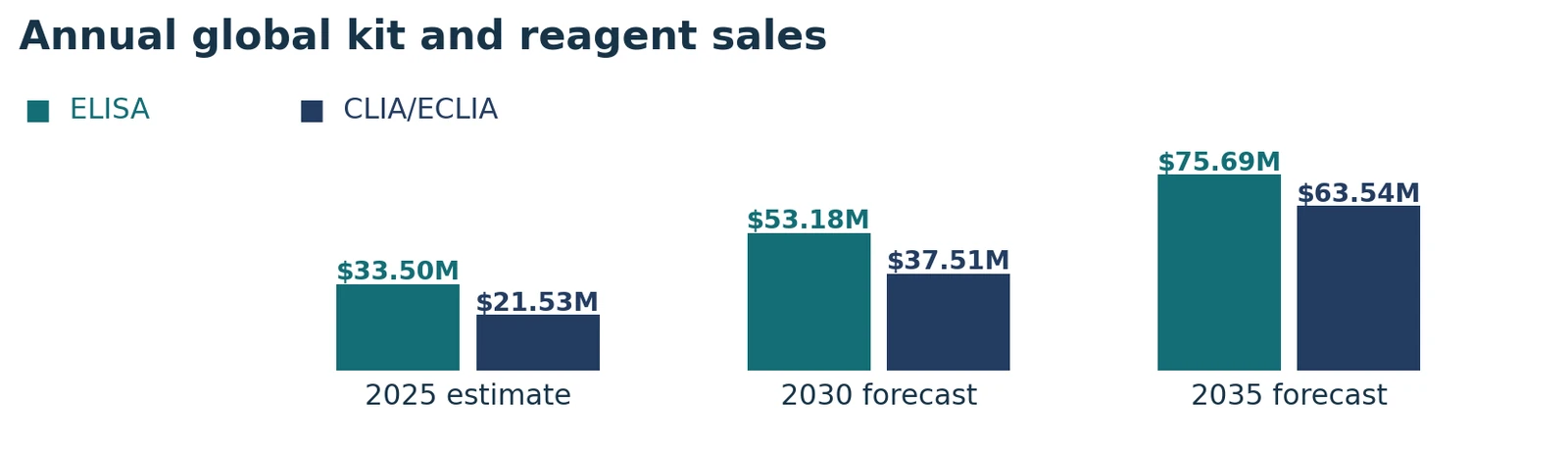
Two laboratory methods are on course to generate almost the same increase in annual diabetes autoantibody kit and reagent sales by 2035. Credence Research projects a $42.19 million gain for enzyme-linked immunosorbent assays (ELISA) and a $42.01 million gain for chemiluminescence and electrochemiluminescence immunoassays (CLIA/ECLIA). The difference between those gains is just $180,000, well within the precision anyone should expect of a decade-long market forecast.
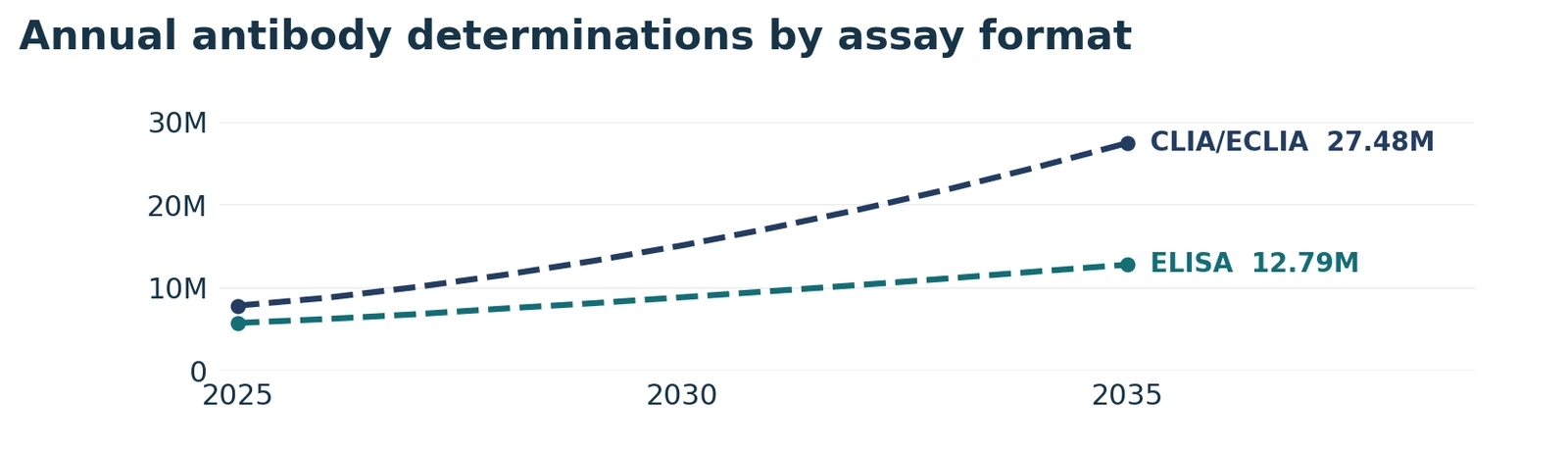
The more revealing difference is the number of results behind those dollars. ELISA would add about 7 million annual antibody determinations between 2025 and 2035. CLIA/ECLIA would add nearly 20 million. One format earns more reagent revenue per reported result and has a substantial base of laboratories already using it. The other can handle large volumes of incoming orders on automated analyzers. Its commercial prospects depend more heavily on how many orders laboratories run and the price suppliers can retain on each one.
Together, the two formats account for about 57 cents of every additional dollar in the global forecast. For a diagnostics company choosing between a plate-based kit and a reagent for an automated analyzer, that finding makes market growth rates a poor guide on their own. The better starting point is the laboratory that would buy the product. What equipment does it have, which antibody tests does it run, and how often do samples arrive?
ELISA can lose market share and still more than double sales
ELISA led the diabetes autoantibody reagent market in 2025, with estimated manufacturer revenue of $33.50 million. Credence Research forecasts $75.69 million in 2035. Its share of total sales nevertheless falls from 36.9% to 31.6% because the wider market expands faster. A supplier looking only at the drop in share could overlook the largest projected dollar gain of any format in the study.
A European laboratory with an established microplate workflow illustrates why that business can endure. It can process samples together, run controls alongside them and read the plate on equipment it already uses. Some laboratories automate parts of that workflow. For an assay ordered often enough to fill a planned batch, the laboratory can retain its familiar schedule and equipment when it buys the next kit. When orders arrive sporadically, the same schedule can leave patients’ samples waiting for the next run.
The installed equipment gives the European figures context. Credence Research estimates that 1,084 ELISA processors and open systems in Europe ran islet autoantibody assays in 2025, alongside 105 automated CLIA/ECLIA analyzers. These are estimated instrument placements across facilities. A laboratory can operate more than one instrument, and an open system can run other assays. Still, those placements identify a substantial group of customers able to consider a compatible plate-based kit.
Europe generated an estimated $12.70 million in ELISA reagent sales in 2025, about 38% of the global segment. The European forecast reaches $27.15 million in 2035. For kit makers, the practical question is how much of that business their product can serve. Matching the laboratory’s antibody menu and existing processor matters more to an individual sale than the number of instruments installed across the continent.
Automated assays need more volume to earn the same revenue
An automated chemiluminescence analyzer gives a laboratory another way to organize its workload. With random-access operation, staff can load incoming orders without holding them for a dedicated plate run. That flexibility matters in hospitals where samples arrive throughout the day and a compatible analyzer already handles other assays. Each additional antibody order can generate reagent demand on an installed instrument. The supplier’s return depends on how regularly the hospital uses that menu.
China shows the scale this model can reach. Credence Research estimates that Chinese laboratories generated 6.16 million CLIA/ECLIA diabetes autoantibody determinations in 2025, about 79% of the global volume for that format. They accounted for $13.51 million in manufacturer revenue, or about 63% of its global sales. The difference between those shares reflects an average of roughly $2.20 per determination in China, compared with $2.75 worldwide.
That concentration matters when suppliers forecast sales from instrument placements. A placement demonstrates access to a laboratory. It says little about how many diabetes antibody orders the laboratory receives or whether it sends part of the work elsewhere. A supplier gaining access to an established hospital analyzer can estimate the opportunity more closely from the previous year’s antibody orders, the targets its reagent menu covers and the net selling price under the hospital contract.
The regional mix also limits how far suppliers can apply China’s experience elsewhere. In Europe, CLIA/ECLIA accounted for about $3.14 million of reagent sales in 2025. Even if a hospital sees a scheduling advantage in moving to random access, it has to weigh that advantage against the equipment and methods already in use. A fast-growing global platform category can therefore present quite different sales prospects at two hospitals with similar patient volumes.
The price of a reportable result changes the forecast
In 2025, ELISA generated an estimated $5.83 in manufacturer revenue per antibody determination, more than twice the $2.75 for CLIA/ECLIA. By 2035, Credence Research projects $5.92 for ELISA and $2.31 for CLIA/ECLIA. These are global averages across buyers, markets and assays. They measure the kit or reagent manufacturer’s revenue. The laboratory’s fee includes other costs, such as staff time, quality control and reporting.
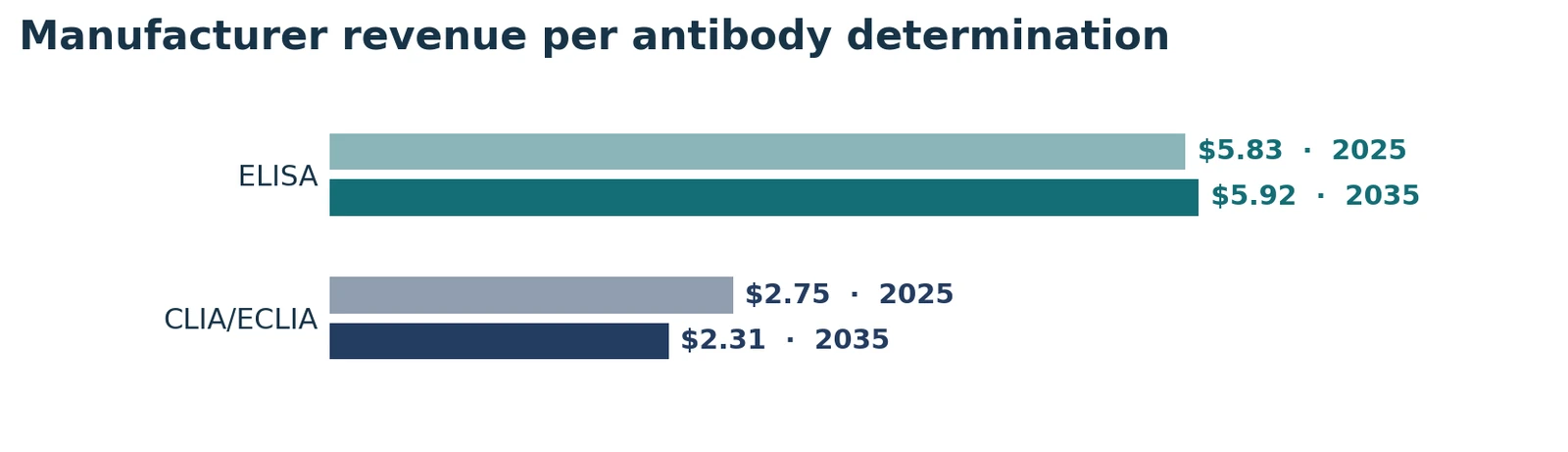
The difference has a direct bearing on a supplier’s forecast. At the projected 2035 CLIA/ECLIA volume of 27.48 million determinations, a 10-cent change in average manufacturer revenue per result changes annual global revenue for the format by about $2.75 million, holding volume constant. The same 10-cent change across the projected 12.79 million ELISA determinations changes ELISA revenue by about $1.28 million. A modest change in tender prices or in the countries supplying new orders could easily reverse which format adds more dollars.
For laboratories, the useful comparison is the total cost of delivering a result on schedule. A plate-based kit can be economical when orders fill the available wells. A smaller batch spreads control and staff costs over fewer reportable results. An automated analyzer can reduce waiting between runs, but the commercial terms for its reagents and the time the instrument already spends on other assays still matter. Two laboratories receiving the same reagent quote can reasonably reach different purchasing decisions.
The purchasing decision turns on the antibody menu
Before switching platforms, a laboratory needs evidence on the specific antibodies it intends to report. A 2025 study by Alexander Lenard and colleagues compared an ELISA platform with two automated chemiluminescence analyzers for three diabetes-related autoantibodies. Agreement varied by antibody and instrument. For zinc transporter 8 autoantibodies, one automated analyzer agreed closely with the laboratory’s existing method, while the other tended to give lower results in part of the measuring range.
The commercial implication is specific. A supplier can document the performance of each assay in its menu and show how its results compare with the method a buyer already uses. A demonstration of analyzer speed answers a different purchasing question. For a lab director deciding whether to move an established panel, a comparison covering the antibodies the laboratory actually reports can carry more weight than a broad claim about the platform’s performance.
Portfolio managers also have to account for multiplex assays, which the report tracks separately. Credence Research forecasts that multiplex kit and reagent sales will rise from $10 million in 2025 to $44.92 million in 2035. That is nearly $35 million of additional annual sales from a considerably smaller base. It helps explain how ELISA and CLIA/ECLIA can both grow substantially while their combined revenue share falls from about 61% to 58%.
The two $42 million gains point to different commercial decisions. An ELISA supplier can build its case around the plates a laboratory already processes, its regular order volume and the value of retaining a familiar method. A chemiluminescence supplier can build its case around access to a compatible analyzer and a realistic estimate of daily reagent use. In both cases, the strongest revenue forecast starts with orders the laboratory can run and results it can report with confidence.
Sources and methodology
Credence Research, Global Diabetes Autoantibody Testing Market, 2021 to 2035, pp. 42, 44, 51, 60 to 64, 98 to 99, 122 and 233. Volumes are modeled antibody determinations. Revenue excludes laboratory service fees and instrument sales. Dollar gains compare annual 2035 revenue with 2025. Method comparison: Lenard et al., Clinical Chemistry and Laboratory Medicine (2025).