| REPORT ATTRIBUTE | DETAILS |
|---|---|
| Historical Period | 2020-2023 |
| Base Year | 2024 |
| Forecast Period | 2025-2032 |
| France Ultrafast CT Scan Devices Market Size 2024 | USD360.51 million |
| France Ultrafast CT Scan Devices Market, CAGR | 5.99% |
| France Ultrafast CT Scan Devices Market Size 2032 | USD573.95 million |
Market Overview
The France Ultrafast CT Scan Devices Market is projected to grow from USD360.51 million in 2024 to an estimated USD573.95 million by 2032, with a compound annual growth rate (CAGR) 5.99% from 2025 to 2032. This growth reflects a rising demand for advanced imaging technologies that offer high-speed, high-resolution diagnostic capabilities with minimal radiation exposure.
The market is primarily driven by increasing healthcare expenditure, technological innovation, and rising awareness about the benefits of early disease detection. Trends such as the adoption of AI-enabled imaging software, the demand for low-dose scanning solutions, and the push toward personalized diagnostics are significantly influencing the market trajectory. Additionally, the growing geriatric population and the expansion of private diagnostic centers across urban and semi-urban areas contribute to rising demand for ultrafast CT systems.
Geographically, key growth is concentrated in major metropolitan regions such as Île-de-France, Auvergne-Rhône-Alpes, and Provence-Alpes-Côte d’Azur, where hospital infrastructure and imaging capacity are more advanced. Leading players in the France ultrafast CT scan devices market include Siemens Healthineers, GE HealthCare, Philips Healthcare, and Canon Medical Systems, all of which are actively investing in R&D to enhance device performance and user interface for better clinical outcomes.
Market Insights
- The France Ultrafast CT Scan Devices Market is poised for significant growth, projected to increase from USD 360.51 million in 2024 to USD 573.95 million by 2032, with a CAGR of 5.99% from 2025 to 2032.
- The Global Ultrafast CT Scan Devices Market is projected to grow from USD 9,765.51 million in 2024 to an estimated USD 15,858.58 million by 2032, with a compound annual growth rate (CAGR) of 6.25% from 2025 to 2032.
- Increasing prevalence of chronic diseases such as cardiovascular disorders and cancer is driving the demand for advanced imaging systems like ultrafast CT devices, enabling timely diagnosis and treatment.
- The integration of artificial intelligence (AI) and automation in ultrafast CT devices is enhancing diagnostic accuracy and reducing scan times, contributing to market expansion.
- The substantial cost associated with procurement, installation, and maintenance of ultrafast CT systems is a key restraint limiting their widespread adoption, especially in smaller healthcare facilities.
- Regions such as Île-de-France, Auvergne-Rhône-Alpes, and Provence-Alpes-Côte d'Azur lead in market growth due to better healthcare infrastructure and increased demand for advanced imaging technology.
- The expansion of private diagnostic centers, particularly in urban and semi-urban areas, is fueling demand for ultrafast CT systems, enhancing accessibility and imaging capacity.
- Stringent regulatory requirements, including compliance with CE marking and medical device regulations, pose challenges for manufacturers and healthcare providers in terms of product development and market entry.
Report Scope
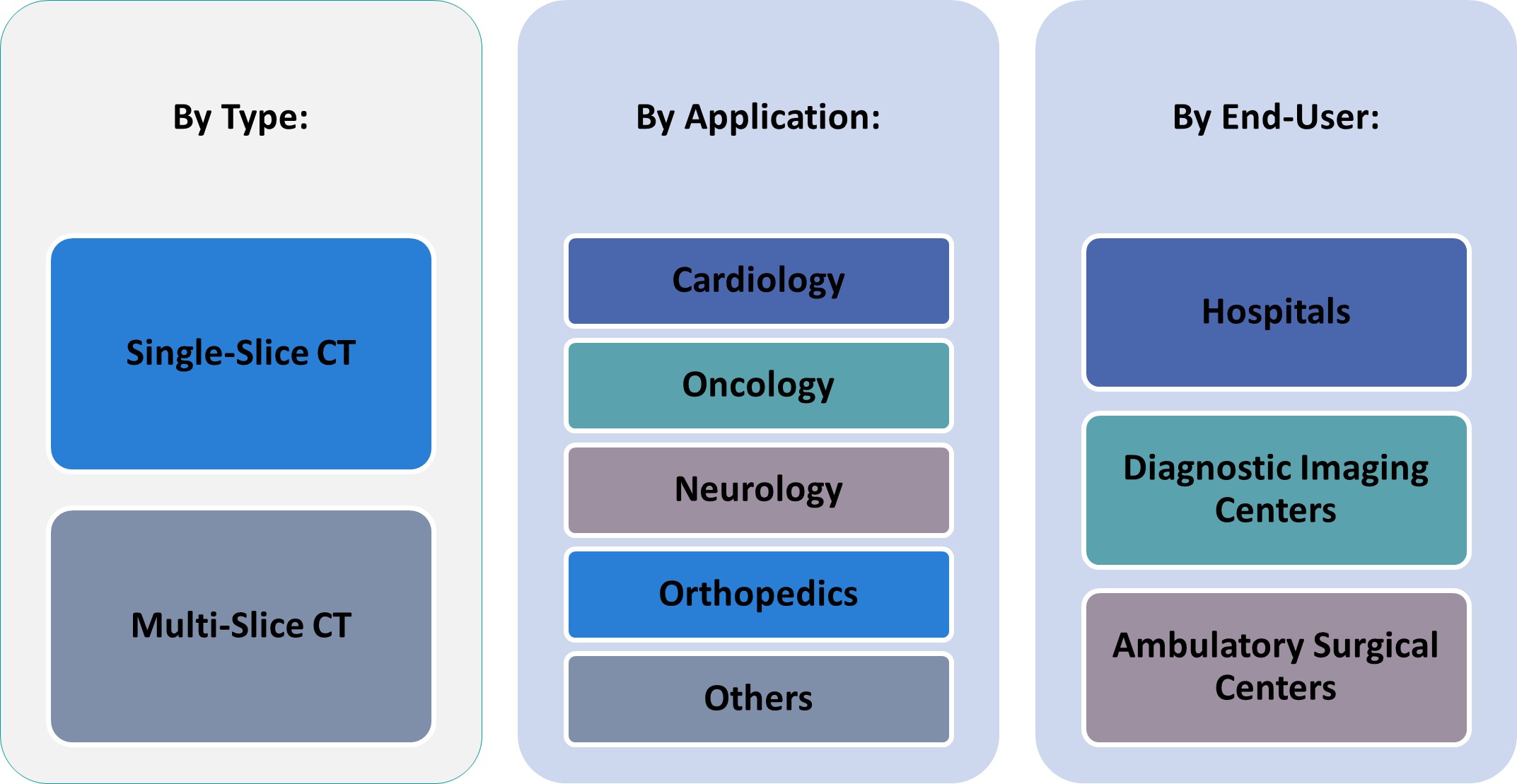
This report segments the France Ultrafast CT Scan Devices Market as follows:
Market Drivers
Rising Burden of Chronic Diseases and Aging Population
The increasing incidence of chronic diseases, particularly cardiovascular disorders, cancer, and neurological conditions, serves as a critical driver for the France Ultrafast CT Scan Devices Market. France faces a steadily aging population, with estimates indicating that by 2030, nearly one-third of its citizens will be aged 60 or older. As age is a significant risk factor for various chronic illnesses, demand for sophisticated diagnostic imaging solutions is accelerating. Ultrafast CT scan devices, for instance, offer the ability to detect anomalies at an early stage, enabling timely intervention and improving patient outcomes. Moreover, these devices help physicians visualize soft tissues, bones, and blood vessels in real time, aiding in the quick diagnosis of life-threatening conditions such as stroke and coronary artery disease. The growing prevalence of lifestyle-related health issues such as obesity, diabetes, and hypertension further fuels the need for frequent and precise diagnostic imaging. Consequently, healthcare providers across France are increasingly investing in advanced ultrafast CT systems to meet the rising diagnostic demands, enhance patient care quality, and optimize treatment pathways.
Technological Advancements Enhancing Imaging Capabilities
Technological innovation plays a pivotal role in propelling the growth of the France Ultrafast CT Scan Devices Market. Manufacturers are continually introducing devices equipped with advanced features such as dual-source technology, spectral imaging, iterative reconstruction algorithms, and artificial intelligence (AI) integration. These technological advancements have significantly improved the speed, accuracy, and safety of CT scans. Modern ultrafast CT systems, for instance, can capture high-resolution images within milliseconds, reducing motion artifacts and delivering superior diagnostic clarity even for complex anatomical structures. AI-powered CT scanners can also automate image segmentation, anomaly detection, and report generation, thereby accelerating clinical workflows and enhancing diagnostic efficiency. Furthermore, innovations aimed at minimizing radiation dose without compromising image quality address a major concern among patients and healthcare providers, fostering greater acceptance of CT imaging. Companies such as Siemens Healthineers and GE HealthCare are at the forefront of this technological evolution, investing heavily in R&D to develop next-generation devices that align with the needs of French hospitals and diagnostic centers in Medical Imaging Market Report. The integration of cutting-edge technologies is not only improving diagnostic precision but also broadening the scope of CT applications, from oncologynd cardiology to emergency medicine and orthopedics.
Increased Healthcare Investments and Infrastructure Modernization
France’s healthcare sector is undergoing significant modernization, driven by both public and private investments aimed at upgrading diagnostic infrastructure. Government initiatives under the "Ma Santé 2022" healthcare reform plan emphasize improving access to advanced medical technologies, particularly in underserved and rural regions. Public hospitals and private clinics are expanding their imaging capabilities by acquiring state-of-the-art equipment, including ultrafast CT systems, to deliver higher-quality care and reduce diagnostic waiting times. The COVID-19 pandemic further highlighted the critical need for advanced diagnostic tools, prompting accelerated investments in imaging technologies. Moreover, rising health insurance coverage and supportive reimbursement policies for diagnostic imaging are encouraging healthcare providers to adopt newer, faster CT technologies. The increasing focus on outpatient care and ambulatory diagnostic centers is also driving demand for compact, efficient ultrafast CT scanners that offer high throughput and minimal installation requirements. As France continues to prioritize healthcare digitization and equipment upgrades, the ultrafast CT scan devices market stands to benefit significantly from these investments in both urban and regional healthcare settings.
Growing Demand or Low-Dose Imaging and Patient-Centric Solutions
The rising awareness among patients and healthcare professionals about the risks associated with radiation exposure is intensifying the demand for low-dose imaging solutions. Traditional CT scans, while highly effective, have often been associated with relatively high radiation doses, which can elevate long-term health risks, particularly in pediatric and repeat imaging populations. In response, ultrafast CT manufacturers have developed innovative dose-reduction technologies, such as automated exposure control, dose modulation software, and advanced detector materials that maintain excellent image quality while significantly lowering radiation levels. This shift toward safer imaging practices aligns with France’s broader public health goals of minimizing unnecessary radiation exposure and promoting patient safety. Additionally, healthcare providers are increasingly adopting patient-centric approaches, focusing on enhancing patient comfort, reducing scan times, and improving overall diagnostic experiences. Ultrafast CT devices contribute to these goals by delivering rapid, accurate scans with minimal discomfort, thereby improving patient satisfaction and compliance. The convergence of low-dose technology with faster, more comfortable scanning processes is making ultrafast CT systems an attractive choice for French healthcare providers aiming to balance diagnostic excellence with patient safety and well-being.
Market Trends
Integration of Artificial Intelligence and Automation in Imaging
A major trend reshaping the France Ultrafast CT Scan Devices Market is the increasing integration of artificial intelligence (AI) and automation technologies in imaging systems. AI algorithms now assist in tasks such as image reconstruction, noise reduction, organ segmentation, and automated anomaly detection, significantly reducing diagnostic time and minimizing human error. For instance, the Assistance Publique-Hôpitaux de Paris has implemented AI-powered imaging solutions for radiology and pathology, improving diagnostic efficiency in Medical Imaging Market Report. Ultrafast CT devices equipped with AI tools can swiftly process vast volumes of data, allowing radiologists to focus more on interpretation and clinical decision-making. Furthermore, AI-driven predictive analytics help physicians assess disease progression and personalize treatment plans more accurately. Companies are also developing AI-enabled workflow solutions that automate routine imaging tasks, enhance reporting speed, and improve the overall efficiency of radiology departments. In France, hospitals and private imaging centers are actively adopting AI-integrated CT scanners to optimize operational efficiency and cope with rising diagnostic volumes, especially as the demand for early disease detection continues to surge. The government’s emphasis on healthcare digitization under national health reforms further supports this trend, creating a favorable ecosystem for the rapid deployment of AI-driven ultrafast CT technologies across the country.
Rising Demand for Portable and Compact Ultrafast CT Systems
The France Ultrafast CT Scan Devices Market is witnessing growing demand for portable and compact CT systems that offer flexibility and accessibility, particularly in emergency and outpatient settings. Traditional fixed-site CT systems, while highly effective, often require significant installation space and are less accessible for critical care environments. In contrast, newer ultrafast CT devices are being designed with compact footprints, mobility features, and minimal installation requirements, making them ideal for use in intensive care units (ICUs), emergency rooms, and smaller diagnostic centers. French healthcare providers are increasingly investing in mobile ultrafast CT units to deliver immediate diagnostic imaging at the point of care, enabling faster clinical decisions in time-sensitive situations such as trauma, stroke, and cardiac emergencies. This trend is especially prominent in rural and semi-urban regions where access to large hospital infrastructure is limited. Moreover, portable CT systems reduce patient movement, lower transportation costs, and enhance patient comfort, aligning well with the growing emphasis on decentralized and patient-centered healthcare delivery models. As France continues to expand its outpatient and home-care services, the demand for flexible, ultrafast imaging solutions is set to grow steadily.
Emphasis on Low-Dose Imaging Techniques and Patient Safety
Patient safety remains a paramount concern across the French healthcare sector, and the Ultrafast CT Scan Devices Market is responding through advancements in low-dose imaging techniques. Traditional CT imaging has faced scrutiny due to potential long-term risks associated with repeated radiation exposure. In response, manufacturers are incorporating innovative dose-reduction technologies such as iterative reconstruction algorithms, advanced X-ray tube designs, and automated exposure control systems. These developments allow for significant reductions in radiation doses without compromising diagnostic quality, ensuring safer imaging practices, particularly for vulnerable groups like pediatric and elderly patients. Healthcare institutions across France are increasingly adopting ultrafast CT systems that prioritize low-dose scanning protocols, aligning with national health guidelines focused on minimizing radiation exposure. Patient education initiatives highlighting the benefits of low-dose CT imaging are also gaining traction, encouraging broader acceptance of CT-based diagnostics. The heightened focus on patient-centric care models, combined with the regulatory push for enhanced imaging safety, is establishing low-dose ultrafast CT technology as a standard requirement in both public and private healthcare settings in France.
Growing Adoption of Spectral and Dual-Energy CT Technologies
The adoption of spectral and dual-energy CT technologies represents a significant advancement in the France Ultrafast CT Scan Devices Market. These technologies allow clinicians to capture multiple energy levels during a single scan, enabling superior tissue characterization, better lesion detection, and improved diagnostic accuracy across various clinical applications such as oncology, cardiology, and musculoskeletal imaging. Dual-energy CT can differentiate materials based on their atomic number, providing additional diagnostic information that is not available through conventional CT imaging. French hospitals and specialized imaging centers are increasingly integrating dual-energy CT systems to enhance diagnostic precision and reduce the need for follow-up imaging or invasive procedures. Furthermore, spectral CT's ability to generate virtual non-contrast images and reduce contrast agent usage is gaining importance, particularly for patients with renal insufficiencies. Major manufacturers are continually refining spectral and dual-energy imaging platforms, making them more accessible and user-friendly for routine clinical practice. As precision medicine initiatives grow across France, the demand for high-performance ultrafast CT systems equipped with spectral imaging capabilities is expected to intensify, reinforcing this trend as a key pillar of future market development.
Market Challenges
High Costs Associated with Procurement, Installation, and Maintenance
One of the primary challenges facing the France Ultrafast CT Scan Devices Market is the substantial cost burden associated with the procurement, installation, and maintenance of these advanced imaging systems. Ultrafast CT scanners are technologically sophisticated devices requiring significant upfront investment, often exceeding the budgets of smaller hospitals and diagnostic centers, particularly in rural or semi-urban areas. For instance, the French National Health Insurance System evaluates imaging costs based on depreciation and operational expenses, which significantly impact budget allocations for CT scan devices. In addition to equipment costs, facilities must invest heavily in infrastructure modifications to accommodate large machines, including room shielding, HVAC adjustments, and specialized power supplies. Moreover, ongoing operational expenses-such as maintenance contracts, software upgrades, and staff training-add to the financial strain. Although public healthcare institutions in France benefit from government support and reimbursement mechanisms, many private healthcare providers face limitations in acquiring the latest ultrafast CT technologies. France’s 2025 health budget, despite an increase in funding, continues to face constraints that affect healthcare infrastructure investments. The high capital requirement may also delay purchasing decisions and technology adoption, leading some facilities to continue relying on older, slower CT models. Consequently, the financial challenge of acquiring and maintaining ultrafast CT systems restricts market penetration and slows the pace of technological modernization in certain segments of the French healthcare landscape.
Regulatory Compliance and Stringent Quality Standards
Navigating regulatory compliance and adhering to stringent quality standards present another significant challenge in the France Ultrafast CT Scan Devices Market. Medical imaging devices are subject to rigorous certification processes under French and European Union regulations, including CE marking requirements and conformity with the Medical Devices Regulation (MDR) framework. Ultrafast CT devices must demonstrate not only clinical efficacy but also radiation safety, cybersecurity resilience, and data privacy protections. Meeting these evolving standards requires continuous innovation and frequent product modifications, which can extend product development cycles and increase costs for manufacturers. Furthermore, regulatory delays or uncertainties-especially related to new AI-driven features integrated into imaging platforms-may hinder market entry and slow the availability of cutting-edge technologies. Healthcare providers also face complex administrative procedures when upgrading imaging equipment, including tender processes, technical evaluations, and licensing requirements. These regulatory and compliance barriers, although essential for ensuring patient safety and device reliability, contribute to market complexities and create hurdles for rapid deployment and widespread adoption of ultrafast CT systems in France.
Market Opportunities
Expansion of Outpatient and Emergency Care Facilities
The expansion of outpatient and emergency care facilities in France presents a significant opportunity for the growth of the Ultrafast CT Scan Devices Market. With increasing demand for faster diagnostics and improved patient outcomes, healthcare providers are focusing on enhancing diagnostic capabilities in outpatient settings, emergency rooms, and mobile healthcare units. Ultrafast CT devices, which offer rapid scanning and high-quality images with minimal radiation, are becoming essential tools in emergency departments for trauma care, stroke diagnosis, and cardiac emergencies. As the French healthcare system continues to embrace decentralized care models and shift toward treating patients in outpatient settings, the demand for ultrafast CT systems is expected to increase. These systems can enhance workflow efficiency, reduce patient wait times, and enable immediate diagnostics at the point of care. Additionally, the adoption of portable and compact CT units in emergency care vehicles and smaller, rural medical centers further amplifies this opportunity, providing critical diagnostic support in underserved regions. The increasing availability of ultrafast CT devices in these settings will not only improve patient outcomes but also drive market growth in both urban and rural healthcare environments.
Technological Advancements in AI and Personalized Medicine
Technological advancements in artificial intelligence (AI) and personalized medicine present a valuable opportunity for the France Ultrafast CT Scan Devices Market. AI-driven innovations, such as automated image interpretation and real-time diagnostic support, are transforming the way ultrafast CT scanners operate. The integration of AI enhances diagnostic accuracy, reduces human error, and accelerates clinical decision-making, which is especially important in time-sensitive situations like stroke or trauma. Furthermore, as personalized medicine becomes more prevalent in France, there is an increasing need for precise, tailored diagnostic imaging solutions. Ultrafast CT systems equipped with AI can facilitate personalized treatment plans by providing detailed, high-resolution images that help clinicians identify subtle variations in tissue and organ structure. These advancements are likely to increase the demand for advanced imaging systems in a wide range of specialties, including oncology, cardiology, and neurology, offering new growth opportunities for manufacturers and healthcare providers. The continued evolution of AI and personalized healthcare strategies will drive further innovation and adoption of ultrafast CT technologies, expanding the market potential in the coming years.
Market Segmentation Analysis
By Type
The ultrafast CT scan devices market in France is primarily segmented into Single-Slice CT and Multi-Slice CT scanners. Multi-Slice CT scanners dominate the market due to their advanced imaging capabilities, offering high-speed scanning with multiple slices per rotation. This technology enables the creation of detailed 3D images of the body's internal structures, making it particularly valuable in complex diagnostic applications such as cardiovascular imaging, oncology, and neurology. The ability to capture more slices in a single rotation reduces scanning time and improves diagnostic efficiency, making it ideal for emergency departments and outpatient centers where speed is critical. Single-Slice CT scanners, though less common, are still used in specific diagnostic settings due to their lower cost and simpler functionality. However, with increasing demand for higher-resolution imaging, the multi-slice CT segment is poised to maintain a larger share of the market.
By Application
The application segment of the France Ultrafast CT Scan Devices Market is divided into several key therapeutic areas, including cardiology, oncology, neurology, orthopedics, and others. Among these, cardiology holds a significant share, driven by the rising prevalence of heart diseases in the aging population. Ultrafast CT scans allow for fast, detailed imaging of coronary arteries, aiding in the diagnosis of conditions like coronary artery disease and myocardial infarctions. Oncology is another crucial application, where multi-slice CT devices help in early cancer detection and monitoring of tumor growth. Neurology also relies heavily on ultrafast CT for diagnosing conditions like stroke, brain tumors, and traumatic brain injuries. Orthopedics benefits from these advanced imaging techniques as well, particularly in assessing bone fractures and joint abnormalities. The “others” category includes applications in emergency medicine, pediatrics, and more, all of which benefit from the speed and precision of ultrafast CT imaging.
Segments
Based on Type
- Single-Slice CT
- Multi-Slice CT
Based on Application
- Cardiology
- Oncology
- Neurology
- Orthopedics
- Others
Based on End User
- Hospitals
- Diagnostic Imaging Centers
- Ambulatory Surgical Centers
Based on Region
- Île-de-France
- Auvergne-Rhône-Alpes
- Provence-Alpes-Côte d'Azur
Regional Analysis
Île-de-France Region (30%)
Île-de-France, which includes the capital city Paris, is the largest market for ultrafast CT scan devices in France, commanding the highest market share at approximately 30%. This region is home to some of the country’s most advanced healthcare facilities, including large hospitals, private clinics, and specialized diagnostic centers. With a high density of medical infrastructure, demand for ultrafast CT scanners is driven by the need for rapid diagnostics in emergency departments, cardiovascular imaging, and oncology services. The concentration of top-tier hospitals and research centers, coupled with ongoing public and private investments in healthcare modernization, positions Île-de-France as a key driver of the market.
Auvergne-Rhône-Alpes Region (22%)
The Auvergne-Rhône-Alpes region, located in southeastern France, holds a significant market share of around 22%. This region is a prominent healthcare hub, with several large cities, including Lyon, known for their medical and technological advancements. The region has witnessed substantial investments in healthcare infrastructure, particularly in diagnostic imaging, to address the growing demand for advanced medical services. The adoption of ultrafast CT scan devices in both urban hospitals and regional diagnostic centers is driving this growth. Additionally, the region's aging population, along with increasing cases of chronic diseases, further supports the need for sophisticated imaging solutions.
Key players
- Siemens Healthineers
- Philips Healthcare
- Canon Medical Systems Corporation
- GE HealthCare
- Fujifilm Holdings Corporation
- Hitachi Healthcare
- Shimadzu Corporation
- Carestream Health
- Esaote SpA
- Agfa HealthCare
Competitive Analysis
The France Ultrafast CT Scan Devices Market is highly competitive, with several key players vying for market share through technological innovation and strategic partnerships. Siemens Healthineers and Philips Healthcare are dominant players, offering cutting-edge imaging solutions with advanced AI integration and low-dose scanning technologies. GE HealthCare and Canon Medical Systems also hold significant positions, focusing on enhancing image quality and reducing scan times, which are critical in emergency care settings. Companies like Fujifilm Holdings and Hitachi Healthcare differentiate themselves through their robust product portfolios and focus on improving diagnostic precision across various specialties, including cardiology and oncology. Meanwhile, Shimadzu Corporation and Carestream Health emphasize cost-effective solutions without compromising quality, targeting smaller diagnostic centers and rural healthcare facilities. The presence of these players, each with unique technological strengths, makes the competitive landscape dynamic and fosters continuous innovation within the ultrafast CT scan market in France.
Recent Developments
- In February 2024, Canon Medical Systems Corporation completed its second global installation of a photon-counting CT system at Radboud University Medical Center in the Netherlands, initiating clinical research led by Prof. Mathias Prokop.
- In December 2024, Samsung Medison showcased an enhanced portfolio at RSNA 2024, including the floor-mounted digital X-ray GF 85 and a pediatric cardiac-specific ultrasound probe.
- In December 2024, United Imaging Healthcare introduced the uMI Panvivo PET/CT system at RSNA 2024, featuring industry-leading NEMA PET spatial resolution and AI-driven 3D camera technology.
- In March 2025, Mindray Medical International introduced the Resona A20 at ECR 2025, featuring Acoustic Intelligence Technology to elevate ultrasound imaging capabilities.
- In March 2025, Shimadzu Corporation celebrated its 150th anniversary and opened a new R&D center in Boston, focusing on customer-oriented development to expand business in the pharmaceutical field.
- In February 2025, Esaote SpA presented integrated medical imaging solutions and unveiled innovations in ultrasound technology at ECR 2025, emphasizing AI integration to optimize workflows and improve image quality.
- In March 2025, Agfa HealthCare showcased the next generation of Enterprise Imaging at ECR 2025, focusing on innovations that support a more sustainable future for clinical teams.
Market Concentration and Characteristics
The France Ultrafast CT Scan Devices Market exhibits moderate market concentration, with a few dominant players controlling the majority of the market share. Siemens Healthineers, Philips Healthcare, and GE HealthCare lead the market, driven by their strong technological advancements, extensive product portfolios, and global reach. These companies are focused on innovation, particularly in areas such as AI integration, low-dose imaging, and high-speed scanning, ensuring they maintain a competitive edge. Smaller players like Fujifilm Holdings, Hitachi Healthcare, and Shimadzu Corporation contribute to the market by offering specialized or cost-effective solutions. The market is characterized by continuous technological evolution, with key players investing heavily in R&D to meet the growing demand for faster, more accurate diagnostics. While the major players dominate the high-end market, the increasing availability of portable and compact ultrafast CT systems is fostering a more fragmented market, particularly in rural and underserved areas.
Report Coverage
The research report offers an in-depth analysis based on Type, Application, End User and Region. It details leading market players, providing an overview of their business, product offerings, investments, revenue streams, and key applications. Additionally, the report includes insights into the competitive environment, SWOT analysis, current market trends, as well as the primary drivers and constraints. Furthermore, it discusses various factors that have driven market expansion in recent years. The report also explores market dynamics, regulatory scenarios, and technological advancements that are shaping the industry. It assesses the impact of external factors and global economic changes on market growth.Lastly, it provides strategic recommendations for new entrants and established companies to navigate the complexities of the market.
Future Outlook
- The market will continue to evolve with the integration of artificial intelligence (AI), enhancing diagnostic accuracy and improving workflow efficiency. AI-powered ultrafast CT devices will become standard in clinical practices, automating image analysis and reporting.
- There will be an increasing demand for portable and compact ultrafast CT systems, especially in emergency rooms and outpatient settings. These systems will enable quick diagnostics at the point of care, reducing patient wait times and improving outcomes.
- Mobile and compact CT systems will drive market growth in rural regions, providing advanced diagnostic capabilities to underserved populations. This trend aligns with France’s efforts to decentralize healthcare services and increase accessibility.
- With the rising burden of cardiovascular diseases, cancer, and neurological disorders, ultrafast CT devices will play a critical role in early detection and personalized treatment plans. The need for faster, high-resolution imaging will escalate.
- Both public and private healthcare investments will continue to support the adoption of ultrafast CT technologies. France's healthcare reform plans, including initiatives for modernization and digitization, will encourage more hospitals and clinics to upgrade to advanced imaging systems.
- The market will see more emphasis on low-dose imaging technologies, driven by increased awareness of radiation risks. Manufacturers will invest in developing devices thatbalance image quality with minimized radiation exposure, particularly for pediatric and elderly patients.
- Key players will increasingly collaborate with academic institutions and research centers to accelerate the development of next-generation CT scanners. These partnerships will drive innovation in both hardware and software, enhancing the capabilities of ultrafast CT devices.
- AI and machine learning will see broader adoption in France, facilitating automated image interpretation, lesion detection, and predictive analytics. These technologies will be crucial for improving diagnostic precision and reducing diagnostic time.
- Ultrafast CT systems will become more customized to cater to specialized applications such as oncology, cardiology, and neurology. Personalized imaging solutions will meet the specific needs of these high-demand sectors, enhancing diagnostic outcomes.
- As more players enter the market, competition will intensify, leading to innovations in both low-cost and high-performance CT systems. This market fragmentation will cater to a wide range of healthcare providers, from large hospitals to smaller diagnostic centers.

Request a Free Sample
Fill in your details and we'll send you a free sample report.
- Sample data tables & charts
- Research methodology
Need a Custom Version of This Report?
Tailor the scope, geography, or segments to your exact requirements.
- Custom geography or segment scope
- Direct access to our analyst team
Frequently Asked Questions
What is the projected market size of the France Ultrafast CT Scan Devices Market in 2023 and 2032?
What are the key drivers of the France Ultrafast CT Scan Devices Market?
Which regions in France are seeing the highest growth in ultrafast CT scan devices?
What role does AI play in the growth of the France Ultrafast CT Scan Devices Market?
Table of Content
Chapter 1. Report Introduction
- 1.1 Report Description & Purpose
- 1.1.1 Report Title & Market Definition
- 1.1.2 Unique Selling Propositions (USP) & Key Differentiators
- 1.1.3 Value Proposition for Stakeholders
- 1.2 Research Objectives
- 1.2.1 Market Sizing Objectives (Volume & Revenue) (Volume Where Applicable)
- 1.2.2 Segmentation Objectives
- 1.2.3 Competitive Intelligence Objectives
- 1.2.4 Forecast & Scenario Objectives
- 1.3 Report Scope
- 1.3.1 France Ultrafast CT Scan Devices Scope – Segments & Subsegments Covered
- 1.3.2 Geographic Scope – Selected Country & Subnational Markets Covered
- 1.3.3 Historical Period, Base Year & Forecast Period (2024; forecast to 2024)
- 1.3.4 Inclusions & Exclusions
- 1.4 Industry Classification & Applicable Codes
- 1.5 Currency, Measurement Units & Valuation Basis
- 1.6 Target Stakeholders
- 1.7 Limitations & Assumptions
Chapter 2. Executive Summary
- 2.1 France Ultrafast CT Scan Devices Snapshot
- 2.1.1 Market Size – Historical (2024) & Forecast (2024-2024) (2024: USD 360.51 million → 2024: USD 360.51 million)
- 2.1.2 Volume & Revenue – National Totals (Volume Where Applicable)
- 2.1.3 Key Market Highlights – Top Five Facts
- 2.2 France Ultrafast CT Scan Devices Segmentation Snapshot
- 2.2.1 Market Split by Subnational Area – 2024 vs. 2024
- 2.3 Competitive Snapshot
- 2.3.1 Top 10 Players by Revenue Share – 2024
- 2.3.2 Top 10 Players by Volume Share – 2024 (Volume Where Applicable)
- 2.3.3 Recent Strategic Developments (18-Month Summary)
- 2.4 Key Investment Highlights & Strategic Conclusions
Chapter 3. France Ultrafast CT Scan Devices Dynamics & Industry Analysis
- 3.1 Market Overview & Context
- 3.1.1 France Ultrafast CT Scan Devices Position in the Broader Industry Value Chain
- 3.1.2 Demand Structure & Purchasing Dynamics
- 3.1.3 Market Maturity & Development Stage Across Domestic Markets
- 3.2 France Ultrafast CT Scan Devices Drivers
- 3.3 France Ultrafast CT Scan Devices Restraints & Challenges
- 3.4 France Ultrafast CT Scan Devices Opportunities
- 3.5 Porter's Five Forces Analysis
- 3.5.1 Threat of New Entrants
- 3.5.2 Bargaining Power of Suppliers
- 3.5.3 Bargaining Power of Buyers
- 3.5.4 Threat of Substitutes
- 3.5.5 Competitive Rivalry – Intensity Assessment
- 3.6 France Ultrafast CT Scan Devices Value Chain Analysis
- 3.6.1 Upstream – Key Inputs, Resources & Suppliers
- 3.6.1.1 Key Input/Resource 1
- 3.6.1.2 Key Input/Resource 2
- 3.6.1.3 Key Input/Resource 3
- 3.6.2 Midstream – Core Operations & Value Creation
- 3.6.2.1 Operating Model & Process Overview
- 3.6.2.2 Key Operating Locations & Capabilities by Company
- 3.6.3 Downstream – Market Channels & End Users
- 3.6.3.1 Direct Sales & Customer Engagement Channels
- 3.6.3.2 Indirect Sales, Intermediaries & Partner Channels
- 3.6.4 Value Chain Profitability Analysis
- 3.6.1 Upstream – Key Inputs, Resources & Suppliers
- 3.7 PESTEL Analysis
- 3.7.1 Political Factors
- 3.7.2 Economic Factors
- 3.7.3 Social Factors
- 3.7.4 Technological Factors
- 3.7.5 Environmental Factors
- 3.7.6 Legal Factors
- 3.8 France Ultrafast CT Scan Devices Supply Chain Analysis
- 3.8.1 Critical Input & Resource Availability Risk Assessment
- 3.8.2 Supplier & Operational Concentration Risk (Geographic Exposure)
- 3.8.3 Supply & Service Disruption Impact Analysis
- 3.9 National & Subnational Regulatory Landscape
Note: The regulatory and policy landscape section covers regulations based on their applicability to the market, France Ultrafast CT Scan Devices category, geography, and scope of the study. Only regulatory frameworks with a material impact on operations, compliance, trade, sustainability, or market access are analyzed in detail.
Chapter 4. Key Investment Pockets & Opportunity Analysis
- 4.1 France Ultrafast CT Scan Devices Attractiveness Analysis
- 4.1.1 By Subnational Area – Investment Attractiveness Matrix (Market Size × CAGR)
- 4.2 Absolute Revenue Growth Opportunity
- 4.2.1 By Subnational Area – Absolute Revenue Growth Through 2024
- 4.3 Incremental Demand Opportunity
- 4.3.1 By Subnational Area – Incremental Demand Through 2024
- 4.3.2 Segment – Incremental Demand
- 4.4 Emerging Submarket Opportunity Deep Dive (Subject to Applicability)
- 4.5 Priority Domestic Market Opportunity Scorecards
- 4.5.1 Priority Domestic Market 1
- 4.5.2 Priority Domestic Market 2
- 4.5.3 Priority Domestic Market 3
- 4.5.4 Priority Domestic Market 4
Note: Domestic market scorecards cover relevant states, provinces, territories, cities, or economic zones within the selected country. Numbered entries are populated with market names suited to the national administrative structure and research scope. Geographic share tables use one consistent, nonoverlapping set of areas.
Chapter 5. France Ultrafast CT Scan Devices Cross-Border Trade & Market Access Analysis
- 5.1 National Trade & International Partner Overview
- 5.1.1 Export Value by Destination Country (2024)
- 5.1.2 Export Volume by Destination Country (2024) (Where Applicable)
- 5.1.3 Import Value by Source Country (2024)
- 5.1.4 Import Volume by Source Country (2024) (Where Applicable)
- 5.1.5 National & Partner-Country Trade Balances (2024)
- 5.2 Export Analysis – Segment
- 5.2.1 Category 1 (Applicable Classification Code)
- 5.2.2 Category 2 (Applicable Classification Code)
- 5.2.3 Category 3 (Applicable Classification Code)
- 5.2.4 Category 4 (Applicable Classification Code)
- 5.2.5 Category 5 (Applicable Classification Code)
- 5.3 Import Analysis – Segment
- 5.3.1 Category 1 (Applicable Classification Code)
- 5.3.2 Category 2 (Applicable Classification Code)
- 5.3.3 Category 3 (Applicable Classification Code)
- 5.3.4 Category 4 (Applicable Classification Code)
- 5.3.5 Category 5 (Applicable Classification Code)
- 5.4 Cross-Border Pricing & Transaction Benchmarks
- 5.4.1 Export Pricing – Segment & Destination Country
- 5.4.2 Import Pricing – Segment & Source Country
- 5.4.3 Price Trends (2024)
- 5.5 Key Cross-Border Trade & Delivery Routes
- 5.5.1 Cross-Border Trade/Delivery Route 1
- 5.5.2 Cross-Border Trade/Delivery Route 2
- 5.5.3 Cross-Border Trade/Delivery Route 3
- 5.5.4 Cross-Border Trade/Delivery Route 4
- 5.5.5 Cross-Border Trade/Delivery Route 5
- 5.6 Trade Policy & Market Access Impact Assessment
- 5.6.1 Tariff & Non-Tariff Barriers
- 5.6.2 National Participation in Regional Trade & Economic Frameworks
- 5.6.3 Bilateral & Multilateral Trade Agreements
- 5.6.4 Cross-Border Operating, Licensing & Localization Requirements
Note: This chapter covers international trade relevant to France Ultrafast CT Scan Devices in the selected country. Exports are analyzed by destination and imports by source. Domestic interregional flows are excluded from international trade totals. Goods, services, and digital offerings use applicable classifications; volume and route analyses apply only where meaningful.
Chapter 6. Competitive Landscape & Company Benchmarking
- 6.1 France Ultrafast CT Scan Devices Concentration & Structure
- 6.1.1 Herfindahl-Hirschman Index (HHI) – the historical period vs. 2024
- 6.1.2 Leading, Mid-Sized & Emerging Player Structure
- 6.1.3 Multinational, National & Local Player Dynamics
- 6.2 France Ultrafast CT Scan Devices Share Analysis – 2024
- 6.2.1 National Revenue Share by Company
- 6.2.2 National Volume Share by Company (Volume Where Applicable)
- 6.2.3 Company Revenue Share by Subnational Area
- 6.2.4 Market Share Evolution (the historical period vs. 2024)
- 6.2.5 Company Market Share by Key Segment
- 6.2.6 Company Market Share by Customer Group
- 6.3 Operating Scale, Capacity & Infrastructure Analysis
- 6.3.1 National Operating Scale & Supply Capacity
- 6.3.2 Resource Utilization & Operating Efficiency
- 6.3.3 Output, Service Delivery & Activity Metrics
- 6.3.4 Operating Footprint & Infrastructure Map
- 6.3.5 Planned Operational & Capacity Expansion
- 6.4 France Ultrafast CT Scan Devices Competitive Benchmarking Matrix
- 6.4.1 Revenue, Growth, Profitability & Operating Metric Comparison
- 6.4.2 Channel Revenue Mix
- 6.4.3 Revenue Exposure Across Domestic Markets
- 6.4.4 R&D Intensity
- 6.4.5 Sustainability Maturity
- 6.5 Strategic Developments in France Ultrafast CT Scan Devices (Last 24 Months)
- 6.5.1 Mergers, Acquisitions & Divestments
- 6.5.2 New Products, Services & Solutions in France Ultrafast CT Scan Devices
- 6.5.3 Operational & Infrastructure Expansions
- 6.5.4 Strategic Alliances, Joint Ventures & Partnerships
- 6.5.5 Distribution Expansion & Market Entry
- 6.5.6 Sustainability & ESG Initiatives
- 6.6 Competitive Strategy Mapping
- 6.6.1 Leader, Challenger, Follower & Niche Classification
- 6.6.2 Pricing Strategy Comparison
- 6.6.3 Channel Strategy Matrix
Note: Strategic developments are included based on their materiality and the availability of reliable information.
Chapter 7. France Ultrafast CT Scan Devices – By Sales & Delivery Channel
- 7.1 Segment Overview
- 7.1.1 Volume & Revenue Split by Channel (2024 & 2024) (Volume Where Applicable)
- 7.1.2 Channel Mix Evolution (2024-2024)
Chapter 8. Subnational Market Analysis – Country Overview
- 8.1 Domestic Geographic Market Overview
- 8.1.1 Subnational Volume Share (Where Applicable)
- 8.1.2 Subnational Revenue Share
- 8.1.3 Market Volume by Subnational Area (Where Applicable)
- 8.1.4 Market Revenue by Subnational Area
- 8.1.5 Subnational Forecasts Through 2024
- 8.2 Cross-Area Segment Analysis Within the Country
- 8.2.1 By Sales & Delivery Channel
- 8.2.2 By Competitive Positioning & Price Tier
Chapter 9. France Ultrafast CT Scan Devices – Priority Domestic Market 1
Chapter 10. France Ultrafast CT Scan Devices – Priority Domestic Market 2
Chapter 11. France Ultrafast CT Scan Devices – Priority Domestic Market 3
Chapter 12. France Ultrafast CT Scan Devices – Priority Domestic Market 4
Chapter 13. France Ultrafast CT Scan Devices Company Profiles
- 13.1 [Company 01]
- 13.1.1 Company Overview
- 13.1.2 Key Management Personnel
- 13.1.3 Products & Services Portfolio
- 13.1.4 Financial Performance
- 13.1.5 Domestic Market Focus & Local Operating Presence
- 13.1.6 Recent Developments & Strategic Initiatives
Note: The company profile list is preliminary and may change based on research findings, market developments, data availability, and client requirements.
Chapter 14. Appendices
- Appendix A – List of Abbreviations & Acronyms
- Appendix B – Industry Classification Code Reference – Full Series
- Appendix C – Supply, Output & Operating Capacity Data Tables
- Appendix D – End-Use & Demand Base Tables
- Appendix E – Demand, Adoption & Usage Assumptions
- Appendix F – Pricing & Revenue Metric Reference Tables
- Appendix G – Company Operations & Infrastructure Database
- Appendix H – Cross-Border Trade & Activity Data Tables (Where Applicable)
- Appendix I – Regulatory Summary Tables
- Appendix J – Primary Research Participant List (Anonymized)
- Appendix K – Primary Research Questionnaire Framework
- Appendix L – Data Sources & Bibliography
- Appendix M – Market Size Divergence & Source Comparison
Chapter 15. Research Methodology
- 15.1 Research Framework & Philosophy
- 15.2 Secondary Research – Sources, Hierarchy & Data Extraction
- 15.3 Data Modeling – National Market Sizing & Subnational Allocation
- 15.4 Primary Research – Stakeholder Framework, LOI & Sample Sizes
- 15.5 Forecast Methodology – Regression, Scenario & Sensitivity Analysis
- 15.6 Quality Control – Four-Layer Validation Framework
- 15.7 Limitations & Standard Assumptions
- 15.8 Disclaimer