
| REPORT ATTRIBUTE | DETAILS |
|---|---|
| Historical Period | 2020-2023 |
| Base Year | 2024 |
| Forecast Period | 2025-2032 |
| Vietnam Ultrafast CT Scan Devices Market Size 2024 | USD27.54 million |
| Vietnam Ultrafast CT Scan Devices Market, CGR | 6.88% |
| Vietnam Ultrafast CT Scan Devices Market Size 2032 | USD46.89 million |
Market Overview
The Vietnam Ultrafast CT Scan Devices Market is projected to grow from USD27.54 million in 2024 to an estimated USD46.89 million by 2032, with a compound annual growth rate (CAGR) 6.88% from 2025 to 2032. This growth reflects the rising demand for advanced diagnostic imaging technologies in Vietnam’s evolving healthcare infrastructure.
Key market drivers include the rising prevalence of chronic diseases, growing awareness of preventive healthcare, and the increasing geriatric population requiring routine diagnostic imaging. Furthermore, the trend of technological advancement in CT imaging-such as motion correction, low radiation dose techniques, and AI-powered diagnostics-is fueling the adoption of ultrafast CT scanners. Vietnamese healthcare providers are gradually shifting towards value-based care, encouraging the use of efficient diagnostic tools that improve clinical workflows and reduce patient turnaround times.
Geographically, urban centers such as Hanoi and Ho Chi Minh City are witnessing faster adoption due to better infrastructure and higher healthcare investments. The market features key players including Siemens Healthineers, GE HealthCare, Canon Medical Systems, and Philips Healthcare, all of which are enhancing their local distribution and service networks. Their strategic focus on product innovation and partnerships with Vietnamese healthcare providers is strengthening their presence in the market.
Market Insights
- The Vietnam Ultrafast CT Scan Devices Market is projected to grow from USD27.54 million in 2024 to USD46.89 million by 2032, with a CAGR of 6.88%, driven by increasing demand for advanced diagnostic imaging technologies.
- The Global Ultrafast CT Scan Devices Market is projected to grow from USD 9,765.51 million in 2024 to an estimated USD 15,858.58 million by 2032, with a compound annual growth rate (CAGR) of 6.25% from 2025 to 2032.
- Rising prevalence of chronic diseases, growing awareness of preventive healthcare, and technological advancements such as AI integration and low radiation dose techniques are key drivers.
- High costs of acquisition and maintenance, along with a shortage of trained radiologists, may limit the widespread adoption of ultrafast CT scanners in smaller healthcare facilities.
- Urban centers like Hanoi and Ho Chi Minh City dominate the market, contributing to the highest adoption rates, while rural regions are expected to experience slower growth due to limited infrastructure.
- The Vietnamese government’s ongoing investment in healthcare infrastructure and medical technology will accelerate the adoption of ultrafast CT devices across both public and private sectors.
- Innovations in AI-powered diagnostics and multi-slice CT scanners, which offer faster, more accurate imaging, are enhancing the diagnostic capabilities of ultrafast CT systems.
- Key players such as Siemens Healthineers, GE HealthCare, and Philips Healthcare are strengthening their presence in the market through product innovation and strategic partnerships with local healthcare providers.
Report Scope
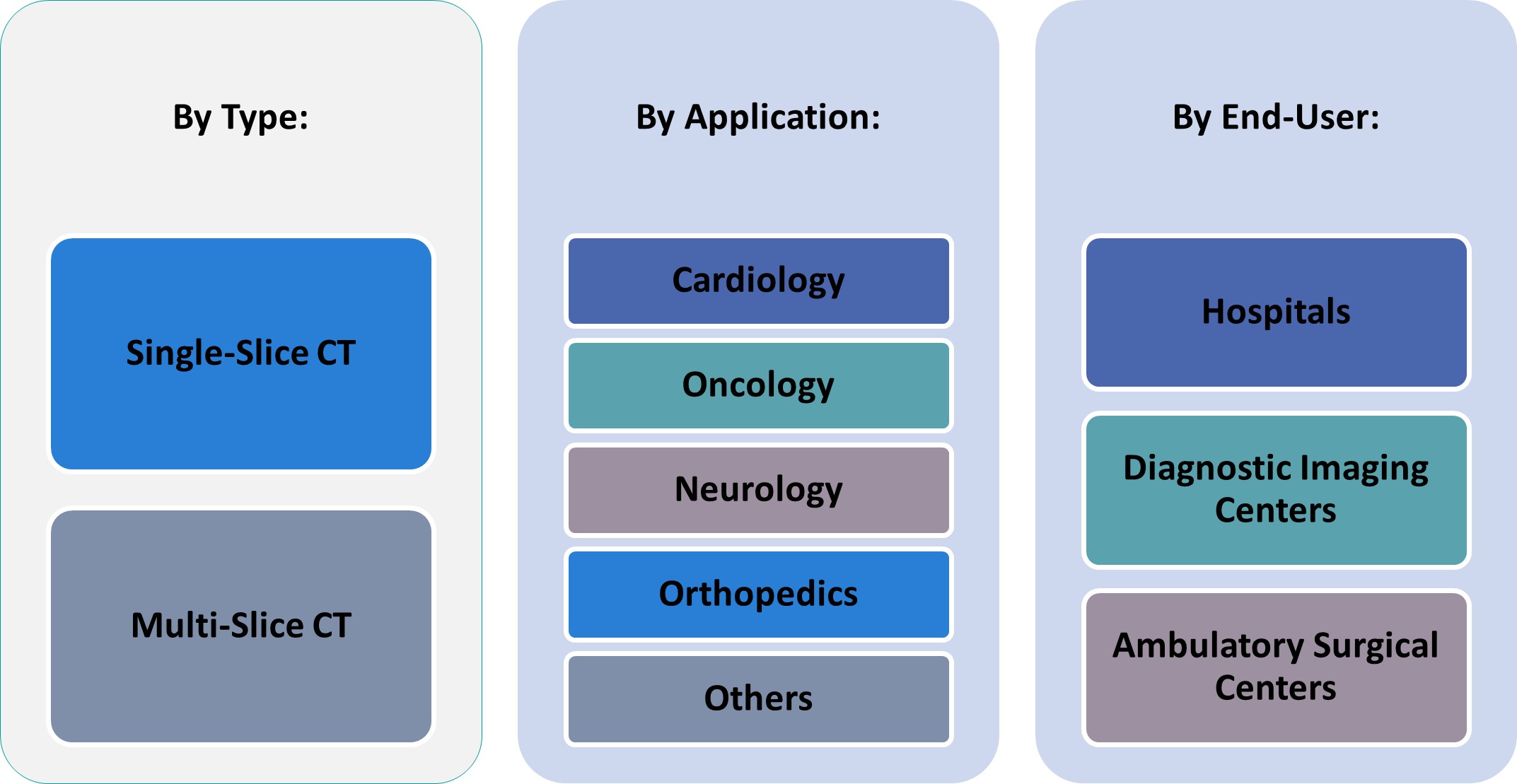
This report segments the Vietnam Ultrafast CT Scan Devices Market as follows:
Market Drivers
Rising Burden of Chronic and Lifestyle Diseases
The increasing incidence of chronic and lifestyle-related diseases is a significant driver for the Vietnam Ultrafast CT Scan Devices Market. Vietnam has witnessed a steady rise in conditions such as cardiovascular diseases, diabetes, chronic respiratory diseases, and various forms of cancer over the past decade. According to the World Health Organization, non-communicable diseases account for approximately 77% of all deaths in Vietnam, with cardiovascular diseases alone contributing to over 30% of the total mortality. This alarming trend has led to a greater emphasis on early diagnosis, where ultrafast CT scanning technologies play a critical role. Ultrafast CT devices, for instance, offer exceptional imaging speeds and high-resolution scans, making them highly effective for detecting early-stage abnormalities, assessing the severity of diseases, and guiding timely clinical intervention. The ability to capture images within a few seconds not only enhances diagnostic accuracy but also makes the scanning process more patient-friendly, particularly for the elderly and critically ill. As healthcare providers prioritize reducing diagnostic delays and improving patient outcomes, the demand for advanced imaging solutions like ultrafast CT scanners continues to surge across Vietnam’s healthcare facilities.
Expansion of Healthcare Infrastructure and Medical Tourism
Vietnam's significant investments in healthcare infrastructure modernization are another major factor fueling the growth of the ultrafast CT scan devices market. Both public and private sectors have ramped up efforts to enhance hospital facilities, upgrade diagnostic capabilities, and improve healthcare accessibility in urban and semi-urban regions. The Ministry of Health in Vietnam has been actively supporting the establishment of international-standard hospitals and diagnostic centers, encouraging the adoption of cutting-edge technologies, including ultrafast CT systems. Moreover, Vietnam’s emergence as a regional medical tourism hub is accelerating the demand for high-end diagnostic services. Patients from neighboring countries, for instance, increasingly seek affordable yet advanced medical treatments in Vietnam, boosting the need for rapid and reliable imaging solutions. Ultrafast CT scanners, known for their efficiency, speed, and superior image quality, are integral to hospitals aiming to meet international diagnostic standards. As the competition intensifies among healthcare providers to attract medical tourists, investments in technologically advanced CT scanning equipment become a strategic necessity, directly contributing to the growth of the market.
Advancements in Imaging Technology and Artificial Intelligence Integration
Rapid technological advancements are reshaping the landscape of the Vietnam Ultrafast CT Scan Devices Market. Modern ultrafast CT scanners are increasingly integrated with artificial intelligence (AI) algorithms that enhance imaging precision, automate scan protocols, and enable faster diagnosis with reduced human error. These innovations significantly improve operational efficiency, allowing radiologists to interpret scans more accurately and efficiently. In addition to AI, advancements in detector technology, motion artifact correction, and low-dose radiation techniques have made ultrafast CT scans safer and more reliable for a wider range of patients, including children and pregnant women. Manufacturers such as Siemens Healthineers, GE HealthCare, Philips Healthcare, and Canon Medical Systems are continually introducing next-generation models tailored to meet the evolving needs of healthcare providers. The strong inclination towards technologically sophisticated imaging equipment among Vietnamese hospitals reflects a growing awareness of the value such devices bring in terms of diagnostic capabilities and patient satisfaction. As medical imaging continues to evolve with AI and machine learning tools becoming more accessible, healthcare institutions in Vietnam are expected to invest more aggressively in ultrafast CT systems.
Government Initiatives and Favorable Regulatory Environment
Government support and policy initiatives form another crucial driver for the Vietnam Ultrafast CT Scan Devices Market. The Vietnamese government has been proactive in formulating healthcare policies that encourage the adoption of advanced medical technologies. Programs such as the “Master Plan for Medical Equipment Development” emphasize upgrading medical equipment across public hospitals, including diagnostic imaging tools like CT scanners. Additionally, favorable regulations for medical device imports, particularly through free trade agreements such as the Comprehensive and Progressive Agreement for Trans-Pacific Partnership (CPTPP) and the EU-Vietnam Free Trade Agreement (EVFTA), have facilitated easier access to international-grade ultrafast CT scan devices. Lower import tariffs, reduced bureaucratic barriers, and incentives for private healthcare investments have collectively created a conducive environment for foreign and domestic players to expand their presence in the Vietnamese medical device market. Moreover, ongoing healthcare reform initiatives aimed at achieving universal health coverage by 2030 highlight the government's commitment to enhancing diagnostic services across all regions. This policy direction is expected to sustain the high demand for ultrafast CT scanners, especially in secondary and tertiary care hospitals.
Market Trends
Integration of Artificial Intelligence and Machine Learning in CT Imaging
The Vietnam Ultrafast CT Scan Devices Market is experiencing a notable trend towards the integration of artificial intelligence (AI) and machine learning (ML) technologies. Healthcare providers are increasingly adopting AI-powered ultrafast CT systems to enhance diagnostic accuracy, automate scan protocols, and optimize workflow efficiency. AI algorithms assist radiologists in detecting abnormalities, classifying tissue types, and reconstructing high-resolution images with greater speed and precision. For instance, Siemens Healthineers has introduced AI-enabled CT scanners that can process up to 1,500 images per day, significantly improving diagnostic workflows in high-volume settings. The adoption of AI-integrated ultrafast CT devices also helps hospitals reduce the workload on radiologists, a critical need given the shortage of skilled imaging professionals in the country. As Vietnam continues its digital transformation in healthcare, the reliance on AI to streamline imaging procedures and advance personalized diagnostics will become increasingly prevalent, driving greater demand for AI-augmented ultrafast CT systems across both public and private healthcare settings.
Rising Preference for Low-Dose Radiation Ultrafast CT Systems
An important trend shaping the Vietnam Ultrafast CT Scan Devices Market is the growing preference for low-dose radiation technologies. With increasing awareness about radiation exposure risks among patients and healthcare providers, there is heightened demand for CT systems that deliver high-quality imaging while minimizing radiation doses. Recent technological advancements have enabled manufacturers to introduce ultrafast CT devices equipped with dose-reduction features such as iterative reconstruction algorithms, adaptive dose modulation, and smart beam-shaping techniques. For instance, GE HealthCare has developed low-dose CT scanners capable of reducing radiation exposure by utilizing advanced dose optimization technologies, which are now being implemented in several diagnostic centers across Vietnam. This trend aligns with the broader healthcare movement towards value-based care, where the focus extends beyond diagnostic accuracy to include patient well-being and long-term health outcomes. Regulatory authorities and professional medical associations in Vietnam are also encouraging best practices in radiation safety, which further promotes the adoption of low-dose CT technologies.
Increasing Collaborations Between Hospitals and Technology Providers
The Vietnam Ultrafast CT Scan Devices Market is witnessing an increasing number of collaborations between hospitals and leading medical technology providers. To stay competitive and offer world-class diagnostic services, Vietnamese healthcare institutions are partnering with multinational imaging equipment companies for access to the latest ultrafast CT technologies, staff training programs, and technical support. These collaborations often involve leasing models, technology-sharing agreements, and long-term service partnerships that enable hospitals to upgrade their diagnostic capabilities without bearing the full upfront cost of equipment acquisition. Prominent players such as Canon Medical Systems and Philips Healthcare are actively engaging with top-tier hospitals in Vietnam to customize imaging solutions that cater to local clinical needs. Such collaborations also include clinical research partnerships aimed at testing new imaging protocols and AI algorithms in real-world hospital settings. By fostering direct engagement with technology innovators, Vietnamese healthcare providers gain access to cutting-edge ultrafast CT systems and ensure rapid adoption of global best practices in imaging. This trend is particularly strong among private hospital groups and medical tourism-focused facilities that seek to differentiate themselves through superior diagnostic infrastructure and enhanced patient experience.
Expansion of Ultrafast CT Adoption Beyond Major Urban Centers
While Hanoi and Ho Chi Minh City remain key hubs for advanced healthcare infrastructure, a significant trend in the Vietnam Ultrafast CT Scan Devices Market is the gradual expansion of ultrafast CT adoption into smaller cities and provincial hospitals. Government healthcare reforms aimed at improving healthcare accessibility and quality across all regions are supporting this trend. Several provincial hospitals are receiving funding to modernize their diagnostic imaging departments, and partnerships with private healthcare investors are bringing state-of-the-art equipment to previously underserved areas. The decentralization of high-end diagnostic services reflects a broader commitment to equitable healthcare delivery across the country. In response to this growing demand, manufacturers are offering compact and cost-effective ultrafast CT models that fit the operational requirements of smaller facilities. Moreover, mobile CT units equipped with ultrafast scanning capabilities are gaining popularity, allowing healthcare providers to extend imaging services to remote communities. As Vietnam’s healthcare system continues to strengthen at the provincial level, the spread of ultrafast CT technology beyond major urban centers will play a crucial role in advancing early diagnosis, improving treatment outcomes, and reducing healthcare disparities nationwide.
Market Challenges
High Cost of Acquisition and Maintenance
One of the major challenges facing the Vietnam Ultrafast CT Scan Devices Market is the high cost associated with the acquisition, installation, and maintenance of these advanced imaging systems. Ultrafast CT scanners are among the most expensive diagnostic equipment in healthcare, often requiring substantial upfront capital investment that many mid-sized and provincial hospitals find difficult to manage. For instance, infrastructure upgrades such as specialized shielding rooms, advanced cooling systems, and uninterrupted power supply units are necessary for these devices, adding further financial burden. Moreover, ongoing operational costs, including maintenance contracts, software upgrades, and technician training, significantly increase the total cost of ownership. In Vietnam, where healthcare budgets are still constrained in many public hospitals, and where private sector investment remains concentrated in major cities, this financial barrier limits widespread adoption. Even when funding is available, decision-makers often prioritize other critical needs such as basic healthcare services, delaying investments in high-end imaging technologies. This cost-related challenge not only restricts market expansion to premium hospitals in urban centers but also slows down the broader vision of democratizing access to advanced diagnostics across the country. To overcome this hurdle, vendors must explore flexible financing options, leasing models, and scalable solutions to make ultrafast CT technology more accessible to a wider range of healthcare providers in Vietnam.
Shortage of Skilled Radiology Professionals
Another significant challenge impeding the growth of the Vietnam Ultrafast CT Scan Devices Market is the shortage of trained radiologists and imaging technicians capable of operating ultrafast CT systems efficiently. Despite improvements in healthcare education, Vietnam continues to face a critical gap in the availability of skilled imaging professionals, particularly in secondary cities and rural provinces. Operating an ultrafast CT scanner demands a high level of technical expertise to manage complex scanning protocols, optimize radiation doses, and accurately interpret high-volume image datasets. The lack of adequately trained personnel often results in underutilization of available CT equipment or suboptimal imaging outcomes, thereby reducing the return on investment for healthcare institutions. Furthermore, the shortage increases the workload on existing radiologists, leading to higher chances of diagnostic errors and delays in reporting, which could impact patient care quality. As the healthcare system pushes toward expanding advanced diagnostic services, the shortage of human resources becomes an increasingly critical bottleneck. Addressing this challenge requires a strategic focus on comprehensive training programs, partnerships with academic institutions, and the implementation of AI-driven decision support tools that assist radiologists in managing workloads more efficiently. Without strengthening the talent pipeline, the full potential of ultrafast CT scan technology will remain underexploited in Vietnam’s healthcare sector.
Market Opportunities
Growing Demand for Preventive Healthcare and Early Diagnosis
The rising awareness of preventive healthcare and the importance of early diagnosis present a significant opportunity for the Vietnam Ultrafast CT Scan Devices Market. As the Vietnamese population becomes more health-conscious, there is a growing demand for routine screenings and early detection of chronic conditions such as cancer, cardiovascular diseases, and neurological disorders. Ultrafast CT scanners, with their ability to produce high-resolution images quickly and with minimal patient discomfort, are ideally suited to meet this demand. Hospitals and diagnostic centers that invest in these technologies can position themselves as leaders in preventive healthcare services. This trend is further supported by the government's efforts to promote early intervention programs and national screening initiatives. As preventive healthcare becomes a greater priority among both urban and rural populations, the need for rapid, reliable, and low-radiation diagnostic tools will drive broader adoption of ultrafast CT devices.
Expansion of Private Healthcare Sector and Medical Tourism
The expansion of Vietnam's private healthcare sector and the country’s growing appeal as a medical tourism destination create substantial opportunities for ultrafast CT scan device manufacturers. Private hospitals are increasingly focused on offering premium diagnostic services to differentiate themselves in a competitive market. Advanced imaging technologies, such as ultrafast CT systems, are critical to attracting both domestic and international patients seeking high-quality, efficient medical care. The Vietnamese government's support for private sector growth through favorable policies and investment incentives further strengthens this trend. As private healthcare providers expand their service portfolios and aim for international accreditation, demand for cutting-edge imaging solutions like ultrafast CT scanners is expected to rise sharply.
Market Segmentation Analysis
By Type
The Vietnam Ultrafast CT Scan Devices Market is primarily segmented into Single-Slice CT and Multi-Slice CT scanners. Single-slice CT scanners, while being cost-effective, offer limited performance compared to multi-slice CT scanners, which provide high-resolution images and faster scanning times. Multi-slice CT systems are increasingly preferred in Vietnam for their ability to handle complex diagnostic needs such as coronary artery imaging, lung scans, and whole-body imaging. These advanced systems are essential for cardiovascular and oncology applications, where quick and precise imaging is crucial. As the healthcare sector in Vietnam continues to modernize, there is a clear shift towards adopting multi-slice CT scanners for their enhanced diagnostic capabilities and faster throughput, making them more suitable for hospitals and diagnostic centers with higher patient volumes.
By Application
In terms of application, the Vietnam Ultrafast CT Scan Devices Market is segmented into Cardiology, Oncology, Neurology, Orthopedics, and others. Cardiology leads the market, driven by the rising incidence of heart diseases and the need for accurate and timely diagnostics for conditions such as coronary artery disease and heart failure. Oncology also holds a significant share due to the increasing prevalence of cancer in Vietnam, where ultrafast CT scanners help detect tumors in the early stages. Neurology applications are growing as well, with CT scans being essential for diagnosing brain tumors, stroke, and neurological disorders. Orthopedics is another important segment, with CT scans used to assess bone fractures and musculoskeletal issues. As diagnostic capabilities advance, applications across various specialties are expected to grow, with ultrafast CT providing a non-invasive and highly accurate diagnostic option.
Segments
Based on Type
- Single-Slice CT
- Multi-Slice CT
Based on Application
- Cardiology
- Oncology
- Neurology
- Orthopedics
- Others
Based on End User
- Hospitals
- Diagnostic Imaging Centers
- Ambulatory Surgical Centers
Based on Region
- Hanoi
- Ho Chi Minh City
- Da Nang
Regional Analysis
Hanoi (30%)
Hanoi holds a leading position in the northern region, with several prominent healthcare institutions and medical centers investing in state-of-the-art imaging technologies. The high demand for diagnostic services such as cardiology, oncology, and neurology is driving the adoption of ultrafast CT scanners. Hospitals in Hanoi are increasingly adopting multi-slice CT scanners due to their superior imaging quality and faster scanning times, catering to the growing patient volume in the region. This contributes to Hanoi’s significant market share, estimated at 30% of the national total.
Ho Chi Minh City (35%)
Ho Chi Minh City, as the commercial and economic capital of Vietnam, accounts for a substantial portion of the market in the southern region. The city is home to the highest number of private healthcare providers, who are driving the demand for advanced medical equipment. Private hospitals and diagnostic centers in Ho Chi Minh City are quick to adopt ultrafast CT scanners, positioning the region as a key market player. Ho Chi Minh City is expected to hold around 35% of the market share, largely due to its superior healthcare infrastructure, rising healthcare investments, and its attractiveness as a medical tourism destination.
Key players
- Canon Medical Systems Corporation
- Siemens Healthineers
- GE HealthCare
- Philips Healthcare
- Samsung Medison
- Hitachi Healthcare
- Fujifilm Holdings Corporation
- United Imaging Healthcare
- Neusoft Medical Systems
- Mindray Medical International
Competitive Analysis
The Vietnam Ultrafast CT Scan Devices Market is highly competitive, with key players such as Canon Medical Systems, Siemens Healthineers, and GE HealthCare leading the market due to their advanced technologies and established brand reputation. Siemens Healthineers is particularly strong in the high-end imaging segment, offering multi-slice CT systems known for their precision and speed. GE HealthCare maintains a competitive edge with its innovation in AI-powered imaging solutions, which enhance diagnostic accuracy. Philips Healthcare also holds a significant market share by providing a comprehensive range of CT devices that combine speed with low radiation doses. New entrants such as Mindray Medical and Neusoft Medical Systems are focusing on affordability and localized solutions, expanding their presence in Vietnam’s growing healthcare sector. The competitive landscape is defined by technological advancements, partnerships with local hospitals, and a strong emphasis on after-sales service, all of which influence market dynamics.
Recent Developments
- In February 2024, Canon Medical Systems Corporation completed its second global installation of a photon-counting CT system at Radboud University Medical Center in the Netherlands, initiating clinical research led by Prof. Mathias Prokop.
- In December 2024, Samsung Medison showcased an enhanced portfolio at RSNA 2024, including the floor-mounted digital X-ray GF 85 and a pediatric cardiac-specific ultrasound probe.
- In December 2024, United Imaging Healthcare introduced the uMI Panvivo PET/CT system at RSNA 2024, featuring industry-leading NEMA PET spatial resolution and AI-driven 3D camera technology.
- In March 2025, Mindray Medical International introduced the Resona A20 at ECR 2025, featuring Acoustic Intelligence Technology to elevate ultrasound imaging capabilities.
- In March 2025, Shimadzu Corporation celebrated its 150th anniversary and opened a new R&D center in Boston, focusing on customer-oriented development to expand business in the pharmaceutical field.
- In February 2025, Esaote SpA presented integrated medical imaging solutions and unveiled innovations in ultrasound technology at ECR 2025, emphasizing AI integration to optimize workflows and improve image quality.
- In March 2025, Agfa HealthCare showcased the next generation of Enterprise Imaging at ECR 2025, focusing on innovations that support a more sustainable future forclinical teams.
Market Concentration and Characteristics
The Vietnam Ultrafast CT Scan Devices Market is moderately concentrated, with a few dominant players holding a significant market share, including Siemens Healthineers, GE HealthCare, Philips Healthcare, and Canon Medical Systems. These established companies lead the market due to their advanced technologies, extensive product portfolios, and strong brand recognition. However, the market is also witnessing increased competition from emerging players like Mindray Medical and Neusoft Medical Systems, which are focusing on offering cost-effective, localized solutions to meet the growing demand for diagnostic imaging in smaller hospitals and rural regions. The market characteristics are driven by technological innovation, particularly in multi-slice CT systems, AI integration, and low-radiation imaging technologies. Additionally, regional healthcare investments, the rise in preventive healthcare, and the expansion of medical tourism contribute to market growth. Despite the dominance of large international players, the market remains open to new entrants offering affordable and specialized solutions for Vietnam’s evolving healthcare infrastructure.
Report Coverage
The research report offers an in-depth analysis based on Type, Application, End User and Region. It details leading market players, providing an overview of their business, product offerings, investments, revenue streams, and key applications. Additionally, the report includes insights into the competitive environment, SWOT analysis, current market trends, as well as the primary drivers and constraints. Furthermore, it discusses various factors that have driven market expansion in recent years. The report also explores market dynamics, regulatory scenarios, and technological advancements that are shaping the industry. It assesses the impact of external factors and global economic changes on market growth. Lastly, it provides strategic recommendations for new entrants and established companies to navigate the complexities of the market.
Future Outlook
- The Vietnamese government’s ongoing investments in healthcare infrastructure will drive the demand for advanced diagnostic tools like ultrafast CT scanners.
- With a focus on improving healthcare access, there will be a gradual increase in ultrafast CT adoption in rural and smaller provincial hospitals.
- Continued innovations in AI, low-dose radiation, and multi-slice CT technology will further enhance the diagnostic capabilities and efficiency of ultrafast CT systems.
- The rising awareness of preventive healthcare will increase the demand for early diagnostic tools, making ultrafast CT scanners more integral to routine health check-ups.
- As the prevalence of chronic diseases like cardiovascular conditions and cancer rises, the demand for advanced imaging solutions will continue to expand.
- Vietnam’s growing medical tourism sector will fuel the need for high-end diagnostic equipment, including ultrafast CT systems, to attract international patients.
- The availability of more affordable, compact ultrafast CT models will drive adoption in smaller healthcare facilities and underserved regions.
- Increased collaboration between international technology providers and local hospitals will accelerate the integration of cutting-edge ultrafast CT technologies in the country.
- Government policies focused on medical device modernization and healthcare access will continue to support the adoption of advanced diagnostic technologies, including ultrafast CT devices.
- With the expansion of training programs and AI-assisted technologies, the radiology workforce will improve, facilitating the efficient use of ultrafast CT devices across Vietnam.

Request a Free Sample
Fill in your details and we'll send you a free sample report.
- Sample data tables & charts
- Research methodology
Market Dynamics
Rising Burden of Chronic and Lifestyle Diseases
Vietnam faces a growing prevalence of chronic conditions such as cardiovascular diseases, diabetes, and cancer, which require advanced imaging for early detection and management. Ultrafast CT scanners enable rapid, high-resolution diagnostics, supporting timely intervention and improved patient outcomes.
Expansion of Healthcare Infrastructure and Medical Tourism
Significant investments in modernizing Vietnam’s healthcare infrastructure, especially in urban centers and private hospitals, are driving the adoption of ultrafast CT devices. Additionally, Vietnam’s emergence as a regional medical tourism hub increases demand for high-end diagnostic services, making ultrafast CT scanners a strategic asset for attracting international patients.
Advancements in Imaging Technology and AI Integration
Continuous innovation in CT imaging, including AI-powered diagnostics, motion correction, and low-dose radiation techniques, is enhancing the clinical value and safety of ultrafast CT systems. These technological advancements improve workflow efficiency and diagnostic accuracy, encouraging broader adoption among Vietnamese healthcare providers.
Government Initiatives and Favorable Regulatory Environment
The Vietnamese government’s policies and healthcare modernization programs, such as the Master Plan for Medical Equipment Development and favorable trade agreements, facilitate easier access to advanced CT technologies. Reduced import tariffs and incentives for private investment are accelerating market growth and technology penetration.
Growing Demand for Preventive Healthcare and Early Diagnosis
Increasing public awareness of preventive healthcare and the benefits of early disease detection is boosting demand for routine screenings using ultrafast CT scanners. Hospitals and diagnostic centers are investing in these technologies to offer comprehensive preventive care services, further expanding the market.
Need a Custom Version of This Report?
Tailor the scope, geography, or segments to your exact requirements.
- Custom geography or segment scope
- Direct access to our analyst team
Frequently Asked Questions
What is the market size of the Vietnam Ultrafast CT Scan Devices Market in 2023 and 2032, and what is the expected CAGR?
What are the key drivers of the Vietnam Ultrafast CT Scan Devices Market?
Which regions in Vietnam are driving the adoption of ultrafast CT scanners?
Who are the key players in the Vietnam Ultrafast CT Scan Devices Market?
Table of Content
Chapter 1 Market Segmentation
- 1.1 Segmentation Framework
- 1.1.1 Product and Service Classification
- 1.1.2 Application and End-Use Classification
- 1.1.3 Technology and Solution Classification
- 1.1.4 Customer and Distribution Channel Classification
- 1.1.5 Geographic Segmentation
- 1.1.6 Market Segment Definitions and Boundaries
- 1.2 By Type
- 1.2.1 Single-Slice CT
- 1.2.2 Multi-Slice CT
- 1.3 By End User
- 1.3.1 Hospitals
- 1.3.2 Diagnostic Imaging Centers
- 1.3.3 Ambulatory Surgical Centers
- 1.4 By Application
- 1.4.1 Cardiology
- 1.4.2 Oncology
- 1.4.3 Neurology
- 1.4.4 Orthopedics
- 1.4.5 Others
Chapter 2 Introduction
- 2.1 Report Objectives and Scope
- 2.2 Product Definition and Industry Terminology
- 2.3 Market Inclusions and Exclusions
- 2.4 Research Process
- 2.4.1 Primary Research and Expert Interviews
- 2.4.2 Secondary Research and Source Review
- 2.4.3 Top-Down and Bottom-Up Estimation
- 2.4.4 Data Triangulation and Verification
- 2.5 Market Size Measurement Basis
- 2.5.1 2024: USD 27.54 million → 2024: USD27.54 million
- 2.6 Historical and Forecast Reference Periods
- 2.6.1 Base Year: 2024
- 2.6.2 Forecast Period: 2024-2024
- 2.7 Research Assumptions and Limitations
Chapter 3 Executive Summary
- 3.1 Market Snapshot and Key Findings
- 3.2 Base-Year Market Size, 2024
- 3.3 Forecast Market Size, 2024
- 3.4 Revenue and Volume Growth Outlook
- 3.5 Key Demand and Supply Indicators
- 3.6 Leading Market Segments
- 3.7 Fastest-Growing Market Opportunities
- 3.8 Regional Performance Highlights
- 3.9 Technology and Industry Transformation
- 3.10 Competitive Landscape Summary
- 3.11 Analyst View and Strategic Implications
Chapter 4 Vietnam Ultrafast CT Scan Devices Market Trends and Developments
- 4.1 Historical Industry Development
- 4.2 Recent Market Trends and Developments
- 4.3 Demand and Customer Behavior Trends
- 4.4 Technology and Product Innovation
- 4.5 Artificial Intelligence, Automation and Digitalization
- 4.6 Local Manufacturing and Supply Chain Realignment
- 4.7 Industry Partnerships, Mergers and Acquisitions
- 4.8 Sustainability and Circular Economy Developments
- 4.9 Government and Private Sector Investment Trends
- 4.10 Emerging Business Models and Commercialization
- 4.11 Industry Developments and Announcements
Chapter 5 Vietnam Ultrafast CT Scan Devices Market Production, Supply and Demand Analysis
- 5.1 Demand Trend and Consumption Analysis
- 5.2 Demand Forecast, 2024-2024
- 5.3 Production and Output Trend
- 5.4 Production and Output Forecast, 2024-2024
- 5.5 Installed Capacity and Capacity Utilization
- 5.6 Company-Wise Production Plants and Statistics
- 5.6.1 Installed Production Capacity
- 5.6.2 Actual Production
- 5.6.3 Planned Capacity and Expansion Targets
- 5.7 Supply Chain Structure and Procurement Trends
- 5.8 Supply-Demand Gap and Bottlenecks
- 5.9 Import Dependence and Sourcing Structure
- 5.10 Contract Manufacturing and Outsourcing
- 5.11 Regional Supply and Demand Concentration
Chapter 6 Vietnam Ultrafast CT Scan Devices Market Pricing Analysis
- 6.1 Pricing Structure and Measurement
- 6.2 Historical Pricing Trends
- 6.3 Pricing Outlook, 2024-2024
- 6.4 Average Selling Price and Unit Economics
- 6.5 Pricing by Product and Market Segment
- 6.6 Geographic Pricing Differences
- 6.7 Key Input, Energy, Labor and Logistics Costs
- 6.8 Contract Pricing and Purchasing Models
- 6.9 Pricing Sensitivity and Competitive Positioning
- 6.10 Price, Margin and Profitability Implications
Chapter 7 Vietnam Ultrafast CT Scan Devices Market Dynamics
- 7.1 Market Growth Drivers
- 7.1.1 Demand-Side Drivers
- 7.1.2 Technology and Innovation Drivers
- 7.1.3 Infrastructure and Investment Drivers
- 7.1.4 Regulatory and Policy Drivers
- 7.2 Market Restraints
- 7.2.1 Cost and Affordability Constraints
- 7.2.2 Technology and Adoption Barriers
- 7.2.3 Supply Chain and Operational Constraints
- 7.3 Market Challenges
- 7.3.1 Competitive Pressure and Margin Erosion
- 7.3.2 Skills, Infrastructure and Implementation Gaps
- 7.4 Emerging Market Opportunities
- 7.5 Market Dynamics Impact and Time-Horizon Assessment
Chapter 8 Vietnam Ultrafast CT Scan Devices Value Chain Analysis
- 8.1 Industry Value Chain Overview
- 8.2 Upstream Suppliers and Critical Inputs
- 8.3 Technology and Component Providers
- 8.4 Manufacturing or Service Delivery
- 8.5 Distribution, Channel Partners and Integrators
- 8.6 Downstream Applications and End Users
- 8.7 Value Addition and Profit Pools
- 8.8 Vertical Integration and Outsourcing
- 8.9 Supplier Concentration and Risk
- 8.10 Supply Chain Localization and Resilience
Chapter 9 Vietnam Ultrafast CT Scan Devices Market Regulations and Policies
- 9.1 Relevant Laws, Standards and Compliance Frameworks
- 9.2 Product, Service, Safety and Quality Requirements
- 9.3 Government Policies, Incentives and Subsidies
- 9.4 Imports, Exports and Trade Barriers
- 9.5 Public Procurement and Local Content Requirements
- 9.6 Environmental and Sustainability Compliance
- 9.7 Upcoming Policy Changes and Market Implications
Chapter 10 Vietnam Ultrafast CT Scan Devices Market Hotspots and Opportunities
- 10.1 Market Opportunity Mapping and Growth Hotspots
- 10.2 High-Growth Applications and Customer Groups
- 10.3 Underserved Markets and White-Space Opportunities
- 10.4 Emerging Technology and Product Opportunities
- 10.5 New Capacity and Investment Hotspots
- 10.6 Market Entry and Expansion Opportunities
- 10.7 Distribution and Partnership Opportunities
- 10.8 Near-Term and Long-Term Commercial Potential
- 10.9 Opportunity Attractiveness and Execution Risks
Chapter 11 Vietnam Ultrafast CT Scan Devices Market Outlook, 2024-2024
- 11.1 Market Size and Analysis
- 11.1.1 Revenue (Market Measurement: 2024: USD 27.54 million → 2024: USD27.54 million)
- 11.1.2 Market Volume and Quantity Sold
- 11.1.3 Historical Market Size
- 11.1.4 Base-Year Market Size, 2024
- 11.2 Market Forecast, 2024-2024
- 11.2.1 Revenue Forecast to 2024
- 11.2.2 Volume Forecast to 2024
- 11.2.3 CAGR and Year-on-Year Growth
- 11.2.4 Incremental Revenue Opportunity
- 11.3 Forecast Assumptions and Scenario Analysis
- 11.3.1 Base-Case Forecast
- 11.3.2 Optimistic and Conservative Scenarios
- 11.3.3 Technology, Pricing and Policy Sensitivities
- 11.4 Market Attractiveness and Growth Outlook
Chapter 12 Vietnam Ultrafast CT Scan Devices Market Segmentation and Outlook
- 12.1 Segmentation Summary and Market Shares, 2024
- 12.2 Largest and Fastest-Growing Segments
- 12.3 By Type - Market Size and Forecast, 2024-2024
- 12.3.1 Segment Definition and Scope
- 12.3.2 Historical Market Size
- 12.3.3 Revenue Forecast, 2024-2024
- 12.3.4 Volume Forecast, 2024-2024
- 12.3.5 Base-Year Market Share, 2024
- 12.3.6 Segment CAGR and Growth Drivers
- 12.3.7 Subsegment Market Size and Forecast
- 12.3.7.1 Single-Slice CT
- 12.3.7.2 Multi-Slice CT
- 12.3.8 Subsegment Pricing and Adoption Trends
- 12.3.9 Leading Suppliers and Competition
- 12.3.10 Regional Demand and Opportunities
- 12.4 By End User - Market Size and Forecast, 2024-2024
- 12.4.1 Segment Definition and Scope
- 12.4.2 Historical Market Size
- 12.4.3 Revenue Forecast, 2024-2024
- 12.4.4 Volume Forecast, 2024-2024
- 12.4.5 Base-Year Market Share, 2024
- 12.4.6 Segment CAGR and Growth Drivers
- 12.4.7 Subsegment Market Size and Forecast
- 12.4.7.1 Hospitals
- 12.4.7.2 Diagnostic Imaging Centers
- 12.4.7.3 Ambulatory Surgical Centers
- 12.4.8 Subsegment Pricing and Adoption Trends
- 12.4.9 Leading Suppliers and Competition
- 12.4.10 Regional Demand and Opportunities
- 12.5 By Application - Market Size and Forecast, 2024-2024
- 12.5.1 Segment Definition and Scope
- 12.5.2 Historical Market Size
- 12.5.3 Revenue Forecast, 2024-2024
- 12.5.4 Volume Forecast, 2024-2024
- 12.5.5 Base-Year Market Share, 2024
- 12.5.6 Segment CAGR and Growth Drivers
- 12.5.7 Subsegment Market Size and Forecast
- 12.5.7.1 Cardiology
- 12.5.7.2 Oncology
- 12.5.7.3 Neurology
- 12.5.7.4 Orthopedics
- 12.5.7.5 Others
- 12.5.8 Subsegment Pricing and Adoption Trends
- 12.5.9 Leading Suppliers and Competition
- 12.5.10 Regional Demand and Opportunities
- 12.6 Segment Growth Comparison
- 12.7 Segment Attractiveness and Priority Matrix
Chapter 13 Vietnam Ultrafast CT Scan Devices End-Use and Application Market Outlook
- 13.1 End-Use Industry and Customer Demand Structure
- 13.2 Leading Applications and Customer Groups
- 13.3 End-Use Market Size, Share and Forecast
- 13.4 Major End-Use Industry Deep Dives
- 13.4.1 Customer Requirements and Use Cases
- 13.4.2 Demand and Replacement Cycles
- 13.4.3 Technical and Regulatory Considerations
- 13.4.4 Purchasing and Procurement Models
- 13.4.5 Leading Vendors and Distribution Channels
- 13.4.6 Forecast and Commercial Opportunities
- 13.5 Emerging Applications and Cross-Segment Demand
- 13.6 End-Use Industry Investment Priorities
Chapter 14 Vietnam Ultrafast CT Scan Devices Geographic Market Outlook, 2024-2024
- 14.1 Domestic Market Distribution and Demand Clusters
- 14.2 State- or Province-Wise Market Size and Forecast, 2024-2024
- 14.3 City and Metropolitan Market Outlook
- 14.4 Industrial, Manufacturing and Commercial Clusters
- 14.5 Geographic Concentration of Key End Users
- 14.6 Local Pricing and Purchasing Differences
- 14.7 Domestic Production Facilities and Capacity Map
- 14.8 Local Infrastructure and Project Pipeline
- 14.9 State-Level Policy and Incentive Differences
- 14.10 Subnational Investment Hotspots and Opportunities
- 14.11 Distribution and Logistics Networks
- 14.12 Domestic Competitive Footprint
Chapter 15 Vietnam Ultrafast CT Scan Devices Technology, Innovation and Sustainability Outlook
- 15.1 Technology Landscape and Maturity
- 15.2 Product, Process and Service Innovation
- 15.3 AI, Automation and Digital Tools in the Industry
- 15.4 Technology Adoption and Performance Benchmarking
- 15.5 Innovation Pipeline and R&D Investment
- 15.6 Patent and Intellectual Property Trends
- 15.7 Energy Efficiency and Resource Management
- 15.8 Sustainability, Recycling and Circularity
- 15.9 Technology Roadmap, 2024-2024
- 15.10 Risks of Obsolescence and Technology Substitution
Chapter 16 Vietnam Ultrafast CT Scan Devices Market Key Strategic Imperatives
- 16.1 Growth and Market Entry Priorities
- 16.2 High-Return Products and Segments
- 16.3 Pricing, Profitability and Cost Optimization
- 16.4 Technology Investment and Product Differentiation
- 16.5 Supply Chain Localization and Resilience
- 16.6 Distribution and Customer Acquisition
- 16.7 Partnership, Acquisition and Capacity Strategy
- 16.8 Regional Expansion Priorities
- 16.9 Short-, Medium- and Long-Term Actions
Chapter 17 Competition Outlook
- 17.1 Industry Competition Characteristics
- 17.2 Market Structure and Concentration
- 17.3 Market Share and Competitive Positioning, 2024
- 17.4 Company-Wise Revenue and Product Benchmarking
- 17.5 Production and Service Capacity Benchmarking
- 17.6 Technology, Pricing and Differentiation
- 17.7 Regional Footprint and Distribution Strength
- 17.8 Mergers, Acquisitions and Strategic Alliances
- 17.9 New Entrants and Competitive Threats
- 17.10 Porter's Five Forces and Industry Attractiveness
- 17.11 Competitive Outlook, 2024-2024
Chapter 18 Company Profiles
- 18.1 Company Coverage and Selection Criteria
- 18.2 Canon Medical Systems Corporation
- 18.2.1 Business Description
- 18.2.2 Company Ownership and Geographic Presence
- 18.2.3 Product and Service Portfolio
- 18.2.4 Manufacturing and Operating Footprint
- 18.2.5 Production Capacity and Expansion Plans
- 18.2.6 Financial Performance and Investment
- 18.2.7 Market Share and Competitive Position
- 18.2.8 Technology and Innovation Capabilities
- 18.2.9 Strategic Alliances or Partnerships
- 18.2.10 Recent Developments
- 18.2.11 Growth Strategy and Outlook
- 18.3 Siemens Healthineers
- 18.4 GE HealthCare
- 18.5 Philips Healthcare
- 18.6 Samsung Medison
- 18.7 Hitachi Healthcare
- 18.8 Fujifilm Holdings Corporation
- 18.9 United Imaging Healthcare
- 18.10 Neusoft Medical Systems
- 18.11 Mindray Medical International
- 18.12 Other Relevant Market Participants
Note: Every listed company is profiled on the structure shown under the first company. The company list is preliminary and may change based on research findings, market developments, data availability and client requirements.
Chapter 19 Disclaimer
- 19.1 Research and Forecast Disclaimer
- 19.2 Data Source and Estimation Limitations
Note: The depth of individual sections depends on data availability for this market. Volume, capacity, trade and other unit-based metrics are included where applicable.

