
Market Overview:
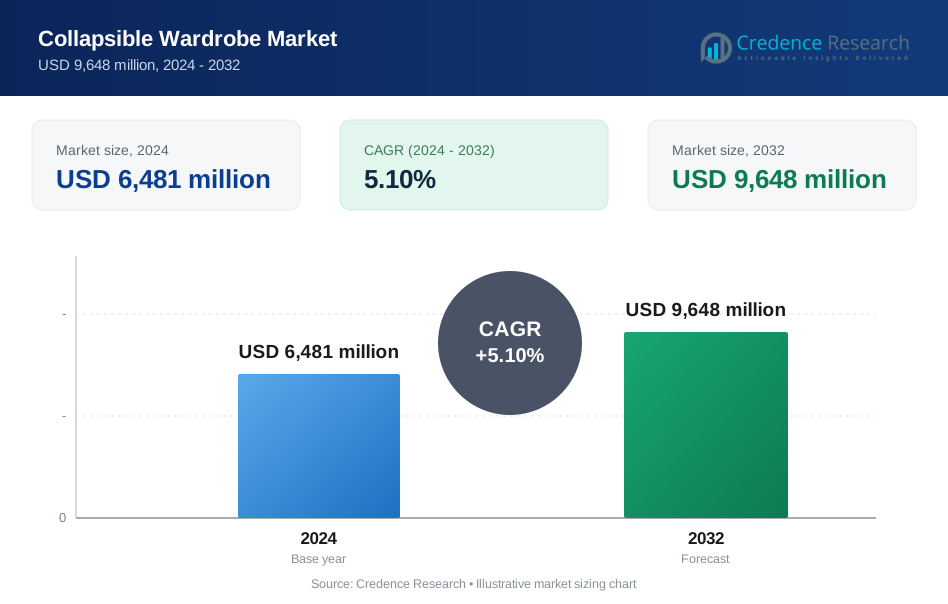
The Collapsible Wardrobe Market size was valued at USD 6481 million in 2024 and is anticipated to reach USD 9648 million by 2032, at a CAGR of 5.1% during the forecast period (2024-2032).
| REPORT ATTRIBUTE | DETAILS |
|---|---|
| Historical Period | 2020-2023 |
| Base Year | 2024 |
| Forecast Period | 2025-2032 |
| Collapsible Wardrobe Market Size 2024 | USD 6481 million |
| Collapsible Wardrobe Market, CAGR | 5.1% |
| Collapsible Wardrobe Market, Size 2032 | USD 9648 million |
The primary drivers for the collapsible wardrobe market include the increasing demand for multifunctional furniture, driven by the need for space optimization in smaller living spaces. With urban living conditions becoming more compact and affordable housing becoming a significant consideration for consumers, collapsible wardrobes offer a practical and cost-effective solution. The growing trend of minimalism also encourages consumers to opt for furniture that provides both functionality and aesthetic appeal. Additionally, the rise of e-commerce platforms is enhancing market accessibility, with consumers increasingly purchasing collapsible wardrobes online due to convenience and wider selection. Sustainability trends are also playing a role, as consumers seek eco-friendly and easy-to-assemble products, further expanding the market’s reach.
Regionally, North America and Europe dominate the collapsible wardrobe market, owing to high demand for portable and modular furniture solutions driven by modern, space-conscious lifestyles. These regions benefit from a well-established retail infrastructure and a growing preference for DIY furniture. The Asia Pacific region is expected to witness the highest growth, primarily due to rapid urbanization, a growing middle-class population, and a shift towards affordable housing solutions in countries like India and China. The demand for collapsible wardrobes in these regions is also supported by increasing awareness of space efficiency and the rising popularity of e-commerce platforms for furniture purchases, which have made such products more accessible to a broader audience.
Market Insights:
- The Collapsible Wardrobe Market is projected to grow from USD 6,481 million in 2024 to USD 9,648 million by 2032, driven by increasing demand for space-saving furniture.
- Multifunctional furniture solutions are in high demand as urban living spaces become smaller, leading consumers to seek practical and flexible storage options like collapsible wardrobes.
- The growth of e-commerce platforms has significantly expanded market accessibility, allowing consumers to easily shop for collapsible wardrobes with a wider selection and convenience.
- Sustainability trends are influencing purchasing decisions, with eco-conscious consumers preferring collapsible wardrobes made from sustainable, easy-to-assemble materials.
- North America holds a 35% market share, driven by high demand for portable and modular furniture solutions fueled by compact living spaces and a strong e-commerce infrastructure.
- Europe accounts for 30% of the market, with increasing adoption of collapsible wardrobes due to urbanization, compact living, and growing consumer preference for sustainable living solutions.
- Asia Pacific is expected to witness the highest growth, with a 25% market share driven by rapid urbanization, a growing middle class, and a shift toward affordable housing solutions in countries like India and China.
Market Drivers:
Increasing Demand for Multifunctional Furniture Solutions
The Collapsible Wardrobe Market benefits from the growing demand for multifunctional furniture that maximizes space efficiency. Consumers, particularly in urban areas, are seeking solutions to optimize limited living spaces. Collapsible wardrobes provide a practical and flexible option, allowing easy assembly and storage when not in use. This makes them highly attractive to individuals living in small apartments, student housing, and shared spaces. The versatility and functionality offered by these wardrobes contribute to their popularity as consumers increasingly prioritize space-saving products.
Urbanization and Smaller Living Spaces Driving Market Growth
Rapid urbanization continues to drive demand for space-saving furniture, including collapsible wardrobes. As cities expand, housing developments are becoming smaller, and the need for compact, efficient furniture solutions grows. The Collapsible Wardrobe Market directly benefits from these trends, as more people seek cost-effective and space-conscious solutions for their homes. With an increasing number of consumers moving into smaller apartments or shared living spaces, collapsible wardrobes emerge as a perfect fit for those looking to maximize their available space.
- For instance, IKEA’s PLATSA wardrobe system features a modular design where each unit has a depth of just 15 inches, making it possible to fit 9 drawers and 6 shelves into a wall space of only 1.6 meters-an effective and verified solution for tight urban interiors.
E-Commerce Growth Expanding Market Accessibility
The rise of e-commerce platforms significantly enhances the accessibility of collapsible wardrobes, enabling consumers to shop conveniently from their homes. Online retail offers a wide variety of designs, sizes, and brands, providing customers with a broader selection than traditional brick-and-mortar stores. The Collapsible Wardrobe Market has gained substantial momentum through this online sales channel, catering to the growing preference for digital shopping. Consumers find it easier to compare prices, read reviews, and purchase furniture that fits their needs, contributing to the market's expansion.
Sustainability and Eco-Conscious Consumer Preferences
Sustainability has become an essential factor influencing purchasing decisions, particularly among environmentally conscious consumers. Collapsible wardrobes, often made from eco-friendly materials, meet the demand for sustainable, easily assembled furniture solutions. Consumers are becoming more aware of their environmental impact and prefer products that align with their values. The growing focus on reducing waste and supporting sustainable practices has positively impacted the Collapsible Wardrobe Market, encouraging manufacturers to adopt more eco-friendly production methods and materials.
- For instance, ROOM IN A BOX offers collapsible furniture made from certified corrugated cardboard, and a single wardrobe unit can be assembled in under 30 minutes without tools, using exclusively cardboard that is 100% recyclable.
Market Trends:
Integration of Smart Features and Technological Advancements in Furniture
The Collapsible Wardrobe Market is witnessing a growing trend toward the integration of smart features and technological innovations in furniture design. Manufacturers are increasingly incorporating elements like built-in LED lighting, automated doors, and temperature control into collapsible wardrobes to cater to the demand for high-tech, modern home solutions. These smart features offer consumers added convenience and functionality, enhancing the overall user experience. The rise of IoT (Internet of Things) in home furniture is influencing the design and features of collapsible wardrobes, making them more versatile and appealing to tech-savvy consumers. This trend is expected to continue, with future innovations further elevating the appeal of collapsible wardrobes in both residential and commercial settings.
- For instance, ThreadRobe offers an app-enabled wardrobe system that can automatically store, retrieve, and steam up to 200 clothing items using RFID technology, greatly simplifying garment management for users.
Customization and Personalization Gaining Popularity Among Consumers
Consumers are increasingly seeking personalized and customizable solutions in their furniture choices, a trend that extends to the Collapsible Wardrobe Market. Manufacturers are offering a range of design options, colors, sizes, and configurations to meet the diverse needs of modern consumers. Customizable collapsible wardrobes allow consumers to tailor storage solutions to fit their specific space requirements and aesthetic preferences. This trend towards personalization is driven by the desire for unique, functional furniture that aligns with individual lifestyles. As consumer expectations evolve, manufacturers are responding by offering more flexible and adaptable designs that cater to a wider range of tastes and needs.
- For instance, the CLOS-IT modular closet system by Shelf-Co features shelves capable of supporting up to 66 lbs each and drawers with a load capacity of 44 lbs, allowing consumers to configure their wardrobe layout and storage capacity to exact specifications.
Market Challenges Analysis:
Competition from Traditional Furniture and Consumer Preferences
One of the key challenges facing the Collapsible Wardrobe Market is the competition from traditional, more durable furniture options. Many consumers still prefer conventional wardrobes made from solid wood or metal, which are perceived as more long-lasting and sturdy. While collapsible wardrobes offer convenience and portability, some customers remain skeptical about their durability, especially in comparison to traditional designs. This resistance to adopting collapsible options can limit market penetration, particularly in regions where consumers prioritize long-term investments in furniture.
Quality Concerns and Perceived Value
Quality concerns are another significant challenge in the collapsible wardrobe market. Despite their convenience and affordability, many consumers associate collapsible wardrobes with lower quality due to the materials used in production. This perception may hinder adoption, as some consumers may not see them as a suitable investment for their homes. The challenge lies in educating consumers about the benefits and potential durability of collapsible wardrobes while also ensuring that manufacturers maintain high-quality standards to meet consumer expectations. This barrier may limit the market's growth potential if not addressed effectively.
Market Opportunities:
Expansion in Emerging Markets and Urban Areas
The Collapsible Wardrobe Market holds significant opportunities in emerging markets, particularly in regions experiencing rapid urbanization and a shift toward smaller living spaces. As urban populations grow, the demand for space-saving furniture solutions increases, making collapsible wardrobes an attractive option. Countries in Asia Pacific, Latin America, and parts of Africa are seeing a rise in urban dwellers who need affordable, flexible storage options. This trend presents an opportunity for manufacturers to expand their presence in these regions, catering to a large and growing middle-class consumer base that values convenience and efficiency.
Sustainability and Eco-Friendly Product Demand
There is an increasing demand for sustainable and eco-friendly products, which presents an opportunity for the Collapsible Wardrobe Market to innovate and capture a wider audience. Consumers are becoming more environmentally conscious and prefer products made from recyclable or renewable materials. By focusing on sustainable production practices and offering eco-friendly wardrobes, manufacturers can tap into this growing trend. This shift toward sustainability, along with the growing focus on minimalism, provides an opportunity for the market to cater to consumers seeking both practical and environmentally responsible solutions.
Market Segmentation Analysis:
By Product Type
The Collapsible Wardrobe Market is segmented by product type into single-door, multi-door, and portable wardrobes. Single-door wardrobes hold the largest market share due to their compact and space-efficient design, making them ideal for smaller living spaces. Multi-door wardrobes are favored by consumers with larger storage needs, offering more organized storage solutions. Portable wardrobes are gaining traction for their flexibility, ease of assembly, and mobility, particularly among those who require temporary or travel-friendly storage options.
- For instance, the Meesho Foldable Black Colour single-door wardrobe offers a space-saving solution at 130 x 45 x 175 cm and comes with a one-year replacement warranty, demonstrating robust performance for compact storage needs.
By Material
In terms of material, the market is divided into fabric, plastic, and metal. Fabric-based wardrobes dominate the market due to their lightweight nature, affordability, and variety of designs. Plastic wardrobes are valued for their durability, water resistance, and suitability for diverse environments, making them popular in regions with high humidity or fluctuating climates. Metal wardrobes, while less common, are preferred in commercial settings for their strength, long-lasting durability, and stability, catering to industrial and heavy-duty storage needs.
By Design
Design-wise, collapsible wardrobes are available in modular, foldable, and drawer-based designs. Modular wardrobes are the most popular due to their versatility and customization options, allowing consumers to adjust storage compartments based on their needs. Foldable designs are favored for their portability and convenience, making them ideal for consumers in need of space-saving solutions. Drawer-based wardrobes offer easy access and organization, providing a practical option for households that prioritize efficient storage and tidiness.
- For instance, California Closets’ exclusive Everstyle Drawer System offers 15 fully customizable drawer configurations for jewelry, shoes, home electronics, and more, optimizing both organizational capability and versatility for diverse household needs.
Segmentations:
- By Product Type
- Single-Door
- Multi-Door
- Portable Wardrobes
- By Material
- Fabric
- Plastic
- Metal
- By Design
- Modular
- Foldable
- Drawer-Based
- By End-User
- Residential
- Commercial
- By Distribution Channel
- Online Retail
- Offline Retail
- By Region
- North America
- U.S.
- Canada
- Mexico
- Europe
- Germany
- France
- U.K.
- Italy
- Spain
- Rest of Europe
- Asia Pacific
- China
- Japan
- India
- South Korea
- South-east Asia
- Rest of Asia Pacific
- Latin America
- Brazil
- Argentina
- Rest of Latin America
- Middle East & Africa
- GCC Countries
- South Africa
- Rest of the Middle East and Africa
- North America
Regional Analysis:
North America: Leading Market Presence and E-Commerce Growth
North America holds a 35% share of the Collapsible Wardrobe Market, driven by the high demand for space-saving and multifunctional furniture solutions. Urbanization and the increasing preference for compact living spaces, particularly in cities such as New York, Los Angeles, and Toronto, have fueled the demand for collapsible wardrobes. The region's well-established e-commerce infrastructure also contributes significantly to market growth, as consumers have easy access to a wide range of designs and brands through online platforms. The convenience of online shopping, combined with a growing trend toward minimalist living, supports the continued expansion of the market in North America.
Europe: Strong Demand from Compact Living and Sustainability Trends
Europe accounts for 30% of the Collapsible Wardrobe Market, driven by the trend toward sustainable living and space-efficient furniture. Countries like the UK, Germany, and France, with their growing urban populations and smaller living spaces, are increasingly adopting collapsible wardrobes for their homes. Consumers in these regions are also placing more emphasis on eco-friendly products, which aligns with the increasing availability of sustainably sourced materials used in collapsible wardrobes. Manufacturers that focus on green production methods are likely to find strong demand for their products in Europe, where environmental consciousness is at the forefront of consumer decisions.
Asia Pacific: High Growth Potential from Rapid Urbanization
Asia Pacific holds a 25% share of the Collapsible Wardrobe Market, primarily driven by rapid urbanization and an expanding middle class, especially in countries such as China, India, and Indonesia. As more people in these countries move to urban areas, the demand for affordable and space-efficient furniture rises. Collapsible wardrobes offer a cost-effective solution for consumers seeking to maximize their living spaces in smaller apartments. The region's growing e-commerce sector further supports the market, providing consumers with easy access to a variety of collapsible wardrobe options, which enhances product adoption across the region.
Key Player Analysis:
- BBMG Tiantan Furniture
- Folddon
- IKEA
- Shenzhen Central Tide Industry & Trade
- Cbeeso Furniture\
- Raymour & Flanigan Furniture
- Lifetime Products
- Haworth
- PA Kitchen & Furniture
- Dorel Industries
- Urban Ladder
- Pepperfry
Competitive Analysis:
The Collapsible Wardrobe Market is highly competitive, with several established players and new entrants offering a variety of products to cater to diverse consumer needs. Leading companies focus on innovation, quality, and affordability to maintain market share. Key players differentiate themselves by offering customizable designs, sustainable materials, and advanced features like modular and foldable structures. The market is characterized by a growing trend toward e-commerce, allowing brands to reach a broader audience and enhance customer convenience. Companies are also leveraging digital platforms for marketing and customer engagement, which is vital in an increasingly digital retail landscape. Intense competition drives continuous product improvements, with manufacturers emphasizing ease of use, portability, and durability. As more consumers prioritize space efficiency, brands that adapt to evolving preferences and offer cost-effective, high-quality solutions are likely to secure a competitive advantage in the market.
Recent Developments:
- In January 2025, Haworth announced a partnership with StruXure to bring innovative outdoor solutions to workplace environments.
- In June 2024, Haworth Lifestyle, the luxury division of Haworth, acquired UK-based automotive interiors manufacturer KJ Ryan under the Poltrona Frau brand to expand into luxury automotive interiors.
Market Concentration & Characteristics:
The Collapsible Wardrobe Market is moderately concentrated, with a mix of large players and small-to-medium-sized enterprises competing for market share. Leading manufacturers dominate the market by offering a broad range of products, leveraging brand recognition, and focusing on innovation to meet consumer preferences for space-saving, functional designs. Small and regional players also contribute by offering affordable alternatives and catering to niche segments. The market is characterized by high competition, with companies focusing on enhancing product quality, design flexibility, and sustainability to attract consumers. E-commerce is a key distribution channel, increasing accessibility and enabling brands to reach a global audience. Consumer demand for multifunctional and space-efficient furniture drives continuous product innovation, contributing to a dynamic market environment. The presence of numerous manufacturers ensures a diverse product range, supporting varied customer needs across residential and commercial sectors.
Report Coverage:
The research report offers an in-depth analysis based on Product Type, Material, Design, End-User, Distribution Channel and Region. It details leading market players, providing an overview of their business, product offerings, investments, revenue streams, and key applications. Additionally, the report includes insights into the competitive environment, SWOT analysis, current market trends, as well as the primary drivers and constraints. Furthermore, it discusses various factors that have driven market expansion in recent years. The report also explores market dynamics, regulatory scenarios, and technological advancements that are shaping the industry. It assesses the impact of external factors and global economic changes on market growth. Lastly, it provides strategic recommendations for new entrants and established companies to navigate the complexities of the market.
Future Outlook:
- Rapid urbanization and shrinking living spaces are driving the demand for compact, space-saving furniture solutions like collapsible wardrobes.
- The growth of online retail platforms enhances accessibility and convenience, facilitating wider consumer reach and product variety.
- Increasing consumer preference for eco-friendly products is encouraging manufacturers to adopt sustainable materials and production processes.
- Advancements in design and materials are leading to the development of more durable, aesthetically pleasing, and functional collapsible wardrobes.
- Consumers are seeking personalized storage solutions, prompting manufacturers to offer customizable designs and features.
- The rise in rental housing, particularly among students and young professionals, is boosting the need for portable and easy-to-assemble furniture.
- Cost-effective storage solutions are appealing to budget-conscious consumers, expanding the market's reach.
- Hotels, offices, and temporary accommodations are increasingly adopting collapsible wardrobes for their practicality and space efficiency.
- Continuous innovation in design, materials, and functionality is enhancing the appeal and competitiveness of collapsible wardrobes.
- Different regions exhibit varying growth rates, influenced by factors like urbanization, consumer preferences, and economic conditions.
Request a Free Sample
Fill in your details and we'll send you a free sample report.
- Sample data tables & charts
- Research methodology
Need a Custom Version of This Report?
Tailor the scope, geography, or segments to your exact requirements.
- Custom geography or segment scope
- Direct access to our analyst team
Frequently Asked Questions
What is the current size of the Collapsible Wardrobe Market?
What are the key segments within the Collapsible Wardrobe Market?
Who are the major players in the Collapsible Wardrobe Market?
Which segment is leading the market share?
Table of Content
Chapter 1. Report Introduction
- 1.1 Report Description & Purpose
- 1.1.1 Report Title & Market Definition
- 1.1.2 Unique Selling Propositions (USP) & Key Differentiators
- 1.1.3 Value Proposition for Stakeholders
- 1.2 Research Objectives
- 1.2.1 Market Sizing Objectives (Volume & Revenue)
- 1.2.2 Segmentation Objectives
- 1.2.3 Competitive Intelligence Objectives
- 1.2.4 Forecast & Scenario Objectives
- 1.3 Report Scope
- 1.3.1 Collapsible Wardrobe Scope – Types & Subtypes Covered
- 1.3.2 Geographic Scope – Regions & Countries Covered
- 1.3.3 Historical Period, Base Year & Forecast Period (2024; forecast to 2032)
- 1.3.4 Inclusions & Exclusions
- 1.4 HS Code & Classification Framework
- 1.5 Currency, Units & Pricing Basis
- 1.6 Target Stakeholders
- 1.7 Limitations & Assumptions
Chapter 2. Executive Summary
- 2.1 Global Collapsible Wardrobe Market Snapshot
- 2.1.1 Market Size – Historical (2024) & Forecast (2024-2032) (2024: USD 6,481 million → 2032: USD 9,648 million)
- 2.1.2 Volume & Revenue – Global Totals
- 2.1.3 Key Market Highlights – Top Five Facts
- 2.2 Collapsible Wardrobe Market Segmentation Snapshot
- 2.2.1 Market Split by Region – 2024 vs. 2032
- 2.3 Competitive Snapshot
- 2.3.1 Top 10 Players by Revenue Share – 2024
- 2.3.2 Top 10 Players by Volume Share – 2024
- 2.3.3 Recent Strategic Developments (18-Month Summary)
- 2.4 Key Investment Highlights & Strategic Conclusions
Chapter 3. Collapsible Wardrobe Market Dynamics & Industry Analysis
- 3.1 Market Overview & Context
- 3.1.1 Collapsible Wardrobe Market Position in the Broader Automotive Value Chain
- 3.1.2 OEM vs. Replacement Market Dynamics
- 3.1.3 Market Maturity & Development Stage by Region
- 3.2 Collapsible Wardrobe Market Drivers
- 3.3 Collapsible Wardrobe Market Restraints & Challenges
- 3.4 Collapsible Wardrobe Market Opportunities
- 3.5 Porter's Five Forces Analysis
- 3.5.1 Threat of New Entrants
- 3.5.2 Bargaining Power of Suppliers
- 3.5.3 Bargaining Power of Buyers
- 3.5.4 Threat of Substitutes
- 3.5.5 Competitive Rivalry – Intensity Assessment
- 3.6 Collapsible Wardrobe Value Chain Analysis
- 3.6.1 Upstream – Raw Material/Input Suppliers
- 3.6.1.1 Raw Material/Input 1
- 3.6.1.2 Raw Material/Input 2
- 3.6.1.3 Raw Material/Input 3
- 3.6.2 Midstream – Production/Manufacturing/Service Delivery
- 3.6.2.1 Production/Process Overview
- 3.6.2.2 Key Facility Locations & Capacity by Manufacturer
- 3.6.3 Downstream – Distribution & End Consumer
- 3.6.3.1 Primary Channel – B2B/OEM
- 3.6.3.2 Secondary Channels – Dealer, Retail, Online, Direct
- 3.6.4 Value Chain Profitability Analysis
- 3.6.1 Upstream – Raw Material/Input Suppliers
- 3.7 PESTEL Analysis
- 3.7.1 Political Factors
- 3.7.2 Economic Factors
- 3.7.3 Social Factors
- 3.7.4 Technological Factors
- 3.7.5 Environmental Factors
- 3.7.6 Legal Factors
- 3.8 Collapsible Wardrobe Supply Chain Analysis
- 3.8.1 Raw Material/Input Supply Risk Assessment
- 3.8.2 Manufacturing Concentration Risk (Geographic Exposure)
- 3.8.3 Trade Disruption Impact Analysis
- 3.9 Regulatory & Policy Landscape
Note: The regulatory and policy landscape section covers regulations based on their applicability to the market, Collapsible Wardrobe category, geography, and scope of the study. Only regulatory frameworks with a material impact on operations, compliance, trade, sustainability, or market access are analyzed in detail.
Chapter 4. Key Investment Pockets & Opportunity Analysis
- 4.1 Collapsible Wardrobe Market Attractiveness Analysis
- 4.1.1 By Region – Investment Attractiveness Matrix (Volume × CAGR)
- 4.2 Absolute Revenue Growth Opportunity
- 4.2.1 By Region – Absolute USD Growth Through 2032
- 4.3 Incremental Volume Opportunity
- 4.3.1 By Region – Incremental Volume Through 2032
- 4.3.2 Segment – Incremental Volume
- 4.4 Emerging Submarket Opportunity Deep Dive (Subject to Applicability)
- 4.5 Emerging Market Opportunity Scorecards
- 4.5.1 United States
- 4.5.2 Europe
- 4.5.3 Asia
- 4.5.4 Middle East & Africa
Note: Emerging Market Opportunity Scorecards will be included based on relevance and strategic importance. Regions listed are indicative and may vary depending on data availability and market dynamics.
Chapter 5. Collapsible Wardrobe Import-Export Analysis & Trade Flows
- 5.1 Global Trade Overview
- 5.1.1 Global Export Value by Country (2024)
- 5.1.2 Global Export Volume by Country (2024)
- 5.1.3 Global Import Value by Country (2024)
- 5.1.4 Global Import Volume by Country (2024)
- 5.1.5 Net Trade Balance by Country (2024)
- 5.2 Export Analysis – Segment
- 5.2.1 Type 1 (HS Code)
- 5.2.2 Type 2 (HS Code)
- 5.2.3 Type 3 (HS Code)
- 5.2.4 Type 4 (HS Code)
- 5.2.5 Type 5 (HS Code)
- 5.3 Import Analysis – Segment
- 5.3.1 Type 1 (HS Code)
- 5.3.2 Type 2 (HS Code)
- 5.3.3 Type 3 (HS Code)
- 5.3.4 Type 4 (HS Code)
- 5.3.5 Type 5 (HS Code)
- 5.4 Average Unit Trade Prices
- 5.4.1 Average Export Price – Segment & Country
- 5.4.2 Average Import Price – Segment & Source Country
- 5.4.3 Price Trends (2024)
- 5.5 Key Trade Route Analysis
- 5.5.1 Trade Route 1
- 5.5.2 Trade Route 2
- 5.5.3 Trade Route 3
- 5.5.4 Trade Route 4
- 5.5.5 Trade Route 5
- 5.6 Trade Policy Impact Assessment
- 5.6.1 US Anti-Dumping & Section 301 Tariffs
- 5.6.2 EU Customs Union Impact
- 5.6.3 Major Free Trade Agreements
- 5.6.4 USMCA Rules of Origin
Note: Trade policy analysis will be included only where relevant to the Collapsible Wardrobe market.
Chapter 6. Competitive Landscape & Company Benchmarking
- 6.1 Collapsible Wardrobe Market Concentration & Structure
- 6.1.1 Herfindahl-Hirschman Index (HHI) – vs. 2024
- 6.1.2 Tier 1, Tier 2 & Tier 3 Market Structure
- 6.1.3 Global, Regional & Local Player Dynamics
- 6.2 Collapsible Wardrobe Market Share Analysis – 2024
- 6.2.1 Global Revenue Share by Company
- 6.2.2 Global Volume Share by Company
- 6.2.3 Regional Revenue Share
- 6.2.4 Market Share Evolution ( vs. 2024)
- 6.2.5 OEM Segment Share by Company
- 6.2.6 Replacement Segment Share by Company
- 6.3 Production/Delivery Capacity & Facility Analysis
- 6.3.1 Global Installed Capacity
- 6.3.2 Capacity Utilization Rates
- 6.3.3 Production/Output Volume
- 6.3.4 Facility Locations & Capacity Map
- 6.3.5 Planned Capacity Additions
- 6.4 Collapsible Wardrobe Competitive Benchmarking Matrix
- 6.4.1 Revenue, Volume, CAGR & Profitability Comparison
- 6.4.2 Channel Revenue Mix
- 6.4.3 Geographic Revenue Exposure
- 6.4.4 R&D Intensity
- 6.4.5 Sustainability Maturity
- 6.5 Strategic Developments in Collapsible Wardrobe (Last 24 Months)
- 6.5.1 Mergers, Acquisitions & Divestments
- 6.5.2 New Collapsible Wardrobe Launches
- 6.5.3 Facility Expansions
- 6.5.4 Strategic Alliances, Joint Ventures & Partnerships
- 6.5.5 Distribution Expansion & Market Entry
- 6.5.6 Sustainability & ESG Initiatives
- 6.6 Competitive Strategy Mapping
- 6.6.1 Leader, Challenger, Follower & Niche Classification
- 6.6.2 Pricing Strategy Comparison
- 6.6.3 Channel Strategy Matrix
Note: Strategic developments are included based on their materiality and the availability of reliable information.
Chapter 7. Global Collapsible Wardrobe Market – By Distribution Channel
- 7.1 Segment Overview
- 7.1.1 Volume & Revenue Split by Channel (2024 & 2032)
- 7.1.2 Channel Mix Evolution (2024-2032)
Chapter 8. Regional Market Analysis – Global Overview
- 8.1 Global Regional Overview
- 8.1.1 Regional Volume Share
- 8.1.2 Regional Revenue Share
- 8.1.3 Regional Volume by Region
- 8.1.4 Regional Revenue by Region
- 8.1.5 Regional Forecast Through 2032
- 8.2 Cross-Regional Segment Analysis
- 8.2.1 By Distribution Channel
- 8.2.2 By Brand/Price Tier
Chapter 9. North America Collapsible Wardrobe Market
- 9.1 United States
- 9.2 Canada
- 9.3 Mexico
Chapter 10. Europe Collapsible Wardrobe Market
- 10.1 Germany
- 10.2 France
- 10.3 Italy
- 10.4 United Kingdom
- 10.5 Spain
- 10.6 Poland
- 10.7 Russia
- 10.8 Netherlands
- 10.9 Belgium
- 10.10 Sweden
- 10.11 Denmark
- 10.12 Norway
- 10.13 Rest of Europe
Chapter 11. Asia Pacific Collapsible Wardrobe Market
- 11.1 China
- 11.2 India
- 11.3 Japan
- 11.4 South Korea
- 11.5 Thailand
- 11.6 Indonesia
- 11.7 Vietnam
- 11.8 Malaysia
- 11.9 Australia
- 11.10 Rest of Asia Pacific
Chapter 12. Latin America Collapsible Wardrobe Market
- 12.1 Brazil
- 12.2 Argentina
- 12.3 Colombia
- 12.4 Chile
- 12.5 Rest of Latin America
Chapter 13. Middle East Collapsible Wardrobe Market
- 13.1 Saudi Arabia
- 13.2 United Arab Emirates
- 13.3 Turkey
- 13.4 Israel
- 13.5 Iran
- 13.6 Rest of the Middle East
Chapter 14. Africa Collapsible Wardrobe Market
- 14.1 South Africa
- 14.2 Egypt
- 14.3 Nigeria
- 14.4 Morocco
- 14.5 Rest of Africa
Chapter 15. Collapsible Wardrobe Company Profiles
- 15.1 [Company 01]
- 15.1.1 Company Overview
- 15.1.2 Key Management Personnel
- 15.1.3 Products & Services Portfolio
- 15.1.4 Financial Performance
- 15.1.5 Key Market Focus & Geographic Presence
- 15.1.6 Recent Developments & Strategic Initiatives
Note: The company profile list is preliminary and may change based on research findings, market developments, data availability, and client requirements.
Chapter 16. Appendices
- Appendix A – List of Abbreviations & Acronyms
- Appendix B – Industry Classification Code Reference – Full Series
- Appendix C – Production & Capacity Data Tables
- Appendix D – End-Use & Demand Base Tables
- Appendix E – Consumption & Replacement Rate Assumptions
- Appendix F – ASP Reference Tables
- Appendix G – Manufacturing & Facility Database
- Appendix H – Import-Export Data Tables
- Appendix I – Regulatory Summary Tables
- Appendix J – Primary Research Participant List (Anonymized)
- Appendix K – Primary Research Questionnaire Framework
- Appendix L – Data Sources & Bibliography
- Appendix M – Market Size Divergence & Source Comparison
Chapter 17. Research Methodology
- 17.1 Research Framework & Philosophy
- 17.2 Secondary Research – Sources, Hierarchy & Data Extraction
- 17.3 Data Modeling – Bottom-Up & Top-Down Market Sizing
- 17.4 Primary Research – Stakeholder Framework, LOI & Sample Sizes
- 17.5 Forecast Methodology – Regression, Scenario & Sensitivity Analysis
- 17.6 Quality Control – Four-Layer Validation Framework
- 17.7 Limitations & Standard Assumptions
- 17.8 Disclaimer
