
TSMC files Texas tax application for proposed $22.6 billion 2nm chip fab in Brazos County
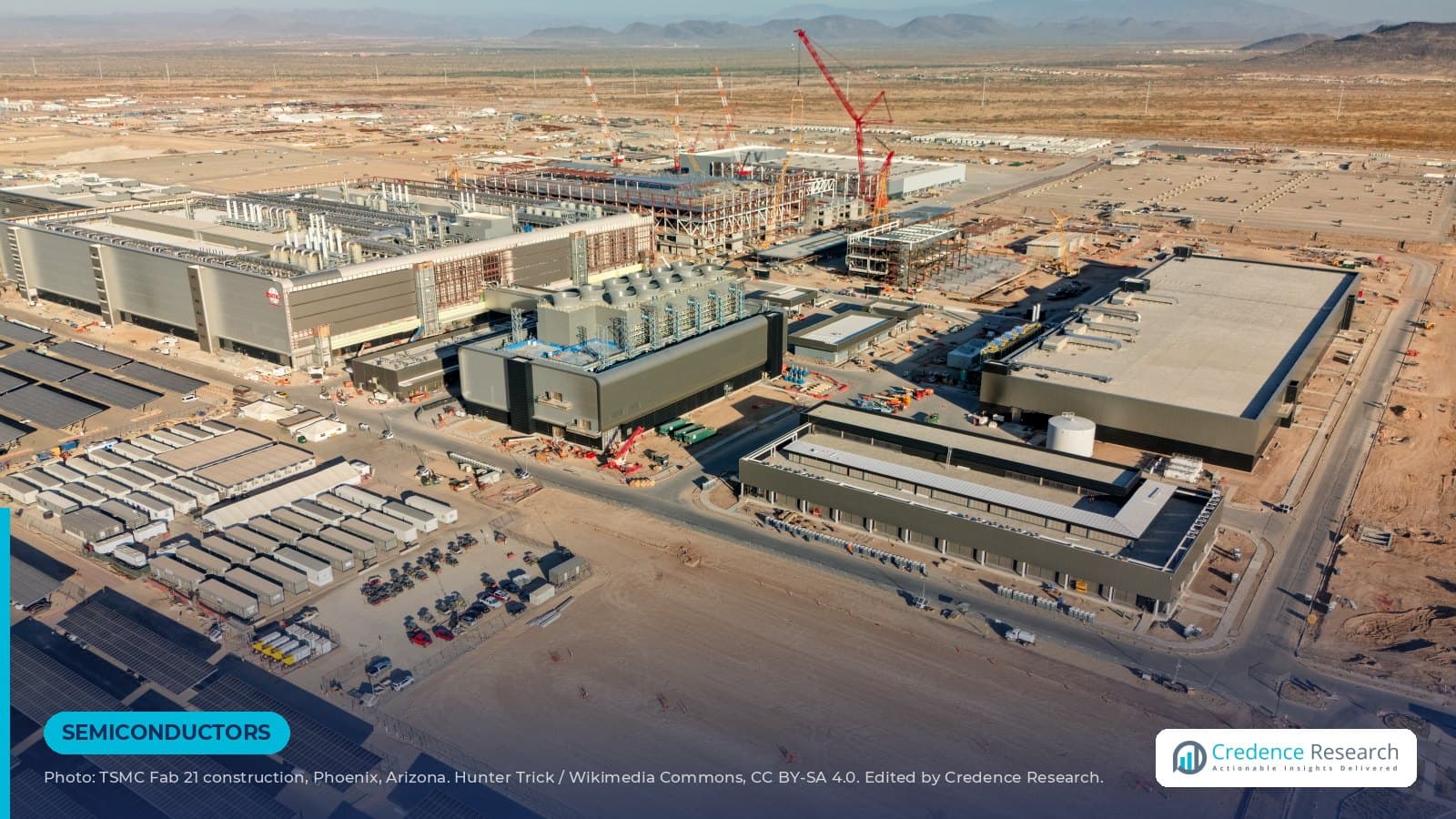
Taiwan Semiconductor Manufacturing Co. has asked Texas for a long-term school property tax limitation on a proposed leading-edge chip plant near College Station, putting a Brazos County site in direct competition with further expansion in Arizona. The Texas Comptroller of Public Accounts posted the application, numbered J0055 under the state's Jobs, Energy, Technology and Innovation Act, on Nov. 23, 2026. Brazos County officials said the filing describes a single fabrication facility valued at $22.6 billion with at least 2,099 direct jobs, and stressed that the project still depends on state and local approvals and on TSMC's final investment decision.
Key developments
- The application describes a proposed TSMC Texas Advanced Semiconductor Manufacturing Campus that would make leading-edge logic chips using 2-nanometer and/or more advanced process technologies, aimed at artificial intelligence, high-performance computing and mobile devices.
- Brazos County said the filing covers a $22.6 billion fab with at least 2,099 direct jobs at an average annual salary of $133,000. The parcel schedule in the application totals about 3,232 acres inside College Station Independent School District.
- TSMC told the state it is weighing Texas sites against alternatives outside Texas, "particularly Arizona," and called the tax limitation a "determinative factor" in the capital allocation decision.
- The company said its land agreements are nonbinding and do not commit it to buy land or make a final site selection.
- Local broadcaster WTAW reported that the Comptroller's office signed off on the application within one business day. College Station ISD has set a public hearing for Dec. 10.
What the application shows
The filing goes beyond a site inquiry. It lists the equipment classes that would qualify for the tax limitation, including lithography, etch, deposition, implant and chemical mechanical planarization tools, automated material handling systems and metrology, along with fab buildings and central utility plants. The application allows for "one or more" front-end fabrication facilities, although the county's summary and the investment figure describe one fab. The parcels sit along Koppe Bridge Road, Hopes Creek Road, South Dowling Road, I&GN Road and Redman Lane, southwest of College Station near the Brazos River.
An economic benefit statement attached to the application, prepared by Impact DataSource, models direct operating employment of 757 in 2028, 1,868 in 2029 and 2,099 from 2030 onward. eeNews Europe reported that the investment splits into about $8.6 billion for buildings and property improvements and $14 billion for machinery and equipment, with a five-year construction period starting in 2027. TSMC also attached the transcript of its Oct. 15 third-quarter earnings call, and the filing notes that the company has sent teams to Texas to evaluate locations.
JETI replaced the state's expired Chapter 313 program in 2023. Under the Comptroller's published process, the agency reviews whether the limitation is a compelling factor in a competitive site selection, then forwards its determination to the governor and the school district. Each has 30 days to act, and the district must hold a public hearing. If both approve, the district limits the taxable value of eligible property for maintenance and operations taxes for up to 10 years after construction, while debt service taxes still apply to full value.
Industry implications
A second U.S. state for TSMC's most advanced logic production would change the geography of American chipmaking. Until now the company's U.S. manufacturing plans have centered on its Phoenix campus, where WTAW noted the first fab opened in 2024 and a second is scheduled to open in 2027. A Texas fab at 2-nanometer or below would place the most advanced node TSMC has disclosed for the project in a new region with its own power, water and labor conditions.
The filing also shows how state incentives now steer site choices for multibillion-dollar fabs. TSMC told Texas that the tax limitation is determinative, which shifts part of the decision to the governor's office and a single school board. For equipment makers and materials suppliers, the application is an early signal of where demand for tool installation, specialty gases, ultrapure water and cleanroom construction could land later this decade.
Competitive and supply chain implications
Customers that design AI accelerators and high-end mobile processors have pushed for U.S. capacity at the leading edge, and a Texas option would give TSMC another location to meet those requests. It would also put TSMC closer to Samsung Electronics' Taylor, Texas, project and Texas Instruments' Sherman operations, which could intensify competition for experienced fab technicians, process engineers and construction trades across the state.
Supply chains would need to follow. The equipment list in the application maps to suppliers that already serve Arizona, and a second site would split their U.S. service teams and spare parts networks between two states unless the Texas campus draws new regional hubs. Texas A&M University, which the county named as a coordinating partner, could become an important workforce pipeline if the project advances.
Regional implications
For Brazos County, a fab of this size would far exceed the scale of the area's existing industrial base, which is anchored by Texas A&M. County Manager Trevor Lansdown called it a potential "transformational opportunity" for residents. The county said it is coordinating with the cities of College Station and Bryan, College Station ISD, Texas A&M and the Greater Brazos Partnership, and that any county incentive agreements would go to the Commissioners Court in public meetings.
The economic model projects 18,134 direct construction jobs in Brazos County in 2029, which would strain housing, roads and utilities in a county built around a university economy. Arizona, meanwhile, faces the prospect of losing a fab it had expected to host. The application says TSMC is also considering buying and developing a new land parcel in Arizona as an alternative.
Credence Research analysis
The filing reads as a negotiation as much as a plan. By telling Texas that the limitation decides the outcome and naming Arizona as the fallback, TSMC has created a clear test for state officials within a short statutory window. The quick Comptroller sign-off reported by WTAW suggests Texas wants to move fast. The more telling signals will be the governor's decision and how College Station ISD weighs the long-term school revenue tradeoff at the Dec. 10 hearing.
Even if approvals come through, a JETI agreement is not a groundbreaking. TSMC has paced its Arizona build-out to customer commitments and workforce readiness, and the company still has to make a final investment decision for Texas. The application's own job ramp, which reaches full staffing in 2030, implies that any Texas output would arrive at the end of the decade. Utilities, water providers and equipment suppliers should treat the filing as a planning trigger rather than a confirmed order.
What comes next
- Dec. 10, 2026: College Station ISD public hearing on the tax limitation at 5 p.m. in the district boardroom.
- Within 30 days of the Comptroller's recommendation: decisions due from the governor's office and the school board.
- Brazos County Commissioners Court meetings on any county incentive agreements, plus town halls the county has said could begin in early December.
- TSMC's final site selection and investment decision, weighed against an Arizona alternative.
- If approved, construction could begin in 2027, according to eeNews Europe's reading of the filing.
Sources
- Texas Comptroller of Public Accounts: JETI application J0055
- Texas Comptroller: JETI process and timeline
- WTAW: Brazos County statement on proposed TSMC facility
- eeNews Europe: TSMC Texas fab investment details
Image: Construction of TSMC Fab 21 in Phoenix, Arizona, by Hunter Trick via Wikimedia Commons, CC BY-SA 4.0. Cropped and edited by Credence Research.

About the Author

Senior News Editor at Credence Research Inc