
Mosaic to Sell Louisiana Faustina Ammonia Plant to CF Industries for About $600 Million
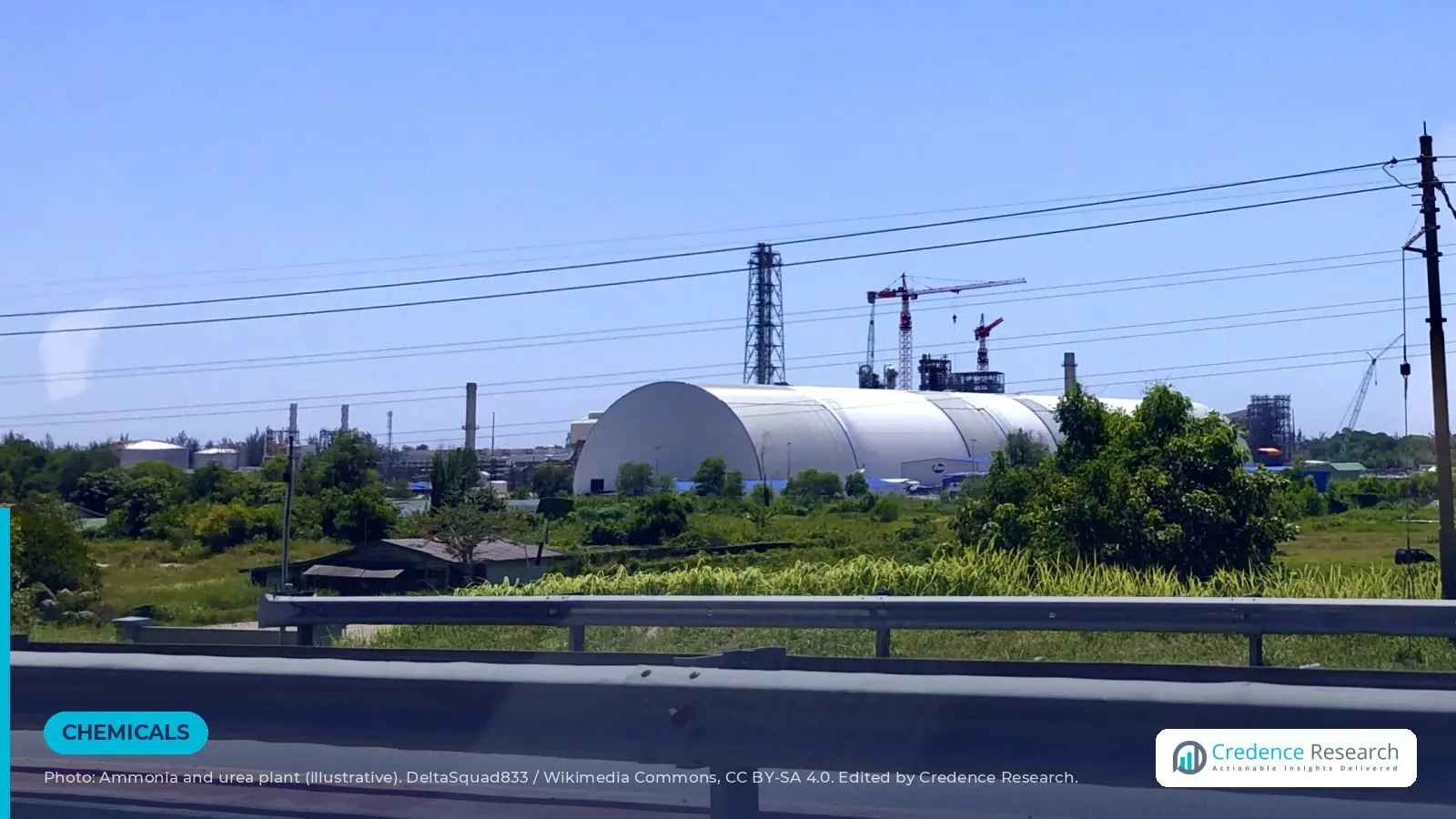
The Mosaic Co. agreed on Nov. 24, 2026, to sell its Faustina ammonia plant in Louisiana to CF Industries Holdings Inc. for total consideration of about $600 million, the Tampa, Florida-based fertilizer producer said. The deal pairs roughly $360 million in cash at closing with a 20-year supply agreement under which CF will provide Mosaic with 200,000 tons of ammonia a year for its phosphate operations, turning an underperforming plant into a long-term contract.
Key developments
- Mosaic signed a definitive agreement to sell the Faustina ammonia plant in Louisiana to CF Industries for about $600 million in total consideration, including about $360 million in cash at closing.
- The rest of the value is tied to a new 20-year ammonia offtake agreement for 200,000 tons a year at producer economics, supporting Mosaic's phosphate production.
- Mosaic's existing ammonia offtake agreement with CF will be extended by two years, through 2031.
- Mosaic expects to use the cash proceeds to reduce debt and does not expect material cash taxes on the sale, citing available tax attributes.
- The companies plan shared-services arrangements covering the Louisiana phosphate complex and the Faustina plant. Closing is expected in the first half of 2027, subject to customary conditions and regulatory approvals.
Plant background
Faustina sits on the Mississippi River in St. James Parish, west of New Orleans. According to the trade database AmmoniaIndustry.com, the plant has produced ammonia since 1968, when Gulf Oil Corp. built it, and passed through Williams, Freeport-McMoRan and IMC-Agrico before Mosaic was formed in 2004. The site uses natural gas as feedstock, and its ammonia is combined with phosphoric acid shipped by barge from Mosaic's Uncle Sam facility across the river to make phosphate fertilizers such as MAP and DAP. The same database reports that Mosaic derated the plant's capacity to 455,000 metric tons a year in early 2018.
The asset has a long history with CF. In October 2013, Mosaic agreed to buy CF's Florida phosphate business for $1.2 billion, and the transaction included a long-term ammonia supply arrangement from CF. AmmoniaIndustry.com reports that the supply deal made a planned $1.1 billion brownfield ammonia plant at Faustina unnecessary, and Mosaic dropped that project. The new agreement takes the relationship a step further by moving ownership of the plant itself to CF.
Mosaic President and Chief Executive Officer Bruce Bodine said the facility "has not achieved optimal production rates recently." He said CF's operating expertise and scale should help the plant reach its potential and reliably supply Mosaic with 200,000 tons of ammonia at or below its current production costs. Mosaic said the sale also removes capital spending that averaged $18 million a year over the past five years.
Industry implications
Ammonia is the base input for nearly all nitrogen fertilizers and an important raw material for phosphate fertilizers. For a phosphate producer, owning ammonia capacity offers control over supply, but it also brings exposure to natural gas prices, maintenance turnarounds and unplanned outages. Mosaic's decision reflects a choice to keep the supply and give up the operating risk. By locking in ammonia at producer economics for two decades, the company aims to keep its Louisiana phosphate complex supplied without funding a plant it describes as non-core.
For CF, the deal adds an operating ammonia asset in a state where it already runs its largest production site. Buying existing capacity is typically faster and less capital-intensive than building new units, and the long-term offtake gives CF a committed customer for a share of the plant's output from the first day of ownership. The structure, in which part of the purchase price is linked to future supply, also shows how producers and consumers are sharing risk on commodity assets.
Competitive and supply chain implications
The agreement deepens an already close supplier relationship. With the existing offtake extended through 2031 and a new 20-year contract layered on top, CF becomes a long-term source of a key input for Mosaic's Louisiana phosphate operations. That arrangement reduces Mosaic's reliance on spot ammonia purchases and its exposure to production problems at a single owned plant.
The shared-services arrangements matter because Faustina is physically integrated with Mosaic's phosphate complex. Utilities, logistics and site services typically overlap at such facilities, so the two companies will need to coordinate closely after closing. Operational reliability will be the main test. If CF lifts production rates as Mosaic expects, more ammonia from the site could reach the Gulf Coast merchant market beyond the volume committed to Mosaic.
Other buyers of merchant ammonia, including industrial users and phosphate producers without captive supply, will watch whether CF uses the plant mainly to serve Mosaic or to expand its broader sales. Neither company disclosed how much of Faustina's output will remain available beyond the offtake volumes.
Regional implications
Louisiana's lower Mississippi River corridor is one of the most important ammonia production regions in the United States. CF's Donaldsonville Complex spans about 1,400 acres and employs more than 500 people, according to Louisiana Economic Development. In April 2025, CF, JERA Co. and Mitsui & Co. announced a final investment decision on a roughly $4 billion low-carbon ammonia facility in Ascension Parish, expected to produce about 1.4 million metric tons a year using carbon capture and sequestration.
Adding Faustina in St. James Parish would extend CF's footprint along the same river corridor. Mosaic said the shared-services arrangements are intended to support efficient operation of both its phosphate complex and the ammonia plant, which suggests continuity for the integrated site. Neither company disclosed workforce plans, and the regulatory approvals required for closing were not specified.
Credence Research analysis
The deal is a clear example of an asset-light approach to raw material security. Mosaic is trading ownership of a plant it says has struggled to reach optimal rates for cash, lower capital spending and a 20-year supply contract at producer economics. The value of that bargain will depend on how the offtake pricing behaves across natural gas cycles and on CF's ability to run the plant reliably. A supply agreement is only as good as the plant behind it, which places operational performance at the center of the transaction.
For CF, Faustina fits a strategy built around large, efficient Gulf Coast production with river and export access. The acquisition also creates an integrated customer relationship that should help keep the plant well utilized. Over time, the asset could raise questions about upgrades, emissions performance and whether the site might play a role in CF's lower-carbon ammonia plans, although the companies have not said so. Investors and customers will look for details on investment plans once CF takes control.
What comes next
- Mosaic and CF will work toward customary closing conditions and regulatory approvals, with completion targeted for the first half of 2027.
- The companies are expected to finalize shared-services arrangements covering the Louisiana phosphate complex and the Faustina plant.
- Mosaic plans to apply about $360 million in cash proceeds to debt reduction after closing.
- The new 20-year offtake for 200,000 tons a year will begin alongside the existing CF contract, now extended through 2031.
- Market participants will watch for any CF disclosures on production targets, capital plans or staffing at Faustina.
Sources
- The Mosaic Company: Mosaic Announces Agreement with CF Industries for the Sale of its Faustina Ammonia Plant (PR Newswire, Nov. 24, 2026)
- The Mosaic Company: Form 8-K, Exhibit 99.1 (SEC)
- Louisiana Economic Development: CF Industries, JERA and Mitsui investment decision (April 2025)
- AmmoniaIndustry.com: Faustina, LA plant profile
Image: Ammonia and urea plant (illustrative), by DeltaSquad833 via Wikimedia Commons, CC BY-SA 4.0. Cropped and edited by Credence Research.

About the Author

Senior News Editor at Credence Research Inc