
Eni Wins Indonesia Approval for Geliga Gas Development Six Months After Discovery
Indonesian authorities have approved the plan of development for the Geliga gas field in the Kutei Basin offshore East Kalimantan, Eni said on Nov. 23, 2026, in a statement issued from its San Donato Milanese headquarters near Milan. The approval arrived about six months after the discovery was announced and opens a third production hub for Eni in the basin, combining Geliga with the nearby Gula discovery in an integrated development that holds about 8 trillion cubic feet of gas in place.
Key developments
- The plan of development covers the Geliga field in the Ganal production sharing contract (PSC), which Eni estimates holds 5.9 trillion cubic feet (Tcf) of gas in place and 250 million barrels of associated condensate.
- Geliga will be developed together with the existing Gula discovery, which holds 2.2 Tcf of gas in place, bringing the combined hub to about 8 Tcf.
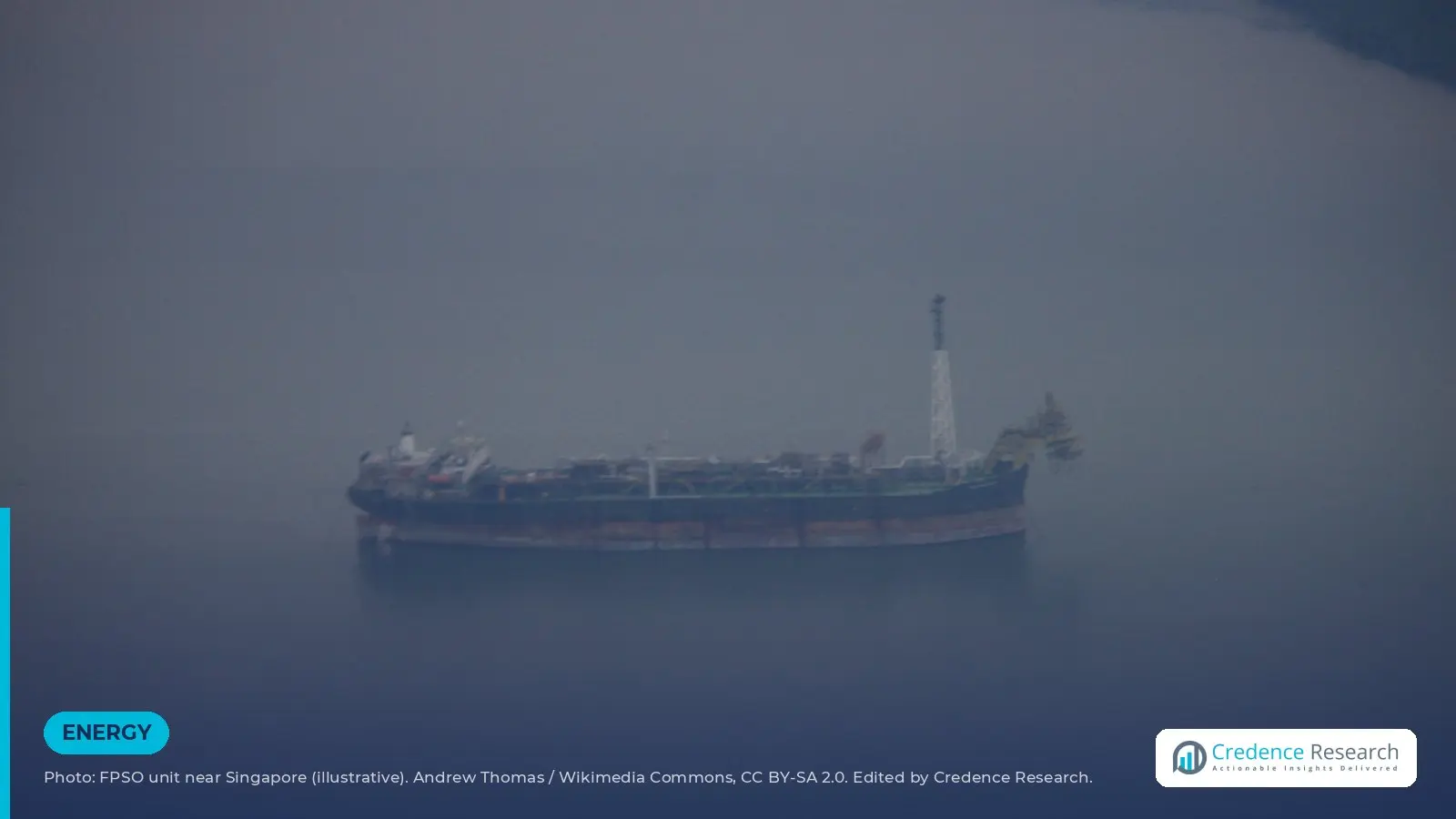
- The concept calls for 15 subsea wells, flowlines and a newly built floating production, storage and offloading (FPSO) vessel able to process about 1 billion cubic feet per day of gas and 80,000 barrels per day of condensate, with 1.4 million barrels of storage.
- Eni expects the Geliga and Gula hub to reach peak output of about 1 billion cubic feet per day of gas and 50,000 barrels per day of condensate.
- The field is operated by Searah, the upstream company Eni and Malaysia's PETRONAS formed through their strategic partnership.
Industry background
The Kutei Basin, off the coast of East Kalimantan on the island of Borneo, has been the center of Eni's Indonesian business for more than a decade. The company's existing South Hub produces through the Jangkrik floating production unit, and gas from the region feeds the Bontang LNG plant, one of Southeast Asia's oldest liquefaction complexes, as well as the domestic pipeline network.
Eni announced the Geliga-1 discovery in April 2026 and followed it with a production test that trade publication Offshore Energy reported in May. The approval also comes shortly after the start-up of the Maha project, according to Eni, and follows the final investment decision earlier in 2026 on the North Hub, which is now under execution and is expected to start production in 2028. Eni noted the speed of the regulatory process and described its relationship with Indonesia's upstream regulator SKK Migas as a close strategic partnership.
Under the approved concept, gas will be treated on the FPSO and sent by pipeline to onshore receiving facilities at the Santan Terminal and into the East Kalimantan gas network. Part of the gas will be liquefied at Bontang LNG for export, while the rest will supply the domestic market. Condensate will be stabilized and stored on the vessel and then offloaded to shuttle tankers.
Industry implications
The approval is a clear signal that Indonesia is willing to fast-track large gas projects to arrest declining output and keep its LNG export plants supplied. Bontang has operated well below its original capacity for years as older fields in the Mahakam area matured, and new deepwater supply from the Kutei Basin is the most direct way to refill its trains without major new liquefaction investment.
The hub design also reflects a wider industry shift toward reusing existing infrastructure. By routing gas into established terminals, pipelines and an operating LNG plant, the Geliga and Gula development avoids the cost and permitting burden of a greenfield export facility. Eni said the three Kutei hubs together are expected to deliver gross production of about 3 billion cubic feet per day of gas and 140,000 barrels per day of condensate in East Kalimantan by the end of the decade.
For buyers in Asia, a gas source that can be split between export and domestic use offers some flexibility at a time when regional demand from power generation and industry remains strong and governments are weighing energy security against decarbonization targets.
Competitive and supply chain implications
A newly built FPSO with 1 billion cubic feet per day of gas capacity is a significant order for the global offshore fabrication chain. Yards and integrators that build large gas processing vessels, along with subsea equipment suppliers, are likely to compete for the hull, topsides, umbilicals and the 15-well subsea system. Eni did not disclose a capital cost, a contractor or a first-gas date in its announcement.
The ownership structure is also shifting. Searah, the company Eni and PETRONAS created to combine assets in Indonesia and Malaysia, operates Geliga. In October 2026, Eni signed two binding agreements to sell interests in selected Searah-operated Indonesian assets to Pertamina and Medco, according to Offshore Energy. Bringing in Indonesian partners can spread capital commitments and strengthen local alignment as the basin moves into a heavy spending phase.
Rival operators in Southeast Asia will watch the six-month approval timeline closely. Long regulatory cycles have historically slowed deepwater gas projects in the region, and a faster path could shape where international companies allocate exploration budgets.
Regional implications
East Kalimantan stands to benefit from new supply into its gas network, onshore activity at the Santan Terminal and continued use of the Bontang LNG complex. Eni highlighted local content and synergies with the North Hub as part of its approach to cost and schedule optimization in the basin.
For Indonesia more broadly, the project supports government efforts to balance export revenue with domestic gas needs for power, fertilizer and industry. The province is also home to the site of Nusantara, the planned new national capital, which adds to the long-term case for local gas supply.
Credence Research analysis
The Geliga approval shows how quickly a well-placed discovery can move when an operator already owns nearby infrastructure and has a working relationship with the regulator. Six months from discovery to an approved plan of development is unusually fast for a deepwater gas field of this scale, and it reflects both Indonesia's urgency to replace declining output and Eni's strategy of rapid, phased development close to existing facilities. The open questions are cost, contracting and the final investment decision, none of which were disclosed.
The project also tests the Searah model. Placing Eni and PETRONAS assets in a single regional operator, then selling down interests to Pertamina and Medco, gives the venture scale and local partners at the same time. If the FPSO is contracted promptly and the North Hub starts on schedule in 2028, the Kutei Basin could become one of the most active deepwater gas areas in Asia later this decade, with Bontang LNG as the main beneficiary of new feed gas.
What comes next
- A final investment decision on the Geliga and Gula hub, along with disclosure of capital costs and a first-gas target.
- Award of contracts for the new FPSO, the subsea production system and the flowlines.
- Completion of Eni's agreed sales of interests in Searah-operated Indonesian assets to Pertamina and Medco.
- Start-up of the North Hub, which Eni expects in 2028.
- Gas marketing arrangements that split Geliga supply between Bontang LNG exports and the domestic market.
Sources
- Eni: approval for Geliga development unlocking over 8 Tcf of gas resources in Indonesia
- Offshore Energy: Go-ahead for Eni's Indonesian field development
- LNG Industry: Eni announces approval for Geliga development
- World Oil: Eni confirms major Geliga gas discovery in Indonesia's Kutei Basin
Image: A floating production, storage and offloading unit near Singapore, shown for illustration, by Andrew Thomas via Wikimedia Commons, CC BY-SA 2.0. Cropped and edited by Credence Research.

About the Author

Senior News Editor at Credence Research Inc