
| REPORT ATTRIBUTE | DETAILS |
|---|---|
| Historical Period | 2019-2022 |
| Base Year | 2023 |
| Forecast Period | 2024-2032 |
| Biodegradable Dressing Market Size 2023 | USD 911.49 million |
| Biodegradable Dressing Market, CAGR | 2.76% |
| Biodegradable Dressing Market Size 2032 | USD 1,247.49 million |
Market Overview
The biodegradable dressing market is projected to experience substantial growth, with its value expected to rise from USD 911.49 million in 2023 to USD 1,247.49 million by 2032, reflecting a compound annual growth rate of 2.76%. The global biodegradable dressing market has experienced remarkable growth in recent years, primarily driven by escalating environmental concerns, stringent regulations, and a growing awareness regarding sustainable healthcare solutions. Within the broader wound care market, biodegradable dressings have emerged as a crucial segment, providing eco-friendly alternatives to traditional dressings while upholding efficacy and safety standards. This market overview delves into the dynamics, trends, drivers, challenges, and opportunities that define the landscape of the biodegradable dressing market.
The market dynamics of biodegradable dressings are underpinned by several factors, notably the increasing prevalence of chronic wounds such as diabetic ulcers, pressure ulcers, and surgical wounds. As the global population ages and chronic diseases become more prevalent, the demand for advanced wound care products, including biodegradable dressings, continues to rise. Furthermore, heightened awareness regarding the environmental impact of non-biodegradable materials has accelerated the adoption of eco-friendly wound care solutions, further bolstering market growth.
One prominent trend in the biodegradable dressing market is the integration of innovative materials and technologies to enhance product performance and biodegradability. Manufacturers are investing in research and development to introduce dressings made from natural polymers like collagen, alginate, and chitosan, which offer superior biocompatibility and promote wound healing. Additionally, there's a growing focus on incorporating antimicrobial agents into biodegradable dressings to prevent infections and improve patient outcomes. Despite these positive trends, the market faces challenges related to cost competitiveness and product performance. Biodegradable materials often incur higher production costs compared to conventional synthetic dressings, posing a barrier to widespread adoption, particularly in cost-sensitive healthcare settings. Moreover, ensuring the optimal balance between biodegradability and dressing functionality remains a challenge for manufacturers, necessitating continuous innovation and quality assurance measures.
However, amidst these challenges, numerous opportunities abound for biodegradable dressing manufacturers. The growing demand for advanced wound care solutions, coupled with favorable regulatory frameworks promoting sustainable practices, creates a conducive environment for market expansion. Strategic collaborations between industry players and research institutions can facilitate the development of novel biodegradable materials and delivery systems, unlocking new avenues for growth. Moreover, the emergence of telemedicine and home healthcare services presents opportunities to penetrate untapped markets and cater to the evolving needs of patients outside of traditional clinical settings. In essence, the biodegradable dressing market stands at the forefront of sustainable healthcare innovation, poised for further growth and advancement in the years to come.
Market Drivers
Growing Environmental Awareness and Regulations:
Traditional wound dressings often end up in landfills, contributing to plastic waste. Biodegradable dressings offer a more eco-friendly alternative, aligned with growing environmental awareness among healthcare providers and patients. For instance, the World Health Organization reports that of the total amount of waste generated by health-care activities, about 85% is general, non-hazardous waste comparable to domestic waste. The remaining 15% is considered hazardous material that may be infectious, chemical, or radioactive.
As sustainability becomes increasingly paramount in healthcare practices, the adoption of biodegradable dressings represents a proactive step towards reducing the environmental footprint of medical waste. By utilizing materials that naturally degrade over time, healthcare facilities can mitigate their impact on the environment while ensuring effective wound management.
Many countries are implementing stricter regulations regarding medical waste disposal. Biodegradable dressings can help healthcare facilities comply with these regulations and reduce their environmental impact. By investing in biodegradable solutions, healthcare providers not only adhere to regulatory requirements but also demonstrate their commitment to responsible waste management practices.
Rising Demand for Advanced Wound Care Solutions:
Biodegradable dressings can be designed to promote a moist wound healing environment, potentially leading to faster healing times and a reduced risk of infection compared to traditional dressings. For instance, materials like hydrogels used in biodegradable dressings can control moisture levels, which can help create the ideal healing environment. The ability of biodegradable dressings to support optimal wound healing conditions underscores their significance in improving patient outcomes.
As healthcare providers prioritize patient-centric care, the adoption of advanced wound care solutions like biodegradable dressings becomes increasingly pivotal in enhancing treatment efficacy and patient satisfaction. Certain biodegradable dressings conform better to wounds and minimize discomfort during dressing changes, improving the patient experience. For example, these dressings prevent the pain patients have to experience due to dressing changes. They also require less maintenance, which enhances the patient’s overall experience.
By prioritizing patient comfort and minimizing pain associated with wound management, biodegradable dressings address a crucial aspect of holistic healthcare delivery. As patients seek treatments that not only promote healing but also enhance their quality of life, the demand for biodegradable dressings with superior conformability and comfort features is poised to rise. In fact, studies have shown that roughly 50% of patients admitted to hospitals have wounds, which makes dressing materials very important as they are essential for wound management. This indicates a significant potential for the increased use and demand for biodegradable dressings in the healthcare sector.
Market Trends
Focus on Advanced Biomaterials:
Materials like alginate, chitosan, and cellulose derived from natural sources are being extensively used for their biocompatibility, wound healing properties, and ability to biodegrade rapidly. For instance, natural polymers can be used as bioactive materials enhancing regeneration, as vehicles for drug delivery, and as scaffold formations with 3D networks promoting local tissue regeneration. These natural polymers offer a sustainable alternative to synthetic materials, aligning with the growing demand for eco-friendly wound care solutions. Healthcare providers are increasingly recognizing the benefits of natural polymers in promoting optimal wound healing while minimizing environmental impact. Synthetic polymers like polylactic acid (PLA) and polycaprolactone (PCL) are being engineered for controlled biodegradability and targeted drug delivery capabilities. For example, the properties of synthetic polymers were modified by blending them with nanoparticles so that these materials could be used in wound dressing applications. Manufacturers are investing in research and development to enhance the biocompatibility and functional properties of synthetic biodegradable polymers, expanding their applicability in wound care. The versatility of synthetic polymers enables the customization of dressings to meet specific clinical needs, driving innovation in advanced wound care technologies.
Development of Functionally Diverse Dressings:
Hydrogels maintain a moist wound environment, promote tissue regeneration, and minimize scarring. For instance, hydrogels are a unique class of absorbent that can take in many times their own weight in water without breaking apart or dissolving. Their capacity for substantial water absorption is a function of the hydrogel’s chemical structure, a loosely cross-linked network of hydrophilic polymer chains. This makes hydrogels well suited to a range of wound care applications. For burns, they can provide a cooling and moist contact layer that relieves pain and promotes healing.
These dressings help prevent wound infections by releasing antimicrobial agents directly to the wound site. The trend is towards broad-spectrum antimicrobial activity and a reduced risk of developing resistance. Healthcare facilities are integrating antimicrobial dressings into wound care protocols to minimize the risk of complications and expedite healing processes.
These advanced dressings support skin graft adhesion and promote tissue regeneration. They can be seeded with cells to accelerate wound closure in complex cases. The integration of skin grafts and regenerative dressings represents a significant advancement in wound care, offering novel approaches to address challenging clinical scenarios. Healthcare providers are increasingly incorporating these innovative dressings into treatment protocols for chronic wounds, burns, and complex surgical incisions, with the aim of optimizing patient outcomes and enhancing quality of life.
Market Restraints and Challenges
Higher Cost Compared to Traditional Dressings:
Biodegradable dressings can be significantly more expensive than traditional options. This higher cost can burden healthcare budgets and limit patient access in cost-sensitive settings. Healthcare facilities, particularly those with limited resources, may face challenges in allocating funds for biodegradable dressings, potentially compromising patient care. The disparity in cost between biodegradable and traditional dressings underscores the need for cost-effective alternatives or reimbursement strategies to ensure equitable access to advanced wound care solutions.
Limited Reimbursement by Insurance Companies:
Many insurance companies do not yet fully reimburse the costs of biodegradable dressings. This lack of coverage disincentivizes healthcare providers from adopting these potentially beneficial products. Without adequate reimbursement, healthcare facilities may hesitate to invest in biodegradable dressings, fearing financial strain or reduced profitability. Addressing the reimbursement gap is crucial for fostering widespread adoption of biodegradable dressings and ensuring that patients have access to innovative wound care treatments without financial barriers.
Need for More Clinical Data on Efficacy:
While initial studies show promise, more extensive clinical trials are needed to establish the long-term efficacy of biodegradable dressings compared to traditional treatments. This can create hesitation among some healthcare professionals who prefer evidence-based practices. The lack of comprehensive clinical data on the efficacy and outcomes associated with biodegradable dressings poses a significant challenge to their widespread adoption. Healthcare providers may be reluctant to transition from established treatment protocols without robust evidence supporting the effectiveness of biodegradable dressings in improving patient outcomes.
Complex Regulatory Landscape:
The biodegradable dressing market faces challenges associated with navigating a complex regulatory landscape. Regulatory requirements vary across regions, posing hurdles for manufacturers seeking market approval and distribution. The need to comply with diverse regulatory standards adds time and costs to the development and commercialization process, potentially impeding market growth. Furthermore, evolving regulatory frameworks and standards necessitate ongoing monitoring and adaptation, placing additional burdens on industry stakeholders. Clearer regulatory guidelines and harmonization efforts are essential to streamline market entry and facilitate innovation in biodegradable dressing technologies.
Awareness and Education Gap: There may be a lack of awareness among both healthcare professionals and patients regarding the benefits and availability of biodegradable dressings. Educational initiatives are needed to bridge this knowledge gap and promote the adoption of eco-friendly wound care solutions. Healthcare organizations and manufacturers must invest in educational campaigns to highlight the environmental advantages, efficacy, and cost-effectiveness of biodegradable dressings, fostering informed decision-making among stakeholders.
Potential Allergic Reactions: As with any medical product, there is a risk of allergic reactions to the materials used in biodegradable dressings. More research is needed to develop hypoallergenic materials and minimize the risks associated with allergic responses. Manufacturers should prioritize biocompatibility testing and allergen screening to ensure the safety of biodegradable dressings, address concerns related to patient safety, and enhance product acceptance in clinical settings.
Key Players
- BenQ Materials Corp.
- EON Meditech Pvt. Ltd.
- Aegis Lifesciences Pvt. Ltd.
- Datt Mediproducts Pvt. Ltd.
- Stryker
- Huizhou Foryou Medical Devices Co., Ltd.
- Smith & Nephew
- Baxter
- Reliance Life Sciences
- Medtronic
- Hangzhou Singclean Medical Product Co., Ltd.
- Divine Medical Technology
- Axio Biosolutions Pvt. Ltd.
- Cenefom Corp.
Recent Developments
In August 2021, Smith & Nephew introduced the WEREWOLF FASTSEAL 6.0 Hemostasis Wand, designed specifically for orthopaedists in the reconstruction business. This innovative product aims to streamline surgical procedures and reduce blood loss through the utilization of radio frequency technology. By leveraging advanced technology, the WEREWOLF FASTSEAL 6.0 Haemostasis Wand offers orthopaedic surgeons a reliable tool to shorten process times and enhance patient outcomes during reconstructive surgeries.
In May 2021, VelNez, a product developed by Datt Mediproduct, was granted a U.S. patent for its innovative biodegradable and biocompatible nasal dressing. This achievement marks a significant milestone for Datt Mediproduct, highlighting its commitment to advancing wound care solutions. The velNez nasal dressing represents a groundbreaking development in the field, offering a sustainable and patient-friendly alternative for nasal wound management.
Segmentation Analysis
By Product:
Polyvinyl alcohol (PVA) foam dressings represent a popular choice in wound care due to their high absorbency, conformability, and ability to maintain a moist wound environment conducive to healing. These dressings are particularly effective for moderate to heavily exuding wounds and are widely utilized in hospital settings. Hyaluronic acid dressings are known for their hydrating properties and ability to promote tissue regeneration. These dressings create a moist wound environment, facilitate autolytic debridement, and accelerate the healing process. They find applications in both acute and chronic wound management across hospital and clinic settings. Fibrin glue dressings consist of a biological adhesive derived from human plasma proteins, promoting hemostasis and tissue sealing. These dressings are utilized in surgical procedures to support wound closure and tissue adherence, particularly in ambulatory surgical centers where rapid, effective wound management is essential. Microporous polysaccharide-hemisphere dressings offer a unique combination of absorbency, biocompatibility, and hemostatic properties. These advanced dressings are well-suited for managing heavily exuding wounds and are commonly employed in hospital settings for surgical and trauma wound care. Chitosan dressings are derived from chitin, a natural biopolymer found in crustacean shells, and possess antimicrobial and hemostatic properties. These dressings promote wound healing while minimizing the risk of infection, making them indispensable in clinics and hospitals, particularly for managing chronic wounds.
By End User:
Hospitals represent a primary end user of biodegradable dressings, accounting for a significant share of market demand. The wide-ranging capabilities of biodegradable dressings make them essential in hospital settings for managing diverse wound types, including surgical, traumatic, and chronic wounds. Clinics serve as vital hubs for outpatient care, where biodegradable dressings play a crucial role in wound management and treatment. Clinics rely on a variety of biodegradable dressing products to address the needs of patients with acute and chronic wounds, offering effective solutions in a convenient and accessible setting. Ambulatory surgical centers specialize in providing same-day surgical procedures, emphasizing efficiency and patient convenience. Biodegradable dressings, particularly those with hemostatic and adhesive properties such as fibrin glue, are instrumental in promoting rapid wound closure and minimizing postoperative complications in ambulatory surgical settings.
Segments:
By Product:
- Polyvinyl Alcohol (PVA) Foam
- Hyaluronic Acid
- Carboxymethyl Cellulose
- Fibrin Glue
- Microporous polysaccharide hemisphere
- Chitosan
By End User:
- Hospitals
- Clinics
- Ambulatory Surgical Centers
By Region:
- North America
- The U.S.
- Canada
- Mexico
- Europe
- Germany
- France
- The U.K.
- Italy
- Spain
- Rest of Europe
- Asia Pacific
- China
- Japan
- India
- South Korea
- South-east Asia
- Rest of Asia Pacific
- Latin America
- Brazil
- Argentina
- Rest of Latin America
- Middle East & Africa
- GCC Countries
- South Africa
- Rest of Middle East and Africa
Regional Analysis
North America
The North American region holds a significant share in the global biodegradable dressing market, driven by the region's advanced healthcare infrastructure and the increasing demand for environmentally friendly medical products. According to recent market reports, North America accounted for a market share of approximately 35% in 2022.
In the United States and Canada, the adoption of biodegradable dressings has been fueled by the growing emphasis on sustainable healthcare practices and the need for effective wound management solutions. Major healthcare providers and hospitals in the region have recognized the environmental and economic benefits of using biodegradable dressings, which reduce waste and minimize the ecological impact associated with traditional dressings.
Furthermore, the region's well-established regulatory framework and stringent quality standards have fostered an environment conducive to the development and commercialization of innovative biodegradable dressing products. Leading manufacturers have invested in research and development to introduce advanced dressings that combine biodegradability with superior wound healing properties.
Europe
The European Biodegradable Dressing Market has witnessed substantial growth, capturing a market share of around 28% in 2022. Countries like Germany, France, the United Kingdom, and Italy have been at the forefront of driving demand for these products.
Europe's strong commitment to environmental sustainability and the implementation of stringent regulations regarding waste management have contributed to the widespread adoption of biodegradable dressings. Healthcare providers and government agencies in the region have actively promoted the use of eco-friendly medical products, recognizing their potential to reduce the environmental impact of healthcare waste.
Additionally, the region's focus on advanced wound care and the prevalence of chronic wounds have created a need for innovative biodegradable dressings that promote effective healing while minimizing waste. Manufacturers have responded by introducing biodegradable dressings with advanced properties, such as antimicrobial properties and moisture management capabilities.
Asia-Pacific
The Asia-Pacific region has emerged as a rapidly growing market for biodegradable dressings, accounting for a market share of approximately 22% in 2022. Countries like China, India, Japan, and South Korea have been instrumental in driving this growth, fueled by the increasing awareness of environmental sustainability and the rising demand for advanced wound care products.
In the Asia-Pacific region, the growing prevalence of chronic wounds, coupled with the expanding geriatric population, has contributed to the rising adoption of biodegradable dressings. Healthcare providers and governments in the region have recognized the need for effective wound management solutions that align with environmental conservation efforts.
Latin America
The Latin American Biodegradable Dressing Market, while still in its nascent stage, has shown promising growth potential, with a market share of around 9% in 2022. Countries like Brazil, Mexico, and Argentina have been key contributors to this emerging market.
In Latin America, the increasing emphasis on environmental sustainability and the growing demand for advanced wound care solutions have fueled the adoption of biodegradable dressings. Healthcare providers and government agencies in the region have recognized the potential of these products to reduce the environmental impact of medical waste while promoting effective wound healing.
Major manufacturers of biodegradable dressings have expanded their presence in Latin America, offering localized products and collaborating with regional healthcare institutions and distributors. The region's focus on improving healthcare access and quality has created opportunities for the growth of the biodegradable dressing market.
Middle East and Africa
The Middle East and Africa region accounted for a market share of approximately 6% in the global biodegradable dressing market in 2022. While still a relatively untapped market, countries like the United Arab Emirates, Saudi Arabia, and South Africa have shown increasing interest in these products.
In the Middle East, growing investments in healthcare infrastructure and the emphasis on adopting advanced medical technologies have contributed to the rising demand for biodegradable dressings. Major healthcare providers and government initiatives in the region have recognized the potential of these products to improve wound care while aligning with environmental sustainability goals.
Future Outlook
- The biodegradable dressing market is poised for substantial growth, driven by increasing environmental consciousness and sustainability initiatives across healthcare sectors.
- Continued advancements in biomaterials and manufacturing technologies are expected to lead to the development of more innovative and effective biodegradable dressing solutions.
- Regulatory support for eco-friendly medical products is likely to further boost market expansion, with governments worldwide implementing stricter waste disposal regulations.
- Rising demand for advanced wound care solutions, coupled with the prevalence of chronic wounds, presents significant opportunities for market growth and product diversification.
- Manufacturers are focusing on enhancing product functionality, including improved moisture retention, antimicrobial properties, and customized application methods, to meet evolving clinical needs.
- Strategic collaborations between industry players and research institutions are anticipated to drive innovation and accelerate the introduction of novel biodegradable dressing materials and delivery systems.
- Market penetration into untapped regions and healthcare segments, such as telemedicine and home healthcare services, is expected to broaden the reach of biodegradable dressing solutions.
- Increasing investments in education and awareness initiatives will play a crucial role in fostering acceptance and adoption of biodegradable dressing products among healthcare professionals and patients.
- The integration of digital health technologies, such as smart monitoring and remote patient management systems, could further enhance the efficiency and effectiveness of biodegradable dressing applications.
- Overall, the future outlook for the biodegradable dressing market appears promising, characterized by sustained growth, technological innovation, and a commitment to sustainable healthcare practices.
Request a Free Sample
Fill in your details and we'll send you a free sample report.
- Sample data tables & charts
- Research methodology
Need a Custom Version of This Report?
Tailor the scope, geography, or segments to your exact requirements.
- Custom geography or segment scope
- Direct access to our analyst team
Frequently Asked Questions
What is driving the growth of the biodegradable dressing market?
What are the key trends shaping the biodegradable dressing market?
What challenges does the biodegradable dressing market face?
What opportunities exist in the biodegradable dressing market?
What is the future outlook for the biodegradable dressing market?
Table of Content
Chapter 1. Report Introduction
- 1.1 Report Description & Purpose
- 1.1.1 Report Title & Market Definition
- 1.1.2 Unique Selling Propositions (USP) & Key Differentiators
- 1.1.3 Value Proposition for Stakeholders
- 1.2 Research Objectives
- 1.2.1 Market Sizing Objectives (Volume & Revenue)
- 1.2.2 Segmentation Objectives
- 1.2.3 Competitive Intelligence Objectives
- 1.2.4 Forecast & Scenario Objectives
- 1.3 Report Scope
- 1.3.1 Biodegradable Dressing Scope – Types & Subtypes Covered
- 1.3.2 Geographic Scope – Regions & Countries Covered
- 1.3.3 Historical Period, Base Year & Forecast Period (the historical period; forecast to the forecast period)
- 1.3.4 Inclusions & Exclusions
- 1.4 HS Code & Classification Framework
- 1.5 Currency, Units & Pricing Basis
- 1.6 Target Stakeholders
- 1.7 Limitations & Assumptions
Chapter 2. Executive Summary
- 2.1 Global Biodegradable Dressing Market Snapshot
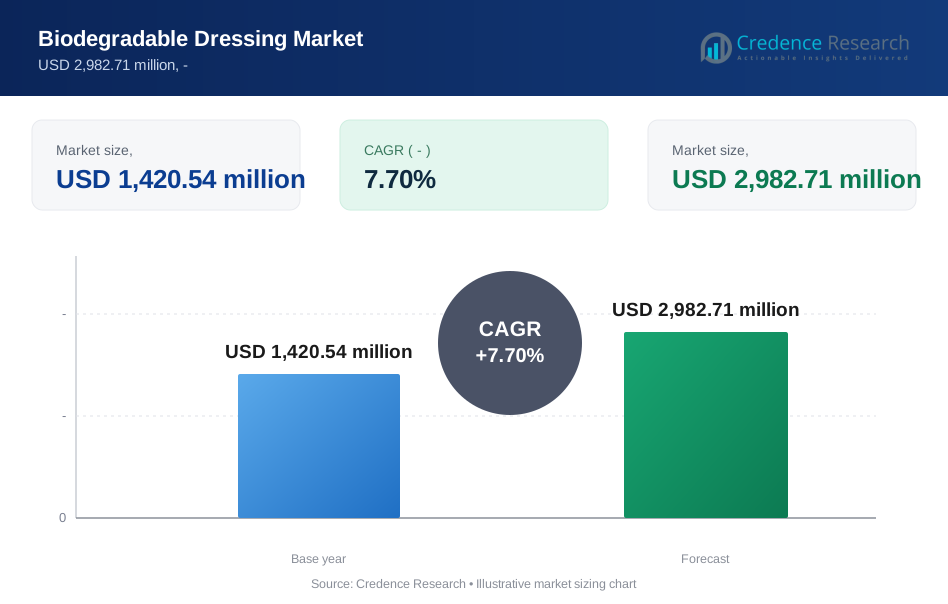
- 2.1.1 Market Size – Historical (the historical period) & Forecast (the forecast period) (base year: USD 1,420.54 million → forecast year: USD 2,982.71 million)
- 2.1.2 Volume & Revenue – Global Totals
- 2.1.3 Key Market Highlights – Top Five Facts
- 2.2 Biodegradable Dressing Market Segmentation Snapshot
- 2.2.1 Market Split by Region – vs.
- 2.3 Competitive Snapshot
- 2.3.1 Top 10 Players by Revenue Share –
- 2.3.2 Top 10 Players by Volume Share –
- 2.3.3 Recent Strategic Developments (18-Month Summary)
- 2.4 Key Investment Highlights & Strategic Conclusions
Chapter 3. Biodegradable Dressing Market Dynamics & Industry Analysis
- 3.1 Market Overview & Context
- 3.1.1 Biodegradable Dressing Market Position in the Broader Automotive Value Chain
- 3.1.2 OEM vs. Replacement Market Dynamics
- 3.1.3 Market Maturity & Development Stage by Region
- 3.2 Biodegradable Dressing Market Drivers
- 3.3 Biodegradable Dressing Market Restraints & Challenges
- 3.4 Biodegradable Dressing Market Opportunities
- 3.5 Porter's Five Forces Analysis
- 3.5.1 Threat of New Entrants
- 3.5.2 Bargaining Power of Suppliers
- 3.5.3 Bargaining Power of Buyers
- 3.5.4 Threat of Substitutes
- 3.5.5 Competitive Rivalry – Intensity Assessment
- 3.6 Biodegradable Dressing Value Chain Analysis
- 3.6.1 Upstream – Raw Material/Input Suppliers
- 3.6.1.1 Raw Material/Input 1
- 3.6.1.2 Raw Material/Input 2
- 3.6.1.3 Raw Material/Input 3
- 3.6.2 Midstream – Production/Manufacturing/Service Delivery
- 3.6.2.1 Production/Process Overview
- 3.6.2.2 Key Facility Locations & Capacity by Manufacturer
- 3.6.3 Downstream – Distribution & End Consumer
- 3.6.3.1 Primary Channel – B2B/OEM
- 3.6.3.2 Secondary Channels – Dealer, Retail, Online, Direct
- 3.6.4 Value Chain Profitability Analysis
- 3.6.1 Upstream – Raw Material/Input Suppliers
- 3.7 PESTEL Analysis
- 3.7.1 Political Factors
- 3.7.2 Economic Factors
- 3.7.3 Social Factors
- 3.7.4 Technological Factors
- 3.7.5 Environmental Factors
- 3.7.6 Legal Factors
- 3.8 Biodegradable Dressing Supply Chain Analysis
- 3.8.1 Raw Material/Input Supply Risk Assessment
- 3.8.2 Manufacturing Concentration Risk (Geographic Exposure)
- 3.8.3 Trade Disruption Impact Analysis
- 3.9 Regulatory & Policy Landscape
Note: The regulatory and policy landscape section covers regulations based on their applicability to the market, Biodegradable Dressing category, geography, and scope of the study. Only regulatory frameworks with a material impact on operations, compliance, trade, sustainability, or market access are analyzed in detail.
Chapter 4. Key Investment Pockets & Opportunity Analysis
- 4.1 Biodegradable Dressing Market Attractiveness Analysis
- 4.1.1 By Region – Investment Attractiveness Matrix (Volume × CAGR)
- 4.2 Absolute Revenue Growth Opportunity
- 4.2.1 By Region – Absolute USD Growth Through the forecast period
- 4.3 Incremental Volume Opportunity
- 4.3.1 By Region – Incremental Volume Through the forecast period
- 4.3.2 Segment – Incremental Volume
- 4.4 Emerging Submarket Opportunity Deep Dive (Subject to Applicability)
- 4.5 Emerging Market Opportunity Scorecards
- 4.5.1 United States
- 4.5.2 Europe
- 4.5.3 Asia
- 4.5.4 Middle East & Africa
Note: Emerging Market Opportunity Scorecards will be included based on relevance and strategic importance. Regions listed are indicative and may vary depending on data availability and market dynamics.
Chapter 5. Biodegradable Dressing Import-Export Analysis & Trade Flows
- 5.1 Global Trade Overview
- 5.1.1 Global Export Value by Country (the historical period)
- 5.1.2 Global Export Volume by Country (the historical period)
- 5.1.3 Global Import Value by Country (the historical period)
- 5.1.4 Global Import Volume by Country (the historical period)
- 5.1.5 Net Trade Balance by Country (the historical period)
- 5.2 Export Analysis – Segment
- 5.2.1 Type 1 (HS Code)
- 5.2.2 Type 2 (HS Code)
- 5.2.3 Type 3 (HS Code)
- 5.2.4 Type 4 (HS Code)
- 5.2.5 Type 5 (HS Code)
- 5.3 Import Analysis – Segment
- 5.3.1 Type 1 (HS Code)
- 5.3.2 Type 2 (HS Code)
- 5.3.3 Type 3 (HS Code)
- 5.3.4 Type 4 (HS Code)
- 5.3.5 Type 5 (HS Code)
- 5.4 Average Unit Trade Prices
- 5.4.1 Average Export Price – Segment & Country
- 5.4.2 Average Import Price – Segment & Source Country
- 5.4.3 Price Trends (the historical period)
- 5.5 Key Trade Route Analysis
- 5.5.1 Trade Route 1
- 5.5.2 Trade Route 2
- 5.5.3 Trade Route 3
- 5.5.4 Trade Route 4
- 5.5.5 Trade Route 5
- 5.6 Trade Policy Impact Assessment
- 5.6.1 US Anti-Dumping & Section 301 Tariffs
- 5.6.2 EU Customs Union Impact
- 5.6.3 Major Free Trade Agreements
- 5.6.4 USMCA Rules of Origin
Note: Trade policy analysis will be included only where relevant to the Biodegradable Dressing market.
Chapter 6. Competitive Landscape & Company Benchmarking
- 6.1 Biodegradable Dressing Market Concentration & Structure
- 6.1.1 Herfindahl-Hirschman Index (HHI) – vs.
- 6.1.2 Tier 1, Tier 2 & Tier 3 Market Structure
- 6.1.3 Global, Regional & Local Player Dynamics
- 6.2 Biodegradable Dressing Market Share Analysis –
- 6.2.1 Global Revenue Share by Company
- 6.2.2 Global Volume Share by Company
- 6.2.3 Regional Revenue Share
- 6.2.4 Market Share Evolution ( vs. )
- 6.2.5 OEM Segment Share by Company
- 6.2.6 Replacement Segment Share by Company
- 6.3 Production/Delivery Capacity & Facility Analysis
- 6.3.1 Global Installed Capacity
- 6.3.2 Capacity Utilization Rates
- 6.3.3 Production/Output Volume
- 6.3.4 Facility Locations & Capacity Map
- 6.3.5 Planned Capacity Additions
- 6.4 Biodegradable Dressing Competitive Benchmarking Matrix
- 6.4.1 Revenue, Volume, CAGR & Profitability Comparison
- 6.4.2 Channel Revenue Mix
- 6.4.3 Geographic Revenue Exposure
- 6.4.4 R&D Intensity
- 6.4.5 Sustainability Maturity
- 6.5 Strategic Developments in Biodegradable Dressing (Last 24 Months)
- 6.5.1 Mergers, Acquisitions & Divestments
- 6.5.2 New Biodegradable Dressing Launches
- 6.5.3 Facility Expansions
- 6.5.4 Strategic Alliances, Joint Ventures & Partnerships
- 6.5.5 Distribution Expansion & Market Entry
- 6.5.6 Sustainability & ESG Initiatives
- 6.6 Competitive Strategy Mapping
- 6.6.1 Leader, Challenger, Follower & Niche Classification
- 6.6.2 Pricing Strategy Comparison
- 6.6.3 Channel Strategy Matrix
Note: Strategic developments are included based on their materiality and the availability of reliable information.
Chapter 7. Global Biodegradable Dressing Market – By Distribution Channel
- 7.1 Segment Overview
- 7.1.1 Volume & Revenue Split by Channel ( & )
- 7.1.2 Channel Mix Evolution (the forecast period)
Chapter 8. Regional Market Analysis – Global Overview
- 8.1 Global Regional Overview
- 8.1.1 Regional Volume Share
- 8.1.2 Regional Revenue Share
- 8.1.3 Regional Volume by Region
- 8.1.4 Regional Revenue by Region
- 8.1.5 Regional Forecast Through the forecast period
- 8.2 Cross-Regional Segment Analysis
- 8.2.1 By Distribution Channel
- 8.2.2 By Brand/Price Tier
Chapter 9. North America Biodegradable Dressing Market
- 9.1 United States
- 9.2 Canada
- 9.3 Mexico
Chapter 10. Europe Biodegradable Dressing Market
- 10.1 Germany
- 10.2 France
- 10.3 Italy
- 10.4 United Kingdom
- 10.5 Spain
- 10.6 Poland
- 10.7 Russia
- 10.8 Netherlands
- 10.9 Belgium
- 10.10 Sweden
- 10.11 Denmark
- 10.12 Norway
- 10.13 Rest of Europe
Chapter 11. Asia Pacific Biodegradable Dressing Market
- 11.1 China
- 11.2 India
- 11.3 Japan
- 11.4 South Korea
- 11.5 Thailand
- 11.6 Indonesia
- 11.7 Vietnam
- 11.8 Malaysia
- 11.9 Australia
- 11.10 Rest of Asia Pacific
Chapter 12. Latin America Biodegradable Dressing Market
- 12.1 Brazil
- 12.2 Argentina
- 12.3 Colombia
- 12.4 Chile
- 12.5 Rest of Latin America
Chapter 13. Middle East Biodegradable Dressing Market
- 13.1 Saudi Arabia
- 13.2 United Arab Emirates
- 13.3 Turkey
- 13.4 Israel
- 13.5 Iran
- 13.6 Rest of the Middle East
Chapter 14. Africa Biodegradable Dressing Market
- 14.1 South Africa
- 14.2 Egypt
- 14.3 Nigeria
- 14.4 Morocco
- 14.5 Rest of Africa
Chapter 15. Biodegradable Dressing Company Profiles
- 15.1 [Company 01]
- 15.1.1 Company Overview
- 15.1.2 Key Management Personnel
- 15.1.3 Products & Services Portfolio
- 15.1.4 Financial Performance
- 15.1.5 Key Market Focus & Geographic Presence
- 15.1.6 Recent Developments & Strategic Initiatives
Note: The company profile list is preliminary and may change based on research findings, market developments, data availability, and client requirements.
Chapter 16. Appendices
- Appendix A – List of Abbreviations & Acronyms
- Appendix B – Industry Classification Code Reference – Full Series
- Appendix C – Production & Capacity Data Tables
- Appendix D – End-Use & Demand Base Tables
- Appendix E – Consumption & Replacement Rate Assumptions
- Appendix F – ASP Reference Tables
- Appendix G – Manufacturing & Facility Database
- Appendix H – Import-Export Data Tables
- Appendix I – Regulatory Summary Tables
- Appendix J – Primary Research Participant List (Anonymized)
- Appendix K – Primary Research Questionnaire Framework
- Appendix L – Data Sources & Bibliography
- Appendix M – Market Size Divergence & Source Comparison
Chapter 17. Research Methodology
- 17.1 Research Framework & Philosophy
- 17.2 Secondary Research – Sources, Hierarchy & Data Extraction
- 17.3 Data Modeling – Bottom-Up & Top-Down Market Sizing
- 17.4 Primary Research – Stakeholder Framework, LOI & Sample Sizes
- 17.5 Forecast Methodology – Regression, Scenario & Sensitivity Analysis
- 17.6 Quality Control – Four-Layer Validation Framework
- 17.7 Limitations & Standard Assumptions
- 17.8 Disclaimer
