
| REPORT ATTRIBUTE | DETAILS |
|---|---|
| Historical Period | 2019-2022 |
| Base Year | 2023 |
| Forecast Period | 2024-2032 |
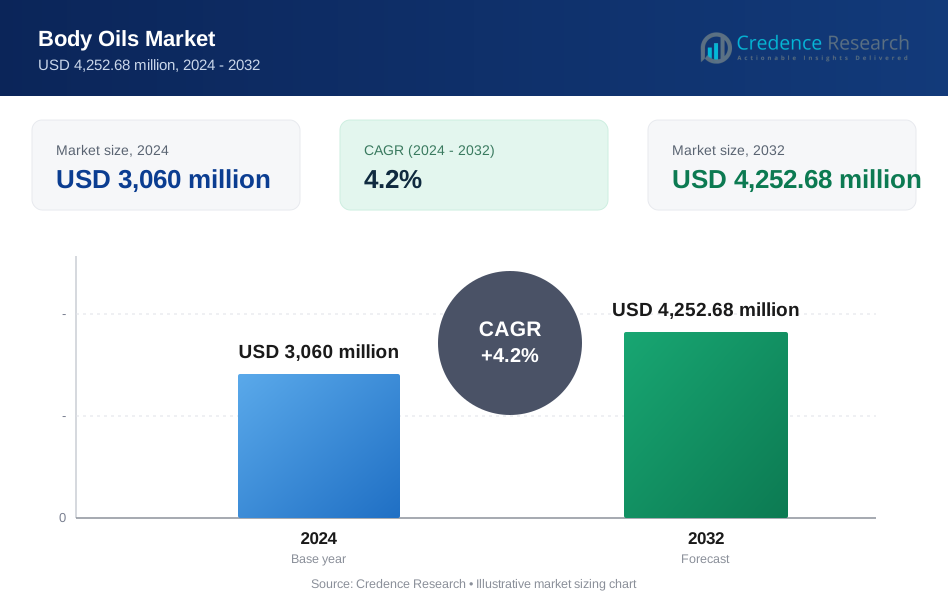
| Body Oils Market Size 2024 | USD 3,060 Million |
| Body Oils Market, CAGR | 4.2% |
| Body Oils Market Size 2032 | USD 4,252.68 Million |
Market Overview
The global Body Oils Market is projected to grow from USD 3,060 million in 2024 to USD 4,252.68 million by 2032, at a compound annual growth rate (CAGR) of 4.2%.
The body oils market is driven by increasing consumer demand for natural and organic skincare products, as well as growing awareness of the benefits of body oils for hydration and skin health. The rise in disposable income and the popularity of self-care routines further boost market growth. Additionally, innovations in product formulations, such as the inclusion of essential oils and plant-based ingredients, are enhancing product appeal. Consumer preference for multi-functional products and sustainable packaging also contributes to the market's expansion, while the growing e-commerce sector offers greater accessibility to a wide range of body oil products.
The geographical analysis of the body oils market reveals significant growth in regions like North America and Europe, where consumer demand for premium skincare products is high. In these markets, key players such as Neutrogena, Clarins, L'Occitane, and Avon dominate with their wide range of body oil offerings. These companies focus on developing innovative formulations and leveraging e-commerce and retail distribution channels to cater to a diverse consumer base. Additionally, the growing preference for natural and organic ingredients is driving expansion, especially in regions with a strong wellness and sustainability trend.
Market Drivers
Rising Consumer Awareness of Skincare
As consumers become increasingly aware of the importance of skincare, body oils are gaining popularity due to their ability to provide deep, long-lasting hydration. Unlike traditional lotions, which may offer surface-level moisture, body oils penetrate the skin more effectively, delivering nourishment and retaining moisture for extended periods. For instance, a survey by the American Academy of Dermatology found that consumers are increasingly seeking products that offer deeper hydration and longer-lasting effects. This growing recognition of hydration's role in healthy skin has boosted the demand for body oils as a key element in skincare routines.
Sensory Experience and Aromatherapy
Body oils offer a luxurious sensory experience, providing a silky texture that enhances the pampering aspect of skincare routines. Many body oils are infused with essential oils, delivering not only skincare benefits but also aromatherapy advantages. For example, essential oils like lavender and chamomile are known for their calming effects and are commonly used in body oils for their aromatherapy benefits. The soothing scents can promote stress relief, improve mood, and create an overall sense of well-being. This combination of luxury, sensory appeal, and therapeutic benefits continues to drive demand, particularly among consumers seeking holistic wellness products.
Natural and Organic Preference
A significant trend driving the body oils market is the growing consumer preference for natural and organic products. With rising concerns about chemical ingredients, many consumers are gravitating toward body oils derived from natural sources like coconut, almond, argan, and jojoba oils. These products cater to the demand for clean beauty options, offering a sustainable and eco-friendly solution while providing skin benefits without harmful additives. The clean beauty movement continues to push the popularity of such oils.
Versatility and Multi-Purpose Use
Body oils are appreciated for their versatility, serving as a multi-purpose solution in both skin and hair care. These oils can be used to hydrate and nourish dry skin, reducing flakiness and leaving a smooth finish. Additionally, they work wonders on hair, helping to tame frizz, add shine, and restore moisture. The ability to double as a massage oil further enhances their appeal, promoting relaxation and muscle recovery, which contributes to their increasing popularity among consumers seeking multifunctional products.
Market Trends
Growing Demand for Natural and Multi-Purpose Body Oils
Consumers are increasingly prioritizing natural and organic ingredients in their skincare routines, and body oils are no exception. With a growing awareness of the harmful effects of chemicals and artificial fragrances, people are opting for products that are free from such additives. For example, a study by the Environmental Working Group highlighted that consumers are more likely to choose products labeled as natural or organic due to concerns about synthetic chemicals. This trend is particularly evident in body oils derived from natural ingredients like coconut, argan, and jojoba oils, which offer skin benefits while promoting overall well-being. Additionally, body oils are gaining popularity for their multi-purpose use. Beyond moisturizing, these oils are now commonly used for hair care, where they help nourish dry strands, reduce frizz, and add a healthy shine. They also serve as effective massage oils, promoting relaxation and aiding in muscle recovery. Furthermore, many body oils are infused with essential oils for aromatherapy benefits, offering consumers a soothing and uplifting experience with each use. This versatility has made body oils a staple in many households, as consumers increasingly seek products that serve multiple functions.
Luxury, Customization, and Ethical Consumerism
Body oils are being marketed not only for their skincare benefits but also as luxurious self-care products, offering consumers a spa-like experience at home. Brands are focusing on premium packaging, innovative formulations, and unique textures to create a sense of indulgence and well-being. The luxury angle is further emphasized by the rise of customization and personalization, with brands offering tailored body oil blends to meet the specific needs and preferences of individual consumers. Whether it’s a customized blend for dry skin or a particular scent profile for aromatherapy, the trend of personalized skincare solutions is growing. Alongside this, sustainability and ethical sourcing have become essential considerations for consumers. With increasing concerns about the environmental and social impact of their purchases, many consumers are demanding body oils produced with sustainable ingredients and ethical production practices. Brands are responding by focusing on transparent sourcing, ensuring that their products are both eco-friendly and ethically produced. This combination of luxury, customization, and sustainability continues to shape the body oils market, positioning these products as premium, conscious choices in consumers’ skincare regimens.
Market Challenges Analysis
Market Competition and Regulatory Challenges
Body oils also face stiff competition from alternative skincare products like lotions, creams, and serums, which are often perceived as more convenient and less messy. These products are typically easier to apply and don't leave a residue, making them more attractive to time-conscious consumers. To differentiate themselves, body oil brands need to highlight their unique benefits, such as deep hydration and multi-purpose uses, while addressing concerns about convenience and mess. Additionally, the beauty industry is subject to various regulations, which can present a significant challenge for manufacturers looking to develop and market new body oil products. For instance, the EU cosmetic regulation requires strict compliance with ingredient safety and labeling standards. From ingredient sourcing to packaging, brands must stay up-to-date with the latest standards and ensure compliance to avoid legal hurdles. Navigating these regulatory challenges requires significant effort and investment, but ensuring compliance is crucial to maintaining trust and avoiding costly legal complications.
Formulation Challenges and Sensory Experience
One of the main challenges for body oil manufacturers is overcoming the perception of greasiness and tackiness. Many consumers are hesitant to use body oils due to their thick, oily residue, which can feel uncomfortable on the skin. To address this, brands must focus on creating formulations that are lightweight, fast-absorbing, and non-greasy. This would enhance the consumer experience, making body oils more appealing to those who prioritize ease of use and comfort. Another hurdle is ensuring a pleasant sensory experience. While body oils are often marketed as luxurious and pampering, some consumers may find the sensory feel overwhelming, especially those who prefer lighter textures. To cater to a wider audience, brands need to refine their formulations, offering body oils with smoother textures, pleasant scents, and non-greasy finishes. This would create a more universal appeal and attract consumers with varying preferences.
Market Segmentation Analysis:
By Type:
Body oils can be broadly categorized into two main types: wet oils and dry oils. Wet oils typically have a richer, thicker consistency and are designed to provide deep hydration, making them ideal for dry skin. These oils are often used during colder months when skin tends to lose moisture more rapidly. Wet oils, however, may leave a greasier residue, which can be a deterrent for some consumers. On the other hand, dry oils are lighter in texture and absorb quickly into the skin without leaving an oily film. They offer a non-greasy, smooth finish and are popular among consumers looking for a quick absorption experience. Dry oils are particularly appealing in warmer climates or for individuals with oily skin, as they provide the benefits of body oil without the heaviness. Both segments have seen steady growth, with consumers increasingly gravitating toward dry oils due to their versatility and faster absorption, while wet oils continue to dominate in markets that prioritize intense hydration.
By Distribution Channel:
The distribution channels for body oils are diverse, with significant growth in both online and offline sales. Online platforms, including e-commerce websites and direct-to-consumer brands, have experienced a surge in popularity due to the convenience they offer. Consumers appreciate the ability to browse a wide range of body oils, read reviews, and have products delivered directly to their doorsteps. In contrast, traditional brick-and-mortar stores like supermarkets and hypermarkets still hold a strong market presence. These physical outlets allow consumers to test products in-store, which is particularly important for body oils as scent and texture play a significant role in purchasing decisions. Additionally, hypermarkets and supermarkets benefit from offering body oils alongside other personal care products, making them a convenient one-stop shop for consumers. While online sales continue to dominate in many regions, the combination of both channels ensures accessibility and choice for different consumer preferences, expanding the reach of body oils across various demographics.
Segments:
Based on Type:
- Wet oil
- Dry oil
Based on Distribution Channel:
- Online
- Supermarkets
- Hypermarkets
- Others
Based on the Geography:
- North America
- U.S.
- Canada
- Mexico
- Europe
- Germany
- France
- U.K.
- Italy
- Spain
- Rest of Europe
- Asia Pacific
- China
- Japan
- India
- South Korea
- South-east Asia
- Rest of Asia Pacific
- Latin America
- Brazil
- Argentina
- Rest of Latin America
- Middle East & Africa
- GCC Countries
- South Africa
- Rest of the Middle East and Africa
Regional Analysis
North America
North America holds a significant share of the global body oils market, contributing to approximately 35%. The demand for body oils in this region is primarily driven by increasing consumer awareness of skincare and wellness, as well as the growing preference for natural and organic beauty products. In the U.S., the trend toward luxurious self-care and aromatherapy is further boosting the popularity of body oils, particularly those infused with essential oils and other natural ingredients. E-commerce platforms play a critical role in the distribution of body oils, with online sales growing at a rapid pace due to their convenience and broad selection. The market is also supported by a large number of key players offering premium body oil products, expanding the availability of a wide range of options catering to various consumer needs and preferences.
Asia-Pacific
Asia-Pacific is expected to experience the fastest growth in the body oils market, with a projected market share of around 25%. This region is increasingly adopting skincare and beauty routines that incorporate body oils, influenced by cultural traditions and a rising interest in self-care and wellness. Countries like Japan, South Korea, and India are leading this growth due to their large beauty and personal care markets. Consumers in the Asia-Pacific region are drawn to body oils for their hydrating properties and multi-purpose uses, such as for hair care and massage. The demand for natural and organic body oils is particularly strong, fueled by rising disposable incomes and increasing awareness of skincare benefits. With the expansion of e-commerce and rising social media influence, body oils are becoming more accessible to a wider consumer base across this region.
Key Player Analysis
- Neutrogena
- Clarins
- L'Occitane
- Desert Essence
- Avon
- T. Browne Drug
- Aveda
- P&G
- Unilever
- L’Oreal Group
Competitive Analysis
The body oils market is highly competitive, with several leading players vying for market share through product innovation, branding, and strategic marketing. Key players such as P&G, Avon, L'Occitane, Clarins, Unilever, Aveda, Neutrogena, L’Oreal Group, Desert Essence, and E.T. Companies are focusing on developing a wide range of products that cater to various consumer preferences, including natural, organic, and multi-purpose oils. The growing demand for body oils has encouraged brands to offer formulations targeting different needs, such as hydration, relaxation, and skin nourishment. To gain an edge, many brands are also emphasizing sustainability and ethical sourcing practices to appeal to environmentally conscious consumers. Additionally, the rise of e-commerce and social media platforms has allowed brands to reach a wider audience and build strong customer loyalty through targeted digital marketing campaigns. Competitive differentiation is increasingly driven by factors such as product quality, pricing, packaging, and sensory appeal.
Recent Developments
- In December 2023, Unilever acquired the premium biotech haircare brand K18. K18 is a fast-growing brand that uses novel biotechnology to address hair damage and has been popular with professionals and consumers.
- In August 2023, L’Oréal completed the acquisition of Aesop. The acquisition was announced on April 3, 2023, and Aesop joined L’Oréal’s Luxe Division. The integration aims to leverage Aesop’s unique brand DNA and values to expand its global presence and growth potential.
Market Concentration & Characteristics
The body oils market is characterized by a moderate level of concentration, with several key players dominating the space, alongside numerous smaller, emerging brands. The market is driven by a growing consumer preference for natural, organic, and multi-purpose products, leading established companies to innovate and expand their product portfolios. Major players often focus on premium offerings, using high-quality ingredients and appealing packaging to attract affluent consumers seeking luxury self-care experiences. At the same time, the demand for more affordable options has prompted brands to offer body oils at various price points to cater to a wider audience. The market also exhibits significant fragmentation, with many niche brands capitalizing on trends like eco-friendly packaging, sustainability, and customization. This diversity in offerings and increasing competition create a dynamic landscape, where both large-scale and small companies continue to innovate, responding to evolving consumer preferences and driving market growth.
Report Coverage
The research report offers an in-depth analysis based on Type, Distribution Channel and Geography. It details leading market players, providing an overview of their business, product offerings, investments, revenue streams, and key applications. Additionally, the report includes insights into the competitive environment, SWOT analysis, current market trends, as well as the primary drivers and constraints. Furthermore, it discusses various factors that have driven market expansion in recent years. The report also explores market dynamics, regulatory scenarios, and technological advancements that are shaping the industry. It assesses the impact of external factors and global economic changes on market growth. Lastly, it provides strategic recommendations for new entrants and established companies to navigate the complexities of the market.
Future Outlook
- The demand for body oils is expected to grow steadily as consumers continue prioritizing skincare and self-care routines.
- Natural and organic body oils will likely dominate the market as consumers seek clean and sustainable beauty products.
- Multi-purpose body oils for skin, hair, and massage will see increased popularity due to their versatility.
- The trend towards luxury and indulgence will continue, with premium body oils offering a spa-like experience at home.
- E-commerce will drive growth, providing consumers with easy access to a wide variety of body oils and convenient purchasing options.
- Social media and influencer marketing will play a significant role in educating consumers and promoting body oils.
- Customization and personalized body oil formulations will attract consumers seeking tailored skincare solutions.
- Sustainable packaging and ethical sourcing will become essential as consumers demand environmentally friendly products.
- Advancements in product formulations will lead to improved sensory experiences, reducing greasiness and enhancing absorption.
- Increased competition among brands will lead to innovation in pricing strategies and the introduction of affordable luxury options.
Request a Free Sample
Fill in your details and we'll send you a free sample report.
- Sample data tables & charts
- Research methodology
Need a Custom Version of This Report?
Tailor the scope, geography, or segments to your exact requirements.
- Custom geography or segment scope
- Direct access to our analyst team
Frequently Asked Questions
What is the current size of the Body Oils market?
What factors are driving the growth of the Body Oils market?
What are the key segments within the Body Oils market?
What are some challenges faced by the Body Oils market?
Who are the major players in the Body Oils market?
Table of Content
Chapter 1. Report Introduction
- 1.1 Report Description & Purpose
- 1.1.1 Report Title & Market Definition
- 1.1.2 Unique Selling Propositions (USP) & Key Differentiators
- 1.1.3 Value Proposition for Stakeholders
- 1.2 Research Objectives
- 1.2.1 Market Sizing Objectives (Volume & Revenue) (Volume Where Applicable)
- 1.2.2 Segmentation Objectives
- 1.2.3 Competitive Intelligence Objectives
- 1.2.4 Forecast & Scenario Objectives
- 1.3 Report Scope
- 1.3.1 Body Oils Scope – Segments & Subsegments Covered
- 1.3.2 Geographic Scope – Regions & Countries Covered
- 1.3.3 Historical Period, Base Year & Forecast Period (2024; forecast to 2032)
- 1.3.4 Inclusions & Exclusions
- 1.4 Industry Classification & Applicable Codes
- 1.5 Currency, Measurement Units & Valuation Basis
- 1.6 Target Stakeholders
- 1.7 Limitations & Assumptions
Chapter 2. Executive Summary
- 2.1 Global Body Oils Market Snapshot
- 2.1.1 Market Size – Historical (2024) & Forecast (2024-2032) (2024: USD 3,060 million → 2032: USD 4,252.68 million)
- 2.1.2 Volume & Revenue – Global Totals (Volume Where Applicable)
- 2.1.3 Key Market Highlights – Top Five Facts
- 2.2 Body Oils Market Segmentation Snapshot
- 2.2.1 Market Split by Region – 2024 vs. 2032
- 2.3 Competitive Snapshot
- 2.3.1 Top 10 Players by Revenue Share – 2024
- 2.3.2 Top 10 Players by Volume Share – 2024 (Volume Where Applicable)
- 2.3.3 Recent Strategic Developments (18-Month Summary)
- 2.4 Key Investment Highlights & Strategic Conclusions
Chapter 3. Body Oils Market Dynamics & Industry Analysis
- 3.1 Market Overview & Context
- 3.1.1 Body Oils Market Position in the Broader Industry Value Chain
- 3.1.2 Demand Structure & Purchasing Dynamics
- 3.1.3 Market Maturity & Development Stage by Region
- 3.2 Body Oils Market Drivers
- 3.3 Body Oils Market Restraints & Challenges
- 3.4 Body Oils Market Opportunities
- 3.5 Porter's Five Forces Analysis
- 3.5.1 Threat of New Entrants
- 3.5.2 Bargaining Power of Suppliers
- 3.5.3 Bargaining Power of Buyers
- 3.5.4 Threat of Substitutes
- 3.5.5 Competitive Rivalry – Intensity Assessment
- 3.6 Body Oils Value Chain Analysis
- 3.6.1 Upstream – Key Inputs, Resources & Suppliers
- 3.6.1.1 Key Input/Resource 1
- 3.6.1.2 Key Input/Resource 2
- 3.6.1.3 Key Input/Resource 3
- 3.6.2 Midstream – Core Operations & Value Creation
- 3.6.2.1 Operating Model & Process Overview
- 3.6.2.2 Key Operating Locations & Capabilities by Company
- 3.6.3 Downstream – Market Channels & End Users
- 3.6.3.1 Direct Sales & Customer Engagement Channels
- 3.6.3.2 Indirect Sales, Intermediaries & Partner Channels
- 3.6.4 Value Chain Profitability Analysis
- 3.6.1 Upstream – Key Inputs, Resources & Suppliers
- 3.7 PESTEL Analysis
- 3.7.1 Political Factors
- 3.7.2 Economic Factors
- 3.7.3 Social Factors
- 3.7.4 Technological Factors
- 3.7.5 Environmental Factors
- 3.7.6 Legal Factors
- 3.8 Body Oils Supply Chain Analysis
- 3.8.1 Critical Input & Resource Availability Risk Assessment
- 3.8.2 Supplier & Operational Concentration Risk (Geographic Exposure)
- 3.8.3 Supply & Service Disruption Impact Analysis
- 3.9 Regulatory & Policy Landscape
Note: The regulatory and policy landscape section covers regulations based on their applicability to the market, Body Oils category, geography, and scope of the study. Only regulatory frameworks with a material impact on operations, compliance, trade, sustainability, or market access are analyzed in detail.
Chapter 4. Key Investment Pockets & Opportunity Analysis
- 4.1 Body Oils Market Attractiveness Analysis
- 4.1.1 By Region – Investment Attractiveness Matrix (Market Size × CAGR)
- 4.2 Absolute Revenue Growth Opportunity
- 4.2.1 By Region – Absolute Revenue Growth Through 2032
- 4.3 Incremental Demand Opportunity
- 4.3.1 By Region – Incremental Demand Through 2032
- 4.3.2 Segment – Incremental Demand
- 4.4 Emerging Submarket Opportunity Deep Dive (Subject to Applicability)
- 4.5 Priority Market Opportunity Scorecards
- 4.5.1 United States
- 4.5.2 Europe
- 4.5.3 Asia
- 4.5.4 Middle East & Africa
Note: Priority market opportunity scorecards reflect the geographic scope and strategic relevance of the study. Listed markets are indicative and may be adapted to the industry.
Chapter 5. Body Oils Cross-Border Trade & Market Access Analysis
- 5.1 International Trade & Cross-Border Activity Overview
- 5.1.1 Global Export Value by Country (2024)
- 5.1.2 Global Export Volume by Country (2024) (Volume Where Applicable)
- 5.1.3 Global Import Value by Country (2024)
- 5.1.4 Global Import Volume by Country (2024) (Volume Where Applicable)
- 5.1.5 Net Trade Balance by Country (2024)
- 5.2 Export Analysis – Segment
- 5.2.1 Category 1 (Applicable Classification Code)
- 5.2.2 Category 2 (Applicable Classification Code)
- 5.2.3 Category 3 (Applicable Classification Code)
- 5.2.4 Category 4 (Applicable Classification Code)
- 5.2.5 Category 5 (Applicable Classification Code)
- 5.3 Import Analysis – Segment
- 5.3.1 Category 1 (Applicable Classification Code)
- 5.3.2 Category 2 (Applicable Classification Code)
- 5.3.3 Category 3 (Applicable Classification Code)
- 5.3.4 Category 4 (Applicable Classification Code)
- 5.3.5 Category 5 (Applicable Classification Code)
- 5.4 Cross-Border Pricing & Transaction Benchmarks
- 5.4.1 Export Pricing – Segment & Country
- 5.4.2 Import Pricing – Segment & Source Country
- 5.4.3 Price Trends (2024)
- 5.5 Key Cross-Border Trade & Delivery Routes
- 5.5.1 Cross-Border Trade/Delivery Route 1
- 5.5.2 Cross-Border Trade/Delivery Route 2
- 5.5.3 Cross-Border Trade/Delivery Route 3
- 5.5.4 Cross-Border Trade/Delivery Route 4
- 5.5.5 Cross-Border Trade/Delivery Route 5
- 5.6 Trade Policy & Market Access Impact Assessment
- 5.6.1 Tariff & Non-Tariff Barriers
- 5.6.2 Regional Trade & Economic Integration Frameworks
- 5.6.3 Bilateral & Multilateral Trade Agreements
- 5.6.4 Cross-Border Operating, Licensing & Localization Requirements
Note: This chapter applies where cross-border trade or delivery is relevant to Body Oils. Goods, services, and digital offerings are assessed using applicable classifications and transaction measures. Import-export volumes, trade balances, and route analyses are included only where meaningful to the market.
Chapter 6. Competitive Landscape & Company Benchmarking
- 6.1 Body Oils Market Concentration & Structure
- 6.1.1 Herfindahl-Hirschman Index (HHI) – vs. 2024
- 6.1.2 Leading, Mid-Sized & Emerging Player Structure
- 6.1.3 Global, Regional & Local Player Dynamics
- 6.2 Body Oils Market Share Analysis – 2024
- 6.2.1 Global Revenue Share by Company
- 6.2.2 Global Volume Share by Company (Volume Where Applicable)
- 6.2.3 Regional Revenue Share
- 6.2.4 Market Share Evolution ( vs. 2024)
- 6.2.5 Company Market Share by Key Segment
- 6.2.6 Company Market Share by Customer Group
- 6.3 Operating Scale, Capacity & Infrastructure Analysis
- 6.3.1 Global Operating Scale & Supply Capacity
- 6.3.2 Resource Utilization & Operating Efficiency
- 6.3.3 Output, Service Delivery & Activity Metrics
- 6.3.4 Operating Footprint & Infrastructure Map
- 6.3.5 Planned Operational & Capacity Expansion
- 6.4 Body Oils Competitive Benchmarking Matrix
- 6.4.1 Revenue, Growth, Profitability & Operating Metric Comparison
- 6.4.2 Channel Revenue Mix
- 6.4.3 Geographic Revenue Exposure
- 6.4.4 R&D Intensity
- 6.4.5 Sustainability Maturity
- 6.5 Strategic Developments in Body Oils (Last 24 Months)
- 6.5.1 Mergers, Acquisitions & Divestments
- 6.5.2 New Products, Services & Solutions in Body Oils
- 6.5.3 Operational & Infrastructure Expansions
- 6.5.4 Strategic Alliances, Joint Ventures & Partnerships
- 6.5.5 Distribution Expansion & Market Entry
- 6.5.6 Sustainability & ESG Initiatives
- 6.6 Competitive Strategy Mapping
- 6.6.1 Leader, Challenger, Follower & Niche Classification
- 6.6.2 Pricing Strategy Comparison
- 6.6.3 Channel Strategy Matrix
Note: Strategic developments are included based on their materiality and the availability of reliable information.
Chapter 7. Global Body Oils Market – By Sales & Delivery Channel
- 7.1 Segment Overview
- 7.1.1 Volume & Revenue Split by Channel (2024 & 2032) (Volume Where Applicable)
- 7.1.2 Channel Mix Evolution (2024-2032)
Chapter 8. Regional Market Analysis – Global Overview
- 8.1 Global Regional Overview
- 8.1.1 Regional Volume Share (Volume Where Applicable)
- 8.1.2 Regional Revenue Share
- 8.1.3 Regional Volume by Region (Volume Where Applicable)
- 8.1.4 Regional Revenue by Region
- 8.1.5 Regional Forecast Through 2032
- 8.2 Cross-Regional Segment Analysis
- 8.2.1 By Sales & Delivery Channel
- 8.2.2 By Competitive Positioning & Price Tier
Chapter 9. North America Body Oils Market
- 9.1 United States
- 9.2 Canada
- 9.3 Mexico
Chapter 10. Europe Body Oils Market
- 10.1 Germany
- 10.2 France
- 10.3 Italy
- 10.4 United Kingdom
- 10.5 Spain
- 10.6 Poland
- 10.7 Russia
- 10.8 Netherlands
- 10.9 Belgium
- 10.10 Sweden
- 10.11 Denmark
- 10.12 Norway
- 10.13 Rest of Europe
Chapter 11. Asia Pacific Body Oils Market
- 11.1 China
- 11.2 India
- 11.3 Japan
- 11.4 South Korea
- 11.5 Thailand
- 11.6 Indonesia
- 11.7 Vietnam
- 11.8 Malaysia
- 11.9 Australia
- 11.10 Rest of Asia Pacific
Chapter 12. Latin America Body Oils Market
- 12.1 Brazil
- 12.2 Argentina
- 12.3 Colombia
- 12.4 Chile
- 12.5 Rest of Latin America
Chapter 13. Middle East Body Oils Market
- 13.1 Saudi Arabia
- 13.2 United Arab Emirates
- 13.3 Turkey
- 13.4 Israel
- 13.5 Iran
- 13.6 Rest of the Middle East
Chapter 14. Africa Body Oils Market
- 14.1 South Africa
- 14.2 Egypt
- 14.3 Nigeria
- 14.4 Morocco
- 14.5 Rest of Africa
Chapter 15. Body Oils Company Profiles
- 15.1 [Company 01]
- 15.1.1 Company Overview
- 15.1.2 Key Management Personnel
- 15.1.3 Products & Services Portfolio
- 15.1.4 Financial Performance
- 15.1.5 Key Market Focus & Geographic Presence
- 15.1.6 Recent Developments & Strategic Initiatives
Note: The company profile list is preliminary and may change based on research findings, market developments, data availability, and client requirements.
Chapter 16. Appendices
- Appendix A – List of Abbreviations & Acronyms
- Appendix B – Industry Classification Code Reference – Full Series
- Appendix C – Supply, Output & Operating Capacity Data Tables
- Appendix D – End-Use & Demand Base Tables
- Appendix E – Demand, Adoption & Usage Assumptions
- Appendix F – Pricing & Revenue Metric Reference Tables
- Appendix G – Company Operations & Infrastructure Database
- Appendix H – Cross-Border Trade & Activity Data Tables (Where Applicable)
- Appendix I – Regulatory Summary Tables
- Appendix J – Primary Research Participant List (Anonymized)
- Appendix K – Primary Research Questionnaire Framework
- Appendix L – Data Sources & Bibliography
- Appendix M – Market Size Divergence & Source Comparison
Chapter 17. Research Methodology
- 17.1 Research Framework & Philosophy
- 17.2 Secondary Research – Sources, Hierarchy & Data Extraction
- 17.3 Data Modeling – Bottom-Up & Top-Down Market Sizing
- 17.4 Primary Research – Stakeholder Framework, LOI & Sample Sizes
- 17.5 Forecast Methodology – Regression, Scenario & Sensitivity Analysis
- 17.6 Quality Control – Four-Layer Validation Framework
- 17.7 Limitations & Standard Assumptions
- 17.8 Disclaimer
